1. Introduction to Biochar 1.1 Definition and basic properties 1.2 Historical contexts: Terra Preta
2. Benefits of Biochar 2.1 Nutrient retention 2.2 Moisture retention 2.3 Habitat for beneficial microbes 2.4 Long-lasting effects on soil 2.5 Increased cation exchange capacity
3. Production Methods 3.1 Pyrolysis 3.2 Conservation Burn Step-by-step process 3.3 Biochar retort kilns
4. Types and Variations of Biochar 4.1 Factors affecting biochar properties 1. Pyrolysis temperature 2. Material used 3. Activation process 4.2 Examples of biochar types 1. Kelp biochar 2. Paramagnetic biochar
5. Inoculating Biochar 5.1 Importance of microbial inoculation 5.2 Inoculant options 1. Compost tea 2. EM 3. Other microbial inoculants and biofertilizers
6. Application and Use of Biochar 6.1 Application Rates and Methods 6.2 Storing Biochar 6.3 Refreshing Stored Biochar
7. Storage and Maintenance 7.1 Long-term storage considerations 7.2 Re-inoculating stored biochar
8. Biochar in Urban Landscapes and Gardening 8.1 Applications in Urban Landscapes
9. A Stable Carbon Source for Tropical and Subtropical Environments 9.1 Biochar in the Tropics 9.2 The Challenge of Soil Organic Matter in Warm Climates 9.3 Biochar in the Amazon Basin 9.4 Application of Biochar in Tropical and Subtropical Environments
10. Utilizing Biochar in Cold and Arid Environments 10.1 Cold Biochar 10.2 Challenges of Soil Fertility and Water Availability in Cold and Arid Environments 10.3 Benefits of Biochar in Cold and Arid Environments 10.4 Implementing Biochar in Cold and Arid Environments
11. Realizing the Practical Benefits of Biochar
12. Resources 12.1 Books 12.2 Online Resources 12.3 Academic Resources
Chapter 1: Introduction to Biochar
1.1 Definition and Basic Properties
Biochar is a carbon-rich, porous material produced from the controlled burning of organic matter, like wood and plants, in a low-oxygen environment. The process effectively “locks” the carbon within the biochar, preventing it from returning to the atmosphere as carbon dioxide. This stable form of carbon can persist in soils for centuries, providing long-term benefits for soil fertility and ecosystemic health.
The unique properties of biochar include its high surface area, porosity, and capacity to adsorb nutrients and water, which can help improve soil structure, aeration, and water retention. Biochar also serves as a habitat for beneficial microbes, supporting the soil’s biological community.
Biochar is a highly effective soil amendment that can significantly enhance the structure and functionality of various soil types. Unamended sandy loam soil, for instance, has a water-holding capacity of 16%. In contrast, pure biochar can retain over 2.7 times (270%) its mass in water, according to a study by Ok-Youn Yu, Brian Raichle, and Sam Sink in 2013.
Biochar can serve as a “hardware upgrade” for soil, enhancing its overall performance.
Pyrolysis creates biochar by heating organic material at high temperatures in a low or no-oxygen environment. Alternative methods include conservation burning, which relies on precise timing to prevent the biomass from turning to ash. While this method creates biochar, it’s comparatively crude, converting approximately 15% of unburned biomass into charred material.
Inoculate biochar with beneficial microbes like compost tea, EM, or other bio-fertilizers. While heat eliminates the initial-contact biology, these treatments repopulate the biochar with life as it cools down.
Various types of biochar differ in nutrient profiles, pH levels, and plant bioavailability rates, depending on factors such as the pyrolysis temperature, material used, and biological activity. For instance, kelp and paramagnetic biochar, made with iron sulfate pre-treatments, offer unique properties.
To incorporate biochar into your soil, mix it into the topsoil at rates between 5-15%. Healthy plants can grow in up to 85% biochar and 15% compost. Additionally, biochar can be used as a compost cap to capture nutrients as they off-gas, retaining more value and fertility in composts.
Biochar’s historical roots in terra preta showcase its long-lasting benefits for agricultural productivity.
1.2 Historical Context: Terra Preta
The creation of biochar dates back over 2500 years ago to the pre-Columbian Amazon Basin, where indigenous peoples developed a highly fertile and nutrient-rich soil known as Terra Preta. People created this soil in pits where they cooked food and brewed corn beer in clay pots over a fire. After the pots broke during brewing, people used the site to dispose of food scraps, human waste, bones, and other organic materials before burying them. The result of this mixture increased plant and soil productivity significantly. The fermented microbes from the corn beer, in combination with ceramics, charcoal, and other organic materials, created an opportunity for a beneficial microbial profile that became unique to the Terra Preta soils. [Japanese scientists further studied the microbes found in these pits and developed the formula known as Effective Microbes (EM)].
Compared to adjacent, unamended soils, Terra Preta soils demonstrate significantly higher levels of nutrients.
Biochar’s presence in Terra Preta contributes to its ability to hold nutrients and moisture, offer a habitat for beneficial microbes, and sustain fertility over long periods. This historical use of biochar exemplifies its potential for modern agriculture and its role in improving soil health and productivity.
Chapter 2: Benefits of Biochar
2.1 Nutrient Retention
One of the benefits of biochar is its ability to retain nutrients. The porous structure and high surface area of biochar allow it to adsorb these essential nutrients, preventing them from being washed away by rainfall or irrigation. As a result, plants have better access to the nutrients they need. Additionally, biochar’s nutrient retention properties, teamed with beneficial microbes and water retention, can help reduce the need for synthetic chemical fertilizers, contributing to more regenerative agriculture methods.
2.2 Moisture Retention
Biochar can significantly improve a soil’s water-holding capacity, as studies show that pure biochar can hold over 2.7 times its mass in water. This enhanced moisture retention is particularly beneficial in sandy or drought-prone soils, where water can limit plant growth. By improving a soil’s ability to store water, biochar can help plants withstand drought and reduce the need for frequent irrigation.
2.3 Habitat for Beneficial Microbes
The porous structure of biochar provides an ideal habitat for beneficial soil microbes, such as bacteria, fungi, and protozoa. These microbes are crucial in nutrient cycling, breaking down organic matter, and promoting plant health.
2.4 Long-lasting Effects on Soil
Unlike many other soil amendments, biochar is highly stable and can persist in the soil for centuries, providing long-term results. This stability is due to its resistance to decomposition and ability to “lock” carbon within its structure, preventing it from returning to the atmosphere as carbon dioxide. By incorporating biochar into the soil, you can improve soil structure, nutrient and water retention, and microbial activity for extended periods.
2.5 Increased cation exchange capacity
Biochar’s negatively charged surfaces can attract and hold positively charged nutrients (cations), enhancing plant nutrient availability.
Chapter 3: Production Methods
3.1 Pyrolysis
Pyrolysis is the most common method for producing biochar. This process involves heating organic matter like wood in a low oxygen environment at high temperatures, typically between 300°C and 700°C. The heat causes the organic matter to decompose into gasses, liquids, and solid carbon-rich substance. Depending on the specific pyrolysis conditions, such as temperature, heating rate, and time, the properties of the resulting biochar can vary significantly.
3.2 Conservation Burning
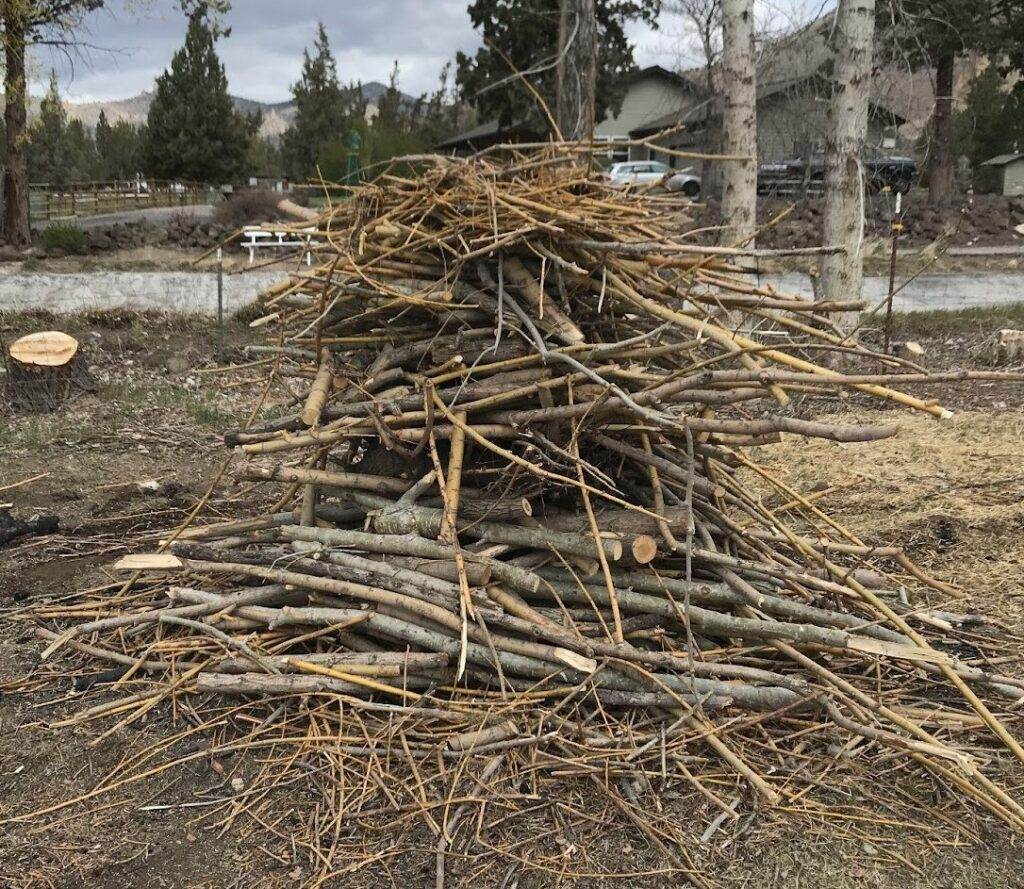
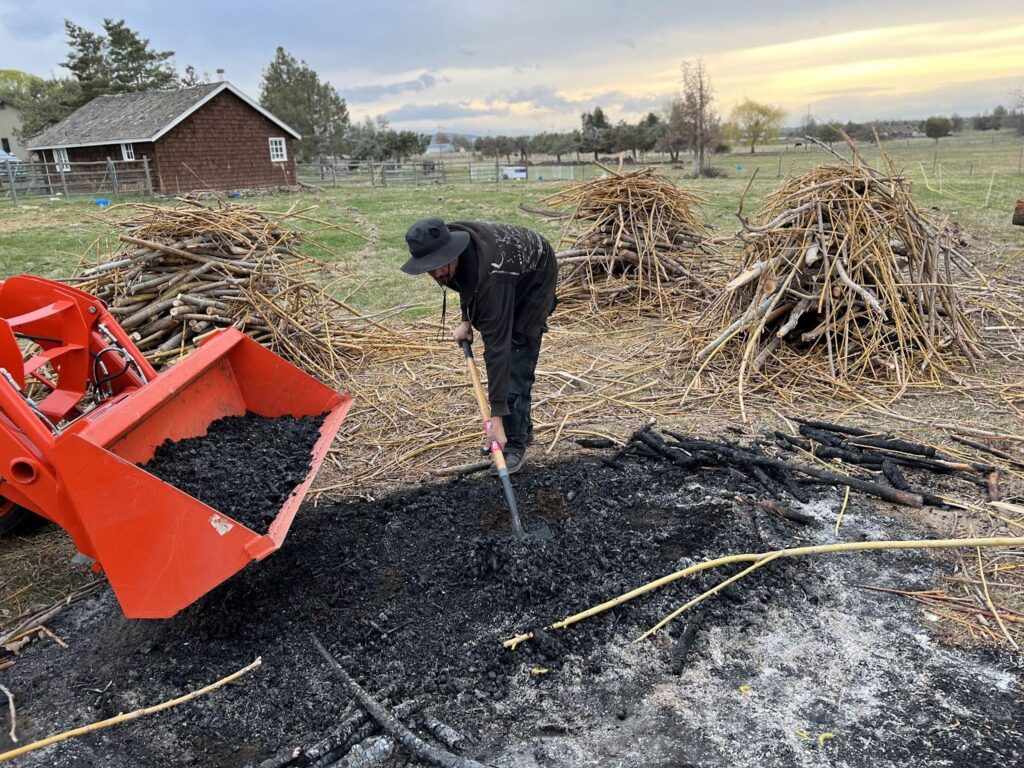
You can produce biochar in an open, outdoor setting using the rudimentary conservation burn method. The process involves the following steps:
- Arrange dried wood, plant stalks, or other organic matter in a way that allows air circulation, with small sticks at the bottom, more giant pieces of wood in the middle, and a tangle of sticks on top.
- Ignite the top layer of sticks from the downwind side so that the fire is protected and fueled by the wind.
- Once the material becomes charred and ash starts to form, put out the fire by spraying it with compost tea, effective microbes, water, or a combination of any of those until it cools to a touchable temperature.
Although this method is relatively simple and accessible, it only converts about 15% of the unburned biomass into charred material, making it less efficient than pyrolysis.
3.3 Biochar Retort Kilns
Biochar retort kilns are specially designed devices that can produce biochar on a small to medium scale. These kilns typically contain a sealed metal container filled with organic matter, like a 55-gallon drum. The container is heated in a large outdoor oven or directly on an open fire. The absence of oxygen inside the container prevents the organic matter from burning and causes it to undergo pyrolysis, producing biochar.
Some commercially available biochar retort kilns can be found online at suppliers such as BlueSkyBiochar.com, or you can build a DIY version using readily available materials.
There are several methods for producing biochar, each with advantages and limitations. While pyrolysis is the most efficient and controlled method, conservation burning and biochar retort kilns offer more accessible options for small-scale production.
Chapter 4: Types and Variations of Biochar
4.1 Factors Affecting Biochar Properties
Several factors, such as pyrolysis temperature, the material used, and biology, can significantly influence biochar properties. These factors can influence the biochar’s pH, nutrient content, porosity, and surface area, affecting its performance as a soil amendment.
- Pyrolysis Temperature: Higher temperatures produce biochar with a greater surface area, increased porosity, and a more stable carbon structure. However, higher temperatures can also result in the loss of volatile nutrients and a decrease in the biochar’s ability to retain water.
- Material Used: The organic matter used to produce biochar, such as wood, stalky plants, straws, or husks, can significantly influence its properties. Different materials can yield biochar with varying nutrient profiles, pH levels, and nutrient release rates.
- Activated with Biology: Inoculating biochar with beneficial microbes, like bacteria and fungi, can enhance its effectiveness. These microorganisms help break down organic matter, release nutrients, and improve soil structure.
4.2 Examples of Biochar Types
- Wood Biochar: Derived from various types of wood, this biochar is commonly used due to its high carbon content and stable structure.
- Bamboo Biochar: Produced from bamboo, this biochar is rich in silica and other nutrients.
- Agricultural Waste Biochar: People make this from agricultural waste, such as crop straws, shells, and husks. It helps recycle waste materials and can provide various nutrients to the soil, depending on the source material.
- Kelp Biochar: Made from seaweed or kelp, this type of biochar contains high levels of trace minerals and micronutrients, making it particularly beneficial for improving soil fertility. Kelp biochar can also promote microbial activity and enhance plant growth.
- Paramagnetic Biochar: This type of biochar is created by pre-treating the organic material with iron sulfate before pyrolysis. The resulting biochar exhibits paramagnetic properties, which can help improve soil structure, stimulate microbial activity, and enhance plant nutrient availability.
Chapter 5: Inoculating Biochar with Beneficial Microbes
5.1 Why Inoculate Biochar?
Inoculating biochar with beneficial microbes, such as bacteria, fungi, protozoa, and nematodes, enhances its performance as a soil amendment by promoting nutrient cycling, improving soil structure, and supporting plant growth and health. As biochar provides an ideal habitat for these microbes, inoculating it with a diverse and thriving microbial community can help maximize its benefits for soil health and plant growth.
5.2 Microbial Inoculants and Biofertilizers
You can populate biochar with beneficial microbes using various microbial inoculants and biofertilizers, including:
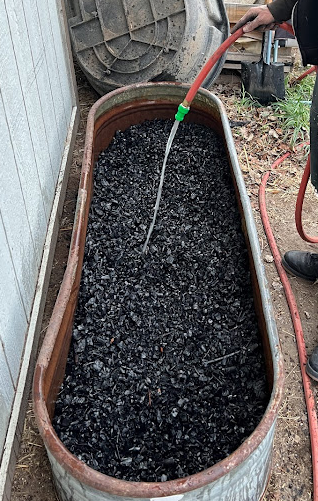
- Compost Tea: An aerated liquid extract from biologically complete compost, usually brewed for at least 24 hours, contains diverse beneficial microbes and nutrients. To inoculate biochar with compost tea, soak it with the tea overnight or for a few days before applying it to the soil.
- Effective Microorganisms (EM): EM is a commercially available microbial inoculant containing a mixture of beneficial microorganisms, like lactic acid bacteria (LAB), yeasts, and photosynthetic bacteria. To inoculate biochar with EM, dilute the EM solution according to the manufacturer’s instructions and soak it in the diluted solution overnight before applying it.
- Other Biofertilizers: Various biofertilizers, such as mycorrhizal fungi and nitrogen-fixing bacteria, can also be used to inoculate biochar.
Chapter 6: Applying and Storing Biochar
6.1 Application Rates and Methods
Determine the optimal application rate of biochar based on specific soil conditions and plant needs. Generally, you can mix biochar into topsoil at a rate of 5-15% by volume. However, healthy plants can also grow in a mixture containing up to 85% biochar and 15% compost. When applying biochar, consider the following guidelines:
- Mix biochar evenly with the topsoil to ensure good contact between the biochar particles, the soil, and the plant roots.
- Inoculate the biochar with beneficial microbes using compost tea, EM, or other microbial inoculants, as described in Chapter 5.
- When breaking up larger pieces, try not to create biochar dust. Instead, aim for small, granular biochar easily mixed into the soil.
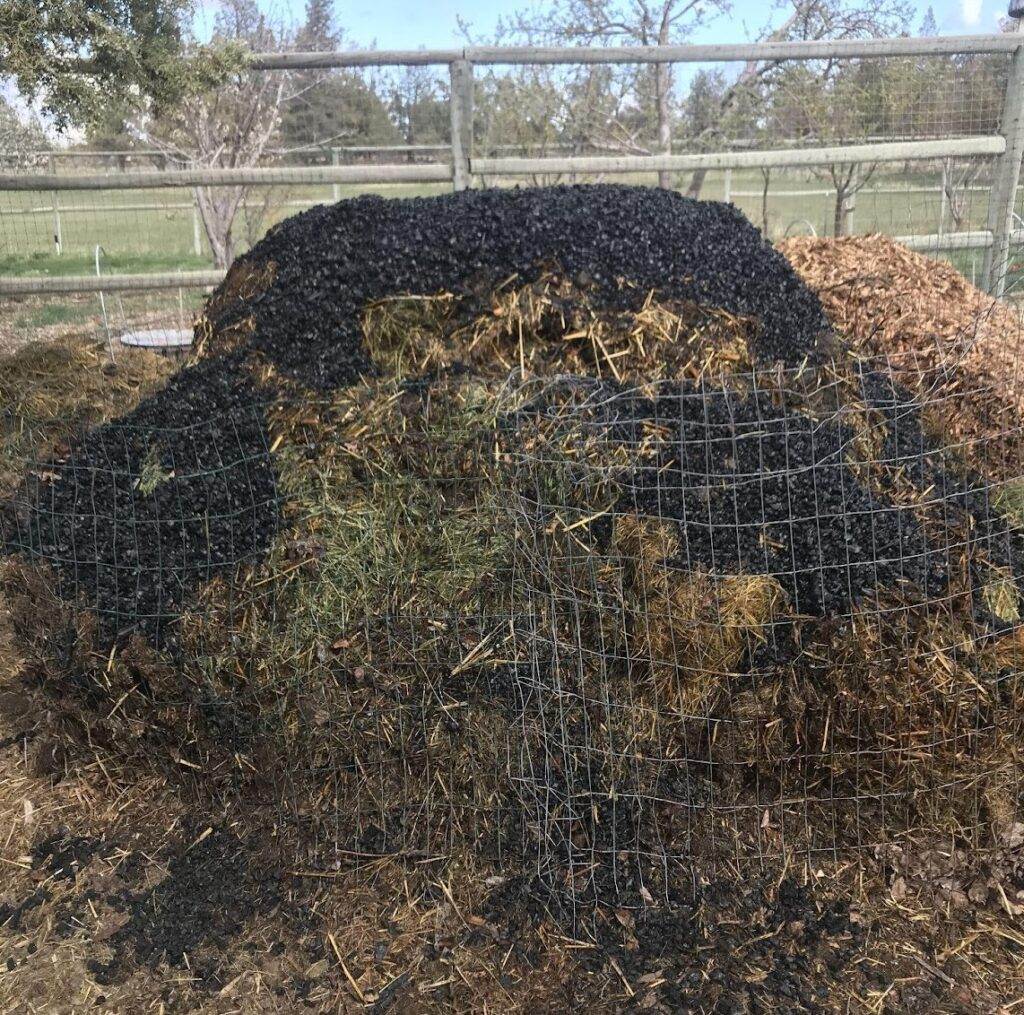
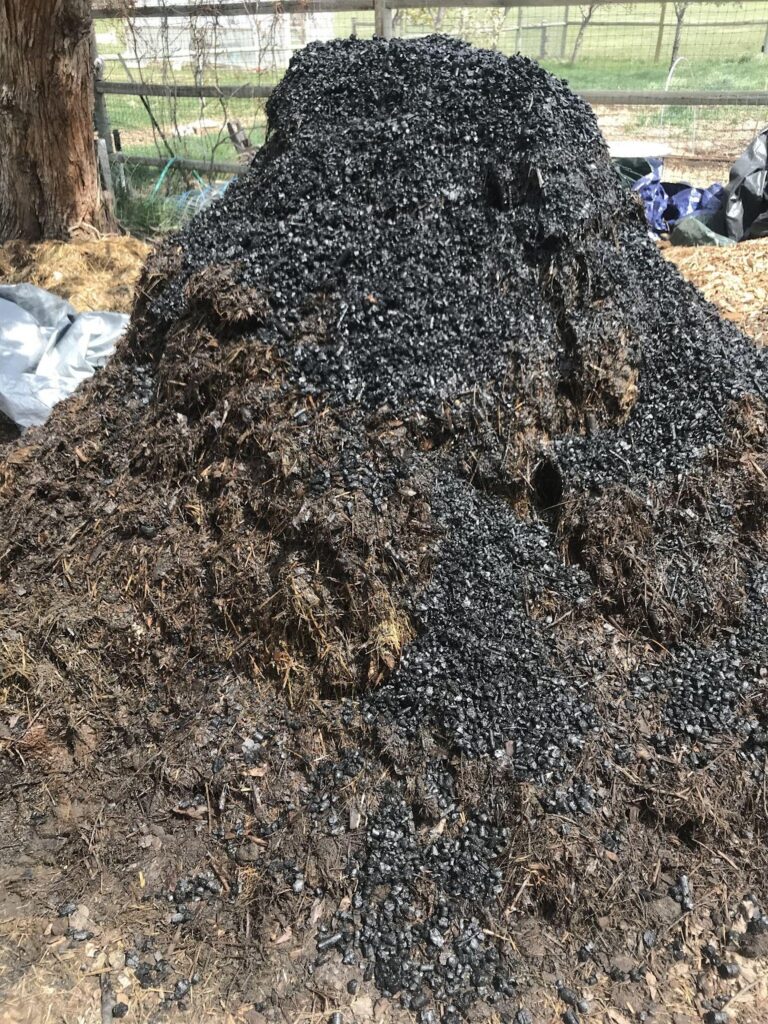
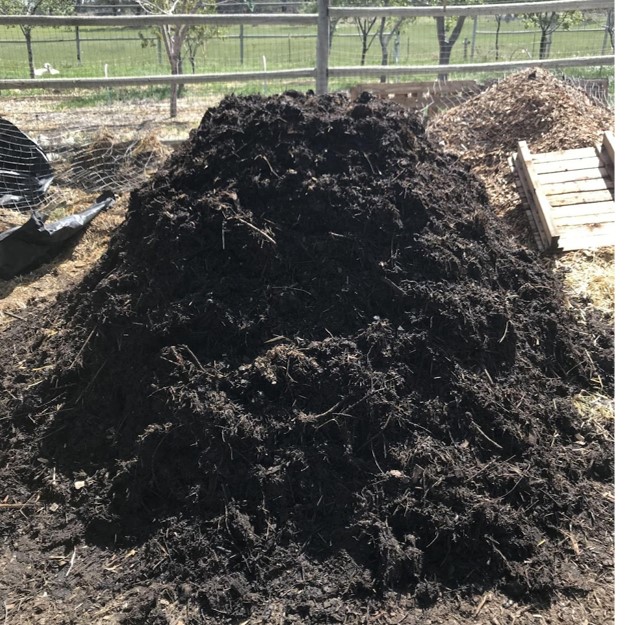
You can also use biochar as a compost cap by placing a layer of biochar on top of a compost pile. Doing this helps capture nutrients and gasses released during composting, retaining fertility and value in the final compost product.
6.2 Storing Biochar
Biochar can be stored indefinitely without losing its effectiveness as a soil amendment. When storing biochar, follow these guidelines:
- Store biochar in a cool, dry place to prevent the growth of harmful microbes or mold formation.
- Keep biochar away from direct sunlight, as UV radiation can cause the material to break down over time.
- Refresh biochar stored in a place where it has dried out with a new application of compost tea, EM, or another microbial inoculant before using it to ensure a healthy and active microbial community.
By following these application and storage guidelines, you can maximize the benefits of biochar for your soil health and plant growth.
Biochar is a versatile and powerful soil amendment that can dramatically improve soil fertility, structure, and water-holding capacity. By understanding the various production methods, types, and variations of biochar, and proper inoculation and application techniques, you can harness the full potential of biochar to enhance your agricultural practices and promote sustainable soil management.
6.3 Refreshing Stored Biochar
If you plan to store biochar for an extended period, it’s essential to refresh the inoculated biochar with new compost tea, EM, or other microbial inoculants. Doing so will ensure that the biochar maintains a healthy and active microbial community, maximizing its benefits for soil health and plant growth when applied.
By using appropriate microbial inoculants and biofertilizers and refreshing stored biochar before use, you can maximize the benefits of biochar for your soil and plants.
Chapter 7: Environmental Benefits and Future Perspectives
7.1 Environmental Benefits of Biochar
Biochar offers numerous environmental benefits, contributing to sustainable agriculture and ecological restoration. Some of the key advantages include the following:
- Carbon Sequestration: Biochar is a stable form of carbon that can remain in the soil for hundreds or even thousands of years, effectively sequestering atmospheric carbon dioxide and mitigating climate change.
- Waste Management: Biochar production can utilize various organic waste materials, such as agricultural residues, forestry waste, and animal manure, reducing waste disposal issues and promoting a circular economy.
- Reduced Greenhouse Gas Emissions: Biochar application can help suppress the emission of greenhouse gasses, such as nitrous oxide and methane, from agricultural soils, further contributing to climate change mitigation.
- Enhanced Soil and Plant Health: By improving soil structure, nutrient retention, and microbial activity, biochar promotes sustainable soil management and supports healthy plant growth, reducing the need for synthetic fertilizers and promoting biodiversity.
Chapter 8: Biochar in Urban Landscapes and Gardening
8.1 Applications in Urban Landscapes
Beyond its agricultural uses, biochar has significant potential in urban landscapes and gardening, providing various benefits for plant health and soil quality in these settings:
- Urban Soil Remediation: Biochar can help remediate contaminated urban soils by adsorbing heavy metals and other pollutants, creating a safer environment for plants, humans, and wildlife.
- Stormwater Management: The high water-holding capacity of biochar can improve urban soils’ ability to absorb and retain water, reducing runoff and the risk of flooding during heavy rainfall events.
- Green Infrastructure: Incorporating biochar into urban green spaces, such as parks, gardens, and roofs, can enhance plant growth and overall ecosystem health by improving soil fertility, structure, and water retention.
Chapter 9: Biochar: A Stable Carbon Source for Tropical and Subtropical Environments
9.1 Biochar in the Tropics
Soil organic matter (SOM) and humic substances are crucial for soil fertility, structure, and water retention. However, in tropical and subtropical climates, high temperatures and increased biological activity can limit the accumulation of these essential components, leading to reduced carbon sequestration and overall soil quality. This chapter explores biochar as a viable solution to provide a stable carbon source in these warm climates.
9.2 The Challenge of Soil Organic Matter in Warm Climates
In tropical and subtropical regions, high temperatures and abundant moisture lead to the rapid decomposition of organic materials. This accelerated breakdown results in lower levels of stable organic matter and humic substances, essential for nutrient retention, cation exchange capacity, and water-holding capacity. The decline in soil carbon stocks can, in turn, decrease agricultural productivity and contribute to soil erosion.
9.3 Biochar in the Amazon Basin
As mentioned earlier, biochar originates in the Amazon, and these nutrient-rich soils have contributed to their exceptional fertility and stability over centuries. The discovery of Terra Preta highlights the potential of biochar as a stable carbon source for tropical and subtropical environments.
9.4 Application of Biochar in Tropical and Subtropical Environments
Farmers in tropical and subtropical environments can improve soil quality, enhance agricultural productivity, and contribute to climate change mitigation by adopting biochar as a stable carbon source. As we learn from the ancient Amazonian Terra Preta soils, biochar holds excellent promise as a regenerative solution for the unique challenges faced in these warm climates.
Chapter 10: Utilizing Biochar in Cold and Arid Environments
10.1 Cold Biochar
As a versatile soil amendment, biochar can offer valuable solutions to improve soil conditions and enhance crop growth in these contrasting climates. In this chapter, we explore the benefits of biochar application in cold and arid environments and the factors to consider when implementing biochar in these settings.
10.2 Challenges of Soil Fertility and Water Availability in Cold and Arid Environments
Cold and arid regions often face the following soil-related issues:
- Low soil organic matter: Low temperatures slow down decomposition rates in cold climates, while arid environments typically have low biomass input due to sparse vegetation. Both factors result in reduced soil organic matter content.
- Poor nutrient availability: Low organic matter and biological activity in cold and arid soils can limit the availability of essential nutrients for plant growth.
- Low water-holding capacity: Sandy and coarse-textured soils, typical in arid environments, have low water-holding capacity, exacerbating water scarcity issues.
10.3 Benefits of Biochar in Cold and Arid Environments
Biochar can address these challenges by providing the following benefits:
- Enhanced nutrient retention: Biochar’s porous structure and high surface area can adsorb and retain nutrients, improving nutrient availability in cold and arid soils.
- Improved water-holding capacity: Biochar can increase the water-holding capacity of sandy and coarse-textured soils, making water more readily available to plants in arid environments.
- Insulation and temperature moderation: In cold climates, biochar can help regulate soil temperature by providing insulation, promoting biological activity, and improving nutrient cycling.
- Carbon sequestration: Biochar’s long-term stability in soil enables it to sequester atmospheric carbon dioxide, contributing to climate change mitigation.
10.4 Implementing Biochar in Cold and Arid Environments
Farmers can improve soil fertility, enhance water availability, and promote regenerative agriculture by integrating biochar into soil management practices in cold and arid environments. As a versatile soil amendment, biochar holds the potential to address the unique challenges faced by these contrasting climates and contribute to a more resilient agroecosystem.
Chapter 11: Realizing the Practical Benefits of Biochar
As we wrap up this primer, it’s clear that biochar presents a practical and versatile solution to various agricultural challenges across diverse climates. From tropical and subtropical areas to cold and arid environments, biochar can improve soil fertility, boost crop productivity, enhance water retention, and aid in carbon sequestration.
Ongoing research, collaboration, and communication among scientists, farmers, policymakers, and other stakeholders will be crucial for increasing and improving biochar application methods.
Moreover, it’s essential to view biochar as one component of a larger soil management strategy. Combining biochar with other regenerative and permaculture practices like composting, cover cropping, reduced tillage, agroforestry methods, and the ceasing of harsh chemical fertilizers and pesticides.
In conclusion, the primary goal of this primer is to provide you with a practical understanding of biochar and its potential applications. With this knowledge, we hope you feel encouraged to explore and incorporate biochar into your agricultural practices.
Chapter 12: Resources
These resources provide valuable insights, case studies, and practical guidance on biochar production and application.
12.1 Books
- Regenerative Soil by Matt Powers Matt Powers’ book, “Regenerative Soil,” offers an in-depth exploration of regenerative soil management practices, including the use of biochar. This comprehensive guide discusses the importance of soil health in sustainable agriculture, and how biochar can play a crucial role in creating a regenerative and productive soil ecosystem.
- The Biochar Revolution: Transforming Agriculture & Environment by Paul Taylor (Editor) “The Biochar Revolution” is a collection of contributions from experts in the field, showcasing the multifaceted potential of biochar in transforming agriculture and the environment. This book covers various topics, such as biochar production methods, agricultural applications, soil remediation, and carbon sequestration. Readers will gain a well-rounded understanding of the biochar phenomenon and its implications for a sustainable future.
12.2 Online Resources
- International Biochar Initiative (IBI): https://www.biochar-international.org/ The IBI is a non-profit organization that promotes the sustainable production and use of biochar. Their website offers a wealth of resources, including research articles, case studies, production guidelines, and policy recommendations. The IBI also provides a platform for networking and collaboration among biochar researchers, producers, and users.
- US Biochar Initiative (USBI): https://biochar-us.org/ The USBI is dedicated to advancing the understanding and adoption of biochar in the United States. Their website features various resources, such as research articles, webinars, and conference presentations. They also maintain a directory of biochar producers and suppliers in the U.S.
- European Biochar Certificate (EBC): https://www.european-biochar.org/en The EBC is an organization that sets quality standards for biochar production and use in Europe. Their website provides information on biochar certification, production guidelines, and research findings. The EBC also maintains a list of certified biochar products and suppliers.
12.3 Academic Resources
- Lehmann, J., & Joseph, S. (Eds.). (2015). Biochar for Environmental Management: Science, Technology and Implementation (2nd Edition). Routledge. This comprehensive book covers various aspects of biochar research and application, providing a solid foundation for understanding the scientific principles and practical implications of biochar use.
- Jeffery, S., Verheijen, F. G. A., van der Velde, M., & Bastos, A. C. (2011). A quantitative review of the effects of biochar application to soils on crop productivity using meta-analysis. Agriculture, Ecosystems & Environment, 144(1), 175-187. This meta-analysis investigates the effects of biochar application on crop productivity, offering valuable insights into biochar’s potential benefits for agriculture.
- Woolf, D., Amonette, J. E., Street-Perrott, F. A., Lehmann, J., & Joseph, S. (2010). Sustainable biochar to mitigate global climate change. Nature Communications, 1, 56. This study explores the potential of biochar to mitigate global climate change through carbon sequestration and provides an overview of the possible impacts of large-scale biochar implementation.
- Spokas, K. A., Cantrell, K. B., Novak, J. M., Archer, D. W., Ippolito, J. A., Collins, H. P., … & Karlen, D. L. (2012). Biochar: A synthesis of its agronomic impact beyond carbon sequestration. Journal of Environmental Quality, 41(4), 973-989. This paper synthesizes existing research on the agronomic impacts of biochar beyond carbon sequestration, including effects on soil fertility, nutrient cycling, and crop productivity.
- Atkinson, C. J., Fitzgerald, J. D., & Hipps, N. A. (2010). Potential mechanisms for achieving agricultural benefits from biochar application to temperate soils: A review. Plant and Soil, 337(1-2), 1-18. This review discusses the potential mechanisms underlying the agricultural benefits of biochar application to temperate soils, including improved nutrient and water retention, enhanced soil microbial activity, and reduced greenhouse gas emissions.