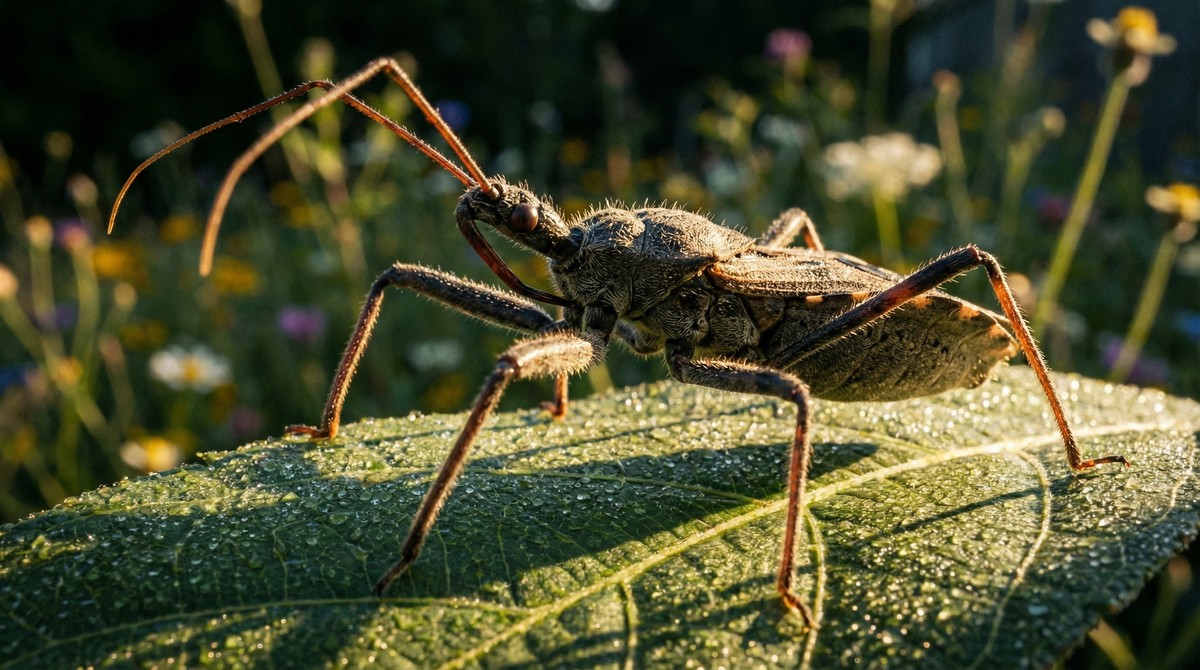
Assassin bugs (family Reduviidae) are formidable generalist predators and valuable allies in the garden. Named for the lethal efficiency with which they dispatch prey, these true bugs in the order Hemiptera ambush or stalk a wide range of insects, helping to keep many garden pests in check. With more than 150 species in North America alone, they range from the large, armored wheel bug to slender, leggy hunters that patrol foliage and flowers.
Identification and Description
Assassin bugs are extremely varied, but most share a few telltale features: an elongated head with a distinct "neck," and a stout, curved beak (the rostrum) that folds back beneath the body when not in use. That beak is the bug's weapon — it is thrust into prey to inject saliva that paralyzes and liquefies the victim's insides, which the bug then drinks. Many species have grasping, raptorial front legs for seizing prey. Colors run from brown and black to bright red or orange, and one of the most recognizable members, the wheel bug, bears a distinctive cog-like crest on its back. A word of caution: assassin bugs can deliver a sharp, painful bite if handled or trapped against the skin, so admire them but do not pick them up.
Life Cycle
Unlike beetles and wasps, assassin bugs undergo simple (incomplete) metamorphosis with three stages: egg, nymph, and adult. Females lay eggs in clusters, often on stems or leaves, and these hatch in about ten days to two weeks. The wingless nymphs pass through five instars, a process that can take two to four months, growing larger and gaining wing pads with each molt before reaching the winged adult stage. Most regions see one to two generations per year. Assassin bugs overwinter as adults or nymphs in sheltered spots — under bark, in leaf litter, or in and around buildings — and become active in spring (roughly April through September).
Habitat and Range
Native to North and South America, assassin bugs are found throughout the United States, across the Northeast, Southeast, Midwest, Southwest, West, and Pacific Northwest. They favor gardens, meadows, forests, weedy areas, and bushy cover — anywhere with abundant prey and structure to hunt from. A garden with diverse plantings and a few untidy, sheltered corners offers exactly the kind of habitat in which they thrive.
Role in the Garden
Assassin bugs are beneficial predators that hunt a broad menu of insects, including caterpillars, beetles, aphids, leafhoppers, and other soft-bodied pests. Because they are generalists, they provide steady background pest suppression rather than targeting a single species. The one caveat to their generalist nature is that they will also take some beneficial insects along with pests — but on balance, a healthy assassin bug population is a strong asset to the garden ecosystem and a sign of a well-functioning food web.
Attracting and Supporting Assassin Bugs
Since assassin bugs are predators, the way to support them is to support their prey and give them shelter. Plant a diversity of flowering plants that draw in the small insects they hunt; good choices include alfalfa, daisies, dandelions, dill, fennel, goldenrod, Queen Anne's lace, marigolds, tansy, carrots, coneflower, coreopsis, cup plant, yarrow, and mountain mints (Pycnanthemum). A succession of bloom keeps both prey and predators present through the season.
Beyond flowers, provide a shallow water source, and — most importantly — avoid broad-spectrum insecticides, which kill assassin bugs and their prey indiscriminately and rob the garden of natural control. Leaving some wild, weedy, or brushy areas gives nymphs and overwintering adults the sheltered cover they need. Do this, and assassin bugs will recruit themselves and patrol your plantings year after year.
A Fierce Garden Ally
Patient, well-armed, and indiscriminate in their appetite for insects, assassin bugs are among the most effective natural pest controllers a gardener can host. Give them diverse flowers, undisturbed cover, and a pesticide-free environment — and keep your hands to yourself — and they will repay you with quiet, relentless predation.