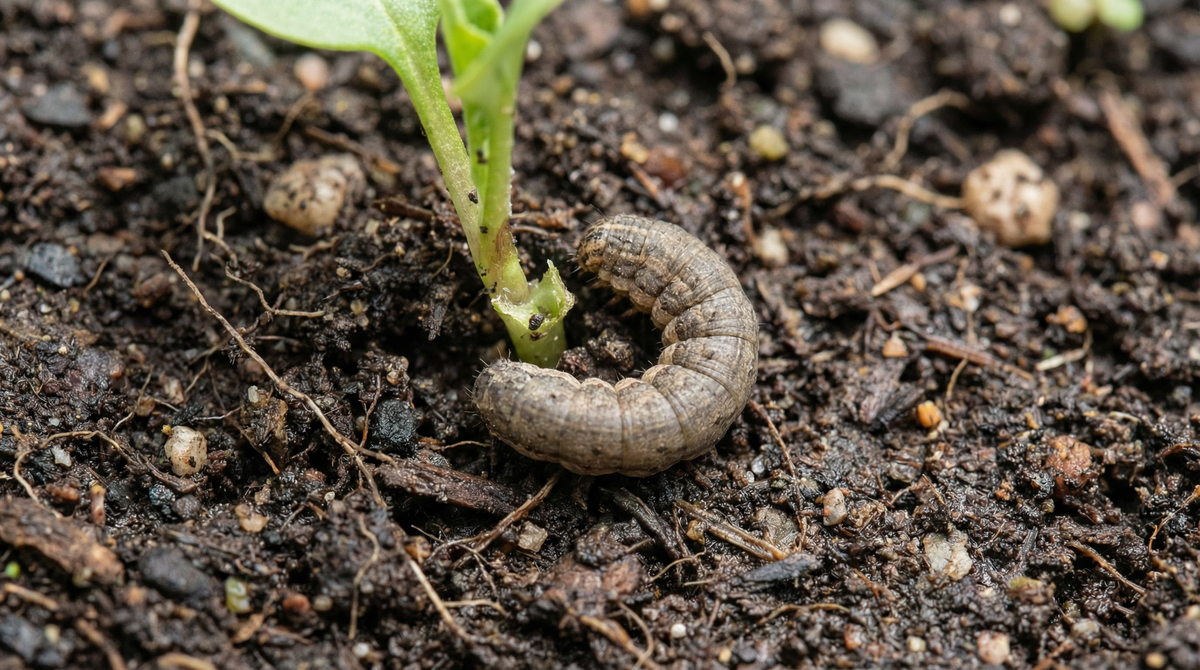
"Cutworm" is the name gardeners give to the soil-dwelling caterpillars of many night-flying moths in the family Noctuidae — and few pests are more heartbreaking. A gardener can set out a tidy row of transplants in the evening and return at dawn to find them toppled, their stems chewed clean through at the soil line. Several different moth species share this habit, but they cause damage in the same maddening way, which is why they are grouped together under one common name. Understanding their nocturnal, soil-bound life is the key to outsmarting them.
Identification and Description
Cutworm larvae are smooth, soft-bodied caterpillars, typically 1 to 2 inches long when mature, in dull shades of gray, brown, black, pink, or green, often with faint stripes or spots. Their most diagnostic habit is defensive: when disturbed, they curl tightly into a distinctive C-shape. They hide just below the soil surface or under debris during the day and feed at night. The adults are the familiar drab "miller" moths — medium-sized, gray-to-brown noctuids with mottled forewings, active after dark and frequently drawn to lights. Because the destructive stage stays underground by day, the damage is usually noticed before the culprit is.
Life Cycle
Cutworms undergo complete metamorphosis — egg, larva, pupa, adult. Adult moths lay hundreds of eggs in spring, summer, or fall, singly or in clusters, on low-growing plants, weeds, or plant residue. The larvae hatch and feed on leaves and stems, growing to 1 to 2 inches over several weeks as they molt through several instars; this larval stage is the damaging one. Mature larvae pupate in the soil, and the adult moths emerge to begin the cycle again. Depending on species and climate there may be one to three or more generations per year, with activity spanning roughly April through September. Cutworms typically overwinter as larvae or pupae in the soil or under plant debris in weedy and grassy areas.
Habitat and Range
Cutworms are found across the entire United States — Northeast, Southeast, Midwest, Southwest, West, and Pacific Northwest. Native range varies by species: many are native to North America, while others are migratory, moving north on seasonal winds. They favor gardens, agricultural fields, lawns, and weedy areas, with weedy and grassy ground providing both egg-laying sites and overwintering shelter.
Role in the Garden
Cutworms are damaging pests with a beneficial rating of −5. Their signature injury — severing young seedlings and transplants at or just below the soil line — can wipe out an entire newly planted row overnight, and some species also climb to feed on foliage, buds, and developing fruit. Tender spring transplants are especially vulnerable, since a single larva may cut several plants in one night. They offer no compensating garden benefit, so the focus is squarely on prevention and removal.
Managing Cutworms
Control centers on prevention and physical defense. Stem collars are the classic, highly effective home remedy: a ring of cardboard, a cut toilet-paper tube, or a aluminum-foil sleeve pushed an inch into the soil around each transplant physically blocks larvae from reaching the stem. Tilling or cultivating the soil a week or two before planting exposes and destroys overwintering larvae and pupae and disturbs their hiding places. Clearing weeds and debris removes the egg-laying and sheltering habitat that lets populations build. Night hand-picking by flashlight is genuinely effective — cutworms surface to feed after dark and can be collected and dropped into soapy water; checking the soil right around a freshly cut plant often turns up the curled larva responsible. Encourage natural predators such as ground beetles, birds, and parasitoid wasps, which prey on the larvae. For severe infestations, Bacillus thuringiensis (Bt) and Spinosad are effective organic options applied to the soil surface, ideally in the evening when larvae are active.
Companion Planting
Strongly aromatic plants can help mask vulnerable crops and discourage egg-laying moths. Tansy is a noted cutworm repellent, and marigolds, sage, catnip, mint, and rosemary planted near susceptible vegetables add a layer of scent-based protection. These plantings work best alongside collars and sanitation rather than on their own.
Protecting Your Seedlings
Cutworms are a predictable threat at exactly the moment plants are most fragile — transplant time. A simple stem collar around each new seedling, combined with pre-plant cultivation, weed control, evening scouting, and support for ground beetles and other predators, will spare most gardeners the dawn discovery of a severed row and keep young plants standing through their vulnerable first weeks.