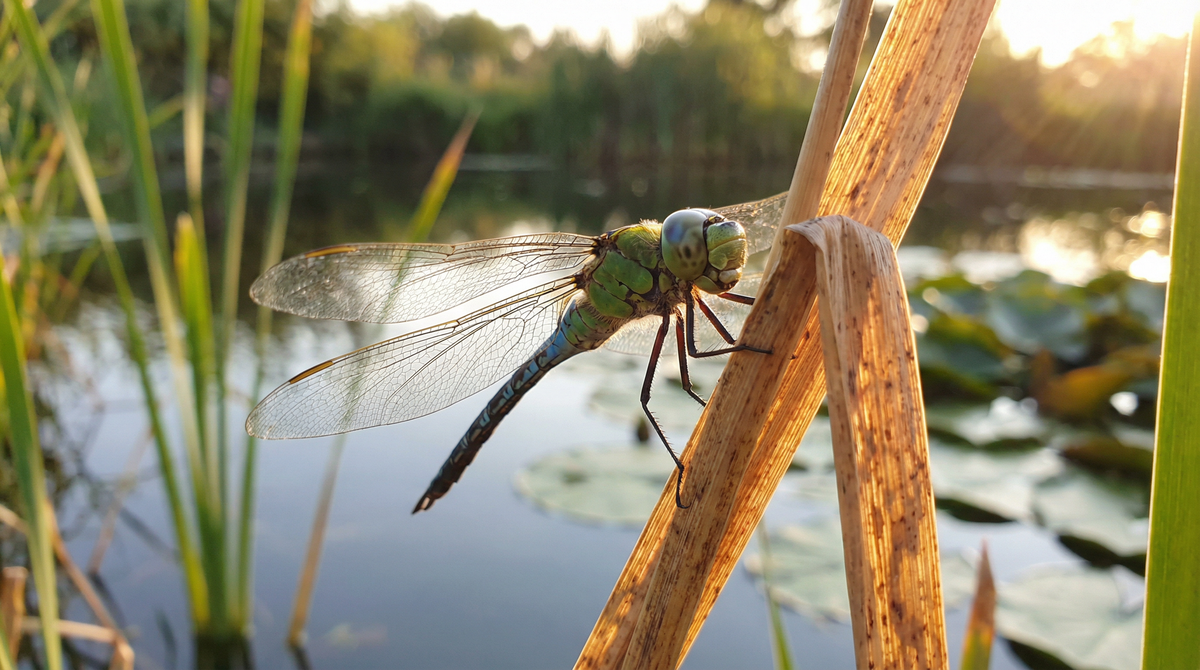
Dragonflies (suborder Anisoptera) are among the most spectacular and beneficial insects a gardener can host — brilliant, fast-flying aerial hunters that patrol ponds and gardens devouring mosquitoes, midges, and other flying pests. Ancient insects whose ancestors flew before the dinosaurs, today's dragonflies belong to the order Odonata and include many familiar families such as the darners (Aeshnidae), skimmers (Libellulidae), and clubtails (Gomphidae). With a beneficial rating of 5 out of 5, they are a sign of a healthy, water-rich landscape and a gardener's ally at every stage of their life.
Identification and Description
Dragonflies are large, robust insects with two pairs of strong, intricately veined wings, an elongated body, and enormous compound eyes that often meet at the top of the head and give them nearly 360-degree vision. They hold their wings outstretched and flat when at rest — the key trait separating them from the more delicate damselflies, which fold their wings along the body. Colors are dazzling and varied: metallic greens and bronzes, vivid blues, reds, and yellows. They are masters of flight, able to hover, fly backward, and change direction instantly as they hawk prey on the wing. The aquatic nymph, or naiad, looks utterly different — a stout, drab, six-legged underwater predator equipped with an extendable, hinged lower lip it shoots out to seize prey.
Life Cycle
Dragonflies have an incomplete metamorphosis with three stages: egg, nymph (naiad), and adult. The female lays her eggs in or near water, sometimes inserting them into aquatic plant tissue or dropping them onto the surface. The aquatic nymphs are voracious predators, feeding on other aquatic invertebrates and even small fish and tadpoles, and this stage can last from several months to several years depending on the species. When ready, the mature nymph crawls out of the water up a stem or rock and molts a final time into a winged adult. The adult stage is comparatively brief — a few weeks to a couple of months — and is devoted to feeding and reproduction. Most species overwinter as nymphs in ponds and other water bodies, remaining active or dormant beneath the ice, with adults on the wing from roughly April through October.
Habitat and Range
Dragonflies occur worldwide except Antarctica and are found throughout the United States — Northeast, Southeast, Midwest, Southwest, West, and Pacific Northwest. Because their young are aquatic, they are tied to water: wetlands, ponds, lakes, streams, and rivers are essential breeding habitat, while adults range widely into gardens and open sunny areas to hunt. A garden near or containing water is far more likely to host a healthy dragonfly population.
Role in the Garden
Dragonflies are exceptionally beneficial, earning the top rating of 5. As adults they are tireless aerial predators of mosquitoes, gnats, midges, flies, and other small flying insects — a single dragonfly can eat dozens to hundreds of mosquitoes in a day — making them outstanding natural mosquito control. Their aquatic nymphs are equally valuable beneath the surface, preying heavily on mosquito larvae and other aquatic pests. They neither bite nor sting people and cause no plant damage; their presence is purely an asset and a strong indicator of clean water and a balanced ecosystem.
Attracting Dragonflies
Because dragonflies are wholly beneficial, the goal is to attract and support them rather than control them. The single most powerful step is to provide water — a garden pond or water feature gives them somewhere to breed and gives their nymphs a home. Make the water dragonfly-friendly by including emergent aquatic plants such as cattails and rushes, which provide perching and emergence spots for adults and shelter for nymphs, along with submerged plants like hornwort and eelgrass that support the underwater food web. Around the water, plant nectar- and habitat-supporting species such as black-eyed Susan, coneflower, aster, swamp milkweed, water lily, and wild celery. Provide sunny basking sites — flat rocks and open, sunlit perches where adults can warm themselves and survey for prey. Finally, avoid pesticides, which harm dragonflies directly and wipe out the insect prey and aquatic life they depend on. There are no plants known to repel dragonflies, and no reason to want to.
A Garden Ally on the Wing
Few insects combine beauty and usefulness as completely as the dragonfly. Add even a small pond, ring it with cattails and rushes, set out a few flat basking stones, skip the sprays, and you can invite these jewel-toned hunters to take up residence — keeping mosquito populations in check while bringing flashing color and constant motion to the garden all summer long.