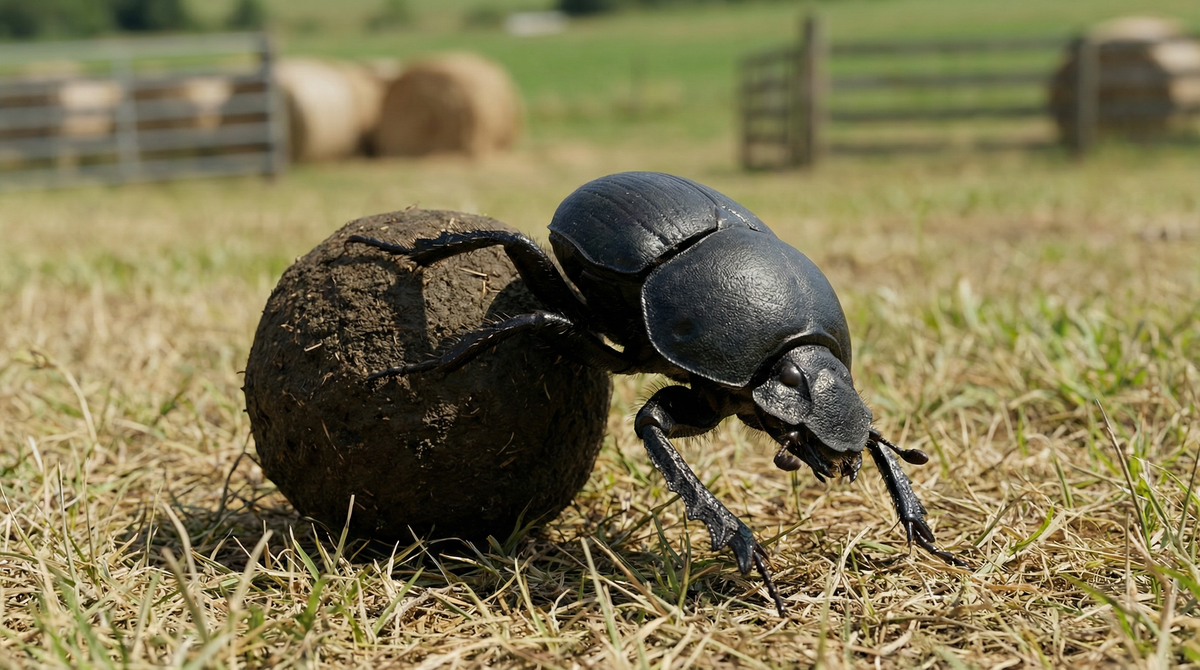
Dung beetles (family Scarabaeidae) are among the most quietly important insects in any pasture or garden ecosystem — nature's recyclers, turning animal waste into healthy soil. By burying and consuming the droppings of herbivores and omnivores, they clean the landscape, fertilize the root zone, aerate compacted ground, and even disperse seeds. With a beneficial rating of 5 out of 5, the humble dung beetle is a powerhouse of free ecosystem services, and supporting them is one of the simplest ways to build soil fertility on land that hosts grazing animals.
Identification and Description
Dung beetles are stout, hard-shelled scarab beetles, typically dark brown to black, though some species shine with metallic green, blue, or coppery iridescence. They range from a few millimeters to a couple of centimeters in length, with powerful, spade-like front legs and heads adapted for digging and shaping dung. Many species have flattened, shovel-shaped heads, and some males bear prominent horns used in contests over mates and resources. The larvae are pale, C-shaped grubs typical of the scarab family. Dung beetles are usually grouped by behavior into three types: rollers, which shape dung into balls and roll them away to bury elsewhere; tunnelers, which dig down directly beneath a dung pat and pull the dung into their burrows; and dwellers, which simply live and breed within the pat itself.
Life Cycle
Dung beetles undergo complete metamorphosis through four stages: egg, larva, pupa, and adult. The cycle begins when a female lays eggs in a dung pat or in a carefully constructed brood ball made of dung, which provides both food and shelter for her offspring. The eggs hatch into C-shaped larvae that feed on the surrounding dung for one to four weeks, then enter a non-feeding pupal stage lasting from a few weeks to several months before the adult emerges. The entire cycle can take from six months to a year, and some species manage two generations per year. Dung beetles typically overwinter in the soil as pupae or adults; some delay emergence until conditions are favorable, and in milder climates certain species stay active year-round, with peak activity from roughly April through October.
Habitat and Range
Dung beetles are found worldwide and occupy a wide variety of habitats — deserts, grasslands, savannas, farmlands, and forests — anywhere a steady supply of dung is available. In the United States they are especially associated with the Southeast, Midwest, and Northeast. Their distribution closely tracks grazing animals, since the dung of herbivores and omnivores is both their food and their nursery.
Role in the Garden and Pasture
Dung beetles are exceptionally beneficial, earning the top rating of 5, and their value comes from the ecosystem services they provide. By burying dung, they sequester nutrients directly in the root zone where plants can use them, improving soil fertility and dramatically reducing nutrient runoff. Their tunneling aerates the soil and improves water infiltration, easing compaction in pastures and gardens alike. They accelerate the breakdown of manure, which reduces breeding habitat for pest flies and livestock parasites and keeps pastures cleaner and more productive. They even contribute to seed dispersal, burying seeds that passed through an animal's gut and giving them a fertile head start. Taken together, dung beetles quietly do the work of fertilizing, tilling, and sanitizing — for free.
Attracting and Supporting Dung Beetles
Because dung beetles are wholly beneficial, the aim is to protect and encourage them. The most important step is to avoid broad-spectrum chemical pesticides and certain veterinary dewormers — especially ivermectin, which passes through into the manure and is highly toxic to dung beetles and their larvae. Adopting an integrated pest management approach for livestock, including rotational grazing, helps break internal-parasite cycles in animals and reduces the need for chemical wormers in the first place. Providing a consistent supply of dung from untreated animals gives beetles the resource they need to establish and sustain healthy populations. Minimizing soil disturbance and maintaining diverse, well-grazed pasture all help these beetles thrive.
A Partner in Soil Building
Dung beetles embody the permaculture ideal of turning a waste product into a resource. Where they are abundant, manure disappears into the soil within days, pastures grow greener, parasite and fly pressure drops, and water soaks in rather than running off. Protect them by keeping wormers and pesticides to a minimum and grazing thoughtfully, and these unassuming recyclers will repay the effort many times over in richer, healthier soil.