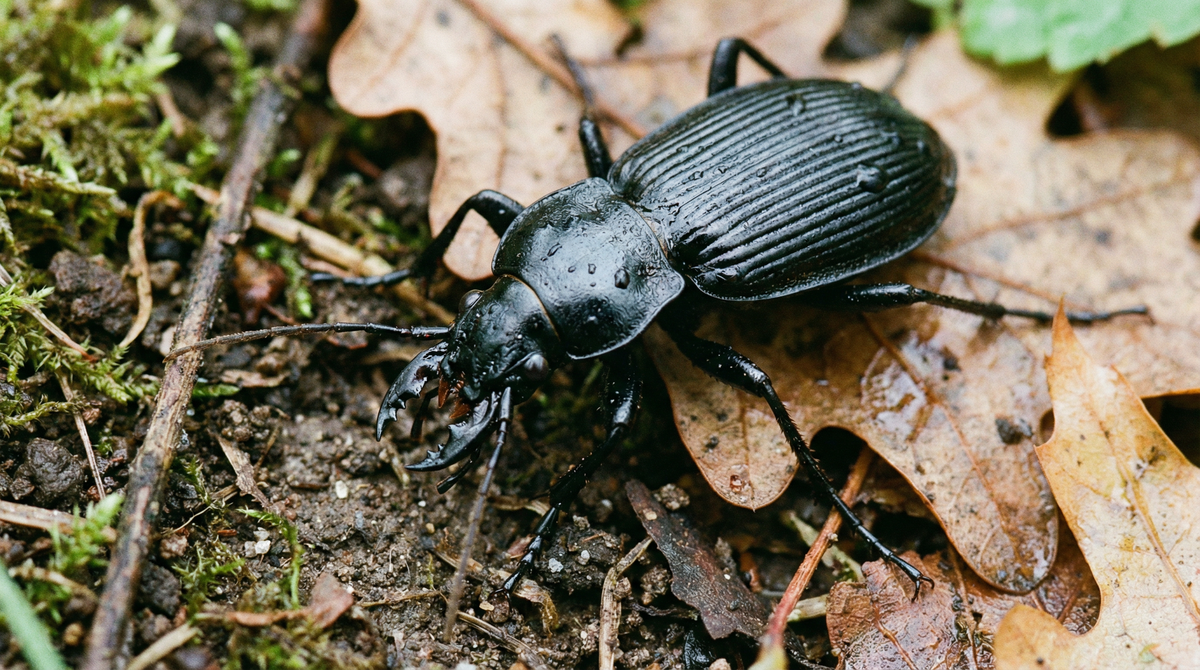
Ground beetles (family Carabidae) are among the most numerous and useful predators in the garden — an enormous family of fast-running, mostly nocturnal beetles that patrol the soil surface devouring slugs, cutworms, root maggots, caterpillars, and other pests. With tens of thousands of species worldwide, they are a quiet, hardworking force for pest control that most gardeners rarely see, since they hunt after dark and hide by day. With a beneficial rating of 4 out of 5, ground beetles are exactly the kind of ally a permaculture garden is designed to shelter, and supporting them costs little more than leaving good habitat undisturbed.
Identification and Description
Ground beetles are generally shiny, hard-bodied beetles ranging from a few millimeters to over 2.5 centimeters, most commonly black or dark brown, though many species gleam with metallic bronze, green, purple, or blue. They have long, thread-like antennae, prominent forward-pointing jaws, and — most distinctively — long, well-developed legs built for speed; disturb one and it dashes rapidly for cover rather than flying. The wing covers (elytra) are often marked with fine lengthwise grooves or rows of pits. The larvae are elongate, dark, segmented, and somewhat flattened, with visible legs and pincer-like jaws, living in the soil and leaf litter where they too hunt prey. A common garden group, the fiery-searchers and caterpillar hunters, are large and iridescent and actively climb after prey.
Life Cycle
Ground beetles undergo complete metamorphosis through egg, larva, pupa, and adult. Females lay eggs in the soil or on its surface, and the larvae hatch to pass through three instars — all of them predatory, living in soil and debris where they hunt small invertebrates. Pupation also takes place in the soil. There is typically one generation per year, though some of the larger species take longer to develop and adults can be long-lived, surviving 2 to 4 years. The majority of species overwinter as adults sheltered in the soil, under leaf litter, or in hedgerows, becoming active across the warm months (roughly April through November). This soil-bound, multi-stage life means undisturbed ground is essential to their survival.
Habitat and Range
Ground beetles occur worldwide and throughout the United States — Northeast, Southeast, Midwest, Southwest, West, and Pacific Northwest. They inhabit gardens, tilled cropland, meadows, and woodlands, sheltering by day under leaves, stones, logs, mulch, and in cracks in the soil. Because they need cover and stable ground to hide, breed, and overwinter, the structure and diversity of a planting matters as much to them as the plants themselves.
Role in the Garden
Ground beetles are strongly beneficial, rated 4, and their value comes from a voracious, generalist appetite for pests at both the adult and larval stages. They are especially prized for consuming slugs and snails and their eggs, along with cutworms, root maggots, wireworms, caterpillars, aphids, and other soil- and surface-dwelling pests — a single beetle can eat its own weight in prey nightly. Some species even feed on weed seeds, adding a measure of weed suppression. Because they work the night shift at ground level, they reach pests that aerial predators miss, making them a foundational part of a garden's natural pest-control system. They pose no threat to plants or people.
Attracting and Supporting Ground Beetles
Because ground beetles are beneficial, the aim is to provide the shelter and stability they need. The most effective step is to offer permanent cover and overwintering sites — mulch, stones, logs, hedgerows, and especially "beetle banks," raised strips of perennial bunch grasses that give beetles a dry, undisturbed refuge from which to spread into the garden. Minimize tillage, which destroys larvae, pupae, and overwintering adults and disrupts their soil habitat, and avoid broad-spectrum insecticides, which kill them along with the pests. Planting a diversity of perennials and native grasses creates the stable, sheltered conditions they favor. Living mulches such as red and white clover create an ideal cool, humid microclimate at ground level, and perennial plantings like asparagus and rhubarb, along with buckwheat, cilantro, and bachelor buttons, help attract and sustain them.
Beetle Banks and No-Dig Beds
The single best investment for ground beetles is permanent, undisturbed habitat. A beetle bank or a border of native bunch grasses, combined with no-dig or reduced-till beds and a good mulch layer, gives these predators a year-round home base. From there they range out each night to hunt, delivering free slug and cutworm control across the whole garden.
Guardians of the Soil Surface
Ground beetles ask for very little and give a great deal. Leave them mulch, logs, and grassy edges to shelter in, cut back on digging and sprays, and weave perennials and clover through the garden — and this diverse family of nocturnal hunters will patrol your soil surface night after night, keeping slugs, cutworms, and other pests in check.