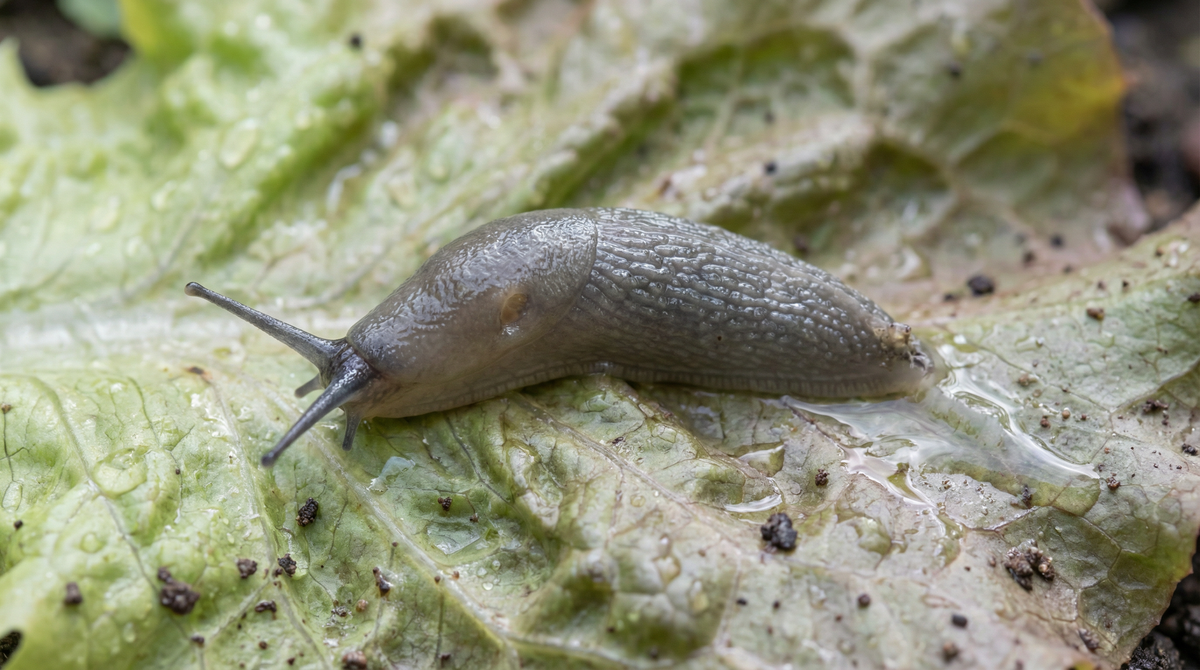
Slugs are among the most familiar and frustrating pests in the garden — soft, slimy, shell-less mollusks that feed under cover of darkness and can shred a bed of seedlings overnight. Though not true insects (they are gastropods, close relatives of snails), slugs are grouped with garden pests because of the damage they do. Common garden species include those in the genera Deroceras, Arion, and Milax. Thriving in cool, damp conditions, slugs are especially destructive in wet weather and shady, moist gardens. With a beneficial rating of −5, they are a pest to manage aggressively, though a combination of simple, non-chemical tactics usually keeps them in check.
Identification and Description
Slugs are soft-bodied, elongated mollusks without an external shell, ranging from a centimeter to several centimeters long, in shades of gray, brown, black, tan, or yellowish, sometimes spotted or striped. They have two pairs of retractable tentacles on the head — the upper pair bearing eyes — and glide along on a muscular "foot," leaving behind a distinctive shiny, dried slime trail that is often the first clue to their presence. Their feeding damage is equally telltale: irregular, ragged holes with smooth edges chewed in leaves, flowers, and fruit, often accompanied by those silvery trails across foliage and soil. Because slugs feed at night and hide by day in cool, dark, moist places, the damage is usually noticed before the slug is.
Life Cycle
Slugs are hermaphrodites, each individual carrying both male and female reproductive organs, which lets populations multiply quickly. They lay clusters of a dozen or more small, round, pearl-like eggs in moist, sheltered spots near the soil surface. Depending on conditions, eggs hatch in as little as two weeks or up to a month, and eggs laid in late winter may take up to five months. The life cycle runs through egg, juvenile (neonate), and adult. Newly hatched neonates feed mostly on algae and fungus but will also nibble young plants, and as they grow into juveniles they consume a wider range of plant matter. Slugs take 3 to 12 months to reach maturity, can produce up to two generations per year, and typically live 6 to 18 months (active roughly March through November). Adults and eggs overwinter in protected places — burrows, decaying vegetation, clods of earth, and under stones, boards, logs, and loose bark.
Habitat and Range
Many common pest slugs are native to Europe, North Africa, and the Atlantic Islands and are now widespread where conditions suit them, with heavy pressure in the cool, damp Pacific Northwest and Northeast. They occupy gardens, meadows, forests, cultivated areas, agricultural fields, roadsides, and parks. The common thread is moisture and shelter: slugs need damp, cool conditions and hiding places, so shady, heavily mulched, irrigated, or debris-filled gardens are most prone to them, and infestations spike in rainy weather.
Role in the Garden
Slugs are a serious pest rated −5. They feed on a broad range of plants — hostas, lettuce, cabbage, beans, tomatoes, peppers, squash, petunias, marigolds, and many seedlings — chewing ragged holes in leaves and stems and rasping into fruit and flowers. Tender young transplants and seedlings are especially vulnerable and can be destroyed entirely in a single damp night. Beyond the direct feeding, their damage disfigures ornamentals and opens wounds that invite rot. While slugs do help break down decaying organic matter, that minor benefit is far outweighed by the harm they do to living plants.
Managing Slugs
Control combines removal, barriers, traps, predators, and habitat change. Handpicking at night by flashlight — dropping the slugs into soapy water — is direct and highly effective, especially after watering or rain. Barriers that slugs will not cross protect vulnerable plants: copper strips (which give slugs a slight shock), diatomaceous earth, crushed eggshells, coffee grounds, or wood ash rung around beds or plants deter them, though the mineral barriers must be renewed after rain. Beer traps — shallow dishes of beer sunk to the rim — attract and drown slugs and are a classic remedy. Encourage natural predators such as toads, ground beetles, parasitic flies, birds, and poultry (chickens and ducks are especially avid slug-eaters). Most importantly, modify the habitat: remove loose boards, bricks, stones, trash, and dense debris where slugs shelter, keep mulch thinner around susceptible plants, water in the morning so the surface dries by night, and clear weeds and hiding spots to make the garden less hospitable.
Companion Planting
Strongly scented plants can help deter slugs from susceptible crops. Alliums (garlic, onions, chives) and fragrant herbs and aromatics — rosemary, thyme, mint, lavender, artemisia, scented geraniums, and lemon balm — are all disliked by slugs and can be interplanted as a protective border around more vulnerable plants. These plantings work best alongside handpicking, barriers, and habitat cleanup.
Winning the Night Shift
Slugs do their damage in the dark and the damp, so the winning strategy is to make the garden dry, open, and hostile to them. Handpick at night, ring vulnerable plants with copper or diatomaceous earth, set beer traps, welcome toads and ducks, clear away their daytime shelters, and edge beds with pungent herbs and alliums — and you can protect your seedlings and greens from this persistent slimy pest without resorting to toxic baits.