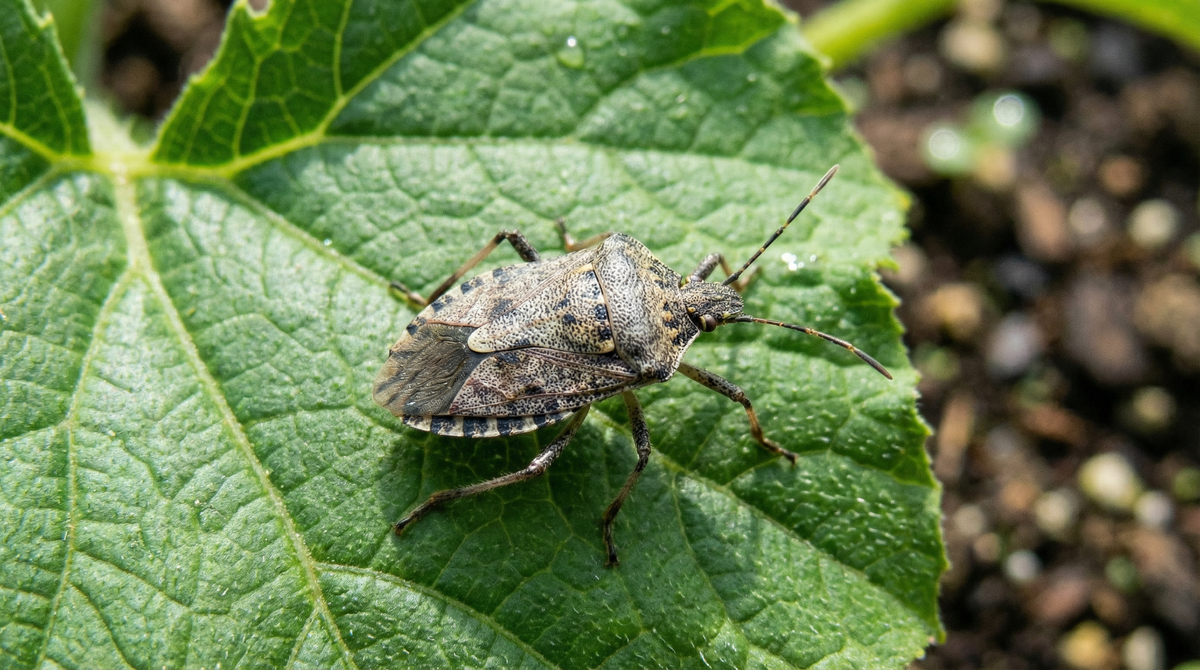
The squash bug (Anasa tristis) is the bane of anyone who grows squash, pumpkins, or other cucurbits — a tough, sap-sucking pest that can wilt and kill vines and is notoriously difficult to control once established. A flat, brownish-gray true bug in the family Coreidae, it feeds on the leaves and stems of squash-family plants, injecting toxic saliva that causes rapid wilting. Because the adults are hard-shelled and resistant to many controls, and because they overwinter to attack next year's crop, the squash bug demands early vigilance. With a beneficial rating of −5, it is one of the most damaging pests of the vegetable garden.
Identification and Description
Adult squash bugs are fairly large, about 1.5 centimeters long, flat-backed, and dark grayish-brown, sometimes with orange or brown striping along the edge of the abdomen. They are often confused with the brown marmorated stink bug, but squash bugs are more elongated and are found specifically on cucurbit plants. When crushed they emit a disagreeable odor. The eggs are a key identifying sign: small, oval, shiny bronze to coppery eggs laid in tidy clusters, usually in the V between leaf veins on the undersides of leaves. The nymphs are distinctive too — the youngest are light green to gray with black legs and antennae, moving in clusters, and they become progressively grayer and more spider-like in appearance with each molt. Wilting leaves and vines, along with those coppery egg clusters, are the surest signs of an infestation.
Life Cycle
The squash bug has three stages — egg, nymph, and adult — with one generation per year (a partial second generation may occur in warm regions). Overwintering adults emerge in spring to feed, mate, and lay eggs as squash plants become established. Females deposit clusters of about 20 bronze eggs on leaf undersides; in southern regions they may lay two to three batches, in the north usually one. The eggs hatch in 7 to 10 days, and the nymphs feed and grow through five instars over about 4 to 6 weeks (the full nymphal period lasting roughly 33 days) before maturing into adults. Activity peaks from about June through September. The new adults feed and then seek shelter to overwinter — hibernating in leaf litter, under rocks, boards, and other debris — which is why fall cleanup is such a critical control point.
Habitat and Range
Native to North America, the squash bug is found across the entire United States — Northeast, Southeast, Midwest, Southwest, West, and Pacific Northwest — in gardens and agricultural fields wherever cucurbits are grown. Its hosts are squash-family plants: summer and winter squash, pumpkins, and, to a lesser degree, cucumbers and watermelon. It shows a strong preference for certain squash, and Blue Hubbard squash in particular is a favorite that can be used to the gardener's advantage.
Role in the Garden
The squash bug is a serious pest rated −5, with no redeeming value. Both adults and nymphs feed by piercing leaves and stems and sucking out sap, and as they feed they inject a toxic saliva that disrupts the plant's water flow, causing leaves to wilt, blacken, become brittle, and die — a condition sometimes called "anasa wilt." Young plants and seedlings can be killed outright, and heavy feeding on established vines reduces yield and can collapse whole plants. Because the hard-bodied adults resist many sprays and hide at the base of plants and under debris, squash bugs are far easier to prevent and catch early than to eradicate once numerous.
Managing the Squash Bug
Control relies on early, persistent, hands-on effort. Scout for eggs from the moment plants emerge and crush or scrape off the coppery egg clusters from leaf undersides before they hatch — this is the single most effective home-garden tactic. Handpick adults and nymphs and drop them into soapy water, checking the base of plants and under leaves regularly. Trap boards exploit the bugs' habit of sheltering: lay a board or folded newspaper on the soil overnight, and in the morning the squash bugs congregate underneath where they can be collected and destroyed. Row covers can protect young plants early in the season, removed at flowering so bees can pollinate. Crucial to long-term control is end-of-season sanitation — clean up all vines and garden debris to remove overwintering shelter — and crop rotation to keep cucurbits away from where bugs overwintered. Planting resistant varieties such as Butternut, Royal Acorn, and Sweet Cheese reduces damage, and a Blue Hubbard trap crop planted around the main crop lures squash bugs away for concentrated destruction. Any insecticidal treatment works best on the youngest nymphs, since adults are highly resistant.
Companion Planting
Aromatic companions can help deter squash bugs. Planting nasturtium and tansy around squash and pumpkins is a traditional and recommended deterrent, adding a layer of protection alongside egg-crushing, handpicking, trap boards, and sanitation.
Winning the Squash Bug Battle Early
The squash bug is beatable, but only with early and consistent attention. Hunt down and crush the coppery egg clusters, handpick adults and nymphs, set out trap boards, cover young plants, choose resistant varieties, ring the patch with Blue Hubbard and nasturtium, and clean up thoroughly each fall. Stay ahead of this tough cucurbit pest from the first week of the season and you can keep your squash and pumpkins from wilting under its attack.