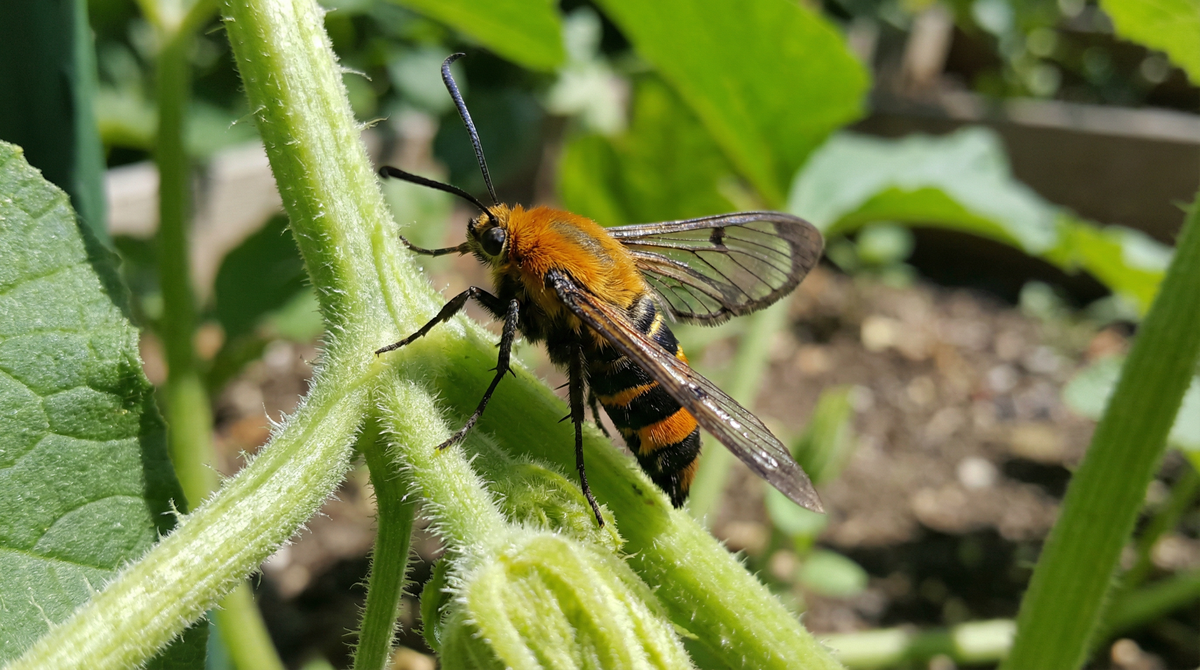
The squash vine borer (Melittia cucurbitae) is one of the most heartbreaking pests a squash grower can face — a moth whose larva bores into the base of a vine and hollows it out from within, causing a thriving plant to collapse seemingly overnight. Because the damage happens inside the stem and out of sight, gardeners often discover the borer only after their squash or zucchini has suddenly and irreversibly wilted. A clear-winged moth in the family Sesiidae, the squash vine borer is a serious pest across the eastern half of the country, and with a beneficial rating of −5, it calls for prevention and precise timing rather than any hope of a late rescue.
Identification and Description
The adult is an unusual and often-misidentified moth: a striking, day-flying, wasp-mimicking insect with an orange-and-black body, black forewings, and clear hindwings, buzzing around squash plants in a way more suggestive of a wasp than a moth. The eggs are tiny, flat, oval, and brown, laid singly on the stems near the base of the plant. The damaging larva is a plump, wrinkled, white-to-cream grub with a brown head, growing up to about 2.5 centimeters, living hidden inside the stem. The unmistakable signs of attack are sudden wilting of the vine (especially in midday heat), a small hole near the base of the stem, and moist, sawdust-like frass (excrement) oozing out of that hole — a sure indication a borer is at work inside.
Life Cycle
The squash vine borer has one generation per year in northern regions and two in the south. Adults emerge from cocoons in the soil from late June to early July, and the females lay their flat brown eggs singly at the base of susceptible plants. The eggs hatch in about one to two weeks, and the larvae immediately bore into the stems, tunneling through and feeding on the plant's vascular tissue for four to six weeks — destroying the vine's ability to move water and nutrients, which causes the characteristic wilting and death. When mature, the larvae exit the stem, burrow one to two inches into the soil, and pupate in a cocoon where they overwinter, emerging as adults the following summer. Adult flight in roughly June and July is the critical window for prevention, since once larvae are inside the stem they are very hard to stop.
Habitat and Range
Native to North America east of the Rocky Mountains, the squash vine borer is found across the Northeast, Southeast, and Midwest, in gardens and farms wherever cucurbits grow. Its hosts are squash-family plants, with a strong preference for thick-stemmed types: zucchini and summer squash, pumpkins, gourds, and especially Hubbard squash are highly susceptible. Thin, solid-stemmed species like butternut squash and cucuzzi are much more resistant.
Role in the Garden
The squash vine borer is a devastating pest rated −5. A single larva tunneling through the base of a stem can girdle and kill an entire plant, and because the feeding is internal, the plant may look healthy right up until it suddenly wilts and collapses. There is no beneficial aspect to offset the damage, and infested plants often cannot be saved once the borer is well established inside. This combination of hidden feeding and rapid, fatal damage is what makes prevention during the adult flight period so essential.
Managing the Squash Vine Borer
Control centers on preventing egg-laying and destroying larvae early. Physical barriers are key: floating row covers over young plants exclude the egg-laying moths during their flight period (remove at flowering so bees can pollinate), and wrapping the base of stems with aluminum foil or nylon stockings blocks larvae from boring in. Planting resistant varieties such as butternut squash and cucuzzi sidesteps much of the damage, and early planting lets plants get large and strong before peak borer activity. Yellow sticky traps help monitor adult flights so barriers and treatments are timed correctly. If a borer is already inside, a plant can sometimes be saved by surgery — carefully slit the stem lengthwise, remove the grub, then mound moist soil over the slit portion to encourage new roots. Applying Bacillus thuringiensis (Bt) or diatomaceous earth to the base of stems targets young larvae before they tunnel in, and parasitic wasps can be encouraged to attack the eggs. Crucially, clean up and destroy all plant debris after harvest and till the soil in fall and spring to expose and kill overwintering pupae.
Trap Crops and Succession
An early-planted Hubbard squash trap crop lures the moths away from other squash, where the concentrated borers can be destroyed. Planting extra squash and staggering plantings also helps ensure a harvest despite some losses, and interplanting resistant butternut and cucuzzi alongside susceptible types reduces overall pressure.
Staying Ahead of the Borer
The squash vine borer gives little warning, so success comes from acting before the larvae get inside. Cover young plants during the summer flight, wrap or foil the stems, grow resistant butternut and cucuzzi, plant early and plant extra, monitor with sticky traps, and clean up and till at season's end. Get ahead of this hidden stem-borer during its narrow window and you can keep your squash vines from wilting away just as the harvest begins.