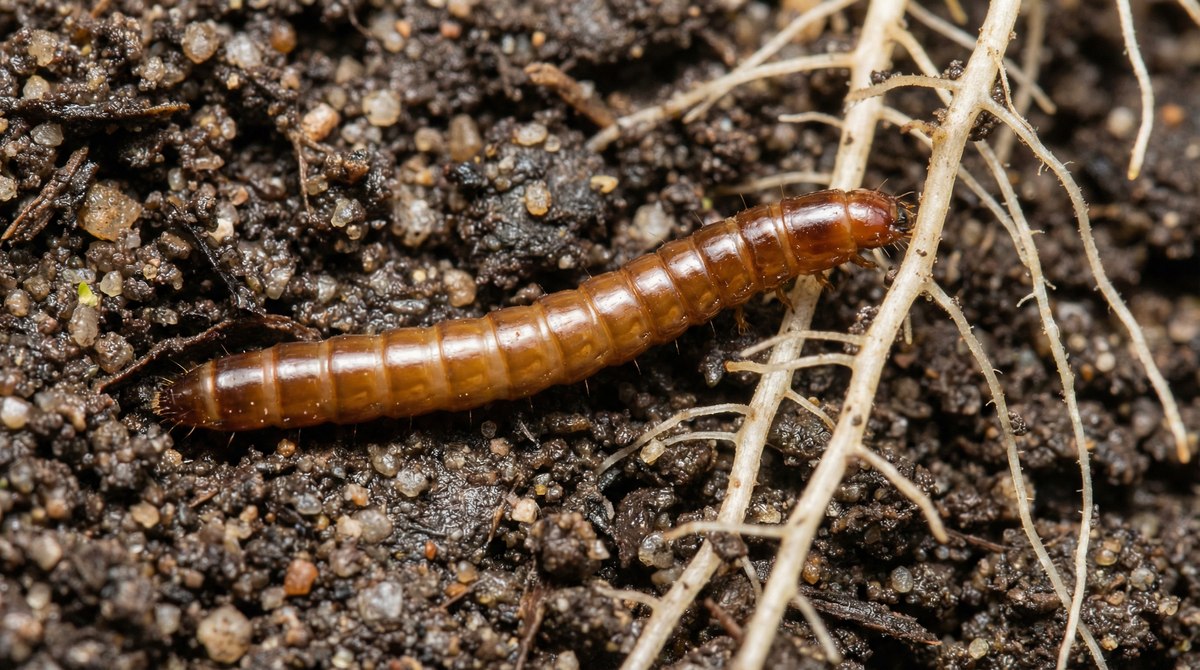
Wireworms are the tough, wiry, soil-dwelling larvae of click beetles (family Elateridae) — long-lived underground pests that bore into seeds, roots, and tubers, often ruining crops before a gardener realizes what is happening. Named for their slender, hard, wire-like bodies, wireworms can spend years in the soil, feeding all the while, which makes them a persistent and frustrating problem, especially in gardens converted from lawn or pasture. With a beneficial rating of −4, the wireworm is a significant pest, but one that patient soil management, crop rotation, and trapping can bring under control over time.
Identification and Description
Wireworms are readily recognized once dug up: slender, elongated, hard-bodied larvae, typically yellow to reddish-brown, shiny, and cylindrical, ranging from a few millimeters to about 4 centimeters long, with three pairs of small legs near the head. Their tough, jointed, wire-like bodies distinguish them from softer grubs and maggots. The adults are click beetles — elongated brown or black beetles famous for the clicking mechanism that flips them into the air to right themselves when placed on their backs. The damage wireworms cause is often the first sign of their presence: poor or patchy seed germination, wilting seedlings, and tunnels bored into potato tubers, carrots, and other root crops, often with narrow holes that open the way to rot.
Life Cycle
Wireworms have an unusually long life cycle — the complete cycle can take anywhere from 2 to 11 years depending on species and conditions, with the larval stage by far the longest. Adult click beetles emerge from the soil from spring to late summer to mate, and females lay their eggs in the soil, often in the shade of plants or in grassy ground. The eggs hatch into wireworms, which then live and feed in the soil for several years, moving up and down through the soil profile with temperature and moisture and feeding on roots, seeds, and tubers throughout. Eventually the mature larva pupates in the soil in late spring to late summer, the pupal stage lasting about a month, and the resulting adult remains in the soil until the following spring. Both larvae and adults overwinter in the soil. This multi-year larval stage means wireworm problems can persist for several seasons.
Habitat and Range
Wireworms are widespread globally and found across the United States — Northeast, Southeast, Midwest, West, and Pacific Northwest. They live in gardens, agricultural fields, grasslands, and pastures — anywhere with soil and roots. They are particularly associated with ground recently converted from grass or sod, since grassy and weedy areas are prime egg-laying sites, which is why new gardens dug from lawn often suffer the worst infestations. They attack a wide range of plants: germinating seeds and the roots of corn, wheat, barley, oats, beans, carrots, and potatoes are all favored, and grass, clover, and weedy alfalfa harbor high populations.
Role in the Garden
Wireworms are a serious pest rated −4. By feeding on germinating seeds they cause gaps and failures in newly sown rows, and by boring into roots and tubers they damage and disfigure potatoes, carrots, and other crops, leaving tunnels that reduce quality and invite rot. Seedlings can be killed outright when wireworms sever or hollow their roots and stems below the soil. Because the larvae are long-lived and shielded underground, and because they move through the soil rather than staying in one spot, wireworms are difficult to eliminate quickly and are best managed through sustained cultural methods rather than any single quick fix.
Managing Wireworms
Control relies on cultural, mechanical, and soil-management methods rather than sprays. Crop rotation is central: rotating in non-host crops such as alfalfa, mustard, onions, and lettuce reduces populations, and it is important to avoid planting susceptible crops like potatoes, corn, and wheat immediately after clover, grass, or weedy alfalfa, which harbor high wireworm numbers. Soil management can kill wireworms directly — a summer fallow that dries the soil, or flooding the soil for several weeks in warm weather, both reduce populations, and tilling the soil several times in late spring and early summer exposes larvae and pupae to predators and the elements. Trapping is an effective hands-on method: bury pieces of potato or "bait balls" of flour and oats a few inches deep, mark them, and dig them up after several days to collect and destroy the wireworms that have gathered to feed. Encouraging natural predators such as birds and ground beetles, and letting poultry work newly tilled ground, further helps reduce numbers.
Companion Planting and Rotation
The key companion-planting strategy against wireworms is thoughtful rotation with non-host and deterrent crops. Planting alfalfa, mustard, onions, lettuce, and sunflowers helps reduce wireworm populations over time, while breaking the sequence of grassy or clover-rich ground followed by susceptible root and grain crops denies the beetles the conditions they favor for laying eggs. Over several seasons, this rotation-based approach steadily lowers wireworm pressure.
Winning the Long Game
Wireworms are patient pests, so beating them takes patience too. Rotate with non-host crops, dry or flood and repeatedly till problem beds, set potato and bait-ball traps to pull larvae from the soil, and avoid following grass or clover with vulnerable crops — and over a few seasons you can bring this long-lived, seed- and root-boring pest down to a level where your seedlings and root crops can thrive.