Native Plants of Florida
From towering bald cypress and the cabbage palm—Florida's state tree—to fiery firebush and clouds of purple blazing star, Florida's native plants are shaped by the state's heat, hurricanes, sandy soils, and seasonal flooding. Spanning pine flatwoods, scrub, hardwood hammocks, freshwater wetlands, and coastal dunes, they anchor Florida's exceptional biodiversity, feed native pollinators, birds, and wildlife, and make resilient, low-input choices for gardens and food forests.
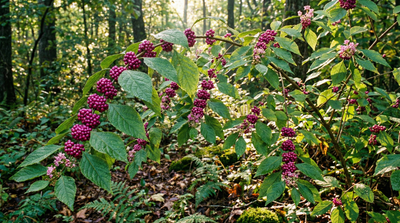
American Beautyberry
Callicarpa americana
High-value wildlife shrub. The heavy fall crop of magenta drupes is eaten by more than 40 songbird species (northern mockingbird, gray catbird, American robin, brown thrasher, cardinal) and by raccoon, opossum, gray fox, and white-tailed deer, providing food from late summer into winter. Summer flowers supply nectar and pollen to native bees, and the foliage is a larval host, adding structural cover and mast in flatwood and hammock understories.
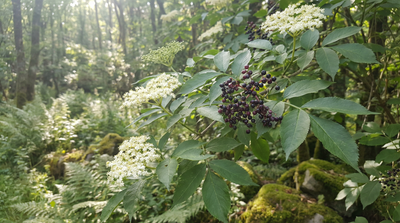
American Elderberry
Sambucus nigra subsp. canadensis
High wildlife value. The abundant summer/fall berries are eaten by many songbirds (mockingbirds, cardinals, catbirds, robins, cedar waxwings), game birds, and small mammals, while the large flat-topped flower clusters provide copious nectar and pollen for a wide range of insects. Fast-growing thickets stabilize wet soils and provide nesting and escape cover. Also serves as a larval host for numerous moths.
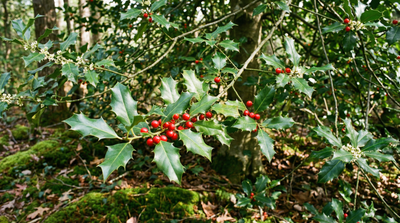
American Holly
Ilex opaca
Persistent bright-red drupes are a key winter food for at least 18 bird species (including wild turkey, northern bobwhite, mourning dove, cedar waxwing, thrushes and other songbirds) plus squirrels and other small mammals; dense evergreen canopy provides nesting and escape cover, and cavities can serve woodpeckers. Spring flowers supply nectar and pollen to insects.
Anise-scented Goldenrod
Solidago odora
A valuable late-season (summer-fall) nectar and pollen source that sustains bees, wasps, butterflies and beetles when few other plants bloom; larval/gall host for several specialist insects and seeds eaten by songbirds, making it a strong wildlife-support plant in dry native uplands.
Aquatic Milkweed
Asclepias perennis
A larval host plant for Monarch (Danaus plexippus) and Queen (Danaus gilippus) butterflies, whose caterpillars feed on the foliage. Its white, nectar-rich umbels are a valued nectar/pollen source for native bees, bumble bees, honey bees, and adult butterflies, adding pollinator value to floodplain and wetland-edge habitats where most milkweeds cannot grow.
Atamasco Rain Lily
Zephyranthes atamasca
A showy spring-blooming geophyte that provides an early-season nectar and pollen source for insects during the late-winter/spring flush after rains. Persistent clumps add early groundcover diversity to flatwoods and floodplain communities. All parts contain toxic lycorine-type alkaloids, so it is largely unpalatable to grazers.
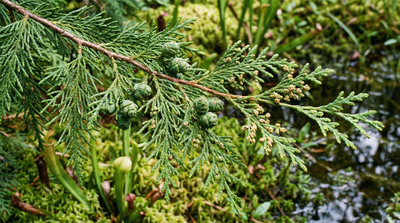
Atlantic White Cedar
Chamaecyparis thyoides
Foundation/dominant tree of rare seepage-swamp communities; dense evergreen stands provide cover and nesting for birds and small mammals, browse for deer, and its wetland peat stores carbon and stabilizes hydrology. Larval host in Atlantic white-cedar swamps.
Bald Cypress
Taxodium distichum
A keystone canopy tree of Florida wetlands. Its swamps and domes provide critical roosting and nesting rookeries for colonial wading birds (herons, egrets, ibis, wood storks) and cavities/perches for raptors and songbirds. Seeds feed waterfowl, wild turkey, wading birds, and small mammals. The "knees" and buttressed trunks armor shorelines, and cypress stands provide flood storage, sediment trapping, and water filtration. Larval host for the baldcypress sphinx moth (Isoparce cupressi).
Beach Sunflower
Helianthus debilis
A low, spreading groundcover that blooms nearly year-round, providing continuous nectar and pollen for bees, butterflies, and moths. Its seeds feed songbirds and small mammals, and its dense, mat-forming growth stabilizes dune sand and gives cover to small wildlife — making it valuable for coastal restoration and native pollinator landscapes.
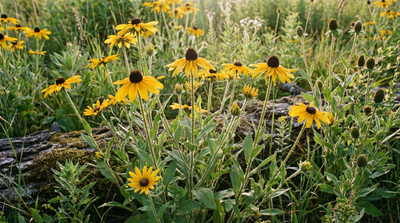
Black-eyed Susan
Rudbeckia hirta
An important nectar and pollen source for native bees and butterflies in sandhill and flatwoods wildflower communities. Serves as a larval host plant, and its abundant seeds are eaten by small seed-feeding songbirds such as finches. A reliable early-successional pioneer that helps stabilize and revegetate disturbed ground.
Black Mangrove
Avicennia germinans
A foundation species of Florida's mangrove and estuarine ecosystems. Its pencil-like pneumatophores and dense roots trap sediment, stabilize shorelines, and buffer storm surge and erosion. The prop-root/pneumatophore zone provides critical nursery habitat for fish, crabs, shrimp and other invertebrates, while the canopy offers cover, roosting and nesting sites for wading birds and other coastal wildlife.
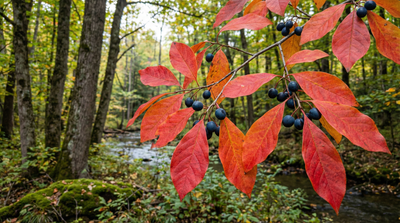
Black Tupelo (Blackgum)
Nyssa sylvatica
High-value wildlife tree. Its blue-black drupes are one of the most important early-fall foods for migrating songbirds (thrushes, robins, woodpeckers, mockingbirds, brown thrashers, flickers) and are eaten by wild turkey, black bear, fox, raccoon and opossum. Spring flowers are a rich nectar/pollen source, and hollows in older trunks provide wildlife dens and cavities.
Blue Flag Iris (Southern Blue Flag, Virginia Iris)
Iris virginica
A showy wetland forb that provides nectar for native bees and structure/cover in marsh and pond-edge communities. Its stout rhizomes help stabilize saturated soils along shorelines and floodplains, and it is a useful component of native wetland restoration and stormwater/retention plantings. Foliage is largely deer-resistant.
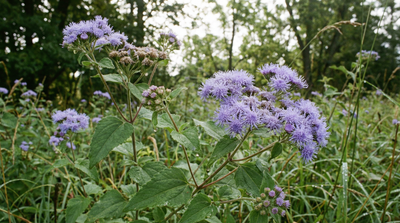
Blue Mistflower
Conoclinium coelestinum
A valuable late-season (summer-fall) nectar source that fuels butterflies, native bees, and moths when many other blooms have faded. Rhizomatous spread forms colonies that stabilize moist soils and provide cover at wetland and meadow edges, supporting conservation biological control by hosting beneficial insects.
Buccaneer Palm (Sargent's Cherry Palm)
Pseudophoenix sargentii
Fruits (small red-to-purple drupes, the source of the "cherry palm" name) are eaten by birds and mammals, aiding seed dispersal; flowers provide nectar and pollen for bees and other insects. As a rare Keys hammock canopy element it contributes to coastal hammock structure.
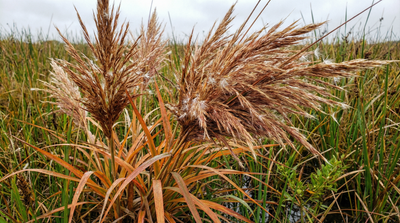
Bushy Bluestem
Andropogon glomeratus
A clumping warm-season perennial that provides food and habitat in wet natural areas. Its abundant seeds are eaten by granivorous birds (sparrows, juncos) and small mammals, and the dense tussocks supply nesting material and cover for small wildlife. It is a documented larval host for several skipper and satyr butterflies, and is widely used in wetland restoration, stormwater ponds, and rain gardens for erosion control and soil stabilization.
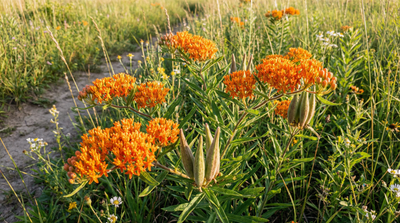
Butterfly Milkweed
Asclepias tuberosa
A significant nectar source whose bright orange flowers draw butterflies, native bees, wasps, and other insects, plus hummingbirds. As a milkweed it is a larval host for monarch, queen, and soldier butterflies, supporting Danaus caterpillar populations in dry upland habitats.
Buttonwood
Conocarpus erectus
A keystone coastal tree that stabilizes shorelines and the transition zone between mangroves and uplands. One of the most important host trees for epiphytes (orchids, bromeliads, ferns) in South Florida, and its flowers, foliage, and rough bark support abundant insects and spiders that feed insectivorous birds. Provides food and cover for birds and wildlife; water-dispersed cone-like seed heads.
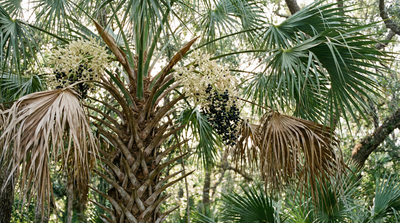
Cabbage Palm (Sabal Palm)
Sabal palmetto
A keystone Florida palm: black fruits feed raccoons, birds, and other wildlife; fragrant flowers provide nectar and pollen; boots and dead fronds provide nesting and roosting cover (a favorite roost of yellow bats) and support epiphytes; larval host for the monk skipper butterfly.
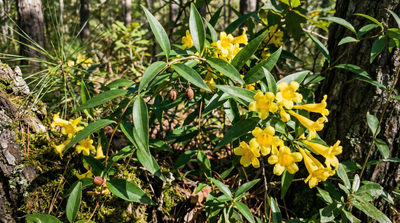
Carolina Jessamine
Gelsemium sempervirens
An early-blooming evergreen vine that provides one of the first significant late-winter and early-spring nectar sources in Florida woodlands, supporting native bees and other pollinators when little else is flowering. Its dense evergreen tangle offers cover and nesting habitat for birds and small wildlife. All parts are highly toxic (gelsemine alkaloids), so it is not a browse or forage plant.
Carolina Wild Petunia
Ruellia caroliniensis
Long-blooming (spring–fall) perennial wildflower that provides nectar and pollen for native bees and butterflies and serves as a larval host plant for two butterflies. A well-behaved native alternative to the invasive Mexican petunia, supporting insect communities without spreading aggressively.
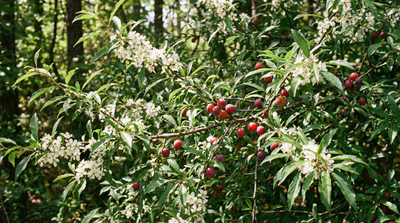
Chickasaw Plum
Prunus angustifolia
Spreads by root suckers to form dense thickets that provide cover and nesting habitat for birds and small mammals. One of the earliest spring bloomers, offering an important early-season nectar and pollen source for native bees. Fruit is eaten by birds, squirrels, foxes, and other wildlife; foliage serves as larval food for several native butterflies and moths.
Coastal Plain Chaffhead (Florida Paintbrush)
Carphephorus corymbosus
A showy late-summer to fall wildflower whose flat-topped clusters of purple disc florets provide an important nectar and pollen resource for bees, butterflies, and wasps during the fall bloom period, supporting pollinator foraging in Florida's fire-maintained uplands.
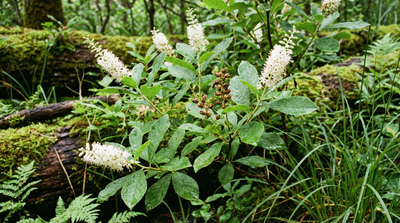
Coastal Sweetpepperbush
Clethra alnifolia
Fragrant, nectar- and pollen-rich summer flower spikes are a valuable late-season food source for native bees, butterflies, and hummingbirds; the persistent seed capsules are eaten by birds and small mammals. Forms thickets that provide cover and help stabilize wetland margins and streambanks.
Cocoplum
Chrysobalanus icaco
Dense evergreen shrub providing year-round cover and nesting habitat for birds and small wildlife. Flowers and fruits nearly year-round; the fleshy drupes are eaten by many birds, mammals, and gopher tortoises (Gopherus polyphemus), which disperse the seeds and aid germination. Valuable for coastal-dune and shoreline stabilization.
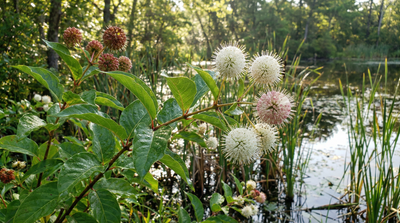
Common Buttonbush
Cephalanthus occidentalis
A valuable wetland shrub. Its abundant summer flowers are a heavy nectar source for bees, butterflies, and hummingbirds, and it is a larval host for sphinx moths. The button-like seed heads are eaten by ducks and many other waterbirds and songbirds (jays, cardinals, nuthatches, titmice, warblers, mockingbirds), while its foliage is browsed by deer and its dense growth provides cover and nesting shelter for wetland wildlife. Also stabilizes shorelines and streambanks.
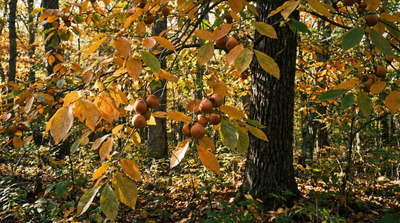
Common Persimmon
Diospyros virginiana
A valuable wildlife food tree: its sweet orange fall fruits are eaten by white-tailed deer, raccoons, opossums, foxes, gray squirrels, and many birds, while the foliage serves as a larval host for several native moths (notably luna moth, royal walnut/regal moth, and hag moth). As a hardy pioneer, it helps stabilize disturbed ground and re-forest old fields.
Coontie
Zamia integrifolia
The only cycad native to the continental U.S. and the sole larval host plant of the rare Atala butterfly (Eumaeus atala) and echo moth (Seirarctia echo); Atala recovery in southeast Florida is directly tied to coontie plantings. Seeds and foliage are toxic (cycasin) to most vertebrates, making its wildlife value chiefly as a host plant rather than forage.
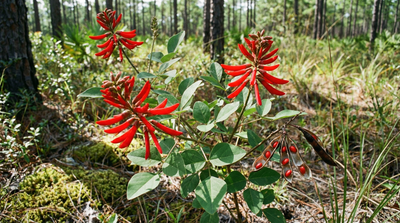
Coral Bean
Erythrina herbacea
A key early-season nectar source: its scarlet tubular flowers bloom on bare branches in spring and fuel Ruby-throated Hummingbirds during migration, along with bumblebees and butterflies. Serves as larval host for the coral bean (Erythrina) borer moth. Thorny stems and dense growth provide cover for small birds and wildlife, and the bright red seeds add structural food-web interest (though toxic).
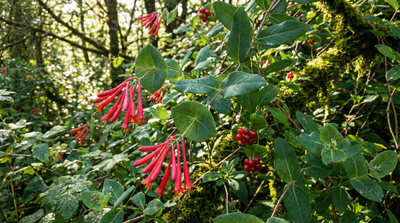
Coral Honeysuckle
Lonicera sempervirens
A high-value native vine: its long red tubular flowers are a major spring–summer nectar source for ruby-throated hummingbirds, and also feed native bees and butterflies. Red berries are eaten by songbirds including cardinals, American robins, finches, thrushes, and quail. It is a documented larval host for the snowberry clearwing (hummingbird) moth and the spring azure butterfly.
Crossvine
Bignonia capreolata
A high-value spring nectar source for ruby-throated hummingbirds during migration, also visited by native bees and butterflies. The long-lived, semi-evergreen woody vine adds vertical structure to woodland canopies and provides cover for birds and small wildlife.
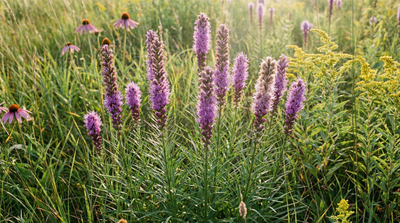
Dense Gayfeather
Liatris spicata
A major late-summer through fall nectar source in wet flatwoods and prairies, drawing butterflies (including migrating monarchs), bumble bees, and other native bees. Larval host for Liatris-specialist flower moths (Schinia gloriosa, S. sanguinea). Seed heads and the insects it concentrates provide food for birds.
Downy Phlox
Phlox pilosa L.
Spring-to-early-summer nectar wildflower and a groundcover component of fire-maintained sandhill and pineland communities. Its fragrant, salverform (long-tubed) pink-to-lavender flowers provide accessible nectar for a range of native insect pollinators.
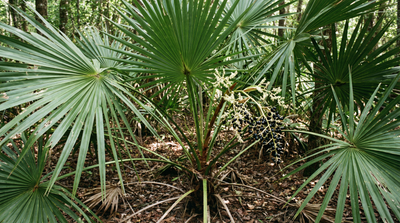
Dwarf Palmetto
Sabal minor
A clumping understory palm that provides year-round cover and nesting sites for birds and small wildlife. Its clusters of small black fruit are eaten by a wide variety of birds and mammals, and its fan leaves stabilize floodplain and hammock understories. Flowers are an insect nectar source. Highly cold-hardy, it anchors wet woodland communities.
Eastern Prickly Pear
Opuntia humifusa
Florida's most widespread native cactus. Showy yellow flowers supply pollen and nectar to a large native-bee community, including cactus-specialist bees. The reddish fruits (tunas) are eaten by gopher tortoises, birds, and small mammals, and gopher tortoises also browse the fleshy pads, making it a notable food source in xeric habitats.
Fakahatchee Grass (Eastern Gamagrass)
Tripsacum dactyloides
A robust clumping warm-season grass that provides dense cover and nesting habitat for small mammals, birds, and reptiles; its seeds are eaten by birds and deer. Widely used for streambank and slope stabilization and erosion control, and serves as a larval host for several native skipper butterflies.
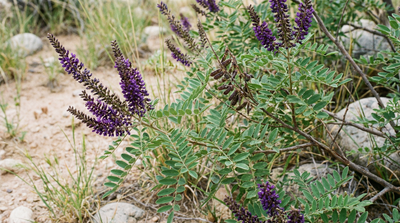
False Indigo Bush
Amorpha fruticosa
Valuable riparian shrub: a butterfly larval host and a nectar/pollen source for bees and other insects, while its dense growth and seeds provide cover and food for birds and small mammals. Widely used for streambank stabilization and erosion control in wet habitats.
False Rosemary
Conradina canescens
A prominent nectar and pollen source in dry scrub and dune communities, attracting many pollinators (especially native bees) with its long March–November bloom. As a dune and scrub sub-shrub it aids sand stabilization and contributes to beach mouse habitat in coastal systems.
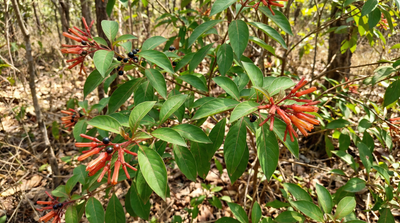
Firebush
Hamelia patens
A premier nectar shrub whose tubular red-orange flowers bloom nearly year-round in South Florida, fueling hummingbirds, butterflies, and native bees; larval host for the Pluto sphinx moth; its dark berries are eaten by songbirds (e.g., mockingbirds, catbirds) and small mammals, aiding seed dispersal. Provides dense cover and long-season resources during otherwise nectar-poor periods.
Florida Anise
Illicium floridanum
Dense evergreen understory shrub that provides year-round cover and nesting sites for birds and small wildlife in ravine and slope-forest habitats. Its aromatic, toxic foliage deters deer and insect grazing, and its fetid maroon flowers supply nectar/pollen to native flies and beetles. A characteristic indicator species of Panhandle steephead ecosystems.
Florida Flame Azalea
Rhododendron austrinum
A deciduous understory shrub of ravine and slope forests whose fragrant, nectar-rich flowers open in early spring, often before leaf-out, providing an important early-season nectar source for returning ruby-throated hummingbirds, native bees, and butterflies. Contributes to the structural diversity of steephead and floodplain forest communities.
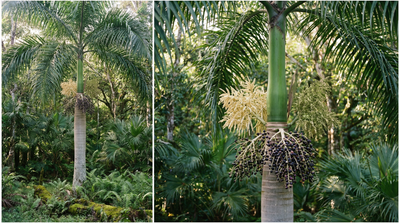
Florida Royal Palm
Roystonea regia
Massive canopy palm of South Florida hammocks and swamps. Its abundant purple-black fruits are eaten by many birds (including migrants) and mammals, and the flower/fruit stalks provide nest and foraging sites. The fronds and trunk offer roosting and nesting structure in tree-island and hammock communities.
Florida Silver Palm
Coccothrinax argentata
Provides food and cover in fire-maintained pine rockland and coastal hammock communities. Birds eat the small purple-black fruits and use the palm for food and nesting; the flowers are visited by bees, and the foliage is a larval host for the monk skipper butterfly.
Florida Thatch Palm
Thrinax radiata
A small understory-to-canopy palm of coastal hammocks whose fleaf crown provides cover and nesting sites for birds; its white fruits are eaten by birds and other wildlife, and its abundant summer flowers are an insect nectar/pollen source. It is a documented larval host for the monk skipper butterfly.
Florida Thistle (Purple Thistle)
Cirsium horridulum
A high-value wildlife plant: its large purple-to-yellow flower heads are a heavy nectar source for butterflies, native bees, and other insects, and it is a documented larval host for the little metalmark. The oil-rich seeds and thistledown feed seed-eating birds, especially American goldfinches, which also use the down for nesting material.
Fourpetal St. John's Wort
Hypericum tetrapetalum
A long-blooming evergreen subshrub of flatwoods and wetland edges whose showy yellow flowers provide pollen for native bees across much of the year; contributes structure and floral resources to fire-maintained pine flatwoods and wet-prairie plant communities.
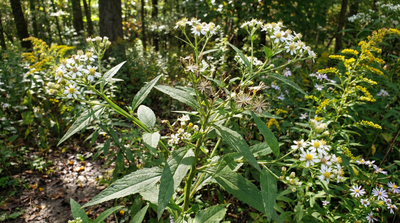
Frostweed
Verbesina virginica
A tall late-summer-to-fall-blooming perennial whose broad white flower clusters are a significant nectar source during the fall migration window, supporting migrating monarchs and a wide range of native bees, wasps, and butterflies when little else is in bloom. Serves as a valuable understory and transitional (edge) plant in moist hammocks and restorations.
Giant Ironweed
Vernonia gigantea
A tall late-summer-to-fall nectar source that is a magnet for butterflies and native bees during a season when few other wildflowers bloom; also documented as a larval host for the spring azure butterfly, and its seed heads provide forage for small birds.
Gumbo Limbo
Bursera simaruba
Major canopy and fast-growing pioneer tree of tropical hardwood hammocks. Small greenish flowers provide nectar and pollen to bees and other insects; the red three-parted fruits (ripening in summer) are eaten by birds such as kingbirds, other flycatchers, and vireos, aiding seed dispersal. Extremely wind- and drought-resistant, making it valuable for hammock stability and post-hurricane canopy recovery. Roots easily from large cuttings, historically used as living fence posts.
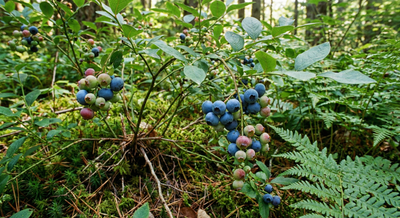
Highbush Blueberry
Vaccinium corymbosum
Spring flowers are an important early-season nectar and pollen source for native bees, while the abundant summer berries are eaten by numerous songbirds, game birds (turkey, quail), and mammals that disperse the seeds; the foliage serves as a larval host for several native butterflies and moths.
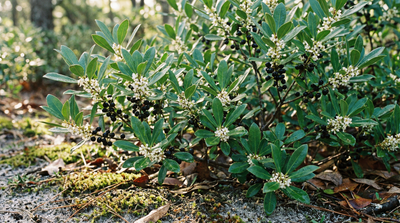
Inkberry (Gallberry, Appalachian Tea)
Ilex glabra
Evergreen flatwoods shrub that provides year-round cover and nesting habitat. Its abundant late-spring nectar supports a large diversity of bees and is the basis of the prized commercial "gallberry honey" of the coastal plain. The persistent black drupes are eaten by songbirds, gamebirds (e.g., wild turkey, bobwhite quail), and small mammals into winter, making it a valuable wildlife food and forage species.
Lanceleaf Blanketflower
Gaillardia aestivalis
A summer-to-fall-blooming nectar and pollen source for a broad range of insect pollinators; seed heads feed granivorous songbirds. Adds floral resources to fire-maintained sandhill and flatwoods communities during the warm season.
Lanceleaf Coreopsis (Lanceleaf Tickseed)
Coreopsis lanceolata
Spring-blooming wildflower whose showy golden ray-flowers provide nectar and pollen for butterflies and native bees; the achenes are eaten by songbirds and small mammals, and it supports conservation biological control by hosting beneficial insects. A prolific self-seeder valuable in meadow and pollinator plantings.
Laurel Oak
Quercus laurifolia
A prolific acorn (mast) producer feeding wild turkey, ducks, quail, blue jays, woodpeckers, squirrels, deer and other small mammals. Its dense canopy provides nesting cover, and its tendency to develop heart-rot hollows creates valuable cavities for cavity-nesting birds and mammals. Also serves as a larval host for several native butterflies and moths.
Leavenworth's Tickseed
Coreopsis leavenworthii Torr. & A.Gray
A prolific, long-blooming (nearly year-round in Florida) nectar and pollen source that sustains a broad range of native pollinators. Its seeds are eaten by small birds and the foliage is browsed by rabbits, adding food-web value beyond pollination. A workhorse species in Florida roadside wildflower and habitat-restoration plantings.
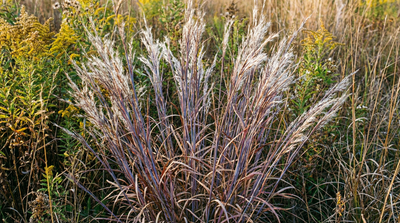
Little Bluestem
Schizachyrium scoparium
A keystone warm-season bunchgrass that provides fine fuel to carry the natural fires that maintain sandhill and flatwoods communities. Its dense clumps offer cover and nesting structure for ground-nesting birds, small mammals, and native bees; the fuzzy seeds are eaten by songbirds and small mammals; and it is a larval host for numerous grass-feeding butterflies and insects.
Loblolly Bay
Gordonia lasianthus
Evergreen canopy provides year-round cover, nesting sites, and severe-weather shelter for birds and small mammals; white-tailed deer browse the foliage. Its large, fragrant, nectar-rich flowers are a warm-season nectar source in bayhead and swamp communities.
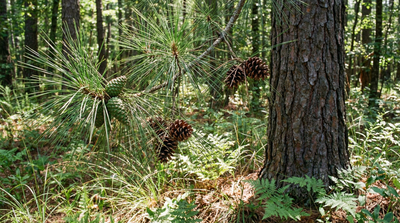
Loblolly Pine
Pinus taeda
Important canopy/timber tree of North Florida forests. Its abundant seeds are eaten by bobwhite quail, wild turkey, songbirds, squirrels, and other small mammals; the foliage and bark provide cover and nesting habitat, and mature stands offer cavity and foraging sites for woodpeckers and other pineland wildlife.
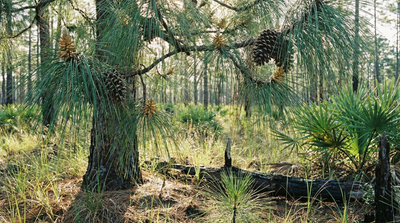
Longleaf Pine
Pinus palustris
Foundation/keystone species of one of North America's most biodiverse ecosystems. Old, properly burned trees provide essential cavity and nest sites for the endangered red-cockaded woodpecker; the community supports gopher tortoise, Florida mouse, gopher frog, eastern diamondback rattlesnake, and fox squirrels. Seeds are eaten by squirrels and birds; bald eagles and raptors nest and perch in the open crowns.
Lopsided Indiangrass
Sorghastrum secundum
Warm-season perennial bunchgrass of fire-maintained pineland and prairie communities; provides cover and seed for wildlife and structural habitat within native groundcover. Its chief value is as a larval host grass for numerous native grass-skipper butterflies, supporting butterfly reproduction in sandhill and flatwoods ecosystems.
Manyflower Beardtongue
Penstemon multiflorus
A showy, long-blooming (spring through fall) nectar and pollen source in fire-maintained sandhill and scrub. Its tubular white-to-pale-lavender flowers feed native bees and hummingbirds, and it contributes structure and forage to xeric upland pollinator communities.
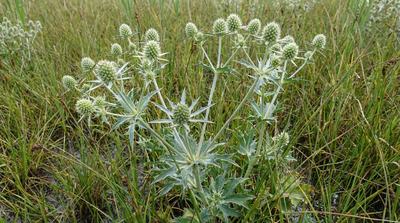
Marsh Rattlesnakemaster
Eryngium aquaticum
Wetland wildflower whose showy powder-blue summer flower heads are a valuable nectar and pollen source for native bees and other insects. Adds structure and floral diversity to marsh and wet-prairie plant communities.
Ohio Spiderwort
Tradescantia ohiensis
A valuable spring-to-summer nectar and pollen source for native bees. The showy blue-violet flowers, each open for less than a day, provide abundant pollen that supports bumblebees and other native pollinators, contributing to pollinator networks in open habitats and wildflower gardens.
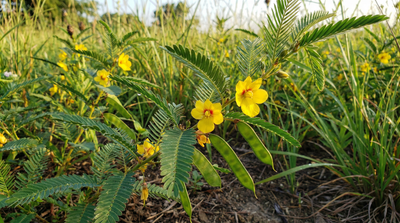
Partridge Pea
Chamaecrista fasciculata (Michx.) Greene
Nitrogen-fixing annual legume that enriches poor sandy soils and colonizes disturbed ground. Its protein- and phosphorus-rich seeds are a key food for northern bobwhite quail and other gamebirds, songbirds, and small mammals; foliage is browsed by deer. Extrafloral (petiolar) nectaries feed ants and other beneficial/predatory insects (conservation biological control), and the plant is both a larval host and an important pollen source for pollinators.
Paurotis Palm (Everglades Palm)
Acoelorrhaphe wrightii
Forms dense multi-stemmed clumps that provide cover and nesting structure for wetland birds and small wildlife. Its late-winter to spring flowers attract bees and other insects, and its abundant orange-to-black fruits are eaten and dispersed by birds. It also serves as a larval host plant, supporting butterfly reproduction in south Florida wetlands.
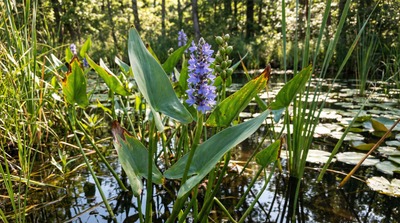
Pickerelweed
Pontederia cordata
Valuable emergent wetland plant. Long-blooming purple-blue flower spikes provide abundant nectar and pollen through the warm season, and the nutritious seeds are eaten by waterfowl and other birds. Dense colonies stabilize shorelines, shade the water, and provide cover and forage for fish, invertebrates, and dragonflies.
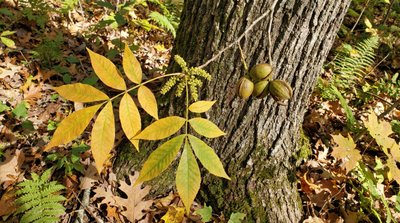
Pignut Hickory
Carya glabra
Mast tree: its nuts are a fall/winter food for squirrels, deer, wild turkey, and other mammals and birds. A significant larval host for numerous native moths (luna moth, royal walnut/regal moth, walnut sphinx, hickory leafroller). Provides canopy structure, cavity/nesting habitat, and hard mast in upland forest ecosystems.
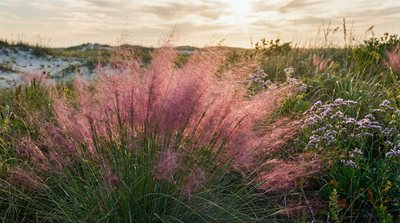
Pink Muhly Grass
Muhlenbergia capillaris
Warm-season bunchgrass whose dense clumps provide nesting cover and refuge for small mammals, reptiles, and ground-foraging birds; small birds eat the tiny seeds. Deep fibrous roots stabilize sandy and coastal soils, aiding erosion control. Highly drought- and flood-tolerant, making it valuable for restoration of dunes, sandhills, and rain-garden/edge plantings.
Pond Cypress
Taxodium ascendens
Dominant canopy tree of Florida's isolated depression wetlands (cypress domes/ponds). Provides critical nesting and roosting habitat for colonial wading birds (herons, egrets, ibis, wood storks) and raptors; seeds are eaten by wood ducks, wild turkey, squirrels, and seed-eating birds. Submerged knees, buttresses, and downed wood shelter fish, amphibians, and invertebrates, while the wetlands it forms store and filter surface water.
Purple False Foxglove
Agalinis purpurea (L.) Pennell
A hemiparasitic native annual that taps the roots of neighboring plants (especially grasses). Its showy pink-purple tubular flowers are a valuable late-season (summer–fall) nectar source for bumblebees and other native bees, and the foliage is a larval host for the common buckeye butterfly, tying it into both pollinator and Lepidoptera food webs of Florida wetlands and flatwoods.
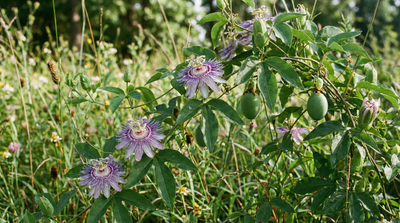
Purple Passionflower (Maypop)
Passiflora incarnata
High-value wildlife plant. Serves as the primary larval host for several Heliconiinae butterflies and its showy nectar-rich flowers feed large bees; the egg-shaped "maypop" fruits are eaten by wild turkey, small mammals and other wildlife.
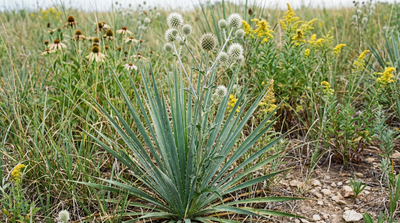
Rattlesnake Master
Eryngium yuccifolium
Strong nectar and pollen source for native bees and beneficial insects; larval host for the black swallowtail; its flowers draw predatory and parasitoid wasps and flies that provide natural pest control, making it a valuable conservation-biological-control plant in native landscapes.
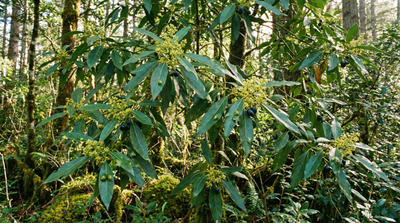
Red Bay
Persea borbonia
Evergreen canopy tree of southeastern hammocks and flatwoods. Its lipid-rich blue-black drupes are eaten and dispersed by songbirds, wild turkey, quail, and small mammals, while the aromatic foliage is a primary larval host for the Palamedes swallowtail (Papilio palamedes) and also feeds the spicebush swallowtail. Spring flowers provide nectar and pollen for native bees. The species has been devastated across much of its range by laurel wilt disease, making surviving trees ecologically valuable.
Red Mangrove
Rhizophora mangle
Keystone estuarine tree. Its tangled prop-root system creates critical nursery habitat for juvenile fish (snook, snapper, tarpon), shrimp, crabs, oysters, and other invertebrates, while the canopy provides nesting and rookery sites for wading birds (egrets, herons, roseate spoonbills). Supports imperiled wildlife including American crocodiles, manatees, and sea turtles. Provides shoreline stabilization, storm-surge and wave-energy buffering, sediment trapping, and significant blue-carbon sequestration.
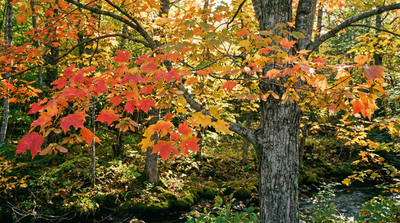
Red Maple
Acer rubrum
A keystone wetland canopy tree offering high wildlife value. Its very early (winter) bloom provides one of the season's first nectar and pollen sources for bees, and it is a larval host for several giant silk and royal moths. Abundant winged samaras feed squirrels, other rodents, and seed-eating birds; its moderate shade supports a diverse understory in swamp and floodplain communities.
Sand Cordgrass
Spartina bakeri
Deep-rooted, dense clumping bunchgrass that stabilizes shorelines and pond banks, traps sediment, and controls erosion — a workhorse of Florida wetland restoration. Its tussocks provide cover and nesting habitat for marsh birds, small mammals, reptiles, and amphibians, and its seeds are eaten by birds. A foundational marsh-edge species.
Sand Pine
Pinus clausa
Defining canopy tree of the fire-maintained sand pine scrub ecosystem, one of Florida's most imperiled and endemic-rich habitats. Its serotinous cones (var. clausa) reseed the scrub after periodic crown fires. Seeds feed gray and flying squirrels, songbirds and other wildlife, and the woodland shelters scrub specialists including the threatened Florida scrub-jay, Florida sand skink, and gopher tortoise. Larval host for the Eastern pine elfin butterfly.
Sawgrass
Cladium jamaicense
A keystone, community-dominant sedge of the Everglades and other Florida wetlands. Dense stands provide critical cover and nesting habitat for wading birds, ducks, alligators, and mammals such as muskrat, raccoon, mink, and otter; seeds are eaten in small to moderate amounts by ducks and shorebirds. Sawgrass builds and stabilizes peat, structures water flow, and is fire-adapted (resprouting rapidly from rhizomes), maintaining the open marsh mosaic on which Everglades wildlife depends.
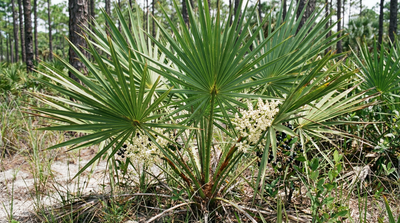
Saw Palmetto
Serenoa repens
A keystone understory species of Florida uplands. Its dense clonal thickets provide year-round cover, nesting, and denning habitat; UF and FNPS sources document well over 100 bird species plus dozens of mammals, reptiles, and amphibians using it for food and shelter. The fleshy fruits are a major late-summer/fall food for black bear, white-tailed deer, raccoon, gopher tortoise, and many birds; fire-adapted clumps regenerate quickly after burns and help stabilize sandy soils.
Scarlet Rosemallow
Hibiscus coccineus
A showy, deep-red-flowered wetland perennial that is a strong nectar source for hummingbirds, butterflies, and native bees, and a documented larval host for several butterflies and moths. Its pollen and seeds feed insects and wildlife, and its clumping stems add vertical structure to marsh and streamside plant communities.
Scarlet Sage (Tropical Sage, Blood Sage)
Salvia coccinea
A warm-season nectar workhorse that blooms from spring through fall (often nearly year-round in south FL). Its tubular red flowers are a heavily used nectar source for ruby-throated hummingbirds, bumblebees and other native bees, and butterflies; it also reseeds readily to provide dependable pollinator forage in disturbed and restored sites.
Scrub Palmetto
Sabal etonia
A characteristic understory palm of imperiled Florida scrub. Its fleshy black fruits are eaten by birds, gopher tortoises, and small mammals, and the low, dense fan leaves (from a mostly underground trunk) provide cover and nesting/forage structure for scrub wildlife. Flowers are visited by numerous native bees.
Sea Oats
Uniola paniculata
Florida's premier dune-building and dune-stabilizing grass: its tall leaves trap wind-blown sand while deep roots and spreading rhizomes anchor dunes against erosion and storm surge, protecting beaches and inland property. Seeds are eaten by birds (red-winged blackbirds, song sparrows) and small mammals (marsh rabbits, mice), and dead stems are used by stem-nesting native bees.
Simpson's Stopper
Myrcianthes fragrans
Evergreen shrub/small tree whose fragrant white flowers provide nectar and pollen for bees and butterflies, while its abundant orange-to-red berries are eaten by fruit-eating songbirds (mockingbirds, cardinals, blue jays, buntings) and small mammals. The dense evergreen canopy supplies cover and nesting habitat for birds.
Slash Pine
Pinus elliottii
Dominant canopy tree of Florida pine flatwoods and pine rockland ecosystems. Seeds are an important food for gray and fox squirrels, wild turkey, and other seed-eaters; dense evergreen foliage provides cover and nesting sites. Mature living trees are excavated for cavities by the federally endangered red-cockaded woodpecker, and support many cavity-nesting birds, bats, and insects. Fire-adapted and structurally central to the fire-maintained flatwoods community.
Slender Goldentop
Euthamia caroliniana
An abundant late-summer-to-fall bloomer that provides an important nectar and pollen source during fall pollinator migration. Heavily visited by native bees, wasps, syrphid flies, and butterflies (including migrating monarchs). Rhizomatous colonies also help stabilize moist, open soils.
Smooth Cordgrass
Spartina alterniflora
A foundational salt-marsh species: its dense rhizomatous stands trap sediment, stabilize shorelines, and buffer wave energy. Provides critical estuarine nursery and refuge habitat for fish, crabs, shrimp, and shellfish; detritus fuels the coastal food web. Seeds and shoots are eaten by marsh birds and waterfowl (roots favored by snow geese).
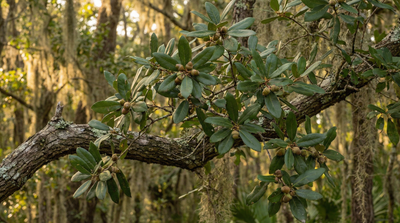
Southern Live Oak
Quercus virginiana
A foundational canopy tree of Florida hardwood hammocks. Its abundant, low-tannin acorns are an important mast crop for deer, squirrels, wild turkey, wood ducks, jays, woodpeckers and other wildlife; the spreading limbs offer prime nesting and denning habitat and support epiphytes such as Spanish moss, resurrection fern and butterfly orchid. It is a heavy larval host for many butterflies and moths, contributing large volumes of caterpillar biomass that feed songbirds.
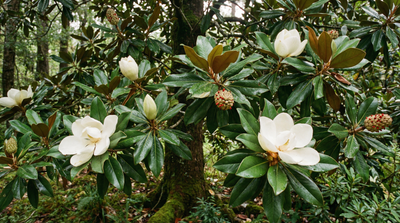
Southern Magnolia
Magnolia grandiflora
Large evergreen canopy tree of upland hardwood forests. Its cone-like aggregate fruits release bright red, lipid-rich seeds that are eaten and dispersed by squirrels, opossums, and birds including bobwhite quail and wild turkey. The dense, year-round evergreen canopy provides nesting sites, roosting cover, and shelter for birds and small mammals.
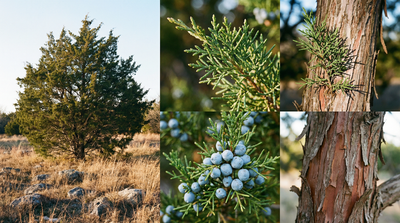
Southern Red Cedar
Juniperus virginiana
An evergreen conifer of high wildlife value. Fleshy blue "cedar berry" cones are a fat- and carbohydrate-rich winter food for cedar waxwings, northern bobwhite, mockingbirds, and other songbirds, plus mammals such as rabbits and foxes; birds disperse the seeds. Dense evergreen foliage supplies year-round roosting and nesting cover. Larval host for the Juniper (Olive) Hairstreak butterfly. Wind-firm and salt-tolerant, it stabilizes coastal soils.
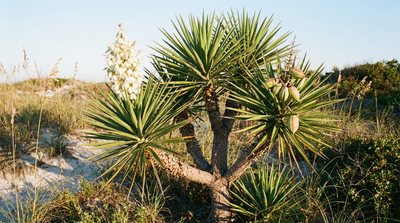
Spanish Bayonet
Yucca aloifolia
Engages in an obligate mutualism with yucca moths, which pollinate the flowers while laying eggs in the ovary. It is the larval host plant for the yucca giant skipper (Megathymus yuccae) and cofaqui giant skipper (Megathymus cofaqui), whose caterpillars bore into the roots/caudex. Nectar-rich white flowers feed butterflies such as the great southern white, and the dense, spiny clumps provide cover and nesting refuge for birds and small wildlife; the fleshy fruits are eaten by wildlife.
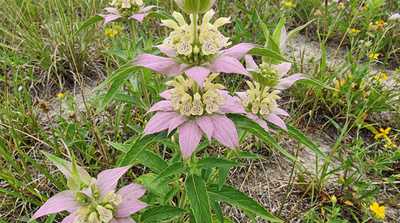
Spotted Beebalm
Monarda punctata
A high-value nectar plant with an exceptionally long bloom period (late spring through fall) that sustains a broad community of pollinating insects. Especially notable for attracting predatory and parasitic wasps that provide biological pest control, along with native bees, butterflies, and moths, making it a keystone nectar resource in dry, sandy Florida plant communities.
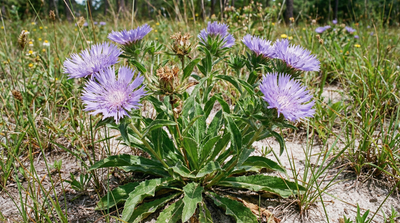
Stokes' Aster
Stokesia laevis
Large, showy composite flower heads produce abundant nectar and pollen through late spring and summer, supporting a broad range of bees, wasps, and butterflies; a valuable nectar source in fire-maintained wet savanna and flatwoods pollinator communities
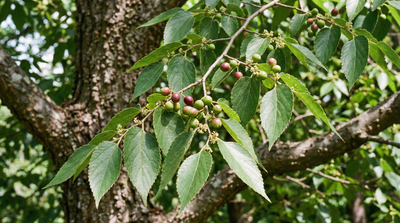
Sugarberry (Hackberry)
Celtis laevigata
A keystone floodplain shade tree. Its abundant fall drupes are an important food source for many songbirds (including migrants), wild turkey, and small mammals; the dense canopy provides nesting and cover. The foliage is a larval host supporting several butterfly species, and the tree is a common canopy component stabilizing riverine and hammock soils.
Sunshine Mimosa (Powderpuff)
Mimosa strigillosa
A fast-spreading, mat-forming, nitrogen-fixing legume groundcover (Rhizobium root nodules enrich the soil). Provides erosion control and living-mulch cover, and is a strong wildlife plant: an important nectar and pollen source for bees and butterflies and a larval host for sulphur butterflies.
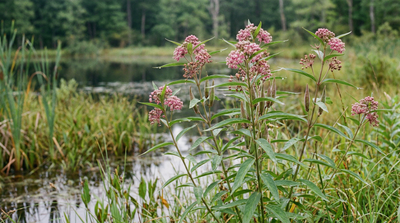
Swamp Milkweed
Asclepias incarnata
A high-value wetland nectar plant and one of Florida's key native milkweeds. Serves as an obligate larval host for milkweed butterflies (Monarch, Queen, Soldier) and provides abundant nectar for a wide range of native bees and butterflies, making it important for pollinator and Monarch conservation in wet habitats.
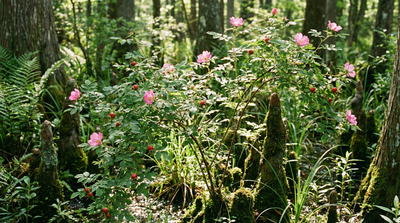
Swamp Rose
Rosa palustris
Fragrant pink flowers are an important pollen/nectar source for native bees; abundant red hips feed songbirds (including quail and wild turkey) and small mammals into fall and winter; arching, thorny canes form thickets that provide cover and nesting habitat, and dead stems host stem-nesting bees. Foliage is a larval host for many native Lepidoptera. Roots and thickets help stabilize streambanks and wetland margins, making it valuable for riparian and wetland restoration.
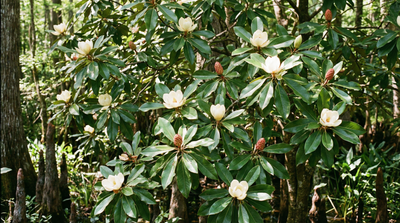
Sweetbay Magnolia
Magnolia virginiana
Larval host for the sweetbay silkmoth (Callosamia securifera) and tiger swallowtail butterflies; fragrant spring flowers are a pollen source for pollinating beetles. Red arillate seeds are eaten by songbirds (cardinals, robins, woodpeckers), wild turkey, quail, squirrels, mice, and deer. Its clonal wet-thicket habit makes it valuable for wetland and streambank restoration.
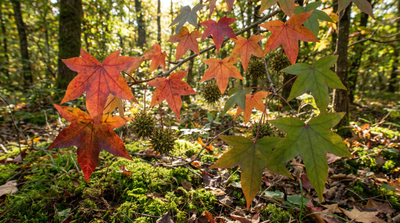
Sweetgum
Liquidambar styraciflua
A high-value wildlife tree: one of the most important larval host plants in eastern forests, supporting hundreds of moth and butterfly species (including luna and promethea silkmoths). Its abundant winged seeds in spiky capsules are eaten by goldfinches, purple finches, chickadees, squirrels and chipmunks, and the tree provides nesting sites and cover for birds and other wildlife. A fast-growing, wind-firm canopy component of floodplain and hardwood forests.
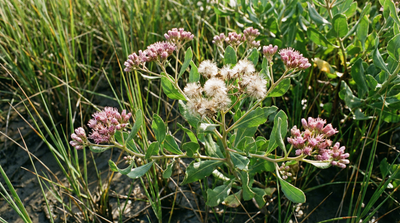
Sweetscent
Pluchea odorata
A valuable late-season nectar source in Florida wetlands. The showy, sweet-scented rosy-pink flower clusters draw abundant bees and a wide variety of butterflies from summer into fall, providing forage where many other plants have finished blooming. As a marsh- and swamp-edge colonizer it supports pollinator communities in freshwater and estuarine systems.
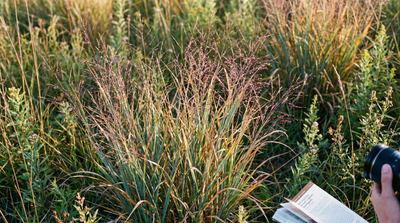
Switchgrass
Panicum virgatum
Warm-season perennial bunchgrass valued in restoration. Provides dense cover and nesting material for birds and small mammals; its abundant seeds are eaten by ground-feeding songbirds and game birds. Serves as a larval host for several skipper butterflies and satyrs, and its deep, fibrous root system stabilizes soil and controls erosion along banks and swales.
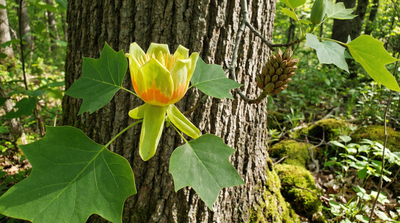
Tulip Poplar (Tuliptree)
Liriodendron tulipifera
Fast-growing canopy tree providing nesting and cover for birds and mammals; large yellow-green, orange-marked spring flowers are a strong nectar source ("good honey plant"). Larval host for the eastern tiger swallowtail (Papilio glaucus) and tuliptree silkmoth (Callosamia angulifera). Winged samaras and seeds are eaten by songbirds (e.g., finches, cardinals) and small mammals; flowers also attract hummingbirds.
Turkey Oak
Quercus laevis
Keystone hardwood of xeric sandhill/scrub ecosystems. Its abundant acorns are a fall/winter mast crop for white-tailed deer, wild turkey, bobwhite quail, black bear, squirrels, and other small mammals; cavities and branches provide nesting and foraging sites for woodpeckers and other birds. Serves as a larval host for several butterflies.
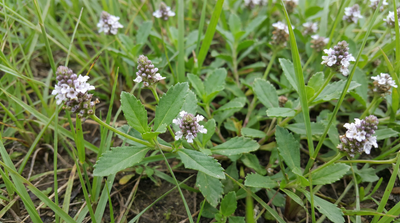
Turkey Tangle Frogfruit
Phyla nodiflora
A fast-spreading, mat-forming native groundcover that stabilizes soil, colonizes disturbed and coastal ground, and provides near year-round bloom. Doubles as a larval host for several butterflies and a reliable nectar plant for a broad suite of pollinators, making it a keystone-value plant in butterfly gardens and restoration plantings.
Virginia Sweetspire
Itea virginica
Its abundant fragrant white flower spikes attract a wide variety of insect pollinators, and the thicket-forming shrub provides food and cover for wildlife while stabilizing streambanks and floodplain soils (erosion control). A useful nectar source in wetland edge communities.
Walter's Viburnum
Viburnum obovatum
Multi-season wildlife value: showy spring flower clusters draw an array of pollinating insects, and abundant summer-to-fall drupes are eaten by songbirds and other wildlife. Its dense evergreen branching provides cover and nesting sites for songbirds such as cardinals, and it serves as a larval host plant for the spring azure butterfly.
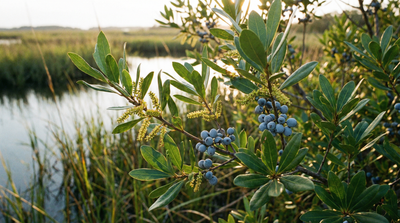
Wax Myrtle
Morella cerifera
Nitrogen-fixing pioneer (Frankia actinobacteria root nodules) that improves poor soils and stabilizes disturbed and coastal sites; dense evergreen thickets provide excellent nesting and escape cover, and the waxy fruits are a critical fall/winter food for birds such as Yellow-rumped ("myrtle") Warbler, Northern Bobwhite, Wild Turkey, and Carolina Wren.
White Wild Indigo
Baptisia alba
A nitrogen-fixing legume that enriches poor sandy upland soils. Larval host plant for the wild indigo duskywing and Zarucco duskywing butterflies, and its flowers are an important nectar/pollen source for bumblebees and other native bees. Foliage is browsed lightly by deer and rabbits. All parts are toxic to livestock and people if eaten in quantity.
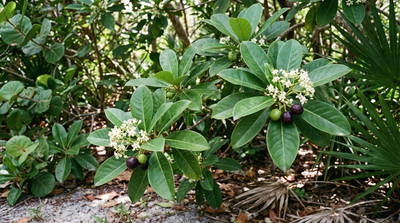
Wild Coffee
Psychotria nervosa Sw.
Important shaded-understory shrub in Florida hammocks. Its small white flowers are a nectar source for many pollinators, and its clusters of bright-red drupes are eaten by birds and small mammals, making it a valuable food and cover plant in hammock ecosystems.
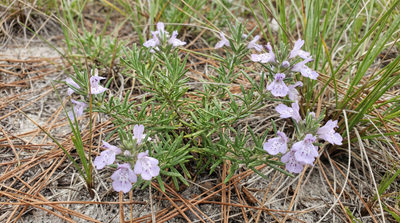
Wild Pennyroyal
Piloblephis rigida
A low, aromatic evergreen subshrub that blooms from late winter through spring and often year-round. Because it flowers so early and for so long, it supplies nectar and pollen when little else is in bloom, making it a valuable resource for native bees and butterflies. Frequently used as a groundcover in native landscaping and in scrub/flatwoods restoration.
Wiregrass
Aristida beyrichiana
Keystone groundcover of the longleaf pine ecosystem. Its dense, flammable foliage is the primary fine fuel that carries frequent low-intensity ground fires, maintaining the open, fire-adapted community and stimulating its own flowering/seeding after burns. Provides major forage for gopher tortoise and other grazers, plus ground-level cover, nesting material, and insect habitat for many sandhill/flatwoods species.
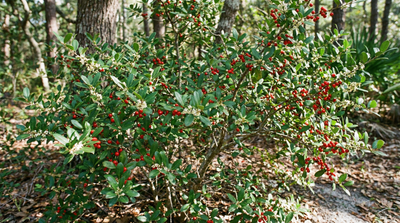
Yaupon Holly
Ilex vomitoria
High wildlife value. Persistent bright-red berries are a key fall and winter food source for many songbirds (cited as eaten by 40+ bird species) plus small mammals, while the dense evergreen canopy provides nesting sites and winter cover. Abundant spring flowers supply nectar and pollen to bees, and the foliage serves as a butterfly larval host.