Native Plants of Texas
Texas covers more ecological ground than any other state in the lower 48, and its native flora shows it: Longleaf Pine and American Beautyberry in the East Texas Piney Woods, Little Bluestem and Sideoats Grama across the Blackland Prairie, Ashe Juniper and Bigtooth Maple on the Edwards Plateau, Texas Ebony and the native Sabal Palm down in the Rio Grande Valley, and Lechuguilla, Ocotillo and Creosote Bush out in the Trans-Pecos. Every plant below is a documented Texas native rather than a drought-tolerant import: Bluebonnet and Indian Blanket for spring color, Cenizo and Agarita for evergreen structure, Pecan and Bald Cypress for bottomland shade, and Texas Prickly Pear for ground nothing else will hold. Match one to your own ecoregion and it will take the heat, the drought and the caliche without coddling.
Agarita
Mahonia trifoliolata
A keystone brush-country shrub with unusually broad wildlife value. Its bright red early-summer berries are readily eaten by many songbirds and small mammals, which disperse the seed. Its stiff, densely interlocking spiny branches provide high-quality escape cover, roosting and nesting habitat — documented for nesting wild turkey and for quail and small mammals — plus cover for white-tailed deer. Because it is evergreen and deeply drought-hardy, it holds structure and cover through drought and winter when little else does. Its very early (February) bloom fills a critical late-winter nectar and pollen gap. Foliage is spiny and unpalatable, so it is highly deer-resistant and persists under heavy browse pressure, often serving as a nurse plant.
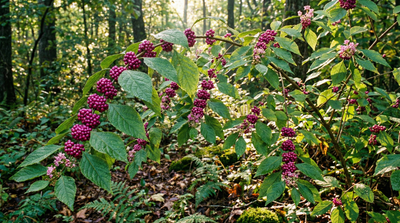
American Beautyberry
Callicarpa americana
A high-value understory shrub for East Texas wildlife. Its dense magenta drupe clusters are an important fall and early-winter food source for Northern Bobwhite and numerous songbirds (mockingbirds, thrashers, cardinals, robins) as well as small mammals, bridging the lean season after softer summer fruits are gone. Foliage is a preferred white-tailed deer browse, making it a useful indicator of browse pressure. Its loose, arching form provides cover and nesting structure at the woodland edge, and the summer flowers supply nectar and pollen. Valued for edge plantings and noted by USDA for surface-mine reclamation.
American Sycamore
Platanus occidentalis
Its greatest ecological value is structural rather than nutritional. Sycamores grow massive and hollow with age, and those cavities are premier den and nest sites — barred owls, eastern screech-owls, great crested flycatchers, chimney swifts, and wood ducks all use them, and the largest old trees form cavities big enough for black bear dens. Seeds are eaten by purple finches, goldfinches, chickadees, and dark-eyed juncos, and by muskrats, beavers, and squirrels, though FEIS rates the species low as deer or turkey food and only medium for waterfowl habitat. As a fast-growing pioneer of raw alluvium it stabilizes streambanks, shades channels, and anchors riparian corridors that function as wildlife movement lanes across otherwise open Texas country.
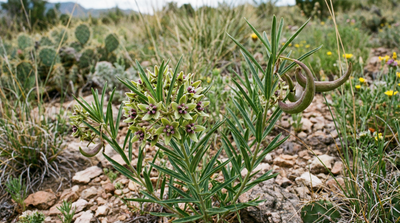
Antelope Horns Milkweed
Asclepias asperula
One of the most important native milkweeds in Texas. It is a primary larval host for Monarch butterflies during the spring generation that develops in Texas after adults return north from Mexican overwintering grounds, and also hosts Queen butterflies. Its spring-through-fall bloom supplies nectar to a broad insect community. Contains cardiac glycosides, making it toxic to livestock (especially sheep) and to humans and pets — the milky sap can irritate skin and eyes. Grazing animals generally avoid it, though losses occur under overgrazing or drought, and it remains toxic when dried in hay.
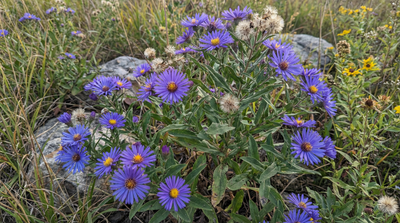
Aromatic Aster
Symphyotrichum oblongifolium
A high-value late-season nectar and pollen source, blooming in fall after most Texas forbs have finished — a critical bridge resource for bees and migrating butterflies heading into winter. Serves as a larval host for the Silvery Checkerspot (Chlosyne nycteis) and numerous moth species. Wild Turkey and other upland game birds eat the seeds and foliage to a limited extent, and mammalian herbivores browse the foliage occasionally, though its forage value is low. Dead hollow stems left standing over winter provide nesting habitat for cavity-nesting native bees. Spreads slowly by stolons to form low mounds, offering groundcover and soil stabilization on dry, sunny, rocky sites, and is suitable for native seed mixes and habitat restoration on disturbed ground.
Ashe Juniper
Juniperus ashei
The fleshy "berries" (female cones) are highly palatable and are a significant winter food for many birds and small mammals, including American robin, cedar waxwing, and northern bobwhite; raccoons, foxes, and coyotes also eat and disperse the seed. Browse is of low palatability to deer and livestock, but the dense evergreen canopy supplies year-round thermal and escape cover. Its greatest ecological role is structural: the shreddy bark of mature trees is essential nesting material for the federally endangered Golden-cheeked Warbler, which appears obligately dependent on Ashe juniper and breeds only in mature juniper-oak woodlands of the Edwards Plateau.
Autumn Sage
Salvia greggii
A high-value nectar shrub whose long bloom season (roughly March/April through November/December) is its key ecological contribution. TPWD notes the abundant flowers provide "copious nectar" and supply food "over the long hot summer" for hummingbirds when other plants have waned — filling the mid- and late-season nectar gap and supporting fall hummingbird migration through central and west Texas. Semi-evergreen, persistent, drought-tolerant and deer-resistant, providing low cover and structure on thin rocky soils.
Bald Cypress
Taxodium distichum
A foundational riparian and swamp canopy tree and one of the largest, tallest, and longest-lived trees in Texas (commonly to 600 years, some 800–1,200). Provides cover and nesting substrate: branches support nesting bald eagles and osprey, and rotting "knees" and cavities are used by warblers. Seeds are eaten by wood ducks, wild turkey, evening grosbeak, and squirrels, and the bark and foliage support insectivorous birds. Hydrologically, stands diffuse and slow floodwaters (reducing flood damage) and trap sediments and pollutants, while root systems stabilize streambanks. Bald cypress–water tupelo and bald cypress–black willow stands anchor Texas bottomland hardwood systems, among the richest wildlife habitats in the state.
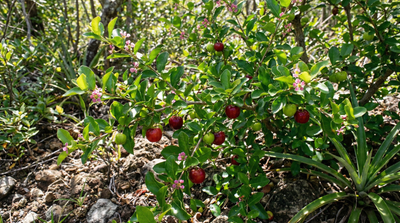
Barbados Cherry
Malpighia glabra
Multi-season wildlife shrub in Tamaulipan thornscrub. Lady Bird Johnson Wildflower Center summarizes its value as "Nectar-insects, Fruit-birds, Fruit-mammals, Browse." Pink flowers appear over a long season (roughly March–December, peaking April–October), supplying insect forage well past the spring flush, followed about a month later by red fruit taken by birds and small mammals; foliage is browsed. Forms a thick, rounded evergreen canopy that provides dense cover and nesting structure in brushland. Ecologically most significant as the primary Texas larval host for two Lower Rio Grande Valley specialty skippers.
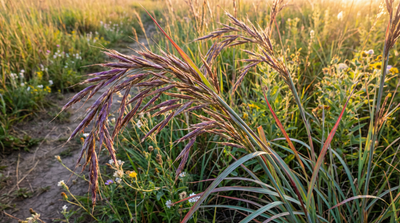
Big Bluestem
Andropogon gerardii
One of the "big four" grasses of the North American tallgrass prairie (with little bluestem, Indiangrass, and switchgrass) and a keystone structural species in Texas prairie. Provides cover for two dozen-plus songbird species and nesting habitat for grassland birds including Grasshopper Sparrow, Henslow's Sparrow, Sedge Wren, and Western Meadowlark, plus seed for birds. Good grazing forage for livestock — it is preferred by cattle and therefore declines under heavy continuous grazing, making it a decreaser and an indicator of prairie condition. Its deep root mass builds soil structure and carbon, and it is a mainstay of prairie restoration seeding.
Bigtooth Maple
Acer grandidentatum
Dominant canopy tree of the bigtooth maple–Lacey oak–Buckley oak and bigtooth maple–oak forest alliances in Texas canyons. Per USFS FEIS, it provides foraging, nesting, and roosting habitat for a wide variety of birds throughout its range, and is browsed by deer (light in winter, moderate in summer for Rocky Mountain mule deer); samaras are taken by birds and small mammals. Its canopy shades and cools canyon riparian corridors, helping sustain the mesic microclimate that the entire relict plant community depends on. Generally fire-tolerant, resprouting from the root crown after burning. The Edwards Plateau stands produce the southernmost fall foliage display in North America, an ecotourism draw at Lost Maples State Natural Area.
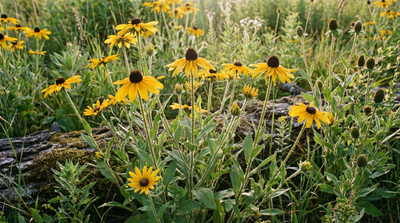
Black-eyed Susan
Rudbeckia hirta
A high-value prairie forb that supplies abundant nectar and pollen through a long summer-to-fall bloom, a period when many spring wildflowers have finished. Its composite flower heads are broadly accessible to short- and long-tongued insects alike, making it a generalist resource for native bees and butterflies. It serves as a larval host for at least two checkerspot butterflies. Seed heads persist into winter and feed granivorous birds such as goldfinches and sparrows. As an early-successional, readily self-seeding species it is a workhorse in prairie restoration and pocket-prairie plantings, holding ground and providing forage while slower perennial grasses and forbs establish.
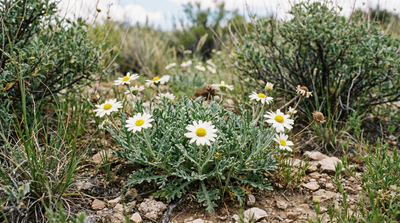
Blackfoot Daisy
Melampodium leucanthum
A long-blooming (March–November) nectar and pollen source that flowers through the hot, dry mid-season gap when little else is blooming on limestone rangeland. Seeds are taken by granivorous birds. Its low evergreen mound stabilizes thin, rocky calcareous soils on slopes and outcrops where few forbs establish.
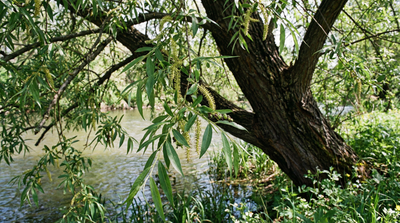
Black Willow
Salix nigra
A foundational Texas riparian tree. Bark, tender twigs, and buds are browse for white-tailed deer, rabbits, and beaver; catkins and seed provide an unusually early-season harvest for songbirds, waterfowl, and small mammals at a time when little else is available. Its dense, fast-growing root system is an excellent soil stabilizer on stream and pond banks, reducing erosion and buffering flood energy. Fast establishment from stem fragments lets it colonize scoured banks and pioneer disturbed floodplains, shading and cooling stream channels.
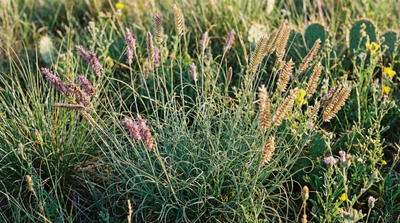
Blue Grama
Bouteloua gracilis
A keystone matrix grass of Texas shortgrass and mixed prairie — the dominant species of the shortgrass steppe and a primary soil-holding, erosion-controlling sod and bunch former with prolific fibrous roots and short stout rhizomes. Provides good grazing for both livestock and native browsers, and is notably productive forage in the Trans-Pecos where summer rainfall reaches roughly 14 inches. Seed is taken by granivorous birds; the low, dense basal tuft supplies cover and nesting material for grassland birds and small mammals. It is a larval host for at least six skipper butterflies, making it a butterfly-reproduction plant rather than a nectar plant. It decreases under heavy continuous grazing (though it holds on better than black grama), so its abundance is a useful indicator of rangeland condition. Widely used as a low-water native turf and meadow grass — a direct native replacement for non-native Bermudagrass.
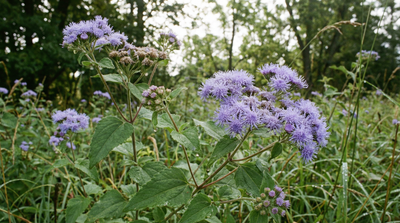
Blue Mistflower
Conoclinium coelestinum
A high-value late-season nectar plant, blooming July through November when few other forbs are flowering — a documented magnet for late-season butterflies during fall monarch migration through Texas. Wildflower Center notes special value to native bees and use in conservation biological control, meaning it supports predatory and parasitoid insects that suppress pest populations. Provides nectar, pollen, and seed for bees, butterflies, and birds. Rhizomatous colonies stabilize streambanks and moist ditch margins.
Buckley's Yucca
Yucca constricta
A structural and functional keystone of thin-soil limestone grasslands. Its April-July flower stalks are a concentrated late-spring nectar pulse in a habitat with few other resources at that season, and the plant anchors an obligate pollination mutualism with yucca moths that cannot persist without it. Evergreen rosettes provide year-round cover, and the tough armed foliage creates protected microsites where seedlings of other natives can establish out of reach of browsing. Deer readily eat the flower stalks (though the plant is rated highly deer-resistant overall), and the dry dehiscent capsules release seed that supports small mammals and birds. Its deep root system and clumping habit stabilize shallow, erosion-prone soils on outcrops and rocky slopes.
Buffalograss
Bouteloua dactyloides
The keystone sod grass of the shortgrass prairie, historically the primary forage sustaining the great bison herds of the Plains, and still rated good grazing for livestock and fair for wildlife. Birds eat the seeds and use the leaves as nesting material; cured foliage provides winter browse for mammals. Larval host for the green skipper butterfly. Its dense sod stabilizes heavy clay soils, and as a low-water native turf it is the primary regional alternative to invasive Bermudagrass.
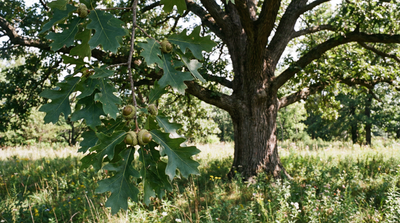
Bur Oak
Quercus macrocarpa
A keystone bottomland shade tree producing the largest acorns of any native North American oak (golf-ball sized), a high-value mast crop for white-tailed deer, squirrels, wild turkey, wood ducks, jays, woodpeckers, and other ground birds and small mammals. As a white-oak-group species its acorns are low in tannins and germinate the same autumn, making them especially palatable wildlife forage. The very wide, open crown (often broader than tall) provides nesting and cover; the tree is long-lived (200-300 years), fire-tolerant thanks to corky bark, and relatively resistant to oak wilt — an important trait in Central Texas where oak wilt devastates red oaks and live oaks. Like other oaks it supports a large community of leaf-feeding caterpillars that in turn provision breeding songbirds.
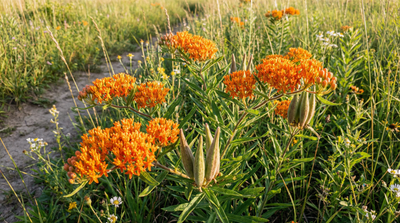
Butterfly Weed
Asclepias tuberosa
One of the heaviest nectar producers among Texas milkweeds, drawing large numbers of butterflies, native bees, and hummingbirds through a long May–September bloom. Serves as a larval host for monarch, queen, and gray hairstreak, though it is a secondary monarch host — TPWD notes its sap is less toxic than other milkweeds, so caterpillars gain weaker chemical protection from predators. Its main ecological value is as a mid- to late-season nectar station along the Central Flyway monarch migration corridor, plus seed down historically used as nesting material.
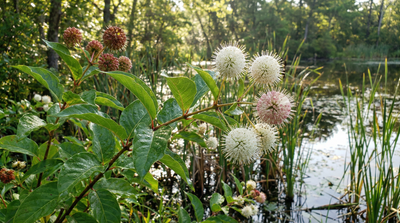
Buttonbush
Cephalanthus occidentalis
A keystone shrub of Texas wet margins. The globe-shaped flower heads are a heavy midsummer nectar source when little else is blooming, and the persistent reddish-brown seed heads feed ducks, other waterfowl and shorebirds into fall. Mature multi-stemmed clumps provide cover for birds and small wildlife. Widely used in wetland restoration and rain gardens to stabilize banks and slow erosion. Moderately deer-resistant.
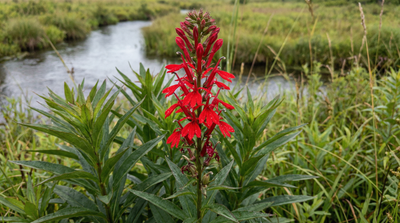
Cardinal Flower
Lobelia cardinalis
A high-value late-season nectar plant in Texas riparian corridors. Its scarlet racemes peak as ruby-throated and black-chinned hummingbirds move through on southbound migration, making it a fuel stop along waterways at exactly the time migrants need it. Nectar, pollen and seed all feed wildlife; the plant also stabilizes stream banks and seep margins, and as a short-lived perennial it spreads vegetatively where partially buried stems root at leaf nodes, helping it hold ground in periodically scoured riparian zones.
Cedar Elm
Ulmus crassifolia
A major canopy and shade component of Texas bottomland woods, cedar breaks, and post oak savannah. Larval host for Mourning Cloak (Nymphalis antiopa) and Question Mark (Polygonia interrogationis) butterflies. The heavy fall samara crop — unusual timing that fills a late-season food gap — feeds granivorous birds, wild turkey, plain chachalaca, and small mammals; squirrels take both buds and seeds. Provides cover, nesting sites, nesting material, browse, and foraging substrate for insectivorous birds. Recommended by NPSOT as a native replacement for invasive Chinese tallow and chinaberry in habitat restoration.
Cenizo (Texas Sage)
Leucophyllum frutescens
Designated the official State Native Shrub of Texas in 2005 (House Concurrent Resolution 71, 79th Legislature). A significant nectar source for butterflies and other nectar insects in arid brushland where floral resources are scarce, and a larval host plant for the Theona checkerspot and the Calleta silkmoth. Its dense evergreen canopy supplies cover and nesting sites for birds and small wildlife; AgriLife rates forage value as fair for livestock and wildlife. Flowering is triggered by rainfall or a rise in humidity (hence "barometer bush"), producing pulsed nectar flushes after summer rains. Its deep drought tolerance makes it an important soil-holding shrub on rocky limestone slopes.
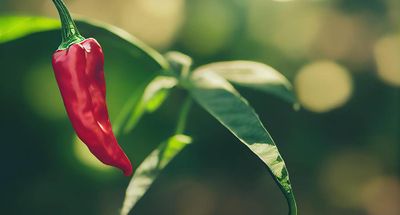
Chiltepin
Capsicum annuum var. glabriusculum
Texas's official State Native Pepper (designated 1997) and the only chile native to the state — the wild progenitor of every domesticated Capsicum annuum, from bell to jalapeño to cayenne, which makes wild Texas stands a genuine crop-genetics reservoir. Its ecological signature is a targeted seed-dispersal bargain: capsaicin repels seed-crushing rodents and other mammals, but birds do not perceive the heat, so they swallow the erect red berries whole and pass the seed intact. Mockingbirds, cardinals and thrashers move it across South and Central Texas, characteristically depositing seed beneath shrubs and along fences — the shady, protected microsites the plant needs. Fruit ripens into fall and early winter, filling a lean season for birds. Also provides low understory cover in brushland and riparian thickets, and is highly deer-resistant, so it persists where browsing pressure removes other shrubs.
Claret Cup Cactus
Echinocereus coccineus
Delivers a heavy pulse of spring nectar in rocky desert habitat where few other plants are blooming, feeding hummingbirds during spring migration and breeding. Fleshy fruits are eaten by rodents, lagomorphs and birds. Dense multi-stemmed mounds provide cover from predators for small mammals, and rodents occasionally den beneath the clumps. Heavy spination makes it unpalatable to most browsers, though plants become vulnerable to grazing after fire burns the spines off.
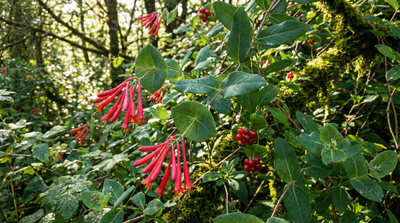
Coral Honeysuckle
Lonicera sempervirens
A high-value wildlife vine on two fronts. Its long red tubular flowers are a spring-through-summer nectar source timed to the ruby-throated hummingbird's movement through Texas, and the red berries that follow are eaten by birds including quail, Purple Finch, Goldfinch, Hermit Thrush, and American Robin. It also serves as a larval host, supporting insect reproduction and not merely adult feeding. Because it twines without smothering, it provides cover and nesting structure on fences and thickets without the canopy collapse caused by aggressive exotic vines — making it the standard native replacement for invasive Japanese honeysuckle and catclaw vine in Texas plantings.
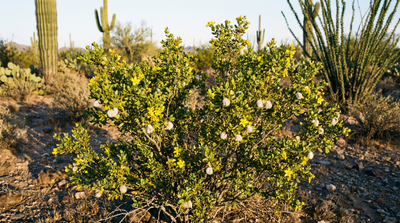
Creosote Bush
Larrea tridentata
A foundational dominant of Chihuahuan Desert shrubland — the creosotebush scrub phase covers roughly 40 percent of the Chihuahuan Desert. Its evergreen canopy creates "resource islands" of shade and enriched soil that shelter desert mammals, lizards, and invertebrates through lethal midday heat, and its roots stabilize soil around burrows and shelters. Foliage is resinous and largely unpalatable to livestock and most browsers, so its value is primarily structural habitat, cover, nesting sites, and insect production rather than forage. Supports a distinctive insect fauna, including grasshoppers, crickets, and mantids found on little else, plus lac-producing scale insects. Seeds and leaves are taken by small mammals; the fluffy fruits and the insects it hosts feed birds.
Crossvine
Bignonia capreolata
One of the earliest substantial nectar sources in East Texas woodlands, blooming March–May in tight synchrony with northbound ruby-throated hummingbird migration, when few other nectar plants are open. The semi-evergreen foliage provides year-round cover and nesting structure on trunks and fencerows, and adhesive-pad tendrils let it occupy vertical habitat without strangling host trees the way some aggressive vines do. Browsed by white-tailed deer in winter, when green forage is scarce.
Damianita
Chrysactinia mexicana
A low, mounding evergreen subshrub that stabilizes thin soils on limestone outcrops and rocky slopes where little else establishes. Its long March–November bloom period supplies nectar and pollen through the hot, dry months when many Chihuahuan Desert and Edwards Plateau forbs have gone dormant, making it a bridge resource for insects. The dense aromatic canopy provides cover and nesting sites for insects; seeds are taken by small mammals and birds. Aromatic terpene-rich foliage is largely unpalatable to deer and livestock, so it persists on browsed and grazed rangeland.
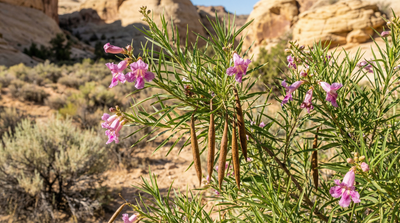
Desert Willow
Chilopsis linearis
A keystone woody plant of Chihuahuan Desert washes. Its large trumpet flowers are a heavy midsummer nectar source during the hottest, driest part of the Texas year, and it is a noted honey plant. Granivorous birds eat the seeds, and cactus wrens use the fluffy seed hairs as nesting material. Provides breeding and stopover cover for neotropical migrants, shades desert watercourses (benefiting native fishes), and its root system stabilizes arroyo banks for erosion control. Foliage is largely unpalatable to livestock due to glycosides and phenolic acids, so it persists on grazed rangeland.
Drummond's Phlox
Phlox drummondii
A major spring nectar source in the sandy-soil wildflower matrix of central and East Texas, flowering March-June alongside bluebonnets and paintbrush during the peak period of native bee and butterfly activity. Its dense terminal flower clusters make it one of the highest-value showy annuals for pocket prairies, wildflower meadows, and restored roadside rights-of-way. Because it is an annual that dies after seeding, it depends on an intact seed bank and delayed mowing; it self-sows readily and fills disturbed sandy openings without displacing perennial natives. Also a long-running model system for pollinator-driven floral evolution in Texas.
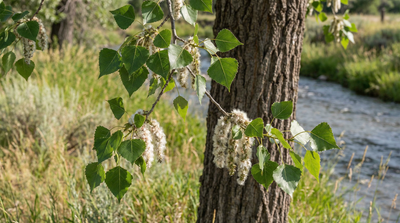
Eastern Cottonwood
Populus deltoides
Foundation species of Texas riparian gallery forest. One of the fastest-growing native trees (up to 13 ft in a year on good sites), it stabilizes stream banks with an extensive root system and is a mainstay of shoreline protection and eroded-channel revegetation. Its large open canopy supplies roosting and nesting structure for raptors and Rio Grande turkey, cavities and snags for secondary cavity nesters, cottony seed down used as nesting material, and abundant seed for granivorous birds. Shades and cools stream channels and contributes large woody debris to aquatic systems.
Eastern Gamagrass
Tripsacum dactyloides
A dominant graminoid of the Texas-Louisiana Coastal Prairie and a structural anchor of moist prairie and riparian plant communities. The hard yellow seeds are eaten by deer and granivorous birds, and the large, long-lived clumps supply cover and nesting sites. Among the most palatable native grasses for cattle and a productive native forage. Its deep roots and robust crowns stabilize stream banks and bottomland soils, and it is used in filter strips and vegetative barriers, where the large plants take up excess nutrients and reduce erosion.
Engelmann Daisy
Engelmannia peristenia
A high-value cool-season perennial of Texas rangelands. Blooms March–July, providing nectar and pollen during the spring and early-summer window. Foliage is exceptionally nutritious browse — crude protein reaches up to 25% in early spring — and is grazed by cattle, sheep, goats, white-tailed deer and rabbits. Birds consume the seeds, and the basal foliage provides cover for small mammals and ground-foraging birds. Its deep taproot and clumping habit make it valuable for erosion control on slopes and roadsides, and it is a standard component of Texas native seeding mixes.
Eryngo (Leavenworth's Eryngo)
Eryngium leavenworthii
A significant late-season nectar and pollen source, flowering from midsummer into fall when most Texas prairie forbs have finished — filling a critical gap for bees and migrating butterflies (including fall monarch and painted lady movement). The Wildflower Center flags it as having "special value to native bees." Granivorous birds take the seeds, and the spiny basal growth and dense seed heads provide insect cover and structure in winter. As a self-seeding annual it colonizes thin, rocky calcareous ground and disturbed prairie openings where perennial cover is sparse.
Escarpment Live Oak
Quercus fusiformis
A defining canopy tree of Edwards Plateau savanna and oak-juniper woodland. Acorns are a major hard-mast crop for white-tailed deer, wild turkey, javelina, squirrels, raccoons, and jays; as a white-oak-group species the acorns are lower in tannin and germinate soon after falling. Provides cover and nesting sites for birds and small mammals, and the dense mottes supply thermal cover and shade in an otherwise open landscape. Deep root systems and evergreen canopy stabilize thin limestone soils and moderate runoff on karst recharge terrain.
Evergreen Sumac
Rhus virens
A year-round structural evergreen in an otherwise deciduous shrubland — its leathery canopy provides cover and nesting structure through winter when most Hill Country shrubs are bare. The fuzzy red drupes ripening in early fall are eaten by birds and small mammals, and the foliage carries fair browse value for deer and cattle. Late-summer bloom (roughly June–November, peaking July–August) fills a nectar gap after the spring wildflower flush has faded. On erosion-prone rocky slopes and gullies it helps hold thin soils in place.
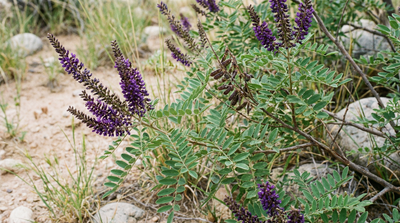
False Indigo Bush
Amorpha fruticosa
A nitrogen-fixing legume: rhizobial root nodules fix atmospheric nitrogen that neighboring plants also draw on (USDA NRCS). Its extensive root system makes it a workhorse for streambank stabilization and erosion control, and the dense thickets it forms provide wildlife cover and windbreak. Foliage is browsed by wildlife, though it is rated highly deer-resistant, so it persists on heavily browsed riparian sites where other shrubs fail. Doubles as larval host and nectar/pollen source (see pollinators). Caveat for planted settings: it suckers and self-seeds into dense colonies and can dominate disturbed riparian ground — site it deliberately.
Flame Acanthus
Anisacanthus quadrifidus var. wrightii
A major late-season nectar plant: tubular red-orange flowers bloom June through October/November, peaking in summer and fall when few other Texas natives are producing nectar, which makes it valuable fuel for hummingbirds during fall migration. Also serves as a butterfly larval host, so it supports both adult and larval life stages. Drought-tolerant and deer-resistant, and its habit of colonizing rocky streambanks lends erosion stability on calcareous slopes and floodplains.
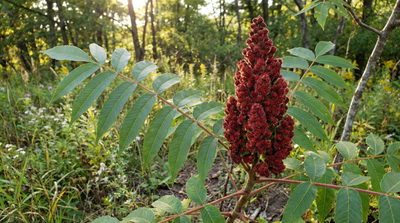
Flameleaf Sumac (Prairie Flameleaf Sumac)
Rhus copallinum var. lanceolata
High-value multi-season wildlife shrub. Dense creamy-white flower panicles bloom in mid-to-late summer (July–August), a valuable nectar source at a season when little else is flowering on limestone rangeland. Pyramidal clusters of red drupes persist into winter and are eaten in quantity by bobwhite quail, wild turkey, and songbirds; deer browse the foliage. Suckering colonies supply cover and nesting structure, and stabilize thin soils on rocky slopes. Also a butterfly larval host.
Four-nerve Daisy
Tetraneuris scaposa
A tough, mat-forming perennial of thin rocky soils where little else establishes, providing cover and soil stabilization on limestone slopes and caliche. Its main ecological value is the exceptionally long bloom season: the primary flush runs March–June, but it flowers intermittently nearly year-round in mild Texas winters, supplying nectar and pollen at times when almost nothing else native is in bloom. High deer resistance means it persists in browsed landscapes where more palatable forbs are eliminated.
Green Milkweed
Asclepias viridis
One of the most important monarch host plants in the southern U.S. — it greens up early and carries the first spring generation of monarchs arriving from the Mexican overwintering grounds, making it disproportionately valuable in Texas. Also a nectar source for a broad set of insects, and it supports the milkweed guild (large and small milkweed bugs, milkweed beetles). Wildflower Center flags it for "Special Value to Native Bees, Bumble Bees, and Honey Bees" and for supporting conservation biological control. Cardiac glycosides make it unpalatable, so cattle and horses generally avoid it and it persists in grazed pasture where other forbs are lost; it is also deer resistant.
Greenthread
Thelesperma filifolium
A profuse, long-blooming nectar source (roughly March-October, peaking April-June) heavily worked by butterflies and other nectar insects during the spring wildflower window. Also serves as a larval host and produces seed eaten by birds. Its taproot, drought tolerance and free self-sowing make it a useful pioneer on disturbed, poor and calcareous soils, which is why it is a standard component of Texas roadside and native wildflower seeding mixes.
Havard Agave
Agave havardiana
A keystone summer nectar resource in the Trans-Pecos mountains. Its June–September bloom supplies nectar and pollen to nectar-feeding bats, native bees, and birds during the hottest, driest part of the year, when few other nectar sources are available at these elevations. The massive candelabra stalk is a documented foraging resource for the federally endangered Mexican long-nosed bat in West Texas, making this plant part of a plant-pollinator complex of direct conservation concern. Rosettes provide cover and structure on sparsely vegetated rocky slopes, and the dense spiny form offers protected nesting and refuge sites.
Honey Mesquite
Prosopis glandulosa
A nitrogen-fixing legume and a keystone structural tree of Texas brushland and savanna. Abundant seed pods are a seasonal food staple for quail, doves, white-tailed deer, collared peccary (javelina), rodents and other small mammals; roughly 38 bird species nest in Rio Grande riparian mesquite communities. Provides shade, thermal and escape cover, and nesting material and structure for wildlife. Important caveat: though fully native, it has increased greatly over the past ~120 years, converting historically open grasslands to thorny scrub where overgrazing and fire suppression have removed the checks on it — so it is native and ecologically valuable, yet actively managed as brush on many Texas rangelands.
Horse Crippler Cactus
Echinocactus texensis
Produces conspicuous bright red berry-like fruit from summer into fall that is eaten by birds and small mammals, providing water-rich forage in arid rangeland where succulent fruit is a limited resource. Diurnal salmon-pink to violet flowers (March-August) supply nectar and pollen to insects during the spring and summer desert bloom. As a low, ground-hugging succulent of desert flats and short-grass prairie, it stores water and persists through drought in sites where little else is green, and its stout spines make it highly deer resistant, so it holds its place in heavily browsed rangeland.
Huisache
Vachellia farnesiana
Nitrogen-fixing legume and a codominant of South Texas thornscrub and Gulf coastal brush communities. Its very early bloom (January-April) provides one of the season's first abundant nectar and pollen sources for insects. Dense thorny canopy supplies nesting sites and escape cover for birds and small mammals; seed pods are eaten by deer and livestock, though foliage offers poor browse. Serves as a larval host for several butterflies.
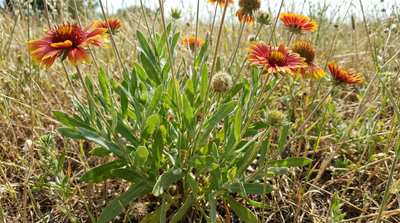
Indian Blanket (Firewheel)
Gaillardia pulchella
A high-value nectar and pollen source across a long bloom season in hot, dry, low-resource sites where few other forbs are flowering, making it an important mid-to-late-summer forage bridge for native bees. Serves as a larval host for at least two lepidopterans, including a Gaillardia specialist. Seeds are eaten by finches and other small seed-eating birds in late summer and fall. As a fast-establishing annual/short-lived perennial it is a workhorse of prairie restoration, roadside plantings, pocket prairies, and pollinator habitat — one of the easiest Texas wildflowers to establish from seed. Moderately deer resistant.
Indiangrass
Sorghastrum nutans
A keystone dominant of Texas tallgrass prairie and a primary structural component of the Blackland Prairie community alongside little bluestem and big bluestem. Seeds feed granivorous birds and small mammals; bunch form and standing cover provide nesting and escape habitat for bobwhite quail and grassland birds, and TPWD includes it in native grassland restoration and quail habitat plantings. Deep roots build soil carbon and stabilize erodible clay slopes. Valuable warm-season forage and a mainstay of prairie reconstruction seed mixes.
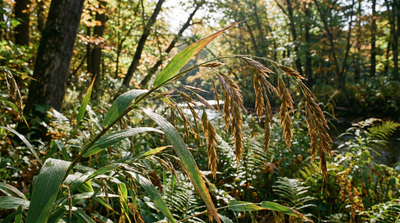
Inland Sea Oats
Chasmanthium latifolium
One of the few native ornamental grasses that thrives in deep shade, filling a niche in Texas bottomland and riparian understories. Seeds are eaten by granivorous birds and small mammals; the dense clumping foliage provides cover for small mammals and forage for grazing mammals. Fibrous roots and rhizomes make it valuable for stabilizing streambanks and shaded slopes against soil erosion. Larval host for three skipper butterflies. Highly deer resistant. Caveat worth noting for plantings: it reseeds readily and spreads by rhizomes, and the Wildflower Center has published a staff debate in which its own conservationist argues it can outcompete nectar-producing wildflowers in small or loamy-soil settings — site it where it has room.
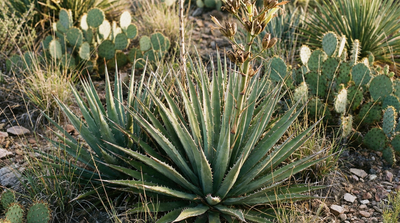
Lechuguilla
Agave lechuguilla
A dominant structural and soil-stabilizing component of Chihuahuan Desert scrub on erosion-prone limestone slopes, forming dense clonal colonies that hold thin rocky soils. Flower stalks provide nectar and pollen in late spring/summer when little else blooms in the desert. Mule deer browse the flower stalks and rosettes, collared peccary (javelina) eat the inner leaf cores and roots, and pocket gophers favor the roots. Larval host for the Coahuila Giant-Skipper. Dense rosettes give cover and nest sites for small desert vertebrates. Caution: leaves contain saponins toxic to livestock (goats and sheep most affected, especially in drought), and the terminal spines injure animals and people.
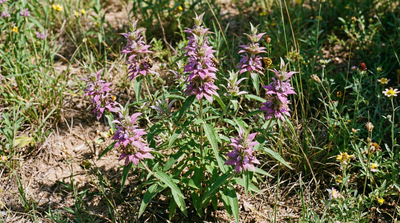
Lemon Beebalm
Monarda citriodora
A high-value nectar and pollen forb of Texas prairies and roadsides. As a fast-growing annual it forms large colonies that deliver a heavy May–July nectar pulse (extending into September where moisture allows) for bumble bees and other native bees during a hot, resource-tight window of the season, then reseeds profusely to re-establish the following year. Rated highly deer resistant, so it tends to persist under browse pressure where more palatable forbs are grazed out, contributing forb cover and seed to prairie and roadside habitat structure.
Lindheimer's Muhly
Muhlenbergia lindheimeri
Warm-season perennial bunchgrass providing fair to good forage for livestock and wildlife, though its somewhat prickly texture limits browsing. Birds eat the seeds, and the leaves supply nesting material — a value that persists through winter when clumps are left standing. The dense, fountain-shaped clump form delivers year-round cover and structure for birds and small mammals, and its deep-rooted, drought-hardy habit stabilizes thin, rocky calcareous soils. Functions as a component understory graminoid in Edwards Plateau limestone savanna and woodland systems.
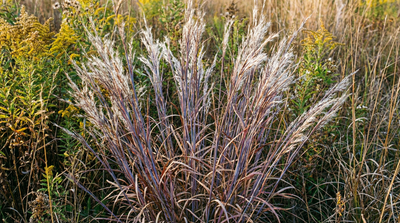
Little Bluestem
Schizachyrium scoparium
A keystone bunchgrass of Texas prairies and the structural backbone of tallgrass and mixed-grass communities. USDA NRCS rates it among the best grasses for nesting and roosting habitat: the dense clump habit and fine basal leaves provide excellent nesting sites, and meadowlarks nest where it grows. Seeds are eaten by small mammals and birds — upland game birds, juncos, and chipping, field, and tree sparrows — and are of high value to grassland-wintering birds such as prairie chickens. Deep-rooted, so it builds soil carbon, stabilizes slopes, and controls erosion. A grazing decreaser, its presence indicates rangeland in good condition. Provides fair to good forage for cattle and horses while young (12-14% crude protein in May, dropping below 4% by late summer). Widely used in prairie restoration.
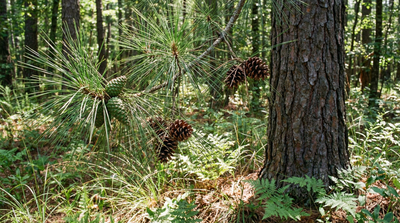
Loblolly Pine
Pinus taeda
The dominant canopy tree of the East Texas Piney Woods and the structural backbone of that forest system. Seeds are an important food for granivorous birds and small mammals including squirrels; stands provide cover and nesting habitat for white-tailed deer, wild turkey, and northern bobwhite. Mature and old-growth loblolly supports nesting by the endangered red-cockaded woodpecker. Fast-growing pioneer on old fields and disturbed ground, stabilizing sandy soils.
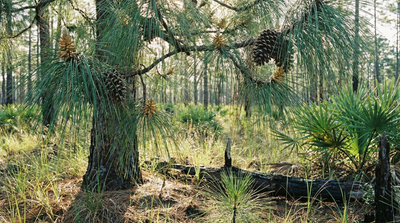
Longleaf Pine
Pinus palustris
Foundation species of the East Texas longleaf pine savanna, one of the most biodiverse ecosystems in North America and now among the most reduced. Longleaf forests provide habitat for bobwhite quail, white-tailed deer, wild turkey and fox squirrel, and 68 bird species use longleaf pine forests. Old-growth stands supply nesting cavities for the red-cockaded woodpecker, an East Texas conservation priority downlisted from endangered to threatened in 2024. Large seeds feed birds and small mammals; the fire-maintained open canopy sustains a rich grass-and-forb groundcover that closed-canopy plantations do not.
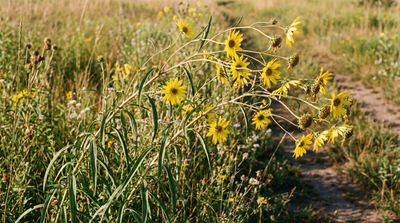
Maximilian Sunflower
Helianthus maximiliani
Its central value is timing: it blooms August through November, peaking in September, when most Texas prairie forbs have finished. That late bloom supplies nectar and pollen through the critical pre-winter window, including the fall monarch migration corridor. It sets a heavy seed crop that TPWD notes is eaten by "birds, deer and other wildlife" — an important autumn and winter food for doves, quail, finches, and other seed-eaters. At 4–10 ft with a colonial rhizomatous habit it also functions as wildlife cover, and LBJ describes it as "a desirable range plant, eaten by many livestock." Its rhizome network aids soil stabilization on disturbed ground and ditch banks.
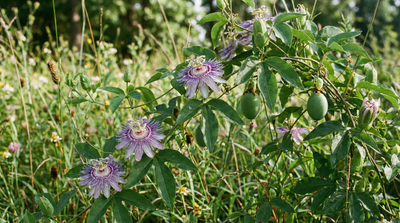
Maypop (Purple Passionflower)
Passiflora incarnata
One of the highest-value larval host plants in eastern Texas, supporting multiple fritillary and longwing butterflies whose caterpillars feed on essentially nothing else. Flowers are a substantial nectar and pollen source through a long March–November bloom. The large orange-yellow fruits are eaten by birds and mammals, and the sprawling vine provides low cover and nesting material. Its habit of colonizing woodland edges and disturbed openings makes it an early-successional resource in exactly the places pollinator habitat is often thinnest.
Mealy Blue Sage
Salvia farinacea
A long-blooming (April–October) nectar and pollen source that bridges the mid- and late-summer forage gap on Hill Country limestone prairies when many spring forbs have finished. Seed heads left standing feed small birds into fall. Aromatic foliage is strongly deer-resistant, so it persists and continues flowering in heavily browsed rangeland and woodland-edge sites where more palatable forbs are grazed out — making it a reliable structural and forage component of degraded pasture.
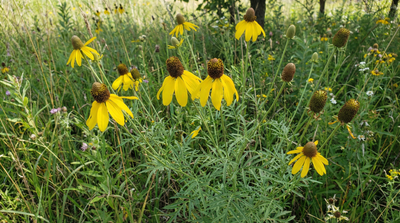
Mexican Hat
Ratibida columnifera
A long-blooming, high-value nectar and pollen plant that bridges the hot mid- to late-summer gap when many Texas forbs have finished. Recognized by the Lady Bird Johnson Wildflower Center as having Special Value to Native Bees. Seed heads persist and feed granivorous birds; USDA Forest Service records wild turkey taking the seed (about 1.2% of fall crop contents). White-tailed deer in southeastern Texas browse it from early spring through summer, and it provides cover value for mule deer and pronghorn. Aromatic foliage deters heavy deer browsing, though deer will take the flower heads. Poor to fair palatability for livestock, so it persists under grazing pressure that removes more palatable forbs. Reseeds readily and establishes fast, making it a workhorse for prairie restoration, roadside seeding, and pollinator plantings.
Mustang Grape
Vitis mustangensis
A high-value wildlife vine. The dark purple late-summer fruit (July-September) is eaten by many birds and small mammals, and the dense tangled growth provides nesting and escape cover. Fallen and fermenting fruit also draws butterflies, moths, and bats. It is a larval host for several sphinx moths, and it is tough enough to shrug off deer browsing and caterpillar defoliation. The trade-off is real: it is a vigorous, fast-growing liana that can blanket, shade, and occasionally kill the trees it climbs, so it is valued at woodland edges more than in closed canopy.
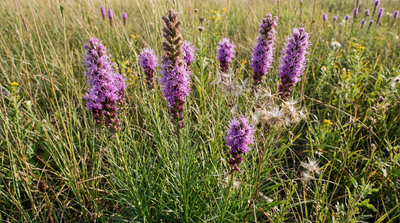
Narrowleaf Gayfeather
Liatris punctata var. mucronata
One of the most valuable late-season nectar plants in Texas prairies. Its August–December bloom fills the fall nectar gap exactly when monarchs and other migrants move south through the state — the Xerces Society lists it (as "cusp blazing star") in its Monarch Nectar Plant list for the Southern Plains region covering most of Texas, noting Liatris species in general are very attractive to monarchs. Documented research value: monarchs nectaring on an irrigated field of Liatris mucronata held normal lipid titers during the severe 2010–2011 Texas drought, while monarchs on other plants ran significantly below normal — direct evidence of its fueling role in the migration. Achenes are eaten by songbirds and overwintering birds. The deep taproot builds soil structure, anchors dry calcareous slopes, and makes the species a resilient, low-input component of prairie restoration and roadside seeding. LBJWC rates deer resistance as "minimal," so it is browsed by deer; it is generally rabbit-resistant.
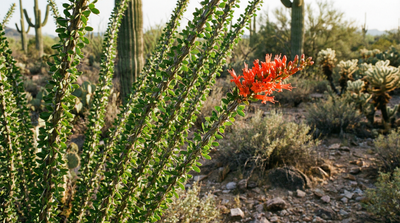
Ocotillo
Fouquieria splendens
A keystone spring nectar plant of the Chihuahuan Desert. Its scarlet tubular flowers are among the few desert blooms that appear dependably and copiously even in dry years, making it a critical fuel source for hummingbirds migrating north out of Mexico. Seeds feed granivorous birds and small mammals; the dense, thorny stem clusters give cover and nesting structure to desert birds and shelter for small wildlife. Drought-deciduous habit (leafing out and shedding four or five times a year in response to rainfall) lets it hold canopy and soil-stabilizing function on shallow, erosion-prone desert slopes.
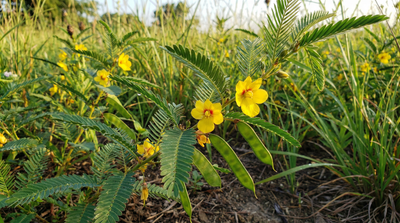
Partridge Pea
Chamaecrista fasciculata
Nitrogen-fixing annual legume that rebuilds soil fertility on burned, eroded, or disturbed ground until slower perennials establish; used for erosion control on sandy slopes, bluffs, and riverbanks. Its seed is a major winter food for northern bobwhite and other quail, remaining sound through winter and early spring, and is high in phosphorus and protein with low crude fiber. Also provides gamebird cover, songbird seed, and deer browse. Extrafloral nectaries on the leaf petioles feed ants, wasps, and lady beetles, supporting conservation biological control.
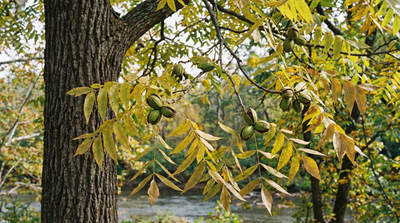
Pecan
Carya illinoinensis
The official state tree of Texas (designated by the 36th Legislature in 1919, confirmed 1927) and one of the most widely distributed trees in the state. A dominant large-canopy tree of Texas river bottoms, it supplies major hard mast — nuts eaten by fox and gray squirrels, raccoons, opossums, peccaries (javelina), and numerous birds. Its size and longevity provide cavity, nesting, and roosting sites, and its foliage is a productive foraging substrate for insectivorous birds. As a riparian canopy species it shades streams and stabilizes banks.
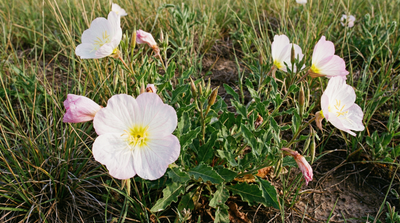
Pink Evening Primrose
Oenothera speciosa
A significant spring nectar and pollen source in Texas prairie and roadside plant communities, blooming February through July. Seed capsules are eaten by birds — finches especially — and by various small mammals. Deep rhizomes provide erosion control and soil stabilization on slopes and disturbed ground, and dense colonies offer low cover. Note the tradeoff: the same rhizomatous vigor makes it competitively dominant, and it can crowd out less aggressive natives in small plantings, so it is best sited in large naturalized areas or leaner, rockier soils where it behaves less aggressively.
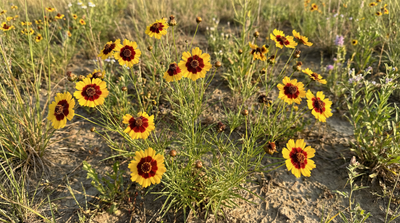
Plains Coreopsis
Coreopsis tinctoria
A fast-colonizing annual that provides nectar and pollen through spring and early summer and sets abundant seed eaten by granivorous birds. Its tolerance of wet, disturbed, and poorly drained ground makes it an effective early-successional cover on roadsides, ditches, and reclaimed sites, where it stabilizes soil and supplies forage in the gap before perennial prairie species establish. Rated highly deer resistant, so it persists in browsed landscapes.
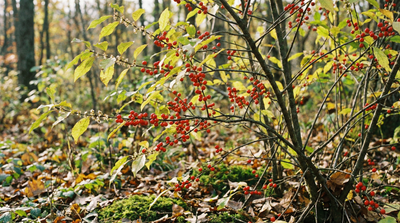
Possumhaw
Ilex decidua
A high-value winter wildlife food plant. Female plants hold heavy crops of red to orange berries from fall through late winter — a critical late-season food source when little else remains — eaten by songbirds (notably eastern bluebirds), gamebirds including wild turkey and quail, and mammals such as opossum, raccoon, and white-tailed deer, which also browse the leaves and twigs. Fruit production is exceptionally reliable (FEIS reports over 70% of individuals fruit annually), making it a mainstay of wildlife plantings. Provides understory cover and bird nesting sites, and its floodplain habit helps stabilize stream banks.
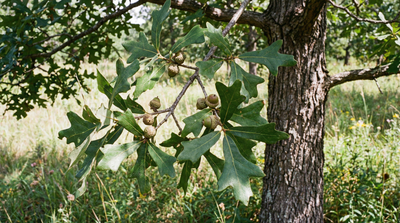
Post Oak
Quercus stellata
A keystone canopy tree of the Post Oak Savannah and Cross Timbers, structuring the transition between Texas prairie and forest. Acorns are a major hard-mast food for white-tailed deer, squirrels, wild turkey, and other birds and small mammals. The tree provides shade, cavity and nest sites, nesting material, and an insect-rich foraging substrate for insectivorous birds. Slow growing and long lived, it anchors savanna structure over centuries.
Prairie Penstemon
Penstemon cobaea
A showy spring-blooming prairie forb (April–June) whose large tubular flowers are a significant early-season nectar and pollen source during a period when few other prairie forbs are flowering. Serves as a larval host plant for the Dotted Checkerspot butterfly. Its tolerance of thin, rocky, calcareous soils makes it valuable for restoring and stabilizing limestone prairie and eroded slope sites, and it is a readily available component of Texas native wildflower seed mixes.
Prairie Verbena
Glandularia bipinnatifida
A low, mat-forming perennial groundcover on well-drained and disturbed soils. Its chief value is an exceptionally long bloom window — March through October (occasionally into December) — which makes it one of the most sustained nectar sources among Texas prairie forbs, bridging early-spring and late-season gaps for adult pollinators. Often blooms in mass, covering acres in pink to light purple. Highly deer resistant, so it persists under browse pressure where other forbs are grazed out. Also noted as attracting birds. Very drought tolerant, holding cover on thin caliche and limestone sites.
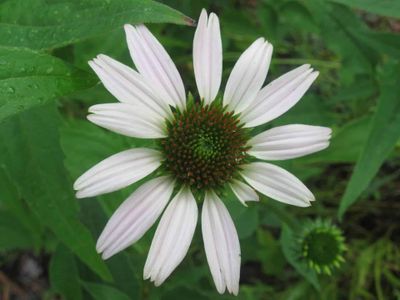
Purple Coneflower
Echinacea purpurea
A high-value nectar and pollen composite with a long bloom season, supporting a broad diversity of native bees, butterflies, and hummingbirds. The Xerces Society designates it of "Special Value to Native Bees" (per LBJWC). Its persistent spiny seed heads are a significant fall and winter seed source for granivorous birds — USDA NRCS notes that goldfinches will strip an Echinacea seed crop within days. It is not deer resistant, so it also functions as browse. Sturdy hollow stems left standing over winter provide nesting habitat for stem-nesting solitary bees.
Red Yucca
Hesperaloe parviflora
A sustained nectar source in hot, dry, low-resource habitat: the tubular coral flowers open from the bottom of a tall wand-like spike over a long bloom season (March-July, often continuing into fall), feeding hummingbirds through breeding and migration. Flower spikes also attract night-pollinating moths, extending its value into the nocturnal insect community. Deer browse the flower stalks (the fibrous foliage is not palatable). Woody dehiscent capsules produce seed, and the evergreen clumps provide low cover on otherwise exposed rocky ground.
Scarlet Leatherflower
Clematis texensis
A narrow Edwards Plateau canyon endemic and a documented nectar source during its long spring-to-summer bloom, when relatively few red, hummingbird-adapted flowers are available on limestone canyon walls. The pendant, urn-shaped scarlet flowers are followed by showy plumed achenes (feathery seed heads) that disperse by wind and provide seed forage for birds. As a scrambling vine on cliffs and streamside ledges, it adds structural cover in the mesic canyon microhabitats of the Hill Country. Its ecological significance is amplified by its restricted range: it is a signature endemic of the Edwards Plateau canyonlands rather than a widespread generalist.
Scarlet Sage
Salvia coccinea
One of the longest-blooming nectar sources in coastal Texas, flowering February through October — an exceptional eight-month window that spans both spring and fall hummingbird migration along the Gulf Coast, when nectar fuel is most limiting. The red tubular corollas deliver nectar continuously through the hot months when many prairie forbs have finished. Reseeds readily and colonizes disturbed edges and gaps, making it a fast-establishing nectar layer in restoration and hedgerow plantings. Pungent foliage gives it high deer resistance, so it persists and keeps flowering under browse pressure that removes competing nectar plants. Nutlet fruits provide incidental small-bird forage.
Sea Oats
Uniola paniculata
The keystone dune-builder of the Texas coast and the dominant plant of active foredunes. Its tall leaves trap windblown sand, stimulating vertical dune growth, while deep roots and extensive rhizomes (which root at buried nodes) bind and stabilize the dune — buffering beaches, property and back-island habitat from wind, high tides and storm surge. Seeds feed birds and small mammals (rabbits, mice, sparrows and blackbirds), with spikelets often persisting into winter as a cold-season calorie source. Dense clumps supply cover, nesting material and shelter for birds, small mammals and invertebrates.
Seep Muhly
Muhlenbergia reverchonii
A defining grass of Edwards Plateau limestone grasslands: TPWD documents open Glen Rose Limestone slopes as grasslands "often dominated by Bouteloua pectinata (tall grama) and Muhlenbergia reverchonii (seep muhly)." Its dense tussocks and persistent basal mass of curly old leaf blades hold thin soil on rocky seepage slopes where little else establishes, slowing runoff and reducing erosion. Seeds feed birds and small mammals; the clumps provide low cover and nesting material. Highly deer resistant, so it persists under browse pressure that removes other species. A key component species for limestone prairie restoration within its range.
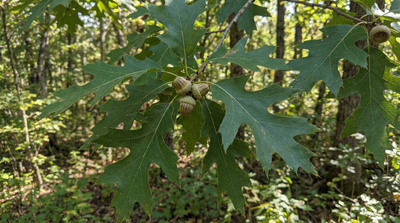
Shumard Oak
Quercus shumardii
A major hard-mast producer in Texas bottomland and oak-hickory forests. Acorns are eaten by white-tailed deer, wild turkey, waterfowl, squirrels (fox and gray), and songbirds; in Texas it is preferred deer browse in Ashe juniper woodlands. Large, long-lived canopy tree supplying nesting sites, cavities, and cover. Never forms pure stands — occurs widely spaced among other hardwoods. Acorns are dispersed by seed-hoarding mammals, chiefly squirrels.
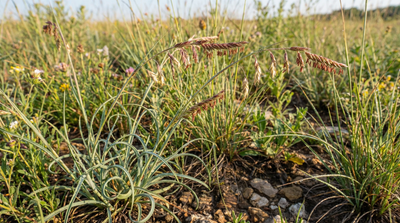
Sideoats Grama
Bouteloua curtipendula
Designated the State Grass of Texas in 1971. A cornerstone mid-grass of Texas prairie and savanna: its deep fibrous root system stabilizes soil and makes it a mainstay of erosion control and prairie restoration seed mixes. Supplies seed eaten by birds — wild turkey and northern bobwhite in particular — plus nesting material and cover for grassland birds and small mammals. Provides good grazing for livestock and browse for deer and other mammals, and retains reasonable nutritional quality across seasons, though it declines under heavy continuous grazing. It stays short in spring, so it interplants well with spring wildflowers in meadow plantings.
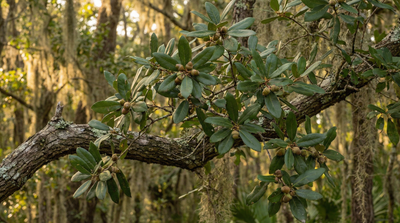
Southern Live Oak
Quercus virginiana
A keystone mast and structure tree of the Texas coastal plain. Acorns are heavily used by white-tailed deer, wild turkey, northern bobwhite, mallard and other waterfowl, sapsuckers, jays, squirrels and black bear. Its habit of sprouting from an expansive root system builds dense coastal "mottes" that form sheltered woodland islands within open prairie, supplying cover, shade for wildlife and livestock, and critical stopover cover for migratory birds along the Gulf Coast. Long-lived and salt-tolerant, it anchors coastal woodland structure where few other large hardwoods persist.
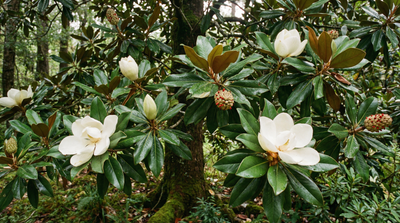
Southern Magnolia
Magnolia grandiflora
Large evergreen canopy tree of bottomland hardwood forests. The conelike aggregate fruit releases fleshy red seeds eaten by squirrels, opossum, quail, and wild turkey; seed is dispersed by both animals and water. Dense year-round evergreen foliage provides cover for many small birds and mammals — unusual and valuable structure in an otherwise deciduous bottomland forest. Casts heavy shade, strongly influencing the understory beneath it.
Spanish Dagger
Yucca treculeana
A structural keystone of South Texas brush country: the armed rosettes and stout trunks provide cover and nesting sites for birds, and dense clumps offer thermal refuge in open thornscrub. Larval host for three giant skipper butterflies whose caterpillars bore into the caudex and roots. The large capsules and seeds feed small mammals, and the tall winter-to-spring flower stalks supply nectar and pollen during a lean season when little else is blooming. Deer-resistant, so it persists on heavily browsed rangeland where other shrubs are grazed out.
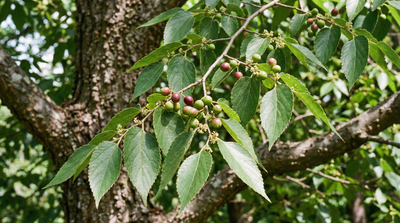
Sugarberry
Celtis laevigata
A keystone bottomland hardwood and one of the most valuable wildlife trees in Texas. The sweetish drupes ripen in fall and persist into winter, providing a critical late-season and cold-weather food source when little else remains — at least 10 bird species take them, including robins, mockingbirds, cedar waxwings, wild turkey, and quail, plus raccoons and other small mammals, which disperse the seed. It is a top-tier butterfly larval host, supporting five or more Texas species. Its fast growth and tolerance of flooding stabilize stream banks and floodplains, and it forms the canopy of the sugarberry–American elm–green ash forest type. Provides substantial shade, air filtration, and stormwater capture in Texas urban forests.
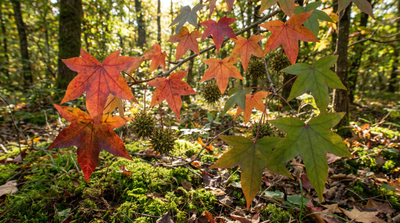
Sweetgum
Liquidambar styraciflua
A dominant canopy tree of East Texas bottomland hardwood forests, providing overstory structure and nesting cover. The spiny seed capsules ("gumballs") hold small winged seeds eaten by roughly 25 bird species, as well as by squirrels and chipmunks. Foliage is a light to moderate fall and winter browse for white-tailed deer. Its greatest wildlife contribution is as a larval host: it supports a large assemblage of native moth caterpillars, which are in turn a critical protein source for breeding songbirds. Colonizes old fields and disturbed bottomlands readily, making it an important early canopy recruit in recovering East Texas woodlands.
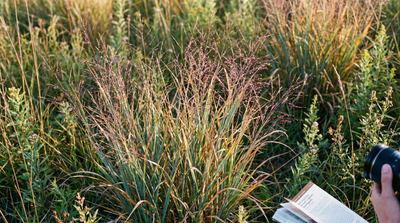
Switchgrass
Panicum virgatum
One of the "big four" dominant grasses of the American tallgrass prairie and a cornerstone species for Texas prairie restoration. Seeds are eaten by ground-feeding songbirds and game birds; the clumping, rhizomatous habit provides year-round cover and nesting material for birds and small wildlife. Rated good grazing for livestock and fair grazing value for wildlife. Deep rhizomes and root mass stabilize stream banks and build soil.
Tall Goldenrod
Solidago altissima
A cornerstone late-season nectar and pollen source, blooming August through November when little else is flowering — critical fuel for bees provisioning before winter and for migrating butterflies moving through Texas. Supports conservation biological control by sustaining predatory and parasitic insects (a well-studied insect community lives on this plant). Seeds are eaten by small birds. Rhizomatous colonies provide cover and structure in pocket prairies and old fields. Caveat for planting: it spreads aggressively by creeping rhizomes and produces allelopathic compounds that suppress neighboring plants, so it can crowd out companions in small plantings and needs generous spacing or containment.
Texas Ash
Fraxinus albicans
A keystone insect-support tree on the Edwards Plateau: the Lady Bird Johnson Wildflower Center documents at least 43 native insect species that depend on Texas ashes for food and breeding, and those insects in turn feed birds. Supports substrate-insectivorous (bark- and foliage-gleaning) birds, and provides cover, nesting sites, and browse. Samaras are eaten by birds and small mammals. On rocky slopes and drainages it stabilizes thin soils, and ashes generally protect riparian habitat from erosion and elevated water temperature. Not deer resistant, so it is browsed.
Texas Beargrass (Texas Sacahuista)
Nolina texana
A long-lived evergreen clump that holds soil on thin, rocky limestone slopes and provides year-round structure, cover, and nesting/escape habitat for small mammals, reptiles, and ground-nesting birds in otherwise sparse terrain. Its spring bloom is a nectar source, and its flowers and fruit feed the larvae of the Sandia hairstreak. Browse value is low and it is deer resistant, so it persists on heavily grazed range. Important caveat: the buds, blooms, and fruit contain saponins toxic to ruminants — sacahuista poisoning causes hepatogenous photosensitization and bile-duct obstruction in sheep and goats, documented by Texas A&M at the Sonora Experiment Station beginning in 1915. Foliage is not the toxic part; risk is seasonal and tied to spring flowering.
Texas Bluebonnet
Lupinus texensis
The State Flower of Texas — originally designated in 1901 as Lupinus subcarnosus, with the 1971 legislative amendment explicitly adding L. texensis plus "any other variety of bluebonnet not heretofore recorded," so all Texas bluebonnets now hold the designation. As a legume it forms Rhizobium root nodules and fixes atmospheric nitrogen, enriching thin prairie and roadside soils. Its March–May bloom supplies an important early-spring nectar and pollen pulse for native bees emerging ahead of most summer forbs, and it is a larval host for several butterflies. Forage value is minimal in the other direction — foliage, pods, and especially seeds carry quinolizidine alkaloids (lupinine, sparteine, anagyrine, hydroxylupanine), so livestock and deer largely avoid it, which lets it persist in grazed prairie.
Texas Ebony
Ebenopsis ebano
A keystone canopy species of Tamaulipan thornscrub and one of the most valuable trees in the Rio Grande Valley. Seeds are very high in crude protein and are eaten by white-tailed deer, javelina, and small mammals; deer also browse the protein-rich foliage. The dense, thorny, evergreen crown supports subtropical birds at the northern limits of their range, including plain chachalaca, ferruginous pygmy-owl, and hummingbirds, and supplies nesting cover and material. As a legume it contributes nitrogen to nutrient-poor thornscrub soils, and it is a standard component of thornforest restoration plantings in the Lower Rio Grande Valley.
Texas Indian Paintbrush
Castilleja indivisa
A root hemiparasite: its roots grow until they contact neighboring plants' roots — most often grasses — and form haustoria that draw water and nutrients from the host without typically killing it, which ties it to intact prairie and grassland plant communities rather than disturbed bare ground. This dependence makes it both an indicator of functioning grassland and a plant that resists transplanting and monoculture planting. As an early-spring annual it supplies nectar during the March–May window when returning hummingbirds and emerging butterflies need it, and it is a documented larval host, contributing to butterfly reproduction as well as adult forage. Its abundance on roadsides and in restored prairie makes it a significant seasonal nectar resource across east and central Texas.
Texas Kidneywood
Eysenhardtia texana
One of the top native nectar shrubs of the Hill Country and South Texas brush country — its fragrant white flower spikes bloom intermittently May through October, typically flushing a few days after rain, which makes it a critical late-season nectar bridge when most spring forbs have finished. A nitrogen-fixing legume that contributes fertility on thin limestone soils. Highly palatable browse readily taken by white-tailed deer, and also by cattle and goats; seeds and flowers feed insects and birds. Its open, multi-stemmed form provides small-bird cover in brush mosaics.
Texas Lantana
Lantana urticoides
A workhorse nectar plant during the hottest part of the Texas year: it blooms April through October/November, sustaining pollinators through late-summer heat and drought when little else is flowering. The tricolor flower heads (opening yellow, aging orange to red) are a major nectar source for butterflies and bees, and the deep purple-black drupes are eaten by birds, which disperse the seed. It is highly deer-resistant, so it persists and provides cover and structure in browsed brushland. Important caveat: the foliage and unripe fruit are toxic — lantana poisoning is a documented cholestatic disease of cattle and sheep, and the berries are poisonous to most mammals including humans and pets.
Texas Mountain Laurel
Dermatophyllum secundiflorum
One of the most abundant woody species of the Edwards Plateau brush community and a structurally important evergreen component of limestone hillside vegetation, providing year-round cover and nesting structure. Its chief ecological value is timing: dense drooping racemes open February-April, making it one of the earliest substantial nectar sources of the Texas spring, when few other woody plants are in bloom. As a legume in the Fabaceae it occupies a nitrogen-fixing family niche on nutrient-poor calcareous soils. Browse value is negligible and it is toxic to livestock — sheep, goats, and cattle are poisoned under range conditions by the quinolizidine alkaloids, with ground or chewed seeds far more dangerous than foliage.
Texas Olive
Cordia boissieri
A characteristic small tree/shrub of the Tamaulipan thornscrub, where TPWD documents it as a sparse overstory component (usually under 4 m) of calcareous thornscrub. Blooms nearly year-round in South Texas, peaking late spring to early summer, making it an unusually reliable off-season nectar source. Its sweet drupes are eaten by birds, small mammals, deer and cattle (excessive fruit consumption is reported to cause "tipsiness" in deer and cattle). Provides dense evergreen cover and structure in a brush community that has been heavily cleared across the Valley.
Texas Persimmon
Diospyros texana
A keystone small tree of Hill Country and South Texas brushland. The black fruits (borne only on female trees — the species is dioecious) ripen July-September and are heavily eaten by birds, raccoons, coyotes, foxes, white-tailed deer, and javelina/peccary, making it an important late-summer mast source in arid country. Provides cover and nesting structure in brushy uplands, and its deep drought tolerance keeps it productive in years when other mast fails. Note the qualification for livestock: Texas A&M documents that cattle consuming large quantities of ripe fruit develop black diarrhea, colic, and weight loss (toxic agent unknown), a problem worst in drought when fruit is heavy and grass is sparse. Forage value is only fair for goats.
Texas Prickly Pear
Opuntia engelmannii var. lindheimeri
The prickly pear is the official State Plant of Texas, adopted by the Legislature in 1995 (HCR 44), and Opuntia engelmannii var. lindheimeri is the taxon most Texans picture under that name. Ecologically it is a keystone of Hill Country and South Texas brush country: the purple tunas (fruit) feed small mammals, birds, raccoons, and other wildlife, and the seedy fruit is a dependable food source through hot summers when other forage fails. The dense spiny pads provide protective nesting and escape cover for birds and small animals. Flowers supply abundant pollen and nectar in spring. Cattle can subsist on the pads during drought once ranchers singe off the spines. The plant is highly deer resistant.
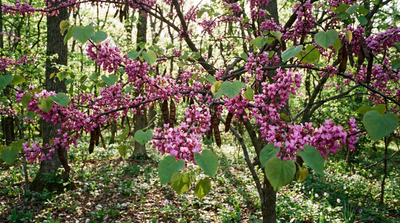
Texas Redbud
Cercis canadensis var. texensis
A key understory/shrub-layer small tree of Edwards Plateau limestone woodlands and shrublands. Its March-April bloom arrives before most other woody plants leaf out, making it an important early-spring nectar and pollen source when little else is available. Larval host for Henry's elfin butterfly. Leaves are browsed by deer (though moderately browse-resistant) and seeds are eaten by granivorous birds. Highly drought- and cold-tolerant on thin caliche soils, making it a durable native alternative to invasive ornamentals such as Chinese tallow and golden rain tree.
Texas Red Oak
Quercus buckleyi
A dominant or co-dominant canopy tree of Edwards Plateau slope forests and mixed woodlands, so it structures whole plant communities rather than merely occupying them. Produces heavy crops of biennial acorns that are a major hard-mast food source for white-tailed deer, wild turkey, jays, woodpeckers, squirrels, and other small mammals. Supplies cavity and nesting habitat plus nesting material, and its deciduous canopy shades and cools steep limestone slopes and riparian creek bottoms. Foliage and acorns can be toxic to livestock in quantity. Oaks are the highest-value larval host genus in North America, so it also underpins the caterpillar base that feeds breeding songbirds.
Texas Sabal Palm
Sabal mexicana
The defining canopy species of the Tamaulipan Palm Grove Riparian Forest, one of the rarest plant communities in the United States. Its dense evergreen crown and persistent frond thatch supply year-round nesting, roosting and escape cover for South Texas specialty birds that reach the northern edge of their range in these groves — plain chachalaca, green jay, olive sparrow, great kiskadee and buff-bellied hummingbird among them. Clusters of dark purple drupes are a heavily used fall and winter food source for birds and mammals. Old fronds and trunks host epiphytes such as Spanish moss (Tillandsia usneoides). Deep-rooted and flood-tolerant, it stabilizes Rio Grande floodplain and resaca banks.
Texas Sotol
Dasylirion texanum
A structural succulent of arid limestone shrublands and desert grasslands, holding thin soil on rocky slopes where few woody plants establish. The tall summer flower stalk supplies nectar and pollen to bees and hummingbirds, and seeds and flowers feed birds. Per the Wildflower Center, trunks split open during dry spells, giving wildlife access to the spongy interior and leaf bases — a moisture and forage resource in drought. The dense, spine-edged rosette provides protective cover and nesting structure for small birds and reptiles. Deer-resistant, so it persists under browse pressure that thins other vegetation.
Texas Wintergrass
Nassella leucotricha
The most abundant native cool-season grass in Texas, and ecologically valuable precisely because of its off-season timing: it stays green and succulent through winter when warm-season prairie grasses are dormant, supplying forage to white-tailed deer and livestock during the leanest months. Growth peaks fall through spring, flowering March-June. As a perennial bunchgrass it supplies nesting and escape cover for ground-nesting birds and small mammals, and its robust root system stabilizes soil and reduces runoff, making it a useful erosion-control and restoration species. It is a larval host for grass-feeding butterflies. It increases under heavy continuous grazing and can dominate overgrazed rangeland, since livestock avoid it once the barbed awns mature.
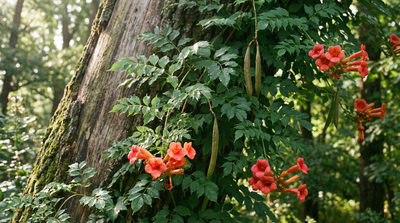
Trumpet Creeper
Campsis radicans
One of the most productive hummingbird plants in eastern Texas. The large tubular flowers produce copious nectar through the summer (June–September), filling the late-season nectar gap when many spring wildflowers have finished. Serves as a larval host, provides dense cover and nesting structure for birds in fence rows and woodland edges, and the vines also harbor ants. Its vigorous rooting and suckering habit makes it useful for erosion control on banks and disturbed ground, though the same vigor makes it aggressive in managed landscapes.
Twistleaf Yucca
Yucca rupicola
A structurally distinctive component of Edwards Plateau limestone grasslands and open woodlands. Its tall spring flower stalks provide nectar and pollen for moths, butterflies, and bees, and it participates in an obligate pollination mutualism with yucca moths, which rely on its flowers as the sole nursery for their larvae. Deer readily browse the blossoms, which are held at convenient grazing height, while the spine-tipped, saw-edged leaves deter herbivory on the foliage. Serves as a larval host plant for Kendall's yucca skipper. Rosettes stabilize thin soils on rocky slopes and ledges, and spent flower stalks offer perching and structure through the off-season.
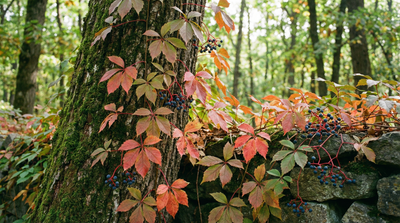
Virginia Creeper
Parthenocissus quinquefolia
One of the most valuable native vines in Texas for wildlife. Bluish-black berries ripen in late summer and persist into winter, feeding 35+ bird species including mockingbirds, robins, bluebirds, cedar waxwings, thrushes, chickadees, nuthatches, and woodpeckers; deer, skunks, squirrels, and small mammals browse foliage and stems. Dense foliage provides nesting cover and structure, and the vine stabilizes soil on banks and disturbed slopes. Brilliant red-purple fall color makes it a signature deciduous vine of Texas bottomlands.
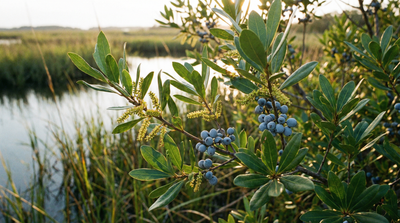
Wax Myrtle
Morella cerifera
An actinorhizal nitrogen fixer — root nodules host a symbiotic actinomycete (Frankia) that fixes atmospheric nitrogen at rates exceeding many legumes, enriching nitrogen-poor sandy and coastal soils. The waxy blue fruits persist into winter and are eaten by many birds, including northern bobwhite, wild turkey, Carolina wren, and tree sparrows, making it an important cold-season food source. Dense evergreen growth provides year-round cover and nesting habitat and stabilizes dunes, stream banks, and wetland margins; salt tolerance makes it a valuable coastal buffer. Fire-adapted, resprouting vigorously from the root crown after top-kill. White-tailed deer find it unpalatable in eastern Texas. Under fire suppression it can form dense thickets that reduce habitat quality for quail.
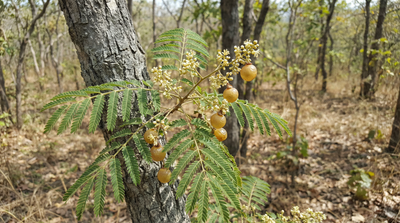
Western Soapberry
Sapindus saponaria var. drummondii
Fleshy yellow drupes persist into winter and are eaten by cedar waxwings, bluebirds, and robins, which disperse the seed; the saponin content deters most other wildlife, so fruit remains available as late-season forage after other sources are gone. The tree suckers freely to form groves and thickets that provide nesting cover for birds and small mammals, and its root system stabilizes soil along waterways. Tolerant of drought, heat, wind, poor soil, and urban air pollution, with few disease or insect problems.
Whitebrush (Beebrush)
Aloysia gratissima
One of the most important nectar shrubs in central, south, and west Texas — vanilla-scented flower spikes bloom in flushes from March to November after rains, giving pollinators a long, rain-triggered nectar season when little else is flowering. Long recognized as a premier honey plant. Also supplies fruit for birds, and its dense thickets provide cover and nesting sites for birds and small wildlife. Browse value for livestock is poor, and it is highly deer resistant. Important caveat: TAMU Rangeplants documents the foliage as poisonous to horses, mules, and burros — an unidentified water-soluble toxin causes weakness, incoordination, and death roughly 6–8 weeks after exposure.
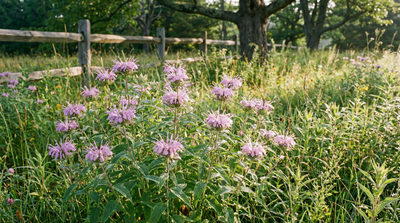
Wild Bergamot
Monarda fistulosa
A high-value summer nectar and pollen plant that blooms through the hot months when many prairie forbs have finished. Its long tubular flowers serve long-tongued bees, hummingbirds, and hawk moths, while the open flower head also feeds predatory wasps that control crop pests. The Xerces Society lists it as a recommended monarch nectar source. Rhizomatous colonies stabilize soil on woodland edges and ditch banks, and seed heads persist into fall for small birds. Strongly deer resistant thanks to its aromatic foliage, which helps it hold ground in browsed landscapes.
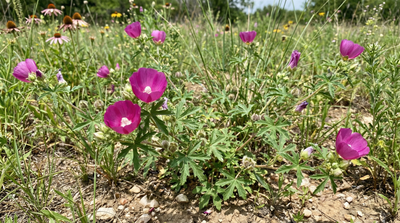
Winecup
Callirhoe involucrata
A long-blooming (roughly March–June, sometimes longer) mat-forming perennial that provides nectar and pollen through the spring gap when few other prairie forbs are open. Flagged as having "Special Value to Native Bees" via the Xerces Society pollinator program. Serves as a larval host for Gray Hairstreak and Painted Lady butterflies. Its deep, fleshy taproot makes it a drought-persistent groundcover that stabilizes thin rocky soils, and it is generally deer-resistant, so it holds in browsed prairie and roadside settings where more palatable forbs are lost.
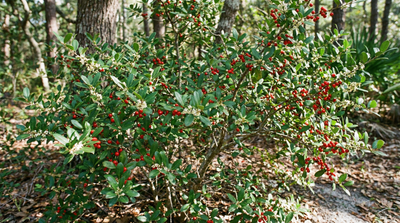
Yaupon Holly
Ilex vomitoria
A high-value understory shrub. Female plants produce persistent red drupes that carry into winter and are eaten by many songbirds and small mammals, becoming especially palatable to birds after freezes soften them — an important late-winter food source when little else remains. Its dense evergreen branching provides nesting sites and year-round escape cover. Spring flowers supply nectar and pollen to insects, and the foliage serves as a larval host. Moderately deer resistant. Its thicket-forming habit stabilizes sandy coastal and woodland soils.
Zexmenia
Wedelia acapulcensis var. hispida
One of the longest-blooming native composites in central and south Texas, carrying orange-yellow flower heads from May through November — a nectar supply that bridges the late-summer dearth when many spring wildflowers have finished. Serves as a documented larval host for at least three butterflies, so it feeds both adults and caterpillars. Sets seed used by small birds, and its deer resistance lets it persist and keep flowering on sites where browsing removes other forbs. Long-lived, non-aggressive and drought-hardy, it holds thin calcareous soils on rocky slopes.