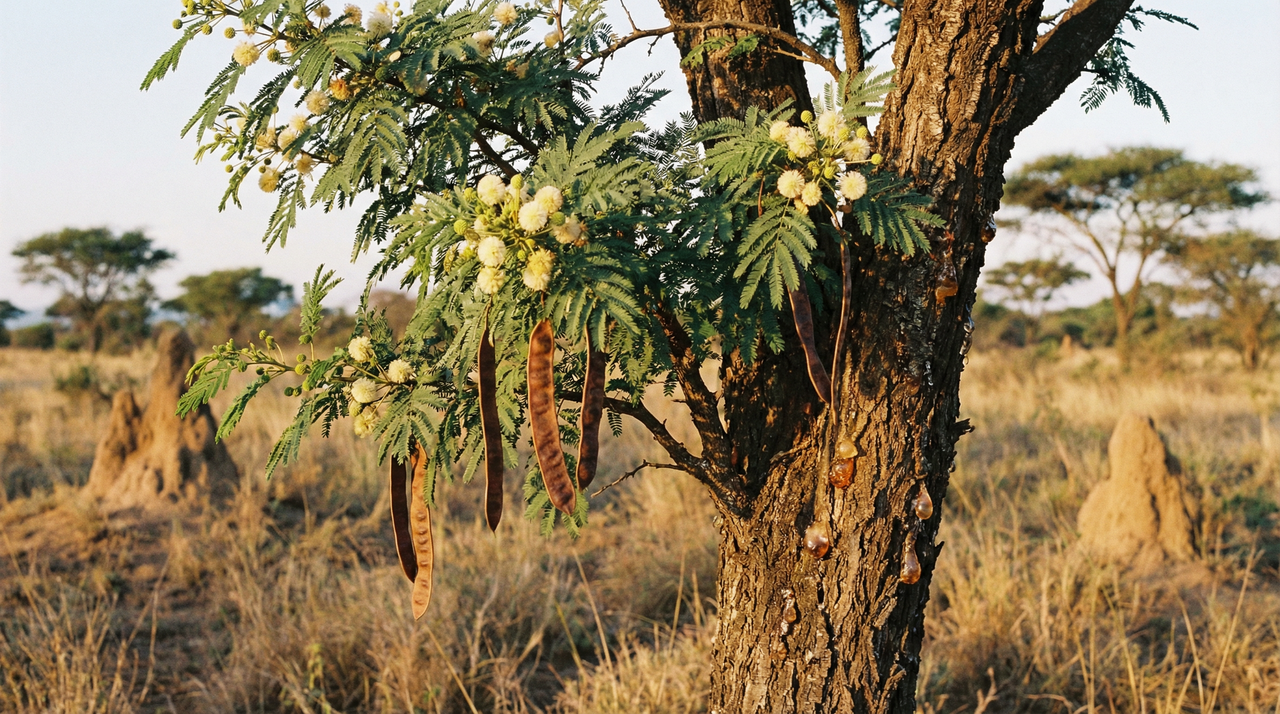
Acacia ammitia is one of the most chronically misidentified nitrogen-fixing shrubs in permaculture design. Search "Acacia ammitia" and you'll land in a tangle of pages conflating it with African gum-arabic trees, mislabeling its range, or describing a species that taxonomists only formally pinned down in 2019 on sandstone country in Queensland.[1] That's not a typo. Nineteen years into this century, botanists were still sorting out what this plant actually is. And yet here it sits in permaculture plant lists, health blogs, even seed catalogs, described with a confidence the science simply doesn't support yet.
I find that genuinely exciting, not frustrating. Some of the most instructive plants I've worked with are the ones where the story is still being written, where you have to hold real humility in one hand and real curiosity in the other. Acacia as a genus spans an almost absurd ecological range, from the critically endangered shrubs clinging to a single sandstone ridge in Queensland to the towering Hawaiian koa, a tree that can outlive five human generations.[2] Understanding ammitia means reckoning with all of that breadth, the gaps in our knowledge included.
Acacia ammitia Origin, History, and Cultural Significance
When I first encountered Acacia ammitia on a Queensland native plant list, I spent a solid hour cross-checking the Atlas of Living Australia, WorldWideWattle, and Queensland government conservation profiles before I understood why the search results were such a mess. Half the commercial websites I found were describing African gum-arabic trees. The confusion is understandable but consequential, especially for a plant this rare.
Botanical Background and Taxonomy
Acacia ammitia, the Ammitia Wattle, is a member of the legume family Fabaceae, formally described in 2019 by Leslie Pedley from specimens collected on the southern slopes of Mount Mulligan.[3][4] The specific epithet "ammitia" refers directly to its sandstone habitat. It's endemic to Ngarrabullgan in northeast Queensland, growing in open woodland on sandstone substrates alongside Corymbia leichhardtii and two eucalypt species, with a total distribution of roughly 10 km².[5]
To be direct: this plant has nothing to do with commercial gum arabic. That product comes almost exclusively from Acacia senegal and Acacia seyal in the Sahel region of Africa.[6][7] The conflation is everywhere online, and it matters, because Acacia ammitia is listed as Critically Endangered under both the IUCN Red List and Australia's EPBC Act, threatened by habitat loss, grazing, mining, and invasive species.[8][9] Conservation work is focused on seed banking and botanic garden propagation. Having grown other rare Australian wattles from conservation seed, I know how critical accurate provenance and identification are; misidentifying this species in a cultivation context could quietly undermine those recovery efforts.
To understand just how diverse this genus can be, consider Acacia koa, the Hawaiian Koa, an evergreen nitrogen-fixing tree that can reach 18 to 35 meters and live 500 years or more on volcanic soils in montane Hawaiian forests.[10] Same genus, radically different scale and ecology.
Visual Characteristics and Adaptations
Acacia ammitia is a spreading, often multi-stemmed shrub typically reaching 2 to 4 meters, though some individuals have been reported taller. Its narrow phyllodes, 5 to 15 cm long and covered in silky hairs, are a distinctive field mark I'd look for immediately; along with the short pungent stipular thorns on juvenile growth that catch on sleeves, they give the plant a noticeably textured, almost bristling quality in hand.[3][11] Bright yellow rod-like flower spikes, rough fissured bark, and a deep taproot system round out its drought-adapted profile, the taproot especially being its lifeline on nutrient-poor sandstone. Comparing that 3-meter shrub to a 35-meter koa canopy tree illustrates how broadly the Acacia genus has diversified across climates, from Australia's dryland sandstone to Hawaii's misty volcanic ridges.
Traditional and Cultural Uses
Aboriginal Australian communities have drawn on Acacia species for generations, relying on seeds ground into flour for damper (after leaching to remove toxins), bark and leaves for treating wounds and respiratory conditions, woody material for tools, and bark pigments for dyes and ceremony.[12] The relationship is practical, medicinal, and deeply cultural all at once.
Across the Pacific, Koa carries a cultural weight of significance that is hard to overstate. Sacred to the god Kū, symbolizing strength, it supplied the great wa'a, the outrigger canoes that made Hawaiian navigation possible, as well as weapons, bowls, ukuleles, and ceremonial objects.[13][14] Bark provided medicine, cordage, and reddish-brown dye. That cultural depth sat alongside sustainable harvest traditions that recognized exactly how long these trees took to mature. What happened later, commercial logging that devastated old-growth koa stands, is a cautionary story about what breaks when that respect erodes.
Fun Facts and Genus Diversity
Acacia ammitia disperses its seeds through myrmecochory: lipid-rich elaiosomes on the seeds attract ants, which carry them away and effectively plant them.[3] For a gardener interested in wildlife-friendly design, that ant partnership is worth appreciating as a built-in dispersal guild. The plant also produces tannins and possibly cyanogenic glycosides as chemical defenses, traits common across the genus and relevant to anyone considering edible or medicinal applications.[15]
Meanwhile, Koa forests in Hawaii remain under threat from habitat loss, invasive species, and Rapid 'Ōhi'a Death, pushing intensive restoration planting and seed banking programs that echo the conservation work happening for Acacia ammitia on its Queensland sandstone.[16][17] From a hairy-phylloded, ant-dispersed 3-meter shrub on Australian sandstone to a 35-meter nitrogen-fixing canopy tree on Hawaiian lava, the genus spans more ecological territory than almost any plant group I can think of, and understanding that range is the starting point for cultivating or conserving any member of it responsibly.
Acacia ammitia Varieties and Sourcing
Notable Botanical Varieties and Related Acacia Species
When sourcing Acacia ammitia, exact botanical identification is essential to avoid confusion with African gum species.[18][19] What we're actually discussing is a drought-adapted Australian wattle native to the arid interior of Queensland, the Northern Territory, Western Australia, and New South Wales, growing 4 to 10 meters tall with a rounded canopy and the bright yellow globular flowers you'd expect from any wattle worth growing.[20][21]
Within the species, two botanical varieties exist: var. ammitia, the standard upright form, and var. prostrata, a low-growing ground-hugging form with obvious landscape appeal in windswept or erosion-prone sites.[19] Both share the same deep root system and phyllode structure that allows the species to thrive on under 500 mm of annual rainfall in sandy, well-drained soils.[22][20] It's listed as vulnerable or priority flora in parts of its range, which shapes every decision around sourcing and cultivation.[23][24]
The wider Acacia genus shows just how far this group can stretch. Acacia koa, the Hawaiian Koa tree, reaches 40 to 100 feet tall in mesic and dry island forests, comes in two varieties of its own (var. koa widespread across the islands, var. hawaiiensis restricted to Hawaiʻi Island), and has active breeding programs targeting faster growth, disease resistance, and timber quality.[25][26] Its hardiness sits in USDA zones 10 to 12, sensitive to prolonged cold below about 25°F.[27][28] I think of its frost threshold as roughly similar to a mature citrus tree: fine in a warm coastal climate, but one bad freeze ends the experiment.
Sydney Golden Wattle (Acacia longifolia) sits at the hardier end of the genus, tolerating temperatures down to around 10 to 20°F in zones 8 to 11.[29][30] I've seen it escape into coastal California gardens and form dense thickets that crowd out native vegetation, and the California Invasive Plant Council flags it as a genuine ecological threat there.[31] If your climate resembles coastal California, pick something else or contain it aggressively. I won't recommend a plant that's likely to become someone else's restoration problem.
Sourcing Acacia ammitia Plants and Seeds
Finding Acacia ammitia outside Australia is genuinely difficult. No major U.S. nurseries stock it regularly, and when seed does appear through specialty suppliers or botanical gardens, small packets of 10 to 25 seeds run $8 to $15, with young plants ranging $20 to $50 when you can locate them at all.[32] Getting living material or seed into the United States requires USDA phytosanitary certification, and while the species isn't listed under CITES, the import paperwork alone filters out casual buyers.[33][34] Seeds need scarification to germinate reliably, and the plant demands sandy, freely draining soil with minimal water once established.[35][36] I've grown several vulnerable Australian wattles from legally sourced seed over the years, and I always prioritize suppliers who actively support in-situ habitat conservation rather than simply selling seed extracted from wild populations.
Acacia koa sits at the opposite end of the sourcing spectrum, with established Hawaiian forestry programs propagating selected genotypes for both timber and restoration work.[28] Even so, it carries its own cultivation challenges outside Hawaii, including specific mycorrhizal requirements and susceptibility to Ceratocystis wilt that limit success in non-native settings.[37] For Acacia ammitia specifically, your best path runs through Australian native-plant societies, botanical seed banks, and conservation nurseries rather than any general online marketplace. This is a plant for restoration work and serious collectors, and treating it that way is the right call given its vulnerable status.
Acacia ammitia Propagation and Planting
Acacia ammitia is a recently described, endangered Australian endemic with a thin published record on propagation.[38][39] Nearly everything we know about growing it is responsibly extrapolated from better-studied relatives, including the iconic Hawaiian koa. I'll flag clearly when we're working from that wider genus evidence, and I'll flag when something applies directly to ammitia. That transparency matters here, especially for anyone sourcing seed for conservation purposes.
Seed Morphology, Storage, and Viability
Ammitia seeds are small, ellipsoidal to ovate, and roughly 2.5 to 3.5 mm long with a hard dark brown to black testa and a cream-colored aril.[40] That aril is functionally important: in the wild, it flags the seed for ant dispersal, which is how ammitia spreads across its limited range.[38] The good news for anyone working with saved seed is that ammitia produces orthodox seeds, meaning they tolerate drying and cold storage remarkably well. Dried to 5 to 10% moisture content and held at 10 to 20°C with 10 to 15% relative humidity, viable seed can persist for 10 to 20 years; drop them into airtight containers with desiccant at -18 to -20°C and you're looking at decades of banking potential.[41][42] Cryopreservation extends viability further still, and periodic germination testing every 5 to 10 years using ISTA protocols or tetrazolium assays is worth the effort given how precious this seed is.[41] Because viability varies with provenance, storage history, and collection maturity, testing at least 100 seeds per lot before a major planting push is standard practice.[43]
One distinct trait worth knowing about is that polyembryony is common in ammitia.[44] A single seed can contain multiple embryos, both zygotic and nucellar, offering a natural path to clonal material that conservationists prize.[44][45] I think of these as bonus plants. When I've grown other polyembryonic wattles, I learned quickly to pot the multiple seedlings separately as soon as they're large enough to handle; leave them crowded and the root competition sets everyone back. Because ammitia is listed as threatened in the wild, I only source seed or plants from reputable native nurseries participating in ex-situ conservation programs, and the fact that one seed can yield several genetically identical seedlings is a genuine gift for restoration plantings.[44][46]
Germination and Propagation Techniques
Seed is the primary and most reliable path for growing ammitia, and the hard testa means scarification isn't optional; it's the whole game. A hot water soak at 80 to 90°C, either a brief near-boiling dip of one to two minutes or a longer soak up to 24 hours at lower sustained heat, breaks physical dormancy effectively.[47][48] Mechanical scarification (nicking or sanding through the coat) and sulfuric acid treatment are both used across the genus as well.[47] In my experience with Australian wattles generally, the highest germination rates come when you follow the hot-water soak with a 24-hour cool-down in that same water before sowing, a small timing detail that aligns with documented koa protocols and consistently improves my results. With proper pretreatment, germination in a moist, well-drained sterile medium at 25°C under light shade happens within 7 to 21 days, often faster, with success rates of 70 to 90% for fresh seed.[49][48] Inoculating with appropriate rhizobia strains at sowing is worth doing; it establishes nodulation early and gives seedlings a nitrogen advantage right from the start.[47]
Vegetative options exist when clonal fidelity or faster maturity is the goal. Semi-hardwood cuttings (10 to 15 cm, treated with IBA at 3,000 to 8,000 ppm, set in a sand-perlite mix with bottom heat around 21 to 27°C and 80 to 90% humidity) achieve 30 to 70% rooting success over four to eight weeks.[50][51] Air or ground layering can reach 40 to 80% success. Grafting onto compatible rootstocks using whip-and-tongue, cleft, or veneer techniques yields 50 to 80% success and dramatically shortens time to maturity, which matters for conservation programs working against a clock.[52] Tissue culture on MS medium with cytokinins and auxins achieves 60 to 90% acclimatization rates where lab capacity exists.[53] For home gardeners and small restoration projects, though, scarified seed with a rhizobia inoculant remains the most accessible and proven approach.
Soil, Site Selection, and Planting Requirements
Ammitia is an arid Australian native, and its preferences reflect that origin clearly. It wants well-drained sandy, gravelly, or loamy soil of low fertility in full sun, and it handles a broad pH range from 5.5 to 8.5 with optimal performance between 6.0 and 7.5.[54][55] Like my pigeon peas, it shrugs off a fairly wide pH range as long as drainage is excellent; I've learned to watch for yellowing new growth above 7.8 and treat with chelated iron rather than guessing at amendments. Ammitia also tolerates some salinity and brief seasonal waterlogging once established, which is more flexibility than many arid species offer.[54] Natural rainfall in its native habitat runs 500 to 800 mm annually, though the genus includes members adapted to much drier conditions.[56]
Drainage is the non-negotiable across all Acacia species. Both ammitia and koa suffer root rot in waterlogged or compacted soils, though ammitia shows slightly more tolerance for brief inundation while koa demands consistently aerated profiles throughout.[57][58] Koa, for contrast, prefers deeper volcanic loamy soils derived from basalt at an optimal pH of 5.5 to 6.5, with chlorosis appearing above 7.5 to 8.0 and aluminum toxicity risks below 4.5 to 5.0.[59][60] The ammitia range is broader and more forgiving on pH, but the drainage requirement is equally firm. Before planting anything, I run a simple drainage test and check phosphorus levels; for a nitrogen-fixing legume, phosphorus availability often matters more than added fertilizer, and a soil test takes the guesswork out of site preparation.
Spacing, Timing, and Establishment
Aim to plant in spring after the last frost risk has passed, using container-grown seedlings hardened to outdoor conditions at 30 to 50 cm tall.[49][61] Direct sowing of scarified seed into prepared sites is possible but container growing gives you more control over that critical early establishment phase. Stake young plants and lightly prune for form in the first season.[61]
Ammitia matures to 2 to 4 meters tall with a similar canopy spread, and it grows at a moderate 30 to 60 cm per year.[62] For hedges or screens, space plants 3 to 5 meters apart; for specimen or ornamental use where you want air circulation and eventual canopy spread, 5 to 8 meters is appropriate.[21] I've made the mistake before of going by year-one appearance when spacing young plants; the 5 to 8 meter gap that feels absurdly generous at planting becomes exactly right by year five. Koa, as a frame of reference, is planted at 2.4 to 3 meters within rows in timber plantations targeting close to 1,000 to 1,600 trees per hectare, but that's a 15 to 30 meter tree designed for tight competition to drive straight form.[63][64] The ammitia context is entirely different. Because this species is endangered and its seed is best sourced through conservation channels and native-plant societies that participate in ex-situ programs,[44] treat your establishment choices as conservation decisions as much as horticultural ones.
Maturity Timelines from Seed or Graft
Once scarification is done correctly, germination is the satisfying quick payoff: 7 to 21 days at 20 to 30°C, with 25°C often the sweet spot, and germination rates of 70 to 90% from fresh pretreated seed in a sterile moist medium.[49][48] That quick window is a real reward after the prep work.
The longer maturity timeline is less instant. For ammitia and closely related gum-producing acacias, seed-grown plants reach meaningful gum-harvest maturity in 5 to 8 years, with optimal production building from around 7 to 10 years onward and continuing to increase for 15 to 20 years.[7][65] Grafting onto compatible rootstock can compress that to 2 to 4 years, though I'd only recommend that route for growers who already have grafting skill and access to suitable stock; for everyone else, the seed path is simpler and more reliable.[7] Koa's timeline for usable timber, for perspective, runs 15 to 40 years depending heavily on site quality, moisture, and target diameter.[66][67] Ammitia's shrubby scale is humbler but the timeline is far more accessible for most growers. And for conservation work, polyembryony's ability to yield several genetically matched seedlings from a single precious seed means that a small seed collection can go considerably further than the numbers suggest.[44]
Acacia ammitia Care Guide: Growing Ammitia Wattle
If there's one thing I've learned growing arid-zone Australian natives, it's that the biggest mistake you can make is treating them like they want to be coddled. Acacia ammitia comes from the hot, dry interior of Western Australia, where annual rainfall sits between 200 and 400 mm and the soil drains before you've finished watering. Get the fundamentals right, and this plant will essentially take care of itself.
Watering Needs for Ammitia Wattle
The deep taproot system is what makes mature Ammitia Wattle so drought-tolerant; it mines moisture from well below the surface and uses stomatal control to limit transpiration during dry spells.[68][69] Once established after about one to two years, the plant needs only occasional deep soaks every two to four weeks during active growth and essentially nothing in winter.[21] Young seedlings are a different story. For the first year, I keep the top inch of soil consistently moist, watering every two to three days, but never waterlogged.[70] Root rot is a genuine threat at this stage, and in my experience these plants punish overwatering far more harshly than they punish underwatering.
Sunlight Requirements
Ammitia Wattle demands full sun, full stop. It evolved in open arid scrubland with no canopy competition, and insufficient light shows quickly: etiolated stems, yellowing leaves, reduced growth, and eventual leaf drop.[71] When siting young plants, I watch for reflected heat from walls or paving, which can cause leaf scorch on seedlings not yet acclimated to intense direct sun. A sheltered but fully exposed spot is ideal. Once the plant hits its stride, partial shade during extreme heat events is one of the few interventions worth making.
Feeding and Soil Fertility
Here is the part I genuinely love about growing nitrogen-fixing wattles: after the first year, I've never added a gram of nitrogen fertilizer, and the soil around my established plants visibly greens up compared to surrounding beds. That's the Rhizobium partnership at work, fixing anywhere from 50 to 100 kg of nitrogen per hectare per year under good conditions.[72][73] Ironically, adding nitrogen fertilizer early on can suppress nodulation, so resist the urge. During establishment, modest phosphorus (15 to 30 kg/ha equivalent) supports root development in deficient soils, and potassium matters for overall vigor.[74] The micronutrient to watch is iron; yellowing between leaf veins is a classic sign of iron or manganese deficiency, treatable with chelated fertilizers.[75] Mature trees in low-fertility soils typically need no supplemental feeding at all.[76]
Frost Tolerance and Cold Protection
Acacia ammitia is best suited to USDA zones 9 through 11, and while established plants can handle brief dips to around -5 °C, seedlings are considerably more vulnerable.[77][78] Frost also hits flowers and developing seed pods hard, which can gut seed production for the season. I treat young Ammitia plants exactly the same way I treat my tender citrus: frost cloth when temperatures drop below 2 °C, a thick layer of mulch over the root zone, and placement in a microclimate with good cold-air drainage. It's not a plant for zone 8 winters without serious protection, and even in zone 9 a bad cold snap can set young trees back significantly.
Heat and Drought Tolerance
Acacia ammitia safely tolerates temperatures up to 45 °C, with optimal growth between 15 and 35 °C.[79][80] That said, prolonged extreme heat does leave marks: wilting, browning at leaf margins, canopy thinning, and a significant drop in pod production.[81] The plant responds physiologically by closing stomata and ramping up antioxidants, but seedlings don't have the reserves mature trees do.[82] A 2 to 3 inch mulch layer around the base can reduce heat stress noticeably, cutting soil temperature fluctuations and retaining the moisture that helps the plant cope.[83] I've seen that difference clearly in my own plantings during summer heat spikes.
Pruning, Maintenance, and Seasonal Rhythm
Light pruning after flowering encourages bushier, more compact growth and removes spent blooms; that is really all this shrub needs in most years.[84] I learned the hard way that heavier cuts cause dieback rather than vigorous regrowth, so now I take off no more than I'd remove from a flowering hedge. Prune during the dry season when cuts heal fastest. Timing matters because acacia growth is seasonal: most active during wetter months, quieter in dry periods. The broader genus pattern, well-documented in Koa, shows flowering from late winter into early summer with seed pods ripening over the following four to six months.[85] For Ammitia Wattle specifically, Acacia ammitia reaches maturity in three to five years, so growth happens quickly once establishment is complete.[86] Keep mulch at 2 to 3 inches around the base year-round, away from the trunk, and the seasonal maintenance calendar becomes very short indeed.
Acacia ammitia Harvesting Guide
Most plants you harvest once and they're done for the season. Gum-producing acacias work differently, and that's part of what makes them so interesting from a permaculture standpoint. The harvest here is non-destructive tapping, and the same tree can keep giving for decades if you treat it well. Since A. ammitia's specific harvest data is thin, most of what follows draws from closely related species like Acacia senegal, so treat the month ranges as general guides rather than fixed rules.
When to Harvest Acacia Gum
The harvest window for gum arabic-type acacias generally runs October through June, with peak quality production concentrated between December and April during the dry season.[87][88] The phenological cues tell the real story: flowering typically happens at the onset of the dry season, the tree flushes leaves again when rains return, and gum exudate forms as a stress response during dry periods, reaching maturity roughly three to six months after flowering.[89] Collecting during dry conditions is intentional, not just convenient; moisture invites microbial degradation that degrades gum quality fast.[87]
In my own plantings of several Acacia species, I've noticed that the most visible gum "tears" appear right after a prolonged dry stretch, almost like the tree is weeping through its bark. That's your signal. I label every Acacia planting carefully too, because early seedlings of gum and timber types can look remarkably similar and misidentification at harvest is a real risk. For contrast: if you're working with Acacia koa for seeds rather than gum, you're looking at pods on trees at least ten to fifteen years old, browning up between August and November.[90] Koa timber pushes that timeline even further, requiring twenty-five to forty years of maturity before selective logging makes sense.[91] The gum cycle measured in months feels almost quick by comparison.
Sustainable Tapping and Post-Harvest Handling
Tapping for gum is genuinely one of the more sustainable harvest methods I know. Done correctly, it doesn't harm the tree, and the same specimens can produce reliably for many years.[92][93] Once the gum tears are collected, proper post-harvest handling determines whether you end up with a stable, usable product. The protocol dictates cleaning and sorting by color, size, and purity; drying down to ten to fifteen percent moisture content; milling if needed; and storing in moisture-proof bags in a cool, dry location, with grading following Codex Alimentarius specifications.[88][94] I teach those same quality-control steps, the careful drying and grading, to clients handling any specialty crop. Sloppy post-harvest work undoes everything that happened before it.
The timber side of the genus is a different world entirely. Sustainable Koa harvesting means selective logging that removes no more than thirty to fifty percent of canopy cover, permits, environmental impact assessments, and rotation cycles of thirty to fifty years.[95] Koa lumber then requires six to twelve months of air drying before kiln finishing.[96] I mention this not to complicate things but because understanding the full range of what "harvesting acacia" can mean helps a permaculture designer think clearly about what they're actually growing and planning for.
Expected Yield and Flavor Profile
A. ammitia gum is not a documented commercial product, and its specific yield, properties, and safety for consumption haven't been established in the scientific literature.[97][98] Because of that, I treat any gum from this species strictly as a non-edible resin in my designs. I'm not willing to extrapolate edibility without better toxicology data, and neither should you.
What we can say is that if the gum behaved like close relatives, it would likely be rich in arabinogalactan polysaccharides, low viscosity in solution, and neutral to mildly sweet in flavor, with variation depending on origin, environment, and processing.[99][100] Elsewhere in the genus, Acacia koa flowers have a mild, sweet, floral profile, and roasted koa seeds develop a nutty, chestnut-like quality once tannins are processed down.[101] Harvest timing shapes all of this; Acacia longifolia flowers, for instance, show their most intense flavor when harvested early and fully open, when nectar sugar concentrations peak.[102] Those are useful genus-level patterns, but they are not a safety clearance for ammitia specifically. Check the safety section before any experimental use, and always confirm current identification and toxicology resources first.
Acacia ammitia Preparation and Uses
Acacia ammitia is a recently described species with very little documentation of its own, so everything in this section is extrapolated from close relatives. That's not a reason to ignore its potential, but it is a reason to stay honest about where the evidence actually comes from.
Culinary Uses and Preparation Methods
The gum exudate from Acacia species can be dried and powdered to function as an emulsifier, stabilizer, and thickener in food, working much like commercial gum arabic derived from Acacia senegal.[103][104] Acacia longifolia produces an edible gum along the same lines, used traditionally as a sweetener or thickener.[105] Whether ammitia gum behaves identically is genuinely unknown, and I'd treat any culinary experiments with it as exactly that: experiments, not recipes.
The seeds are where things get more interesting, and more demanding. Acacia seeds across the genus pack roughly 20-40% protein by dry weight[106][107] and have been ground into flour for breads, damper, and porridge in Aboriginal Australian food traditions for thousands of years.[108][109] For Sydney Golden Wattle (Acacia longifolia), that processing means roasting at 150-180°C for 15-30 minutes, then grinding and water-leaching to clear residual tannins before baking.[105][110] Properly done, the flour develops a nutty, chestnut-like aroma I've come to recognize immediately. I still start with small test batches, though, because an incomplete leach leaves enough bitterness to ruin whatever you're making. Young longifolia pods can also be eaten raw or lightly cooked like green beans, while leaves and bark are avoided entirely due to high tannin content.[111] Flowers of related species including longifolia and koa are edible in small amounts, with a mild honey-sweet flavor that works as a salad garnish or in teas.[112]
None of this transfers automatically to ammitia. Species-specific nutritional data simply doesn't exist yet. Foraging any acacia, including this one, requires confident expert identification and thorough processing to address cyanogenic compounds and tannins that can cause real harm if preparation is rushed.[113][114] I've foraged several Australian wattles and the single most important habit I've developed is labeling every seedling row from day one; juvenile acacias can look deceptively similar to plants you absolutely don't want to eat, and no recipe is worth a misidentification.
Medicinal Preparations
Traditional preparations across the Acacia genus include bark decoctions (roughly 5-10 g simmered in water for 10-15 minutes), alcohol tinctures made by soaking gum or bark for 2-4 weeks, and powdered gum applied topically.[115] These methods align closely with what I use for other well-documented medicinal shrubs, which makes them feel familiar, but I'm always conscious that familiar preparation doesn't equal proven safety when we're working from genus-level inference rather than ammitia-specific research. Bark infusions and leaf poultices are traditionally associated with digestive complaints, wound care, and inflammation in related species,[116] and I approach small batches of bark tea the same way I approach any novel preparation: low dose first, source ethically, and keep records.
Non-Food and Traditional Uses
Outside the kitchen, Acacia as a genus pulls considerable weight. Foliage from various species runs 15-25% protein, making it viable browse for livestock.[117] Bark yields tannins and dyes, stems provide fiber for rope, and timber applications range from furniture to fuelwood.[116] Koa wood specifically imparts a mild, sweet, nutty smoke when used for meats and fish, something between cherry and the lighter end of mesquite in my outdoor kitchen experience; bark from koa is also used for tanning, though only harvested sustainably from already-felled trees.[118] Coppicing acacias for biomass and mulch is a practice I use regularly in my own garden beds, cutting back nitrogen-fixing shrubs to feed the soil layer beneath fruit trees.[119] For a critically endangered species like ammitia, though, conservation has to come before harvest. Its non-food value in restoration contexts is probably where it earns its place, not on the cutting board.
Acacia ammitia Health Benefits and Medicinal Uses
Acacia ammitia is not a well-studied medicinal plant. The scientific literature on this species specifically is nearly nonexistent, and everything we can reasonably say about its health applications is extrapolated from related Acacia species.[120] No peer-reviewed human clinical trials exist for Acacia ammitia, and the broader genus has only recently begun attracting the kind of rigorous pharmacological attention that species like Acacia nilotica or Acacia senegal now receive.[121][122] Traditional Aboriginal Australian knowledge of these plants spans thousands of years, and modern science is only beginning to catch up. That's why I prioritize respectful, minimal use and keep calling for more research rather than reaching for confident health claims.
Traditional Medicinal Uses and Research on Acacia ammitia
Across African, Asian, and Australian Indigenous traditions, Acacia species have a long track record for digestive complaints, wound healing, respiratory ailments, and skin infections.[123][124] For ammitia specifically, the gum exudate has been used as a demulcent, that soothing, coating quality that calms inflamed mucous membranes, making it a go-to for coughs and digestive discomfort. Bark and leaves have been applied topically for skin infections and sores, and the bark's astringent properties have made it useful as an antiseptic in wound care.[124][125]
Other related species flesh out what the genus is pharmacologically capable of. Extracts from various Acacia species show anti-inflammatory activity by inhibiting pro-inflammatory cytokines including TNF-α and IL-6, suppressing COX-2 enzymes, and interfering with the NF-κB signaling pathway.[126] Antioxidant activity is well-documented too, with bark extracts scavenging free radicals via DPPH and ABTS assays, enhancing superoxide dismutase, and chelating metals, with IC50 values for bark extracts ranging from roughly 20 to 50 μg/mL.[126][127] Antimicrobial action against Staphylococcus aureus and E. coli (MIC 0.5 to 2 mg/mL) has been attributed to membrane disruption, which helps explain the traditional wound-healing applications of the gum and bark.[128] Acacia koa, the Hawaiian cousin discussed in the origin section, adds further breadth: traditional uses for fevers, diarrhea, oral issues, and general tonic preparations, with preliminary enzyme inhibition data suggesting potential antidiabetic and neuroprotective activity, none of it yet validated in human trials.[129][123] The genus pattern is consistent enough to respect the traditional knowledge, but not robust enough to make clinical promises.
Key Phytochemicals in Acacia
The phytochemical picture for Acacia ammitia is drawn almost entirely from related species, because direct analysis of this plant is sparse.[130] Based on those relatives, the plant likely contains condensed and hydrolyzable tannins, flavonoids including quercetin, kaempferol, rutin, catechin, and epicatechin, plus alkaloids, saponins, and the arabinogalactan polysaccharides that make up the bulk of the gum exudate.[131][132] Acacia koa gives us the most detailed tissue-level data: bark can run 20 to 30% condensed tannins by dry weight, leaves carry high flavonoid loads around 100 to 150 mg GAE per gram, and seeds yield phenolic acids including gallic and ellagic acid; koa bark also contains a unique flavone called koanin not found elsewhere in the genus.[133][134]
One thing I've noticed growing wattles in my food forest is that drought stress visibly intensifies the astringency of the leaves and gum. The research backs that up: secondary metabolite concentrations shift with seasonal variation, soil conditions, elevation, plant age, and water stress.[135][136] Those compounds serve the plant first, as herbivore deterrents, antifungals, and drought adaptations. Whether that translates into more potent medicinal material or simply harder-to-process plant tissue is an open question that no one has answered for ammitia specifically. Until direct phytochemical analysis of this species exists, we're working with informed inference.
Nutritional Profile and Edible Parts
The gum is the most accessible and least risky edible fraction. Acacia gum is primarily soluble dietary fiber, 85 to 95% arabinogalactan polysaccharides, with around 2 to 3% protein and only 1 to 2 kcal per gram.[137][138] It carries a modest mineral profile: calcium at roughly 0.8 to 1.2%, magnesium, potassium, and traces of iron and zinc.[139] The prebiotic fiber story is the most compelling nutritional angle; the gum feeds beneficial gut bacteria in ways comparable to psyllium or inulin, though I'd be careful about drawing a straight line from commercial gum arabic (from Acacia senegal, which has GRAS status) to ammitia's gum, which lacks that specific documentation.[140]
The seeds are nutritionally dense, running 15 to 28% protein, 4 to 12% fat, significant carbohydrates, and worthwhile iron and zinc levels per 100 grams dry weight.[141][142] Aboriginal Australians processed wattle seeds into flour for damper and porridge; koa seeds served as emergency food in Hawaii, roasted to reduce antinutrients before eating.[143][144] That processing step is not optional. Tannins and potential cyanogenic compounds in the seeds and leaves reduce bioavailability of nutrients and can cause problems if the raw seeds are consumed in quantity; roasting and leaching are the traditional methods for making them safe, with serving sizes around 10 to 20 grams of roasted seeds per day.[145] Young leaves and flowers may offer vitamins A and C along with antioxidant flavonoids, though oxalates and tannins limit how much of that is actually absorbed.[142]
Safety Considerations and Potential Side Effects
While Acacia ammitia is not considered highly toxic to humans in moderate use, the safety profile comes with real caveats.[146] Like many Acacia species, it may contain cyanogenic glycosides such as prunasin, which can release hydrogen cyanide if large amounts are ingested, particularly in plants experiencing drought stress.[147][148] Tannins and alkaloids may cause gastrointestinal irritation or bind to nutrients in ways that undermine absorption.[146] No specific human poisoning cases have been documented for ammitia, but livestock that overgraze the foliage can experience gastrointestinal upset, respiratory distress, or neurological effects.[149][150] If you're running animals near these plants, that's worth knowing.
Gum arabic from Acacia senegal is GRAS-listed by the FDA at 5 to 30 grams per day, with higher amounts causing bloating or gas in some people; rare allergic reactions including contact dermatitis, asthma, and anaphylaxis have been documented.[151][152] Ammitia's gum is not specifically listed under that designation. Drug interactions are worth flagging: tannin content may reduce absorption of tetracycline or digoxin, so spacing medications at least one to two hours apart from any acacia gum product is sensible, and people on anticoagulants should exercise caution.[153] Pregnant or nursing women should consult a medical professional before using any acacia preparation.
The misidentification risk is real and I take it seriously in my own practice. I always cross-reference with Kew or local extension resources before experimenting with any Acacia I haven't definitively identified, because look-alikes in the Vachellia genus or Robinia species can carry very different toxicity profiles.[154] Acacia koa is a useful contrast here: it's considered non-toxic to humans, livestock, and pets, lacks significant cyanogenic glycosides, and its foliage is safely browsed, though koa wood dust is a documented occupational irritant causing dermatitis and respiratory problems in woodworkers.[155][156] The takeaway: the genus holds genuine medicinal promise, but until ammitia has its own clinical data, treat it with the same caution you'd extend to any poorly documented plant. Know what you have before you use it.
Pests and Diseases of Acacia ammitia
Peer-reviewed pest and disease literature specific to Acacia ammitia is essentially nonexistent. The species was only formally described in 2019 from a narrow sandstone range in Queensland, and very little pathology research exists for it.[39][157] You'll sometimes see the name written as Acacia ammobia in older sources, which adds another layer of confusion when you're trying to track down relevant information.[39][158] I always recommend cross-checking names against WorldWideWattle and Plants of the World Online before drawing conclusions about any wattle's pest profile. Everything below is inferred from closely related species, and I'll flag where that distinction matters.
Common Insect Pests and Natural Defenses
Across gum-producing African acacias, the insect pressure catalog is long: aphids (Aphis craccivora), psyllids, leaf beetles, bruchid beetles on pods, caterpillars, wood-boring beetles, termites, and gall-forming insects all show up in the literature.[159][160][161] Hawaiian koa faces its own distinct set, including the koa psyllid (Psylla koae) causing witches' broom and stunted growth, moth defoliators, koa seedworm, scale insects, and the black twig borer.[162][163] For an arid-adapted wattle like A. ammitia, the relevant threats are more likely drawn from that African and Australian dry-country end of the spectrum than from Hawaii's wet forest conditions.
What works in the genus favor is a genuinely impressive defense toolkit. Tannin-rich foliage and bark, flavonoids, phenolic compounds that deter feeding, leaf trichomes, and mutualistic relationships with ants attracted to extrafloral nectaries all provide baseline resilience.[164][165][166] In my experience growing other arid-zone wattles, those extrafloral nectaries recruit ants visibly within weeks of planting. I've come to count on that relationship as free biological control built right into the plant's architecture. When defenses do get overwhelmed, usually by drought stress, symptoms include chlorosis, premature leaf drop, gall formation, sooty mold from honeydew, and in productive trees, yield losses up to 30%.[167][163] My rule of thumb: I hold off on any intervention until I see more than 25% foliage affected. Below that threshold, the tree's own chemistry and a healthy garden predator community almost always handle things.[168][169]
Major Diseases and Environmental Influences
Because A. ammitia is native to hot, dry, low-humidity zones, it's reasonable to expect relatively low disease incidence when planted in a matched site. Problems are more likely to appear under cultivation if drainage is poor or irrigation is heavy. The genus-level disease list is worth knowing as a precaution: Phytophthora root rot, fungal leaf spots (Mycosphaerella, Pestalotiopsis, Colletotrichum), rusts, vascular wilts, Botryosphaeria cankers, and bacterial leaf spot have all been documented across related species.[170][171]
Koa makes the stakes concrete. Phytophthora cinnamomi causes serious canopy decline and yellowing in wet or poorly drained soils, yet the same pathogen does far less damage at drier, well-drained sites.[172][173] I've watched Phytophthora knock over koa seedlings in nursery conditions under routine irrigation while dry-habitat wattles sitting in the same trays came through with barely a yellow leaf. Ceratocystis wilt is another serious vascular threat for koa, entering through wounds and causing rapid canopy death, while Botryosphaeria cankers compound the damage during drought stress.[174][175] These are koa-specific patterns, not confirmed for A. ammitia, but they illustrate why moisture management is the central variable for the whole genus.
Koa breeding programs through the US Forest Service and University of Hawaii have shown that disease resistance varies significantly by provenance, with plants sourced from drier parent climates showing stronger performance.[176][177] I've taken that lesson to heart with all my wattle sourcing: I ask suppliers for seed origin data, and plants from drier provenances consistently outperform those from wetter-climate parents over the long run. For disease management broadly, the priorities are disease-free stock, well-drained sites, no overwatering or soil compaction, prompt removal of infected material, and keeping plants healthy enough that stress-induced susceptibility never gets a foothold.[178][179] In a dryland guild designed around A. ammitia's native climate, most of that is just good siting rather than active management.
Acacia ammitia in Permaculture Design
Before placing any plant in a system, I want to know its honest climate story, and Acacia ammitia's is one of genuine austerity. This is a shrub shaped by hardship: hot, dry Australian summers, coastal salt wind, and soils that drain fast and hold little. For permaculture designers working in dryland contexts, that backstory is actually the whole point. The data on ammitia specifically is thin. Much of what we can say about its ecology is extrapolated from related arid acacias and genus-wide patterns. I'll flag where that's happening.
Climate and Growing Zones for Ammitia Wattle
The species Acacia ammitia is native to hot semi-arid (BSh) and hot desert (BWh) climate zones, thriving on just 200 to 600 mm of annual rainfall with a sweet spot around 300 to 500 mm and low humidity, generally below 50 to 60 percent.[180][181][182] It handles coastal salt spray and sandy soils without complaint, but put its roots in anything waterlogged and you'll lose it fast. Cold hardiness extends to roughly USDA zones 9 through 11, with brief dips to about -5°C survivable under some protection, though sustained frost below that threshold is a death sentence.[183][184] For U.S. growers, that points experimentally toward southern Arizona, inland California, and parts of Texas where arid microclimates align.[185] I'd treat any cultivation outside its native range as genuinely experimental until local adaptation is confirmed.
The contrast with Acacia koa drives home just how wide this genus runs. Koa occupies Hawaiian montane forests at elevations up to 2,100 meters, needs 1,000 to 3,000 mm of annual rainfall, and prefers the kind of humid, cloud-drenched conditions that would rot ammitia at the crown.[71][186] Same genus, entirely different planet in terms of site requirements. Holding that contrast in mind helps you appreciate why matching microclimate isn't optional here; it's the whole design question.
Ecosystem Functions and Soil Benefits
Like all Fabaceae members, Acacia ammitia fixes nitrogen through root nodule symbiosis with Rhizobium bacteria, functioning as a pioneer that builds soil fertility in degraded or nutrient-poor land.[187][188] Specific fixation rates for ammitia aren't documented, but genus patterns documented for Acacia koa show 50 to 200 kg of nitrogen per hectare annually under good conditions.[189] In my own dryland guild work with smaller wattles, the effect is real but humbler: I think of these shrubby pioneers less as fertilizer factories and more as slow, steady contributors that make the whole system more resilient over time. Two seasons in, neighbors like perennial herbs and low-water fruiting shrubs consistently show better vigor than controls planted without a nitrogen-fixer nearby.
Beyond nitrogen, ammitia's root system stabilizes soil, makes it a candidate for windbreaks and living fences on erosion-prone coastal or degraded sites, and supports carbon sequestration at a modest scale appropriate to its size.[188][190] One caveat I take seriously: several Acacia species are flagged as invasive in parts of the U.S., including Florida and California, due to their adaptability on disturbed soils.[191] There's no specific invasiveness record for ammitia, but I always check local extension and invasive plant atlas lists before introducing any Acacia to a new region. No specific weed record is not the same as a green light, especially near natural areas or disturbed corridors where these plants can establish quickly.
Pollination Support and Biodiversity Role
Ammitia flowers in spring, producing small pale yellow spherical heads that draw native bees, particularly Hylaeus and Trigona, along with beetles, through a combination of nectar, pollen, color, and scent.[192][193] The species is self-incompatible, meaning it relies on outcrossing, so a single specimen planted in isolation won't set seed reliably.[194] I've watched native bees work those pale spring globes and found it a reliable sign that the broader insect community in the system is functional. For that reason I deliberately interplant with other sequential nectar sources so the pollinators have reasons to stay through the season, not just during the ammitia flush.
Acacia koa's pollination ecology is richer and better studied, with syrphid flies, butterflies, moths, occasional birds, and introduced honeybees all participating, plus year-round flowering with peaks from October through May.[195] Both species face the same background pressure from pollinator decline, habitat fragmentation, and climate change.[196] Designing around pollinator support isn't optional for either of them; it's part of keeping the system reproductive.
Forest Layer Placement and Guild Design
At 3 to 8 meters tall with an upright, thorny form, ammitia sits comfortably in the shrub to small tree layer of a dryland food forest or arid restoration planting.[197] That scale makes it genuinely useful in tight spaces where a canopy-dominant tree would be wrong. I reach for smaller wattles like this when I'm designing windbreaks or living fences in constrained dryland gardens, because they earn their square footage as nitrogen fixers, soil stabilizers, and insect habitat without eventually overwhelming neighboring plants. In Australian native guilds, pairing it with other xerophytes like Banksia species follows the logic of matching climate niches and supporting shared pollinators.[198]
The contrast with Acacia koa is instructive here. Koa grows 20 to 35 meters tall with canopies spreading 10 to 20 meters wide, functioning as a keystone canopy dominant that creates habitat for birds, invertebrates, and epiphytes while supporting understory species like ohia and native ferns.[85][199] Its leaf litter decomposes rapidly to build soil, and roots reach 6 meters deep for slope stabilization.[200] Koa-scale trees demand room to become the forest backbone; ammitia-scale shrubs fill the working edges. Both have a place in regenerative design, but they are answering very different design questions.
The Wattle That Taught Me to Sit With Uncertainty
I'll be honest: I came to Acacia ammitia expecting a tidy profile and left with more questions than answers. That's not a complaint. Some plants teach you to work with incomplete knowledge rather than waiting for certainty that may never come, and there's something quietly valuable about a critically endangered shrub on a Queensland sandstone ridge reminding a food forest designer that the research will always lag behind the living plant.
Sources 200
- Australian National Botanic Gardens: Acacia ↩
- USDA Forest Service: Acacia koa ↩
- Acacia ammitia - Wikipedia ↩
- Acacia ammitia - Plants of the World Online (Kew Science) ↩
- Acacia ammitia - Atlas of Living Australia ↩
- Gum arabic - Wikipedia ↩
- Gum Arabic Production and Acacia Species ↩
- Ammitia Wattle - Acacia ammitia ↩
- Threatened Species Profile: Acacia ammitia ↩
- Silvics of North America: Volume 2. Hardwoods ↩
- Acacia ammitia Maslin ↩
- Aboriginal Uses of Plants in the Goldfields Region ↩
- Acacia koa: The Hawaiian Tree of Life ↩
- Koa: A Hawaiian Legacy ↩
- Acacia ammitia Maslin ↩
- Acacia koa ↩
- Koa Forests on the Big Island ↩
- Acacia ammitia - Flora of Australia ↩
- Synonyms and Varieties of Acacia Species - Kew Royal Botanic Gardens ↩
- Acacia ammitia - NT Flora and Fungi ↩
- Ammitia Wattle Plant Profile - Australian Native Plants Society ↩
- Gum Arabic Producing Acacias - World Agroforestry Centre ↩
- Conservation Status of Northern Territory Plants ↩
- Rare Acacia Species Conservation ↩
- Flora of the Hawaiian Islands - Acacia koa ↩
- Koa Tree Guide - University of Hawaii ↩
- USDA Plant Hardiness Zone Map ↩
- Koa (Acacia koa) Growing Guide ↩
- Missouri Botanical Garden Plant Finder - Acacia longifolia ↩
- Royal Horticultural Society - Acacia longifolia ↩
- California Invasive Plant Council - Acacia longifolia ↩
- Rare Acacia Species Distribution ↩
- Importing Plants and Plant Products to the United States ↩
- CITES Appendices ↩
- Australian Native Seed Suppliers Guide ↩
- Native Seed Propagation for Acacia Species ↩
- Silvics of Acacia koa ↩
- Flora of Australia: Acacia ammitia ↩
- Plants of the World Online ↩
- Seed Morphology of Australian Acacias ↩
- Seed Information Database - Kew Science ↩
- FAO Guidelines on Seed Storage for Acacia Species ↩
- Seed Storage of Australian Acacia Species ↩
- Polyembryony in Australian Acacias: Implications for Conservation ↩
- Reproductive Biology of Rare Wattles: Acacia ammitia ↩
- Propagation of Australian Acacia Species ↩
- Seed Propagation of Acacia Trees ↩
- Acacia koa Seed Germination and Scarification Techniques ↩
- Propagation of Native Hawaiian Plants ↩
- Propagation of Acacia Species in Arid Environments ↩
- Vegetative Propagation of Native Hawaiian Plants ↩
- Grafting Techniques for Acacia Species ↩
- Micropropagation of Acacia Species ↩
- FloraBase - The Western Australian Flora ↩
- Cultivation of Australian Acacias ↩
- Acacia Species Soil Requirements ↩
- Soil Preferences for Australian Acacias - ANBG ↩
- Silvics of Acacia koa ↩
- Acacia koa Silvics Manual ↩
- Koa (Acacia koa) Ecology and Management ↩
- Growing Koa Trees in Hawaii ↩
- Flora of Australia - Acacia ammitia ↩
- Silviculture of Acacia koa in Hawaii ↩
- Planting and Spacing Guidelines for Koa Plantations ↩
- Growth and Yield of Gum-Producing Trees ↩
- Tropical Timber Atlas: Acacia koa ↩
- Growth and Yield of Koa Trees on Different Islands ↩
- Drought Tolerance in Australian Acacias ↩
- Drought Tolerance in Australian Acacias ↩
- Australian Native Plants Society - Acacia Care Guide ↩
- Acacia koa ↩
- Nitrogen Fixation in Australian Acacias ↩
- Nitrogen Fixation in Acacia Species ↩
- Gum Arabic Production and Acacia Cultivation ↩
- Micronutrient Deficiencies in Tropical Trees: Focus on Acacia species ↩
- Nutrient Requirements of Acacia Species ↩
- Acacia ammitia - FloraBase ↩
- Australian Native Plants Society: Growing Acacias ↩
- Flora of Australia: Acacia ammitia ↩
- Acacia ammitia W.Fitzg. ↩
- Heat Stress Responses in Acacia Species ↩
- Physiological Tolerance to Abiotic Stress in Wattle Species ↩
- Irrigation and Mulching Effects on Acacia Resilience ↩
- Acacia Koa Silviculture Guidelines ↩
- Acacia koa A. Gray ↩
- Gum Arabic Production and Acacia senegal Management ↩
- Gum Arabic Production and Harvesting Guidelines ↩
- Gum Arabic ↩
- Phenology of Acacia Trees in Arid Zones ↩
- Hawaii's Trees: Acacia koa ↩
- Koa Forest Management Guidelines ↩
- Acacia Trees: Cultivation and Uses ↩
- Acacia senegal - Gum Arabic Tree ↩
- Post-Harvest Management of Gum Arabic ↩
- Koa (Acacia koa) Forest Management Guidelines ↩
- Hawaiian Koa: A Precious Wood ↩
- Acacia Species Edibility Overview ↩
- Acacia ammitia - Useful Tropical Plants Database ↩
- Properties and Uses of Gum Arabic in Food Industry - ScienceDirect ↩
- Gum Arabic: Properties and Uses ↩
- Hawaiian Ethnobotany - University of Hawaii ↩
- Flavor and Chemical Composition of Gum Arabic ↩
- Gum Arabic: Properties and Uses in Food Industry ↩
- Acacia Gums: Physicochemical Characteristics and Food Applications - Journal of Food Science ↩
- Bush Foods of Australia ↩
- Nutritional Composition of Acacia Seeds ↩
- Nutritional Composition of Acacia Seeds ↩
- Traditional Uses of Acacia Seeds ↩
- Ethnobotany of Australian Acacias ↩
- Edible and Useful Plants of Australia ↩
- Traditional Aboriginal Food Plants of Australia ↩
- Australian Native Plants Society: Acacia longifolia Uses ↩
- Cyanogenesis in Acacia - CSIRO ↩
- Foraging Wild Plants: Safety Considerations - USDA Forest Service ↩
- Herbal Preparations and Dosages - WHO Guidelines ↩
- Useful Tropical Plants - Acacia ↩
- Nutritional quality of Acacia foliages ↩
- Ethnobotany of Acacia koa ↩
- Permaculture Applications of Nitrogen-Fixing Trees: Acacia koa Case Study ↩
- Pharmacological Activities of Acacia Species: A Review ↩
- PubMed - Acacia ammitia ↩
- ClinicalTrials.gov Search ↩
- Traditional Medicinal Uses of Acacia in Africa ↩
- Ethnobotany of Australian Acacia Species ↩
- Acacia ammitia: Ethnobotanical Uses in Australia ↩
- Antioxidant and Anti-inflammatory Properties of Acacia Extracts ↩
- Antioxidant Activity of Acacia ammitia Extracts ↩
- Pharmacological Activities of Acacia Species: A Review ↩
- Ethnobotany of Hawaii ↩
- Phytochemical Constituents of Some Acacia Species ↩
- Phytochemical Screening and Antioxidant Activity of Acacia koa Extracts ↩
- Secondary Metabolites in Acacia: A Review ↩
- Tannin Content and Composition in Bark of Hawaiian Acacia koa ↩
- Phytochemical Analysis of Acacia koa Bark Extracts ↩
- Variation in Leaf Chemistry of Acacia koa Across Environmental Gradients in Hawaii ↩
- Stress-Induced Secondary Metabolites in Acacia koa: Responses to Drought and Altitude ↩
- Gum Arabic Nutritional Composition ↩
- Nutritional Composition of Acacia Gum ↩
- Mineral Content in Acacia Gums ↩
- Chemical Composition of Gum Arabic ↩
- Nutritional Potential of Australian Acacia Seeds ↩
- Nutritional Composition of Acacia Species ↩
- Acacia koa: The Hawaiian Koa Tree ↩
- Edible and Medicinal Plants of Australia ↩
- Australian Native Food Plants: Wattle Seeds ↩
- Acacia Species: Chemistry and Toxicity ↩
- Cyanogenic Glycosides in Acacia - Journal of Agricultural and Food Chemistry ↩
- Cyanogenesis in Acacia Species ↩
- Acacia Toxicity in Livestock ↩
- Toxicity of Acacia Species - FAO Document ↩
- Gum Arabic Safety Assessment ↩
- Allergic Reactions to Gum Arabic ↩
- Gum Arabic: Uses, Side Effects, Interactions ↩
- Acacia Species Identification and Toxicity ↩
- ASPCA Toxic and Non-Toxic Plants - Acacia ↩
- Wood Dust and Occupational Asthma: Focus on Tropical Woods like Koa ↩
- USDA PLANTS Database ↩
- Australian National Botanic Gardens ↩
- Acacia Species Pest Management ↩
- Insect Pests of Acacia Species in Africa ↩
- Bruchid Beetles on Acacia Pods ↩
- Insect Pests of Acacia koa in Hawaii ↩
- Insects and Mites of Koa Trees in Hawaii ↩
- Secondary Metabolites in Acacia koa: Implications for Insect Herbivory ↩
- Extrafloral Nectaries and Ant Protection in Hawaiian Acacia koa ↩
- bsapubs.onlinelibrary.wiley.com ↩
- Integrated Pest Management for Gum Arabic Trees ↩
- Integrated Pest Management for Acacia koa ↩
- Pest Management Guidelines for Acacia koa ↩
- Diseases of Acacia koa (koa) in Hawaii ↩
- Phytophthora Root Rot of Koa in Hawaii ↩
- Phytophthora Root Rot of Acacia koa: Current Status and Management Recommendations ↩
- Phytophthora Root Rot of Koa Trees in Hawaii ↩
- Ceratocystis Wilt of Koa: A Serious Threat to Hawaii's Iconic Tree ↩
- Diseases of Acacia koa in Hawaii ↩
- Breeding Acacia koa for Resistance to Multiple Stresses ↩
- fs.fed.us ↩
- Phytophthora Root Rot Management in Native Hawaiian Plants ↩
- Environmental Influences on Koa Tree Health ↩
- FloraBase (Department of Biodiversity, Conservation and Attractions, Western Australia) ↩
- Kew Science - Plants of the World Online ↩
- Koppen Climate Classification - Australian Distribution ↩
- Acacia ammitia - FloraBase (Western Australian Flora) ↩
- Growing Acacia in the United States ↩
- Cultivation of Drought-Tolerant Acacias - USDA Plants Database ↩
- Koa (Acacia koa) ↩
- Nitrogen Fixation in Acacia Species - FAO ↩
- Acacia in Permaculture Systems ↩
- Nitrogen Fixation by Acacia koa in Hawaiian Montane Forests ↩
- Nitrogen-Fixing Trees for Ecological Design ↩
- Invasive Plant Atlas - Acacia species ↩
- Pollination Biology of Australian Acacias ↩
- Floral Biology and Pollination in Mimosaceae ↩
- Pollination Ecology of Australian Acacias ↩
- Pollination Biology of Acacia koa (Leguminosae) in Hawaii ↩
- Impacts of Climate Change on Hawaiian Forest Pollinators ↩
- Acacia ammita - FloraBase ↩
- Kew Gardens: Fact Sheet on Analogous Acacia Species ↩
- Permaculture Applications of Native Hawaiian Plants ↩
- Erosion Control and Soil Conservation Using Native Hawaiian Plants ↩