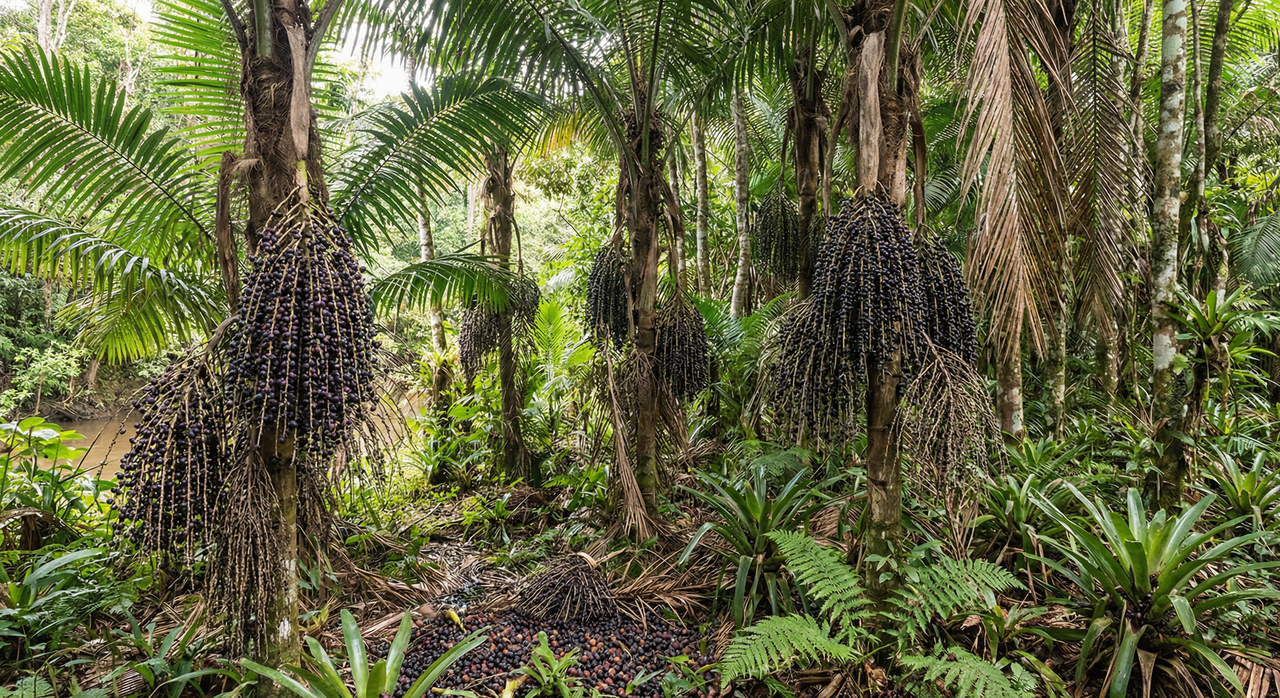
Most people who've blended an açaí bowl have never actually tasted fresh açaí, and they don't know it. What gets sold in those frozen packets is a product engineered for palatability: sweetened, blended with other fruits, layered under granola and banana slices until the original flavor is almost unrecognizable. Fresh açaí pulp, straight off a palm harvested that morning in the Amazon, tastes nothing like a smoothie bowl. It's earthy, faintly bitter, almost savory, closer to unsweetened dark chocolate mixed with something wilder. The first time I encountered a description from someone who'd eaten it traditionally, I thought they were describing a completely different fruit. They weren't.
Here's what makes that gap stranger: the window between "perfect" and "worthless" for a harvested açaí drupe is roughly 24 hours.[1] The anthocyanins that give the fruit its extraordinary antioxidant density begin degrading almost immediately after harvest. Indigenous Amazonian communities figured this out millennia before the superfood industry arrived, which is precisely why traditional preparation involves processing the fruit within hours, not days. The global açaí boom didn't discover this palm. It just found a way to freeze it fast enough to ship it everywhere, and in doing so, created a version of açaí that most of the world now accepts as the real thing.
Origin and History of the Acai Palm (Euterpe oleracea)
Botanical Background and Native Range
The acai palm, Euterpe oleracea, is a multi-stemmed, clumping palm native to the floodplains, swamps, and seasonally inundated forests of the Amazon basin, found primarily across Brazil, Peru, Colombia, and Venezuela.[2][3] It thrives from sea level up to about 1,000 m in environments with annual rainfall exceeding 2,000 mm, which tells you something important right away: this is a plant that evolved in abundance, not scarcity. Unlike most palms you'd encounter in nurseries, E. oleracea is polycarpic, meaning it flowers and fruits repeatedly over a natural lifespan of 20 to 50 years, sometimes well beyond that in undisturbed habitat, and reaches reproductive maturity in as few as 4 to 5 years under good conditions.[4]
To really understand acai, it helps to zoom out to the genus. Its closest relatives tell a cautionary tale. Jucara (Euterpe edulis), native to the Atlantic Forest of southeastern Brazil, is a solitary, monocarpic palm: it flowers once, then dies. It takes 8 to 20 years to reach maturity and can live over a century in undisturbed forest, but it's now classified as Vulnerable on the IUCN Red List, largely because of decades of lethal heart-of-palm harvesting.[5] Think of it the way you'd think of a clumping bamboo versus a solitary timber bamboo: one tolerates cutting and rebounds; the other does not. Euterpe precatoria, found from southern Mexico through northern South America, is also polycarpic and rated Least Concern, though it faces real local pressures from deforestation and overharvest.[6] The contrast between these three palms matters: the same genus, very different reproductive strategies, and wildly different conservation outcomes.
Visual Characteristics and Identification
Euterpe oleracea grows in clusters of slender trunks, each reaching 15 to 30 m tall with diameters of only 10 to 20 cm, and bears large pinnate leaves 3 to 6 m long.[7][2] But the feature that stops me every time I work with tropical palms is the crownshaft: that vivid orange-to-red collar formed by the leaf sheaths just below the canopy. After years of specifying palms in zone 9B landscapes, I've found that crownshaft color is often the fastest field identification cue available, even from a distance. Both E. edulis and E. precatoria are solitary-stemmed and lack that same intensity of color; their leaf plasticity and root architecture are also tuned to different habitats, understory shade versus upland floodplain, rather than the seasonally inundated lowlands where oleracea excels.[8][9] The inflorescences are large pendulous panicles up to 2 m long with small creamy-white flowers, and the fruits ripen from green through red to that deep purple-black we all recognize from acai bowls.[10]
Traditional and Cultural Significance
Long before this fruit appeared in smoothie shops, it was feeding people. Indigenous Amazonian and Atlantic Forest peoples, including the Tupi, Guarani, Kayapo, Yanomami, and Tukano among others, have used Euterpe palms for at least 2,000 to 3,000 years.[11][12] The fruit was prepared as a thick purple beverage that served as a daily staple, not an occasional treat. Roots, bark, and leaves entered medicinal practice as treatments for fevers, diarrhea, parasitic infections, and inflammatory conditions, and the palms themselves were woven into ceremony and ritual as symbols of vitality and connection to forest spirits.[13] European awareness arrived with Portuguese colonial accounts in the 16th century; Carl Linnaeus formally described E. oleracea in 1762.[14] I think it's worth sitting with that timeline for a moment: thousands of years of indigenous knowledge, then a Western scientific name. The "superfood" label came much, much later, and the communities that stewarded these palms across millennia deserve credit and benefit from the industry their traditional knowledge made possible.[15]
Ecological Role, Modern Uses, and Sustainability
In its native várzea and igapó floodplain forests, E. oleracea is genuinely a keystone species: it stabilizes soils, regulates water flow, sequesters carbon, cycles nutrients through rapid leaf decomposition, and produces fruit that feeds birds, mammals, and fish who then disperse its seeds across the landscape.[16] A mature clump can yield 10 to 60 kg of fruit annually, with commercial plantations reaching 2 to 10 tonnes per hectare.[17] The modern industry built on that productivity now exceeds 100,000 tonnes of annual production in Brazil and supports over 500,000 livelihoods across the Amazon, with cultivated area growing roughly 300% since 2010.[18] Those numbers are remarkable, and they come with real tension.
Wild harvesting and deforestation still threaten local populations, and jucara's Vulnerable status is a reminder of what happens when harvest outpaces regeneration, particularly for palms that can't tolerate the cut the way oleracea can.[19] Having seen both over-harvested forest patches and thriving multi-strata agroforestry systems, I'm convinced the path forward runs through intentional cultivation, non-lethal fruit harvesting, and fair-trade sourcing rather than continued pressure on wild stands.[20] Grown well, within a diverse canopy system that mimics its native floodplain ecology, the acai palm delivers the same ecological services it evolved to provide while also feeding people. That alignment between cultivation and ecosystem function is exactly why it belongs in any serious conversation about regenerative tropical food systems.
Acai Palm Varieties and Sourcing
Notable Varieties and Related Species of Acai Palm
When integrating Euterpe oleracea into a food forest, cultivators focus primarily on fruit yield and stem architecture rather than overall canopy dimensions.[21] The fruit is what everyone wants: small purple-black drupes, 1-2 cm across, ripening from green through a brief red phase to that characteristic deep, almost inky color, with creamy white pulp underneath that carries a tart, subtly chocolatey flavor.[22] Two botanical varieties exist within the species. Var. oleracea is spineless and dominates both commercial plantations and home gardens for obvious reasons. Var. aculeata has sharp spines along stems and petioles that discourage thieves and wildlife, but from a practical design standpoint, the harvest headaches far outweigh that protection.[7] I've installed both in demonstration gardens, and var. aculeata is the one visitors stop touching after the first encounter.
Formal named cultivars don't really exist here the way they do for, say, blueberries. Instead, Brazilian farmers work with informal selections: "Branca" for light-fruited types, "Preta" for the deep purple-black ones most familiar in exports, with considerable genetic variation across Amazonian ecotypes adapted to different flood regimes and soil types.[7][23] EMBRAPA's breeding programs have pushed productivity significantly further, selecting for fruit averaging 15-20 grams versus the wild-type 10-gram benchmark, with improved lines hitting 20-30 kg per palm annually and showing 2-3 times the output of wild material.[24] In my experience growing seedlings from both wild-sourced and selected material, the improved lines establish noticeably faster and show stronger vigor in the first two years. It's a real difference, not a marginal one.
Two related species are worth knowing, mainly so you can make clear-eyed choices. Euterpe edulis, the jucara palm of the Atlantic Forest, grows as a single trunk reaching 4.5-7.6 meters and is primarily harvested for heart-of-palm in the wild.[25] Its conservation status is Vulnerable, and in the US it carries ESA restrictions that make sourcing legally complicated.[26] I don't include ESA-restricted species in my design work; the regulatory burden alone isn't worth it for most home growers. Euterpe precatoria, the mountain açaí, is a smaller understory species with fruits that are thinner-fleshed and milder than E. oleracea, used more for ornament than serious fruit production in Florida and Hawaii.[27][28] For productive fruit harvest, E. oleracea is where your energy belongs.
Sourcing Acai Palm Plants and Seeds
In the US, Euterpe oleracea is available from specialty tropical nurseries and online vendors including Trade Winds Fruit, Hancock Seed Co., Palmco, Florida Hill Nursery, and Logee's Plants, among others. Seeds typically run $2-10 per pack, seedlings $10-50, and established plants $50-200 or more depending on size.[29] E. precatoria is similarly priced through sources like Rare Palm Seeds and Fairchild Tropical Botanic Garden Nursery. E. edulis is a different matter entirely: its Vulnerable IUCN status and US Endangered Species Act protections mean it's only available from a narrow pool of certified nurseries with the appropriate permits, and interstate transport faces strict restrictions.[30]
Climate is the hard wall: all three species are limited to USDA zones 10-11, with zero frost tolerance and no meaningful cold hardiness to push those limits.[31] Beyond climate, fresh seed viability is the practical constraint most buyers underestimate. Germination takes 1-3 months under warm, humid conditions, and viability drops fast with storage or poor shipping.[32] I only order from nurseries that supply phytosanitary certificates. Past experience with imported tropical palms taught me how fast red palm weevil or scale can move through a subtropical garden once it arrives, and Florida and California both maintain active quarantine programs that make compliance non-negotiable.[33][34] University-affiliated programs and botanical garden nurseries are consistently the most reliable sources for certified, disease-free material, and I always verify current regulations before ordering since biosecurity rules shift more often than most people expect.[35]
Açaí Palm Propagation and Planting Guide
If you're going to grow acai, the first thing to make peace with is time. Euterpe oleracea typically takes 4-6 years from seed germination to first fruiting under optimal tropical conditions, and that timeline can stretch to 7-10 years depending on your site and care.[36][37][17] I tell every student in my food forest workshops: plant this palm the day you move onto your property, not the day you start craving smoothie bowls. Grafted trees on mature rootstocks can cut that wait roughly in half, beginning fruit production 2-4 years after grafting,[38] but grafting remains experimental and uncommon for home growers. For most of us, seeds are the starting point, and that means planning well ahead and labeling everything carefully, because first-year açaí seedlings send up a single narrow blade that looks startlingly like grass or any number of other understory monocots you might have germinating nearby.
Seed Characteristics, Viability, and Germination Timeline
Under consistently warm, humid conditions, açaí seeds germinate in 30-90 days.[39] That's a wide window, and it has everything to do with seed freshness and pretreatment. Fresh seeds carry 70-90% viability, but that number drops sharply after about three months and continues declining until, by six to twelve months, you're essentially gambling.[39][40] In my experience with tropical seeds generally, açaí is among the most unforgiving on this point. Two weeks after cleaning the pulp, germination rates begin to slip noticeably. This is not like storing tomato seeds over winter in a paper envelope. Plan to sow immediately, or as close to immediately as you can manage.
Propagation Methods: From Fresh Seeds to Tissue Culture
Seed propagation is the primary and most accessible route for growing acai,[39][40] and its recalcitrant nature defines the whole game plan. Seeds must be sown fresh or stored moist at 15-20°C; drying them even partially destroys viability, and leaving pulp residue on the endocarp invites fungal rot that kills the embryo before it ever has a chance.[41][42][43] Clean the pulp off completely and get them into medium fast.
The hard, woody endocarp creates physical dormancy that genuinely resists germination without help. Left untreated, germination rates can sit below 20%. Mechanical scarification or a 24-hour soak in warm water at 40-50°C, or a 1000 ppm gibberellic acid (GA3) solution, breaks that barrier and pushes rates above 50%.[44][45] I've used the warm water soak routinely and found it simpler than scarification for a hard round seed with no obvious scar to file against. Once pretreated, sow into a sterile, well-draining sandy peat medium and maintain 25-30°C with 70-90% relative humidity and consistent moisture without waterlogging.[40][46] Damping-off fungi can wipe out 20-40% of a seedling batch when conditions are too wet,[40] which is why I moved to raised benches and sterile medium years ago. Watching a tray of healthy seedlings collapse overnight to fusarium or pythium is a lesson you only need once.
The seed itself is worth a brief mention for growers who want to understand what they're working with. Euterpe oleracea is polyembryonic, meaning each seed can carry multiple genetically identical embryos derived from nucellar tissue, which gives it a slight germination edge compared to monoembryonic relatives like jucara (Euterpe edulis). The embryos themselves are small, linear structures tucked inside a hard woody endocarp roughly 8-12 mm long, surrounded by ruminate endosperm.[47][48] That first emerging leaf looks almost like a thin grass blade, which is both charming and nerve-wracking when you're watching a germination tray and wondering if anything survived damping-off.
Beyond seeds, tissue culture achieves 80-95% success using Murashige and Skoog medium with auxins and cytokinins, producing uniform, disease-free material ideal for commercial operations or conservation programs.[49][50] That's not a home grower option, but it does explain why nursery-sourced transplants often outperform home-germinated seedlings in uniformity. Offshoot separation from mature clumps is occasionally practical once suckers have developed 3-5 leaves, though success rates only range 30-70% and vary considerably by conditions.[39][51] Stem cuttings and grafting remain largely impractical for most growers; as monocots, Euterpe species lack a vascular cambium, which keeps success rates stuck in the 20-50% range even for experienced propagators.[52]
Soil, Site Selection, and Light Requirements
Here's the paradox that surprises most new growers: açaí is native to Amazonian várzea floodplains and survives periodic inundation through aerenchyma tissue and pneumatophores,[53][54] yet in cultivation, poor drainage is one of the fastest ways to kill it. Phytophthora and related root pathogens thrive in stagnant moisture, and a palm that would have stood in floodwater for months in its native habitat can develop fatal root rot in a waterlogged pot or compacted garden bed within weeks. The difference is moving water versus stagnant water, and that distinction matters enormously at the planting hole.
On soil chemistry, açaí prefers fertile, organic-rich ground with a pH of 5.0-6.5, though it can tolerate a range of 4.5-7.0.[55][56][57] Push above 7.0 and you'll start seeing iron and manganese deficiencies show up as interveinal chlorosis on new growth. I always recommend a soil test before planting, and in alkaline Florida soils I incorporate pine bark or elemental sulfur to bring pH down. I've watched chlorosis resolve within a matter of weeks after an amendment application, which confirms just how responsive this palm is to getting the chemistry right. Sandy-loam or alluvial textures with 5-10% organic matter hit the sweet spot; heavy clay without amendment is a problem waiting to happen. The related jucara (Euterpe edulis) actually prefers a slightly tighter range of 5.5-6.5 and handles flooding considerably less well, which is one more reason E. oleracea is the easier choice for wet or variable sites.[58]
Light is equally stage-dependent. Young plants need 50-70% shade to avoid scorch, and in that regard they behave much like other tropical understory seedlings I've grown in South Florida, needing protection similar to young coontie during their first season.[59][60] Mature plants tolerate more direct light but still perform well with 20-60% shade in agroforestry settings, which makes them a natural mid-canopy fit in a layered food forest system. Growth under low light is modest at best, roughly 1-2 feet per year,[59] so site selection that gradually transitions seedlings from deep shade to dappled light as they mature will get you there faster than a shady corner with no flexibility.
Spacing, Planting Technique, and Initial Establishment
Euterpe oleracea is a multi-stemmed clumper that can reach 15-25 meters tall with a canopy spread of 3-4 meters,[61][62] so giving each plant real room isn't generosity, it's disease prevention. Commercial plantations in Brazil commonly use 4-5 meters between plants within rows and 6-8 meters between rows, yielding roughly 300-500 plants per hectare; a 5×5 meter spacing at around 400 plants per hectare is a common practical compromise balancing yield and airflow in humid tropical conditions.[39][63] In Florida, 3-4 meters by 4-5 meters is sometimes used where space is tighter.[39]
In my home food forest plantings, I tend to space a little wider than the commercial minimum specifically to accommodate understory companions between the clumps. That extra meter of breathing room also pays dividends in reduced foliar disease pressure during the wet season, when humidity is already doing everything it can to encourage fungal problems. For clump management, maintaining 4-6 dominant stems per clump through selective sucker removal keeps the palm productive and prevents the kind of overcrowding that blocks light from reaching developing fruiting stalks.[61] Jucara, being a solitary palm, can theoretically be planted much more densely for heart-of-palm production, up to 1,600-3,000 plants per hectare, but that density significantly increases Fusarium risk in humid conditions and carries its own sustainability concerns.[64] For E. oleracea grown for fruit, wider is almost always wiser.
At planting, incorporate generous organic matter into the backfill, water in well, and mulch heavily to retain moisture without letting the mulch contact the stem base. If you're in USDA zones 10-11 with adequate rainfall distribution, establishment is relatively straightforward once the seedling is past its most vulnerable first few months. Outside those zones, containers and protected microclimates are the realistic path, and patience matters just as much as technique.
Acai Palm Care Guide
Growing acai well means understanding where it comes from and taking that seriously. This is a palm that evolved in the flooded várzea forests of the Amazon basin, standing in waterlogged, alluvial soils with humidity that rarely dips below 80%.[65][57] Replicating that environment is the whole game. Everything below flows from that baseline.
Watering Needs and Flood Tolerance
One thing I love about acai is what it does with saturated soil. Where most landscape palms would be showing root rot within a few weeks of standing water, Euterpe oleracea can endure several months of waterlogged conditions without dying.[65] That flood tolerance is a genuine design asset. But "can survive flooding" is not the same as "wants to sit in a soggy pot," and that distinction matters enormously in container culture. The goal is consistently moist, not perpetually wet.
In-ground, aim for about 1 to 2 inches of water per week, adjusted for your temperature and humidity.[66] In containers, I check the top inch or two of soil; when it feels dry, it's time to water, which in warm humid summers means every two to three days.[67] Seedlings need more attention, daily watering to keep soil at roughly 60 to 80% field capacity, while established palms in active growth need deep watering every three to five days.[68]
The palm will tell you when things go wrong. Wilting or browning frond tips usually mean underwatering; yellowing older leaves combined with soft roots point toward overwatering and potential fungal trouble.[69] Mature trees can push through a week or two of drought, but stress sets in hard past three to four weeks of dry conditions, so don't push it.[70] Soil pH should sit between 5.5 and 6.5, and acai has real sensitivity to chlorine and salinity in irrigation water, so I use collected rainwater or a filtered source whenever possible.[71]
Fertilizer and Nutrient Management
Acai is a moderate to heavy feeder, and potassium deserves special attention because it's the nutrient most directly tied to fruit quality and yield.[72] For mature palms, formulations like 12-6-18 or 8-3-9 reflect that potassium emphasis; annual rates run roughly 100 to 200 g of nitrogen, 50 to 100 g of P2O5, and 150 to 300 g of K2O per tree, split across three or four applications timed to the growing season.[73] Young plants start on a lighter 10-10-10 program with more frequent, smaller doses. For home growers, a quality slow-release palm fertilizer hits most of these targets without the risk of salt burn that comes from pushing synthetic granules in sandy soils.
Micronutrient balance is where many palm growers struggle. Iron, manganese, boron, zinc, and copper all show up as deficiencies on alkaline or sandy soils, and the symptoms are specific enough to diagnose before you guess.[74] In my experience, potassium marginal burn on older fronds is the first deficiency I look for on sandy sites; it's almost reliable. Interveinal chlorosis on older leaves usually means magnesium, which I've corrected with annual dolomite applications even when my NPK numbers look fine.[75] Bright yellow new growth with green veins is iron, and that needs to be addressed promptly. I run a leaf tissue analysis and a soil test annually before any major fertilizer cycle; it's the only way to know whether you're correcting a real problem or creating a new one with over-application.[74] Time your applications with rainfall and ramp up during flowering and fruiting when uptake peaks.[76]
Temperature Tolerance: Heat, Cold, and Frost Protection
Acai comes from a climate with no winter. It has no cold adaptation, no hardening mechanism, no tolerance to speak of below freezing. USDA zones 10a through 11 are the reliable range; brief exposure down to 28 to 32°F can be survived, but repeated cold events or a hard dip below 28°F causes leaf necrosis, defoliation, and often death, especially in young plants.[77][39] In any zone below 10a, I treat acai like a large houseplant that summers outdoors. One hard freeze will tell you why container growing with indoor overwintering is non-negotiable for reliable survival. And critically, surviving a frost is not the same as fruiting well; reliable fruit production needs sustained temperatures above 60 to 65°F, well above the mere-survival threshold.[78]
On the heat side, optimal growth happens between 75 and 86°F, and the palm handles short spikes to around 95 to 100°F.[79] Push past 104°F for any sustained period and you're looking at irreversible damage: wilting fronds, chlorosis, necrotic spots, and stalled fruit set.[80] Young plants and those in active flowering are most vulnerable. The mitigation toolkit is straightforward: 40 to 50% shade cloth during peak heat hours for young plants, deep morning watering to 30 to 50 cm depth, and a 5 to 10 cm layer of organic mulch kept clear of the trunk.[81] During my container-growing winters, I keep humidity above 60% with a pebble tray and small humidifier; it makes a real difference in preventing tip burn on young fronds when the indoor air runs dry.
Pruning, Maintenance, and Seasonal Rhythm
Acai does not want aggressive pruning. The annual task is simple: remove only dead, damaged, or diseased fronds after harvest, always with sterilized tools, and never take more than 20 to 25% of the canopy at once.[82][83] Stripping the crown stresses the palm and opens it to disease. Fruit thinning on heavy clusters improves individual berry size and quality, and clearing competing vegetation around the base helps light reach flowering structures. As you prune, use the opportunity to read the fronds for nutrient patterns: marginal burn on old leaves, interveinal yellowing, or pale new growth each point toward specific shortfalls to correct before the next production cycle.[84]
Acai doesn't go truly dormant, but it does slow down. In native Amazon habitat, flowering runs January through April during the drier season, with fruiting tracking into the rainy season from July through December.[85] I time my post-harvest cleanup to the tail end of fruiting and then pull back on watering frequency and fertilizer through the cooler months, letting the palm follow its natural slower rhythm. Fertilization should run three to four times a year, concentrated in the growing season and ramped up during flowering and fruiting when the plant is actively pulling nutrients.[76] In marginal climates, keep temperatures above 50°F through winter, reduce irrigation, and make sure frost protection is ready before the first cold advisory.[86]
Harvesting Acai Palm Fruit: Timing, Technique, and Yield
Acai waits for no one. From the moment those clusters shift from red to deep purple-black, you're in a race against the fruit's own chemistry, and getting that timing right is what separates rich, antioxidant-loaded pulp from a bitter, astringent disappointment.
When to Harvest Acai: Ripeness Cues and Seasonal Timing
The color shift is your primary guide. Fruits spend 120-150 days developing from green through red to the deep blackish-purple that signals peak ripeness.[87][88] Wait until 80-100% of a bunch shows that dark coloration and Brix readings reach 8-12° before cutting.[89][90] I've learned to watch the lowest fruits in a bunch first because they ripen ahead of the rest; if those are still red or soft and mushy rather than firm with slight give,[91][88] the bunch isn't ready. Harvest under-ripe and you'll get tannin-heavy pulp that no amount of freezing will fix.
In the Amazon, peak harvest runs July through December, with August to October producing the highest volumes as the dry season gives way to early rains.[91][92] My Florida-grown clumps show a somewhat shifted rhythm depending on how our wet season lands, which is a reminder that local rainfall patterns always modify the textbook calendar. For contrast: Euterpe edulis takes a full year from flowering to fruit and peaks December through March in Brazil's Atlantic Forest,[93] while Euterpe precatoria matures in 113-127 days with a June-to-December fruiting window.[94] Euterpe oleracea is the most productive and predictable of the three for consistent fruit harvest.
Sustainable Harvesting Methods for Acai Palms
Traditional harvesting uses hooks or ladders to reach the upper canopy and cut bunches cleanly without tearing the rachis or damaging adjacent fronds.[87][95] Early morning collection is ideal; cooler temperatures slow the degradation clock from the moment you cut. If you're managing a multi-stemmed clump for palm heart as well as fruit, I only take hearts from mature stems that have already produced multiple seasons of fruit, and only then from a clump with plenty of younger stems to carry on. Removing the apical meristem kills that stem, so restraint matters.[87]
Once the bunch is down, the clock is running hard. Fruits must be processed within 24-48 hours, with immediate cooling to 10-15°C recommended to slow deterioration.[91][96] Even refrigerated, fresh acai lasts only 3-7 days before spoilage takes hold.[97] Plan your harvest day around your depulping setup, not the other way around.
Expected Yields, Flavor, and Post-Harvest Handling
A healthy clump in good conditions will yield 3-5 kg of berries annually.[98] That sounds modest until you remember that depulping yields only 10-15% pulp by weight, the rest being seed,[99] so multiple stems in a clump are worth cultivating. The fresh pulp has a soft, jelly-like quality that turns genuinely creamy once frozen.[100] I've noticed that the creamy texture only develops properly if the fruit was processed before any fermentation starts; pulp from fruit that sat too long has a sour, muddy quality no matter how well you freeze it afterward.
Flavor at peak ripeness is earthy and mildly sweet-tart, with subtle bitter undertones and hints of chocolate or dark berries.[101][102] Tannins drop and sugars rise as the fruit finishes ripening, which is exactly why harvesting at full color pays off in both taste and antioxidant content.[103] Freezing preserves the anthocyanins and that earthy-chocolate character better than other processing methods; I've tried refrigerated fresh pulp, pasteurized shelf-stable versions, and powder, and the frozen pulp is the only one that still tastes like the real thing.[101] For reference, jucara (E. edulis) pulp leans sweeter with blackberry-grape notes, while E. precatoria brings tropical fruit brightness,[104][105] but all three are markedly more astringent when harvested underripe. Time it right, process it fast, and freeze what you can't use immediately.
Acai Palm Preparation and Uses
Culinary Uses and Traditional Preparations
The edible story of acai palm centers on three parts: the fruit pulp (the star), the palm heart (the delicacy), and, in limited contexts, the sap.[106] Leaves, stems, roots, and flowers aren't on the menu across any of the three Euterpe species. Indigenous Amazonian peoples have relied on the fruit for centuries, mashing the pulp with water or manioc flour into porridges and fermented beverages that delivered serious calories in an environment where energy demands were high.[107][108] Today's acai bowl is really just a refined evolution of that same preparation, and I find it grounding to hold both versions in mind at once.
In culinary applications, the unsweetened pulp brings a deep, structurally dense richness that behaves more like a culinary fat than a bright fruit.[109] The texture is the real surprise for people who haven't worked with it fresh: soft, creamy, almost silky because of the high fat content.[110] What I've found after a lot of blending experiments is that pulsing frozen pulp with as little liquid as possible gives you that thick, spoonable consistency that makes a proper bowl; add too much and you lose the whole point. Euterpe precatoria is noticeably less oily and intense, with a milder sweet-tartness that appeals to people who find oleracea a little heavy.[111] Jucara (Euterpe edulis) behaves similarly in beverages, jams, and smoothies, though its flavor documentation is less specific.[112]
The nutritional density is genuinely striking. Freeze-dried oleracea pulp clocks in at 533 calories per 100g with 52g of fat, predominantly oleic and linoleic acids in a profile that resembles olive oil more than it resembles typical fruit.[113][114] Anthocyanin content runs around 320 mg per 100g in oleracea pulp, with comparable levels in both precatoria and edulis.[115][116] That antioxidant profile is what drove the global superfood moment, and it's legitimate, though the health benefits section covers the clinical nuances in depth.
A few preparation rules are non-negotiable. Raw acai juice carries real microbiological risks and should be avoided; pasteurization is the standard for any commercially processed pulp, and it's what I'd insist on for home batches too.[117] Freezing immediately after depulping preserves both flavor and anthocyanin integrity.[91] The seeds contain cyanogenic glycosides and are not edible, though the oil extracted commercially from them ends up in cosmetics and supplements.[118] And if you're growing in a subtropical area where cycads are common, learn to distinguish juvenile acai foliage from Zamia integrifolia and Cycas revoluta before you put anything in your mouth; cycasin toxin causes liver failure and the visual similarity in young plants is real enough to warrant caution.[119]
On palm heart: validating the ethical integrity of your source is an absolute requirement.[98] I only source palm heart from multi-stemmed species or certified sustainable operations, because felling a mature palm for one meal simply isn't regenerative. When you do use it, cook it thoroughly; the flavor is mild, crisp, and slightly sweet, excellent in salads and stir-fries.[110] Sustainable fruit harvesting, by contrast, involves climbing the palm and cutting clusters without felling anything, a practice that supports both the tree and the communities built around it.[120] Supporting fair-trade sourced acai is something I take seriously when stocking my own pantry; the ethics of consumption are inseparable from the permaculture ethic of care for people and planet.
Medicinal Preparations and Non-Food Applications
Traditional Amazonian use of these palms extended well beyond the kitchen. Acai fruit has long been used by indigenous communities to treat diarrhea, fever, and skin conditions, with the broader genus showing ethnobotanical patterns across related cultures.[121] Euterpe precatoria leaf extracts have been applied topically for wound healing, and the bark used externally for skin infections in traditional Shipibo and Asháninka practice.[122] Euterpe edulis shows gastroprotective effects in pharmacological reviews, and its sap has been fermented into medicinal beverages in some communities.[123] These are largely ethnobotanical observations with preclinical support rather than clinical trial conclusions, and I hold that distinction carefully when experimenting with topical preparations from my own prunings.
Beyond food and medicine, the palm's material contributions are equally impressive. Sturdy trunks have long supplied timber for houses, bridges, and tools across Amazonian societies, while leaves are woven into thatch, baskets, and mats; parallel uses exist across edulis and precatoria territories in the Atlantic Forest and Andean Amazon alike.[12][124] The deep anthocyanins that make acai nutritionally notable also yield natural dyes. Nothing goes to waste in these traditional systems, which is about as permaculture as it gets. On safety: if you take warfarin or other anticoagulants, the vitamin K content warrants a conversation with your prescriber before making acai a daily habit, and contamination risks from heavy metals in improperly sourced products are real enough to make certified, traceable sourcing worth the extra cost.[125][126]
Açaí Palm Health Benefits and Medicinal Uses
Before açaí became a smoothie bowl topping, it was medicine. The fruit pulp, roots, and leaves of Euterpe oleracea have been woven into Amazonian healing traditions for thousands of years, long before any laboratory confirmed what indigenous communities already understood through practice. Traditional uses span the length of the plant: the pulp taken as a digestive aid for diarrhea and gastrointestinal complaints, root decoctions brewed for fevers and applied to wounds and inflamed skin, leaves prepared for respiratory ailments, and the fruit used in shamanic contexts for its energizing and protective qualities.[127][128][129] I have a lot of respect for that depth of empirical knowledge. When a plant survives centuries of use as a tonic across multiple indigenous cultures, that's a signal worth paying attention to.
Traditional and Ethnobotanical Uses of Açaí
What strikes me about açaí's traditional profile is how consistent it is across Amazonian communities separated by geography and language. The same themes keep appearing: digestive support, wound care, fever management, fatigue relief. Related species show the same patterns. Juçara (E. edulis) carries parallel uses in Brazil's Atlantic Forest for anemia, digestive issues, respiratory ailments, and wound healing, while Euterpe precatoria fills nearly identical roles in other Amazonian communities.[130][123] That kind of cross-species, cross-cultural convergence tells me something real is happening phytochemically. Modern research is now working to catch up with what traditional practitioners mapped through generations of observation.
Key Phytochemicals in Açaí and Related Euterpe Species
The reason açaí scores so dramatically on antioxidant assays comes down to its phytochemical architecture. The dominant players are anthocyanins, with cyanidin-3-glucoside making up roughly 70-90% of the total anthocyanin fraction, alongside cyanidin-3-rutinoside.[131][132] Alongside those, you get phenolic acids like ferulic, syringic, p-coumaric, and vanillic acids, flavonoids including quercetin derivatives, catechin, orientin, and isoorientin, plus carotenoids. Resveratrol shows up, but only in trace amounts under 0.1 mg per 100g, so any marketing built around that compound specifically is mostly noise.[131]
Almost all of that phytochemical richness is concentrated in the fruit pulp and skin, which hold up to 90% of the polyphenols as anthocyanins.[133] The leaves contribute flavonoids, the seeds hold oleic acid and phenolics, and the bark is high in tannins, but the pulp is where the action is for anyone growing or sourcing this fruit for nutritional purposes.[134][135] Growing conditions matter here more than many people realize. Fruits from nutrient-rich, acidic soils in Pará state during the dry season consistently show higher anthocyanin levels, and organically cultivated fruit can run 15-25% higher in phenolics than conventionally grown.[104][136] I've noticed the same principle with other antioxidant-rich crops I specify for regenerative landscapes: soil health and harvest timing show up directly in the chemistry. For processing, freezing preserves up to 90% of polyphenols, while juicing can strip 20-50% of the anthocyanins. I always recommend frozen pulp to clients for exactly that reason.[137]
Pharmacological Research and Potential Health Benefits
Modern research has done a reasonable job of explaining the mechanisms behind açaí's traditional reputation. The core story is antioxidant and anti-inflammatory: açaí polyphenols activate the Nrf2 pathway, which regulates cellular antioxidant defenses and boosts expression of protective enzymes like HO-1 and NQO1.[138] Anti-inflammatory effects work through inhibition of NF-κB, MAPK, and NLRP3 inflammasome pathways, reducing pro-inflammatory cytokines including IL-6 and COX-2.[85] Preclinical work also shows antimicrobial activity against Staphylococcus aureus and E. coli, analgesic effects in animal models, neuroprotective activity, and preliminary signals for metabolic and cardiovascular benefit.[139][140][141]
I respect all of that, and I also think it's worth being honest about where the evidence stands. Most of this is preclinical. Human trials exist, and they're promising: consuming around 200g of pulp daily for four weeks has shown 20-30% increases in plasma antioxidant capacity in some studies.[142] But results across larger trials are mixed, and large-scale clinical data is still limited.[143] The plant has earned its reputation through traditional knowledge and solid mechanistic research. The human clinical picture just hasn't caught up yet. I hold both of those things as true simultaneously.
Nutritional Profile of Açaí Pulp
A hundred grams of unsweetened frozen açaí pulp delivers roughly 70 calories, about 5 grams of fat (mostly monounsaturated oleic acid), 4.3-4.6 grams of carbohydrates skewed heavily toward fiber at around 3 grams, very little sugar, and 1.4 grams of protein.[144] For a fruit, that fat content is genuinely unusual. Minerals include potassium around 250mg, calcium, magnesium, iron in the 0.6-2.5mg range, plus vitamins A, E, and K.[145][146] One thing that surprises people: there's essentially zero vitamin C in açaí pulp, which is a meaningful contrast with related species like juçara and E. precatoria, both of which deliver 18-28mg per 100g.[147][148]
Where açaí genuinely stands apart is antioxidant density. Total anthocyanins can reach 320mg per 100g, with total phenolics in the 900-1200mg GAE range, figures that exceed most fruits commonly grown in temperate and subtropical gardens.[149] Freeze-dried powder is even more concentrated, though the macronutrient ratios shift considerably. I always hedge these numbers when talking to clients because soil, season, and study methodology create real variation, but the antioxidant ceiling on well-grown, properly frozen açaí pulp is legitimately high.
Safety, Dosage, and Precautions
Açaí has a long history of consumption as a food staple, and the toxicology profile reflects that. Acute toxicity studies show an LD50 above 2000 mg/kg. No major adverse effects have been reported at typical dietary or supplemental doses up to 2g/day in trials, and the EFSA recommends keeping juice intake at or below 100g daily while favoring pasteurized products.[150][151][152] In my experience handling and preparing açaí products, proper seed removal and pasteurization eliminate any practical concern from the cyanogenic glycosides present in seeds at low but measurable levels (0.1-1.5 mg HCN/kg in E. oleracea).[153] The seeds also contain tannins, phytic acid, and saponins that can cause mild GI irritation in quantity, so discard them entirely; they're not edible.[154]
Allergic reactions to açaí are rare but do occur, particularly in people sensitive to palm pollen or with birch cross-reactivity.[155] The vitamin K content creates a theoretical interaction with anticoagulant medications, and caution is sensible during pregnancy and breastfeeding given limited data in those populations.[152] As someone who designs productive gardens for families that often include pets, I flag this clearly: small amounts of açaí pulp are generally well tolerated by dogs and cats, but seeds are a choking hazard and should never be left accessible.[156] Finally, correct identification matters. Sago palm (Cycas revoluta), which can superficially resemble palms in a landscape setting, contains cycasin and causes severe liver failure; it is not remotely related to açaí but worth knowing if you're sourcing plants locally.[119]
Acai Palm Pests and Diseases
Grown in its native Amazonian habitat, acai holds its own reasonably well. The plant's phenolic compounds, flavonoids, and tannins deter many insects and suppress fungal opportunists, while its thick, waxy leaflets (think of how saw palmetto leaves shrug off Florida's humidity, and you're in the right territory) create a physical barrier that casual feeders struggle to breach. Arbuscular mycorrhizal fungi boost root vigor and suppress soil-borne pathogens from below, and ant-plant mutualisms via extrafloral nectaries recruit predatory ants that police the canopy.[157][158][159] Strip away that biodiversity, pack palms into a monoculture, and the calculus shifts fast.
Major Diseases of Acai Palm and Their Management
The disease I worry about most, and the one I've watched move fastest in poorly designed plantings, is Phytophthora root and bud rot. Caused primarily by Phytophthora palmivora and related species, it triggers wilting, yellowing, root decay, and eventually growing-point death, and it thrives exactly where acai struggles: waterlogged soils, humidity above 80%, and temperatures dipping below 25°C.[160][161] After watching a young plant melt in the low corner of a demonstration planting where water pooled after summer storms, I now insist on raised beds and coarse organic mulch for any acai I put in the ground. The research says drainage; the soggy casualty in that corner made the lesson permanent.
Good drainage, acidic soil in the pH 5.5–6.5 range, temperatures between 25–30°C, and honest airflow all reduce disease incidence markedly.[162] In humid subtropical or tropical gardens, the difference between a thriving clump and a declining one often comes down to airflow and drainage rather than sprays. Fungal leaf spots caused by Bipolaris, Cercospora, Pestalotiopsis, and Colletotrichum species are a secondary concern, producing necrotic spots that can defoliate young plants under sustained high humidity.[163][164] Fusarium oxysporum can drive vascular stem rot in warm, moist conditions, while Ganoderma butt rot shows up occasionally in related species, causing basal decay and structural weakening.[165][166] Bacterial leaf blight from Xanthomonas spp. and red-ring nematode (Bursaphelenchus cocophilus) occur but are less common and generally less destructive than the fungal threats; viral disease in the genus is rare.[161]
Management is mostly cultural: proper spacing (3–4 m to keep air moving), raised beds, improved drainage, removal of infected material, and avoiding overhead irrigation and trunk wounds all reduce pressure significantly.[167][168] Copper-based fungicides and metalaxyl remain options when prevention fails, but I reach for them reluctantly. No widely available resistant cultivars exist yet, though EMBRAPA's breeding programs are tapping the considerable genetic diversity within Euterpe oleracea for future selections.[169]
Common Pests and Integrated Management Strategies
The most dangerous pests are the ones you don't see until real damage is done. Palm weevils, particularly Rhynchophorus palmarum and the South American palm weevil, bore into trunks and crowns and can kill a tree outright, with young plants being especially vulnerable.[170][171] In my experience, the first sign is often a subtle wilting of the spear leaf rather than dramatic frond collapse, which is exactly why weekly monitoring on young palms matters. Borers like Oryctes rhinoceros, shoot borers, and termites add trunk and root damage in stressed plants as well.[172][173]
Lower on the severity scale, sap-feeding insects including scale species (Aspidiotus, Diaspis), red palm mite, mealybugs, aphids, and spider mites cause chlorosis, stippling, and sooty mold that suppress photosynthesis over time.[174][175] Leaf miners, caterpillars, and leaf-cutting ants (Atta spp.) chew foliage but are rarely lethal to established clumps. I've found that keeping ground-cover diversity and avoiding bare soil dramatically reduces mite pressure on young palms, an observation that lines up with what we know about how guild diversity disrupts pest cycles.
The IPM toolkit that makes most sense for permaculture settings leads with monitoring, diversity, and biology: pheromone traps for weevils, entomopathogenic fungi and nematodes, predatory mites, intercropping with nitrogen-fixers and flowering understory species that shelter beneficial insects.[176][177] Commercially available pest-resistant cultivars don't yet exist for acai, but the genetic diversity within the species and its relatives gives breeders real material to work with, particularly around thicker stems and elevated phenolic content.[178] Until those selections arrive, ecological balance and sharp eyes are the best tools available.
Acai Palm in Permaculture Design
Before acai became a global superfood, it was doing something far more interesting: holding the Amazon together. In the várzea floodplains where it evolved, Euterpe oleracea isn't just another palm. It's infrastructure. Understanding that ecological role is what makes designing with acai so rewarding, and so humbling.
Ecological Functions and Guild Roles
Acai palm functions as a keystone species in Amazonian floodplain forests, driving nutrient cycling through rapid leaf litter decomposition, stabilizing saturated soils with dense root mats, and sequestering meaningful amounts of carbon in both its above-ground biomass and the organic matter it contributes over time.[179][180] It also filters water, regulates microclimates, and controls erosion along waterways.[179] In permaculture terms, that's a plant pulling multiple functions simultaneously before you've harvested a single berry.
What I find most useful from a design standpoint is its role as a dynamic accumulator. Acai leaf tissue concentrates potassium at 15,000 to 20,000 mg/kg, phosphorus at 1,500 to 2,500 mg/kg, and magnesium at 2,000 to 3,500 mg/kg, all cycled back to the soil as fronds drop and decompose.[181] Its deep roots access subsurface mineral layers that shallower companions simply can't reach, which means neighboring plants benefit from nutrients they'd never pull up themselves.[181] In practice, it functions as both a nutrient pump and a mulch generator.[182] I've started thinking of the fallen fronds the same way I think of comfrey chop-and-drop: free fertility, delivered on the palm's schedule.
The wildlife dimension adds another layer. Frugivorous birds, bats, monkeys, and even fish in flood-season waters disperse acai seeds, making the palm a hub species for forest regeneration across the genus.[183][184] Water-filled cavities in the palm structure also provide breeding habitat for amphibians and other small aquatic organisms.[185] Even in a backyard food forest, that kind of structural complexity creates habitat that supports the system as a whole.
Pollination is where guild design gets genuinely tricky with acai. Nitidulid beetles (Colopterus spp.) are the primary pollinators, responsible for up to 80% of pollen transfer.[186][187] Flies, weevils, and bees contribute at lower rates. The inflorescences are protandrous, meaning pollen is shed before the female flowers on the same plant are receptive, so cross-pollination between separate clumps is essential for good fruit set.[186] I've watched these beetles swarm acai inflorescences during the dry-season flush and it's genuinely impressive, but that activity depends on having a diverse understory that supports beetle populations year-round. Habitat fragmentation can reduce pollinator diversity by 50 to 70%, dragging natural fruit set down to 20 to 30%.[188][189] In a simplified garden system with only one or two palms, hand pollination can push fruit set above 50%[190], so it's worth learning the technique. More importantly, design a companion understory that feeds pollinators continuously, not just when acai is in flower.
Climate and Hardiness Zones
Acai is comfortably at home in USDA zones 10 and 11, and that's not a soft recommendation.[191][192] Foliage damage begins below 30°F (-1°C), and repeated nights below that threshold kill the growing point.[193] I've seen established palms bounce back from a brief dip to 28°F with heavy mulch over the root zone, but I wouldn't count on it, and I certainly wouldn't bet a young plant's life on it. That's exactly why I keep seedlings in movable containers for at least the first two winters in any marginal location.
Beyond temperature, the climate requirements are demanding across the board. Optimal annual rainfall runs 1,500 to 3,000 mm, distributed evenly through the year, not concentrated in one wet season with a punishing dry stretch.[70][194] Humidity needs to stay above 80%, and native habitats routinely sit at 90 to 100%.[195] Optimal temperatures fall between 18 and 32°C (roughly 64 to 90°F). Growing acai in a genuinely arid climate is a losing proposition no matter how much you irrigate; the humidity requirement alone rules it out for most of California's interior or the desert Southwest.
Zone 9b is possible with a south-facing microclimate, thermal mass, and consistent overhead irrigation to buffer humidity, but success there is marginal and the long-term performance data is thin.[196] Container culture for overwintering becomes necessary in zone 8 and colder.[196] Among the Euterpe species, E. precatoria is reported to tolerate brief cold snaps slightly better than E. oleracea, and Jucara (E. edulis) shows similar marginal tolerance into zone 9b where winter lows don't push below -1°C.[197][198] None of them, though, is a workaround for genuinely unsuitable conditions.
Forest Layer Position and Companion Guilds
In its native várzea forests, acai occupies the understory to mid-canopy layer, reaching 15 to 25 meters under optimal conditions, occasionally pushing to 30 meters.[199][2] It can handle 30 to 50% canopy cover, though fruit production improves with more light exposure.[200][201] Critically, it tolerates seasonal flooding that would kill most other food forest species, sitting submerged for months during Amazonian wet seasons without losing its footing.[202][203] That flood tolerance is genuinely useful for wet low spots where taro or swamp hibiscus can thrive but most other food producers fail. Acai can anchor those difficult edges in a humid subtropical food forest where few other productive trees will even consider growing.
The root zone also forms mycorrhizal associations that aid nutrient uptake in otherwise poor, waterlogged soils, and the palm's trunk and fronds provide structural habitat for orchids, bromeliads, and other epiphytes.[85] That epiphyte community adds functional biodiversity and aesthetic richness to a food forest without competing for root-zone resources.
In cultivated agroforestry systems, the traditional Amazonian açaizais demonstrate what multi-strata integration looks like at scale: acai grown alongside banana, cacao, ginger, taro, and nitrogen-fixing legumes, with the palm contributing shade and falling fronds as organic matter while the companions buffer humidity and support soil biology.[204][205][206] I've found that acai seedlings look deceptively slow and spindly in their first year, but once the humidity stays consistently high and temperatures hold warm through the night, growth genuinely accelerates. That taught me to prioritize microclimate creation first, before worrying much about fertility.
One design choice I feel strongly about: focus on fruit production from living multi-stemmed clumps, not heart-of-palm harvest. The closely related Jucara (Euterpe edulis) now sits on the IUCN Vulnerable list largely because of lethal heart-of-palm extraction combined with habitat loss.[207][208] Harvesting acai fruit from a living clump keeps the palm producing, keeps the local food web fed, and keeps the whole system intact. That's the permaculture logic, and it's the right one.
The Palm That Taught Me to Think in Decades
I planted my first acai seedling knowing I probably wouldn't taste its fruit for five or six years, and something about that commitment changed how I approach the whole food forest. It slows you down in the best way. Every time I walk past it now, checking the new fronds unfurling in the humidity, I think about the Amazonian communities who tended these palms long before anyone called it a superfood, and I feel grateful to be on that timeline with them.
Sources 208
- Açaí: A subtropical species with high potential for the temperate zone ↩
- Kew Royal Botanic Gardens - Euterpe oleracea ↩
- Missouri Botanical Garden - Euterpe oleracea ↩
- Euterpe oleracea - Useful Tropical Plants ↩
- IUCN Red List of Threatened Species - Euterpe edulis ↩
- IUCN Red List of Threatened Species - Euterpe precatoria ↩
- Euterpe oleracea - Wikipedia ↩
- Euterpe edulis - Useful Tropical Plants ↩
- Euterpe precatoria - Palmpedia ↩
- Missouri Botanical Garden Plant Finder ↩
- The Domestication of Amazonia before European Conquest ↩
- Ethnobotany of the Açaí Palm (Euterpe oleracea Mart.) in the Brazilian Amazon ↩
- Ethnobotany of the Açaí Palm in the Brazilian Amazon ↩
- Species Plantarum (Linnaeus, 1762 Edition) ↩
- Ethical Trade in Acai: Indigenous Rights and Market Dynamics ↩
- Euterpe oleracea in Floodplain Forests: Ecology and Conservation ↩
- Açaí Palm (Euterpe oleracea Mart.): Cultivation and Management ↩
- The Economic Impact of Acai in the Brazilian Amazon ↩
- Conservation and Sustainable Use of Juçara Palm ↩
- Sustainability of Acai Palm (Euterpe oleracea) Harvesting in the Amazon ↩
- Euterpe oleracea - Missouri Botanical Garden ↩
- Acai Fruit Characteristics - University of Florida IFAS Extension ↩
- Genetic Diversity and Selection in Açaí Palm ↩
- Açaí Palm Cultivation and Breeding ↩
- Heart of Palm Production ↩
- Sustainable Management of Euterpe edulis in the Atlantic Forest ↩
- Euterpe precatoria - Wikipedia ↩
- Missouri Botanical Garden Plant Finder - Euterpe precatoria ↩
- Acai Palm Cultivation ↩
- US Endangered Species Act - Regulations for Euterpe edulis ↩
- Importation of Plants and Plant Products ↩
- Propagation of Acai Palm (Euterpe oleracea) - Research Article ↩
- Red Palm Weevil Quarantine ↩
- Plant Import Regulations ↩
- National Center for Genetic Resources Preservation ↩
- Açaí Palm Cultivation Guide ↩
- Tropical Palms: Propagation and Production ↩
- Propagation of Açaí Palm (Euterpe oleracea) ↩
- Propagation of Acai Palm (Euterpe oleracea) ↩
- Propagation of Acai Palm (Euterpe oleracea) ↩
- Seed storage behaviour of Euterpe oleracea ↩
- Tropical seed storage: Recalcitrant species like palms ↩
- Seed Germination of Acai Palm (Euterpe oleracea Mart.) ↩
- Seed Germination of Açaí Palm (Euterpe oleracea Mart.) ↩
- Propagation of Palms ↩
- Propagation of Euterpe oleracea ↩
- Polyembryony in Palms: A Review ↩
- Morphology and Anatomy of the Fruit of Euterpe oleracea Mart. ↩
- Micropropagation of Açaí Palm (Euterpe oleracea Mart.) ↩
- Micropropagation of Euterpe oleracea ↩
- Propagation of Euterpe edulis Mart. by Seeds, Offsets and Tissue Culture ↩
- Vegetative Propagation of Palms ↩
- Ecology and Distribution of Açaí Palm (Euterpe oleracea) in the Amazon Floodplain ↩
- Acai Palm Cultivation Guide ↩
- Soil Requirements for Palm Cultivation in Brazil ↩
- Nutrient Deficiencies in Palms: Chlorosis and pH Effects ↩
- Acai Palm Cultivation Guide ↩
- Soil Preferences of Atlantic Forest Palms ↩
- Shade Tolerance and Light Requirements of Euterpe oleracea in Agroforestry Systems ↩
- Light Requirements for Tropical Palms: Euterpe Species ↩
- Euterpe oleracea - Acai Palm ↩
- Cultivation of Euterpe precatoria in Agroforestry Systems ↩
- Embrapa - Cultivo do Açaí ↩
- Cultivation of Euterpe edulis Mart. for Heart-of-Palm Production ↩
- Euterpe oleracea - Missouri Botanical Garden Plant Finder ↩
- Acai Palm Production in Florida ↩
- Acai Palm (Euterpe oleracea) - Royal Horticultural Society ↩
- Acai Palm Production in Florida ↩
- Water Stress in Palms ↩
- Euterpe oleracea - Açaí Palm ↩
- Salt and Chlorine Tolerance in Tropical Palms ↩
- Fertilizer Recommendations for Açaí Palm (Euterpe oleracea) - Embrapa ↩
- Nutrient Management for Florida Palms ↩
- Nutrient Deficiencies of Landscape Palms ↩
- Nutrient Requirements of Acai Palm (Euterpe oleracea) ↩
- Nutrient Management in Açaí Orchards - Journal of Plant Nutrition ↩
- Cold Damage to Palms ↩
- Cold Hardiness of Palms ↩
- Ecophysiology of Euterpe oleracea in Tropical Environments ↩
- Thermal Stress in Tropical Palms: Implications for Açai Cultivation ↩
- Palms for Southern Landscapes: Heat Tolerance and Shade Requirements ↩
- Açaí Palm Cultivation and Management ↩
- Pruning Tropical Palms ↩
- Nutritional Disorders of Palms ↩
- Euterpe oleracea Mart. - Phenology and Ecology ↩
- Acai Palm Care Guide ↩
- Açaí Palm (Euterpe oleracea Mart.): Cultivation and Management ↩
- Maturity Indices for Euterpe oleracea Fruits ↩
- Açai Production Manual ↩
- Anthocyanin Content and Ripening in Euterpe oleracea ↩
- Acai Production and Marketing ↩
- Acai Palm Fruit Harvesting in the Amazon ↩
- Phenology and reproductive phenology of Euterpe edulis in a lowland Atlantic Forest of Brazil ↩
- Fruiting phenology and population structure of the palm Euterpe precatoria in Venezuelan forests ↩
- Harvesting and Post-Harvest Handling of Açai ↩
- Harvesting and Handling of Acai Fruit ↩
- Post-Harvest Management of Acai Berries ↩
- Fruit Yield in Perennial Forest Systems - Açaí Palm ↩
- Post-Harvest Technology for Acai ↩
- Physicochemical and Sensory Characteristics of Acai Pulp ↩
- Sensory and Nutritional Evaluation of Acai (Euterpe oleracea Mart.) Pulp ↩
- Volatile Compounds and Sensory Characteristics of Açaí (Euterpe oleracea Mart.) Pulp ↩
- Effect of Ripening and Processing on the Phenolic Constituents and Antioxidant Activity of Acai (Euterpe oleracea) Pulps ↩
- Volatile Compounds and Sensory Characteristics of Juçara Fruit (Euterpe edulis Mart.) ↩
- Chemical Composition and Antioxidant Activity of Euterpe precatoria Fruits at Different Ripeness Stages ↩
- Açaí palm - Wikipedia ↩
- Ethnobotany of the Açaí Palm in the Brazilian Amazon ↩
- Açaí (Euterpe oleracea Mart.) in the Brazilian Amazon: Ethnobotany and Sustainable Harvest ↩
- Flavor Characterization of Açaí Pulp - Peer-Reviewed Study ↩
- Açaí (Euterpe oleracea) Fruit Sensory Analysis - Royal Horticultural Society ↩
- Flavor Profile of Amazonian Fruits ↩
- Culinary Uses of Juçara Palm in Brazilian Cuisine ↩
- USDA FoodData Central - Acai, puree, unsweetened ↩
- Fatty Acid Composition of Acai ↩
- Anthocyanins in Acai Berries ↩
- Bioactive Compounds in Andean Açaí (Euterpe precatoria): Polyphenols, Anthocyanins, and Fatty Acids ↩
- Processing and Safety of Açaí Pulp ↩
- Acai (Euterpe oleracea Mart.)—A phytochemical and pharmacological assessment ↩
- Toxic Plants: Sago Palm ↩
- Sustainable Harvesting of Açaí Berries ↩
- Ethnobotany of Euterpe oleracea in the Amazon ↩
- Ethnobotany and Pharmacology of Euterpe precatoria ↩
- Pharmacological potential of Euterpe edulis: A review ↩
- Açaí Palm: From Traditional Knowledge to Global Market ↩
- Potential Interaction Between Acai and Warfarin ↩
- Heavy Metal Contamination in Superfoods ↩
- Ethnobotany of the Amazon: Traditional Uses of Açaí Palm (Euterpe oleracea) ↩
- Traditional and medicinal uses of Euterpe oleracea in Brazil ↩
- Euterpe oleracea: An Amazonian palm with potential for nutraceutical and medicinal applications ↩
- Phenolic Compounds and Antioxidant Activity of Euterpe edulis Fruit ↩
- Phytochemicals and Health Benefits of Acai (Euterpe oleracea Mart.) ↩
- Anthocyanins from Euterpe oleracea: ROS Scavenging and Nrf2 Pathway ↩
- Phytochemicals in Euterpe oleracea Leaves ↩
- Fatty Acid Profile of Açaí Seed Oil ↩
- Tannins in Açaí Bark ↩
- Environmental Factors in Acai Composition ↩
- Effects of Processing on Acai Anthocyanins ↩
- Activation of Nrf2 by Acai Polyphenols in Oxidative Stress Models ↩
- Antimicrobial Properties of Euterpe oleracea Extracts ↩
- Analgesic and anti-inflammatory effects of Euterpe edulis seed extract ↩
- Antioxidant and neuroprotective effects of acai berry ↩
- Clinical Trial on Acai Berry and Human Antioxidant Capacity ↩
- Pharmacological Activities and Safety of Euterpe oleracea: A Review ↩
- USDA FoodData Central - Acai pulp, frozen ↩
- USDA FoodData Central - Acai, raw ↩
- Açaí (Euterpe oleracea Mart.)—A Review of Its Cultivation, Composition, Bioactive Compounds, and Uses in the Food Industry ↩
- TACO - Brazilian Table of Food Composition (4th ed.) ↩
- Nutritional composition of Colombian açaí (Euterpe precatoria) fruits ↩
- Phytochemical Profile and Antioxidant Activity of Acai (Euterpe oleracea Mart.) from the Brazilian Amazon ↩
- Review of Acai Berry Health Benefits and Safety ↩
- Safety Evaluation of Açaí Berry by EFSA ↩
- Açaí (Euterpe oleracea Mart.) dietary supplements: An evidence-based analysis ↩
- Cyanogenic Glycosides in Acai (Euterpe oleracea Mart.) Seeds ↩
- Antinutritional Factors in Acai Palm Fruits: Tannins, Phytic Acid, and Saponins ↩
- Acai Allergen Case Reports ↩
- ASPCA Toxic and Non-Toxic Plants ↩
- Defense Mechanisms in Neotropical Palms: The Case of Euterpe edulis ↩
- Ant-Plant Interactions and Defense in Euterpe Palms ↩
- Phenolic Compounds and Antioxidant Activity of Euterpe oleracea ↩
- Phytophthora Root Rot in Palms: Environmental Influences ↩
- Diseases of Açaí Palm (Euterpe oleracea and Related Species) ↩
- Açaí Palm Cultivation Guide - EMBRAPA ↩
- Diseases of Açaí Palm (Euterpe oleracea Mart) in Brazil ↩
- Diseases and Pests of Acai Palm (Euterpe oleracea and E. precatoria) ↩
- Diseases of Açaí Palm (Euterpe oleracea and Euterpe edulis) ↩
- Ganoderma Pathogenicity on Native Palms in Atlantic Forest ↩
- Integrated Pest Management for Florida Palms - UF/IFAS ↩
- Management of Acai Palm Diseases ↩
- Genetic Diversity and Conservation of Euterpe edulis in the Brazilian Atlantic Forest ↩
- Insect Pests of Açaí Palm in the Amazon ↩
- Management of Rhynchophorus palmarum in Palms ↩
- Pests and Diseases of Palms ↩
- Termite Control in Açaí Plantations ↩
- Scale Insects on Tropical Palms ↩
- Insect Pests of Euterpe edulis in Agroforestry Systems ↩
- Integrated Pest Management for Palms ↩
- Pest Management in Açaí and Juçara Palms ↩
- Genetic diversity... Euterpe oleracea ↩
- Ecosystem Services Provided by Neotropical Palms ↩
- Nutrient Cycling in Várzea Forests: Role of Palms ↩
- Nutrient Accumulation in Açaí Palm (Euterpe oleracea) Leaf Tissue ↩
- Permaculture Applications of Euterpe oleracea ↩
- Ecology of Euterpe precatoria in Amazonian Floodplains ↩
- The Ecology of Euterpe edulis in the Atlantic Forest ↩
- Ecological functions of Euterpe oleracea in Amazonian floodplain forests ↩
- Pollination Biology of Euterpe oleracea ↩
- Pollination Ecology of Euterpe oleracea Mart. (Arecaceae) in the northern part of the Amazon forest ↩
- Climate Change Impacts on Tropical Plant-Pollinator Interactions ↩
- Effects of Habitat Fragmentation on Palm Pollination ↩
- Hand Pollination Techniques for Açaí Palm (Euterpe oleracea) in Commercial Plantations ↩
- USDA Plant Hardiness Zone Map ↩
- Euterpe oleracea - Missouri Botanical Garden ↩
- Cold Hardiness of Tropical Palms - Palm Society Journal ↩
- Cultivation of Euterpe edulis ↩
- Euterpe precatoria Plant Profile ↩
- Growing Acai in Southern Landscapes - Texas A&M AgriLife ↩
- Euterpe precatoria Plant Profile ↩
- Euterpe edulis - Missouri Botanical Garden ↩
- Ecological Distribution of Açaí Palm in Amazonia - Journal of Tropical Ecology ↩
- Açaí Palm Cultivation - Royal Horticultural Society ↩
- Shade Tolerance and Ecology of Euterpe oleracea ↩
- Kew Science - Plants of the World Online: Euterpe oleracea ↩
- Growing Açaí Palm in Florida - University of Florida IFAS Extension ↩
- USDA Forest Service - Açaí Palm (Euterpe oleracea) ↩
- Agroforestry Systems with Açaí Palm ↩
- Tropical Palms for Permaculture ↩
- Euterpe edulis ↩
- Heart of Palm Harvesting Sustainability - FAO Report ↩