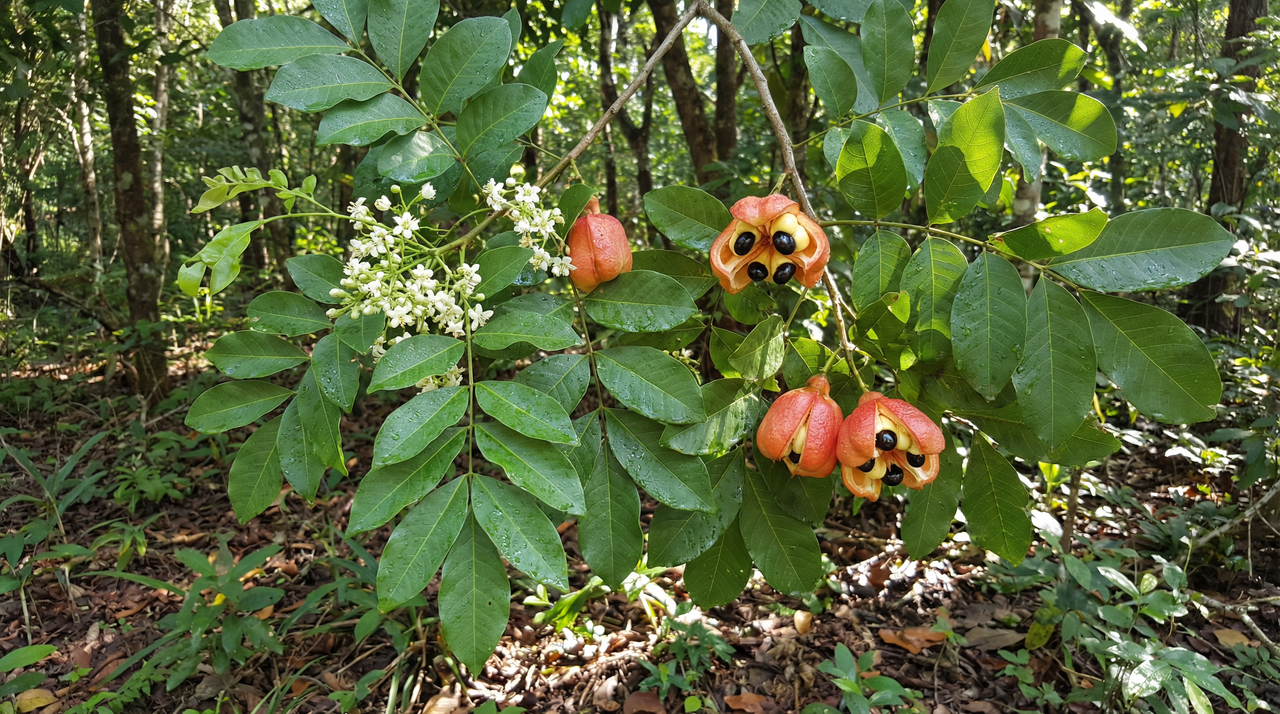
There's a fruit that is literally illegal to import fresh into the United States, has killed people on multiple continents, and is simultaneously a UNESCO-recognized cultural treasure and the national fruit of an entire country. That fruit is ackee, and the reason it occupies all of those categories at once is the same reason I find it one of the most genuinely fascinating plants I've ever grown. The pods don't open until they're ready, and that's not a metaphor; it's a hard biological rule with serious consequences for anyone who ignores it.
I've talked to growers in South Florida who treat ackee like any other tropical fruit tree, and that casual attitude makes experienced Jamaican cooks visibly uncomfortable. Rightly so. Unripe arils contain hypoglycin A, a compound that can shut down the body's ability to regulate blood sugar in ways that are genuinely life-threatening.[1] Yet the fully ripe aril, that buttery, golden, almost egg-like flesh, is so worth understanding that generations of West African and Caribbean communities have passed down exactly how to read this plant's signals. The whole story of ackee lives in that tension, between something genuinely dangerous and genuinely delicious, managed through knowledge that took centuries to accumulate.
Origin and History of Ackee (Blighia sapida)
Botanical Background and Native Range
Long before ackee became Jamaica's national fruit, it was simply a forest tree doing what it had always done: fruiting, dropping seeds, and feeding communities across tropical West Africa. Blighia sapida is native to a broad sweep of humid lowland rainforests, semi-deciduous forests, and savanna woodlands stretching from Côte d'Ivoire through Ghana, Togo, Benin, and Nigeria, and southward into Angola and the Democratic Republic of Congo.[2][3][4] A member of the Sapindaceae family (relatives include lychee and longan, which tells you something about its tropical sensibility), it grows as a perennial evergreen reaching 10 to 20 meters tall at a moderate clip of one to two feet per year under ideal temperatures.[5][6]
I always tell people who ask about timeline that ackee is comparable to mango in patience required: expect three to five years from planting to first fruit, with peak production hitting around years ten to fifteen.[5][7] What I find genuinely exciting from a permaculture design perspective is its polycarpic habit: this tree doesn't fruit once and retire. It flowers and fruits repeatedly across a lifespan that can stretch well past fifty years.[8] When I'm designing a food forest, that kind of multi-decade return on a single planting changes the whole calculus. You're not just adding a tree; you're making a generational commitment.
Visual Characteristics and Identification
In the field, ackee reads as a dignified, upright tree with a straight cylindrical trunk, 30 to 50 centimeters across, wrapped in rough greyish-brown bark that's deeply fissured with age.[4] The alternate, compound pinnate leaves carry six to eleven glossy, oblong leaflets, each catching light in a way that makes the canopy look almost lacquered on a sunny afternoon.[4][9] The flowers are easy to overlook: small, greenish-white, about five to seven millimeters across, clustering in panicles and releasing a quiet fragrance.[10]
The fruit is another matter entirely. When I'm scouting a potential guild companion in a tropical landscape and I spot a tripartite red or orange capsule cracked open along three seams to reveal glossy black seeds cradled in creamy white arils, I stop walking. That image is unmistakable.[11][12] People often describe the open pod as a lobster claw, and once you've seen it, you'll never confuse it with anything else. Morphological variability in fruit size, color, and canopy density does occur across open-pollinated trees, but that central split-pod structure is the constant field marker.[9]
Traditional and Cultural Uses
West African communities had figured out this tree long before any European botanist catalogued it. Ethnobotanical records document ripe arils eaten as food; bark preparations used for dysentery, wounds, and hypertension; leaf decoctions for epilepsy and headaches; and seeds employed as fish poison, in soap-making, and in treatments for parasitic infections.[13][14] I have deep respect for that accumulated knowledge among Yoruba and other West African peoples, even as modern safety research has sharpened our understanding of which plant parts, at which ripeness stages, are actually appropriate to use. The health section covers that rigorously; for now, it's enough to appreciate how thoroughly communities knew this tree.
The first formal botanical description came from Aublet in 1775, though oral traditions and 18th-century European travelogues predate even that.[13] By around 1778, ackee had crossed the Atlantic, arriving in Jamaica almost certainly via the slave trade, where it took root in Caribbean soil and never looked back.[13][15]
Fun Facts About Ackee
The genus name Blighia honors Captain William Bligh of HMS Bounty fame, who collected botanical specimens during his voyages, though he didn't personally introduce ackee to Jamaica.[16] There's something fitting about naming a plant with such a dramatic, double-edged character after a man whose career was equally complicated. The fruit's explosive dehiscence is a genuine botanical spectacle: as the ripe capsule dries, tension builds in the pericarp until it splits along three seams, ejecting seeds several meters in a single mechanical burst.[17]
A tree that arrived in Jamaica on slave ships became, over two centuries, the nation's official fruit and the star of its national dish: ackee and saltfish, sautéed arils with salted codfish, onions, tomatoes, and peppers, celebrated at festivals and exported worldwide.[18] That arc from African forest to Caribbean icon is a history worth sitting with. Kew Gardens has maintained living collections and herbarium specimens since the 19th century, quietly documenting that whole journey through pressed leaves and meticulous taxonomy.[9] It's the kind of institutional record-keeping I rely on whenever I need to ground a plant's story in something more durable than anecdote.
Ackee Varieties and Where to Buy Them
Lack of Formal Cultivars and Jamaican Landraces
If you're expecting a tidy list of named cultivars, ackee will disappoint you. Blighia sapida has no formally recognized distinct cultivars in international horticultural or agricultural taxonomy[19][20], and no major commercial breeding programs are working to change that.[19] What exists instead are informal Jamaican landrace selections like 'Mango Gin' and 'Long Season,' grower preferences passed down through observation rather than documented through consistent morphological or genetic criteria.[21] Most trees in cultivation today come from open-pollinated seedlings, which means genuine phenotypic variability from one tree to the next.[21]
That variability has practical stakes. Jamaican selections generally carry lower hypoglycin A levels than some West African types,[22] and the selection pressures in Jamaica have historically pushed toward lower toxicity, better pest resistance, and reliable fruiting.[23] As a designer, I've actually found something freeing about this. When I've specified ackee for ornamental guild plantings, the natural variation in seedling growth lets me select individuals with particularly vivid red aril displays, turning the absence of standardization into a deliberate aesthetic choice rather than a liability.
Sourcing Ackee Plants, Seeds, and Canned Fruit
Live trees and seeds are classified as "occasionally available" in the US market,[19][24] and there's a bureaucratic reason for that scarcity. Fresh ackee fruit is essentially prohibited from commercial sale in the US due to toxicity risks,[25] imports of fresh material face heavy FDA regulation because of hypoglycin A in unripe fruit,[26][27] and USDA APHIS requires permits for importing any fresh plant materials.[28] Canned ackee from licensed Jamaican facilities, though, is easy to find through online retailers[29][30] and is the most realistic option for most US cooks.
For growers in zones 10-12[31] who want to grow the tree itself, seeds and young plants do turn up through specialty suppliers like Sheffield's and Rare Exotic Seeds.[32][33] My personal advice: order more seed than you think you need and start them immediately. Ackee seeds are recalcitrant with short viability,[34] and I've learned from ordering that even fresh stock from a reputable supplier can have uneven germination if you let the seeds sit around while you prepare your pots.
How to Propagate and Plant Ackee (Blighia sapida)
Growing ackee from scratch starts with understanding its seeds, because almost every practical decision flows from what those seeds are and how they behave. Get that wrong and you'll lose the batch before germination ever happens.
Understanding Ackee Seeds: Morphology, Recalcitrance, and Toxicity
The seed itself is striking: black, shiny, ovoid to horseshoe-shaped, 1.5 to 4 cm long, with a thick lignified coat and a distinctive whitish fleshy aril at the hilum that makes it look like it's already sprouting something.[35][36] That white aril is easy to spot, which is useful, but it's also a reminder to put on gloves. The seeds and arils contain hypoglycin A, the same neurotoxin that makes unripe ackee fruit dangerous, and I treat every part of the propagation process the same way I treat the kitchen work: gloves, no tasting, everything kept well away from children and pets, because the research on this compound is not ambiguous.[37][38]
The bigger logistical challenge is recalcitrance. Ackee seeds are desiccation-sensitive, meaning they cannot tolerate dropping below about 20 to 30% moisture content, have no real dormancy period, and lose viability fast.[39][40] If you need to hold them, 15 to 20°C at high humidity buys you a month or two at best.[41] I've handled fresh ackee seeds more than once and watched viability drop noticeably within days of the pods opening. The urgency is real. Sow them as soon as you have them.
Even when you do everything right, seedlings won't necessarily be what you hoped for. Ackee seeds are monoembryonic and the species has high heterozygosity, so open-pollinated seedlings vary considerably in fruit size, aril quality, vigor, and timing.[42][43] Label your pots carefully and keep good records from day one; I learned that lesson after losing track of seedling batches and finding out years later at fruiting time that two trees I thought were the same source were producing very different fruit.
Propagation Methods: From Fresh Seeds to Grafting
For seed germination, the target conditions are 25 to 30°C, 70 to 80% humidity, indirect light, and a well-drained sterile mix like sandy loam or a blend of sand, peat, and perlite.[44] Light scarification of the seed coat can improve germination rates. Expect sprouts in two to four weeks with fresh seed, and watch carefully for damping-off from Pythium or Rhizoctonia, which will take out seedlings fast in humid nursery conditions.[45] Once germinated, thin to one seedling per pot, start a light balanced NPK feed after four to six weeks, and grow under 50% shade cloth before hardening off gradually to outdoor conditions.[45][46]
For most growers who want consistent, quality fruit on a reasonable timeline, grafting is the better answer. Cleft and veneer grafting onto Blighia sapida seedling rootstocks achieve 40 to 70% success and bring grafted trees into production in two to three years, compared to three to eight years for seed-grown trees (commonly three to five under good tropical conditions).[47][44] Semi-hardwood cuttings with IBA rooting hormone and air layering are options, but success rates of 10 to 40% make them less practical for anything beyond occasional experimentation.[48] Tissue culture exists in research settings but isn't commercially available. If you're asking how to grow an ackee tree that fruits predictably and true to a known selection, a grafted specimen from a reputable nursery is where I'd start.
Soil, Site Selection, and Sun Requirements for Ackee
Ackee wants well-drained sandy loam or loamy soil, pH 5.5 to 7.5 with 6.0 to 7.0 being the sweet spot, at least a meter of uncompacted depth, and 3 to 5% organic matter.[9][44] Its relationship with waterlogging is unforgiving. Poor drainage invites Phytophthora root rot and the tree will not recover easily once that sets in.[8] I think of its drainage requirements the same way I think about avocado or mango: if you wouldn't plant those in that spot because of moisture retention, don't plant ackee there either. In heavy soils, raised beds or mounds are worth the effort. Mix in compost to improve structure, lime if pH drops below 6.0, and mulch the root zone to retain moisture without letting it pool.[49] Container growers should use a mix of roughly 50% potting soil, 30% sand or perlite, and 20% compost, staying within that 6.0 to 7.0 pH range.[50]
Full sun is non-negotiable: six to eight hours of direct light daily, minimum.[48] Partial shade produces leggy growth, chlorosis, and poor yields.[51] Young trees need to get there gradually. In Florida's intense summer light, I move potted ackee seedlings from 30% shade to full exposure over two weeks, which sidesteps the leaf scorch I've seen on transplants moved out too quickly. Consistent moisture and a thick mulch layer help young trees handle heat spikes above 95°F until they're well established.[52]
Spacing, Planting Technique, and Timeline to Fruit
Mature ackee trees reach 16 to 40 feet tall with a canopy spread of 20 to 40 feet, growing at a moderate 0.5 to 1 meter per year.[53] Orchard plantings typically space trees 25 to 30 feet apart, yielding 40 to 60 trees per acre; agroforestry or home garden settings can work at 15 to 25 feet if the understory design accounts for eventual canopy closure.[54] When I plan a permaculture guild around a long-lived tree like ackee, I always allocate the full mature canopy footprint from day one. I've seen overcrowded ackee trees become disease-prone and low-yielding a decade in, and retrofitting spacing into an established planting is genuinely painful. Stake young trees for the first year or two to protect against wind rock while roots establish.[53]
The timeline question shapes every propagation decision. Seed-grown trees typically fruit in three to eight years, most commonly three to five under good tropical conditions, while grafted trees can produce in two to three years.[44][55] Full productivity arrives somewhere around year seven to ten regardless of propagation method.[56] If you're planting seed for the experience or to produce rootstock, that's a fine reason. If you want to actually eat the fruit within a realistic window, a grafted tree closes that gap considerably, which is why it's become the standard approach wherever ackee is grown commercially.
Ackee Care Guide: Growing Blighia sapida Successfully
Ackee is a tree that rewards growers who take the time to understand where it came from. Its native West African lowland forests are warm, humid, and reliably frost-free, and every care decision you make should circle back to that baseline. Get the fundamentals right and you'll have a vigorous, long-lived canopy tree. Cut corners on climate or drainage and the problems compound quickly.
Sunlight Requirements for Optimal Growth and Fruiting
Give ackee at least 6 to 8 hours of direct sun daily.[44][4] I know that sounds like standard tropical-tree advice, but ackee will make you pay for shortcuts here. Partial shade is tolerated, but I've watched shaded specimens get leggy and produce a fraction of the fruit a well-sited tree would carry. In its native habitat, ackee behaves as a pioneer species that moves into open, disturbed areas with high light access, so full exposure is really where it wants to be.[57][58] Container growers in cooler climates who can't guarantee that threshold through the winter months will need to supplement with grow lights. Good airflow around a well-lit tree also helps reduce the fungal pressure that humid subtropical summers invite.
Watering Needs and Drought Tolerance
Ackee evolved in forests receiving 1,000 to 2,000 mm of rainfall annually, which translates to roughly 25 to 50 mm of irrigation per week in cultivation.[59] Once established, it handles dry spells with reasonable grace, but consistent moisture is what pushes reliable fruit production. What it absolutely cannot handle is waterlogged soil. The Phytophthora root rot risk is real, and a heavy clay site that holds water after rain will cause more damage than drought ever would.[60][61] I rely on a thick layer of organic mulch around the root zone to even out the moisture swings that come with humid subtropical summers; it does more work than most people expect.
Adjust frequency by growth stage. Seedlings want consistent moisture, essentially daily or every other day. Established vegetative trees can go to deep weekly watering, letting the top couple of centimeters dry before you water again. During flowering, every five to seven days works well; fruiting trees need more attention, roughly every seven to ten days, more during dry spells.[62][63] Learn to read the tree: wilting, browning leaf edges, and tip yellowing signal underwatering, while older-leaf chlorosis, softened stems, and dark, foul-smelling roots point straight to overwatering or poor drainage.[59]
Feeding and Fertilization for Ackee Trees
Ackee is a moderate feeder. Its rapid growth and large leaf area create real nutrient demand, and that demand shifts as the tree matures.[64] Young trees (one to three years) benefit from a nitrogen-forward formula like 12-6-6 to push structural growth; once a tree is fruiting reliably, shift toward a more balanced or potassium-emphasized blend like 8-3-9 to support fruit quality and disease resistance without overstimulating leafy growth.[65][44] I learned this lesson the hard way: one season I over-applied nitrogen to a young tree and got spectacular foliage and almost no fruit. The tree was too busy growing leaves to set a crop.
Apply 0.5 to 1 kg per young tree annually, split across three to four applications during the growing season; mature trees need 2 to 3 kg, timed roughly to coincide with rainy periods when uptake is most efficient.[66][67] Always water thoroughly after application. Micronutrients matter here too; interveinal chlorosis usually signals iron or manganese deficiency, often triggered by pH creeping above 7.0, while uniform yellowing of older leaves points to nitrogen and purplish stunted growth suggests phosphorus deficiency.[68][69] I keep soil pH in the 5.5 to 6.5 range before symptoms ever appear; it's far easier to prevent interveinal yellowing than to correct it once it shows up in a young planting. Annual soil testing is non-negotiable for my fruiting trees. Incorporate compost regularly to buffer against fertilizer salt accumulation and improve microbial activity; excess potassium, for instance, can induce magnesium deficiency in ways that only a soil test will catch early.[44][70]
Heat and Frost Tolerance
Ackee is genuinely comfortable between 70 and 95°F with 70 to 90% humidity, and it's realistically limited to USDA zones 10 and 11 outdoors.[9][71] Prolonged heat above 35°C causes leaf scorch, wilting, and flower and fruit drop; shade cloth, mulch, and increased irrigation are your tools when temperatures push that threshold.[72] In Florida, southern sites like Miami-Dade with wind protection produce the best results.[73]
Frost is a different matter entirely. Damage begins at 0°C, severe injury at -1°C, and even sustained temperatures below 10°C cause chilling injury without a freeze ever occurring.[74][51] Young leaves, flower buds, and developing fruit are the most vulnerable; symptoms run from tip browning and premature leaf drop through to shoot dieback and bark splitting.[44] I've thrown old bedsheets and a string of Christmas lights over a young tree during an unexpected dip into the low 30s, and that intervention saved the new flush entirely. For anyone in a marginal climate, the RHS H1c rating says it plainly: this tree belongs in a container that can move indoors when cold arrives.[75]
Pruning, Maintenance, and Seasonal Rhythms
Ackee doesn't need heavy pruning. What it needs is annual light shaping after harvest, typically late winter or early spring, to remove dead, crossing, or crowded branches and maintain an open vase or central-leader form that lets air and light move through the canopy.[49][76] On young trees, remove suckers and competing leaders early; establishing strong structure in the first few years pays dividends in reduced disease pressure later, which ties directly back to the airflow and drainage work you do from day one.
The seasonal calendar in cultivation runs from late fall through early spring flowering into a spring-to-summer fruiting window, with Jamaican orchards peaking in June and July.[4][77] In strongly seasonal climates, ackee can behave almost deciduously, dropping leaves before the dry season and flushing again with the first rains, much like a pomegranate reading a Mediterranean summer. It's a useful mental model if you've grown one and suddenly see your ackee looking bare; the tree isn't dying, it's resting. Weave pest monitoring into this rhythm, checking for aphids, scale, and fruit flies as the season progresses, and stay current on any local regulatory requirements around fruit movement.[78][76]
Harvesting Ackee Safely and at Peak Flavor
When to Harvest: Ripeness Indicators and Seasonal Timing
There's only one rule that matters with ackee harvest: the pod must split open on the tree itself. Not pried, not coaxed, not cut before the seams have burst on their own. When those pods turn bright red and gape open to reveal the creamy yellow arils, that's your green light, and nothing else qualifies.[79][80] I've spent enough time watching tropical fruit trees to know that once pods start going pink-red, twice-daily checks become non-negotiable. The window between a perfect natural split and over-maturity, where the arils darken and flavor starts to fade, is shorter than most growers expect.
From bloom to that moment, you're looking at roughly 130 to 164 days, with many growers landing around 150 days.[81][5] In subtropical climates like Florida and Hawaii, that typically puts peak harvest somewhere in June or July, with the broader fruiting window running May through August.[82][83] Unlike citrus, where color shift is your primary cue, or avocado, where gentle pressure tells you what you need to know, with ackee the visual cue of that natural split isn't just a ripeness signal. It's a safety threshold.
How to Harvest and Prepare the Arils
Collect only what the tree has opened for you. Pick those pods, separate the creamy arils from the seeds and the pink membrane tissue (both stay out of the pot), and then boil the arils for at least 10 to 30 minutes, typically with one or more water changes.[79][84] I never skip the boil even when a pod has opened fully and the color looks perfect. The research on hypoglycin A reduction is unambiguous, and the peace of mind is worth every extra minute over the pot. Jamaican cooks have treated this step as standard practice for generations, and they're right to do so. This isn't overcaution; it's just how you prepare ackee.
Yield, Flavor, and Texture of Ripe Ackee
Unripe ackee fruit contains dangerously high levels of hypoglycin A, the compound responsible for Jamaican vomiting sickness, with symptoms that can escalate from severe nausea to seizures and fatal hypoglycemia.[85][86] Toxicity drops dramatically as the fruit matures and the pod opens naturally, which is exactly why that split is the only acceptable signal. Get the ripeness right, though, and the reward is genuinely remarkable.
Ripe arils are mild, buttery, and creamy with a soft texture that consistently draws comparisons to scrambled eggs, avocado, and custard.[87][88] Raw, the aroma is delicate, a little nutty, faintly cheese-like. Once they hit heat, the volatile esters and aldehydes shift into something richer and savory, almost egg-like.[88][89] I noticed it the first time I cooked a fresh batch: the kitchen smell shifts noticeably, from something neutral and soft to deeply savory. It's one of those sensory moments that explains, immediately, why this fruit became a national dish. A healthy mature tree can supply a household with enough arils for regular meals, and once you understand the harvesting rules, the whole rhythm of checking, collecting, boiling, and cooking becomes second nature.
Ackee Preparation, Uses, and Safety Guidelines
Only Ripe Arils Are Edible – Critical Toxicity Warnings
The rule here is simple but unforgiving: only the creamy yellow aril of a naturally opened pod is safe to eat.[90][91][92] The seeds, the pink raphe connecting aril to seed, and any aril from a pod that hasn't split open on its own all contain hypoglycin A, a compound that blocks gluconeogenesis and fatty acid oxidation, triggering a dangerous hypoglycemic crash.[93][92] The result is Jamaican vomiting sickness: severe vomiting, abdominal pain, hypoglycemia, seizures, coma, and in untreated cases, death.[94][95]
I've watched people try to force open a pod that wasn't quite ready, reasoning that it looked "close enough." It never is. The dramatic split of that red shell is the tree telling you it's done -- not a suggestion. Once you have properly opened pods, safe preparation means removing every seed and all of the pink raphe, then boiling the arils for 30 to 60 minutes in multiple changes of water to drive off residual hypoglycin.[96][97][61] The FDA's import alert and USDA requirements for canned ackee -- mandatory heat processing, hypoglycin sampling under 21 CFR 173.320, and strict labeling -- aren't bureaucratic overreach.[98][99] The science on hypoglycin levels in improperly processed fruit is clear, which is why I only trust properly labeled commercial product or fruit I've harvested and prepared myself.
Traditional and Modern Culinary Uses
Once properly prepped, ackee earns its place. Ackee and saltfish -- boiled arils combined with salted codfish, onions, tomatoes, and Scotch bonnet peppers -- is Jamaica's national dish, served most traditionally at breakfast and carrying the layered history of African and British culinary influence in every bite.[100][101] The Jamaican ackee and saltfish recipe is deceptively simple, but it's the aril's texture that makes it work: soft, creamy, almost scrambled-egg-like, with a mild nuttiness that soaks up bold flavors without disappearing. If you've encountered canned ackee and weren't sure what to do with it, think of it the way you'd think about avocado in a savory context -- a rich, yielding fat that needs acid, salt, and heat around it to really sing.
Non-Food Uses of Wood, Oil, and Leaves
The fruit gets all the attention, but as a landscape designer I'd argue the tree itself is the real asset. The wood is dense, reddish-brown, and notably termite-resistant, with a long history of use in furniture, tool handles, cabinetry, and construction.[102][4] The seeds, toxic as they are for eating, yield an oil used in soap making, lubricants, cosmetics, and emerging biodiesel research.[4] In its native West African range and throughout Caribbean agroforestry systems, the whole tree contributes shade, soil stabilization, and multi-strata canopy structure.[103] For the right climate, that combination of durable timber, extractable seed oil, and edible fruit -- handled correctly -- makes ackee worth taking seriously as a multi-yield canopy tree rather than just a culinary curiosity.
Ackee Health Benefits and Medicinal Uses
Few edible plants carry as dramatic a duality as ackee. The same tree that produces one of the most nutritionally rich tropical fruits in the Western Hemisphere also harbors a toxin capable of killing you if you harvest at the wrong moment. That's not hyperbole; it's the biochemical reality that shapes every conversation I have about this plant. Understanding both sides of that equation is what separates a confident ackee grower from a reckless one.
Key Phytochemicals in Ackee: Hypoglycin A, Flavonoids, Phenolics, and More
The compound that governs ackee's entire safety story is hypoglycin A, a non-protein amino acid concentrated in the seeds and unripe arils that directly inhibits fatty acid oxidation in the body. In unripe fruit, levels can run between 1,000 and 3,000 μg/g. Once the pod ripens naturally and splits open, that figure drops below 10 μg/g in the arils themselves.[104][105][106] Ripeness isn't a preference here. It's a threshold. I've watched ackee pods on trees for weeks before harvesting, waiting for that natural split, because no external color or texture test is as reliable as the pod opening on its own schedule.
Beyond hypoglycin A, ackee carries a genuinely interesting phytochemical profile. Flavonoids including quercetin, kaempferol glycosides, and rutin, alongside phenolic compounds, tannins, and saponins, appear throughout the leaves, bark, fruit, and seeds and are responsible for the antioxidant, anti-inflammatory, and antimicrobial activities researchers have been investigating.[107][108][109] The seed oil contains oleic and linoleic acids making up around 60% of total lipids, along with tocopherols and essential amino acids like lysine and methionine concentrated in the ripe arils.[110][111][112] These profiles also shift meaningfully depending on plant part, maturity, season, soil, and geography; West African and Jamaican cultivars can differ noticeably in amino acid composition.[113][114] Anti-nutritional factors like phytates and oxalates are also present, as they are in many nutritious tropical plants, and they're largely mitigated by proper cooking.
Traditional and Modern Medicinal Applications of Ackee
West African and Caribbean communities have used decoctions of ackee leaves, bark, and roots for generations to address epilepsy, edema, hypertension, parasitic infections, and wound healing.[115][116] That ethnobotanical knowledge deserves respect, and it's clearly what drew modern researchers to look closer. Preclinical studies have shown real antioxidant activity in leaf and fruit extracts, with free-radical scavenging comparable to ascorbic acid in DPPH and ABTS assays, along with anti-inflammatory effects operating through inhibition of TNF-α, IL-6, and NF-κB pathways.[117][118][119] Extracts have also shown antimicrobial activity against Staphylococcus aureus, E. coli, and Candida albicans, with additional signals pointing toward antidiabetic, hepatoprotective, analgesic, and cytotoxic effects against certain cancer cell lines in lab settings.[120][121][122]
Here's where I have to be direct: all of that data comes from in-vitro and animal studies. There are no large-scale human clinical trials confirming therapeutic efficacy or safety for any ackee extract.[123][124] When I design food-forest systems that include ackee, I always recommend it for culinary use only. I never suggest therapeutic doses without medical supervision, and I'm careful to pair traditional knowledge with a clear-eyed understanding of what the toxicology actually tells us.
Nutrition Profile of Properly Prepared Ackee Arils
Once you've confirmed full ripeness and prepared the arils correctly, what you're working with nutritionally is genuinely impressive. A 100 g serving of cooked ackee arils delivers around 151 kcal, with 15.4 g of fat that is predominantly monounsaturated.[125][126] Think of it the way you'd think about a Florida avocado; that same creamy, satisfying fat profile with an almost egg-like texture. Protein sits around 2.7 g with modest carbohydrates and fiber rounding out the macros.
The micronutrient picture is where ackee earns real attention. Ripe cooked arils provide up to 40-50% of the daily value for vitamin C, around 20% DV of folate at 78 μg, plus vitamin A, B6, and niacin. Mineral content includes 347 mg potassium, 80 mg calcium, 32 mg magnesium, and only 4 mg sodium.[127][128] That potassium-to-sodium ratio is exactly what you'd want in a low-sodium tropical diet, and I've started incorporating that point into the meal-planning conversations I have with clients who are designing productive home food systems around whole, mineral-rich ingredients. Once you learn to read the split pod and discard the boiling water, you're left with a food that has been nourishing families across West Africa and the Caribbean for generations.
Critical Safety Considerations and Toxicity Risks
Jamaican vomiting sickness is the clinical name for what happens when the hypoglycin A in unripe ackee makes its way into a meal. The toxin inhibits medium-chain acyl-CoA dehydrogenase, shutting down fatty acid oxidation and triggering severe vomiting, hypoglycemia, seizures, coma, and in documented cases, death.[129][130][131] The toxicology here is unambiguous, so the rules are also unambiguous.
Only naturally split pods with creamy-yellow arils should ever be harvested. The pink raphe must be removed completely, arils boiled for at least 30 minutes, and the water discarded; boiling eliminates over 90% of any remaining hypoglycin A.[132][44] I always tell clients that discarding the boiling water also removes bitterness, so there's a culinary incentive layered right on top of the safety one. The FDA permits canned ackee imports only when hypoglycin A is confirmed below 100 ppm, which gives you a benchmark for understanding just how carefully this is regulated. Ackee is contraindicated entirely in pregnancy, breastfeeding, young children, and anyone with diabetes, liver disease, kidney disease, or a prescription for hypoglycemic medications, given the serious risk of compounded hypoglycemia.[133] If you're in any of those categories, consult a physician before eating ackee as anything more than an occasional properly prepared culinary ingredient. The goal here isn't alarm; it's the kind of informed respect that lets you actually enjoy this fruit safely for years to come.
Ackee Pests and Diseases
Pest Profile and Resistance
There's a satisfying irony in ackee's pest story. The same hypoglycin A and supporting phytochemicals (saponins, tannins, alkaloids) that make unripe fruit so dangerous to humans turn out to be genuinely effective against stored-product insects: laboratory extracts actively disrupt feeding and development in both the cowpea weevil and rice weevil.[134][135][136] In the field, though, that chemical armor doesn't go nearly as far. Aphids, mealybugs, scale insects, leaf miners, fruit flies, noctuid caterpillars, the ackee fruit weevil, and fruit borers like Conopomorpha sinensis are all regular visitors in warm, humid conditions.[137][138] In Jamaica especially, the West Indian fruit fly and ackee fruit weevil cause real economic damage, and sanitation and early detection are the only practical defenses.[139]
No commercially available cultivars have been bred for pest resistance, so seed-grown trees vary considerably in how they handle pressure.[140][141] What actually works, in my experience, is leaning into integrated management rather than calendar sprays: prune for airflow, remove infested material promptly, and build habitat for parasitic wasps and lacewings. I've kept aphid and mealybug populations well below damaging levels in most seasons just by doing those things consistently. Neem goes on only when populations spike, not as routine.[142][139] One thing I'm careful about: I never compost unripe ackee fruit or fresh leaves. The same compounds that deter weevils are acutely toxic to people, and keeping that material out of the garden cycle is just basic stewardship.
Major Diseases and Management
Research on inherent disease resistance in ackee is thin, and the two diseases that matter most in practice are anthracnose (Colletotrichum gloeosporioides) and Phytophthora root rot.[143][44] Anthracnose hits leaves, flowers, and developing fruit; Phytophthora goes after the roots and is especially vicious in poorly drained soil.[144][145] Cercospora leaf spot, Xanthomonas bacterial disease, and occasional powdery mildew round out the disease picture but rarely rise to the same level of threat.[144] Disease pressure climbs sharply at temperatures between 21 and 32°C with relative humidity in the 60–80% range, and anything that compromises drainage or pushes soil pH outside the 5.5–7.5 window makes things worse.[146]
I lost two young trees to root rot early on because I planted them into a low spot I thought drained well enough. It didn't. Now I mound and amend before anything goes in the ground, and I haven't had a Phytophthora problem since. That single experience shaped how I think about ackee siting more than any publication. Cultural prevention, adequate spacing, pruning to open the canopy, and removing infected tissue promptly are the real foundation here.[147][148] Copper-based fungicides can address anthracnose and phosphonates can help with Phytophthora when cultural measures fall short, but they work best as a supplement to good site management, not a substitute for it.[149][147] Local Jamaican selections like Jamaican Red and Bligh show moderate tolerance to anthracnose and leaf spot, though results shift considerably depending on microclimate and how the tree is managed.[150] Trees grown from Jamaican seed stock, given excellent airflow and a well-drained site, seem to handle anthracnose pressure with noticeably less defoliation in my observation.
Ackee in Permaculture Design
Ackee rewards the permaculture designer who takes its non-negotiables seriously. Get the climate right, give it the right companions, wait for the pods to split on their own terms, and you have a productive, long-lived canopy tree that pulls real ecological weight. Miss any of those conditions and the design either fails or, in the case of harvesting too early, becomes genuinely dangerous. I find that framing Ackee around those parameters from the start makes everything else fall into place.
Climate Requirements and Suitable Zones
Ackee is a committed tropical. It grows best between 21 and 32°C (70-90°F), handles heat up to 35-38°C when humidity is adequate, and simply will not tolerate temperatures below about 10°C (50°F).[151][44] Frost is not a setback with this tree; it's a death sentence. That puts reliable production squarely in USDA zones 10a through 11, which in North America means southern Florida, particularly Miami-Dade County, and coastal Hawaii.[44][11]
For gardeners in zone 9b, parts of the Gulf Coast, or southern California, there's some wiggle room if you're willing to do the work. South-facing walls, brick courtyard structures, and large water barrels all function as thermal mass, buffering brief cool snaps and creating a microclimate that can protect a young tree through the occasional dip. In my landscape-design practice I've used reflected heat from masonry walls to push the effective zone for tender tropicals by a meaningful margin, but I'm honest with clients that a mature Ackee outside zone 10 is a management commitment, not a sure thing.[152] Containers with the option to bring the tree under cover in winter are the more realistic path for marginal zones.
Humidity matters almost as much as temperature. Ackee prefers relative humidity above 70% and annual rainfall in the range of 1,000 to 2,000 mm, though it tolerates short dry periods when irrigation fills the gap.[153][19] On the plus side, the USDA considers it low-risk for invasiveness,[19] which removes one common concern when incorporating a vigorous fruiting tree into a food forest. That said, the safety story around ripe versus unripe fruit is always relevant in any design where children or animals have access to the tree.
Ecosystem Functions and Guild Placement
In its native West African lowland forests, Ackee functions as a canopy to emergent pioneer, reaching anywhere from 10 to 25 meters with a spreading crown and occasional buttresses, helping drive forest regeneration in disturbed areas.[154][155] That mid-successional role translates cleanly into permaculture thinking: this is an upper-canopy anchor that creates structure, shade, and habitat while its deep taproot and fibrous root system stabilize soil against erosion.[156] The leaf litter breaks down quickly in humid tropical conditions, typically within three to six months, cycling nitrogen back into the system and improving soil fertility over time.[156]
In Caribbean and tropical agroforestry systems, Ackee integrates well into multi-strata guilds with nitrogen-fixing companions like pigeon pea and leucaena, shade-tolerant understory crops like ginger and pineapple, and mid-layer plants like banana and cacao.[60][154] I've designed similar layered tropical systems using other large-canopy fruit trees, and the structural logic carries over: let the nitrogen-fixers build soil while the canopy tree matures, then shade out the legumes gradually as the canopy closes. Ackee's fruit also draws frugivorous birds, bats, and mammals that disperse its seeds, adding wildlife habitat value to the functional guild mix, and its secondary metabolites give it natural resistance to many herbivores and pathogens.[105]
The ripe arils are the whole point of growing this tree, and that's worth saying plainly in any design conversation: only arils from pods that have split open naturally are safe.[44] Unripe fruit, seeds, and membranes all contain hypoglycin A. When I walk clients through an Ackee planting, I tell them the pod does the signaling for you; your job is to wait for it and then harvest only the bright yellow, plump arils. Beyond food, the durable wood has traditional uses in construction and tool-making, and the seed oil has industrial applications, so the tree contributes across multiple yields even when the fruiting window passes.[44]
Pollination Needs and Support Strategies
Ackee's flowers are small, greenish-white, and protogynous, opening with female parts receptive before the pollen is released. The tree is largely self-incompatible, which means a single isolated specimen will set little to no fruit reliably; cross-pollination from at least one other tree is essentially required.[157][158] Primary pollinators are bees (including both Apis and stingless Trigona species), flies, and butterflies, with flowers most active and rewarding between 24 and 30°C.[157]
In Florida gardens I've watched fruit set increase noticeably after interplanting with lantana and marigolds around the base of the guild. The constant pollinator traffic those flowers pull in seems to benefit the Ackee overhead, and that observation lines up with what the research on protogynous tropical trees would predict. Planting nectar-rich companions, avoiding broad-spectrum pesticides, and maintaining habitat diversity are all practical levers for improving yield. For growers with only one tree or in locations with sparse pollinator populations, hand-pollinating with a soft brush during the morning hours when flowers are open is worth the fifteen minutes it takes.
The Fruit That Taught Me Patience Has Nothing to Do With the Gardener
I grew up hearing that the best tropical fruits can't be rushed, but ackee was the first one that made me feel it. You don't coax it open; you wait for it to decide. There's something quietly humbling about that, standing under a loaded tree in late morning heat, watching for the pods to split on their own terms and remind you that some things still answer only to themselves.
Sources 158
- FDA Warns About Jamaican Ackee Fruit ↩
- Plants of the World Online - Kew Gardens ↩
- Flora of West Tropical Africa ↩
- Blighia sapida - Useful Tropical Plants ↩
- Ackee Fruit Production Guide - University of Florida IFAS Extension ↩
- Blighia sapida - CABI Compendium ↩
- Ackee (Blighia sapida) - Purdue University Horticulture ↩
- Ackee (Blighia sapida) - CABI Compendium ↩
- Ackee - Blighia sapida ↩
- Missouri Botanical Garden - Blighia sapida ↩
- Ackee - USDA Plants Database ↩
- Blighia sapida - Kew Science Plants of the World Online ↩
- The Ackee (Blighia sapida): Its Origin and Introduction to Jamaica ↩
- Medicinal Uses of Blighia sapida in Traditional Medicine ↩
- Missouri Botanical Garden: Plant Finder - Blighia sapida ↩
- Blighia sapida - Wikipedia ↩
- Seed Dispersal Mechanisms in Tropical Trees: The Case of Blighia sapida ↩
- Ackee and Saltfish: Jamaica's National Dish ↩
- Blighia sapida ↩
- Blighia sapida ↩
- Jamaican Ackee (Blighia sapida) Cultivation ↩
- Toxicity of Ackee Fruit: Hypoglycin A Levels in Jamaican Cultivars ↩
- Blighia sapida (Ackee) ↩
- Missouri Botanical Garden Plant Finder: Blighia sapida ↩
- FDA: Food Safety and Ackee Fruit ↩
- FDA Regulations on Ackee Fruit ↩
- Import Alert 24-07 - Ackee Fruit ↩
- Fruits and Vegetables Import Requirements (FAVIR) - Ackee ↩
- Grace Ackee in Can Product Page ↩
- Jamaican Ackee Exporters Guide ↩
- Ackee - Blighia sapida ↩
- Blighia sapida Seeds for Sale ↩
- Ackee Tree (Blighia sapida) Seeds ↩
- Propagation of Ackee (Blighia sapida) ↩
- Morphological Characterization of Ackee (Blighia sapida K. D. Koenig) Germplasm in Ghana ↩
- Seed Morphology and Anatomy of Sapindaceae in West Africa ↩
- Hypoglycin A Toxicity in Ackee ↩
- Ackee (Blighia sapida) - Fruit Anatomy and Toxicology ↩
- Seed Information Database - Royal Botanic Gardens, Kew ↩
- Recalcitrant Seeds of Tropical Species - Ellis et al. (1990) ↩
- Tropical Fruit Seed Storage Behavior - FAO Document ↩
- Propagation and Breeding of Ackee (Blighia sapida) ↩
- Genetic Variation in Blighia sapida Populations ↩
- Ackee, Blighia sapida ↩
- Ackee: Blighia sapida ↩
- Propagation Techniques for Tropical Fruit Trees: Focus on Ackee ↩
- Propagation of Tropical Fruit Trees: Grafting Techniques for Sapindaceae ↩
- Propagation of Tropical Fruit Trees: Ackee (Blighia sapida) ↩
- Ackee Production Guide - University of Florida IFAS Extension ↩
- Container Growing Tropical Trees - University of Florida IFAS ↩
- Blighia sapida (Ackee) ↩
- Ackee (Blighia sapida) Plant Profile ↩
- Ackee (Blighia sapida) ↩
- Ackee Cultivation Guide ↩
- Blighia sapida (ackee) ↩
- University of Florida IFAS Extension: Blighia sapida ↩
- Growing Ackee Trees: Light and Care Guide ↩
- Ackee (Blighia sapida) in West African Agroforestry ↩
- Ackee (Blighia sapida) Production and Management ↩
- Ackee (Blighia sapida) Production Guide ↩
- Soil and Water Requirements for Ackee Cultivation ↩
- Missouri Botanical Garden Plant Finder - Blighia sapida ↩
- Jamaica Agricultural Society - Ackee Production Handbook ↩
- Ackee (Blighia sapida) Production and Management ↩
- Ackee Production Guide ↩
- Ackee Production Guide ↩
- Growing Ackee in Florida ↩
- Nutrient Management for Tropical Fruit Trees ↩
- Micronutrient Deficiencies in Fruit Trees ↩
- Ackee (Blighia sapida) Production Guide ↩
- Ackee (Blighia sapida) Plant Profile ↩
- Heat Stress in Tropical Fruit Crops ↩
- Blighia sapida (Ackee) - Cultivation and Management ↩
- Ackee (Blighia sapida) ↩
- Blighia sapida ↩
- University of Florida IFAS Extension: Ackee Cultivation ↩
- Ackee Production in Jamaica - FAO ↩
- Diseases and Pests of Ackee in Jamaica ↩
- Ackee Production and Handling ↩
- Toxicity of Ackee Fruit ↩
- Overview of Ackee ↩
- Ackee: A Tropical Fruit for South Florida ↩
- Blighia sapida (Ackee) - Fruiting Phenology and Cultivation ↩
- Hypoglycin A Toxicity from Ackee (Blighia sapida) ↩
- Hypoglycin A Toxicity from Ackee ↩
- Ackee Fruit: Botany, Uses, and Toxicity ↩
- Sensory Profile of Ackee (Blighia sapida) ↩
- Volatile Composition and Sensory Properties of Ackee (Blighia sapida) Aril ↩
- Aroma Compounds in Tropical Fruits: Focus on Ackee ↩
- Missouri Botanical Garden Plant Finder: Blighia sapida ↩
- USDA PLANTS Database: Blighia sapida ↩
- Ackee Fruit Poisoning - University of Florida IFAS Extension ↩
- Peer-Reviewed Article: Toxicity of Hypoglycin in Blighia sapida ↩
- Ackee Fruit Poisoning - StatPearls - NCBI Bookshelf ↩
- Jamaican Vomiting Sickness and Ackee Toxicity ↩
- Ackee Toxicity - Royal Horticultural Society ↩
- Toxins in Ackee Fruit and Preparation Methods ↩
- Ackee Fruit - FDA Import Alert ↩
- Ackee (Blighia sapida) ↩
- Ackee and Salt Fish - National Dish of Jamaica ↩
- Culinary Uses of Blighia sapida ↩
- Wood Properties of Blighia sapida ↩
- Kew Science: Blighia sapida ↩
- Hypoglycin A Toxicity in Ackee Fruit ↩
- Blighia sapida: A Comprehensive Review of Phytochemistry and Pharmacology ↩
- Effect of Maturity Stage on Hypoglycin A in Blighia sapida ↩
- Antioxidant Activity of Blighia sapida Leaf Extracts ↩
- Phytochemical and Pharmacological Review of Blighia sapida ↩
- Phytochemical and Pharmacological Review on Blighia sapida (Ackee) Family Sapindaceae ↩
- Fatty Acid Composition of Ackee Seed Oil ↩
- Tocopherol and Oil Composition in Blighia sapida Seeds ↩
- Amino Acid Profile of Ackee (Blighia sapida) Fruits and Seeds ↩
- Seasonal Variation in Phenolic Compounds of Ackee Fruit ↩
- Phytochemical Composition and Bioactivity of Blighia sapida (Ackee) ↩
- Traditional Medicinal Uses of Blighia sapida ↩
- Ethnobotany and Phytochemistry of Blighia sapida ↩
- Antioxidant and Anti-inflammatory Properties of Ackee Fruit ↩
- In Vitro and In Vivo Anti-inflammatory Effects of Blighia sapida Leaf Extract ↩
- Phytochemical Screening and Antioxidant Activity of Blighia sapida ↩
- Antimicrobial Activity of Blighia sapida Extracts ↩
- Antidiabetic and Hepatoprotective Effects of Blighia sapida Leaves ↩
- Cytotoxic Activity of Blighia sapida Against Cancer Cell Lines ↩
- ClinicalTrials.gov search for Blighia sapida ↩
- Pharmacological Activities of Blighia sapida (Ackee) ↩
- FoodData Central - Ackee, raw ↩
- Nutritional composition of ackee fruit in Jamaica ↩
- Ackee, raw ↩
- Blighia sapida (Ackee) Nutritional Composition ↩
- Ackee Preparation and Safety ↩
- Toxicity of Ackee Fruit (Blighia sapida) and Hypoglycin A ↩
- Jamaican vomiting sickness and hypoglycin A ↩
- Import Alert 21-11 - Ackee Products (FDA) ↩
- Ackee Fruit Poisoning: Literature Review and Case Report ↩
- Halldórsdóttir et al. (2007). Insecticidal Activity of Blighia sapida Extracts. Journal of Stored Products Protection. ↩
- Hypoglycin A and Seasonal Poisoning from Ackee (Blighia sapida) Fruit ↩
- Phytochemical and pharmacological properties of Blighia sapida ↩
- Insect Pests of Ackee (Blighia sapida) ↩
- Pests and Diseases of Ackee (Blighia sapida) ↩
- Pest Management in Ackee (Blighia sapida) Production ↩
- Ackee - Blighia sapida ↩
- Pests and Diseases of Ackee ↩
- Integrated Pest Management for Tropical Fruits: Ackee ↩
- Diseases of Ackee (Blighia sapida) in Jamaica ↩
- Anthracnose of Tropical Fruits ↩
- Phytophthora Root Rot of Tropical Fruit Trees ↩
- Ackee (Blighia sapida) Production and Management ↩
- Ackee Production Guidelines - Ministry of Agriculture, Jamaica ↩
- Ackee – Gardening Solutions ↩
- Phytophthora Root Rot Management - University of Florida IFAS ↩
- Diseases of Ackee (Blighia sapida) in Jamaica ↩
- Ackee - Blighia sapida ↩
- California Rare Fruit Growers - Ackee ↩
- Blighia sapida - Kew Science Plants of the World Online ↩
- Blighia sapida (Ackee) ↩
- Ecology of Ackee (Blighia sapida) in West African Forests ↩
- Ecology of Tropical Trees: Blighia sapida ↩
- Reproductive Biology of Ackee (Blighia sapida) ↩
- Pollination Ecology of Tropical Trees: Blighia sapida ↩