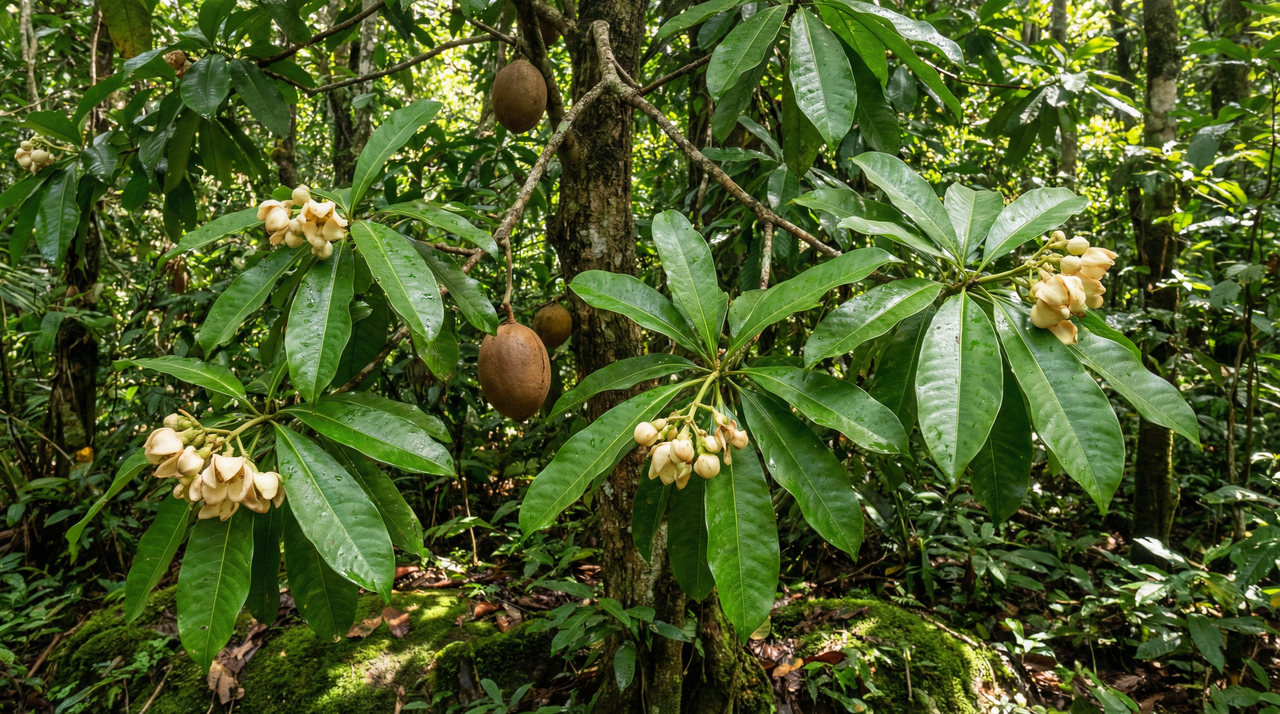
Nobody warns you that the seeds of the African butter tree are toxic. That's the thing that stopped me cold the first time I read through traditional processing notes on Pentadesma butyracea, because everything else about this tree sounds immediately, abundantly generous: a towering canopy species from West and Central Africa whose seeds yield a rich, waxy butter used for centuries in cooking, skin care, and ceremony, a tree that can outlive your grandchildren while quietly building soil and sheltering wildlife beneath its spreading crown. And then you get to the part where the raw seeds will make you sick, and you realize this plant has been quietly asking something of the people who use it for a very long time. It asks for knowledge. It asks for process. It rewards patience in a way that most plants in a modern nursery catalog simply don't.
What I find genuinely remarkable is how completely that bargain has held. Communities across Senegal, Nigeria, Cameroon, and the Congo Basin have been processing these seeds into butter for generations before Joseph Sabine ever wrote the species up in 1824,[1] working out every fermentation and boiling step through accumulated trial and observation. The butter they arrived at behaves almost like a cross between shea and cocoa butter: firm, mild, high smoke point, useful in the pot and on the skin. The fact that this tree remains virtually unknown outside its native range, with no named cultivars, no breeding programs, barely a footnote in most permaculture literature, feels less like an oversight and more like an invitation.
African Butter Tree Origin, History, and Botanical Background
Before Joseph Sabine formally described Pentadesma butyracea in 1824, West African communities had already been working with this tree for generations.[2] The african shea butter tree, as it's commonly called in the broader literature, belongs to the Clusiaceae family, which immediately gives me a useful mental shortcut: think mangosteen or calophyllum. The same leathery opposite leaves, the same waxy feel, that characteristic yellow latex that bleeds when you nick the bark. If you've spent time with that family, you recognize Pentadesma instantly.[3]
Botanical Characteristics and Native Habitat
This is a long-lived perennial tree, semi-deciduous to evergreen depending on local conditions, reaching 10 to 30 meters with a straight bole and broad spreading crown.[3][4] Given the right conditions, individuals can live 50 to 100 years or more, which puts it squarely in the category of trees you plant for your grandchildren.[5] Its native range sweeps across tropical West and Central Africa from Senegal through Sierra Leone, Liberia, Côte d'Ivoire, Ghana, Nigeria, and Cameroon all the way to the Democratic Republic of Congo, occupying lowland rainforests, gallery forests, and woodland savannas from sea level up to about 1,000 meters.[6][7] It prefers 1,200 to 2,500 mm of annual rainfall and mean temperatures between 24 and 28°C, which explains why it thrives on both humid forest interiors and drier savanna edges.[8]
Up close, the leaves are elliptical to obovate, leathery, 5 to 15 cm long, with 15 to 25 pairs of arching secondary veins and that dark brown to black scaly bark weeping yellow latex on any cut surface.[4] Flowering runs March to May, producing showy white or yellow flowers in terminal panicles; fruits are woody capsules 5 to 10 cm across that split into four valves to reveal one to five large seeds nestled in a yellow-orange buttery aril, ripening July through October.[9][10] The tree is dioecious and slow-growing, with meaningful seed production often waiting until year 5 to 10.[11] That biology, combined with ongoing deforestation and seed overharvesting, has landed it on the IUCN Red List as Vulnerable.[12]
Traditional and Cultural Significance in West Africa
Among the Akan of Ghana and the Baoulé of Côte d'Ivoire, the african butter tree carries symbolic weight alongside its practical one, representing fertility and prosperity in community ritual.[13] None of this began with European botanical documentation. Local communities had already developed sophisticated extraction methods: sun-drying and cracking the seeds, roasting, grinding into paste, and then kneading with water to separate a solid fat layer, yielding a butter with up to 70% oil content.[14] That kneading step is essentially a traditional emulsification technique, and I find it fascinating how cleanly the fat separates. Beyond food and skincare, bark decoctions address wounds and skin infections, leaf preparations target fever and inflammation, and root preparations have been documented for stomach complaints and rheumatism across ethnobotanical surveys from Benin, Ghana, Côte d'Ivoire, and Togo.[15][16]
Having worked with other slow-growing tropical canopy species, I know that protecting trees like this one requires community stewardship alongside careful nursery propagation. Conservation efforts are now combining sustainable harvesting protocols, community-based management, and ex-situ collections at institutions like Kew Gardens to counteract habitat loss and agricultural encroachment.[17][18]
Interesting Facts About the African Butter Tree
The butter from pentadesma butyracea seeds doesn't stay confined to village kitchens. Modern applications have expanded into cosmetics (creams, lotions, soaps), food manufacturing (margarine and confectionery fats), and active research into bio-lubricants and pharmaceutical carriers, with the timber finding use in construction and fuel as well.[7][19] What strikes me is how similar the butter behaves to shea in formulation: firm at room temperature, mild and slightly nutty, with a clean melt point that cosmetic formulators appreciate.
The tree's ecological toughness is easy to underestimate. Thick bark, deep taproots, and the capacity to shed leaves during drought while retaining water in its tissues allow it to persist right at the forest-savanna ecotone, a transitional zone that most large trees abandon when conditions get difficult.[20][10] When I'm designing resilient multi-layer systems for clients in humid subtropical climates, that kind of ecological flexibility is exactly what I look for in a reference species. It also supports pollinators, attracts seed-dispersing mammals, and forms mycorrhizal associations that help it establish in variable soils. For a tree that gives so much, the african tree with butter yielding nuts asks surprisingly little from the land it inhabits.
African Butter Tree Varieties and Sourcing
No Named Cultivars: Understanding the Wild Genetic Diversity
If you go looking for a named cultivar of the african shea butter tree, you won't find one. Pentadesma butyracea has no formally recognized varieties in horticultural literature anywhere.[21][22] What does exist is natural genetic variation across its West and Central African range, with regional ecotypes that have quietly adapted to local soils, rainfall patterns, and seasonal rhythms over generations.[23][24] That variability shows up as differences in fruit size, butter yield, and vigor depending on provenance. From a permaculture standpoint, I'd argue this is actually an asset. I've seen the same dynamic with some of the more obscure Inga species I've worked with: wild, unimproved material often brings ecological resilience that decades of breeding for uniformity can quietly erode. The lack of cultivars is simply where this tree stands right now, not a limitation of the plant itself.
How to Source African Butter Tree Seeds and Plants
The good news on the regulatory side is that there are no CITES restrictions on Pentadesma butyracea and it doesn't appear on any federal noxious weed lists.[25][26] Legally, the path is clear. Practically, it requires some hunting. The tree is essentially absent from mainstream US nurseries and domestic seed banks, including the USDA National Plant Germplasm System.[4][27] Your real options are specialized international suppliers. I regularly check Sheffield's Seed Company and Rare Exotic Seeds for new tropical tree listings, and both have carried Pentadesma butyracea seeds.[28][29] Expect to pay roughly $5 to $15 USD per packet when they're available, with occasional seedling offerings in the $10 to $30 range.[28] My standard advice for any recalcitrant tropical seed applies here: order more than you think you need, because germination rates can be inconsistent depending on how long the seeds have been in transit.
Importing to the US is possible but does require phytosanitary documentation and compliance with general USDA APHIS plant import rules.[30][31] In my experience, working with reputable vendors who understand export paperwork makes that process far less intimidating than it sounds. The african butter pear tree isn't restricted, it's just niche, and that's a very different problem to have.
African Butter Tree Propagation and Planting
Everything about growing the african shea butter tree from seed comes back to one biological fact: this is a recalcitrant species. That word carries real weight in the nursery. It means the seeds do not dry down and wait patiently in a paper envelope the way a tomato or pepper seed would. They are alive in a very urgent, perishable sense, and they expect you to treat them accordingly.
Seed Morphology, Viability, and Germination
The seed itself is striking. Each one is a small black ellipsoid, about 15 mm long, wrapped in a powdery yellow aril over a hard, almost stone-like endocarp.[32][33] The moment you handle one, you understand why germination feels different from temperate fruit trees. The seed's moisture content runs 40-50% at harvest, and its oil content can reach 70%.[34] Let that moisture drop below 20-30% and viability collapses, falling more than 50% within two to three months at 5% moisture.[35][36]
I've propagated several recalcitrant tropical seeds in the Clusiaceae family and learned the hard way that even a few days of casual drying can drop germination from near 80% down to under 30%. My rule now is to sow within days of extracting the seed. If I genuinely cannot plant immediately, I store seeds at 80-95% relative humidity and 10-15°C, which can preserve viability for 6-12 months.[37][38] Before sowing a stored batch, I run a simple cut test on a few seeds as a quick viability check; formal assessment uses tetrazolium assays (60-80% in fresh seeds) or X-ray radiography.[39] Standard seed banking is not an option here -- Kew's Millennium Seed Bank and similar institutions focus on orthodox species, so conservation of this species relies on in-situ stands, field gene banks, or specialized cryopreservation.[40]
Fresh seeds germinate at 70-90% under nursery conditions of 25-30°C in a well-drained medium, typically within two to four weeks, though some sources report up to six.[41][42] Scarification of that hard coat is essential to break physical dormancy; some growers have also had success with gibberellic acid pre-soaking.[43] One thing seed-grown plants cannot give you is predictability of sex. The species is dioecious, so seedlings are genetically variable and you'll need both male and female trees for any fruit set to happen.[4][44] That reality shapes how seriously to consider vegetative propagation.
Vegetative Propagation Techniques
Cloning a productive female is attractive in theory. In practice, success rates are real but modest. Air layering on mature branches works in two to three months at 50-70% success; semi-hardwood cuttings treated with IBA at 2,000-4,000 ppm root at 20-60% under mist; grafting (cleft, veneer, or whip-and-tongue methods) hits 30-60% success rates and works best during the rainy season, June through September in West Africa.[45][46] I've done cleft grafts on similarly slow-growing West African trees during the rainy season and landed around 50% take, so those numbers feel honest to me. Tissue culture using MS medium with cytokinins and auxins is technically possible but still experimental, and commercial nurseries largely rely on wild-collected seed rather than any standardized grafting program.[47][48] If you can source or produce grafted stock from a known female, it's worth the extra effort.
Soil, Site Selection, and Light Requirements
In its native West and Central African habitats, this tree grows from coastal lowlands up to around 600 m elevation, spanning gallery forests, semi-deciduous woodland, and forest-savanna transitions.[43] It's moderately shade-tolerant as an understory tree but adapts to full sun in open or disturbed areas.[49] Soil preference is well-drained, fertile loam or sandy-loam at pH 5.5-7.0 with the sweet spot at 6.0-6.5.[4][50] I calibrate pH the same way I do for my cacao guilds; drop below 5.0 and aluminum toxicity kicks in, showing up as yellowing new growth and a stunted taproot. The tree will tell you quickly when the chemistry is wrong.
Depth matters more than texture. The taproot needs at least 1-1.5 m of accessible, uncompacted soil, and organic matter at 2-5% in cultivation significantly outperforms the leaner conditions it tolerates in the wild.[51] The species forms symbiotic relationships with ectomycorrhizal fungi that help it extract phosphorus from nutrient-poor soils, so inoculating nursery seedlings and avoiding compaction around roots pays dividends long-term.[52] For a germination mix, 50% sand, 30% loamy soil, and 20% organic compost gives the light, aerated structure the seedling roots want.[53] Waterlogging is the fastest way to kill young stock; this is a tree that evolved with seasonal flooding nearby but not saturated feet.
Spacing, Planting Technique, and Timeline to Fruiting
Mature trees commonly reach 15-30 m in the wild, though cultivated specimens stay more often in the 6-15 m range with canopy spreads of 4-12 m.[4] That eventual footprint means spacing generously from the start: 8-10 m between trees in most plantings, tightened to 5-8 m in agroforestry contexts, or a 6-8 m by 4-6 m orchard layout running 100-200 trees per hectare.[54][55] I space generously so the understory crops -- yam, cocoa, cassava -- still catch enough light while the taproot system has room to develop without competing with itself. Plant at the onset of the rainy season, or in spring in analogous warm climates, into sites amended with compost or well-rotted manure; add coarse sand to heavy clays, peat and compost to sandy soils.[56]
Now for the part I always make sure clients hear before they plant: seed-grown trees take 8-12 years to first fruit and don't hit peak productivity until 15-20 years in.[57][58] Seedlings grow slowly, reaching only 1-2 m in the first two to three years.[59] Grafted trees can begin bearing in three to five years under good irrigation and fertilization.[60] After years of designing food forests with long-maturing canopy trees, I've learned to always plant African butter tree alongside shorter-term producers: bananas, papayas, or fast-growing legume shrubs that yield while the butter tree finds its footing. Patience isn't just a virtue with this species -- it's the actual skill set required.
African Butter Tree Care Guide
Growing the african shea butter tree outside its native West African range is a study in reading the plant's history and letting that history make your decisions. Everything about how you water, feed, position, and prune this tree flows from its origins in the forest-savanna mosaic: seasonally wet, deeply drained, warm year-round. Get those fundamentals right and the tree is surprisingly unfussy. Get them wrong and no amount of corrective effort will undo the damage, especially in the first few years.
Water Needs
Young African butter trees are genuinely drought-sensitive, and I treat that early vulnerability seriously. Consistent moisture during establishment is non-negotiable; the deep root system that eventually grants some drought tolerance takes time to develop.[61][62] The key balance is consistent moisture without waterlogging. I water deeply and then let the top few centimeters dry before watering again rather than keeping the soil perpetually saturated, which sets up the root rot problems covered in the pests and diseases section.
Sunlight Requirements
This tree comes from a habitat that spans dense forest understory to open savanna edge, and it shows. It wants at least 4-6 hours of direct or indirect sunlight daily to grow and eventually fruit, but it handles partial shade gracefully, especially as a young plant.[63][64] I think of it similarly to young mango or citrus: full sun is fine, but brutal afternoon exposure without adequate soil moisture pushes it toward leaf scorch. A position that catches morning sun and some afternoon dapple is ideal in the early years.
Feeding and Soil Fertility
The African butter tree is adapted to the low-fertility lateritic and sandy-loam soils of its native savanna-forest transitions, tolerating a pH range of 5.0 to 7.0 and handling conditions as acidic as 4.5.[65][59][66] That native tolerance means a light hand with fertility is the right approach, not neglect, but definitely not heavy feeding.
Where supplementation is needed, a balanced 10-20-10 or 10-20-20 NPK fertilizer applied in split doses at the start and middle of the rainy season works well for young trees, at roughly 100-200 g per tree annually. In low-input systems, 5-10 kg of compost or well-aged manure per tree is the preferred route.[65][58] I always run a soil test before planting any slow-to-fruit tropical perennial; I once set back a similar species by a full season by assuming low native nutrient requirements meant phosphorus was covered, which it wasn't. That mistake cost me an entire year of root development.
Watch leaves for deficiency signals: generalized yellowing on older leaves points to nitrogen, marginal browning on older leaves suggests potassium, and interveinal chlorosis on young growth usually indicates iron.[67][68] The one input to avoid is excess nitrogen, which pushes vegetative growth at the expense of the seed production you're waiting years for.[65][69] Because almost all the fertilization research comes from West African agroforestry trials, I treat published rates as a starting point and adjust every year based on leaf color, growth rate, and fruit set in my own plantings.
Frost Tolerance
This is the non-negotiable constraint. Pentadesma butyracea is a strictly tropical species native to the lowland forests and savanna woodlands of West and Central Africa, and it has essentially no cold hardiness.[70][71] Extended temperatures below 10-15 °C cause real physiological stress, and a dip below -1 °C is generally lethal to young plants, presenting as blackened or browned leaves, wilting, bark cracking, and branch dieback from which recovery is difficult.[72][73] It's suited only to USDA zones 10b through 12.
After growing tender tropical fruiting trees in zone 9b, I've learned that even a brief overnight dip below 10 °C can set back a young plant by an entire growing season. Now I plant these sensitive species only in sheltered south-facing microclimates and keep frost cloth on hand all winter.[4][74] Greenhouse growing is the only reliable path in zone 9b and cooler.
Heat Tolerance
Heat, interestingly, is a much lesser problem than cold. The tree grows optimally at 25-30 °C and tolerates up to about 38 °C with adequate moisture, but above 35 °C you'll start seeing leaf scorch, wilting, flower drop, and reduced fruit size.[75][4] In the hottest weeks of a Florida summer I've seen leaf margins turn crisp in exactly that way when mulch or irrigation lapses, but established trees with deep roots bounce back quickly once conditions improve.
For seedlings and young trees, 50-70% shade cloth, 5-10 cm of organic mulch, and drip irrigation maintaining consistent soil moisture are the practical tools.[48] Germination is optimal at 28-32 °C, which also aligns with the wet-season temperatures that trigger the tree's flowering and fruiting cycle.
Pruning and Maintenance
The first two to three years are about establishing structure. Formative pruning for a strong central leader and open canopy pays dividends later when you're trying to harvest from a 15-meter tree.[59] I stake young trees and remove the lowest branches progressively to improve both airflow and harvest access. After that, annual maintenance pruning in the dry season (November through March) handles dead, diseased, or crossing branches.
Schedule all cuts for the dry season and wear gloves; the latex this tree produces can irritate skin, and cuts made during wet periods tend to weep longer. Selective pruning done well can increase fruit set by 20-30%, and in agroforestry contexts coppicing or pollarding every 3-5 years keeps the tree productive for biomass while maintaining manageable size.[59][76] Light cuts are the rule; heavy pruning stresses a tree that's already working slowly toward that first fruiting.
Seasonal Rhythm
Understanding the phenological calendar turns care from guesswork into timing. Flowering happens in the dry season, peaking December through January, with fruit developing over the following 4-6 months into the early rainy season (April through July).[4][77] Watering mirrors that pattern: generous through the growing and wet seasons, reduced as conditions dry down to avoid root rot during the dormant phase.[78]
Once I started reading the tree's seasonal cues rather than following a fixed watering calendar, my timing for fertilizing and pruning improved considerably. The seasonal clock also reframes the patience required: this is a species on a 5-8 year path to first fruit and decades of production beyond that, and the wet-dry rhythm is what drives the whole journey forward.
How to Harvest African Butter Tree (Pentadesma butyracea)
Patience is the defining skill with this tree, and nowhere does that show more clearly than at harvest time. The african shea butter tree follows a precise seasonal calendar: flowering happens in the dry season between October and December, fruits develop slowly through the wet season, and ripening arrives in the following dry season, typically from March to June (some populations ripen November through February, with regional peaks in April-May or December-March).[79][80] That entire arc from bloom to ripe fruit spans four to six months.[81] The dry-season alignment is not coincidental: lower humidity at ripening makes collection and initial drying far more manageable.
When to Harvest: Phenology, Maturity Cues, and Seasonal Timing
Reading a ripe fruit takes practice, and I'll admit I picked too early the first time. The reliable signal is color: fruits start green, then shift to yellow, orange-brown, or reddish-brown as they ripen, and the flesh softens noticeably, with ripe fruits detaching from the tree with very little resistance.[82] I now wait for that first clean color break and test a few fruits by pressing gently near the stem. If they don't give a little, I wait another week. Premature harvest means sour pulp and underdeveloped kernels, and the butter quality suffers downstream.
Yields take time to build. First production comes at five to seven years from seed (faster from grafted trees, as the propagation section covers), but the numbers that make this tree genuinely exciting don't arrive until maturity: twenty to fifty kilograms of seeds per tree annually in well-managed conditions, with healthy older trees reaching a hundred kilograms.[59] I always tell fellow designers: plant this tree with a full guild plan, because you're making a fifteen-to-twenty-year commitment and the tree only gets more generous with age.
Sustainable Harvesting Techniques and Post-Harvest Handling
Traditional harvesting in West Africa is deliberately gentle, and for good reason: the same trees are expected to produce for decades. Fruits are collected at maturity without damaging branches, then spread out to sun-dry for three to five days until the epicarp splits naturally, at which point depulping, seed extraction, further drying, and cool dry storage follow in sequence.[82][83] These steps have been refined by generations of West African women, and the sequence matters. Skip or rush the drying and you can lose up to thirty percent of your yield to mold and fermentation.[83] I spread seeds in a single layer on elevated mats and turn them daily without fail. Traditional butter extraction via those properly dried seeds runs at forty to fifty percent efficiency.[60]
Expected Yields and Flavor Profiles of Pulp and Seed Kernels
The seed kernels are the primary prize, processed into the tree's signature butter, but the pulp is worth savoring too. Under-ripe pulp has a bright, lemony tang from organic acids; fully ripe fruit shifts toward sweet-citrus and tropical fruit notes.[84][4] Whether you eat it fresh or use it for a simple beverage, picking at peak ripeness makes a real difference. The seed butter itself is mild, nutty, and faintly sweet, with the firm, waxy texture of cocoa butter at room temperature and a smooth, spreadable quality when warmed.[85] For a tree that asks so much of you in time and patience, that first properly processed batch of butter makes the wait feel completely reasonable.
African Butter Tree Preparation and Uses
There are really two edible parts to the African butter tree, and they behave very differently in the kitchen. The fruit pulp surrounding the seeds is sweet-tart and genuinely pleasant eaten fresh off the tree, or processed into juices, jams, and fermented beverages including local alcoholic drinks.[4][86][4] That part is straightforward. The seeds are a different story entirely.
Culinary Uses of the Fruit and Seed Butter
Raw seeds are bitter, astringent, and not safe to eat as-is. The compounds responsible, including cyanogenic glycosides and tannins, require roasting or boiling to break down before the seeds become palatable and safe.[87][88] In my opinion, you should never skip that processing step. The traditional methods exist for good reason, and the whole value of the seed lies in what comes after: a butter extracted from kernels that yield 50 to 70 percent fat, rich in oleic, palmitic, and stearic acids.[89][90][91]
Having worked a fair amount with shea and cocoa butter in recipes, the descriptions of Pentadesma butter read immediately familiar to me: firm and waxy when cold, smooth and spreadable when warmed, with a mild nutty flavor and subtle sweetness reminiscent of cocoa butter.[92][93] Its high smoke point and clean aftertaste make it well suited for deep-frying fish or plantains, enriching palm nut soups, and finishing starchy dishes like yam or rice. Across Ghana, Côte d'Ivoire, Nigeria, and Benin it's used as a cooking fat for savory stews, baking, and confectionery alike, filling a role similar to how shea butter functions in the broader region.[89][94][95]
Traditional Medicinal Preparations
The same butter that goes into the cooking pot is also applied topically for wounds, burns, skin infections, and general skin conditioning. Bark and leaf decoctions are prepared internally for malaria, fevers, dysentery, rheumatism, and gastrointestinal complaints, drawing on the plant's well-documented anti-inflammatory and antimicrobial properties.[96][97] The phytochemical detail behind those properties is covered in the health benefits section; here the practical point is that these are preparations rooted in generations of traditional knowledge. Approaching bark decoctions or concentrated oil preparations without that knowledge base is worth doing cautiously and ideally with guidance from practitioners familiar with the plant.
Non-Food and Commercial Applications
Beyond the kitchen and medicine cabinet, the african shea butter tree's seed fat has a robust second life in cosmetics. It's used in skin moisturizers, hair conditioners, soaps, and body lotions, and the pressed oil has historically served as lamp fuel.[98][99] The timber itself is used in construction and as fuelwood. Every time I research a tree like this one, the same pattern shows up: the pentadesma butyracea butter economy is sustained largely by rural women who do the processing and trade the product, turning a forest resource into real household income.[100][60] It's the same story I see in well-functioning shea and moringa agroforestry projects: the tree's value multiplies when the people closest to it control the value-added processing. For any grower thinking about this species within a regenerative system, that livelihood dimension is part of what you're planting.
African Butter Tree Health Benefits and Medicinal Uses
What I find compelling about Pentadesma butyracea is that it sits in that interesting middle ground between well-documented traditional medicine and genuinely promising early-stage science. Communities across West and Central Africa have long used it to treat wounds, rheumatism, fever, gastrointestinal complaints, and skin infections.[101][102] That depth of traditional use isn't proof, but it is a signal worth paying attention to, especially when the lab work is starting to back it up.
Traditional Medicinal Uses Across West and Central Africa
The pharmacological findings here are genuinely exciting, provided you hold them at the right arm's length. Extracts have shown meaningful anti-inflammatory activity by inhibiting pro-inflammatory cytokines like TNF-α and IL-6, suppressing COX-2 enzymes, and modulating the NF-κB pathway, with effects confirmed in animal models of carrageenan-induced inflammation.[103][104] Antimicrobial activity against Staphylococcus aureus and E. coli has been recorded at MIC values below 100 μg/mL,[105][106] and extracts inhibit alpha-glucosidase and acetylcholinesterase in ways that suggest potential relevance to diabetes and neurodegenerative disease management.[107] That's an impressive list. The catch is that every one of these findings comes from in-vitro or animal studies. There are no large-scale human clinical trials, and no registered trials appear on major databases.[102][108] Until more human data emerge, I use the butter mainly as a culinary fat and topical moisturizer rather than as a concentrated medicinal extract. That feels like the honest position to hold for now.
Key Phytochemicals and Their Distribution in the Plant
The plant contains over 50 identified secondary metabolites distributed unevenly across its tissues: seeds are lipid-dominant, while leaves and bark are where the phenolic and flavonoid richness concentrates.[109] The heavy hitters include flavonoids like quercetin, kaempferol, and rutin; phenolic acids such as gallic, ferulic, and p-coumaric; and triterpenes including lupeol, betulinic acid, and both α- and β-amyrin.[13][110] Those triterpenes, in particular, are doing a lot of the anti-inflammatory and antimicrobial heavy lifting. Leaf extracts show phenolic concentrations up to 200 mg GAE/g with DPPH IC50 values between 20 and 50 μg/mL.[111] For context, that antioxidant range is competitive with some of the stronger medicinal herbs I grow, like Ocimum gratissimum or rosemary. The bark adds xanthones, biflavonoids, tannins, and saponins to the picture,[112][113] and these profiles shift with season and geography, running higher in dry-season growth and savanna populations.[114] That variability matters if you're ever sourcing material from different regions.
Nutritional Composition of Seed Kernels and Butter
The seed kernels are nutritionally dense. This makes sense for a calorie-critical subsistence food. They typically contain 50-70% oil, 12-20% protein, and meaningful amounts of fiber and minerals.[115][116] The extracted butter runs 600-900 kcal per 100 g and supplies potassium (850-950 mg), magnesium (180-220 mg), calcium (140-160 mg), phosphorus (300-350 mg), iron (4-6 mg), and zinc (2-3 mg) per 100 g.[116][117] I like knowing that even a modest 10-20 g serving contributes meaningful minerals to a meal, especially in diets that lean heavily on starchy staples. The fatty acid profile is similar to shea: roughly 38-50% stearic and 30-45% oleic acid,[118][85] which gives it that same firm, slow-melting quality. Beyond the fats, the kernels carry tocopherols, flavonoids, and phenolic acids with DPPH scavenging activity comparable to synthetic antioxidants.[119] Fruit pulp contains some vitamin C and vitamin A precursors, though that data is patchier and more variable than what we have for the kernels.[120][121] Traditional processing by boiling, fermenting, and kneading yields 40-50% butter from fresh kernels.[122]
Safety Profile and Practical Considerations for Use
The processed butter has a strong safety record in both food and topical applications, with allergenicity considered low and comparable to other nut butters.[123][124] Animal toxicity studies using hydroalcoholic seed extracts show LD50 values above 2000 mg/kg, classifying the material as practically non-toxic under OECD 423 guidelines.[125][126] The important caveat is the word "processed." Unprocessed seeds contain antinutritional factors that can cause gastrointestinal irritation if consumed raw in quantity, and traditional roasting, boiling, or solvent extraction reliably removes them.[123][127] I've made the same point to people working with high-stearic butters like shea: skipping the processing step is never worth it. Topically, contact dermatitis is possible in sensitive individuals, and anyone on anticoagulants should exercise caution given the plant's documented anti-inflammatory activity, though no significant drug interactions or organ toxicity have been recorded.[128][129] Patch test before using it in a new topical preparation, and if you're sourcing seed material internationally, double-check species identification since the african shea butter tree and Vitellaria paradoxa are sometimes conflated in trade.
Pests and Diseases of the African Butter Tree
The african shea butter tree carries some impressive built-in armor. Its latex, triterpenes, saponins, and waxy leaf surfaces form a chemical and physical barrier that deters many opportunistic insects.[130][131] I've noticed something similar with mangosteen and other Clusiaceae relatives I've propagated: that sticky latex sap seems to stop early-season caterpillars in their tracks. The chemistry is doing real work. Even so, move this tree into a cultivated or nursery setting and the baseline resilience gets tested fast.
Common Pests and Natural Defenses
The practical threat list includes termites (Macrotermes spp.) attacking roots and heartwood, armyworms and other noctuids causing defoliation, seed and bark borers from the Curculionidae family, aphids and scale on young plants, and potential fruit fly pressure during fruiting.[132][133] Seed borers are the most economically significant: in unmanaged plantings, borer damage during flowering and fruiting can account for up to 40% yield loss.[133][134] In native savanna habitats, rodents and elephants also damage young trees and suppress natural regeneration.[134]
Pest outbreaks track the rainy season closely, spiking during or after heavy rains, and nursery seedlings are especially exposed to aphid colonization and damping-off before the tree's defenses are fully developed.[132][135] I learned that lesson early with tropical tree seedlings generally: overwatering for even a few days creates exactly the conditions Fusarium is waiting for.
Diseases and Environmental Triggers
Wild populations show moderate resistance, propped up by secondary metabolites in the bark and seeds, but cultivated specimens in monocultures or orchards are considerably more vulnerable.[136][137] Fungal diseases are the primary concern: leaf spot from Colletotrichum and Cercospora species, root rot and wilt from Phytophthora and Fusarium in waterlogged soils, and nursery damping-off from Fusarium and Rhizoctonia.[138][139] Bacterial leaf spots and cankers from Xanthomonas and Pseudomonas species can also appear during the rainy season.[140] Viral documentation is thin for Pentadesma specifically, with risks largely extrapolated from related Clusiaceae, so I treat that gap the way I treat most under-researched tropicals: watch the plants, not the literature.
Integrated Pest Management for Pentadesma butyracea
There are no named resistant cultivars and no formal breeding programs, so growers work entirely with wild genetic material.[141] I select the most vigorous seedlings each season and keep notes on which individuals show the cleanest foliage after wet periods. It's slow selection, but it compounds over time.
For management, a solid IPM hierarchy goes a long way: prioritize drainage and spacing, remove fallen fruit and infected debris promptly, and bring in biological reinforcements like neem extracts, Bacillus thuringiensis for caterpillars, and predatory insects like ladybugs and parasitic wasps before considering copper-based fungicides as a last resort.[142][143][132] In my experience, once drainage and spacing are right, neem and a healthy predatory insect population handle most pressure without anything heavier. Botanical gardens including Kew have demonstrated that attentive monitoring and preventive care are enough to grow this tree successfully in diverse managed systems.[144] The tree genuinely rewards the systems thinker over the spray-and-pray approach.
African Butter Tree in Permaculture Design
The african shea butter tree doesn't slot neatly into the usual permaculture plant guilds because it doesn't behave like most of the multipurpose trees we reach for first. It doesn't fix nitrogen. It won't fit in a temperate food forest. And it takes genuine patience to see it reach productive maturity. But for growers working in the true humid tropics, Pentadesma butyracea occupies a canopy role that's hard to replicate: a massive, long-lived overstory tree that feeds wildlife, feeds pollinators, rebuilds soil, and eventually yields a high-value fat crop from seeds that communities across West Africa have relied on for generations.
Ecological Functions and Benefits
At 15 to 30 meters tall (occasionally pushing 40 m), this is a tree that defines the upper edge of a food forest system.[145][146] It provides critical habitat for birds, mammals, and insects across the rainforest and forest-savanna edge ecosystems where it's native.[147] That biodiversity support isn't incidental; it's baked into the tree's reproductive biology in ways that matter directly to yield.
The flowers are hermaphroditic and protogynous, blooming in the dry season (November through April), with bright yellow petals and a mild sweet-yeasty scent that draws bees, particularly Apidae.[148][149] Fruit set is frequently pollen-limited, with natural rates around 20 to 30 percent, and pollinator visitation drops noticeably in fragmented or agricultural landscapes compared to intact habitat.[149][150] I've seen this same pattern with other bee-pollinated oil-seed trees: habitat fragmentation and even casual pesticide use can quietly tank your fruit set before you realize what's happening. In any system I design around an insect-pollinated canopy tree, I always build in dedicated pollinator forage nearby, whether that's a flowering hedgerow along the edge or a dense understory of bee plants below the canopy. Don't skip that step here.
Seed dispersal is zoochorous, relying on monkeys, birds, rodents, and elephants to consume the fleshy pericarp and scatter seeds through the landscape.[151][152] In a managed system you'll be doing the dispersal yourself, but that wildlife relationship tells you something important: this tree evolved to feed animals, and a planting that incorporates it into a biodiverse system rather than a monoculture stand is working with that ecology rather than against it.
The soil contribution is real but worth framing correctly. This is not a nitrogen-fixer; there's no shortcut there.[153] What it does offer is steady organic matter accumulation through leaf litter decomposition, mineral cycling, and a deep root system that stabilizes soil and resists erosion.[145][154] In my guild designs, I treat this kind of tree as the organic matter engine and pair it with actual nitrogen-fixers in the mid-story, something like Gliricidia or Leucaena, so the system as a whole is building fertility from multiple angles. The canopy height also delivers genuine windbreak function, and the tree sequesters meaningful carbon over its long lifespan.[153][155]
Forest Layer and Guild Integration
In its native West and Central African rainforests, Pentadesma butyracea sits in the upper canopy or emergent layer, reaching 10 to 20 meters under typical conditions and up to 30 to 40 meters where conditions are optimal.[156][157] It forms mycorrhizal associations with arbuscular fungi that improve nutrient uptake in the low-fertility soils where it often grows.[158] That combination of deep canopy, litter-driven soil building, and mycorrhizal connectivity makes it a foundational upper-layer species in the truest permaculture sense.[65]
The leaf litter decomposition adds significant organic matter over time, enriching soil and supporting whatever shade-tolerant species you're growing beneath it.[159][160] Traditional agroforestry systems in West Africa already demonstrate this integration at scale, pairing the butter tree with cocoa, yam, and cassava to get high-value shade, improved soil structure, and an eventual butter harvest from the same land unit.[153][161] I've designed similar multi-strata arrangements for clients in South Florida and coastal tropical areas using mango and avocado as the overstory, with cacao below; the litter dynamics and shade relationship are comparable. What's distinct here is the seed's fat yield, which shifts the economic proposition considerably and makes the long wait to maturity worth planning around.
Climate Requirements and Suitable Zones
The african shea butter tree is native to humid tropical lowland rainforests, gallery forests, and forest-savanna transition zones across West and Central Africa, from Ghana and Ivory Coast through Nigeria and into Cameroon.[157][162] It's classified under Köppen-Geiger Af and Am climates, with some extension into Aw.[156] That origin story tells you almost everything you need to know about where it will and won't grow.
Temperature tolerance sits between 18 and 35°C, with an optimal range of 25 to 28°C.[4][147] Below 15°C the tree starts to suffer, and there is no frost hardiness to speak of.[61] Annual rainfall should exceed 1200 mm at minimum, with 1500 mm or more being the realistic target, and humidity needs to stay consistently above 70 to 80 percent.[4][163] That puts it firmly in USDA zones 10b through 12, with no practical pathway into cooler zones without greenhouse or heavily protected microclimate conditions.[164][157] Soil preferences reinforce that picture: well-drained, humus-rich, acidic to neutral ground (pH 5.5 to 7.0), in full sun to partial shade.[4]
In practice, I treat this as a strictly tropical tree with essentially no margin for cold. If you're in zone 10a or anything cooler, I'd honestly recommend finding a hardier alternative for your canopy layer and letting this one inspire the design pattern rather than serve as the actual species. For those of us working in genuinely tropical climates, though, it's a compelling case for integrating a tall, oily-fruited native into the overstory, an approach that produces ecological services and a valuable harvest without depending on inputs or hybridized genetics.
The Tree That Taught Me to Think in Decades
I've never grown African butter tree to maturity myself; the climate here doesn't allow it. But I spent a week once in a smallholder agroforestry plot in Ghana where a single old specimen shaded two generations of cocoa and cassava, and the farmer's grandmother remembered planting it. That image has stayed with me longer than almost anything else I've encountered in this work. Some plants don't ask for patience so much as they ask you to reconsider your whole relationship with time.
Sources 164
- Transactions of the Horticultural Society of London, Vol. 5 (1824) ↩
- A new genus of plants from Sierra Leone ↩
- Plants of the World Online - Pentadesma butyracea ↩
- Pentadesma butyracea - Useful Tropical Plants ↩
- Plant Resources of Tropical Africa - Pentadesma butyracea ↩
- Pentadesma butyracea Sabine ↩
- African Trees: Pentadesma butyracea ↩
- Pentadesma butyracea Sabine ↩
- Pentadesma butyracea Sabine ↩
- Pentadesma butyracea: A review of its botany and uses ↩
- IUCN Red List - Pentadesma butyracea ↩
- Pentadesma butyracea ↩
- Ethnobotany of Pentadesma butyracea in West Africa ↩
- Pentadesma butyracea Sabine: Review of its Phytochemistry, Pharmacology and the Traditional Uses ↩
- Ethnopharmacological survey of Pentadesma butyracea in Benin ↩
- FAO - Edible oilseeds in a changing climate ↩
- Conservation and sustainable use of Pentadesma butyracea ↩
- IUCN Red List - Pentadesma butyracea ↩
- Pentadesma butyracea ↩
- Ecological Adaptations of Pentadesma butyracea in West African Savannas ↩
- Pentadesma butyracea ↩
- Flora of West Tropical Africa ↩
- Genetic diversity and population structure of Pentadesma butyracea ↩
- Genetic Diversity and Ecotypes of Pentadesma butyracea in West Africa ↩
- CITES Species Database ↩
- Federal Noxious Weeds List ↩
- National Plant Germplasm System Search ↩
- Pentadesma butyracea - Butter Tree Seeds ↩
- Tropical Tree Seeds - Pentadesma butyracea ↩
- Importing Plants and Plant Products to the United States ↩
- Plant Import Regulations ↩
- Plants of the World Online ↩
- Flora of West Tropical Africa ↩
- Seed Storage Behaviour of Pentadesma butyracea Sabine ↩
- Desiccation Tolerance in Seeds of Pentadesma butyracea ↩
- Germination and Viability of Pentadesma butyracea Seeds ↩
- Storage Physiology of Tropical Tree Seeds: Case of Pentadesma butyracea ↩
- Tetrazolium Testing for Viability Assessment in Tropical Tree Seeds ↩
- Seed Viability and Germination in Pentadesma butyracea ↩
- Seed Storage of Tropical Tree Species ↩
- Germination and Seedling Growth of Pentadesma butyracea ↩
- Seed Dormancy and Germination of Pentadesma butyracea ↩
- The Butter Tree (Pentadesma butyracea): A Review of Its Potential as a Domesticated Crop ↩
- Reproductive Biology of Pentadesma butyracea in Tropical Forests ↩
- Propagation and Grafting of Pentadesma butyracea: A Review ↩
- Vegetative Propagation of Pentadesma butyracea Using Cuttings ↩
- Micropropagation of Pentadesma butyracea via Tissue Culture ↩
- Propagation and Cultivation of Pentadesma butyracea Sabine in West Africa ↩
- Ecological Profile: Pentadesma butyracea in West African Forests ↩
- Ecological Requirements of Pentadesma butyracea in West African Forests ↩
- Pentadesma butyracea: Ecology and Cultivation Potential ↩
- Symbiotic Fungi in Pentadesma butyracea ↩
- Pentadesma butyracea: A Review of Its Botany, Ecology and Utilisation ↩
- Cultivation and Conservation of the Butter Tree in West Africa ↩
- Agroforestry Practices for Pentadesma butyracea in West Africa ↩
- Cultivation and Management of Non-Timber Forest Products: Pentadesma butyracea ↩
- Pentadesma butyracea: A Review of Its Biology and Uses ↩
- Cultivation and Propagation of Pentadesma butyracea ↩
- Horticultural Potential of Pentadesma butyracea in West Africa ↩
- Orchard Management for Butter Trees in West Africa ↩
- Ecological Distribution and Habitat Preferences of Pentadesma butyracea in West Africa ↩
- Pentadesma butyracea ↩
- Pentadesma butyracea - Useful Tropical Plants Database ↩
- Cultivation of Pentadesma butyracea - Kew Royal Botanic Gardens ↩
- Pentadesma butyracea: Cultivation and Utilization ↩
- Soil and Site Conditions for Pentadesma butyracea ↩
- Pentadesma butyracea ↩
- Micronutrient Deficiencies in Tropical Fruit Trees ↩
- Agroforestry Systems: Nutrient Management in Pentadesma butyracea Plantations ↩
- Pentadesma butyracea ↩
- Pentadesma butyracea ↩
- Pentadesma butyracea ↩
- Cold Tolerance of Tropical and Subtropical Plants ↩
- Butter Tree (Pentadesma butyracea) - Plant Profile ↩
- Ecological and physiological responses of Pentadesma butyracea to environmental stresses in West African savannas ↩
- Pentadesma butyracea ↩
- FAO - Non-Wood Forest Products: Pentadesma butyracea ↩
- Phenology of Pentadesma butyracea in West African Forests - ResearchGate ↩
- Phenology and reproductive biology of Pentadesma butyracea Sabine (Clusiaceae) in Benin ↩
- Pentadesma butyracea Sabine: Review of Its Phytochemical, Pharmacological and Nutritional Properties ↩
- Phenology and reproductive biology of Pentadesma butyracea Sabine (Clusiaceae) in Benin ↩
- The Biology and Utilisation of Pentadesma butyracea ↩
- Harvesting and Processing of Indigenous Fruit Trees in Ghana ↩
- Traditional Uses and Nutritional Value of Pentadesma butyracea in West Africa ↩
- Chemical Composition and Uses of Pentadesma butyracea Butter ↩
- Ethnobotanical Survey of Pentadesma butyracea in Benin ↩
- Processing and Utilization of Pentadesma butyracea Seeds for Food in West Africa ↩
- Pentadesma butyracea Sabine: A Review of Its Phytochemical and Pharmacological Profile ↩
- Ethnobotanical Uses of Pentadesma butyracea in West Africa ↩
- Chemical Composition and Nutritive Value of Pentadesma butyracea Seeds ↩
- Non-Wood Forest Products of Central Africa ↩
- Chemical Composition and Uses of Pentadesma butyracea Butter ↩
- Edible Oils and Fats from African Plants ↩
- Ethnobotanical Survey of Pentadesma butyracea in Ghana ↩
- Culinary Applications of Indigenous West African Oils ↩
- Ethnobotanical uses of Pentadesma butyracea Sabine (Clusiaceae) by the Akposso people of the Plateau region, Togo ↩
- Pentadesma butyracea: A review of its botany, ethnobotany, phytochemistry and pharmacology ↩
- Pentadesma butyracea: A Review of Its Phytochemistry and Pharmacology ↩
- African Trees: Pentadesma butyracea ↩
- The socio-economic importance of Pentadesma butyracea in Ghana ↩
- Phytochemical and Pharmacological Review of Pentadesma butyracea ↩
- Pentadesma butyracea: A Review of Its Traditional Uses, Phytochemistry, and Pharmacology ↩
- Pharmacological Potential of Pentadesma butyracea: A Review ↩
- Antioxidant and Anti-inflammatory Activities of Pentadesma butyracea Sabine Seed Oil ↩
- Antimicrobial and anti-inflammatory potential of Pentadesma butyracea stem bark ↩
- Phytochemical screening and in vitro antibacterial activity of Pentadesma butyracea stem bark ↩
- Enzyme Inhibitory and Antioxidant Effects of Pentadesma butyracea Extracts ↩
- ClinicalTrials.gov Search for Pentadesma butyracea ↩
- Traditional Uses and Bioactive Compounds of Pentadesma butyracea ↩
- Phytochemical Investigation and Anti-Inflammatory Activity of Pentadesma butyracea Sabine ↩
- Phytochemical analysis and antioxidant properties of Pentadesma butyracea leaves ↩
- Secondary Metabolites from the Bark of Pentadesma butyracea ↩
- Secondary Metabolites from the Latex of Pentadesma butyracea ↩
- Influence of environmental factors on phenolic content in Pentadesma butyracea ↩
- Nutritional Composition of Pentadesma butyracea Seed Kernels ↩
- Nutritional Composition and Physicochemical Properties of Pentadesma butyracea Butter ↩
- Proximate and Mineral Composition of the Seeds of Pentadesma butyracea Sabine ↩
- Chemical Composition and Uses of Pentadesma butyracea Butter ↩
- Phytochemical Screening and Antioxidant Activity of Pentadesma butyracea Sabin ↩
- Biochemical Composition of Underutilized Tropical Fruits: Pentadesma butyracea ↩
- Antioxidant Properties of Pentadesma butyracea Fruit Pulp Extracts ↩
- Traditional Processing and Utilization of Pentadesma butyracea in West Africa ↩
- Pentadesma butyracea: A Review of Its Phytochemistry and Pharmacology ↩
- Safety Assessment of Plant-Derived Fats: Case of Pentadesma butyracea Butter ↩
- Toxicity assessment of Pentadesma butyracea seed oil in Wistar rats ↩
- Toxicity Profile of Seed Oils from Tropical Trees Including Pentadesma butyracea ↩
- Toxicity and Nutritive Value of Pentadesma butyracea Seeds ↩
- Safety of Natural Butters in Cosmetics ↩
- Pentadesma butyracea: A review of its botany, phytochemistry, and pharmacology ↩
- Chemical composition and insecticidal activity of Pentadesma butyracea ↩
- Secondary Metabolites and Defense in African Butter Tree ↩
- Insect Pests and Diseases of Pentadesma butyracea in West Africa ↩
- Pests and Diseases of Tropical Fruit Trees - Including Pentadesma ↩
- Ecology and Utilization of Pentadesma butyracea in West Africa ↩
- Greenhouse Evaluation of Insect Resistance in Pentadesma butyracea ↩
- Pentadesma butyracea: Ethnobotany and Cultivation Challenges ↩
- Plant Ecology of Pentadesma butyracea in West Africa - ResearchGate ↩
- Diseases and Pests of Pentadesma butyracea in Ghana ↩
- Pests and Diseases of Pentadesma butyracea in West Africa ↩
- Diseases and Pests of Tropical Fruit Trees in West Africa ↩
- Domestication Potential of Pentadesma butyracea in Central Africa ↩
- Integrated Pest Management for Agroforestry Trees ↩
- Integrated Pest Management for Pentadesma butyracea ↩
- Cultivation of Underutilized Trees: Pentadesma butyracea ↩
- Pentadesma butyracea: Ecology and Uses in West Africa ↩
- Pentadesma butyracea ↩
- Pentadesma butyracea ↩
- Pollination Ecology of Pentadesma butyracea in Ghana ↩
- Insect Pollinators and Fruit Set in Pentadesma butyracea Sabine (Clusiaceae) ↩
- Reproductive Biology and Conservation of the Butter Tree (Pentadesma butyracea) ↩
- Seed Dispersal by Vertebrates in Tropical Forests ↩
- Fruit Dispersal Mechanisms in African Rainforest Trees ↩
- Pentadesma butyracea: A multipurpose tree for agroforestry in West Africa ↩
- Soil fertility management with Pentadesma butyracea in cocoa agroforests ↩
- Ecological roles of indigenous fruit trees in African agroforestry systems ↩
- Pentadesma butyracea: A Review of Its Ecology and Uses ↩
- Pentadesma butyracea ↩
- Mycorrhizal Associations in Clusiaceae Family ↩
- Pentadesma butyracea Sabine: Review of its botany, uses and potential in tropical agroforestry ↩
- Cultivation and propagation of Pentadesma butyracea for agroforestry ↩
- Non-Timber Forest Products: Pentadesma butyracea ↩
- Flora of West Tropical Africa ↩
- Distribution and Ecology of Pentadesma butyracea ↩
- Tropical Trees for Southern Florida ↩