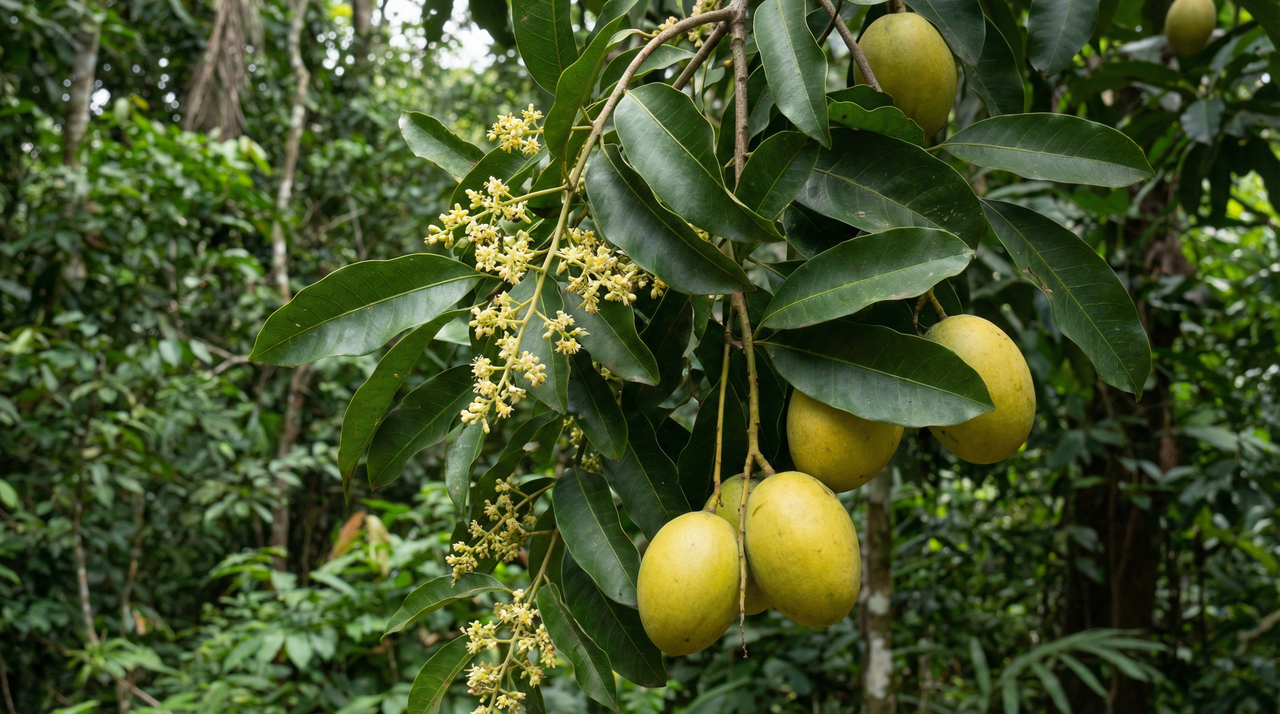
The seeds are the whole point, and almost nobody in the West knows that. When African mango shows up in health supplement aisles, it's always framed as a weight-loss miracle, which is both an oversimplification and a distraction from what this tree actually is. Irvingia gabonensis has been feeding and healing communities across West and Central Africa for centuries,[1] not because someone discovered a bioactive compound in a lab, but because people learned through generations of use that the kernel inside that fruit, once dried and ground, thickens soups in a way nothing else quite replicates. That preparation knowledge is sophisticated. It's also the first thing stripped away the moment the plant gets repackaged into a capsule.
I keep coming back to that gap between what this tree means in its home range and how it gets sold everywhere else. In the forest, it's a canopy giant, slow and long-lived, anchoring ecosystems and livelihoods simultaneously. Outside Africa, it's mostly a supplement ingredient or an obscure curiosity in specialty nursery catalogs, if it appears at all. What I want to do here is close that gap a little, because growers in the humid tropics are sitting on one of the most ecologically and culinarily interesting trees available to them, and they mostly don't know it yet.
African Mango Origin, History, and Botany
If you spend enough time studying plants that anchor whole ecosystems, you develop a feel for what I'd call legacy trees -- the ones communities have organized their food systems, medicine cabinets, and cultural calendars around for generations. African mango, known botanically as Irvingia gabonensis, is exactly that kind of tree.[2][3] It's not a mango in any botanical sense, despite the name -- it's a forest giant with its own lineage, its own ecological logic, and a relationship with West and Central African peoples that has no parallel in the plants most of us work with.
Botanical Background and Native Habitat
Irvingia gabonensis is a perennial evergreen tree native to the tropical rainforests stretching from Senegal down through Angola and east to Uganda, inhabiting lowland evergreen forests, semi-deciduous forests, and secondary regrowth from sea level up to about 1,000 meters elevation.[4][5] What strikes me most about this tree isn't just its range -- it's its longevity. African mango is polycarpic, meaning it flowers and fruits repeatedly across its lifespan, and that lifespan can exceed 100 years under good conditions.[6][7] You're not planting an annual crop or a short-lived shrub. You're committing to a multi-generational relationship with the landscape.
A related species, Irvingia wombolu, is often lumped with African mango under the "wild mango" label, and the confusion is understandable -- they're closely related and share many traits.[8] The key differences are worth knowing: I. wombolu can be deciduous during the dry season, it's dioecious (separate male and female plants), and its estimated lifespan runs somewhat shorter at 30 to 100-plus years.[8] Both species face real conservation pressure from deforestation, overharvesting for their edible seeds and timber, and slow natural regeneration. The IUCN assessed I. gabonensis as Least Concern overall in 2019, but flagged the need to monitor trade closely -- and in certain regional assessments, populations are considered vulnerable.[9][10] "Least Concern globally" and "thriving" are not the same thing, and I think that distinction matters whenever we're talking about sourcing or cultivating these trees.
Visual Characteristics of the African Mango Tree
This is a genuinely imposing tree. At maturity, African mango typically reaches 15 to 40 meters, with occasional specimens reported near 50 meters, and a straight cylindrical trunk measuring 1 to 2 meters across at the base, buttressed by prominent flanges up to 3 meters high.[11][12] Having designed around large tropical trees like kapok and breadfruit, I know how much structural presence buttressed roots add to a space -- visually and ecologically. The crown spreads 15 to 25 meters wide, dense and rounded, with dark brown to blackish-gray bark that's rough, scaly, and fissured over reddish inner wood.
Leaves are simple, alternately arranged, leathery and glossy, elliptical to obovate, running 5 to 15 centimeters long with a prominent midrib and 10 to 15 pairs of secondary veins.[11][13] Flowers are small, white to cream, bisexual, and clustered in axillary or terminal panicles. The fruits themselves are ovoid to oblong drupes, 4 to 10 centimeters long, maturing from green through yellow-orange or reddish-brown, with juicy sweet-sour pulp surrounding one or two large almond-shaped seeds.[14][5] Those seeds, called dika nuts or ogbono, are where most of the ecological and economic action happens.
Trees from more humid southern zones show noticeably larger leaves and fruits compared to those in drier northern areas -- a pattern I've seen repeatedly across tropical species where soil moisture drives overall vigor.[15] Provenance matters. Irvingia wombolu, for contrast, runs somewhat smaller at 15 to 30 meters, has more pubescent leaves especially when young, and produces larger, sweeter-fleshed fruits with seeds that have higher oil yield but a more bitter taste.[16][17]
Traditional and Cultural Uses Across West and Central Africa
African mango received its formal botanical description in 1863, but indigenous communities across more than 20 ethnic groups in West and Central Africa had been cultivating knowledge of this tree for centuries before any European botanist came near it.[18] Wild harvesting was the norm until cultivation began trickling in during the late 19th and early 20th centuries. The knowledge systems that developed around this tree are sophisticated and deeply practical.
In the kitchen, the seeds are roasted, dried, and ground into a powder -- called dika, ogbono, or aporo depending on region -- that thickens soups and stews with a characteristic viscosity you can't replicate with anything else.[14][19] Nigerian ogbono soup is perhaps the most widely known application internationally. The fruit pulp is eaten fresh or fermented into beverages, and the kernels, containing up to 70% oil, have long served as a butter substitute and soap-making ingredient.[20] Bark, leaves, and roots prepared as decoctions or pastes have been used traditionally for diarrhea, dysentery, fever, diabetes, skin conditions, and wounds.[21]
The cultural dimensions run just as deep. In Igbo communities, fermented seed paste carries ritual significance around prosperity. Burial rites in Cameroon incorporate the tree, and harvest festivals reinforce community bonds across generations.[22] Women have historically led both the harvesting and the trade in these seeds -- much like women-led cooperatives I've studied in other agroforestry traditions, where the economic power that flows from an underutilized native tree often concentrates in communities that have tended it longest. Sustainable agroforestry programs in Cameroon and Nigeria are now trying to formalize this relationship as commercial demand, particularly from the international supplement market, puts increasing pressure on wild stocks.[23]
Fun Facts, Yields, and Conservation Status
Mature African mango trees can produce 100 to 500 kilograms of fruit per season, yielding 20 to 50 kilograms of kernels, though those numbers depend heavily on age, rainfall, and management.[24][25] Fruiting typically begins 5 to 7 years after planting, peaks around years 15 to 20, and the rainy-season harvest window generally runs May through September.[26] Designing multi-generational food forests has taught me to respect slow-maturing trees on their own terms -- a 50 to 100 year lifespan means you're creating something that will outlast your involvement in it, and that's actually a feature, not a limitation.
The Nganda harvest festivals in Cameroon, bringing together Baka and Bantu communities, show how deeply this tree is woven into the social fabric.[27] Irvingia wombolu adds a useful footnote here: its fruits are larger and sweeter, its range more restricted, and yet both species get grouped under "wild mango" in ways that create real confusion in markets and research alike.[28][29] If you're sourcing seeds or extracts, knowing which species you're actually working with matters -- both horticulturally and ethically, given the conservation pressures on both.
African Mango Varieties and Sourcing
If you're used to browsing nursery catalogs for neatly named cultivars, African mango is going to feel like a different world entirely. There are no 'Honey Gold' selections or trademarked improved strains here. What exists is something rawer and, honestly, more exciting from a permaculture perspective: a species still in the early stages of domestication, with most available material sitting somewhere between wild-collected and semi-selected landrace.
Botanical Varieties and Landraces of Irvingia gabonensis
Botanically, Irvingia gabonensis splits into two recognized varieties. Var. gabonensis has oblong leaves and bitter-tasting fruit, while var. laurifolia has elliptic leaves and sweeter fruit.[30][31] Think of it like the difference between a wild bitter orange and a navel: same species, meaningfully different eating experience. For fruit-forward food forest designs, var. laurifolia is the obvious target, though the kernel quality in bitter-fruited forms can still be excellent for culinary use.
Beyond those two varieties, the genetic picture gets wonderfully complicated. Over 20 recognized landraces exist across the native range, with distinct sweet-kerneled and bitter-kerneled forms showing up within and across populations.[32][33] There are no widely recognized commercial cultivars; the species is still primarily wild or semi-wild, with local selections rather than anything resembling formal variety registration.[34] ICRAF, IITA, and national research programs are actively working to change that, with breeding efforts targeting fruit size, kernel yield, oil content, and pest resistance,[34][35] and germplasm collections at IITA and ICRAF now hold hundreds of accessions.[34] For growers used to evaluating unnamed landrace seedlings in a guild context, this is genuinely good news: high genetic diversity means real opportunity to identify standout individuals over time.
Irvingia wombolu, the bush mango or ogbono tree, is worth distinguishing here. It shares the kernel-thickening role in soups but is harvested almost entirely from wild populations,[36] with kernels yielding 40-60% oil content.[37] Its drought tolerance makes it an interesting candidate for drier tropical sites, and its Vulnerable conservation status means sourcing decisions carry real ethical weight.
Sourcing African Mango Seeds, Seedlings, and Regulatory Considerations
Finding Irvingia gabonensis in the United States takes some patience. Mainstream nurseries don't carry it, and mature trees are exceptionally rare in the trade.[38] Specialty tropical seed vendors and ethnobotanical suppliers are your best bet, though stock is seasonal and can disappear quickly.[39] Seeds typically run $5-15 per pack of 5-10, with seedlings in the $20-50 range; I. wombolu material commands more, often $10-25 for seed and $30-70 or higher for seedlings, reflecting both its scarcity and lower propagation rates. I always cross-check sites like Sheffield's and current specialty nursery listings before assuming anything is actually in stock, because the picture changes fast.
On the regulatory side: every time I source tropical seeds from abroad, my first stop is USDA APHIS, and African mango is no exception. Importing seeds into the United States generally requires a Small Lots of Seed permit or PPQ Form 587, and a phytosanitary certificate from the exporting country is mandatory.[40] Fresh Irvingia fruit is generally prohibited from import due to quarantine pest risks, with limited exceptions for treated and certified material.[40] Neither species appears on CITES appendices, so there's no international trade restriction from that convention,[41][42] but domestic state-level restrictions can still apply. Processed oil or dried kernels face fewer import hurdles but fall under FDA compliance for food products. Get the sourcing right legally and ethically, and you're starting this long relationship with the tree on solid ground.
African Mango Propagation and Planting Guide
Propagating African mango is a lesson in patience and timing from the very first step. Get those two things right and you're well ahead of most growers. Get them wrong, and you can lose an entire batch of seeds before a single seedling emerges.
Seed Propagation: Handling Recalcitrant Seeds and Overcoming Dormancy
The seeds of Irvingia gabonensis are recalcitrant, which in practical terms means they carry 40-60% moisture at maturity and fall apart if you let them dry out.[43][44] Drop them below 20-30% moisture and viability collapses; they won't survive conventional cold or dry seed-bank storage at all.[45] I've sown African mango from fresh seed multiple times, and the pattern is consistent: seeds dried even briefly, even just left on a bench for a few days in low humidity, simply refuse to germinate. You need to sow them within one to two weeks of extraction.[46][47] The related I. wombolu gives you a slightly longer window of one to three months under cool, moist storage, but I wouldn't push it.
Beyond freshness, the hard seed coat imposes physical dormancy that needs to be broken before germination can happen.[48] Options include mechanical scarification or nicking the coat, a hot-water soak at 80-100°C for five to ten minutes, a concentrated sulfuric acid bath for one to two hours, or a gibberellic acid treatment.[49] I've had good results with the hot-water soak and nicking combined; the acid route works well too but demands careful handling. With fresh seeds and proper pre-treatment, germination at 25-30°C in moist, well-drained media runs 60-80% and typically takes two to four weeks.[47][46]
In the wild, rodents and insects destroy up to 70% of seeds before they can germinate.[50] Natural regeneration is genuinely slow, which is part of why wild populations have been so vulnerable to overharvesting. In the nursery, you don't face that pressure, but it does explain why seed propagation alone hasn't kept pace with demand.
Vegetative Methods: Grafting, Cuttings, and Tissue Culture for True-to-Type Trees
Growing the African mango tree from seed presents a fundamental challenge: the species is monoembryonic and highly outcrossing, so seedlings inherit a genetic lottery ticket rather than the traits of the parent tree.[51][52] If you've selected for large kernels, sweet pulp, or high yield, a seedling won't reliably deliver any of that.[53] For a backyard food forest where variety is fine, seedlings are acceptable. For anyone serious about consistent yield or specific quality traits, grafting is the only sensible path.
Grafting (cleft, whip-and-tongue, veneer, or budding) succeeds at 40-80% under favorable conditions, with the best results coming during the rainy season when ambient humidity stays high and the rootstock is actively growing.[54][47] I consistently land toward the higher end of that range by timing grafts to coincide with the first reliable rains rather than attempting them mid-dry-season when everything is stressed. Semi-hardwood or hardwood cuttings are possible, though success is more variable at 20-60%; they benefit from IBA at 3,000-10,000 ppm under mist or high-humidity enclosures with bottom heat at 25-30°C.[15][55] Air-layering is worth trying under humid conditions and produces rooted plants in two to three months, though it's still more of a hobbyist technique than a commercial one.[47] Tissue culture from nodal explants on MS medium with BAP and NAA has been documented but remains experimental rather than commercially available.[56]
Soil, Site Selection, and Planting Technique
African mango naturally grows in lowland tropical rainforest soils, and it shows what it wants clearly: fertile, well-drained loamy or sandy-loam soil with organic matter ideally around 3-5%, slightly acidic to neutral pH of 5.5-7.0, though it tolerates a range of 5.0-7.5.[5][46][57] Waterlogging is a genuine threat. This tree develops a deep taproot and thrives on the constant supply of organic matter that comes with a living forest floor; ferralsols and lateritic soils rich in humus are its native ground.[58][59] In heavier soils that hold water after rain, raised beds or planting mounds are worth the extra preparation work.
I always test soil pH before planting tropical trees, and this species is a good reason why. Outside the optimal pH window, iron and manganese deficiencies show up as leaf chlorosis and stunted growth that can set a young tree back by a full season or more.[60][61] Sulfur amendments correct alkaline soils; strongly acidic sites need lime before planting. Sort these issues out before the tree goes in the ground, not two years later when you're puzzling over yellowing leaves.
Spacing, Timing, and Establishment
The african mango tree reaches 15-40 meters tall with a canopy spread of 10-25 meters at maturity.[62][25] Orchard spacing of 8-12 meters (commonly 10 meters) gives 70-125 trees per hectare, which allows canopy development and airflow as the trees grow toward one another over decades. In agroforestry systems, 8-10 meters works well with understory companions like cocoa or bananas filling the space in the early years.
Plant at the onset of the rainy season so the root system can establish before the first dry period arrives.[47][46] Nursery seedlings need 6-12 months under 50% shade until they reach 30-50 cm, then gradual hardening before they go out. One thing I've learned the hard way with young tropical trees: label your nursery pots carefully. African mango seedlings look remarkably similar to other tropical species in the first year, and a mixed-up tray can waste months.
Germination Timeline and Juvenile Phase
Fresh, treated seeds germinate within 10-30 days under warm, moist conditions, which is the encouraging part. What follows requires a longer view. Seedling-grown trees spend their first decade building structure rather than producing fruit, with first fruiting typically taking 10-15 years.[5][63] Grafted trees compress that wait to 3-5 years, which is the practical argument for vegetative propagation that connects every decision made earlier in the propagation process. In my experience watching young seedling-grown trees alongside grafted ones, the difference in early performance is striking: grafted material puts energy into canopy rather than purely into root and trunk establishment. That juvenile phase is a genuine decade-long commitment, but a well-sited African mango tree is also a centuries-long investment in your food system once it gets there.
African Mango Care Guide
Growing african mango well starts with an honest conversation about where it can actually thrive. This is a tree shaped entirely by the tropical rainforests of West and Central Africa, and it carries that origin in every growth response. Get the fundamentals right and it rewards you with decades of production. Push it into conditions it wasn't built for and it'll spend those decades just trying to survive.
Climate Requirements and Frost Tolerance
Irvingia gabonensis has never experienced a frost in its evolutionary history, and it shows. The tree is reliably suited to USDA zones 10b-12, with survival failing below roughly 10°C (50°F).[64][65] The most vulnerable tissues are the tender ones: new leaves, developing shoots, and flower buds show water-soaked lesions that darken to bronze or black, with wilting and bark splitting following close behind in serious events.[66] In my experience working with zone 10 clients in Florida, even a single night brushing that 10°C threshold can set a young tree back by weeks. I always recommend siting near thermal mass, a wall or a body of water, and keeping row cover or a greenhouse option available for that first few winters. Outside the native range, windbreaks are non-negotiable for any planting in a marginal spot.[67]
Heat Tolerance and Temperature Preferences
The sweet spot for active growth and fruit set sits between 24-30°C (75-86°F), with a workable range of 18-35°C.[64] Push consistently above 35°C and you start seeing the same kind of stress you'd expect from any rainforest tree put under desert conditions: leaf margin scorch, wilting, premature flower drop, and fruit sunscald.[68] Seedlings are especially sensitive, with growth inhibiting below 20°C and heat damage accelerating above 35°C. Where summers run hot and dry, heavy mulching, supplemental irrigation, and temporary afternoon shade during the first couple of years make a real difference.
Watering Needs and Drought Tolerance
Native to environments receiving 1,500-3,000 mm of annual rainfall, african mango needs consistent moisture but absolutely cannot tolerate waterlogged roots, where Phytophthora root rot becomes a fast-moving threat.[25] Young trees need water once or twice a week during dry periods, keeping soil at roughly 60-80% field capacity without saturation.[69] Once established, the deep taproot earns its keep; I've seen three-year-old trees handle a six-week dry spell with minimal intervention. Mature trees do best with deep, infrequent irrigation every 7-14 days, with extra support during flowering and fruit set when stress causes drop.[70] This mirrors how I approach avocado irrigation in my projects: encouraging roots to chase depth rather than loitering at the surface. A 2-4 inch mulch layer tied around the base does more work per hour than almost any other single maintenance task, conserving moisture and moderating soil temperature simultaneously.
Sunlight Requirements
Young trees start life in the forest understory, and that heritage means seedlings genuinely benefit from dappled or partial shade during establishment, with up to 50% shade cloth appropriate in the first year or two.[5] Gradually reducing that shade over time, the way I do with citrus transplants in new food forest designs, builds hardened structure rather than leggy, etiolated growth. Mature fruiting trees want at least 6-8 hours of direct sun daily; below that threshold you'll see chlorosis, reduced fruiting, and the kind of slow decline that's easy to misread as a nutrient problem.[71] Position adult trees where they won't be shaded out by competing canopy as the food forest matures.
Soil and Feeding Requirements
African mango prefers well-drained loamy or sandy loam soils rich in organic matter, with a pH between 5.5 and 7.0.[72] It's a moderate feeder, relying on nitrogen for vegetative growth, phosphorus for root development and fruit yield (phosphorus applications can improve seed yield by 20-30% in depleted soils), and potassium for overall vigor.[46] Soil testing before you start any fertilizer program isn't optional here; micronutrient imbalances, particularly iron, zinc, and boron, are common in tropical soils and won't be fixed by broadcasting more NPK.[73]
Young trees respond well to 200-300g of a balanced NPK formula split into two or three applications during the rainy season, starting in year two.[74] Mature trees need 1-2 kg annually. What I've consistently observed across my projects is that trees receiving 5-10 kg of compost or manure alongside reduced synthetics show noticeably better resilience during short dry spells than those on a synthetic-only program; integrated management can reduce synthetic fertilizer needs by 20-30% and push yields up to 30% higher.[75] Deficiency symptoms give you clear feedback: yellowing older leaves signal nitrogen shortage, purplish-red foliage with stunted roots points to phosphorus, and marginal necrosis with weak stems means potassium is running low.
Pruning and Maintenance
Pruning timing is straightforward: dry season only, generally December through March, when removing wood carries the lowest disease risk and the tree isn't in active flush.[76] Keep cuts light, targeting dead, diseased, or crossing branches with no more than 10-20% canopy removal at a time. Studies on related Irvingia species show that this level of thinning improves air circulation and light penetration enough to boost yields by 20-30%.[77] One mistake I see fairly often is applying the same aggressive open-center shaping you'd use on a stone fruit to these slow-growing trees. The stress response is disproportionate, and the tree spends the next two seasons recovering rather than fruiting. For young trees in the first three to five years, focus on selecting three to five well-spaced scaffold branches about 1-1.5 meters up to build an open vase structure, then largely leave them alone.[78] Always cut just outside the branch collar, and follow every pruning session with refreshed mulch at the base.
Seasonal Growth Rhythm
Understanding how african mango moves through the year transforms care from a fixed schedule into something more responsive. Active growth runs with the rainy season, roughly May through October in West Africa, with flowering appearing at the onset of rains between February and May.[79] The dry months bring partial dormancy and sometimes minor leaf shedding, though the tree stays largely evergreen, quite different from Irvingia wombolu, which drops its leaves more decisively in the dry season as a water conservation strategy.[80]
In non-native settings like subtropical Florida, these cues still show up, just compressed and sometimes shifted by a few weeks. I watch for the first new leaf flush as a signal to increase irrigation and hold off on any pruning. During flowering and early fruit development, bumping supplemental water to 20-30 liters per tree weekly keeps stress-induced drop at bay without tipping into overwatering territory that courts fungal problems.[25] Drought tolerance strengthens noticeably after two to three years as the taproot establishes depth. Once you've watched a tree through a full seasonal cycle, you'll find care becomes intuitive rather than prescriptive.
Harvesting African Mango (Irvingia gabonensis)
African mango is not a tree that rewards impatience. Seedlings typically take 5-10 years to bear their first fruit, while grafted trees shorten that wait to 3-5 years, and air-layered or budded plants can fruit in as little as 2-4 years.[81][82] I've grown grafted tropical trees in subtropical Florida conditions, and even then the timeline often stretches toward 7-8 years once you factor in humidity deficits and cooler winters. Anyone planting this tree should go in with clear eyes about that commitment.
Timing and Ripeness Cues
Flowering happens at the onset of the dry season, and fruits take roughly 120-150 days to mature into the following rainy season.[83] In Nigeria and Cameroon that means peak harvest falls between June and September, though lowland trees ripen earlier than those at higher elevations.[84] The visual cues are clear once you know what to watch for: skin shifting from firm green to yellowish-orange or reddish-brown, flesh softening slightly under your thumb, and the first fruits beginning to drop on their own.[85] In my experience, the day you find the first fallen fruit is your cue to start collecting daily. Waiting even a few days longer risks losing ripe fruit to wildlife or spoilage. Unripe fruits are noticeably more acidic and astringent, and harvesting them early also compromises the seeds, which are the real prize.[86] Irvingia wombolu shares nearly identical ripening cues and a similar rainy-season window, so the same watchfulness applies if you're growing both.[87]
Harvest Technique and Post-Harvest Handling
The practical method is straightforward: hand-pick fruits showing full color change, collect those that have dropped naturally, or gently shake branches once fruits begin to loosen.[88] Never pull green fruits just to beat wildlife to them; immature seeds yield poor quality ogbono no matter what you do with them downstream.[85] Once harvested, process the seeds promptly. Delay invites spoilage and undermines everything you waited years to produce.[25] One thing I wish I'd understood earlier is that a good harvest actually starts months before picking: thinning to around 20-30 fruits per tree about 4-6 weeks after fruit set produces noticeably larger fruit and protects young branches from snapping under the load.[89] I learned that the hard way watching a loaded branch crack on a three-year-old grafted tree.
Expected Yields and Flavor at Harvest
Mature fruits run 3-8 cm long and carry a pulp that's genuinely pleasant when ripe: sweet-tangy, with tropical notes of pineapple, citrus, and mild mango coming from volatile esters, alcohols, and terpenes like limonene.[90] Fruits from humid-forest trees tend to be milder, while savanna-grown types skew more tart. The seeds, though, are why most growers are really here. Raw kernels are quite bitter straight from the shell, but roasting or sun-drying transforms them completely into something nutty and buttery with earthy depth.[91] I've roasted small batches and been genuinely surprised at how fast that bitterness gives way to the characteristic aroma that makes them so valuable in West African soups. Irvingia wombolu kernels follow the same processing logic but carry a slightly more acidic pulp and subtle almond undertones in the seed's aroma.[92] In well-managed orchards, expect around 10-20 kg per tree once you're 5-7 years into production.[85] Outside the humid tropics, including subtropical spots like Florida, even that timeline stretches and yields stay modest unless your site closely mimics the conditions this tree evolved in.[93]
African Mango Culinary Uses and Preparation Guide
Culinary Uses and Flavor Profile
The easiest entry point into african mango is the fresh fruit pulp, which has a sweet-sour, tangy character that's quite different from the lush tropical sweetness of a Keitt or Ataulfo mango.[13][94] I'd describe the flavor as somewhere between a green mango and a tamarind: bright, slightly citrusy, with a mild astringency that keeps things interesting. It's eaten fresh, pressed into african mango juice, stirred into desserts, or fermented into wine and local beverages.[95][96]
The kernels, though, are where this tree truly earns its place at the table. Known as dika, etima, or ogbono depending on the region, processed kernels are ground into a paste or flour that gives West and Central African soups their signature mucilaginous pull.[94][95] If you've worked with okra or chia gel, you have a rough idea of the texture: rich, slightly slippery, deeply satisfying. The kernels can also be roasted as snacks, or cold-pressed into a stable cooking oil at yields of 45-70%.[97][98] Irvingia wombolu produces a similar seed with comparable mucilaginous character, requiring the same basic processing approach to neutralize its tannins and saponins before it's safe to use.[99][100]
Nutritional Profile and Processing for Safety
The kernels' dense macronutrient profile is a big part of why the same african mango seed powder used in ogbono soup also underpins satiety research.[101][99] The fruit pulp has a completely different character: mostly water (70-80%), low in fat, and rich in vitamins A and C, potassium, calcium, and polyphenols.[102][103]
Raw kernels are not safe to eat. They contain phytic acid, tannins, oxalates, and trypsin inhibitors at levels that cause digestive distress and impair mineral absorption.[99][104] Traditional processing involves sun-drying for 3-7 days followed by boiling for 20-30 minutes or roasting at 100-150°C for 15-30 minutes, which reduces phytic acid by 52-68% and tannins by 64-82%.[99][104] That transformation is remarkable: bitter, astringent seeds become creamy, nutty, and aromatic, developing peanut-butter-like richness and smoky, woody pyrazine notes that make ogbono soup instantly recognizable.[105][106] Don't skip the full boil or roasting time. The flavor difference alone is worth it.
Medicinal Preparations and Traditional Applications
Traditional medicine across West and Central Africa draws on nearly every part of this tree. Bark, leaves, and roots are prepared as decoctions, infusions, or poultices for diarrhea, dysentery, malaria, fever, hypertension, wounds, and infection.[107][108] The seeds and their extracts cover a separate cluster of uses: weight management, blood sugar support, and general tonic applications, which aligns with where the modern clinical literature has focused its attention.[109] Those clinical outcomes (weight, lipids, glucose) are discussed in depth in the health benefits section; here I just want to note that the irvingia gabonensis kernel butter and seed preparations used in traditional contexts are the same material the supplement trials standardized into capsule form.
In supplement use, the studied dosage range is 150-300 mg of seed extract taken 30 minutes before meals, up to 3 g daily total, with traditional decoctions typically prepared at 250-500 ml of bark or leaf material or 500 mg-1 g of seed powder twice daily.[110][111] These numbers come from trials rather than long-standing consensus, so treat them as reference points, not prescriptions. Consult a qualified practitioner, especially if you're managing blood sugar, cholesterol, or blood pressure with medications.
Safety, Dosage, and Sustainability Considerations
Properly processed seeds carry no major toxicity concerns, though clinical trials have noted mild side effects like headache, flatulence, and dry mouth.[112][113] The research on african mango during pregnancy and breastfeeding is simply too limited for me to feel comfortable recommending it, and the potential for interaction with antidiabetic, cholesterol-lowering, or blood pressure medications is real enough to warrant a conversation with a doctor first.[114][115]
One thing that often gets overlooked in the supplement conversation is where this material actually comes from. Wild collection pressures have intensified dramatically alongside the global popularity of african mango powder and irvingia gabonensis kernel butter in the wellness market, and overharvesting combined with habitat loss now creates genuine sustainability concerns for wild populations.[116][117] If you're sourcing kernels or seed powder commercially, look for certified agroforestry products. And if you're growing your own tree, you're already participating in the solution: this species anchors food forests, improves soil, supports biodiversity, and supplies timber for construction and carving, all while producing food that has sustained communities for centuries.[118] That long arc of value is the whole point.
African Mango Health Benefits and Medicinal Uses
African mango has been carrying a heavy therapeutic load across West and Central Africa for a very long time. Long before any clinical trial was designed around it, communities throughout the region had developed a remarkably nuanced pharmacopoeia centered on Irvingia gabonensis, using different parts of the tree for different complaints with an efficiency that, in hindsight, reflects a deep working knowledge of its chemistry.
Traditional Medicinal Uses Across West and Central Africa
The breadth of traditional applications is genuinely striking. Bark and root decoctions address digestive problems including diarrhea, dysentery, and abdominal pain, while bark and leaf preparations turn up repeatedly for fever and malaria symptoms.[119][120] Skin disorders, from wounds and burns to fungal infections and scabies, have traditionally been treated with leaf powders and bark poultices. Leaf infusions are used for respiratory complaints including coughs, asthma, and bronchitis. Boiled bark appears for joint pain and rheumatism. Women have long used leaf decoctions to stimulate labor, support lactation, and ease delivery, while roots are sometimes taken to prevent miscarriage.[121][122] Bark or seed preparations address urogenital infections, and bark teas are consumed periodically as a general immune tonic. What I find worth appreciating here is that traditional healers were consistently selecting the right plant part for the right task, which, as we'll see in the phytochemicals section, makes chemical sense: the leaves, bark, and seeds carry genuinely distinct bioactive profiles. The related Irvingia wombolu (African wild mango) shows a near-identical pattern of traditional use across Nigeria, Cameroon, and Gabon, suggesting the entire genus has been recognized as therapeutically significant across generations of indigenous knowledge.[123]
Modern Research on Weight Management, Blood Sugar, and Lipids
The clinical picture for African mango seed extract is most developed around metabolic health. Randomized trials have shown that supplementation with seed powder extract reduces body weight, BMI, waist circumference, and serum lipids in overweight and obese adults.[124][125][126] Blood glucose control is another consistent finding: a pilot trial in type-2 diabetic patients showed seed powder supplementation reduces HbA1c and fasting glucose, with some studies reporting fasting glucose reductions of 10-20% over 10 weeks at 150 mg extract three times daily.[127][128] Leaf extracts also show antihyperglycemic properties in preclinical work, supporting the traditional use of this plant for diabetes management.[127] Antimicrobial activity has been demonstrated against both gram-positive and gram-negative bacteria including Staphylococcus aureus and E. coli, as well as Candida albicans, in laboratory settings.[129] Anti-inflammatory and antioxidant properties have been confirmed in preclinical models as well.[130][131] Most human trials have been small pilots of short duration, and long-term safety data are still limited. The metabolic findings are genuinely promising, but they're preliminary. Anyone drawing firm therapeutic conclusions from the existing literature is getting ahead of the data.
Key Phytochemicals and Their Activities
Different parts of this tree each contribute their own chemical character. The seeds are dense with lipids and proteins, the leaves carry flavonoids and phenolics, the bark is heavy with alkaloids and tannins, and the fruit pulp delivers vitamins and carotenoids.[30][132] The phenolics, particularly gallic acid, protocatechuic acid, and quercetin derivatives, deliver measurable antioxidant and radical-scavenging capacity.[133][134] Ellagic acid and other polyphenolics are thought to mediate the insulin-mimetic effects researchers have observed in metabolic studies. The seed lectins (IgP and IgD) appear to play a specific role in reducing LDL cholesterol, triglycerides, and adipocyte differentiation, while tirucallane triterpenes (Gabonensol A and B) contribute antimicrobial effects against bacterial pathogens.[133][135] Saponins round out the lipid-lowering and antimicrobial chemistry. One thing I've noticed from a grower's perspective: seeds harvested toward the end of the dry season consistently taste more pungent and astringent to me, which aligns with the research showing phenolic content increases during dry periods and flavonoid levels shift with soil nutrition.[136][137] Growing conditions genuinely influence medicinal quality here. Irvingia wombolu adds complementary breadth through ellagitannins, anthocyanins, and proanthocyanidins in its fruit pulp and bark,[138] confirming that phytochemical generosity is a genus-wide trait rather than a species-specific anomaly.
Nutritional Profile of Seeds and Fruit Pulp
The seeds are extraordinarily calorie-dense, clocking in at roughly 642-717 kcal per 100g.[139] Fat makes up 57-76% of that, dominated by myristic and stearic acids, with protein coming in at around 24.5% in raw seeds and dietary fiber at 8-25%.[140][141] Think of ogbono's thick, gelatinous texture in soup, similar to chia or ground flaxseed stirred into liquid, and you start to understand why this high-fiber, mucilaginous seed flour has been a staple thickener for centuries. Mineral content per 100g of seed is substantial: potassium at 650mg, phosphorus at 210mg, magnesium at 120mg, calcium at 81-130mg, zinc at 4.2mg, and iron at 2.8-6.5mg.[142] The fruit pulp offers a lighter profile: Vitamin C at 20-50mg per 100g, modest beta-carotene, some B vitamins, and lower mineral concentrations than the seeds.[143] Processing matters enormously here. I've made the mistake of trying to use raw, unprocessed seeds in a recipe: the tannins make everything unpalatably bitter and the texture is wrong. Roasting at 140°C for 20 minutes boosts protein digestibility from 62% to 85%, and boiling for 30 minutes cuts soluble tannins by 40%, meaningfully improving mineral absorption.[144][145] When I roast seeds properly before grinding them into a soup base, that astringent edge drops away and the nutty character comes forward. These same seeds carry ellagic acid, catechins, quercetin, and kaempferol, with measurable antioxidant activity (DPPH IC50 around 50-100 µg/mL),[146] the same compounds that underpin the metabolic research discussed earlier.
Safety Profile, Side Effects, and Practical Guidance
Used in traditional culinary amounts, African mango is generally safe. Animal studies show low acute toxicity with an LD50 greater than 5000 mg/kg in rats, and no severe poisoning cases or fatalities in humans have been documented.[147][148] At supplemental doses, some people experience mild GI side effects: flatulence, loose stools, headache, dry mouth, or minor sleep disturbance.[149] Doses above 3g per day increase the likelihood of GI discomfort, while clinical studies have used 150mg to 1050mg of extract daily for up to 10 weeks without serious adverse events.[149][150]
Antinutritional factors, tannins, phytate, and phenolics, are present in raw seeds but are significantly reduced by roasting or boiling, which is exactly what traditional processing already does.[145] Mature seeds contain negligible cyanogenic glycosides (unripe fruits are a different story and should not be eaten raw),[12] and D-mannitol in the pulp is harmless at normal serving sizes.
On contraindications, I'll be direct: because seed extracts can meaningfully lower fasting glucose, I always advise anyone on diabetes medication to consult their healthcare provider before using African mango supplements. Co-administration with antidiabetic drugs can potentiate blood-glucose lowering and raise hypoglycemia risk.[151][148] That's not boilerplate language; the clinical data on potentiation is clear. Pregnancy and lactation are also contraindications, not out of known harm but from an absence of safety data and the plant's demonstrated hypoglycemic activity.[152][150] Cholesterol-lowering drugs may also interact.[153]
One practical confusion worth clearing up: the word "wenge" is sometimes applied to this tree, but the wenge wood sold in lumber yards comes from Millettia laurentii, an entirely unrelated species whose sawdust is a known skin and respiratory irritant. Cross-reactivity with true mangoes (Anacardiaceae) is possible but rare.[154] Irvingia wombolu mirrors the safety profile of I. gabonensis closely, though its notably more bitter raw taste reinforces the same processing imperative: roast or boil before eating.[17] In my experience working with functional seeds, proper roasting makes all the difference, both for flavor and for safety.
Pests and Diseases of African Mango (Irvingia gabonensis)
African mango is no pushover in the landscape, but I wouldn't call it pest-proof either. Irvingia gabonensis sits somewhere in the middle: moderate overall disease resistance that shifts considerably depending on cultivar, site conditions, and how well you've managed the basics.[155][156] Viral and bacterial problems are relatively rare in the literature; it's the fungal diseases and insects that growers need to actually plan for.
Common Diseases and Environmental Triggers
The fungal cast of characters includes anthracnose (Colletotrichum spp.) hitting leaves, fruits, and stems; root and collar rot (Phytophthora spp.) in waterlogged spots; leaf spots from Cercospora and Alternaria; and powdery mildew that chips away at photosynthesis over time.[155][157] Anyone who's battled anthracnose on citrus or conventional mango will recognize the pattern: poor airflow plus humidity is the setup, and the fungus does the rest. In tropical food forests I've observed, simply opening up the canopy through light pruning and widening spacing reduced disease incidence noticeably, no sprays required.
The common thread across almost every fungal threat here is waterlogging.[158] Well-drained soil isn't just a preference for this tree; it's the single biggest disease-prevention lever you have. Disease incidence tends to be higher in West Africa than East Africa, and breeding programs in Cameroon and Nigeria are working on improved varieties, but no commercially standardized resistant cultivars of I. gabonensis or its close relative Irvingia wombolu are yet available.[159][160] For now, site selection is doing work that genetics can't yet do for us.
Major Insect Pests and Other Threats
The insect complex on African mango is genuinely broad: termites (Macrotermes spp.), wood borers, bark beetles, stem borers (Hypsipyla robusta and Analeptes spp.), fruit flies (Bactrocera spp., Ceratitis cosyra), seed weevils, aphids, scale insects, leaf-eating caterpillars, and root nematodes have all been documented across West and Central African plantings.[161][162] The headline number that always stops people: fruit flies and seed weevils alone can destroy 30 to 50 percent of the crop in unmanaged orchards of both I. gabonensis and I. wombolu.[162][163] From what I've seen in well-managed plantings, timely harvesting combined with pheromone traps cuts those losses dramatically. Young trees are the most vulnerable overall, and pest pressure peaks during fruiting season when warm rain and high humidity coincide.[164] Rodents and primates will browse seedlings and raid fruit as well, so physical protection matters in the early years.[165] Diverse polyculture plantings with healthy soil food webs suppress some of this pressure naturally, which is one more reason monoculture orchards tend to struggle more than integrated food forest designs.
Natural Defenses and Integrated Management Strategies
Here's the part I find genuinely exciting: African mango's leaves contain phenolic compounds at five to fifteen percent of dry weight, alongside tannins, flavonoids, and alkaloids that function as the tree's own chemical defense system.[130][166] Leaf extracts have shown 60 to 80 percent reduction in feeding by Spodoptera spp. in bioassays, and the same bitter, tannin-rich quality that deters caterpillars is part of what traditional healers have valued for centuries.[167] The plant is already doing some of the work; our job is to support it.
In practice, I prioritize sanitation, pruning for airflow, and neem-based sprays for aphids and soft-bodied insects long before I reach for copper or mancozeb fungicides.[168][169] Pheromone traps for fruit flies are practical and effective. Prevention through drainage and airflow beats rescue chemistry every time, a lesson I learned from early tropical plantings that should have had better site prep. Pest-resistant cultivars aren't yet commercially available, so IPM is the whole game for now.[170] Research across the genus is still genuinely sparse, much of what we know extrapolates from regional observations and general tropical agroforestry data rather than large controlled trials,[171][172] so connecting with local extension services and sourcing from reputable agroforestry programs in West Africa remains genuinely valuable advice, not just a boilerplate disclaimer.
African Mango in Permaculture Design
Ecosystem Functions and Guild Roles
With its massive emergent canopy, Irvingia gabonensis isn't a tree you tuck into a corner.[173][3] It's a statement of ecological intent. In its native West and Central African rainforests, this tree functions as a keystone species, with its fruits consumed and seeds dispersed by primates, birds, bats, rodents, and elephants, supporting genetic diversity and forest regeneration across vast landscapes.[174] That relationship with large frugivores is worth keeping in mind when you're designing a system around this tree: abundance here is meant to be shared.
From a permaculture standpoint, what I find most compelling is how many ecological functions stack into a single planting. African mango is a mid-successional species that colonizes disturbed secondary forests and moves degraded land toward mature forest structure.[174] Its extensive roots hold slopes and riverbanks against erosion and runoff.[175] Its leaf litter returns nitrogen and phosphorus to the soil, and because of high lignin content it breaks down slowly, feeding soil life for months rather than weeks and building genuine long-term fertility rather than a quick flush.[176] The bark, branches, and canopy host epiphytes, lichens, ferns, orchids, nesting birds, and insects.[174] You're not planting a fruit tree so much as installing a small ecosystem.
Pollination is where design thinking really matters. African mango flowers are protogynous hermaphrodites, and some populations show self-incompatibility, meaning you'll want multiple trees for reliable fruit set.[177][178] The primary pollinators are bees including Apis mellifera and Xylocopa species, along with flies and beetles; some flower morphology and pollen production suggests wind pollination may play a supplementary role, though entomophily is the best-supported mechanism.[177][179][180] I always say: if you want fruit from a self-incompatible tree, design for pollinators first. Flowering happens during the dry season, so bee-attracting companions that bloom at the same time aren't just nice to have.
Climate Requirements and Hardiness Zones
I'll be direct here because I've watched gardeners in marginal climates lose time and money on borderline-tropical trees: African mango does not tolerate frost, and it's not subtle about it. Temperatures below 10°C (50°F) cause damage, and even brief dips into the 10-13°C range stress the tree; optimal growth happens between 24-30°C with nighttime minimums ideally staying above 15-18°C.[181][70][182] That puts reliable cultivation squarely in USDA zones 10b through 12, in true humid tropics with annual rainfall of 1,500-2,500 mm, humidity consistently above 70-80%, and no prolonged dry season longer than about three months.[181][70][182][5]
Outside of West and Central Africa, this tree is experimental territory. Trials exist in southern Florida, Kenya, India, Brazil, and parts of Southeast Asia, and protected plantings in zone 10-11 pockets or greenhouses are technically possible, but they face real challenges around climate adaptation, pest pressure, and market infrastructure.[25][183][184] If you're in a 10a microclimate and you're determined, invest in a sheltered south-facing site and treat young trees as you would any tender tropical: mulch the root zone heavily and have frost cloth ready. Once established, the tree gains moderate drought tolerance, but seedlings and juveniles need consistent moisture and humidity to get there.[25][185] The related Irvingia wombolu shares nearly identical zone requirements (USDA 10-12) and temperature optima of 24-32°C, though it may have a slightly lower cold threshold and benefits from wind protection as a young tree.[17][186] The two species are essentially interchangeable from a site-suitability standpoint; the decision between them comes down to whether your priority is fruit pulp or the bitter kernels used for ogbono and odika paste.
Forest Layer and Companion Planting
In a food forest design, African mango belongs in the canopy or emergent layer, often growing above the main canopy in its native range, and in secondary forests it can form near-monocultures due to its competitive vertical growth after disturbance.[187][188] That dominance tendency is both the challenge and the opportunity in a designed system. You're essentially working with a tree that wants to be the boss, so give it that role deliberately and stack your guild beneath it accordingly.
The species tolerates up to 50% canopy cover in its juvenile phase, which tells you something useful: it can establish alongside or under taller pioneer trees and will eventually overtop them.[189][190] Cocoa is the classic understory companion and the pairing makes ecological sense: African mango delivers the dappled, shifting light that cocoa prefers, and its slowly decomposing leaf litter builds humus year over year beneath the canopy rather than releasing nutrients in a single wet-season flush.[25][191] Bananas, yams, and shade-tolerant vegetables round out a productive guild beneath it.[25]
Two soil dynamics are worth planning around. African mango likely forms nitrogen-fixing symbioses with soil bacteria such as Bradyrhizobia, which improves baseline fertility for the whole guild.[25] However, its leaf litter shows allelopathic effects that can suppress herbaceous understory plants and seedling diversity, particularly near the drip line.[32] In my experience with similar dominant rainforest species, this suppression is usually strongest in the first few years of litter accumulation and most intense at the drip line; mulching with additional organic material and choosing established, woody companions rather than delicate seedlings in that zone tends to soften the effect considerably. The closely related I. wombolu occupies the same emergent canopy layer and shares compatible companions, while its mycorrhizal associations improve phosphorus uptake for the surrounding guild in ways that complement rather than duplicate what I. gabonensis contributes.[192][193] If your land and climate can support either species, designing with both gives you a more complete nutrient picture and two different kernel products from the same canopy layer.
The Tree That Made Me Rethink What "Long-Term Investment" Really Means
I planted my first African mango seedling knowing I might never eat a single fruit from it, and I planted it anyway. That decision said something about how permaculture had changed me, honestly. There's a particular kind of trust involved in putting a tree in the ground for the next gardener, or the next generation, and this one, with its cathedral canopy and centuries of feeding whole communities, feels like exactly the right tree to practice that trust with.
Sources 193
- Irvingia gabonensis and Irvingia wombolu - World Agroforestry ↩
- Irvingia gabonensis ↩
- Irvingia gabonensis ↩
- Irvingia gabonensis (African Mango) ↩
- Irvingia gabonensis - Useful Tropical Plants Database ↩
- USDA PLANTS Database - Irvingia gabonensis ↩
- Irvingia gabonensis: The African Mango Tree - Botanical and Ecological Characteristics ↩
- Bush Mango (Irvingia spp.) ↩
- Irvingia gabonensis ↩
- Irvingia gabonensis ↩
- Irvingia gabonensis ↩
- Irvingia gabonensis (African Mango) ↩
- Irvingia gabonensis (Aubry-Lecomte ex O'Rorke) Baill. ↩
- Irvingia gabonensis ↩
- Morphological Variation and Geographic Distribution of Irvingia gabonensis (Irvingiaceae) in Cameroon ↩
- Irvingia wombolu ↩
- Irvingia wombolu - Useful Tropical Plants Database ↩
- The Genus Irvingia: A Review ↩
- Culinary Uses of Irvingia gabonensis Seeds in West Africa ↩
- Irvingia gabonensis: A Review of Its Nutritional and Phytochemical Properties ↩
- Irvingia gabonensis: A Review of Its Nutritional and Cultural Significance in Africa ↩
- Ethnobotanical Survey of Irvingia gabonensis in Southern Nigeria ↩
- Sustainable Harvesting of Irvingia gabonensis in Central Africa ↩
- Irvingia gabonensis: The African Mango Tree ↩
- Production and Marketing of Irvingia gabonensis in Africa ↩
- African Mango (Irvingia gabonensis): Botany and Uses ↩
- Cultural Significance of Wild Mango in Cameroonian Festivals ↩
- Comparative Ecology of Irvingia gabonensis and I. wombolu ↩
- African wild mango (Irvingia wombolu) ↩
- Irvingia gabonensis (African Mango) | CABI Compendium ↩
- Botanical and Market Aspects of Irvingia gabonensis ↩
- Genetic Diversity and Domestication of Irvingia gabonensis ↩
- Conservation of Forest Genetic Resources for Irvingia spp. ↩
- Domestication and Breeding of Irvingia gabonensis ↩
- Genetic Diversity and Germplasm of Irvingia gabonensis ↩
- Irvingia wombolu Vermoesen: A Review of Its Biology, Ecology and Potential Uses ↩
- Morphological Characterization of Irvingia gabonensis and Irvingia wombolu ↩
- USDA PLANTS Database Search for Irvingia ↩
- Irvingia gabonensis: A review of its botany, uses and potential in agroforestry ↩
- Importing Plants and Plant Products into the United States ↩
- CITES Appendices ↩
- CITES Species Database ↩
- Seed Storage Behaviour: Irvingia gabonensis ↩
- Recalcitrant Seeds of Tropical Tree Species ↩
- Seed storage behaviour of 18 African tree species ↩
- Irvingia gabonensis ↩
- Propagation of Irvingia gabonensis: A Review ↩
- Seed Germination and Dormancy in Irvingia gabonensis ↩
- Propagation Techniques for African Mango (Irvingia gabonensis) ↩
- Frugivory and Seed Dispersal of Wild Mango in West Africa ↩
- Irvingia gabonensis ↩
- Genetic variation in Irvingia gabonensis ↩
- Propagation Techniques for Irvingia Species in West Africa ↩
- Vegetative Propagation of Irvingia gabonensis by Grafting ↩
- Vegetative Propagation Techniques for African Timber Trees ↩
- Micropropagation of Irvingia gabonensis ↩
- Soil Requirements for Irvingia gabonensis - FAO Agroforestry Species Profiles ↩
- Cultivation of Irvingia gabonensis in West Africa - FAO Document ↩
- Ecology and distribution of Irvingia gabonensis ↩
- Irvingia gabonensis - PROTA4U ↩
- Soil pH and Nutrient Management for Irvingia spp ↩
- Irvingia gabonensis: The African Mango Tree ↩
- Propagation and Cultivation of Irvingia gabonensis ↩
- Irvingia gabonensis (African Mango) ↩
- African Mango (Irvingia gabonensis) Plant Profile ↩
- Frost Damage Assessment in Irvingia gabonensis Plantations ↩
- Irvingia wombolu ↩
- Climate Change Impacts on Phenology of Irvingia Species ↩
- Irvingia gabonensis: Cultivation and Utilization ↩
- Horticultural Practices for Bush Mango (Irvingia spp.) Seedlings ↩
- Growth and Shade Tolerance of Irvingia Species in Tropical Africa ↩
- Nutrient Management for Irvingia gabonensis in Agroforestry Systems ↩
- Micronutrient Deficiencies in Tropical Fruit Trees: Case of Irvingia gabonensis ↩
- Fertilizer Recommendations for Irvingia gabonensis ↩
- Response of Irvingia gabonensis to Fertilizer Application: A Case Study in Nigeria ↩
- Propagation and Management of Irvingia gabonensis and Related Species ↩
- Irvingia gabonensis Profile ↩
- Regulation of Growth and Quality of Fruit Trees ↩
- Phenology and reproductive biology of Irvingia gabonensis in Nigeria ↩
- Irvingia wombolu Vermoesen: A Review of Its Taxonomy, Distribution, and Uses ↩
- Irvingia gabonensis (African Mango) ↩
- Propagation and Cultivation of Irvingia gabonensis ↩
- Irvingia gabonensis: A Review of Its Botany and Uses ↩
- Phenology and Fruiting Patterns of Irvingia gabonensis in Cameroon ↩
- Irvingia gabonensis: The African Mango Tree ↩
- Sensory evaluation of African mango (Irvingia gabonensis) fruit pulp at different ripeness stages ↩
- Harvesting and Processing of Irvingia gabonensis ↩
- Cultivation and Harvesting of Irvingia gabonensis ↩
- Propagation and Cultivation of Irvingia gabonensis and Related Species ↩
- Volatile Composition and Sensory Properties of Irvingia gabonensis Fruit ↩
- National Agricultural Research Organization (NARO) Uganda ↩
- Volatile Compounds in African Irvingia Species ↩
- Tropical Fruit Trees for Florida ↩
- Irvingia gabonensis (African Mango): A Review of Its Nutritional and Pharmacological Properties ↩
- Traditional Uses and Nutritional Value of Irvingia gabonensis in West Africa ↩
- Traditional Food Uses of Irvingia gabonensis in Cameroon ↩
- Oil Extraction and Quality from Irvingia gabonensis Kernels ↩
- Food and Agriculture Organization (FAO) - Detroit Plant Database ↩
- Nutritional Composition and Antinutritional Factors of Irvingia gabonensis Seeds ↩
- Functional properties of Ogbono (Irvingia wombolu) seed mucilage and sensory evaluation of Ogbono soup ↩
- Nutritional Composition of Irvingia gabonensis Kernel ↩
- Phytochemical and Nutrient Analysis of Irvingia gabonensis Fruit ↩
- Nutritional Composition of Irvingia gabonensis Seeds ↩
- Processing Effects on Antinutrients in African Mango (Irvingia gabonensis) Kernels ↩
- Sensory Evaluation of Irvingia gabonensis Kernel Paste ↩
- Aroma Compounds in Bush Mango Kernel ↩
- Irvingia gabonensis (Aubrey-Lecomte ex O'Rorke) Baill.: A Review of Its Phytochemistry and Pharmacology ↩
- Ethnopharmacology of Irvingia Species, Nigeria ↩
- Traditional Uses and Pharmacological Properties of Irvingia gabonensis ↩
- African Mango (Irvingia gabonensis) Seed Extract for Obesity ↩
- The effect of Irvingia gabonensis seeds on body weight and blood lipids of obese subjects ↩
- Safety assessment of Irvingia gabonensis seed extract ↩
- Safety assessment of Irvingia gabonensis seed extract in human volunteers ↩
- African Mango (Irvingia gabonensis) Effectiveness, Safety, and Dosing ↩
- Irvingia gabonensis (African Mango) ↩
- Sustainability of Non-Timber Forest Products: Case of Irvingia gabonensis ↩
- Irvingia species in African forests: Taxonomy and uses ↩
- Agroforestry Potential of Irvingia gabonensis in West Africa ↩
- PROTA 2012 – Irvingia gabonensis, Plant Resources of Tropical Africa ↩
- FAO Ethnobotanical Database – Irvingia gabonensis ↩
- PROTA 2012 – Irvingia gabonensis, Plant Resources of Tropical Africa ↩
- Afolayan et al. 2008. Ethnobotanical survey of medicinal plants used in Nigeria ↩
- Phytochemical Screening and Antioxidant Properties of Irvingia wombolu and Irvingia gabonensis ↩
- Effects of Irvingia gabonensis seeds on body weight and metabolic parameters ↩
- Hypolipidemic effects of Irvingia gabonensis ↩
- Irvingia gabonensis seed extract in overweight adults: a randomized, double-blind, placebo-controlled trial ↩
- PubMed – Antidiabetic effects of Irvingia gabonensis in a pilot clinical trial (2013) – A. Ezejifitia et al. Diabetes Metab. Syndr. Clin. Res. ↩
- Anti-Diabetic Effects of Irvingia gabonensis in Clinical Studies ↩
- ScienceDirect – Irvingia gabonensis antimicrobial activity (2015) – N. B. Owonikoko et al. J. Ethnopharmacol. ↩
- Anti-inflammatory and analgesic activities of the aqueous extract of Irvingia gabonensis ↩
- Antioxidant activity of Irvingia gabonensis extracts ↩
- Phytochemical Screening and Antioxidant Activity of Irvingia gabonensis Leaves ↩
- Irvingia gabonensis: A review of its traditional uses, phytochemistry and pharmacology ↩
- PubMed Central – Review of Irvingia gabonensis phytochemistry and pharmacology (2021) – O. O. Olatunji et al. ↩
- GRAS Notice for Irvingia gabonensis seed (Garcinia kola) [IGP101] ↩
- Seasonal Variation in Phenolic Content of Irvingia gabonensis Fruits ↩
- Effect of Soil Type on Flavonoid Content in Irvingia gabonensis Leaves ↩
- Phytochemical Screening of Irvingia wombolu Leaves and Fruits ↩
- USDA FoodData Central - Seeds, Irvingia gabonensis ↩
- Nutritional composition of Irvingia gabonensis kernels ↩
- Nutritional and anti-nutritional composition of African mango (Irvingia gabonensis) kernels ↩
- Nutritional Composition of Irvingia gabonensis Seed Kernels ↩
- Biochemical and Mineral Content of Irvingia gabonensis Fruit ↩
- Effect of Processing on Protein Digestibility in African Mango Seeds ↩
- Nutritional and Antinutritional Composition of Irvingia gabonensis Seeds ↩
- Bioactive Compounds and Antioxidant Capacity in Irvingia gabonensis ↩
- Safety and Efficacy of African Mango (Irvingia gabonensis) Supplements ↩
- Safety and Efficacy of Irvingia gabonensis in Weight Loss: A Review ↩
- Safety and Efficacy of Irvingia gabonensis Extract in Weight Loss: A Randomized Trial ↩
- Toxicological Evaluation of Irvingia gabonensis Seed Extract ↩
- Clinical safety profile of Irvingia gabonensis in type-2 diabetes mellitus: a multicentre open-label study ↩
- Peer-reviewed study on Irvingia gabonensis safety ↩
- Herbal Supplements: Interactions and Side Effects - WebMD ↩
- African Medicinal Plant Database – Irvingia gabonensis ↩
- Diseases of Irvingia gabonensis in Nigeria ↩
- Diseases and Pests of Common Tree Species in Tropical Sub-Saharan Africa ↩
- Assessment of Major Production Constraints and Pathogen Incidence on Scented Bush Mango (Irvingia gabonensis) in South-Eastern Nigeria ↩
- Phytophthora Diseases in Tropical Crops ↩
- Diseases and Pests of Irvingia gabonensis in West Africa ↩
- Breeding for Disease Resistance in Irvingia Species ↩
- Pests and Diseases of Irvingia gabonensis ↩
- Insect Pests of Irvingia gabonensis and I. wombolu in southern Cameroon ↩
- Cultivation Challenges of Non-Timber Forest Products in Africa ↩
- Agroecological Factors Affecting Pest Resistance in Wenge and Related Trees ↩
- Insect Pests of African Fruit Trees ↩
- Chemical Defenses in Tropical Trees Against Herbivores ↩
- Insecticidal Properties of African Mango Extracts ↩
- Pest Management in Irvingia gabonensis Plantations ↩
- Diseases and Pests of Tropical Fruit Trees ↩
- Integrated Pest Management for African Mango ↩
- Pest Management in Irvingia gabonensis Plantations ↩
- Insect Pests of Tropical Fruit Trees in Central Africa ↩
- Irvingia gabonensis ↩
- Ecological Roles of Irvingia gabonensis in Tropical African Forests ↩
- African Mango (Irvingia gabonensis): Botany, Uses, and Conservation ↩
- Nutrient Dynamics and Litter Decomposition in Irvingia-Dominated Ecosystems ↩
- Pollination Biology of Irvingia Species in West Africa ↩
- Royal Botanic Gardens, Kew - Plants of the World Online ↩
- Pollination ecology of Irvingia gabonensis and implications for related species ↩
- Reproductive Ecology of African Mango ↩
- African Mango (Irvingia gabonensis) ↩
- Tropical Fruit Trees: Hardiness and Cultivation ↩
- Irvingia gabonensis ↩
- Growing Tropical Fruits in Florida ↩
- Growing Irvingia gabonensis in the Tropics ↩
- Irvingia wombolu: Ecology and Cultivation ↩
- Irvingia gabonensis ↩
- Flora of West Tropical Africa ↩
- Irvingia gabonensis (African Mango) ↩
- Light Requirements for Tropical Fruit Trees in West Africa ↩
- Agroforestry Practices in West Africa ↩
- Ecology of Irvingia Species in West African Forests ↩
- Mycorrhizal Associations in Irvingia spp. ↩