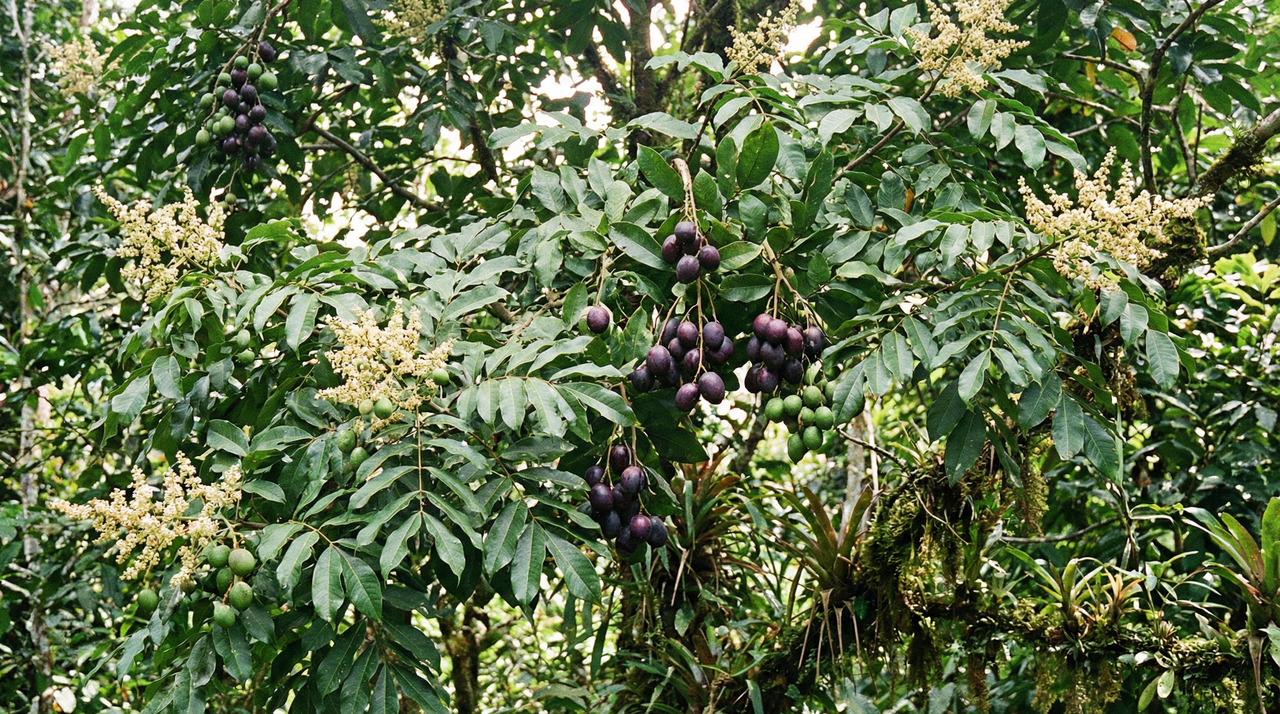
Nobody roasts their avocado before eating it. That's the detail that stopped me cold the first time I read about African pear, and it still feels like the fastest way to explain why this fruit deserves your full attention. The pulp of Dacryodes edulis, raw, is astringent and borderline unpleasant. But hold it briefly over a flame or drop it in boiling water, and something almost alchemical happens: the flesh softens into this rich, buttery, faintly nutty paste that communities across West and Central Africa have been eating with plantains and smoked fish for generations. The cooking isn't a workaround. It's the whole point. The fruit was never meant to be eaten raw.
What gets me about African pear is how thoroughly it resists the Western fruit playbook. There's no supermarket version, no tidy row of named cultivars at your local nursery, no clean English common name that everyone agrees on. In Nigeria it's ube, in Cameroon it's safou, and in some corners of the internet it's just "bush butter," which honestly tells you more about its texture than any botanical description could. It's a tree that has fed forest communities, shown up at marriage ceremonies, and caught the attention of the FAO as a legitimate food-security crop, all while remaining nearly invisible outside its native range. That gap between how important this plant is and how few people in temperate climates have ever heard of it is exactly what pulled me in.
African Pear Origin and History
Botanical Background of Dacryodes edulis
African pear (Dacryodes edulis) belongs to the Burseraceae family, not Sapotaceae as it's sometimes misclassified, and that distinction matters more than it might seem. Having worked with several Burseraceae species in tropical landscape projects, I've found that the family placement is often the quickest way to accurate field identification: look for resinous bark and the complete absence of milky latex. Dacryodes delivers both.[1][2] Its native range spans the tropical rainforests and secondary forests of West and Central Africa, from Sierra Leone east to Sudan and south through Nigeria, Cameroon, Gabon, Ghana, and the Democratic Republic of Congo to northern Angola and Zambia, with its greatest abundance concentrated in Cameroon and Nigeria.[3][4]
In its native habitat it grows as a medium-sized understory and emergent tree, typically reaching 15 to 30 meters with canopy spreads of 6 to 15 meters and trunk diameters up to 80 centimeters at maturity.[5][6] Young trees put on roughly 1 to 2 meters of growth per year before slowing as they mature, reaching reproductive age around 20 to 30 years from seed in natural conditions, and living well past a century in the wild.[1] It's a tree that rewards patience. Its adaptations to dappled lowland rainforest light, including thick pubescent leaves that cut water loss and UV exposure, make it a forgiving candidate for the shadier margins of a tropical food forest design.[7][8] The species is not native to the United States and doesn't appear in the USDA PLANTS database, so outside its home range it remains an uncommon specialist crop.[9]
Traditional and Cultural Uses in West and Central Africa
The african pear fruit has fed people through lean seasons for generations. Roasted over open fire or briefly boiled, the high-oil pulp (up to 60% lipid content) delivers concentrated energy precisely when other foods are scarce.[10][11] Beyond the fruit itself, traditional healers across the region have used nearly every part of the tree: leaves, bark, roots, resin, and fruit pulp have all been applied in decoctions, poultices, and infusions to address gastrointestinal complaints including diarrhea and dysentery, skin infections, wounds, hypertension, fever and malaria, pain, rheumatism, respiratory ailments, edema, and insomnia, with the fruit also valued as a postpartum tonic and aphrodisiac.[12][13] Many of these uses have not yet received rigorous clinical validation, but the breadth and consistency of these traditions across distinct cultures is itself significant.
The cultural weight the african pear tree carries goes well beyond nutrition. Among the Igbo it's exchanged in marriage customs; among the Yoruba, Bakweri, Duala, and Baka it appears in communal harvest feasts, initiation rites, ancestral veneration, and spiritual healing ceremonies, functioning as a living symbol of abundance, fertility, and prosperity.[14][15] That's not incidental context; it's the reason wild populations carry such enormous community value.
Which is exactly why the sustainability picture here is complicated. Wild harvesting regularly outpaces natural regeneration, large-scale forest clearing is shrinking the tree's habitat, and growing international interest in this "rediscovered" crop raises real ethical questions about who benefits.[16][17] Having worked on agroforestry projects where outside interest arrived faster than benefit-sharing frameworks did, I feel strongly that respecting the indigenous communities who stewarded Dacryodes edulis for generations isn't a courtesy. It's the foundation for genuinely regenerative engagement with this plant.
Visual Characteristics of African Pear Trees and Fruit
Once you know what to look for, the african pear tree is unmistakable. The overall form is a dense rounded crown on smooth dark grey bark that develops faint texture as it ages, with resinous streaks that confirm the Burseraceae lineage on contact.[18] The compound leaves are alternate and paripinnate, carrying 7 to 13 pairs of elliptic to oblong leaflets (5 to 15 cm long) that are glossy, leathery, and a deep green that catches light in a way that reminds me of well-grown bay.[19][20] Flowers are easy to miss: small (3 to 5 mm), greenish-white to yellowish, clustered in axillary or terminal panicles 10 to 15 cm long, appearing during the dry season from November through March and relying on insect pollination.[21][22]
The fruit is where everything becomes immediately interesting. Each drupe ranges from 3 to 12 cm long, ripening from green to a deep blue-black, with oily buttery pulp surrounding a single hard bony seed 2 to 3 cm across.[23][24] The texture of ripe cooked pulp sits somewhere between avocado and roasted chestnut: creamy but with a slightly denser, earthier quality that holds up beautifully to heat. Underground, a dimorphic root system pairs a deep taproot (reaching 2 to 5 meters) with spreading lateral roots that scavenge nutrients across a wide radius, a structural trait I find genuinely useful when thinking about deep-rooted companions in layered tropical guilds.[8][25]
Fun Facts and Modern Recognition
The FAO formally recognizes Dacryodes edulis as an important underutilized fruit tree with real potential for food security, income generation, and sustainable agriculture in tropical systems.[1][16] That recognition hasn't yet translated into easy commercial availability outside Africa; poor rooting in propagation, pollination requirements, and seed viability challenges all make establishing orchards outside the native range genuinely difficult. In regenerative design work, I've come to think that plants the mainstream market has overlooked often turn out to be exactly the ones worth paying attention to. African pear is one of those trees.
African Pear Varieties and Sourcing
Landraces and Improved Selections of Dacryodes edulis
If you're searching for a tidy list of named African pear cultivars the way you'd find with mango or avocado, you're going to come up short. The real story of Dacryodes edulis diversity lives in its landraces: farmer-selected populations developed over generations across West and Central Africa that differ dramatically in fruit color (red, yellow, or black types), oil content (anywhere from 40 to 70% depending on variety, ripeness, and growing conditions), size, and when they ripen.[1][26][27] As a designer who works with tropical edibles, I find this kind of unregistered genetic richness genuinely exciting, even when it complicates sourcing. It's similar to working with heirloom avocados before the commercial industry locked everything down to Hass.
Performance varies just as widely. Mature trees can yield 200 to 500 kg per tree, with well-managed agroforestry systems in Cameroon and Nigeria reportedly achieving 10 to 20 tons per hectare.[1][28] Formal breeding is rare, though selections like 'Ex-Sari' have been developed specifically for faster fruiting in agroforestry contexts.[1][29] When I'm specifying a tree for a client's food forest guild, I want to know oil content and ripening window almost more than anything else; with African pear, you often won't know that until the tree fruits, which is part of the gamble and part of the adventure.
Sourcing African Pear in the United States
Finding African pear in the US is genuinely difficult. Specialty tropical nurseries occasionally carry young plants priced anywhere from $20 to $100, and mature specimens, when they surface at all, can run $500 to $2,000 or more.[30][31] That's a very different world from picking up an avocado tree at your local nursery. Seeds are the more accessible entry point, with packets of 10 to 20 seeds typically running $15 to $30 from specialty vendors.[30] Suppliers like Seeds Africains in Nigeria are among the better-known sources for fresh material,[32] but viability drops sharply after about two weeks.[32] I learned that lesson with a batch of recalcitrant tropical seeds I didn't coordinate quickly enough with my propagation schedule; it's an expensive mistake to make twice.
Importing fresh fruit from Africa is generally off the table. USDA APHIS prohibits it due to fruit fly pest risks, and seeds require a permit plus phytosanitary compliance before they can legally enter the country.[33][34] I've helped clients navigate similar permit processes with other exotic tropicals; it's doable, just not spontaneous. Diaspora communities in cities with large West African populations often have the most practical knowledge about which ethnic grocers carry frozen or smoked safou, which is currently the easiest way most Americans will ever taste the fruit. For those committed to actually growing the tree, fresh permitted seed from a reputable African supplier, coordinated tightly with your propagation timeline, is the realistic path forward.
How to Propagate and Plant African Pear (Dacryodes edulis)
Everything about propagating African pear flows from one biological fact: the seeds are recalcitrant. They don't tolerate drying, they can't be stored in a paper envelope on a shelf, and they have no patience for delay. I learned this firsthand the hard way. The first time I received Dacryodes edulis seeds from a contact in Central Africa, they'd been in transit just long enough to drop my germination rate to nearly nothing. Now I treat these seeds with the same urgency I'd give a cutting that's already wilting.
Seed Propagation and Germination for African Pear
Seed is the most accessible way to grow African pear, and it works beautifully when you respect the plant's timeline.[35][36] The protocol starts at the fruit itself: collect ripe fruits, extract the seeds immediately, and clean off the sarcotesta (the fleshy pulp layer) before sowing.[35] The seeds are surprisingly large, 3 to 5 cm long and 2 to 3 cm wide, and once cleaned they look almost like small, smooth avocado pits.[37] That visual similarity to avocado is actually a useful mental anchor, because the handling urgency is comparable.
Sow the cleaned seeds at 2 to 3 cm depth in a mix of roughly 50% loamy topsoil, 30% coarse sand, and 20% organic matter, either in shaded nursery beds or individual polybags.[35][38] Keep the nursery at 50% shade, maintain temperature between 25 and 30°C, and hold humidity at 70 to 80%.[39] Under those conditions, fresh seeds germinate epigeally in 10 to 25 days, with success rates of 60 to 90%.[35][40] The partial shade isn't optional; it also suppresses the damping-off fungi that will take advantage of warm, humid nursery conditions if air circulation is poor.[39]
The window for viability is genuinely short. At ambient tropical temperatures, seeds may remain viable for only 2 to 4 weeks after extraction; with careful storage in moist sand or vermiculite at high humidity and cooler temperatures (15 to 25°C), you might stretch that to 3 to 6 months.[41][42][43] Conventional dry storage or freezing isn't feasible; immediate planting is almost always the right call.[41] If you're receiving seed from a distance and aren't sure of age, tetrazolium staining (live tissue turns red) or germination testing on a small sample are practical viability checks before you commit your nursery space.[44]
One honest limitation of seed propagation: because Dacryodes edulis has a zygotic embryo, seedlings don't come true to type.[35] That genetic diversity can be an asset in a permaculture planting, but if you want to replicate a specific high-oil or early-bearing tree, grafting, budding, or softwood cuttings are the route. Success rates on vegetative propagation run 30 to 60%, which is lower than seed,[35][45] and my own early attempts at chip budding underperformed until I moved propagation into a mist unit that maintained consistent humidity around the wounds. It's a skill worth building, but it takes practice.
Soil, Site Selection, and Planting Technique
African pear wants what a lot of tropical fruit trees want: drainage above all else. The tree has shallow to moderate roots that typically extend only 1 to 2 m deep,[46] which makes it highly sensitive to waterlogging and soil compaction. I think of it similarly to mango or avocado in this respect; a poorly drained site will kill the tree slowly and you'll spend years troubleshooting what's really a planting-day mistake. Well-drained loamy or sandy-loam soils with 2 to 5% organic matter are ideal.[47][19] The tolerated pH range is broad, 5.0 to 7.5, with 5.5 to 7.0 being the comfortable sweet spot, but very acidic soils can trigger aluminum toxicity, so a soil test before planting is genuinely useful rather than just textbook advice.[47][48]
Before transplanting, till to 30 to 45 cm and incorporate well-decomposed compost or manure.[49] If pH is below 6.0, lime after testing rather than guessing at rates. The tree thrives from sea level up to about 1,000 m elevation, and it needs 1,000 to 2,500 mm of annual rainfall to perform well; once established it has moderate short-term drought tolerance, but consistent moisture during the first year or two is non-negotiable.[46][50] Young plants tolerate and actually appreciate partial shade during nursery establishment,[49] but plan your site with the mature tree's need for good light in mind; canopy shade from neighbors will eventually limit fruit production.
Spacing, Timeline to Fruiting, and Field Establishment
Seedlings spend 6 to 12 months in the nursery before they're ready for the field, ideally reaching 30 to 50 cm tall before transplanting.[35][41] Once in the ground, expect 3 to 6 years to first fruit from seed-grown plants under good conditions, with peak production arriving around years 10 to 15.[46][51] I watched one of my grafted trees begin a light crop in year four under steady fertility and irrigation, which still feels like a small miracle every time. Grafted trees tend toward the shorter end of that window, another argument for developing the skill.
For orchard plantings, space trees 8 to 10 m apart, or up to 10 to 15 m if you're working toward a mature canopy that can reach 15 to 30 m in height with a 10 to 20 m spread.[51][48] Generous spacing does more than prevent crowding; the improved airflow meaningfully reduces fungal disease pressure and keeps insect pollinators moving efficiently through the planting.[52] In agroforestry systems, a 9 m by 9 m grid allows enough light penetration for understory crops while still supporting the tree's eventual canopy, and you can start tighter at 6 to 8 m with the intention of thinning as the trees fill in.[53][45] That flexibility is one of the reasons this tree fits so naturally into layered food forest designs; you're essentially growing it the way it evolved to grow, with companions both above and below, in a system that rewards patience with genuine abundance.
African Pear Care Guide: Growing Dacryodes edulis
Every care decision you make with african pear flows from one simple fact: this is a tree shaped by humid West and Central African lowland rainforest, and it hasn't forgotten where it came from. Get the climate wrong and no amount of fertilizer or irrigation will compensate. Get it right, and you'll find this is actually a fairly forgiving tree once it's settled in.
Sunlight Requirements for African Pear
Mature african pear trees need 6-8 hours of direct sun daily for solid fruiting; shortchange them and you get the whole cascade of problems: etiolated growth, chlorotic leaves, stunted canopy, and fruit that doesn't develop properly.[19][41] What trips people up is that young seedlings genuinely do tolerate partial shade in the nursery and during establishment, which can create a false impression that this is a shade-friendly species. It isn't, not as a fruiting adult. Full sun siting from the start saves a lot of repositioning regret later.
Watering Needs and Drought Tolerance
In its native range, Dacryodes edulis receives 1,000-2,500 mm of rainfall annually in consistently moist but well-drained conditions.[54][55] Established trees develop roots 2-3 meters deep, which gives them meaningful resilience, but don't let that fool you into under-irrigating: dry periods beyond 2-4 weeks cause stress and real yield loss.[56] Young plants want water 2-3 times per week with consistently moist but never saturated soil; mature trees need 20-40 liters weekly during dry periods, roughly an inch or two per week.[54][57] Waterlogging is the one non-negotiable to avoid; Phytophthora root rot is waiting for any grower who lets drainage slip. A 4-6 inch layer of organic mulch does a remarkable amount of work here, conserving moisture, regulating soil temperature, and reducing how often you need to irrigate, especially for young trees still building their root systems.[58][54]
Feeding and Fertilization
The nutrient logic is straightforward once you understand what each macronutrient does. Nitrogen drives vegetative growth and leaf production, phosphorus supports root development, flowering, and fruit set, and potassium is what actually moves the needle on fruit quality, size, and disease resistance -- with uptake peaking during flowering and fruiting when supplemental potassium matters most.[41][59] Young trees in their first three years do well with 50-200 g of balanced fertilizer annually (something like a 10-10-10 or 20-10-10), split across 2-3 applications; mature trees shift to 500-1,000 g per tree of a more potassium-forward blend (10-20-20 or 15-15-15), supplemented with 5-10 kg of compost or manure and attention to micronutrients like zinc, magnesium, and boron, which frequently run deficient in tropical soils.[60][61] I always test my soil before the rainy season begins -- I once over-applied nitrogen on a young safou and got exactly what you'd expect: lush, beautiful foliage and almost no fruit that year. Leaf tissue targets of N 2.5-3.5%, P 0.2-0.3%, and K 1.5-2.5% give you a reliable benchmark to calibrate against, and timing heavier feeds to the rainy season when uptake is highest just makes agronomic sense.[59][60]
Frost Tolerance and Cold Protection
African pear is firmly USDA zones 10-12 territory, rated RHS H1c, meaning extended exposure below 10°C (50°F) causes damage and a hard frost at 0°C (32°F) is lethal.[19][62] Brief dips near -2°C (28°F) are technically survivable, but I'd treat that the same way I treat a brief 28°F dip with a young mango -- technically possible, practically risky, and something you're mitigating rather than accepting. Damage shows up as leaf scorch, blackening, branch dieback, and sharply reduced fruiting, with young trees being especially vulnerable.[63] For growers in zone 9 or marginal spots, I'd recommend planting on the south-facing side of a thermal-mass wall or building; the 2-5°C of extra warmth structures provide can make the difference with tender perennials, and it's a technique I've used successfully with other cold-sensitive species. Frost blankets and row covers offer similar protection in a pinch, and avoiding low-lying frost pockets at planting time costs nothing at all.[63][64]
Heat Tolerance and High-Temperature Management
Dacryodes edulis is most comfortable between 24-32°C with mean annual temperatures around 24-28°C; brief highs to 40°C are tolerable when humidity stays high, but prolonged exposure above 33-35°C suppresses flowering, fruit set, and photosynthesis.[65][61] Seedlings are the most vulnerable, showing wilting, leaf curling, and marginal scorch well before mature trees show stress.[66] For seedlings, 30-50% shade cloth is genuinely protective; for established trees in my hot, humid Florida summers, I've found that 4-6 inches of coarse organic mulch combined with 8-10 meter spacing does more to prevent leaf scorch than shade cloth alone -- the mulch keeps root zone temperatures down while the spacing allows airflow to do its work.[67] Agroforestry companions like banana or nitrogen-fixing trees naturally replicate the understory buffer of the native habitat and serve the same moderating function without sacrificing the canopy light mature trees need.[66]
Pruning and Maintenance
The first 2-3 years are for establishing 3-5 strong scaffold branches and an open center that lets light and air penetrate the canopy; after that, annual light pruning after harvest or during the dry season keeps the tree productive and manageable.[6][57] Done consistently, proper pruning can improve yields by 20-50% and keeping height below 5-6 meters makes harvest significantly easier.[68] I've learned to keep cuts light and purposeful -- this is a resinous tree in the Burseraceae family, and heavy cuts trigger excessive sap flow in ways that create more problems than the pruning solves. Timing to the dry season also reduces disease pressure, which coordinates naturally with the cultural sanitation practices that keep fungal issues in check.
Seasonal Rhythm and Phenology
African pear runs on a drought-and-rain clock. Flowering happens during the dry season, roughly November through March, triggered by drought stress rather than temperature alone.[69][70] Fruit develops over 3-5 months into the early rainy season, with peak harvest falling in June and July.[71] Late in the rainy season, the tree slows down and drops 10-30% of its leaves -- something I've come to read as a useful grower cue. When I see that modest leaf shed beginning, I ease off irrigation without waiting for wilt symptoms; the tree is telling me it's entering its slower phase and doesn't need the same water push. Understanding this calendar makes the care practices discussed throughout this section feel less like a checklist and more like a conversation with the tree's own rhythms.
African Pear Harvesting: Timing, Technique, Yield, and Flavor
When to Harvest African Pear: From Planting to First Fruit and Seasonal Cues
Patience is genuinely part of growing this tree. Seed-grown African pear typically takes 5 to 10 years to bear fruit, while grafted trees can start producing in as little as 2 to 5 years.[72][73][41] I've grown grafted safou, and I'll tell you the first fruit feels like a genuine event after years of watching a tree do nothing but grow leaves. Once you see flowers in March or April, you're roughly 90 to 120 days from harvest, which puts the window squarely in the rainy season from July through October, with peak ripeness in Cameroon and Nigeria typically hitting June through August.[74][71][10] I now mark that 100-day window on my calendar right after the flowers open.
The fruit tells you when it's ready. Skin shifts from solid green toward yellowish, purplish, or black tones, the flesh softens noticeably, and you'll often see a faint oily residue on the surface.[75][76] A mature tree can produce 200 to 800 kg annually, sometimes twice per year.[75] Once a well-established tree starts producing at that scale it genuinely feels like an embarrassment of riches.
Harvest and Post-Harvest Techniques for African Pear
Pick by hand or use a long pole to dislodge clusters, aiming for semi-ripe fruit if you need time for transport. Handle carefully; bruising destroys the buttery texture I learned that lesson early, along with the harder lesson that fruit picked too early never fully loses its bitterness no matter how long you wait. For storage, keep fruit at 10 to 15 °C with 85 to 90 percent relative humidity for up to 2 to 3 weeks.[77][75] Don't go colder than that; chilling injury is a real risk. Brief smoking or boiling are the traditional preservation methods in West Africa, and both extend shelf life while also accelerating ripening in fruit that's close but not quite there yet.
Yield and Flavor Profile of Fresh African Pear
The high oil content, which runs 20 to 70 percent of the pulp depending on cultivar and ripeness, is exactly what gives safou its creamy, avocado-like richness and nutty-buttery aroma.[78][79] Unripe fruit is bitter and fibrous; fully ripe fruit softens into something that honestly reminds me of a roasted chestnut crossed with a ripe avocado, with mild sweetness and hints of almond.[80][81] That transformation happens fast: green fruit left at room temperature turns yellowish-orange then black over just 2 to 5 days.[1][82] Smoking or gentle heat accelerates that process and brings out roasted-nut and caramel notes that remind me of heirloom squash fresh from the oven. The oiliness is the point. Sensory evaluations consistently rate ripe fruit 7 to 8 out of 10, with that rich mouthfeel cited as the main reason.[83] Once the color and softness cues align, the clock is running.
African Pear Preparation and Uses
Culinary Preparation and Traditional Dishes
The pulp of african pear is creamy, buttery, and mild in the way avocado is mild, which is probably why it's often the first comparison people reach for.[84][85] But what I find more interesting is what heat does to it. Raw and unripe, the fruit can be bitter, astringent, and honestly not great. Roast it over an open fire and something shifts: the flesh turns rich and nutty, picking up caramel and smoke in a way that feels earned rather than incidental.[80] That transformation isn't just about flavor. Cooking unripe fruit is also how traditional communities neutralize mild toxins present before full ripeness, so roasting isn't optional here; it's the whole point.[86]
Across Cameroon, Nigeria, and Ghana, preparation methods reflect generations of accumulated knowledge. Grilling over charcoal is the most common approach and the one that produces the deepest flavor, but the fruit is also boiled alongside plantain, mashed into pastes, and folded into soups and stews served with fufu or garri.[10][28] The classic Cameroonian street pairing of safou with smoked bonga fish is one of those combinations that sounds simple until you eat it, at which point it makes complete sense: the fatty richness of the fruit against the smoke and salt of the fish.[87] In Ghana, the fruit goes by "elemi" and oil extraction from the pulp is a traditional use alongside cooking.[86] These regional variations are worth paying attention to, because they signal how adaptable the fruit is once you understand the fundamentals of heat and ripeness.
Non-Food Applications of African Pear
The tree gives more than fruit. The wood is dense and hard, with a specific gravity between 0.68 and 0.82, and the heartwood resists both termites and fungal decay, which makes it genuinely useful for construction, furniture, tool handles, and joinery rather than just nominally listed as a timber species.[88] Bark and fruit husks produce reddish-brown dyes used on textiles and leather, and also yield tannins; the fibrous bark occasionally gets worked into rope and matting.[88] Seed oil is processed for both cooking and cosmetics, extending the fruit's value well past the fresh-harvest window.[89][10] The leaves aren't edible, but they're steeped into herbal teas used in traditional medicine for hypertension and malaria across Cameroon and Nigeria.[90][91] From a permaculture standpoint, a tree yielding fruit, oil, dye, fiber, medicine, and durable timber is exactly the kind of anchor species a food forest is built around, and all of those uses are most sustainable when harvested in rhythm with the tree's growth rather than extracted all at once.
African Pear Health Benefits and Medicinal Uses
What I find remarkable about Dacryodes edulis is how thoroughly West and Central African healers had already mapped its medicine long before any laboratory confirmed it. The fruit, leaves, and bark have each served distinct roles in traditional practice across the region, and the specificity is striking. Leaf decoctions were prepared for hypertension, diabetes, and skin infections; bark preparations addressed wound healing, diarrhea, and pain; and the fruit itself was used for digestive complaints, fever, rheumatism, and respiratory ailments.[92][93][94] That's not one tree doing one thing. That's an entire pharmacy organized by plant part.
Traditional Medicinal Applications Across Plant Parts
Modern pharmacology has done a reasonable job of validating what local healers observed. The leaf, fruit pulp, and oil all demonstrate strong antioxidant activity attributed to high phenolic and flavonoid content, with measurable free-radical scavenging in DPPH and FRAP assays.[95][96][97] Anti-inflammatory activity is well-documented too, with leaf and fruit extracts inhibiting pro-inflammatory cytokines like TNF-α and IL-6, suppressing NF-κB signaling, and reducing COX-2 activity, along with demonstrated analgesic effects in rodent models.[98][99][100] Antimicrobial testing shows activity against Staphylococcus aureus, Escherichia coli, and Candida albicans.[101][10]
The antidiabetic angle is particularly interesting given how widely leaves were traditionally used for blood sugar management. Leaf and fruit extracts inhibit α-amylase and α-glucosidase, the enzymes that break down carbohydrates into simple sugars, effectively slowing glucose absorption and supporting better glycemic control.[102][103] Extracts also show cytotoxicity against breast and colon cancer cells in vitro, inducing apoptosis and cell cycle arrest.[104][103] Fruit extracts have even demonstrated sedative effects in animal models, while stem bark extracts show diuretic activity comparable to furosemide.[105][106] I compare this situation to where guava and papaya research stood twenty years ago: compelling lab data, promising animal studies, and a genuine lag in human clinical trials. Most of what we know still comes from in-vitro and animal work, and rigorous human studies are needed before anyone should treat these as confirmed therapeutic doses.[103]
Key Phytochemicals and Bioactive Compounds
The chemistry behind all of this activity is dense. The plant contains flavonoids including quercetin, kaempferol, catechin, rutin, and epicatechin; phenolic acids such as gallic and caffeic acid; terpenoids and sterols including β-sitosterol, lupeol, and betulinic acid; plus alkaloids, saponins, and tannins.[97][107][108] The lipid fraction is dominated by oleic acid (40-50%) and linoleic acid (30-40%), which tie the antioxidant story directly into healthy-fat territory.[78]
One thing I've observed firsthand when sourcing Dacryodes edulis for edible forest garden projects is how visibly different batches can be. Fruit from shadier plots tends to be less oily, and later-harvest fruit behaves differently than early-season pickings. That variability isn't just sensory. Phytochemical content and antioxidant capacity shift meaningfully with fruit maturity, geographical origin, soil conditions, and post-harvest processing like drying.[109] It's a reminder that the "health benefits of African pear" aren't fixed values on a label; they're a product of how and where the tree was grown.
Validated Pharmacological Activities from Research
The validated pharmacological picture confirms the traditional applications with satisfying specificity: antioxidant and free-radical scavenging activity from the phenolic and flavonoid profile; anti-inflammatory and analgesic effects from cytokine suppression and COX-2 inhibition; antimicrobial coverage across bacterial and fungal pathogens; antidiabetic action through enzyme inhibition; and preliminary anticancer cytotoxicity in cell line studies. Each of these actions is traceable to particular compound classes identified in the phytochemical profile above, which is exactly what you want to see in ethnopharmacology: mechanism matching traditional application.
Nutritional Profile of the Fruit Pulp and Seeds
Eaten as food rather than medicine, the ripe pulp still delivers impressively. The fat content runs 40-70% oil by weight, primarily oleic, palmitic, and linoleic acids, alongside vitamins A, C, and E, carotenoids including beta-carotene and lutein, minerals (potassium, calcium, magnesium, iron), dietary fiber, and 4-10% protein.[110][79][111] The first time I tasted roasted safou, my immediate reference point was avocado: similar richness, similar buttery texture, similar sense that this is a food that sustains you. That instinct holds nutritionally. The flavonoids and phenolics in both the pulp and seeds add the antioxidant and anti-inflammatory layer on top, with seeds contributing saponins and phytosterols as well.[112] It's calorie-dense, nutrient-rich food that West African communities have long treated as both daily sustenance and preventive nourishment, which is exactly the profile I look for when recommending trees for permaculture food systems.
Safety, Preparation, and Cautions
The ripe fruit pulp, properly prepared by roasting, boiling, or grilling, is widely considered safe for human consumption. Traditional roasting at 180-200°C for 10-15 minutes effectively reduces cyanogenic glycosides and other anti-nutritional factors.[113][114][28] In every workshop I run, I'm direct about one non-negotiable: do not eat raw seeds. The cyanogenic compounds present make them genuinely risky until heat processing neutralizes them. I also tell people to wait for full ripeness before eating. Unripe fruit has higher tannin levels that can cause nausea, vomiting, and digestive pain, and even ripe fruit eaten in large quantities can cause bloating from the high fat and fiber content.[114][115]
For the medicinal preparations using leaves and bark, caution is warranted. Lab tests show mild cytotoxicity in those extracts, rare allergic reactions including contact dermatitis from sap have been reported, and there's potential cross-reactivity in latex-fruit syndrome.[116][117][118] No major drug interactions are widely documented, but anyone on anticoagulants should be cautious. There are no notorious toxic look-alikes, though misidentification with other Dacryodes species is possible, and soil and rainfall conditions can shift the concentrations of bioactive compounds from one tree to the next.[119][120] Select fruit that's visibly ripe, soft, and showing that characteristic yellowish-purple blush; roast until the skin splits; and you're in safe, delicious territory.
African Pear Pests and Diseases
African pear is a rewarding tree to grow, but it does have some real vulnerabilities that a permaculture designer needs to plan around from the start. The good news is that the tree brings its own moderate defenses: leathery leaf texture, aromatic oils in the foliage, and a chemical toolkit that includes phenolic compounds and saponins that deter many generalist herbivores.[121] The bad news is that specific pathogens and fruit-infesting insects can still cut through those defenses and reduce yields by 30 to 50 percent in unmanaged plantings.[122][123] That's a number worth taking seriously.
Major Diseases Affecting African Pear
The two diseases I'd worry about most are anthracnose and Phytophthora root rot. Anthracnose, driven by Colletotrichum gloeosporioides, causes dark, sunken lesions on fruit and tip dieback on young shoots, and it spreads fast in warm, wet conditions.[124][123] Phytophthora root rot is the one that keeps me up at night. This tree's sensitivity to waterlogged soils is something I emphasize heavily in the care guide, and it's not abstract advice; heavy clay soils after sustained summer rain are exactly the conditions where Phytophthora takes hold fast and silently until you see wilting and canopy collapse.[124][125] Leaf spots from Cercospora species are more common but less catastrophic, causing cosmetic damage and reduced photosynthesis rather than outright decline.[124][126] Mosaic virus has also been documented, though it tends to be a secondary concern in well-managed systems.[127]
There are currently no formally registered disease-resistant cultivars, though research from Cameroon shows meaningful variation in susceptibility across different families and provenances.[128][129] It's a situation I'm familiar with from other long-juvenile tropical fruit trees: the 5 to 7 year window before bearing simply slows breeding programs down dramatically, so you select the most vigorous local material you can find and design your system to reduce pathogen pressure rather than waiting on a resistant variety that doesn't exist yet.
Common Insect Pests of African Pear
Fruit flies in the Bactrocera genus are the headline pest, infesting developing fruit and causing premature drop and internal rot that can ruin a harvest you didn't even know was at risk.[130] Beyond fruit flies, the tree faces pressure from leaf beetles (Ootheca spp.), coreid bugs, scale insects, stem borers from the Cerambycidae family, and leaf miners, each reducing photosynthetic capacity or compromising structural integrity over time.[131] The tree's thin bark also makes it more vulnerable to borer damage and environmental stress than a thicker-barked species might be, which is another reason that site selection and microclimate management matter so much.[124] Some indigenous provenances from West and Central Africa show better tolerance to fruit fly pressure, but no fully pest-resistant commercial material is widely available yet.[132]
Integrated Management Strategies
The cultural practices already woven into the care guide do the heaviest lifting here. Proper drainage and spacing for airflow are your first line of defense against both Phytophthora and the humid microenvironments that anthracnose thrives in. Removing fallen fruit promptly, pruning for canopy openness during the dry season, and keeping the root zone free from standing water eliminate many of the conditions these pathogens and pests depend on.[133][125] For fruit flies specifically, I've had good results using pheromone traps in other tropical fruit guilds; early detection in a small safou planting gave me time to increase monitoring and protect the crop before losses became significant. Encouraging parasitic wasps and insectivorous birds by maintaining a diverse understory guild creates biological pressure on pests without any chemical input.[134] Copper-based fungicides can help with anthracnose and Phytophthora if cultural measures aren't enough, but I limit those to early-season preventive applications only, rotating with cultural methods so beneficial insects stay active across the whole system.[135] Grafting onto vigorous rootstock from healthy local material also builds a stronger foundation, even though no disease-resistant rootstocks are commercially available yet.[133] None of this is complicated. It's attentive orchard hygiene and thoughtful system design, which is exactly what permaculture does best.
African Pear in Permaculture Design
African pear is one of those plants that clarifies a design immediately, because its requirements are specific enough that placing it well is half the work. Get the climate right and the tree rewards you with a cascade of ecological services. Get it wrong and you're nursing a struggling exotic in conditions it was never built for. So before thinking about guilds or canopy layers, let's start with the hard boundary: this is a genuinely tropical tree, and it needs to stay that way.
Climate Requirements and Hardiness Zones
Dacryodes edulis evolved as an understory tree in the humid lowland rainforests of West and Central Africa, and its whole physiology reflects that.[19][136] It wants annual rainfall between 1,200 and 2,500 mm, temperatures sitting in the 20-30°C range, and relative humidity reliably above 70%.[19][5] That humidity requirement alone rules out most of the continental United States.
Cold tolerance is the sharpest constraint. A brief dip to 28-30°F (-2 to -1°C) can trigger leaf drop or dieback, and anything below 25°F (-4°C) is typically fatal.[137][138] In my experience working with tender tropicals, the difference between a light chill and true frost is everything for Dacryodes. I treat it exactly like a mature avocado or mango in zone 10: site it against thermal mass, tuck it into a protected courtyard, or let a larger established canopy buffer it if there's any risk of a rare freeze. Reliable productivity sits in USDA zones 10b through 12, with southern Florida and Hawaii being the realistic footholds in the United States.[139][140] Outside those zones, this is a tree you admire at botanical gardens rather than grow at home.
Ecological Functions and Pollination
Once you're in the right climate, African pear starts earning its keep ecologically in ways that go well beyond fruit production. The pollination biology alone tells you a lot about how to design around it. The tree is protogynous and largely self-incompatible, meaning it matures female flower parts before male ones and depends heavily on cross-pollination for reliable fruit set.[21][141] Without cross-pollination, natural fruit set can drop to just 10-20%. Flies are the primary pollinators, with bees and beetles as supporting cast, all working small greenish-white flowers clustered in panicles up to 20 cm long that bloom in the dry season.[19]
Supporting those pollinators through companion planting and avoiding any sprays during the dry-season bloom isn't abstract advice; it's the difference between a loaded tree and a disappointing one. I've seen fruit set jump noticeably in systems where pollinator hedgerows line the orchard margins, turning a borderline harvest into a productive one. The research is clear that pollinator scarcity, compounded by habitat loss and drought stress during flowering, is the primary yield-limiting factor in cultivation.[142][143] Optimal conditions for pollinator activity are warm mornings with temperatures of 25-30°C and moderate to high humidity; plan your companion plantings accordingly.[144]
Beyond pollination, the tree functions as a genuine biodiversity hub. Its oily fruits attract primates, birds, and bats that disperse seeds and support forest regeneration.[145] Leaf litter decomposes to release potassium, phosphorus, and organic matter into the soil, and the tree forms arbuscular mycorrhizal associations that improve phosphorus uptake in the characteristically poor soils of the humid tropics.[146][147] It's not a nitrogen fixer, so don't slot it in expecting that service, but in two to three seasons of interplanting with bananas or legumes I've watched the steady rain of oily fruit and leaves noticeably darken and enrich the topsoil in ways that feel qualitatively different from what legumes alone produce.
Forest Layer, Guilds, and Companion Planting
In its native rainforests, African pear occupies the canopy or subcanopy layer, typically below 800 m elevation, where it can reach 20-30 m in the wild but stays closer to 10-20 m in cultivation.[19] It has moderate shade tolerance as a juvenile, surviving reasonably well under 30-50% canopy cover, which makes it workable in a layered system where you're filling in a developing food forest rather than starting in full sun. Once established, it becomes the canopy anchor itself and starts doing the shading for others.
The African agroforestry literature is the best design guide we have here. Cocoa, coffee, bananas, yams, and legumes all appear as documented understory companions in intercropping systems across Cameroon and Nigeria, where African pear's shade reduces heat stress, its litter builds fertility, and its mycorrhizal networks extend into the rhizosphere of neighboring plants.[148][149] For a southern Florida or Hawaiian food forest, those translate reasonably to cacao, shade-grown coffee, plantain, taro, and low-growing leguminous groundcovers. Shade-tolerant ferns and herbs tend to naturalize happily under its canopy as the leaf litter accumulates.[150]
On slopes, the tree's role in erosion control and deep nutrient cycling from its root system gives it added value in designs where stability matters.[151] Where a temperate designer might reach for walnut or oak as the canopy anchor, in the humid subtropics Dacryodes fills the same vertical and ecological niche while adding edible oil, medicine, and wildlife habitat to the stack. That's the permaculture case for it in a sentence: meet its tropical demands, and it gives back across nearly every design function you're trying to serve.
The First Time I Roasted Safou and Understood What I'd Been Missing
I came to African pear through a market in Miami, not a food forest, and I ate it standing next to a vendor who watched me with the particular patience of someone who already knows how the story ends. That fruit, roasted over charcoal and dusted with salt, tasted like something between butter and the earth itself. I've been trying to grow it in my own system ever since, and honestly, that's reason enough.
Sources 151
- Dacryodes edulis (G. Don) H.J. Lam: A Review of Its botany, Uses, and Potential in Africa ↩
- Dacryodes edulis (African pear tree) | CABI Compendium ↩
- Safou (Dacryodes edulis): Origin, Domestication and Uses ↩
- Kew - Dacryodes edulis ↩
- Safou (Dacryodes edulis) - Plant Resources of Tropical Africa ↩
- Safou (Dacryodes edulis) - World Agroforestry ↩
- Safou (Dacryodes edulis) - Native Habitat and Ecology ↩
- Dacryodes edulis (G.Don) H.J.Lam: A Review of Its Botany and Uses ↩
- Dacryodes edulis ↩
- Ethnobotany of Dacryodes edulis in West Africa ↩
- Non-Wood Forest Products of Central Africa: Current Research Practices and Prospects ↩
- Traditional Uses of Safou (Dacryodes edulis) in Cameroon ↩
- Ethnobotanical Survey of Medicinal Plants Used by the Baka Pygmies in Cameroon ↩
- Ethnobotany of Dacryodes edulis in Cameroon ↩
- Safou Fruit in Cameroonian Ceremonies and Medicine ↩
- Dacryodes edulis (G. Forst.) Fauch.-M. - ProTA4All ↩
- FAO Agroforestry Tree Database - Dacryodes edulis ↩
- Dacryodes edulis ↩
- Dacryodes edulis - Useful Tropical Plants Database ↩
- Dacryodes edulis (G. Don) H.J. Lam ↩
- Dacryodes edulis ↩
- The genus Dacryodes Vahl (Burseraceae) in Africa and Madagascar ↩
- Safou (Dacryodes edulis) ↩
- Dacryodes edulis (African pear, bush mango, safou) ↩
- Root System Architecture of Tropical Trees ↩
- Genetic Diversity of Dacryodes edulis in Cameroon ↩
- Fruit Characteristics and Landraces of Dacryodes edulis ↩
- Safou (Dacryodes edulis): Production and Marketing in Central Africa ↩
- Agroforestry Varieties of Safou in West Africa ↩
- Exotic Fruit Trees for Southern US Gardens ↩
- University of Florida IFAS Extension ↩
- Seeds Africains - Nigeria ↩
- Fruits and Vegetables Import Requirements (FAVIR) Database ↩
- Importation of Fruits and Vegetables into the United States ↩
- Vegetative Propagation of Dacryodes edulis (Burseraceae): Effect of Rooting Medium and Auxin on Stem Cuttings ↩
- Propagation and Cultivation of Dacryodes edulis ↩
- Fruit and Seed Morphology of Dacryodes edulis (G. Don) H.J. Lam ↩
- Propagation and Cultivation of Dacryodes edulis ↩
- Seed Germination and Nursery Practices for Bush Mango ↩
- Safou (Dacryodes edulis) Seed Biology and Germination ↩
- Recalcitrant Seeds: Biology, Ecology and Storage ↩
- Storage Physiology of Recalcitrant Seeds ↩
- Germination and Storage of Dacryodes edulis Seeds ↩
- Tetrazolium Testing for Seed Viability in Tropical Species ↩
- Agroforestry Species: Dacryodes edulis ↩
- Dacryodes edulis - Useful Tropical Plants Database ↩
- Safou (Dacryodes edulis) Production Manual ↩
- Dacryodes edulis: The Safou Tree ↩
- Safou (Dacryodes edulis): Production in Central Africa ↩
- FAO - Bush Mango (Dacryodes edulis) Cultivation Guide ↩
- Cultivation of Dacryodes edulis in Cameroon ↩
- Agronomic Practices for Safou (Dacryodes edulis) Production in Cameroon ↩
- Agroforestry Systems Involving Dacryodes edulis in West Africa ↩
- Dacryodes edulis: Propagation and Management ↩
- Cultivation of African Indigenous Fruits ↩
- Bush Mango (Dacryodes edulis) Production Guide ↩
- Safou (Dacryodes edulis) Production Guide ↩
- Dacryodes edulis: Production and Marketing ↩
- Soil Fertility and Fertilizer Recommendations for West African Fruit Trees ↩
- Agronomic Practices for Dacryodes edulis in West and Central Africa ↩
- Safou (Dacryodes edulis) Production Manual ↩
- Safou (Dacryodes edulis) - Purdue University Horticulture ↩
- Tropical Fruit Trees: Cold Hardiness and Frost Protection ↩
- Frost Protection for Tropical Plants ↩
- Dacryodes edulis (African Pear, Safou, Bush Mango) ↩
- Management of Dacryodes edulis in Humid Tropical Environments ↩
- Response of Dacryodes edulis to Abiotic Stresses: Focus on Heat and Drought ↩
- Horticultural Guide for Bush Mango Cultivation ↩
- Dacryodes edulis - PROTA (Plant Resources of Tropical Africa) ↩
- Phenology of Dacryodes edulis in Cameroon ↩
- Safou (Dacryodes edulis) Fruit Development ↩
- FAO Plant Production and Protection Paper 173: Cultivation of Safou (Safou, Dacryodes edulis) ↩
- Grafting success and initial growth of Dacryodes edulis ↩
- Bush Mango (Dacryodes edulis) Production and Marketing ↩
- Dacryodes edulis: The Safou Fruit - Cultivation, Harvesting and Post-Harvest Handling ↩
- Agroforestry Guide: Safou Production in Central Africa ↩
- Postharvest Physiology and Storage of Safou (Dacryodes edulis) ↩
- Volatile Compounds and Sensory Characteristics of Dacryodes edulis Fruit ↩
- Nutritional Composition and Oil Characteristics of Safou (Dacryodes edulis) Fruits from Cameroon ↩
- Aroma Profile of Bush Mango (Dacryodes edulis) During Ripening and Processing ↩
- Safou (Dacryodes edulis): Nutritional Composition of the Fruit and its Potential as a Food Source ↩
- The African Pear (Dacryodes edulis): An Underutilized Crop ↩
- Nutritional Composition and Sensory Evaluation of Safou (Dacryodes edulis) Fruit ↩
- Dacryodes edulis - FAO ↩
- Dacryodes edulis (African Pear) ↩
- Culinary Uses of Indigenous Fruits in West Africa ↩
- Traditional Uses of Safou (Dacryodes edulis) in Cameroon ↩
- Dacryodes edulis Datasheet ↩
- Bush Mango: Nutritional and Medicinal Properties ↩
- Ethnobotanical Survey and Uses of Dacryodes edulis in Cameroon ↩
- Ethnobotanical Survey of Medicinal Plants Used by the People of Nnewi North Local Government Area, Anambra State, Nigeria ↩
- Dacryodes edulis (G. Don) H.J. Lam: A Review of Its Traditional Uses, Phytochemistry and Pharmacology ↩
- Ethnopharmacological Survey of Dacryodes edulis in Cameroon ↩
- Ethnopharmacological survey of plants used in the traditional treatment of hypertension and diabetes in South Africa ↩
- Antioxidant properties of Dacryodes edulis fruit oil ↩
- Antioxidant Properties of Dacryodes edulis Fruit Pulp ↩
- Phytochemical Composition and Antioxidant Activity of Dacryodes edulis Fruit ↩
- Anti-inflammatory and analgesic activities of Dacryodes edulis leaf extract ↩
- Analgesic and anti-inflammatory effects of the methanol leaf extract of Dacryodes edulis (G. Don) H.J. Lam. ↩
- Anti-inflammatory and Traditional Medicinal Uses of Dacryodes edulis ↩
- Antimicrobial activity of Dacryodes edulis extracts against pathogens ↩
- Antidiabetic and Antioxidant Properties of Dacryodes edulis Fruit Extract ↩
- Pharmacological Activities of Dacryodes edulis: A Review ↩
- Anti-inflammatory and Anticancer Effects of Safou Leaf Extracts ↩
- Sedative and anxiolytic-like effects of the hydroalcoholic extract of Dacryodes edulis fruits in mice. ↩
- Diuretic activity of the aqueous stem bark extract of Dacryodes edulis in Wistar rats. ↩
- Nutritional and Phytochemical Composition of Safou Fruit ↩
- Bioactive terpenoids from the bark of Dacryodes edulis ↩
- Influence of maturity and drying on the phenolic content and antioxidant activity of Dacryodes edulis ↩
- Nutritional Composition of Safou (Dacryodes edulis) Fruit from West Africa ↩
- Safou (Dacryodes edulis) Fruit: Composition, Processing, and Health Benefits ↩
- Safou (Dacryodes edulis): A Review of Its Phytochemistry, Pharmacology and Toxicology ↩
- Phytochemical and Pharmacological Review of Dacryodes edulis (G. Don) H.J. Lam ↩
- Nutritional Composition and Toxicity Assessment of Dacryodes edulis Fruit ↩
- African Bush Mango: Nutritional and Toxicological Aspects ↩
- Evaluation of Phenolic Compounds and Saponins in Dacryodes edulis Leaves and Seeds ↩
- Contact Dermatitis from Tropical Fruits: The Case of Safou (Dacryodes edulis) ↩
- Dacryodes edulis: A Review of Its Phytochemicals, Pharmacology and Toxicology ↩
- Dacryodes edulis: The African Pear Tree ↩
- Toxicity and Safety of African Indigenous Fruits: Focus on Dacryodes edulis ↩
- Dacryodes edulis ↩
- Insect Pests of Safou (Dacryodes edulis) in Cameroon ↩
- Diseases and Pests of Dacryodes edulis in West Africa ↩
- CABI Invasive Species Compendium: Dacryodes edulis ↩
- Management of Fungal Diseases in Safou Orchards ↩
- Fungal Pathogens of Safou Tree: A Review ↩
- Diseases and Pests of Dacryodes edulis in Cameroon ↩
- PROTA4U: Plant Resources of Tropical Africa ↩
- Disease resistance screening in Dacryodes edulis families from Cameroon ↩
- Insect Pests of Dacryodes edulis in Cameroon ↩
- Survey of Arthropod Pests on Dacryodes edulis in West Africa ↩
- Indigenous Fruit Trees of Africa: Dacryodes edulis Varietal Resistance ↩
- Dacryodes edulis: The Safou Tree ↩
- Integrated Pest Management for Tropical Fruit Crops ↩
- Pest Management in Safou (Dacryodes edulis) Plantations ↩
- Dacryodes edulis (G. Don) H.J. Lam ↩
- African Plum (Dacryodes edulis) - Horticulture Entry ↩
- Tropical Fruit Trees: Safou (Dacryodes edulis) ↩
- Dacryodes edulis: Safou ↩
- Tropical Fruit Trees for Hawaii ↩
- Breeding System and Fruit Set in African Plum (Dacryodes edulis) ↩
- Insect Pollinators of Tropical Fruit Trees in Africa ↩
- Cultivation Challenges of Bush Mango (Dacryodes edulis) in West Africa ↩
- Ecological Aspects of Safou Pollination and Cultivation ↩
- Dacryodes edulis: A Review of its Botanical, Ecological, and Economic Importance ↩
- Mycorrhizal Associations in Burseraceae ↩
- Agroforestry Practices in Africa: The Role of Indigenous Trees like Dacryodes edulis ↩
- Agroforestry Systems with Dacryodes edulis in Cameroon ↩
- FAO: Trees for Life - Bush Mango in Agroforestry ↩
- Forest Dynamics and Understory Composition in Secondary Tropics ↩
- Integration of Dacryodes edulis in Kenyan Agroforestry Systems ↩