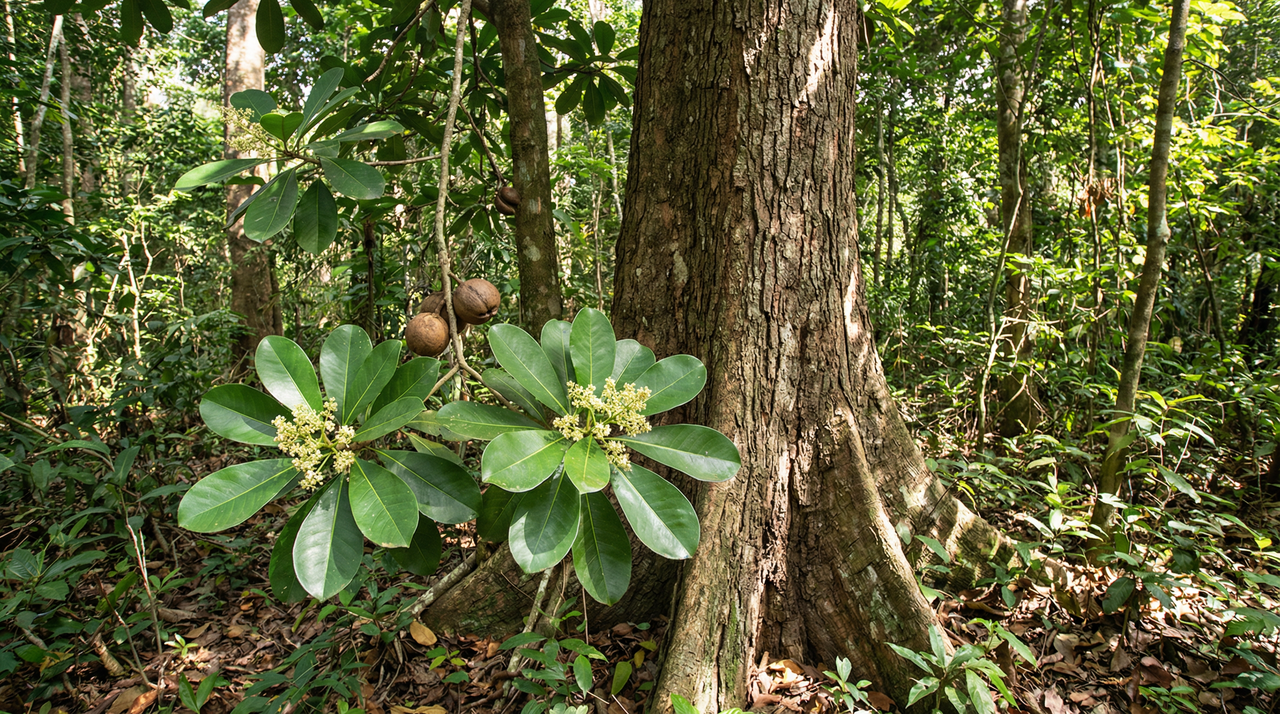
Nobody talks about the seed toxicity first. They lead with the oil, the timber, the sacred groves, and the shea-like butter that indigenous communities across Central Africa have rendered from roasted kernels for generations. But here's what stopped me cold when I first started researching Baillonella toxisperma: the species name isn't incidental decoration. The raw seeds of this rainforest giant are genuinely toxic, and yet communities developed multi-step roasting, boiling, and fermentation protocols so precise that the finished oil is not only safe but nutritionally rich, shelf-stable, and prized enough to have driven serious commercial interest.[1] That gap between "toxic seed" and "beloved pantry staple" represents thousands of years of careful, accumulated knowledge, and it's the detail that reframes everything else about this tree.
African Pearwood, called Moabi across much of its range, is the kind of plant that keeps humbling you. It can grow 45 meters tall, live for centuries, and only begins fruiting after two or three decades of patient waiting. Elephants disperse its seeds. Baka communities consider it sacred. And right now, it's listed as Vulnerable on the IUCN Red List, pressured by exactly the commercial appetite its qualities have always invited.[1] That's the contradiction sitting at the center of this plant: the more you understand why it matters, the more complicated it becomes to simply want one for your food forest.
Origin and History of African Pearwood (Baillonella toxisperma)
Botanical Background and Native Habitat
African pearwood, known botanically as Baillonella toxisperma, is a massive evergreen emergent tree in the Sapotaceae family, native to the lowland tropical rainforests stretching across West and Central Africa, from Sierra Leone and Liberia through Cameroon and Gabon to the Democratic Republic of the Congo and northern Angola.[2][3][4] It's a climax species in every sense: slow to arrive, slow to grow, and built to dominate undisturbed closed-canopy forest once it gets there. Its preferred habitat is humid lowland forest below 800 m elevation, with annual rainfall between 1,500 and 3,000 mm and mean temperatures of 24 to 28°C, always on well-drained soils.[5][6]
The genus Baillonella was established by Pierre in 1867, and the species was formally described in 1891 by Planchon and Pierre.[7][8] No direct fossils of the species exist, but the Sapotaceae family traces its roots to the Late Cretaceous, with evolutionary divergence likely in the Oligocene-Miocene.[9] So when you're looking at this tree, you're looking at a lineage of remarkable antiquity.
What makes the african pearwood tree simultaneously magnificent and heartbreaking is its life history. It can live 500 years or more, but it won't flower until it's 50 to 70 years old, and even then it fruits irregularly, in mast years that may be years apart.[10][11] I work with slow-maturing species regularly in permaculture design, chestnuts and certain oaks among them, but a 50-year wait for first fruit puts Moabi in a category that requires thinking in generations rather than seasons. That extreme patience built into its biology is precisely what logging pressure exploits so ruthlessly. The species is currently listed as Vulnerable on the IUCN Red List (VU A2cd+4cd) due to habitat loss, overexploitation for timber and oil, and severely limited natural regeneration.[12][13] International trade has been regulated under CITES Appendix II since 1995, but the slow math of its reproduction means any population loss is felt for centuries.[14]
Traditional and Cultural Significance
For the Baka, Bakola, Aka, and Bantu peoples of Cameroon, Gabon, and neighboring regions, Moabi is far more than a timber tree. It's considered sacred in many traditions, a living symbol of fertility and protection, used as a landmark and a focal point for ceremonies and ritual life.[15][16][17] Honoring that relationship is something I think permaculture practitioners, especially those designing for or alongside indigenous communities, need to take seriously. These aren't quaint customs layered on top of a useful plant; they're the accumulated ecological knowledge of people who have stewarded these forests for generations.
The seed oil, known as Moabi butter, sits at the center of traditional use, valued for cooking, skin care, wound treatment, and relief from rheumatism. It also served as a famine food when other resources failed.[18][19] Bark and leaf preparations feature in traditional medicine as well. This multifaceted utility helps explain why communities fought hard to protect these trees even as commercial interests moved in, though the pressure from high-value timber markets has driven logging that the species, given its near-impossibly slow regeneration rate, simply cannot sustain.[11][20] The risk of biopiracy, commercial exploitation of the oil without equitable benefit-sharing with local communities, is a real and documented concern that adds an ethical dimension to any interest in this plant.[20]
Interesting Facts About the Moabi Tree
To understand what's at stake with this species, you need to picture what a mature Moabi actually looks like. We're talking 30 to 60 meters tall, with trunk diameters of 1 to 3 meters and buttress roots that can flare outward 3 meters from the base, topped by a crown 20 to 40 meters wide that punches above the surrounding canopy.[5][21] I've stood at the base of ancient figs in Southeast Asia and thought I understood scale. Moabi makes those look modest. Think of the largest live oak you've ever seen and then double it in height.
All that mass accumulates at geological speed: roughly 0.5 to 1 cm of diameter per year, with individuals potentially exceeding 500 years of age and reaching reproductive maturity only after five decades or more.[22][23] Its small cream-colored flowers appear in axillary clusters, eventually giving way to ovoid drupes containing the large, oily seeds that communities have relied on for centuries.
Those seeds carry a significant caveat. They contain cyclopropenoid fatty acids, specifically sterculic and malvalic acids, which are genuinely toxic when eaten raw, causing emetic and purgative effects by disrupting fatty acid metabolism.[24][25] Traditional roasting or refining neutralizes those compounds and allows safe extraction of an oil that can yield 60 to 70% by weight from the seed.[26] I always remind people working with traditionally processed plants that this kind of preparation knowledge isn't optional; it's the product of generations of careful observation and it's as important as any other aspect of the plant's botany. A tree that lives 500 years, takes 50 to ripen its first fruit, and requires specific knowledge to safely use its seeds is a tree that demands our full respect and, urgently, our protection.
African Pearwood Varieties and Sourcing
Absence of Cultivars and Provenance Selection
There are no named cultivars of African Pearwood. None. Baillonella toxisperma is a monotypic genus, Vulnerable on the IUCN Red List, and listed under CITES Appendix II, which means formal breeding programs have never gotten off the ground.[2][27] I've seen this pattern repeatedly with slow-maturing tropical canopy trees: when a species takes decades to flower and is primarily harvested from wild forest, the commercial incentive to invest in selection programs simply doesn't materialize. What exists instead are provenance trials, and for anyone serious about this species, those trials matter enormously. Southern Cameroon populations have consistently outperformed others in plantation growth rates and nut yield potential, while wood quality tends to improve with tree age and undisturbed forest conditions.[28][29] When I'm specifying timber species for regenerative projects, provenance data becomes the closest thing we have to a cultivar decision, and that same logic applies here. No disease-resistant selections exist, no improved lines, no grafted fruiting stock selected for precocity.[29][27] Provenance is your only lever.
Sourcing African Pearwood in the United States
If you're hoping to track down a nursery-grown plant in the US, I'll save you some time: there effectively aren't any. No major botanical institutions maintain documented living collections, and ex-situ conservation of this species remains thin globally.[30][31][27] One navigational note worth flagging: if you're searching online, "Moabi" turns up mostly in timber and specialty wood vendor listings, while "African Pearwood" appears more in botanical and horticultural trade contexts.[32][33][34] Specialty exotic seed suppliers occasionally offer small packets of 5 to 10 seeds for $20 to $50, and saplings surface rarely in the $100 to $300 range, mostly sourced through international seed banks rather than domestic growers.[35][36] Any import of seed, plants, or wood into the United States requires CITES Appendix II permits, USDA APHIS phytosanitary documentation, and potentially U.S. Fish and Wildlife Service oversight or Lacey Act scrutiny if the material has any connection to illegal logging.[13][37][38] I've helped clients navigate similar CITES and APHIS paperwork for other protected African trees, and it's not impossible, but it's a meaningful commitment. Given that this species takes decades to reach nut-bearing age and has no selected cultivars to improve on wild performance, I rarely include it in residential designs. When a client expresses interest, I redirect them toward the conservation programs doing legitimate provenance work in Central Africa. Supporting those efforts does more ecological good than acquiring a single seedling ever could.
African Pearwood Propagation and Planting
Everything about growing African Pearwood from seed comes back to one biological fact: these seeds don't wait. Baillonella toxisperma produces recalcitrant seeds that are desiccation-sensitive and lose viability rapidly once they dry out, which means you're not shopping from a seed catalog, scheduling a convenient spring sowing, or stashing anything in the back of a drawer.[6][39][40] I've handled recalcitrant seeds in nursery trials before, and the collapse in viability once oxidation sets in is genuinely startling -- you go from viable to worthless in days, not weeks, if conditions slip. The culprit is fat. These seeds are massive (up to 10 cm long, weighing half a kilogram or more) and their kernels are 65 to 75 percent oil by weight.[18] That oil is exactly what makes them so nutritionally valuable and exactly what makes them so unforgiving to store.
Seed Propagation of Moabi
Fruits ripen from roughly July through October, dropping as large woody capsules that each contain one to three seeds wrapped in a fleshy aril.[41][42] Collection happens from fallen fruits, and depulping needs to follow immediately to prevent predation and fungal attack. From there, the window for action is short: even optimal short-term storage in cool (10 to 20°C), high-humidity (80 to 90%) permeable containers like moist sand or cloth bags buys only a week or two before viability drops sharply at ambient temperatures.[43][44] If you need to check a batch quickly, tetrazolium chloride staining works well for recalcitrant species and gives you results without waiting on germination.[45]
For sowing, mechanical scarification of the hard endocarp or a 24 to 48 hour warm-water soak, followed by placement in well-drained sandy-loam medium at 80 to 90% humidity and 25 to 30°C, produces the best germination results.[46][5][47] Vegetative methods do exist -- semi-hardwood cuttings with IBA rooting hormone, cleft or veneer grafting, air-layering, and tissue culture protocols have all been attempted -- but success rates sit between 20 and 60% and none of these approaches has scaled commercially.[48][49][50] They remain experimental tools, not reliable production pathways. Seed, despite its demands, is still the primary route for both growers and conservation programs.
Germination Timeline and Viability
Fresh, pretreated seeds under nursery conditions germinate in two to eight weeks, commonly closer to two to four, at rates of 30 to 80%.[51][52] Natural forest germination runs far lower, around 10 to 30%, which tells you how much the controlled environment matters. What comes next, though, is the real test of patience: seedlings typically spend two to three years in the nursery under 50 to 70% shade before they're ready for field transplant, and in native forest conditions the species goes through a 20 to 30 year sapling phase before rapid height growth begins.[53][11] I've watched growers get discouraged by that slow first-year progress, and I've made the mistake myself of pushing transplant too early -- the result is high post-planting mortality because the taproot simply isn't established enough yet. Other Sapotaceae species I've worked with start faster, but Moabi earns its reputation as a climax-forest giant by taking its time from the very beginning.
Soil, Site Selection, and Planting Technique
Moabi evolved in Central African lowland rainforests on well-drained, fertile loamy or sandy-loam soils high in organic matter (typically 2 to 5% or above) with a pH of 5.5 to 7.0, optimal around 5.5 to 6.5.[5][54][55] In my experience with acidic-forest species, attempting to raise pH much above 6.5 often triggers micronutrient lockout, so I prioritize finding a naturally acidic site over reaching for lime. Waterlogging, compaction, salinity, and prolonged drought are all non-starters. This is not a tree that forgives poor drainage.
Part of why simple NPK fertilization falls short here is that Moabi depends on ectomycorrhizal associations, particularly with Boletaceae fungi, for phosphorus uptake in its native nutrient-poor, acidic soils.[56] Nursery inoculation genuinely improves establishment, and I've seen the difference firsthand: mixing a handful of native forest duff into nursery beds encourages natural colonization and produces noticeably more vigorous seedlings within a single growing season. For container or bed work, a mix of roughly 40% loam, 30% coarse sand or perlite, 20% peat or coir, and 10% compost held at pH 5.5 to 6.5 hits the right balance of drainage and fertility without risking root rot.[57]
Spacing Requirements for Timber and Agroforestry
A mature Moabi reaches 30 to 50 meters tall with a crown spread of 20 to 30 meters, so spacing decisions made at planting carry consequences that play out over generations.[54][58] For timber production, 6 to 8 meters between trees and rows (roughly 150 to 280 trees per hectare) allows full crown development and accommodates the deep taproot and extensive lateral root system. In agroforestry systems, a closer 4 to 5 meter grid is workable where shade-tolerant crops occupy the understory during the long juvenile phase. From a design standpoint, I prefer the wider timber grid: it lets you build an understory guild that will eventually benefit from both the canopy shade and the leaf litter this giant produces, rather than competing with it.
Getting young plants to that point requires some attentiveness at the nursery-to-field transition. Seedlings need partial shade (50 to 70%) for the first year or two, gradual hardening-off, and staking in any site with wind exposure -- the heavy seed and slow root establishment can leave juveniles genuinely unstable.[59][60] Because compaction is lethal to this species, plantation layouts should include 4 to 5 meter access paths every 10 to 15 rows so maintenance work never requires driving over the root zone.[61] Every successfully established Moabi represents a meaningful conservation act for a Vulnerable species with a maturation timeline measured in decades, and that framing tends to keep the patience intact when growth feels slow.
African Pearwood Care Guide
Everything about caring for Moabi makes more sense when you picture its native habitat: a hot, humid lowland rainforest in Cameroon or Gabon where rainfall can exceed 2,000 mm a year, soils are ancient and nutrient-poor, and a seedling might spend its first decade in deep shade before a gap in the canopy finally lets it climb toward the light. Replicating those conditions outside equatorial Africa is the central challenge of growing this tree, and every decision you make about light, water, feeding, and pruning should circle back to that ecological baseline.
Sunlight Requirements for African Pearwood
African pearwood has a split personality when it comes to light, and getting this wrong early is one of the most common mistakes I see with tropical hardwoods in cultivation. Seedlings and saplings are true understory plants, thriving in 20-50% of full sunlight.[62][63] Push a juvenile too fast into direct sun and you'll see it tell you immediately: leaf edges brown and crisp, growth stalls, and the photosynthetic machinery actually becomes less efficient rather than more.[64] Keep it too dark and the stems stretch weak and pale, leaves turning chlorotic. Neither is recoverable quickly in a slow-growing species measured in centimeters per year.
Botanic gardens that have succeeded with Moabi use 30-50% shade cloth or indirect light in tropical houses for young stock, mimicking forest understory conditions until the tree is large enough to handle more exposure.[65][6] I've overwintered young Sapotaceae relatives in a humid conservatory and found that the acclimation from shade to sun has to be gradual, weeks rather than days; a sudden move to a bright greenhouse bay can set a plant back badly even if temperatures are fine. Once established, mature trees want full sun as canopy emergents, but wind protection matters through the juvenile years.[5][6] (A side note from the nursery: label your pots carefully. Moabi seedling leaves look remarkably similar to other tropical Sapotaceae and it's an easy mix-up with consequences you won't notice for years.)
Water Needs
The native rainfall range of 1,500-3,000 mm annually with 60-80% ambient humidity tells you almost everything you need to know about what Moabi expects from its environment.[66][51] Young trees need consistent moisture; for seedlings and recently transplanted stock, checking the top two to three inches of soil and watering every two to three days is a reasonable starting rhythm, keeping things moist but never saturated.[5][51] Mature trees are a different story. Deep taproots extending 10-20 feet or more give established specimens access to groundwater, letting them tolerate dry seasons of three to four months.[67][68] Those roots also explain why soil depth and drainage are non-negotiable from the start; compact soils block root expansion and negate the tree's main drought-coping mechanism.[54][5]
I always check the newest growth first when diagnosing water problems in related species. That's where stress shows up earliest, whether it's the soft yellowing of root rot from overwatering or the subtle inward curl of drought stress before the more dramatic leaf drop and crispy edges set in.[69][70] The transition from "consistently moist" to "drought stressed" can happen faster than most gardeners expect outside a rainforest microclimate, especially in containers or low-humidity environments.
Feeding and Nutrient Management
Moabi is adapted to ancient, lateritic, nutrient-poor rainforest soils, and that adaptation means it has forged deep partnerships with mycorrhizal fungi to scavenge what it needs. Its macronutrient requirements are moderate, supporting vegetative growth and wood development through efficient internal recycling rather than heavy uptake from rich soil.[71][46] Micronutrients including iron, manganese, zinc, copper, boron, and molybdenum are critical for photosynthesis and lignin formation, and deficiencies are most likely in sandy or heavily leached soils.[72][46]
In my work with other slow-growing tropical hardwoods, mycorrhizal inoculation at planting has made a far more visible difference to early establishment than any fertilizer program. I'd prioritize good compost, fungal partners, and interplanting with nitrogen-fixing species over reaching for a bag of synthetic NPK.[46][73] If you do need to supplement young trees during the first two to three years, a minimal application of slow-release balanced fertilizer (50-100 g per seedling annually) or well-decomposed organic matter keeps things moving without disrupting those fungal associations.[74][75] Moabi has low salt tolerance, with soil electrical conductivity ideally kept below 2-4 dS/m; salt buildup from over-fertilization or poor drainage causes leaf tip burn, chlorosis, and root damage.[76][77] Over-fertilization is one of the fastest ways to set this tree back, and the damage to mycorrhizal networks may not be immediately visible.
Frost and Heat Tolerance
There's no softening this: African pearwood has a very narrow climate envelope and almost no cold tolerance. Damage begins below 10°C (50°F), the minimum for short-term survival sits around 15-18°C (59-64°F), and there are no cold-hardy cultivars or breeding programs that change this equation.[5][78] The tree evolved in a habitat that has never experienced frost, full stop.[79] Sustained cultivation is realistic only in USDA zones 10b through 12, where average annual temperatures run 24-28°C (75-82°F).[80][5][81]
I think of its sensitivity profile as sitting alongside true cinnamon or some of the more tender citrus rootstocks I've protected during Central Florida cold snaps: one bad night below 50°F can cause more harm than weeks of less-than-ideal conditions otherwise. On the heat side, Moabi is more forgiving: brief spikes to around 40.6°C (105°F) cause no significant damage, and it performs well in sustained heat between 27-35°C (80-95°F) as long as adequate moisture is maintained.[82][5] Outside zone 10b, this tree belongs in a greenhouse or conservatory, not in the ground.
Pruning, Maintenance, and Seasonal Rhythm
Moabi grows roughly 0.5 cm in stem diameter per year, reaches 30-50 meters at maturity, and takes more than a decade just to clear its juvenile phase.[5][83] That timeline shapes how you approach every pruning decision. The tree's naturally monopodial habit (a strong central leader) makes formative pruning for timber straightforward: remove lower branches and epicormic shoots during the first 10-15 years to encourage a straight, cylindrical bole, which can improve diameter growth by 20-30% in managed settings.[84][54] For fruit production, the objective shifts entirely: lighter, more open canopy management to improve light penetration and fruit set, avoiding heavy cuts that stress the tree, with first fruits not appearing until year 15-20 anyway.[84]
Timing is everything. Prune during the dry season (November through March in the native range), when reduced sap flow means wounds close faster and the conditions that favor fungal pathogens are less favorable.[54][61] I apply the same dry-season window to other tropical evergreens in my designs, and the reduction in pest and fungal pressure is observable within days; it's one of those practices that pays dividends you can actually see. The dry season also aligns with the tree's flowering period, so your pruning window closes once flower buds appear. Lower branch removal in years three to five sets up the bole structure that everything else depends on, and thinning can begin around year five to seven in plantation settings.[54] Working with a tree on this timescale asks for a kind of patience that most modern gardens aren't built around, but that's exactly what makes Moabi worth understanding deeply before you commit.
Harvesting African Pearwood (Moabi) Fruits and Seeds
If there's one thing working with slow-maturing tropical trees has taught me, it's that patience isn't just a virtue with species like Moabi — it's a prerequisite. Grown from seed, African pearwood typically takes 20 to 30 years to produce its first fruit, around 25 years under good conditions in Central African rainforests.[85][54] Grafted stock can bring that down to 8 to 12 years, which is still a long runway by most standards.[86] I label every grafted specimen meticulously and track phenology across multiple seasons — there's no other reliable way to plan harvests for a tree that operates on this kind of timescale.
Timing and Maturity Cues for Moabi Harvest
Once mature, Moabi follows a mast fruiting cycle, producing a full crop roughly every 2 to 3 years rather than annually.[87][88] That boom-and-bust rhythm is something permaculture designers need to plan around — in my experience, building community networks to share surplus in a mast year is as important as any harvest technique. Flowering happens during the dry season, generally around December through February, and the developing fruit then spends roughly 7 to 9 months maturing before it's ready.[88][89] The main fruiting window runs from October through March across the Congo Basin, with peak harvest falling between December and February.[90][91]
Traditional practice collects fallen fruits — a sensible approach given that elephants are the primary dispersers — and the ripeness cues are clear once you know what to watch for: the ellipsoidal drupes shift from green to reddish-brown, the leathery pericarp softens and may split, and the mesocarp yields when pressed.[92][93] Kernel firmness and increased oil content signal the seed is fully developed inside.[94] I've found with similar Sapotaceae species that monitoring the forest floor in the dry-to-wet season transition catches the bulk of drop before larger animals move through.
Yield, Flavor Profiles, and Harvest Technique
The fruit itself is a modest-sized drupe, roughly 4 to 6 cm long with a fibrous mesocarp surrounding one or two large oily seeds.[95][96] The pulp is edible fresh — sweet with a faint sour note, providing carbohydrates, fiber, vitamin C, potassium, and magnesium — though it's the kernels that most communities prize.[97][98] Those seeds carry up to 70% oil by weight, which is extraordinary.[96][94] Raw, the kernels are tough and not something you'd eat directly, but roasting transforms them completely — pyrazines, aldehydes, and furans develop during the process, producing the kind of creamy, buttery, deeply nutty aroma I associate with macadamia or a well-roasted shea nut.[99][100] The roasted kernels are then pounded into a paste or butter used across Central African cuisines.[96][101] This is a tree that teaches respect for deep time — and for the communities who developed the knowledge to unlock what it offers.
African Pearwood Preparation and Uses
Culinary Uses of African Pearwood (Moabi)
The fruit pulp needs no ceremony: it's sweet, jelly-like, and eaten fresh straight from the tree.[102] The seeds are a different story entirely. Raw, they're genuinely toxic, and traditional communities have long known that roasting, boiling, drying, or fermentation is what stands between harm and a truly remarkable ingredient.[103][104] I always use acorns or cassava as my teaching comparison when people ask why anyone bothers: the extra step isn't an inconvenience, it's the whole relationship. Respecting that preparation deepens your understanding of the plant in a way that just buying a jar of oil never will.
Once properly processed, mature seeds (dark brown shells, harvested roughly six to eight months after flowering) yield up to 70% oil by weight, with a flavor profile that surprises most people: mild, nutty, lightly sweet and buttery, with subtle woody-fruity undertones, noticeably less pungent than shea butter.[18][105] The fatty acid profile (roughly 40-50% oleic, 30-40% stearic, 10-15% palmitic) makes it a credible cocoa butter substitute for baking and a stable fat for frying, stews, and sauces.[106] In Cameroonian and Gabonese kitchens it's paired with starchy staples like fufu and plantains as both a cooking medium and a flavoring.[82]
Traditional Medicinal Preparations
The same careful processing that makes moabi seeds edible also frames how traditional healers work with the rest of the tree. Bark is prepared as a decoction for stomach ailments, dysentery, diarrhea, and as an analgesic and anti-inflammatory; leaves go into infusions or are applied directly as poultices for fevers, wound healing, skin conditions, and respiratory complaints.[107][108] The seed oil and resin serve a separate role as topical emollients, with documented anti-inflammatory and skin-healing applications.[109] Tannins and flavonoids across multiple plant parts support these traditional uses pharmacologically, though the depth of that research belongs to the health section. What matters here is recognizing this as a sophisticated, part-specific system of use that indigenous communities developed over generations, not a generalized "use everything for everything" folk tradition.
Non-Food and Industrial Applications
The timber alone would make African pearwood significant. Dense reddish-brown wood (600-700 kg/m³, Janka hardness around 1,200 lbf) with genuine decay resistance, it's been used for furniture, construction, boat-building, canoes, african pearwood hardwood flooring, and tool handles.[110][111] Having specified dense tropical hardwoods for outdoor garden structures and humid subtropical settings over the years, I can say that african pearwood flooring and joinery-grade timber with this density and rot resistance genuinely earn their commercial value, which has exceeded $1,000 per cubic meter.[112] That price, combined with slow regeneration, is exactly why international trade has contracted under overexploitation pressure. I only recommend moabi timber products from verified, traceable sustainable sources, full stop.
Beyond the wood, the seed oil's 60-70% fat content and mix of oleic acid, linoleic acid, plus vitamins E and A make it a natural fit for soap-making, cosmetics, and body lotions.[113] I've handled moabi-based balms that have a texture reminiscent of a lighter shea, absorbing quickly without the heavy residue; those anti-inflammatory properties translate noticeably to skin applications.[114] Bark fibers go into ropes, mats, and crafts; the oil has historically fueled lamps.[5][115] The bark and resin also carry antimicrobial properties leveraged for skin infections, malaria, and rheumatism, extending its medicinal reach well beyond internal preparations.[116] Every one of these uses depends on the tree surviving long enough to provide them, which means sustainable harvesting isn't a footnote here; it's the whole premise.
African Pearwood Health Benefits and Medicinal Uses
What strikes me most about Moabi's medicinal legacy is how thoroughly indigenous communities worked out which parts to use and how. The Baka and other Central African peoples have long employed the leaves, bark, seeds, and seed oil of Baillonella toxisperma to address inflammation, pain, infections, wounds, rheumatism, diarrhea, fever, malaria, and respiratory conditions.[117][118][119] That breadth of use isn't coincidence. It reflects generations of careful observation, and I think it deserves to be taken seriously even before we bring the lab into the conversation.
Traditional and Pharmacological Properties of Moabi
Preclinical research has started to put molecular language to what traditional healers already knew. Leaf extracts show anti-inflammatory activity through inhibition of COX-2, NF-κB signaling, and pro-inflammatory cytokines in LPS-stimulated macrophage models.[120] Those same leaf extracts demonstrate antioxidant activity via DPPH radical scavenging and Nrf2-ARE pathway modulation.[120][121] Bark extracts show strong antimicrobial activity against Staphylococcus aureus, Escherichia coli, and Candida albicans, with minimum inhibitory concentrations sometimes comparable to standard antibiotics.[122][123] Animal models have also returned analgesic effects comparable to aspirin, and certain extracts show cytotoxic activity against MCF-7 and HeLa cell lines.[107][124]
Here's where I always pump the brakes, though. Virtually all of this research is in vitro or in animal models, bioactivity varies significantly depending on which plant part is used and how extracts are prepared, and there are no standardized dosages or published human clinical trials to speak of.[107][125] I always tell people exploring Moabi medicinally to consult herbalists or healthcare providers with actual knowledge of Central African plant traditions. The science is promising, but it isn't prescriptive yet.
Key Phytochemicals in African Pearwood
The seed oil's fatty acid profile is genuinely unusual. It's dominated by oleic acid (40-60%) and stearic acid (5-45%), with smaller amounts of linoleic and palmitic acids, but what sets it apart are the cyclopropenoid fatty acids: sterculic acid (15-20%) and malvalic acid (10-15%).[126][127][128] These cyclopropenoids are partly responsible for the raw seed's toxicity, which is why processing matters so much. The oil also carries tocopherols, primarily α-tocopherol at 50-100 mg/100g, alongside phytosterols like β-sitosterol and stigmasterol and a suite of phenolic compounds that contribute to its antioxidant stability.[129][130] I've encountered this oil in natural skincare sourcing, and its emollient quality makes immediate sense once you understand that profile.
The bark and leaves carry a different but equally interesting chemistry: tannins, saponins, alkaloids, and flavonoids including quercetin and kaempferol derivatives, with high total phenolic content that correlates with the antimicrobial and anti-inflammatory effects the research documents.[131][132] Fruits and other parts also yield gallic acid, ellagic acid, terpenoids, and glycosides, though the fruit phytochemistry research is thinner and deserves honest acknowledgment.[128][133]
Nutritional Profile of Moabi Seeds and Oil
The seeds are extraordinarily energy-dense, running 650-700 kcal per 100g with an oil content of 60-80% by weight, plus 10-15g protein and minimal carbohydrates.[126][134] Think of it sitting in similar territory to macadamia or shea seed, but with a distinct fatty acid signature. The kernels also provide potassium (500-600 mg/100g), magnesium, calcium, phosphorus, and iron, and the extracted oil is notably rich in vitamin E.[127][129] On that measure, it compares favorably to related African mahogany species like Khaya spp.[135]
None of this nutrition is accessible raw. Roasting or boiling is the non-negotiable step that neutralizes the toxic saponins and other compounds inherent in the unprocessed seed.[18][136] I learned this early when researching traditional processing for a tropical food forest project, and it reframes how you think about the tree entirely: the nutritional payoff is real, but it belongs to communities who mastered preparation over generations.
Safety Considerations for African Pearwood
The species name says it plainly: toxisperma means toxic seed. Raw Moabi seeds contain saponins and potentially cyanogenic glycosides and alkaloids capable of causing gastrointestinal distress and possibly neurological effects.[119][5] Traditional roasting, boiling, or fermentation detoxifies the seeds reliably, and properly processed oil has no well-documented cases of poisoning associated with it.[18][136] The bark and leaves used in traditional fever and gastrointestinal preparations show no significant toxicity concerns in ethnobotanical literature, though clinical data remains limited.[136][137]
A separate hazard worth taking seriously is occupational exposure. Wood dust and latex from African pearwood can trigger skin irritation, allergic contact dermatitis, respiratory sensitization, and occupational asthma.[138][139] Anyone working with the timber should treat it like any exotic hardwood: proper dust mask, ventilation, and gloves. I've seen this come up repeatedly in sourcing conversations with woodworkers who handle tropical species casually and pay for it later.
The processed seed oil shows low acute toxicity in animal models (LD50 >2000 mg/kg) and isn't flagged in major toxicological databases, but data on use during pregnancy, lactation, drug interactions, or for people with nut allergies or liver conditions is genuinely thin.[140][5] Use it thoughtfully, with professional guidance for any medicinal application, and never skip the processing step with the seeds.
African Pearwood Pests and Diseases
Honest disclosure first: species-specific research on Baillonella toxisperma pests and diseases is thin.[5] Most of what we know comes from patterns observed across Central African tropical hardwoods generally, not from targeted studies on Moabi itself. That said, the tree isn't defenseless. Its thick bark and resinous oleoresins give it moderate baseline resistance to both fungal pathogens and insect attack,[141] and in my experience with comparable Sapotaceae in humid climates, that chemistry buys the tree real breathing room when growing conditions are right.
Fungal Diseases and Root Rot Susceptibility
The threats that keep me most vigilant are underground. Phytophthora, Pythium, and Fusarium root rots can kill young trees surprisingly fast, and they all thrive in the same conditions: poor drainage, waterlogged soils, compacted ground.[142][143][144] I always plant juvenile Moabi and similar tropical hardwoods on a slight mound or raised bed in heavy soils -- it's a simple intervention that dramatically reduces fungal pressure. Dense plantings and high humidity compound the risk,[145][103] which is exactly why the spacing guidance in the care guide matters so much here.
Above ground, Cercospora and Phyllosticta leaf spots appear as necrotic lesions that chip away at photosynthetic capacity,[144] and anthracnose (Colletotrichum spp.) can cause significant defoliation during wet periods.[144] In older specimens, Ganoderma heart rot becomes the main concern, silently weakening structural wood in stressed or over-mature trees.[146] Bacterial and viral diseases aren't widely reported, though secondary bacterial infections can follow insect wounding.[146]
Insect Pests: Borers, Termites, Defoliators and Seed Beetles
The insect complex is diverse. Termites (Macrotermes spp.) are the biggest threat to seedlings, attacking roots and stems with speed. Wood-boring beetles from the Cerambycidae, Bostrichidae, and Curculionidae families, ambrosia beetles, Hypsipyla shoot borers on juveniles, and defoliating caterpillars all show up in the literature.[147][29][144] Moabi's dense wood does confer relatively better borer resistance than Khaya species,[148] which is a meaningful advantage for anyone who has watched African mahogany get riddled in humid tropical plantings.
For anyone propagating from seed, bruchid beetles (Amblycerus djave and related Bruchinae) are the headline problem: they bore into stored seeds and can cause 50-70% weight loss.[149] I've learned to solar-dry bruchid-prone seeds down below 10% moisture before hermetic storage -- it stops the beetles before they get started. One important caveat: the same bioactive compounds (saponins, baillonnins, triterpenoids) that make Moabi's seeds naturally insect-deterrent also make them toxic if eaten raw.[150][151] I treat Moabi seeds strictly as planting stock and never experiment with culinary use without thorough processing information.
Integrated Pest Management and Prevention
The most effective IPM strategy here is preventive and cultural.[51][152] Proper site selection, adequate spacing for airflow, raised beds or mounded planting in heavy soils, and mulching to buffer soil moisture go further than any spray program. When I've incorporated similar slow-growing tropical hardwoods into diverse polyculture guilds rather than monocultures, the pressure from termites and defoliators drops noticeably -- ecosystem diversity is doing work that inputs can't replicate.
For specific tools: neem-based sprays handle defoliators and borers reasonably well; hermetic bags and solar drying protect propagation seed; manual removal of infested branches stays practical at the nursery and young-tree scale.[153][154][155] Early detection and prompt removal of affected material matter especially here,[156] because with a tree this slow-growing and this ecologically significant, losing a specimen to a preventable problem is genuinely costly. A healthy guild, good drainage, and consistent observation are the most reliable defenses African Pearwood has outside its native forest.
African Pearwood in Permaculture Design
I want to be honest with you before we go any further: African Pearwood is not a plant for most permaculture designers reading this from North America, Europe, or even subtropical Australia. It is a specialist, shaped by millions of years of equatorial rainforest ecology, and its requirements are non-negotiable in ways that most canopy trees simply aren't. That said, understanding how it functions in its native system is genuinely instructive, and for those designing in true tropical zones, it's one of the most ecologically rich trees you could commit a generation to.
Climate Requirements and Suitable Zones for African Pearwood
The climate envelope for Baillonella toxisperma is tight. It needs annual rainfall between 1,500 and 3,000 mm distributed without prolonged dry seasons, ambient humidity consistently above 70-80% (often reaching 80-100% in its native lowland forest), and year-round temperatures averaging 24-30°C with an optimal working range of 20-32°C.[5][2][4][157] The plant is completely frost-intolerant; chilling injury begins below 15°C (59°F), and anything at or near 1.7°C (35°F) is lethal.[158][159] That puts it squarely in USDA zones 10b-12, with virtually no margin for cold snaps.
Outside equatorial West and Central Africa, cultivation runs into slow growth, propagation difficulties, and the relentless need to replicate high-humidity, wind-protected rainforest conditions through supplemental irrigation or greenhouse protection.[160][161] The only reliable examples I've encountered outside its native range live in protected glasshouses at places like Kew or the Missouri Botanical Garden. For anyone in zone 9b dreaming of growing one outdoors, I'd redirect that energy toward a species that won't spend its entire life fighting the climate. If you are in a genuinely humid tropical zone and determined to try, pair it with a dense pond or water feature nearby. Sustained ambient humidity, not just irrigation, is what this tree needs, and I've seen tropical food forest designers use dense understory misting plants and swale systems to create microclimates that inch closer to the equatorial norm.
Ecosystem Functions and Guild Contributions of African Pearwood
Here is where Moabi becomes genuinely extraordinary. In its native rainforest, it functions as a keystone species: providing fruit, shelter, and structural resources for forest elephants, gorillas, primates, hornbills, and a broad suite of forest wildlife.[2][5] Its large, oil-rich fruits are primarily dispersed by African forest elephants (Loxodonta cyclotis), whose gut passage actually enhances germination and enables gene flow across vast distances.[162] When I think about designing with a tree whose reproductive success depends on elephant ranging behavior, it immediately reframes the ethics of ex-situ cultivation. Because wild populations are threatened, I would only consider nursery-grown stock from verified conservation programs, never wild-collected seed or seedlings, full stop.
The pollination picture is equally complex. Moabi is dioecious, meaning you need both male and female individuals to get any fruit at all, and its small nocturnal flowers open with a musky scent and copious nectar that draws fruit bats (Eidolon helvum), carpenter bees, moths, beetles, and flies from April through July at the onset of the dry season.[163][164] Habitat fragmentation threatens that entire pollinator guild, and reduced connectivity between forest patches can cause pollination-limited fruit set, meaning fewer trees producing fewer seeds across the landscape.[165] Any design that includes Moabi must include both sexes from known-sexed nursery stock. Don't assume a batch of seedlings will self-sort into a productive ratio.
Below ground, the tree supports arbuscular mycorrhizal fungi and cycles phosphorus, potassium, and other minerals through slowly decomposing leaf litter that steadily builds soil organic matter.[166][167] Toxic compounds in the bark and seeds, along with latex, provide a degree of pest and herbivore deterrence that reduces pressure on neighboring plants.[168] In agroforestry contexts, it can be interplanted with nitrogen-fixing trees like Gliricidia sepium, cocoa, cassava, and yams, where it contributes long-term canopy structure, edible seed oil comparable to olive oil, durable timber, and medicinal bark to a multi-storey production system.[169][11]
Forest Layer, Guilds, and Long-Term Role in Tropical Food Forests
Moabi occupies a vertical arc across its lifetime that few trees can match. Young plants are shade-tolerant, establishing quietly in the forest understory before beginning the slow climb toward the emergent canopy, where mature specimens reach 30-45 meters (98-148 feet) and may live for 500 years or more.[170][82] Growth is slow even under ideal conditions, typically 0.5 to 1 meter per year.[137] I've worked with mango and avocado in tropical food forests, and even those feel patient compared to this tree. Moabi is a multi-generational investment in the most literal sense.
Nut production doesn't begin until 15-20 years and peaks somewhere between years 30 and 50, with mast seeding events occurring every 2-5 years.[82] In a food forest guild, this tree occupies the top canopy layer with an influence radius that suggests spacing of 10-15 meters between individuals.[171] Beneath it, shade-tolerant understory crops like cocoa or cassava fit naturally, benefiting from the improved nutrient availability that comes through the mycorrhizal network at the tree's roots. It shows limited evidence of allelopathy, so neighboring plants aren't suppressed by chemical interference, though it does compete with other canopy species like African mahogany as the canopy closes in.[167][172] Mature trees tolerate only light pruning; heavy cuts invite disease and should be avoided.[156]
For most readers, the honest permaculture take on African Pearwood is that it belongs in conversation, in conservation support, and perhaps in a well-funded botanical institution, more than in a backyard food forest outside its native range. But for those designing in equatorial zones with the right soils, the right humidity, and the patience to think in decades, it's a tree that can anchor a guild for centuries.
The Tree That Taught Me to Think in Centuries
I've never grown Moabi myself, and I probably never will. My zone 9B climate makes that honest. But I've spent years studying this tree, and what stays with me isn't the oil yield or the guild potential; it's the Baka knowledge that a seed dangerous enough to kill you, processed correctly, becomes something that feeds your family through famine. That gap between toxin and nourishment, held in human hands across generations, is the kind of relationship permaculture keeps asking us to rebuild.
Sources 172
- Baillonella toxisperma IUCN Red List Assessment ↩
- Baillonella toxisperma - Wikipedia ↩
- Plants of the World Online (Kew Science) ↩
- IUCN Red List of Threatened Species ↩
- Baillonella toxisperma - Useful Tropical Plants ↩
- Moabi Tree (Baillonella toxisperma) - Kew Science ↩
- Baillonella toxisperma Pierre ↩
- Bulletin Mensuel de la Société Linnéenne de Paris ↩
- Phylogeny and Biogeography of the Sapotaceae ↩
- Growth and yield of timber species in Central African forests ↩
- Baillonella toxisperma: Ecology and Silviculture ↩
- Baillonella toxisperma ↩
- CITES Appendices ↩
- IUCN Red List: Baillonella toxisperma ↩
- Ethnobotanical study of Baillonella toxisperma Pierre in Cameroon ↩
- Traditional Uses and Conservation of Baillonella toxisperma ↩
- Knowledge and practices concerning nature and the universe of the Baka of North-Eastern Gabon ↩
- Moabi (Baillonella toxisperma): A Review of Its Uses and Conservation ↩
- Moabi (Baillonella toxisperma) Seed Oil: Nutritional and Therapeutic Properties ↩
- Bioprospecting and Biopiracy in African Timber Species ↩
- Moabi (Baillonella toxisperma) - IUCN Red List ↩
- Moabi (Baillonella toxisperma) Ecology and Conservation ↩
- Growth and reproduction of African rainforest trees ↩
- Chemical Composition and Uses of Baillonella toxisperma Seed Oil ↩
- Toxicity of Cyclopropenoid Fatty Acids in Plant Oils ↩
- Ethnobotany of the Moabi Tree in Central Africa ↩
- IUCN Red List: Baillonella toxisperma ↩
- Provenance variation in growth and wood quality of Baillonella toxisperma Pierre ↩
- Moabi (Baillonella toxisperma) in Central Africa: Ecology and Sustainable Use ↩
- PlantSearch Database ↩
- GRIN Taxonomy for Plants ↩
- Moabi Lumber for Sale ↩
- Baillonella toxisperma - Moabi ↩
- African Pearwood (Baillonella toxisperma) ↩
- Baillonella toxisperma (Moabi) - Seed Information ↩
- Exotic Tropical Tree Seeds for Sale ↩
- USDA APHIS Import Requirements for Plant Material from Africa ↩
- USFWS CITES Implementation ↩
- Germination and storage of recalcitrant seeds of moabi (Baillonella toxisperma Pierre) ↩
- Recalcitrant Seeds of Tropical Tree Species ↩
- Baillonella toxisperma Pierre - Moabi ↩
- Seed storage behavior of 23 African tree species ↩
- Seed Storage Behaviour of Baillonella toxisperma ↩
- Seed Storage of Tropical Tree Species ↩
- Seed Viability Testing for Recalcitrant Species ↩
- Propagation of Baillonella toxisperma: Seed Handling and Germination ↩
- Baillonella toxisperma (Moabi) Seed Propagation and Germination ↩
- Vegetative Propagation of Baillonella toxisperma by Cuttings ↩
- Propagation of Tropical Trees: Challenges and Techniques for Baillonella toxisperma ↩
- Tissue Culture Protocol for Baillonella toxisperma ↩
- Propagation of African Rainforest Trees ↩
- Phenology and reproductive biology of Baillonella toxisperma Pierre in the Dja Biosphere Reserve, Cameroon ↩
- Baillonella toxisperma: Ecology and Conservation ↩
- Baillonella toxisperma: Ecology and Silviculture ↩
- Baillonella toxisperma - The Moabi Tree ↩
- Ectomycorrhizal Fungi Associated with African Trees ↩
- Cultivation of Tropical Rainforest Trees ↩
- Growth and Spacing of African Hardwoods ↩
- Nursery Manual for African Tree Species ↩
- Moabi (Baillonella toxisperma) Cultivation Guide ↩
- Plantation Management Guidelines for African Mahogany ↩
- Baillonella toxisperma Pierre ↩
- Chapter 7: Non-wood forest products in Africa ↩
- Photosynthesis and Photoinhibition in Tropical Trees ↩
- Baillonella toxisperma (Moabi) ↩
- Moabi (Baillonella toxisperma) Ecology and Distribution ↩
- Drought Tolerance in Tropical Timber Species: Case of Moabi (Baillonella toxisperma) ↩
- Ecology and Distribution of Baillonella toxisperma in Central Africa ↩
- Watering Tropical Trees: Preventing Root Rot ↩
- Water Stress in Tropical Trees: Physiological Responses ↩
- Nutrient Management for Tropical Timber Trees in Central Africa ↩
- Micronutrient Deficiencies in Tropical Trees ↩
- Silviculture of Baillonella toxisperma ↩
- Silviculture of Moabi (Baillonella toxisperma) in Central Africa ↩
- Nutrient Management for Tropical Timber Plantations ↩
- Fertilization Guidelines for Tropical Trees ↩
- Soil Salinity and Plant Tolerance Mechanisms ↩
- Moabi (Baillonella toxisperma) - IUCN Red List ↩
- Baillonella toxisperma - Missouri Botanical Garden ↩
- Baillonella toxisperma - RHS Gardening ↩
- Baillonella toxisperma - Plants of the World Online | Kew Science ↩
- Ecological Requirements of African Rainforest Trees ↩
- Baillonella toxisperma - IUCN Red List ↩
- Silviculture of Moabi (Baillonella toxisperma) in Central Africa ↩
- The Moabi Tree (Baillonella toxisperma Pierre): Ecology and Use ↩
- Propagation of Tropical Hardwoods: Grafting Techniques ↩
- Mast fruiting in African moist forests: the case of Moabi (Baillonella toxisperma) ↩
- Reproductive Biology and Phenology of Baillonella toxisperma Pierre in Cameroon ↩
- Fruiting Patterns in African Rainforest Trees ↩
- Phenology and Fruiting Patterns of Baillonella toxisperma in Central African Rainforests ↩
- Moabi Tree (Baillonella toxisperma) Ecology and Harvest Seasons ↩
- Baillonella toxisperma Pierre. - Moabi ↩
- Seed Collection Guidelines for African Trees ↩
- Oil Content and Composition in Seeds of Baillonella toxisperma ↩
- Baillonella toxisperma - Flora of West Tropical Africa (FWTA) ↩
- Moabi (Baillonella toxisperma) - PROTA - Plant Resources of Tropical Africa ↩
- Edible fruits of the Moabi tree in Central Africa ↩
- Nutritional Composition and Uses of Baillonella toxisperma Fruits and Seeds ↩
- Volatile Compounds in Roasted African Nuts: A Comparative Study ↩
- Aroma Profile of Moabi Seed Oil (Baillonella toxisperma) ↩
- The Moabi Tree: Uses and Importance in African Cuisine ↩
- Ethnobotanical Survey of Baillonella toxisperma in Cameroon ↩
- Traditional Processing of Moabi Tree Products in Cameroon ↩
- Nutritional Composition of Baillonella toxisperma Seeds ↩
- Moabi Butter - AOCS ↩
- Chemical Composition of Oils from African Tropical Trees: Focus on Baillonella toxisperma ↩
- Ethnobotanical Survey of Medicinal Plants in Cameroon ↩
- Moabi Tree (Baillonella toxisperma) in Traditional African Medicine ↩
- Chemical Composition and Uses of Moabi (Baillonella toxisperma) Seed Oil ↩
- Moabi (Baillonella toxisperma) in Central African Forest Ecosystems ↩
- Wood Properties of Moabi (Baillonella toxisperma) ↩
- Tropical Timber Trade in Africa ↩
- Moabi (Baillonella toxisperma Pierre) Seed Oil: Extraction, Characterization and Application as a Natural Emollient ↩
- Baillonella toxisperma: Nutritional and Medicinal Properties ↩
- Ethnobotany of Moabi Tree in Central Africa ↩
- Ethnobotanical Survey of Medicinal Plants in Cameroon ↩
- Ethnopharmacological Survey of Medicinal Plants Used by the Baka Pygmies in Cameroon ↩
- Traditional Medicinal Uses of African Trees: Focus on Baillonella toxisperma ↩
- Ethnobotanical Uses and Toxicity of Moabi Tree (Baillonella toxisperma) in Central Africa ↩
- Antioxidant and Anti-Inflammatory Potential of Baillonella toxisperma Leaf Extract and its Fractions in LPS-Stimulated RAW 264.7 Macrophages and DPPH Model ↩
- Antioxidant and antimicrobial activities of Baillonella toxisperma Pierre extracts ↩
- Phytochemical Analysis and Antimicrobial Potential of Baillonella toxisperma ↩
- Antimicrobial and Anti-inflammatory Properties of Baillonella toxisperma Extracts ↩
- Cytotoxic potential of seed oil from Baillonella toxisperma against cancer cell lines ↩
- Traditional Uses and Pharmacological Screening of Baillonella toxisperma in Central Africa ↩
- Moabi (Baillonella toxisperma) seed oil: Physicochemical characterization ↩
- Chemical Composition of Baillonella toxisperma Pierre Seeds ↩
- Chemical Composition of Baillonella toxisperma Seed Oil ↩
- Nutritional Composition of Moabi (Baillonella toxisperma) Seed Oil ↩
- Chemical Composition and Antioxidant Properties of Baillonella toxisperma Seed Oil ↩
- Phytochemical Analysis of Moabi Tree (Baillonella toxisperma) Bark and Leaves ↩
- Phytochemical and Antioxidant Properties of Baillonella toxisperma ↩
- Secondary Metabolites from African Tropical Trees: Focus on Baillonella toxisperma ↩
- Nutritional Potential of Moabi (Baillonella toxisperma) Seeds from Central Africa ↩
- Biochemical Analysis of Khaya and Baillonella Species ↩
- Ethnobotanical uses and toxicity of Baillonella toxisperma in Central Africa ↩
- Medicinal plants of Gabon: Baillonella toxisperma ↩
- Wood Dust Exposure and Health Risks ↩
- Allergic Contact Dermatitis from Exotic Woods ↩
- Safety Assessment of Baillonella toxisperma Seed Oil ↩
- Pests and Diseases of Tropical Trees ↩
- Phytophthora Diseases in Tropical Forests ↩
- Root Rot Diseases in Tropical Plantation Forestry ↩
- Pests and Diseases of Tropical Trees: Focus on African Mahogany ↩
- Plantation Trials for Endangered Tropical Timbers: Case of Baillonella toxisperma ↩
- Diseases of Tropical Trees: A Review ↩
- Insect Pests of Tropical Forestry in Central Africa ↩
- Pests and Diseases of Tropical Timber Trees ↩
- Bruchid Beetles Infesting Baillonella toxisperma Nuts in Central Africa ↩
- Phytochemical Constituents and Insecticidal Activity of Baillonella toxisperma ↩
- Tetranortriterpenoids from the Seeds of Baillonella toxisperma ↩
- Integrated Pest Management for African Hardwoods ↩
- Post-Harvest Insect Pests of Tropical Tree Seeds ↩
- Integrated Pest Management for Non-Timber Forest Products in Africa ↩
- Disease Management in African Timber Trees - FAO Report ↩
- Cultivation of Tropical Hardwoods - Missouri Botanical Garden ↩
- Plants of the World Online - Kew Science ↩
- USDA Plant Hardiness Zone Map ↩
- Baillonella toxisperma - Missouri Botanical Garden Plant Finder ↩
- Horticulture of Tropical Trees: Baillonella toxisperma - Royal Botanic Gardens, Kew ↩
- USDA Plants Database - Baillonella toxisperma ↩
- Seed Dispersal by African Forest Elephants in Central Africa ↩
- Pollination and Dispersal of Baillonella toxisperma (Engl.) Pierre in the Dja Reserve, Cameroon ↩
- Bat Pollination in Tropical Trees: The Case of Moabi (Baillonella toxisperma) ↩
- Pollination Biology of Baillonella toxisperma Pierre in Central African Rainforests ↩
- Nutrient Dynamics in Moabi Tree Plantations ↩
- Mycorrhizal Associations in Sapotaceae: Case Study of Baillonella toxisperma ↩
- Chemical Defenses in Baillonella Species ↩
- Agroforestry Species: Moabi (Baillonella toxisperma) ↩
- Plants of the World Online: Baillonella toxisperma ↩
- Baillonella toxisperma (Moabi) ↩
- Allelopathy in Tropical Forest Species ↩