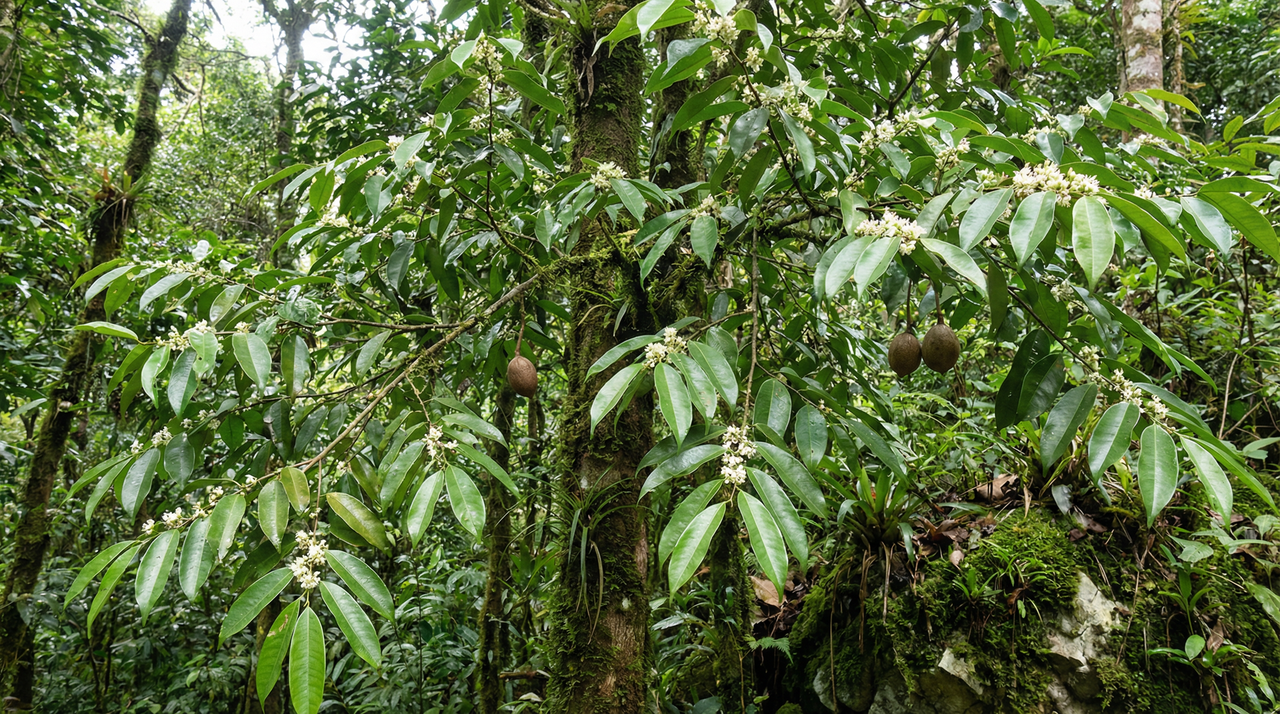
Agarwood is the most expensive wood in the world, yet it doesn't smell like anything when the tree is healthy. I keep coming back to that fact, because it completely inverts how most of us think about valuable plants. With saffron, the crocus blooms and you harvest. With vanilla, the orchid flowers and you cure the bean. But Aquilaria malaccensis just stands there, a perfectly ordinary-looking rainforest canopy tree, quietly doing nothing remarkable until something goes wrong. Wound it, infect it with the right fungi, push it into genuine physiological distress, and only then does it begin producing the dark, resin-saturated heartwood that perfumers call oud and traders have moved along the Silk Road for over two thousand years.[1]
What gets me is that the tree is essentially making something extraordinary out of suffering, and we've nearly driven it to extinction because of it. Every wild Aquilaria species is now listed under CITES Appendix II, and most are sitting on the IUCN Red List somewhere between Vulnerable and Critically Endangered.[2] The demand never softened. The forests just got quieter. So the question that shapes everything else about growing this plant isn't "how do I get it to produce resin?" It's whether you can participate in the cultivation of something this culturally significant without repeating the mistake that nearly erased it.
Origin and History of Agarwood (Aquilaria malaccensis)
Botanical Background and Native Range
Aquilaria malaccensis is the species most widely recognized in trade and conservation literature as the primary source of agarwood, though the genus Aquilaria contains roughly 21 species scattered across the rainforests of Southeast and South Asia. As a member of the Thymelaeaceae family, A. malaccensis ranges natively across Malaysia, Indonesia, Thailand, Vietnam, Cambodia, Laos, Myanmar, the Philippines, and parts of India, Bhutan, and Bangladesh.[3][4] These are genuine rainforest trees, tall and canopy-bound, capable of living 50 to 100 years or more in the wild before commercial pressure cuts that life short.[5][6] What unites every species in the genus is a single biological event: when the tree is wounded or attacked by specific fungi, it produces a dark, fragrant resin as a defensive response. That resin, which forms in only a small fraction of wild trees, is what we call agarwood.[7][8] That single phenomenon explains both its ecological role and its extraordinary human value. The conservation stakes are severe: A. malaccensis and most of its relatives, including A. crassna, A. sinensis, A. hirta, and A. subintegra, are listed as Critically Endangered or Vulnerable on the IUCN Red List, with some populations having declined by more than 80 percent, and all are regulated under CITES Appendix II.[3][2][9]
Visual Characteristics
I've grown several Aquilaria species from seed, and what strikes you first in the nursery is how deceptively ordinary the seedlings look. They develop slowly, maybe half a meter to two meters of new growth per year, with glossy, dark green leaves that are ovate to elliptic, roughly 8 to 12 centimeters long, smoother above and paler beneath.[10] Careful labeling matters early because the species look similar as juveniles, though once you've compared A. hirta side by side with A. malaccensis, the difference is obvious: hirta's young stems are noticeably hairy, as its name suggests, and it can show deciduous tendencies in drier conditions.[11] Mature A. malaccensis trees are genuinely impressive, reaching 20 to 40 meters tall with straight trunks up to 60 to 80 centimeters in diameter, buttressed at the base, with bark that starts smooth and gray before darkening to fissured brown or near-black with age.[12][13] The flowers are small, white to pale yellow, and fragrant, peaking in the dry season.[14] Fruits are woody capsules dispersed primarily by birds, a trait that distinguishes this species from the winged-seeded relatives that rely on wind.[15] Below ground, a taproot anchors the tree with extensive lateral fibrous roots that form mycorrhizal associations, a critical adaptation for nutrient uptake in the nutrient-poor tropical soils these trees call home.[16]
Traditional and Cultural Significance
The history of agarwood and oud in human culture stretches back over two millennia and crosses almost every major civilizational tradition. Chinese records reference it as chen xiang as far back as the 3rd century BCE in the Erya, and it appears in both the Shennong Bencao Jing around 200 CE and Li Shizhen's landmark Bencao Gangmu in 1596. Indian texts are equally ancient: the Sushruta Samhita and Charaka Samhita both describe its medicinal uses, and the Mahabharata references it as a marker of luxury and ritual.[17][18] In Islamic tradition, oud holds a place of particular reverence; hadiths record it as a favored scent of the Prophet Muhammad, and scholars including Avicenna wrote on its use in perfumery, incense, and medicine from the 7th century onward.[19]
Across Buddhist, Hindu, Taoist, and indigenous Southeast Asian practices, agarwood smoke has served purposes ranging from purification and meditation to warding off malevolent spirits and conducting shamanic ceremony. Communities including the Dayak and Orang Asli have woven it into their ritual lives for generations.[20][21] Traditional medicine systems from Ayurveda to TCM to Unani have used it for digestive complaints, respiratory conditions, anxiety, and inflammation, typically as decoctions or powders rather than in the large quantities that raise safety concerns.[22][23] The depth of reverence these traditions show for the wood is something I find genuinely humbling. That reverence is also, in part, what has driven the overexploitation that now threatens the tree's survival.
Fun Facts About Agarwood
Here's the biology that makes this tree unlike almost anything else you'll encounter: naturally formed agarwood resin appears in only 5 to 10 percent of wild trees, triggered by specific fungal infections like Phaeoacremonium parasiticum or Fusarium solani.[24][25] The tree responds by producing a cascade of sesquiterpenoids and chromones that transform pale, unscented heartwood into something dark, resinous, and extraordinary. I've watched this happen in my own trial plantings: twelve to eighteen months after deliberate inoculation, the wood visibly darkens and the aroma shifts into something genuinely complex, balsamic and woody with a depth that cheap substitutes simply don't have. That transformation is why high-grade agarwood fetches anywhere from $5,000 to $30,000 per kilogram or more, within a global market that exceeds $6 billion annually.[26] Regional character matters enormously: Indonesian wood tends toward sweet and heavy, Cambodian toward sharper notes, and Vietnamese toward a balance many perfumers prize above all others.[27]
The tree's ecological relationships are just as fascinating. Hornbills serve as key seed dispersers for several Aquilaria species, and pollination falls largely to thrips and other small insects, though A. filaria has a specialized partnership with the hornet Vespa tropica.[28][29] Conservation responses have taken root in recent years: plantations in Indonesia and Vietnam, seed banking at Kew Gardens, and the refinement of fungal inoculation techniques are all giving cultivated production a real foothold.[9] Having worked with CITES-compliant suppliers, I know that every kilogram of legal agarwood represents years of careful cultivation and significant regulatory oversight. The oldest herbarium specimen of A. malaccensis dates to around 1824, a reminder that Western botanical science has known about this tree for two centuries while indigenous communities have understood it for far longer.[30] Sustainable production is not a compromise here; it's the only path that keeps both the cultural tradition and the tree itself alive.
Agarwood Varieties and Sourcing Guide
When I start a planting plan for any threatened species, the first thing I pull up isn't a nursery catalog, it's the IUCN Red List. With agarwood, that habit becomes non-negotiable fast. Aquilaria malaccensis is classified as Critically Endangered, driven to the brink by centuries of overexploitation and habitat loss.[31] It's not alone: A. crassna sits at Critically Endangered as well,[32] while A. sinensis is Vulnerable,[33] and A. rostrata, A. hirta, A. subintegra, and A. filaria all carry Vulnerable or Endangered listings too.[34][35][36][37] The entire genus sits on CITES Appendix II.[2] Before you think about which "variety" to grow, that regulatory reality shapes every decision that follows.
Notable Varieties and Subspecies of Aquilaria
Here's the thing that surprises most gardeners: there are no standardized named cultivars of Aquilaria, no international registry, no 'Heritage Malaccensis' or 'Early Resin Select' sitting on a shelf somewhere.[38][39] The closest thing to cultivar selection you'll find are institutional clones like 'Eri' and 'PhD', developed by research programs for improved resin yield rather than introduced through any commercial trade channel. In practice, growers work with regional provenances, which behave more like landraces than true cultivars.
The most practical distinction I guide clients through is the one between the two subspecies of A. malaccensis itself. Think of it the way you'd think about rootstock selection in fruit trees: subsp. malaccensis, native to West Malesia, tends toward richer resin production and more complex aromatic character, while subsp. microphylla, from drier parts of South Asia, Sri Lanka, and northern Australia, tolerates tougher conditions but typically delivers lower resin volumes with a less refined scent profile.[40][41] If your climate is marginal, microphylla buys you resilience. If your site is optimal and you're serious about resin quality, malaccensis is the choice. Beyond the subspecies, a handful of regional selections from Indonesia (loosely called 'Sulawesi', 'Kalimantan', 'Jambu') and Malaysia ('Simpang', 'Nadung') are recognized in the literature, though documentation on these is thin and performance data thinner still.[38][42]
Other Aquilaria species follow similar patterns. A. sinensis has three recognized botanical varieties (var. sinensis, var. glabrifolia, and the Yunnan regional form var. yunnanensis), plus anecdotal Chinese landraces like 'Mei-Huan-Yu' that lack any formal cultivar standing.[43][44] A. hirta splits into var. hirta and var. pubescens based entirely on leaf hairiness, a morphological curiosity with no demonstrated link to resin quality.[45] A. subintegra and A. filaria show real intraspecific variation in resin chemistry and growth rate, but neither has been formally classified into named varieties.[46][47] The genus-wide pattern is clear: this is a plant whose "varieties" are defined by provenance, conservation status, and propagation method, not by any breeder's catalog.
The most exciting developments are happening inside germplasm programs rather than nurseries. Institutional work by the Kunming Institute of Botany, national programs in Vietnam, Malaysia, China, and Indonesia, and international resources coordinated through Bioversity International are actively selecting for faster growth, superior scent, higher resin yield, and better inoculation response.[48][38] From a regenerative design perspective, that's genuinely hopeful: the traits these programs target serve conservation and commercial growers alike, and material derived from them carries a chain of custody that ethically sourced wild-collected plants simply cannot provide.
Legal Requirements and Sustainable Sourcing of Agarwood
Any international trade in Aquilaria, whether seeds, seedlings, or mature wood, requires CITES Appendix II documentation.[2] For US-based buyers, that means a USFWS import permit on top of USDA APHIS phytosanitary compliance, and the Lacey Act makes it a federal offense to import material that was illegally sourced in its country of origin.[49][50] Early in my career I received mislabeled plant material from a supplier who turned out to have no traceability documentation at all. That experience made me permanently allergic to vague provenance claims, and I now treat chain-of-custody records as a non-negotiable condition of purchase, not a nice-to-have.
Live plants are genuinely hard to find partly because of those regulations and partly because natural resin formation is exceptionally rare, making the whole enterprise commercially marginal unless artificial induction via wounding, Fusarium inoculation, or chemical methods is built into the plan from the start.[51] Tissue culture is increasingly the preferred propagation route precisely because it sidesteps seed dormancy issues, reduces early disease pressure, and takes pressure off wild populations.[52]
If you're sourcing plants, expect Malaysian seedlings to run roughly USD $1 to $3 each, with Indonesian nursery pricing in a similar range; in the US market, A. crassna seedlings typically cost $15 to $40 each, and seed packets of 10 to 20 seeds sell for $20 to $50, while 3 to 5 year old trees can command $200 to $500 or more.[53] The safest suppliers are government-affiliated or licensed institutions: the Forest Research Institute Malaysia (FRIM), Vietnam Forest Science Institute, Tropical Agricultural Research and Development Corporation, and vetted members of the Indonesian Agarwood Association.[54][55] A handful of botanical seed suppliers offer A. sinensis online, but I'd verify CITES compliance before completing any purchase from an unfamiliar vendor.
Sustainability certifications through PEFC and Rainforest Alliance are emerging as useful traceability signals, and I've seen strong establishment results in conservation plantings where healthy mycorrhizal inoculation was part of the nursery protocol from day one.[56][57] Artificially propagated material from a licensed source isn't just the ethical choice; for a Critically Endangered tree with this much regulatory oversight, it's the only choice that makes any conservation sense.
Agarwood Propagation and Planting
Growing agarwood starts with accepting a fundamental tension: the tree needs genetic diversity to survive as a species, but commercial growers need genetic uniformity to produce consistent resin. That tension shapes every propagation decision you'll make. A combination of seed and vegetative methods is generally recommended for sustainable cultivation of CITES-listed species like Aquilaria malaccensis, with seeds reserved largely for breeding and conservation programs and vegetative techniques doing the heavy lifting in commercial nurseries.[58][59]
Propagation Methods for Aquilaria malaccensis
If you've ever grown tomatoes from saved seed, you understand what "orthodox seed storage" feels like: casual, forgiving, low-stakes. Agarwood seed is the opposite of that. Aquilaria malaccensis produces recalcitrant seeds that lose viability within two to four weeks under normal conditions, stretching to perhaps one or two months under optimal cool, humid storage.[60][61] I've learned to treat fresh seed arrivals like a small emergency: whatever else is on the bench gets pushed aside and those seeds go into trays the same day. Even then, expect 10 to 30% germination as your realistic baseline for this species.[60]
Fresh seed sown immediately into a warm, humid chamber at 25 to 30°C with 80 to 95% humidity will typically sprout within two to four weeks.[62] Scarification or a GA3 soak can push those numbers up, and related species like A. hirta and A. sinensis can achieve 50 to 80% germination under ideal pretreatment conditions.[62][63] Take those higher figures with some caution, though; they tend to come from research-station conditions that are difficult to replicate in a field nursery. The seeds themselves are small, elliptical to ovoid, roughly 1.2 to 2.0 cm long, and many Aquilaria species exhibit polyembryony, producing one to three embryos per seed and a mix of genetically variable offspring.[64][65] That genetic variability is exactly why seed propagation matters for conservation, even when the germination odds are frustrating.
For commercial production, vegetative methods are far more dependable. Grafting (cleft or whip-and-tongue) onto compatible rootstocks like A. crassna achieves 70 to 85% success.[66][67] After several seasons of trial and error in my Central Florida nursery, I've settled on A. crassna rootstocks for A. malaccensis scions because they establish faster under humid subtropical conditions. Semi-hardwood cuttings treated with 1000 to 3000 ppm IBA will root at 60 to 80% in four to eight weeks under similar warm, humid conditions.[66][67] In my nursery trials, 2000 ppm IBA on semi-hardwood cuttings taken during the rainy season has been the most reliable approach. Air layering works too, with 60 to 80% success over two to four months, while tissue culture on MS medium with BAP and NAA can yield five to ten shoots per explant but demands sterile lab infrastructure most growers don't have.[66][68] Timing all of these to the rainy season (May through September in Southeast Asia) maximizes humidity and active growth for better establishment.[69] Inoculating seedling media with beneficial microbes like Trichoderma can improve seedling survival by 30 to 50%, a simple step that's worth building into any nursery protocol.[70] Because every grafted plant we produce from cultivated stock helps reduce pressure on wild Appendix II-listed populations, the vegetative path carries a conservation argument alongside the commercial one.
Soil, Site Selection, and Planting Technique
Aquilaria malaccensis grows naturally on the well-drained slopes of Southeast Asian rainforests up to about 850 m elevation,[71] and that ecological origin tells you almost everything you need to know about site selection. The tree wants fertile, well-drained sandy loam or loamy soil rich in organic matter (2 to 5%), with a pH between 5.5 and 7.0 and an ideal sweet spot around 6.0 to 6.5.[72][73] It will tolerate a broader range of 4.5 to 8.0, but outside the preferred window you'll see interveinal chlorosis from iron deficiency at high pH or leaf necrosis and stunted growth from aluminum toxicity at low pH.[74] Get a soil test before you plant, apply lime or sulfur amendments well ahead of planting time, and retest before committing trees to the ground.
Drainage is the one requirement I treat as truly non-negotiable. Waterlogged roots invite Phytophthora, Fusarium, and Pythium almost immediately, and the early signs (wilting, yellowing, stunted growth) are easy to misread as a nutrient problem until you dig down and find mushy roots.[66][75] I've worked with a client's site where a soil test revealed hidden compaction just 30 cm down; the fix was raised beds with incorporated perlite and compost, and what had looked like a marginal location became a productive planting. Root systems need at least 1.0 to 1.5 m of workable depth,[66] so if your native soil is heavy clay, amendments aren't optional. For container mixes, a 1:1:1 ratio of sand, loam, and organic matter with 20 to 30% perlite at pH 5.5 to 6.5 works well in the nursery phase.[76] Young plants go into the field with 50 to 70% shade cloth for the first six to twelve months; they're understorey juveniles in nature, and transplant stress in full tropical sun will set them back considerably. Shade can reduce gradually to around 30% by year three as the canopy develops.[71][76]
Spacing, Timeline, and Field Establishment
Mature A. malaccensis can reach 10 to 20 m in height with a canopy spread of similar scale,[77] so the 3 to 5 m spacing ranges used in commercial plantations involve real trade-offs. A 3x3 m grid fits about 1,111 trees per hectare; a 4x5 m layout drops that to 500.[78][79] Tighter spacing maximizes early yield potential but increases competition, disease pressure, and the likelihood of canopy closure choking out lower branches before you can manage them. In humid climates, I lean toward wider spacing specifically for airflow; fewer fungal problems down the track is worth the lower tree count.
During the first three to five years, intercropping with ginger, legumes, or pineapple in the open rows is common practice and makes good sense,[78] generating income while the trees grow and reducing bare-soil erosion. Prune lower branches in years one through three to develop a straight bole and create clean inoculation sites later.[77][80] The payoff moment, first inoculation, typically arrives when trunk diameter reaches 5 to 10 cm, which is years three to five post-planting for grafted stock.[66]
Germination and Early Growth Timeline
The single most important number to internalize before planting agarwood is this: seed-grown trees take 7 to 15 years to reach maturity for resin production, while grafted trees get there in 4 to 7 years, with first flowering possible at 3 to 5 years versus 5 to 7 for seedlings.[66][81][82] That gap is why commercial nurseries overwhelmingly favor vegetative propagation. Annual growth runs a modest 0.5 to 1.0 m under good conditions,[83] and without deliberate induction, natural resin formation in wild trees is sporadic, sometimes taking 20 to 30 years or more to appear.[84] Managed plantation trees with irrigation, soil enrichment, and fungal inoculation can produce harvestable resin in 8 to 15 years,[80] which is still a long horizon but a workable one if site preparation and propagation choices are made carefully from the start. The time you invest in drainage, pH correction, shade management, and choosing quality grafted stock in year one is the most leveraged investment the whole project offers.
Agarwood Care Guide: Growing Aquilaria malaccensis
Every care decision you make with agarwood has to serve two goals simultaneously: keep the tree alive and, eventually, convince it to produce resin. Those two goals are not always pulling in the same direction. The practices that produce a lush, vigorously growing tree can actively undermine resin formation, and the controlled stress that induces resin can tip into real damage if you're not paying attention. That tension is what makes this plant so fascinating to work with, and so unforgiving of generic tropical-tree care.
Sunlight and Light Requirements
Aquilaria malaccensis is a rainforest understory tree that matures into the canopy, and its light requirements shift accordingly. Seedlings and young plants need 30 to 70 percent shade, which I manage in my layered plantings by positioning them beneath taller pioneer species in the early years.[85][76] As the tree matures, you gradually reduce that canopy cover and push it toward full sun, because mature trees in full sun produce more resin.[86] The genus follows this same pattern broadly, so the 30 to 70 percent rule applies whether you're growing malaccensis or a close relative. Too little light shows up as pale, etiolated foliage and reduced vigor; too much, especially on young plants, causes leaf scorch, bleaching, and increased pest pressure.[87][88] I label my young agarwood clearly in the nursery because the early foliage really does resemble a handful of common tropical weeds; losing track of one has consequences when you're also managing inoculation timelines years later.
Water Needs and Irrigation
In the wild, these trees grow in zones receiving 1,500 to 4,000 mm of rainfall annually at 70 to 90 percent humidity.[38] Replicating that in cultivation means keeping soil moisture at 50 to 80 percent field capacity without waterlogging. Young plants need watering every two to five days; mature trees can go seven to fourteen days between irrigations, or receive around 20 to 30 liters per tree during dry spells.[89] I use a simple finger test for young plants and a tensiometer for the mature stand.
Overwatering is a genuine killer: root rot from Phytophthora and Fusarium shows up as yellowing leaves, wilting despite wet soil, and blackened roots with a foul odor. Drought stress causes leaf scorch and premature leaf drop, and severe water deficit will also reduce resin yield.[90][88] The nuance worth holding onto is that mild, controlled water stress can promote resin formation, but the operative word is mild. I watch my trees carefully in the dry season and let the topsoil approach dryness without ever letting them reach the wilting point. Drip irrigation, 5 to 10 cm of organic mulch, and low-salinity water (EC below 1 dS/m) are the practical tools that make this kind of precision possible.[91][92]
Feeding and Nutrient Management
Agarwood prefers well-drained loamy soil with a pH of 5.5 to 7.0 and 2 to 5 percent organic matter.[93] For young trees, a balanced NPK formula (15-15-15 or 10-10-10) split into two to four applications during the growing season, supplemented with 5 to 10 kg of compost or manure per tree annually, supports healthy establishment.[94] Once trees reach three to five years, shift to a higher phosphorus and potassium formula like 10-20-20. Potassium specifically supports vigor, stress tolerance, and resin formation, so it becomes the priority nutrient as trees approach inoculation age.[95]
In my early trials I lost measurable resin yield to lush, soft foliage driven by high-nitrogen feeds. The research confirms it: excess nitrogen promotes vegetative growth at the expense of resin and increases disease susceptibility.[66] Watch for deficiency symptoms; yellowing older leaves signal nitrogen shortage, purplish leaves and poor root development suggest phosphorus deficiency, scorched leaf margins point to potassium, and interveinal chlorosis in young leaves indicates iron deficiency. Soil and leaf testing every six to twelve months keeps you ahead of these issues.[96][97] I prefer organic amendments because they sustain the soil biology that humid subtropical conditions can otherwise deplete rapidly.
Frost Tolerance and Cold Protection
Agarwood is about as frost-tolerant as a ripe mango, which is to say not at all. Growth shuts down below 15°C (59°F), and temperatures below 10°C can be lethal.[13][98] The tree is suited to USDA zones 10b through 11; A. sinensis shows a marginal extension into zone 9b with active protection, but that's the exception. Cold damage presents as leaf yellowing and browning, necrosis, stem cracking, and leaf drop of up to 50 to 70 percent, with a corresponding drop in resin production.[99][100]
In marginal zones, I pair young agarwood trees with taller windbreak species on the northern and western exposures. Those windbreaks serve double duty: they buffer cold winds and cast light dappled shade that moderates temperature swings on cold nights. Frost cloth and heavy mulching at the root zone are non-negotiable for any tree under three years old in zone 10a or cooler.
Heat Tolerance and Summer Management
The optimal temperature range is 20 to 35°C. Agarwood trees can tolerate brief spikes to 40°C, but prolonged exposure above 35 to 38°C causes leaf scorch, wilting, chlorosis, reduced photosynthesis, and increased fungal susceptibility; seedlings and flowering trees are the most vulnerable.[101] Mitigation runs parallel to what I recommend for other zone 10-12 tropicals: maintain 50 to 70 percent shade for seedlings and reduce progressively with age, keep 5 to 10 cm of organic mulch over the root zone, and use drip irrigation delivering 20 to 30 liters per tree every three to five days during dry heat events.[102][103] Spacing trees at 3 to 4 meters promotes airflow that reduces heat buildup and fungal pressure simultaneously. One thing worth noting: moderate heat combined with fungal inoculation can enhance resin production, but excessive heat degrades both yield and quality, so summer management is not just about tree survival.
Pruning, Maintenance, and Resin Induction
Routine pruning happens in the dry season. Remove dead, diseased, or crowded branches, keeping removal to no more than 10 to 30 percent of the canopy at a time, and always use sterilized tools with 45-degree angled cuts to shed water.[104] Young trees need staking and formative pruning to establish a strong single leader. In humid climates I'm especially strict about tool sterilization because every wound is a potential entry point for opportunistic pathogens.
Resin induction is where routine care becomes something else entirely. At five to seven years, trees can be deliberately wounded through mechanical injury, fungal inoculation with species like Fusarium solani, or chemical agents. Success rates range from 30 to 70 percent, and resin matures over six to thirty-six months afterward.[105][106] From my own trials, trees that received balanced but not excessive nutrition and precise, controlled wounding produced measurably better resin quality than over-fed specimens. Sustainable harvesting removes only the infected portions, never exceeding 20 to 50 percent of the tree, which allows the tree to recover and produce again.[107]
Seasonal Rhythm
Aquilaria malaccensis has no true dormancy. Vegetative growth peaks in the wet season and slows in drier months, but the tree stays evergreen throughout. Flowering typically runs March through May for most species, including malaccensis; A. hirta shifts its window to July through September. Fruiting follows in the wet season from June to October.[13][108] In practice, this rhythm means adjusting irrigation and shade management with the monsoons rather than following a fixed calendar, which aligns well with how I approach most subtropical and tropical plantings. Agarwood tree growth rate is slow by most standards, and that patience is simply part of the commitment you're making when you plant one.
Harvesting Agarwood: Timing, Technique, and Yield
No other plant I've worked with in regenerative systems asks for this level of patience. Agarwood doesn't produce its resin on any standard agricultural timeline. The heartwood darkens, thickens, and becomes fragrant only after deliberate wounding or fungal infection triggers a defense response, and that transformation takes years to mature into something worth harvesting.[109] Think of it less like harvesting a vegetable and more like waiting on a fine wine that you had to injure on purpose.
When to Harvest Agarwood: Maturity Indicators and Seasonal Cues
The timeline from planting to first harvest is long regardless of method. Biological inoculation in plantation trees (typically done at 5-10 years of age) requires another 4-6 years before resin matures; chemical methods can shorten that to 2-3 years post-inoculation, but the quality suffers noticeably. Total time from seed to premium harvest often lands somewhere between 8 and 15 years, and genuinely exceptional grades can take even longer.[109][110]
Maturity indicators are multi-sensory and worth learning well. A harvestable tree typically shows a trunk diameter of 20-30 cm or more, visible dark resinous streaks or cracks in the bark and heartwood, noticeably increased wood density, and elevated sesquiterpene and chromone content detectable by GC-MS or by nose.[109][111] That last one is the cue I've come to trust most when evaluating aromatic resins in the field: rubbing a small wound site and noticing the shift from faint to deeply sweet-balsamic is more reliable than age data alone. Resin accumulation also tends to peak after the rainy season, which points toward dry-season harvest (roughly October through April across much of Southeast Asia) to reduce contamination risk and ease drying.[112][113] Morning cuts, typically between 6 and 9 AM, are preferred for the same reasons.[113]
Sustainable Harvesting Techniques and Post-Harvest Processing
Traditional harvest meant locating naturally infected wild trees and felling them outright. That practice is largely what put Aquilaria malaccensis and its relatives on the CITES Appendix II list in the first place. Responsible modern agarwood inoculation in plantation settings uses artificial fungal or mechanical induction, followed by selective partial extraction that removes no more than 20-30% of the trunk volume, leaving enough living wood for coppice regrowth when the tree is cut at 1 to 1.5 meters above ground.[114][109] For anyone attempting to grow this in a zone 10+ food forest or agroforestry planting, selective partial harvest is non-negotiable, both ecologically and legally.
Post-harvest handling is where a lot of potential value gets lost. The outer bark, non-resinous wood, and any dirt must be removed, then the material cleaned by brushing or gentle washing. Slow air-drying in shade at temperatures below 60°C over one to three months brings moisture down to 10-15% without cracking the wood or cooking off the volatiles.[115] Traditional curing methods including soil burial for 6-12 months, low-heat smoking, or water soaking can dramatically deepen the sesquiterpene profile over time. Store finished chips cool (15-25°C), dry (50-60% relative humidity), and sealed against oxidation; quality holds for several years under proper conditions.[116]
Agarwood Yield and Flavor Profile
The resinous heartwood is essentially the entire harvest. Young leaves of A. malaccensis are eaten as a cooked vegetable in parts of Southeast Asia, where bitterness softens with heat, but that use is genuinely minor and mostly regional curiosity.[117] The resin, used in tiny quantities, is the product. Yield quality depends on how thoroughly infection spread through the heartwood; the target is roughly 20-30% trunk volume saturated with resin, and higher density there means higher grade material.[112]
The aroma and flavor profile that results is genuinely complex. Sesquiterpenes like agarospirol, guaiol, and α-guaiene, alongside chromone compounds, produce a woody, balsamic, smoky, and faintly sweet character that can edge toward vanilla, dark chocolate, or something almost animalic depending on species, origin, and age.[118][119] I often describe it to people unfamiliar with the scent as aged patchouli braided with high-quality vanilla and forest floor, which is admittedly imperfect but gets the idea across. That depth peaks in resin that's 10-20 or more years old, where top grades carry over 20% oil content and distinctly darker coloration.[120] A. sinensis tends toward the milder, more elegant end of the spectrum; other species and origins can be spicier or more intensely animalic.[121] Genuine high-grade material is rare, expensive, and CITES-regulated; that's the reality any ethical grower has to start from.
Agarwood Preparation and Uses
In my work with rare tropical aromatics, I've learned that genuine agarwood is best reserved for intentional medicinal or aromatic applications under expert guidance rather than casual culinary experimentation. The overwhelming majority of its documented uses across cultures are medicinal or ritualistic, and any culinary application is so niche, so expensive, and carries enough caution around toxicity that it belongs in a different category entirely from, say, ginger or turmeric.
Culinary Applications of Agarwood
That said, some traditional kitchens in Malaysia and Indonesia do use the resinous heartwood in microscopic quantities as a luxury flavoring, infused into rice dishes, teas, broths, and desserts to impart a woody, balsamic, faintly smoky character.[118][122] Think of it less like a spice and more like a perfume added to food. The flavor profile has some overlap with cardamom or cinnamon in the sense of warming intensity, but it's darker, more resinous, and tips into bitter bitterness fast if you overdo it. Young leaves of A. malaccensis are occasionally brewed as an infusion, producing a smooth amber tea with mild sediment and a gentle phenolic quality.[117][123]
Wood chips for any culinary use require processing to reduce bitterness, and the oil yield from distillation runs only 0.5 to 5%, which partly explains the staggering cost.[120] There's also a real identification hazard here. Aquilaria species can be confused with related Thymelaeaceae members including Gyrinops, Daphne, and Wikstroemia, some of which carry meaningful toxicity risks, and reliable identification requires expert examination of leaf venation, bark texture, or even genetic testing. I would never recommend that anyone source this plant casually for kitchen use. The endangered status, the cost, the bitterness at anything above trace amounts, and the identification risks all make this a plant to admire and work with deliberately rather than improvise around.
Traditional Medicinal Preparations
Where agarwood truly has historical depth is in medicine. The resin, known as Chen Xiang in TCM, appears across Ayurvedic, Unani, Malay Jamu, and Southeast Asian systems for digestive ailments, colic, respiratory conditions, rheumatism, pain, and as a calming agent.[124][125] Preparations take many forms: wood chips decocted in water, powders blended into pastes, tinctures soaked in alcohol, steam-distilled essential oils, or simple infusions.[126] TCM adult dosages run roughly 1 to 3 grams of powder or 3 to 9 grams of dried resin as a daily decoction, though no universally standardized modern protocol exists across traditions.[127]
The sesquiterpenes, chromones, and phenolics that drive these effects (detailed in the health benefits section) also show up in leaf infusions from A. malaccensis, which carry antioxidant phenolic compounds at 50 to 100 mg GAE per gram.[128] A. hirta shows low toxicity in studies, but overconsumption of A. sinensis preparations has been linked to nausea and liver stress, and the essential oil is not recommended during pregnancy due to potential emmenagogue effects. The practical upshot: respect traditional dosage ranges, work with a practitioner, and never treat this as a supplement you can self-dose casually.
Non-Food Uses in Perfumery, Ritual, and Permaculture
This is where agarwood truly lives. The essential oil commands extraordinary prices in luxury perfumery for its deep, balsamic base note, frequently blended with sandalwood or rose, bridging centuries of aromatic tradition with contemporary fragrance design.[129] The wood and resin burn as incense in Islamic purification ceremonies, Buddhist meditation practice, Hindu ritual, and indigenous Dayak observances, a use that has persisted for over two millennia precisely because nothing else smells like it.[130]
In permaculture and agroforestry systems, I've observed Aquilaria species pull real weight even before resin induction. Planted at 3 to 6 meter spacing alongside nitrogen-fixers like Leucaena and fruiting canopy trees like durian or rambutan, with ginger and turmeric working the understory, they function as effective windbreaks, cutting speeds by 30 to 40%, while their leaf litter cycles potassium and phosphorus back through the soil profile.[131][132] Resin induction through artificial fungal inoculation typically begins after 5 to 8 years, with commercial maturation stretching 15 to 30 years, so this is a long-term investment in a living system, not a quick crop.[133]
Every Aquilaria species sits on CITES Appendix II, and A. crassna is critically endangered, which means sourcing decisions carry real legal and ethical weight.[2][134] When I've helped clients source planting material, navigating CITES permitting is non-negotiable, and adulteration with non-resinous woods is common enough in the commercial supply chain that provenance documentation matters enormously. High-grade resin reaching $30,000 per kilogram creates obvious incentives for fraud.[13] Cultivated, ethically inoculated plantations are the only honest path forward for anyone who wants to work with this plant while supporting rather than depleting the wild populations it came from.
Agarwood Health Benefits and Medicinal Uses
What I find endlessly fascinating about agarwood is that its medicinal value is inseparable from its survival instinct. The tree isn't producing these compounds for us. It's producing them to survive. That reframing matters when you're trying to understand why the chemistry is so complex and why the pharmacological activity is so broad.
Key Phytochemicals in Agarwood: Sesquiterpenes and Chromones
When Aquilaria malaccensis is wounded or infected by specific fungi like Talaromyces, Aspergillus, or Fusarium solani, it mounts a dramatic chemical defense, increasing resinous secondary metabolite production by 10 to 50 fold compared to healthy wood.[135][136] I find this parallel to frankincense and myrrh, where the most therapeutically studied compounds are also defensive resins produced under stress. The plant's emergency response becomes our medicine cabinet.
The chemistry that results is genuinely impressive in its diversity. Researchers have identified over 150 sesquiterpenes across the genus, alongside 2-(2-phenylethyl)chromones, flavonoids, phenolics, and coumarins.[137][138][139] The heartwood and resin are richest in sesquiterpenes such as agarospirol, jinkoh-eremol, kusunol, guaiol, and β-agarofuran, plus chromone derivatives like agarotetrol, while the leaves skew toward flavonoids and phenolics.[140] It matters which part of the plant you're working with, because the compound profile shifts substantially between leaf, heartwood, and extracted oil.
Even within the resin and essential oil, the picture is variable. Sesquiterpenes typically make up 40 to 60% of the oil, but the precise profile shifts with species origin, climate, soil conditions, season, and extraction method.[141][142][143] Malaysian, Indonesian, Thai, Indian, and Chinese populations produce chemically distinct oils. When evaluating research on agarwood benefits, remember that results from one species or provenance don't automatically transfer to another.
Traditional and Modern Medicinal Research
The traditional record for agarwood is genuinely ancient and geographically sweeping. Across Southeast Asian folk medicine, TCM, Ayurveda, and Unani systems, it has been used for many conditions, including:
- digestive disorders
- fever and cough
- asthma and rheumatism
- pain and anxiety
- insomnia
Modern preclinical research is broadly consistent with those traditional applications. Anti-inflammatory effects are among the most consistently observed, with studies showing inhibition of TNF-α, IL-6, NF-κB, COX-2, and iNOS pathways and reductions in rat paw edema of 40 to 60% at 100 to 200 mg/kg doses.[147][148] Antioxidant activity via free-radical scavenging and Nrf2 pathway activation has been documented alongside broad-spectrum antimicrobial action against Staphylococcus aureus, E. coli, and Candida albicans. Analgesic effects (up to 70% inhibition in writhing tests) and sedative and anxiolytic activity via GABAergic modulation and AChE inhibition round out the stronger findings. There are also preliminary signals for anticancer, anti-diabetic, and hepatoprotective activity, though those are much earlier-stage.[144][149]
Here's where I'd urge some caution, though. The overwhelming majority of this evidence comes from in-vitro and animal models. Human clinical data is limited to small pilot studies, mostly around inhalation and aromatherapy for relaxation or anxiety.[144][150][151] The preclinical results are genuinely promising. But I prioritize evidence-based use, and I'd always recommend consulting a qualified practitioner before exploring agarwood for any therapeutic purpose.
Nutritional Profile and Edibility
Agarwood isn't a food plant, and there's no standard nutritional profile to speak of in the way we'd discuss herbs grown for the kitchen. Its leaves do contain flavonoids, phenolics, tannins, and modest mineral content (potassium 1.2 to 2.5 mg/g, calcium 0.8 to 1.5 mg/g, magnesium 0.3 to 0.6 mg/g dry weight) with measurable antioxidant activity up to 80% DPPH scavenging, and the seeds yield 30 to 40% oil rich in oleic and linoleic acids and tocopherols.[152][153][154] Young leaves and fruits have some localized traditional culinary uses in parts of Southeast Asia, but these are genuinely minor. From a permaculture perspective, this tree's contribution to the system is ecological and aromatic, not caloric, and that's perfectly fine.
Safety Profile and Precautions
In my work with medicinal and aromatic plants, I always emphasize that even centuries of traditional use doesn't mean a plant is appropriate for unsupervised, casual use. For agarwood, the baseline safety picture is reasonably reassuring: animal studies show low acute oral toxicity with LD50 values above 2000 to 5000 mg/kg for extracts and essential oils, and traditional dose ranges of 1 to 10 g/day (commonly 3 to 9 g) of powder, resin, or decoction have a long record without widespread reports of severe toxicity.[155][156][157]
That said, the practical precautions are real. Mild adverse effects include gastrointestinal upset, allergic reactions, and contact dermatitis from undiluted essential oil. I always dilute aromatic oils to 1 to 2% for any topical application and patch-test before use. Possible interactions with sedatives, CNS depressants, anticoagulants, or CYP450-metabolized drugs deserve attention, and agarwood should be avoided entirely during pregnancy and breastfeeding given potential emmenagogue effects and unstudied risks.[158][159][160] Incense smoke can also irritate existing respiratory conditions, worth knowing if you're burning it regularly.
Sourcing is, for me, a non-negotiable safety consideration. Every Aquilaria species sits on CITES Appendix II, and A. malaccensis, A. rostrata, and A. hirta are IUCN Endangered.[2][161][162] Wild-harvested material carries both conservation consequences and adulteration risks; toxic Daphne species have been known to enter the trade as substitutes. Cultivated, sustainably sourced agarwood isn't just the ethical choice; it's the safer one.
Agarwood Pests and Diseases
There's a beautiful and somewhat cruel irony at the heart of agarwood cultivation: the very stress events that threaten to kill these trees are also what make them valuable. Fungal infection triggers resin formation, and deliberate wounding for induction opens the door to opportunistic pathogens. Managing this tension is, in my experience with tropical timber species, one of the more demanding balancing acts in horticulture.
Major Fungal Diseases Affecting Agarwood
The agarwood fungus pressure on Aquilaria malaccensis is substantial and wide-ranging. Ganoderma species, particularly G. boninense, cause basal stem rot and heart rot[163][164] and rank among the most structurally devastating pathogens the tree faces. Phytophthora species follow closely, causing root and collar rot that can topple trees silently from below.[165] I've watched Phytophthora tear through related tropical hardwoods in poorly drained beds with alarming speed, which is why I insist on raised beds or well-amended soil whenever I plan an agarwood guild. Round out the disease picture with Fusarium solani driving root rot and vascular wilt, Pestalotiopsis vismiae causing leaf spot and defoliation, and Ceratocystis fimbriata associated with wilt and canker.[166][167][168] Pythium and Phaeacremonium species also contribute to root rot complexes and stem canker in plantation settings.[167]
The wounding paradox matters here. Induction techniques that deliberately injure the heartwood to trigger resin formation also invite opportunistic fungal colonization.[169] Bacterial diseases are far less commonly reported, and viral infections in Aquilaria are essentially undocumented, so fungi deserve the bulk of your attention and management effort.[170] Among the genus, A. malaccensis is the most susceptible, though selections like clones KR4 and PN5 in Malaysia show partial resistance to root rot, and hybrids with A. crassna are being developed specifically for broader disease tolerance.[171][172]
Common Insect Pests of Agarwood
The insect pest roster on Aquilaria malaccensis is long. The most economically serious are the borers: Zeuzera coffeae and Zeuzera conferta tunnel into young shoots, causing wilting and dieback, while longhorn beetles (Batocera spp.) damage the resin-producing wood core directly.[173][174] When I'm scouting young stems, I look for fine frass and entry holes at the base of shoots; finding Zeuzera early makes all the difference. Heortia vitessoides causes significant defoliation, as do bagworm species (Bagrod adelaidae, Bagrod endoxantha), sometimes stripping trees during population explosions.[175] Termites (Nasutitermes, Macrotermes spp.) nest in root zones and trunk bases of stressed trees, while scale insects and mealybugs are generally minor unless conditions push populations out of control.[173]
The tree does fight back. Those sesquiterpenoids and 2-(2-phenylethyl)chromones I mentioned in the health benefits section -- the very compounds that make agarwood medicinally prized -- also function as insecticidal and antifeedant compounds, giving mature trees moderate inherent resistance.[176][177] Young plants lack that chemical arsenal in meaningful quantities, though, and monoculture plantings under stress from poor drainage, high nitrogen, or inadequate airflow tip the balance toward outbreaks fast.[178] Sap-sucking pests tend to surge during dry seasons when plant stress is highest; heavy monsoon rains bring Phytophthora pressure right back.[179]
Integrated Pest and Disease Management
Because Aquilaria malaccensis is critically endangered, I avoid broad-spectrum chemicals that could harm beneficial fungi or pollinators. The mycorrhizal relationships these trees depend on are too important to sacrifice for a quick fix. Biological controls are my first line: Trichoderma-based biofungicides for root and soil pathogens, entomopathogenic fungi, Trichogramma wasps, Bacillus thuringiensis for defoliating caterpillars, and neem-based biopesticides across the board.[180][181] When chemical intervention is genuinely warranted, phosphonates and fosetyl-Al for Phytophthora and copper-based fungicides for foliar diseases are the more targeted options.[180]
Cultural practices matter just as much. Proper spacing, dry-season pruning, prompt removal of infected material, and excellent drainage address the conditions that let pathogens take hold in the first place. In practice, prevention through site preparation beats reactive treatment every time. Breeding programs through FRIM in Malaysia are developing selections with improved disease tolerance -- clones KR4 and PN5 and A. crassna hybrids show real promise -- and while none are yet widely commercialized, the direction of that research gives growers genuine reason for optimism.[182][172]
Agarwood in Permaculture Design
Of all the trees I've worked with in tropical and subtropical landscape design, agarwood sits in a category almost by itself: a species with profound ecological depth, extraordinary economic value, and a cultivation story that is, at its core, an act of conservation. Growing Aquilaria malaccensis well means understanding exactly what kind of environment shaped it over millennia, and then doing your best to replicate it.
Climate and Growing Zones for Aquilaria Malaccensis
This is a true rainforest tree. Aquilaria malaccensis evolved in lowland and hill dipterocarp forests under Köppen Af conditions, and it shows: the species needs 2,000 to 4,000 mm of annual rainfall, humidity consistently above 80% (ideally 85 to 95%), and temperatures between 20 and 35°C.[3][183][184] It grows from sea level up to around 850 m, with some genus members pushing to 1,200 m. All of that means USDA zones 10 to 12, with cold damage starting below 10 to 15°C and outright death below freezing.[184][99][185] If you're in zone 9b thinking you can push it with a south-facing wall and deep mulch, that's not unreasonable for a season or two, but I wouldn't build a food forest plan around that gamble.
In the US, agarwood cultivation remains largely experimental, limited to southern Florida, coastal Texas, and Hawaii, often in protected settings.[99][186] Aquilaria sinensis offers slightly wider tolerance, handling monsoon climates with 1,000 to 2,500 mm of rainfall and surviving into zone 9b under protection,[187][188] but A. crassna is even more cold-sensitive, with damage starting at 5°C.[99][189] One thing worth appreciating is that climate of origin also shapes the final resin: Malaysian trees tend toward earthy, guaiol-rich profiles while Indonesian material runs spicier with more agarospirol.[119][190] Provenance matters, ecologically and commercially.
Ecological Functions and Pollination Ecology
The flowers of A. malaccensis are small, sweetly fragrant (often nocturnal), and pollinated primarily by thrips, with bees, flies, and moths playing supporting roles.[66][191][192] The species is predominantly self-incompatible and protogynous, which is a beautiful adaptation for outcrossing but means natural fruit set runs a frustrating 5 to 20%, especially in fragmented habitats.[66][191][192] In my experience with other insect-pollinated trees, even a loose guild of nectar-rich companions planted nearby makes a measurable difference in pollinator visitation. Hand pollination, diverse companion planting, and avoiding pesticides can push fruit set above 50%[193][194] -- entirely achievable if you design the surrounding planting with intention.
The resin itself forms only after infection by specific fungi, particularly Fusarium solani and Phaeoacremonium parasitica, as a heartwood defense response.[195][196] Natural infection rates are low and unpredictable, which is exactly why all commercial plantations rely on artificial wounding and inoculation. I've noticed, working with clients who've had inoculated stock for several years, that trees grown with diverse mycorrhizal partners seem to respond more vigorously to deliberate wounding -- which aligns with the documented mycorrhizal associations that help these trees scavenge phosphorus in poor tropical soils.[197] Beyond resin, mature trees contribute meaningfully to their ecosystem: roughly 200 to 300 kg of carbon sequestered per tree, potassium and phosphorus returned through leaf litter, and habitat for hornbills and barbets that handle seed dispersal.[198][106][199]
The conservation picture is stark. All major Aquilaria species are threatened, with A. malaccensis listed as Endangered and several relatives critically so, due to decades of overharvesting and habitat loss.[200][2] CITES Appendix II listing since 1995 means all commercial material must be traceable to cultivated sources. I only recommend nurseries that can provide that documentation -- not as bureaucratic box-ticking but because growing these trees yourself, from certified cultivated stock, is one of the most direct ways a permaculture practitioner can participate in conservation rather than depletion.
Forest Layer, Guilds, and Agroforestry Integration
In the forest, A. malaccensis occupies the mid-to-upper canopy, reaching 15 to 30 m at maturity, though juveniles are moderately shade-tolerant up to around 50% shade before needing increasing light as they ascend.[201][197] I think about this the same way I think about young avocados or certain mangoes: start them with dappled protection, then open up canopy access as they mature. It's not a fire-and-forget planting. Other species in the genus vary in position: A. crassna can reach emergent heights of 20 to 40 m, A. sinensis settles into 10 to 20 m subcanopy often alongside Castanopsis or Schima, and A. hirta shows stronger juvenile shade tolerance in dipterocarp understories.[202][203] That range of stature gives tropical designers genuine flexibility in multi-strata systems.
In agroforestry practice, Aquilaria integrates well as a canopy companion with coffee, fruit trees, tea, ginger, and turmeric below, providing shade, windbreak function, biomass from litter fall, and microclimate moderation while the understory generates near-term income during the long wait for inoculation.[204][205] Standard spacing runs around 3 by 3 m in dedicated plantations,[133] though I'd open that up in a polyculture to give companions room. Nitrogen-fixers in the guild are worth prioritizing -- not just for soil fertility but because healthy, well-nourished trees seem to build the fungal root communities that may improve resin response later. Early growth is slow, typically 10 to 20 cm per year in the first few years,[133] so this is a plant for long-horizon systems, not quick food forests. What you're building is a resilient canopy anchor with resin income arriving after 5 to 10 years post-inoculation, embedded in a polyculture that earns its keep throughout. For anyone in a qualifying tropical climate, that patience is very much worth designing for.
The Tree That Taught Me to Think in Decades
I planted my first Aquilaria malaccensis knowing I'd likely never harvest resin from it myself. That's a strange thing to sit with as a designer, but it reoriented something in me. Most of what I grow, I plant for my lifetime. This one I planted for whoever comes after. There's a kind of humility in that I didn't expect, and honestly, I think more food forests need it.
Sources 205
- TRAFFIC: Agarwood – Going Up in Smoke? ↩
- CITES Appendices ↩
- Aquilaria malaccensis - IUCN Red List ↩
- Aquilaria malaccensis - Kew Science ↩
- Aquilaria malaccensis - Kew Science ↩
- Agarwood-producing species in Asia - FAO Document ↩
- Aquilaria sinensis (Lour.) Spreng.: An Overview of Its Traditional Uses and Pharmacological Activities ↩
- Agarwood Formation in Aquilaria Trees ↩
- Agarwood (Aquilaria spp.) ↩
- Aquilaria malaccensis ↩
- Aquilaria hirta Ridl. ↩
- Aquilaria malaccensis Lam. ↩
- Aquilaria malaccensis - Useful Tropical Plants Database ↩
- Aquilaria malaccensis Lam. - Plants of the World Online ↩
- Flora of China - Aquilaria sinensis ↩
- Agarwood-producing Aquilaria Trees: Ecology and Conservation ↩
- The Cultural Heritage of Agarwood in Ancient China ↩
- Agarwood in the Mahabharata and Ancient India ↩
- Agarwood in Islamic Tradition ↩
- Traditional Uses of Agarwood in Southeast Asia ↩
- The Cultural Significance of Agarwood in Southeast Asia ↩
- Ethnopharmacological Uses of Aquilaria Species in Traditional Medicine ↩
- Pharmacological Activities and Mechanisms of Action of Chenxiang (Aquilaria sinensis) ↩
- Induced agarwood production in Aquilaria malaccensis: A review ↩
- Agarwood Induction: Current Developments and Future Perspectives ↩
- The Economics of Agarwood ↩
- Aquilaria crassna: A Review on Its Phytochemistry and Pharmacological Activities ↩
- Ecological Role of Hornbills in Seed Dispersal ↩
- Pollination Biology of Aquilaria Species ↩
- Aquilaria malaccensis ↩
- Aquilaria malaccensis ↩
- Aquilaria crassna in IUCN Red List ↩
- Aquilaria sinensis - IUCN Red List ↩
- Aquilaria rostrata ↩
- Aquilaria hirta Ridl. ↩
- Aquilaria subintegra in IUCN Red List ↩
- Aquilaria filaria - The IUCN Red List of Threatened Species ↩
- Agarwood Production in Aquilaria Trees ↩
- Genetic Diversity and Conservation of Aquilaria malaccensis ↩
- Agarwood Tree Diversity and Ecology ↩
- Genetic Variation in Aquilaria Species and Agarwood Quality ↩
- Propagation and Cultivation of Agarwood Species ↩
- Flora of China - Aquilaria sinensis ↩
- Kew Science - Plants of the World Online: Aquilaria sinensis ↩
- Flora Malesiana Series I - Volume 5: Thymelaeaceae ↩
- Aquilaria subintegra - An Overview of the Species ↩
- Aquilaria filaria (agarwood) ↩
- Aquilaria Species: Germplasm and Varietal Improvement ↩
- Wildlife Permits - CITES ↩
- Lacey Act ↩
- Challenges in the Production and Sustainable Supply of Agarwood ↩
- Tissue Culture of Aquilaria Species: A Review ↩
- Cost Analysis for Agarwood Plantation ↩
- Tropical Agricultural Research and Development Corporation ↩
- Sustainable Agarwood Production in Vietnam ↩
- Sustainable Agarwood Production in Southeast Asia ↩
- CITES and the Trade in Agarwood ↩
- Propagation Techniques for Agarwood-Producing Trees ↩
- Propagation of Aquilaria spp.: A Review ↩
- Propagation of Aquilaria malaccensis: A Review ↩
- Seed Germination and Propagation of Aquilaria sinensis ↩
- Seed Germination and Seedling Vigor in Aquilaria spp. ↩
- Germination Requirements for Aquilaria Species ↩
- Aquilaria malaccensis - The IUCN Red List of Threatened Species ↩
- Seed Morphology and Germination of Aquilaria sinensis ↩
- Propagation Techniques for Aquilaria malaccensis ↩
- Rooting of Agarwood Cuttings Using IBA Hormone ↩
- Micropropagation of Aquilaria malaccensis Lam. ↩
- Seed Germination and Vegetative Propagation of Aquilaria malaccensis ↩
- Germination response and role of soil microbes in the seedling growth of Aquilaria sinensis ↩
- Aquilaria malaccensis Lam. - IUCN Red List ↩
- Cultivation and Management of Aquilaria malaccensis ↩
- Soil Requirements for Agarwood Trees (Aquilaria spp.) ↩
- Cultivation of Agarwood (Aquilaria spp.) ↩
- Soil and Water Requirements for Aquilaria Cultivation ↩
- Propagation and Nursery Management of Aquilaria Species ↩
- Cultivation and Management of Aquilaria malaccensis in Plantations ↩
- Agarwood (Gaharu) Production in the Tropics (FAO Forestry Paper 183) ↩
- Cultivation and Management of Agarwood (Aquilaria spp.) ↩
- Cultivation and Management of Aquilaria malaccensis ↩
- Cultivation and Production of Agarwood ↩
- Time to Maturity for Aquilaria Species ↩
- Aquilaria malaccensis Lam. Profile ↩
- Agarwood: Production and Utilization ↩
- Cultivation and Management of Aquilaria malaccensis ↩
- Cultivation Techniques of Aquilaria sinensis ↩
- Physiological Responses of Aquilaria Species to Environmental Stressors Including Light ↩
- Physiological Responses of Aquilaria sinensis to Light Stress ↩
- Cultivation and Management of Aquilaria Species ↩
- Symptoms of Overwatering in Tropical Trees: Case of Aquilaria spp. ↩
- Agarwood Production: Water and Soil Management ↩
- Soil and Water Requirements for Aquilaria Species ↩
- Nutrient Requirements and Management of Aquilaria Species for Agarwood Production ↩
- Agarwood Plantation Manual ↩
- Cultivation and Management of Agarwood (Aquilaria crassna) Plantations ↩
- Nutrient Management in Agarwood (Aquilaria spp.) Cultivation ↩
- Deficiency Symptoms in Tropical Trees Including Aquilaria ↩
- Aquilaria malaccensis Lam. - Plant Profile ↩
- Frost Protection for Tropical Plants ↩
- Cold Stress Responses in Tropical Trees: Implications for Conservation ↩
- Cultivation and Management of Aquilaria malaccensis in the Philippines ↩
- Cultivation and Management of Aquilaria malaccensis ↩
- Responses of Aquilaria sinensis to High Temperature Stress: Implications for Agarwood Production ↩
- Agarwood Plantation and Cultivation Manual ↩
- Agarwood Production: A Review ↩
- Induction of Agarwood Formation in Aquilaria Trees ↩
- Sustainable Harvesting Practices for Chinese Agarwood ↩
- Phenology and Reproductive Biology of Aquilaria malaccensis ↩
- Agarwood: Production, Trade and Conservation ↩
- Review on Induced Resin Formation in Aquilaria Species ↩
- Resin Formation in Aquilaria malaccensis: Indicators and Detection ↩
- Agarwood Production in Aquilaria sinensis ↩
- Sustainable Harvesting Techniques for Agarwood in Southeast Asia ↩
- Aquilaria spp. (Agarwood): Harvesting and Management Guidelines ↩
- Post-Harvest Handling and Processing of Agarwood ↩
- Storage Conditions for Agarwood Chips ↩
- Ethnobotanical Uses of Aquilaria Species in Southeast Asia ↩
- Chemical Composition and Aroma Characteristics of Agarwood Essential Oil ↩
- Chemical Constituents and Biological Activities of Agarwood ↩
- Agarwood: Quality Evaluation and Processing Techniques ↩
- Chemical Composition and Aromatic Characteristics of Agarwood Essential Oil from Aquilaria sinensis ↩
- The Use of Agarwood in Traditional Medicine and Cuisine ↩
- Agarwood: The Fragrant Wood of Aquilaria ↩
- Agarwood: A Review on Its Phytochemical Constituents and Pharmacological Activities ↩
- Traditional Uses and Pharmacology of Agarwood ↩
- Agarwood: A review of its traditional uses, phytochemistry, and pharmacology ↩
- Chinese Pharmacopoeia - Aquilaria Resin ↩
- Aquilaria sinensis (Lour.) Spreng.: An Ethnopharmacological Review ↩
- The History of Oud in Perfumery ↩
- Agarwood in Indonesian Rituals ↩
- Cultivation and Agroforestry of Aquilaria Species ↩
- Agroforestry Practices for Agarwood Production ↩
- Permaculture Plants: Agarwood (Aquilaria spp.) ↩
- Aquilaria crassna: Distribution, Morphology, and Conservation ↩
- Agarwood Formation: An Introduction to the Genesis of Valuable Heartwood in Aquilaria Trees ↩
- Induction of Agarwood Formation in Aquilaria crassna by Fungal Inoculation ↩
- Chemical Constituents and Biological Activities of the Genus Aquilaria (Thymelaeaceae): An Updated Review ↩
- Phytochemical and Pharmacological Aspects of Aquilaria Species: A Review ↩
- Phytochemical Constituents of Aquilaria Species ↩
- Phytochemical and Pharmacological Review of Agarwood (Aquilaria Species) ↩
- Geographic and Seasonal Variation in Chemical Composition of Aquilaria malaccensis Agarwood ↩
- Chemical Composition and Bioactivities of Essential Oils from Agarwood ↩
- Chemical Constituents and Biological Activities of Agarwood from Aquilaria Species ↩
- Agarwood: A Review on Its Traditional Uses, Phytochemistry, and Pharmacology ↩
- Ethnobotany of Aquilaria malaccensis in Malaysia ↩
- Traditional Uses and Pharmacological Properties of Agarwood (Aquilaria spp.) ↩
- Pharmacological Activities of Aquilaria Species - A Review ↩
- Anti-inflammatory and Antioxidant Properties of Agarwood ↩
- Pharmacological Activities and Chemical Constituents of Agarwood ↩
- Aquilaria crassna: A Review on Its Phytochemistry and Pharmacology ↩
- Agarwood Oil and Its Effect on Human Relaxant Activities: A Systematic Review ↩
- Phytochemical Constituents and Antioxidant Activity of Aquilaria malaccensis Leaves ↩
- Nutritional and Bioactive Compounds in Fruits and Seeds of Aquilaria malaccensis ↩
- Nutritional Composition and Phytochemical Analysis of Aquilaria sinensis Seeds ↩
- Aquilaria malaccensis Lam. - A review on its traditional uses and pharmacology ↩
- Agarwood (Aquilaria spp.): A Review of Its Traditional Uses, Phytochemistry, and Pharmacology ↩
- Safety assessment of agarwood essential oil ↩
- Safety Assessment of Agarwood Essential Oil ↩
- Allergic Contact Dermatitis to Agarwood Essential Oil ↩
- Pharmacological Activities and Safety of Aquilaria Species: A Review ↩
- IUCN Red List: Aquilaria malaccensis ↩
- IUCN Red List: Aquilaria rostrata ↩
- Ganoderma Infections in Tropical Hardwoods ↩
- Ganoderma Infections in Tropical Trees ↩
- Phytophthora Root Rot in Agarwood Trees ↩
- Pathogens of Agarwood: A Review ↩
- Diseases of Aquilaria malaccensis in Malaysia ↩
- Agarwood-producing Aquilaria species: Ethnobotany, diseases and future perspectives ↩
- Fungal Pathogens of Agarwood Trees ↩
- Diseases of Aquilaria Species: A Review ↩
- Diseases of Aquilaria malaccensis in Plantation Settings ↩
- Forest Research Institute Malaysia - Aquilaria Propagation ↩
- Insect Pests of Aquilaria Species ↩
- Biology and Ecology of Zeuzera conferta on Aquilaria malaccensis ↩
- Insect Pests of Agarwood (Aquilaria spp.) in Plantations ↩
- Chemical Composition and Biological Activities of Agarwood (Aquilaria spp.) ↩
- Defense Mechanisms in Aquilaria malaccensis: Induction of Agarwood by Insect Damage ↩
- Agarwood: Biology and Biotechnology ↩
- Pest Incidence on Aquilaria malaccensis in Peninsular Malaysia ↩
- Integrated Pest Management for Aquilaria Species ↩
- Integrated Pest Management in Agarwood Plantations ↩
- Breeding for Disease Resistance in Agarwood ↩
- Aquilaria malaccensis Lam. - Useful Tropical Plants Database ↩
- Aquilaria (Aquilaria spp.) Cultivation Guide ↩
- USDA Plant Hardiness Zone Map ↩
- Agarwood Production in North America ↩
- Flora of China - Aquilaria sinensis ↩
- Aquilaria sinensis ↩
- Aquilaria crassna Cultivation Guidelines ↩
- Geographic Variation in Sesquiterpenes of Aquilaria malaccensis ↩
- Pollination Biology of Aquilaria Species ↩
- Breeding system and pollination biology of Aquilaria species ↩
- Agarwood-Producing Trees: Ecology and Conservation ↩
- Artificial Pollination Techniques for Agarwood Trees ↩
- Fungal Induction of Agarwood Resin ↩
- Agarwood Production: Cultivation and Challenges ↩
- Mycorrhizal associations in Aquilaria malaccensis ↩
- The Ecology of Aquilaria Species in Southeast Asia ↩
- Pollination and seed dispersal of Aquilaria malaccensis ↩
- Aquilaria malaccensis Lam. - IUCN Red List ↩
- Shade tolerance and forest dynamics of Aquilaria malaccensis ↩
- Aquilaria sinensis (Lour.) Spreng. ↩
- Aquilaria hirta Ridl.: A Review... ↩
- Agroforestry potential of Aquilaria in Southeast Asia ↩
- Aquilaria in Agroforestry Systems ↩