Most people who grow ajwain for the first time describe the scent the same way: they crush a leaf, pull back slightly, and then say, "Wait, that's thyme." It isn't thyme. It's not even closely related to thyme. But the essential oil responsible for that sharp, medicinal punch is thymol, the exact same compound that gives common thyme its character, and in ajwain it's present at concentrations high enough that traditional grain storage in South Asia has used the seeds for centuries as a natural insect repellent.[1] You're not imagining the similarity. The plant just arrived at the same chemistry from a completely different direction.
I've grown a lot of Apiaceae, and ajwain still surprises me. It looks like a delicate carrot seedling, behaves like a drought-hardened desert crop once established, smells like a Mediterranean herb cabinet, and has been documented in Ayurvedic texts since roughly 300 BCE, which means people figured out its value a long time before anyone had a word for thymol. That layered identity, culinary spice, medicinal seed, pollinator plant, pest deterrent, is what makes it worth understanding rather than just growing.
Ajwain Origin, History, and Botanical Profile
Native Range and Botanical Background
Ajwain (Trachyspermum ammi) comes from the dry, sun-drenched edges of the world: the arid and warm temperate zones stretching from Egypt and the Eastern Mediterranean through Iran, Turkey, and Afghanistan into northwestern India and Pakistan, where it still forms the heart of commercial cultivation today.[2][3][4] Knowing that origin makes sense of almost everything about this plant once you start growing it. It wants heat, it tolerates drought, and it has no patience for wet, cold soil.
Taxonomically, ajwain sits in the Apiaceae family alongside carrots, dill, and fennel, completing its full life cycle in a single growing season.[5][6] If you've gone digging through older references, you might have encountered the synonyms Carum copticum or Trachyspermum copticum, and there has been persistent confusion with Aegopodium podagraria, also called Bishop's weed. Modern databases like Plants of the World Online and Missouri Botanical Garden have resolved this clearly: they are entirely separate plants.[7] I appreciate that the authoritative sources now draw a firm line there, because the mix-up can genuinely mislead gardeners hunting for seed. Domestication most likely developed along two parallel fronts, in South Asia and the Eastern Mediterranean, before the plant spread beyond those regions.[8][6] In North America it's a cultivated annual introduction, not a naturalized species. Growers here treat it just as they would basil or cilantro: seasonal, replanted each year, and very much dependent on warm conditions to thrive.
Visual Characteristics of Ajwain
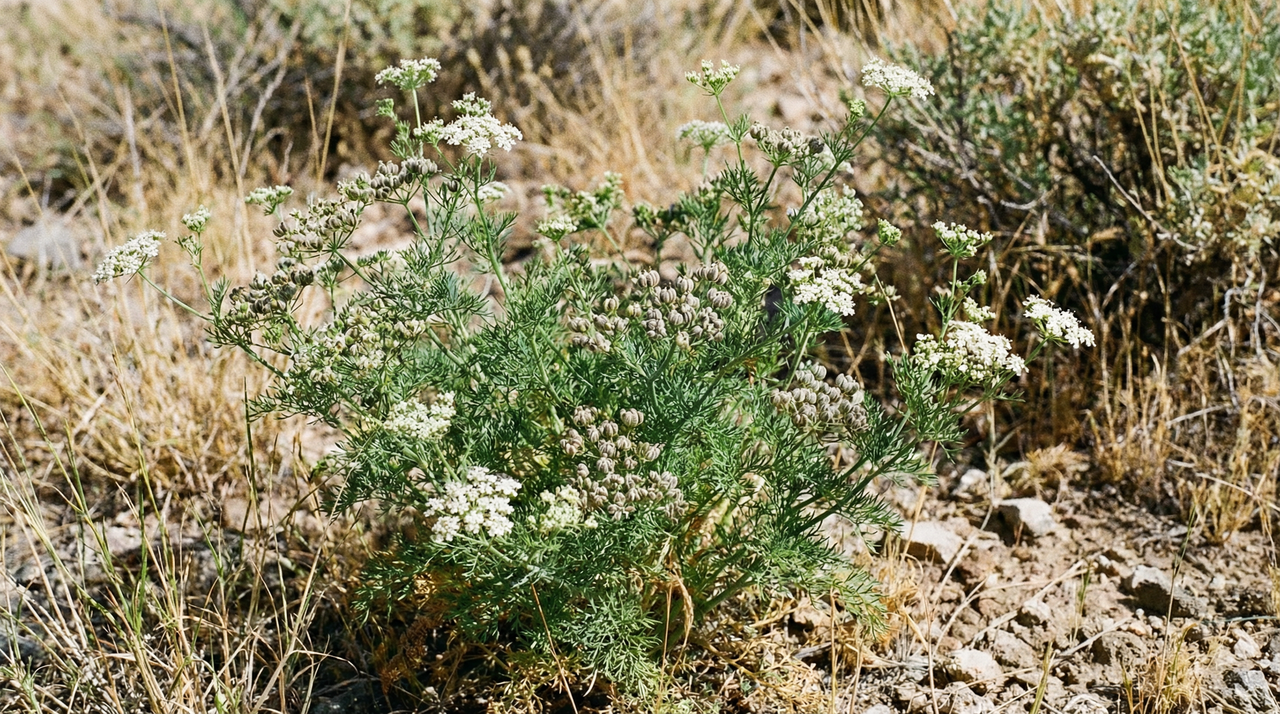
In the garden, ajwain is a slender, upright plant with branching stems that can reach anywhere from about 20 cm to nearly 90 cm tall depending on how happy it is.[9][10] The stems have fine hairs and subtle ridges running lengthwise, and the leaves are delicate and feathery, pinnately divided in that classic Apiaceae way. When it blooms from late spring through summer, it throws up compound umbels of tiny white flowers, each just 2-3 mm across, that catch the light beautifully.[11][12] After pollination, small oval seeds form, greyish-brown and ridged, each splitting into two parts at maturity.[13][14]
The single most reliable identification cue is the scent. Brush the leaves or crush a seed and you get an immediate hit of warm, pungent, thyme-like aroma driven by thymol. Nothing else in a typical herb garden smells quite like it.[15] That said, I always label my ajwain rows carefully because the young seedlings look deceptively like carrot or dill sprouts in the first few weeks. I learned that the hard way one spring when I ended up with an unlabeled flat of mystery Apiaceae and spent an afternoon sniff-testing every single one to sort them out.
Traditional and Cultural Uses
Ajwain's documented medicinal history stretches back at least to around 300 BCE, when it appeared in the Charaka Samhita and Sushruta Samhita under the Sanskrit name Yavani. Ayurvedic practitioners prescribed it for digestive disorders, flatulence, respiratory complaints, balancing Vata dosha, and even as a wound treatment and antidote to poisons.[16] That tradition of using it as a carminative and digestive stimulant, what Ayurveda calls a "deepana" herb, carried through into everyday cooking: seeds folded into parathas, stirred into lentils, added to heavy dishes specifically to ease discomfort afterward.[17] A pinch of ajwain in a dense bean dish isn't a medical claim; it's just a practical kitchen habit with a very long history behind it.
During the Islamic Golden Age, Persian scholars including Avicenna incorporated ajwain into Unani medicine, extending its documented reach further across the medieval world.[18] In South Asian Hindu tradition it features in havan ceremonies and protective rituals, while Middle Eastern folk practice wove it into ceremonial teas and fumigation rites.[19] Indigenous communities across India, Pakistan, and Nepal, among them the Bhil, Gond, Pashtun, Tamang, and Chepang peoples, have maintained their own parallel traditions of using the seeds as infusions and powders for fevers, joint pain, respiratory ailments, and postpartum recovery.[20][21] What I find compelling about this layered cross-cultural record, from Ayurveda to Unani to village folk medicine, is how consistently the same applications appear across unconnected traditions. That kind of convergence tells you something.
Ajwain's spread beyond its native range followed ancient trade corridors including the Silk Road and Indian Ocean networks, and as demand grew, cultivation gradually replaced wild harvesting, which had been causing local population depletion in parts of India and Nepal.[22][23] That shift from wild harvest to farmed cultivation matters from a permaculture ethics standpoint. I always source cultivated seed for that reason, and I'd encourage others to do the same.
Fun Facts About Ajwain
The drought tolerance of this plant isn't just a lucky trait; it's a finely tuned physiological system. Ajwain's small, pubescent leaves, deep taproot, and dense surface trichomes all reduce water loss and reflect UV, while under drought stress the plant accumulates proline and ramps up antioxidant enzyme activity to maintain osmotic balance.[24][25] In my Florida growing experience, those mechanisms translate into a plant that handles dry spells considerably better than thyme or oregano once it's established, which frankly surprises visitors who assume something this delicate-looking would be finicky.
Despite its long cultivation history, ajwain has no recognized subspecies or formal varieties in modern taxonomy; what you grow is simply Trachyspermum ammi, consistent in its biochemistry and appearance.[26] And for anyone hesitant about introducing it to their garden, it's listed as introduced but non-invasive in the United States and is not flagged as threatened by the IUCN.[6][27] Grow it without worry, harvest it well, and it becomes a genuinely useful edge plant in a dry guild or xeriscape planting.
Ajwain Varieties and Where to Buy
Understanding Ajwain: Botanical Profile and Key Attributes
There are essentially no named ajwain varieties. Unlike basil or tomatoes, where you're choosing between dozens of named cultivars with meaningfully different traits, Trachyspermum ammi is what it is.[28] You'll see it listed as carom seeds, bishop's weed, or under the synonym Carum ammi, and I've learned the hard way to always confirm that Latin name before buying. I've received seeds labeled "bishop's weed" that turned out to be a completely different Apiaceae species. Now I won't order without seeing Trachyspermum ammi printed somewhere on the packet.
What you're really selecting for isn't a cultivar; it's the plant's remarkably consistent biochemistry. The essential oil runs 35–60% thymol, accompanied by gamma-terpinene, p-cymene, and alpha-pinene.[29] That thymol is why ajwain has earned such a deep medicinal reputation: it disrupts pathogenic microbial cell membranes,[30] supports digestion through carminative and antispasmodic action,[31] contributes antioxidant capacity linked to its phenolic compounds,[32] and shows anti-inflammatory effects in animal models that some researchers have compared favorably to standard NSAID treatments.[33] The health benefits section goes deeper on all of this; the point here is that the "variety" you want is simply a high-thymol, well-grown specimen of this one species.
Sourcing Ajwain Seeds, Plants, and Spice
Ajwain isn't a mainstream commercial crop in the U.S.; the USDA PLANTS database lists it as an introduced species with minimal nursery representation.[13][34] I've almost always ended up starting from seed because live plants are genuinely hard to track down; when I do find nursery stock, it's usually through specialty herb suppliers rather than anything local. That's actually fine. Seeds give you more plants for less money, and germination is fast once conditions are right.
Seed packets typically run $3–6 for 100–500 seeds, and live plants, when available, land somewhere between $5 and $15 depending on size and supplier.[35][36][37] When buying seeds, look for organic and non-GMO certification, germination rates stated at 70–80% or higher, purity above 98%, and moisture content below 10%.[38][39] I've had packets with only 40% germination that taught me to demand that threshold be printed on the label. If it's not listed, move on.
For seeds, I've ordered reliably from Eden Brothers, Johnny's Selected Seeds, Fedco, Botanical Interests, Seed Savers Exchange, Strictly Medicinal Seeds, and Horizon Herbs.[40][41][42][43] If you just want the spice for the kitchen, Indian grocery stores are your best bet, especially in cities with large South Asian communities. Diaspora Co. and Spices India are solid online options too. Imported seed and spice can come in under USDA APHIS and FDA oversight, requiring phytosanitary certificates and meeting contamination standards,[44][45][46] which is why I always buy domestic seed when I can. It sidesteps the fumigation risk entirely, and the domestic suppliers above carry it consistently enough that there's rarely a reason to look elsewhere.
Ajwain Propagation and Planting Guide
Ajwain is one of those herbs that genuinely rewards the seed-saver mindset. There's no complex hybrid to worry about, no tricky vegetative technique to master. Seed is the method, and it works beautifully.
Ajwain Seed Characteristics and Propagation Methods
Ajwain is propagated almost exclusively from seed, and the biology makes that an easy choice. The plant is predominantly self-pollinating, which means it produces true-to-type offspring with excellent genetic consistency.[47][48] Some wind or insect outcrossing can occur, but it's minor enough that seed-savers can count on consistent results season after season. The seeds themselves are tiny, around 1-2 mm long, with a distinctively ridged, net-like surface and oil cavities that give them that sharp, immediately recognizable scent.[49][50] I always crush a few between my fingers before sowing. If they smell intensely of thyme with a peppery edge, they're fresh and viable. A flat, faint smell usually means the oils have degraded and germination will be disappointing.
Fresh seed germinates at 70-95%, and that rate drops with age or poor storage.[51] Old or hard seed can be scarified or treated with GA3 to improve germination, though in my experience fresh seed rarely needs any of that coaxing.[52] Stem cuttings are technically possible at 40-60% success rates, and tissue culture can hit 80-95%, but both require considerably more effort or equipment than the average home grower has on hand.[53] For a kitchen garden or food forest understory planting, seed wins on every count.
Damping-off is the one early risk worth flagging here. I've lost entire flats to it when conditions were too wet and cool. Good airflow, careful watering from below, and warm soil from the start prevent most of it.[54]
Soil, Site Selection, and Planting Technique for Ajwain
Ajwain's arid heritage shows up directly in what it needs from your garden soil.[10] It wants to drain. Sandy loam or loam with good aeration is ideal; heavy clay, compacted soil, or anything that stays wet after rain is a recipe for root rot and failed crops.[55][56] I've seen ajwain rebound from a dry spell with barely a complaint once it's established, but I've also watched it collapse in boggy clay inside a week. Raised beds or generous perlite in containers fixes most drainage problems before they start.[57]
Aim for a soil pH between 6.5 and 7.5, though the plant tolerates a slightly wider range.[58] Below 6.0, you'll start seeing stunted growth or purplish foliage as phosphorus availability drops; above 8.0, iron chlorosis can set in, showing as interveinal yellowing.[59] A simple soil test and a lime or sulfur amendment before planting saves a lot of troubleshooting later. Work in a solid layer of well-decomposed compost or farmyard manure to improve structure and keep nutrients available.[60] Ajwain's taproot runs relatively shallow, mostly in the top 30 cm, so you don't need deep beds, but you do need that top layer to be loose, aerated, and well-drained.[61] For containers, a mix of garden soil, coarse sand or perlite, and compost in a pot at least 6-8 inches deep with drainage holes works well for growing ajwain at home.[57]
Germination Timeline, Spacing, and Early Care
Sow directly into the garden once soil temperature reaches 20-30°C (with 21-27°C being the sweet spot), and expect seedlings to emerge in 7-14 days.[62][63] Keep sowing depth shallow, no more than 0.5-1 cm; the seeds need light to germinate and will struggle if buried too deep.[64] In temperate climates that means spring or early summer; in mild-winter regions, an October or November sowing works well. Full sun, at least 6-8 hours of direct light daily, is non-negotiable for good growth and seed production.[65]
Here's the thing nobody warned me about the first time I grew ajwain: the seedlings look almost identical to young carrots or parsley for the first two to three weeks. Feathery, delicate, easy to overlook or accidentally weed out. Label your rows the moment you sow, and check them before you pull anything. Once seedlings hit about 5 cm tall, thin to a final spacing of 15-20 cm between plants in rows 30-45 cm apart.[47][66] I err on the generous end of that spacing, especially in humid summers, because crowding creates exactly the kind of still, damp microclimate that fungal disease loves. From that point, the plant takes 120-180 days to reach full seed maturity as an annual, so patience is part of the deal.[47]
Seed Storage, Viability, and Longevity
One of the underrated pleasures of growing ajwain is that it rewards seed-saving generously. The seeds follow orthodox storage behavior, meaning they dry down well and stay viable for years when stored correctly.[67] Aim for 5-8% moisture content, keep them in an airtight container with a silica gel packet, and store somewhere cool and dark. Under those conditions, viability holds for 2-5 years at room temperature, and considerably longer in a proper cold store.[68][69] Fresh seed from a good season starts at 85-95% germination, but that drops off if the seeds get humid or warm during storage, since the natural oils that make the seeds so aromatic are also susceptible to rancidity.[70]
My practical test each spring is simple: open the jar and smell a pinch. Fresh, viable ajwain seed hits you with that sharp, almost medicinal thyme-and-pepper scent immediately. Seeds that have gone bland or slightly musty usually germinate poorly, even if they look fine. I run a quick germination test on a damp paper towel if I'm uncertain, especially with anything older than two years. It's a small step that saves the frustration of patchy, unpredictable stands in the garden. If you're saving your own seed with isolation from other Apiaceae in mind, keep at least 200-300 meters between ajwain and close relatives to preserve genetic purity.[71]
Ajwain Care Guide: Sunlight, Water, Soil, and Seasonal Needs
Ajwain is not a fussy plant, but it does have clear opinions about where it wants to live. Get those conditions right and it practically takes care of itself. Miss them, and you'll spend the season wondering why your seedlings look so sorry. I've found the easiest way to think about caring for this herb is to picture where it comes from: open, sun-baked hillsides in northwestern India and the Mediterranean, where drainage is excellent, rainfall is unreliable, and the sun is relentless.
Sunlight Requirements for Ajwain
Ajwain wants full sun, and I mean genuinely full sun: six to eight hours of direct light daily for compact growth, healthy flowering, and strong essential oil production.[72][73][65] My first season, I tucked a row into a spot that got morning shade, and the plants came up pale, stretched, and weak -- exactly what you'd expect from any sun-loving Apiaceae starved of light. Leggy stems, yellowish leaves, and disappointing seed set were the result. Move it to full exposure and the transformation is immediate. The only caveat is that above 35°C with inadequate water, you can tip from thriving into leaf scorch and photoinhibition, so the goal is sun-drenched but not bone-dry at the same time.
Frost Tolerance and Temperature Preferences
Treat ajwain like sweet basil when it comes to cold: any frost will kill it. Ideal growth happens between 20 and 30°C, and plants start to struggle below 10°C.[74][64] Temperatures at or below freezing cause wilting, blackened leaves, and stunted growth in seedlings and mature plants alike, so always wait until after your last frost date to direct sow outdoors.[75][65] If you're growing in containers, a rare cool snap is easy enough to manage by bringing pots indoors. I learned to label mine clearly after a confused incident involving a tray of ajwain and a tray of flat-leaf parsley that looked nearly identical at the seedling stage.
Watering Needs and Drought Tolerance
Once established, ajwain handles dry spells with more grace than most herbs. The non-negotiable rule is drainage: waterlogged roots invite Pythium and Fusarium rot faster than almost anything else that can go wrong with this plant.[66][75] My standard practice for any Mediterranean-type herb applies here perfectly: let the top inch or two of soil dry between waterings and aim for roughly an inch per week during active growth, adjusting down whenever rain chips in.
During the seedling stage, keep the soil consistently moist but not wet. Once plants are in vegetative growth, back off to about 25-30 mm every seven to ten days, then stretch intervals to ten to fifteen days during flowering and fruiting.[76] A two to three inch layer of straw mulch does a lot of heavy lifting here, moderating soil temperature and cutting your total irrigation need considerably. In the final two to three weeks before harvest, reduce or stop watering entirely to encourage seed ripening.[77]
Feeding and Nutrient Management
Ajwain is a light feeder that responds well to organic matter at the foundation. Work well-decomposed compost or farmyard manure into the bed before planting, and you're doing most of the nutritional work upfront.[54] For gardeners who want to follow a mineral schedule, the Indian research suggests 40-50 kg N, 20-30 kg P₂O₅, and 20-30 kg K₂O per hectare, with nitrogen split: half at sowing alongside the full phosphorus and potassium dose, and the remaining half top-dressed around 30-45 days after germination.[66][78] In a home garden context, a balanced 10-10-10 fertilizer at half strength every four to six weeks works fine. The important thing is to resist pushing nitrogen: excess N grows lush, dark foliage at the direct expense of seed yield and essential oil content.
I've learned to watch my older leaves first for early deficiency signals. Older leaves yellowing from the base almost always means nitrogen is running short; marginal scorch with browning leaf edges points toward potassium.[79][80] Interveinal yellowing on younger leaves with green veins still intact is a classic iron signal; on older leaves it suggests magnesium. If you see stunted growth with small, rosetted leaves, think zinc. On the over-feeding side, dark green leaves with tip burn and marginal necrosis mean you've pushed nitrogen too hard.[81] A soil test before planting clears up most of this guesswork, and if micronutrient deficiencies appear, a 0.5-1% foliar spray of iron sulfate or zinc sulfate at two to three weeks after sowing helps fast.[82] The published data for ajwain outside South Asia is limited, so if you're in the U.S., I'd recommend treating the Indian rates as rough ballpark figures and checking with your local cooperative extension, particularly if you're working with cumin or coriander guidelines as a proxy.[83]
Pruning, Maintenance, and Seasonal Rhythm
Weed pressure matters most in the first six weeks. Hand-weed at around 20-25 days after sowing, again at 45-50 days, and once more before flowering, and you'll keep competition from stealing the nutrients and light your plants need during establishment.[66] That two to three inch straw mulch applied after sowing does double duty, suppressing weeds while keeping the soil from drying too fast. Unlike vining herbs, ajwain stands on its own -- I've never needed to stake a plant -- but I always pinch growing tips at four to six inches to encourage a bushier structure and more seed heads.[84] Heavy pruning is pointless on an annual; just remove dead or diseased material as you see it and let the plant do its job.
The full seasonal arc runs 120 to 150 days from seed to harvest.[85][76] Sow after your last frost, watch for germination in ten to fifteen days, expect flowering by day 60-90, and plan for seed maturity in late summer or early autumn. When you follow the sunlight, water, and feeding rhythm described above, that endpoint tends to arrive right on schedule.
Heat Tolerance in Hot Climates
Ajwain handles heat remarkably well, with short-term tolerance up to 40°C and seedlings pushing through even 45°C conditions at a slower pace.[86][87] The stage that needs your attention is flowering and fruiting above 35°C: heat stress during that window shows up as wilting, leaf scorch, and reduced seed set, which is the one outcome no grower wants.[24] In my own garden during Florida's peak summer weeks, I drape a 30% shade cloth over plants once they hit flowering, and the difference in seed set is noticeable. Drip irrigation, good mulch, and a wind-protected site round out the toolkit.[88] Ajwain is suited to USDA zones 9-11 as a warm-season crop,[89] and cooler overnight temperatures in the 15-20°C range help the plant recover from any daytime heat stress, which is one more reason to prioritize open, well-ventilated sites.
Harvesting Ajwain Seeds: Timing, Technique, and Post-Harvest Handling
Ajwain is a patient plant. From sowing to seed harvest, you're looking at 150–180 days,[47][90] but once the umbels start to ripen, things move quickly. The window from first flower to seed maturity is only 20–30 days,[91] and the thymol content peaks just before full maturity. Miss it by a week and you lose both essential oil and flavor to the process of over-ripening.
When to Harvest Ajwain: Maturity Cues and Regional Timing
I've learned to trust the plant's signals over the calendar. The seeds shift from green to light tan or pale brown, firm up noticeably, and detach easily from the placenta when you rub a cluster between your fingers.[92] The most satisfying cue, honestly, is the rattle. When you cup a dry umbel and give it a gentle shake and hear the seeds moving inside, you're close. Aim to cut when roughly 50–70% of the umbels on a plant have turned brown.[93] Waiting for 100% means the earliest umbels will start shattering, scattering your harvest onto the ground.
Climate matters here more than most seed crops. In arid regions, plants can finish in as few as 90–100 days; in humid conditions, expect 110–160 days.[94] In my warm Florida climate, my plants reliably push toward that full 150–180 day range, while growers I know in drier inland gardens wrap up noticeably earlier. For most of the US, harvest falls somewhere between July and October.[95] Watch the plants, not the date.
How to Harvest, Dry, Clean, and Store Ajwain for Maximum Flavor and Oil Retention
Cut plants at the base, leaving 2–4 inches of stem, using a sharp sickle or shears on a dry morning before the heat builds.[47] I learned the hard way not to pull plants by hand in wet weather. A whole batch of mine went moldy one humid summer before I started insisting on dry-day harvests and simple covered drying structures. Moisture is the enemy at this stage, full stop.
Bundle the cut plants loosely and hang or lay them in a shaded, well-ventilated spot for 7–10 days until the seeds release easily with threshing.[96] Shade drying is gentler on thymol than direct sun. After threshing, winnow, sieve, and clean to remove the 5–10% impurities that are typical.[47] The cleaned seeds need to reach 8–10% moisture content, or ideally below 8%,[97] which you can achieve with continued shade drying or mechanical drying at temperatures between 86–122°F. Never exceed 122°F or the essential oils begin to degrade.[98] Store in airtight containers, cool and dark, with relative humidity below 70%.[99] Dark glass jars in my pantry have kept seeds fully aromatic for two to three years.
Yield and Flavor Profile of Freshly Harvested Ajwain Seeds
Under good conditions, expect 500–800 kg per hectare.[47] For the home grower that number is abstract, but even a small planting yields enough seed to last through the year and keep some back for replanting. The seeds carry 4–8% volatile oil dominated by thymol, gamma-terpinene, and p-cymene,[100][101] which explains why a pinch of freshly harvested ajwain hits with a pungency closer to concentrated thyme oil than a standard kitchen spice. Raw seeds are bitter and assertive with a warm, numbing tingle on the tongue, something like clove or strong fresh oregano, and a lingering spicy aftertaste. Toasting tempers the bitterness considerably and opens up the aromatic complexity,[91] but once those oils are released by heat, use the seeds sparingly. A little ajwain goes a long way.
If you want an earlier harvest from the same plants, leaves are ready starting around 45–60 days after sowing, with repeat cuttings every 15–20 days until the plant shifts to flowering.[96] The leaves carry the same thymol-forward aroma in a fresher, greener form, and harvesting them regularly can actually delay bolting slightly.
Ajwain Preparation and Uses in Cooking, Medicine, and Beyond
The seeds are where almost all the action is. Technically schizocarps rather than true seeds, they and the feathery leaves are the only parts of Trachyspermum ammi commonly used in the kitchen or medicine cabinet; stems, roots, and flowers don't really make it onto the plate.[102][103] How you prepare those seeds shapes everything about the flavor. Raw, they're sharp and almost medicinal. Briefly toasted in a dry pan or warm oil, they open into something aromatic and mellow, closer to thyme but with real heat behind it. I learned the hard way that "brief" means exactly that. Thirty seconds too long and they cross from fragrant to acrid in a way no amount of other seasoning will cover. It's a much less forgiving curve than toasting cumin or coriander.
Culinary Uses and Flavor in Global Cuisines
In Indian cooking, ajwain is practically a pantry essential. You'll find it in paratha dough, thepla, aloo paratha, dal, pickles, and chaat, added whole or lightly crushed into a hot tempering oil where it pops and releases its oils in seconds.[104][88][105] The flavor is genuinely more intense than thyme or oregano from my Florida herb beds, so I treat it more like a seasoning amplifier than a background note. A pinch goes a long way. Beyond the subcontinent, ajwain finds its place in Middle Eastern spiced breads and meats, and in Ethiopian blends like berbere that layer its warmth against chiles and aromatics.[106][107] One practical note: ajwain seeds can be confused with caraway or celery seed in a crowded spice drawer. They're smaller and rounder than caraway, and the scent check is your best field test because nothing else smells quite like raw ajwain.
Medicinal Preparations and Traditional Dosages
Ayurvedic practice formalizes what cooks have always intuited: that ajwain does something useful for digestion. Traditional dosages give you a concrete sense of the therapeutic range: 1 to 3 grams per day of the powdered seed, a decoction brewed from 3 to 6 grams, or an infusion made from 2 to 3 grams of seed steeped in water.[108][109] In my garden I treat ajwain first as a spice; when I prepare a simple seed tea for mild indigestion I stay well below the 3-gram Ayurvedic mark and always listen to my body. The boiling and grinding techniques used medicinally overlap directly with kitchen methods, which makes the transition intuitive. For anyone wanting to use higher doses therapeutically, especially given the pregnancy and drug-interaction cautions covered in the health benefits section, please loop in a qualified practitioner rather than scaling up independently.
Non-Food Applications from Fiber to Biofuel
Most growers I know plant ajwain entirely for seed, but the plant has a longer list of uses than its kitchen reputation suggests. The stems yield limited bast fiber for rope or mat weaving; leaf and seed extracts produce a soft yellowish dye; and researchers have explored the seed biomass as a feedstock for biodiesel.[110][111] The essential oil, which you can smell on your hands within moments of brushing the foliage at harvest, is extracted commercially for food flavoring and pharmaceutical use. On an ornamental level, the lacy umbel flowers and feathery foliage make it a reasonable edging plant, and as the permaculture section noted, its thymol chemistry has real value as a natural pest repellent in the broader garden. These are secondary roles, but they're worth knowing when you're weighing what to tuck into a tight polyculture bed.
Ajwain Health Benefits and Medicinal Uses
Every time I crush a few ajwain seeds between my fingers before adding them to a pot, I get an immediate hit of what makes this plant medicinally interesting: thymol. That sharp, thyme-adjacent aroma is almost entirely the story of how ajwain works on the body, so understanding the chemistry isn't academic trivia. It's the reason the spice has been in Ayurvedic and Unani dispensaries for over two thousand years.
Key Phytochemicals: Thymol, Carvacrol, and Supporting Compounds
Ajwain seeds contain between 2 and 5% essential oil by weight, and thymol typically dominates that fraction at 35 to 65% of the total, with some analyses pushing as high as 80%.[112][113][114] The supporting cast includes p-cymene (15 to 40%), γ-terpinene (10 to 30%), and smaller amounts of carvacrol. Beyond the essential oil, the seeds carry a wide array of secondary metabolites: flavonoids like apigenin and luteolin, phenolic acids including rosmarinic and chlorogenic acid, the coumarin umbelliferone, alkaloids, saponins, tannins, and β-sitosterol, with total polyphenols measuring around 20 to 50 mg GAE per gram.[115][116][117] Worth noting for leaf enthusiasts: quercetin and rutin concentrate more in the leaves than the seeds, so the nutritional profile does shift depending on which part of the plant you're working with.
In my experience growing herbs for essential oil quality, the conditions that favor strong thymol levels are cooler temperatures and well-balanced fertilization. Research confirms this: seeds grown in Himalayan foothills accumulate higher thymol than those from arid plains, and excess nitrogen tends to reduce the percentage even when biomass increases.[118][119] My hot, humid Florida summers push the plant hard, and I notice it; the seeds from those batches tend to be a bit less aggressively pungent than seeds I've sourced from cooler highland-grown stock.
Evidence-Based Medicinal Properties
Ajwain has served Ayurvedic, Unani, and Middle Eastern folk traditions primarily as a remedy for flatulence, indigestion, cough, asthma, diarrhea, and cholera, functioning as a carminative, antimicrobial, and anti-inflammatory agent across all of those traditions.[120][121] Modern pharmacology has since given those traditional uses a mechanistic backbone. Thymol and carvacrol inhibit COX-2 and NF-κB, reduce inflammatory cytokines like TNF-α and IL-6, activate the Nrf2 antioxidant pathway, scavenge free radicals, and disrupt bacterial and fungal membranes with demonstrated activity against S. aureus, E. coli, and Candida albicans.[122][123][124][125] Preclinical work has also confirmed antispasmodic activity via calcium channel blockade and analgesic effects through prostaglandin inhibition, which helps explain the traditional use for cramping and joint pain.[126][125]
Human clinical evidence, though limited in scale, does exist. Randomized controlled trials have shown ajwain outperforming placebo for functional dyspepsia, and separate clinical work documented improved lung function and reduced cough in chronic bronchitis patients, as well as reduced joint pain in rheumatoid arthritis.[127][128] I often recommend an ajwain seed tea for occasional indigestion based on exactly that evidence, but I'm always clear with clients that anyone managing a chronic condition should have that conversation with their physician rather than treating it as a home remedy substitute. On the more speculative end, preclinical studies suggest antidiabetic potential via α-glucosidase inhibition and improved insulin sensitivity, and there's emerging anticancer research pointing to apoptosis induction through caspase and Nrf2 pathways.[129][130] Promising, but firmly in the "watch this space" category until human trials confirm it.
Nutritional Profile of Ajwain Seeds
What I find genuinely useful about ajwain's nutritional data is how much it delivers at kitchen-scale quantities. Per 100 grams, dried seeds register around 305 calories, 15.7 grams of protein, 38.7 grams of fiber, and striking mineral levels: 1480 mg calcium, up to 48 mg iron, 347 mg magnesium, and 1350 mg potassium.[131][132] A typical culinary pinch runs about 2 grams, so you're not getting therapeutic doses of minerals from a teaspoon in your dal, but it adds up meaningfully as part of a varied spice-forward diet.
How you prepare the seeds affects what you extract. Roasting can actually boost antioxidant capacity through Maillard reactions and liberated phenolics, even though 20 to 40% of thymol volatilizes in the process. Brewing a tea extracts the water-soluble flavonoids efficiently but leaves most of the thymol behind in the seed residue, since thymol is poorly water-soluble.[133] The same seeds seasoning naan or tempering oil are quietly contributing minerals and fiber alongside their more celebrated aromatics.
Safety Considerations and Contraindications
The FDA classifies ajwain as GRAS, and culinary use, generally under a gram per day, sits comfortably within that safe window. Traditional medicinal use scales up to 1 to 3 grams, which remains reasonable for most adults. Where things get genuinely risky is concentrated essential oil or sustained high-dose use above 2 to 3 grams daily; at those levels, thymol toxicity becomes a real concern, with documented risks of nausea, vomiting, diarrhea, dizziness, tachycardia, and seizures in severe cases.[134][135] The first time I went heavy-handed with ajwain in a lentil stew, the bitterness hit immediately and the heartburn that followed reminded me why the difference between a pinch and a teaspoon genuinely matters with this plant.
I never recommend medicinal amounts of ajwain to pregnant clients, and I always advise checking with their physician before use if they take blood thinners. The traditional classification as a uterine stimulant is backed by thymol's pharmacology, and the antiplatelet activity is consistent enough in the literature to warrant that caution for anyone on anticoagulants or antidiabetic medications.[136][134] Anyone with Apiaceae sensitivities, the same family as celery and carrot tops, should also be alert to possible cross-reactivity; I've had clients who discovered their contact dermatitis traced back to carrot tops have similar responses to fresh ajwain foliage. Finally, botanical identification deserves real care here: "bishop's weed" is a common name also applied to Aegopodium podagraria, and the broader Apiaceae family includes genuinely toxic look-alikes including poison hemlock and water hemlock.[137][138] I double-check my identification every time I start a new planting, and I'd encourage any grower to do the same.
Ajwain Pests and Diseases
Ajwain is a reasonably tough crop, but "moderate natural resistance" doesn't mean immune.[139] Grow it in the wrong conditions and it will let you know. In my experience with Apiaceae in humid subtropical gardens, the problems almost always trace back to two things: too much moisture sitting on the foliage and plants crowded so tightly that air can't move. Fix those two habits and you'll sidestep most of the trouble.
Common Diseases and Management
The fungal disease roster is predictable for the family. Powdery mildew, damping-off, Alternaria leaf spot, Fusarium wilt, and rust are all documented on ajwain, and they tend to flare during the seedling and flowering stages when humidity climbs.[140][141] Ajwain behaves a lot like its cousin cilantro here: once you see that white powdery coating on the leaves, you have maybe three days before it spreads across the whole patch. Bacterial leaf spot from Xanthomonas can also appear in high-rainfall situations, though overhead irrigation is often the real culprit, and viral mosaic diseases are a less common but real concern.[142]
Variety selection makes a genuine difference. Indian germplasm selections show higher Fusarium tolerance, and I specifically try to source TNAU Ajwain-1 when I can because I've noticed measurably less mildew pressure compared to generic unlabeled seed; Gujarat Ajwain-1 offers moderate resistance to leaf spot.[68][143][144] The plant's own thymol-rich essential oil provides some baseline antimicrobial defense,[145] but that doesn't substitute for good cultural practice.
The integrated management hierarchy starts with culture: disease-free seed, crop rotation, 30-45 cm row spacing for airflow, well-drained soil, and drip or base irrigation rather than overhead watering.[146][147] Spacing and soil prep are covered in detail in the propagation and care sections, but the short version is that ajwain in compacted, waterlogged ground at temperatures outside 20-30°C will struggle with root rot regardless of anything else you do.[148] When cultural steps aren't enough, I reach for Trichoderma or a neem-based product before anything synthetic; chemical options like carbendazim seed treatment and mancozeb foliar sprays exist as a last resort.[66]
Pest Challenges and Botanical Insecticidal Properties
The same crowded, humid conditions that invite fungal disease also draw aphids, cutworms, and leaf miners.[66][149] Good spacing helps here too. I rely on insecticidal soap for aphids and neem for most other soft-bodied insects; the research on thymol's efficacy is strong enough that I'm happy to keep synthetic chemistry out of my garden biology entirely.
Here's where ajwain earns its most interesting credential: the same thymol content that drives its digestive reputation (35-60% of the essential oil) also makes it a potent protectant against stored-product insects. Lab studies show strong insecticidal, antifeedant, repellent, and even ovicidal activity against weevils, flour beetles, and pulse beetles.[150][151][152][153][154] The same oil shows antifungal activity against storage fungi.[155] I've experimented with scattering crushed ajwain seeds among stored dry beans and noticed a real drop in weevil activity, which tracks with the research. Ajwain-based formulations can be used as fumigants, grain admixtures, or impregnated materials, and they carry GRAS status, so the safety profile is favorable compared to synthetics.[156] The honest caveat is that volatility limits field persistence, so don't expect one application to carry you through an entire storage season.
Ajwain in Permaculture Design
What I find genuinely compelling about ajwain in a permaculture context is that nearly every trait that made it useful to ancient farmers is also what makes it pull its weight in a modern food forest guild. The thymol profile that drives its medicinal reputation doubles as a chemical defense system for neighboring plants. The deep taproot that helped it survive arid South Asian summers also aerates compacted soil and mines minerals for the broader guild. It's a plant whose ecological functions and human functions overlap more neatly than most.
Climate Preferences and USDA Hardiness Zones
Ajwain is fundamentally a warm-season plant. It performs best between 20-30°C (68-86°F) and tolerates brief dips to around 10°C (50°F), with some reports of short exposures to -6.7°C (20°F), but frost sensitivity is real and consistent enough that I'd never gamble on an early planting.[157][75] At the other end of the spectrum, heat tolerance extends up to 40°C (104°F), though prolonged exposure above 35°C (95°F) tends to reduce seed quality, which matters if you're growing it for harvest rather than just cover.[75]
In zones 9-11, ajwain behaves as a perennial where mild, frost-free winters keep it going year-round. Cooler zones, roughly 5-8, mean treating it as an annual and timing your sowing after the last frost date.[75][158] I've seen gardeners in marginal zones push this successfully with south-facing walls and well-drained beds, but I've also lost seedlings to a late frost from planting a week too early, so I respect that window now.
Its native origins in arid and semi-arid subtropical climates of the eastern Mediterranean, Middle East, and South Asia tell you a lot about what it actually wants: moderate annual rainfall between 300-750 mm, moderate humidity around 40-60%, full sun for six to eight hours daily, and well-drained sandy loam or loamy soil in the pH 6.0-8.0 range.[159][110] Working in Florida, I think of it a bit like cilantro's tougher cousin: same Apiaceae pollinator value, comparable frost sensitivity, but genuinely superior heat and drought tolerance once it's established. That drought resilience comes from a deep taproot, which does its best work after the plant is settled in. Before that, consistent irrigation during germination and early growth is non-negotiable.[75] The other thing I watch for in humid-adjacent climates is air circulation: those same moderate-humidity preferences mean crowded plantings in wet weather are an invitation to fungal trouble.
Ecosystem Functions and Ecological Roles
The small white to pale pinkish flowers that appear on ajwain's compound umbels in summer are modest in size, just 1-2 mm across, but they produce abundant yellow pollen and attract a solid range of bees, hoverflies, and other beneficial insects.[10] The plant is primarily insect-pollinated, with some capacity for self-pollination, and cross-pollination by insects can increase seed set by up to 30%.[160] Pairing it with non-competing nectar plants or adding habitat features nearby to encourage bee activity is a practical way to capture that benefit if seed production is part of your goal. Flowering and pollination perform best in the same 20-30°C range where the plant thrives generally, and because pollen is sticky rather than wind-carried, physical proximity to pollinators actually matters.[160]
The thymol compounds responsible for ajwain's distinctive aroma also repel aphids, moths, and cabbage worms, which translates into real pest-suppression value for neighboring plants.[161] I've planted it near brassicas and beans specifically for this reason, and the difference in aphid pressure is noticeable. Beyond pest repulsion, the plant contributes to mineral cycling by absorbing and later releasing calcium, potassium, and iron through organic matter decomposition, and it forms mycorrhizal associations that support broader soil health.[162] Biomass production of around 2-3 tons per hectare of dry matter makes it a legitimate option for intercrop weed suppression and light erosion control in drylands.[163]
Its allelopathic properties add another layer of function: compounds released by the plant suppress weed germination and growth in the surrounding soil.[164] The taproot system improves soil structure and aeration as it penetrates and later decomposes.[165] That same self-seeding tendency that makes it a capable naturalizer in warm climates is worth managing intentionally; in zones where it thrives year-round, harvesting umbels before they drop can prevent it from spreading beyond its intended patch.[161]
Forest Layer Placement and Guilds
Ajwain's growth habit tells you where it belongs in a multi-strata system. At 30-60 cm tall with an erect, branching form and finely divided pinnate leaves, it's a clear herbaceous layer plant: low enough not to shade taller guild members, structured enough to act as living mulch between rows or under fruit tree canopy edges.[166][10] Its low shade tolerance means it needs an open position or the canopy edges of a food forest rather than a shaded interior slot, which suits dryland and subtropical designs where the understory stays bright.
As a pioneer species naturally at home in disturbed habitats and degraded soils, ajwain doesn't demand a finished, mature system to contribute.[167] It can go in early as soil conditions are being built, working the taproot into compacted ground and offering weed suppression while longer-lived perennials establish around it. In guild design, its strongest companions are brassicas and legumes, where its thymol chemistry actively reduces pest pressure.[168] Intercropping data from agricultural contexts shows land equivalent ratio gains of 15-20% when ajwain is grown at low densities alongside crops like wheat, suggesting that its presence actively improves system productivity rather than just filling space.[169] I'd treat that figure as a directional indicator rather than a guarantee for home-scale systems, since most of that data comes from commercial South Asian agriculture rather than permaculture food forest contexts.
The full package of what ajwain brings to a guild, pollinator habitat, aromatic pest deterrence, allelopathic weed suppression, mineral cycling, and harvestable culinary and medicinal seed, comes without high-input demands.[162] For the 30-60 cm inter-row spaces in a food forest or kitchen garden polyculture, that's a productive slot for a plant that more than earns its keep.
The Seed That Smells Like a Decision
I keep a small jar of ajwain on the counter, not the pantry shelf, because I reach for it too often to put it away. That probably tells you more than anything else I could say. It's a weedy little annual that most American gardeners have never heard of, and yet once you've grown it and learned to use it, it has a way of quietly rearranging what you think a kitchen herb can do.
Sources 169
- Trachyspermum ammi: A Review ↩
- Trachyspermum ammi - Plants of the World Online ↩
- Trachyspermum ammi (Bishop's weed) Plant Profile ↩
- Ajwain (Trachyspermum ammi) - CABI Datasheet ↩
- Trachyspermum ammi - Plants of the World Online ↩
- USDA PLANTS Database - Trachyspermum ammi ↩
- Plants of the World Online ↩
- Tropicos - Missouri Botanical Garden ↩
- Trachyspermum ammi - Missouri Botanical Garden ↩
- Trachyspermum ammi - Wikipedia ↩
- Trachyspermum ammi - Missouri Botanical Garden ↩
- Trachyspermum ammi - RHS ↩
- USDA PLANTS Database - Trachyspermum ammi ↩
- Royal Horticultural Society - Ajwain ↩
- Trachyspermum ammi - Plants of the World Online ↩
- Ajwain: The Ancient Spice of India ↩
- Nutritional and Functional Properties of Ajwain (Trachyspermum ammi Linn.): A Review ↩
- Ajwain in Traditional Indian Medicine and Rituals ↩
- Folklore and Medicinal Uses of Trachyspermum ammi in the Middle East ↩
- Ethnobotanical Survey of Trachyspermum ammi in Tribal Areas of India ↩
- Indigenous Knowledge of Medicinal Plants in Nepal: Focus on Trachyspermum ammi ↩
- Spices in Indian History and Culture ↩
- Agriculture Bureau - Ajwain Cultivation ↩
- Drought Tolerance in Trachyspermum ammi: Morphological and Physiological Responses ↩
- Leaf Anatomy and Pubescence in Aromatic Plants under Stress Conditions ↩
- Trachyspermum ammi (L.) Sprague ↩
- Trachyspermum ammi ↩
- Ajwain (Trachyspermum ammi): A Comprehensive Review ↩
- Phytochemical Analysis and Therapeutic Potential of Trachyspermum ammi ↩
- Antimicrobial Properties of Trachyspermum ammi Essential Oil ↩
- Gastroprotective Effects of Ajwain in Traditional Medicine ↩
- Antioxidant Potential of Trachyspermum ammi Extracts ↩
- Anti-inflammatory Activity of Trachyspermum ammi in Experimental Models ↩
- Growing Ajwain in the Home Garden ↩
- Ajwain Seeds ↩
- Trachyspermum ammi (Ajwain) Seeds ↩
- Ajwain Plant ↩
- Organic Certification Guidelines ↩
- Seed Quality Standards for Herbs ↩
- Trachyspermum ammi - Ajwain ↩
- Ajwain Seeds ↩
- Ajwain Seeds ↩
- Ajwain ↩
- Importing Plants and Plant Products ↩
- Spice Import Requirements ↩
- Ajwain (Trachyspermum ammi) - Import Requirements ↩
- Ajwain Cultivation Practices ↩
- Reproductive Biology of Trachyspermum ammi ↩
- Morphological Characterization of Ajwain (Trachyspermum ammi L.) Germplasm ↩
- Trachyspermum ammi - Plant Profile ↩
- Germination and Dormancy in Umbelliferae Seeds ↩
- Germination and Storage of Ajwain Seeds ↩
- Propagation Methods for Trachyspermum ammi ↩
- Ajwain Cultivation Guide - Tamil Nadu Agricultural University ↩
- Ajwain Cultivation Guide - ICAR ↩
- Soil and Climatic Requirements for Ajwain ↩
- Ajwain (Trachyspermum ammi) Cultivation Practices ↩
- Ajwain Cultivation Guide - TNAU Agritech Portal ↩
- Trachyspermum ammi: Soil pH and Growing Conditions ↩
- Soil Management for Trachyspermum ammi ↩
- Root System and Soil Depth for Herbaceous Crops like Ajwain ↩
- Missouri Botanical Garden - Trachyspermum ammi ↩
- Ajwain (Trachyspermum ammi L.) ↩
- Kew Gardens - Trachyspermum ammi Cultivation ↩
- Ajwain (Trachyspermum ammi) - Cultivation Guide ↩
- Ajwain (Trachyspermum ammi) Production Technology ↩
- Millennium Seed Bank - Trachyspermum ammi ↩
- Physiological Quality of Ajwain Seeds Under Storage ↩
- Seed Storage of Spice Crops ↩
- Ajwain (Trachyspermum ammi) Cultivation and Storage ↩
- Cultivation of Ajwain - TNAU Agritech Portal ↩
- Missouri Botanical Garden Plant Finder - Trachyspermum ammi ↩
- Ajwain Growing Guide - Royal Horticultural Society ↩
- Trachyspermum ammi - RHS Gardening ↩
- Ajwain (Trachyspermum ammi) - Cultivation and Uses ↩
- Ajwain Cultivation Practices ↩
- Ajwain Cultivation Guide ↩
- Nutrient Management in Seed Spices - ICAR ↩
- Nutrient Deficiency Symptoms in Vegetable Crops ↩
- Ajwain Cultivation Guide - Nutrient Management ↩
- Nutrient Management in Seed Spices ↩
- Ajwain Cultivation Practices ↩
- USDA Specialty Crops: Herb Production Guidelines ↩
- Ajwain Cultivation ↩
- Ajwain Plant Care and Growing Tips ↩
- Agronomic Practices for Ajwain (Trachyspermum ammi L.) ↩
- Trachyspermum ammi (Ajwain) - Cultivated Plants: A to Z for New Mexico ↩
- Ajwain Plant Profile ↩
- Trachyspermum ammi - Missouri Botanical Garden SHED ↩
- Trachyspermum ammi: A Comprehensive Review ↩
- Spice Crops: Ajwain ↩
- Ajwain (Trachyspermum ammi) - Horticulture ↩
- Ajwain Cultivation Guide ↩
- Ajwain (Trachyspermum ammi) Profile Section: Growth Cycle and Curing ↩
- Ajwain Cultivation Guide ↩
- Harvesting and Post-Harvest Management of Ajwain ↩
- Post-Harvest Management of Seed Spices ↩
- Post-Harvest Management of Spices ↩
- Post-harvest Management of Spices in Rajasthan and Maharashtra, Sections 3 and 5 ↩
- Ajwain (Trachyspermum ammi L.) - A Comprehensive Review ↩
- Chemical Composition and Antioxidant Activity of Trachyspermum ammi Essential Oil ↩
- Ajwain - Wikipedia ↩
- Trachyspermum ammi - Plants of the World Online (Kew Science) ↩
- Trachyspermum ammi (L.) Sprague ex Trel. (Apiaceae): A Spice with Multifaceted Potential ↩
- Ajwain - RHS Gardening ↩
- Spices in Ethiopian Cuisine - FAO Document ↩
- Ajwain Uses, Benefits & Dosage - Drugs.com ↩
- Ajwain (Trachyspermum ammi) in Ayurveda ↩
- Ayurvedic Pharmacopoeia of India - Trachyspermum ammi ↩
- Trachyspermum ammi (Bishop's Weed) - EthnoMedicinals ↩
- Trachyspermum ammi - RHS Gardening ↩
- Chemical Composition and Bioactivities of Trachyspermum ammi Essential Oil ↩
- Phytochemical Composition and Pharmacological Properties of Trachyspermum ammi - A Review ↩
- Journal of Food Composition Analysis: Chemical Profiling of Trachyspermum ammi Essential Oil (2021) ↩
- Secondary Metabolites from Trachyspermum ammi: Flavonoids, Phenolics, and Alkaloids ↩
- Analysis of Coumarins, Saponins, and Steroids in Trachyspermum ammi Seeds ↩
- Polyphenols in Ajwain: Extraction, Quantification, and Bioactivity ↩
- Influence of air and ground temperature on Ajwain growth and oil accumulation ↩
- Effect of organic/inorganic fertilizers on Ajwain essential oil quality ↩
- Trachyspermum ammi (L.) Sprague (Apiaceae): Botany, Traditional Uses and Biological Activities ↩
- Ajwain (Trachyspermum ammi L.): Chemistry, Pharmacognosy and Pharmacology - PMC ↩
- Anti-inflammatory and analgesic activities of Trachyspermum ammi ↩
- Journal of Medicinal Food ↩
- BMC Complementary and Alternative Medicine ↩
- Ajwain (Trachyspermum ammi): A Review of Its Chemical Composition and Pharmacological Activities ↩
- Antispasmodic Effect of Trachyspermum ammi ↩
- Efficacy of Trachyspermum ammi in Functional Dyspepsia: A Randomized Controlled Trial ↩
- Trachyspermum ammi in Chronic Bronchitis: Clinical Study Results ↩
- α-Glucosidase inhibitory activity of Trachyspermum ammi ↩
- Anticancer potential of Ajwain (Trachyspermum ammi) extracts ↩
- USDA FoodData Central - Spices, ajowan ↩
- Ajwain Seeds Nutrition Facts ↩
- Journal of Food Processing and Preservation (Rakhshandeh et al., 2015) ↩
- Trachyspermum ammi: A Comprehensive Review on Pharmacology and Toxicology ↩
- FDA GRAS Substances - Spices Including Ajwain ↩
- Trachyspermum ammi: A Comprehensive Review - ScienceDirect ↩
- Indian Medicinal Plants: Ajwain Profile ↩
- Invasive Plant Atlas - Trachyspermum ammi Status ↩
- Diseases of Ajwain and Their Management ↩
- Diseases of Ajwain (Trachyspermum ammi) ↩
- Fungal Diseases of Spice Crops Including Ajwain ↩
- Diseases of Ajwain (Trachyspermum ammi) ↩
- Release of Gujarat Ajwain-1 Variety ↩
- TNAU Agritech Portal - Ajwain Cultivation ↩
- Antimicrobial Properties of Ajwain Essential Oil ↩
- Integrated Disease Management in Umbelliferous Crops ↩
- Integrated Disease Management in Seed Spices ↩
- Soil and Climate Requirements for Trachyspermum ammi ↩
- Pests and Diseases of Ajwain ↩
- Insecticidal activity of essential oils against three stored-product insects ↩
- Chemical composition and insecticidal activity of essential oil from Trachyspermum ammi seeds ↩
- Antifeedant activity of botanical extracts against stored grain insects ↩
- Ovicidal activity of essential oils against stored product insect pests ↩
- Repellent effect of Trachyspermum ammi essential oil against stored grain pests ↩
- Antifungal activity of Trachyspermum ammi essential oil against storage fungi ↩
- Botanical pesticides for stored grain protection ↩
- RHS - Growing Ajwain (Trachyspermum ammi) ↩
- Ajwain (Trachyspermum ammi) - Plant Profile ↩
- Spice Crops: Ajwain - ICAR ↩
- Botany of Trachyspermum ammi ↩
- Invasive Species Compendium - CABI: Trachyspermum ammi ↩
- Ajwain in Sustainable Agriculture ↩
- Cover Crops and Biodiversity: Role of Herbs like Ajwain ↩
- Allelopathic Effects of Trachyspermum ammi on Weed Suppression ↩
- Soil Ecology of Trachyspermum ammi ↩
- Trachyspermum ammi - Kew Science Plants of the World Online ↩
- Trachyspermum ammi (L.) Sprague - Kew Science Plants of the World Online ↩
- Ajwain in Permaculture: Companion Planting Benefits ↩
- Intercropping Ajwain with Wheat: Benefits and Challenges ↩