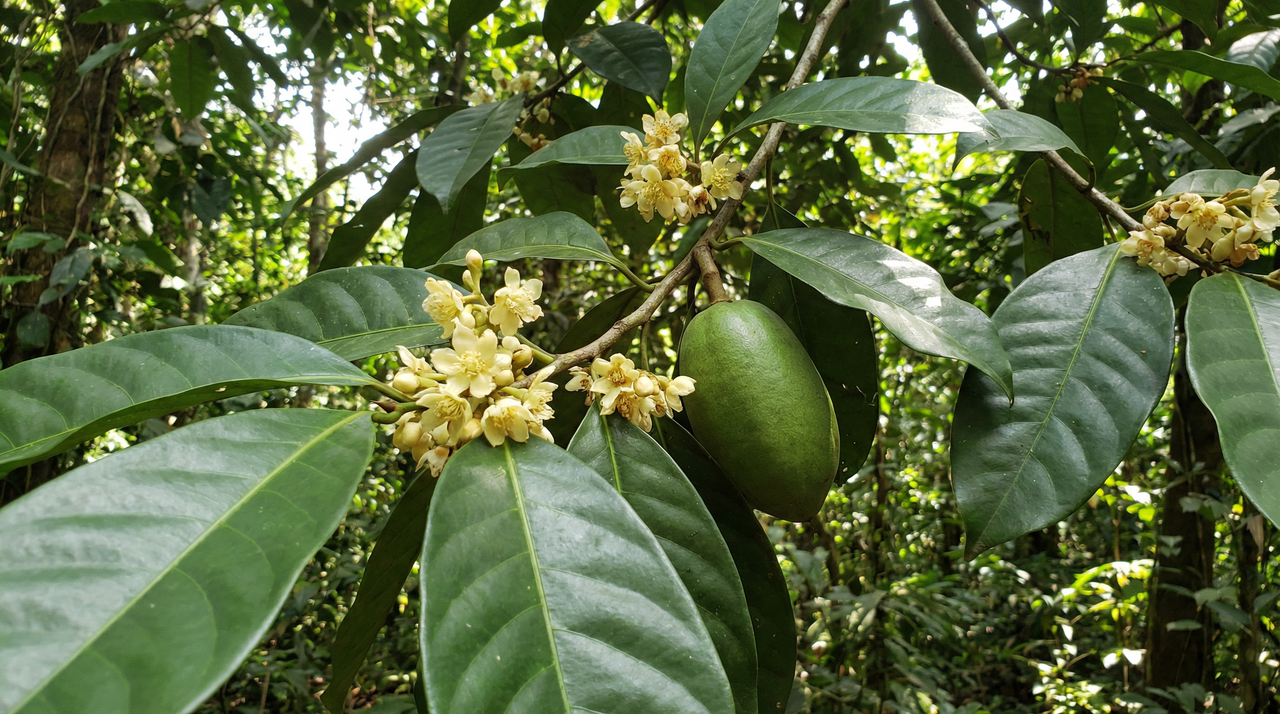
Most people in the permaculture world get excited about a plant because of what it gives you quickly: a flush of greens in spring, a basket of fruit by summer, nitrogen fixed by fall. Allanblackia asks you to think differently. This is a tree that takes seven to ten years just to flower for the first time,[1] towers to thirty meters in the dripping forests of Central and West Africa, and produces a seed oil so chemically similar to cocoa butter that major food companies have been quietly funding its domestication for decades. You almost certainly haven't heard of it. That asymmetry is what gets me every time.
Here's the contradiction that stopped me cold when I first started researching this genus: the seeds are so rich in stable, high-value fat that they've sustained rural communities and attracted multinational interest simultaneously, yet the tree producing them is listed as Vulnerable on the IUCN Red List.[2] Wild populations are being harvested faster than they regenerate. The oil is the treasure and, without careful stewardship, also the threat. That tension shapes everything worth knowing about this plant.
Origin and History of Allanblackia
There's a particular quality of light in the lowland rainforests of Central and West Africa that I think about whenever I encounter a plant from that ecosystem. Dense, filtered, humid, ancient. The allanblackia tree belongs entirely to that world. Allanblackia gabonensis is a long-lived evergreen in the Clusiaceae family, rooted in the humid lowland and semi-deciduous forests stretching across Gabon, Cameroon, Nigeria, Ghana, Equatorial Guinea, Liberia, the Central African Republic, and the Republic of Congo, from sea level up to about 1,000 meters, in the kind of warm, rain-soaked climate (1,500 to 3,000 mm annually, 20 to 30°C) that I've never quite been able to replicate in my zone 9B work with Clusiaceae relatives.[3][4][5] The species is currently classified as Vulnerable on the IUCN Red List, with logging, agricultural expansion, and seed overharvesting all bearing responsibility for declining populations.[6] That context matters, because it shapes everything from how seeds are sourced to how cultivation projects are framed.
Botanical Background and Distribution
The tree is dioecious, meaning you need both male and female plants to get fruit, and it is in absolutely no hurry about any of it. Flowering begins at 5 to 7 years, but viable seed production doesn't reliably kick in until year 7 to 10, with full maturity arriving somewhere between 10 and 15 years.[7] Growth rate is moderate to slow at 0.5 to 2 meters per year. When I'm designing edible forest gardens for clients who want meaningful yields within a decade, this long juvenility is one of the first things I flag. It's a legacy tree, not a quick return, and it asks for the same patient thinking that forests themselves operate on.
Visual Characteristics
Walk up to a mature specimen and the first thing you notice is scale. These trees reach 25 to 40 meters tall, with a straight cylindrical bole up to a meter across, frequently buttressed at the base in the dramatic, cathedral-like way of large tropical canopy trees.[4] Slice the bark (dark grey to brown, smooth to lightly fissured) and yellow latex bleeds out immediately, a detail I find instantly memorable in botanical collections. The leaves are leathery, elliptical to obovate, opposite, 10 to 25 cm long with entire margins. Then come the flowers: large (4 to 7 cm across), white to cream, sweetly fragrant, appearing in axillary clusters during the rainy season.[8] The fruit is a woody capsule 8 to 15 cm wide, packed with 20 to 50 seeds nestled in a vivid red aril. A related species, A. marienii, runs smaller overall with flowers barely 1 to 2 cm across and orange rather than red arils, a useful comparison that underlines how much presence gabonensis has evolved.[9]
Traditional and Cultural Uses
The seeds have been pressed for oil for centuries. The resulting fat has served Central and West African communities as a cooking fat, a skin preparation, and a base for soap.[10] The tree's formal botanical description came in the early 20th century, attributed in large part to work around 1912, but the communities living alongside it had already built deep knowledge long before taxonomy caught up.[11] Among the Fang people of Gabon, bark decoctions address gastrointestinal disorders, diarrhea, malaria symptoms, and skin infections; leaf and root poultices are applied for rheumatism and pain; and the plant features in post-partum and women's health practices.[12] Seed collection and oil processing are women's work in these communities, a seasonal and communal practice that provides real income and holds the tree in cultural significance as a symbol of fertility, abundance, and forest heritage.[13] That kind of women-led value chain, where forest knowledge translates directly into household economy, is exactly the socially regenerative model that permaculture practitioners point to as a goal.
Fun Facts and Ecology
The fruits ripen over 5 to 6 months and are dispersed primarily by gorillas, chimpanzees, and elephants consuming those bright red arils, which makes A. gabonensis a genuine keystone species in its ecosystem.[14][15] A tree whose seed dispersers include forest elephants is operating at a scale most garden plants can't touch. Commercial interest in the oil as a cocoa butter substitute has since spurred agroforestry projects in Ghana, Gabon, and Nigeria aimed at bringing cultivation into smallholder systems so wild populations face less harvest pressure.[16] Habitat loss remains a real threat, and those projects represent a genuine attempt to build supply chains that don't require mining a Vulnerable forest tree to extinction.
Allanblackia Varieties and Sourcing
Notable Varieties of Allanblackia gabonensis
There are no established named cultivars for this species. Allanblackia gabonensis is native to the humid lowland rainforests of Gabon, Cameroon, Nigeria, and Equatorial Guinea,[17][18] and serious cultivation outside Africa is still experimental, confined to USDA zones 10-11.[19][20] Its tropical requirements are strict enough that it simply hasn't undergone the generations of selection that give us named apple varieties or grafted avocado lines. The economic draw is the seed oil, a stable, butter-like fat rich in stearic and oleic acids,[21] and that value proposition has only recently begun driving any domestication work at all.
My experience with other long-lived oil-producing tropical trees in related families has taught me that the cultivar story usually comes decades into a breeding program. Allanblackia is still at the beginning of that arc. Think of where moringa or neem were before deliberate selection pressure, and you'll have a reasonable frame for where this genus sits today.
Sourcing Allanblackia Seeds and Seedlings
Because A. gabonensis is listed as Vulnerable on the IUCN Red List due to habitat loss and overharvesting,[22] sourcing responsibly isn't optional, it's the whole point. The species isn't currently listed under any CITES appendices,[23][24] so international trade isn't legally blocked, but that makes ethical sourcing a personal responsibility rather than a regulatory one. The domestication work being led by ICRAF (the World Agroforestry Centre) in Cameroon, Ghana, and Tanzania is the most encouraging development here;[25][26] seeds from those programs tend to have better germination uniformity than wild-collected material, which matters when you're investing years in a single tree.
African cooperative suppliers like EcoProSeeds in Ghana and TreeSeeds Africa in Kenya are the most direct route to ethically collected material,[27][28] with seed packets typically running $10-20 and seedlings ranging $15-40.[26] Conservation-minded growers can also explore the Millennium Seed Bank at Kew Royal Botanic Gardens.[29] In the U.S., occasional listings turn up through Top Tropicals, Sheffield's Seed Company, and RarePlants.eu,[30][31][32] but importing requires a phytosanitary certificate and USDA APHIS compliance.[33] That certificate isn't bureaucratic busywork; for a Vulnerable rainforest species, it's part of a traceable, accountable supply chain. Treat acquiring this tree as a long-term conservation commitment. The oil's qualities are genuinely exciting, but the timeline rewards patience, not impulse.
Allanblackia Propagation and Planting Guide
Everything about propagating allanblackia flows from one biological reality: these seeds do not forgive delay or drying out. I learned this viscerally the first time I held freshly extracted seeds in my hands. They're large, heavy, and visibly oily, with a slick surface that tells you exactly what's packed inside. You can feel the urgency. Get them into the ground fast, or watch germination rates collapse.
Seed Characteristics and Viability
The seeds are ellipsoid, averaging 3-4 cm long by about 2 cm wide, with a hard endocarp, fleshy mesocarp, and embryo embedded in endosperm.[34][35] A single fruit can yield 20-50 of them,[36] which sounds generous until you realize the species is recalcitrant, with viability dropping to nearly nothing within 1-3 months under ambient tropical conditions. Controlled storage at 15-20°C with 30-50% moisture content and 80-90% relative humidity can extend that to 6-12 months, but you cannot let them desiccate below 20-30% moisture or chill below 10-15°C.[37][38][39] In practice, I sow within a few days of extraction and I'd recommend the same to anyone serious about viable germination.
Because allanblackia is an outcrossing, insect-pollinated species, its seeds carry high genetic heterozygosity, meaning seedling offspring are variable.[34] That variability matters enormously if you're selecting for high oil yield or fruit size. For most large-scale plantings, seed propagation is still preferred for its cost and reliability,[40] but for preserving traits from a selected mother tree, vegetative methods are the only real option. Semi-hardwood cuttings (10-15 cm) treated with 1000-3000 ppm IBA under 80-90% humidity and bottom heat can achieve 20-80% rooting in 4-8 weeks, though results are inconsistent at scale. Cleft or approach grafting on 1-2 year-old rootstocks during the rainy season fares better, with success rates of 60-80% when cambium alignment is precise.[41][42] I've hit 70%+ take rates on grafts by being obsessive about rainy-season timing and cambium alignment, and the payoff in fruiting speed makes that nursery effort worthwhile when you're working with elite material.
Germination Timeline and Methods
Under optimal nursery conditions at 25-30°C with 70-90% humidity, fresh seeds soaked for 24-48 hours will typically germinate in 2-4 weeks, with success rates of 50-90%.[43][44] In natural forest understory, where conditions are far less controlled, that window can stretch to 2-6 months. I've watched germination rates fall from 80% down to under 30% once seeds passed the two-week freshness mark, which is why freshness is the single variable I refuse to compromise on. For seeds that have aged past their prime, scarification, gibberellic acid treatment, or wet-heat pretreatment can help recover some viability, though I'd frame those as salvage tactics rather than standard practice.[45]
Sow at 1-2 cm depth in a shaded nursery using well-drained sandy loam or a sand-peat mix, inoculate with mycorrhizae to mimic the forest-floor associations the tree evolved with, and plan to keep seedlings in the nursery for 6-12 months until they reach 30-50 cm.[40][46] First-year growth is slow (30-50 cm), and the seedlings look deceptively similar to young cacao or coffee at this stage. I keep detailed nursery maps because losing track of rows is easier than it sounds when everything is the same height and the same shade of green. After transplanting, seed-grown trees typically require 5-7 years to first fruit, while grafted trees can produce in 3-5 years with full commercial yields by 5-7 years post-grafting.[47][48] That gap is exactly why many commercial projects are shifting toward grafted stock despite the higher nursery cost.
Soil, Site, and Light Requirements
Allanblackia gabonensis evolved in lowland evergreen rainforests of Central and West Africa at elevations up to 800 m, and its soil preferences reflect that precisely.[49] It wants deep soil (at least 1.5-2 m), excellent drainage, high organic matter (3-5%+), and a pH of 5.5-7.0 with an optimal sweet spot around 6.0-6.5.[50][51] In my own trials, dropping below pH 5.0 produces unmistakable interveinal yellowing within weeks. I now test every new site and adjust with lime before planting rather than troubleshooting after the fact. At the other extreme, pH above 7.5 causes nutrient lockout that's equally damaging and slower to diagnose.[49]
Waterlogging is the other non-negotiable. The species is highly susceptible to Phytophthora root rot in saturated soils, so site drainage matters as much as pH.[51][52] Lateritic Oxisols and Ultisols with about 20-30% clay content and good aeration perform well. Related species handle slightly different conditions (A. marienii tolerates peat-swamp acidity down to pH 4.5-5.5, while A. stuhlmannii forms useful mycorrhizal associations in montane soils that aid phosphorus uptake),[9][53] but for gabonensis, the 6.0-6.5 target is where I focus my amendment work.
Seedlings need 50-70% shade (or 20-30% shade cloth in nursery settings) to prevent stress in the establishment phase.[51] Young cacao and coffee growers will recognize this immediately: the plants scorch in full sun and sulk when pushed into light before they're ready. Positioning allanblackia as a sub-canopy or understory tree in a layered agroforestry system is the most practical way to provide that shade naturally while the tree establishes.
Spacing, Planting Technique, and Early Management
Mature trees reach 20-30 m in height with canopy spreads of 8-10 m, which means spacing decisions made at planting have consequences that play out over decades.[52][46] Recommended spacing ranges from 5-6 m (supporting 278-400 trees per hectare) up to 10 × 10 m (100 trees per hectare) depending on system intensity. In fertile loam conditions I've learned the hard way that planting too densely creates serious canopy competition by year six. My current approach in most agroforestry guilds is to start trees at 5 m spacing and remove the weaker half around year four once I can evaluate early fruiting potential, effectively moving toward an 8-10 m final density without committing to it prematurely.
Plant into the rainy season so roots establish quickly, stake young saplings in exposed positions, and intercrop the early years with shade-tolerant companions like banana, cassava, coffee, or maize while the canopy is still open.[54][55] Those intercrops generate income during the 5-7 year juvenile period before the allanblackia begins fruiting in earnest. The site must provide more than 1,500 mm of annual rainfall and stay within 20-30°C; soil compaction (bulk density above 1.1 g/cm³) is worth checking and correcting before planting since it restricts the deep root development the tree needs.[54] Much of the guidance available today is extrapolated from closely related allanblackia species, so local adaptation trials matter, and I'd always recommend consulting regional extension resources before finalizing planting density for a given site. Done thoughtfully, the spacing and guild design you establish now determines whether this becomes a productive, accessible long-term oil crop or an overcrowded stand you're managing around for the next thirty years.
Allanblackia Care Guide: Growing Allanblackia gabonensis
Allanblackia is not a tree you slot into a casual backyard food forest and check on occasionally. It's a commitment to replicating the conditions of a Central African rainforest, and every aspect of its care flows from that reality. Get the fundamentals right, though, and you're rewarded with one of the most valuable oil crops on the planet.
Water Requirements and Drought Sensitivity
In its native range across Gabon, Cameroon, and the Congo Basin, this tree receives 1,500 to 3,000 mm of rainfall annually with humidity consistently above 70% and no meaningful dry season to speak of.[51][56] That context shapes every watering decision you make. Prolonged water stress directly reduces growth, fruit set, and seed oil yield, even in mature specimens.[57][51]
Seedlings need the top 2 to 3 cm of soil kept consistently moist, which typically means watering every two to three days in nursery conditions.[58] Once established, mature trees shift to deep, infrequent irrigation: roughly 20 to 30 liters per tree weekly during dry periods, with more during flowering and fruiting when oil production demands it.[58][52] I think of it the way I think about cacao: consistent moisture is non-negotiable, but waterlogging is equally catastrophic. Drip irrigation is your best tool here; it mimics the steady percolation of tropical rainfall and encourages deep root development rather than the shallow, drought-vulnerable root system you get from overhead sprinklers.[58] One more thing: use soft, non-chlorinated water where possible. Allanblackia is sensitive to salinity and chlorinated tap water, so if you're on municipal supply, filling a holding tank and letting it off-gas overnight is worth the effort.[52]
Soil, Fertility and Feeding
The tree evolved on the nutrient-poor forest floors of Central Africa, so its fertility needs are moderate, not heavy.[52] A well-drained loam with 3 to 5% organic matter and a pH between 5.0 and 7.0 is the target; if your soil is too acidic, a lime application can bring it into the optimal 5.5 to 7.0 window.[52][59] Soil testing before any amendments is genuinely non-negotiable here. Early in my career I made the mistake of generous nitrogen applications on a slow-growing rainforest tree in similar circumstances and got a spectacular canopy with almost no fruit for two seasons. The lesson stuck.
For young trees, a balanced NPK formula like 10-10-10 supports establishment, with an emphasis on phosphorus for root development.[60] Once trees move into the fruiting phase, shift to a lower-nitrogen, higher-potassium ratio such as 5-10-20 to direct energy toward fruit and oil production rather than excess foliage.[60][61] Phosphorus deficiency shows up as stunted growth and purplish leaves; potassium deficiency causes marginal leaf scorch and poor kernel oil; excess nitrogen produces lush, non-fruiting canopy.[62] In high-rainfall areas, micronutrients like magnesium, zinc, iron, and boron leach quickly, so periodic foliar sprays are worth adding to your program.[62]
Apply fertilizer at the onset of the wet season when uptake is highest, and split applications two to three times a year to reduce runoff and leaching.[63] Compost, well-rotted manure, and bone meal are excellent organic complements that build soil organic matter and mimic the forest-floor nutrient cycling the tree expects.[52] Integrating allanblackia into an agroforestry system with cacao or cassava, as is common in its native range, allows companion crops to contribute organic matter while keeping soil fertility in balance between applications.[52]
Sunlight and Shade Management
Allanblackia gabonensis is an understory tree by nature, and it behaves like one in cultivation. Seedlings and young trees need 50 to 70% shade or dappled light for the first two to three years; full sun at this stage causes leaf scorch and photoinhibition that can set a young plant back significantly.[64][65] I've seen the same dynamic with young coffee plants: that first season under a nurse tree versus open sky tells two completely different stories. As the tree matures it tolerates more direct light, but chronically low light suppresses flowering and fruiting, so the goal in an agroforestry system is filtered or dappled sun rather than deep forest shade.[64]
Heat Tolerance and High-Temperature Protection
The tree's comfort zone sits between 24 and 30°C with high ambient humidity.[66] Push above 30 to 35°C, especially when humidity drops, and you'll see leaf scorch, wilting, chlorosis, and reduced oil yield.[66][67] When the leaves start cupping or browning at the margins in summer heat, that's your cue to intervene before the stress compounds.
Practical mitigation is straightforward: maintain 50 to 70% shade for young trees, lay 10 to 15 cm of organic mulch to cool the root zone and retain moisture, keep spacing at 4 to 6 meters for adequate airflow, and sustain that 20 to 30 liter weekly irrigation during hot dry spells.[52] Mulch is genuinely one of the most effective tools in the heat-management toolkit; I've observed it reduce root-zone temperatures noticeably during hot weeks, and it doubles as a moisture buffer. Provenance trials suggest Cameroon-origin material shows better heat resilience, which offers some hope for selective breeding programs.[68]
Frost Intolerance and Cold Protection
I only recommend planting allanblackia where temperatures never drop below 15 to 18°C. Even a brief chill below that threshold can set a young tree back for years, causing leaf chlorosis, wilting, bark cracking, and measurable reductions in photosynthesis and oil yield.[69][70] The species is suited to USDA hardiness zones 10b through 12, full stop.[26] If you're in a marginal area, a sheltered south-facing microclimate, thermal mass features, or a greenhouse structure can buy you a few critical degrees, but no cold-hardy varieties exist to bail you out genetically.[26] Young trees are the most vulnerable; frost cloth is cheap insurance if you're trialing this species near the edge of its range.
Pruning, Maintenance and Integrated Pest Management
Allanblackia is a slow grower that will eventually reach 20 to 30 meters, which means your early pruning decisions echo for decades.[46] In the first three years, focus on formative pruning to establish a strong central leader and an open, well-structured canopy.[46] After that, the work is light: an annual dry-season prune after fruit harvest to clear dead, diseased, or crossing branches is generally all the tree needs.[47] Avoid pruning in the wet season, when open wounds become infection points for fungal disease.[71] With slow-growing rainforest trees, I've learned to put the pruners down sooner than instinct suggests.
Weeding is most critical in the first two years when competition for soil moisture and nutrients directly suppresses establishment. A 10 to 15 cm organic mulch layer over the root zone handles both weed suppression and moisture retention simultaneously.[47] For pest and disease management, good airflow from appropriate spacing and the agroforestry context described above will do more preventive work than most interventions; cultural controls and biological methods come first, chemicals only as a genuine last resort.
Seasonal Growth and Phenology
Vegetative growth is slow in the first three to five years, and reproductive maturity doesn't arrive until year five to ten.[72] Flowering happens in the dry season, typically June through August or December through February depending on your region, and fruits develop over the following five to seven months before maturing in the next dry season window.[72][73] If you're growing outside equatorial Africa the exact months may shift, but the dry-season cues remain reliable guides.
That phenological calendar is really your maintenance calendar. Apply fertilizer as the wet season opens, scale up irrigation during flowering and early fruit development, prune after harvest while conditions are still dry, and use the slower wet-season period for soil amendments and infrastructure work. Fruiting is most reliable in established agroforestry systems with good pollinator habitat.[74] The long wait from planting to first harvest is real, but once the tree settles into its rhythm, that seasonal pattern becomes deeply satisfying to work with.
Harvesting Allanblackia
Allanblackia follows a steady annual rhythm that, once you understand it, makes the harvest window fairly predictable. Flowering happens in the dry season, typically October through December or March through May depending on the region, and from there the tree takes roughly 5 to 6 months to bring a fruit to maturity.[75][76] That puts the main harvest season between August and December, with October and November typically seeing peak ripening.[77][78] Local climate does shift things, so treat these windows as a guide rather than a fixed calendar.
When to Harvest Allanblackia: Timing, Phenology, and Maturity Cues
Reading maturity on a tree you can't simply taste-test requires good visual and tactile cues. With Allanblackia, watch for the fruit skin shifting from green to yellowish-brown or reddish-brown, softening of the pericarp, and seeds that have reached their peak oil content of 50 to 70%.[79][80] My general rule with tall tropical fruiting trees is to let the first natural fruit drop be my signal that the rest of the crop is ready; the same logic applies here. The guidance from World Agroforestry and ICRAF recommends harvesting once around 80% of fruits show these signs, which keeps you ahead of the fruits that drop and begin to spoil on the forest floor before you can get to them.[79][81] That timing decision is, in my view, the single biggest lever a grower has over final oil quality.
How to Harvest and Process Allanblackia Seeds
Because these trees can reach 30 meters, harvesting is a genuinely physical undertaking. Ripe fruits are collected by hand from the ground and lower branches, with poles and ladders brought in for anything higher up.[82][54] Once collected, post-harvest handling needs to move quickly. Fruits should be depulped immediately, seeds cleaned thoroughly, and then dried down from their initial 40 to 50% moisture content to somewhere between 8 and 12%.[83][71] I've seen what delayed drying does to oilseeds generally, and with a fat this rich, any hesitation means mold and rancidity move in fast. That drying step is non-negotiable if you want oil that actually tastes good.
Allanblackia Yield and Flavor Profile of the Oil
A mature tree at 15 to 20 years old typically yields 20 to 50 kilograms of seeds annually, with well-managed cultivated trees reaching 30 to 40 kilograms, which translates to roughly 8 to 12 kilograms of extracted oil per tree.[46][78] At plantation scale that adds up to 2 to 4 tons of seed per hectare per year.[73] For context, that's a respectable yield from a canopy tree that also provides shade, wildlife habitat, and structural diversity to an agroforestry system simultaneously.
The oil itself is what makes all the patience worthwhile. Its fatty acid profile puts it remarkably close to cocoa butter.[84][85] That steep melting curve between 34 and 37°C is what gives it the satisfying snap confectioners look for, along with gloss and creaminess that work without hydrogenation.[86] When harvested at the right moment and dried properly, the flavor is mild and nutty with subtle fruity undertones, low acidity, and sensory scores of 7 to 8 on a 9-point hedonic scale.[87][88] Harvest too late or skip the drying protocol and that bitterness creeps in quickly. Get the timing right and you have an oil that earns those scores without much argument.
Allanblackia Preparation and Uses
Culinary Uses and Processing of Allanblackia Fruit and Seeds
There are really two edible offerings from the allanblackia tree, and they couldn't be more different from each other. The fruit pulp is the easy one: sweet, fresh, eaten out of hand by communities across Central and West Africa the same way you'd eat a mango straight off the tree.[89][90] The seeds are a different story entirely, and skipping the processing steps is not an option. Raw seeds contain anti-nutritional compounds that need to be broken down before the fat inside is safe to eat.[91] I learned this firsthand when I under-processed a trial batch using insufficient roasting time and detected a distinct residual bitterness that told me exactly why indigenous communities developed these techniques over generations. The traditional sequence starts with fermentation to knock back bitterness, followed by roasting at 120-150°C for 20-30 minutes to fully detoxify the seeds.[91][92] From there, seeds are dried, milled into flour for porridges, or cold-pressed without chemical solvents to yield a clean, high-quality oil.[91] These steps aren't optional gatekeeping. They're what transforms a potentially bitter seed into one of the most interesting culinary fats I've come across.
The chemistry behind the oil explains why it behaves so much like cocoa butter. Seeds contain roughly 60-70% fat by weight, dominated by stearic and oleic acids, with a smaller share of palmitic acid.[93][94] That stearic-oleic dominance gives the oil a steep melting curve and a clean, non-greasy finish when it finally lets go. When I've worked with similar tropical butters, shea and coconut included, neither produces quite this mouthfeel. The oil is stable against oxidation, which makes it genuinely useful for frying and high-heat applications,[95] and its solid fat index is close enough to cocoa butter that it can replace 20-50% of cocoa butter in confections without sacrificing sensory quality.[96] In Ghana, where it's known as 'tasia,' the oil has long been used for frying vegetables, meats, and fish, and as a base for stews and sauces,[97][98] essentially filling the same role palm oil plays elsewhere in West African cooking. Once you've extracted good oil, keep it cool and dry -- properly stored at 4-10°C, it holds its quality for up to 12 months.[58][95] Sustainable harvesting means collecting fallen fruit rather than stripping branches, which protects tree health and keeps your seed quality consistent.[58]
Medicinal and Traditional Preparations
Bark preparations in traditional Central African medicine typically take the form of decoctions or poultices applied externally.[12] These are time-honored applications, and I take them seriously as starting points for understanding a plant's potential. That said, whenever I'm working with ethnobotanicals, I cross-reference traditional knowledge with modern safety data rather than treating either in isolation. The specific phytochemical research behind these medicinal uses is covered in the health benefits section; here it's enough to know that bark decoctions represent a distinct preparation tradition separate from anything you're doing in the kitchen.
Non-Food Applications of Allanblackia
The same emollient oil that works so well in the kitchen has a long history of use on skin. Traditionally, allanblackia seed oil has been applied to wounds, used to soothe rheumatic complaints, and incorporated into soap and cosmetic preparations for its conditioning properties.[99][100] Its high stearic acid content gives it a firm, slow-melting body similar to shea butter, which is exactly what you want in a cold-process soap or a skin salve. The allanblackia soap and cosmetic applications follow naturally from the oil's fatty-acid profile rather than being a separate discovery. Beyond the oil, the dense hardwood finds use in construction and tool handles,[12] and older extraction methods in some communities still rely on boiling seeds to separate out the butter-like fat rather than cold pressing. On the safety question: the peer-reviewed literature I've studied shows no significant toxicity for properly processed allanblackia oil at culinary or topical levels,[101] and I only use or recommend it after proper fermentation and roasting. Process it right, and you have one of the most stable, versatile tree-derived fats available from a tropical agroforestry system.
Allanblackia Health Benefits and Medicinal Uses
The health story of allanblackia doesn't start in a laboratory. It starts with communities across Central and West Africa who have been reaching for the bark, leaves, and seeds of this tree for generations. Healers have used decoctions and poultices from Allanblackia gabonensis to address wounds, skin infections, respiratory complaints, gastrointestinal problems, malaria, rheumatism, and diabetes, even employing it as a purgative.[102][103][99] When I review ethnobotanical literature for landscape and food-forest design work, that kind of breadth across multiple cultures and use-categories signals something real. It tells me the preclinical findings are worth paying close attention to.
Traditional Medicinal Uses of Allanblackia in Africa
What modern research is finding largely corroborates what traditional healers observed. Biflavonoids isolated from the species inhibit pro-inflammatory cytokines, demonstrating measurable anti-inflammatory effects in preclinical models.[104][105] Methanol extracts of leaves and seeds show strong DPPH radical scavenging with IC50 values below 50 μg/mL, putting the antioxidant activity in genuinely competitive territory.[106][107] Flavonoids and triterpenoids appear to drive meaningful antimicrobial action against Staphylococcus aureus, Escherichia coli, and certain fungi.[108][109] Leaf extracts also inhibit alpha-amylase and alpha-glucosidase in vitro, pointing toward antidiabetic potential,[110] and the seed oil has shown hypocholesterolemic effects and support for wound healing in animal models.[111][112] I always caution clients, though: the vast majority of this evidence comes from in-vitro assays and rodent studies.[113] Human clinical trials are still needed before anyone should rely on allanblackia extracts to manage blood sugar or cholesterol.
Phytochemical Profile: Biflavonoids, Triterpenoids, and Phenolics
Allanblackia gabonensis belongs to the Clusiaceae family, and like many of its resinous relatives, it produces an impressively diverse suite of secondary metabolites. The identified compounds include biflavonoids (morelloflavone, agathisflavone, GB-2a, fukugetin, amenoflavone, and volkensiflavone), xanthones, friedelane and oleanane triterpenoids, steroids, tannins, saponins, and a broad range of phenolics and polyphenols.[114][115][116] The seed oil itself is dominated by stearic acid (30-50%) and oleic acid (35-50%), with smaller fractions of palmitic and linoleic acids, and total oil yield ranges from 50 to 70% by seed weight.[95][117] Having formulated with shea and cocoa butter in permaculture skincare projects, I can say that this fatty-acid ratio gives the oil a noticeably firm, butter-like texture at room temperature; you feel it in your hands before you even read a lab report. Phenolics and kolaviron-like biflavonoids in the leaf extracts show DPPH scavenging comparable to ascorbic acid in some assays,[109][115] which helps explain both the documented antimicrobial activity and the traditional wound-healing applications.
Nutritional Composition of Allanblackia Seed Oil and Pulp
The seed oil packs roughly 600-700 kcal per 100 g,[118] making it a calorie-dense staple in food-insecure regions where the trees grow. The fruit pulp has traditionally been eaten fresh or processed into beverages and preserves, while the defatted seed meal retains 25-40% crude protein,[46][119] so the whole seed is genuinely useful beyond its oil fraction. The oil contains 35-45 mg of vitamin E (primarily alpha-tocopherol) per 100 g,[120][121] which, much like the tocopherols in extra-virgin olive oil, help stabilize it against oxidation and contribute to its usable shelf life. The pulp contributes 10-20 mg of vitamin C and trace beta-carotene per 100 g, while the seeds are mineral-rich, with approximate values of 800-1000 mg potassium, 300-400 mg phosphorus, 200-250 mg magnesium, 150-200 mg calcium, 5-8 mg iron, and 3-5 mg zinc per 100 g dry weight.[122][121] The oil's total phenolic content sits around 50-100 mg GAE per 100 g,[123] and cold-pressing is the method that best preserves those phenolics alongside the tocopherols.[124]
Antioxidant, Anti-inflammatory, and Other Pharmacological Effects
The compound classes responsible for these activities don't operate in isolation. The biflavonoids and xanthones that dominate the leaf and bark extracts work across multiple biological pathways simultaneously, which is likely why the ethnomedicinal uses span such different conditions. Anti-inflammatory cytokine inhibition, free-radical neutralization, direct microbial suppression, and enzyme inhibition relevant to blood-sugar control all appear to flow from overlapping activity in the same phytochemical matrix. The seed oil adds another dimension through its fatty-acid profile: stearic acid is not atherogenic in the way saturated fats with shorter chain lengths can be, and oleic acid has a well-established association with cardiovascular health. Animal model data showing LDL-lowering effects[111] fit neatly with what we know about this fatty-acid pairing. The same research gap applies across the board, though: the activity signals are consistent and credible, but they're emerging evidence rather than settled science.
Safety Profile and Considerations for Allanblackia
The toxicology picture here is genuinely reassuring. Rodent studies show an LD50 above 2000 mg/kg, and there are no documented signals of mutagenicity, genotoxicity, or carcinogenicity.[125][126][127] The seed oil has received regulatory approval for food use, and its profile is close enough to cocoa butter that centuries of traditional consumption without adverse reports carry real weight.[128][114] For culinary or cosmetic use, those numbers give me real confidence. The practical caveats are mild: eating large amounts of any high-fat oil can cause GI discomfort,[129] and unprocessed plant latex or bark can irritate skin and eyes on direct contact,[130] which traditional boiling and roasting methods mitigate effectively.[131] Anyone with sensitivities to Clusiaceae relatives or tree nuts should patch-test the oil before broader use,[132] and comprehensive long-term human studies are still absent from the literature.[113] There's also a sourcing responsibility attached to all of this: wild populations are under pressure from overharvesting,[133] so seeking out sustainably cultivated sources matters as much for the forest communities that depend on this tree as it does for the people using the oil.
Pests and Diseases of Allanblackia
Peer-reviewed data specific to Allanblackia gabonensis pest and disease dynamics is thin. Most of what we know about this genus comes from work on related species like A. stuhlmannii in Tanzania and from broader Clusiaceae patterns. That's not a reason for alarm; it's just the honest reality of a tree that is still in the early stages of domestication. Wild populations hold their own reasonably well.[134][135] It's once you pull the tree into a plantation setting that things get interesting in the less-welcome sense.
Common Diseases and Fungal Pathogens
The baseline picture for cultivated allanblackia is moderate to low disease resistance, with wild-collected trees consistently outperforming nursery-grown stock.[134][136] No commercial cultivars with meaningful disease resistance currently exist, and breeding programs in Cameroon and Ghana are still in the selection phase, targeting Phytophthora root rot tolerance above all else.[137][20]
The fungal threats that actually keep growers up at night are predictable for a humid tropical tree. In the nursery, damping-off from Fusarium and Rhizoctonia spp. can hit seedlings hard before they even establish.[138] Older trees face root rot from Phytophthora and Fusarium, leaf spots including anthracnose (Colletotrichum spp.) and Cercospora spp., and stem cankers, all of which worsen with poor drainage and stagnant air.[139][140] The same pattern shows up in A. stuhlmannii across Tanzania, which gives us some confidence in these inferences even where direct A. gabonensis data is sparse.[141] In plantations, this combined pressure can cut yields by up to 30%, with wilting, fruit drop, cankers, and reduced photosynthetic capacity as the visible symptoms.[142]
Insect Pests and Herbivores
The insect cast is broad. Shoot borers (Hypsipyla robusta and related species) and termites (Macrotermes spp.) are the most serious threats to young trees. Aphids, scale insects, bark beetles, and wood-boring beetles (Xylosandrus compactus) target stems and cambium. Defoliating caterpillars (Eupterote spp. and other lepidopteran larvae) strip leaves. Fruit flies (Bactrocera spp.) and seed weevils compromise developing fruit and seeds.[139][143][144] Practically every part of the tree is someone's dinner.
The pattern that stands out is that incidence reliably increases in monocultures and managed plantation settings compared with wild stands, where diversity buffers pest populations. Climate variability in Tanzania and Cameroon appears to be amplifying pressure on related species, which is worth tracking as the genus moves further into cultivation.[144]
Natural Resistance Mechanisms
Allanblackia isn't defenseless, and the chemistry tells an interesting story. The bark and leaves carry phenolic compounds, tannins, latex, xanthones (including allanxanthone C and oblongifolin A), and volatile terpenoids that create a genuinely hostile chemical environment for pathogens and herbivores.[145][146][147] These are the same compounds that matter in the health literature, though here they're doing their original job: plant defense. The thick, leathery, waxy leaves common across Clusiaceae are a physical complement to that chemistry; I've handled leaves from related species that feel almost plastic, and you can see why insect eggs don't anchor well to that surface.[148]
Mycorrhizal associations add another layer, improving phosphorus uptake in the nutrient-poor forest soils this tree evolved on and broadly supporting stress tolerance. I always inoculate new tropical tree plantings, and the vigor difference in the first couple of seasons is consistently visible. For a slow-establishing tree like allanblackia, that early support is worth a lot.
Integrated Management and Prevention
The IPM framework for allanblackia reads almost like a permaculture design checklist, which should feel reassuring rather than prescriptive. Start with cultural controls: proper spacing for airflow, excellent drainage, mulching, strict sanitation around fallen fruit and infected material, and thoughtful site selection from day one.[20][149] Agroforestry integration with shade trees can reduce pest incidence by 20-40%, which connects directly to the guild design thinking covered in the permaculture section.[150] Intercropping with pest-repellent plants, biological controls, and regular scouting for early intervention all come before chemical intervention.[151][152]
In my work I treat any tropical oil tree as part of a larger edible ecosystem, so I never reach for broad-spectrum sprays. The research on allanblackia reinforces that cultural and biological tools are sufficient when you design the system right from the start. If something like a Trichoderma soil drench becomes necessary for root rot, or a targeted phosphonate application, that's a response to a specific diagnosed problem, not a routine practice.[151] Keeping pollinators safe matters here particularly, given how dependent fruit set is on insect visitors.
Ongoing breeding programs in Cameroon, Ghana, and Tanzania will gradually narrow the resistance gap between wild and cultivated trees.[137][153] Selecting mother plants that show fewer signs of borer damage or leaf spotting in wild populations is exactly the kind of phenotype selection I apply with any underutilized perennial. For now, though, prevention through good system design is the most reliable tool in the grower's kit.
Allanblackia Permaculture Design and Uses
Before you can think about where to place allanblackia in a food forest design, you have to be honest about whether you can grow it at all. This is a tree that evolved in the equatorial heart of Central and West Africa, specifically in the lowland rainforests of Gabon, Cameroon, Nigeria, Ghana, and the Congo Basin below about 600-1,000 meters elevation.[3][51] Its climate envelope is narrow and unforgiving.
Climate Requirements and Hardiness Zones
Allanblackia gabonensis wants 24-30 °C year-round, 1,500-3,000 mm of rainfall distributed fairly evenly across the year, and relative humidity sitting between 70 and 90%.[154][155] Seedlings begin showing chilling injury at 15 °C, and the species has zero frost tolerance below 10 °C, which puts it firmly in USDA zones 10b through 12.[156][157] To put that in perspective, I think of it as more demanding than cacao, which at least tolerates brief dips toward 15 °C with some grumbling. Allanblackia really doesn't tolerate temperature instability at all. Even in the warmest Florida microclimates, you're looking at a tree that needs deliberate wind protection, consistent humidity management, and probably a lot of patience before you'd call the experiment a success. Outside Africa, this is genuinely experimental territory.
Young plants need protection from direct sun while establishing, benefiting from the filtered light of an existing canopy.[154][158] Mature trees can handle more direct light, but temperatures above 40 °C combined with low humidity will cause stress even in adults. Site selection here isn't just about zone matching; it's about replicating the microclimate of a lowland rainforest understory, which means consistent moisture, protection from desiccating winds, and a canopy overhead during the juvenile years.
Forest Layer and Guild Placement
In a mature food forest, allanblackia occupies the subcanopy to canopy layer, typically reaching 20-25 meters with a clean, straight bole up to 60 cm across.[51][159] That height and spread make it a serious structural anchor; once established, it creates the dappled shade that cocoa and coffee depend on, which is exactly why international agroforestry programs have been integrating it into those systems across West Africa.[160] I think of it as a tall anchor that gives structure and filtered light while feeding the system above and below ground through its wildlife relationships.
As a guild companion, it pairs logically with shade-tolerant understory crops during its juvenile phase, when it's still building height. Bananas or cassava can occupy the same space productively in those early years, providing light management while the allanblackia climbs. As the canopy closes, the system shifts toward shade-adapted species beneath it. The key is designing with patience and knowing the tree's timeline; this isn't a quick-rotation crop.
Ecosystem Functions and Pollination Ecology
One of the things I find genuinely compelling about this tree from a permaculture standpoint is its keystone role. In its native forests, allanblackia feeds primates, birds, bats, elephants, and insects, and those same animals disperse its large woody capsules containing 20-50 colorful seeds across the landscape.[161][162] That zoochorous dispersal network means the tree is deeply embedded in the ecological fabric around it, not just sitting in the system but actively sustaining it. The seeds themselves yield a highly valued traditional and commercial oil, and the timber has local construction and carving uses too, so the ecological and economic value stack on each other.[163][4]
Pollination is where the permaculture design gets practical and specific. The flowers are hermaphroditic, pale and sweetly scented, blooming seasonally from roughly February through May.[164] Bees, both honeybees and stingless bees, are the primary pollinators, supplemented by flies, beetles, and possibly moths.[165] Research on the related species Allanblackia marienii shows that beetles can take a much more prominent role, attracted by fruity odors and abundant pollen rather than nectar, which hints at how varied the pollination picture can be across the genus.[165][166] Habitat fragmentation measurably reduces pollinator populations and collapses fruit set.[167] In any fruiting tree I design around, I make a point of weaving in a diverse understory of flowering herbs and small trees that support bees and beetles across multiple seasons. For allanblackia, that pollinator guild isn't optional; it's load-bearing infrastructure for the system.
Wild populations face active reduction from habitat loss, and that tension matters for growers.[168] I always advise clients who want to add high-value tropical trees to their systems to seek out cultivated stock from established agroforestry programs rather than wild-sourced material. Growing it in a diverse polyculture, the way ICRAF and other international initiatives recommend, supports local African livelihoods while protecting the wild gene pool.[169] That framing matters: this isn't a tree you slot into a garden for novelty. It's a long-term ecological and economic commitment that rewards growers who treat it with the seriousness its native forest demands.
The Tree That Taught Me to Think in Decades
I've never grown Allanblackia myself; my climate won't allow it. But I've spent enough time with the research, and with the women in West Africa whose grandmothers knew these trees before any institution did, to feel the weight of what a 20-meter canopy and a seven-year wait actually ask of you. Some plants teach patience. This one requires a kind of faith I find genuinely humbling.
Sources 169
- Allanblackia: The Oil Tree Promise for Africa – World Agroforestry ↩
- Allanblackia gabonensis – IUCN Red List ↩
- Allanblackia gabonensis Engl. ↩
- Allanblackia gabonensis (African black olive tree) ↩
- Botanical Description and Ecology of Allanblackia gabonensis ↩
- Allanblackia gabonensis ↩
- Reproductive Biology of Allanblackia Species in Gabon ↩
- The genus Allanblackia (Guttiferae) in West and Central Africa ↩
- Allanblackia marienii - Useful Tropical Plants Database ↩
- Traditional Uses and Potential of Allanblackia Species ↩
- Allanblackia gabonensis Pellegrin ↩
- Ethnobotany of Allanblackia gabonensis in Central Africa ↩
- Women and Allanblackia Oil Production in Nigeria ↩
- Ecology of Frugivory in Gabonese Rainforests ↩
- Seed Dispersal by Great Apes in Central Africa ↩
- Commercialization of Allanblackia Oil in Ghana ↩
- Allanblackia gabonensis ↩
- Allanblackia gabonensis ↩
- Cultivation of Allanblackia Species ↩
- Allanblackia gabonensis: Ecology and Uses ↩
- Allanblackia gabonensis Seed Oil Production ↩
- Allanblackia gabonensis ↩
- CITES Appendices ↩
- CITES Trade Database ↩
- Allanblackia: A Tree for the Future ↩
- Allanblackia Conservation and Domestication ↩
- Seed Suppliers for Allanblackia gabonensis ↩
- Tropical Tree Nurseries in Africa ↩
- Millennium Seed Bank: Allanblackia gabonensis ↩
- Tropical Fruit Trees Availability ↩
- Rare Tropical Plants for Sale ↩
- Tropical Tree Seeds for Sale ↩
- Importation of Plants and Plant Products ↩
- Genetic Diversity and Population Structure of Allanblackia gabonensis ↩
- Morphology and Taxonomy of Allanblackia gabonensis ↩
- Reproductive Biology of Allanblackia gabonensis ↩
- Seed Storage of Allanblackia Species ↩
- Recalcitrant Seeds of Tropical Trees ↩
- Allanblackia Seed Physiology Review ↩
- Propagation of Allanblackia Species: A Guide for Farmers ↩
- Vegetative Propagation of Allanblackia floribunda and A. gabonensis ↩
- Rooting Response of Allanblackia gabonensis to IBA Treatments ↩
- Seed Germination Studies of Allanblackia gabonensis ↩
- Germination and Propagation of Allanblackia gabonensis ↩
- Allanblackia: A Tree Species for Africa's Rainforests ↩
- Cultivation Manual for Allanblackia spp. ↩
- Allanblackia Cultivation and Propagation Guide ↩
- Phenology and Reproductive Biology of Allanblackia gabonensis ↩
- Allanblackia: A Tree for Africa ↩
- Soil Requirements for Allanblackia Cultivation in Central Africa ↩
- Allanblackia gabonensis - Useful Tropical Plants Database ↩
- Allanblackia Cultivation Guide - World Agroforestry Centre ↩
- Soil and Root Ecology of Allanblackia Species ↩
- Agroforestry Practices for Allanblackia in Tanzania ↩
- Allanblackia: A Tree for Oil and Income ↩
- Allanblackia: A genus worthy of conservation and development ↩
- Ecology and distribution of Allanblackia gabonensis in Central Africa ↩
- Cultivation Guide for Allanblackia Species ↩
- Soil Requirements for Allanblackia spp. ↩
- Allanblackia Oil Tree: Propagation and Cultivation Guidelines ↩
- Allanblackia: Opportunities for Smallholder Farmers in Central and West Africa ↩
- Deficiency Symptoms in Tropical Fruit Trees ↩
- Fertilizer Management for Tropical Trees in Agroforestry Systems ↩
- Allanblackia gabonensis ↩
- Allanblackia gabonensis: A Review of Its Biology and Potential ↩
- Physiological Responses of Allanblackia gabonensis to Heat Stress in Tropical Conditions ↩
- Cultivation Challenges and Heat Tolerance in Allanblackia Oil Trees ↩
- Genetic Variation and Temperature Tolerance in Allanblackia gabonensis Provenances ↩
- IUCN Red List: Allanblackia gabonensis ↩
- Tropical Trees and Cold Tolerance - FAO Document ↩
- Pruning Practices for Tropical Fruit Trees in Africa ↩
- Allanblackia gabonensis: A Tree with Multiple Uses ↩
- Allanblackia: A Tree Species for Oil Production in Central Africa ↩
- Propagation and Cultivation of Allanblackia gabonensis ↩
- Phenology and reproductive biology of Allanblackia gabonensis ↩
- Allanblackia: A New Oil Tree for Africa ↩
- Phenology and Fruiting of Allanblackia gabonensis in Central Africa ↩
- Allanblackia: A Tree for Africa with Multiple Benefits ↩
- Allanblackia: A Tree for Oil and Livelihoods in West and Central Africa ↩
- Fruit Maturity and Harvesting Techniques for Allanblackia Species ↩
- Propagation and Management of Allanblackia gabonensis ↩
- Allanblackia: A Tree for Oil and Income in Central Africa ↩
- Allanblackia Seed Processing and Storage Guidelines ↩
- Allanblackia: A Tree Species for Food Security and Ecosystem Restoration in Africa ↩
- Physico-chemical characteristics of Allanblackia gabonensis butter ↩
- Allanblackia seed oil as a cocoa butter alternative in chocolate production ↩
- Physicochemical and Sensory Properties of Allanblackia gabonensis Seed Oil ↩
- Physico-chemical Properties and Sensory Evaluation of Allanblackia Seed Oil ↩
- Allanblackia: A Tree Genus for Reforestation, Agroforestry and Livelihoods in West and Central Africa ↩
- Allanblackia gabonensis (African black olive tree) ↩
- Processing and Utilization of Allanblackia Seed Oil ↩
- Indigenous Processing Methods for Allanblackia Seeds in Ghana ↩
- Fatty Acid Composition of Allanblackia gabonensis Seed Oil ↩
- Nutritional and Therapeutic Potential of Allanblackia Seed Oil ↩
- Allanblackia Seed Oil: Extraction, Composition, and Storage Stability ↩
- Sensory and physical properties of Allanblackia butter from Ghana ↩
- Traditional Uses of Allanblackia gabonensis in Ghanaian Cuisine ↩
- Allanblackia: A Tree for Africa's Future ↩
- Ethnobotany of Allanblackia in Central Africa ↩
- Traditional Uses of Allanblackia gabonensis in Gabon ↩
- Safety Assessment of Plant-Derived Oils for Cosmetic Use ↩
- Pharmacological Potential of Allanblackia gabonensis Stem Bark Extracts ↩
- Ethnobotanical Survey and Phytochemical Study of Allanblackia gabonensis in Cameroon ↩
- Biflavonoids from Allanblackia gabonensis with Anti-inflammatory Effects ↩
- Antioxidant and Anti-inflammatory Properties of Allanblackia gabonensis Extracts ↩
- Antioxidant and Antimicrobial Activities of Allanblackia gabonensis Seed Oil ↩
- Antioxidant Activity of Allanblackia Seed Oil ↩
- Antibacterial activity of leaf extracts from Allanblackia gabonensis ↩
- Antioxidant and antimicrobial activities of Allanblackia gabonensis leaf extracts ↩
- Antidiabetic potential of Allanblackia gabonensis leaf extract: Enzyme inhibition studies ↩
- Hypocholesterolaemic effects of tropical fatty acids from Allanblackia floribunda ↩
- Traditional uses and bioactive compounds of Allanblackia species ↩
- Safety Assessment of Allanblackia parviflora Seed Oil for Use in Food ↩
- Phytochemical and pharmacological review of Allanblackia species ↩
- Biflavonoids from Allanblackia gabonensis (Clusiaceae) and their antioxidant activity ↩
- Secondary metabolites from the bark of Allanblackia gabonensis ↩
- Allanblackia Oil: A Sustainable Source of Stearic Acid for Food and Cosmetic Industries ↩
- Allanblackia: A Tree for Africa ↩
- Nutritional Potential of Allanblackia floribunda and Allanblackia gabonensis Defatted Flours ↩
- Physico-chemical properties of Allanblackia gabonensis seed oil ↩
- Nutritional Composition and Potential Health Benefits of Allanblackia Seed Oil ↩
- Biochemical Composition of Allanblackia Fruits from Cameroon ↩
- Chemical Composition and Antioxidant Properties of Allanblackia gabonensis Seed Oil ↩
- Traditional Uses and Extraction of Allanblackia Seed Oil ↩
- Allanblackia: A Tree for Africa ↩
- Toxicity Evaluation of Allanblackia parviflora Seed Oil ↩
- Toxicological Evaluation of Allanblackia parviflora Seed Oil ↩
- Allanblackia: A Neglected High Value Oil Tree Species ↩
- Chemical Composition and Safety Evaluation of Allanblackia gabonensis Seed Oil ↩
- Plant Latex Toxins and Their Biological Effects ↩
- Processing Methods for Allanblackia Seeds ↩
- Allergenicity Assessment of Exotic Seed Oils Including Allanblackia ↩
- Traditional Medicinal Uses of Allanblackia Species in Africa ↩
- Breeding for Disease Resistance in Allanblackia Species ↩
- Genetic diversity and disease resistance in Allanblackia gabonensis ↩
- Genetic Diversity and Resistance in Allanblackia ↩
- Allanblackia domestication: A potential for sustainable livelihoods in West and Central Africa ↩
- Diseases and Pests of Clusiaceae in Tropical Forestry ↩
- Diseases and Pests of Allanblackia in Central Africa ↩
- Allanblackia Cultivation Challenges in Central Africa ↩
- Cultivation Challenges for Allanblackia stuhlmannii in Tanzania ↩
- Pests and Diseases of Tropical Oil Trees ↩
- Pests and diseases of Allanblackia species in agroforestry systems ↩
- Pests and Diseases of Allanblackia in Central Africa ↩
- Phytochemical Investigation of Allanblackia gabonensis ↩
- Antimicrobial Activity of Allanblackia Extracts ↩
- Biflavonoids from Allanblackia Species: Insecticidal Properties ↩
- Defense Mechanisms in Tropical Trees: Focus on Clusiaceae ↩
- Cultivation Guide for Allanblackia Trees: Disease Management ↩
- Allanblackia in Agroforestry: Opportunities and Challenges ↩
- Pests and Diseases of Allanblackia in Agroforestry Systems ↩
- Pests and Diseases of Allanblackia spp. ↩
- FAO Report on Underutilized Tree Species: Allanblackia ↩
- Allanblackia: Potential new crop for Africa ↩
- Allanblackia gabonensis: A Review of Its Ecology and Potential for Domestication ↩
- Allanblackia Species: Propagation and Cultivation ↩
- Tropical Trees for USDA Zones: Allanblackia ↩
- Allanblackia spp. Cultivation Manual ↩
- Allanblackia gabonensis: Ecology and Distribution ↩
- Ecology and Distribution of Allanblackia Species ↩
- Allanblackia Species Overview ↩
- Ecology and distribution of Allanblackia species in Central Africa ↩
- FAO Commodity Briefs: Allanblackia Oil ↩
- Reproductive Biology of Allanblackia gabonensis ↩
- Pollinator ecology of the vital oil-producing tree Allanblackia (Guttiferae) in Cameroon ↩
- Peer‑reviewed article 'Pollination biology of the African tree genus Allanblackia (Clusiaceae)' ↩
- Impact of Habitat Fragmentation on Allanblackia Pollinators ↩
- Allanblackia gabonensis ↩
- Allanblackia: A Tree Species for Sustainable Development in Ghana ↩