The Spanish colonizers who outlawed amaranth in the 16th century weren't worried about a weed. They were worried about a religion. Aztec priests had been binding amaranth seeds with honey and human blood into effigies of their gods, and the grain, called huauhtli, was so woven into ceremonial life that Hernán Cortés reportedly banned its cultivation outright, on penalty of death.[1] Five hundred years later, I'm growing it in my Florida food forest between the papayas and the sweet potatoes, largely because it thrives in August heat that sends everything else into survival mode. That particular arc, from sacred crop to contraband to backyard superfood, is one of the more remarkable stories in all of food plant history.
What gets me every time is the plant's sheer refusal to disappear. Suppress it for centuries, and it hides in field margins, roadsides, and home gardens across Mesoamerica until the cultural memory slowly stitches itself back together. I've watched a single neglected plant drop tens of thousands of seeds in one season.[2] Stubbornness on that scale has a way of rewriting history.
Amaranth Origin, History, and Botanical Background
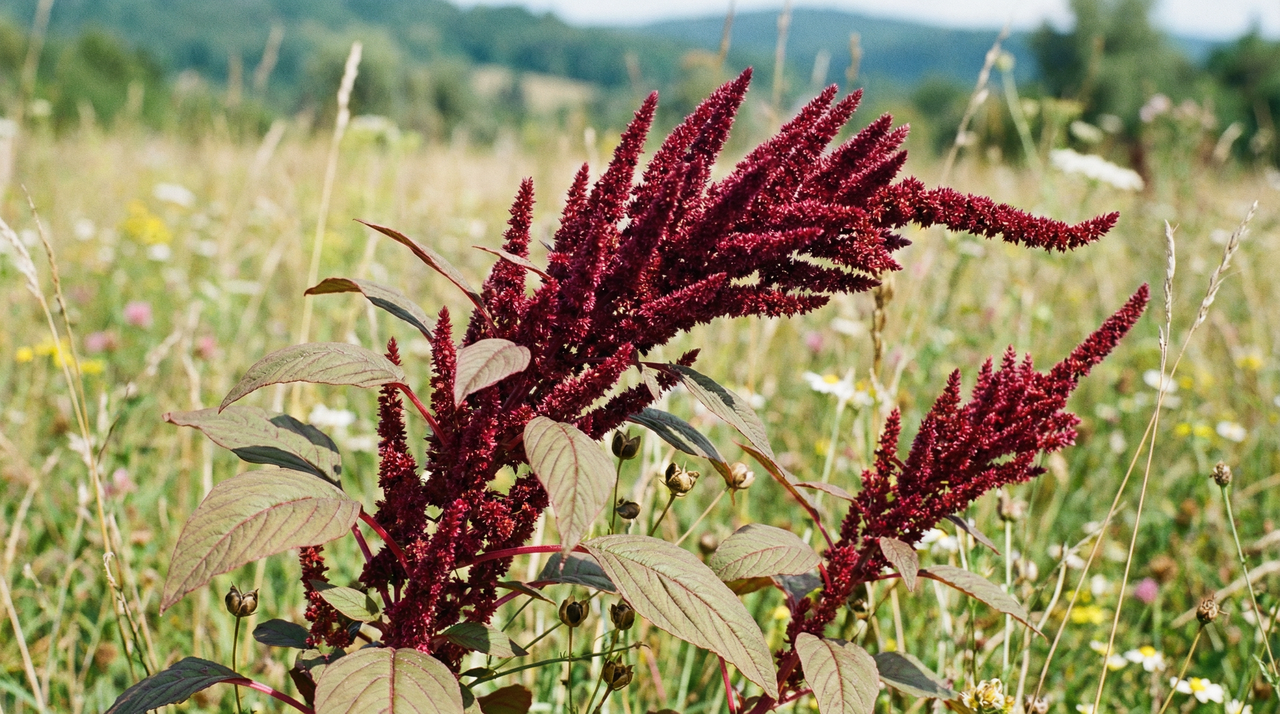
Stand next to a mature Prince's feather in late summer and it's hard not to feel like you're in the presence of something ancient. The stems push past your shoulder, the leaves hang broad and dark green, and those tall crimson plumes are just beginning to deepen from yellow-green to burgundy as the days shorten. That color shift, I've come to realize, is almost a living memory of why this plant mattered so much to the people who first cultivated it.
Mesoamerican Roots and Aztec Cultural Significance of Amaranthus hypochondriacus
Amaranthus hypochondriacus was domesticated by indigenous Mesoamerican peoples around 4000 BCE, becoming a staple grain and leafy vegetable in the highlands of central and southern Mexico.[3][4] The Aztecs called it huauhtli, and its role in their culture went far beyond the dinner table. Because the flowers genuinely do not fade, the plant became a symbol of immortality.[5][6] During festivals like Panquetzaliztli, popped amaranth seeds were mixed with blood to form tzoalli, sculpted figures representing deities like Huitzilopochtli.[7][8] That ritual power was precisely what made it a target: Spanish colonizers suppressed its cultivation in the 16th century specifically because of those religious ties, nearly erasing a crop that had fed civilizations for millennia.[9][10]
The culinary thread survived, quietly. Traditional dishes like alegría (popped seeds bound with honey or syrup) and atole (a warm masa-based drink) kept Prince's feather in Mexican and Central American kitchens through colonial disruption and beyond.[11][12] Traditional healers used the leaves as poultices for wounds, and preparations from various plant parts addressed everything from fever and inflammation to gastrointestinal complaints and postpartum recovery.[13] When I source seed for my own plantings, I try to buy from vendors who work directly with indigenous growers or maintain heirloom Mesoamerican lines. That feels like the least I can do, given the history.
Other species in the genus have their own parallel stories. Joseph's coat (Amaranthus tricolor) appears in the 6th-century Chinese text Qi Min Yao Shu, making it a documented cultivated plant for over 2,000 years across Asia, where it was valued for food, ornament, and natural dye.[14][15] Spleen amaranth (Amaranthus dubius) traveled a different route, spread across Africa by Arab and Portuguese traders in the 16th and 17th centuries and carried into the Caribbean during the colonial period.[16] Regional medicine picked it up everywhere it landed: in Africa it was used for anemia and as a galactagogue, in India as a blood purifier and liver tonic, in China for cooling and detoxification.[17][18] The genus, in other words, didn't just spread geographically after the 16th century[19] -- it was adopted, adapted, and woven into completely independent traditions on multiple continents.
Visual Characteristics and Growth Habit of Prince's Feather Amaranth
Prince's feather is an architectural plant. It stands 1 to 2.5 meters tall under normal garden conditions, occasionally pushing to 3 meters when it really likes where it's planted,[20][21] with stout stems that start green and flush toward reddish-purple as the season progresses.[22] I've grown it in my Central Florida landscape and always find myself stopping to check whether that deepening stem color is a stress response or just the plant doing what it does. It's usually the latter. The leaves are broad and alternate, lanceolate to ovate, 5 to 15 cm long with a clean white midvein that makes them easy to identify even at a distance.[23][21] Below ground, a deep primary taproot anchors the whole structure and gives it serious drought tolerance.[24][25] I think of it a bit like a sunflower in that regard -- both send down a determined taproot that finds water where shallower-rooted plants give up.
The real drama is at the top. Dense terminal panicles, 30 to 60 cm long, emerge from midsummer through early fall and shift from yellow-green to vivid red or burgundy as anthocyanins accumulate with shortening days.[26][27] Those plumes are made up of hundreds of tiny bisexual flowers, each just 2 to 5 mm across, packed into the feathery structures that give the plant its common name.[21] Each flower eventually produces a tiny utricle fruit containing a single seed, lens-shaped, black or dark brown, barely 1 to 1.5 mm across.[24][4] Small but consequential, as it turns out.
The related species offer a useful contrast in the landscape. Joseph's coat tops out at 0.3 to 1.2 meters, a more compact bushy plant where the ornamental appeal lives entirely in the leaves: red, yellow, green, and pink variegation that intensifies in full sun as anthocyanins respond to heat and light.[28][29] Spleen amaranth is the quiet utilitarian of the group, with succulent, slightly fleshy leaves in green with prominent red venation, bred over generations specifically for the pot.[30] Where Prince's feather commands the back of a border, spleen amaranth belongs in the kitchen garden bed.
Life Cycle, Flowering, and Seed Production
Prince's feather is a true annual, completing its entire life cycle in a single growing season before frost ends the show.[24] What makes it remarkable is how much it accomplishes in that window. Under warm conditions, it can reach maturity in 30 to 60 days,[24][31] with flowering typically beginning 30 to 50 days after planting and running from midsummer into early fall in North America, triggered largely by shortening days.[32][33] Seeds mature 4 to 6 weeks after flowering, and a single plant can produce up to 100,000 seeds that disperse by wind, animals, or simple human traffic.[34][33] Those seeds can remain viable in the soil for years, sometimes a decade or more under favorable conditions.[34] One thing I wish someone had told me early on: amaranth seedlings look almost identical to pigweed and a few other Chenopodiaceae relatives in the first two weeks. Label your rows, or you will spend an afternoon second-guessing yourself over what you actually planted.
In temperate gardens, the first frost signals the end, but in frost-free tropical climates the plant can behave more like a short-lived perennial, persisting for one to two years under ideal conditions.[35][32] Its native range runs from the central Mexican highlands into Guatemala, reaching altitudes up to 2,500 meters,[4][24] which explains both its cold resilience at elevation and its domestication story. Joseph's coat, by contrast, is native to tropical and subtropical Asia, from India through Southeast Asia into southern China,[4] while spleen amaranth traces its origins to tropical Africa and Asia.[36] Three species, three continents, three independent histories -- converging in gardens around the world.
Global Spread, Traditional Uses Across Related Species, and Modern Resurgence
The C4 photosynthesis pathway that all three species share[37][38] is a big part of why amaranth spread so readily once Spanish colonizers carried it out of Mesoamerica and into Europe, and from there into Asia, Africa, and the rest of the Americas.[19] A plant that uses water with exceptional efficiency, tolerates temperatures pushing 40°C, and produces seed prolifically in marginal soils doesn't need much help colonizing new territory. Prince's feather has naturalized across parts of South America and North America without ever reaching the aggressive invasiveness of some introduced species.[39][24] It self-seeds, certainly, but it's manageable if you stay on top of the seed heads.
In my garden, the tall crimson plumes do double duty as a hummingbird magnet and a fast-growing summer screen that I've used to shade tender seedlings from the worst of Central Florida's afternoon heat. That functional range is part of why the plant is having such a genuine revival right now. Its gluten-free seed protein, the same nutritional profile the Aztecs understood intuitively, has brought it back into commercial production and kitchen experimentation worldwide.[40][41] Joseph's coat's striking foliage, still used in some Asian traditions as a natural dye source alongside its culinary role, fits neatly into ornamental edible gardens. Spleen amaranth remains a backbone leafy green across tropical cuisines in Africa, the Caribbean, and Southeast Asia. The amaranth family, known botanically as Amaranthaceae, has delivered food, medicine, and meaning across cultures for millennia, and that track record is exactly why it belongs in any serious food garden or permaculture system.
Amaranth Varieties and Sourcing
Notable Varieties and Landraces of Amaranthus hypochondriacus
Prince's Feather doesn't have standard "cultivars" the way tomatoes or basil do. It's maintained as traditional farmer landraces and numbered agricultural types classified by USDA and CIAT according to height, branching habit, seed size, color, and agronomic performance.[42][43] I learned this the hard way in my first season growing grain amaranth: I labeled rows by seed packet color rather than careful landrace notation, and by midsummer I genuinely couldn't tell which plants were which. Label your rows. Trust me on this one.
Within that landrace framework, the variation is genuinely striking. Plants run from compact 60 cm forms up to towering 200 cm types, with foliage ranging from green to vivid purple-red or variegated, and bracts in red or orange.[44] Most commonly you'll see plants land in that 4-6 foot range with lanceolate leaves that lean green to reddish-purple, young leaves offering a mild tangy flavor reminiscent of spinach, and those signature feathery red-purple plumes overhead.[28][45] Named selections like 'Purple Prince', 'Golden Giant', and 'Greengiant' do surface occasionally in seed catalogs, but treat those as landrace nicknames rather than stabilized cultivars. After growing both purple-leaf and green-leaf forms side by side through Central Florida's long, brutal summers, I've noticed the purple selections consistently produce deeper, more vivid plumes and slightly better seed set in real heat, which lines up with research showing 20-300% yield differences between landraces under identical growing conditions.[44][45] That's an enormous range, and it means your seed source genuinely matters.
Related leafy types deserve mention here. Smooth pigweed (A. hybridus) cultivated forms are selected specifically for leaf production, with smooth-leaf types preferred over spiny ones and both green and purple-leaf selections common across African and Asian markets.[28] Spleen amaranth (A. dubius) takes a similar approach: no formal named cultivars, just selections grown for their mild, broad, ovate leaves used as a spinach substitute, on plants that reach 3-6 feet with an upright to bushy habit.[33][46]
Joseph's Coat (A. tricolor) is the exception to the unnamed-landrace pattern. It sells under a whole catalog of vivid named selections: 'Early Splendor' in red and green, 'Perfecta' with its crimson, green, and yellow variegation, 'Illumination', 'Molten Fire', and 'Summer Poinsettia' among others, plus green-leaved edible types often listed as var. viridis.[47][48] Growing 2-5 feet tall with foliage in combinations of red, green, yellow, purple, and bronze that intensifies in full sun, it straddles the ornamental and edible worlds comfortably.[33] For leaf harvest, you can start cutting 30-50 days after planting from any of these species; grain on Prince's Feather matures in 90-120 days.[28][49] All three species run annual across USDA zones 2-11, though Joseph's Coat and Spleen Amaranth are frost-sensitive and function as tender perennials only in zones 10-11 with protection; I think of their frost tolerance the same way I think about basil's: they drop at nearly the same temperature, so if your basil is done, assume these are too.[23][33]
How to Source Amaranth Seeds and Plants
The good news is that all three species are easy to find. Baker Creek Heirloom Seeds, Seed Savers Exchange, Johnny's Selected Seeds, High Mowing Organic Seeds, Burpee, Eden Brothers, and True Leaf Market all carry them year-round, with live plants available seasonally from specialty nurseries in late spring through fall.[50][51][52] Seed packets run $2.50-$6.00 for 50-500 seeds, bulk purchases (1,000+ seeds or by the ounce) land between $10-$50, and live plants cost $4-$12 each.[53][54][55]
For germination rates, I prefer buying from Seed Savers Exchange or Baker Creek because in my experience the seed tends to be fresher and I've had consistently higher germination from both. Amaranth seed germinates at 70-90% within 7-14 days at 65-75°F, but viability drops to 70-80% even with good cool, dry storage, and seeds remain viable 2-5 years under proper conditions.[56][57] Starting in sterile seed-starting mix with good airflow has kept damping-off entirely out of my seedling trays for years; it's a simple habit that pays off fast given how quickly Pythium or Fusarium can wipe out a flat.[58] Organic, heirloom, and non-GMO options are offered by most major suppliers, though certified organic seed is more common for grain types than for some of the tropical leafy selections.[51] Since amaranth sets seed so freely, saving your own is genuinely easy once you've grown a season or two.
None of the three species appear on the federal noxious weed list, so cultivation is permitted throughout the United States without special licensing.[24][59] If you're importing seed internationally, you'll need a USDA APHIS PPQ Form 587 permit, phytosanitary certification, and Federal Seed Act compliance; live plants and fresh cuttings are generally restricted and require prior approval.[60] For most U.S. gardeners buying domestically, none of that applies, and you're a simple seed order away from a very good start.
Amaranth Propagation and Planting Guide
Amaranth is, at its core, a seed plant. Every practical decision you'll make about growing it, from when to sow to how far apart to space your rows to whether last year's saved stock is still worth planting, flows from understanding what that seed actually is. Once I started thinking about it that way, a lot of the "rules" stopped feeling arbitrary and started making obvious sense.
Understanding Amaranth Seeds: Morphology, Storage, and Viability
Prince's feather seeds are tiny: 1.0-1.5 mm across, lens-shaped, with a smooth dark testa and a tightly adherent pericarp surrounding a horseshoe-shaped embryo.[24][61] Thousand-seed weight runs only 0.7-0.9 g on average,[62] which explains why a single commercial packet feels like it contains an infinite number of seeds. It practically does. I've weighed out a gram of amaranth seed on a kitchen scale before and it holds hundreds of them.
The good news for seed savers is that these are orthodox seeds. Dry them down to 3-8% moisture content, pack them into a sealed glass jar with a silica gel packet, and store them at 5-10°C with relative humidity below 20%, and you're looking at 5-10 years of viability, potentially longer.[63][64] I keep my saved amaranth seed in small glass jars with silica packets in the fridge and still get 80%+ germination after four years, far longer than most vegetable seeds I store. Fresh seed germinates at 80-95%,[65] so if you're working with older stock, run a quick paper-towel test before committing a bed to it.
One thing that catches new seed savers off guard: amaranth is wind-pollinated and monoecious, with about 20-30% self-pollination happening naturally.[66] If you're growing multiple Amaranthus species and want to save true-to-type seed, maintain at least 100-200 m of isolation between them.[67] In a typical backyard that's not realistic, so choose one type to save from each season, or bag the seed heads before they shed pollen. For propagation method itself, seed is first and easiest by a wide margin. Stem cuttings treated with IBA at 1000-3000 ppm can work at 70-75°F and high humidity if you're trying to preserve a specific ornamental color,[68] but grafting, layering, and tissue culture remain essentially laboratory territory for home growers.[69] Stick with seed. It works.
Germination Timeline and Sowing Techniques
Direct sow after your last frost date, once soil has warmed to at least 65-75°F.[70] Germination happens in 3-14 days at 65-85°F, with the fastest rates at the warmer end of that range.[71] I sow shallowly, barely covering the seeds with a dusting of fine compost, because those tiny seeds don't have the energy reserves to push up through heavy soil. From there, expect seedlings to emerge within the first two weeks, with anthesis (flowering) beginning around 50-70 days in under good conditions. Full seed maturity comes at 90-120 days, with a 30-60 day window from flowering to physiologically mature seed.[72][73]
Here's the thing I wish someone had told me early on: amaranth seedlings look almost identical to young pigweed, and honestly not that different from certain brassica or spinach seedlings at the cotyledon stage. I now label every row with a colored stake the day I sow, because by week two I've completely forgotten what I planted where and the plants aren't giving me any clues yet. Once the first true leaves come in and start showing that characteristic broad oval shape, you'll recognize them, but those first two weeks are genuinely ambiguous.
Soil, Site Selection, and Fertility Needs
The single biggest mistake I see with amaranth is planting it in poorly drained soil. The plant develops a deep taproot that can reach 1-2 m into the ground once established, which is part of what makes it so drought-tolerant later in the season.[74] But that same root system is highly susceptible to Pythium and Rhizoctonia in waterlogged conditions, especially as seedlings. Full sun, meaning at least 6-8 hours daily, and well-drained loamy or sandy-loam soil are non-negotiable.[26] Target a soil pH of 6.0-7.5; the plant tolerates 5.5-8.0, but outside that ideal range problems emerge quickly. If young leaves start yellowing between the veins while the veins themselves stay green, check your pH first. I've corrected that interveinal chlorosis quickly with a chelated iron foliar spray and a light sulfur amendment the following season to bring things back into range.
On fertility, amaranth is more efficient than most gardeners expect. Moderate nitrogen is plenty for grain types, roughly 50-100 kg/ha, with higher split applications if you're growing primarily for leaves.[75] Excess nitrogen makes plants leggy and can cause nitrate accumulation in the leaves, so do a soil test before reaching for amendments. The species shows modest atmospheric nitrogen fixation under certain conditions,[24] which means a bed amended with good compost is usually sufficient and sometimes all you need. In my experience, a raised bed or container mix with around 30% compost and enough perlite for drainage has never let me down.
If you're growing Joseph's coat (A. tricolor) or spleen amaranth (A. dubius) rather than Prince's feather, note that A. dubius has shallower fibrous roots and actually prefers consistent moisture rather than drought cycles, though all three share the 6.0-7.5 pH preference and full-sun requirement.[76][28]
Spacing, Planting Technique, and Early Care
Spacing depends entirely on what you're growing for. Grain types need 12-18 inches between plants in rows 24-36 inches apart to reduce lodging and give those 4-6 foot plants enough airflow as they mature.[70][77] For leafy greens or ornamental plantings, you can tighten that to 6-12 inches and get a lush, full look quickly. I space grain types 18 inches apart but let my colorful Joseph's coat fill in at around 10 inches for a dramatic summer border, and the difference in airflow and disease pressure between those two beds is genuinely noticeable by midsummer. Tall plants at windy sites benefit from simple staking; mature spread of 18-36 inches means a dense planting can actually support itself through mutual shading if you let it.
The main vulnerability in the first few weeks is damping-off. Use sterile seed-starting media if you're starting indoors, ensure good airflow around seedlings, and resist the urge to keep them constantly wet.[70][78] Aphids, flea beetles, and spider mites can show up on young plants; neem oil or insecticidal soap handles most early pressure, and if you have beneficial insects established nearby they'll do a lot of that work for you. I've learned to thin ruthlessly at the two-true-leaf stage rather than waiting. Crowded seedlings invite exactly the fungal and insect problems the research warns about, and a thinned bed recovers faster than one where you tried to save every plant. Once amaranth is past that first three weeks and the taproot is driving downward, it becomes a genuinely low-maintenance annual that needs very little from you beyond the occasional summer soak during prolonged dry spells.
Amaranth Care Guide
Amaranth is one of those plants that rewards attentive gardeners generously while quietly punishing neglect in ways that aren't always obvious until you've made the mistakes a few times. I've grown both grain and ornamental types in my Central Florida garden for several seasons now, and the care principles that matter most are simpler than they look on paper: get the water right, resist the urge to over-fertilize, respect its frost intolerance, and stay ahead of the self-seeding habit before volunteers colonize everything you own.
Water Needs
Young transplants and seedlings need about an inch of water per week, enough to keep the soil consistently moist but never waterlogged.[70] Once plants are established, that calculus shifts dramatically. Mature amaranth is genuinely drought-tolerant and handles deep watering every seven to ten days during dry spells without complaint.[70][79] Prolonged drought does catch up with the plant eventually, reducing leaf yield and quality by 20 to 30 percent,[79][80] but the more common mistake I see is overwatering. Waterlogged soil leads fast to root rot, yellowing leaves, wilting, and soft discolored stems that are nearly impossible to reverse.[81]
In Central Florida's rainy summers, I rarely touch the hose on established plants. My job is mostly watching after heavy downpours to make sure beds drain freely. A two- to three-inch layer of organic mulch does a lot of the work here, conserving soil moisture between irrigations, moderating temperature, and reducing how often I need to water at all.[81][39]
Feeding and Fertility
Amaranth is an efficient feeder with impressive nitrogen and phosphorus uptake capacity, capable of absorbing up to 200 to 300 kg of nitrogen per hectare over a season.[82][83] That efficiency is exactly why a soil test matters before you reach for the fertilizer bag. I rely on annual tests because my sandy Central Florida soils leach nutrients quickly, and guessing almost always leads to either underfeeding or overshooting. Target soil pH of 6.0 to 7.5, and aim for nitrogen around 50 to 100 ppm, phosphorus 20 to 50 ppm, and potassium 100 to 200 ppm.[70][84]
For home gardens, applying one to two pounds of balanced 10-10-10 fertilizer per 100 square feet at planting, then side-dressing with nitrogen mid-season if growth slows, covers most situations.[85] I once pushed nitrogen rates too high on a test bed and ended up with spectacularly lush, dark-green foliage that was strangely bitter and probably high in nitrates. Beautiful to look at, unpleasant to eat. HortScience trials confirm that over-fertilization causes leaf tip burn, reduced flavor, high nitrate accumulation, and eventually lower yields.[86] The extra nitrogen I needed for lush leaf production on vegetable types came directly at the cost of seed flavor and quantity on grain types grown nearby. If you prefer organic inputs, compost, fish emulsion, and worm castings all work well, and incorporating five to ten tons per hectare of organic matter improves both micronutrient availability and soil structure significantly.[87][88]
When leaves start signaling trouble, the pattern tells you what's missing. Pale yellowing on older leaves points to nitrogen deficiency; purple or reddish discoloration on stems and leaves usually means phosphorus is short; yellowing and browning along older leaf margins suggests potassium. Interveinal chlorosis on older leaves indicates magnesium, while the same symptom on young leaves points to iron. Tip burn and distorted new growth often signal calcium problems, which in my sandy soil I've learned to check early.[70][89]
Frost Tolerance
There's no gray area here. Amaranth is killed by frost at or below 32°F (0°C), and it stops growing below 59°F (15°C) with cold injury possible below 50°F (10°C) even without a frost event. Buds and young leaves are most vulnerable, progressing quickly from wilting and yellowing to necrotic leaf edges and stunted growth.[70][90] I think of it like basil or okra: the plant lives and dies by warmth, and there's no hardening it off through that line.
Wait to plant outdoors until soil temperatures reach at least 60°F (15°C) and the last frost date has reliably passed. In colder climates, starting seeds indoors six to eight weeks before last frost buys significant time. Gardeners in USDA zones 8 through 11 will get the most reliable performance; zones 9 through 11 may see it behave as a short-lived perennial or self-seed back with no intervention at all.[24][91] In Central Florida I direct-sow after mid-March and have never needed a frost blanket, but anyone north of zone 8 should treat this plant with the same cold caution they'd give tomatoes.
Heat Tolerance
Where amaranth really separates itself is the other end of the temperature spectrum. It's rated for AHS Heat Zones 8 through 12, with optimal daytime temperatures running 77 to 95°F (25 to 35°C).[92] The C4 photosynthesis pathway is the core reason: it processes carbon dioxide far more efficiently than C3 plants at high temperatures, which is why amaranth is still actively growing in July and August when most cool-season crops have long since given up. It also accumulates proline and heat-shock proteins as internal buffers against thermal stress.[93]
That said, sustained temperatures above 35°C (95°F) do cause stress, and spikes above 38 to 40°C during flowering can cause pollen sterility and up to 50 percent yield loss.[94] Symptoms to watch for include leaf wilting, chlorosis, curling, flower abortion, and premature bolting.[95] During Central Florida's July heat domes, I've found that 30 to 50 percent shade cloth and a thick mulch layer are the two most practical tools available. Shade cloth can reduce leaf surface temperature by 4 to 6°C, and mulch lowers soil temperature by 3 to 5°C while cutting evaporation by roughly half.[96][97] Drip irrigation every seven to ten days during extreme heat, combined with balanced nutrition (don't let potassium or phosphorus fall short during peak summer), rounds out the mitigation toolkit. If you're selecting for consistent heat performance, cultivars like 'Plainsman', 'Centenario', and 'Illumination' show good track records.[96]
Pruning, Maintenance, and Harvest
Amaranth doesn't need much pruning, but what you do at a few key moments shapes the whole season. Pinching growing tips at six to twelve inches tall encourages a bushier, more compact plant on ornamental types.[98] I learned this the hard way after watching tall unpinched plants keel over in summer thunderstorms; now I pinch early and stake any grain varieties anyway, because a lodged plant in wet soil is a fungal disease waiting to happen. For grain production specifically, remove basal suckers when they reach four to six inches to keep energy directed toward a single strong central stem.[70]
Leaves are ready to harvest starting four to six weeks after planting, once plants hit eighteen to twenty-four inches. Cut-and-come-again works well; new growth flushes back reliably in warm weather. Seed heads are ready when they shift from green to brown or reddish-brown, feel dry, and become brittle, typically ninety to one hundred twenty days from planting.[99][100]
The self-seeding habit deserves its own sentence of warning. Amaranth is a prolific self-seeder and will absolutely become weedy if you don't stay on top of it.[101] My approach is deliberate: I let two or three plants set seed in a designated spot and rogue everything else out before heads shatter. Good air circulation matters for disease prevention; avoid anything that traps humidity around the foliage, including tight row covers late in the season.[70]
Seasonal Rhythm
Amaranth is a warm-season annual that completes its lifecycle in a single season: rapid vegetative growth through early and midsummer, flowering and seed set from late summer into fall, then senescence with the first frost.[28] In zones 9 through 11 it may persist as a short-lived perennial or simply self-seed back reliably enough that the distinction stops mattering.[102]
In my Central Florida garden, the rhythm runs from mid-March planting through November seed harvest. If I stay attentive to weeding out volunteers, the plants I've deliberately saved seed from return each season with almost no effort. Save seed at the end of each year; viability holds for two to five or more years when stored cool and dry,[102] which means a single good harvest can supply the garden for several seasons running.
Harvesting Amaranth Leaves, Seeds, and Flowers
Amaranth is genuinely two crops in one, and once you understand that rhythm, the whole season makes more sense. The grain takes 90-120 days to mature, with seed heads signaling readiness by shifting from green to reddish-brown or tan while the seeds themselves turn dark, dry, and loose enough that a shaken stem rattles.[33][70] But you don't have to wait that long to eat. The same plants start giving you food in just 30-60 days, when the stems are 6-12 inches tall and individual leaves have reached 3-8 inches.
Timing and Visual Cues for Peak Quality
I've grown Prince's feather for years, and the single habit that improved my harvests most was learning to taste a leaf in the field. Leaves picked at that 6-8 inch stage are noticeably sweeter and less sharp than leaves left until the plant is knee-high; once flowering starts, the quality drops fast. Leafy types like Joseph's coat can sustain a cut-and-come-again cycle, with a first cut around 30-45 days and subsequent cuts every 2-3 weeks after that, as long as you keep harvesting before the plant puts energy into flowers.[103][104] For grain, I watch for the rattle. When I rub a drying head between my fingers and the seeds fall freely with an audible sound, I know physiological maturity has arrived. In the Midwest that's typically September; here in Central Florida I'm often a few weeks earlier.[105]
Harvest Techniques and Post-Harvest Handling
For greens, I cut the top 6-8 inches or pick outer leaves from plants in that 6-12 inch window, always in dry weather, and that consistent cutting is what keeps the regrowth coming.[33][106] For seed, I cut the mature heads, hang them upside down inside a paper bag, and let them finish drying for a week or two before threshing by rubbing the heads between my palms. Seeds then go on a screen in front of a fan for several days until they hit around 10% moisture, which in my experience keeps them viable for a solid two seasons in a sealed jar.[105][77] For dried hanging amaranthus, cut the plumes when fully colored but before seeds begin to set, in the morning if possible, for vase life of 7-10 days.[33]
What to Expect: Yield, Flavor, and Aroma
Young leaves have a mild, spinach-like flavor with a fresh, slightly tangy edge; cooked, they soften and develop a gentle mucilaginous quality similar to malabar spinach, which I've found reassures new cooks once they know to expect it rather than worry about it.[107] Prince's feather runs lower in the saponin-driven astringency that makes some wild amaranths unpleasant, which is part of why I stopped harvesting volunteer pigweed after one too many mouthfuls of tough, bitter greens and now stick to named cultivars.[108] The seeds tell a different story: raw they're quietly nutty and earthy, but toasted or popped they develop a pronounced, almost popcorn-like aroma from the Maillard reaction that makes them genuinely craveable.[109] As for yield, a well-managed plant can give you 0.5-1.5 pounds of leaves across multiple cuts, and a 10-square-foot patch of dried amaranth grain can realistically yield several ounces to a full pound of clean seed, enough to make growing it for both eating and saving genuinely worthwhile.[110][111]
Amaranth Preparation and Uses
Culinary Uses and Preparation of Amaranth Leaves and Seeds
Amaranthus hypochondriacus gives you two completely different foods from one plant: tender, spinach-like leaves and tiny protein-packed seeds that function like a gluten-free pseudocereal.[24][112] I've harvested both many times, and the single most useful habit I've developed is picking leaves before the plant reaches about 30 cm tall. Past that height, they get tough and noticeably bitter, and the oxalate content climbs.
To reduce the oxalates naturally present in amaranth leaves, a quick 5-10 minute boil or steam is highly effective.[113][114] I treat them exactly like spinach or chard from my garden: boil, drain, squeeze, done. That step transforms both palatability and mineral bioavailability in one move. Raw young leaves work in small amounts in salads, but cooked is where this plant shines for regular use.
Flavor-wise, the greens taste like mild spinach with a faint peppery tang; harvest late and that tang turns bitter fast.[115] The seeds are earthy and nutty, with a mild sweetness that turns downright toasty when you pop them.[116] Popping amaranth grain is one of my favorite kitchen experiments: a dry pan, medium-high heat, and within seconds you've got the nutty aroma filling the whole house. The Aztecs knew exactly what they were doing with alegrías, the honey-and-popped-seed candy that's been made in Mexico for centuries,[11] and I always keep my culinary seed rows clearly labeled so they don't get mixed with the ornamental types.
To cook amaranth grains as a porridge or cereal, simmer one part seeds in three parts water for about 20 minutes until they soften and turn creamy. The cooked seeds contain 13.6-18g of complete protein per 100g uncooked, covering all essential amino acids.[117][118] Amaranth flour blends well into gluten-free baking and has been used in traditional Mexican atoles and breads since Aztec times.[119]
Joseph's coat (Amaranthus tricolor) and spleen amaranth (Amaranthus dubius) bring the same leafy-green utility to cuisines across Africa, Asia, and the Caribbean, eaten raw in salads or cooked as red spinach in stir-fries and callaloo.[120][121] For smooth pigweed greens, I like them stir-fried with garlic, tomatoes, and mustard seeds,[122] or simmered into a coconut milk broth with chilies.
Two practical cautions worth keeping in mind: amaranth can accumulate heavy metals from contaminated soil, so source from clean ground and test before eating regularly,[123] and make sure you're identifying the plant correctly. Pokeweed is a toxic look-alike in many regions; in my Florida gardens I always double-check the alternate leaf arrangement and the thin, papery perianth segments before cooking anything unfamiliar. If you have a history of calcium oxalate kidney stones, treat amaranth the same as spinach: cook it well and enjoy in moderation. The guidance on that is consistent.[124]
Medicinal Preparations from Amaranth
Traditional preparations from Amaranthus hypochondriacus follow the same whole-plant logic as the kitchen: fresh or dried leaves steeped as a simple tea (roughly 10-30g fresh or 5-20g dried), decocted for stronger preparations, or crushed into a poultice for topical application.[125] Joseph's coat and spleen amaranth appear in similar traditional applications across tropical Asia and the Caribbean.[126] These are time-honored methods rather than clinically validated protocols, so I always suggest consulting a practitioner before using amaranth medicinally beyond the kitchen table. For the phytochemical depth behind these traditional uses, the health benefits section covers that in full.
Non-Food Uses and Traditional Applications
Before it was a salad green or a protein supplement, amaranth grain was reportedly so central to Aztec food culture that it contributed up to 80 percent of caloric intake in certain periods, ground into amaranth flour for both sustenance and ritual use.[127] The vivid red inflorescences were also processed into natural dyes for textiles and body paint, a use that connects the kitchen garden directly to craft and ceremony. I find that dual purpose compelling: the same deep crimson that catches the eye in my garden borders was also coloring fabric centuries ago.
Beyond dye and food, amaranth's drought resilience and ease of cultivation make it genuinely useful in addressing malnutrition across food-insecure regions of Africa and Asia today.[128][129] For me, that's the real argument for growing multipurpose plants: one organism that feeds people, colors fabric, improves compacted soil through its deep taproot, and produces seed you can save for a decade. That's exactly the kind of return on garden space that makes permaculture thinking worth practicing.
Amaranth Health Benefits and Medicinal Uses
Amaranth has been feeding and healing people for millennia, and the more I dig into the research, the more I appreciate why Aztec priests considered it sacred enough to suppress. The phytochemical complexity packed into a single plant is genuinely impressive, and understanding what's actually in there helps make sense of every traditional use and modern health claim attached to it.
Phytochemical Profile of Amaranth: Betalains, Phenolics, Flavonoids and More
Prince's feather (Amaranthus hypochondriacus) synthesizes a remarkable range of bioactive compounds: flavonoids including rutin, quercetin, and kaempferol; phenolic acids like chlorogenic and ferulic acid; betacyanins such as amaranthin responsible for that deep red-purple pigmentation; plus saponins, alkaloids, tannins, carotenoids, and vitamins A, C, E, and K.[130][131] The betacyanins in red-pigmented varieties concentrate at 20-50 mg per 100g fresh weight and are notably more stable than the anthocyanins you'd find in blueberries or red cabbage.[132][133] The phenolic fraction alone spans ferulic, p-coumaric, vanillic, and sinapic acids, with total phenolic content in leaves ranging from 10-50 mg GAE per gram dry weight depending on variety and conditions.[134]
The distribution of these compounds shifts by plant part in ways that matter for how you use it. Leaves carry the highest load of phenolics, flavonoids, and betacyanins, and consequently show the strongest antioxidant capacity overall.[135] Seeds, meanwhile, are richer in phytosterols like β-sitosterol and squalene, saponins at 0.5-2% of dry weight, and heart-healthy seed oils where linoleic and α-linolenic acids account for 70-80% of the lipid profile.[136][137][138] Growing conditions shift the entire equation: plants under drought, heat, or nitrogen stress can show 20-50% higher phenolic and flavonoid concentrations.[139] I've noticed this firsthand in my Central Florida summers, where heat-stressed plants produce leaves with a noticeably more robust, mineral flavor compared to the same variety grown in the cooler spring flush. Those intense August leaves aren't just more interesting on the plate; the science suggests they're genuinely more antioxidant-rich. Joseph's coat, Spleen amaranth, and Smooth pigweed share comparable phytochemical frameworks, though their exact compound ratios shift by species, making the genus broadly consistent in its health potential.
Traditional Medicinal Uses and Preclinical Research
Long before any laboratory confirmed it, communities across Mesoamerica and Asia were using amaranth to treat diarrhea, dysentery, fever, joint pain, wounds, and respiratory ailments, deploying leaves, seeds, roots, and stems depending on the condition.[140][141] Mexican folk medicine knew it as huauhtli; Ayurvedic practitioners in India valued Spleen amaranth leaves specifically as a blood tonic for their high iron, vitamin A, and vitamin C content.[142] That traditional wisdom has held up reasonably well under modern scrutiny.
Preclinical research consistently confirms strong antioxidant activity, with DPPH and ABTS scavenging in extracts reaching 80-90% and IC50 values comparable to ascorbic acid, driven by upregulation of the Nrf2 pathway and endogenous antioxidants including SOD and glutathione.[143] Anti-inflammatory effects follow a similar story: Prince's feather inhibits TNF-α, IL-6, and NF-κB signaling, with rat paw edema models showing 40-60% reduction in inflammation.[144] Anti-diabetic potential is demonstrated through alpha-glucosidase inhibition and improved glucose tolerance in streptozotocin-induced diabetic models; Joseph's coat appears to work through AMPK pathway activation.[145][146] Protein hydrolysates from the seeds inhibit ACE with IC50 values of 0.5-1 mg/mL, pointing toward blood pressure support, and squalene content contributes to hypocholesterolemic effects.[147] Related species add hepatoprotective effects, anticancer activity via apoptosis in cell lines, and diuretic activity comparable to furosemide in Smooth pigweed.[148]
That said, almost all of this evidence is in vitro or animal-model work, and there are no large human clinical trials confirming these effects.[147][149] The results are compelling and directionally meaningful, but we're not yet at the point of using amaranth as a targeted therapy for any condition. This is food first, medicine second, and the preclinical foundation gives us good reason to keep it on the plate.
Nutritional Value of Amaranth Leaves and Seeds
The nutritional value of amaranth sits in two distinct but complementary categories: the seeds as a complete, gluten-free protein source, and the leaves as a spinach-like vitamin powerhouse. Raw seeds deliver approximately 13.6g of protein per 100g (with a lysine profile that fills a gap most grains miss), 7.6mg iron, 159mg calcium, substantial magnesium, phosphorus, potassium, and B-vitamins, all at around 371 kcal.[150][151] I grow both amaranth and quinoa, and the seed protein profiles are genuinely comparable; amaranth actually edges ahead on iron. My favorite quick use is popping the dry seeds in a hot dry pan like tiny popcorn for a high-lysine snack in about two minutes. Cooking improves protein digestibility from roughly 70% raw to 85-90% cooked, so boiled or sautéed is smarter than raw for the seeds.[152]
The leaves read more like a nutrient-dense dark leafy green: cooked amaranth leaves provide 2933 IU vitamin A, 41mg vitamin C, 1140μg vitamin K, plus iron and calcium per 100g.[153] The Smooth pigweed volunteers in my garden deliver essentially the same vitamin A punch as any cultivated variety, which is one of my favorite arguments for tolerating a few "weeds" in a food forest. Boiling leaches 50-70% of vitamin C, so I prefer a quick stir-fry when I want to preserve that water-soluble nutrient content, reserving the boil-and-discard method for when oxalate reduction is the priority.[154]
Safety Considerations and Oxalate Concerns
Amaranth has a strong traditional safety record going back thousands of years of continuous human consumption, and toxicology studies back that up with oral LD50 values above 5000 mg/kg in animal models, well into the "practically non-toxic" category.[155][156] The practical caution is oxalates: amaranth leaves contain 200-300mg per 100g fresh weight, comparable to spinach, with the potential to reduce mineral absorption or contribute to kidney stone formation in susceptible people.[157] Cooking reduces oxalate content by 30-87%, which is why my standard method is boiling the leaves for 3-5 minutes and discarding the cooking water before I use them.[158] That step also noticeably softens any bitterness and makes the texture more pleasant, so it's a culinary win as much as a safety measure. Soaking or fermenting seeds before cooking addresses phytic acid and saponins that can otherwise reduce mineral bioavailability.[131] Anyone managing kidney stones, gout, or oxalate sensitivity should be thoughtful about portion size, and those on warfarin, antidiabetic medications, or antihypertensives should discuss regular consumption with a healthcare provider given the plant's demonstrated vitamin K content and metabolic activity.[159]
Amaranth Pests and Diseases
Amaranth has a reputation in some growing guides as a pest magnet, and when you see the full list of potential problems, it can look alarming. In practice, though, I've found it to be one of the more forgiving crops in my Central Florida beds, and the research actually explains why.
Natural Defenses and Resistance in Amaranthus hypochondriacus
Prince's feather is not defenseless. The plant runs a layered defense system: glandular and non-glandular trichomes create physical barriers on leaf surfaces, while saponins and phenolic compounds in the tissue deter feeding insects chemically.[160][161] What I find genuinely fascinating is the indirect layer: extrafloral nectaries scattered along the stems actively recruit predatory ants and parasitic wasps.[162] I've watched this play out firsthand. When I give my plants adequate spacing for airflow, those nectaries draw ants consistently, and aphid colonies that might otherwise establish just... don't get a foothold. A. hybridus adds another layer by releasing herbivore-induced volatiles that call in natural enemies when damage begins,[163] while A. tricolor carries endophytic bacteria that produce antimicrobial compounds and herbivore-repelling volatiles.[95]
Resistance varies by cultivar and environment, so none of this is a guarantee. Red-foliated A. tricolor varieties tend to show better aphid tolerance, and bred A. hybridus lines like R-103 and R-104 demonstrate moderate to high tolerance to foliage damage.[164][165] Rapid growth is its own defense, too. A plant that puts on inches per day can outpace moderate defoliation in a way that slower crops simply cannot.
Common Diseases and Management Strategies
In humid conditions, the headline threat is downy mildew caused by Peronospora farinosa, which shows up as yellowing and browning on leaves and can hit yields hard when summer humidity is high.[166] After that comes rust (Uromyces amaranthi), those orange pustules that can cascade into defoliation if unchecked, plus powdery mildew, Cercospora and Alternaria leaf spots, bacterial leaf spot from Xanthomonas, and Fusarium or Pythium root rots in waterlogged soils.[167][168] A. tricolor and A. dubius face this same suite, with higher susceptibility in humid tropical conditions; A. hybridus is broadly susceptible to fungal and viral pathogens as well.[169]
Breeding has made real progress here. 'Plainsman' can reduce downy mildew damage by up to 50 percent compared with older varieties,[170][171] and I trialed it alongside older selections in a community garden plot with exactly that result. 'Purple Plum' carries partial leaf spot resistance from thicker cuticles, 'K-433' handles Fusarium wilt better than standard lines, and A. hybridus cultivars like 'Excell' and 'Madiira-1' show improved tolerance to both leaf spot and downy mildew.[172] No widely recognized disease-resistant selections exist yet for A. dubius, so if you're growing that species in a wet climate, cultural management becomes even more critical.
The single practice that has made the biggest difference in my beds is dropping overhead irrigation entirely. I switched to drip, stopped watering late in the day, and leaf spot incidence dropped dramatically the following season.[173] Pair that with proper spacing (15-45 cm between plants), good drainage, crop rotation, and removing plant debris, and you've addressed most of the conditions these pathogens need to thrive.[174] Trichoderma or Bacillus subtilis can support disease suppression biologically; copper-based sprays or sulfur are available when thresholds are crossed, but they're a last resort, not a first response.
Key Insect Pests and Integrated Pest Management
The insect pest list is long: aphids, leafhoppers, caterpillars (Spodoptera and Helicoverpa are the main culprits here in Florida), flea beetles, thrips, leaf miners, spider mites, and stem borers.[175][176] In tropical regions, whiteflies and cutworms join the mix on A. tricolor and A. dubius. Unchecked pressure can hit 30% yield loss,[177] which sounds alarming until you factor in that the natural defenses described above, combined with good spacing and beneficial-insect habitat, keep most of these populations well below threshold in practice. I notice far heavier aphid pressure in a wet, humid July than in any drier stretch, which aligns with what the regional data shows: the Southeast and humid Midwest carry more consistent pest pressure than drier western regions.[178]
One caution I share with gardeners growing A. hybridus: I've seen volunteer pigweed near my beds act as a reservoir for caterpillar pressure that then moves into my cultivated amaranth. A. hybridus can serve as a green bridge for Helicoverpa moving into adjacent plantings,[179] so I now pull it early rather than letting it volunteer freely. It's also worth knowing that this species has developed significant glyphosate resistance,[180] a reminder that this genus responds to selection pressure quickly -- which is exactly why diversified management through rotation, mulching, and biological controls is the right approach rather than leaning on any single tactic. Resistant varieties like 'Plainsman' and 'Golden Giant', paired with neem oil, insecticidal soap, spinosad, or Bt for caterpillars when needed, round out an IPM toolkit that aligns with how a permaculture system should function: intervene thoughtfully, let the ecosystem carry the load where it can.[181][182]
Amaranth in Permaculture Design
Amaranth earns its place in regenerative systems not by checking a single box but by checking several at once. It doesn't fix nitrogen. What it does offer is a fast-growing, sun-loving annual with real structural presence, genuine soil-engineering roots, and enough multi-species diversity across the genus to fill different roles depending on what your design actually needs.
Climate Adaptability and Hardiness Zones
Prince's feather (Amaranthus hypochondriacus) is about as climatically flexible as an annual gets. It grows across USDA Zones 2 through 11 as a warm-season annual, and in Zones 9 through 11 with some protection it can make a credible push toward perennial behavior.[24][183][184] I grow it in Central Florida's humidity-heavy summers without the fungal meltdown you might expect, and gardeners in the arid Southwest report similar ease once plants are established. That dual tolerance is rare and genuinely useful.
Frost will kill it. Hard stop at 32°F, though University of Florida IFAS research suggests brief dips into the upper 20s may not be immediately fatal.[185][186][187] On the heat end, it handles temperatures up to 100-105°F when moisture is adequate, which is exactly the window where most vegetable annuals tap out. The species has highland origins, most productive between 500 and 2,500 meters elevation, though the broader genus extends comfortably to sea level in the right conditions.[188][189] Coastal placement works with some salt tolerance available, but I wouldn't call it a beachfront specialist. Full sun and good drainage are the non-negotiables that tie climate preferences directly to where you'll place it in a guild.
Ecosystem Functions and Guild Roles
The plant's most underappreciated feature is below ground. Prince's feather sends a taproot down two to three meters, pushing through compacted layers and mining minerals, including nitrogen, potassium, phosphorus, calcium, iron, and magnesium, that shallower-rooted companions can't reach.[23][190][191] After one season of chop-and-drop in my Florida beds, the improvement in tilth is noticeable in a way that a single season of composting rarely matches. That biomass goes back as green manure or gets layered directly, and either way the next crop benefits.
Above ground, the tall crimson spikes do double work. They support beneficial insects and pollinators through pollen availability, and the physical height creates a microclimate that shields lower-story greens from the worst of Florida's afternoon sun.[192] The plant has genuine phytoremediation potential through mineral and some heavy-metal accumulation, though that's a supporting detail rather than a design justification for most home gardeners.[193] Joseph's coat (A. tricolor) adds a different dimension: its shorter, multicolored habit makes it a useful guild edge plant, a trap crop for nematodes, and an aphid deterrent, along with its own dynamic-accumulator role cycling potassium and calcium.[194][195] Spleen amaranth (A. dubius) brings rapid biomass, carbon contribution, and erosion control to disturbed sites and sunny edges, though it requires real attention to prevent it from becoming a management headache.[196][197] I learned early on not to treat any amaranth species as a passive soil builder and walk away; following it with a legume or a solid compost application the next season keeps the nitrogen ledger balanced, since this genus draws heavily on soil nitrogen rather than contributing it.
Pollination Ecology for Permaculture Systems
Amaranth is wind-pollinated, monoecious, and capable of both selfing and outcrossing, which matters enormously for anyone planning to save seed.[198][199] The flowers are small and inconspicuous, lacking nectar, so insects visit for pollen rather than reward, but the real work happens in the breeze. HortScience-published research points to optimal pollen transfer at 68-86°F, moderate humidity between 40 and 70 percent, and light winds in the 5-15 km/h range; extremes in any direction reduce pollen viability and tank seed set.[170][200] In my Central Florida planting, the warm summer mornings and reliable sea breezes sit comfortably within those parameters. I grow in blocks rather than single rows and orient them perpendicular to our prevailing storm winds, and that practice alone produces noticeably better seed fill without any hand-pollination. I also skip overhead irrigation entirely during bloom, since wet pollen clumps and doesn't move.
Forest Layer Placement and Companion Planting
In permaculture zone terms, amaranth belongs in the herbaceous layer of full-sun polycultures, reaching 0.9 to 1.8 meters in its grain-focused forms and fitting naturally into disturbed-site niches, productive annual beds, and sunny forest-garden gaps.[24][28] It has no meaningful shade tolerance, so placing it under established tree canopy is a waste of the plant and the space. Keep it in the open.
As an amaranth companion plant, it pairs well with corn, beans, squash, tomatoes, and peppers, contributing pollinator habitat, weed suppression through rapid early growth, and structural diversity to the guild.[190][194] The heavy-nitrogen-consumer caveat matters here: pair it with legumes or follow it with them, not the reverse. Unmanaged, it can express competitive or even allelopathic effects on neighbors, so spacing at 12 to 18 inches and staying attentive to volunteer seedlings is non-negotiable in my garden. In my Florida beds, I pull volunteers before they set seed specifically to keep the plant from jumping the fence line into disturbed ground where it would naturalize aggressively.[201]
Joseph's coat, shorter at 0.3 to 1.5 meters with its colorful variegated leaves, works beautifully at guild edges or as an accent in mixed beds while still cycling potassium and calcium from deeper soil layers.[33][202] Spleen amaranth and smooth pigweed occupy a similar opportunistic pioneer role in sunny gaps and edges, useful for quick ground cover and habitat but requiring consistent management to stay functional rather than problematic.[203][204] One practical note I always pass along: amaranth seedlings in their first true-leaf stage look remarkably similar to beet and other Chenopodiaceae relatives. After losing a row to misidentification one spring, I started using colored plant markers and staggered planting dates for everything in that family, and it has saved me real confusion ever since.
Rethinking "Ancient" Foods in the Modern Garden
I grew my first amaranth by accident, a volunteer that came up in a neglected bed and got tall enough to make me stop and look it up. That was years ago, and I've never planted a food forest since without it. What stays with me isn't the yield or the nutrition data; it's the weight of knowing this plant nearly disappeared because someone decided it was dangerous. Growing it feels, quietly, like a small act of keeping something alive that deserves to be.
Sources 204
- Amaranth: Gentle Giant of the Ancient World ↩
- Purdue University: Amaranth, New Crop Proceedings ↩
- PLANTS Profile - Amaranthus hypochondriacus L. ↩
- Amaranthus hypochondriacus - Plants of the World Online (Kew Science) ↩
- Handbook of Mesoamerican Plants: Amaranth in Aztec Ritual ↩
- Aztec Ritual and Symbolism: The Role of Amaranth ↩
- The Florentine Codex: General History of the Things of New Spain ↩
- The Cultural Significance of Amaranthus in Mesoamerica ↩
- Amaranth: A History and Ethnopharmacology ↩
- The Cultural Significance of Amaranth in Mesoamerica ↩
- Amaranth in Mexican Cuisine - Smithsonian Folklife ↩
- Culinary Uses of Amaranth - Whole Grains Council ↩
- Amaranthus hypochondriacus: A Review of Its Nutritional and Medicinal Properties ↩
- Qi Min Yao Shu ↩
- Amaranthus: A Prominent Crop of the Past and the Future ↩
- Amaranthus dubius (Spleen Amaranth) ↩
- Ethnobotanical Uses of Amaranth in Africa ↩
- Traditional Uses of Amaranthus in Indian Folk Medicine ↩
- Amaranthus hypochondriacus - Plants of the World Online ↩
- Missouri Botanical Garden Plant Finder ↩
- Flora of North America - Amaranthus hypochondriacus ↩
- Missouri Botanical Garden - Amaranthus hypochondriacus ↩
- USDA PLANTS Database - Amaranthus hypochondriacus ↩
- USDA Plants Database - Amaranthus hypochondriacus ↩
- Agronomic Characteristics of Grain Amaranth ↩
- Amaranthus hypochondriacus - North Carolina Extension Gardener Plant Toolbox ↩
- Missouri Botanical Garden ↩
- Amaranthus tricolor - Missouri Botanical Garden ↩
- Amaranthus tricolor - Royal Horticultural Society ↩
- Missouri Botanical Garden Plant Finder - Amaranthus dubius ↩
- Missouri Botanical Garden - Amaranthus hybridus ↩
- Life Cycle and Flowering in Leafy Amaranths ↩
- Amaranthus hybridus - Missouri Botanical Garden Plant Finder ↩
- Seed Dormancy and Longevity in Amaranthus Species ↩
- Amaranth (Amaranthus spp.) ↩
- Amaranthus dubius Mart. ex Thell. ↩
- Drought Stress Responses in Amaranthus hypochondriacus ↩
- Amaranth: A Crop for the Tropics ↩
- Amaranthus hypochondriacus - Wikipedia ↩
- Amaranthus hypochondriacus L.: Botanic, agronomic and physiologic aspects with therapeutic use ↩
- Amaranth: An Ancient Crop for Modern Times ↩
- Plants of the World Online - Amaranthus hypochondriacus ↩
- GRIN Taxonomy for Amaranthus hypochondriacus ↩
- Genetic diversity in grain amaranth varieties. Acta Horticulturae 1100:301-308 ↩
- Grain Amaranth Breeding in the USA ↩
- Amaranthus dubius (spleen amaranth) ↩
- Amaranthus tricolor ↩
- Amaranth Varieties for the Home Garden ↩
- Cultivars of Leaf Amaranth Vegetables ↩
- Amaranthus hypochondriacus - Prince's Feather ↩
- Amaranth ↩
- Amaranth Seeds ↩
- Amaranthus hypochondriacus Seeds ↩
- Prince's Feather Amaranth Seeds ↩
- Amaranthus Tricolor Seeds ↩
- Amaranth Production ↩
- Seed Germination of Amaranthus Species ↩
- Diseases of Amaranth ↩
- Federal Noxious Weed List ↩
- Importation of Plants and Plant Products ↩
- Amaranth: Botany, Agronomy, and Commercial Potential ↩
- Seed Morphology of Amaranthus Species ↩
- Seed Storage Behaviour of Amaranthus hypochondriacus ↩
- Seed Longevity and Storage Behavior in Grain Amaranths ↩
- ISTA Rules for Seed Testing ↩
- Pollination Biology of Amaranthus Species ↩
- Genetic Variability and Breeding Strategies for Amaranthus hypochondriacus ↩
- Amaranthus hypochondriacus (Prince's Feather) - Propagation Guide ↩
- Micropropagation of Amaranthus hypochondriacus L. through axillary shoot proliferation ↩
- Growing Amaranth - University of Minnesota Extension ↩
- Amaranth Production Guide - Alternative Crops Manual ↩
- Amaranth Grain Production Guide ↩
- Amaranth Production Guide ↩
- USDA Plant Guide: Amaranthus hypochondriacus ↩
- Grain Amaranth Production ↩
- Amaranthus dubius - Cultivation Guide ↩
- Amaranth Production ↩
- Seedling Diseases: Damping-Off ↩
- FAO: Amaranth Production Guidelines ↩
- Drought Tolerance in Amaranth Species ↩
- Amaranth Production Guide ↩
- Amaranth Production Guide ↩
- Amaranth Cultivation Guide - FAO ↩
- Amaranth Production Guide ↩
- Growing Amaranth in the Home Garden - Penn State Extension ↩
- Fertilizer Effects on Amaranthus hypochondriacus ↩
- Organic Fertilization for Leafy Greens - Rodale Institute ↩
- Growing Amaranth - University of Hawaii Extension ↩
- Nutrient Disorders of Vegetable Crops in Florida ↩
- Amaranth (Amaranthus spp.)-Horticulture Information Leaflet ↩
- Amaranthus tricolor ↩
- Heat Stress Tolerance in Amaranthus hypochondriacus: Proline Accumulation and Photosynthetic Responses ↩
- Physiological Responses of Amaranthus hypochondriacus to Heat Stress ↩
- Heat Stress Effects on Growth Stages of Grain Amaranth (Amaranthus hypochondriacus L.) ↩
- Drought and Heat Stress Responses in Amaranthus: Implications for Climate Adaptation ↩
- Mitigation of Heat Stress in Amaranthus hypochondriacus through Irrigation and Shading ↩
- Mulching Effects on Soil Temperature and Moisture in Grain Amaranth under Heat Stress ↩
- Amaranthus hypochondriacus ↩
- Post-Harvest Management of Amaranth Grain ↩
- Growing Amaranth in Maine ↩
- Growing Amaranth: A Guide to Planting and Care ↩
- Growing and Saving Seeds of Grain Amaranth - Seed Savers Exchange ↩
- Amaranthus Cultivation Guide ↩
- Growing Amaranth Greens ↩
- Amaranth Production Guide ↩
- Growing Amaranthus for Leaves - University of Florida IFAS Extension ↩
- Volatile Compounds in Amaranth Leaves and Seeds ↩
- Flavor Compounds in Pseudocereals ↩
- Sensory Evaluation of Amaranthus hypochondriacus ↩
- Growing Amaranth ↩
- Amaranth Production ↩
- Amaranth: A Semi-Domesticated Food Crop of the Past and Future ↩
- Oxalates in Vegetables: Cooking Methods to Reduce Content ↩
- Amaranth: A Review of Its Nutritional Value and Health Benefits ↩
- Growing Amaranth for Leaves and Grains ↩
- Sensory Evaluation of Amaranth Grains ↩
- USDA FoodData Central - Amaranth grain, uncooked ↩
- Nutritional Composition of Amaranthus Species ↩
- Traditional Uses of Amaranthus in Mexican Cuisine ↩
- Amaranthus tricolor L. ↩
- Amaranthus dubius - Wikipedia ↩
- Culinary Uses of Amaranth Greens - ECHO Community ↩
- Heavy Metal Accumulation in Amaranthus tricolor ↩
- Health Benefits and Risks of Edible Amaranth ↩
- Medicinal Uses of Amaranth Plants ↩
- Herbal Monograph: Joseph's Coat (Amaranthus tricolor) ↩
- Traditional Uses of Amaranth in Mesoamerica ↩
- Sustainable Cultivation of Amaranth ↩
- Lost Crops of Africa: Volume II: Vegetables ↩
- Bioactive Compounds and Antioxidant Activity of Amaranth ↩
- Amaranth (Amaranthus spp.)—Perspective on Value-Added Food Ingredients ↩
- Betacyanins from Amaranthus hypochondriacus: Extraction and Bioactivity ↩
- Betacyanins in Amaranthus Species: Content and Antioxidant Capacity ↩
- Phytochemical composition and antioxidant activity of Amaranthus hypochondriacus ↩
- Phytochemical Composition and Antioxidant Activity of Amaranthus hypochondriacus Leaves and Seeds ↩
- Secondary Metabolites in Grain Amaranths: A review ↩
- Lipid Composition and Bioactive Compounds in Grain Amaranth ↩
- Saponins in Amaranthus: Health Benefits and Analysis ↩
- Influence of Genotype and Environment on Secondary Metabolites in Amaranth ↩
- Ethnomedicinal Uses of Amaranthus hypochondriacus in Traditional Healing Practices ↩
- Traditional Medicinal Uses of Amaranth Species in Mexico ↩
- A systematic review of the nutritional and medicinal uses of Amaranth ↩
- Antioxidant and Anti-Inflammatory Activities of Amaranthus tricolor Leaves ↩
- Anti-inflammatory and analgesic activities of Amaranthus hypochondriacus ↩
- Pharmacological evaluation of Amaranthus hypochondriacus in diabetes ↩
- Antidiabetic Potential of Amaranthus tricolor via AMPK Activation ↩
- Pharmacological Review of Amaranthus hypochondriacus ↩
- Anticancer Potential of Amaranthus spp.: Mechanisms and Phytoconstituents ↩
- Amaranthus: A Promising Crop of Future ↩
- Edible Amaranth: A Review of the Nutritional Value and Health Benefits ↩
- USDA FoodData Central - Amaranth grain, uncooked ↩
- Effect of cooking on protein digestibility of amaranth seeds - Journal of Food Science and Technology ↩
- USDA FoodData Central - Amaranth leaves, cooked, boiled, drained, without salt ↩
- Nutritional Composition of Amaranthus Leaves ↩
- Amaranth: A New Millennium Crop of Nutraceutical Values ↩
- Toxicological evaluation of Amaranthus spinosus - Clinical Phytoscience ↩
- Oxalate content in amaranth leaves and seeds - Plant Foods for Human Nutrition ↩
- Oxalate Content of Selected Foods ↩
- Amaranthus tricolor: Nutritional and Therapeutic Potential ↩
- Chemical Composition and Bioactivity of Amaranthus hypochondriacus ↩
- Saponins from Amaranthus as Insecticidal Agents ↩
- Extrafloral Nectaries and Plant Defense in Amaranth ↩
- Induced Volatiles and Natural Enemy Attraction in Amaranthus hybridus ↩
- Evaluation of Amaranthus Species for Resistance to Insect Pests ↩
- Pest Resistance in Amaranth Cultivars: A Review ↩
- Peronospora farinosa on Amaranthus: Resistance Screening ↩
- Diseases of Amaranth ↩
- Fungal Diseases of Amaranthus spp. ↩
- Peronospora farinosa on Amaranthus tricolor ↩
- Evaluation of Amaranthus hypochondriacus Genotypes for Downy Mildew Resistance ↩
- Breeding Disease-Resistant Grain Amaranth Cultivars ↩
- Breeding for disease resistance in vegetable amaranth ↩
- Vegetable Disease Management in Florida ↩
- Integrated Pest Management for Grain Amaranth ↩
- Insect Pests of Amaranth and Their Management ↩
- Insect Pests of Amaranth ↩
- Herbivory Effects on Amaranthus dubius Yield ↩
- Grain Amaranth: Pests and Diseases in the Southwest ↩
- Insect Pests on Pigweed (Amaranthus hybridus) ↩
- Herbicide Resistance in Amaranthus hybridus ↩
- Integrated Pest Management for Amaranth ↩
- Cultural and Biological Control of Pests in Amaranth ↩
- Arkansas Cooperative Extension Service - Growing Amaranth ↩
- University of California Agriculture and Natural Resources - Amaranth Cultivation ↩
- Missouri Botanical Garden - Amaranthus tricolor ↩
- University of Florida IFAS Extension - Amaranthus tricolor Hardiness ↩
- North Carolina Extension Gardener Plant Toolbox - Amaranthus tricolor ↩
- Kew Gardens - Amaranthus hypochondriacus Fact Sheet ↩
- Journal of Agricultural Science - Crop adaptation study (2018) ↩
- Permaculture Research Institute - Using Amaranth in Permaculture Systems ↩
- ResearchGate - Amaranthus Species as Potential Cover Crops for Soil Improvement ↩
- University of Wisconsin-Madison Extension - Amaranth Pollination ↩
- SpringerLink - Phytoremediation potential of Amaranthus hypochondriacus ↩
- Almanac - Companion Planting Guide for Amaranth ↩
- ACS - Phytoremediation Potential of Amaranthus Species ↩
- Useful Tropical Plants - Amaranthus dubius ↩
- Invasive Species Information - Amaranthus Species ↩
- USDA Plant Guide: Amaranthus hypochondriacus ↩
- NCBI - Pollination and Seed Dispersal in Amaranthus Species ↩
- Frontiers in Plant Science - Wind Pollination in Grain Amaranths ↩
- CABI Compendium - Amaranthus hybridus ↩
- Agronomy Journal - Amaranthus tricolor as Green Manure ↩
- Useful Tropical Plants - Amaranthus hybridus ↩
- Plants of the World Online - Amaranthus dubius ↩