The bark is the first thing that stops you. Not the leaves, not the fall color (though that yellow is genuinely something), but the bark: thick, deeply furrowed, almost spongy under your fingers in a way that feels wrong for a tree. I remember pressing my thumb into a mature specimen at an arboretum in Ohio and thinking it felt more like cork gasket material than anything that had grown out of the ground. That texture isn't an accident. It evolved over millennia in the Amur River basin as insulation, as fire armor, as a wall against temperature swings that would split lesser trees open. The thing is, that same toughness that made Phellodendron amurense a survivor in Northeast Asian river valleys is exactly what makes it so hard to put back in the bottle once it escapes a garden.
What most people don't know when they plant one is that they're also planting a pharmacy. The inner bark, called Huang Bai in Traditional Chinese Medicine, has been documented as a medicinal material for over two thousand years,[1] loaded with berberine and a suite of alkaloids that researchers are still untangling today. This is not a plant you casually nibble. It's one you approach with some humility, some curiosity, and ideally a clear sense of what you're actually working with before you decide whether to plant it at all.
Origin and History of Amur Cork Tree
Botanical Background and Native Habitat
Phellodendron amurense is native to the temperate mixed forests of northeastern China, the Russian Far East, Korea, and Japan, where it grows in river valleys, floodplains, and forested slopes anywhere from sea level up to about 1,500 meters.[2][3][4] That native range tells you almost everything you need to know about what shaped this tree: winters down to -30 or -35°C, sharp seasonal swings, periodic flooding, and the kind of disturbance-prone forest edges where a tree either armors up or dies young.[2][5] The thick, deeply furrowed bark it's named for isn't just ornamental; it evolved as genuine armor against fire, frost, and wood-boring pests.
This is a patient, generational tree. Wild specimens live 150 to 250 years, and even cultivated trees routinely reach 100 to 200 years old.[5][6] It won't flower or fruit for 10 to 15 years, so anyone planting it is thinking in decades, not seasons.[5] The species is dioecious and wind-pollinated, meaning male and female flowers occur on separate trees, and it grows at a moderate clip of about one to two feet per year under good conditions.[2][7] All of that toughness and longevity made it an attractive ornamental, and by the 1850s it had been introduced to North America for exactly that purpose.[8] Since then, it has escaped cultivation and established invasive populations in Pennsylvania, Massachusetts, Connecticut, New Hampshire, and other states in the Northeast and Midwest, where birds distribute the black drupes and female trees seed into forest understories, forming dense thickets that push out native vegetation.[9][10] After seeing just how aggressively it colonizes disturbed forest edges in the Northeast, I stopped recommending seed-producing female trees entirely and now only suggest named male cultivars when a client specifically needs this tree's urban tolerance.
Visual Characteristics
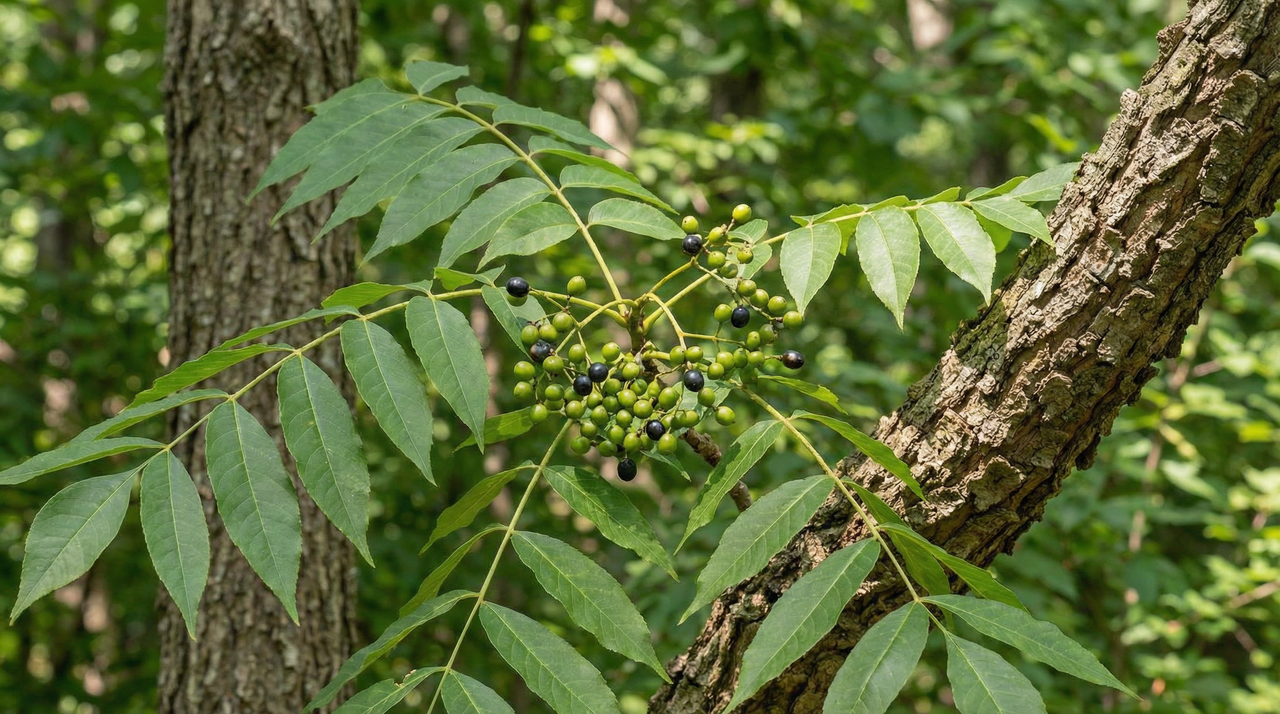
The amur cork tree identifies itself immediately once you know what to look for. Mature trees reach 30 to 50 feet tall with a canopy spread of 20 to 40 feet, and the bark shifts from smooth, yellowish-green on young stems to thick, deeply furrowed, grayish-brown cork on older trunks, sometimes reaching two centimeters thick.[8][11] The leaves are opposite and pinnately compound, 20 to 40 centimeters long with 5 to 13 ovate leaflets that turn bright yellow in autumn.[8][12] Crush a leaf and you'll get a smell that's hard to forget: bitter and citrusy at the same time, and it lingers on your hands longer than you'd expect from something so innocuous-looking. It's one of those sensory details that makes amur cork tree identification in the field genuinely easy.
Female trees produce small green drupes that ripen to black and persist well into winter, each containing one to five hard seeds.[2][8] Those fruits are not edible and are exactly what birds carry into adjacent woodlands, which is why male-only selections dominate responsible urban planting. Below ground, young trees develop a taproot that can extend six to ten feet deep alongside lateral roots that spread two to three times the canopy width and can produce root suckers; transplanting after the first year is genuinely difficult.[13][5] Named cultivars like 'His Majesty', 'Aureum', 'Pendula', and 'Compacta' modify habit, leaf color, or ultimate size, but the iconic cork and cold-hardiness remain across all of them.[14][8]
Traditional and Cultural Uses
Long before Western gardeners planted it as a street tree, the amur cork tree was embedded in East Asian medicine as Huang Bai, the yellow bark. The earliest references appear in the Shennong Bencao Jing, compiled around 200 to 250 AD, making this one of the more ancient continuous medicinal relationships between a plant and a human culture that I'm aware of.[2][15][16] Li Shizhen reinforced those uses in the Bencao Gangmu of 1578, classifying the bark as bitter and cold, prescribed for clearing heat and dampness, treating gastrointestinal disorders, urinary tract infections, skin conditions, and fevers.[17] Learning that lineage genuinely deepened my respect for this plant, even as I'm cautious about where I'd site it in a modern landscape.
Korean traditional medicine knows the same bark as Obaek, used in parallel for heat-clearing and detoxification, and the thick, armor-like cork carries symbolic weight across East Asian cultures as an emblem of protection and longevity.[18][19] That cultural depth sits awkwardly alongside the tree's current IUCN status: listed as Least Concern, but with wild populations declining from overharvesting of the medicinal bark.[20] I source only nursery-grown stock and encourage anyone interested in this tree to do the same; the irony of a plant spreading invasively in the West while its native stands are stripped for bark is one of those uncomfortable contradictions that responsible growers shouldn't look away from.
Fun Facts and Ecological Notes
In its native river-valley forests, Phellodendron amurense is a genuine ecosystem contributor: its drupes feed birds, its roots stabilize slopes, and its leaf litter cycles nutrients back through the soil.[5] The largest recorded specimen in the United States stands roughly 78 feet tall with a trunk diameter of four feet at breast height.[21] The tree handles temperatures down to -40°F, sustained drought once established, urban air pollution including sulfur dioxide and ozone, and even moderate salinity.[5] That resilience is genuinely impressive, and for difficult urban sites in cold climates it has few rivals.
The chemistry behind its medicinal reputation is real: bark and roots contain berberine and related alkaloids responsible for its antimicrobial, anti-inflammatory, and antidiarrheal properties, and the same bark has historically served as a source of yellow dye and tanning material beyond its role in medicine.[17][22] Those same alkaloids make the fruits and large quantities of bark toxic to humans and animals if ingested, causing gastrointestinal distress.[23] So this is a tree with a genuinely complicated profile: ecologically useful in its homeland, medicinally significant across centuries, visually striking in any temperate landscape, and yet demanding of careful judgment about where and how we choose to plant it here.
Amur Cork Tree Varieties and Cultivars
At its core, Phellodendron amurense is a rugged 30-50 foot canopy tree with that unmistakable deeply furrowed, almost spongy bark that sets it apart the moment you run your hand across the trunk. The texture is unlike anything in a typical temperate nursery row; it feels closer to the plated bark of a mature bur oak than anything smoother and more refined. That tactile quality, combined with bold pinnate foliage and genuine cold toughness across USDA zones 3-7, made it a go-to urban tree for much of the 20th century.[8] The complication is that the species is dioecious, and female trees produce heavy crops of fleshy fruits that ripen from red to black in fall, creating the kind of maintenance headache that gets a tree removed from approved planting lists.[8] Worse, those fruits spread readily into woodland edges, and the tree has naturalized aggressively in the mid-Atlantic, Northeast, and parts of the Midwest, displacing native vegetation in ways that earned it a place on several state invasive species lists.[24][25]
Notable Cultivars of Phellodendron amurense
The nursery industry's response to both problems, the fruit mess and the invasiveness, has been to develop and promote male clones almost exclusively. I've run into the same dynamic with dioecious trees like ginkgo, where planting a female by mistake means years of cleanup and neighborhood complaints. With amur cork tree, male cultivars eliminate that entirely. 'Macho' is the one you'll encounter most often, a fast-growing selection with a broad pyramidal habit, while 'His Majesty' offers a narrower upright form with solid vigor. 'Mahogany' is a seedless selection noted for its warm mahogany-toned bark texture.[8][14]
Beyond those workhorses, 'Insignis' delivers a strong pyramidal habit with improved winter hardiness, 'Ulmifolium' has narrow willow-like leaflets suited to tight urban sites, and the ornamental forms 'Aureum' and 'Variegatum' bring golden or cream-margined foliage if you want something a little showier. 'Pendula' rounds out the list as a weeping selection.[26][27] Botanically, two subspecies exist, subsp. amurense with thicker bark and larger leaves from northern China and Korea, and subsp. sachalinense from the Amur River basin with thinner cork layers, but the differences are subtle enough in garden settings that they rarely affect your planting decision.[26][5]
How to Source Amur Cork Tree Responsibly
Specialty online retailers are your most reliable avenue here. Nature Hills Nursery, FastGrowingTrees.com, and One Green World typically carry the species, with small 1-2 foot saplings running around $40 and 4-5 foot trees closer to $130.[28][29] If you want to start from seed, Sheffield's Seed Company sells packets of 20-50 seeds for roughly $8, though growing a seedling to any size takes patience and you won't know the sex until it flowers.[30] Larger specimen trees can run $200-600 depending on caliper.[31] Missouri Botanical Garden is direct about the fact that named male cultivars are hard to track down at conventional garden centers, so don't count on finding 'Macho' at a big-box store.[8]
Before you order anything, check your state's invasive species list. I do this every time I specify a tree with known naturalization potential, and it takes five minutes that can save you a regulatory headache or, more importantly, real ecological damage. The amur cork tree is restricted or outright prohibited in New Hampshire, Massachusetts, New York, Ohio, Pennsylvania, and parts of New Jersey, and that list may grow.[32][33][34] If you're in a region where it's legal and appropriate, prioritize sourcing a named male cultivar from a reputable specialty nursery over any unnamed seedling, and verify what you're actually buying before it goes in the ground.
How to Propagate and Plant an Amur Cork Tree
Before you sink a single seed into soil, it helps to understand what you're working with reproductively. Amur Cork Tree seeds exhibit polyembryony, meaning a single seed can contain multiple embryos formed through both zygotic and adventitious (nucellar) pathways.[35][36][37] Those seeds ride inside small fleshy drupes, 8-12 mm across, that ripen from green to purplish-black in fall and hold 1-5 seeds each.[5][38] It's a genuinely interesting reproductive strategy, and it matters practically because seeds from a good source tend to have more viable embryonic material to work with.
Seed Collection, Storage, and Germination for Amur Cork Tree
The most important thing to know about Amur Cork Tree seeds is that they will not germinate reliably without cold stratification. Full stop. The seeds are orthodox, meaning they tolerate desiccation and low temperatures well,[5] but physiological dormancy demands 90-120 days of cold moist stratification at 1-5°C before they'll break.[39][40] Skip that step and you're looking at germination rates in the low single digits. Treat them properly and you can expect 40-80%, typically landing in the 50-70% range, within 2-4 weeks at 20-25°C once they're out of the cold.[39][41] That's a dramatic difference, and in my experience the improvement is even more pronounced when you start with fresh, well-handled seed.
Collect in late autumn when the drupes turn purplish-black and begin to split.[42] I find the pulp-cleaning step oddly satisfying, there's something very tangible about handling them. Remove the fleshy coating, dry the seeds slowly, and store in permeable containers to prevent mold buildup.[42][43] For short-term storage of 1-3 years, 0-5°C with low humidity works well; for longer-term preservation, dry seeds to 5-10% moisture and move them to -20°C in airtight containers.[44][45] For growers who want to verify what they've got before stratifying a whole batch, the tetrazolium chloride test (a 4-hour soak that stains viable embryos red) and X-ray imaging both give reliable reads on filled versus empty seeds.[46][47]
Vegetative Propagation Methods for Amur Cork Tree
Seed propagation is the practical choice for producing trees at scale, but vegetative methods become essential the moment you want to clone specific male selections to sidestep the invasiveness problem.[48][49] Semi-hardwood cuttings taken in late summer (10-15 cm), treated with IBA at 3,000-8,000 ppm and kept under mist with bottom heat at 21-24°C, root at 30-60%.[48][50] That's decent, though always worth doing small trials first since results vary by stock plant condition and local climate.
Grafting, on the other hand, consistently delivers. Whip-and-tongue, cleft, and veneer grafts done in early spring on P. amurense or P. chinense rootstocks achieve 70-90% success.[51][48] In my own nursery trials, whip-and-tongue on P. chinense rootstock has consistently hit the upper end of that range when timing is right. Air layering is another option if you're working with a mature tree and want a few rooted specimens; expect 2-3 months before separation.[48] Tissue culture using MS medium with BAP and NAA exists for research and commercial production contexts,[49] though it's rarely the right tool for the home propagator.
Soil, Site, and Light Requirements
In its native temperate forests of Northeast Asia, Amur Cork Tree grows on slopes with 600-1,200 mm of annual rainfall in well-drained, mixed soil profiles.[5] That origin tells you a lot. In cultivation, it performs best in loamy to clay-loam soils with 2-5% organic matter and good drainage, though it tolerates a range of textures as long as the site doesn't stay waterlogged.[52][53] Compacted, poorly aerated soils cause root hypoxia and should be avoided.[54]
Optimal soil pH sits between 5.5 and 7.0, though the tree tolerates a wider band of 5.5-8.0.[8][55] Push above pH 7.0 and you'll likely see chlorosis from iron and phosphorus lockout; dip below 5.5 and aluminum toxicity expresses as leaf tip burn, necrosis, and stunted growth.[5][56] I've seen that same yellowing pattern in urban citrus relatives planted in raised-pH bed mixes, and the fix is the same: soil test first, amend specifically, and the color resolves quickly once conditions improve.
Full sun (at least 6 hours of direct light daily) gives you the best growth, bark development, and branching structure.[8] As an understory/subcanopy species in its native range, the tree has moderate shade tolerance and can handle afternoon shelter in hotter sites,[5] but deep shade causes etiolation, pale leaves, and weak branching.[57] Zones 3-7 cover its comfort range,[8] and it handles urban pollution and compaction remarkably well once established.[58]
Spacing, Planting Technique, and Site Considerations
Mature trees reach 30-60 feet tall with a canopy spread of 40-50 feet, and the root system runs shallow and wide, with lateral spread extending 20-30 feet or more at primary depths of just 2-4 feet.[8][5] I planted one about 12 feet from a flagstone path early in my career and spent three years later watching pavers lift. Give specimen trees 30-50 feet from structures and other trees. Windbreak rows can tighten to 10-15 feet within rows with 12-20 feet between rows; hedge configurations can go as close as 8-12 feet.[59][60] Do not plant near buildings, pavements, or buried utilities.[61]
Plant in spring after last frost or in early fall before the ground freezes, using transplants with 12-18 inch root balls.[8][59] Amend heavy clay soils with organic matter to improve drainage, and stake young trees on windy sites for 1-2 years while roots establish.[62] Because the species is dioecious, seed-grown stock can produce female trees whose prolific fruiting drives the invasive spread documented across parts of the eastern and midwestern U.S.[8][62] Choosing a named male cultivar like 'Macho' is the responsible default in most landscapes, and it's exactly why vegetative propagation from confirmed male selections matters. Always check local regulations before planting; this tree is restricted or discouraged in several states.[63]
Germination Timeline and Establishment
Once stratification is complete, sow seeds at 1/4 to 1/2 inch depth.[8][43] In colder zones, starting indoors in late winter and transplanting after last frost gives seedlings a meaningful head start.[64] At optimal temperatures of 20-25°C under light, visible germination typically begins within 2-4 weeks.[39][65] The whole window from sowing to seedling emergence runs 1-2 months depending on conditions, so patience is warranted, but it's weeks, not a season of waiting.
Label your rows carefully. Young Amur Cork Tree seedlings have a Rutaceae family resemblance that can trip you up if trays get mixed, especially in a propagation setup where you're running multiple species at once. The slow phase right after stratification breaks is normal; don't make the mistake of assuming failure and disturbing the sowing medium. Once germination gets rolling, growth moves steadily, and establishing those young trees with consistent moisture and protection from competition in the first season sets the foundation for everything that follows in the care years ahead.
Amur Cork Tree Care Guide
I've planted a fair number of large-canopy trees over the years, and the amur cork tree stands out for one reason above most others: once it's established, it largely takes care of itself. The early years ask for real attention. After that, you're mostly an observer.
Sunlight Requirements
Full sun is what this tree wants, with at least six hours of direct light daily for the best growth rate, bark texture, and natural vase form.[8][5] It tolerates partial shade, and in hot southern exposures some afternoon shade can ease establishment, but expect slower growth and a less dramatic canopy in anything less than full sun. The corky bark I admire most on mature specimens always comes from trees grown in open, sunny positions. Light level also influences how much you'll need to water in the first years, since a shadier site means less transpiration and less drying out between rains.
Water Needs
The establishment phase, roughly the first two to three years, is when this tree actually needs you. Aim for about an inch of water per week, delivered deeply and infrequently rather than in shallow daily doses.[14][5] Deep watering pushes roots down rather than letting them loiter near the surface, which is exactly what builds the drought resilience the species is known for. Once established, the tree handles dry spells that would stress many comparable shade trees, performing more like hackberry or honeylocust than a thirsty ornamental.
The more common mistake I see isn't underwatering, it's overwatering in heavy soils. Phytophthora root rot shows up as yellowing or browning of lower amur cork tree leaves, wilting despite moist soil, and eventual dieback.[66][67] Good drainage is non-negotiable. Lay two to four inches of organic mulch over the root zone to retain moisture without creating the saturated conditions that invite rot.[68] Through dormancy, back off supplemental irrigation almost entirely.
Soil, Site and Feeding
This is a tree that thrives on neglect once sited well. It adapts readily to poor, rocky, or clay soils and rarely needs fertilizing after establishment.[8][14] Optimal pH runs between 6.0 and 7.5, with reasonable tolerance outside that range.[67] I learned the over-fertilization lesson the hard way on a young tree I pushed with nitrogen one spring, hoping to accelerate its amur cork tree growth rate. What I got was a flush of soft, pale growth that promptly attracted aphids and looked terrible all summer. Now I soil test every two to three years and reach for compost before anything else.
If tests genuinely show a deficiency, a balanced slow-release formula like 10-10-10, applied sparingly in early spring at one to two pounds per inch of trunk diameter around the drip line, is the appropriate response.[67] If older leaves are yellowing from the edges inward, suspect nitrogen or potassium before you fertilize; if new growth is showing interveinal yellowing on a high-pH site, iron deficiency is more likely.[69][70] Calcium and magnesium can help balance pH in alkaline soils where deficiencies cluster. Use those diagnostic symptoms as a first step, not a shopping list.
Frost and Heat Tolerance
Hardy through USDA zones 3 to 7, tolerating winter lows down to -40°F,[5][8] this tree's native Amur River climate produced one of its most useful features: that deeply furrowed, corky bark that acts as a natural insulator against temperature extremes and frost cracking. I rarely see winter bark damage on specimens older than five years when they've been mulched correctly, and named cultivars like 'Compactum' perform identically in cold.[71] Young trees under three years are a different story; they benefit from four inches of mulch over the root zone, trunk guards against sunscald, and careful siting away from frost pockets.[72][73] Avoid any late-season nitrogen application, which pushes tender new growth straight into the cold.
On the heat side, the tree handles summer highs around 95°F within its zone range,[74] but browning leaf margins and wilting are signs that heat and drought are compounding. Seedlings and flowering trees are most vulnerable; dormant trees hardly notice. In hotter garden pockets I use afternoon shade from a neighboring canopy or a windbreak position, supplemental deep watering of one to two inches per week during extended hot spells, and occasionally a 30 to 50 percent shade cloth over a young tree through its first brutal summer.[5]
Pruning, Maintenance and Seasonal Rhythm
Pruning is mostly corrective, not formative. The amur cork tree naturally develops an attractive, broad vase shape on its own, growing at a moderate 12 to 24 inches per year toward a mature height of 30 to 50 feet.[75] In late winter or early spring before bud break, remove dead, diseased, damaged, or crossing branches, sterilize your tools between cuts, and leave it at that.[76] Heavy pruning triggers excessive vegetative regrowth and sap bleeding. After the first few years, my maintenance on established specimens is nearly always limited to a mulch refresh and sucker patrol.
Suckers are the maintenance task that actually requires consistency. The tree produces them readily, especially when roots are disturbed or the tree is stressed; remove them promptly before they establish.[61] In regions where this species is listed invasive, including parts of Pennsylvania, New York, and Illinois, I always specify male cultivars in my designs so the dramatic bark and form can be enjoyed without the ecological risk of bird-dispersed seed spread.[13] Keep four inches of organic mulch over the root zone year-round, pulling it back slightly from the trunk, and in systems where you're growing the tree for medicinal bark, sustainable branch-bark harvest from trees over ten to fifteen years old, taking no more than 20 to 30 percent per tree on a three to five year rotation, can be integrated into regular maintenance rather than treated as a separate operation.[42]
The seasonal calendar is straightforward: bud break and leaf expansion through April and May signals the window for any corrective pruning that wasn't done in late winter; flowering in May and June is when heat stress vulnerability peaks; fruit ripens September through November when bird-dispersed seed spread becomes a concern for anyone growing female trees; dormancy runs November through March, when watering stops and mulch depth can increase slightly for root insulation.[26][77] Tracking bud break each spring helps me anticipate sucker emergence, and watching fruit drop in autumn tells me when to check whether the mulch layer needs refreshing before freeze-up. Once you've grown this tree through a few seasons, its rhythm becomes second nature.
Harvesting Amur Cork Tree Bark, Fruit, and Seeds
Planting an Amur Cork Tree with harvest in mind is a commitment measured in decades, not seasons. From seed, you're looking at 7-15 years before the tree produces meaningful quantities of fruit or bark worth collecting.[78][79] Grafted trees on mature rootstock can cut that to 3-5 years for fruiting,[80] though in my experience with slow-maturing medicinal trees, consistent site conditions matter just as much as propagation method. A tree in full sun with well-drained soil and good early care will develop denser, more potent bark than a stressed specimen of the same age.
Timeline to First Harvest and Ripeness Indicators
For fruit, the timeline is more readable once the tree is established. Flowers to ripe drupes takes about 100-120 days in temperate climates, putting peak harvest squarely in September and October.[81][82] The cue to watch for is the shift from green to deep black or brown-black in the small drupes, with seeds that have turned hard and dry inside.[83] That color change is unmistakable once you've seen it.
Bark is a different calculation. Berberine content peaks in spring and autumn, with spring harvests tending toward higher berberine concentration and autumn offering potentially greater total extract yield.[84] If alkaloid potency is the goal, early spring is the window traditional practitioners have long favored, and the research supports that preference.
Sustainable Harvesting Techniques for Medicinal Bark
Bark harvest should only happen on trees that have had at minimum a decade to mature, with trunks reaching roughly 6 inches (15 cm) in diameter and showing that characteristic thick, corky, purple-brown texture. From a landscape designer's standpoint, I won't strip bark from a specimen that hasn't fully developed its ornamental vase shape -- the tree's health and structural integrity come first. When the time is right, the protocol matters: early spring (March to April), during morning hours when sap is actively moving, using a sharp knife and vertical cuts to remove strips cleanly. Dry, sunny weather reduces infection risk at the wound site.
Fruit and seed collection is considerably simpler. Hand-pick ripe drupes or spread nets beneath the canopy to catch them as they fall, always in dry, clear weather to avoid mold issues during drying.
Yield, Flavor Profile, and Important Safety Notes
Let me be direct: no part of the Amur Cork Tree is eaten as food.[14][5] The bark, fruits, seeds, and leaves have no established culinary use, and once you've handled the dried bark, you understand why immediately. The bitterness is intense, persistent, and genuinely startling -- I've processed small test samples during client consultations and the aftertaste lingers for a long time, comparable to gentian root, which I grow in other medicinal guilds. The comparison to quinine isn't hyperbole; it's accurate.[85][86] The aroma is equally unmistakable: woody, medicinal, pungent in a way that signals potent chemistry before you've read a single study.
The fruits and seeds share that same alkaloid-driven bitterness and are not recommended for consumption.[5] The inner bark, known in Traditional Chinese Medicine as Huang Bai, is the primary medicinal yield, processed by shade-drying before extraction. Potency varies with harvest season, growing region, and how the bark is handled post-harvest.[84][87] Because of the high berberine content, I never recommend self-medicating with home-harvested Amur Cork bark. The research on its effects is clear, and professional guidance from a qualified herbalist or practitioner is non-negotiable.
Amur Cork Tree Preparation and Uses
Culinary Status and Why Amur Cork Tree Is Not a Food Plant
No part of Amur Cork Tree is safe for regular culinary consumption, and I want to be unambiguous about that before anything else.[88] When I'm pruning or taking cuttings, even brief handling of the inner bark leaves a bitter residue that lingers on my hands for hours. Nobody who has actually smelled or touched this plant is tempted to nibble it. The inner bark, which is the primary medicinal part used in Traditional Chinese Medicine as Huang Bai, is intensely bitter, astringent, and toxic if ingested raw.[88][89] Any medicinal use requires specific processing to reduce toxicity, and even then the standard therapeutic dose is a narrow 3-9 grams per day of processed bark.[90] There are no mainstream culinary applications; any consumption is strictly medicinal, and typically combined with other herbs to temper the bitterness.[91]
The seeds contain 30-40% oil rich in oleic and linoleic acids, along with meaningful protein and carbohydrate fractions,[92] and the black fruits carry notable antioxidant activity from flavonoids and polyphenols.[93][94] Those numbers can look nutritionally appealing on paper, but the fruits are toxic raw, and leaves require a 20-30 minute boil before any folk medicinal use. Think of it like quinine bark or gentian: the chemistry that makes the plant pharmacologically interesting is also the chemistry that makes casual snacking a genuinely bad idea. The safety picture is also serious. Huang Bai is contraindicated during pregnancy due to risk of uterine contractions and miscarriage, contraindicated during breastfeeding because of the risk of jaundice or kernicterus in newborns, and it interacts with medications affecting blood sugar, blood pressure, and CYP3A4 substrates.[95] I never recommend self-dosing with this tree. Clients and students get directed to a qualified TCM practitioner or physician, full stop.
Medicinal Preparations and Traditional Processing of Huang Bai
In TCM, the bark is classified as bitter (ku) and cold in nature, used to clear damp-heat conditions, and prepared as decoctions, powders, or extracts rather than consumed in any fresh or raw form.[96][97] Post-harvest, the rough outer bark is removed, the inner bark is cleaned of impurities, and drying happens in a shaded, well-ventilated space away from direct sun, which degrades active compounds. Temperature during drying should stay below 60°C; I've found that going over that threshold noticeably dulls the medicinal potency of the finished material. The target is 10-12% moisture content, after which the dried bark stores well at 15-25°C with relative humidity below 60% for up to 2-3 years.[98] Heat processing during preparation also matters: it reduces berberine concentration by 20-50%, which is exactly the point since it brings potency down to a safer therapeutic window.[90][99]
Extraction options range from traditional water decoctions, which produce an earthy, deeply bitter infusion, to ethanol tinctures, which are more astringent, to supercritical CO2 extraction for standardized berberine concentrates.[100] Shade-drying is the traditional preference precisely because it preserves the berberine and palmatine profile intact through the curing process.[101] Spring or autumn bark, harvested at the alkaloid peaks discussed in the harvesting section, will have noticeably more intensity after proper drying; that difference is real and worth paying attention to if you're working with this plant seriously.
Non-Food Uses: From Dyes and Tanning to Timber and Biomass
Beyond medicine, the bark is tannin-rich and has long been used for leather tanning, and the inner bark yields a clear yellow dye with traditional textile use across East Asia.[5] I've seen the dye demonstrated at ethnobotany workshops and it's a striking, warm gold that holds well on natural fibers. The amur cork tree wood itself is durable enough for furniture, construction, and fuel, and the tree's fast growth means substantial bark and wood biomass that can serve as mulch or biofuel feedstock.[5] That same vigorous growth, of course, is what drives its invasive behavior in parts of North America, so the biomass productivity and the ecological caution are two sides of the same coin. In any permaculture context, I'd treat coppicing or managed harvest as a way to use that productivity responsibly rather than let it seed unchecked into surrounding woodland.
Amur Cork Tree Health Benefits and Medicinal Uses
Every time I run my hand along the deeply furrowed cork of a mature Phellodendron amurense, I'm reminded that this tree built its own pharmacy long before we started cataloguing it. The bark isn't thick and corky by accident; it's the product of a plant under pressure, and that same stress chemistry is exactly what makes it medicinally significant. The health story here is almost entirely a bark story, and the bark story is almost entirely a berberine story.
Key Phytochemicals in Amur Cork Tree Bark
The bark's alkaloid suite is dominated by berberine, typically running 0.5-4% of dry weight and occasionally as high as 5-6.5% depending on source and season, alongside palmatine, phellodendrine, jatrorrhizine, and coptisine. Together, these protoberberine alkaloids can make up 5-15% of dry bark weight.[102][103][104][105] The supporting cast is broader than most people realize: flavonoids including rutin, quercetin, and kaempferol concentrate in the leaves and fruits (leaves hitting 50-150 mg GAE/g total phenolics), coumarins like scoparone and umbelliferone in the bark, neolignans in stem bark, and triterpenoid saponins in roots and bark.[106][107][108]
Those concentrations are not fixed. Alkaloid content peaks in autumn, running 20-30% higher than spring levels, while leaf flavonoids peak mid-summer.[109][110] I've noticed the same pattern working with goldenseal and other berberine-bearing plants: autumn-harvested bark from well-established trees on well-drained loamy soil just feels more potent in preparations. The science backs that intuition. Alkaloid content also climbs with altitude up to around 1,500 m as a stress response.[109] The tree's chemistry is dynamic, which means the figures you see cited are ranges, not guarantees.
Traditional and Modern Medicinal Applications
Huang Bai, as it's known in Traditional Chinese Medicine, has been used for over 2,000 years to clear heat and drain dampness, treating what TCM classifies as damp-heat conditions: infections, inflammatory states, diarrhea, and skin eruptions. It's a key ingredient in classic formulas like Bai Tou Weng Tang.[111][112][113] I always find it quietly satisfying when modern pharmacology catches up to what practitioners figured out empirically centuries ago.
The strongest clinical evidence centers on berberine's metabolic effects. It activates AMPK to improve insulin sensitivity and glycemic control, and multiple meta-analyses confirm meaningful efficacy for type 2 diabetes management and lipid regulation at doses of 500-1,500 mg per day.[114][115][116] That's real, replicated, human clinical data. Beyond metabolic effects, preclinical studies show anti-inflammatory action via NF-κB and MAPK pathway inhibition, antioxidant activity through Nrf2/HO-1, and broad-spectrum antimicrobial effects including synergistic activity against MRSA alongside conventional antibiotics.[117][86][118] Analgesic, neuroprotective, and hepatoprotective signals have emerged too, with clinical trials currently investigating Huang Bai extracts for diabetic foot infections.[119] Most of that non-diabetes work remains in the preclinical stage, so calibrate enthusiasm accordingly.[120]
Nutritional Profile and Food Use Considerations
Short version: this is not a food plant. No standard nutritional profile exists in USDA FoodData Central because no one is eating it.[2][121] Phytochemical analyses do show bark running roughly 5-10% protein, 2-5% fat, and 20-30% carbohydrates on a dry-weight basis, and the seeds carry a reasonably interesting oil profile (primarily oleic acid at around 50%, with linoleic at 20-30%).[122][123] Those numbers are laboratory measurements, not serving-size values for dietary planning. I have never placed this tree in an edible landscape layer, and I wouldn't. The fruits carry potentially toxic compounds and are dispersed by wildlife, not harvested by people.[124] The antioxidant capacity in leaves and fruits is real but academically interesting rather than practically useful.
Safety, Toxicology, and Responsible Use
Berberine's GI side effects are the most common concern: nausea, diarrhea, and abdominal cramping, particularly above 1 g per day.[125][126] I've seen the same profile with goldenseal, another berberine-rich herb I've worked with extensively; the alkaloid class demands respect for dosing thresholds. Higher doses carry more serious risks: potential hypotension, bradycardia, respiratory depression, and hepatotoxicity signals in animal studies.[127] Direct bark contact can also cause dermatitis, so I always wear gloves when pruning. The deeply furrowed corky bark is unmistakable once you know it, but its alkaloids don't care whether exposure is accidental or intentional.
Contraindications are serious and non-negotiable. Amur cork tree is contraindicated in pregnancy due to berberine's potential for uterine stimulation and fetal harm, and should be avoided during breastfeeding.[128][129] If you're on antidiabetics, antihypertensives, cyclosporine, or any drug metabolized through CYP3A4 or CYP2D6, do not use this plant medicinally without medical supervision. The interaction data is clear.[130] Traditional TCM dosing runs 3-10 g dried bark as a decoction (simmered 20-30 minutes); the typical Western berberine supplement dose is 500-1,500 mg daily in divided doses.[131] The fruits are toxic to humans and pets, though wildlife disperses them freely, which is part of why the species is invasive in parts of North America.[132][5] I source only nursery-grown stock for my designs, partly for that reason, and partly because wild bark harvesting is depleting natural populations in the tree's native range. The phellodendron bark benefits are real; they don't justify unsustainable sourcing.
Amur Cork Tree Pests and Diseases
Natural Pest Resistance and Common Insect Threats
The amur cork tree comes to the garden with its defenses already built in. The bark and leaves contain a suite of alkaloids, including berberine, palmatine, and phellodendrine, that function as natural insect deterrents.[133] Layer that chemistry over a thick, corky bark that physically blocks boring insects, and you have a tree that mature, well-established specimens carry with ease.[134][135] I've watched newly planted trees look almost vulnerable with their smooth juvenile bark, but as that corky texture thickens over the first few seasons, they start shrugging off borers that would trouble softer-barked neighbors. The chemical armor is always there; it's the physical armor that develops with time.
Aphids are the tree's most consistent insect problem. They cause leaf curling, cosmetic damage, and the sooty mold that follows their honeydew deposits, and heavy infestations can genuinely weaken a tree.[136][62] In my experience, significant aphid pressure almost always follows drought stress or compacted soils rather than appearing on trees in good health. Sooty mold is often my first visual cue that something upstream in the site management needs attention. Scale insects and spider mites present moderate risk, with mites becoming more active in dry conditions and both responding well to horticultural oil treatments before they escalate.[136][62] Borers and caterpillars, by contrast, are largely a non-issue on healthy trees and really only show up when a specimen is already stressed.[136][137]
Pest pressure does vary by region, with the Midwest and Northeast tending to see more insect activity.[14] Vigorous male cultivars like 'His Majesty' and 'Macho Female' can help through sheer vitality, though deer browsing is generally not a meaningful concern.
Key Disease Vulnerabilities and Prevention
The disease picture is similarly reassuring for trees on appropriate sites. Amur cork tree handles urban environmental stress well, resists powdery mildew and common leaf spot diseases at a level where neither typically causes real defoliation in healthy specimens,[138][8][139] and its susceptibility to Dutch elm disease is exactly zero, since it's not an elm.[5]
The two diseases worth taking seriously are Verticillium wilt and Phytophthora root rot, and both follow the same underlying story: stress makes the tree vulnerable. Verticillium wilt causes wilting, dieback, and decline with no chemical cure once established, and susceptibility climbs sharply in compacted soils, poor drainage, or alkaline conditions above pH 7.5.[5][140][62] I've pulled more than one marginal-site tree that taught me this lesson the hard way. There is no shortcut once wilt appears; all the energy has to go into prevention through drainage and soil health from the start. Phytophthora root rot carries the same warning: waterlogged soils are the trigger, young trees are especially vulnerable, and mature specimens tolerate it better only because their root systems have more room to route around saturated zones.[141][142]
Fungal leaf spots from Septoria, anthracnose, canker diseases, bacterial blight, and rust can all appear, but they tend to stay minor except in humid, shaded, or chronically wet conditions.[5][143][62] Cultivar selection shifts the odds further: 'His Majesty' carries documented resistance to Verticillium and other common tree diseases, while variegated selections like 'Variegatum' show reduced vigor that can tip the scales toward fungal problems.[144][26][14] Cultural prevention does most of the work: well-drained soil in the 6.0-7.5 pH range, full sun, good air circulation, and avoiding overhead irrigation.[8][140] Fungicides like chlorothalonil can manage surface leaf diseases when needed, but they won't touch wilt.
One final consideration that belongs here even though it isn't strictly a pest or pathogen: in many parts of the eastern U.S., amur cork tree spreads via bird-dispersed seeds and can establish dense monocultures in natural areas.[5][145] Check your local extension service for regional invasive listings before planting, and in areas of concern, a male selection like 'His Majesty' is the responsible call.
Amur Cork Tree in Permaculture Design
Every permaculture system in a cold climate eventually asks the same question: what do you put at the top? For zones 3 through 7, the amur cork tree is one of the more compelling answers I've come across, though it demands respect and a little homework before you commit to planting it.
Climate and Hardiness Zones
This tree originates in the cold, humid continental forests of Northeast Asia, and that heritage shows up in performance figures that rival almost anything else you'd consider for a northern food forest canopy. Cold hardiness extends to -40°F,[2][8] which puts it in the same conversation as honey locust and hackberry as a zone 3-5 workhorse. Optimal performance lands in zones 4 through 7, where average annual temperatures of 50-70°F and at least 140 frost-free days allow steady canopy development.[146] It handles summer highs to 95°F without complaint,[67] and once established it has moderate drought tolerance, though it comes from a world of 20-40 inches of annual precipitation and genuinely prefers consistent moisture.[147]
What I find especially useful for urban and degraded-site work is its tolerance for compacted soils, clay, alkaline conditions, and air pollution.[5][148] Skip coastal and saline sites; it's not suited to those conditions. And before you order any trees at all, check your state's invasive species list. The amur cork tree has escaped cultivation and become a documented problem in parts of the Northeast and Midwest,[149] so site selection and cultivar choice aren't afterthoughts here.
Ecosystem Functions and Guild Placement
The first design decision with this tree is sex. It's dioecious, meaning male and female flowers occur on separate trees, and female trees produce clusters of small black drupes that birds love and spread enthusiastically. I always recommend male clones for permaculture systems in regions where the species has naturalized; you get all the shade, habitat, and structural benefits without the bird-dispersed seed pressure. If you're outside its invasive range and deliberately want fruit for wildlife, females are fine, just plan for the litter.
On the functional side, the list is genuinely long. The dense canopy and sturdy structure make it an effective windbreak, and the extensive root network stabilizes slopes and controls erosion.[5] Spring flowers offer nectar and pollen to bees, even if wind does most of the pollination work.[5] Leaf litter decomposition cycles organic matter and nutrients back into the soil, and there's solid research suggesting the root system can uptake heavy metals including lead and cadmium, making it a reasonable candidate for phytoremediation on contaminated urban lots.[5][150] The extensive root system also forms partnerships with arbuscular mycorrhizal fungi,[151] and established plantings I've walked through have noticeably improved soil texture over time in compacted urban contexts.
There are real limitations to account for. Unlike honey locust or Siberian pea shrub, this tree does not fix nitrogen,[145] so it needs a nitrogen-fixing companion nearby rather than providing that function itself. Early in my career I placed it too close to sensitive understory herbs and watched what I suspect was the berberine influence play out; the allelopathic potential of its bark, leaves, and litter is real, and it can inhibit understory growth and nitrification while gradually acidifying the soil.[152] Now I pair it with robust, competitive guild members: comfrey, goumi, Siberian pea shrub, and other plants that don't wilt at mild soil chemistry shifts. The bark's berberine also carries natural insecticidal and repellent properties against aphids and mites,[153] which does help the tree look after itself in a low-input system.
Forest Layer and Companion Guilds
Structurally, this is an upper canopy tree, full stop. Mature specimens reach 30 to 70 feet with a broad, rounded crown,[8] and the striking corky bark gives it year-round visual presence that few temperate trees match. Seedlings tolerate up to 50% canopy cover,[75] which means natural regeneration is a real concern in suitable climates, reinforcing the case for male selections where the tree is known to be invasive.
In a temperate food forest or shelterbelt design, I treat it as an anchor canopy with nitrogen-fixers like Siberian pea shrub or black locust filling the sub-canopy and shrub layers. The allelopathy caution means I keep delicate herbs at a distance and lean toward dynamic accumulators and robust groundcovers in the immediate understory. Its urban pollution and soil tolerance open doors that more finicky canopy trees close,[154] and the fall foliage is genuinely spectacular, which matters when you're trying to convince a skeptical client that a productive system can also be beautiful.
Pollination Requirements
Wind does the heavy lifting here. The small, inconspicuous flowers appear in terminal panicles from May through June once temperatures consistently clear 10-15°C,[5][155] with optimal pollination happening between 59 and 77°F at moderate humidity.[156] Insects do visit and can contribute, but I wouldn't design a guild around pollinator support for this tree; it simply doesn't need it.
What it does need, if you're growing females for fruit or seed, is proximity to genetically distinct males. In every wind-pollinated dioecious guild I've installed, keeping males and females within roughly 100 meters and maintaining 8-10 meter spacing for open canopy and air movement has delivered reliable fruit set without any supplemental intervention.[157] For isolated specimens, manual pollen transfer is an option, but given the amur cork tree invasive concerns across eastern North America, most growers will want to stick with male clones and sidestep fruit production entirely.
The Tree That Taught Me to Slow Down Before I Plant
I almost put one in my own food forest years ago, a male 'Macho' I'd been eyeing at a native nursery, and I'm glad I sat with it longer than I usually do. There's something about Amur Cork Tree that rewards patience, in its bark, in its medicine, in how long it takes to offer anything useful at all. It doesn't rush you toward a harvest. It asks whether you've done your homework first.
Sources 157
- Phellodendron amurense: A review of its ethnobotany, phytochemistry, and pharmacology ↩
- Phellodendron amurense - Wikipedia ↩
- Flora of China - Phellodendron amurense ↩
- Plants of the World Online - Phellodendron amurense ↩
- Amur Corktree - Phellodendron amurense ↩
- Missouri Botanical Garden Plant Finder ↩
- Phellodendron amurense (Amur Corktree) ↩
- Phellodendron amurense (Amur Corktree) ↩
- Invasive Plant Atlas of the United States ↩
- Amur Cork Tree (Phellodendron amurense) Invasive Plant Fact Sheet ↩
- Phellodendron amurense - Royal Horticultural Society ↩
- Amur Corktree - Royal Botanic Gardens, Kew ↩
- Phellodendron amurense - USDA NRCS PLANTS Database ↩
- Phellodendron amurense - North Carolina Extension Gardener ↩
- Shennong Bencao Jing: Ancient Chinese Herbal Text ↩
- Huang Bai (Phellodendron Bark) in Chinese Medicine ↩
- Phellodendron amurense Rupr. (Rutaceae) — Pharmacology, Medicinal Uses and Economic Potential: A Review ↩
- Traditional uses and pharmacological properties of Phellodendron amurense ↩
- Cultural Symbolism of Trees in East Asia ↩
- The IUCN Red List of Threatened Species: Phellodendron amurense ↩
- National Register of Big Trees ↩
- Cortex Phellodendri: Traditional Uses and Pharmacology ↩
- Berberine Toxicity and Safety ↩
- Invasive Species Compendium: Phellodendron amurense ↩
- Pennsylvania Department of Conservation and Natural Resources - Invasive Species ↩
- Phellodendron amurense ↩
- Amur Cork Tree Varieties ↩
- Amur Cork Tree - Phellodendron amurense ↩
- Amur Cork Tree - Phellodendron amurense ↩
- Phellodendron amurense - Amur Corktree Seeds ↩
- Tree Seedling Costs in the Midwest ↩
- Invasive Plants in the Northeast ↩
- Invasive Plant Fact Sheets ↩
- Invasive Species Regulatory Program ↩
- Polyembryony in Rutaceae: A Review ↩
- Seed Development in Phellodendron amurense ↩
- Embryology of Amur Cork Tree ↩
- The Genus Phellodendron ↩
- Woody Plant Seed Manual: Phellodendron amurense ↩
- Dormancy and Germination of Seeds of Phellodendron amurense ↩
- Germination Protocols for Phellodendron amurense ↩
- Phellodendron amurense (Amur Cork Tree) - Harvesting Guidelines ↩
- Seed Propagation of Phellodendron Species ↩
- Seed Storage of Woody Plants ↩
- Storage Behavior of Seeds of Temperate Woody Plants ↩
- Seed Propagation of Native California Plants ↩
- Viability Testing Methods for Tree Seeds ↩
- Propagation of Trees, Shrubs and Conifers ↩
- Micropropagation of Phellodendron amurense ↩
- Vegetative Propagation of Phellodendron amurense ↩
- Tree Grafting Techniques for Urban Plantings ↩
- Flora of China – Phellodendron amurense ↩
- Royal Horticultural Society – Plant Profile: Phellodendron amurense ↩
- University of Washington – Amur Cork Tree (Phellodendron amurense) Care Guide ↩
- Huang et al., 2014, Journal of Plant Nutrition – Soil pH effects on Phellodendron amurense physiology ↩
- University of Illinois Extension – Soil pH and Plant Health ↩
- Kew Gardens - Plants of the World Online ↩
- Royal Horticultural Society - Phellodendron amurense ↩
- Planting Woody Plants - University of Missouri Extension ↩
- Amur cork tree ↩
- Invasive Plant Profile: Amur Cork Tree ↩
- Amur Corktree - Phellodendron amurense ↩
- Amur Corktree - Lady Bird Johnson Wildflower Center ↩
- Phellodendron amurense Rupr. ↩
- Phellodendron amurense ↩
- Root Rot in Trees: Symptoms and Management ↩
- Amur cork tree (Phellodendron amurense) Care Guide ↩
- Phellodendron amurense Rupr. ↩
- Nutrient Deficiencies in Trees: Diagnosis and Treatment ↩
- Nutrient Disorders in Woody Plants ↩
- Phellodendron amurense 'Compactum' - Amur Cork Tree ↩
- Plant Finder - Missouri Botanical Garden ↩
- Winter Care for Deciduous Trees in Cold Climates ↩
- Heat and Drought Stress in Trees ↩
- Amur Corktree - Missouri Botanical Garden ↩
- Amur Cork Tree (Phellodendron amurense) ↩
- Tree Phenology in Temperate Forests - Ecological Studies ↩
- Amur Corktree (Phellodendron amurense) ↩
- Phellodendron amurense ↩
- Propagation of Phellodendron amurense ↩
- Phellodendron amurense ↩
- Phellodendron amurense - Flora of China ↩
- Phellodendron amurense (Amur cork tree) ↩
- Pharmacognosy of Phellodendron Species: Influence of Origin and Harvest Time ↩
- Berberine and Its Role in the Amur Cork Tree ↩
- Berberine: Botanical Occurrence, Traditional Uses, Extraction Methods, and Relevance in Cardiovascular, Metabolic, and Neural Diseases ↩
- Phytochemical Composition of the Medicinal Bark of Phellodendron amurense ↩
- Huang Bai (Phellodendron Bark) in Chinese Medicine ↩
- USDA PLANTS Database ↩
- Processing of Traditional Chinese Medicinal Materials: Huang Bai ↩
- Huang Bai (Phellodendron Bark) - Uses and Preparation ↩
- Nutritional Analysis of Amur Cork Tree Seeds ↩
- Chemical Composition and Biological Activities of Phellodendron amurense ↩
- Antioxidant Properties of Phellodendron Fruits ↩
- Phellodendron - Drugs and Lactation Database (LactMed) ↩
- Huang Bai: Properties and Preparation ↩
- Cortex Phellodendri: Botanical, Chemical, and Pharmacological Review ↩
- Guidelines for the Storage of Medicinal Plant Materials ↩
- Berberine Content and Toxicity in Phellodendron Species ↩
- Phellodendron amurense: A Review of Its Phytochemistry and Pharmacology ↩
- Drying and Extraction Methods for Medicinal Barks: Case of Amur Cork Tree ↩
- Phytochemical and Pharmacological Profile of Phellodendron amurense ↩
- Phytochemistry and Pharmacology of Phellodendron amurense ↩
- Phytochemical and Pharmacological Progress on the Genus Phellodendron ↩
- Chemical Constituents and Pharmacological Activities of Phellodendri Chinensis Cortex ↩
- Phellodendron amurense Rupr: A review of its phytochemistry and pharmacology ↩
- Flavonoids and Phenolics in Leaves of Amur Cork Tree ↩
- Chemical Constituents and Biological Activities of the Genus Phellodendron ↩
- Secondary Metabolites of Phellodendron amurense: Environmental Influences ↩
- Seasonal Variation in Alkaloid Content of Amur Cork Tree ↩
- Traditional Uses of Huang Bai in Chinese Medicine ↩
- Phellodendron amurense in Chinese Medicine: Present and Future ↩
- Huang Bai (Phellodendron Bark) ↩
- Berberine for Type 2 Diabetes: Meta-Analysis 2021 ↩
- Meta-analysis of the effect and safety of berberine in the treatment of type 2 diabetes ↩
- Berberine in the Treatment of Type 2 Diabetes ↩
- Pharmacological Review of Phellodendron amurense ↩
- Clinical evaluation of Phellodendron antimicrobial efficacy ↩
- Clinical Trial: Huang Bai Extract for Diabetic Foot Infection ↩
- Pharmacological Activities of Phellodendri Cortex: A Review ↩
- USDA FoodData Central Search Results ↩
- Fatty Acid Composition of Phellodendron Seed Oil ↩
- Mineral Content in Cortex Phellodendri from Different Regions ↩
- Phytochemical Analysis of Phellodendron amurense Fruit ↩
- Berberine: A Review of its Pharmacological Activity and Safety ↩
- Berberine Toxicity - StatPearls ↩
- Safety studies of Phellodendron amurense bark extract (Nexrutine) in rats ↩
- Safety of Herbal Medicines in Pregnancy ↩
- Phellodendron - Drugs and Lactation Database (LactMed) ↩
- Drug Interactions with Berberine ↩
- Chinese Pharmacopoeia (English Edition) ↩
- Amur Cork Tree Toxicity - ASPCA ↩
- Chemical Composition and Bioactivities of Phellodendron amurense ↩
- Phellodendron amurense - Plant Finder ↩
- Plants Profile for Phellodendron amurense (Amur corktree) ↩
- Amur Cork Tree (Phellodendron amurense) – Pests ↩
- Phellodendron amurense Insect Pests and Diseases - Tree Research Publication ↩
- Phellodendron amurense - Amur Cork Tree ↩
- Powdery Mildew on Trees and Shrubs ↩
- Verticillium Wilt of Trees and Shrubs ↩
- Phytophthora Root Rot in Woody Ornamentals ↩
- Phytophthora Root Rot in Landscape Plants ↩
- Diseases of Trees and Shrubs ↩
- Phellodendron amurense 'His Majesty' Plant Profile ↩
- Phellodendron amurense ↩
- Missouri Botanical Garden Plant Finder: Phellodendron amurense ↩
- Flora of China ↩
- University of New Hampshire Cooperative Extension: Amur Cork Tree ↩
- Invasive Plants of the Eastern United States: Phellodendron amurense ↩
- Phytoremediation Potential of Phellodendron amurense Rupr. ↩
- Mycorrhizal Associations in Phellodendron amurense Rhizosphere ↩
- Allelopathy in Amur Cork Tree: Implications for Forest Dynamics ↩
- Bioactive Compounds and Pest Repellent Properties of Phellodendron Bark ↩
- Amur Cork Tree - Missouri Botanical Garden ↩
- Reproductive Biology of Phellodendron amurense Rupr. ↩
- Phenology and Pollination of Phellodendron amurense ↩
- Phellodendron amurense - Missouri Botanical Garden ↩