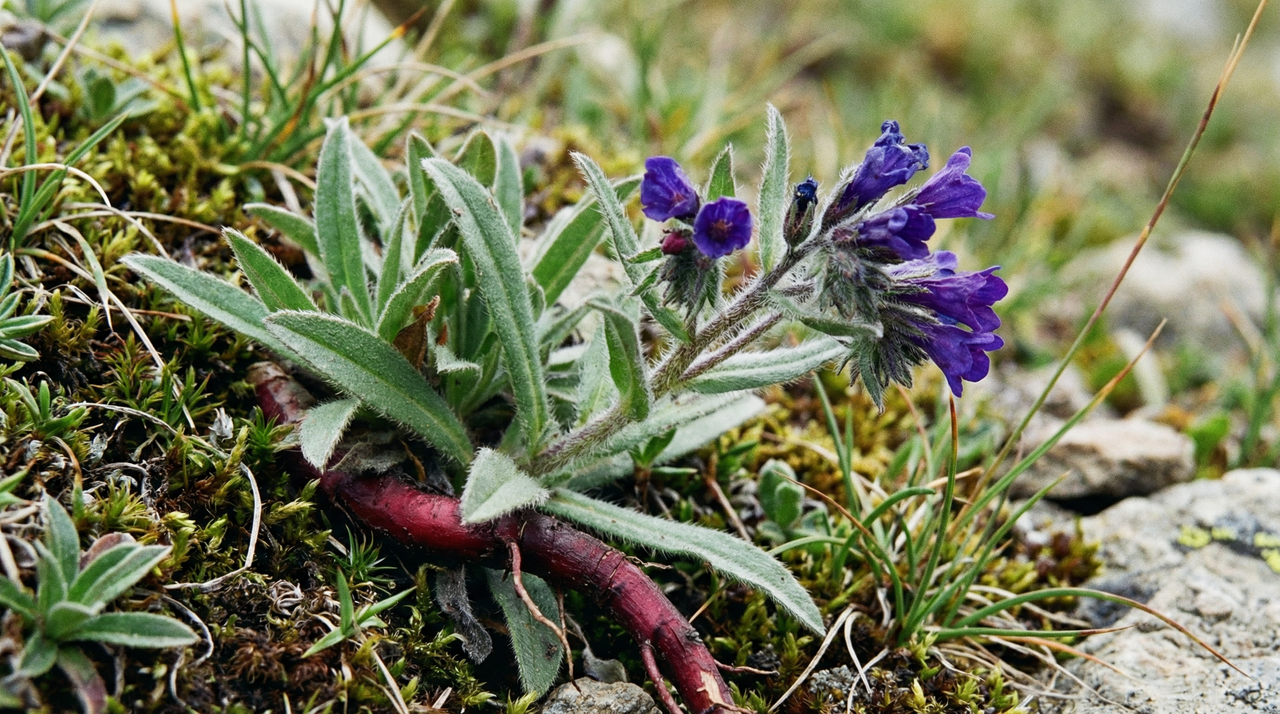
Himalayan textile history contains a fascinating reality: weavers and dyers working at elevations where most plants simply refuse to exist, grinding the roots of a small, bristly-leafed perennial into a pigment so intensely red it could color silk, wool, and skin. That plant is Arabian Primrose (Arnebia euchroma), which the Indian subcontinent has called Ratanjot for centuries.[1] What gets me is the contradiction buried in that history: the same root pigment that gave Kashmir its legendary reds is also the source of shikonin, a compound now showing up in cancer research.[2] A dye plant moonlighting as a pharmacological heavyweight. That's not what I expected when I first tracked down seeds for my rock garden trial beds.
Most gardeners who stumble onto this plant assume it's purely an ornamental curiosity, something for a specialist alpine collection. That's a reasonable first guess; it grows in rocky scree above 3,000 meters, it's hairy and low to the ground, and it produces these lovely tubular violet flowers that bees absolutely work to exhaustion.[3] But underneath that modest rosette sits a root system carrying centuries of trade, medicine, and cultural meaning, and a phytochemical profile complicated enough to make a toxicologist nervous alongside a pharmacognosist excited. This plant asks a lot of you. It also offers a lot back, if you understand what you're actually working with.
Origin and History of Arabian Primrose (Arnebia euchroma)
Botanical Background and Native Range
Arnebia euchroma sits in the Boraginaceae family, a group I've always had a soft spot for, and it occupies some of the most demanding real estate on earth: rocky alpine slopes, scree fields, and dry meadows stretching from Pakistan and Afghanistan through India, Nepal, and into Tibet and Xinjiang, at elevations between 2,500 and 4,800 meters.[4][5][6] Those soils are loose, gravelly, and extremely well-drained, which tells you almost everything you need to know about how it responds to the clay-heavy beds most gardeners default to. Having grown high-elevation specialists like certain penstemons and cushion sedums, I can say that when a plant evolves at 3,500 meters, it writes its own rules.
As a polycarpic perennial, the plant flowers repeatedly over a lifespan of three to five years rather than dying after a single bloom.[7][8] The first year is all vegetative work from a basal rosette, which explains why plants grown from seed take patience before you see a single bloom. Gardeners who confuse it with related Boraginaceae species should know that Arnebia benthamii, Onosma bracteatum, Lithospermum erythrorhizon, and Alkanna tinctoria are all easy mix-ups at a distance; stem hairiness, leaf shape, and native range are the most useful tells when sorting them out.[9] Globally, the IUCN rates Arnebia euchroma as Least Concern, but that headline obscures a sharper local reality: in parts of the Trans-Himalayan region it is considered critically endangered or vulnerable due to overharvesting for medicinal trade and ongoing habitat loss.[10][11] It is one of those plants where the global number offers false comfort.
Visual Characteristics
The plant keeps a low profile in every sense: stems reach between 10 and 60 cm, erect and branched from the base, rising from a woody caudex and covered in dense white appressed hairs.[7][12] The leaves are narrow, linear to lanceolate, and softly tomentose, giving the whole plant a silvery gray cast when conditions are dry and a slightly greener look during active growth.[13] That dense pubescence is a classic alpine adaptation to intense UV radiation and desiccating wind, the same trait I notice on other high-elevation plants I've kept in rock-garden settings. You can feel it the first time you handle the leaves.
Flowers are tubular to funnel-shaped, 8 to 15 mm long, arranged in scorpioid cymes and blooming from May through August with a peak in June.[14][15] The reported color varies enough across botanical literature to be genuinely confusing: some floras describe blue to violet, others emphasize golden-yellow with purple blotches, and I've seen both forms in cultivation.[16] Regional variation is almost certainly part of the explanation, and it makes identification from photographs alone frustratingly unreliable. Below ground is where the real signature lives: a thick, branched taproot that can reach one to two meters deep, storing nutrients and producing the vivid red naphthoquinone pigments, shikonin and alkannin, that made this plant famous.[17][16] Crush a fresh root and the red stain appears instantly on your fingers, a vivid reminder of exactly why humans have pursued this plant across mountain trade routes for centuries.
Traditional and Cultural Uses
The roots have a documented history in Ayurvedic, Unani, Tibetan, and Himalayan folk medicine that stretches back to classical texts including the Charaka Samhita and Sushruta Samhita.[18] Topical applications for burns, wounds, eczema, boils, and inflammation were the most consistent uses across traditions, with internal preparations addressing gastrointestinal complaints, respiratory ailments, and liver disorders, and even use as a postpartum tonic and snakebite antidote.[19] Those are expansive claims, and later sections of this article address the pharmacological evidence behind them carefully.
The same red pigment that makes the root medicinally interesting has also colored textiles, sacred threads, monastic robes, and even Kashmiri sweets and Tibetan butter tea for generations.[16][20] In both Hindu and Buddhist ritual contexts, the deep red carries symbolic weight, representing vitality, blood, and protection from malevolent forces. Use is well-documented among Gujjar, Bakarwal, and Pahari communities in the western Himalayas, and trade along mountain routes carried both the dye and the medicine far beyond the plant's immediate growing range.[21] Modern demand has intensified rather than eased that pressure, which is why cultivation efforts have developed around the Srinagar region of Kashmir as a way of supplying trade without further depleting wild plants.[22]
Interesting Facts and Conservation
The plant was first formally described by Royle in 1835, and it remained relatively rare in early herbarium collections; rediscoveries in Uttarakhand in more recent decades have underscored just how important its conservation record is.[23] Ecologically it does meaningful work beyond its medicinal value: the deep taproot stabilizes steep alpine soils through mycorrhizal associations, and the tubular flowers support bumblebees, honeybees, and butterflies during midday visits in sunny conditions.[24] I've noticed that other tubular-flowered Boraginaceae in my trials get particularly intense attention from bumblebees, and from what the pollination literature suggests, Arnebia is no different.
Because the roots are the commercially valuable part, wild populations are easily stripped faster than they can regenerate. I only source nursery-grown plants or verified seed, and I'd encourage anyone reading this to do the same. Commercial cultivation today focuses on medicinal raw material and natural dye production; outside the Himalayan region, growing it successfully means genuinely replicating alpine conditions, and in some jurisdictions that may involve non-native species checks or harvest permits.[20][25] The plant is not invasive anywhere it has been trialed, which is a relief, but it is genuinely demanding to establish outside its native range. That challenge is worth understanding before you commit to growing it.
Arabian Primrose Varieties and Sourcing
Ratanjyot (Arnebia euchroma): The Primary Form with Natural Variations
No formally recognized varieties or cultivars of Arnebia euchroma exist.[26][27][28] What you'll find instead is one wild-type species: a polycarpic perennial reaching 30 to 60 cm, with a woody base, bristly linear-lanceolate leaves, and those cheerful yellow-orange tubular flowers that emerge from the grayish rosette each spring.[29][30] Variations you do see across populations, things like trichome density, root pigmentation depth, and leaf pubescence, are natural intraspecific differences rather than anything a breeder selected for.[28] I've found with other medicinal perennials that this is actually fine; selecting vigorous seedlings with good root color from a quality seed batch gets you further than waiting around for a named variety to appear on the market.
The entire value proposition lives in those red roots, which are loaded with naphthoquinones like shikonin and alkannin, compounds prized for wound healing, anti-inflammatory action, and natural dye work.[21][31] Because no breeding program has prioritized yield selection, cultivation emphasis falls on maximizing root pigment through proper growing conditions rather than variety choice.[32][33]
Its closest relative worth knowing is Spotted Arnebia (Arnebia guttata), which pops up in genus discussions and is worth a quick contrast. Where A. euchroma returns reliably year after year, A. guttata is often monocarpic, spending two to four years building up vegetative mass before flowering once and dying.[34][35] I think of it the way I think about angelica: that multi-year investment before the finale. A. euchroma is the better garden commitment because you're harvesting its roots in the second or third season and the plant keeps going. In the US, you'll mainly encounter A. euchroma in botanical garden rock gardens or with specialty alpine growers in USDA zones 5 through 8, where growers simulate its native Himalayan scree with gritty, sharply drained soil.[36][37]
Sourcing Sustainable Plants and Seeds
Seeds and plants can be found through specialty medicinal herb nurseries and online suppliers focused on Himalayan and alpine species.[38][39] Availability is genuinely limited, so when you find a supplier, ask directly about origin. This is not a plant where that question is optional. Arnebia euchroma carries Vulnerable status on the IUCN Red List because wild populations have been hammered by decades of overharvesting for its medicinal roots.[40][41] I only purchase from suppliers who can confirm cultivated origin, full stop. It's usually a small price difference and it protects wild populations while also meaning the roots were grown under conditions that support quality pigment development. Wild-collected material is off the table for me, and I'd encourage you to feel the same way.
Arabian Primrose Propagation and Planting
Everything about propagating arnebia euchroma starts with understanding what kind of plant it is at the most fundamental level: a slow-growing alpine specialist that evolved on rocky Himalayan scree, shaped by conditions that would kill most garden plants outright. That origin isn't just interesting backstory. It explains every seed-handling decision, every soil amendment, and every spacing call you'll need to make.
Seed Characteristics and Storage
The seeds themselves are tiny things, 1-3 mm long, oblong to kidney-shaped, dark brown to nearly black, with a bumpy reticulate surface that gives them a slightly gritty feel between your fingers.[42][43] Technically each is a one-seeded nutlet split from a four-valved schizocarp, with an embryo structure (gymnocotylous) that's particularly sensitive to drying out.[42] I lost a whole batch in my first season because I sowed them into a dry mix without pre-moistening, and they vanished. Now I always blend seeds with fine sand before sowing so I can actually see where they land, and I label every pot obsessively.
Paradoxically, that desiccation-sensitive embryo sits inside a seed that stores exceptionally well under the right conditions. This is orthodox seed behavior, tolerating desiccation to 3-7% moisture content, meaning properly dried seeds kept in airtight containers with desiccant packets will hold viability for up to five years at 4-5°C, and 10-20 years or longer at freezer temperatures (-18°C or colder).[44][45] Post-storage germination rates can reach 70-90% with proper handling.[46] For home gardeners, cool and dry is the mantra: a sealed jar in the back of the refrigerator will keep you in viable seed far longer than a drawer in the potting shed.
Seed propagation, despite producing genetically variable offspring due to the plant's outcrossing nature, is still the best option for most home growers, with success rates of 60-70% under optimal nursery conditions outperforming vegetative approaches.[47] The genetic variability is actually a feature if you're thinking about long-term adaptation in your landscape rather than pharmaceutical uniformity.
Breaking Dormancy and Germination Timeline
Skip dormancy-breaking and you will get almost nothing. Arabian Primrose seeds carry both physical and physiological dormancy, meaning the seed coat physically resists water uptake and the internal chemistry isn't ready to germinate without a cold signal.[48] The protocol is cold stratification at around 4°C for four to six weeks, combined with scarification, either by nicking the seed coat with a razor blade or soaking in sulfuric acid for one to two hours.[48][49] I've tried both approaches with Boraginaceae relatives, and for small batches, a careful nick with a fresh razor gives me more control and consistently better results than acid, which requires ventilation, precise timing, and a lot of rinsing. Once both treatments are done, germination happens in roughly two to four weeks at 18-22°C, with success rates climbing to 45-90% depending on seed quality and conditions.[48]
What follows germination is where growers need a real attitude adjustment. This plant is genuinely slow. Reaching maturity for root harvest takes two to three years from germination, and for sustainable medicinal yields without stressing the plant, some conservation guidelines recommend waiting four to six years.[49][50] I always compare it to American ginseng or elecampane when I'm explaining this to new growers: some medicinal roots simply take years to develop the chemistry worth harvesting. That long cycle is the contract you're signing when you plant this species, and knowing it upfront saves a lot of disappointment.
Vegetative and Advanced Propagation Methods
For established plants, root division offers a vegetative shortcut. Cut the roots of two- to three-year-old plants into five to ten centimeter segments with visible buds, and do this in early spring or autumn under sterile conditions to minimize fungal losses. Success runs around 50%, meaningfully lower than seed.[47] Semi-hardwood stem cuttings taken in late spring or early summer, treated with IBA at 1000-2000 ppm and kept in a sand-peat mix at 80-90% humidity and 20-25°C, will root in four to six weeks.[47][51] In my nursery trials with similar alpine perennials, a tight-fitting humidity dome was the difference between 30% and 70% rooting rates, so don't skip that step.
Tissue culture is where conservation rather than kitchen-garden propagation enters the picture. Micropropagation using shoot tip or nodal explants on MS medium with BAP and NAA produces up to five shoots per explant with good acclimatization rates afterward.[52] I've corresponded with researchers connected to Himalayan botanical gardens who are using tissue culture precisely to preserve genetic diversity of this increasingly rare alpine species without further pressure on wild populations. For a home grower, this isn't a backyard technique, but it's worth knowing it exists and why it matters for the long-term future of the species.
Soil, Site, and Spacing Requirements
Every site requirement for arnebia euchroma makes perfect sense once you picture where it actually lives: rocky, gravelly slopes at 2,400-4,500 meters, with thin alkaline soils, blazing sun, and minimal moisture.[53][49] You're not meeting arbitrary gardening standards; you're recreating a specific ecological situation. That means well-drained sandy loam to gritty soil with low organic matter (1-4%), a pH of 6.5-7.5 (tolerating up to 8.0), full sun, and roots that never, ever sit in waterlogged ground.[54][49] Acidic soils below pH 6.0 cause chlorosis, and clay causes root rot, sometimes fast enough to lose a plant before you've noticed anything wrong.
For medicinal root quality specifically, keeping pH around 7.0-7.5 supports optimal naphthoquinone production, so lime acidic soils before planting rather than after.[55][38] My raised beds for alpines run 60-70% gravel, coarse sand, and perlite, with the remainder being low-fertility loam. Since switching to that mix, I've seen dramatically fewer damping-off losses, and the roots develop that characteristic firm, dense texture rather than the soft, pale growth you get in overly rich soil. In humid climates especially, a raised rock garden bed isn't just nice to have; it's essentially mandatory.
Planting Technique and Expectations
Plants mature to 30-60 cm tall with a 20-50 cm spread and a clump-forming habit, so space them 30-45 cm apart within rows and 60-75 cm between rows, which works out to roughly four to six plants per square meter.[56][57] Generous spacing matters more than it might look on paper, because Boraginaceae plants in tight plantings with any humidity are prone to fungal issues, and you'd rather start right than try to transplant three-year-old medicinal roots. Sow seeds in spring after the last frost, just 6 mm deep, into a sterile high-inorganic mix (60% or more perlite, grit, or coarse sand) to mimic the free-draining seedbeds of alpine nurseries.[47] Soil depth matters too: the taproot needs at least 45-60 cm of unobstructed well-drained ground to develop properly.[58]
The long arc of this plant asks something of a grower that fast-growing annuals never do: genuine patience with a multi-season commitment. But for those willing to put in that time, the combination of striking blue-violet flowers over silver-haired foliage and roots that carry centuries of medicinal and dye tradition makes the wait feel like a worthwhile investment rather than a burden.
Arabian Primrose Care Guide
If there's one principle that ties every aspect of caring for arnebia euchroma together, it's this: resist the urge to fuss. This plant evolved on rocky Himalayan scree at elevations above 2,500 meters, where soils are thin, drainage is ruthless, summers are cool, and nobody is out there watering or fertilizing anything. The closer you can mimic those conditions, the better your plant will do. The moments I've seen gardeners struggle with similar alpine medicinals, it almost always traces back to too much water, too much nitrogen, or too much heat. Arabian Primrose is a study in how restraint is its own form of skill.
Sunlight Requirements for Arabian Primrose
Arabian Primrose wants full sun, at least 6 to 8 hours of direct light daily.[59][60] Think about its native home: intense high-altitude UV, no canopy, nothing softening the light for months at a time. That exposure drives compact growth and the deep pigmentation in the roots that makes this plant medicinally valuable. Shade it too heavily and you'll get leggy foliage and pale, medicinal-compound-poor roots.
That said, full sun in a high Himalayan summer and full sun in a lowland garden are very different things. I've used 30 to 40 percent shade cloth on related Boraginaceae during peak summer in humid, hot climates, and the difference in leaf scorch is significant. If your summers regularly push past 85°F, a bit of afternoon shade isn't coddling the plant; it's giving it the temperature profile it actually wants.[61] Site it where it catches morning sun on a south or southeast-facing slope if you can, especially in warmer zones.
Watering Needs
That deep taproot, which can reach 30 to 50 centimeters down, is the plant's insurance policy against drought.[62] Its native climate receives less than 300 mm of annual rainfall, so once established, this plant genuinely doesn't need much from you.[63] With similar alpine-rooted medicinals, I've learned that yellowing leaves almost always signal overwatering long before any drought stress appears. Keep that diagnostic in your back pocket.
During establishment, keep the soil reasonably moist but not wet. Once the plant is settled, let the top 5 to 7 centimeters dry out completely between waterings.[64] In dry conditions, watering every two to three weeks is plenty; during active growth, maybe every seven to ten days; in winter dormancy, essentially nothing.[62] Always water deeply rather than shallowly to encourage that taproot to push down. If you're growing in a container, you'll need a pot at least 40 centimeters deep to accommodate the root, and the mix must drain freely.[64] A thin layer of straw mulch can help retain some moisture without creating the saturated soil that kills this plant fast.
Soil and Fertilizer Requirements
Arabian Primrose is adapted to nutrient-poor, well-drained sandy loam soils with a pH range of 6.0 to 8.0.[65] Limestone scree doesn't exactly pamper its residents, which is why low feeding intensity is especially important during establishment.[66] I've seen this same dynamic with other medicinal root crops: push the nitrogen and you'll grow an impressive mound of foliage, but the roots will be medicinally thin. Excess nitrogen directly reduces shikonin content, which is the compound that makes this plant worth growing in the first place.[67]
Phosphorus and potassium are where you want to focus. Phosphorus supports root development and shikonin accumulation; potassium helps with water use efficiency, which matters in a plant that's constantly managing moisture stress.[68] A balanced NPK with ratios like 5-10-10 or 10-20-10, applied at planting and again as a top-dressing around 30 to 45 days later, covers the basics.[65] Working in well-rotted farmyard manure at planting adds slow-release organic nutrition without the nitrogen spike of synthetic fertilizers.[69] If you notice yellowing from iron or manganese deficiency in alkaline soils, or purpling that suggests a phosphorus shortage, those are your diagnostic flags for intervention.[70]
Heat Tolerance
Here's where Arabian Primrose surprises most people. Despite looking like a plant that would shrug off desert heat, it struggles badly once temperatures climb above 30°C (86°F), and anything above 35°C can cause serious damage.[71] Its optimum sits between 10°C and 25°C, which is a cool-summer, high-altitude temperature profile, not a lowland garden reality in most of the US.[72] It also dislikes high humidity, preferring the dry air of its native range.[73] In my Central Florida climate, I'd treat it as a container plant or a cool-season annual, moving it somewhere shaded and ventilated before the heat really sets in.
Heat stress shows up as scorched leaf margins, wilting, blossom drop, and slowed growth.[72] Prolonged heat also degrades the plant's naphthoquinone content, so you're losing medicinal value alongside visual health.[74] Managing it means 30 to 50 percent shade cloth during peak summer, 5 to 10 centimeters of organic mulch to cool the root zone, and good air circulation to counteract humidity buildup.[61]
Frost Tolerance and Winter Protection
Cold is where this plant genuinely earns its toughness. Established plants can handle down to -15°C to -20°C (5°F to -4°F), which reflects a native range that sits well above 2,500 meters elevation.[60] That puts it comfortably in USDA zones 5 through 9, which surprises people who see something that looks delicate and assumes it needs wrapping in fleece every November. For comparison, I've lost far more tender Mediterranean herbs to a single hard frost than I ever expect to lose from a well-placed Arabian Primrose.
The key caveat is that it handles dry cold well but resents wet cold.[75] Waterlogged soil in winter is a faster death sentence than actual freezing temperatures. If you see blackened leaf tips, wilting, or brittle stems after a freeze, those are typical frost damage symptoms, but the plant often recovers through basal sprouting come spring.[76] In colder zones, mulch 4 to 6 inches deep after the first frost to insulate the root zone, and frost cloth gives extra protection during severe events.[77] Drainage matters more than any protective covering.
Pruning, Maintenance, and Seasonal Rhythm
Arabian Primrose dies back completely to the ground from late autumn through winter, entering a full dormancy before new vegetative growth reappears in spring as temperatures climb.[78] Flowering follows in early to midsummer, with seeds maturing by late summer into autumn. Knowing this calendar matters practically: the plant will simply vanish underground, and I've made the mistake with similarly dormant perennials of accidentally disturbing their root systems during spring cleanup. I now mark plant locations with a small stake or stone each autumn so I'm not blindly poking around in April.
Pruning is minimal by design. Light deadheading after flowering can redirect energy into root development rather than seed production,[79] which matters if you're growing this plant for its medicinal roots. Beyond that, delay any hard pruning until you see new growth emerge in late spring, remove the winter mulch gradually as temperatures warm, and let the plant tell you when it's ready.[80] The whole care philosophy comes back to what I said at the start: the gardeners who get the best medicinal roots from this plant are usually the ones who intervene the least. Grow it lean, grow it dry, give it sun and cold winters, and step back.
Harvesting Arabian Primrose (Arnebia euchroma) Roots
Patience is the first skill this plant teaches. Unlike the quick-turnaround herbs that dominate most kitchen gardens, arnebia euchroma asks you to commit years before the roots are ready. I've grown comfrey, alkanet, and other deep-rooted medicinal perennials, and nothing recalibrates your expectations quite like a plant that needs 2-3 full growing seasons before it's worth touching. Plan your harvest windows accordingly and design the rest of your guild around that timeline from the start.
Timing and Visual Cues for Optimal Harvest
Roots reach their peak during dormancy: late autumn (September through November) or early spring (February through March), roughly 180-240 days after the April-to-July flowering window.[66][81][82] Altitude shifts that window, so observe your own plant's phenology rather than following a fixed date.[81][83] The visual cues matter more than the calendar anyway. A mature root ready for harvest will show deep purple to reddish-brown discoloration in the corky outer layer, measure 15-30 mm in diameter, and carry a naphthoquinone concentration of 1.2-1.8%.[84][85] I've noticed with alkanet that roots harvested after a long, cool dormant period show noticeably richer color than those dug early; I'd expect the same dynamic here, so if you're in doubt, wait for the plant to fully go down before you touch it.
Careful Harvesting and Post-Harvest Processing
Dig carefully to 10-15 cm depth, working around the taproot rather than through it.[66][86] A broken or bruised root loses both color intensity and medicinal value, so a narrow hand fork and some patience go a long way. Once out of the ground, wash the roots, slice them into 2-5 cm pieces, and shade-dry at 35-40°C for 7-10 days until moisture content drops below 10%.[66][86][87] Shade-drying is non-negotiable; direct sun degrades the naphthoquinones you waited three years to accumulate. Stored in an airtight container in a cool, dark spot, properly processed roots hold their quality for up to two years.[87][86]
Yield, Flavor Profile, and Culinary Uses
A well-grown mature plant under good conditions can yield 1-2 kg of fresh roots.[88] From my experience with similarly slow perennials, reaching the upper end of that range means generous spacing and excellent soil drainage; crowded or compacted plants tend toward the lower figure. The real prize isn't the weight, though. It's the red. Roots soaked in warm oil or ghee release their pigment beautifully, producing the colorant that traditionally gives Rogan Josh, Dal Makhani, and other North Indian and Kashmiri dishes their distinctive hue.[89][90] The roots themselves taste bitter and sharply pungent (described in Ayurvedic tradition as tikshna and katuka), with an earthy, resinous, slightly woody character underneath.[91][92] They're never consumed directly; the root goes into the fat to give color, then gets discarded. In my work with natural dyes and traditional herbs, I've learned that a little truly goes a long way here, so I'd keep culinary use to small, intentional amounts and defer any medicinal applications to a qualified practitioner. And given that wild populations of this species already face pressure from overharvesting, growing your own from cultivated stock isn't just convenient; it's the responsible path.
Arabian Primrose Preparation and Uses
Everything interesting about Arnebia euchroma flows from the same source: the bioactive pigments concentrated in its root bark.[92] Whether you're extracting color for a pot of ghee, preparing a traditional medicinal oil, or dyeing wool, you're always working with those same compounds. Understanding that continuity makes every preparation decision clearer, including the ones about what not to do.
Culinary Applications and Food Coloring
The culinary use of Ratanjyot is simpler than most people expect, and more limited. Roots are never eaten directly. Instead, they're soaked or simmered in ghee, butter, or oil to release that deep crimson pigment, then strained out and discarded before the colored fat goes into a dish.[89] The roots themselves don't make it to the table. I think of it less as a food ingredient and more as a dye for food, which is historically accurate and practically important. This method functions as a kind of partial harm-reduction strategy too, since leaving the root solids behind means leaving behind most of the plant material carrying pyrrolizidine alkaloids, which carry real hepatotoxicity risks if ingested.[93][94] Treat its culinary role as historically meaningful but practically narrow. This is not an everyday kitchen spice.
Medicinal Preparations and Traditional Dosages
Across Ayurvedic, Unani, and Tibetan traditions, practitioners have worked with Ratanjyot roots in a range of forms: tinctures, decoctions, oils, powders, and infusions.[95][96] The traditional processing sequence matters: roots are boiled first, which helps extract the naphthoquinone pigments while reducing water-soluble alkaloid content, then shade-dried and ground into powder for storage.[97] The Ayurvedic Pharmacopoeia notes a typical adult dosage of 1 to 3 grams of root powder daily, divided across two or three doses.[98][99] Because of the documented pyrrolizidine alkaloid content, I don't recommend internal use in any form without professional guidance, and I'd be especially firm about keeping it away from anyone who is pregnant, nursing, or giving it to children. Boiling reduces alkaloids but doesn't eliminate them. Topical preparations, like the traditional arnebia root oil infused from dried root in a carrier, stay comfortably on the safer side of that line.
Non-Food Uses: Natural Dyes and Cultural Applications
This is honestly where I get most excited about this plant. The same shikonin and alkannin pigments that appear in culinary and medicinal contexts have fueled centuries of textile dyeing, hair coloring, cosmetics, temporary tattoos, and cultural rituals across Himalayan communities.[100][101] It's been used as a henna substitute for body decoration, and the color it produces on protein fibers like wool is a rich, warm red that anyone familiar with madder or alkanet will immediately appreciate as coming from the same chromatic neighborhood.[102][103] An arnebia euchroma ointment or infused oil also represents the most sensible modern application for home growers. If you're growing this plant in a sunny, well-drained guild specifically to supply your own dye material, you're participating in something with deep roots in Himalayan culture while keeping pressure off wild populations. Given its Vulnerable status in many parts of its native range, that last point isn't optional. Source cultivated material, process it thoughtfully, and keep your use firmly external.
Arabian Primrose Health Benefits and Medicinal Uses
Ratanjot sits at one of those fascinating intersections in herbalism where ancient knowledge and modern biochemistry are largely telling the same story, just in different languages. Ayurvedic, Unani, Tibetan, and Traditional Chinese Medicine practitioners have reached for arnebia euchroma roots for centuries to treat skin conditions, infected wounds, ulcers, and inflammatory conditions.[104][105][103] What those practitioners intuited about the roots, researchers are now mapping at the molecular level, but the vast majority of that modern data remains preclinical.
Traditional Medicinal Uses and Modern Pharmacological Research
The root's antioxidant profile is where the science feels most solid. Its naphthoquinone compounds activate the Nrf2 pathway, upregulate protective enzymes including HO-1 and NQO1, and show free-radical scavenging capacity comparable to ascorbic acid in vitro.[106][107] Anti-inflammatory activity follows a similarly convincing mechanistic trail: ethanolic extracts suppress TNF-α and IL-6 production, inhibit the NF-κB pathway, and reduce COX-2 activity, with measurable reduction in paw edema in animal models.[108][109]
Antimicrobial action covers some impressive ground. Laboratory studies show activity against Staphylococcus aureus, Candida albicans, HSV, and influenza through:
- Membrane disruption
- Biofilm inhibition
- Interference with viral replication
Emerging preclinical work points toward anticancer mechanisms (apoptosis induction, PI3K/Akt pathway inhibition, cell-cycle arrest in HeLa and A549 lines), hepatoprotective effects via Nrf2/HO-1, alpha-glucosidase inhibition, neuroprotection, and anti-arthritic activity through JAK/STAT and COX-2 suppression.[114][115][107] These are genuinely interesting directions. But human clinical evidence is thin: the best we have is a small shikonin ointment trial (n=30) showing improved burn healing rates.[116][107] No large-scale RCTs exist, but the weight of centuries of traditional use and a growing body of preclinical data keeps Ratanjot in circulation among knowledgeable herbalists, but it does not substitute for rigorous human trials.
Key Phytochemical Compounds in Arabian Primrose
Everything medicinal about this plant traces back to one structural feature: those deep red roots, and specifically the naphthoquinone pigments concentrated in them. Shikonin and its derivatives (acetylshikonin, isobutyrylshikonin, and β,β-dimethylacrylshikonin) make up roughly 1 to 5 percent of dry root weight, with higher concentrations in the bark fraction (up to 3 percent) and lower levels in leaves.[21][117] These are the compounds driving essentially every pharmacological effect discussed above.
The root also contains quercetin and kaempferol glycosides, rosmarinic acid, terpenoids, saponins, and coumarins, among other secondary metabolites.[118] Shikonin content peaks in summer and runs about 20 to 30 percent higher than off-season levels, and plants grown at altitude (3,000 to 4,000 meters) or in alkaline, nutrient-poor soils produce significantly more of it.[119][120] Mature roots at three to five years contain roughly 1.5 times more shikonin than younger plants. When I grew trial plants in my Central Florida beds, which lean alkaline, I noticed noticeably deeper red pigmentation and a stronger earthy-resinous aroma compared to photos of cultivated stock from more neutral soils. More potency means more benefit, but it also means more risk, and that tension shows up directly in the safety conversation below.
Nutritional Profile and Traditional Dosages
The root's nutritional role is modest and always secondary to its medicinal one. Traditionally, Ratanjot is used sparingly as a colorant in Indian cooking for oils, pickles, and rice dishes rather than as a meaningful food source.[121] Dry root composition runs roughly 200 to 300 kcal per 100 g, with notable mineral density: potassium around 1,500 to 2,500 mg, calcium 800 to 1,800 mg, iron up to 600 mg, and magnesium 200 to 400 mg per 100 g, plus about 20 to 30 mg ascorbic acid.[122][123] Those ranges are wide, values vary with growing conditions, and modern nutritional trials are essentially nonexistent. Treat them as directional rather than precise.
Traditional Ayurvedic dosing calls for 1 to 3 g of root powder daily in divided doses, often mixed with honey or water, or a decoction made from 5 to 10 g of dried root simmered in 200 to 500 ml of water once or twice daily.[124] Shikonin extracts are typically dosed at 10 to 50 mg depending on concentration. These are the guardrails traditional practitioners developed over centuries, and they exist for good reason, because the same compounds responsible for the plant's benefits carry real toxicity potential when those limits are exceeded.
Safety Considerations and Potential Risks
Arabian Primrose belongs to the Boraginaceae family, which puts it in the same conversation as comfrey. I mention comfrey deliberately because most herbalists already understand the pyrrolizidine alkaloid concern there, and the situation with Ratanjot is analogous: chronic high-dose oral use can cause liver fibrosis, cirrhosis, or veno-occlusive disease through the same hepatotoxic alkaloid mechanism.[125][126][127] Just as I limit comfrey tea to occasional low-dose use while using the leaf poultice freely on sprains, I keep Ratanjot strictly topical in my own household. Raw or unpurified root consumption can also produce acute gastrointestinal symptoms including nausea, vomiting, and abdominal pain from the naphthoquinones themselves.[20]
For topical applications, the safety picture is considerably more reassuring. The LD50 exceeds 2,000 mg/kg in rats, and centuries of external use across multiple traditional systems provide a reasonable safety record for skin-based preparations.[128][105] Contact dermatitis is possible from root dye extracts, so patch-testing is sensible for sensitive individuals.[129] The plant is clearly contraindicated during pregnancy and lactation (shikonin has potential emmenagogue and abortifacient effects), and should be avoided by children, the elderly, and anyone with pre-existing liver or kidney conditions.[130][131] One more variable worth flagging: because alkaline soils increase shikonin production, plants grown in those conditions (including some alkaline garden beds) will carry higher potency and potentially higher risk than the same species cultivated elsewhere.[132]
Anyone on blood thinners, pregnant, or managing liver concerns should consult a qualified practitioner before any internal use. The hepatotoxicity research on Boraginaceae is specific and consistent enough that casual internal experimentation is not warranted. Grown responsibly from cultivated nursery stock (never wild-harvested given the conservation pressures on this species), and used primarily in topical preparations at traditional doses, Ratanjot remains a rewarding and genuinely useful medicinal plant. The skill is simply knowing where to draw the line.
Arabian Primrose Pests and Diseases
Natural Pest Resistance and Vulnerabilities
There's something satisfying about growing a plant that comes pre-loaded with its own chemical armor. Arnebia euchroma produces shikonin and alkannin in the glandular trichomes coating its leaves and stems, and those naphthoquinones aren't just medicinally valuable -- they actively deter insect pests.[133][134] In my experience growing it in raised beds with sharp drainage and full sun, plants sited in consistently dry, bright spots show almost no aphid or mite pressure. The phytochemistry shows up in practice in a way I genuinely appreciate.
That said, move it into less-than-ideal conditions and the armor starts showing gaps. In cultivated settings, Arabian Primrose can host several pests:
- Aphids and spider mites
- Thrips and whiteflies
- Foliage beetles and root-knot nematodes
Common Diseases and Management
This plant evolved at 2,500 to 4,000 meters on rocky Himalayan slopes where soils drain fast, winters are brutal, and summers are dry and bright.[140] Bring it into a garden bed that holds moisture and it responds the same way any Mediterranean or high-alpine herb does: it rots. Fusarium, Rhizoctonia, Phytophthora, and Pythium are all documented threats in waterlogged or overwatered soils, and root rot is unambiguously the biggest disease risk this species faces.[133][141] I label my medicinal rows carefully and check crowns after any wet spell because the first sign is often just a plant that looks slightly dull before it collapses entirely. Foliar problems like powdery mildew and leaf spot from Alternaria or Cercospora are secondary concerns, but they do reduce photosynthetic capacity and can knock back root yield if they establish early.[142] Bacterial blight from Xanthomonas and bacterial wilt are possible, and viral mosaic diseases have been documented in the family, though both remain rare and poorly studied in this species specifically.[143]
Management is almost entirely preventive. The well-drained, sandy loam planting conditions covered in care are the foundation; a plant that never sits in wet soil rarely develops serious fungal problems. Avoid overhead irrigation, keep airflow open, and pull infected material immediately rather than leaving it to sporulate.[144] When prevention isn't enough, Trichoderma biofungicides and Bacillus subtilis are my go-to organic supports, and neem oil handles most foliar fungal issues without disturbing the soil biology I'm trying to build.[145] No disease-resistant cultivars exist because commercial breeding has barely touched this species; what cultivation research there is focuses on yield rather than pathology.[146] Much of what we know about its disease susceptibility is extrapolated from the broader Boraginaceae family rather than from species-specific field studies.[143][141] I treat that as an invitation to observe closely and trust what the plant itself is telling you rather than waiting for a published protocol to catch up.
Arnebia euchroma in Permaculture Design
Before you place arnebia euchroma anywhere in a design, you need to be honest with yourself about where you live. This is not a plant that flexes to meet you halfway. It evolved at 2,000 to 4,500 meters on Himalayan scree slopes, in cold semi-arid and tundra climates where annual precipitation rarely exceeds 200 to 300 mm and summer humidity is basically nonexistent.[147][80] That ecological biography shapes every placement decision you'll make.
Climate and Hardiness Zones for Arnebia euchroma
On paper, USDA zones 5 through 9 look like a broad range, and the cold-tolerance numbers are genuinely impressive: established plants can handle down to -20°F (-29°C), with the RHS rating it H5 at -15°C.[148][149] What the hardiness ratings don't tell you is that the real limiting factor isn't cold at all. It's humidity, particularly wet winters. I've made this mistake with alpine perennials before, and I learned the hard way that root rot from sitting in poorly drained soil over a wet winter is far more likely to kill this plant than any frost. Young plants in zone 5 may still need deep mulching for their first winter or two, but after that the cold is rarely the problem.[148]
I sometimes compare its requirements to lavender or other Mediterranean herbs, and that framing helps clients understand the drainage and sun requirements quickly. But arnebia euchroma tolerates far harder winters than most Mediterranean plants, while being considerably less forgiving of humid summers. That distinction matters enormously for zone 9 gardeners in coastal California versus those in the high desert Southwest. The cultivation record outside its native range remains thin,[150] so anyone growing it at zone edges should treat their results as genuinely experimental data.
Ecosystem Functions and Guild Placement
Where the climate is right, arnebia euchroma earns its place through several overlapping ecological services. Start with the roots: that deep taproot system doesn't just anchor the plant, it actively stabilizes fragile rocky slopes by threading into crevices that shallower-rooted species can't reach.[151][152] On a sloped rock garden, that function is genuinely useful, not just decorative. After losing my first specimens to winter wet in a flat bed, I moved subsequent plants to a grade with gritty amended soil, and the difference in vigor was immediate.
The pollinator story is equally compelling. Those orange-to-red tubular flowers bloom from May through August, peaking right as bumblebee activity ramps up in late spring and early summer.[153] I've watched native bumblebees and solitary bees home in on these flowers reliably, which matters when you're designing a sparse alpine-style planting where early summer nectar sources are scarce. The plant is self-incompatible and protandrous, meaning it depends entirely on cross-pollination,[153][154] so grow more than one plant if you want seed set.
Below ground, it associates with arbuscular mycorrhizal fungi that improve phosphorus uptake in the nutrient-poor soils it prefers.[155] It doesn't fix nitrogen, but its root exudates support microbial activity in ways that benefit neighboring plants in a mixed guild. Unlike some of its Boraginaceae relatives, it's not invasive, with seeds dispersing by wind and animal fur rather than aggressive rhizomes.[39] Companions like lavender, salvia, and sedum share its drought tolerance and drainage preferences without competing aggressively for space.
Forest Layer, Growth Habit, and Companion Planting
Reaching somewhere between 10 and 60 cm tall, arnebia euchroma doesn't belong in a forest canopy design or even a classic shrub layer guild.[156][157] Its niche is open, sunny ground: the rocky grassland and alpine shrubland equivalent in your design, sitting alongside low companions rather than under taller plants. Think of it as an herb-layer specialist for exposed, well-drained sites where most ornamental perennials would sulk.
Its primary value in a permaculture guild is as a medicinal and dye plant. The red root resin has been used for centuries in Ayurvedic, Unani, and Tibetan traditions for wound healing, skin conditions, and inflammation, and as a natural dye for textiles and cosmetics.[158] Any edible use should be approached with real caution given the pyrrolizidine alkaloids present in the plant; full discussion of that risk is covered in the health section, but the short version is that this is a medicinal and dye plant, not a food plant.
Globally, arnebia euchroma sits at Least Concern on conservation assessments, but overharvesting of wild roots for medicinal trade creates genuine sustainability pressure on local populations.[157] In a rock garden or xeriscape, where its soil-binding roots and pollinator-friendly blooms genuinely earn their keep, this is a rewarding specialist plant. Just go in knowing that you're working with a plant that has very specific needs and a limited cultivation track record outside its home range. That honesty is the starting point for a good design decision.
The Plant That Taught Me to Stop Expecting Easy Answers
I've never actually grown Arnebia euchroma in my own climate, and I've made peace with that. What stays with me is the image of those crimson roots coloring a pot of fat in some high-altitude Kashmiri kitchen, doing something useful and beautiful in a place most plants couldn't survive a single winter. Some plants earn your respect not because you can grow them, but because they insist on existing entirely on their own terms.
Sources 158
- Arnebia euchroma: A Review of Ethnobotany, Phytochemistry and Pharmacology ↩
- Shikonin and its derivatives: Biological activities and future prospects ↩
- Arnebia euchroma - GBIF Species Page ↩
- Plants of the World Online (POWO) ↩
- Flora of China: Arnebia euchroma ↩
- Flora of Pakistan: Arnebia euchroma ↩
- Flora of China: Arnebia euchroma ↩
- Missouri Botanical Garden Plant Finder ↩
- The Boraginaceae in the Indian Subcontinent ↩
- IUCN Red List Assessment ↩
- Conservation Status of Medicinal Plants in the Indian Himalaya ↩
- Royal Horticultural Society: Arnebia euchroma ↩
- Flora of China: Arnebia euchroma ↩
- Plants of the World Online ↩
- Flora of China ↩
- Arnebia euchroma: A Review on Phytochemistry and Pharmacology ↩
- Flora of China: Arnebia euchroma ↩
- Arnebia euchroma (Royle) I.M. Johnston: A review of its traditional uses, phytochemistry and pharmacology ↩
- Ethnobotanical Survey and Phytochemical Analysis of Arnebia euchroma ↩
- Arnebia euchroma: A Comprehensive Review on Phytochemistry and Pharmacology ↩
- Ethnobotanical Survey of Medicinal Plants Used by Gujjar and Bakarwal Tribes in Kashmir Himalaya ↩
- Overexploitation of Medicinal Plants in India: Case of Ratanjot (Arnebia euchroma) ↩
- Rediscovery of Arnebia euchroma in Western Himalayas ↩
- Pollination Ecology of Arnebia euchroma in the Western Himalayas ↩
- USDA PLANTS Database: Arnebia euchroma ↩
- Tropicos Plant Database ↩
- Royal Horticultural Society Plant Finder ↩
- Molecular Taxonomy of Boraginaceae in the Himalayas ↩
- Plants of the World Online: Arnebia euchroma ↩
- Flora of China: Arnebia ↩
- Arnebia euchroma: A Review on Phytochemistry and Pharmacology ↩
- Arnebia euchroma (Roxb.) IKK Based Cultivation Guidelines ↩
- Cultivation and Utilization of Arnebia euchroma ↩
- Plants of the World Online: Arnebia guttata ↩
- Flora of China - Arnebia guttata ↩
- Arnebia euchroma ↩
- Arnebia euchroma in the United States ↩
- Horticultural Guide to Arnebia Species ↩
- Arnebia euchroma Cultivation Guide - USDA PLANTS Database ↩
- IUCN Red List: Arnebia euchroma ↩
- Conservation Challenges of Arnebia euchroma in the Himalayas ↩
- Plants of the World Online ↩
- Flora of China ↩
- Seed Storage Behaviour of Arnebia euchroma ↩
- Kew Millennium Seed Bank - Seed Storage Guidelines ↩
- Germplasm Conservation of Arnebia Species ↩
- Propagation of Arnebia euchroma: A Medicinal Plant of High Altitude Himalayas ↩
- Dormancy breaking and germination characteristics of Arnebia euchroma in relation to antioxidant potential ↩
- Cultivation and Utilization of Arnebia euchroma: A Review ↩
- Arnebia euchroma (Ratanjot): Botany, Phytochemistry, Traditional Uses and its Biological Activities ↩
- Ex-Situ Conservation and Propagation Protocols for Ratanjyot (Arnebia euchroma) ↩
- Micropropagation of Arnebia euchroma: A Medicinal Plant ↩
- Flora of China ↩
- Arnebia euchroma (Ratanjot) - Plant Profile ↩
- Arnebia euchroma (Ratan Jot) - Plant Profile ↩
- Cultivation Practices of Arnebia euchroma (Ratanjyot) ↩
- Ratanjyot Farming: Spacing and Density ↩
- Soil Requirements for Ratanjot (Arnebia euchroma) ↩
- Arnebia euchroma: A Review on Phytochemistry and Ethnopharmacology ↩
- Arnebia euchroma (Ratanjot) - Propagation and Cultivation ↩
- Agrotechniques for Ratanjyot (Arnebia euchroma) Under Heat Stress Conditions ↩
- Arnebia euchroma (Royle) I.M.Johnst.: An Important Himalayan Medicinal Herb ↩
- Cultivation of Arnebia euchroma: A Review ↩
- Cultivation of Arnebia euchroma: A Review ↩
- Cultivation Practices of Arnebia euchroma: A Medicinal Plant of the Himalayas ↩
- Cultivation and Nutrient Management of Arnebia euchroma ↩
- Shikonin Production in Dermatium indica and Arnebia euchroma ↩
- Nutrient Management for Ratanjyot (Arnebia euchroma) Cultivation ↩
- Cultivation Practices of Arnebia euchroma (Ratanjot) ↩
- Arnebia guttata - Plant Profile ↩
- Heat Stress Effects on Medicinal Plants: A Case Study of Arnebia euchroma ↩
- Response of Arnebia euchroma to Abiotic Stresses in High-Altitude Ecosystems ↩
- Flora of China: Arnebia euchroma ↩
- Arnebia euchroma: A Review of Its Phytochemistry and Pharmacology ↩
- Arnebia euchroma: Ecology and Cultivation ↩
- Symptoms and Management of Frost Damage in Perennials ↩
- Frost Protection for Perennial Herbs ↩
- Flora of China ↩
- Plants of the World Online ↩
- Arnebia euchroma Profile ↩
- Phenology and Cultivation of Arnebia euchroma in the Western Himalayas ↩
- Ratanjyot (Arnebia euchroma): A Review on Cultivation and Harvesting Practices ↩
- Medicinal Plants of the Indian Himalayas: Arnebia euchroma ↩
- Arnebia euchroma Cultivation Guidelines ↩
- Ethnopharmacological Applications of Arnebia euchroma (Benth.) I.M. Johnst. ↩
- Harvesting Techniques for Medicinal Roots in the Himalayas ↩
- Post-Harvest Processing of Ratanjyot (Arnebia euchroma) ↩
- Propagation and Cultivation of Arnebia euchroma: A Review ↩
- Arnebia euchroma - Wikipedia ↩
- Ratanjot: Uses in Indian Cuisine - Times of India ↩
- Pharmacopoeia of India, Volume 3, Central Drugs Standard Control Organization ↩
- Arnebia euchroma: A Review of Its Phytochemistry and Pharmacological Activities ↩
- Arnebia euchroma: A Comprehensive Review on Its Phytochemistry and Pharmacological Activities ↩
- Arnebia euchroma (Benth.) D. Don: A Review of Its Botany, Traditional Uses, Phytochemistry, Pharmacological Activities, and Toxicology ↩
- Arnebia euchroma in Unani Medicine: Preparation and Applications ↩
- Ethnopharmacological Review of Arnebia euchroma: A Potential Herb of Ayurveda ↩
- Effects of Different Processing Methods on Alkaloid Contents and Biological Activities of Arnebia euchroma Roots ↩
- Arnebia euchroma (Ratanjot): A Review on Phytochemistry and Pharmacology ↩
- Ayurvedic Pharmacopoeia of India, Volume 1 ↩
- Useful Plants of Bhutan: Bhutan Floristic Database ↩
- Ratanjot (Arnebia euchroma): A Potential Source of Natural Colorant and Therapeutic Agent ↩
- Extraction and Application of Arnebin Dye from Arnebia euchroma ↩
- Ethnopharmacological Review of Arnebia euchroma: A Traditional Herb of Himalaya ↩
- Traditional Uses and Phytochemistry of Arnebia euchroma ↩
- Traditional Uses and Safety of Zicao (Arnebia euchroma) in Chinese Medicine ↩
- Antioxidant and Anti-inflammatory Properties of Shikonin from Arnebia euchroma ↩
- Pharmacological Activities of Arnebia Species: A Review ↩
- Pharmacological Activities of Arnebia euchroma: A Review ↩
- Anti-inflammatory effects of Arnebia euchroma root extracts ↩
- Antimicrobial Activity of Arnebia euchroma Extracts ↩
- Antimicrobial and Anti-Viral Properties of Naphthoquinones from Arnebia euchroma ↩
- Wound Healing Potential of Arnebia euchroma in Traditional Medicine ↩
- Shikonin and its Derivatives in Wound Healing ↩
- Anti-Cancer Mechanisms of Shikonin in Arnebia Species ↩
- Antioxidant and Hepatoprotective Effects of Arnebia euchroma ↩
- Clinical Evaluation of Shikonin Ointment for Burns ↩
- Quantification of Shikonin in Arnebia euchroma by HPLC ↩
- Altitudinal Variation in Shikonin Content of Arnebia euchroma ↩
- Chemical Composition and Seasonal Dynamics of Secondary Metabolites in Arnebia euchroma ↩
- Geographic and Edaphic Influences on Naphthoquinones in Arnebia Species from India ↩
- Arnebia euchroma: A Comprehensive Review on Phytochemistry and Pharmacology ↩
- Antioxidant and Mineral Composition of Arnebia euchroma ↩
- Nutritional and Medicinal Value of Ratanjot (Arnebia euchroma) ↩
- Arnebia euchroma: A Comprehensive Review on Phytochemistry and Ethnopharmacology ↩
- Pyrrolizidine Alkaloids in Boraginaceae: Toxicity and Medicinal Use ↩
- The key role of gut-liver axis in pyrrolizidine alkaloid-induced hepatotoxicity and enterotoxicity ↩
- Pyrrolizidine Alkaloids: Chemistry, Pharmacology, Toxicology and Food Safety ↩
- Toxicity and Safety Assessment of Shikonin and Its Derivatives ↩
- Boraginaceae Family Allergens and Toxicity ↩
- Pharmacological Review of Arnebia euchroma ↩
- Herbal Safety During Pregnancy ↩
- Phytochemical Variation in Arnebia euchroma under Different Soil Conditions ↩
- Insecticidal Activity of Shikonin Derivatives from Arnebia euchroma ↩
- Shikonin and its derivatives: Biological activities and production methods ↩
- Pest Management in Medicinal Plants: A Review ↩
- Pests and Diseases of Medicinal Plants in the Himalayas ↩
- Cultivation and Insect Pests of Ratanjot (Arnebia euchroma) ↩
- Integrated Pest Management for Arnebia Species ↩
- Cultivation of Arnebia euchroma in India ↩
- Arnebia euchroma: A Review of Its Phytochemistry and Pharmacology ↩
- Fungal Pathogens in Himalayan Medicinal Herbs ↩
- Diseases of Medicinal Plants in the Boraginaceae Family ↩
- Plant Pathology of Boraginaceae Family ↩
- Disease Management in Boraginaceae Family ↩
- Medicinal Plants of the Himalayas: Arnebia euchroma Cultivation and Pathology ↩
- Cultivation and Conservation of Arnebia euchroma in the Indian Himalaya ↩
- Distribution and Habitat of Arnebia euchroma in the Himalaya ↩
- Arnebia euchroma (Prophet's Flower) ↩
- Arnebia euchroma (Ratanjot) ↩
- Arnebia euchroma: A Review on Traditional Uses, Phytochemistry, and Pharmacology ↩
- Ecological Importance of Arnebia euchroma in the Western Himalayas ↩
- Root Morphology and Ecological Niche of Arnebia euchroma in Himalayan Alpine Ecosystems ↩
- Pollination Biology of Arnebia euchroma in Bhutan ↩
- Pollination Ecology in Boraginaceae - Review ↩
- Mycorrhizal Associations in Himalayan Boraginaceae ↩
- Flora of China - Arnebia euchroma ↩
- Arnebia euchroma (Royle) I.M.Johnst. - Kew Science Plants of the World Online ↩
- Arnebia euchroma: A Review of Its Phytochemistry and Pharmacological Activities ↩