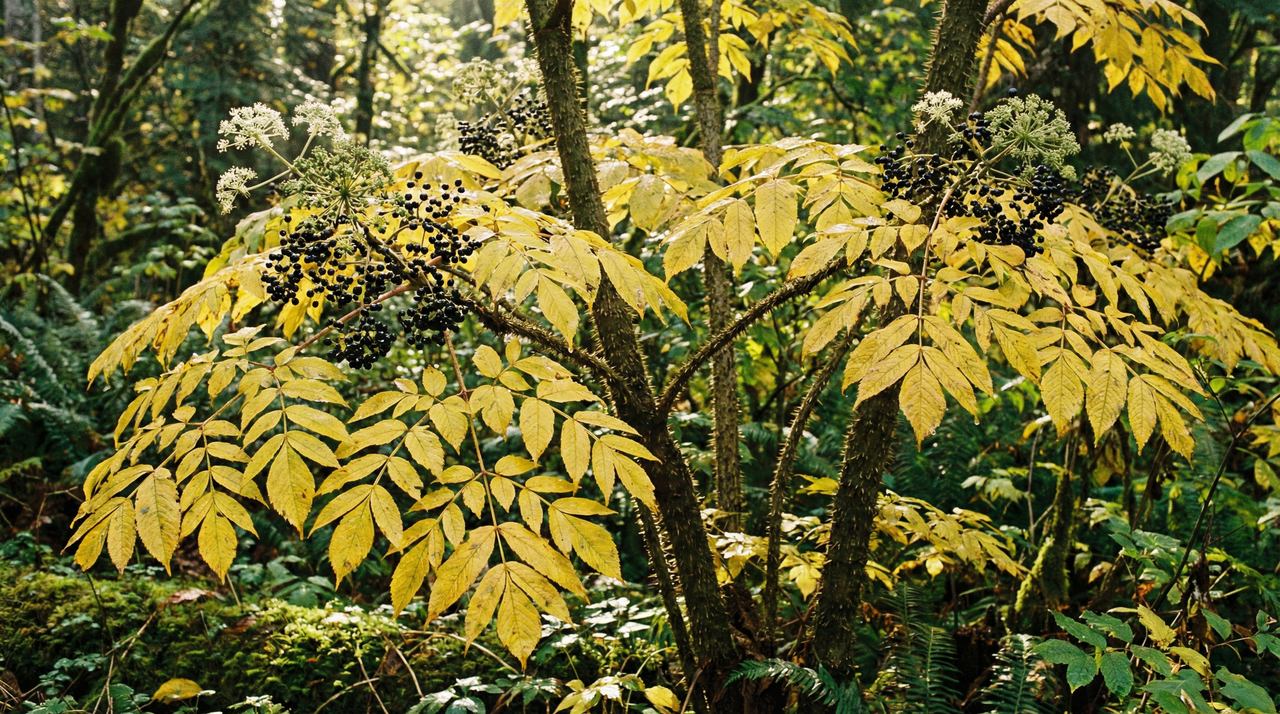
Few landscape plants demand as much respect or offer as unique a harvest as Aralia elata, a fiercely armored shrub prized for its edible spring shoots. The whole trunk is armored, the leaf stems are armored, even the young shoots pushing up in spring carry little recurved thorns that'll draw blood if you grab them without thinking. I did, the first time, because I was so focused on getting those shoots into my basket before they bolted past peak tenderness that I forgot what I was dealing with. The Japanese call it tara no ki, and in Korea it's 두릅나무 (dureup namu), both names tied to that precious spring harvest. But the names that stuck in English, Devil's Walking Stick and Thunder Tree, tell you something the culinary reputation doesn't.
Here's the contradiction I keep coming back to: this is a plant that looks like it wants nothing to do with you, and yet people across Japan, Korea, and northern China have been eating its shoots, brewing its bark, and planting it near their homes for protection for centuries.[1] The same spines that drew my blood in March are, in some traditions, exactly why you'd want this tree close to the house. That tension between forbidding and generous, between wild pioneer and cultivated delicacy, is what makes Aralia worth understanding properly.
Origin and History of Aralia (Aralia elata)
Botanical Background and Native Range
Aralia elata is a polycarpic perennial shrub or small tree native to the temperate forests of Japan, Korea, northeastern China, and the Russian Far East, where it occupies woodland edges, mixed forest margins, and mountain slopes from sea level up to around 2,000 meters elevation.[2][3][4] It belongs to the Araliaceae family, putting it in distinguished company alongside Eleutherococcus senticosus (Siberian ginseng) and a range of other medicinal relatives.[5] That family context matters, because the medicinal reputation aralia carries in East Asia isn't coincidence; it's a genus-wide trait.
Being polycarpic means it flowers and sets fruit repeatedly over a lifespan that typically runs 30 to 40 years, with individual plants potentially reaching 50 to 60 years, though first flowering from seed takes 5 to 10 years.[6][7] I've grown mine from seed, and I can confirm that the early years test your patience. The plant puts energy into its root system first, and you're waiting a long time before those first flower panicles appear. Beyond seed, it spreads vegetatively through root suckers, forming colonies that allow it to persist across disturbed ground and forest margins.[8][9] That suckering habit is part of what makes it such a resilient pioneer, and it's something to understand before you choose where to plant it.
Traditional and Cultural Uses in East Asia
The human relationship with aralia goes back centuries. It's documented in China's Bencao Gangmu (1596) and Korea's Dongui Bogam (1613), two of the most important pharmacopoeias in East Asian medical history, and it also appears in Edo-period Japanese texts.[10][11] Three distinct regional traditions developed around the plant, each emphasizing different parts and purposes.
In Japan, the focus has always been culinary. Young spring shoots, called "udo" or "tari," have been harvested for generations as a seasonal delicacy, traditionally blanched or boiled to reduce bitterness before eating.[12] Think somewhere between asparagus and celery root in terms of the general experience; tender, slightly bitter, unmistakably spring. Korean traditional medicine took a different angle, using roots and bark in decoctions for rheumatism, fatigue, and digestive complaints, with similar anti-inflammatory and vitality applications appearing in Chinese medicine under the name "Ciwujia."[13][14] These medicinal uses belong to a later section, but the fact that food culture and medicine culture developed simultaneously, across three neighboring civilizations, signals something significant about how embedded this plant became in East Asian life.
Aralia was formally described by F.A.W. Miquel in 1866 from Siebold's Japanese collections, and it arrived in Western gardens during the early-to-mid 19th century as an ornamental and edible-shoot plant.[3][15] It has naturalized in parts of the eastern United States, though its suckering behavior is considerably more manageable than that of the native Aralia spinosa, and it isn't generally classed as highly invasive.[16] Wild populations in East Asia, though, face real pressure from overharvesting for both food and medicine; globally the species is listed as Least Concern, but sustainability of wild collection is actively monitored.[17][18] If you're sourcing aralia, please buy nursery-grown. Wild-collected roots and plants are a real problem, and the cultivated supply is good enough that there's no reason to contribute to that pressure.
Visual Characteristics and Identification
Once you've seen aralia in person, you don't forget it. In cultivation it typically reaches 10 to 20 feet, though native specimens can push toward 30 to 50 feet in ideal conditions.[19][20] Young plants grow fast, up to 6 feet per year, and send up multiple stems from basal suckers to form an open, architectural clump. The stems are heavily armed with sharp, stout woody spines, especially when young, and the bark turns grayish-brown and corky with age.[20][21] I learned early on to wear heavy gloves when handling young plants; the prickles on small specimens are sharper than they look, and they catch you off guard.
The leaves are the real showstopper. Bipinnate to tripinnate, up to a meter long, with sharply toothed leaflets clustered along arching branches, the whole effect reads as almost tropical despite the plant being fully temperate-hardy.[22][23] In mid-to-late summer, creamy-white flowers appear in large compound panicles up to 60 cm long, and these are followed by purple-black drupes whose seeds birds disperse enthusiastically.[24][25] Related species like Aralia continentalis and the herbaceous Aralia cordata share that bold foliage character but differ markedly in stature and armature, giving the genus a wide range of forms to explore.[26][27]
Fun Facts and Folklore
The common name "Devil's Walking Stick" is purely descriptive: those stout, spine-covered stems genuinely resemble a weapon, and the spines function as effective physical defense against browsing deer.[28][29] In Japan, the plant carries a very different name: "Kaminari-ki," the Thunder Tree, possibly because its dry fruit capsules can split explosively in storms. Across East Asia, it has been planted near homes both for its practical utility and as a symbolic barrier against evil spirits, the spines doing double duty in folklore as in the forest.[29][30]
What strikes me about aralia, taken all together, is how thoroughly it earned its place in human culture before anyone catalogued a single compound. Dramatic enough to name after the devil, useful enough to feed and heal generations, hardy enough to travel from East Asian mountain slopes to North American gardens and persist there quietly. That's a plant with a story worth knowing.
Aralia elata Varieties and Where to Buy
Notable Cultivars of Japanese Angelica Tree
The species form of Aralia elata is bold enough on its own, but the cultivars are where things get genuinely exciting for gardeners working with specific spaces or design goals. 'Aurea' brings warm golden-yellow foliage that glows against darker plantings, while 'Variegata' splashes cream and green across those enormous compound leaves in a way that stops people mid-path. 'Spectabilis' offers a more restrained growth habit without sacrificing the architectural drama, and then there's 'Compacta', the one I find myself recommending most often to clients with smaller suburban lots. The species can push 30 to 50 feet given time and room; 'Compacta' tops out around 10 to 15 feet, which means you get all that spiny, tropical-feeling presence without needing an estate to back it up.[31][32][20] The RHS and Missouri Botanical Garden both recognize these selections, though regional availability of specific cultivars varies quite a bit depending on what local specialty growers have chosen to propagate.
Sourcing Aralia elata Plants
Aralia elata is not the kind of plant you'll spot at a big-box garden center on a Saturday morning.[20] Think of it like sourcing a rare Japanese maple cultivar: you're looking at specialty woody plant nurseries, mail-order specialists, and the occasional arboretum plant sale. When you do find a source, call ahead. Stock shifts seasonally and sells out fast when it does appear. Seed packets tend to run $5 to $20, young plants $20 to $50, and if you want a more established tree, expect to pay $100 to well over $500 depending on size and cultivar. Once you're standing in front of a plant, look for dense foliage, robust stems, and absolutely no sign of leaf spotting.[33] I've learned to be picky here because aralia can be prone to leaf spot in humid conditions, and a stressed nursery plant rarely bounces back the way you'd hope once it's in the ground.
If sourcing Aralia elata proves too difficult, the native Devil's Walking Stick (Aralia spinosa) is worth considering as an alternative. It's far more available through native plant nurseries across much of the eastern US, carries many of the same structural qualities, and sidesteps the import supply chain entirely. Whichever species you pursue, check local regulations before you plant. The suckering habit that makes aralia so interesting in a food forest context also puts it on watch lists in some regions, and it's always better to know that before the plant goes in the ground.
Aralia Propagation and Planting Guide
Aralia elata has a bit of a split personality when it comes to reproduction: brilliantly designed by nature to spread itself, and occasionally humbling to humans who try to do the same on purpose. Understanding why helps you choose the right method from the start.
Understanding Aralia Seeds: Polyembryony, Morphology, and Storage
The seeds themselves are fascinating little structures. Aralia elata exhibits polyembryony, meaning a single fertilized ovule can produce both zygotic and nucellar embryos.[34][35] The seeds are small, 4-6 mm, dark brown to nearly black, with a hard endocarp and sometimes a thin membranous wing.[36] That wing, combined with bird dispersal of the berries, explains how this plant colonizes new ground so effectively in the wild. If you want to save seed for long-term storage, there's good news: they're orthodox storers, tolerating desiccation down to 5-10% moisture and holding viability for 5-10 or more years when kept sealed at around -18°C to -20°C with controlled humidity.[37][38]
Propagation Methods: From Stratification to Root Division
Getting those seeds to actually germinate is where patience becomes a real requirement. They need cold moist stratification for 90-120 days at around 4-5°C before they'll break dormancy, and even after that, germination at 20-25°C can take 1-3 months and range anywhere from 20-70% success depending on seed freshness and stratification quality.[34][39] I always label my seed rows obsessively with Aralia because the early seedlings have a fine, ferny look that can fool you into thinking you've got something in the carrot family coming up. I've nearly weeded out Aralia seedlings more than once.
For most home growers, root division of suckers in late winter or early spring is the far more reliable path.[40][41] The plant throws suckers readily once established, and separating them with a good chunk of root attached is genuinely satisfying work. Cuttings are also viable: hardwood in late winter, softwood in early summer, semi-hardwood in late summer, all with IBA rooting hormone (around 3000-5000 ppm for semi-hardwood), 80-90% humidity, bottom heat at 21-24°C, and a free-draining sterile medium. Expect rooting in 4-8 weeks with 60-80% success under good conditions.[20] Air layering in moist sphagnum moss can produce roots in 6-8 weeks, while ground layering takes considerably longer, 6-12 months.[42] Grafting onto Aralia cordata or Aralia spinosa rootstocks works at 50-70% in late winter, and tissue culture exists as an advanced option for specialist propagators.[41] Spring and early summer are the sweet spots for most of these methods, and watch for aphids and scale during establishment.[43]
Soil, Site, and Light Requirements for Successful Establishment
Aralia elata wants what its native woodland edges provide: moist, well-drained, humus-rich loam at pH 5.5-7.5, with enough organic matter to buffer moisture without sitting wet.[20][29] It absolutely will not tolerate compaction or waterlogging. I've worked with heavier soils where I added compost and perlite together, and that combination made the difference between a plant that struggled and one that thrived. On clay, coarse sand helps too. The root system is shallow and rhizomatous (unlike the deeper taproot of Aralia cordata), so a minimum of 18-24 inches of well-prepared soil depth really matters.[20][44]
Light-wise, full sun to partial shade works well, with at least 4-6 hours of direct sun daily.[20] In hotter climates, afternoon shade makes a noticeable difference. I've seen leaf scorch on plants in full afternoon sun during summer heat, while the same variety in dappled light kept its foliage clean and lush. Deep shade causes etiolation, so there's a real middle ground to aim for, which is essentially what a woodland edge provides naturally.[29]
Planting, Spacing, and Early Care Techniques
Mature Aralia elata reaches 20-30 feet tall with a spread of 15-30 feet, and it forms colonies through those suckering rhizomes.[20][29] Space plants 10-15 feet apart to account for both mature spread and colony expansion.[29] I once planted a pair too close together because they looked modest in their nursery pots. Within four years I had an impenetrable thicket. That lesson stuck. Plant in spring after the last frost, matching the original container depth, and water consistently through the first growing season. The rhizomes that initially feel like a spacing problem become your best propagation resource once the colony is established; those volunteer suckers are essentially free plants.
Timeline to First Harvest of Edible Shoots
Seed-grown plants typically take 4-7 years before producing worthwhile edible shoots.[45] Starting from root divisions or suckers cuts that wait to 2-3 years, which is a substantial difference if spring shoots are part of why you're growing this plant. My honest advice: start with divisions if you can source them, grow from seed if divisions aren't available and you've got patience to spare. Either way, the wait is worth it. The seed-grown plants that eventually hit harvest size feel genuinely earned.
Aralia Care Guide: Growing Japanese Angelica Tree Successfully
Think about where Aralia elata comes from: cool, moist woodland edges in Japan, Korea, and northern China, where organic matter accumulates on the forest floor and tree canopies soften the afternoon sun. Every care decision you make for this plant traces back to those conditions. Get the basics right and it rewards you with decades of dramatic architecture. Push it too far outside its native preferences and it tells you quickly, usually through its leaves.
Water Needs for Aralia elata
Aralia elata performs best in consistently moist, well-drained, humus-rich soil, and that word "consistently" does a lot of work.[20][46] During the first year or two, I water newly planted specimens deeply once or twice a week, checking soil moisture at the two-inch mark rather than following a fixed schedule.[20][46] Once established, the plant builds decent drought tolerance and rarely needs supplemental irrigation except during prolonged dry spells.[20][47]
Knowing what stress looks like helps. Overwatered plants yellow and wilt despite moist soil, and the roots go mushy when you check. Underwatered ones show leaf scorch at the margins and general wilting on hot afternoons.[20][29] A 2-4 inch layer of organic mulch over the root zone does more for moisture retention than almost anything else I do, and it nearly eliminates the need to water established trees through mild dry spells.[48] One note: this plant is sensitive to chlorinated water and has low salt tolerance, so if you're on a municipal supply with heavy chlorination, letting water sit overnight before applying is worth the small effort.[49]
Sunlight Requirements
Full sun to partial shade works, with a minimum of four to six hours of direct light daily, but the sweet spot for most of us is morning sun with afternoon protection.[20][50][47] That native understory origin matters here. Too little light and the plant etiolates, producing thin stems and yellowing leaves. Too much harsh sun, especially in warm zones, triggers scorch and premature leaf drop that look superficially similar to drought stress.[20][50] I think of it like hostas or shade-tolerant ferns: happiest with bright, dappled or morning-only light, and increasingly unhappy the longer afternoon sun hits them in summer. In zones 4-6 you can often get away with a full-sun location; in zones 7-8, plan for some shelter on the southwest side from the start.
Feeding and Soil Fertility
Aralia elata is a moderate feeder, not a hungry one. It prefers fertile, loamy, humus-rich soil in the pH range of 6.0-7.5, but it doesn't need the kind of aggressive fertilization you'd give fruit trees.[20][51] My strong preference is to get a soil test before doing anything else, and I follow this rule for every woody plant I site. The test tells you whether you're actually deficient or just guessing.[52] Based on results, I top-dress with compost or well-rotted manure each spring, which improves soil structure over time and delivers nutrients slowly without the spikes that synthetic fertilizers create.[53]
If you do use a granular fertilizer, a balanced 10-10-10 or 12-12-12 applied at 1-2 lbs per 100 square feet in early spring covers established plants for the year, and often for two or three years.[20][54] Container plants and young transplants can take half-strength applications more frequently. Over-fertilizing, especially with high-nitrogen products, is the more common mistake: it drives leggy, soft growth, reduces cold hardiness, and opens the plant up to pest pressure.[20][55] Deficiency symptoms worth knowing: yellowing on older leaves points to nitrogen, a purplish tint with poor root development suggests phosphorus, marginal scorch on older leaves indicates potassium, and interveinal chlorosis on new growth in alkaline soil usually means iron.[55]
Frost Tolerance and Winter Protection
Hardy to USDA zones 4-8, Aralia elata can handle temperatures down to -20 or even -30°F once established, which puts it within reach of some genuinely cold gardens.[40][47][56] The roots are the tough part; it's the new spring growth, expanding leaves, and flower buds that take the hit from late frosts. Damage shows up as browned or blackened leaf margins, twig dieback, and bark splitting, and delayed emergence the following spring often signals that something went wrong over winter.[20][57]
I learned not to pull back winter mulch too early. One spring I cleared a specimen before the last frost date had safely passed, and a cold night caught the just-emerging new growth hard. Now I wait until I'm confident, and I apply 4-6 inches of organic mulch after the ground freezes in fall as standard practice, which protects roots from heaving and moderates temperature swings.[20][58] Young plants in exposed sites benefit from wrapping as well. If you're pushing zone 4, the cultivar 'Mr. Benson' shows improved cold hardiness.[59] And if a hard winter kills stems to the ground, don't panic: prune out the dead wood in late winter and the plant almost always regrows from the base with real vigor.
Heat Tolerance and Summer Stress Management
This is where the cool woodland origins become a real practical constraint. Aralia elata grows best between 59-77°F and can tolerate short bursts up to about 95°F, but prolonged heat above 86°F combined with warm nights impairs its ability to recover overnight.[20][60] AHS Heat Zones 1-4 are its comfortable range. Heat stress looks like leaf scorch, wilting, leaf curl, chlorosis, and premature drop, and in my experience the south-facing leaves go first, usually in early afternoon.[20][61] That's taught me to position young trees with a taller companion plant on their southwest side so natural shading kicks in at the hottest part of the day.
There are no documented cultivars with significantly better heat tolerance, so cultural practices carry the full load here.[62] For young plants in warm zones, 30-50% shade cloth through midsummer, a consistent mulch layer, and deep watering in early morning or evening make a real difference.[63] Container specimens are especially vulnerable because root-zone temperatures can spike dramatically inside a pot sitting in full sun, accelerating stress faster than you'd expect from air temperature alone.
Pruning, Maintenance, and Seasonal Rhythm
Pruning Japanese Aralia is mostly about managing the suckering habit rather than shaping the canopy. The plant throws suckers vigorously, and removing them annually in late winter or early spring, cutting to ground level, keeps the colony in check.[64][20] Wear thick leather gloves every single time. I use loppers rather than hand pruners for the stems; the thorns on this plant are not decorative, and a slip with a pruner is unpleasant. In my permaculture designs I actually save the removed suckers for propagation or chip them for compost, turning what some growers see as a nuisance into something useful in the system. Beyond sucker removal, pruning is minimal: cut out dead, damaged, or crossing stems in late winter and leave the rest alone. Left to itself, this tree reaches 20-30 ft tall over decades, with a lifespan of 20-50 years in cultivation.[20][50]
The seasonal calendar is worth internalizing: winter dormancy with reduced watering and mulch insulating the roots; a burst of spring growth as those enormous compound leaves unfurl (the emergence reminds me every year of peony foliage pushing up, equally dramatic for its size); late spring to early summer flowering; fruit developing through summer; and finally the fall color display before leaf drop and the cycle resets.[20][45] Mulch goes down after the ground freezes in fall, pruning happens in late winter before growth resumes, and frost vigilance peaks right at that spring emergence window. Follow that rhythm and caring for this tree becomes largely intuitive.
When and How to Harvest Aralia (Aralia elata)
Patience is the first skill this plant teaches. I waited through three full growing seasons before taking my first real harvest from a clump started from root cuttings, and honestly, that restraint is what turned it into a productive perennial rather than a struggling shrub. Plants grown from seed need 4–7 years to deliver a worthwhile yield; root cuttings and suckers get you there in 2–3. Either way, you're building toward something rather than harvesting immediately, and accepting that early makes everything easier.
Timing and Harvest Cues for Young Shoots
Aralia elata needs 500–1000 hours of chilling below 41°F before its buds will break in spring,[65] so the harvest window is entirely dictated by your winter. Once soil temperatures reach 50–60°F and those buds finally push, you have roughly 30–60 days before the shoots outgrow their culinary window.[66] In most temperate gardens that falls somewhere between late March and May. The sweet spot is shoots at 20–30 cm tall, before the leaves fully unfold, and before any individual shoot exceeds about 2.5–3.8 cm in diameter.[67][68][69][70] The whole harvestable period lasts only 2–4 weeks. Miss it and the shoots go fibrous almost overnight.
The snap test is your best field guide. Bend the shoot gently; if it breaks clean like a fresh asparagus spear, it's ready. If it bends and strings, you're already a few days late. I learned that the hard way in my second season, watching perfectly good shoots turn woody while I was away for a long weekend. Now I check every couple of days once bud break starts. The berries ripen separately, turning from green to dark purple-black in September or October, and can be gathered then for bird garden use or propagation.
Sustainable Harvesting Technique and Preparation
Cut or snap each shoot at the base, just above the root crown, and peel the fibrous outer bark immediately.[71][72] I genuinely mean immediately. Waiting even an hour makes that outer layer cling stubbornly, and you lose more of the edible core trying to coax it off. Keep a small paring knife in your harvest basket and peel right there in the garden.
On sustainability: take no more than 20–30% of the visible shoots from any given plant in a single season.[65][67] I over-harvested my first established clump out of excitement, and the following spring's regrowth was noticeably weaker. Leaving two-thirds of the shoots gives the plant the photosynthetic capacity to rebuild its root reserves. A well-managed clump will produce generously for decades; a stripped one sulks for years.
Yield, Flavor, and Secondary Harvests
A mature 3–5-year-old plant typically yields 0.5–2 kg of edible shoots per year, with that figure climbing as the clump expands over time.[67][73] That's enough for several spring meals, not a year-round staple, but the quality makes up for the quantity. After proper cooking, the shoots develop a flavor that really does sit somewhere between artichoke heart and asparagus, mild and faintly earthy with a pleasant texture.[74][75] Blanched and lightly stir-fried, they're a genuine springtime treat I look forward to the way I look forward to the first asparagus. Raw shoots are a different story; preparation details are covered in the next section, but never skip the cooking step.
For those growing related species medicinally, Aralia continentalis roots are harvested in fall after 2–3 years, foliage in summer, and ripe berries in late summer to early fall.[76][77] The edible-shoot harvest for A. elata is a separate, spring-specific practice, and it's worth keeping those two calendars distinct in your planning.
Aralia (Aralia elata) Preparation and Uses
Edible Young Shoots and Culinary Applications
For anyone foraging aralia, the blanching step is never optional. The young shoots contain needle-like calcium oxalate raphides, chlorogenic acid, and bitter saponins that produce a genuinely unpleasant numbing, stinging sensation on the tongue if you skip it.[20] I learned this personally after my first harvest, when I tasted a barely-blanched piece thinking I'd boiled it long enough. I hadn't. A full 10 to 20 minutes in boiling water, often with a water change partway through, is what it actually takes to leach those compounds out and make the shoots genuinely edible.[20][78] Only the young shoots matter here anyway; mature leaves, bark, roots, berries, flowers, and seeds are not considered edible.[79][80]
Do it right and the reward is genuinely lovely. Properly prepared shoots develop a mild, slightly nutty flavor with subtle sweetness and earthy herbal notes; the texture shifts from fibrous and tough to tender-crisp, and the aroma is fresh and herbaceous from compounds including hexanal, linalool, and limonene.[81][82] In my kitchen it's become a favorite early-spring bridge between the last of the overwintered roots and the first true summer vegetables, something that sits in that artichoke-heart-meets-asparagus flavor territory that's genuinely hard to replicate. Japanese cooks have long valued these shoots as udo, prepared as tempura, simmered in dashi broth with soy and mirin, or stirred through miso soup; Korean cuisine uses blanched shoots for namul (seasoned vegetable side dishes), pickles, and kimchi-style ferments.[83][84] The related Aralia continentalis follows similar culinary patterns, with shoots used for namul and soups and a rhizome that is pungent and ginseng-like.[85]
While prized primarily for flavor, the shoots also offer a nutrient-dense addition to early spring meals.[82] Think seasonal wild green rather than superfood. For identification before harvesting, look for the double-compound leaves with 3 to 5 leaflets per secondary stem and that distinctive reddish, spiny bark; the common look-alike Fatsia japonica is evergreen, thornless, and more compact, while Aralia spinosa is a close native analog in eastern North America.[20][86] In the Pacific Northwest, aralia elata is considered invasive in Washington and Oregon, spreading aggressively by rhizomes.[87] I source only nursery-grown plants for my food forest now; foraging wild populations in regions where it spreads isn't something I'm comfortable with ecologically. If you're harvesting, take no more than 20 to 30 percent of available shoots and leave the rest for regrowth.[88]
Traditional Medicinal Preparations
The culinary shoots and the medicinal plant are really two separate conversations. Roots and bark of Aralia elata and the closely related Aralia continentalis have a long history in Chinese and Korean traditional medicine, prepared as decoctions (root bark simmered 20 to 30 minutes), infusions, or tinctures (1:5 herb-to-alcohol ratio, macerated for two to four weeks).[84][89] Preclinical research on Aralia continentalis shows leaf and root extracts with antioxidant activity comparable to ascorbic acid, alongside anti-inflammatory, neuroprotective, and hepatoprotective properties linked to quercetin, kaempferol, saponins, and diterpenoids.[90][91] Human clinical data remains sparse, so any medicinal use warrants professional guidance rather than kitchen experimentation.
On contraindications, I'm unambiguous with clients: if you're pregnant, breastfeeding, or on blood-thinning medications, this is not a plant to experiment with medicinally.[92][93] Possible side effects include gastrointestinal upset and allergic reactions, and the ASPCA lists related aralias as toxic to pets.[94] Consult a qualified herbalist or healthcare provider before use.
Non-Food and Practical Uses
Beyond the kitchen and apothecary, the durable wood of Aralia elata has traditionally been shaped into walking sticks, furniture, tools, and utensils across East Asia,[95] and the stem fibers of related Aralia cordata have historically supplied material for rope and textiles.[96] Those same stout, spiny stems that make pruning such a gloves-required job are the reason the wood holds up well to carving. In a permaculture system, there's something satisfying about a plant where even the pruned material has a use, connecting the maintenance work covered earlier to practical harvest rather than the compost pile.
Aralia Health Benefits and Medicinal Uses
What draws me to Aralia elata as both a designer and a forager is how cleanly it fits the permaculture ideal of multifunctional plants: the same species that anchors a woodland edge also feeds a spring kitchen and has centuries of medicinal use behind it. That's not a coincidence. East Asian traditions recognized this plant as both food and tonic long before modern pharmacology caught up.
Traditional Medicinal Uses and Modern Research
Across Korean Hanbang, Japanese Kampo, and Chinese traditional medicine, practically every part of Aralia elata has found a use. Young shoots go into the kitchen; roots and bark go into decoctions for arthritis, rheumatism, fatigue, and digestive complaints.[97][89] The preclinical research backs up a surprising range of mechanisms: anti-inflammatory activity via NF-κB and COX-2 inhibition, antioxidant free-radical scavenging, antidiabetic and antihypertensive effects, neuroprotection, and hepatoprotection, among others.[98][99][100] The closely related Manchurian spikenard (Aralia continentalis) shows nearly identical patterns, with preliminary trials suggesting reduced pain in osteoarthritis patients.[101][102] Still, I always tell clients the same thing: the traditional knowledge is rich and the preclinical data is genuinely exciting, but robust human trials are scarce.[102] I gravitate toward plants that have both traditional depth and emerging science, and aralia qualifies on the first count more than the second. Consult a qualified practitioner before using root or bark preparations medicinally.
Key Phytochemicals in Aralia
The chemistry here is layered in a way I find genuinely instructive as a garden designer. Saponins (arasaponins, elatosides, various triterpenoids) dominate at 2-5% dry weight in the roots, followed by flavonoids like quercetin and kaempferol glycosides concentrated in the leaves at up to 1-3%, phenolic compounds including chlorogenic acid ranging 32-78 mg/g depending on plant part, polysaccharides in the roots, polyacetylenes like falcarinol and falcarindiol in the stems, and smaller fractions of coumarins, lignans, and eleutherosides.[103][84] Where each compound concentrates reflects its ecological job: leaves pile up flavonoids and phenolics for UV protection and herbivore deterrence, roots load saponins and polysaccharides for systemic defense, stems hold polyacetylenes.[104][105][106] This is exactly the kind of layered chemical resilience I look for when selecting multifunctional guild plants. Each tissue pulls different pharmacological weight: saponins drive anti-inflammatory and hypoglycemic effects; flavonoids and phenolics supply antioxidant capacity; polyacetylenes and coumarins contribute antimicrobial and cytotoxic properties.[107]
Nutritional Profile of Edible Shoots
The young shoots clock in at roughly 25 kcal per 100g with about 2.5-3.8g protein, 5-7.5g carbohydrates, 2g fiber, 25-30mg vitamin C, and solid mineral content: 300-450mg potassium, 45-150mg calcium, 20-50mg magnesium, and 1.2-3mg iron.[108][109] For reference, the related Aralia continentalis leaves push vitamin C even higher, to 85-120mg per 100g, with comparable mineral density to spinach.[110] Blanching isn't just traditional habit; it reduces saponin content by 70-90%, taking bitterness and potential gut irritation with it, while preserving most of the mineral value.[111] From my own time experimenting with bitter spring greens, that preparation step transforms intimidating into genuinely craveable.
Safety Considerations and Contraindications
Properly blanched young shoots have a long, reassuring track record as a traditional vegetable with low overall toxicity.[112][113] The risks climb quickly with raw or older plant material. Saponins in uncooked leaves, stems, bark, and roots can cause nausea, diarrhea, and gastrointestinal upset; this is where the toxicity comes from, not cyanogenic glycosides as was sometimes misreported.[114] The sap and spiny stems can also trigger contact dermatitis, and calcium oxalate crystals alongside possible furanocoumarins may cause oral irritation or phototoxicity in sensitive individuals.[115][116] For anyone using root preparations medicinally, the blood-glucose-lowering activity is real enough to interact with antidiabetic medications, and use is contraindicated during pregnancy and breastfeeding.[117][118] On the question people often ask: aralia genus members may cause mild vomiting or lethargy in pets if ingested in quantity, so households with cats or dogs should take note.[94] Accurate identification matters too; Aralia elata is frequently confused with native Aralia spinosa, and getting that wrong has real consequences for anyone foraging or prescribing.[119]
Aralia Pests and Diseases
Aralia elata has a reputation I'd describe as genuinely earned rather than overstated: moderate to high pest resistance in temperate gardens, particularly once plants are established.[20][120] Young transplants are another story, and I've watched seedlings take spider-mite stippling hard during hot, dry summers until I got serious about deep mulch and underplanting to buffer humidity around the root zone. The deer resistance is real too: those spiny stems and bitter foliage have kept my aralia specimens reliably unbrowsed while softer shrubs nearby get hammered every season.[121]
Common Pests of Aralia elata
The pests most likely to find your aralia are the usual trio: aphids, spider mites, and scale. Aphids cause that telltale leaf curl and leave honeydew deposits that invite sooty mold; spider mites show up as stippled, bronzed foliage with fine webbing, especially when conditions turn hot and dry; scale insects appear as waxy brown or white bumps on stems and undersides of leaves, quietly sapping vigor.[122][123] Japanese beetles and leaf miners appear occasionally, with beetles capable of skeletonizing leaves in midsummer, though these tend to be manageable rather than catastrophic.[124] Stressed plants are far more vulnerable: pest damage can reduce photosynthetic efficiency by up to 30 percent when plants are already struggling with poor drainage or temperature extremes.[125]
Related species share some of these vulnerabilities. Manchurian Spikenard is susceptible to aphids, mites, and scale alongside fungal diseases.[126] Ming aralia, grown indoors, faces a longer pest list including mealybugs, whiteflies, and thrips, though it does produce leaf trichomes and insecticidal secondary metabolites as natural defenses.[127][128] For IPM, I reach for insecticidal soap on aphids and mites, horticultural oil or neem for scale, and I've had real success with predatory mites and ladybugs in greenhouse settings with related aralia species.[129] When growing for edible shoots, I keep treatments strictly cultural and avoid sprays entirely until I'm certain harvest season is well past.[130]
Disease Resistance and Common Issues
Aralia elata's disease profile in temperate gardens is largely a non-event when the site is right.[20][131] Problems emerge predictably from environmental thresholds: root rot from Phytophthora or Armillaria when soil stays waterlogged beyond a few days, fungal leaf spots from Septoria or Alternaria, canker dieback from Botryosphaeria, and powdery mildew once humidity climbs above 60 to 70 percent.[132][133] Ming aralia yellow leaves are often the first sign that something's wrong at the roots, a pattern I've seen repeated across aralia relatives. Risk spikes when soil pH drifts outside 6.0 to 7.0, temperatures push below 20°F or above 90°F, or humidity stays elevated for extended periods.[89] Manchurian Spikenard shares those susceptibilities but shows notable resistance to Fusarium specifically, which is an interesting genus-level contrast.[89]
Cultivar choice can shift the odds. 'Compacta' shows lower canker susceptibility, and Korean-bred Manchurian Spikenard selections like 'Namsan' have been specifically chosen for disease tolerance.[134] Management comes back to the same fundamentals every time: keep air moving through the canopy, skip overhead irrigation, remove infected material promptly, and resist the urge to push growth with heavy feeding.[135][136] I've found that consistent airflow in humid summers prevents the powdery mildew I occasionally see on hydrangea and viburnum grown nearby under similar conditions. Most aralia disease problems, in my experience, trace back to a site or care decision made seasons earlier, not to any inherent weakness in the plant itself.
Aralia in Permaculture Design
Before you place any plant in a guild, you need an honest answer to the basic question: will it actually thrive here? With aralia, the climate story is compelling but specific enough to matter.
Climate Adaptability and Hardiness Zones
Aralia elata is cold hardy across Zones 4-8, capable of surviving down to around -30°F, though the sweet spot for consistent flowering and fruiting sits squarely in Zones 5-7 where summers stay temperate.[137][21][47] Optimal growth happens between 50-77°F, and once heat climbs consistently above 86°F, performance drops off noticeably, which puts much of the U.S. South outside its comfort zone despite the zone numbers suggesting otherwise.[20][138] It wants substantial rainfall (roughly 31-79 inches annually), moderate humidity, and moist well-drained soil with a pH between 5.5 and 7.0.[47] The Pacific Northwest, Northeast, and parts of the Midwest are where I'd plant this with the most confidence.[20]
Zone 4 growers should know that young stems can experience winter dieback even though the root system pulls through reliably.[139][140] I always recommend heavy mulching and a sheltered site for plants in marginal cold areas, the same approach I use for young elderberries or pawpaws pushing their hardiness limits. In the warmer edges of its range, afternoon shade helps buffer heat stress; good air circulation matters everywhere because humidity above the plant's preferred 40-60% range increases fungal risk.[47] The closely related Aralia cordata shares similar cold hardiness down to around -25°F but prefers a slightly narrower temperature and rainfall window, making it a useful comparison when you're assessing whether a site suits the genus as a whole.[20]
Ecosystem Functions and Guild Roles
What convinced me to include aralia in temperate food forest designs isn't any single trait but the constellation of them. Those large terminal panicles that bloom June through July are insect magnets, pulling in a genuinely diverse pollinator guild: syrphid flies, honeybees, bumblebees, other bees, and various flies work the flowers, with optimal pollination happening in the 59-77°F range that coincides with its preferred growing conditions.[141][142] I've stood next to established specimens in early summer and been genuinely surprised by the hoverfly activity in particular. Planting in groups rather than isolated specimens seems to amplify that activity noticeably, which makes sense given that the plant is largely self-incompatible and promotes cross-pollination.[143]
Beyond pollinators, Aralia contributes meaningfully to soil health and wildlife habitat. Its large bipinnately compound leaves create dappled microclimates below the canopy, and the leaf litter breaks down to feed moderate nutrient cycling.[144] The extensive root system is frequently cited in permaculture circles as a dynamic accumulator drawing nutrients from deeper soil layers, though rigorous field trials are thin on the ground. I've used the abundant leafy biomass for chop-and-drop in my own designs and seen improved soil structure in subsequent seasons, so I treat the accumulator framing as a reasonable hypothesis backed by observed results rather than established fact. What is well-documented is the erosion control function: its spreading roots stabilize slopes and riparian banks effectively.[145][47] The blue-black late-season berries feed thrushes, finches, and jays, while the thorny thickets shelter small mammals.[146] Aralia cordata and Aralia continentalis contribute similar colony-forming, pollinator-supporting, and habitat functions, which tells you something useful about genus-level design value in temperate systems.[92] For North American growers, it's reassuring that aralia elata is not considered invasive in the U.S., though it can naturalize via suckers in disturbed sites.[47][29]
Forest Layer Placement and Guild Companions
In its native East Asian forests, aralia elata occupies the understory or forest edge as a deciduous shrub or small tree reaching 5-15 meters tall with a 3-6 meter spread, characterized by thorny stems, those enormous bipinnate leaves, and a multi-stemmed habit that creates real structural complexity.[147][146] Think of it the way you'd think about hazelnut or elderberry in a temperate guild: a shrub-to-small-tree layer contributor with architectural presence that earns its space through habitat value and multi-season usefulness.
The dual nature of this plant demands honest assessment before siting it. In its native context it enhances biodiversity and contributes to soil fertility through leaf-litter decomposition.[148] When naturalized in North America or Europe, however, dense thickets can reduce understory light by 50-70% and suppress native regeneration.[149] My advice for eastern U.S. gardeners especially: site carefully near sensitive native plantings, monitor suckering annually, and think of it as a managed pioneer rather than a set-and-forget guild member.
For guild companions, aralia works well alongside ferns, moisture-loving berry shrubs, and robust ground covers that can hold their own under intermittent shade and tolerate the moisture its large leaves retain at the soil surface.[150][151] Aralia cordata in particular has a documented history in edible forest gardens in this understory configuration. Spacing plants to limit sucker spread and pairing with vigorous companions that won't be overwhelmed by seasonal shading gives you the biomass and wildlife benefits without sacrificing the rest of your guild.
The Plant That Made Me Rethink What "Useful" Looks Like
I'll be honest: I almost passed on Aralia the first time I held a bare-root division, half-convinced those spines were more trouble than the shoots were worth. Then April came, and I watched those first fist-sized buds punch through cold soil like something prehistoric, and I snapped one off, peeled it standing right there in mud boots, and understood immediately why people have been following this plant into the forest edge for centuries. Some plants earn their keep quietly. Aralia announces it.
Sources 151
- Ethnobotany and pharmacology of Aralia elata ↩
- Aralia elata - Plants of the World Online ↩
- Aralia elata (Japanese angelica-tree) ↩
- Aralia elata - USDA PLANTS Database ↩
- Aralia elata - USDA PLANTS Database ↩
- Reproductive Biology of Aralia elata ↩
- Missouri Botanical Garden Plant Finder ↩
- Propagation of Aralia elata from Seed ↩
- Ecological Studies on Aralia elata ↩
- Compendium of Materia Medica (Bencao Gangmu) ↩
- Dongui Bogam ↩
- Culinary and Medicinal Plants of Japan: Focus on Araliaceae ↩
- Ethnobotanical Uses of Araliaceae in Korea ↩
- Traditional Uses of Aralia Species in Chinese Medicine ↩
- Invasive Plant Atlas ↩
- University of Illinois Extension - Aralia elata ↩
- Conservation and Sustainable Harvest of Medicinal Plants: Aralia elata Case Study ↩
- Aralia elata (Japanese Angelica Tree) ↩
- Aralia elata - Trees and Shrubs Online ↩
- Aralia elata - Missouri Botanical Garden Plant Finder ↩
- Aralia elata Description ↩
- Aralia elata - Plant Finder ↩
- Flora of North America: Aralia elata ↩
- Aralia elata Profile - Missouri Botanical Garden ↩
- Aralia elata ↩
- Aralia continentalis - Flora of China ↩
- Aralia cordata (Udo) ↩
- Herbivory and Defense Mechanisms in Aralia elata ↩
- North Carolina Extension Gardener Plant Toolbox ↩
- Folklore and Symbolism of Plants in Japanese Culture ↩
- Aralia elata - BBC Gardeners World Magazine ↩
- Aralia elata Cultivars - Royal Horticultural Society ↩
- Plant Finder - Aralia elata ↩
- Seed Biology of Aralia elata ↩
- Polyembryony in Araliaceae ↩
- Flora of China - Aralia elata ↩
- Germination and Storage of Aralia elata (Miquel) Seemann Seeds ↩
- Seed Storage Behaviour: A Compendium of Core Studies ↩
- Germination Studies on Aralia elata Seeds ↩
- Aralia elata (Japanese Angelica Tree) ↩
- Propagation of Aralia elata: Seeds and Cuttings ↩
- Aralia elata (Japanese Angelica Tree) Propagation Guide ↩
- Pests and Diseases of Aralia Species ↩
- Aralia elata Growing Guide ↩
- Aralia elata: Propagation and Cultivation ↩
- Royal Horticultural Society - Aralia elata ↩
- USDA Plants Database: Aralia elata ↩
- EDIS - Growing Aralia elata: Watering and Care ↩
- EDIS - Water Quality for Ornamental Trees ↩
- Royal Horticultural Society - Aralia elata ↩
- Royal Horticultural Society - Aralia elata ↩
- University of Minnesota Extension - Nutrient Management for Woody Plants ↩
- Royal Horticultural Society - Aralia elata ↩
- Royal Horticultural Society - Fertilizing Ornamental Trees and Shrubs ↩
- University of Minnesota Extension - Nutrient Deficiencies in Woody Plants ↩
- Royal Horticultural Society - Aralia elata ↩
- University of Illinois Extension - Japanese Angelica Tree ↩
- Royal Horticultural Society - Aralia elata ↩
- Missouri Botanical Garden - Aralia elata ↩
- American Horticultural Society - Heat Zone Map ↩
- Royal Horticultural Society - Aralia elata ↩
- Missouri Botanical Garden - Aralia elata ↩
- EDIS - Shade Cloth for Nursery Production ↩
- Royal Horticultural Society - Aralia elata ↩
- Aralia elata - Edible Shoots Production ↩
- Phenology and Cultivation of Aralia elata in Temperate Asia ↩
- Aralia elata - Plants for a Future ↩
- Growing Aralia elata: Japanese Angelica Tree ↩
- Growing Aralia elata: Japanese Angelica Tree ↩
- Aralia elata: Foraging and Culinary Uses ↩
- Aralia elata Invasive Species Profile ↩
- Wild Edibles Field Guide ↩
- Edible Wild Plants of Korea ↩
- Missouri Botanical Garden Plant Finder ↩
- Edible Shoots of Aralia elata in Korean Cuisine ↩
- Aralia continentalis in Korean Traditional Medicine ↩
- Cultivation and Harvesting of Medicinal Plants: Aralia Species ↩
- Edible and Medicinal Plants of Vietnam ↩
- Missouri Botanical Garden Plant Finder ↩
- Kew Gardens Plant Profile ↩
- Volatile Compounds in Aralia elata Shoots ↩
- Nutritional Composition and Antioxidant Properties of Aralia elata Shoots ↩
- Aralia elata - Wikipedia ↩
- Traditional Uses of Aralia continentalis in Korea - Journal of Ethnopharmacology ↩
- Chemical Composition and Antioxidant Activity of Essential Oil from Aralia continentalis ↩
- Fatsia japonica Identification - Royal Horticultural Society ↩
- USDA PLANTS Database ↩
- Edible Wild Plants in Korea: Aralia continentalis ↩
- Pharmacological Effects of Aralia elata ↩
- Phytochemical and Pharmacological Profile of Aralia continentalis Kitag ↩
- Antioxidant Activity of Aralia continentalis Leaf Extracts ↩
- Aralia continentalis Kitagawa: A Review of Its Phytochemistry, Pharmacology, and Clinical Applications ↩
- Toxicity and Safety Profile of Korean Medicinal Plants Including Aralia continentalis ↩
- Toxicity of Araliaceae Species - Poisonous Plants Database ↩
- Ethnobotany of Aralia elata in East Asia ↩
- Aralia cordata - Wikipedia ↩
- Aralia elata: A Review of Its Traditional Uses and Pharmacology ↩
- Aralia elata: Phytochemicals, Pharmacological Activities, and Biosynthesis ↩
- Anti-inflammatory effects of Aralia elata bark extract on NF-κB and COX-2 pathways ↩
- Antidiabetic effect of ethanolic extract from the bark of Aralia elata in normal and diabetic mice ↩
- Pharmacological review of Korean spikenard (Aralia continentalis) ↩
- Clinical Trial on Aralia continentalis for Osteoarthritis ↩
- Chemical constituents of Aralia elata (Miq.) Seem ↩
- Quantitative Determination of Phenolics and Flavonoids in Aralia elata Roots and Bark ↩
- Phytochemistry Advances (2022) - Foliar flavonoid profiling ↩
- Scientific Reports (2018) - Polyacetylenes in stems ↩
- Phytochemical and pharmacological review of Aralia elata ↩
- Nutritional Components of Aralia elata Shoots ↩
- Nutritional Composition of Wild Edible Plants in Korea ↩
- Vitamin C Content in Edible Wild Plants of Korea ↩
- Processing Effects on Saponin Content in Aralia elata Shoots ↩
- Traditional Uses and Toxicity of Aralia Species in East Asia ↩
- Safety assessment of Aralia elata in traditional medicine ↩
- A Comprehensive Review of Aralia continentalis - Molecules ↩
- Allergic Contact Dermatitis to Plants in the Araliaceae Family ↩
- Furanocoumarins in Apiaceae and Araliaceae ↩
- Toxicity and Safety Profile of Aralia Species ↩
- Interactions Between Herbal Medicines and Drugs During Pregnancy ↩
- Invasive Look-Alike of Devil's Walking Stick ↩
- Royal Horticultural Society - Aralia elata ↩
- University of Connecticut Plant Database - Japanese Angelica Tree ↩
- University of Maryland Extension - Japanese Angelica Tree ↩
- Royal Horticultural Society - Pests and Diseases of Aralia ↩
- Pests of Woody Ornamentals - University of Maryland Extension ↩
- Spider Mite Interactions with Tropical Foliage Plants ↩
- Pests and Diseases of Aralia Plants ↩
- Polyscias fruticosa (Ming Aralia) ↩
- Secondary Metabolites in Araliaceae: Defense Against Herbivores ↩
- Insect Pests of Ornamental Plants: Aralia ↩
- Integrated Pest Management for Ornamental Trees ↩
- Aralia elata - Royal Horticultural Society ↩
- Aralia elata Diseases and Pests ↩
- Phytophthora Diseases in Ornamental Plants - Extension Service ↩
- Aralia elata Cultivars - Royal Horticultural Society ↩
- Disease Management for Woody Ornamentals - Penn State Extension ↩
- Diseases of Woody Ornamentals - University of Georgia Extension ↩
- Aralia elata ↩
- Aralia elata (Japanese Angelica Tree) ↩
- Aralia elata Fact Sheet ↩
- Aralia/Witch-hazel Japanese (Aralia elata) ↩
- Pollination Biology of Aralia elata ↩
- Floral biology and pollination of Aralia elata ↩
- Breeding System and Pollination Mechanism in Aralia Species ↩
- Plant Finder - Aralia elata ↩
- Flora of North America - Aralia elata ↩
- Flora of China - Aralia elata ↩
- POWO - Aralia elata ↩
- Japanese Angelica Tree in Native and Invaded Ecosystems ↩
- Invasive Alien Plants in Europe: Aralia elata ↩
- Permaculture Plants: Aralia continentalis ↩
- Missouri Botanical Garden Plant Finder: Aralia cordata ↩