The first time I cracked open a jar of raw asafoetida resin, my dog left the room. I don't blame her. The smell is genuinely difficult to defend: sulfurous, barnyard-thick, somewhere between rotting onion and a gas leak. And yet here's the thing that keeps pulling me back to this plant after years of working with it in dryland gardens and kitchen landscapes -- that exact same resin, dropped into hot oil for thirty seconds, becomes one of the most satisfying savory smells in cooking. Not "better." Transformed. Something entirely different emerges, all warm umami and mellow garlic depth, which is why asafoetida has been quietly holding up entire culinary traditions from Iran to South India for thousands of years while most Western gardeners have never grown, touched, or smelled it in any form.
What gets me, though, isn't the smell or even the flavor. It's the patience the plant demands before any of that is possible. Ferula assa-foetida spends four to five years doing almost nothing visible above ground while it builds a massive resin-storing taproot in some of the harshest mountain terrain in Central Asia.[1] Four or five years of growing, just to flower once and die. There's something almost philosophical about a plant that spends the better part of a decade becoming what it is, and I think that's exactly why most people never try to grow it. That would be a real shame.
Asafoetida Origin, History, and Botanical Background
If you want to understand asafoetida, you first have to picture the landscape it comes from: stony, wind-scoured mountain slopes across Iran, Afghanistan, Pakistan, Turkmenistan, and Uzbekistan, anywhere between 900 and 3,000 meters elevation where summers are blazing and winters bite hard.[2][3] That's a long way from most kitchen gardens, and the plant carries that origin in every stubborn cell. It belongs to the Apiaceae family alongside carrots, dill, and the related giant fennel (Ferula communis), though giant fennel is a Mediterranean lowlander, native from sea level up to about 1,500 to 2,000 meters, and a genuinely different beast in the garden.[4]
Botanical Background and Native Habitat
Asafoetida is monocarpic, meaning it flowers exactly once, sets seed, and dies. But it takes its time getting there. In the wild, a plant spends four to five years building a massive, resin-stuffed taproot before committing to that single reproductive event, and some individuals stretch the vegetative phase out to seven or ten years.[5][6] Peak resin production begins around year five, which is precisely why harvesting pressure hits the plant so hard; wild populations in Iran have declined by 30 to 50 percent in key habitats, and recovery requires at least 50 mature plants per site just to maintain viable seed dispersal.[7][8] Giant fennel shares the monocarpic habit but flowers after just two to seven years and is considerably more stable in its range, partly because furanocoumarins in its tissues give would-be grazers a reason to look elsewhere.[9]
Visual Characteristics
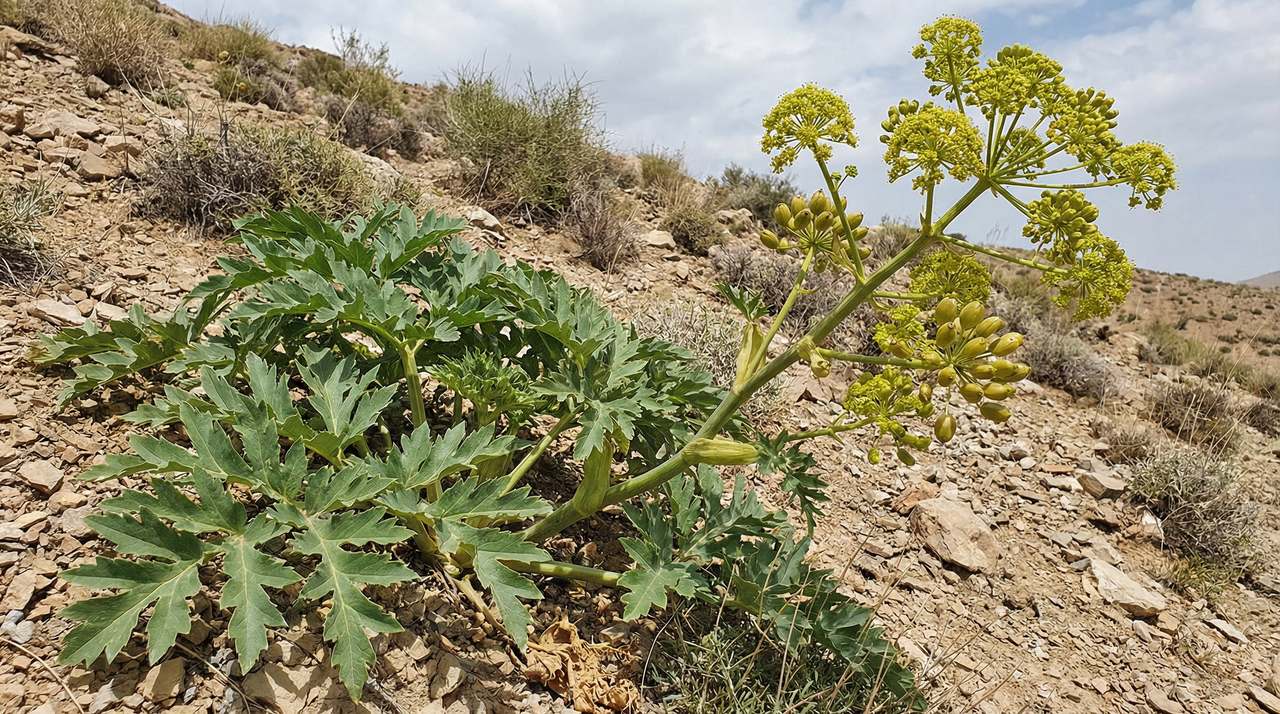
The plant itself is impressive. Asafoetida sends up a stout, hollow, pale green stem that can reach 1.5 to 3 meters, rising from a basal rosette of large, dark green, pinnately divided leaves 30 to 50 centimeters long.[10][11] The stem branches in a candelabra pattern and terminates in compound yellow umbels ten to forty-five centimeters wide. Below ground, the taproot can be 15 centimeters across and 30 to 60 centimeters deep, storing the oleo-gum-resin that makes this species worth growing at all. I grew a Ferula species from seed in my Central Florida garden and was struck by how that taproot formed even in year one; protecting it from summer humidity was a constant reminder of just how far removed humid subtropical conditions are from those arid mountain slopes. Damage any part of the plant and the sulfurous smell hits you immediately, sulfur-containing compounds released as a chemical warning.[12] Giant fennel can shoot up to eight meters with finer, more feathery glaucous foliage, but lacks that resin-rich root entirely.[13]
Traditional and Cultural Uses
People have been using asafoetida for a very long time. The earliest records reach back to ancient Persia, India (circa 1500 to 1000 BCE), the Ebers Papyrus in Egypt around 1550 BCE, and Assyrian texts from the fourth century BCE.[14] From those origins it traveled along the Silk Road into South Asian kitchens and arrived in medieval European pantries between the eleventh and thirteenth centuries as a substitute for garlic and onion.[15] In Ayurvedic texts including the Charaka Samhita (circa 300 BCE), and in Unani and Persian medicine, hing was prescribed as a carminative, antispasmodic, and expectorant for flatulence, asthma, bronchitis, and more.[16] It also held ritual roles in Hindu and Zoroastrian practice for purifying spaces. Anyone who regularly cooks with hing understands why its reputation split so sharply along cultural lines: raw, it is deeply off-putting; heated in ghee for thirty seconds, it becomes the backbone of a dal. Giant fennel traveled a different mythological road, as the plant Prometheus supposedly used to carry stolen fire and a fixture in the thyrsus of Dionysus, with its own parallel respiratory and digestive traditions in Greek and Roman medicine.[17]
Fun Facts About Asafoetida
The name tells the whole story. "Asafoetida" combines the Persian aza (mastic or resin) with the Latin foetida (stinking), while the medieval nickname "devil's dung" came from Europeans who encountered its raw sulfurous intensity without any cooking tradition to contextualize it.[5][16] "Food of the gods" is the other nickname, used by those who knew what heat does to it. Commercial asafoetida complicates the picture further; pure resin is fibrous and intensely aromatic, but adulteration with chalk, wheat flour, and synthetic colors is rampant in the spice trade.[18] I've picked up containers at spice shops that smelled chalky and mild, practically inert compared to the real thing. Despite an IUCN classification of Least Concern, wild asafoetida faces mounting pressure from overharvesting and habitat degradation across its already-limited range.[19] Seeking out ethically sourced, unadulterated hing isn't just a culinary preference; with wild populations down 30 to 50 percent in key Iranian habitats, it genuinely matters.
Asafoetida Varieties and Sourcing
Taxonomic Status: No Formal Cultivars or Subspecies
If you're hunting for a named variety of asafoetida to plant, I'll save you the trouble: there aren't any. Ferula assa-foetida is considered monotypic, meaning it has no formally recognized cultivars, subspecies, or infraspecific taxa whatsoever.[20][21][22][23] Every botanical database I've checked says the same thing. When I've sourced seed for permaculture clients, there's only ever been one option: straight Ferula assa-foetida. No cultivar labels, no grower selections, nothing to compare side by side. You learn quickly to focus on supplier reputation and germination testing rather than cultivar shopping.
This is genuinely surprising given how culinarily important hing is across Indian, Persian, and Central Asian cooking. Think about basil or cilantro, both of which have dozens of named forms developed through centuries of human selection. Asafoetida has traveled trade routes for millennia as a garlic-onion substitute and yet no one formalized a single named form. The reason is structural: it takes four to five years to build a resin-producing taproot, it has historically been wild-harvested from inaccessible arid mountain slopes, and the trait that matters most, that distinctive pungent sulfurous resin, has never driven a formal breeding program the way yield or disease resistance might. Selection has happened informally, over centuries, for flavor intensity rather than named forms.
The contrast with giant fennel (Ferula communis) is telling. That related species has two widely recognized subspecies (subsp. communis with green-yellow flowers, subsp. glauca with blue-green glaucous foliage), a third less common subsp. catalaunica, and even a rare ornamental variegated selection.[24][25][26] The genus is clearly capable of differentiation. Asafoetida just hasn't gone that route.
Practically, this means that whether you're sourcing seed to grow your own or buying pure asafoetida powder or organic asafoetida resin, you're dealing with the straight species every time. What does vary is quality. I've noticed the aromatic intensity of compound asafoetida powder can shift noticeably from batch to batch even within the same species, depending on how the resin was harvested, processed, and stored. My advice: smell or taste a small amount before committing to larger quantities. The species is fixed; the quality is not.
How to Propagate and Plant Asafoetida (Ferula assa-foetida)
Growing asafoetida from seed is a commitment to the long game, and I mean that in the best possible way. Before you even think about soil and site, you're dealing with a seed that has evolved specifically to resist germination until conditions are exactly right. The seeds themselves are worth examining: ovoid to elliptical, 4-10 mm long, brownish to dark brown, with a distinctively hard coat carrying 5-10 prominent ribs along the surface.[27][28] They remind me of dill or fennel seeds at first glance, but tougher, more armored. These are seeds built for wind dispersal across rocky Central Asian slopes and long dormancy in harsh soils, and that heritage is exactly what you're working with when you try to grow asafoetida in a garden bed.
Seed Morphology, Viability, and Germination Requirements
The good news is that asafoetida seeds are orthodox storers, meaning they keep well under cool, dry, airtight conditions. Stored at 5-10°C with 30-40% relative humidity, viability holds for 2-5 years or longer.[29] The less comfortable news is that without pretreatment, natural germination rates sit somewhere between 10-30%.[29][30] That number climbs significantly with proper intervention. Scarification first (an overnight hot-water soak or brief acid treatment to breach the hard coat), followed by 4-8 weeks of cold stratification at 4-10°C, breaks both the physical and physiological dormancy barriers.[31][32] After that, germination typically occurs in 10-20 days at 20-25°C, and rates can reach 50-70%, occasionally higher with gibberellic acid treatment.[31][32] My own best results have come from combining an overnight hot-water soak with six weeks in the fridge, consistently landing toward the higher end of that range. In the wild, seedling survival is only around 10-20%, so domesticated growing conditions already give us a real advantage.[32]
Once you have germinating seedlings, the four-to-five-year wait to first resin harvest begins.[33] That timeline tests most gardeners. I've started to think of it the way I think about planting a fruit tree: you're not gardening for next season, you're building a system. By year two and three, when I can see the taproot thickening and deepening, I stop worrying about the wait entirely. The plant is doing what it does.
Propagation Methods for Asafoetida
Seed is the only reliable propagation method for asafoetida, both commercially and for home growers.[34][35] Root cuttings, division, and grafting are theoretically possible but have low success rates and aren't standard practice, largely because the deep taproot system makes division destructive and root material difficult to work with.[34][36] Tissue culture exists in research settings but isn't accessible to garden growers. For what it's worth, the related Giant fennel shows better results from semi-ripe stem cuttings treated with 3000-5000 ppm IBA in a perlite-sand mix under high humidity,[37] which hints that vegetative methods might be developed for asafoetida eventually. For now, sow seeds and plan accordingly.
Young seedlings demand careful attention in their first weeks. They need well-drained conditions from the start; even brief waterlogging can collapse them to root rot. Keep watering minimal, maintain full sun, and watch for aphids and cutworms, which find the tender new growth irresistible, as well as fungal issues like Alternaria in conditions where air circulation is poor.[38] The seedlings initially look remarkably like fine carrot tops or dill; I label every row clearly the first four to six weeks because the resemblance to other umbellifers in my garden has caused more than one embarrassing mix-up.
Soil, Site Selection, and Sun Requirements
Asafoetida comes from rocky, calcareous slopes at 900-2500 m elevation in Iran, Afghanistan, and Central Asia,[3] and that origin story tells you almost everything about what it needs. The soil must drain freely. It wants depth, a minimum of 60-90 cm to accommodate a taproot that can reach 2 meters,[39] and plants in shallower beds in my trials showed noticeably stunted roots by year three. Sandy loam or loamy soils with low organic matter (1-2%) and moderate alkalinity are ideal, with a pH range of 6.5-8.5 and an optimum between 7.0-7.5 for growth and resin yield.[40] I've tested beds on both ends of that spectrum, and seedlings in soil that slipped below 6.5 showed clear chlorosis within weeks; a lime correction brought them back, but the early stress set them behind by a full season.
Full sun, six to eight hours minimum, is non-negotiable.[41] Insufficient light triggers etiolation and reduced resin production, which defeats the whole purpose of the multi-year investment. For containers, use a gritty mix with 30-40% coarse material to ensure the drainage this plant expects.[42] At planting, a modest phosphorus-focused fertilizer supports root development without pushing the excessive leafy growth that nitrogen-heavy feeding encourages; the plant thrives on restraint.[40]
Spacing, Planting Technique, and Initial Care
Mature asafoetida plants reach 1-3 meters tall with a spread of 60-90 cm,[43] which is worth keeping in mind even when your seedlings are tiny. Space plants 60-90 cm apart within rows and 1-1.5 meters between rows; that density supports 4,000-6,000 plants per hectare in commercial settings and gives each plant adequate airflow and root territory over the multi-year growth period.[43] In my trials, crowding plants closer than 60 cm produced noticeably smaller roots by year four. The related Giant fennel, which can hit 3-4.5 meters with a spread of nearly 1.8 meters, needs considerably wider spacing,[10] which makes asafoetida the more practical choice for tighter guild designs.
Sow seeds 0.5-2 cm deep, starting indoors 6-8 weeks before last frost or direct sowing in spring or autumn.[44] Transplant seedlings at 8-10 weeks, matching the planting depth to the root crown, and water in gently. After that, restraint is the strategy: minimal watering, the same lean-soil conditions that will carry this plant through years of slow, deep root development before it's ever ready to yield.
Asafoetida Care Guide: Growing and Maintaining Ferula assa-foetida
Every plant tells you what it needs if you know its home. Asafoetida comes from the cold, windswept mountain slopes of Iran and Afghanistan, where soils are thin, rain is scarce, and summers are brutal. Growing it well means respecting that biography rather than fighting it.
Watering Needs and Drought Tolerance
Asafoetida is one of the most drought-adapted plants I've grown in a temperate garden. Its taproot can reach two meters down, its stems store water like a mild succulent, and its leaf area is naturally reduced to cut moisture loss, letting it survive on as little as 100-250 mm of annual rainfall in the wild.[45][46] That mycorrhizal network I mentioned in the permaculture section isn't just ecological trivia; it genuinely extends the root's reach for phosphorus and moisture in dry soils.[47]
In the first months after germination, water moderately, about an inch per week, deep and infrequent, until the root system establishes (usually four to six weeks).[48] After that, shift to deep watering every seven to fourteen days during active spring growth, totaling roughly 300-600 mm across the year, then back off almost entirely during summer dormancy.[49] The rule I follow: let the top one to two inches of soil dry out between waterings. Beginner growers almost always overwater this plant. Yellowing leaves, soft roots, and that distinctly foul soil smell (different from the plant's normal pungency) all signal root rot, not something you can easily recover from.[10] Wilting and brown leaf tips from underwatering are recoverable; root rot usually isn't.
Soil, Sunlight, and Site Requirements
Sandy or loamy, well-drained soil with a pH between 6.5 and 8.5 is what this plant wants.[50] Clay is a non-starter; it holds moisture against the crown and the taproot resents it deeply. I always build in a gravel layer when planting into heavier soils, or better yet, choose a raised bed or slope where drainage is guaranteed. Full sun, at least six hours daily, is non-negotiable.[10] From a design standpoint, I site mine at the edge of a xeriscape bed or food forest guild, far from patios and social areas. The smell earns its placement in a functional spot, and the large architectural form genuinely deters browsing deer near the planting.
Feeding and Nutrient Management
Here's where I feel strongly: do not pamper this plant with nitrogen. Asafoetida evolved in nutrient-poor soils, and the resin you're ultimately growing it for forms under nitrogen stress, not nitrogen abundance.[51] Every time I've seen lush, fast vegetative growth on a Ferula, the aromatic root quality has been disappointing. In commercial production, the NPK guidance runs around 60:50:80 kg/ha with nitrogen split between a basal application and a top-dress three to four months later,[48] but scaled to a home garden that simply means: a modest basal application of well-composted manure, and nothing further unless the plant is showing real deficiency. Phosphorus supports the deep taproot; potassium builds drought resilience.[43] A light 5-10-10 organic fertilizer or a single annual top-dress of compost is genuinely sufficient. The mycorrhizal fungi handle most of what the plant needs from the soil anyway.[47]
Frost Tolerance and Winter Protection
Asafoetida is hardier than most people expect. Coming from mountain elevations of 900-3000 m, it's rated RHS H5 and reliably perennial through USDA zones 6-9, tolerating temperatures down to around -15°C.[52][10] Zone 5 growers can try it, but it won't be reliably perennial without protection. Cold hardiness also improves significantly once a large root system is established, so young plants in their first winter are the most vulnerable.
In marginal zones, I apply a four to six inch layer of compost mulch over the crown in late autumn. This does double duty: it insulates the taproot against freeze and gradually improves soil structure, which that deep root will appreciate come spring.[53] Frost cloth during extreme cold snaps, well-drained soil going into winter, and a gradual mulch removal in spring round out the strategy. Browning or blackening foliage and wilting after a hard freeze are the damage signs to watch for; if the crown and upper taproot are intact, the plant can often push through.
Heat Tolerance and Summer Care
Hot, dry summers are where this plant is genuinely in its element. It thrives between 20-40°C and sits in AHS Heat Zones 7-10, with germination optimal at 20-25°C and flowering best around 25-30°C.[54] Above 40°C, even this tough plant can show leaf scorching and wilting, similar to what I've seen in other large umbellifers like angelica when caught in a heat dome without adequate airflow.[55]
During extended heat above that threshold, a 5-10 cm mulch layer helps moderate soil temperature, and deep infrequent watering every ten to fourteen days prevents stress without waterlogging.[56] Good airflow around plants spaced at least 30-45 cm apart matters more than shade; I'd only consider light afternoon shading in climates with combined high heat and humidity, which is really not this plant's preferred environment at all.
Pruning, Maintenance, and Seasonal Rhythm
Knowing asafoetida's annual calendar makes maintenance intuitive. Vegetative growth resurges from the underground crown in early spring (March-April), yellow-green umbels appear from late spring through early summer, seeds ripen by June-July, and then the plant retreats into dormancy through summer and winter.[57] Resin harvest readiness comes only after three to five years. My first planting taught me to label these carefully; they disappear underground in summer and it's genuinely easy to forget where they are or how old they are without a marker.
Pruning requirements are minimal. Remove dead or damaged leaves at the base in late winter before new growth emerges, and cut spent flowering stems back to ground level after seed set.[58] That last task matters: redirecting energy back to the taproot after flowering improves resin quality in subsequent years.[43] Avoid heavy pruning into live growth; this plant responds poorly to it. Stems reach 1.5-3 m and are hollow, which makes them vulnerable to wind rock, so stake with bamboo and loose ties before flowering stems elongate.[59] The pungent odor is a real consideration for siting; place it where passing it daily isn't inevitable, and that smell becomes an asset rather than an annoyance in the right permaculture context.
Harvesting Asafoetida: Timing, Technique, and Flavor
Asafoetida asks something most garden plants never do: it asks you to wait. Four to five years of growing season before you see a single gram of resin. I've worked with plenty of slow perennials, but nothing quite calibrates your patience like watching a Ferula taproot bulk up year after year while you resist the urge to interfere. The payoff, when it finally comes, is unlike anything else in the spice world.
When to Harvest Asafoetida Resin
The plant tells you when it's ready, if you've been watching it long enough to read the signals. At maturity, the stems reach up to 2 meters, flowering passes, and then the stems begin to yellow and die back -- that yellowing is your unmistakable green light.[60][61] The taproot should be visibly thick and well-developed. Resin accumulation peaks roughly 30 to 60 days after flowering, which puts harvest squarely in late spring to early summer, typically March through June with April and May being prime in the native arid range.[43][62] For other Ferula species like giant fennel (Ferula communis), stem and seed harvests follow different windows, often peaking in May through June before full senescence.[63] Each species has its own rhythm, and with asafoetida the root resin is the whole point, so reading post-flowering cues is everything.
How to Collect and Process Asafoetida Resin
Once the leaves have withered, you make shallow incisions into the taproot and root crown, working carefully in the morning before heat builds.[60][64] The milky latex weeps out, hardens on air exposure over three to five days, and you scrape it off. Up to 10 to 15 incisions can be made per plant over roughly a week.[65][61] I think of it like tapping frankincense or rubber -- the logic is the same: careful cuts preserve the plant for future seasons. Cutting too deep risks losing the whole individual, so restraint is the actual skill here. The plant can live and produce for five to ten years under good conditions if the root crown stays intact.[66][33] Most commercial supply still comes from wild-harvested plants rather than cultivated plots,[6][5] which makes any home or permaculture harvest genuinely special -- and an argument for treating each plant with corresponding care.
Expected Yields and Flavor Transformation
Expect modest numbers, especially early. A healthy plant at four to five years typically yields 200 to 500 grams of resin, with older specimens in optimal arid conditions potentially reaching 500 to 1000 grams.[43][67] Yield scales with plant age, health, and the kind of dry, well-drained heat the plant evolved in -- on cooler or wetter sites, don't count on the upper range. Sustainably harvested plants keep producing season after season, so the cumulative return over a plant's life is meaningful even if no single scraping feels dramatic.[62]
What you collect raw is genuinely confrontational. The fresh oleo-gum-resin smells powerfully sulfurous, somewhere between rotten eggs and raw garlic left out too long -- I've caught a whiff of it from a kitchen jar and had to step back.[5][68] The taste is bitter, with umami running underneath. But heat changes everything: cooked in oil or ghee, those volatile organosulfur compounds mellow completely into a savory, almost leek-like depth, rich with the garlic-onion flavor that's made asafoetida indispensable across Indian and Persian cuisines.[69][45] Five years of patience for a pinch that transforms a dish -- that's the bargain, and most growers who see it through say it's worth every year.
Preparing and Using Asafoetida: From Pungent Resin to Savory Spice
The oleo-gum-resin is the heart of this plant's culinary story. Once harvested and dried into brittle yellowish chunks,[3] it gets processed and typically blended with rice flour or wheat starch before it reaches your spice drawer.[5] That processed powder is what most cooks encounter, though the plant also offers young tender leaves that can be cooked like celery, and seeds that work whole or ground in small amounts.[70] It's worth keeping those secondary edibles in mind for anyone growing the plant, even if the resin is where the real action is.
Culinary Applications and Flavor Transformation
Raw asafoetida smells awful. I say that with affection, but new cooks are sometimes genuinely alarmed the first time they crack open a tin. The sulfurous compounds that make up a significant portion of its volatiles, alongside sesquiterpenes and ferulic acid, are responsible for that sharp, garlicky-onion-meets-something-ancient smell.[71][72] What heat does to those compounds is genuinely remarkable. Fry a small pinch in ghee and you get something almost leek-like: savory, deep, rounded. It's the same principle as blooming cumin in oil, where a few seconds of direct heat completely rewires what a spice does to a dish.
I've experimented with several grades, and the differences are real. Pure Iranian resin tends toward sesquiterpene-dominant chemistry with a sweeter, more elegant result in the pan. Afghan or Himalayan material runs darker and more acrid, needing a gentler hand.[73] Most commercial Indian asafoetida powder is 80-90% starch, which tames everything considerably, sometimes a little too much if you want that pronounced umami hit in dal or a vegetable curry. For those avoiding alliums entirely, this heating transformation is what makes asafoetida genuinely irreplaceable rather than just a novelty substitute.[5][11]
The practical rule is simple: always cook it in fat first, keep amounts small (0.5-3 g per day is the sensible culinary ceiling), and store whatever you don't use in a tightly sealed, cool, dark container.[74][75] I label my jar clearly and keep it double-bagged because the smell migrates. Volatile loss in poorly stored samples is genuinely noticeable; an old open tin smells faint and tastes flat compared to a fresh sealed one.[76] One identification note for anyone near wild Apiaceae: asafoetida's sulfurous scent is completely distinct from the mousy, unpleasant odor of poison hemlock. If something smells like garlic and onions together, that's your cue. If it doesn't, step back and get a proper ID before handling it.[77]
Medicinal Preparations, Dosages, and Safety
Ayurvedic and Unani traditions have used the resin for digestion and respiratory complaints for centuries, and there's real logic behind it given the carminative and antispasmodic chemistry.[78] For medicinal use, the general adult range runs 250-1,000 mg per day in divided doses, with Ayurvedic practice often favoring 125-250 mg twice daily.[79] In my experience blending compound hing at home, staying in that lower range keeps the flavor balanced without turning every dish into a medicinal experience. The FDA recognizes small culinary amounts as GRAS, but exceeding 3-6 g daily risks GI irritation, particularly for anyone sensitive to the Apiaceae family.[80] Pregnant readers should be direct with themselves here: a tiny pinch in a pot of lentils is a very different thing from a therapeutic dose, and animal studies showing potential uterine stimulant effects are clear enough to treat seriously until better human data exists.[74] Consult a professional before using it in any concentrated form during pregnancy.
Non-Food and Traditional Uses
Beyond the kitchen, the dried resin has a genuine ceremonial life. In Hindu practice, burning the powdered resin produces a purifying smoke used ritually to ward off negative energies, a use that makes sense given how dramatically the combusted sulfur compounds fill a space.[81] The drying process itself matters for preserving that potency: thin layers dried under shade or gentle sun, kept below 50°C for three to five days, retain their volatile oils far better than anything rushed.[82][83] Related Ferula species have historically contributed to incense and perfumery traditions through galbanum, pointing to a genus-wide pattern of aromatic resin use that asafoetida fits squarely within.[84] Giant fennel (Ferula communis) enters this picture as a contrast rather than an equivalent: its shoots are edible in Mediterranean cuisine after blanching, but the furanocoumarins in its sap cause phototoxic skin reactions on sun exposure, making careful handling essential in ways that processed asafoetida resin simply doesn't require.[85]
Asafoetida Health Benefits
What strikes me every time I handle raw asafoetida resin is how something that smells this aggressively sulfurous could end up being genuinely good for you. That pungent oleo-gum-resin, the same one that earned medieval Europeans the nickname "devil's dung," turns out to be a chemically dense matrix that traditional medicine systems across four continents figured out long before modern pharmacology caught up.
Traditional and Modern Medicinal Research on Asafoetida
Ayurveda, Unani, Iranian, and Traditional Chinese Medicine have all used asafoetida independently as a digestive aid, antispasmodic, and respiratory remedy, with Chinese practitioners specifically valuing it for dispelling wind and reducing phlegm.[86][87][88] That level of cross-cultural convergence always makes me pay attention. When unconnected traditions land on the same plant for the same purposes, it's usually worth asking why.
Modern clinical evidence is limited but encouraging. A randomized controlled trial found that asafoetida significantly reduced functional dyspepsia symptoms including bloating and epigastric pain (p<0.05), and a small pilot study suggested improvements in bronchial asthma and lung function.[89][90] Both are preliminary. I say that not to dismiss the findings, but because I think it's honest: the traditional digestive uses align with what I observe when I cook with hing regularly, yet that's not the same as clinical proof.
The preclinical picture is considerably richer. In vitro and animal studies document anti-inflammatory activity through inhibition of pro-inflammatory cytokines (TNF-α, IL-6), COX-1/COX-2, lipoxygenase, and NF-κB and MAPK pathways, with ferulic acid and umbelliferone doing much of the heavy lifting.[86][91][92] Carrageenan-induced paw edema models in rats showed edema reductions of 60 to 72% at doses of 200 to 400 mg/kg with no significant toxicity at those levels.[93] Analgesic effects via opioid receptor modulation have also been observed, with extracts reducing pain by up to 68% at 400 mg/kg in mice, a result comparable to indomethacin.[94] Antimicrobial activity against Staphylococcus aureus, Escherichia coli, and Candida albicans rounds out the profile, with MIC values as low as 0.5 mg/mL.[95]
Key Phytochemicals in Asafoetida Resin
The oleo-gum-resin breaks down into roughly 40 to 64% gum, 25 to 40% resinous matter containing feruloyl gummosin, asafetidin, and umbelliferone, and 10 to 15% essential oil.[96] Those ratios shift depending on where the plant grew and how the resin was processed, which is something I've come to appreciate when sourcing from different suppliers: the quality variance is real.
The sulfur-containing organosulfur compounds, particularly trans-2-butylpropenyl disulfide, diallyl disulfide, and methyl allyl disulfide, can comprise up to 60% of the resin and are responsible for both that notorious smell and the potent antimicrobial activity.[97] I've noticed that resin harvested after a hot, dry summer smells noticeably more sulfurous, which tracks with research showing that higher temperatures increase volatile sulfur compound concentrations.[98] From a permaculture perspective, those same volatiles that make the plant pungent in the garden also appear to support gut health in the kitchen: the chemistry serves double duty.
Beyond sulfur, the resin contains phenolic acids (ferulic acid), coumarins (umbelliferone, osthol, xanthotoxin), monoterpenes including α-pinene and limonene, sesquiterpenes, and flavonoids, each contributing to the antioxidant and anti-inflammatory profile.[96][99] Phenolic content can peak during flowering and is enhanced by alkaline Iranian soils, so geography genuinely matters here.[98]
Nutritional Profile of Asafoetida
The FDA recognizes asafoetida as Generally Recognized as Safe (GRAS) as a flavoring agent, and typical culinary use amounts to a pinch, roughly 0.1 to 0.5 grams.[100][101] At that scale, you're not eating it for macronutrients. Per 100 grams of powder the numbers are 312 kcal, 12.6 grams of protein, and 67.8 grams of carbohydrates including 15 grams of fiber, with only trace vitamins.[102][103] Phenolic content can reach up to 200 mg GAE/g, contributing meaningful antioxidant capacity even at culinary doses. A pinch in your dal isn't a supplement, but it's also not nothing.
If you're growing the plant rather than just buying the resin, the young leaves and stems offer a secondary nutritional contribution: vitamins A and C, calcium, iron, flavonoids, and carotenoids.[104] I think of these as a quiet bonus for the kitchen gardener willing to wait out the plant's long establishment phase.
Safety Considerations for Asafoetida and Related Ferula Species
At culinary amounts of 0.1 to 1 gram per day, asafoetida is generally safe for most people.[105][106] Push that into the higher medicinal range above 1 to 2 grams and GI side effects including belching, heartburn, and diarrhea become more likely.[105][106] Allergic contact dermatitis can occur in people sensitive to the Apiaceae family, and while acute toxicity is low (LD50 greater than 5 g/kg in animal studies), chronic high-dose exposure above 5 grams per day has been associated with hematological changes in rodents.[107][108]
Two specific cautions I raise directly with clients: pregnancy and anticoagulant use. Large amounts of asafoetida carry potential uterine stimulant and emmenagogue effects, and the coumarin content can potentiate anticoagulants such as warfarin.[105][109] After reviewing both the literature and traditional guidance, I don't move clients in either of those groups beyond culinary pinches without physician sign-off. That's not excessive caution; it's just basic diligence given the mechanism.
The sharper warning, though, is about species confusion. I label every Ferula seedling in my nursery beds carefully, because first-year foliage from different species within this genus can look deceptively similar. Ferula communis, giant fennel, is not a source of culinary resin and carries phototoxic furocoumarins in its latex sap that cause severe phytophotodermatitis on skin contact followed by sun exposure.[110][111] In livestock, giant fennel poisoning can cause acute liver failure and high mortality. The contrast with the food-safe culinary resin of Ferula assa-foetida couldn't be more stark, and it underscores why precise identification and plant-part selection aren't optional when you're working with this genus.
Asafoetida Pests and Diseases
One thing I love about growing plants from harsh, arid environments is that they often arrive pre-loaded with their own defenses. Asafoetida is a good example. That legendary stench isn't just a culinary curiousity; it's a chemical arsenal the plant has been refining for millennia.
Natural Pest Resistance from Sulfur Compounds and Essential Oils
The same sulfur-containing compounds, sesquiterpenes, coumarins, and umbelliferone that make asafoetida pungent also give it genuine insecticidal and antifeedant properties.[112][10] The resin can inhibit larval development, and the plant is well-documented as deer-resistant, which is genuinely useful in an edible garden. I've noticed the smell intensifies during hot, humid summers, and deer visits drop to near zero when it does. Other Ferula relatives, including giant fennel, supplement similar defenses with phototoxic furanocoumarins, glandular trichomes, and latex packed with proteases, showing this is a family-wide survival strategy.[113] That said, most of the data here comes from wild populations and small-scale observations rather than controlled field trials, so I'd frame this as meaningful partial protection rather than immunity.
Common Insect Pests and Their Management
The natural defenses don't deter everything. Aphids, particularly Myzus persicae and Hyadaphis foetida, are the most consistent nuisance; they curl leaves, vector Cucumber Mosaic Virus, and leave honeydew trails that invite sooty mold.[114][112] Weevils in the Lixus genus are more alarming: they bore into roots and stems and can cut resin yield by up to 50% or outright kill young plants.[115] Root-knot nematodes, leaf beetles, and leaf miners round out the roster. Because asafoetida takes three to five years to reach harvestable maturity, even a moderate infestation during that window carries real cost in time and lost resin.[116] I label every seedling row during germination specifically because young asafoetida foliage looks remarkably like other umbellifers, and catching early aphid colonies or damping-off signs before they spread depends on knowing exactly what you're looking at. Interplanting with alliums or marigolds has genuinely helped in my beds, recruiting beneficial insects while adding another chemical layer of deterrence on top of the plant's own.
Fungal and Other Diseases in Asafoetida
Rust (Puccinia spp.) and powdery mildew are the highest-risk fungal threats, and what makes powdery mildew particularly frustrating is that it can establish even in relatively dry conditions.[117][118] Root rot from Fusarium oxysporum and Rhizoctonia solani starts as moderate susceptibility and becomes severe the moment drainage fails or humidity climbs.[119] I've watched Apiaceae family members decline surprisingly fast when airflow around the crown is poor, and asafoetida is no exception. Leaf spot from Alternaria or Xanthomonas, damping-off in seedlings, and viral infections transmitted by aphids all add to the picture, especially under excessive moisture.[117][120] Some accessions show moderate Fusarium tolerance, likely tied to sesquiterpenes like ferutinin that have documented antimicrobial activity, but this is natural genetic variation, not a bred trait.[121] No commercial cultivars have been selected for disease resistance; breeding programs have focused on resin yield, and most propagation still relies on seed from wild sources or loosely defined landraces with unpredictable tolerance.[122] I source seed from reputable Mediterranean or Central Asian suppliers and rogue any obviously weak seedlings early; that simple habit has done more for stand health than any spray program I've tried.
Integrated Pest and Disease Management Strategies
Prevention is where the real leverage is, and that's doubly true with a plant that spends years building toward a single harvest. As the care guide covers in detail, mimicking asafoetida's native arid conditions, meaning excellent drainage, infrequent deep watering, and full sun, cuts the environmental triggers for most fungal disease before they start.[117][123] Crop rotation every three to four years with non-Apiaceae hosts, proper spacing to keep air moving through the crown, soil solarization before planting, and prompt removal of any infected material all belong in the baseline routine.[124] For biological support, I rely on ladybugs for aphid pressure, entomopathogenic nematodes where root-knot nematodes are a known problem, and Trichoderma inoculants in the planting mix to buffer against soil-borne pathogens.[125][126] I only reach for mancozeb or carbendazim after cultural steps have clearly failed, and I always observe the pre-harvest interval because this is a resin crop destined for the kitchen. With a plant that takes this long to mature, consistent sanitation and soil health pay far bigger dividends than any reactive spray schedule ever will.
Asafoetida in Permaculture Design
Most plants I've grown in dryland systems have some ecological trick up their sleeve. Asafoetida has several, and they all stem from the same place: millions of years of evolution in some of the harshest terrain on earth. Understanding where this plant comes from tells you almost everything you need to know about how to use it in a design.
Climate Preferences and USDA Hardiness Zones
Asafoetida is native to rocky slopes and steppe habitats across Iran, Afghanistan, Turkmenistan, and Uzbekistan, typically at elevations between 900 and 3,000 meters.[20][7] Those habitats are cold-desert or cold semi-arid by classification: hot, dry summers, cold winters, low humidity, full sun, and annual rainfall that rarely tops 500 mm.[8] That's the template. Any site that departs significantly from it will fight you.
In the United States, asafoetida is most at home in the arid and semi-arid West: eastern California, Nevada, Utah, Arizona, the kind of places where xeriscaping isn't a trend but a necessity.[127][128] Established plants handle minimum temperatures down to around -10°C to -15°C during short freezes, which puts it squarely in USDA zones 6-9, with some zone 10 possibilities in especially dry, well-drained microclimates.[127][129] Young plants are another story and need frost protection until they've had a season or two to anchor themselves.
Once established, asafoetida tolerates salinity up to 10-15 dS/m and prefers alkaline, well-drained soils; rainfall above 750 mm starts to become a liability rather than a bonus.[130][131] I can't overstate how much drainage matters here. Humidity and waterlogged soils invite the fungal problems this plant has essentially no defense against. I learned that the hard way early on, and I'll talk about it more below. Giant fennel (Ferula communis) shares the genus's preference for full sun and low humidity but is adapted to Mediterranean winters with mild, wet conditions rather than cold continental ones[132][133] -- a useful distinction when you're choosing which Ferula fits your climate pattern.
Ecosystem Functions and Ecological Roles
The seedlings are deceptive. They emerge with this soft, feathery, almost fern-like foliage that looks completely out of place among the gravel and limestone rubble I associate with dryland planting. I've learned to mark every asafoetida planting with a visible stake, because anyone who doesn't know the plant will assume it's something delicate that needs extra water. It absolutely does not. That fragile-looking top growth is feeding a taproot that, in mature plants, pushes past two meters into the soil.[134][135]
That taproot does real ecological work. It stabilizes fragile desert soils, reduces erosion on slopes, and functions as a dynamic accumulator, drawing up potassium and sulfur from depth and returning them to the surface through leaf litter as it senesces each season.[134] Root exudates promote beneficial soil microbial communities, including mycorrhizal fungi, which improve fertility and nutrient cycling over time.[136] In a young dryland guild where soil biology is often sparse and compacted, that's a meaningful contribution.
When asafoetida finally blooms, it sends up large compound umbels up to 40 cm across with small yellow-green flowers, and the smell is impossible to miss.[137] I've stood next to a blooming plant wondering if something died nearby before I remembered what it was. That sulfurous, rotting-meat odor isn't an accident; it's a precise pollination strategy. The plant is myiophilous, drawing primarily syrphid flies and other fly species that associate the scent with food or egg-laying sites.[137][127] In my experience, those hoverflies show up reliably when the umbels open, even in summers when other Apiaceae are struggling to draw pollinators. Bees and beetles visit secondarily, but the flies are the consistent presence, and that's worth something in a guild designed around beneficial insect diversity.
The resinous compounds that make asafoetida culinarily and medicinally valuable also function as insect deterrents in the garden, with demonstrated repellent activity against aphids and stored-grain insects.[138] Its monocarpic lifecycle, spending four to five years in vegetative growth before flowering once and dying, means it's a slow-building but stable presence in a system with no invasive tendencies; there are no widespread reports of naturalization or weediness in the United States.[127][139] One handling note: the sap from cut roots can cause phototoxic skin reactions, so gloves are non-negotiable when you're working near the root crown, especially in sunny conditions.[140] Giant fennel offers a useful genus comparison here: it shares the deep-taproot stabilization function and mycorrhizal associations, accumulates potassium and phosphorus, and its biomass can serve as mulch or green manure[141][142], but it can become weedy in pastures outside its native Mediterranean range[143], which asafoetida generally does not.
Guild Placement, Forest Layer, and Companion Planting
In a permaculture system, asafoetida sits in the herbaceous layer, technically, though at 1.5 to 3 meters tall it occupies that useful transition zone between a true ground layer and a shrub canopy.[144] Think of it as a pioneer for arid, disturbed, or degraded sites where few other plants of this stature will establish without irrigation. Its deep taproot competes for groundwater, and its rhizosphere chemistry, including sulfurous allelopathic compounds, can suppress germination of nearby plants in lab conditions, so the placement decision matters.[145] I try to keep it positioned where its immediate neighbors are established drought-tolerant species rather than seedling beds or germination zones.
My one memorable design mistake with this plant was placing a young asafoetida too close to a patch of moisture-loving herbs in a mixed bed. The herbs needed regular irrigation; the asafoetida did not. Within one season, the combination of extra water and reduced airflow had created exactly the humid, poorly drained microclimate that invites fungal trouble. The asafoetida suffered, the lesson stuck, and now I site it with companions that share its basic water budget from the start.
The companions that make the most sense are those that benefit from its pest-repellent chemistry: tomatoes, potatoes, and other nightshades where aphid and spider mite pressure can be reduced by proximity.[146] Interplanting with mustard or other flowering plants near its bloom period can improve pollination success given the plant's possible self-incompatibility, supporting better seed set in isolated garden specimens.[147] If your site has genuinely low pollinator diversity, artificial pollination with a soft brush is a practical fallback to ensure viable seed.[148] Giant fennel, for contrast, is self-compatible and can cast heavy shade, reducing understory light by up to 70%, which creates its own design constraints in a guild.[149] Asafoetida's narrower canopy makes it more tractable as a companion, as long as drainage is right and its neighbors can handle dry summers.
The Plant That Made Me a More Patient Designer
I planted my first asafoetida seedling the same year my youngest started kindergarten. She's in high school now, and I harvested from that root for the first time last spring, crouching in the dry gravel bed at dawn with a knife, watching the latex bead up like something from another world. There's no shortcut here, no variety bred for speed, no tricks I could sell you. Just time, and the willingness to tend something you won't fully know for years. That lesson has quietly shaped every food forest I've designed since.
Sources 149
- Asafoetida: The food of the gods -- A review on Ferula assa-foetida ↩
- Ferula assa-foetida - Kew Science ↩
- Ferula assa-foetida - Kew Science ↩
- Kew Plants of the World Online - Ferula communis ↩
- Asafoetida - Wikipedia ↩
- Cultivation of Asafoetida - FAO Document ↩
- Ecological Requirements and Threats to Asafoetida (Ferula assa-foetida) ↩
- Population Dynamics and Conservation of Ferula assa-foetida in Iran ↩
- Reproductive Biology and Population Dynamics of Ferula communis ↩
- Ferula assa-foetida - Missouri Botanical Garden Plant Finder ↩
- Asafoetida Plant Profile - Britannica ↩
- Royal Horticultural Society (RHS) - Plant Finder ↩
- Royal Horticultural Society Plant Finder - Ferula communis ↩
- Asafoetida: The Forgotten Spice ↩
- Spices in the Medieval World ↩
- Traditional Uses and Pharmacological Profile of Ferula asafoetida ↩
- Ferula communis L.: A Systematic Review on Ethnopharmacology, Phytochemistry, and Pharmacological Activities ↩
- Adulteration in Spice Trade: Asafoetida Case Study ↩
- Ferula assa-foetida ↩
- World Flora Online (POWO) - Ferula assa-foetida ↩
- North Carolina Extension Gardener Plant Toolbox - Ferula assa-foetida ↩
- USDA Plants Database - Ferula assa-foetida L. ↩
- Tropicos - Ferula assa-foetida ↩
- Ferula communis L. ↩
- Ferula communis ↩
- Ferula communis L. subsp. communis ↩
- Ferula assa-foetida ↩
- Ferula assa-foetida - Morphology and Taxonomy ↩
- Seed Storage Behaviour: A Compendium ↩
- International Rules for Seed Testing ↩
- Seed Germination Guide for Ferula assa-foetida ↩
- Seed Germination and Demography of Ferula Species ↩
- Asafoetida Production and Marketing ↩
- Asafoetida (Ferula asafoetida) Production and Processing ↩
- Cultivation of Asafoetida ↩
- Micropropagation of Ferula asa-foetida through Tissue Culture ↩
- Vegetative Propagation in Apiaceae ↩
- Pests and Diseases of Spice Crops Including Asafoetida ↩
- Asafoetida Cultivation Guide - Tamil Nadu Agricultural University ↩
- Ferula assa-foetida Soil and Nutrient Management ↩
- Photosynthetic Responses of Ferula Species to High Light ↩
- University of Arizona Cooperative Extension: Growing Desert Plants in Containers ↩
- Asafoetida Cultivation Practices ↩
- RHS Plant Finder ↩
- Ferula assa-foetida - Kew Royal Botanic Gardens ↩
- Drought Tolerance in Ferula Species ↩
- Soil microbial dynamics and nutrient acquisition in Ferula species under arid conditions ↩
- Asafoetida Cultivation Guide - TNAU Agritech Portal ↩
- Asafoetida Cultivation Guide - Purdue University ↩
- Ferula assa-foetida Plant Care - Royal Horticultural Society ↩
- Nutrient Management in Medicinal Plants of Arid Regions ↩
- Ferula asafoetida Plant Profile ↩
- RHS Gardening - Ferula assa-foetida ↩
- Temperature Requirements for Apiaceae Family Plants ↩
- Asafoetida: The Plant and Its Uses ↩
- Cultivation and Management of Medicinal Plants in Mediterranean Climate ↩
- Ferula assa-foetida - Wikipedia ↩
- Growing Asafoetida: A Guide to Ferula assa-foetida ↩
- Horticultural Management of Ferula Species ↩
- Cultivation and Harvesting of Asafoetida ↩
- Asafoetida Production and Processing ↩
- Asafoetida: Cultivation and Processing ↩
- Ferula communis: Botanical and Pharmacological Review ↩
- Asafoetida: Cultivation and Processing ↩
- Ferula assa-foetida: Production and Harvesting Techniques ↩
- Ferula assa-foetida L. ↩
- Ferula assa-foetida L. - Asafoetida ↩
- Journal of Agricultural and Food Chemistry - Flavor chemistry of asafoetida ↩
- Journal of Ethnopharmacology - Traditional uses, phytochemistry and pharmacology of asafoetida ↩
- Plants of the World Online - Ferula assa-foetida ↩
- Chemical Composition and Antioxidant Activity of Essential Oil from Ferula assa-foetida ↩
- Volatile Compounds of Asafetida (Ferula foetida Regel) ↩
- USDA PLANTS Database - Region: Afghanistan: Ferula assa-foetida ↩
- Asafoetida - Drugs and Lactation Database (LactMed®) ↩
- FDA Substances Added to Food (formerly EAFUS) ↩
- Ferula assa-foetida: Harvesting and Uses - ResearchGate ↩
- Poison Hemlock - USDA Forest Service ↩
- Asafoetida: The Forgotten Vegetable Source of Medicine and Food ↩
- Asafoetida (Ferula asafoetida): A comprehensive review of its traditional uses, phytochemistry, pharmacology, and toxicology ↩
- Asafoetida (Ferula asafoetida) - Monograph ↩
- Ritual Uses of Asafoetida in Indian Culture ↩
- Asafoetida: Production, Processing and Utilization ↩
- Post-Harvest Technology of Spices ↩
- Galbanum: Historical and Medicinal Uses ↩
- Ferula communis L. (Apiaceae), an Endemic Species of North Africa with Potential Applications in Pharmacology and Biotechnology ↩
- Pharmacological basis of Ferula asafoetida - A review ↩
- Ferula assa-foetida in Traditional Iranian Medicine ↩
- Ayurvedic Uses of Hing (Asafoetida) ↩
- Efficacy and safety of Ferula assafoetida in functional dyspepsia: A randomized, double-blind, placebo-controlled trial ↩
- Asafoetida (Ferula asafoetida) in bronchial asthma: A preliminary clinical study ↩
- Antioxidant and anti-inflammatory activities of Ferula assa-foetida ↩
- Pharmacological Review of Asafoetida (Ferula asafoetida): Molecular Targets and Mechanisms ↩
- Anti-inflammatory Effects of Asafoetida in Carrageenan-Induced Paw Edema in Rats ↩
- Analgesic and antispasmodic effects of Ferula assa-foetida ↩
- Antimicrobial properties of asafoetida essential oil ↩
- Phytochemical Constituents and Pharmacological Activities of the Genus Ferula (Apiaceae): A Review ↩
- Ferula assa-foetida: Phytochemical, pharmacological and toxicological profile ↩
- Influence of Environmental Factors on the Chemical Composition of Ferula assa-foetida Resin ↩
- Phytochemical and Pharmacological Profile of Ferula asafoetida: A Review ↩
- FDA Substances Added to Food Inventory - Asafoetida ↩
- 21 CFR 184.1265 - Asafoetida ↩
- USDA FoodData Central - Spices, asafoetida ↩
- Phytochemical and Pharmacological Importance of Ferula Species ↩
- Nutritional Profile of Ferula assa-foetida Leaves ↩
- Asafoetida - Drugs and Lactation Database (LactMed) ↩
- Toxicity Profile for Asafetida ↩
- Asafoetida-Induced Contact Dermatitis ↩
- Evaluation of Toxicity Effects of Asafetida on Biochemical, Hematological, and Histological Parameters in Male Wistar Rats ↩
- Asafoetida: Health Benefits, Side Effects, Uses, Dose & Precautions ↩
- Ferula communis L. (Apiaceae): Botanical, Phytochemical, Pharmacological, and Nutraceutical Overview ↩
- Phytophotodermatitis Associated with the Genus Ferula ↩
- Pests and Diseases of Medicinal Plants: Ferula Species ↩
- Chemical Defenses in Ferula communis: Furanocoumarins and Insect Interactions ↩
- Insect Pests of Umbelliferous Crops ↩
- Insect Pests of Apiaceae Plants in the Mediterranean Region ↩
- Breeding Strategies for Apiaceae Crops ↩
- Diseases and management of asafoetida (Ferula assa-foetida L.) ↩
- Diseases of Ferula Species in Mediterranean Agriculture ↩
- Fungal Diseases of Apiaceae Crops ↩
- Viruses in Apiaceae: Host Range and Control ↩
- Antimicrobial Activity of Ferula communis L. ↩
- Diseases of Ferula assa-foetida ↩
- Ferula communis: Cultivation and Propagation ↩
- FAO. (2005). Cover crops and asafoetida cultivation. ↩
- Integrated Pest Management for Horticultural Crops ↩
- Pests and Diseases of Medicinal and Aromatic Plants ↩
- USDA PLANTS Database - Ferula assa-foetida ↩
- Arid Land Agriculture in California - UC Davis Extension ↩
- Ferula assa-foetida - Missouri Botanical Garden ↩
- Saline Tolerance in Ferula Species ↩
- Asafoetida Cultivation Guide - ICAR ↩
- Ferula communis - RHS Gardening ↩
- Ecological and Phytochemical Aspects of Ferula communis ↩
- Soil Stabilization by Deep-Rooted Plants in Mountainous Regions ↩
- Soil Improvement by Deep-Rooted Perennials ↩
- Plant-Microbe Interactions: Root Exudates in Nutrient Cycling ↩
- Insect Pollinators of Ferula Species in Central Asia ↩
- Insecticidal Properties of Asafoetida Essential Oil ↩
- Invasive Plant Atlas ↩
- Toxicity of Ferula Species - PubMed ↩
- Ecological Role of Ferula communis in Mediterranean Vegetation ↩
- Mycorrhizal associations in Ferula species ↩
- Allelopathy of Ferula Species: A Review ↩
- Allelopathic effect of water extracts of Ferula asafoetida on germination and early seedling growth of some crop plants ↩
- Physiological, biochemical and molecular changes induced by allelochemicals of Ferula spp. ↩
- Asafoetida Cultivation Guide - ICAR ↩
- Pollination Biology of Apiaceae: A Review ↩
- Missouri Botanical Garden: Plant Finder - Ferula Species ↩
- Shading and nutrient competition effects of giant fennel in understory dynamics ↩