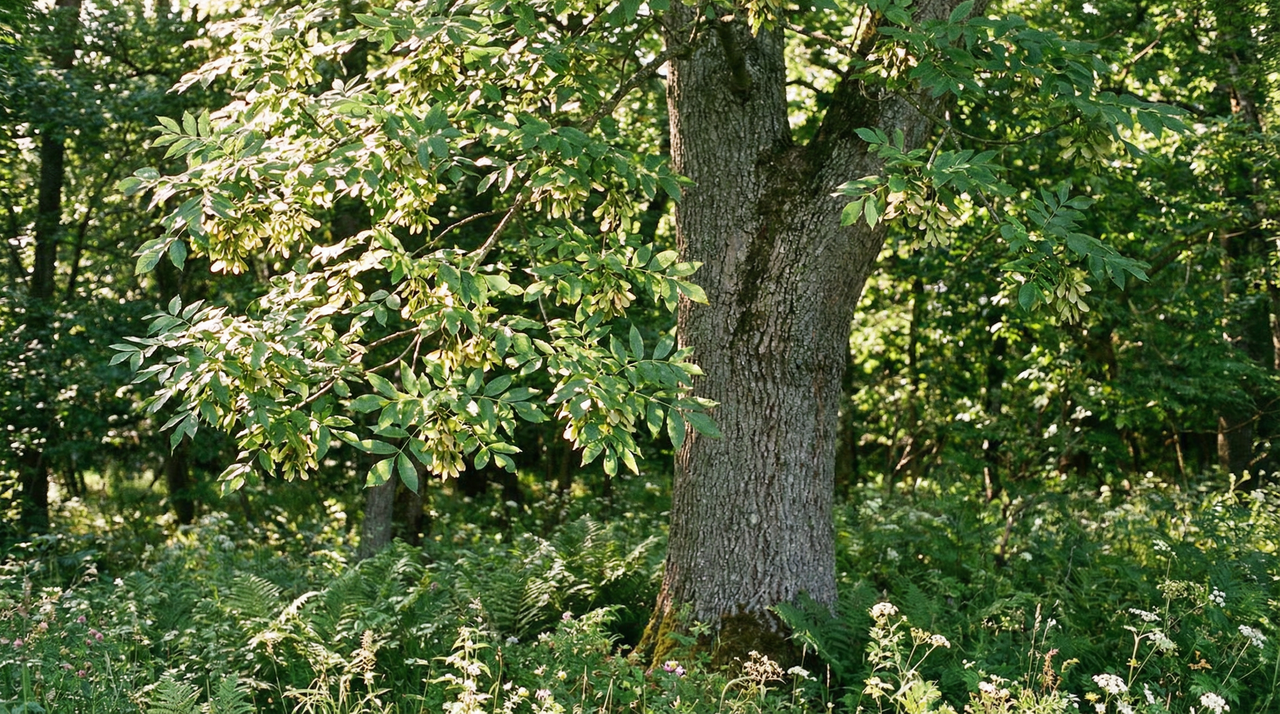
There's a tree in Norse mythology that holds the entire universe together, its roots reaching into the realm of the dead, its branches sheltering gods and eagles and a serpent that never stops gnawing. That tree is Yggdrasil, and it's an ash. I think about that sometimes when I'm standing under a mature Fraxinus excelsior in early spring, watching the black buds break open weeks after everything else has already leafed out, wondering whether a tree that waited this long to wake up knows something the rest of the forest doesn't. Ash is genuinely ancient in the human story, woven into medicine cabinets, tool handles, coppiced woodlots, and creation myths across multiple continents, and yet right now it's in serious trouble in ways that should concern anyone who grows or designs with trees.
What strikes me every time I try to place ash in a new design is the contradiction at its center: this is one of the most historically useful, ecologically generous canopy trees in the temperate world, and it's also one of the most threatened. Ash dieback has ripped through European populations with a ferocity that still feels surreal to watch, and emerald ash borer has done comparable damage across North America. So the question isn't just "how do I grow this tree," it's "should I, and if so, which one, and what am I actually signing up for?" Those are the questions I want to work through with you here.
Origin and History of Ash (Fraxinus excelsior)
Botanical Background and Global Distribution
The ash tree has deep roots in the Old World. Fraxinus excelsior is native across most of Europe and western Asia, from the British Isles and Scandinavia south to the Mediterranean and east to the Caucasus.[1][2] That range tells you something about its temperament: this is a tree shaped by cold winters and fertile river valleys, adapted over millennia to the kind of moist, mineral-rich soils that dominate temperate Europe. Under healthy conditions it can live 200 to 400 years, with exceptional individuals pushing past 500.[3][4] I say "healthy conditions" deliberately, because that ceiling is being tested hard right now. Even so, the tree's longevity potential informs how I think about long-lived canopy selections for clients who are planting for their grandchildren.
Reproduction adds another layer of resilience. European ash doesn't reach sexual maturity until 20 to 30 years old, but once it starts setting seed it keeps doing so repeatedly across centuries, and it can also spread clonally through root suckers when conditions favor it.[4][3] That combination of patience and persistence is part of what made it such a dependable woodland citizen for so long. Humans noticed early. European ash has been actively managed for timber and landscape use since Roman times, and from the 19th century onward it was carried into North America, Australasia, southern Africa, and South America as a prized ornamental and timber tree.[5][6] That global planting legacy now complicates the story, because ash dieback (Hymenoscyphus fraxineus) has followed the tree wherever it was introduced to Europe and beyond, and conservation programs are now urgently focused on identifying and breeding resistant individuals before the disease finishes what it has started.[7][8]
Visual Characteristics and Identification
European ash is a big tree. Mature specimens reach 20 to 40 meters with an upright to broadly spreading crown, and the compound leaves are striking up close: opposite and pinnate, 20 to 40 centimeters long, typically carrying 7 to 13 lanceolate leaflets that flush late in spring and turn clean yellow in autumn.[3][4] The flowers appear before the leaves in April and May, small and petalless in terminal clusters, and the tree is dioecious so you need male and female individuals for seed set.[3][9] The resulting samaras, those papery single-winged fruits, ripen in September and October, 25 to 50 millimeters long and built for wind travel. A mature ash in full fruit is genuinely beautiful, and those keys are an important wildlife food source before they drift off.
Ash tree bark changes character with age. Young ash tree bark is smooth and pale grey; older trees develop rough, interlocking ridges with a grey-brown diamond pattern that's quite distinctive once you know it.[3][4] For ash tree identification in winter, though, I always go straight to the buds. Those dark brown to near-black, flattened, velvety terminal buds arranged in opposite pairs are unlike almost anything else in a temperate woodland, and the horseshoe-shaped leaf scars below them clinch it.[3][10] I've learned to find ash volunteers in mixed guild plantings by those buds alone, well before the ash tree leaves unfurl in late May. It's a satisfying kind of plant literacy. The broader genus offers considerable variation for those interested in ornamental selections: manna ash produces showy, fragrant white flowers; blue ash has distinctive square stems; cultivars of European ash include the weeping 'Pendula' and golden-leafed 'Jaspidea.'[11][12]
Traditional, Cultural, and Symbolic Uses
The written record for European ash goes back at least to Theophrastus in the 4th century BC and continues through Pliny the Elder in the 1st century AD, both documenting its value for timber, tools, and medicine.[13][14][15] But the tree's symbolic weight runs deeper than utility. In Norse cosmology, Fraxinus excelsior is identified as Yggdrasil, the cosmic world tree connecting the nine realms, a structure of sacred order whose branches reached into the heavens and roots descended into the underworld.[15][16] Celtic, Germanic, Slavic, and Baltic traditions revered it separately for protection, divination, healing, and weapons, associating it with gods like Odin and Perun.[15][17] I think about that when I'm placing ash in a food forest design: the mythology of a tree that connects worlds maps surprisingly well onto its actual ecological function, a deep taproot reaching into mineral layers, a wind-catching canopy seeding the clearing, a trunk hosting dozens of invertebrate species.
Through medieval Europe, the ash tree's wood, tough and flexible in a way few temperate species match, made it the go-to for spear shafts, tool handles, and farm implements.[15] Across the Atlantic, Native American tribes developed parallel medicinal and ceremonial uses for white ash and black ash, while Mediterranean relatives were tapped for manna long before European contact.[18][19] The through-line across all of these traditions is the same: a tree generous enough to yield multiple harvests across a human lifetime and dependable enough to anchor a community's material culture. Watching ash dieback sweep through European plantings, with escalating mortality alongside emerald ash borer losses in North America, has made that cultural loss feel urgent and immediate.[20][21] Conservation breeding programs focused on resistant varieties are now the forward path, and I prioritize them wherever ash fits a design. The history is too rich, and the ecological loss too real, to plant carelessly.
Fun Facts About Ash Trees
If you think of ash purely as a timber tree, consider manna ash (Fraxinus ornus) and narrow-leaved ash (Fraxinus angustifolia). When their bark is incised, they produce a sweet exudate historically harvested across the Mediterranean as a traditional sweetener. The name "manna" was borrowed directly from the biblical food the Israelites received in the desert.[22][23][24] It's a reminder that the same tree family yielding baseball bats in one hemisphere is producing artisanal sweetener in another. White ash (Fraxinus americana) has been the primary wood for baseball bats since the late 19th century, a tradition begun with the Louisville Slugger brand, thanks to the species' exceptional shock resistance.[25][26] The national champion white ash in New York stands 102 feet tall with a 72-inch diameter at breast height.[27] The happy footnote in the disease story is that manna ash shows moderate resistance to ash dieback, unlike the highly susceptible European species, which makes it a candidate worth watching in resistance breeding programs. Every tree layer really can yield surprises.
Ash Tree Varieties and Cultivars
The cultivar catalog for European ash reads like a wish list. Weeping forms, golden foliage, crisp columnar silhouettes -- on paper, Fraxinus excelsior has something for almost every design brief. The reality of obtaining and growing these trees today is a different conversation, and I'll get to that. But it's worth starting with what the breeding history actually produced, because these are genuinely beautiful trees.
Notable Cultivars of European Ash (Fraxinus excelsior)
The standout selections cover a wide range of forms.[28][29] 'Pendula' is the most visually dramatic, a weeping form grafted onto a standard that creates a layered umbrella canopy topping out around 6 to 8 meters tall with a spread of 4 to 6 meters.[28] At the opposite extreme, 'Fastigiata' is strictly columnar, reaching 10 to 15 meters tall while staying only 4 to 5 meters wide.[28] I've used narrow upright trees like this in windbreak guilds and tight urban edges; it fills a similar niche to Skyrocket juniper or upright hornbeam without the evergreen shadow. 'Variegata' offers creamy-white leaf margins on a 10-meter spreading tree, while 'Aurea' runs golden-yellow from spring into summer before fading paler in autumn.[28] Growing a few of these from seed taught me how wildly variable the young foliage can look before the characteristic habit asserts itself, so if you're choosing at a nursery, wait until the tree has at least two or three seasons of growth before you trust what you're seeing.
Cultivars from Related Ash Species
Manna ash (Fraxinus ornus) brings something the European ash selections don't: actual flowers worth noticing. The compact cultivar 'Meczek' tops out around 5 to 6 meters and produces profuse fragrant white panicles; 'Lutescens' adds a yellowish tint to new foliage.[30] In my experience observing these in mixed canopy plantings, the flowering manna ashes pull in far more pollinators than any of the excelsior selections -- a real consideration when you're designing a productive guild rather than just filling a canopy layer.
On the North American side, Fraxinus americana (white ash) has seen meaningful cultivar work, including 'Autumn Purple' for deep fall color, 'Marshall Seedless' for tidy form, and 'MASSSIAC', which was bred with partial resistance to ash yellows disease.[31][32] Narrow-leaved ash (Fraxinus angustifolia) rounds out the picture with 'Raywood', a clean-growing selection suited to zones 5 through 8.[11] The disease vulnerability that shadows all of these is covered in depth in the pests and diseases section; the short version here is that no commercial cultivar currently offers full, reliable resistance.
Sourcing Ash Trees in the United States
Importation of live Fraxinus excelsior into the US is prohibited under USDA APHIS regulations, with federal quarantines restricting interstate movement of nursery stock across the entire genus.[33][34] I've contacted multiple specialty nurseries trying to track down certified disease-free European ash stock and come up essentially empty every time. Manna ash is similarly scarce in US ornamental trade.[35] When certified stock does exist, prices reflect it: mature trees run $800 to $2,500, saplings $50 to $150, and seeds $20 to $60 per packet.[36] With mortality rates from ash dieback and emerald ash borer reaching 90 percent in affected areas, and no fully resistant cultivars yet available commercially,[37] planting any ash today is a decision that deserves serious thought. Genetic material is preserved through the USDA ARS National Clonal Germplasm Repository and conservation partnerships including the Morton Arboretum,[38] and Black Ash can sometimes be sourced through indigenous-led programs focused on traditional basket weaving uses.[39] Those are the realistic paths forward right now.
Ash Tree Propagation and Planting
Every ash tree begins as a samara, that papery, winged fruit you've probably seen spiraling down from a mature tree in autumn. European ash produces samaras 25-50 mm long with a single seed tucked inside, green when young and turning brown as they ripen before the wind takes them.[40][41] Understanding that morphology matters practically, because the whole propagation strategy hinges on whether you want true-to-type trees fast, or whether you're planting for genetic diversity and the long game.
Seed Propagation and Germination for Fraxinus excelsior
The good news about ash tree seeds is that they're orthodox, meaning they tolerate desiccation and store exceptionally well. Dried to 5-10% moisture content and sealed with silica gel in an airtight container at -18°C to -20°C, they can hold viable for 10-20 years or more.[42][43] That's genuinely useful if you're collecting from a resistant provenance and want to bank the genetics. I periodically check stored batches with a tetrazolium stain, which turns viable embryos red and confirms whether a lot is still worth stratifying before you commit the fridge space.[44]
The harder news is that ash demands patience before it'll even consider germinating. European ash seeds carry physiological dormancy and need 60-120 days of cold moist stratification, typically 90 days at around 4°C, before they'll break.[45][46] I keep mine in damp vermiculite in ziplock bags at the back of the fridge, same setup I use for native pawpaw, which needs almost exactly the same chill period. Once you've got the fridge space dialed in, both become pretty straightforward. After stratification, germination happens best with alternating temperatures around 15-25°C, and you can expect typically 50-80% under good conditions, though that varies a lot by seed lot and year.[47]
What seed-grown ash cannot give you is consistency. European ash is an obligate outcrosser pollinated by wind, so seedlings show high genetic variability and virtually no true-to-type potential.[48] I learned to label every single row obsessively in the first season, because two-week-old seedlings look almost indistinguishable from each other, a bit like carrot tops honestly, and you genuinely cannot tell which individual will become your best-structured timber or guild tree until year three or four. For conservation planting, woodland guilds, or provenance collections, that variability is the whole point. For a named cultivar, it's a dead end. One more complication worth knowing: ash dieback and emerald ash borer both undermine seed quality and seedling health, so I only ever start with certified, disease-free stock, and in North America I source exclusively from nurseries outside emerald ash borer quarantine zones.[49][50] I've seen how quickly a young planting can collapse when the beetle arrives, and it's not worth gambling on uncertified material.
Vegetative Propagation: Grafting, Cuttings, and Layering
If you want a specific cultivar, or you just don't want to wait two decades, grafting is the reliable route. Whip-and-tongue or cleft grafts onto compatible rootstocks like Fraxinus ornus, F. angustifolia, or F. americana in late winter achieve 60-95% success and sidestep the long juvenile phase entirely.[51][52] The success rates are good enough that this is what commercial nurseries rely on for any named selection.
Cuttings are possible but humbling. Softwood or hardwood cuttings with IBA rooting hormone at 3000-8000 ppm, high humidity, and bottom heat can root at anywhere from 20-80% depending on species and conditions, so results are genuinely unpredictable.[53][54] I'd call cuttings a viable option for the home grower who wants to try propagating a low-cost cutting without specialized grafting equipment, but if you need reliability, invest the time in learning the graft.
Soil, Site Selection, and Planting Technique
European ash wants deep soil, minimum 60-100 cm and ideally more, fertile, moist but well-drained loam or clay with a pH of 6.0-7.5.[55][4] My first amendment before planting is always a soil test, because in my experience moving outside the 6.0-7.5 range shows up fast in leaf color and vigor. Anything below 6.0, I lime before planting. Waterlogged conditions invite Phytophthora and Armillaria root rots, which then compound any ash dieback pressure the tree is already facing.[55] Good drainage isn't optional.
The wider genus gives you more flexibility than the anchor species alone suggests. Black ash is actually a wetland obligate, thriving in moist, slightly acidic, poorly drained soils where European ash would rot; Manna ash and narrow-leaved ash lean the other direction, tolerating drier, calcareous, or periodically flooded sites; Velvet ash handles genuine drought once established.[56][57] So if your site is limiting, there's often an ash for it, just not necessarily F. excelsior. For container culture, I use a mix along the lines of John Innes No. 3 with 20-30% perlite in pots at least 45 cm wide.[58] I've lost more young trees to root rot in oversized pots without enough grit than to almost anything else, so the extra drainage material is non-negotiable. Keep nitrogen moderate too, excessive feeding produces soft, disease-susceptible growth.[59]
Spacing Recommendations and Establishment Care
European ash grows fast once established, 30-90 cm per year in early life, eventually reaching 18-40 m tall with a 12-20 m canopy spread.[60] Timber plantings typically go at 2.5-3 m spacing; park or orchard settings need 4-6 m; anything near structures should sit at least 10-15 m away. Where ash dieback pressure is high, wider spacing is a modern necessity because it slows spore dispersal between trees.[4]
Plant during dormancy, late fall through early spring, into a hole twice the root-ball's width, at the original soil depth. Organic matter helps in poorer soils, and 5-10 cm of mulch kept clear of the trunk makes a real difference in the first few seasons for moisture retention and weed suppression.[58][61] I stake young trees for the first two winters without fail; the rapid early growth makes them top-heavy and a single windrock event can set establishment back significantly.
Timeline to Maturity and Seed Production
Here's the honest decision tree for how to grow an ash tree with a specific goal in mind. Seed-grown European ash reaches reproductive maturity and first meaningful seed set at 20-50 years, often closer to 25-30.[3][62] That's a long wait if seed production is the goal. White ash, narrow-leaved ash, and Manna ash are generally faster from seed at 10-20 years.[63] Grafted trees using mature scions bypass the juvenile phase entirely and can fruit in 3-10 years, with Manna ash sometimes producing in as few as 5-8.[62]
In a permaculture context, I often plant seed-grown ash specifically because of that long juvenile window. The tree still delivers decades of canopy services, wildlife habitat, and dynamic accumulation before it seeds heavily, and the genetic variability you get from seed is exactly what gives a woodland guild resilience against disease pressure. If you want a named cultivar or a specific fruiting timeline, graft it. If you want genetic diversity working quietly in the background of a food forest, direct seed with the stratification protocol above and let the variability be an asset.
Ash Tree Care and Seasonal Maintenance
European ash is a tree that rewards attentive siting and largely gets out of your way once established, but the word "largely" is doing more work than it used to. Ash dieback has changed what good care looks like, and almost every decision from watering to pruning now has a disease dimension layered on top of the horticultural basics. Here's how I approach it.
Water Needs for European Ash and Related Species
The native habitat tells you almost everything you need to know: Fraxinus excelsior evolved on moist, rich European riverbanks and woodland edges,[64][65] which means consistent soil moisture is a genuine need, not a nicety. That said, the riverbank analogy only goes so far: those soils drain. Ash wants moisture available, not sitting. It tolerates neutral to slightly alkaline loamy soil in the pH 6.5–7.5 sweet spot and will grow across a wider 5.5–8.0 range, but it has low salinity tolerance and genuinely dislikes compacted, waterlogged ground.[66][67]
For the first two to three years, keep the soil evenly moist, roughly 1–2 inches of water per week for young trees,[68][69] then transition to deep, infrequent watering to pull roots downward. I check soil moisture at 4–6 inches depth before watering; if it's still damp down there, I wait. Once established, European ash can handle short dry spells, but prolonged drought brings leaf wilting, brown leaf edges, premature drop, and canopy thinning that can be hard to distinguish from early dieback symptoms.[70][4] On the opposite end, overwatering or poor drainage causes yellowing, wilting, and root rots driven by Phytophthora, with physiological stress compounding over time.[71] Irrigation timing matters too: water at soil level, keep foliage dry, and avoid wetting the canopy since humid conditions around leaves directly amplify ash dieback pressure.[71][72]
Sunlight Requirements
European ash performs best in full sun to partial shade, with at least 4–6 hours of direct sun supporting the canopy density and airflow that reduce disease incidence. It has moderate tolerance of urban air pollution and handles some SO2 and heavy metal exposure, making it workable in suburban settings,[73][74] though it's happiest away from heavy traffic corridors where pollution concentrates. A shadier position slows growth and thickens the humid microclimate around foliage, which is a trade-off worth thinking about given current disease pressures.
Fertilizing Ash Trees: Soil Testing First
My honest practice after years of growing ash: I almost never fertilize established trees on my property. European ash in fertile loam is a low feeder, and the research backs that up. It needs minimal inputs when sited well, and young or newly planted trees benefit only modestly from balanced fertilization for root establishment.[71][75] Soil testing before any fertilizer application isn't optional in my view; it's the only way to know whether you're correcting a deficiency or creating a new problem.
If testing reveals a gap, the general guideline is 1–2 pounds of actual nitrogen per 1,000 square feet of canopy area annually, applied in early spring after leaf emergence.[75][76] For garden trees, 50–100 g per square meter around the base in early spring, once per year, is a reasonable rate; compost or well-rotted manure serves as a gentler slow-release alternative.[4][77] Avoid late summer feeding entirely; pushing soft new growth into autumn sets it up for frost damage.
The symptom picture is worth knowing: nitrogen deficiency shows as uniform yellowing on older leaves with stunted growth; iron deficiency produces interveinal chlorosis on young leaves; magnesium deficiency causes the same chlorosis pattern but on older foliage with veins staying green; potassium deficiency shows as marginal yellowing and leaf-edge necrosis.[78][79] The reason I'm cautious about nitrogen specifically is this: foliar nitrogen above 3–4% dry weight increases susceptibility to ash dieback, and excess nitrogen drives lush, disease-prone growth.[80][81] Potassium, by contrast, actively supports drought and disease resistance and is worth prioritizing if your soil test shows deficiency.[81] Never fertilize a stressed or visibly diseased tree until you've addressed the underlying issue.
Frost Tolerance and Winter Protection
European ash is reliably hardy in USDA zones 5a–7b, tolerating minimum temperatures down to around -29°C (-20°F).[74][82][83] The tree itself handles cold well; the vulnerability is much narrower than the hardiness range suggests. Buds transitioning out of dormancy and the first tender shoot tips and flower buds of spring are genuinely fragile,[84][85] and a late frost during that window produces browning or blackening of new growth, wilting foliage, and in bad cases bark splitting.[86]
I learned this the hard way with unprotected young ash in an exposed corner of my property: one late-spring frost wiped out the entire first flush of new growth on a two-year-old tree. Now anything under about 8 feet gets burlap screens for its first three winters. The standard toolkit is mulching with 3–5 inches of organic material to buffer soil temperature, windbreaks to reduce desiccation, and trunk wraps on trees under 3–5 years old.[87][88] Worth noting: these same protection measures help reduce ash dieback pressure indirectly by keeping trees vigorous and minimizing the stress windows where disease gains a foothold.
Heat Tolerance and Summer Stress Management
European ash is fundamentally a temperate species. It thrives in the 10–25°C range, tolerates heat up to about 35°C with support,[89][90] and is rated for AHS heat zones 5–8 (60–120 days above 86°F).[74][91] Past that threshold, especially when heat and drought arrive together, you'll see leaf scorch, marginal browning, wilting, and premature drop.[71][92] If you're in a warmer climate and drawn to the genus, Mediterranean relatives like manna ash or narrow-leaved ash handle the heat considerably better.
For European ash in warm summers, mulching is consistently my most effective intervention. A 2–4 inch layer of wood chips keeps soil temperatures genuinely lower during heat spikes and conserves the moisture the tree needs to cope.[93][94] Deep, early-morning irrigation and partial shading (30–50% light reduction) for young trees rounds out the strategy during heat events.[95] Site selection matters enormously here: a sheltered position with good drainage and wind protection changes what a tree can handle.
Pruning, Maintenance, and Seasonal Rhythm
European ash flowers in early spring before the leaves emerge, leafs out in April–May, matures its samaras through late summer into autumn, then drops leaves and enters dormancy.[96][97] That cycle shapes every maintenance decision. Fertilizer goes down in early spring, timed to the tree's natural growth surge. Mulch goes on after planting and gets refreshed before winter, 2–4 inches deep, keeping it away from direct contact with the trunk.[98][74]
Pruning is where ash dieback has rewritten the guidance. Traditional advice for temperate trees says prune during dormancy, November to March, to minimize stress and prevent sap bleed; remove no more than 25% of the canopy in a single session, focusing on dead, diseased, or crossing branches.[99][20] For a tree with active dieback, the protocol flips: prune during the growing season in dry weather, summer to early autumn, when fungal spores are less mobile.[100][101][102] Disinfect your tools between every cut. And here's the thing I feel strongly about: if more than half the canopy shows dieback symptoms, stop pruning and shift to monitoring and sanitation. Heavy cuts on a heavily infected tree can accelerate decline rather than arrest it.
Coppicing is worth knowing about as a longer-term management tool. Ash has been coppiced historically on 5–15 year cycles for timber and habitat, and the vigorous stump regrowth it produces can help maintain woodland populations as breeding programs develop more resistant material.[103] It's not a cure, but in a managed woodland context it gives you options while the science catches up.
Harvesting Ash: Timing, Techniques, and Yields
The ash tree doesn't offer one harvest but several, and they unfold across completely different timescales. Some you can plan for this spring. Others take decades. Getting comfortable with that reality is, I think, the first step to working with this genus rather than against it.
When to Harvest Ash Leaves, Buds, and Seeds
European ash flowers in April and May, and the samaras that follow take 120 to 180 days to fully mature, making September and October your seed harvest window.[104][46] You're looking for wings that have shifted from green to yellowish-brown and taken on that characteristic banana curve, with seeds that feel firm when you press them. Manna ash tends to ripen a little earlier, sometimes finishing by August.[105] For leaves, you want May through June, once fully expanded but before summer toughens them. Buds are a short window in early spring, before they open.
Here's the catch with seeds: European ash doesn't produce reliably every year. Mast years come every two to five years once trees hit maturity, and drought, pest pressure, or ash dieback can push those years further apart or suppress crops entirely.[62][106] I've learned to watch my trees through summer, paying attention to stress signs like early leaf drop or sparse canopy, as both tend to predict a poor seed year better than the calendar does.
Harvesting and Processing Techniques for Different Ash Parts
For leaves and buds, the rule I follow is simple: take only from healthy trees, remove no more than 20 to 30 percent of foliage per branch, and never harvest from anything showing dieback symptoms.[100] Hand shears work well; dry the harvest in shade rather than in sunlight to preserve active compounds. With buds, you're working a narrow window of maybe a week or two, so I check daily once swelling starts.
For ash tree seed pods, collect when samaras are at 50 to 70 percent color change. Shaking branches over a tarp or hand-picking clusters both work; I avoid gathering from the ground to sidestep contamination.[46][4] Post-harvest, dry samaras at 20 to 30°C with good airflow down to 10 to 12 percent moisture before storing.[107] Manna sap harvest from Fraxinus ornus is a different operation entirely: bark incisions made from June through September on trees at least eight to ten years old, ideally during dry weather, with peak flow in July and August.[108][109]
Flavor Profiles, Yields, and Post-Harvest Handling
Young European ash leaves have a bitterness I'd describe as somewhere between sorrel and mild lettuce, with a lemony edge and a mucilaginous texture that becomes more noticeable as leaves age.[110][111] I've used them in small amounts in spring salads and found that the mucilaginous quality actually works quite nicely in an infusion. The buds are something else: aromatic, with an almond-vanilla character and faint hop-like notes that make them worth using sparingly in infusions or cordials.[112]
The samaras are not for eating raw. They contain compounds that can cause digestive irritation, but pickling in brine transforms them into something olive-like, and drying and grinding yields an earthy, fibrous flour with historical use as a famine food.[113][114] Young shoots require double boiling to reduce bitterness and remove potentially irritating compounds before eating.[3] Contrast all of that with manna sap, which is genuinely sweet: honey-caramel, faintly floral, with a sticky-to-granular texture depending on how it's dried.[115][116] The same genus, almost unrecognizable in flavor depending on which part and which species you're working with.
Ash Tree Preparation and Culinary Uses
Culinary Uses of Ash: Young Leaves, Shoots, Seeds, and Manna
Ash is not a food tree in any meaningful everyday sense, and I think it's important to say that plainly. Young spring leaves and tender shoots of European ash are technically edible, raw in salads or briefly cooked like spinach, but the coumarin content means small portions only.[113][117][118] I treat any wild ash leaf as a once-in-a-spring tasting rather than a staple green, because that faint bitterness is a real signal and the research on safe daily limits isn't robust enough to ignore it. The seeds (those papery samaras dangling in clusters) can be leached through multiple water changes, then roasted or ground into a nutty flour, but this is firmly in the territory of historical famine food.[113][119] It's a testament to human resourcefulness, not a recipe I'd hand a client when safer spring greens are everywhere.
The genuinely pleasant exception in the genus is manna, the sweet exudate harvested from Fraxinus ornus and Fraxinus angustifolia by making shallow summer incisions in the bark. It's 40 to 60 percent mannitol, carries a mild honey-like sweetness, and has been used for centuries in Sicilian confectionery and as a gentle laxative.[120][121][122] I've studied the sustainable tapping techniques used in Mediterranean agroforestry systems and find them genuinely elegant, but given the disease pressures on ash populations right now, I'd always recommend sourcing manna commercially rather than tapping wild or landscape trees.
Traditional Medicinal Preparations from Ash Leaves and Bark
The same plant parts that appear marginally in the kitchen have a much longer history in the apothecary. Leaf infusions were traditionally prepared for joint pain, gout, and rheumatism; bark decoctions served as febrifuges, digestive tonics, and mild astringents; poultices went onto wounds and skin complaints.[123][124][119] Manna from F. ornus was used separately as a laxative and expectorant for coughs and constipation, with traditional therapeutic doses running 5 to 15 grams daily.[125] For bark decoctions, traditional monographs suggest 2 to 5 grams of dried bark simmered in 250 to 500 ml of water, taken two to three times daily; leaf infusions typically use 2 to 4 grams steeped in hot water.[126][127] I cross-reference ESCOP monographs alongside current extension resources before discussing any of this with clients, because these dosages come from ethnobotanical tradition rather than clinical trials, and the safety concerns covered elsewhere in this profile are real.
Non-Food Uses: Wood, Dyes, Crafts, and Traditional Applications
This is where the ash tree's real legacy lives. Its wood is strong and exceptionally elastic, which is why it became the default material for tool handles, Irish hurleys, baseball bats, oars, snowshoes, flooring, furniture, and musical instruments.[128][129] I specify ash lumber for tool handles and garden structures in my own design work because its shock resistance genuinely outperforms most other hardwoods I've used. As firewood, ash burns cleanly with low smoke and a high calorific value, making it one of the better hardwood fuels available in temperate regions.[130] Young flexible shoots are woven into baskets and used in thatching, inner bark yields dyes ranging from yellow to blue-black depending on species, and across the genus bark and leaves have historically been used for tanning leather.[131][132]
All of this material value now exists in the shadow of ash dieback and emerald ash borer. Sustainable manna harvesting from F. ornus depends on regulated tapping, shallow incisions, proper recovery periods, and agroforestry management that keeps trees healthy enough to produce for decades.[21][133] I try to plant ash where the wood will eventually serve the client directly, turning a canopy tree into a decades-long resource rather than a liability. But that conversation always starts with choosing disease-resistant material, because a dead ash tree offers none of these things.
Ash Health Benefits and Medicinal Uses
When clients ask me about the ash tree's medicinal potential, my first instinct is to celebrate the ecology rather than the pharmacy. But the traditional record for European ash is genuinely deep, and the emerging phytochemistry is interesting enough that it deserves a clear-eyed look, alongside an equally clear-eyed account of where the evidence stops.
Traditional Medicinal Uses of European Ash and Related Species
European herbalists have reached for Fraxinus excelsior bark and leaf extracts for centuries, applying them to fevers, rheumatism, gout, skin conditions, and digestive complaints, including as a laxative.[134][135][136] The close relative Manna ash (Fraxinus ornus) carves out a particularly well-documented niche: it produces a sweet exudate whose laxative action comes from mannitol working as an osmotic agent, with additional demulcent properties that historically soothed mucous membranes for coughs, sore throats, and gut complaints.[137][138] That tradition is well-grounded enough that manna found its way into European pharmacopoeias, which is more regulatory validation than most folk remedies ever receive.
Preclinical research has started to explain the mechanistic basis behind some of these uses. Anti-inflammatory activity has been demonstrated through inhibition of TNF-α, IL-6, COX-2, and NF-κB pathways, with iridoids like asclepin showing measurable results in animal inflammation models.[139][140] Antioxidant effects come through free radical scavenging and upregulation of enzymes like superoxide dismutase and catalase via the Nrf2 pathway.[141][142] Enzyme inhibitory studies add another layer: xanthine oxidase inhibition aligns with that traditional gout application, while α-glucosidase and ACE inhibition hint at potential antidiabetic and antihypertensive relevance.[143][144] In vitro work has also shown cytotoxic activity against breast and colon cancer cell lines, attributed to coumarins and phenolics.[145][146]
Here's the critical caveat I always give when I share this data with clients or herbalist collaborators: none of it has been tested in humans. There are no clinical trials for any Fraxinus species, whether excelsior, ornus, americana, or any other.[147][148] Every activity described above comes from petri dishes or rodent models. Promising? Yes. Actionable therapeutic guidance? Not yet. Please talk to a doctor before using any ash preparation medicinally.
Key Phytochemicals in Ash: Coumarins, Flavonoids, and Secoiridoids
The chemistry that drives all of the above activity is centered on a rich mix of secondary metabolites: phenolic acids, flavonoids, coumarins, lignans, secoiridoids, and tannins.[149][150] The bark is where coumarins concentrate most heavily, with fraxin, fraxetin, esculin, esculetin, scopoletin, fraxinol, and scoparone all documented there.[151][152] Leaves, by contrast, skew toward flavonoids: rutin, quercetin glycosides, kaempferol, hyperoside, and astragalin are the main contributors to leaf-based antioxidant and anti-inflammatory activity.[153][154] Flowers yield monoterpene-dominant essential oils, seeds carry phenolic acids, and roots accumulate secoiridoids.[155][156]
The iridoids aucubin and catalpol deserve a separate mention because their hepatoprotective and antiulcer activities sit somewhat apart from the coumarin-flavonoid story, with additional relevance to glycoside hydrolase inhibition connected to diabetes research.[157] White ash (Fraxinus americana) bark contains a comparable profile of iridoids, flavonoids, tannins, and coumarins, suggesting these defensive compounds are broadly conserved across the genus.[158][159]
I've noticed, working with these trees across planting designs, that the spring leaves smell noticeably sharper and more pungent than midsummer growth. That lines up with the data showing phenolic compounds and flavonoids peak during the spring-to-early-summer growing season and decline toward autumn.[160] It's one of those moments where your nose tells you something the lab later confirms.
Nutritional Profile and Edible Uses
Young ash leaves are edible, but I'd frame them the same way I'd frame young plantain or amaranth from a foraging perspective: nutritious, best harvested small, best eaten briefly cooked, and not something anyone would center a meal around. Nutritionally, they offer around 20-30 kcal per 100g fresh weight, modest protein, minimal fat, and meaningful mineral content including potassium, calcium, magnesium, and iron, along with vitamin C in the 20-50 mg per 100g range.[111][161][162] The immature seeds (ash keys) are a different proposition, historically consumed as a famine food rather than a regular one, raw, roasted, or processed into flour, with a much denser caloric profile of roughly 300-400 kcal per 100g and reasonable fat and protein content after processing.[3][163]
The shared bioactive compounds across edible ash parts, including quercetin glycosides, rutin, chlorogenic acid, and the coumarins fraxetin, fraxin, and esculin, add a functional dimension to even small portions,[164][165] but those same coumarins are also why I'd never recommend ash leaves or seeds as a dietary staple. I've processed small batches of spring ash keys for demonstration purposes in foraging workshops, and I'm always careful to remind participants that these are historical curiosity foods, not modern pantry items.
Safety Considerations and Potential Side Effects
The baseline picture here is reassuring: European ash has low to moderate overall toxicity, with severe reactions being rare and no record of it being highly toxic or lethal under ordinary circumstances.[166][167][168] That said, the specific risks are real enough to take seriously. Seeds and leaves can cause nausea, vomiting, or diarrhea from saponins, tannins, and phenolics, with effects varying by individual sensitivity.[166][169] Raw seeds across the genus may contain cyanogenic glycosides, which means thorough processing, leaching, boiling, drying, or roasting, is non-negotiable before consumption.[170][171] Handling sap, leaves, or bark can trigger contact dermatitis in sensitive individuals.[166][172]
The coumarin issue deserves direct language. The bark concentrates fraxin, esculin, aesculetin, and related compounds that carry genuine anticoagulant activity, and chronic overconsumption carries a risk of hepatotoxicity through coumarin accumulation.[173][174][175] In my work alongside herbalist collaborators I've learned that even modest regular use of ash bark tea can potentiate blood-thinning medications like warfarin; this is one instance where I always defer to a doctor rather than relying on traditional use alone. If you're on anticoagulants, have a bleeding disorder, are pregnant or breastfeeding, or are approaching surgery, ash medicinally is simply not worth the risk.[176][177]
Pollen allergies are worth flagging for anyone planting ash trees: while European ash produces relatively little airborne pollen given its insect pollination, related species including Manna ash and the North American ashes produce moderate to high allergenic pollen that cross-reacts with olive and can cause classic spring hay fever symptoms.[178][179][180] For foragers, misidentification is a separate hazard: European ash is regularly confused with rowan (Sorbus aucuparia), which has toxic raw berries containing parasorbic acid and cyanogenic compounds. Ash has opposite pinnate leaves and winged samaras; rowan has alternate leaves and red pomes. The difference is unambiguous once you know what to look for.[4][181]
One reassurance worth sharing: ash dieback infection changes the metabolite profile of affected trees, shifting coumarin and flavonoid concentrations as part of the tree's defense response, but current evidence does not indicate that diseased trees become more toxic to humans or animals at normal exposure levels.[182][183] I follow current extension guidance when assessing trees on client sites before recommending any harvest, and I'd encourage the same caution for anyone foraging from wild trees. With European ash threatened across much of its native range by ash dieback, sustainable harvesting isn't just a safety consideration; it's a conservation responsibility.[3][4]
Ash Pests and Diseases
European ash is not a tough tree in the modern landscape. I say that not to discourage you from growing it, but because going in clear-eyed matters here. Fraxinus excelsior has genuinely low overall disease resistance, and the consequence of that weakness has been playing out across Europe in real time. In my landscape design work, evaluating local ash dieback prevalence is now one of the first things I do before specifying any Fraxinus, because the situation is that serious.
Ash Dieback and Other Major Diseases
Ash dieback, caused by the fungus Hymenoscyphus fraxineus, has driven European ash onto the IUCN Red List in several countries and killed between 50 and 90 percent of trees in heavily affected regions, with mature specimens typically declining within 5 to 10 years of infection.[20][184][185] The fungus thrives in warm, humid conditions, with optimal infection occurring between 15 and 25°C, relative humidity above 90%, and leaf wetness periods of 8 to 12 hours or more. This is why wet summers are so reliably destructive.[20][186] Drought stress compounds the problem significantly: water-stressed trees form larger lesions, show higher mortality, and are more vulnerable to the secondary pathogens that follow.[187] This is why I always push for well-drained, neutral to alkaline soils in the pH 6.5 to 7.5 range when siting ash; waterlogged or acidic ground below pH 6 invites Phytophthora root rot on top of everything else.[188]
Beyond dieback, European ash is susceptible to Verticillium wilt, bacterial wetwood, ash yellows, and several foliar diseases including white leaf spot and yellow rust.[189][190] These are mostly secondary concerns on healthy trees, but on a specimen already fighting dieback they can accelerate decline quickly. Species choice helps enormously: Manna ash (Fraxinus ornus) shows infection rates often under 20% from H. fraxineus, and narrow-leaved ash (F. angustifolia) also demonstrates meaningfully higher survival.[191][192] Several F. excelsior cultivars, including 'Czernajka' and 'Vijge', show tolerance in breeding trials run by programs at the Future Trees Trust, Kew Gardens, and partners across Europe, though nothing fully immune exists yet.[193][194] I follow the Future Trees Trust and Kew programs closely when sourcing trees, because those breeding efforts represent the most credible path toward keeping European ash in our designed landscapes.
Emerald Ash Borer and Insect Pests
The emerald ash borer (Agrilus planipennis) deserves its own paragraph because the numbers are genuinely alarming. This invasive beetle bores beneath the bark, disrupts nutrient flow, and can kill a tree within 2 to 5 years.[195] It has caused greater than 90 to 99% mortality in North American ashes including white ash and velvet ash.[196] European ash remains under quarantine monitoring, but its susceptibility profile gives no one comfort. The contrast with Manna ash and narrow-leaved ash is stark: those species show larval mortality rates below 10% and significantly slower borer development,[197][198] which I've seen reflected in mixed plantings where the European specimens show canopy thinning while the Manna ash nearby holds on. If you spot D-shaped exit holes in the bark or unexplained crown dieback, act immediately. Delaying even one season can mean losing the tree and risking spread to neighboring ash trees.
Secondary insect pests, including bark beetles (Hylesinus fraxini, Leperisinus varius), aphids, scale insects, leaf miners, and sawflies, rarely threaten healthy mature trees on their own.[199][200] The pattern I've observed consistently is that dieback-compromised trees become magnets for opportunists that would never gain a foothold otherwise. A vigorous ash in a well-structured guild is a different proposition entirely.
Defense Mechanisms, Resistance, and Management
Ash trees aren't defenseless by nature. All Fraxinus species produce phenolic compounds, tannins, secoiridoids, and volatile organics that provide antibiotic and antifeedant effects, while physical traits like bark thickness, wood density, and dense leaf trichomes offer structural resistance.[201][202] Manna, narrow-leaved, and blue ash all express these traits more robustly than European ash, which is the biochemical explanation for their relative resilience. Dieback undermines these defenses in F. excelsior by eroding overall vigor, creating the cascading vulnerability to secondary pests and diseases.[203]
In practice, my IPM approach starts with soil and spacing, not sprays. Proper mulching, avoiding nitrogen excess, maintaining neutral-to-alkaline drainage, and giving trees enough room to develop without canopy competition all reduce the stress that invites trouble.[187] From there I rely on pheromone traps and early visual monitoring, and where EAB risk is present, biological controls including parasitoid wasps (Tetrastichus planipennisi and Oobius agrili) have proven useful.[204] Sanitation pruning of dieback-affected material during dry summer weather slows fungal spread, and phosphite treatments can help shore up defenses.[205] Systemic insecticides like imidacloprid or emamectin benzoate via trunk injection I reserve for high-value specimens where nothing else is working.[206] Honestly, in balanced permaculture systems with healthy soil biology and genuine diversity, I've rarely needed to reach for those tools. The goal is building conditions where the tree doesn't become the weakest link in the first place, and sourcing tolerant genetics wherever possible as the long-term foundation.
Ash in Permaculture Design
Ecosystem Functions of Ash Trees
Few canopy trees pull their ecological weight quite like European ash. The leaf litter alone is remarkable. I've watched ash leaves disappear into the soil profile noticeably faster than the oak and beech leaves in the same mixed guild, and the difference isn't subtle. Within a single season, that decomposing material is feeding microbial communities and cycling calcium, potassium, and phosphorus back into the topsoil.[207] In riparian contexts, the same leaf fall filters sediments from runoff and measurably improves water quality downstream. That's not a side benefit; it's a core function of why ash has sat at the heart of European woodlands for millennia.
The root system does equally serious structural work. Ash sends deep roots into slopes and riverbanks, stabilizing soil, slowing erosion, and improving the hydrological balance of a site in ways that shallow-rooted alternatives simply can't replicate.[208][209] Above ground, a mature Fraxinus excelsior supports over 40 species of invertebrates, birds, and mammals, from woodpeckers to bats to warblers, making it one of the most biodiverse host trees in the temperate palette.[210][211] A mature tree sequesters roughly 20-30 kg of carbon per year in biomass and soil,[212][213] and across the genus those numbers accumulate meaningfully in food forest systems designed for the long game.
Across the genus, ash functions as a dynamic accumulator rather than a nitrogen fixer, mining deep soil layers for potassium, calcium, and phosphorus and depositing them at the surface through leaf fall.[214] I've found that timing a chop-and-drop of coppiced branches in early spring captures that nutrient flush before it moves into new growth, turning what would otherwise be pruning waste into a mulch layer that directly feeds the guild below. The wind-driven pollination system of F. excelsior means it contributes only minimally to insect forage,[215] though Manna ash (F. ornus) is worth noting as the exception, producing fragrant white panicles that do attract bees and hoverflies when the rest of the spring canopy is still bare.[216][217] Disease pressure from ash dieback and Emerald Ash Borer has begun to erode reproductive output and seed viability at a landscape scale,[218] which means these ecosystem functions are genuinely at risk in regions where threats are severe.
Climate Adaptation and Hardiness Zones
European ash is reliably hardy in USDA zones 5-7, tolerating winter temperatures down to around -20°F (-29°C),[74][219] and it's most at home in the oceanic and continental temperate climates of its native range: from the British Isles and Scandinavia down through western Asia and the Mediterranean.[10] It wants moisture, ideally 600-1,200 mm of annual rainfall, well-drained neutral to calcareous soils, and it does not handle sustained heat or drought well.[3][4] Zone 9 and hot humid climates are generally not its territory.
The genus as a whole, though, is impressively adaptable. White ash (F. americana) pushes into zone 3 and handles humid continental conditions that would exhaust the European species.[220] Oregon ash (F. latifolia) thrives in zones 6-9 and tolerates periodic flooding.[221] At the dry end, Velvet ash (F. velutina) performs in arid zones 7-10,[222] and Manna ash (F. ornus) handles Mediterranean heat and summer drought across zones 5-9.[223] So while the anchor species has a fairly narrow climate comfort zone, the broader genus covers an enormous range of conditions.
The problem, and it's a real one, is that hardiness zone maps don't account for disease. Ash dieback thrives under high humidity, and the Emerald Ash Borer doesn't care how cold-hardy a tree is.[224][225] After reviewing extension trials on borer impact, I now prioritize sourcing resistant cultivars or pivoting to alternative canopy species like certain maples in EAB-prone regions. A zone 5 rating means nothing if the tree is dead at year eight.
Forest Layer Placement and Guild Design
In a food forest canopy, European ash earns its place by what it lets through. At 18-35 meters at maturity,[3][226] it is genuinely large, but its ascending branches and relatively open crown allow light to filter down to the layers below in a way that a beech or hickory simply won't. I've designed guilds under ash where shade-tolerant perennials genuinely thrive, and that same composition under a dense beech canopy would fail. That distinction matters enormously for productive understory planting.
The permaculture literature around ash focuses rightly on its dynamic accumulator role, its coppicing potential, and its compatibility with companions like Filipendula ulmaria, Sorbus aucuparia, and Viburnum opulus in moist temperate guilds.[227][4] A coppiced ash stool produces fast biomass for mulch and can live for centuries, giving you a long-term nutrient pump in a perennial system. The broader genus extends those options considerably: Black ash (F. nigra) suits wetland overstories in the north,[228] Oregon ash stabilizes Pacific Northwest riparian zones,[229] and Manna ash works beautifully as a smaller subcanopy species for Mediterranean guilds where its fragrant flowers add genuine pollinator value.[230]
The data on ash dieback is sobering: up to 80% mortality in some European stands means I evaluate every planting site for humidity and airflow before committing to F. excelsior in a new design.[20][231] The ecological value is immense on paper, but a tree that dies before it closes its canopy delivers none of it. In high-risk zones, the honest permaculture recommendation is to choose resistant selections where they exist, consider alternative canopy species for the structural role, and reserve ash planting for sites where conditions genuinely support long-term survival.
The Ash I Almost Didn't Plant
I almost talked myself out of every ash I've ever put in the ground. The disease risk, the sourcing headaches, the honest uncertainty about what these trees will look like in twenty years. But then I stand under one in late afternoon light, those compound leaves filtering everything into something quieter, and I remember that permanence was never really the point. Stewarding something worth fighting for is.
Sources 231
- Fraxinus excelsior - Kew Science Plants of the World Online ↩
- Fraxinus excelsior - RHS Gardening ↩
- Fraxinus excelsior - Wikipedia ↩
- Common Ash (Fraxinus excelsior) - Woodland Trust ↩
- Royal Horticultural Society - Tree Register (TROBI) - Fraxinus excelsior ↩
- Flora of North America - Fraxinus excelsior ↩
- Ash Dieback - Forestry Commission ↩
- Fraxinus excelsior - Kew Science ↩
- Plants of the World Online: Fraxinus excelsior ↩
- Royal Botanic Gardens, Kew – European Ash Profile ↩
- Missouri Botanical Garden - Fraxinus excelsior ↩
- Fraxinus ornus ↩
- Enquiry into Plants ↩
- Natural History ↩
- The European Ash (Fraxinus excelsior L.): A Review of Its History and Ecology ↩
- Ash Trees in European Folklore ↩
- Traditional Uses of Ash in Slavic Folklore ↩
- Native American Ethnobotany Database ↩
- Phytochemistry, pharmacological profile and traditional uses of Fraxinus species: A review ↩
- Ash Dieback: Impacts on Forestry ↩
- Sustainable Harvesting of Manna from Fraxinus ornus ↩
- Production of manna in Sicily - Oleaceae ↩
- Biological Activity of Manna Exudate from Fraxinus ornus - PMC ↩
- Phenolic Composition of Manna from Sicilian Fraxinus angustifolia - PMC ↩
- White Ash (Fraxinus americana) ↩
- The History of the Baseball Bat ↩
- National Register of Big Trees - White Ash ↩
- Fraxinus excelsior - RHS Gardening ↩
- Fraxinus excelsior - Missouri Botanical Garden Plant Finder ↩
- Fraxinus ornus 'Meczek' - Manna Ash ↩
- Ash Trees: Selecting and Planting ↩
- Cultivars of Fraxinus americana ↩
- Federal Order on Importation of Ash Wood ↩
- Emerald Ash Borer ↩
- Fraxinus ornus - Manna Ash ↩
- Ash Tree Seed Prices and Availability ↩
- Ash dieback forestry fact sheet ↩
- USDA ARS National Clonal Germplasm Repository - Fraxinus excelsior ↩
- Black Ash Conservation and Restoration ↩
- Seed Morphology of Fraxinus excelsior ↩
- Fraxinus excelsior - Royal Botanic Gardens, Kew ↩
- Seed Storage of Fraxinus excelsior L. ↩
- Seed Storage of Fraxinus excelsior L.: Orthodox Behavior and Longevity ↩
- International Rules for Seed Testing ↩
- European Ash (Fraxinus excelsior) Seed Dormancy and Storage ↩
- Fraxinus excelsior Seed Manual ↩
- Seed Biology of Fraxinus excelsior in Europe ↩
- Ecology and management of Fraxinus excelsior in Europe ↩
- Impacts of Ash Dieback on Seed Ecology and Conservation ↩
- Emerald Ash Borer Quarantine Map ↩
- Grafting Techniques for Ash Trees ↩
- Propagation of Ash Trees: Grafting Techniques for Fraxinus Species ↩
- Ash - Propagation ↩
- Vegetative Propagation of Manna Ash (Fraxinus ornus L.) ↩
- Fraxinus excelsior - Royal Horticultural Society ↩
- Silvics of North America: Fraxinus nigra ↩
- Arizona Ash (Fraxinus velutina) - Tree Selection Guide ↩
- RHS - How to grow Ash ↩
- RHS Fertiliser Guide ↩
- Forestry Commission - Tree Planting Guide ↩
- European Ash (Fraxinus excelsior) - Missouri Botanical Garden ↩
- Propagation of Fraxinus excelsior L. ↩
- Silvics of North America: Fraxinus americana ↩
- USDA PLANTS Database ↩
- Missouri Botanical Garden Plant Finder ↩
- Fraxinus excelsior - Royal Horticultural Society ↩
- Tolerance of Ash Trees to Environmental Stressors - USDA Forest Service ↩
- Royal Horticultural Society - Fraxinus excelsior ↩
- USDA Forest Service - Fraxinus excelsior Silvics ↩
- Drought Stress in Trees ↩
- RHS Gardening: Fraxinus excelsior Care ↩
- Missouri Botanical Garden Plant Finder ↩
- Fraxinus excelsior - USDA PLANTS Database ↩
- Fraxinus excelsior - Missouri Botanical Garden Plant Finder ↩
- Fertilizing Trees and Shrubs ↩
- Tree Fertilization Guidelines ↩
- Fertilization Guidelines for Ash Trees (Fraxinus spp.) ↩
- Nutrient Deficiencies in Trees: Ash Species ↩
- Diagnosis of Nutrient Disorders in Trees ↩
- Foliar Analysis Guidelines for European Ash ↩
- Soil Nutrient Management for European Ash ↩
- USDA Plants Database - Fraxinus excelsior ↩
- Royal Horticultural Society - Fraxinus excelsior ↩
- Royal Horticultural Society - Fraxinus excelsior ↩
- Kew Gardens - Fraxinus excelsior fact sheet ↩
- Frost Damage to Trees and Shrubs ↩
- Protecting Young Trees from Winter Injury ↩
- Frost Protection for Trees ↩
- Fraxinus excelsior L. - Common Ash ↩
- Climate Change Impacts on European Ash (Fraxinus excelsior) ↩
- Heat Zone Map ↩
- Heat Stress in Ornamental Trees: Symptoms and Management ↩
- Plant Finder - European Ash ↩
- Growing Guide for Fraxinus excelsior ↩
- Tree Care for Heat Stress ↩
- Fraxinus excelsior - European Ash ↩
- Phenology of Fraxinus excelsior in Europe ↩
- RHS Gardening: Fraxinus excelsior ↩
- Pruning ash trees - RHS Gardening ↩
- Ash dieback: Disease symptoms, location and you ↩
- Pruning established trees ↩
- Tree Council: Managing ash dieback ↩
- Forest management of ash: Coppicing and dieback ↩
- Phenology of Fraxinus excelsior in Europe ↩
- Seed Manual for Ornamental Trees and Shrubs ↩
- Ash Tree Biology and Management ↩
- Seed Handling of European Ash (Fraxinus excelsior) ↩
- Ash Trees: Fraxinus spp. ↩
- Fraxinus ornus L. (Manna Ash) in Traditional Medicine ↩
- Ethnobotany of Fraxinus excelsior - ResearchGate ↩
- European Ash - Fraxinus excelsior ↩
- Foraging Ash Buds - Forager Chef ↩
- PFAF Plant Database - Fraxinus excelsior ↩
- Forager's Guide to the Ash Tree ↩
- Manna from Fraxinus ornus: Production and Uses ↩
- Chemical Composition and Potential Health Benefits of Fraxinus ornus L. Manna ↩
- Ash Tree Foraging Guide ↩
- Edible Wild Plants: European Ash ↩
- Ethnobotany of the European Ash ↩
- Manna from Fraxinus ornus: Production and Uses ↩
- Chemical Composition and Bioactivity of Manna from Fraxinus ornus L. ↩
- Manna Ash: Traditional Uses and Ethnobotany ↩
- Ash Tree (Fraxinus excelsior) - Uses in Traditional Medicine ↩
- Culpeper's Complete Herbal: Ash Tree ↩
- The Manna of the Bible and the Manna Ash (Fraxinus ornus L.): A Review ↩
- European Ash (Fraxinus excelsior) ↩
- Ash - Fraxinus excelsior L. ↩
- European Ash (Fraxinus excelsior) - Uses and Properties ↩
- Ash Trees: Uses in Traditional Crafts and Medicine ↩
- Biomass Production Potential of Fraxinus nigra ↩
- Medicinal Uses of Ash Bark and Leaves ↩
- Native American Ethnobotany Database - Fraxinus nigra ↩
- Historical Production and Current Challenges of Manna Ash ↩
- Traditional Uses and Phytochemistry of Fraxinus excelsior ↩
- Ethnobotany of Fraxinus excelsior ↩
- Traditional uses and pharmacological validation of Fraxinus excelsior in Europe ↩
- Manna Ash (Fraxinus ornus L.) as a Traditional Plant with Potential for Innovative Modern Applications ↩
- Historical Uses of Manna in European Pharmacopoeias ↩
- Pharmacological Review of Fraxinus excelsior ↩
- Antioxidant and anti-inflammatory activities of Fraxinus excelsior extracts ↩
- Antioxidant and Anti-inflammatory Effects of Ash Leaf Extract ↩
- Bioactive Coumarins and Flavonoids from Fraxinus excelsior: Anti-inflammatory and Antioxidant Properties ↩
- Enzyme inhibitory effects of European ash (Fraxinus excelsior) constituents ↩
- Pharmacological Screening of Fraxinus excelsior Extracts: Focus on Antidiabetic and ACE Inhibitory Effects ↩
- Anticancer Potential of Fraxinus Species ↩
- Cytotoxic Potential of Fraxetin from Fraxinus excelsior ↩
- Fraxinus excelsior - European Ash ↩
- Medicinal Plants of Europe ↩
- Phytochemical and Pharmacological Profile of Fraxinus excelsior ↩
- Secondary Metabolites of Fraxinus Species: An Overview ↩
- Coumarins from the Bark of Fraxinus excelsior ↩
- Traditional Uses and Phytochemistry of European Ash ↩
- Flavonoids and Phenolics in Ash Trees (Fraxinus excelsior) ↩
- Phenolic Compounds in Fraxinus Species ↩
- Essential Oil Composition of Fraxinus excelsior Flowers ↩
- Secondary Metabolites in Seeds and Fruits of Ash Trees ↩
- Phytochemical and Pharmacological Profile of Fraxinus excelsior L. ↩
- Phytochemical and Pharmacological Profile of Fraxinus Species ↩
- Iridoids from Fraxinus americana Bark ↩
- Seasonal Variation of Phenolic Compounds in Leaves of Fraxinus excelsior ↩
- Nutritional Composition of Wild Edible Plants ↩
- Nutritional Analysis of Wild Greens ↩
- Traditional Foraging Guide: Ash Keys ↩
- Ethnopharmacology study on F. excelsior phytochemistry ↩
- Phenolic profile and antioxidant activity of Fraxinus ornus L. bark extract ↩
- Royal Horticultural Society - Fraxinus excelsior Care Label ↩
- Missouri Botanical Garden Plant Finder for Fraxinus excelsior ↩
- ASPCA Toxic and Non-Toxic Plants List ↩
- Toxicity of Ash Trees (Fraxinus spp.) in Livestock ↩
- Phytochemicals and Safety of Fraxinus excelsior ↩
- Cyanogenic Glycosides in Fraxinus Species ↩
- University of California Agriculture and Natural Resources - Toxic Plants ↩
- Coumarins in Fraxinus excelsior: Isolation and Bioactivity ↩
- Phytochemical and Pharmacological Studies on Fraxinus excelsior ↩
- Fraxinus excelsior L. (Oleaceae): A Review on Its Phytochemistry and Pharmacological Activities ↩
- Toxicity of Coumarin-Containing Plants: European Ash ↩
- Coumarins from Fraxinus excelsior and Their Biological Activities ↩
- USDA PLANTS Database - Fraxinus excelsior ↩
- Allergenic Potential of Fraxinus Pollen ↩
- Cross-Reactivity in Oleaceae Pollen Allergens ↩
- Sorbus aucuparia (Mountain Ash) Toxicity ↩
- Early-Stage Growth Restriction of H. fraxineus on Tolerant F. excelsior Is Associated with Constitutive Chemical Defenses - PMC ↩
- Constitutive Metabolite Profiling of European and Asian Fraxinus with Varying Susceptibility to Ash Dieback - Springer ↩
- Ash dieback fact sheet - Hymenoscyphus fraxineus ↩
- Peer-Reviewed: 'Ecology and Impact of Ash Dieback in Europe' (Nature Reviews Plant Biology, 2020) ↩
- Environmental factors influencing Hymenoscyphus fraxineus infection ↩
- Drought stress and European ash susceptibility to pathogens ↩
- Soil pH and ash tree health in relation to Phytophthora ↩
- Fraxinus excelsior - Common Ash ↩
- Verticillium wilt on ash | University of Minnesota Extension ↩
- Susceptibility of Fraxinus ornus to Hymenoscyphus fraxineus ↩
- Susceptibility of Fraxinus angustifolia to Hymenoscyphus fraxineus ↩
- Ash dieback - resistant ash ↩
- Breeding ash for resistance to dieback | Future Trees Trust ↩
- Emerald Ash Borer Management - USDA ↩
- Emerald Ash Borer Information - USDA Forest Service ↩
- Comparative Susceptibility of Ash Species to Emerald Ash Borer ↩
- Susceptibility of Twenty Two Fraxinus Species to Agrilus planipennis ↩
- EPPO Global Database - Fraxinus pests ↩
- Ash Tree Pests and Diseases ↩
- Chemical and structural characteristics of leaves of European ash (Fraxinus excelsior L.) differing in resistance to Hymenoscyphus fraxineus ↩
- Chemical Defense Mechanisms in Fraxinus against Agrilus planipennis: Indirect Evidence for the Role of Phenolics ↩
- Genetic variation and heritability of ash dieback susceptibility in Fraxinus excelsior ↩
- Biological Control of Emerald Ash Borer ↩
- Phosphite treatments for ash dieback ↩
- Managing ash dieback - Forestry Commission ↩
- Soil Health Contributions of Riparian Vegetation in Europe ↩
- Ecological Roles of Fraxinus angustifolia in Riparian Ecosystems ↩
- Ecological Role of Blue Ash in Erosion Control ↩
- Ecological Role of Ash in European Forests ↩
- Fraxinus velutina - USDA Forest Service ↩
- Carbon Sequestration by Riparian Vegetation - Journal of Environmental Management ↩
- Biodiversity and Carbon Sequestration in Ash-Dominated Forests ↩
- Dynamic Accumulators in Permaculture: Tree Species Analysis ↩
- Reproductive Biology of Fraxinus excelsior ↩
- Fraxinus ornus ↩
- Pollinator Support from Black Ash - Xerces Society ↩
- Impact of Hymenoscyphus fraxineus on Fraxinus excelsior reproduction ↩
- European Ash (Fraxinus excelsior) - Ecological Requirements ↩
- Fraxinus americana ↩
- USDA PLANTS Database - Fraxinus latifolia ↩
- Arizona Ash (Fraxinus velutina) - Plant Care Guide ↩
- Fraxinus ornus L. ↩
- Ash Dieback - Royal Horticultural Society ↩
- Emerald Ash Borer Susceptibility in European Ash ↩
- Ash in Temperate Forests - FAO ↩
- Fraxinus excelsior in Permaculture - Permaculture Association ↩
- Fraxinus nigra (Black Ash) - USDA Forest Service ↩
- Oregon Ash - Fraxinus latifolia ↩
- Fraxinus ornus (Manna Ash) ↩
- Emerald Ash Borer Susceptibility in Non-Native Ash Species ↩