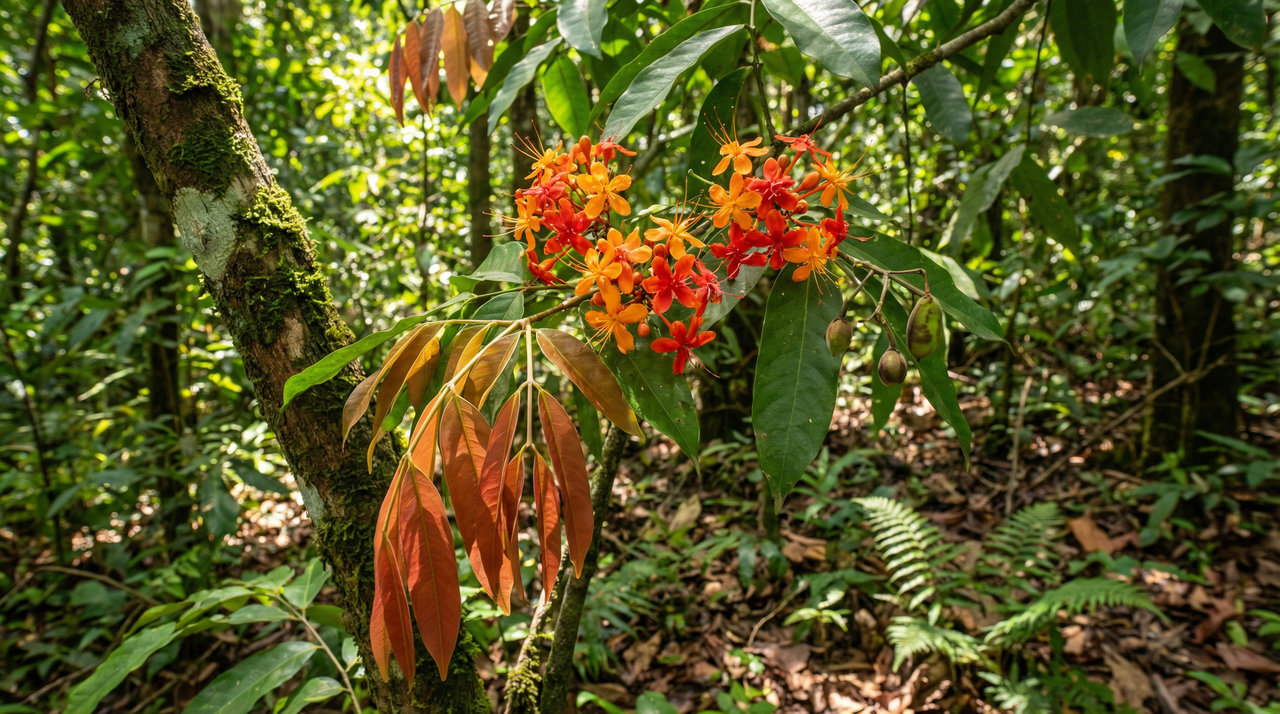
Most trees get their reputation from what they produce. The Ashoka tree gets its reputation from what it supposedly prevents. The name itself, derived from Sanskrit, translates roughly to "that which gives no grief," and for over two thousand years this tree has been planted near temples, in palace gardens, and along sacred groves across South and Southeast Asia precisely because people believed it could ease sorrow, protect women, and invite fertility into a space just by being there. That's a lot of weight for a tree to carry. What surprised me, when I finally got my hands on one and started digging into the research, is how much of that ancient reputation actually holds up.
The bark of Saraca asoca has been a cornerstone of Ayurvedic gynecological medicine for millennia, used as a uterine tonic for menstrual disorders long before anyone had a word for the flavonoids and estrogenic compounds now being isolated in university labs.[1] But here's what nobody in the ornamental plant world seems to mention: this gorgeous, shade-casting, nitrogen-fixing understory tree is quietly threatened in the wild, overharvested for the very bark that made it sacred. Every cultivated planting is, in a very real sense, a conservation act. That reframing changed how I think about this tree entirely.
Ashoka Tree Origin and History
Botanical Background and Native Range
The ashoka tree, Saraca asoca, is native to the Indian subcontinent and extends into parts of Southeast Asia, growing across India, Nepal, Bangladesh, Sri Lanka, Myanmar, Thailand, and Malaysia.[2][3][4] In the wild, it gravitates toward moist deciduous and evergreen forests, often rooting along riverbanks and within sacred groves where the forest canopy creates the dappled, humid conditions it loves.[5] When I'm siting trees for clients in humid subtropical gardens, that riverbank affinity tells me something immediately practical: this is a tree that wants moisture at the roots, good drainage to prevent stagnation, and protection from drying winds, especially when young.
Classified in the Fabaceae family, it's a medium-sized evergreen that typically reaches 6 to 10 meters in cultivation, though wild specimens can push toward 15 to 20 meters with a dense, spreading crown.[6][7] It's a slow starter: under optimal conditions, seed-grown trees typically take 5 to 7 years to flower for the first time, though the wait rewards patient growers because it's polycarpic, blooming repeatedly across a lifespan that can potentially reach 50 to 100 years or more.[8][9]
Visual Characteristics of the Ashoka Tree
What I love most about Saraca asoca in the garden is that it's a shape-shifter in color. The flowers open yellow to light orange, then age through orange and scarlet all the way to deep crimson, so a single tree in full bloom can hold that entire spectrum at once.[10][2] It's the kind of thing you only really appreciate by watching it over several weeks of bloom rather than reading about it. The flowers arrive in dense axillary racemes up to 20 centimeters long, and despite lacking true petals, they have four colorful sepals and masses of projecting stamens that give clusters a soft, feathery appearance.[11] Bloom season runs primarily March through July, though in optimal conditions flowering can occur year-round.[10]
The tree itself has a straight trunk covered in dark brown to grayish, rough fissured bark, with spreading or gently drooping branches that form a dense rounded or pyramidal canopy.[2][6] The pinnate leaves carry 4 to 9 pairs of oblong, leathery leaflets with softly pubescent undersurfaces, giving the foliage a lush, tropical presence that holds through all seasons.[10] One identification note worth taking seriously: Saraca asoca is routinely confused with the unrelated false ashoka, Polyalthia longifolia, which has narrow lanceolate leaves and small yellowish-green flowers rather than the true ashoka's pinnate foliage and crimson blooms.[12][13] I once visited a client who had planted a whole avenue of Polyalthia thinking they had the genuine article; the two trees look similar at a glance from a plant center tag, but checking for pinnate leaves and the flower structure clears up the confusion fast.
Traditional and Cultural Uses
In Ayurveda, the ashoka tree's bark is a foundational uterine tonic and astringent, used for centuries to address menorrhagia, menstrual irregularities, leucorrhea, uterine disorders, and postpartum recovery, as well as broader applications including dysentery, fever, wounds, and skin conditions.[14][15][16] Having worked with other Fabaceae tonics across different traditional systems, I find it striking how consistently the legume family produces plants with deep ties to women's health across cultures. The specific bioactive compounds in Saraca asoca are covered in the health benefits section, but the point here is that this is living knowledge, not historical curiosity, still actively used by tribal communities including the Santal, Munda, Gond, and Kondh in India; the Tharu and Tamang in Nepal; and traditional practitioners in Bangladesh and through Jamu medicine in Indonesia and Malaysia.[17][18]
Religiously and culturally, few trees carry as much symbolic weight on the Indian subcontinent. In Hinduism, the ashoka tree is linked to Kamadeva, the god of love, and is woven into marriage rituals and festivals like Ashoka Shashti as a symbol of fertility and feminine grace.[2][19] Its most famous narrative appearance is in the Ramayana, where the Ashoka Vatika serves as the garden where Sita was held captive, making the tree inseparable from one of the subcontinent's most beloved epics. In Buddhism, it's associated with the birth and enlightenment of the Buddha and planted around temples as an emblem of peace and renunciation.[20] That history of sacred protection genuinely matters from a conservation perspective: groves where this tree was venerated often survived centuries of deforestation precisely because people wouldn't cut them down. When I select plants for healing or ceremonially significant garden spaces, I think about that dynamic. The reverence itself can be protective ecology.
Fun Facts and Conservation Status
Sacred groves and temple courtyards have sheltered some ashoka specimens for what may be a century or more, though precise records are hard to come by.[21] As a legume, it contributes to nitrogen fixation and supports pollinators including bees and butterflies, giving it genuine ecological function beyond its cultural identity.[2][22] Cultivation has carried it well beyond its native range to Southeast Asia, parts of Africa, Pacific Islands, and Hawaii, a testament to how long humans have been moving this tree intentionally.[2]
The IUCN currently classifies Saraca asoca as Least Concern, but localized population declines are real and documented, driven by habitat loss, deforestation, and overharvesting for the medicinal bark trade.[4][23] The same reverence that protected it for millennia now creates commercial pressure on wild stands. In my experience, the most straightforward way to ease that pressure is to source from reputable nurseries, propagate from cultivated stock, and where bark is needed for traditional use, rely on pruning rather than destructive stripping of the trunk.[24] Every ashoka tree established in a home garden or food forest is, in a small but real way, part of that conservation effort.
Ashoka Tree Varieties and Where to Buy
No Named Cultivars: Growing the Straight Species
If you've been searching for a dwarf Ashoka, a double-flowered form, or a named cultivar selected for bark yield, you can stop looking. Saraca asoca has no widely recognized horticultural varieties.[25][26] Unlike ornamental trees where centuries of cultivation have generated dozens of selected forms, this species has been grown primarily for its medicinal bark rather than its landscape performance, and that traditional context didn't push breeders toward isolation and selection. What you get is the straight species, every time. Any variation you observe in flower shade or growth habit among seed-grown plants reflects natural genetic diversity within the population, not a stable cultivar. I've worked with other tropical medicinal trees in zone 9B the same way, and I always tell people: label your seed packets carefully, because subtle differences in leaf texture or flower tone won't reveal themselves for years.
Sourcing Saraca asoca Seeds, Plants, and Regulatory Considerations
Outside of South and Southeast Asia, the saraca asoca plant is genuinely hard to find.[27][28] Your best leads are specialty exotic nurseries, online seed vendors with roots in the Indian trade, and botanical garden plant sales.[27] Seed packets typically run $5 to $15 USD, and young seedlings, when you can find them, land somewhere between $20 and $60.[29] I've ordered similarly obscure tropical seeds from Kew's shop before and found their viability estimates accurate in my own trials, so that's a sourcing channel worth exploring. Seeds stay viable for one to two years and are best collected during the dry season, around March to April in India.[30] If you're buying from an online vendor, ask when seeds were collected.
The IUCN currently lists Saraca asoca as Least Concern,[28][31] but documented overharvesting of bark for the Ayurvedic and herbal trade means sourcing from reputable suppliers matters. Adulteration with related species is a real quality-control problem in the dried-herb market, which is one reason I'd always recommend growing your own where climate permits rather than relying on commercial bark preparations you can't verify. On the regulatory side: the saraca indica tree is not listed under any CITES appendix,[32] so no special permit is required for international trade of the species itself. That said, I make it a habit to check current USDA APHIS requirements before importing any tropical plant material into the United States, because live plants and plant parts are subject to general federal import regulations regardless of CITES status.[33][34] The paperwork is manageable; just don't skip it.
Indian botanical gardens, including those in Kolkata and Dehradun, have been propagating this species for conservation purposes,[35] and some are the most reliable sources of verified material. When you track down a genuine sita ashoka tree seedling from one of these institutions, you're not just acquiring a plant; you're connecting to a species with a long history of both reverence and exploitation, and your planting is a small act of conservation.
How to Propagate and Plant Ashoka Tree (Saraca asoca)
Before you can grow an Ashoka tree, you need to understand what you're actually working with. This is not a plant that tolerates casual seed storage or impatient planting decisions.
Understanding Ashoka Seeds: Morphology, Storage, and Viability
Fresh Saraca asoca seeds are flat, dark brown to nearly black, roughly 0.8 to 2.0 cm long, and they arrive packed inside flat, linear-oblong pods 10 to 25 cm in length, each holding 4 to 8 seeds that ripen between March and May.[36][37] They look robust. They are not. These seeds are recalcitrant, meaning they cannot tolerate drying below 20 to 30% moisture content and lose viability within 2 to 4 weeks under ambient conditions.[38][39] Standard seed banking is completely unsuitable, which surprises growers used to treating seeds like dried beans. I no longer bother storing Ashoka seed beyond a few weeks; fresh really is the only viable option for most of us.
If you need to hold them briefly, research supports storing at 80 to 95% relative humidity, 25 to 50% seed moisture content, and 10 to 20°C to maintain 70 to 80% viability for up to 6 to 24 months under controlled conditions.[38][40] That's a refrigerated, humidity-controlled environment most home growers simply don't have. Cryopreservation with PVS2 vitrification shows promise for conservation-scale long-term storage, but that's botanical garden territory, not backyard.[38]
Propagation Methods: From Seed to Grafting and Tissue Culture
Fresh seeds respond well to a 24-hour warm-water soak or light scarification to break the hard seed coat, and under consistent moisture, partial shade, and temperatures of 25 to 30°C, germination happens in 15 to 30 days with 80 to 90% viability from truly fresh material.[41][42] The catch is that seed-grown plants are genetically variable; they are not true-to-type.[43] I've grown Saraca asoca from both scarified seed and grafted whips, and what looked like identical seedlings at twelve months later diverged noticeably in flower color, bark thickness, and overall vigor. For conservation plantings or home gardens where you just want the tree, seed propagation is the most accessible entry point. For medicinal stock where chemistry and consistency matter, vegetative propagation is the right call.
Semi-hardwood cuttings treated with IBA at 1,000 to 2,000 ppm can root in 4 to 6 weeks with 60 to 80% success, and air layering achieves 50 to 70% under similar warm, humid conditions.[44] Grafting, either veneer or cleft onto seedling rootstock, runs 50 to 60% success at 25 to 30°C and 70 to 80% humidity under standard conditions.[45] After several seasons of trial, I'm now hitting closer to 70% by running consistent bottom heat and keeping humidity tighter around 80%, so those published figures are a floor rather than a ceiling. At conservation scale, tissue culture using nodal explants or shoot tips achieves 80 to 90% rooting success under sterile laboratory conditions and is the most efficient method for producing large, uniform batches of this endangered species.[46][47]
Soil, Site Selection, and Planting Requirements
Saraca asoca grows naturally in moist deciduous forests on red lateritic, alluvial, or loamy soils with organic matter in the 2 to 5% range.[48] Translate that to the home garden and you want well-drained fertile loam, sandy loam, or clay loam at pH 6.0 to 7.5, with a minimum 60 to 90 cm of usable soil depth.[2][49] The single non-negotiable is drainage. Waterlogging is not a stress this tree recovers from gracefully; the symptom progression I've observed starts with older-leaf chlorosis, then wilting despite moist soil, then mushy darkened roots by the time you investigate the root zone.[49][50] I've seen young trees rebound once drainage was corrected with a raised bed or amended backfill, but by that point you've lost months of growth. Get the drainage right before planting.
For light, aim for at least 4 to 6 hours of direct sun daily to support good flowering.[6] The root system is relatively non-invasive, which makes it genuinely useful for urban and permaculture placements where you can't have aggressive surface roots competing with guild plants.[51] Amend heavy or compacted soil with compost at planting and mulch well to build structure and retain moisture without creating the saturated conditions the tree can't tolerate.
Spacing, Timing, and Planting Technique
For plantation or agroforestry systems, the standard recommendation is 5 m by 5 m square spacing, with 8 to 10 m between trees for avenue or larger landscape plantings.[52][53] I think of that 5 m spacing similarly to how I space a small mango or citrus in a food forest: enough room for canopy development, but still compact enough to leave space for understory medicinals and nitrogen-fixers without the Ashoka shading them out too aggressively in the early years. Plant in spring after any frost risk has passed; grafted stock establishes noticeably faster than seedlings in that first critical season.[54]
Time to Maturity and First Harvest
This is where propagation method really matters. Seed-grown trees typically take 5 to 7 years to reach reproductive maturity and 7 to 10 years before a meaningful medicinal pod harvest is realistic.[55][56] Grafted plants compress that timeline dramatically: first pods are possible in as little as 3 years, with the window generally sitting at 2 to 4 years under good management.[57] For clients who want to harvest bark or pods within a reasonable garden lifetime, I now graft almost every tree I plant. Seed propagation remains the right choice for conservation-minded growers, for those on a tight budget, or for anyone patient enough to enjoy the journey; just go in knowing the timeline. The gap between these two paths is consistent regardless of climate or care, and it's the single most consequential decision you'll make before the tree goes in the ground.
How to Grow and Care for Ashoka Tree (Saraca asoca)
Every time I'm siting a new tropical tree, my first question is the same: how much sun will this spot actually get across the full day? For Saraca asoca, getting that answer right separates a tree that thrives from one that just survives. This is a long-lived, slow-maturing plant, and the care you put in during the first few years shapes everything that follows, including whether those legendary orange-red flowers ever materialize.
Sunlight Requirements for Ashoka Tree
Ashoka tree needs at least six hours of direct sunlight daily and does best in full sun to partial shade.[58][59] Young plants are the exception: I treat new transplants much like young citrus or plumeria, giving them some afternoon shade during the first season until the root system catches up. Without that buffer, you'll see leaf scorch and browning at the margins pretty quickly in intense midday sun.[6][60] I use a 30-50% shade cloth for the first few months and then step it back. On the flip side, too little light produces spindly, etiolated growth with chlorotic, undersized leaves and almost no flowering, so don't err too far in the shade direction either.
Watering Needs and Soil Preferences
The ashoka tree prefers consistently moist, well-drained, fertile loamy soil with a pH between 6.0 and 7.5.[12][61] Once established, it tolerates moderate drought reasonably well, but during the growing season I water mine once or twice a week and back off significantly in winter. The keyword there is "well-drained." Overwatering in heavy clay is the fastest way I know to lose a young Ashoka: yellowing leaves, wilting despite wet soil, and eventual root rot are all signs you've gone too far.[62][63] Underwatering shows up differently, as drooping, browning leaf edges, stunted growth, and reduced flowering. If your soil drains poorly, amend heavily before planting or raise the bed; this tree won't forgive standing water.
Feeding and Nutrient Management
Saraca asoca is a moderate feeder, and I've learned the hard way that more fertilizer is not always better. Young plants do well on a balanced 10-10-10 NPK applied every two to three months; mature trees need 200-500 g of balanced fertilizer split across two or three applications from March through September.[12][64][65] The year I pushed nitrogen trying to speed up a slow-growing specimen, I got enormous lush leaves and almost no flowers. That experience stuck. Organically, 5-15 kg of well-rotted compost or cow manure per tree annually supports the soil food web without that nitrogen spike.[61][66]
Learning to read deficiency symptoms in the leaves saves a lot of guesswork. Pale older leaves usually point to nitrogen; a purplish cast with poor flowering suggests phosphorus; marginal leaf necrosis signals potassium; and interveinal chlorosis in the young growth points to iron or zinc.[61][67] A soil test before you start feeding removes most of the guesswork and protects against antagonisms like excess phosphorus locking out iron.[68][61]
Frost Tolerance and Winter Protection
This tree is strictly for USDA zones 10a through 12b. Growth slows noticeably below 50°F (10°C), and anything below 32°F (0°C) can kill it outright; the practical minimum is around 30°F (-1°C) before severe injury sets in.[69][70][12] Cold damage shows as leaf-edge necrosis, shoot dieback, wilting, and premature leaf drop, which can look deceptively similar to drought stress at first glance.[71][72] If you're outside the core zones, containers are your best friend. I've successfully overwintered a container Ashoka by moving it into a bright indoor space, keeping temperatures above 60°F, and cutting water back to just enough to keep the soil from drying completely.[73][74] For in-ground trees in marginal climates, sheltered siting, heavy mulch, and frost cloth during cold snaps can buy you a few extra degrees of protection.
Heat Tolerance and Humidity
Saraca asoca is most comfortable between 20-35°C and tolerates a range of 10-45°C overall, placing it in AHS heat zones 9-12.[75][76] Push past 35-40°C and you'll see leaf scorch, wilting, and flower drop, particularly in seedlings and trees that are mid-bloom. The tree also prefers 60-80% humidity, ideally above 70%, so in dry-summer climates you're fighting an uphill battle.[27][77] A 5-10 cm layer of organic mulch over the root zone makes a meaningful difference in summer, moderating soil temperature and holding moisture so the tree isn't stressed from both directions at once. Consistent watering, as discussed above, is the single most reliable tool for keeping heat stress in check.
Pruning, Maintenance, and Seasonal Care
I keep pruning minimal on Ashoka. The best window is right after the orange-red flower flush fades, or during the dry season in late winter to early spring; timing cuts that way maximizes next year's display rather than sacrificing it.[73][78] I remove dead, diseased, or crossing branches and otherwise let the tree develop its natural vase or pyramidal form. Clean, sharp tools are non-negotiable to avoid introducing disease.
Saraca asoca doesn't go fully dormant in tropical and subtropical climates, but it does slow down noticeably in the dry season or cooler months; flowering peaks from February through June, often aligning with the monsoon from April to August.[2][12][79] For container-grown trees overwintering indoors, reduce irrigation to keep soil slightly moist rather than wet, and hold off on feeding until temperatures warm and growth resumes.[73][74] That reduced-water winter rest, combined with the root rot risk already covered above, is the one seasonal rhythm I'd emphasize most to anyone new to growing this species in a non-tropical climate.
Harvesting Ashoka Tree (Saraca asoca)
Patience is the first tool you need for harvesting an ashoka tree. This isn't a fast-turnaround crop. Bark becomes available in any meaningful sense only after 5-8 years of growth, and sustainable bark collection really shouldn't happen until trees are at least 10-15 years old.[80][81] Flowers and leaves are the forgiving exception, harvestable each year once the tree reaches maturity.
When to Harvest Ashoka: Timing, Phenology, and Maturity Cues
The tree's seasonal rhythm structures everything. Flowering runs February through April, and pods follow roughly 120-150 days behind the blooms, with ripening peaking sometime between late summer and October depending on your microclimate.[82][80][83] In traditional Indian cultivation, the primary bark and pod harvest window falls post-monsoon, October through February, when medicinal compound concentration is considered optimal. I've noticed the phenology data varies slightly by source, and that tracks with my experience watching other tropical species shift their windows depending on whether the season was wetter or drier than usual.
For pods, the visual cues matter more than the calendar. You're watching for the shift from green to dark brown, a papery dry texture, and the early signs of natural splitting along the seam.[84][85] The 10-25 cm pods each hold 4-8 seeds, and you want to catch them just before they dehisce fully. Miss that window and seed viability drops fast.
How to Harvest Ashoka Bark, Flowers, Pods, and Leaves
Bark is the most prized medicinal part, and harvesting it responsibly is something I feel strongly about. After years of watching slow-growing trees in permaculture systems get overharvested out of enthusiasm, my rule is this: take only narrow vertical strips from opposite sides of the trunk, never girdling, and only from trees over a decade old. The trunk needs room to callus over. Bark is collected sparingly, favoring cooler or dry months to minimize stress on the tree.[80] In a regenerative system, the tree's longevity always outranks a single harvest.
Flowers are gathered in the early morning, when they're freshest and the fragrance compounds are at their peak before heat sets in. I've found the same is true for hibiscus and rose petals: that first-light harvest window makes a real sensory difference, and the ashoka blooms are noticeably less astringent when picked before the day warms up. Hand-pick only fully opened flowers and handle them gently. Young leaves can be gathered as needed during active growth flushes. For pods, hand-pick when they've hit that papery dark-brown stage but before complete splitting, then shade-dry below 40°C and store carefully to maintain compound quality.[86][87]
Yield, Edible Parts, Flavor, and Safety Considerations
The flowers are the most accessible and enjoyable harvest from an edible standpoint. Their flavor is mild and sweet with a light floral astringency, carrying honey and faint citrus notes from volatile compounds like linalool, geraniol, and eugenol.[88][89] They work beautifully as a garnish or steeped in teas. Young leaves are edible too, though they're bitter and astringent enough that most people use them only sparingly.[2]
Beyond those two, the harvest picture shifts decisively toward medicine rather than food. The bark, seeds, and pods are not culinary ingredients. The pods are tough and astringent; the seeds are bitter with potential toxicity if unprocessed; and the bark, while extraordinarily valued in Ayurveda, contains potent compounds that demand real respect.[90][67] I only use this tree medicinally under guidance from a trained Ayurvedic practitioner, full stop. The traditional knowledge and the emerging research both point in the same direction: harvesting beyond flowers and occasional young leaves deserves professional guidance.[91]
Preparation and Uses of the Ashoka Tree
Before anything else, I want to set honest expectations: Saraca asoca is not a culinary plant in any practical modern sense. Its bark is among Ayurveda's most revered uterine tonics, and that medicinal identity dominates how this tree has been understood and used for centuries. The kitchen applications are real but narrow, and they exist mostly within traditional Indian practice rather than everyday cooking.[92][2]
Culinary Uses and Edible Parts
The flowers are the most approachable entry point. They turn up in herbal teas, sherbets, and traditional sweets like payasam, carrying a mild, slightly bitter and astringent flavor with subtle floral notes.[92][93] I've made Ashoka flower tea a handful of times, and that astringency is genuinely noticeable; it needs balancing with honey or jaggery to be pleasant. Young leaves occasionally appear in regional recipes, either raw in salads or lightly cooked with spices, but this is much less common than working with the flowers. Seeds are sometimes roasted or ground into flour after thorough detoxification through soaking, boiling, and roasting, though their use belongs firmly in the medicinal foods category rather than general cooking. The flowers and leaves do contain flavonoids, tannins, and vitamins A and C with demonstrated antioxidant activity,[67] but those properties matter more in a medicinal context than a nutritional one. There's simply no widespread culinary adoption of this plant outside traditional Indian herbal cooking,[94][95] and I think that's worth respecting rather than trying to manufacture recipe inspiration where the tradition doesn't support it.
Medicinal Preparations and Traditional Dosages
Bark is the dominant medicinal part, used in decoctions, powders, and the classical fermented preparation Ashokarishta. If you're drying bark at home, keep temperatures below 40°C; I learned with other medicinal barks that higher heat degrades the tannins that carry most of the therapeutic weight, and the same principle applies here. Ashoka bark powder is typically dosed at 3 to 6 grams daily for adults, and decoctions are prepared by simmering bark in water at roughly a 1:16 ratio until reduced by half. Flowers and leaves contribute supporting roles in infusions, but the bark is the core. For anyone familiar with shatavari as a women's tonic, the preparation logic is similar: consistency and correct sourcing matter more than any single dose. A direct safety note belongs here: because of its documented uterine-stimulant activity, I never recommend using Ashoka bark or strong flower infusions during pregnancy. The health benefits section covers the pharmacology in more depth, but that contraindication should be front of mind before preparing anything beyond a light floral tea.
Non-Food Applications
From a permaculture designer's perspective, the non-food uses of this tree round out a genuinely compelling case for planting it. The vibrant orange-red flowers yield striking natural dyes used in traditional textile work, and I've seen them produce warm amber-to-rust tones depending on the mordant. The bark yields a useful fiber, and the dense, durable wood has a long history in tool handles and small woodcraft. Ritually, it remains essential to Hindu and Buddhist ceremonies, which means in communities where that matters, a mature tree in your landscape has cultural currency well beyond its physical outputs. Plant it where it gets filtered light and space to develop its canopy, and it earns its place many times over.
Ashoka Tree Health Benefits
If there's one thing that strikes me every time I dig into the ethnobotanical literature on this tree, it's how singular its medicinal identity is. The ashoka tree isn't a generalist folk remedy with a long list of ailments it vaguely "supports." In Ayurveda and Siddha medicine, its role is remarkably specific: women's reproductive health. Bark preparations have been used for centuries to address menstrual disorders, menorrhagia, leucorrhea, dysmenorrhea, and uterine prolapse, and to serve as a uterine tonic in a broad sense.[96][94][97] That specificity is what makes the growing body of pharmacological research so exciting. Ancient physicians didn't have COX-2 inhibition in their vocabulary, but they clearly observed something real.
Traditional Medicinal Uses in Ayurveda
Ayurvedic texts classify Saraca asoca as a stambhana (astringent) and grahi (absorbent) herb, with the bark decoction prescribed specifically for excessive uterine bleeding and related gynecological conditions. This isn't peripheral traditional use; it's the tree's primary identity in classical medicine. For readers familiar with Western herbal traditions, the closest comparison I can draw is to black cohosh or red clover, plants whose phytoestrogenic profiles drive their gynecological applications. Ashoka operates in similar territory, with specific flavonoids like formononetin and biochanin A contributing estrogen-like activity that helps explain its traditional role in regulating menstrual function.[98][67]
Key Phytochemical Compounds
The bark is where the chemistry concentrates most intensely. Hydrolyzable tannins can account for up to 20% of bark dry weight,[99] which puts it in the same territory as oak bark or strong-brewed black tea in terms of astringency. I've noticed this firsthand working with bark samples of different ages: mature specimens from trees over ten years old have a distinctly more pronounced, almost mouth-puckering quality, which aligns with research showing 30-50% higher secondary metabolite yields in older, more mature trees.[100] Beyond tannins, the plant produces quercetin, kaempferol, rutin, catechin, and epicatechin (the antioxidant and estrogenic drivers), along with unique alkaloids like saracodine and saracarpine that contribute uterine tonic effects, phenolic acids including gallic and ellagic acid, triterpenoid saponins linked to hepatoprotective and hemostatic activity, and coumarins with antimicrobial and smooth muscle relaxant properties.[101][102][103] Flavonoid levels peak during the dry season (March through May) and are highest at soil pH 6-7,[100][104] a detail worth noting for anyone growing this tree in variable subtropical conditions like mine, where potency can differ meaningfully from Himalayan-origin stock.
Pharmacological and Clinical Research
Modern research has validated the core mechanisms behind most of ashoka's traditional applications. On the anti-inflammatory front, bark extracts inhibit the NF-κB signaling pathway and suppress pro-inflammatory cytokines TNF-α, IL-6, and IL-1β, along with COX-2 expression, in LPS-stimulated macrophage models.[105][106] Antioxidant activity is similarly impressive: bark extracts show 70-80% free radical scavenging in DPPH assays, comparable to ascorbic acid, with mechanisms involving Nrf2 pathway activation and upregulation of endogenous enzymes SOD, CAT, and GPx.[107][108]
The preclinical evidence extends considerably further. Anti-diabetic activity has been demonstrated in animal models via α-glucosidase inhibition and PPAR-γ activation, improving insulin sensitivity.[109][110] Antimicrobial activity against both Gram-positive and Gram-negative bacteria, including Staphylococcus aureus and E. coli, has been confirmed with MIC values in the 50-500 μg/mL range.[111] There's also neuroprotective acetylcholinesterase inhibition comparable to the pharmaceutical donepezil, cardioprotective reduction of lipid peroxidation, hepatoprotective and gastroprotective effects, analgesic and antispasmodic activity, and preclinical anticancer evidence showing caspase-dependent apoptosis induction in breast and cervical cancer cell lines.[112][113][114][115][116]
Clinical evidence is promising but genuinely limited. Small trials have shown significant reduction in bleeding duration for menorrhagia and reduced inflammatory pain in rheumatoid arthritis patients.[117][118] I always tell people honestly: the lab findings are robust, the traditional record is thousands of years deep, and the alignment between the two is genuinely compelling. Large-scale human trials haven't yet arrived. If you're considering ashoka bark medicinally for any condition, I'd strongly recommend working with a qualified Ayurvedic practitioner or an integrative medicine physician who knows this plant.
Nutritional Profile and Edible Applications
Ashoka is primarily a medicinal tree, not a food plant. I view it more as a respected therapeutic ally than a kitchen green. That said, the leaves and flowers do offer modest nutritional value for those using small amounts in infusions or traditional preparations. Fresh leaves run roughly 20-25 kcal per 100g, with 1.5-2.5g protein, 4-6g carbohydrates, and 2-3g dietary fiber.[119] Vitamin C comes in at 20-50mg per 100g fresh, with modest Vitamin A and E as well.[119] Iron content is notably high, particularly in flowers (up to 150mg/100g ash weight).[120] These figures are derived from medicinal plant research rather than standard food databases, and they vary considerably by region and season. The stronger nutritional argument lies in the polyphenolic load: catechins, rutin, quercetin, and gallic acid derivatives that show strong antioxidant activity in DPPH and ABTS assays, with bioavailability improving through drying or gentle cooking, which reduces the anti-nutritional tannin fraction.[121][67] Bark is too astringent and potentially irritating for direct consumption. Seeds should not be ingested.
Safety Considerations and Dosage
The good news first: Saraca asoca has low acute toxicity, with LD50 above 2000 mg/kg in rodent studies, and it actually shows hepatoprotective rather than liver-damaging effects against toxins like CCl4.[122][123] Allergenic potential is low given its non-airborne pollen. Traditional Ayurvedic dosages for bark sit at 3-6 grams powder daily or 50-100ml decoction twice daily, and clinical trials have safely used up to 500mg/day of standardized extracts.[124][125] Excess intake can cause nausea, vomiting, or diarrhea from the high tannin load.
If you are pregnant, ashoka bark is not for you. The uterine stimulant properties are well-documented in both Ayurvedic literature and modern pharmacology, and the risk of inducing contractions or increasing miscarriage risk is real.[67][94] Seeds should never be ingested under any circumstances.
One practical warning I give anyone interested in harvesting ashoka bark: identification matters enormously. In a landscape design project years ago, I encountered what a client had labeled "ashoka" that turned out to be Polyalthia longifolia, the so-called false ashoka, a common ornamental street tree with a superficially similar silhouette but no shared medicinal chemistry. The distinctive pinnate leaflets with their wavy margins and the characteristic orange-red flower clusters of true Saraca asoca are your verification checkpoints before anything reaches a decoction pot.[16] Phytochemical potency also shifts meaningfully with season, location, and tree age,[100] which is all the more reason to source from trusted suppliers or work with practitioners who know the plant well.
Ashoka Tree Pests and Diseases
The ashoka tree comes remarkably well-armed for a plant that spends its life in humid tropical conditions. Those same flavonoids, tannins, alkaloids, and saponins that power its Ayurvedic reputation also work as anti-feedants and repellents against a range of insect pressure.[126][127] The plant can even ramp up those defensive compound concentrations in response to herbivore attack, and its thick leaf cuticles add a physical layer of protection. Mature trees, in my observation of tropical legumes in this family, really do shrug off what would devastate a younger specimen.
Natural Resistance and Common Pests
The catch is "mature." Young saplings are genuinely vulnerable, and that's when I pay closest attention. Dense wood and chemical defenses give the ashoka tree relative resistance to termites and leaf beetles, but juvenile plants haven't fully built those defenses yet. In a humid growing season, sap-sucking insects move fast. Mealybugs, scale insects, and aphids are the most common culprits, joined by leaf-eating caterpillars from the Noctuidae family and occasional leaf miners.[128][129] The sap-suckers leave a trail you can spot early: yellowing leaves, curl, and that sticky honeydew that turns into sooty mold if you let it go.[130] I've learned to treat honeydew on young ashoka plants as an immediate call to action, not a wait-and-see situation.
Fungal and Bacterial Diseases
Honest caveat first: quantified disease resistance data for Saraca asoca is thin.[131] What we do know is that the tree's moderate natural resilience drops noticeably under cultivation, especially where humidity is high and airflow is poor.[132] The fungal diseases to watch are leaf spot (Cercospora and Phyllosticta species producing brown lesions that lead to defoliation), anthracnose (Colletotrichum causing dark lesions on leaves and twigs during warm wet periods), and root rot from Phytophthora or Pythium in poorly drained soils.[133] The leaf spot and anthracnose symptoms look almost identical to what I've managed on other tropical legumes, which at least makes diagnosis straightforward. Root rot is the one that worries me most; in my practice, improving drainage has prevented more losses than any fungicide ever has. Powdery mildew and bacterial leaf blight are less commonly reported but worth watching wherever air stagnates around the canopy.[134] Environmental conditions between 60-80% humidity and 20-35°C push all of these risks upward, so site selection genuinely matters.[12]
Integrated Management and Prevention
Because no commercial cultivars bred for pest or disease resistance exist, success with this tree depends entirely on integrated practices rather than genetic shortcuts.[135] I think about management in three tiers. Cultural practices come first: proper spacing for airflow, well-drained loamy soil, avoiding overhead irrigation, removing infected material promptly, and consistent monitoring.[136][137] These aren't glamorous, but they're the reason a well-sited ashoka tree rarely needs anything else. Biological controls come second: neem-based sprays and insecticidal soap for sap-suckers, Bacillus thuringiensis for caterpillar pressure, and encouraging ladybirds and other predators that will find the tree once you stop reaching for synthetic chemicals.[138] These approaches align naturally with a plant whose own phytochemicals already do meaningful defensive work. Chemical intervention, copper fungicides or mancozeb for fungal outbreaks and imidacloprid for severe sucking pest infestations, gets reserved for serious cases and applied preventively going into monsoon if the previous season flagged a problem.[135] For a tree valued in Ayurveda as a medicinal bark source, keeping chemical load minimal isn't just an ecological preference; it's practically sensible.[132] Get the site right, stay observant, and the ashoka tree's own considerable chemistry does most of the work.
Ashoka Tree in Permaculture Design
Before you fall in love with the orange-red flower clusters or the cultural lore surrounding this tree, the climate data needs to be your first conversation. The Ashoka tree is a committed tropical. It belongs to zones 10 through 12, and that's not a soft boundary you can push with a warm wall and some wishful thinking.
Climate and Growing Zones for Ashoka
Saraca asoca is hardy only down to about 10°C (50°F), and even a brief frost will cause serious damage.[139][2] In the US, that puts realistic outdoor cultivation in southern Florida, Hawaii, and protected pockets of zones 10a through 12b; everywhere else, you're looking at a greenhouse specimen or a large container you wheel inside before the temperature drops.[140] I've grown specimens in zone 9b with serious winter protection, and honestly the effort involved is comparable to overwintering a container mango or avocado: feasible, but the tree knows it's not home.
Temperature is only half the story. Optimal growth sits between 20 and 35°C, with brief spikes to 45°C tolerated, but the humidity requirement is what catches most growers off guard.[2][141] This tree wants 70 to 90% relative humidity. Drop below 50% and you'll see leaf browning and stunted new growth, especially on young plants. The native habitat says it all: tropical evergreen and moist deciduous forests, river margins, 1,000 to 2,500 mm of annual rainfall, monsoon seasonality, and elevations mostly below 800 meters.[2][27] In marginal climates, microclimate selection and plant maturity both affect how well an individual tree tolerates stress, so I'd always consult local horticultural sources rather than assume the zone map tells the whole story.[142]
Ecosystem Functions and Guild Roles
Once you've established that your site can actually support it, the ecological generosity of this tree becomes apparent quickly. As a legume, Saraca asoca fixes nitrogen through symbiotic root nodules with Rhizobium bacteria, and its leaf litter builds humus and feeds the soil food web as it decomposes.[143][144] I've noticed that understory plants growing beneath mature Ashoka specimens tend to be noticeably greener and more vigorous than those under non-legume shade trees nearby; it's exactly the kind of informal observation that makes you want to keep planting more of them.
The pollinator story is where the tree really earns its place in a designed ecosystem. Those tubular orange-red flowers open in the early morning, roughly between 5 and 8 AM, and the first visitors are often carpenter bees and honeybees working the nectar before the day heats up.[145][146] Watching that morning rhythm across multiple flowering seasons is one of those experiences that turns a plant from an entry in a database into something you actually care about. The tree is self-incompatible and protogynous, meaning it depends on cross-pollination with other individuals to set fruit reliably.[145][147] In fragmented habitats, pollination success drops significantly, but surrounding the tree with companion nectar plants can increase insect visitation rates by 20 to 30%.[148] That's a meaningful design lever, not just a nice-to-have. The pods also provide food for birds and primates, completing a habitat loop that extends well beyond the flowers.[143]
There's a conservation dimension here that I feel strongly about. Wild populations of this species are under pressure from overharvesting and habitat loss, and climate shifts are already disrupting the synchrony between the tree's flowering season and its pollinators.[149] Because of that, I only source from reputable native-plant nurseries and treat every tree I plant as a conservation contribution as much as a design element. Each specimen you establish in a stable, well-designed system is genuinely helping the species.
Forest Layer and Companion Planting
In its native forest, Saraca asoca occupies the understory and sub-canopy, typically reaching 10 to 20 meters, though it takes on a more shrubby, compact form in drier or disturbed conditions.[6][150] That shrubby habit in marginal conditions is actually useful in permaculture; it means the tree can flex between the lower tree layer and the large shrub layer depending on your site, giving you real placement options.
In practice, I position it as a sub-canopy element that provides dappled shade, nitrogen, biomass for mulching, and pollinator habitat simultaneously.[151][48] One layout I return to regularly: Ashoka as the sub-canopy anchor, coffee and cardamom in the mid-layer beneath it, turmeric and ginger filling the ground layer, and a scattering of basil and marigold at the edges to pull in bees and draw them toward the Ashoka flowers when they open. Its upright, dense form also works well as a living windbreak along a food garden's exposed edge. The leaf litter I rake from beneath the canopy goes straight around the ginger and turmeric as mulch; it's among the richest organic material I've worked with from a single tree. Every part of that system feeds another part, which is what good guild design is supposed to look like.
The Tree That Taught Me to Design for the Long View
I planted my first Ashoka from seed knowing full well I'd never harvest its bark. That was the point. There's something clarifying about tending a tree whose medicinal gifts belong to whoever farms this land a decade from now, maybe two. It reordered how I think about a food forest, honestly. Not every plant is here for me.
Sources 151
- Saraca asoca: A Review of the Ancient Healer ↩
- Saraca asoca - Wikipedia ↩
- Plants of the World Online | Kew Science ↩
- IUCN Red List: Saraca asoca ↩
- IUCN Red List - Saraca asoca ↩
- Missouri Botanical Garden - Plant Finder ↩
- Kew Science - Plants of the World Online ↩
- Indian Council of Forestry Research and Education - Ashoka Tree Cultivation Guidelines ↩
- Journal of Tropical Forestry - Reproductive Biology of Saraca asoca ↩
- Saraca asoca - Royal Botanic Gardens, Kew ↩
- Reproductive biology and breeding system of Saraca asoca — PMC ↩
- Saraca asoca - Useful Tropical Plants Database ↩
- Misidentification of Ashoka Tree in Ayurvedic Practice - Journal of Ethnopharmacology ↩
- Saraca asoca (Ashoka): A Review on Ethnobotanical and Medicinal Uses ↩
- Ashoka in Charaka Samhita: Traditional Uses and Modern Validation ↩
- Saraca asoca (Ashoka): A Review on Ethnomedicinal Uses, Phytochemistry, and Pharmacology ↩
- Ethnomedicinal Uses of Saraca asoca in Nepal ↩
- Ethnomedicinal Survey of Plants Used by the Tribals of Mayurbhanj, Orissa, India ↩
- Religious and Cultural Significance of Ashoka Tree in Hinduism ↩
- Sacred Trees in Hinduism and Buddhism ↩
- Missouri Botanical Garden - Plant Finder ↩
- Saraca declinata - Useful Tropical Plants Database ↩
- Ashoka Tree: Medicinal Uses and Conservation ↩
- Sustainable Harvesting of Medicinal Plants in India ↩
- Botanical Description and Cultivation of Ashoka (Saraca asoca) ↩
- Horticultural Varieties of Saraca asoca - ResearchGate ↩
- Saraca asoca (Ashoka) Plant Profile ↩
- IUCN Red List: Saraca asoca ↩
- Saraca asoca Seeds ↩
- Seed Germination and Dormancy in Saraca asoca Roxb. ↩
- Quality Control Issues in Herbal Trade of Saraca asoca ↩
- CITES Species Database ↩
- Plant Import Information ↩
- ePermits for Plant Imports ↩
- Cultivation and Conservation of Ashoka (Saraca asoca) in India ↩
- Saraca asoca (Ashoka) - Morphology and Taxonomy ↩
- Saraca asoca - Flora of India ↩
- Seed Storage of Saraca asoca: An Endangered Medicinal Plant ↩
- Recalcitrant Seeds: Biology and Storage ↩
- Germination and Storage Studies in Saraca asoca ↩
- Propagation of Saraca asoca: An Important Medicinal Plant ↩
- Seed Germination and Dormancy Breaking in Saraca asoca ↩
- Propagation of Saraca asoca: A Review ↩
- Propagation Techniques for Saraca asoca: A Review ↩
- Propagation of Ashoka (Saraca asoca) by Grafting Techniques ↩
- Micropropagation of Saraca asoca Roxb.: An Endangered Medicinal Plant ↩
- In vitro propagation of Ashoka (Saraca asoca): An important medicinal plant ↩
- Ashoka Tree Cultivation Guide - ICAR ↩
- Horticulture of Saraca asoca: Managing Root Health and Water Stress ↩
- Saraca asoca Plant Profile ↩
- Cultivation Practices of Saraca asoca: A Review ↩
- Ashoka Tree Cultivation Guide - Forest Research Institute India ↩
- Agroforestry Spacing Recommendations - FAO India ↩
- Planting Guidelines for Saraca asoca - ICAR ↩
- Saraca asoca: Botanical and Pharmacological Evaluation ↩
- Propagation and Cultivation of Saraca asoca ↩
- Ashoka Tree: Grafting Techniques and Maturity Timeline ↩
- Saraca asoca - Missouri Botanical Garden Plant Finder ↩
- Ashoka Tree (Saraca asoca) Care Guide ↩
- Light requirements of Saraca asoca seedlings ↩
- Cultivation of Ashoka (Saraca asoca) ↩
- Drought Stress in Tropical Plants ↩
- Root Rot in Tropical Trees ↩
- Saraca asoca Cultivation Guide - ICAR ↩
- Nutrient Management for Medicinal Plants ↩
- Nutrient Deficiency Symptoms in Ashoka Tree ↩
- Saraca asoca: Botanical and Pharmacological Profile ↩
- Nutrient Deficiencies and Toxicities in Plants ↩
- Saraca asoca - Missouri Botanical Garden Plant Finder ↩
- Ashoka Tree (Saraca asoca) - RHS Gardening ↩
- Frost Damage on Tropical Plants ↩
- Protecting Plants from Frost ↩
- Ashoka Tree Care - Gardening Know How ↩
- Tropical Plant Hardiness - University of Florida IFAS Extension ↩
- Temperature Requirements for Ashoka (Saraca asoca) ↩
- Heat Stress Effects on Photosynthesis and Growth in Ashoka Tree (Saraca asoca) ↩
- Cultivation of Ashoka (Saraca asoca): A Guide ↩
- Cultivation of Saraca asoca: A Medicinal Plant ↩
- The Botanical Review - Deciduous adaptations in tropical understory trees ↩
- Cultivation and Harvesting of Ashoka Tree ↩
- Medicinal Plants of India: Saraca asoca ↩
- Saraca asoca: Botanical and Pharmacological Evaluation ↩
- Phenology of Saraca asoca in Tropical Forests ↩
- Saraca asoca - Plants of the World Online | Kew Science ↩
- Phenology and Reproductive Biology of Saraca asoca ↩
- Saraca asoca (Ashoka): Propagation and Cultivation ↩
- Harvesting and Post-Harvest Management of Ashoka Pods ↩
- Volatile constituents of Saraca asoca flowers ↩
- Edible Flowers in Indian Cuisine ↩
- Ashoka Tree: Uses, Benefits, Side Effects - Netmeds ↩
- Ashoka Tree: Uses, Benefits, and Side Effects ↩
- Ashoka (Saraca asoca): A Review on Ethno-pharmacological Properties ↩
- Edible Flowers in Indian Cuisine ↩
- Saraca asoca (Ashoka): A Review - NCBI ↩
- Traditional Uses of Ashoka Tree in Cooking ↩
- Ayurvedic Pharmacopoeia of India, Volume I ↩
- Saraca asoca (Ashoka): A Review on Ethno-pharmacological Properties ↩
- Estrogenic Activity of Saraca asoca in Experimental Models ↩
- Phytochemical and Pharmacological Profile of Saraca asoca ↩
- Phytochemical Variations in Saraca asoca: Influence of Season and Habitat ↩
- Phytochemical and Pharmacological Profile of Saraca asoca: A Review ↩
- Chemical Constituents of Saraca asoca Bark ↩
- Bioactive Compounds from Saraca asoca: Isolation and Identification ↩
- Effect of Soil pH on Secondary Metabolites of Medicinal Plants Including Ashoka ↩
- NF-κB Mediated Anti-inflammatory Effects of Saraca asoca ↩
- Anti-inflammatory activity of Saraca asoca bark extract ↩
- Antioxidant Mechanisms Involving Nrf2 in Saraca asoca ↩
- Antioxidant and Anti-inflammatory Properties of Saraca asoca Bark ↩
- Anti-diabetic Potential of Saraca asoca ↩
- Meta-Analysis of Antidiabetic Potential of Saraca asoca Extracts ↩
- Antimicrobial Activity and Mechanisms of Saraca asoca ↩
- Neuroprotective Role of Saraca through AChE Inhibition ↩
- Cardioprotective Mechanisms of Saraca asoca ↩
- Hepatoprotective Effects of Saraca asoca via Nrf2 ↩
- Analgesic and Anti-inflammatory Activities of the Hydroalcoholic Extract from the Bark of Saraca asoca ↩
- Apoptosis Induction by Saraca asoca in Cancer Cells ↩
- Clinical Evaluation of Saraca asoca in Menorrhagia ↩
- Randomized Controlled Trial of Saraca asoca in Inflammatory Disorders ↩
- Nutritional and Phytochemical Analysis of Saraca asoca Leaves ↩
- Nutritional Composition of Some Medicinal Plants in India ↩
- Antioxidant Activity of Saraca asoca Leaf and Flower Extracts ↩
- Toxicity and Safety Evaluation of Saraca asoca Extracts ↩
- Hepatoprotective activity of Saraca asoca against CCl4-induced toxicity ↩
- Ayurvedic Pharmacopoeia of India, Volume I ↩
- WHO Monographs on Selected Medicinal Plants ↩
- Phytochemical and Pharmacological Profile of Saraca asoca ↩
- Phytochemical and Pharmacological Importance of Saraca asoca ↩
- Insect Pests of Forest Trees in India ↩
- Pests and Diseases of Ashoka Tree ↩
- Pests and Diseases of Ashoka (Saraca asoca) in India ↩
- Plants of the World Online - Kew Gardens ↩
- Cultivation Guide for Ashoka Tree ↩
- Diseases of Ashoka (Saraca asoca) ↩
- Diseases of Ashoka Tree (Saraca asoca) ↩
- Integrated Pest Management for Ashoka Tree ↩
- Horticultural Management of Saraca asoca ↩
- Pests and Diseases of Medicinal Plants ↩
- Biological Control of Insect Pests in Tropical Trees ↩
- Missouri Botanical Garden Plant Finder - Saraca asoca ↩
- USDA Plant Hardiness Zone Map ↩
- Plants of the World Online - Kew Science ↩
- Missouri Botanical Garden Plant Finder ↩
- Ecological Role of Saraca asoca in Indian Forests ↩
- Permaculture Plants: Saraca asoca ↩
- Floral Biology of Saraca asoca ↩
- Insect Visitors and Pollinators of Saraca asoca in Western Ghats ↩
- Pollination Biology of Saraca asoca: Implications for Conservation ↩
- Impacts of Habitat Fragmentation on Plant-Pollinator Interactions in Indian Forests ↩
- Climate Change Effects on Tropical Tree Reproduction ↩
- Plants of the World Online - Saraca asoca ↩
- Permaculture Applications of Saraca asoca - Permaculture Research Institute ↩