Most people's relationship with avocado starts at a brunch table and ends at the grocery store checkout. Mine started with a dying tree in a Phoenix client's backyard, its roots sitting in a clay lens that never drained, leaves yellowing despite every intervention she'd tried. The nursery had told her avocados love the desert heat. True enough. But nobody mentioned that the tree evolved in the well-drained volcanic soils of the Mesoamerican highlands, where torrential rains flush through quickly and the roots never, ever sit wet. She'd been killing it with kindness and bad drainage for three years. We lost the tree. I never forgot the lesson.
Here's the thing about avocado that trips up even experienced growers: it looks like a tropical tree, markets like a tropical fruit, and gets treated like one at every stage from nursery selection to irrigation scheduling, but it's fundamentally a subtropical highland species with surprisingly specific demands.[1] That gap between perception and reality is where most avocado failures live. Understanding where this tree actually comes from, what it was doing before we showed up with grafting knives and drip tape, changes how you grow it entirely.
Avocado Origin, History, and Botanical Background
Before avocado became a brunch staple or a global commodity, it was a forest tree. Persea americana is native to the subtropical highlands stretching from southern Mexico down through Guatemala and into Central America, including El Salvador, Honduras, Nicaragua, and Costa Rica, where it occupies the understory and mid-canopy at elevations up to 2,000 meters.[2][3][4] That shade-tolerant understory origin matters enormously when you're thinking about where this tree fits in a food forest. It didn't evolve under full blazing sun in a monoculture row. It evolved as part of a layered, complex forest system, which is worth remembering when we talk about growing it well.
Botanical Origins and Visual Characteristics of Persea americana
At full maturity, an avocado can reach 10 to 20 meters tall with a spreading, dense canopy,[2] though commercial cultivars like Hass tend to stay in the 20 to 30 foot range and spread 15 to 25 feet wide.[5] Even well-pruned, this is a substantial tree. Plan for it accordingly.
The bark is one of my favorite things about mature avocados: young trees start with smooth, greenish-gray skin, but that bark thickens into thick, corky, blocky plates with age, which is exactly where the old "alligator pear" nickname comes from.[6] There's also a swollen burl at the trunk base loaded with dormant buds, a built-in regeneration mechanism that kicks in after injury or hard pruning.[6] I find that trait quietly impressive; it speaks to the tree's resilience in its native forest environment. Below ground, though, avocados are far less robust. The root system is shallow and fibrous, mostly concentrated in the top one to two feet of soil, extending to the drip line but rarely deeper than three to four feet, and there's no central taproot.[7] I learned that sensitivity the hard way in early designs: these roots hate sitting in water even briefly, which fundamentally shapes how you plant and mulch them.
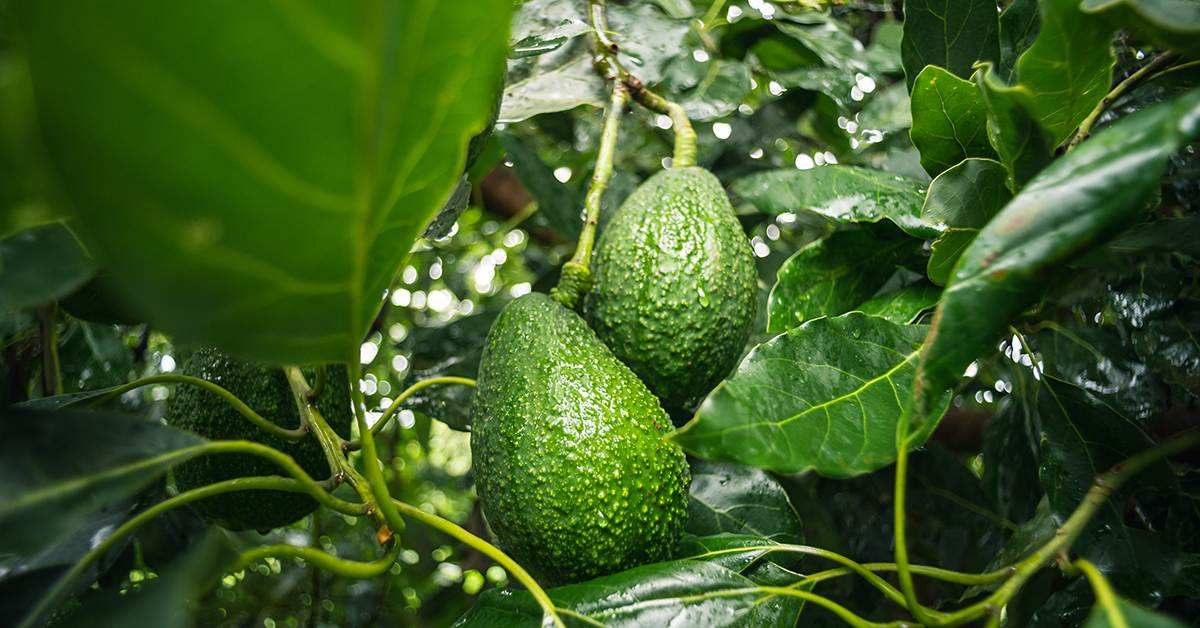
The leaves are simple, alternate, elliptical to lanceolate, glossy on top, leathery, and 7 to 20 cm long.[8] Flowers are tiny (0.6 to 1 cm), greenish-yellow, and produced in large panicles, sometimes thousands per tree.[9] The fruit is technically a large berry, pear-shaped to oval, ranging from green to purple-black depending on variety.[10]
That variation in fruit, leaf, and cold tolerance traces back to three distinct botanical races: Mexican (small fruits, anise-scented leaves, and the best cold tolerance), Guatemalan (thicker-skinned oval fruits, drought-tolerant), and West Indian (large, thin-skinned fruits, tropical-adapted).[11] Most modern cultivars, including Hass, are interracial hybrids. Having grown several in Central Florida landscapes, I've noticed firsthand that the Mexican-race influence in Hass gives it meaningfully better cold tolerance during winter dips than pure West Indian types, which tend to sulk or worse.
Traditional and Cultural Uses in Mesoamerica and Beyond
Humans have been cultivating avocado for at least 5,000 years, with archaeological evidence pointing to the Tehuacan Valley in Mexico as an early center of domestication.[12] The Aztec, Maya, and Olmec peoples didn't just eat it; they wove it into agroforestry systems, medicine, and ritual life. The Nahuatl name "ahuacatl" referred to testicles, a reference to the hanging fruit's shape, and avocado carried strong fertility symbolism and associations with the goddess Xochiquetzal.[13] Avocado orchards held real economic value in Aztec tribute systems, which tells you something about how central this tree was to daily life.
Traditional medicinal applications ranged from brewing leaves as tea for hypertension, diarrhea, and respiratory complaints to grinding seeds into poultice for wounds and inflammation, with bark and roots used for parasitic infections.[14][15] I approach these uses with genuine respect; they represent accumulated knowledge from cultures who understood this plant intimately, long before any clinical trial existed. Spanish explorers carried avocado to the Caribbean, Europe, and Africa in the 1500s,[16] and modern commercial cultivation spread it further still, to Israel, South Africa, Australia, California, and Florida.
That global reach comes with real ethical weight. Commercial avocado production has often appropriated indigenous knowledge without benefit-sharing, and intensive cultivation raises serious concerns about water demand, deforestation, and soil erosion.[17] When I source trees for client projects, I make a point to seek out ethically propagated stock and to design diverse polyculture guilds rather than monoculture blocks. The history of this plant argues strongly for that approach.
Interesting Facts About Avocado Trees
One thing that surprises many home growers is the size range possible within a single species. Standard cultivars like Hass mature to 20 to 30 feet tall, while compact breeding work has produced dwarf varieties such as 'Little Coot' that stay in the 6 to 10 foot range.[5][18] For anyone working with a small suburban yard or a courtyard food garden, that distinction is the difference between a tree that fits and one that eventually overwhelms everything around it. It's a useful reminder that "avocado" isn't one fixed thing; this species has been shaped by 5,000 years of human selection, and there's more genetic flexibility here than most people realize.
Avocado Varieties and Where to Source Them
Notable Avocado Cultivars for Home Growers
The first question I ask any client who wants to plant an avocado tree isn't "Do you prefer Hass?" It's "What's your coldest recorded low?" That answer drives everything. Cold-tolerant cultivars like 'Mexicola', 'Brogdon', 'Joey', and 'Bacon' can handle temperatures down to 18-20°F once established, making them the realistic choices for Zone 9 and marginal subtropical microclimates where a standard Hass would simply die.[19][20] I've helped several Central Florida clients replant after early freezes wiped out less-hardy trees, and now we default to Mexicola as a rootstock option when frost risk is real.
Once you've confirmed your cold tolerance threshold, flavor and texture become the tiebreaker. Hass delivers that familiar dense, creamy flesh with 18-22% oil content and a rich buttery-nutty finish.[21][22] Fuerte is a different experience entirely: smoother, lighter, running 12-15% oil, with delicate notes of anise, pear, or hazelnut that genuinely surprise people when they taste it off the tree.[21][23] Neither is better; they're just different. The best variety for your garden ultimately comes down to climate match, pollination compatibility, and how you plan to use the fruit.[24][20]
Sourcing Avocado Trees in the US
Avocado is a major commercial crop in California, Florida, and Hawaii, which means grafted trees and saplings are genuinely available through online retailers, specialty nurseries, and university extension programs.[25][24] Reputable sources include Four Winds Growers in California, Bednars Nursery in Florida, Eureka Farms in Texas, and Hawaii Fruit Trees; for more obscure rootstocks, the USDA National Clonal Germplasm Repository and the UC Davis Avocado Program are worth contacting directly.[26][27] When a client asks me about a specific rare cultivar, that's exactly where I send them rather than toward the big-box garden center.
Budget realistically. Saplings and seedlings typically run $20-$80, while mature trees can cost anywhere from $200 to $1,500 depending on size, age, variety, and region -- and those figures shift with market conditions.[28][29] Before purchasing anything, I always verify current USDA APHIS guidelines and state extension alerts. Regional restrictions are real: laurel wilt pressure limits some Florida plantings, and imported plant material requires phytosanitary treatment to prevent introduction of pests like the Persea mite and avocado lace bug.[30][31] Call nurseries directly, confirm what's currently in stock, and check local regulations before you spend anything.
Avocado Propagation and Planting
Understanding Avocado Seeds: Pyrenes, Embryony, and Genetic Variability
There's something genuinely thrilling about cracking open an avocado and seeing that enormous seed. It's technically a pyrene: two fleshy, oil-rich cotyledons wrapped around a small embryo, covered by a thick woody brown coat, with no endosperm at all.[32] Mexican-race seeds tend to run smaller, around 3 cm; Guatemalan types push up to 5 cm and can account for 10–20% of the whole fruit's weight.[32][33] I've sprouted dozens of these over the years for rootstock trials, and the romance of watching that big seed split and send up a shoot never really gets old.
What gets complicated is what comes after. Whether a seed produces one unique seedling or several near-identical ones depends on embryony type. Guatemalan and West Indian races are mostly monoembryonic, meaning one zygotic embryo per seed and high genetic variability in the offspring.[34][35] Mexican-race seeds are often polyembryonic, producing 2–5 embryos, the extras being nucellar clones of the mother.[36] I've learned to spot the difference: the single vigorous zygotic shoot grows straight and thick, while the nucellar ones tend to emerge as a cluster of slightly weaker, same-sized sprouts. If you see multiples, you may have something close to clonal material. If you see one, you're in genetic lottery territory.
And that's precisely the problem with seed-grown avocados for fruit production. Because these trees are highly heterozygous and obligate outcrossers, seedlings rarely resemble the parent in any meaningful way.[37][38] Grafting, typically cleft or whip technique onto disease-resistant rootstocks like 'Duke 7' or 'Thomas', is the only reliable way to get fruit you can predict and harvest within a reasonable timeframe.[39][40] Grow a seed for rootstock, for curiosity, or for a houseplant. Don't grow one expecting to harvest guacamole ingredients before your kids are in middle school.
Germination Requirements, Timeline, and Seed Storage
Avocado seeds are recalcitrant, which means they absolutely cannot be allowed to dry out. Drop moisture below 20–30% and viability drops fast; expose them to temperatures below 4–5°C and they're likely done.[41] The single most important germination tip I can give is this: plant the seed immediately after you extract it. Fresh seeds germinate in 2–8 weeks at 24–27°C in a moist, well-drained medium under indirect light, with success rates ranging from 30–80% depending on cultivar and freshness.[42][43] Wait three to six months and you're looking at roughly 50% viability; after two years, it's effectively zero.[41] If short-term storage is unavoidable, keep seeds at 4–10°C and 85–95% relative humidity in moist vermiculite or peat.[41]
The glass-of-water-with-toothpicks method you've seen everywhere does work, but I prefer planting directly into a gritty, well-aerated seedling mix. It's faster, mimics field conditions, and avoids the mold issues that can plague the water method. Label every pot. Seedlings look nearly identical at the juvenile stage and it's embarrassingly easy to mix up cultivars when you're running multiple rootstock trials at once.
Now for the timeline reality check. Seed-grown avocado trees take somewhere between 5 and 13 years to bear first fruit, with 7–10 years being the honest average.[44][45] Grafted trees start fruiting in 3–5 years.[46] I think of it the way I think about a seed-grown mango or citrus: possible, but you're trading a decade of your life for an unknown result. For most permaculture designers and backyard orchardists, buying a grafted tree from a reputable nursery is simply the smarter investment.
Soil, Site Selection, and Planting Technique
I lost my first backyard avocado to Phytophthora root rot in heavy Florida soil, and I will never make that mistake again. The shallow, spreading fibrous root system concentrates most of its feeder roots in the top 30–60 cm of soil, which means any waterlogging at all creates an anaerobic nightmare right where the tree is trying to feed itself.[47][48] Now I plant exclusively on broad mounds or raised beds amended with perlite. If you see wilting and yellowing on a heavy clay site, drainage is almost certainly the culprit before anything else. The target is a well-drained loam or sandy loam with 3–5% organic matter and a minimum soil depth of 90 cm.[49]
pH matters more than most people expect. The sweet spot is 6.0–6.5, with a workable range of 5.5–7.0.[47] Drop below 5.5 and you risk aluminum toxicity and broad nutrient deficiencies; climb above 7.5 and iron, zinc, and magnesium all become locked up in the soil.[49][50] I always recommend a soil test before planting because I've personally watched iron chlorosis appear within months on alkaline sites even when the label claimed the cultivar was tolerant. Amendments should follow test results: compost for organic matter, gypsum or perlite to improve drainage, lime to raise pH, sulfur to lower it. Rootstocks like 'Duke 7' can extend tolerance on problematic sites, but they're not a substitute for fixing soil conditions upfront.[49]
Full sun is non-negotiable for fruit production: six to eight hours of direct sunlight daily as a minimum.[47] Young transplants can handle some afternoon shade in very hot climates to prevent leaf scorch, but chronically low light means leggy growth and thin harvests.[51]
Spacing, Density, and Early Establishment
Mature avocado trees reach 20–40 feet, occasionally 60, in both height and canopy spread.[52] That's not a tree you want planted three feet from the house foundation, and it's why commercial orchards typically run 20–30 feet between trees and 20–25 feet between rows.[53] Florida operations tend toward wider spacing because higher humidity increases disease pressure.[7] Dwarfing rootstocks and disciplined pruning can push densities up to 400 trees per hectare, but for a home food forest, I'd rather give two trees the room they need than crowd four into a space that becomes a Phytophthora and airflow disaster in year eight.
At planting, always keep the graft union above soil level. Burying it invites crown rot right at the most vulnerable junction on the tree. Young trees on windy sites benefit from staking, and deep, infrequent watering of about one to two gallons per plant per week through the first season encourages roots to grow downward rather than surface.[46] If transplanting from a container, check for circling roots and tease or prune them at planting; they won't self-correct. For pollination, placing Type A and Type B trees within 50–100 feet of each other makes a meaningful difference in fruit set.[46] In my own small orchard, pairing complementary types within 75 feet turned inconsistent flowering into reliable annual harvests. Get the spacing and site right from the start and the long wait to that first fruit becomes a satisfying permaculture investment rather than a frustrating one.
Avocado Care and Growing Guide
Caring for an avocado tree rewards attention. These are not low-maintenance plants you can stick in the ground and forget; they're heavy feeders, surprisingly picky about moisture, and genuinely frost-sensitive in ways that catch new growers off guard. But get the fundamentals right and you'll have a productive, beautiful canopy tree for decades.
Sunlight Requirements for Healthy Growth and Fruit Production
Full sun is non-negotiable for a producing avocado. Six to eight hours of direct light daily is the baseline,[54][46] and trees growing in partial shade show it quickly: etiolated, leggy stems, chlorotic foliage, and fruit yields that just never materialize.[55][56] Think of it like citrus: you can keep one alive in lower light, but "alive" and "productive" are very different goals. In scorching climates, young trees do appreciate some afternoon shade to prevent leaf scorch,[47] but that's a temporary concession. If you're growing one indoors, plan for 12 to 16 hours of supplemental grow lighting daily just to keep up with the tree's demands.[8] An avocado tree indoor is a commitment.
Watering Needs and Irrigation Best Practices
Deep and infrequent watering wins every time. Mature trees need 30 to 60 inches of water annually, typically 20 to 50 gallons per tree per week depending on size, watered down to 24 to 36 inches of soil depth to encourage deep rooting.[57][58] In a California-type Mediterranean climate that means irrigating every 7 to 10 days during the growing season; in Florida's humid subtropics, every 10 to 21 days.[58][59] Young seedlings need more frequent attention, roughly every 2 to 3 days, while trees in active flowering and fruit set want steady replacement of about 1 to 1.5 inches per week.[60][61]
Learning to read the tree matters. Overwatering shows up as interveinal yellowing and soft, mushy roots; it looks exactly like a nutrient deficiency until you pull back the soil and check.[62] Underwatering looks different: marginal leaf burn, wilting, and premature fruit drop.[63] I use a soil probe religiously in humid summers precisely because the surface can look dry while the root zone is still saturated. Water quality matters too: aim for pH 6.0 to 7.5 and salinity below 1.0 dS/m, and when you can collect rainwater, use it.[64]
Fertilizing Avocado Trees: Nitrogen, Micronutrients, and Testing
Avocados are heavy feeders, full stop. Nitrogen drives the vegetative flush and fruit set; potassium builds fruit size and quality; calcium supports root health and reduces internal disorders like pulp spot.[65] Young trees in their first three years do best with a higher-nitrogen formula like 16-4-8 or 10-5-5, applied in three to four split doses through the growing season. Mature trees need more balance, something around 6-6-6, delivering roughly 1 to 2 lbs of actual nitrogen per tree annually across spring and early summer applications.[66][67]
Micronutrient deficiencies, especially zinc, iron, and manganese, are common in alkaline soils and respond better to foliar sprays than to soil amendments alone.[68] In my garden, zinc deficiency shows up first on the newest leaves as interveinal chlorosis; a timely foliar spray of zinc sulfate in early spring prevents it far more reliably than waiting for a soil test to confirm what the leaves are already telling me. Keep soil pH between 6.0 and 7.0 to keep nutrients available, and don't over-fertilize; these shallow, sensitive roots burn easily and salinity buildup compounds the problem.[57]
Frost Tolerance, Cold Protection, and Hardiness Zones
Avocado's frost sensitivity is real, and race-specific. Mexican types are the hardiest, tolerating down to around 18 to 25°F; Guatemalan varieties handle 24 to 26°F; West Indian types start showing damage at 28 to 30°F. Across all three, USDA zones 9 to 11 represent the practical range for outdoor growing.[69][33] Young buds, flowers, and developing fruit are the most vulnerable tissues; bark and wood can sustain injury below 25°F, and temperatures under 20°F can kill a tree outright.[70] Cold hardiness improves with tree age and gradual acclimation, but I wouldn't bet a young tree on that without protection.
For frost protection, I raise frost cloth over PVC hoops to maintain an air gap rather than laying it directly on the foliage; that gap gave my young Hass tree roughly 6°F of extra protection during a 28°F night. Overhead sprinklers running at 0.1 to 0.15 inches per hour work by releasing latent heat as water freezes on the canopy.[71][7] In marginal climates, heavy mulching and trunk wrapping add meaningful protection, and container trees can simply come indoors above 50°F.[19]
Heat Tolerance and Management in Hot Climates
Avocados are subtropical in origin and grow best between 68 and 90°F, with nighttime temperatures staying above 59°F for good recovery.[72][73] They'll tolerate brief spikes to 104°F if nights cool down, but sustained heat above 95°F triggers leaf scorch, flower abortion, and fruit sunburn.[74] After watching fruit sunburn badly on my first Hass during a 100°F heat spike, I switched to Reed for hotter microclimates and have had zero sunscald since. Mexican types and cultivars like Reed, Lula, and Choquette handle heat stress better than Hass across the board.[75]
Managing heat comes down to a few practical habits: 30 to 50% shade cloth over young trees during heatwaves, deep irrigation scheduled for early morning to minimize evaporation, and a consistent 2 to 4 inch layer of organic mulch to moderate soil temperature and retain moisture.[76][77] Trees prefer 60 to 80% relative humidity, and drought stress compounds heat damage in ways that accelerate yield loss fast.[78]
Pruning, Maintenance, and Seasonal Rhythm
Early on, I made the mistake of heavy summer pruning on a young tree and watched it drop most of its developing fruit within two weeks. Now I stick strictly to late winter or early spring timing, before new growth flushes, which minimizes disease entry and sap loss.[79] For young trees, formative pruning toward an open-center vase shape with well-spaced scaffold branches, combined with tip-pinching to encourage lateral growth, sets up the structure you'll appreciate for decades. On mature trees, removing no more than 10 to 20% of the canopy annually keeps the work sustainable and the tree productive; focus on dead wood, crossing branches, water sprouts, and suckers.[80][7]
Keep 3 to 6 inches of organic mulch around the base year-round, pulled back 6 inches from the trunk to prevent rot.[57] On size: how tall an avocado tree grows depends heavily on rootstock. Dwarfing rootstocks keep trees manageable for home gardens; vigorous types can push 30 feet or more.[81] Unlike most temperate fruit trees, avocados have no true dormancy. They flower in spring, carry developing fruit for 6 to 12 months, and stay evergreen through it all, which means the maintenance calendar never fully stops, though it does have a natural lull between midsummer and fall when you can mostly step back and let the tree work.[7]
Harvesting Avocados
Patience really is the first skill you need here. Grafted trees typically take 3-5 years from planting before they produce a reliable crop,[2] and once they do start flowering, you're looking at another 6 to 12 months from bloom to harvest depending on variety and climate.[2] I mark my bloom window on the calendar every year because that maturation period is genuinely easy to lose track of during Florida's long growing season. Trees grown from seed take even longer and fruit unpredictably, which is why grafted stock is almost always the right call if you actually want to eat what you grow.
When to Harvest Avocados: Maturity Indicators and Timelines
Avocados don't ripen on the tree; they ripen after you pick them, so judging readiness requires reading the fruit rather than waiting for obvious softness. The most reliable maturity indicators are dry-matter content (ideally 21-26%), seed-coat color turning dark brown, fruit weight reaching roughly 8-14 oz depending on cultivar, and a subtle color shift toward dull or darker skin in varieties like Hass.[46][82][83] I've come to rely on the specific-gravity float test as a quick field check: a mature fruit sinks in water while an immature one floats.[46][82] I'll test a few sample fruits from the tree before committing to a full harvest day. Once picked and rested at room temperature, a ripe avocado yields to gentle pressure; underripe fruit stays firm and can cause digestive discomfort if eaten too soon.[84]
How to Harvest and Handle Avocados
One thing I learned the hard way: don't let heavy fruit clusters develop without thinning them to 1-2 fruits per shoot.[85] A loaded branch during a Florida summer storm is a broken branch, and the fruits that do survive tend to be small and mediocre. Thinning early in fruit development costs you some yield by number but gains you noticeably larger, better-quality avocados.
On harvest day, work in the morning under dry conditions and use clean clippers or shears to cut the stem rather than twist or pull the fruit.[46] A clean cut minimizes bruising and keeps disease out of the wound. After picking, cool the fruit to around 5-7°C at 85-90% relative humidity to slow respiration and extend shelf life without triggering chilling injury.[86] The window between tree and table is short, so post-harvest handling matters almost as much as the harvest itself.
What to Expect: Yield, Flavor, and Ripeness
What you're harvesting is the creamy mesocarp surrounding the central seed; the skin and pit are inedible, and the pit presents a real choking hazard.[87][88] That flesh is rich in monounsaturated lipids, largely oleic acid at 15-30% fat content, which is what gives it that smooth, buttery, melt-in-your-mouth texture with subtle nuttiness and natural umami from glutamic acid.[21][89][90] Aroma volatiles shift as the fruit ripens, moving from grassy hexanal and leafy notes toward fruitier, rounder compounds; overripe fruit tips into mushy off-flavors quickly, so the window is real.[91][92][22] A home-grown avocado at peak ripeness tastes genuinely different from what most people buy at the store; the fat has developed fully on the tree and the flavor is richer than fruit picked green for shipping. I almost never cook mine because the texture and flavor are immediately diminished by heat,[87][93] and after years of waiting for a tree to bear heavily, eating it raw feels like the only honest choice.
Avocado Preparation and Uses
Culinary Uses and Edible Parts of Avocado
The flesh is the whole point. Creamy, buttery, and faintly nutty with earthy undertones and almost no sweetness or sourness,[94][95] the edible pulp of Persea americana is safe raw or cooked[96][97] and genuinely one of the most forgiving fruits I work with in the kitchen. Ripe fruit spreads like soft butter; unripe fruit is firm and slightly crunchy and can cause real digestive discomfort.[98] A tree-ripened avocado has a melt-in-your-mouth quality that anything picked green and gassed in a warehouse simply cannot replicate, and once you've tasted the difference it's hard to go back.
Variety matters more than most people realize. I've made guacamole with Hass and Fuerte side by side and the contrast is obvious: Hass delivers that intensely rich, nutty flavor most people picture when they think avocado toast, salads, or sauces. Fuerte runs leaner and tastes noticeably milder.[99] Neither is wrong, they're just different tools for different dishes.[87][100]
Now for the boundaries, and I mean this firmly: the seed is not a superfood. The pit, skin, leaves, stems, roots, and sap all contain persin and related compounds that range from mildly problematic to genuinely toxic.[101][102][96] The skin is technically edible in small cooked amounts but it's bitter, tough, and rarely worth the effort.[103] In twelve years of growing and preparing avocados I have never eaten the pit or encouraged anyone else to, and the research on persin makes that a line I simply don't cross.
Traditional Medicinal Preparations
Traditional cultures across Latin America have long used parts of the avocado tree beyond the fruit. Dried leaf infusions (roughly 1-2 teaspoons of dried leaves steeped in 240ml of water for 10-15 minutes) and seed or bark decoctions have ethnobotanical records behind them.[104][105] I occasionally make a mild avocado-leaf tea the way I might reach for lemon balm, always in moderation and never more than a leaf or two, because persin is present and overuse is a real concern.[106] These are historical practices worth understanding, not medical protocols to follow without guidance. The stronger clinical evidence for avocado's antioxidant and anti-inflammatory properties lives in the bioactive compound research already covered earlier in this profile.
Non-Food Uses for Avocado
Avocado oil pressed from the flesh has a long history in cosmetics, soaps, and dermatological products,[107] and the wood itself is dense, fine-grained, and genuinely beautiful, used for furniture, cabinetry, turning, veneer, and even musical instruments.[108] From a permaculture standpoint, though, what I find most satisfying is what happens with the tree's outputs closer to home. I run my avocado prunings straight into the chipper and return them to the orchard floor as mulch; watching that biomass break down and feed the soil food web over a season is exactly the kind of closed loop this kind of system rewards. Leaves and bark can also yield natural green and brown dyes, and seed husks are being explored as substrates for mushroom cultivation and bio-composites. Almost nothing from this tree needs to leave the system entirely.
Avocado Health Benefits and Medicinal Uses
Nutritional Profile of Avocado
The edible portion of an avocado is the mesocarp, that buttery green-to-yellow flesh between the inedible skin and the pit.[8] Per 100g, it clocks in at around 160 calories with nearly 15g of fat, the majority of which is oleic acid, the same monounsaturated fat that gives olive oil its heart-healthy reputation.[109][110] What I find most impressive is how the rest of the profile stacks up: 6.7g of fiber, less than 1g of sugar, 2g of protein, meaningful amounts of vitamins C, K, and E, and a potassium count of 485mg per 100g that puts most familiar fruits to shame.[109] A medium fruit can deliver 700-760mg of potassium, which is more than a banana without the sugar spike.
That potassium, alongside the monounsaturated fats, fiber, and antioxidants like lutein and zeaxanthin, gives avocado a genuinely strong evidence base for cardiovascular and metabolic support.[111][112] I've grown citrus and mango for years in Central Florida, and while both are nutritionally valuable, neither delivers this combination of healthy fat, fiber, and micronutrients in a single serving. Harvesting at peak ripeness matters here too; a fruit that's been left on the tree past its window or picked too green won't give you the full nutrient payoff.
Key Phytochemicals in Avocado
Avocado contains over 100 identified phytochemicals across its various tissues, spanning flavonoids like quercetin, kaempferol, catechin, and epicatechin; carotenoids including lutein (which accounts for roughly 70% of total carotenoids in the pulp), beta-carotene, and zeaxanthin; phenolic acids; tannins; terpenoids; saponins; and specialized compounds like avocatin B and scoparone.[113][114] Then there's persin, a polyhydroxylated fatty acid derivative that concentrates heavily in the leaves and seeds rather than the flesh, where it functions primarily as an antifungal and herbivore deterrent.[113]
Compound concentrations aren't static. Hass fruit carries 20-30% higher phenolics than Bacon, and environmental stress like drought or salinity can push phenolic levels up by as much as 50%.[113] From a design perspective, that's a fascinating reminder that the plant's chemistry responds to its conditions. The same phytochemicals that defend the plant against pathogens and herbivores appear to confer antioxidant and anti-inflammatory benefits in humans, though the research on synergies between compounds is still catching up to the chemistry itself.[113]
Medicinal Research and Traditional Uses
The most clinically robust finding I've come across is avocado-soybean unsaponifiables (ASU) for osteoarthritis. Human trials have shown measurable reductions in pain and improved knee joint function, which puts this squarely in the category of evidence-based rather than speculative.[115][116] Beyond that, lab and animal studies suggest antioxidant and anti-inflammatory activity from leaf and peel extracts (including suppression of pro-inflammatory cytokines), analgesic effects, antimicrobial action against bacteria and fungi, and wound-healing potential tied to enhanced collagen production.[117][118][119][120][121] Worth keeping in mind: most of those findings come from isolated extracts or rodent models, not human trials.
Traditional medicine across Mexico, Central America, the Caribbean, and parts of Africa has long used leaf decoctions for digestive complaints, hypertension, and respiratory issues; seeds and fruit topically for wounds and skin infections; and bark or leaves as anthelmintics.[122][123][124] Modern research partially validates some of these uses through the phytochemistry, but the leap from traditional preparation to reliable therapeutic dosing in a home context is a big one.
Safety Considerations for Avocado
The flesh is safe and nutrient-dense for healthy adults. Persin levels in ripe pulp are minimal (under 0.1 mg/g), and concentration drops further as fruit matures.[125][126] The non-edible parts are a different story entirely. Leaves, bark, skin, and seeds carry persin at 0.5-5 mg/g dry weight, with the highest concentrations in young leaves and certain Mexican-race varieties.[113]
For animals, this is serious. Persin is toxic to livestock, birds, dogs, and cats at doses of 60-100 mg/kg, causing respiratory distress, fluid accumulation around the heart and lungs, myocardial damage, and gastrointestinal upset.[127][128][129] I learned this firsthand early in my design career when I mulched avocado prunings near a goat pen. I won't be doing that again. The Merck Veterinary guidance is there for a reason, and now I keep all avocado trimmings well away from any livestock area. People ask me all the time whether dogs can eat avocado, and the answer is: not the leaves, skin, pit, or any plant material besides perhaps a tiny amount of ripe flesh, and even then it's not worth the risk.
For human gardeners and consumers, a few targeted cautions. Latex-fruit syndrome and birch pollen allergy can both trigger reactions to avocado.[130] If you're on warfarin, consistent daily intake is the goal rather than sporadic avoidance; erratic consumption is what destabilizes INR, not the vitamin K itself.[131] The high potassium load can interact with ACE inhibitors or potassium-sparing diuretics, so consult your doctor if you're on either.[132] Avocado is generally safe during pregnancy for its folate, healthy fats, and potassium, but skip concentrated seed supplements without medical clearance.[133] Pits are a choking hazard and can cause gastrointestinal obstruction. Wash skins before handling to reduce pesticide exposure. If you're foraging in California, learn to distinguish avocado from California bay laurel (Umbellularia californica), whose umbellulone content causes a very different and unpleasant reaction.[134][135]
Avocado Pests and Diseases
Most of the avocado trees I've seen fail in Central Florida didn't go down to insects or even a particularly aggressive fungus. They drowned. Slowly, invisibly, from the roots up. Understanding that pattern is the whole key to keeping these trees alive.
Phytophthora Root Rot: The Most Serious Threat
Phytophthora cinnamomi causes the most serious avocado disease worldwide, and it is genuinely devastating when it takes hold.[136][137] The aboveground symptoms read like a slow emergency: leaves yellowing, then drooping, then dropping; growth stalling; the canopy thinning from the outside in.[138] By the time you notice your avocado plant wilting or its leaves turning brown and black, the roots are already dark and necrotic underground. The pathogen thrives in waterlogged soil at temperatures between 68 and 86°F, which describes a Florida summer bed practically perfectly.[139] Compound that with pH extremes outside the 6.0 to 6.5 sweet spot, which stress the tree and lower its defenses, and you have a reliable recipe for loss.[140]
My standard practice now is to plant every avocado on a berm or in a raised bed, no exceptions. That single decision has done more for root health than any treatment I've tried after the fact. For management, the toolkit includes improving drainage before planting, using drip irrigation to avoid saturating the soil, phosphonate treatments, and genuinely conservative watering.[141] When I do my walk-throughs and spot early leaf yellowing, I check soil moisture first before I reach for fertilizer or a spray. More often than not, the soil is soggy.
Cultivar selection is your first and most durable defense. Rootstocks like 'Duke 7', 'Thomas', and 'Bacon' carry meaningful tolerance, Mexican-race types including 'Mexicola' perform well in the West, and West Indian rootstocks tend to offer better resistance in Florida's humid conditions.[142][143] I've grown Mexican-race seedlings from grocery store fruit alongside grafted 'Hass' on West Indian rootstock, and the Mexican types do show noticeably more resilience in heavy rain. That said, resistance varies by region and soil type, so local extension guidance matters here.
Fungal Diseases of Leaves, Fruit, and Wood
Anthracnose (Colletotrichum gloeosporioides) is the other fungal issue I watch closely, especially on fruit. It flares up hard during humid, rainy stretches with temperatures in the 75 to 85°F range, and it can ruin post-harvest fruit quality fast.[136] I avoid overhead irrigation entirely in subtropical climates for exactly this reason, and I time copper-based preventative fungicide applications after rain events rather than waiting for symptoms.[144] Pruning for canopy airflow is the cultural backbone of control; a dense, closed canopy stays wet too long after rain and invites infection.[145]
Scab caused by Elsinoë perseae hits leaves, twigs, and fruit, though susceptibility varies quite a bit by cultivar. 'Hass' carries relative resistance to scab, which is one more reason it earns its reputation as a practical home-garden choice.[136]
Other Diseases: Viral, Bacterial, and Wilt
Beyond Phytophthora and anthracnose, avocado faces a shorter list of secondary threats worth knowing. Verticillium wilt and Botryosphaeria dieback show up most often on stressed trees, which is a useful reminder that vigor is itself a defense strategy.[136] Florida growers dealing with Fusarium wilt can look to 'Simmonds' and 'Pollock', which carry resistance. Bacterial canker (Xanthomonas campestris pv. perseae) and leaf spot (Pseudomonas syringae) round out the bacterial issues, with partial cultivar resistance offering some protection.[139]
Avocado sunblotch viroid deserves a direct statement: there are no resistant cultivars, and there is no cure.[136] I only purchase certified viroid-free planting material, and I never graft onto rootstock of unknown provenance. That's non-negotiable sourcing practice for me, and it should be for anyone serious about a long-lived tree.
Common Avocado Pests and IPM Solutions
Insect pressure on avocado is genuinely manageable compared to the disease picture, especially on trees that are well-sited and properly cared for. In my experience, a healthy tree in good drainage rarely suffers serious pest pressure. The main insects to watch are avocado thrips, controlled with insecticidal soaps or oils when populations build;[146] lace bugs, which respond well to horticultural oil applications;[147] leafrollers, where Bacillus thuringiensis (Bt) works without broad-spectrum collateral damage;[148] and persea mites, which warrant miticide treatment when populations get high enough to cause real stress.[149] None of these require a heavy hand, and all of them respond better to early monitoring than to reactive spraying.
Avocado in Permaculture Design
Before avocado became the centerpiece of a thousand brunch menus, it was doing serious ecological work in the highland forests of Mesoamerica. Understanding that original role is what makes it such a compelling candidate for a designed food forest, and what makes poor placement such a waste of a genuinely remarkable tree.
Ecological Functions and Ecosystem Services
In its native tropical moist forests from southern Mexico through Central America to Ecuador and Peru, avocado functions as a keystone canopy species, providing critical food resources for frugivorous birds, mammals, bats, tapirs, and peccaries that carry its seeds far from the parent tree.[96][150][151] Its canopy shelters arboreal species and creates microhabitats for epiphytes and invertebrates, while the root system anchors soil on slopes where erosion would otherwise be severe.[152] What I find most useful from a design standpoint is that avocado acts as a dynamic accumulator, pulling potassium and other minerals up from deeper soil layers and returning them to the surface through generous leaf litter that feeds soil microbes and builds organic matter over time.[153] I've started treating my avocado's fallen leaves the same way I treat comfrey chop-and-drop: a slow, steady mineral gift to whatever I'm growing nearby.
The pollination story is one most home growers underestimate. Avocado exhibits protogynous dichogamy, meaning its flowers open twice, once as female and once as male, and the two functional types (called Type A and Type B) are staggered so they complement each other and promote cross-pollination.[154][155] Honeybees handle much of the commercial load, but native bees, syrphid flies, and beetles also contribute significantly.[156] Pollination works best between 20-30°C with humidity above 60%; temperatures below 15°C or above 35°C, high winds, or heavy rain all reduce pollinator activity and cut fruit set noticeably.[157] After I planted a Type A and a Type B tree within visual range of each other and let some flowering ground cover bloom beneath them, fruit set jumped in a way that felt almost immediate. Managed hives help, but a diverse insect community drawn in by understory flowering plants is what I'd prioritize in a polyculture system.
The practical caveats are real. Avocado has a high water demand, roughly 70 liters per fruit under California production conditions,[158] and while it doesn't tend to naturalize invasively, there's limited evidence of mild allelopathic effects from root exudates that might affect sensitive neighboring species.[33] I tend to observe how avocado behaves on any new site before crowding its root zone with plants I'm not willing to lose. Its medicinal leaf uses in traditional practice are documented, though clinical evidence for human applications remains limited,[107][159] so I treat those uses as worthy of respect but not as a reason to experiment casually with non-fruit plant parts.
Forest Layer and Guild Companions
Wild avocado specimens reach 20-45 meters in closed-canopy forest, but cultivated trees are typically managed to a much more human-scale 6-12 meters.[160][33][10] That's still a substantial upper canopy tree, and it earns its place in the canopy layer. Young plants tolerate shade during establishment, but mature fruiting trees want full sun above while they cast it below, which is exactly how they function in traditional avocado-coffee agroforestry systems, where their filtered shade moderates temperature and humidity for the coffee understory.[96][161]
The shallow, fibrous root system is where designers get into trouble. Most of avocado's active roots live in the top 30-60 cm of soil, competing aggressively with anything planted close by for both water and nutrients.[162] Early on I made the mistake of interplanting bananas too close and watched them sulk through two dry seasons before I figured out what was happening. Now I leave a clear 6-8 foot zone around the trunk and plant comfrey just outside that radius as a living mulch and mineral miner. Pigeon pea, clover, or fava bean positioned beyond the drip line bring nitrogen without fighting the avocado directly, and the combination of their biomass plus the avocado's own prolific leaf litter creates a genuinely productive nutrient cycle at ground level.[163] Pest-repellent herbs like basil or lemon balm work well in the outer guild ring, and anything that brings pollinators into the mid-story during flowering season earns its spot.
Climate Requirements and Suitable Zones
Avocado's native range spans from sea level to about 2,500 meters, with optimal performance between 600 and 2,000 meters in humid tropical and subtropical climates.[164][2] In garden terms, that translates to USDA zones 9-11 for reliable outdoor cultivation, with some Mexican-race varieties pushing into zone 8b with the right site and protection. Cold tolerance varies dramatically by race: Mexican types can handle 18-20°F (-8 to -7°C), Guatemalan types are comfortable down to about 25-26°F (-4 to -3°C), and West Indian types, the ones most common in Florida, begin showing damage at 28-30°F (-2 to -1°C).[165][7] Young trees are significantly more vulnerable than established ones, something I learned the hard way after losing two first-year trees to a dip into the low 20s. These days I plant Mexican-race cultivars on the south side of the house where the wall holds residual heat, and I keep frost cloth close by for any night forecast below 28°F.
Heat stress is the other bookend. Avocado performs best between 60-85°F (15-29°C); prolonged exposure above 95°F causes leaf scorch and fruit sunburn, and fruit set deteriorates at temperature extremes on either end.[166] The tree can survive short spikes to 100-110°F but doesn't thrive through them.
Drainage is the single most critical site factor, more important than total rainfall. The shallow fibrous roots are highly susceptible to Phytophthora root rot in waterlogged soil, and that disease is the primary reason avocado fails in humid subtropical climates where rainfall exceeds 60 inches per year.[164][167][168] Reliable production wants 20-40 inches of well-distributed annual rainfall; trees survive on less with irrigation, but yields suffer. The tree also prefers 50-70% relative humidity, struggles below 40%, and needs wind protection because strong winds desiccate both leaves and developing fruit.[169][170] Soil pH should land between 6.0 and 7.0 in a well-drained sandy loam or loam. In Central Florida, where I work most often, I plant on raised mounds and harvest rainwater from roof catchment to manage irrigation precisely, which also helps offset the tree's substantial per-fruit water demand.
For growers in marginal zones, the practical strategy is layered: choose Mexican rootstocks or cold-hardy cultivars like Mexicola, site on a south-facing well-drained slope, use windbreaks and frost-protection techniques, and verify recommendations with your local extension service before committing to a large planting.[171][67] Climate also shapes what you harvest: drier California conditions produce the richer, higher-oil Hass-style fruit most people picture, while humid growing conditions yield larger, milder fruit with a lighter texture.[172] The avocados from my own trees lean unmistakably toward that milder Florida character, and honestly, for guacamole, I've grown to prefer the creamier texture they bring.
The Tree I Plant When I Want to Believe in the Long Game
I've started avocados on five different properties now, and I've only ever eaten fruit from one of them. That one tree, a 'Day' in a south-facing corner of a client's yard in Central Florida, took seven years to give us anything worth talking about. We stood there in the heat eating slices off a pocketknife, and nobody said a word. Some plants teach you patience the hard way, and I think that's exactly what makes the fruit taste the way it does.
Sources 172
- Persea americana (avocado) Datasheet - CABI Invasive Species Compendium ↩
- Persea americana - Missouri Botanical Garden ↩
- Persea americana (avocado) ↩
- The Avocado: Its Botany, Cultivation, and Utilization ↩
- Avocado Variety Characteristics and Cultivation ↩
- University of Florida IFAS Extension Publication FR412 ↩
- Avocado Root System - University of Florida IFAS Extension ↩
- Missouri Botanical Garden - Persea americana ↩
- Avocado Flower Description - University of California Agriculture ↩
- Kew Gardens Persea americana Fruit Description ↩
- FAO - Avocado Production and Morphological Traits ↩
- Avocado Origins and Domestication in the Americas ↩
- National Geographic - History of the Avocado ↩
- Avocado (Persea americana) Ethnobotany and Traditional Uses ↩
- Traditional Medicinal Uses of Avocado in Mexico ↩
- Avocado: A Botanical and Cultural History ↩
- FAO - Avocado Sustainability Report ↩
- Persea americana - Plant Information ↩
- Avocado Cold Hardiness - University of Florida IFAS Extension ↩
- Growing Avocados in California - University of California Agriculture and Natural Resources ↩
- Journal of Food Science, 'Physicochemical and Sensory Properties of Avocado Fruits' ↩
- Flavor and Volatile Compounds of Hass Avocado ↩
- Avocado Fruit Quality: Ripeness and Quality Attributes ↩
- Growing Avocados in Florida ↩
- Persea americana - USDA Plants Database ↩
- National Clonal Germplasm Repository for Tree Fruit and Nut Crops ↩
- UC Davis Avocado Program ↩
- Avocado Production in California ↩
- Cost of Establishing an Avocado Grove ↩
- Regulated Articles (Current) - Plant Health ↩
- California Tree Fruit Regulations - Avocado ↩
- Seed Morphology of Persea americana ↩
- Persea americana ↩
- Racial Varieties of Avocado ↩
- Avocado Embryology and Seed Types ↩
- Avocado Seed Propagation ↩
- Avocado Production in Florida ↩
- Horticulture Reviews: Avocado Botany and Production ↩
- Avocado Rootstock Breeding ↩
- Avocado Production Technology ↩
- Avocado Seed Biology ↩
- Avocado Seed Propagation Guide ↩
- Germination of Avocado Seeds ↩
- Avocado Production in California ↩
- Persea americana - Avocado ↩
- Avocado Harvesting and Postharvest Handling ↩
- Avocado Production in California ↩
- Avocado Root System and Soil Requirements ↩
- University of Florida IFAS Extension, Avocado Production ↩
- Soil Management for Avocado ↩
- Avocado Growing in the Florida Home Landscape ↩
- Avocado Production in California ↩
- Orchard Design and Spacing for Avocados ↩
- Missouri Botanical Garden - Persea americana ↩
- Persea americana Horticulture Guide ↩
- California Avocado Society: Cultural Practices ↩
- Avocado Production in California ↩
- Irrigation Management for Avocado Trees ↩
- Avocado Irrigation in Florida ↩
- UC ANR Avocado Irrigation Guide ↩
- FAO: Avocado Production and Water Management ↩
- Missouri Botanical Garden Plant Finder - Persea americana ↩
- University of California Agriculture and Natural Resources: Avocado Irrigation Management ↩
- University of Florida IFAS Extension: Avocado Production in Florida ↩
- Fertilization of Avocado Trees - UC ANR ↩
- Avocado Production in Florida - UF/IFAS Extension ↩
- Avocado Fertilizer Recommendations - Texas A&M AgriLife ↩
- Nutrient Management for Avocados - University of Florida IFAS ↩
- Avocado Cold Tolerance and Hardiness ↩
- Frost Protection for Avocado Trees ↩
- Avocado Frost Protection ↩
- AHS Heat Zone Map and Plant Ratings ↩
- Temperature Effects on Avocado Trees ↩
- Avocado Heat Stress Management ↩
- Heat Tolerance in Avocado Cultivars ↩
- Avocado Production in California ↩
- Irrigation Management for Avocado in Hot Climates ↩
- Drought Stress Effects on Avocado Trees ↩
- Pruning Avocado Trees ↩
- Pruning Avocado Trees ↩
- Avocado Production in California ↩
- UC IPM Avocado Harvesting Guidelines ↩
- USDA Avocado Maturity Standards ↩
- Missouri Botanical Garden - Persea americana Plant Profile ↩
- Fruit Thinning in Avocados ↩
- FAO Avocado Postharvest Management ↩
- Missouri Botanical Garden Plant Finder - Persea americana ↩
- USDA PLANTS Database - Persea americana ↩
- Avocado Flavor Chemistry and Sensory Evaluation ↩
- Umami in Avocado: Glutamate Content ↩
- Volatile Composition of Avocado Fruits During Ripening ↩
- Aroma-Active Compounds in Avocado (Persea americana) Pulp ↩
- Kew Gardens - Persea americana Fact Sheet ↩
- Missouri Botanical Garden Plant Finder ↩
- Journal of Sensory Studies – Research on Avocado Sensory Properties ↩
- Avocado - Wikipedia ↩
- USDA FoodData Central ↩
- UC Master Gardeners – Avocado Care ↩
- Hass vs Fuerte Avocado Varieties ↩
- UC Agriculture & Natural Resources - Avocado Production Manual ↩
- Are Avocado Seeds Edible? Nutrition and Safety ↩
- Can You Eat Avocado Seed? - Healthline ↩
- Is It Safe to Eat Avocado Skin? ↩
- Journal of Ethnopharmacology (2016) - Medicinal uses of Persea americana ↩
- USDA PLANTS Database ↩
- Avocado Leaves: Benefits, Uses, and Safety ↩
- ScienceDirect - Avocado: A Functional Food? ↩
- FAO - Avocado Timber ↩
- Avocados, raw, all commercial varieties - USDA FoodData Central ↩
- Nutrition Source: Avocado ↩
- Avocado Consumption and Risk Factors for Heart Disease: Systematic Review ↩
- Clinical Trials on Avocado for Metabolic Syndrome: Systematic Review ↩
- Phytochemicals and Biological Activities of Avocado ↩
- Phytochemical Composition and Bioactivity of Avocado: Review ↩
- Avocado-Soybean Unsaponifiables in the Treatment of Knee Osteoarthritis: A Review ↩
- Pharmacological Review of Persea americana: Traditional Uses and Scientific Validation ↩
- Antioxidant and Anti-inflammatory Activities of Avocado (Persea americana) Leaf Extract ↩
- Anti-Inflammatory Effects of Avocado Peel Extract in Macrophages ↩
- Analgesic and Anti-inflammatory Effects of Avocado Leaf Extract in Rodents ↩
- Wound Healing Potential of Avocado Seed Extract: An In Vivo Study ↩
- Antimicrobial Activity of Persea americana Extracts Against Pathogenic Bacteria ↩
- Traditional Uses of Avocado (Persea americana) in Mexico and Central America ↩
- Medicinal Uses of Persea americana in African Traditional Medicine ↩
- Ethnopharmacological survey of Persea americana in Mexico ↩
- Persin and Avocado Toxicity ↩
- Persin Content in Avocado Fruit - Journal of Agricultural and Food Chemistry ↩
- Avocado Toxicosis in Animals - Merck Veterinary Manual ↩
- Avocado poisoning in horses ↩
- Acetogenin-induced fibrotic heart disease from avocado poisoning in horses ↩
- Avocado Allergy - StatPearls ↩
- Increasing Dietary Vitamin K Stabilizes Anticoagulation Therapy ↩
- Avocados and Kidney Disease ↩
- The Role of Avocados in Maternal Diets during the Periconceptional Period, Pregnancy, and Lactation ↩
- Are Avocado Pits Edible and Safe to Eat? ↩
- California Bay Laurel - Umbellularia californica ↩
- University of California IPM - Avocado Diseases ↩
- University of Florida IFAS - Avocado Diseases ↩
- Phytophthora Root Rot in Avocado ↩
- UC IPM Pest Management Guidelines: Avocado ↩
- USDA Plant Guide: Avocado ↩
- Phytophthora Root Rot of Avocado - UC ↩
- University of California Agriculture and Natural Resources - Avocado Information ↩
- Florida Agricultural Extension Service - Avocado Production Guide ↩
- Anthracnose of Avocado - UF IFAS ↩
- Avocado Disease Management Guidelines ↩
- Avocado Thrips - UC IPM ↩
- Avocado Lace Bug - Texas A&M ↩
- Avocado Leafroller Management ↩
- Persea Mite on Avocado - UC IPM ↩
- Ecological Role of Avocado Trees in Mesoamerican Forests ↩
- Journal of Tropical Ecology - Seed dispersal in Lauraceae ↩
- Tropical Forest Ecology: Keystone Species ↩
- Dynamic Accumulators in Permaculture ↩
- Floral Biology of Persea americana ↩
- Avocado Pollination: Principles and Practices ↩
- Avocado Pollination Ecology in Mesoamerica ↩
- Effects of Weather on Avocado Pollination ↩
- Avocado Production Sustainability Issues ↩
- Avocado in the Landscape ↩
- Missouri Botanical Garden Plant Finder ↩
- Shade Management in Avocado-Based Agroforestry Systems ↩
- Nutrient Cycling and Competition in Avocado-Coffee Intercropping ↩
- Permaculture Guilds for Avocado Trees ↩
- USDA PLANTS Database - Persea americana ↩
- Avocado Cold Tolerance - University of Florida IFAS Extension ↩
- Avocado Temperature Tolerance - University of California Agriculture ↩
- Flora of North America - Persea americana ↩
- Missouri Botanical Garden - Persea americana ↩
- Avocado (Persea americana) Growing Guide ↩
- Avocado Soil Drainage Requirements ↩
- Avocado Cold Tolerance and Frost Protection ↩
- California vs. Florida Avocados: Differences in Composition ↩
About the Author
Timothee is a 28-year-old Naturalist, Agricultural Specialist, and Author. He believes that environmental writing provides the information necessary for the cultural transformation needed to stabilize the climate.