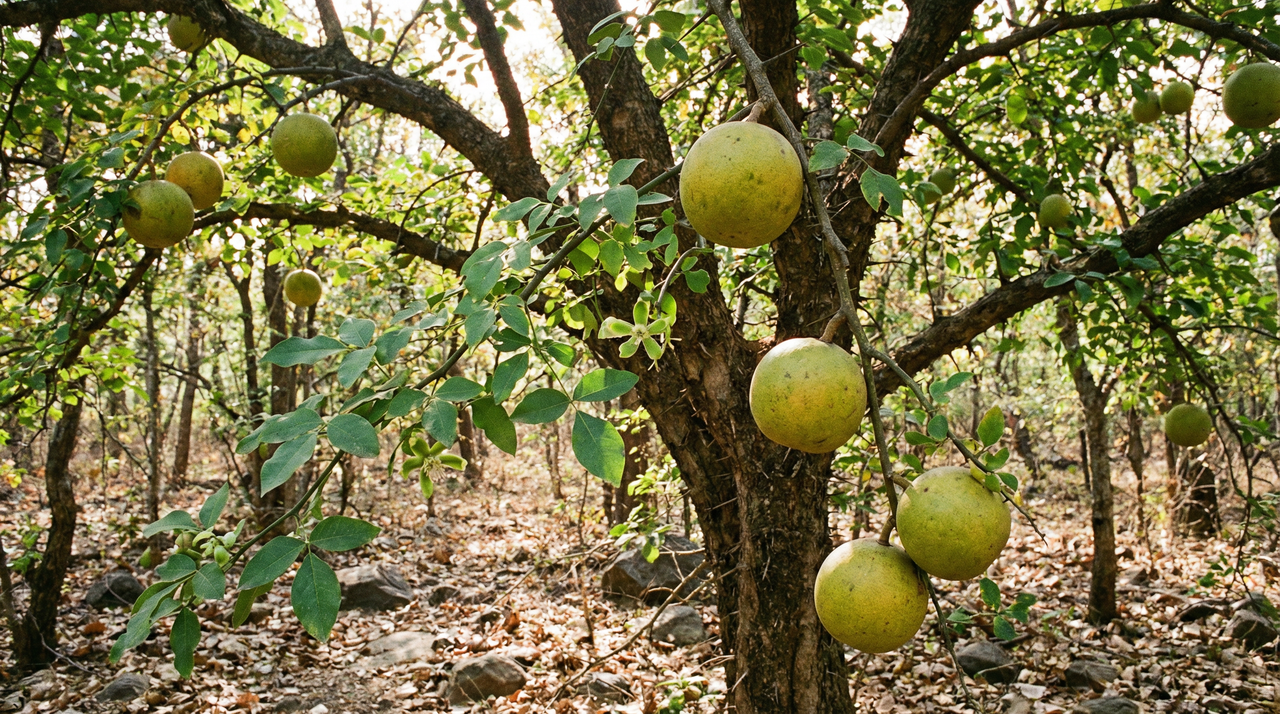
The bael fruit sits in your hand like a small cannonball. Woody, grey-green, completely indifferent to being squeezed. The first time I cracked one open at a market in Tamil Nadu, I genuinely wondered if I'd been handed something ornamental by mistake, the kind of thing you'd wire into a wreath and forget about. Then the smell hit me: floral, resinous, somewhere between ripe pineapple and something almost medicinal that I couldn't name. The pulp inside was sticky and amber-gold, and the flavor was unlike anything I'd tasted in twenty years of eating my way through food forests on four continents. Sweet, tart, faintly bitter, with a musky depth that lingered. I stood there at that stall making an embarrassing amount of noise about a fruit most people in my professional world had never heard of.
Here's what gets me about Bael (Aegle marmelos): it's been cultivated for over 2,000 years, woven into Hindu sacred practice, documented extensively in Ayurvedic medicine, and planted across South and Southeast Asia for longer than most of our familiar fruit trees have existed as named species.[1] And yet most permaculture designers in the English-speaking world treat it as a curiosity rather than a cornerstone. That, I'd argue, is a gap worth closing.
Origin and History of Bael (Aegle marmelos)
Botanical Background and Native Habitat
Bael, known botanically as Aegle marmelos, is a deciduous to semi-evergreen tree in the Rutaceae family, native to the tropical and subtropical regions of the Indian subcontinent, including India, Bangladesh, Nepal, and Sri Lanka, as well as parts of Southeast Asia, where it colonizes dry deciduous forests, scrublands, savannas, and riverbanks.[2][3][4] It thrives from sea level up to about 1,200 meters, though it shows its best vigor below 1,000 meters in well-drained sandy loam soils with hot summers, moderate rainfall, and a distinct dry season.[2][4] Through centuries of trade and human movement, it has naturalized across Thailand, Indonesia, Pakistan, and Iran, though it holds no recognized cultivated or naturalized status in the continental United States.[5][6]
What I find genuinely compelling about this tree, from a permaculture-design perspective, is its patience. Bael lives 30 to 50 years in cultivation, with some specimens exceeding 70 years, and it follows a polycarpic reproductive strategy, fruiting season after season once it matures.[7][8] Seed-grown trees typically take 5 to 7 years to first fruit, so when I recommend bael for a subtropical food forest, I frame it as a long-term structural investment rather than a quick-return crop. It rewards the gardener who thinks in decades. For foragers and new growers, the good news is that bael doesn't have toxic look-alikes to worry about, though it can occasionally be confused with other Rutaceae relatives like Feronia limonia.[9]
Visual Characteristics of the Bael Tree
At maturity, bael reaches 6 to 15 meters tall with a canopy spread of 5 to 7 meters, anchored by a taproot that drives 2 to 3 meters into the soil, with lateral fibrous roots fanning out from the base.[10][11] The bark is grayish-brown, rough, and corky, peeling in patches as the tree ages, and the branches often carry sharp axillary spines.[10] The leaves are the quickest identification clue: alternate and trifoliate, with ovate to lanceolate leaflets 5 to 10 centimeters long, leathery, glossy on top, and dotted with translucent oil glands when held to the light.[10][12] Anyone familiar with citrus will recognize that family signature immediately. Those pellucid glands are a Rutaceae hallmark, and I often use that comparison when introducing bael to students who know their lemon tree but haven't yet met its South Asian cousin.
Come flowering season, the tree produces small, fragrant, white to pale yellow-green blooms about 2.5 centimeters across, clustered in short terminal cymes of three to seven flowers each.[13] The fruit that follows is the real spectacle: a globose to ovoid berry-like structure ranging from 5 to 20 centimeters in diameter, enclosed in a hard, woody rind that turns yellowish-brown at maturity, housing sweet, aromatic, mucilaginous pulp packed with 50 to 150 seeds.[13][14] That shell is almost comically tough the first time you encounter it; it's part of why the tree earned its common name "wood apple," a nod to timber so dense it resists pests and water damage alike.[15]
Traditional, Cultural, and Religious Significance
Bael has been cultivated across South Asia for more than 2,000 years, with its earliest appearances in Vedic texts including the Rigveda (c. 1500–1200 BCE) and the Ramayana.[16][17] Ayurvedic classics, the Charaka Samhita and Sushruta Samhita, classified it as a "Rasayani" rejuvenative herb, an acknowledgment of its broad therapeutic scope that still shapes how practitioners use it today.[16] In Hinduism, the trifoliate leaves are sacred to Lord Shiva, their three leaflets symbolizing either the three gunas (sattva, rajas, tamas) or his trident, and they're offered during puja rituals and festivals like Maha Shivaratri to this day.[18][19] The tree also carries Buddhist significance as "Bel-Vriksha," connected to the Buddha's enlightenment story and woven through Jataka tales.[20] I find that understanding a plant's religious and cultural weight deepens the experience of growing it. There's something meaningful about tending a tree that has been offered to a deity for three millennia.
Traditional medicinal applications span the entire tree and stretch across the subcontinent. Unripe fruit and leaves have long been used for digestive ailments including diarrhea, dysentery, and constipation; bark for skin conditions; roots for liver and heart complaints; and seeds as a snakebite treatment in parts of Nepal.[21][22] Sri Lankan healers documented its use for ulcers and diabetes, while practitioners in Bangladesh employed it as a cardiac tonic and cholera remedy.[23] The breadth of those regional uses tells you something important about the plant's resilience and utility. Globally, bael is classified as Least Concern on the IUCN Red List,[24] but I've seen increased commercial pressure on wild stands in South Asia firsthand, and because of that I always prioritize ethically sourced or home-grown stock in my designs.
Fun Facts and Historical Ecological Role
Beyond the pharmacy and the temple, bael's timber tells its own quiet story. The timber itself is extremely dense and hard, offering serious resistance to pests and water damage that made it historically valuable for local construction.[15][25] Historically, Vedic land-use practices actively promoted bael groves along riverbanks specifically for soil conservation, a tradition still visible in some heritage forests of northern India today.[26] That deep taproot system we noted earlier isn't just good for the individual tree; it anchors stream banks and builds soil structure over the long arc of the tree's life. For me, that's the through-line of bael's story: a plant revered by priests, prescribed by physicians, and quietly holding riverbanks together while everyone else was looking at the fruit.
Bael Varieties and Cultivars
As a baseline, Aegle marmelos is a slow-growing deciduous tree that thrives in subtropical to tropical conditions: temperatures of 20–40 °C, annual rainfall between 500 and 1500 mm, and well-drained loamy soils with a pH tolerance from 5 to 8.[7][27] In the U.S., that translates to USDA zones 10–11, with some success in zone 9b where frost protection is available, particularly in Central and South Florida.[28][29] That climate envelope is narrow enough that cultivar choice matters quite a bit, and India's agricultural research institutions have spent decades making those choices easier.
Notable Bael Cultivars
The Indian breeding program has produced a handful of standout selections that address bael's two biggest shortcomings for serious growers: painfully long juvenility and inconsistent yields. The NB-series releases from ICAR are the ones I'd look for first.[27] NB-5 produces enormous fruits, sometimes reaching 5 kg, with high pulp content and excellent keeping quality. NB-9 is the workhorse: it sets 200–250 fruits per tree and shows resistance to fruit fly, which is the pest that causes the most headaches in conventional production.[30][31] NB-4 is the adaptable one, with solid drought tolerance that makes it worth considering for drier subtropical gardens. Other named selections include NB-16, Katha, Ciama, and CISH B-2, though these are less commonly available outside India.[32]
I've grown both seedling and grafted bael trees side by side, and the difference in time to first flower is genuinely startling. My grafted NB-5 and NB-9 trees were blooming by year three. The seedlings were still doing absolutely nothing in year six. That gap is the single most practical reason to spend more on nursery stock. Beyond timing, elite cultivars also concentrate more vitamin C, riboflavin, dietary fiber, and the bioactive compound marmelosin compared to unselected trees,[7][32] so you're not just shortening the wait; you're getting a nutritionally denser fruit at the end of it. I use NB-9 in my food-forest guilds specifically because its fruit-fly resistance means fewer neem oil applications compared to unselected trees, which fits much better into a low-intervention design.
Where to Buy Bael Plants and Seeds
Fresh bael fruit is nearly impossible to find in the U.S. outside of a few Indian and Asian grocery stores in Florida and California, and even that supply is inconsistent. USDA APHIS regulates imports to prevent pest and disease introduction, and a phytosanitary certificate or import permit is typically required for fresh fruit.[33] That regulatory reality is exactly why so many people end up growing their own. For live plants, specialty tropical-fruit nurseries in Florida are your most reliable domestic source; young plants typically run $25–60, and seed packets of 10–20 seeds sell for $5–15.[29] I prefer sourcing locally when I can, partly to avoid shipping stress on young trees and partly because a Florida nursery that's already growing bael understands the local conditions.
If you're importing seed directly from India, look for certified stock from ICAR-affiliated centers, particularly those in Tamil Nadu or Uttar Pradesh, and always ask for phytosanitary paperwork upfront.[34] Bael isn't listed as noxious or prohibited by USDA, but California maintains additional intrastate restrictions, so verify current requirements before you order.[35][36] The paperwork is genuinely manageable if you're working with a reputable supplier who handles phytosanitary certificates regularly. Searching "tropical fruit nurseries Florida" will surface current vendors, since availability shifts year to year. Whatever you find, prioritize grafted material over seed if first harvest timeline matters to you at all.
Bael Tree Propagation and Planting Guide
Every grower starting with bael faces the same fundamental choice upfront: grow from seed and wait 5-7 years for fruit, or invest in a grafted plant and cut that timeline down to 3-5 years.[37][38] That's not a small gap when you're designing a food forest meant to serve you for decades. Seeds are cheaper and biologically fascinating, but vegetative methods preserve the cultivar traits that actually matter at harvest. Understanding both routes tells you which one fits your situation.
Understanding Bael Seed Biology and Germination
The first thing I learned about bael seeds the hard way: you cannot let them dry out. They're recalcitrant, meaning they can't tolerate desiccation below about 20-30% moisture content, and chilling below 10°C damages them further.[39][40] I once set aside a batch for a few months thinking I'd sow them in spring. Germination dropped below 50% and I got a handful of weak seedlings. Now I sow them fresh, or store them short-term in moist vermiculite at room temperature where they'll hold viability around 85% for up to three months.[41] The mucilaginous pulp clinging to the seeds makes extraction messy, but that same stickiness is part of how the species evolved for animal dispersal, so at least you know you're working with something that still has its biology intact.
The seeds themselves are flat, oblong-oval, 8-15 mm long, light brown, and encased in a hard lignified coat 0.5-1 mm thick.[42][43] That coat is what causes physical dormancy, and skipping scarification is the most common germination mistake I see. Light sandpaper or a file across one side, or a 24-hour soak in 80-85°C water, breaks that barrier and pushes germination rates from mediocre to 85-90%.[43][44] Sow into moist, well-drained sandy loam at 25-30°C and expect sprouts in 15-30 days.[41] Early monsoon (May-June) is the sweet spot for outdoor sowing in climates with a wet season.[37]
Bael is also polyembryonic, a trait shared across the Rutaceae family, meaning one seed can produce multiple seedlings from distinct embryos.[45][46] The nucellar embryos are genetically identical to the mother plant, while the zygotic one carries recombined genetics. For permaculture breeders or restoration work, that zygotic variability is exactly what you want. For a home grower who wants predictable fruit size and flavor, it's a reason to go vegetative instead, since cross-pollination makes seed-grown bael highly variable.[47][48]
Vegetative Propagation Methods for Reliable Results
For anyone who wants to reproduce a specific cultivar (the NB-series selections mentioned in the varieties section, for instance), grafting is the most dependable route. Cleft, veneer, or T-budding onto 1-2 year old Aegle marmelos or Feronia limonia rootstocks achieves 60-90% success at 25-30°C with 70-85% humidity, with the monsoon window of June-August giving the best numbers.[38][49] I prefer cleft grafting precisely because that monsoon humidity does so much of the work. In my growing area, if I try grafting outside that window the ambient humidity drops and success rates fall noticeably, regardless of how carefully I wrap the union.
Semi-hardwood cuttings are a lower-tech option. Take 10-15 cm sections, treat the base with IBA at 5000-10000 ppm, stick them into a sand-and-soil mix under mist during the rainy season, and expect 40-60% rooting in 4-6 weeks.[50] The success ceiling is lower than grafting, but it requires less skill. For small-scale propagation without a graft-capable nursery, cuttings can get you there. Air layering during monsoon with IBA-treated etiolated shoots is another solid middle-ground method, with roots developing in 6-8 weeks and success rates matching grafting at 60-90%.[51] Tissue culture exists for institutional production, yielding 4-6 shoots per explant with strong acclimatization survival, but that's well outside what most home growers will pursue.[52]
Soil, Site Selection, and Planting Technique
Bael is forgiving about soil fertility but completely unforgiving about drainage. It thrives in well-drained loamy or sandy loam at pH 6.0-7.5, and while it tolerates a surprisingly wide range down to pH 5.0 and up to 8.5, it will rot in waterlogged ground without negotiation.[53][54] I've seen this mirror what happens with certain citrus in heavy clay: symptoms show up fast and don't reverse easily once root rot sets in. If you see interveinal chlorosis on young leaves, I check drainage and soil pH first before assuming a nutrient deficiency; in my experience at planting stage, that's almost always the culprit.
The deep taproot bael develops (requiring at least 91-122 cm of workable soil depth) means compacted or shallow soils will stunt the tree long-term, regardless of what you do above ground.[55][56] I learned this early: I planted a seedling in a spot where I hadn't broken through a compaction layer, and it sat there looking alive but growing barely at all for two seasons. Dig your planting pit at 1m x 1m x 1m, incorporate 20-25 kg of well-rotted compost or manure, and you've set the tree up correctly from day one.[37] For container growing in zone 9 margins, a mix of 40% loam, 30% sand or perlite, 20% compost, and 10% vermicompost gives you drainage without sacrificing fertility.[57] Plant in full sun; young trees tolerate some partial shade, but fruiting trees need 6-8 hours of direct light daily.[58]
Spacing, Timeline, and Establishment Tips
Space trees 6-8 meters apart in orchard settings, which works out to roughly 100-150 trees per hectare.[59] In a forest garden context, that spacing is actually generous enough to support a meaningful understory guild without crowding the taproot zone. Transplant seedlings or grafted plants when they're 30-45 cm tall (typically 6-12 months after propagation), timed to the onset of the monsoon season between June and August.[60] That same monsoon window that makes grafting and sowing successful is exactly when establishment goes smoothest, and the connection is worth taking seriously: the whole propagation-to-planting pipeline is built around this seasonal rhythm.
The method you choose at the start shapes not just when you eat fruit but how the tree fits your design. Seed-grown trees carry genetic diversity that matters for long-term landscape resilience and for anyone interested in selecting new cultivars from their local conditions. Grafted stock gets you to harvest faster with known traits. Both paths lead to the same long-lived, deep-rooted tree; the choice is really about what you're optimizing for.
Bael Care Guide: Growing Aegle marmelos Successfully
I've grown bael from both seed and grafted stock, and the single biggest mistake I see new growers make is treating it like a generic tropical fruit tree. Bael has a very particular internal calendar, and once you tune into it, almost every care decision — when to water heavily, when to feed, when to prune — becomes obvious rather than guesswork.
Seasonal Rhythm and Phenology
Bael is deciduous in the dry season, dropping its leaves and entering dormancy during the hottest months before resuming growth with the monsoon rains, with peak vegetative growth happening post-monsoon.[61][62] Flowering runs from March through June, triggered by temperature and rainfall cues, with peak blooming in late spring.[63][61] Fruit then develops through the monsoon months (July through September), ripening slowly across November to February — a full six to eight months from pollination to maturity.[63][64] I watch for that first post-dormancy flush of new leaves as my cue to start ramping up irrigation and apply the first feed of the season. Everything downstream follows from that moment.
Watering Needs for Young and Mature Trees
Young trees in their first two to three years need consistent moisture: deep irrigation two to three times per week, roughly 20 to 30 liters per tree weekly, keeping the root zone moist to 30 to 45 cm but never waterlogged.[65][66] Mature trees are a different story. Once established, they prefer infrequent, deep soaks every 15 to 20 days during dry spells, with volumes of 500 to 1,000 liters per tree when you do water — a serious drink that pushes moisture deep and encourages the taproot to follow.[66][67] I prefer drip irrigation at the root zone for both ages; it keeps foliage dry and mimics a slow, deep tropical downpour without the fungal pressure that overhead sprinklers create.[68] During flowering and the fruit-swell phase, bump irrigation back up regardless of tree age — water stress at those stages shows up as leaf scorch, curling, premature drop, and fruit crack, and you can't recover a lost crop.[69]
Fertilization and Nutrient Management
Bael is a moderate feeder that performs best in a pH range of 6.5 to 7.5, though it tolerates anything from 5.0 to 8.0.[70] For young trees, I apply 200 to 500 g of balanced NPK annually, split across two or three applications, starting at half-strength in the first year.[71] Mature trees need 1 to 2 kg NPK per year plus 10 to 50 kg of compost or farmyard manure worked into the root zone.[27] Timing follows the phenology from above: pre-monsoon in June for vegetative push, post-monsoon in September to support flowering and fruit set, and an optional December application during fruit development.[72] I've noticed visibly sweeter, crack-free fruit in seasons when I make that post-monsoon potassium application on time — the research backs it up, showing that K improves both sweetness and structural integrity of the rind.[70] In alkaline soils, watch zinc and boron carefully — foliar sprays often help when soil-applied micronutrients don't move well.[73] I use mid-shoot leaf color as my first field diagnostic: uniform yellowing of older leaves signals nitrogen deficiency, purplish leaves with poor flowering point to phosphorus, and marginal scorch usually means potassium is short before I even pull out a soil test kit.[74] One caution: overdo nitrogen and you'll push lush vegetative growth at the expense of fruit, sometimes triggering biennial bearing.[70]
Sunlight, Heat Tolerance, and Management
In my hot, humid summers, bael shrugs off 40°C days better than most tropicals once the roots are established. Its optimal growth range runs from 20 to 45°C, with documented tolerance up to 48°C backed by thick leaves, deep roots, and elevated antioxidant enzymes that kick in under combined heat and drought stress.[75][76] Seedlings are far more vulnerable. Above 40 to 42°C, photosynthesis slows, growth stalls, and flowering can be delayed; you'll see wilting, leaf scorch, and occasional fruit drop as the tree tries to conserve resources.[77] For young plants in peak summer heat, a 50 to 70 percent shade cloth, 5 to 10 cm of organic mulch over the root zone, and deep watering of 20 to 40 liters weekly will carry them through without lasting damage.[78] Full sun is non-negotiable for flowering and fruit production, so shade cloth comes off once the worst heat passes.
Frost Tolerance and Cold Protection
Bael is firmly tropical. Chilling injury can begin as low as 10 to 15°C, visible damage starts below 5°C, and temperatures at or below freezing can kill the tree outright.[79][80] It's rated USDA zones 10 through 12, with possible survival in 9b only with serious protection; the RHS classifies it H1c.[80][81] Young trees are particularly exposed, progressing from leaf browning and defoliation to branch dieback and bark splitting as temperatures fall.[82] In marginal winters, I bring potted specimens onto a bright, unheated porch once nights drop below 10°C rather than gambling on a surprise freeze — I've done it successfully for several seasons and the trees come through looking fine. For in-ground trees in borderline climates, heavy mulch over the root zone, windbreaks on the cold side, and frost cloth draped over the canopy on hard-freeze nights give a meaningful buffer.[54] A mature, well-established tree can sometimes rebound from light frost through a dormancy-like response, but I wouldn't count on that with anything less than three or four years in the ground.
Pruning, Maintenance, and Growth-Stage Care
Annual pruning happens right after harvest, during the dry season. I time my cuts immediately after fruit drop so the tree redirects energy into new growth once the rains come — it's a direct application of that phenology from the top of this section. The goal is light thinning: remove dead, diseased, or crossing branches, and open the canopy by roughly 10 to 30 percent for light penetration and airflow.[83] Never prune heavily during flowering or fruit swell; I learned that the hard way early on and it noticeably reduced the following season's set. For young trees, train to a central leader or open vase and stake against wind while the taproot anchors itself.[84]
Fruit thinning matters more than most people expect with bael. At marble size, about four to six weeks after fruit set, thin to 20 to 50 fruits per tree depending on age and vigor.[59] The remaining fruits size up significantly, quality improves, and you avoid the limb-breakage risk that comes with a full heavy crop on young wood. A 3 to 4 inch layer of organic mulch kept back from the trunk conserves moisture, suppresses weeds, and moderates soil temperature through both hot and cold extremes.[37] Think of care as three overlapping phases: the first three years are about structure, consistent water, and light feeding; years three to five emphasize nitrogen and canopy development; and from year four onward, the focus shifts toward potassium for fruit quality, pollinator habitat, and that annual thinning routine that keeps the tree productive rather than exhausting itself.[79] When the first heavy crop finally comes in — and with grafted stock that's often around year three to four — the system feels earned in a way few other trees deliver.
Harvesting and Storing Bael Fruit
Bael is genuinely an investment crop, and I say that from experience growing both seed-grown and grafted trees. After watching a seed-grown tree take nearly six years to produce its first fruit while a grafted specimen in the same garden fruited in under three, I now recommend grafted stock to every new grower without hesitation. While seed-grown trees test your patience, mature production requires a long-term mindset either way.[85][86] That extra patience is a lot to ask of a gardener who just wants to taste the fruit.
When to Harvest Bael: Timeline, Maturity Indicators, and Seasonal Cues
Once a tree is bearing, each fruit takes 150-180 days from bloom to physiological maturity, with the main harvest season running March through July and peak picking concentrated in May and June.[85][37] That's a six-to-eight month wait from flower to harvest, which is part of what gives this tree its unhurried, ancient quality.
Reading maturity without cutting the fruit open is the skill worth developing. The cue I trust most is fragrance. When a bael fruit starts emitting a noticeable sweet-aromatic scent from a few feet away, it's getting close. Color shift from green to yellowish-green, reaching roughly 75-80% of that transition, confirms what the nose suspects. The fruit should feel hard with a distinctly woody shell, measure somewhere in the 5-10 cm range, and come free from the stem with only gentle pressure.[87][88] I learned the fragrance rule the hard way after splitting open a fruit that looked ripe but wasn't. The astringency of unripe bael pulp is something you don't forget quickly.
Many growers pick fruits while still green but physiologically mature to avoid splitting, pest damage, and unpredictable tree-ripening.[89] Consistent irrigation every 10-15 days during dry periods also helps prevent cracking and encourages more uniform maturity across the canopy.[90] Exact timing will always shift a bit depending on your cultivar and local climate, so those sensory cues matter more than calendar dates.
How to Harvest Bael and Handle the Fruit After Picking
Harvest manually. Hand-picking works for reachable fruits; for higher branches, a long pole with a hook or small basket does the job cleanly. What you want to avoid is shaking the branches, which bruises fruit and stresses the tree.[85][91] The latex sap that can seep from stems is also worth being cautious around; I've found it irritating on skin after extended harvesting sessions, so gloves are worth wearing.
If you're also harvesting leaves for culinary or medicinal use, do that selectively during the monsoon months of June through September, taking only young shoots with clean, sharp tools and leaving enough foliage that the tree stays vigorous.[85]
After picking, wipe or rinse fruits with water and a mild sanitizing solution, then let them air-dry. I cure mine on shaded racks for 2-3 days at around 70-80°F before doing anything else with them.[92][89] That short window reliably reduces skin blemishes and lets the ripening process begin in a controlled way before juicing or making dried bael fruit slices.
Bael Yield, Flavor, and Post-Harvest Storage
A well-established bael tree produces 100-200 fruits annually, with peak yields typically arriving around years 8-10.[85] The payoff for all that waiting is a pulp unlike anything else in the tropical fruit world: fibrous, mucilaginous, with a complex sweet-sour-bitter-aromatic character that lingers with a sweet-bitter aftertaste. Think citrus crossed with musk and a faint medicinal note.[7][93] The texture reminds me of overripe persimmon or the gooier side of a black fig; it's not unpleasant, but eating it straight off a spoon takes some getting used to. Most people find it far more approachable as a juice, sherbet, or dried bael fruit tea.
Cultivar matters here. 'Bangla' types run noticeably sweeter; 'Lagan' types carry more bitterness.[94] Unripe fruit is a completely different story, intensely astringent from high tannins and not something you'd want to eat fresh, though it does have traditional medicinal applications that the preparation section covers in detail.
On storage: fresh bael fruit at room temperature lasts about 1-4 weeks untreated.[95] Hot-water dipping or waxing extends that to 4-6 weeks, and cold storage at 8-12°C with 85-90% relative humidity pushes shelf life to 8-12 weeks.[95][96] The critical thing to know is that bael is chilling-sensitive and should not go below 8°C. I've refrigerated fruits too cold and the flavor goes flat in a way that no amount of ripening recovers. That 8-12°C window isn't approximate; it's the real boundary. For longer-term preservation, drying the pulp into dried bael fruit or slices for tea is the approach that sidesteps storage limitations entirely.
Bael Fruit Preparation, Culinary Uses, and Non-Food Applications
Culinary Uses and Flavor Profile of Bael
Once you crack open a ripe bael fruit, the smell alone tells you something special is happening. The pulp carries a genuinely unusual flavor: sweet, aromatic, with that layered pineapple-strawberry-citrus quality and a musky depth underneath that lingers.[97][98] Like papaya, the unripe fruit is almost punishingly astringent, so patience is non-negotiable. I've learned to wait until the fruit sounds hollow when tapped, because that flavor transformation is complete only when the fruit is genuinely ripe.
The ripe pulp is the part you eat. Everything else (roots, bark, seeds) belongs off the table entirely; bitter and potentially toxic compounds in those parts make them unsuitable for casual culinary use, and even the seeds, occasionally processed for oil, should be reserved strictly for traditional medicinal applications under proper guidance.[99] With the pulp, though, you have real options: scoop it raw, blend it with water and a touch of sugar for bael sharbat, cook it into jams, or fold it into chutneys and preserves.[100] The bael juice recipe couldn't be simpler: pulp, water, sweetener to taste, a squeeze of lime if you want brightness. That bael fruit juice is what most people encounter first, and it's genuinely refreshing.
Young leaves work in the kitchen too, though they need a good boil to knock back the bitterness before going into curries or being used as a cooked green.[101][99] For preservation, drying the pulp at temperatures below 40°C keeps the vitamin C and fiber intact for up to six months in a sealed container; the flavor shifts toward something caramelized and concentrated, which works beautifully in bael fruit recipes calling for a powdered form.[93]
Traditional Medicinal Preparations from Bael
Ayurvedic practice draws on almost every part of this tree. Leaf decoctions address gastrointestinal issues; fruit pulp preparations target antioxidant and antidiabetic effects; bark decoctions are used for fever and urinary complaints; root preparations appear in formulas for jaundice.[102][22] The classical texts are specific about preparation: boil decoctions for 10 to 15 minutes to reduce mucilage, dry pulp in shade below 50°C, ferment the fruit into beverages over two to three days.[103] In my work with subtropical medicinal plants, I always start at the lower end of the recommended ranges and pay attention to how things respond. Traditional dosages for adults suggest fruit powder at three to six grams daily, decoctions at 50 to 100 ml twice daily, and fresh bael fruit juice at 10 to 30 ml twice daily.[104][105] Clinical validation for most of these applications is still emerging, so treat these figures as traditional reference points rather than prescriptions, and check the health benefits section for current research context and contraindications.
Non-Food Uses: Timber, Dye, and Cultural Significance
Beyond the kitchen and medicine cabinet, bael gives a lot. The wood is durable enough for furniture, tool handles, and construction, and it's also used for fuelwood and charcoal. The bark yields a yellow dye that traditional textile work in South Asia has relied on for generations.[7] Leaves and bark carry their own medicinal load too: alkaloids like aegeline contribute antidiabetic effects, while the essential oils have documented antimicrobial activity useful in wound-healing applications.[17] The fruit shows up in Thai fermented drinks and Burmese chutneys as well, extending its culinary reach across Southeast Asia.[106] When I shade-dry bael leaves at room temperature for three to five days, then seal them in airtight jars, the essential oils stay fragrant for six months or more. It's the same approach I use for other aromatic subtropical herbs, and it works remarkably well.
Bael Health Benefits and Medicinal Uses
In Ayurvedic medicine, bael has been a cornerstone digestive remedy and diabetes aid for over two thousand years. Texts like the Charaka Samhita describe it as a remedy for dysentery, diarrhea, peptic ulcers, and chronic indigestion, and that reputation has held up long enough for modern pharmacologists to start asking why.[107][108] The traditional uses of bael are not just folklore waiting to be disproven; a growing body of preclinical research is actually tracing the mechanisms behind them, even if robust human clinical trials remain limited.
Traditional and Pharmacological Profile of Bael
The strongest documented actions come from in vitro and animal studies. Aegle marmelos extracts inhibit the NF-κB signaling pathway, which suppresses pro-inflammatory genes including COX-2 and iNOS and reduces cytokines like TNF-α and IL-6.[109][110][111] That's a meaningful pathway, and it maps directly onto why traditional practitioners have used bael leaves and fruit for inflammatory gut conditions for centuries. The antioxidant profile is equally solid, with DPPH radical scavenging, ferric reducing activity, and superoxide dismutase-like effects all documented, and total phenolic content in leaves measuring 150 to 200 mg GAE per gram.[112][113][114] Antimicrobial activity against E. coli, Staphylococcus aureus, and Candida albicans adds another layer, with seed extracts producing inhibition zones of 12 to 20 mm in lab settings.[112][115]
The pharmacological range is genuinely impressive. Research has documented analgesic, antispasmodic, hepatoprotective (ALT/AST reduction of around 60% in models), antidiabetic (via α-amylase and DPP-4 inhibition), adaptogenic, and sedative properties, plus early anticancer signals showing 70 to 80% inhibition of HT-29 colon cancer cells at 100 μg/mL through apoptosis induction.[109][116][117][118] Most of this data comes from cell lines and animal models, not human trials. Clinical evidence is limited but includes promising results for diarrhea and blood sugar management specifically.[119][120] Traditional healers identified real effects; science is now mapping the machinery behind them.
Key Phytochemicals in Bael
Bael contains over 100 identified secondary metabolites, spanning alkaloids, flavonoids, terpenoids, phenolic acids, glycosides, saponins, tannins, steroids, and coumarins.[11][121] Every part of the tree contributes something distinct. The leaves are richest in alkaloids like aegeline and marmelosin, flavonoids including rutin and quercetin, coumarins, and limonene-heavy essential oils that can constitute up to 55% of the volatile fraction.[11][122] The bark concentrates tannins, furocoumarins like psoralen and imperatorin, and gallic acid. Fruit pulp carries marmelosin at up to 1.6% alongside phenolic acids, flavonoids, and the coumarin aurapten. Roots hold furoquinoline alkaloids; flowers yield beta-caryophyllene and alpha-pinene.[11][123]
The standout bioactives each have a job. Quercetin suppresses inflammation via COX-2 inhibition. Aegeline acts on beta-adrenergic receptors, supporting the antidiabetic and anti-obesity research. Gallic acid is a potent free-radical scavenger. Marmelosin contributes antibacterial activity.[124][125] One thing I notice in my own landscape work is that bael grown in hot, dry microclimates tends to produce fruit that smells more intensely aromatic and slightly more astringent than specimens in wetter sites. That's consistent with research showing phytochemical profiles shift significantly with geographic origin, season, and soil type, with higher coumarin levels observed in arid Indian and Sri Lankan plants.[11] Worth keeping in mind when sourcing material.
Nutritional Value of Bael Fruit
The edible part is the pulp, typically eaten ripe and raw, stirred into sherbets, or dried into powder, with a standard serving sitting around 100 to 150 grams.[126] Per 100 g, ripe pulp delivers roughly 137 kcal, 31.5 g carbohydrates, up to 8.8 g dietary fiber, 560 to 600 mg potassium, 85 mg calcium, up to 13 mg iron, and anywhere from 8 to 60 mg vitamin C depending on variety and growing conditions.[127][126][128][102] To put that potassium figure in context for gardeners more familiar with tropical fruits: it's higher than an equivalent serving of ripe papaya, which I grow a lot of in Central Florida. The iron range is similarly striking compared to guava.
Ripeness dramatically changes what you get. Unripe bael is higher in astringent tannins and alkaloids; ripe fruit shifts toward sugars and bioavailable antioxidants.[129][130] Cooking improves digestibility but reduces vitamin C; drying concentrates the sugars while potentially degrading heat-sensitive vitamins.[130] The pulp's flavonoids, including vitexin, isovitexin, and rutin, reinforce the anti-inflammatory work described in the pharmacology section making the ripe fruit much more than just a sweet component.[129]
Safety Considerations for Bael
For most adults, bael is safe when eaten as food or used in traditional Ayurvedic preparations at customary doses. Animal toxicity studies place the LD50 above 2000 mg/kg, and allergen potential is generally low outside those with sensitivity to other Rutaceae plants like citrus.[131][132] That said, "moderation" is doing some real work in that sentence.
Excessive doses can produce the opposite of what you're after, with gastrointestinal side effects including constipation, diarrhea, and stomach upset from the combined laxative and tannin load.[11][133] Unripe fruit, seeds, and root extracts carry concentrations of marmelosin, coumarins, and tannins that at high doses have been associated with mild hepatotoxicity and hypotension in animal models.[134] The furanocoumarins in the leaves, specifically psoralen, bergapten, and xanthotoxin, can cause phototoxic burns on skin exposed to sunlight after contact, so handling fresh leaves and then going out in the sun is not a good combination.[135][136] Rare contact dermatitis from leaves and sap has also been reported.[137]
Two contraindications I always flag with clients clearly: if you're pregnant, avoid bael medicinally. The evidence on uterotonic and emmenagogue effects in animal studies is too consistent to ignore.[138][139] If you're managing blood sugar with medication, talk to your doctor first, because bael's hypoglycemic action via α-amylase and DPP-4 inhibition is real and the combination risk of hypoglycemia matters.[140] For those using Ayurvedic preparations, typical dosing runs 3 to 6 g fruit pulp powder daily or 5 to 10 ml leaf decoction; research trials generally use 1 to 3 g dried extract.[141] One last practical note: bael fruit is frequently confused with Limonia acidissima, commonly called wood apple, which is a distinct species with a different safety and flavor profile, so make sure you know what you're actually harvesting.[142]
Bael Pests and Diseases
One of the things I genuinely appreciate about growing bael in a subtropical food forest is how little time I spend worrying about it compared to almost everything else in the Rutaceae family on my property. While my lemon drops struggle with sooty mould every wet season, the bael nearby stays remarkably clean. That resilience isn't accidental. The same alkaloids, flavonoids, coumarins, and essential oils that give bael its medicinal reputation also function as a built-in defense system, with demonstrated antifungal activity against pathogens including Colletotrichum gloeosporioides.[143][144] Bacterial and viral diseases are rarely even reported on this species.[145][146]
Natural Disease Resistance and Major Fungal Threats
Bael is broadly considered more disease-resistant than mango or citrus, showing low susceptibility to downy mildew and viral pathogens.[143] Fungal diseases are the real category to watch, and the list is longer than you might expect: Alternaria leaf spot, anthracnose, powdery mildew, Cercospora leaf spots, shell soft rot, stalk-end rot, sooty mould, and root and wilt diseases from Phytophthora spp. or Fusarium oxysporum have all been documented.[147][148] In practice, the ones most likely to cause real trouble are leaf spots during monsoon humidity and anthracnose as fruit develops; severe defoliation from leaf spot pathogens can reduce yields by up to 30%.[149]
Environment drives almost everything here. Humidity above 80% is the trigger for most fungal outbreaks, and waterlogged soil is the fastest route to root rot and wilt.[145][150] In my own plantings, trees growing in well-drained spots with good canopy airflow rarely show more than minor leaf spotting even through prolonged wet spells. The management priority is cultural: proper spacing, post-harvest pruning to open the canopy, removing infected leaf litter promptly, and avoiding overhead irrigation when humidity is already high.[148][27] Copper-based fungicides or carbendazim are options when cultural measures aren't enough, but I treat them as a last resort rather than a calendar spray. Indian breeding programs have released cultivars like NB-5 and NB-9 with reported anthracnose resistance, and CISH Bael-1 shows tolerance to leaf spot; honestly though, these are difficult to source outside South Asia, so most of us are working with the straight species and relying on good siting.[151][152]
Pest Resistance and Integrated Management
Physical and chemical defenses work together on the pest front too. The thorny stems deter browsers, the leaf pubescence slows small soft-bodied insects, and alkaloids like marmesin and skimmianine function as antifeedants against a range of herbivores.[122][153] The tree may also recruit predatory ants through extrafloral nectaries, which is exactly why I avoid broad-spectrum sprays; disrupting those natural allies does more damage than most pest populations would. Overall pest pressure is moderate to high resistance compared to mango or citrus, though that's largely based on field observation rather than replicated trial data, and a tree under drought stress loses much of that advantage.[154]
The pests that do show up reliably are fruit flies (particularly Bactrocera dorsalis, which causes premature fruit drop), aphids, scale insects, leaf webbers, stem borers, and the bael fruit borer.[155][59] The hard fruit shell offers some natural protection against borers, but fruit flies are the one pest I monitor closely every season. I start bagging individual fruit clusters as soon as they reach golf-ball size; it's time-consuming, but it's the most reliable non-chemical control available, especially paired with pheromone traps to track fly pressure. Neem oil handles aphid and scale flare-ups well enough that I've never needed anything stronger. No cultivars are currently documented for enhanced pest resistance outside the disease-resistant selections above, so IPM is the practical path for everyone.[156] A vigorously growing, well-sited bael tree in a diverse polyculture needs surprisingly little intervention; the plant does most of the work itself.
Bael in Permaculture Design
Before you fall in love with bael's medicinal value or its striking fruit, you need to ask one honest question: does your climate actually qualify? The answer shapes every other decision that follows.
Climate and Hardiness Zones for Growing Bael
Bael is reliably hardy in USDA zones 10 and 11, and technically possible in zones 9 through 12 with appropriate management.[157][158][13] The tree's thermal sweet spot is 24 to 35 °C during the day with nights staying above 15 °C; it can technically survive a broader range of roughly 5 to 48 °C, but young plants are genuinely vulnerable below 10 °C and a hard freeze will do serious damage.[54][159] I've seen a young bael seedling in zone 9b defoliate completely after a single night that barely touched 4 °C, while a ten-year-old tree in the same neighborhood shrugged off the same event and pushed new growth within weeks. That gap between seedling sensitivity and established-tree resilience is real and worth planning around.
On the rainfall side, bael is genuinely flexible, adapted to anywhere from 300 to 2500 mm annually with best performance around 500 to 1500 mm.[7][160] Once established it behaves a lot like mature citrus in my experience: it wants a deep soak, then a proper dry-down before the next irrigation. Humidity above 70% starts pushing fungal problems, so sites with good airflow and free-draining soil are non-negotiable. Practical U.S. candidates include southern Florida from zone 9b through 11, coastal southern California, Hawaii, and well-protected pockets of southern Texas; it also handles coastal salinity and performs below 600 m elevation without complaint.[161][162] Zone 9b Florida is the marginal edge where frost cloth, thermal mass, and south-facing walls become part of the design conversation, especially for the first three to four years.
Forest Layer and Guild Placement
Bael reaches 6 to 12 m at maturity, occasionally taller, with a dense rounded crown that fits comfortably in the canopy or upper canopy layer of a subtropical food forest.[54][163] In its native dry deciduous forests it dominates the canopy, but in a denser guild planting it can hold a mid-story position while young, which buys you flexibility in sequencing. That moderate early shade tolerance is genuinely useful because you can nurse it through its first few years beneath a light nurse canopy, then open up the site as it establishes. Full sun is non-negotiable for serious fruiting; shade at maturity will cost you yields.[54][164]
Plan spacing at 6 to 8 m in agroforestry or food-forest systems, and go in with realistic expectations about time.[165] First fruit comes at five to seven years from a grafted tree, with peak production not really arriving until fifteen to twenty years. That long lead time actually suits a layered food forest well: your ground-covers, shrubs, and nitrogen-fixers can do their establishment work while bael climbs slowly toward canopy dominance. I think of it the way I think about planting mango or jackfruit: you're designing for the landscape you want in a decade, not next season.
Ecosystem Functions and Services
The ecological resume here is genuinely generous. Bael's flowers supply nectar and pollen to bees, butterflies, and a range of other insects through the bloom period, and the fruit feeds monkeys, deer, squirrels, and birds, making the tree a meaningful wildlife corridor element wherever it's planted.[11][166] Below ground, the deep root system stabilizes soil, controls erosion, and conserves moisture in semi-arid habitats, while the leaf litter breaks down quickly and returns nitrogen, phosphorus, and organic matter to the topsoil.[11][167] Some sources suggest those same deep roots mine potassium and calcium and make them available through leaf fall, placing bael in the dynamic accumulator category; I test my soil before and after mulching with the leaf litter and have seen modest potassium gains, but the evidence is limited and site-specific, so I'd treat that claim as a hypothesis worth watching rather than a design certainty.
On the pest management side, bael's leaves and essential oils have documented insect-repellent activity, which gives it a quiet supporting role in polycultures planted near more pest-sensitive crops.[168] The tree also forms associations with arbuscular mycorrhizal fungi, particularly Glomus species, improving phosphorus uptake and drought resilience in poorer soils, which matters a lot if you're establishing into degraded ground.[169] Beyond ecology, it yields biomass for mulch, fodder, fuelwood, and green manure while pulling secondary duties as shade, windbreak, and ornamental specimen.[170] It's not invasive in Florida or Hawaii and integrates cleanly into food forests without escaping cultivation.[171]
Pollination Needs and Strategies
Here is the one design detail that genuinely changes how you plant bael: it's self-incompatible. The flowers are hermaphroditic and protandrous, which sounds convenient, but cross-pollination between genetically distinct individuals is required to set fruit.[172] I learned this the hard way with a single-clone planting that bloomed beautifully for two seasons and produced almost nothing. Always plan for at least two unrelated trees, and label your seedlings so you can verify they're distinct genetics. The primary pollinators are honeybees (both Apis cerana and Apis mellifera) and native solitary bees, with butterflies, moths, beetles, and flies filling in supporting roles; the fragrant greenish-white flowers peak in nectar production during morning hours and bloom mainly from March through June.[173][174]
Natural fruit set runs low, typically 5 to 10%, but can reach 30 to 50% under hand-pollination with temperatures in the 25 to 35 °C range, nights above 15 °C, and at least six to eight hours of full sun.[11] In years when pollinator pressure is low, a few minutes with a small brush during receptive afternoon hours can genuinely double what the tree sets on its own. Practically speaking, planting nectar-rich companions to attract bees through the flowering window and avoiding broad-spectrum pesticides during bloom are the two easiest levers available to most growers.[59] Given that the tree is already committing five to seven years before it produces at all, protecting that pollination window deserves real attention.
The Tree That Taught Me to Think in Decades
I planted my first bael from a grafted cutting and still waited four years for a single fruit. When it finally came, I cracked it open over a bowl in my driveway, scooped out that sticky, amber pulp, and thought: yes, exactly that. Some plants just ask you to slow down to their rhythm, and once you do, you start seeing your whole food forest differently.
Sources 174
- CABI Compendium: Aegle marmelos ↩
- Aegle marmelos - Kew Science Plants of the World Online ↩
- Aegle marmelos Fact Sheet - Kew Gardens ↩
- Aegle marmelos - Missouri Botanical Garden Plant Finder ↩
- Aegle marmelos (L.) Corrêa ↩
- USDA PLANTS Database Search for Aegle marmelos ↩
- Aegle marmelos - Wikipedia ↩
- Bael Fruit (Aegle marmelos) - Cultivation and Uses ↩
- Identification of Tropical Fruit Trees - FAO ↩
- Aegle marmelos - Missouri Botanical Garden ↩
- Aegle marmelos - Botanical Description ↩
- Flora of China - Aegle marmelos ↩
- Bael Tree - Kew Royal Botanic Gardens ↩
- Botanical Description of Aegle marmelos - ResearchGate ↩
- Aegle marmelos - Plant Detail - Rhs.org ↩
- Aegle marmelos (L.) Corrêa: The History and Uses in Traditional Medicine ↩
- Aegle marmelos (L.) Corrêa (Rutaceae): A Review on Ethnopharmacology, Phytochemistry and Pharmacology ↩
- Plants in Indian Mythology and Religion ↩
- Aegle marmelos: Sacred Plant in Indian Culture ↩
- The Sacred Fig and Sister Figs: Theological Significance of Ayurvedic Elements in Early Buddhism ↩
- Ethnobotanical Study of Medicinal Plants Used by Chepang People in Nepal ↩
- Traditional Uses of Aegle marmelos in Indian Systems of Medicine ↩
- Medicinal Plants of Bangladesh: Traditional Uses and Phytochemistry ↩
- Aegle marmelos ↩
- Wood Apple (Aegle marmelos) - Agriculture Extension ↩
- Historical Land Use Practices in Vedic India ↩
- Varieties and Propagation of Bael Tree ↩
- Aegle marmelos - USDA PLANTS Database ↩
- Bael Fruit (Aegle marmelos) Growing Guide ↩
- Bael Fruit Cultivation in India ↩
- Disease Management in Bael Orchards ↩
- National Bureau of Plant Genetic Resources - Bael Cultivars ↩
- Importation of Fruits and Vegetables ↩
- ICAR Extension Bulletin on Bael Cultivation ↩
- PLANTS Database - Aegle marmelos ↩
- Plant Quarantine Manual ↩
- Cultivation of Bael (Aegle marmelos) ↩
- Propagation of Bael (Aegle marmelos) through Grafting ↩
- Seed storage behaviour of selected tropical forest tree species ↩
- Storage behaviour of bael (Aegle marmelos) seeds ↩
- Germination and storage studies in bael (Aegle marmelos Correa.) ↩
- The Botany of Aegle marmelos: Seed Morphology and Anatomy ↩
- Propagation of Aegle marmelos (L.) Correa: An Important Medicinal Tree ↩
- Seed Morphology and Germination in Aegle marmelos ↩
- Embryology and Polyembryony in Rutaceae ↩
- Studies on seed germination and polyembryony in Aegle marmelos ↩
- Propagation Techniques for Bael (Aegle marmelos) ↩
- Genetic Variability in Seedlings of Aegle marmelos ↩
- Standardization of Grafting in Aegle marmelos ↩
- Studies on Vegetative Propagation of Bael (Aegle marmelos Correa.) ↩
- Propagation of Bael (Aegle marmelos) by Air Layering ↩
- Micropropagation of Bael: A Medicinal Plant ↩
- Bael Fruit Cultivation Guide - ICAR ↩
- Aegle marmelos - Useful Tropical Plants ↩
- Aegle marmelos - Kew Plants of the World Online ↩
- Wood Apple (Aegle marmelos) - Purdue University Horticulture ↩
- Aegle marmelos Cultivation Guide - ICAR ↩
- Aegle marmelos - Missouri Botanical Garden Plant Finder ↩
- Bael Fruit: Production Technology ↩
- Aegle marmelos Cultivation Guide ↩
- Bael Tree Phenology - Forest Research Institute India ↩
- Phenological Studies of Bael (Aegle marmelos) in India ↩
- Phenology of Aegle marmelos ↩
- Kew Science - Plants of the World Online: Aegle marmelos ↩
- Aegle marmelos Cultivation Guide ↩
- Aegle marmelos Cultivation Guide ↩
- Irrigation Requirements for Fruit Trees in Tropics ↩
- Tropical Fruit Trees Watering Requirements ↩
- Bael (Aegle marmelos) - Cultivation Practices ↩
- Nutrient Management in Bael (Aegle marmelos) - ICAR ↩
- Aegle marmelos Cultivation Guide ↩
- Fertilization Practices for Bael Orchards - TNAU AgriTech Portal ↩
- Micronutrients in Bael ↩
- Nutrient Deficiency Symptoms in Bael (Aegle marmelos) ↩
- Heat Stress Tolerance in Aegle marmelos Seedlings ↩
- Physiological Adaptations of Aegle marmelos to Temperature Stress ↩
- Cultivation of Bael (Aegle marmelos) in Arid Regions ↩
- Heat Stress Management in Fruit Crops ↩
- Cultivation of Bael Tree ↩
- Royal Horticultural Society - Aegle marmelos ↩
- USDA Plants Database - Aegle marmelos ↩
- Bael Fruit Tree Care - Gardening Know How ↩
- Pruning and Training of Bael (Aegle marmelos) Trees ↩
- Pruning Techniques for Tropical Fruit Trees ↩
- Bael Fruit Cultivation Practices ↩
- Aegle marmelos ↩
- Maturity Indices for Harvesting Bael Fruits ↩
- Bael (Aegle marmelos) Production Technology ↩
- Postharvest Technology of Bael Fruit ↩
- Irrigation Management in Bael Cultivation ↩
- Harvesting and Post-Harvest Management of Wood Apple ↩
- Post-Harvest Management of Fruits and Vegetables ↩
- Bael Fruit: Nutritional and Phytochemical Composition ↩
- Cultivars and Varieties of Bael Fruit in India ↩
- Post-Harvest Management of Bael Fruit ↩
- Storage Studies on Aegle marmelos Fruits ↩
- Aegle marmelos: A Review on Phytochemistry and Pharmacological Profile ↩
- Flavor Compounds in Tropical Fruits Including Bael ↩
- Plants for a Future Database ↩
- Missouri Botanical Garden Plant Finder ↩
- Kew Gardens Plants of the World Online ↩
- Aegle marmelos (L.) Corrêa - An Updated Pharmacognostical Review ↩
- Traditional Preparation of Bael Products in India ↩
- Ayurvedic Uses of Aegle Marmelos ↩
- Bael (Aegle marmelos) in Ayurveda: Uses, Dosage, and Side Effects ↩
- Flora of China ↩
- Clinical Studies on Aegle marmelos in Traditional Medicine ↩
- Aegle marmelos (L.) Correa (Rutaceae): A Review on Ethnopharmacology, Phytochemistry and Pharmacology ↩
- Pharmacological Profile of Aegle marmelos: A Review ↩
- Anti-inflammatory and Analgesic Activities of Aegle marmelos ↩
- Aegle marmelos inhibits NF-κB and pro-inflammatory cytokines in vitro ↩
- Antioxidant and Antimicrobial Properties of Bael Fruit ↩
- Anti-inflammatory and antioxidant activities of Aegle marmelos leaves ↩
- Antioxidant and free radical scavenging activity of Aegle marmelos ↩
- Antimicrobial Activity of Aegle marmelos ↩
- Antidiabetic Potential of Aegle marmelos: α-Amylase and DPP-4 Inhibition ↩
- Hepatoprotective Effect of Aegle marmelos Against Paracetamol-Induced Liver Injury in Rats ↩
- Anticancer Potential of Aegle marmelos: An In Vitro Study ↩
- Clinical Trial of Bael (Aegle marmelos) in Diarrhea ↩
- Antidiabetic Potential of Aegle marmelos: A Review ↩
- A Review on Phytochemistry and Pharmacology of Aegle Marmelos ↩
- Phytochemical and Pharmacological Profile of Leaves of Aegle marmelos Linn. ↩
- Phytochemical Analysis of Aegle marmelos Fruit Pulp ↩
- Therapeutic Potential of Aegle marmelos: A Review ↩
- Aegle marmelos: A Review on Phytochemistry and Pharmacological Profile ↩
- Nutritional and Therapeutic Potential of Bael Fruit ↩
- Nutritional and Phytochemical Composition of Aegle marmelos Fruit ↩
- Nutritional and phytochemical composition of bael fruit ↩
- Antioxidant Activity of Aegle marmelos Leaves and Seeds ↩
- Goyal, S. et al. (2020) Nutritional and therapeutic profile of Aegle marmelos: A review ↩
- Aegle marmelos (L.) Correa (Rutaceae): A Review on Ethnopharmacology, Phytochemistry and Pharmacology ↩
- Toxicity Studies of Aegle marmelos ↩
- Safety and Toxicity of Bael (Aegle marmelos) ↩
- Acute Toxicity Study of Aegle marmelos in Rats ↩
- Furanocoumarins in the leaves of Aegle marmelos ↩
- Phytochemical investigation of the fruits of Aegle marmelos ↩
- Allergic contact dermatitis due to the wood apple tree (Aegle marmelos L. Corréa) ↩
- Safety evaluation of aqueous extracts from Aegle marmelos on reproduction of female rats ↩
- Bael: Uses, Side Effects, Precautions - WebMD ↩
- Antidiabetic activity of Aegle marmelos and its relationship with its antioxidant properties ↩
- Safety and Efficacy of Ayurvedic Medicines ↩
- Limonia acidissima - Kew Science ↩
- Phytochemical and Pharmacological Profile of Aegle marmelos: A Review ↩
- Antifungal Activity of Leaf Extracts of Aegle marmelos Against Plant Pathogens ↩
- Kew Gardens Plant Profile: Aegle marmelos ↩
- Phytochemical Resistance in Aegle marmelos ↩
- New leaf spot disease of bael caused by Alternaria alternata from Uttar Pradesh ↩
- Diseases of Bael (Aegle marmelos) and Their Management ↩
- Diseases and Pests of Bael (Aegle marmelos) ↩
- Aegle marmelos Cultivation and Uses ↩
- Disease Management in Bael ↩
- Cultivars of Bael for Disease Resistance ↩
- PMC Article: Pharmacological Advances in Aegle marmelos ↩
- USDA PLANTS Database - Aegle marmelos ↩
- Insect Pests of Bael and Management ↩
- Kew Science - Plants of the World Online: Aegle marmelos ↩
- Missouri Botanical Garden - Aegle marmelos ↩
- USDA Plants Database - Aegle marmelos ↩
- Bael Fruit Cultivation - ICAR ↩
- Aegle marmelos - Kew Science ↩
- Florida IFAS Extension - Tropical Fruit Cultivation ↩
- California Rare Fruit Growers - Bael ↩
- Bael Tree Ecology - Forest Research Institute India ↩
- Agroforestry Practices for Bael (Aegle marmelos) - ICAR ↩
- Cultivation of Bael in Indian Agroforestry ↩
- Biodiversity and Wildlife Interactions with Bael Tree ↩
- Ecological Role of Bael Tree in Indian Forests ↩
- Insect Repellent Activity of Aegle marmelos Leaves - Journal of Medicinal Plants Research ↩
- Mycorrhizal Associations in Aegle marmelos ↩
- Bael Tree in Permaculture - Permaculture Research Institute ↩
- Invasive Species in Florida - Florida Exotic Pest Plant Council ↩
- Pollination Biology of Aegle marmelos Corr. (Rutaceae) ↩
- Insect Pollinators of Bael in India - Journal of Entomology and Zoology Studies ↩
- Pollination Biology of Aegle marmelos ↩