Most people have never eaten a real banana. I don't mean that as a provocation; I mean it almost literally. The Cavendish sitting in your fruit bowl is a clonal copy of a clonal copy of a plant that can't reproduce on its own, selected for shelf life and shipping durability rather than flavor, and it replaced the Gros Michel cultivar only after a previous strain of Panama disease wiped that variety off commercial farms in the 1950s and 60s.[1] What we call "banana flavor" in candy, cereal, and kids' medicine is actually modeled on the Gros Michel, a fruit most living people have never tasted. We've been nostalgic for something we didn't know we lost.
I've grown bananas in subtropical Florida, in a dry inland garden with supplemental drip irrigation, and in containers that spent winters in a garage. Each situation taught me something different about what this plant actually is: not a tree, technically not even a shrub, but the world's largest herbaceous perennial, shooting up a pseudostem of tightly wrapped leaf bases that fruits once and dies back while its root system quietly sends up the next generation.[2] That biology changes everything about how you grow it, manage it, and think about it in a designed landscape. Once you understand the plant underneath the fruit, the banana stops being familiar.
Banana Origin and History
Botanical Background and Native Range
Long before the banana became the world's most-traded fruit, it was a rainforest edge plant threading its way through the humid lowlands of Malaysia, Indonesia, the Philippines, and southern China, occasionally climbing to elevations around 1,200 meters where temperatures stayed reliably above 18°C and rainfall never really paused.[3][4] That species, Musa acuminata, is the botanical banana: its scientific name is the foundation of nearly every cultivated banana on Earth. What made it special from the beginning was a growth strategy that feels almost architectural. Each pseudostem rises from an underground rhizome, fruits once, and dies, but the rhizome never stops sending up new suckers, so the clump persists and renews itself for 15 to 25 years in cultivation.[5][6] I've watched this in my own subtropical garden: the old stem goes down, and within weeks a sword sucker is already shouldering its way upward to replace it. It's a kind of biological relay race, and once you've seen it you understand immediately why early cultivators found this plant so compelling.
The domestication story really begins with a hybridization event. Musa acuminata carries the A genome, contributing sweetness and tender texture, while its relative Musa balbisiana, native to a broader arc from India through Myanmar, southern China, and Vietnam, contributed the B genome, adding hardiness and disease tolerance.[7][8] Natural hybrids between the two arose in New Guinea around 8,000 years ago, eventually producing the triploid AAA group that gave us Cavendish and the AAB and ABB groups that gave us plantains.[9] The meaning of Musa as a genus name is less certain, likely derived from Arabic or a Latinized version of a local name, but what the genus represents is clear enough: an entire food system that humans have shaped over millennia, starting right there in the island forests of Southeast Asia.
Visual Characteristics and Growth Habit
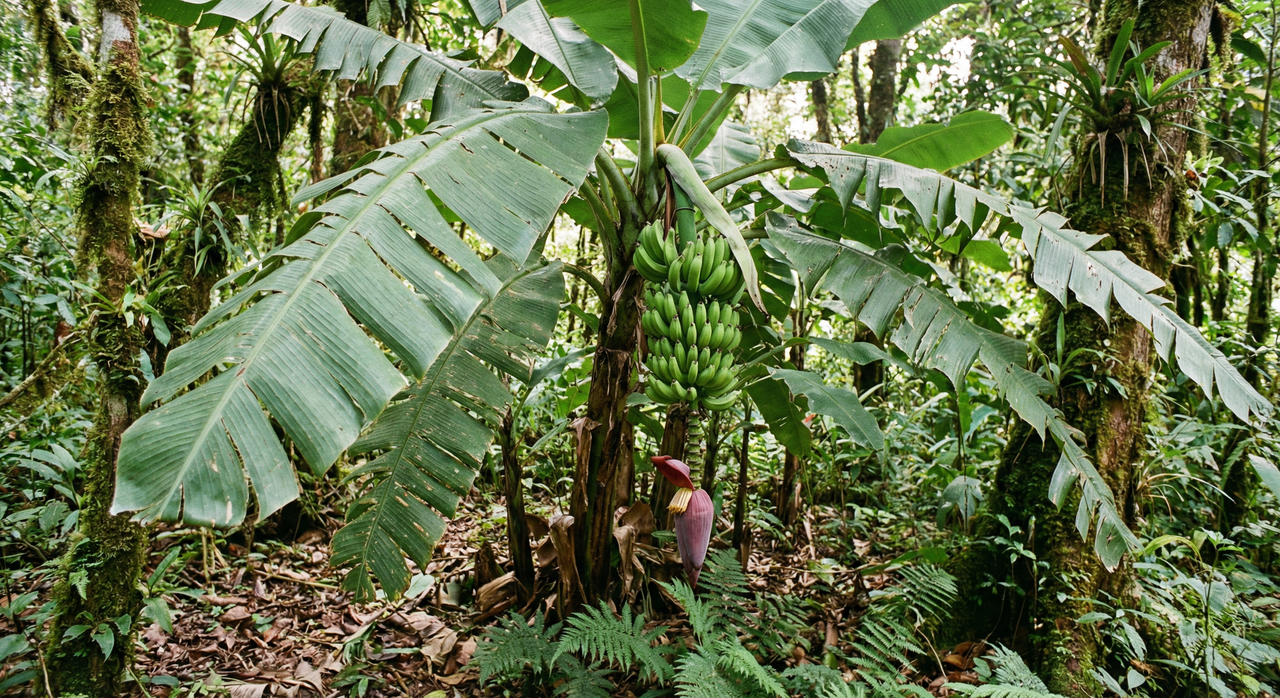
Musa acuminata holds the remarkable distinction of being the largest herbaceous flowering plant in the world, with pseudostems reaching up to 9 meters tall composed entirely of tightly overlapping leaf bases rather than any true wood.[10][11] That's the first thing I try to convey to anyone who's only ever seen bananas in a grocery store: what looks like a trunk is entirely illusory, a dense spiral of leaf sheaths 15 to 30 centimeters across at the base.[12][13] The leaves themselves are enormous, up to 3 meters long and waxy enough to shed a tropical downpour in seconds.
Then there's the inflorescence. A long pendulous stem emerges from the center of the pseudostem and unfurls dramatic reddish-purple bracts, each one lifting to reveal a cluster of tubular cream-to-yellow flowers underneath.[14][15] Female flowers at the proximal end develop into fruit; male flowers persist at the tip in what most people know as the banana heart. Wild fruits are small, seedy, and frankly unpleasant to eat, packed with large hard black seeds and little edible pulp. The cultivated parthenocarpic fruit we know is a world apart: large, seedless, with creamy pulp that only exists because humans selected for it over thousands of years of cultivation.[16] The root system that anchors all of this is fibrous and surprisingly shallow, extending only 30 to 60 centimeters deep with a horizontal spread of 3 to 6 meters.[17][18]
Traditional, Cultural, and Symbolic Uses
Archaeological evidence from Kuk Swamp in Papua New Guinea places banana cultivation at roughly 7,000 BCE, making it one of the earliest domesticated crops anywhere.[19][20] From there, Austronesian voyagers carried it across the Pacific and to Madagascar by around 2000 BCE; Arab traders brought it to Africa by the 5th to 7th centuries CE; Portuguese and Spanish explorers moved it into the Americas in the 15th and 16th centuries.[21] Every time it arrived somewhere new, it became culturally embedded with remarkable speed.
The banana's role has rarely been purely culinary. In Hindu tradition the plant is associated with prosperity and fertility, with leaves used as ceremonial plates and whole plants placed at wedding thresholds.[22] Across Polynesian, Buddhist, and West African traditions, the fruit appears in ritual offerings, festivals, and ceremonies tied to abundance and spiritual well-being.[23][24] I find this worth sitting with: this is a plant whose leaves, flowers, pseudostem fibers, and fruit have all been woven into human life across nearly every tropical culture on Earth. Leaves impart a subtle, faintly grassy flavor when food is steamed inside them, a detail that any cook who has made tamales or pandan chicken already knows intuitively. Traditional medicine systems from Ayurveda to African herbalism have used pseudostem juice, leaf poultices, and flower preparations for everything from wound healing to blood-sugar support.[25][26]
The modern picture is more complicated. Cavendish monocultures represent less than 1% of the genetic diversity present in wild Musa relatives, and Tropical Race 4 Panama disease is an active and spreading threat to that narrow genetic base.[27][28] In my own design work I deliberately source and grow multiple cultivars precisely because I've read the research on what happened to Gros Michel and I have no interest in repeating that mistake at the home-garden scale. The ancient partnership between Musa acuminata and the people who cultivated it is worth protecting, and that starts with seed banks, wild relative conservation, and growers willing to look beyond the single familiar yellow fruit.[29]
Key Facts and Insights
A few things about the banana tend to genuinely surprise people. The pseudostem reaching up to 9 meters with no wood in it at all is a structural engineering curiosity that plant physiologists still find interesting.[10][30] The cultivated fruits we eat are sterile triploid hybrids that set no seeds, reproduced entirely through clonal suckers, and every Cavendish in every supermarket on Earth traces back to vegetative propagation from a single clone.[11] Domestication of Musa acuminata began approximately 7,000 to 10,000 years ago in New Guinea and the Malay Archipelago, where wild genetic diversity remains highest to this day, and the Cavendish subgroup itself only emerged in the early 19th century, likely in Mauritius or the Seychelles, before becoming the face of global banana trade.[11][30][31]
Growing bananas at home makes the clonal biology visceral in a way no article can quite replicate. Once a pseudostem fruits, it's done, but the mat keeps going as long as you manage the suckers well. That's not a quirk; it's the entire ecological strategy of the plant, refined over millions of years in the Southeast Asian rainforest before humans ever got involved.
Banana Varieties: From Cavendish to Plantains
Genomic Groups and Notable Cultivars
Before you buy a single plant, it helps to understand why not all bananas are the same thing. The cultivated species are classified by how many chromosome sets come from Musa acuminata versus its wild relative Musa balbisiana. A Cavendish is AAA -- pure acuminata, sweet, seedless, bred for yield and shelf life. A plantain is usually AAB or ABB, meaning balbisiana has contributed one or two genome sets, bringing starch, drought tolerance, and that firm flesh that holds up in a pan.[32][33][34] That AAA group accounts for over 99% of global banana exports, produced across more than 10 million hectares worldwide, and Cavendish is its face -- the variety that stepped in after Gros Michel (also AAA) collapsed under Fusarium wilt pressure in the mid-20th century.[32][35]
For home growers, though, the catalog gets genuinely exciting. Within the Cavendish umbrella you have Grand Nain, Williams, and Dwarf Cavendish for dessert fruit. Step outside it and you find Lady Finger's delicate sweetness, the Blue Java (often sold as the ice cream banana) with its vanilla-custard reputation and cold tolerance down to around 27°F, and the FHIA hybrid lines that breeders developed specifically to address the disease vulnerabilities that haunt commercial Cavendish.[36][37] I've trialed a few of these in my own garden and FHIA-21 in particular stood out -- better leaf retention, stronger fruit set through hot humid summers, noticeably more vigor than the standard Cavendish pups I had growing alongside it. FHIA lines were specifically bred for resistance to black sigatoka, Fusarium wilt, and nematodes, and that investment shows.[37] For subtropical zones 9 through 11, the USDA's Subtropical Horticulture Research Station in Miami has been working on exactly these priorities, and cold-hardy options like 'Rajapuri', 'Orinoco', and Blue Java can tolerate brief dips into the upper 20s with protection.[38][39] I cover mine with row cover when temps threaten to drop that low, and so far so good.
Plantains deserve a category of their own. They represent 30 to 40% of African banana production and feed millions of people who depend on boiling, baking, or frying rather than peeling and eating fresh.[40][35] The balbisiana genome contribution is why they're starchy rather than sweet -- the same reason unlabeled pups can catch you off guard. I once inherited a mat of mystery plants from a neighbor, assumed dessert banana, and ended up with a cooking type. Not a problem, but it rearranged my dinner plans for the season.
Sourcing Banana Plants and Seeds in the US
If you're in the continental US, your best starting point is a domestic specialty nursery. Miami Fruit, Logee's, Ty Ty, Florida Green Thumb, Texas Tropicals, and the shop at Fairchild Tropical Botanic Garden all carry Musa acuminata cultivars regularly, with starter plants typically running $20 to $50, pups around $15 to $30, and larger specimens up to $60.[41][42][43] Inventory shifts with the season, so check current stock rather than counting on a specific cultivar being available year-round.
Named cultivars come true only through vegetative propagation -- pups or tissue culture -- since the triploid dessert types don't produce viable seed. Tissue-cultured plants are worth the slight premium if you want disease-free stock with a known cultivar label.[44] Wild-type seeds are available from tropical seed suppliers for $1 to $5 per seed, but germination requires sustained high humidity and patience, and you won't get a Cavendish or Blue Java out of the process.[45] For Musa balbisiana and plantain types, Palmco offers tissue-culture stock, and many of the same nurseries carry plantains alongside dessert types; seed packets of wild balbisiana run about $3 to $10 for 10 to 25 seeds.[46][47]
One thing I always tell people: buy from domestic nurseries that already hold proper USDA documentation, because the paperwork headache of importing banana material yourself is very real. Any plants or germplasm brought into the US from abroad requires USDA APHIS permits, phytosanitary certificates, and often post-entry quarantine, primarily to guard against Banana Bunchy Top Virus and other serious pathogens. California and Florida both have additional state restrictions on top of federal requirements.[48][49][50] Reputable domestic sources have already navigated all of that, and the plants will be healthier for it.
Banana Propagation and Planting Guide
Before you buy a plant, dig a hole, or order seeds online, there's one foundational fact about bananas worth getting straight: almost every edible cultivar you'd want to grow is a sterile triploid hybrid that produces no viable seed.[51][52][53] Vegetative propagation isn't just the preferred route; for most gardeners, it's the only practical one.
Propagation Methods for Musa acuminata
I've divided and replanted suckers from mature banana mats in my Central Florida garden more times than I can count, and the single biggest variable in how quickly those plants fruit is which type of sucker I select. Sword suckers, the ones with narrow, upright, blade-like leaves, are what you want. Choose one that's 30 to 60 cm tall, has three or four leaves, and has already developed its own roots, and you're looking at 80 to 95 percent establishment success under decent conditions.[51][53][54] Water suckers, the broad-leaved ones that look lush and tempting, pull energy from the mother plant without the same internal reserves, and in my experience they consistently delay productivity by months compared to a good sword sucker planted the same day.
For commercial growers or anyone who wants to start disease-free from scratch, tissue culture is the cleaner option. Meristem explants propagated on Murashige-Skoog medium yield planting material with success rates between 80 and 98 percent, and the plants arrive free of the soilborne pathogens that travel so readily on field-divided suckers.[55][51][56] Because Panama disease and Fusarium wilt hitch rides on infected corms so easily, I always recommend starting with certified tissue-cultured plants from a reputable nursery, or a sucker from a friend's garden whose history you actually know, never an unknown roadside clump.
Seed propagation is a different conversation entirely. Wild Musa acuminata seeds are recalcitrant, angular, and anywhere from 4 to 22 mm long; they need scarification, temperatures of 25 to 30 degrees Celsius, and high humidity just to achieve 20 to 50 percent germination over one to three months.[51][57][58] After I tried storing wild Musa seeds for a small breeding project, I quickly learned they behave nothing like tomato or pepper seed. The 20 to 40 percent moisture retention rule isn't optional if you want viable embryos the following spring.[32] Seed work is genuinely useful for breeders chasing disease resistance traits, but for a home gardener who wants fruit, it adds 18 to 24 months to the timeline compared to starting with a healthy sucker.[54][59]
Soil, Site Selection, and Planting Requirements
Banana roots reflect the plant's alluvial forest origins: shallow, fibrous, and extensive, they need soil that's fertile, well-drained, and deep enough to anchor a plant that can reach 8 meters. A loamy or sandy-loam profile with 3 to 5 percent organic matter, good aeration, and a minimum depth of 60 to 90 cm gives those roots room to do their job.[54][59] The ideal pH sits between 6.0 and 6.5, with the broader acceptable window running from 5.5 to 7.0.[4] Drop below 5.5 and you risk aluminum and manganese toxicity alongside phosphorus deficiency; push above 7.0 and iron, manganese, and zinc become unavailable, producing the interveinal chlorosis and stunted growth that look like a dozen different problems at once.[54][60] I've watched chlorosis appear within weeks when a client's soil pH drifted above 7.2; a light sulfur application and a compost top-dressing corrected it faster than any foliar spray.
That said, drainage almost always matters more than getting pH exactly right. Soil bulk density above 1.5 g/cm³, whether from heavy clay or compaction, creates the waterlogged conditions that invite root rot.[61][62] Generous organic amendments, compost or aged manure worked into the planting hole, improve structure, water retention, and potassium availability simultaneously. In sandy Florida soils I've found that 10 to 15 cm of organic mulch applied right after planting is the simplest single thing I can do to improve both moisture retention and long-term soil health.
For light, fruiting cultivars need 6 to 8 hours of direct sun. Four to six hours keeps the plant alive but produces leggy pseudostems, smaller leaves, and genuinely disappointing yields.[63][64] Newly transplanted suckers can scorch in direct midday sun, so a week or two of light afternoon shade during establishment is kinder than throwing them straight into full exposure.
Spacing, Technique, and Timeline to First Harvest
A banana mat eventually becomes a clump of pseudostems reaching anywhere from 2 to 8 meters tall, so the spacing you choose at planting sets the trajectory for airflow, sucker management, and disease pressure for years. Space plants 2 to 3 meters apart within rows and 3 to 4 meters between rows.[65][54] Crowding is one of the most consistent mistakes I see in home gardens; people plant at ornamental-shrub distances and then wonder why fungal issues keep returning. Wider spacing isn't just about root room, it's about the air circulation that keeps leaf surfaces drier.
Plant suckers so the corm base sits just at or slightly below the soil surface, firm the soil to eliminate air pockets, and water thoroughly. Label them if you're planting multiple varieties in the first season; young suckers look deceptively similar to each other and to surrounding vegetation before the pseudostem develops any real character. They establish much like canna rhizomes in terms of what they need at the start: warmth, consistent moisture, and well-drained soil. The main difference is how punishing waterlogged clay is to a banana compared to a canna.
Get all of this right with a vigorous sword sucker and you can expect first fruit in 9 to 15 months, sometimes as few as 8 to 10 months under ideal warmth and rainfall.[54][59] Start from wild seed instead and that timeline stretches to 18 to 24 months from germination, which is why the sucker route isn't just easier; it's genuinely faster by most of a year.
Banana Plant Care Guide
Every decision you make caring for a banana plant flows from one underlying reality: this is a fast-growing tropical herbaceous perennial from the humid rainforests of Southeast Asia, and it has the needs to match. Its individual pseudostems live only 9–18 months before dying after fruiting, but the clonal mat they belong to can keep producing for 15–25 years through a constant relay of suckers.[54] Understanding that cycle is the key to caring for the plant successfully. You're always tending two generations at once: feeding the stem that's fruiting right now and protecting the sucker that will replace it.
Sunlight Requirements for Bananas
Bananas need full sun, ideally 8–10 hours of direct light daily, with 10–12 hours producing the most vigorous growth and the heaviest bunches.[66][67] Photosynthesis scales up nearly linearly to around 1000 µmol photons per square meter per second, which means a plant in full Florida sun is running close to its productive ceiling.[68] In my own garden, the difference between plants getting 8 hours versus those tucked into partial shade is obvious by the time the bunch forms: more light, more fruit, full stop. Young transplants are the exception; giving them 20–30% shade while they establish reduces transplant shock. In climates with brutal afternoon heat, a 30–50% shade cloth can actually protect productivity by reducing heat stress and leaf scorch.[69]
Watering Needs and Irrigation for Banana Plants
Musa acuminata evolved in rainforests receiving over 2000 mm of annual rainfall at 80–90% humidity.[54][70] That heritage means water needs are high and consistent: 1–2 inches per week during active growth, rising to 2.5–4 inches per week at flowering and fruiting.[54] What surprises most new growers is that the roots are shallow, spreading just 12–18 inches deep and up to 6 feet laterally.[71] I water lightly but frequently, every 2–3 days in warm weather, rather than deep weekly soaks — the roots simply aren't positioned to chase water down. Check the top inch or two of soil: when it feels dry, water. Drainage matters just as much as supply. Overwatering produces yellowing leaves, mushy roots, and a foul odor from the base; underwatering shows up as marginal necrosis, older-leaf yellowing, and eventually pseudostem cracking.[72][73] Both conditions are readable if you know what to look for.
Feeding and Nutrient Management for Bananas
Bananas are among the hungriest plants you'll grow, and potassium is the nutrient that runs the whole show. A mature plant needs 200–400 grams of potassium per year, driving bunch size, pseudostem strength, fruit quality, and disease resistance.[74][54] Nitrogen supports the explosive leaf growth and is essential, but too much delays flowering. Phosphorus supports root development and fruit set, and secondary nutrients like calcium, magnesium, and boron matter more than most growers realize.[75][76] I learned the potassium lesson the hard way on my sandy Central Florida soil: older leaves developed orange-brown marginal spotting, and bunch development stalled. Switching to a high-K slow-release blend with a ratio around 8-3-9 or 15-5-30 corrected it within a couple of months. Feed every 2–4 weeks during the growing season when soil temperatures are above 65°F, and bump the potassium up during flowering and fruiting.[54][77] Soil pH of 6.0–6.5 keeps nutrients available and prevents antagonisms like excess potassium blocking magnesium uptake. Integrating compost and well-aged manure alongside synthetics can reduce your fertilizer inputs by 20–30% while improving soil biology. As for banana peels as fertilizer, they do contribute potassium and trace minerals as they decompose, and I add them to my compost or chop them into the mulch layer regularly, though they shouldn't replace a balanced fertilizer program.
Frost Tolerance and Cold Protection
Musa acuminata is a true tropical and makes no apologies for it. Growth slows below 57°F, chilling injury sets in below 50–59°F, and the foliage takes lethal damage at 28°F or below.[78][79] Frost symptoms appear within 24–48 hours: leaf blackening, wilting, and soft pseudostem tissue.[80] The good news is that the corm (rhizome) can survive brief exposure down to 20–28°F with proper protection, meaning the mat can recover even if the aboveground growth dies back. I've kept the same mat alive through three borderline winters by piling mulch 12–18 inches deep over the corm and wrapping the pseudostem in breathable fleece — not plastic, which traps moisture and causes rot.[81][82] Bananas are reliably hardy in USDA zones 9–11; zone 8 growers can succeed with heavy protection or container culture. Musa basjoo is a far hardier species that can push into zones 5–7 with mulch, if you're growing more for the tropical aesthetic than for fruit.
Heat Tolerance and Summer Stress Management
The optimal temperature window for banana is 77–86°F days and 68–77°F nights, rated for AHS Heat Zones 10–12.[36][83] Above 95°F the plant starts to struggle, and above 100–104°F you'll see real damage: scorched leaves, wilting, and bunch yield reductions of 20–50%.[84] The reproductive stage is particularly vulnerable to extreme heat. In my Central Florida summers, mulching 4–6 inches deep and irrigating in the morning makes a visible difference in how the plants hold up through July and August.[84][85] A 30–50% shade cloth during peak afternoon heat can drop the canopy temperature by 3–5°C. Windbreaks help too; bananas tolerate heat better when they're not also losing moisture to hot dry winds.
Pruning, Maintenance, and Sucker Management
Think of this as managing a colony, not a single plant. The goal is always to have one strong fruiting pseudostem, one or two developing sword suckers behind it, and nothing else competing for resources. I do a monthly walk-through of my mat and remove any excess suckers when they hit 3–4 feet tall, cutting them to ground level rather than pulling.[67][86] Sword suckers (narrow, pointed leaves) are the keepers; water suckers (broad, flat leaves from near the surface) are less vigorous and better removed. Keep 10–12 healthy leaves on the stem for productive photosynthesis, removing old, diseased, or wind-shredded ones to improve airflow.[87][88] Once all the female flower hands have formed, remove the male bud (the dangling purple bell at the end of the inflorescence) to redirect the plant's energy toward fattening the fruit. Heavy bunches on tall stems need propping; I use bamboo stakes once the pseudostem clears 5–6 feet. After harvest, cut the spent pseudostem to ground level or leave a 3–5 foot stub to encourage the next sucker along. Winds above 15–20 mph shred the large leaves badly, so a sheltered site or windbreak is worth planning from the start.[66] Mulch 2–6 inches deep across the mat retains moisture, suppresses weeds, and moderates soil temperature year-round.[66]
Seasonal Growth Rhythm and Care Calendar
Each pseudostem spends roughly 9–12 months in vegetative growth before flowering, then another 3–6 months fruiting, and then it's done.[54][89] In true tropical climates this cycle runs continuously year-round, peaking during the wet season. In subtropical gardens like mine, there's no hard dormancy, but below 60°F growth visibly slows and below 50°F it essentially stops. That seasonal pause is my cue to ease off: I reduce watering frequency, stop fertilizing entirely, and let the plant coast until soil temperatures climb back above 65°F in spring. The mat persists through those cool months even when it looks stalled. Once warm weather returns, the next sucker in line accelerates quickly. That long-term persistence of the rhizome — 15–25 years of productive mats from the same planting — is what makes this plant worth the substantial inputs it demands during the growing season.
Banana Harvesting: Timing, Technique, Yield, and Flavor
The hardest part of harvesting bananas at home is the waiting. From the moment that pendulous flower stalk unfurls, you're looking at 90-150 days before the bunch is ready to cut.[90][91] From a sucker in the ground, that's more like 9-15 months total under subtropical conditions.[54] I've learned to be patient, because cutting too early means starchy, flavorless fruit that never quite ripens right.
When to Harvest Bananas: Maturity Indicators and Timeline
The visual cues are what I actually rely on in the garden. The bunch stem should angle downward at roughly 90-120 degrees from vertical, the fingers should look plump and rounded with that squared-off Cavendish profile (around 20-25 cm), skin uniformly green, pulp still firm.[90][54][92] That dropping bunch angle is the signal I trust most. In Florida, harvest tends to cluster between May and October, though ratoon crops can follow every 6-9 months for several years from the same mat.[91]
Plantains are a different story entirely. I pick mine greener, at roughly 75-80% full size, somewhere in that 90-120 day window, while there's still plenty of angularity to the fingers.[93] I learned that lesson after trying to eat one straight off the plant like a dessert banana. Starchy and astringent in a way that wasn't pleasant. They're vegetables until heat transforms them.
How to Harvest and Handle Banana Bunches
Always cut in the early morning, before the heat climbs. A sharp knife or machete, a clean V-cut or careful slice, and old clothes you don't mind ruining.[54][94] Banana latex is no joke; it stains skin and fabric immediately and doesn't wash out easily. I always wear gloves for this job. Never cut in rain or peak midday heat, both of which increase fungal risk at the cut surface.
Post-harvest, I hang the whole bunch upside down in a cool, shaded spot with good airflow and let ethylene do its work over 2-4 weeks.[90] Hanging like mangoes or avocados, bananas are reliably climacteric, meaning you can separate individual hands to stagger ripening and avoid everything going soft at once. Store green fruit at 13-15°C with high humidity if you need to hold them, but never let them drop below 12°C.[95] I've seen refrigerated bananas turn brown and mealy within days from chilling injury. Counter or cool shade, not the fridge.
Banana Yields and Flavor Changes from Green to Ripe
A mature Cavendish bunch can weigh anywhere from 40-60 lb, with home garden and cooking types typically coming in lighter at 15-30 lb.[96][97] When that bunch comes down still green, the pulp is up to 80% starch, firm, and has a slightly powdery, astringent quality from tannins.[98] As ripening progresses, starch converts to soluble sugars (up to around 20% in Cavendish), texture drops from 20-50 N firmness down to under 5 N, and that iconic sweet banana aroma builds, driven largely by isoamyl acetate at roughly 25% of the volatile compounds.[99][100] The ripe Cavendish lands creamy and sweet with vanilla-tropical undertones and a mild malic acid brightness.[101] Wild types are typically more astringent with higher phenolics, and ornamental species like Musa basjoo produce small, seedy fruits that aren't worth eating raw.[102] For plantains, that sweetness only arrives after cooking, when starch caramelizes into something savory-rich and entirely worth the wait.[103]
Banana Preparation and Uses
Culinary Uses: From Sweet Dessert Bananas to Starchy Plantains
Most people only think about the fruit, but Musa acuminata is edible from corm to flower, with the fruit, pseudostem, blossoms, and corm all offering kitchen potential.[5][104] Most non-fruit parts need cooking or specific processing before they're palatable, and leaves are better as wrappers than as anything you'd chew. That said, the whole-plant potential is real, and understanding it changes how you look at a banana clump.
The ripe Cavendish is what most readers know: sweet, soft, aromatic, perfect for fresh eating or folding into an easy banana bread recipe. Plantains, by contrast, clock in at 20-40% starch when unripe and are genuinely inedible raw at that stage.[103][40] Heat is what unlocks them. Frying builds caramelized, nutty notes through Maillard reactions; baking produces toasty aromas; boiling keeps flavors mild and vegetal.[105][106] Cooking also breaks down resistant starches and tannins for better digestibility, something I've observed every time I've used very green fruit in a savory dish and skipped adequate cooking time. The result is unpleasant in a way that's completely avoidable.
Banana blossoms are worth exploring if your plant is producing. The technique matters: strip the tough outer bracts, remove the stigmas, and blanch them before cooking. The first time I cooked banana flowers without proper blanching, they were aggressively bitter. A second attempt with thorough blanching made them genuinely delicious in a stir-fry.[5] Southeast Asian and Indian cuisines have been doing this correctly for generations in salads, curries, and everything in between.
For home growers managing freshly harvested fruit, storage temperature matters more than most realize. Keep bananas at 13-15°C and avoid anything below 12.5°C, which causes chilling injury and blackening.[107][108] If you need to ripen green fruit faster, skip the commercial ethylene setup and just put them in a paper bag with an apple. The ethylene the apple releases does the job naturally, and it works reliably.
Medicinal and Traditional Preparations
Across South and Southeast Asia, West Africa, and the Caribbean, Musa species have a long ethnobotanical record as medicine. Decoctions, infusions, and poultices made from fruit, leaves, peels, flowers, and roots appear in traditional practice for digestive complaints, ulcers, wound healing, hypertension, and inflammation.[109][110] Studied examples include 100-300 g of fruit or equivalent extracts daily for internal use and 5-10% concentrations for topical application, but these figures come from preclinical and ethnobotanical literature, not clinical trials.[111][112] The breadth of traditional use across cultures is genuinely remarkable, but growers curious about these applications should consult a qualified practitioner rather than treating the ethnobotanical record as a dosing guide.
Non-Food Uses: Fiber, Fuel, Wrapping, and More
Once you've grown a banana clump through a full fruiting cycle, you're left with a spent pseudostem and a pile of material that doesn't need to become waste. Pseudostem fiber is genuinely strong, used commercially for textiles, rope, paper, and handicrafts, and the chopped material returns potassium-rich biomass to the soil as mulch or feeds a biogas system.[113][114] I've found that strips of pseudostem make surprisingly durable garden ties before they dry out, a small thing but satisfying when you're trying to close the loop on material coming out of the garden.
Leaves are harvestable after about 3-4 months of emergence and keep coming off mature pseudostems on a rolling basis.[113][115] I harvest mine every few months and have found that young leaves are flexible, intact, and genuinely useful as wrappers or impromptu plates for grilling without any prep beyond a quick wipe. Flowers and peels also yield natural dyes, which I'll admit I haven't personally tested, but the ethnobotanical record on that is solid across multiple cultures.[116] A mature clump produces enough seasonal material that zero-waste management stops feeling aspirational and starts feeling practical.
Banana Health Benefits and Medicinal Uses
Most people think of a banana as a convenient snack, maybe a potassium boost after a workout. But spend time with this plant the way I have, and you start to see it differently. Every part of it, fruit, peel, leaf, stem, flower, has a documented role in traditional healing systems, and the modern phytochemistry is starting to explain why.
Traditional and Modern Medicinal Applications of Banana
Across Ayurveda, African ethnobotany, and Asian folk medicine, Musa acuminata has been used for a striking breadth of conditions: digestive complaints, wounds, burns, urinary disorders, hypertension, fever, menstrual issues, and respiratory conditions.[117][118] The fruit itself was the go-to for diarrhea, dysentery, and ulcers; leaves and peels were applied as poultices for wounds, burns, and insect bites; stem juice addressed kidney and urinary problems; flower preparations targeted menstrual and respiratory disorders; and leaf decoctions served as diuretics and fever treatments.[117][119] That's not one plant doing one thing; that's an entire medicine cabinet growing in a single clump.
Preclinical research has since validated antioxidant, anti-inflammatory, antimicrobial, antidiabetic, antitumor, wound-healing, analgesic, sedative, and diuretic activity across various plant parts.[120][121] These findings line up beautifully with what traditional healers have observed for centuries. That said, I always remind people that most of this evidence is still from cell cultures and animal models; large, well-designed human clinical trials remain scarce, and systematic reviews keep calling for them.[122] I'll use a banana leaf poultice on a minor scrape without hesitation, drawing on that traditional record and my own experience, but I hold the clinical picture honestly: promising and still emerging.
Key Phytochemicals in Banana and Their Roles
The pharmacological activity of this plant rests on a dense library of secondary metabolites: phenolics, flavonoids, tannins, terpenoids, saponins, coumarins, alkaloids, dopamine, and carotenoids, distributed differently across plant parts.[122] The peels are particularly rich, carrying 15-20 mg/g of phenolics including catechins, epicatechins, quercetin, rutin, and proanthocyanidins. The ripe fruit pulp contributes carotenoids (beta-carotene around 300-500 µg/100g) along with flavonoids like luteolin and kaempferol. Leaves run high in phenolics and flavonoids with measurable antimicrobial action; flowers, stems, roots, and seeds add alkaloids, saponins, and terpenoids to the picture.[123][124]
What I find genuinely useful to know as a grower is that these concentrations aren't fixed. Stress, soil quality, ripeness stage, and cultivar all shift the numbers, sometimes dramatically. Immature fruit and wild types tend to run higher in phenolics, and environmental stress can push flavonoid and phenolic levels up by 40-60%.[125][126] I've noticed that peels from my garden plants, especially those grown in well-mineralized soil, dry noticeably more astringent and darker than peels from supermarket fruit; that's not imagination, it reflects real differences in phytochemical load.
Nutritional Profile of Banana
A medium banana (about 118 g) delivers roughly 89 kcal, which answers the ever-popular question of how many calories are in a banana, along with 22.84 g of carbohydrates, 2.6 g of fiber, 358 mg of potassium, 0.367 mg of vitamin B6, 8.7 mg of vitamin C, and 27 mg of magnesium.[127] Potassium and B6 are the standouts for everyday diet support, but the fiber story is where ripeness really matters.
Unripe bananas hold up to 80% of their carbohydrate content as resistant starch, which acts as a prebiotic in the gut. As the fruit ripens, that starch converts to simple sugars, and the glycemic index climbs from around 42 to as high as 62.[128][129] It's a bit like waiting for tomatoes to turn from green to red: the same transformation that changes flavor also completely changes how your body handles the carbohydrates. A green banana feeds your gut bacteria; a ripe one gives you quick energy. Growers have a real advantage here because we can harvest at exactly the ripeness stage that suits our needs.
If you're also growing plantains alongside dessert bananas (and I'd argue you should be), they offer even more potassium at 499 mg/100g, higher vitamin A, and more starch overall.[130] Cooking method matters too: boiling leaches some potassium and vitamin C, while baking preserves most nutrients.[131]
Safety Considerations for Banana Consumption and Use
The good news first: ripe banana fruit is reassuringly safe for both people and pets, with the edible pulp of cultivated varieties like Cavendish carrying minimal toxic compounds.[132][133] The non-fruit parts are a different story. Leaves, stems, roots, and sap contain calcium oxalate crystals, phenolics, tannins, saponins, and potentially low levels of cyanogenic glycosides that can cause oral irritation, gastrointestinal upset, or skin reactions if consumed raw or in large amounts.[134][135] I can speak to the oxalate issue from direct experience: banana sap on bare skin while pruning will cause a burning, itchy reaction within minutes. Gloves and prompt washing are non-negotiable in my garden.
Banana allergy is relatively uncommon in the general population, affecting about 1-2% of people, but if you or someone in your household has a latex allergy, that number jumps to as high as 50% due to cross-reactive proteins that trigger oral allergy syndrome.[136][137] I've had friends with latex allergies visit my garden and react to even handling the fruit; ripeness and cultivar can affect severity, so it's worth understanding your individual threshold. And if you're managing kidney disease or taking ACE inhibitors, ARBs, or potassium-sparing diuretics, the high potassium content warrants a conversation with your doctor before eating bananas freely.[138] Unripe fruit and plantains also carry higher tannins, lectins, and resistant starch that can cause real digestive discomfort raw; cooking or proper ripening takes care of that.[139] Properly identified and prepared, though, there are no widespread reports of serious poisoning from Musa species. Moderation, preparation, and knowing your plant parts are all it takes.
Banana Pests and Diseases
Cultivated bananas carry a structural vulnerability that no amount of good gardening fully erases: most of what we grow is a genetically uniform clonal population, and pathogens are very good at exploiting uniformity. That's not a reason to avoid growing bananas, but it is a reason to go in with clear eyes about what you're up against.
Major Diseases of Banana
The biggest threat to Musa acuminata, particularly Cavendish types, is Fusarium wilt caused by Fusarium oxysporum f. sp. cubense, with Tropical Race 4 (TR4) currently devastating commercial plantations worldwide.[140][141][142] The fungus lives in soil for decades, enters through roots, and there is no cure once a plant is infected. Wild subspecies and certain hybrids show meaningfully better resistance, which is why breeding programs matter so much here.
Black Sigatoka (Pseudocercospora fijiensis) is the other constant pressure, driving frequent fungicide applications on susceptible cultivars in commercial production.[143][144] I've watched it spread noticeably faster through crowded, poorly mulched plantings during Florida's humid summers. Well-spaced plants with good airflow and deep mulch retain far more leaf area, and that tracks with what the research shows: environmental conditions really do shift the outcome.[145] Musa balbisiana, with its higher antifungal compounds and tougher leaf traits, tolerates Black Sigatoka considerably better than our familiar dessert types.[146]
If you're in Florida, Banana Bunchy Top Virus (BBTV) deserves serious attention. It arrived in the state in 2012 and triggered quarantine zones that are still active.[147][148] It spreads through aphids and infected plant material, and most Musa acuminata cultivars have no real resistance to it. If you're in a quarantine zone, source only certified virus-free stock. I've seen the difference clean material makes in long-term plant health, and it's not subtle.
Rounding out the disease picture: bacterial wilts (Xanthomonas wilt and Moko disease), anthracnose, and Banana Streak Virus are all real concerns, with resistance complicated in BSV's case by endogenous viral sequences embedded in the banana genome itself.[149][150] For all of these, the strongest long-term answer is resistant cultivars. Hybrids like FHIA-01 (Goldfinger), FHIA-17, FHIA-18, and GCTCV-218, developed using wild germplasm including 'Calcutta-4' from Musa acuminata, show improved tolerance to TR4, Black Sigatoka, and other pathogens.[151][152] In my experience, the flavor trade-off with FHIA types is worth the built-in disease tolerance that lets you garden with far fewer sprays. Pair resistant varieties with good drainage, drip rather than overhead irrigation, strict sanitation around infected plant material, and tissue-cultured planting stock, and you've covered most of your bases.[153][154]
Common Pests of Banana
The banana weevil (Cosmopolites sordidus) is the insect pest I take most seriously. It bores into rhizomes and pseudostems, causes 30-50% yield losses in severe infestations, and it's easy to miss until damage is well underway.[155][156] After losing a few young plants early in my design work, I now inspect every sucker carefully before it goes in the ground and treat the planting area preventively with entomopathogenic nematodes. That mistake taught me more about weevil biology than any extension bulletin. Beyond weevils, aphids (Pentalonia nigronervosa) vector BBTV, thrips, leaf beetles, banana skipper, and spider mites all show up regularly, with spider mites on banana plants becoming especially problematic during hot, dry spells.[157]
Below ground, burrowing nematodes (Radopholus similis) and root-lesion nematodes (Pratylenchus spp.) destroy roots and destabilize plants, leading to toppling and reduced vigor. Cultivated varieties offer little inherent resistance without cultural or biological support.[58][158] This is one place where Musa balbisiana's tougher constitution shows clearly: its denser pseudostems, higher phenolic content, waxy cuticles, and secondary metabolites give it a durability that the more delicate dessert bananas simply don't have.[58][159] Those traits are exactly what breeders are working to capture in hybrid plantains and improved cultivars.
A solid IPM approach combines cultural practices (sanitation, clean planting material, proper spacing, drainage), biological controls like entomopathogenic nematodes and fungi, pheromone traps for weevil monitoring, and targeted organic options like neem oil when pressure spikes.[160][161] No banana plant, however resilient, is fully bulletproof. The gardeners who do best are the ones watching closely, adapting to what they observe, and leaning on genetic diversity rather than chemistry to carry the long game.
Banana in Permaculture Design
Few plants in a tropical or subtropical food forest work as hard on as many levels as the banana. It feeds people, feeds the soil, feeds wildlife, and physically shelters everything around it. I think of it as one of those plants that earns its square footage several times over, but only if you site it correctly and design around its genuine limits rather than the idealized version that shows up in gardening magazines.
Climate Requirements and Hardiness Zones for Growing Bananas
Musa acuminata is a creature of the humid tropics, and it doesn't pretend otherwise. Optimal growth happens between roughly 68 and 86°F (20-30°C), with short-term tolerance up to about 100°F when humidity is high.[162][163] Growth slows noticeably below 50°F (10°C) and stops altogether in cold snaps. Foliage damages at 28°F (-2°C), and while a heavily mulched rhizome can survive brief exposure down to about 15-20°F (-9 to -6.7°C), that's survival, not thriving.[164][165] I've experimented with a dwarf cultivar through a brief dip near 25°F in a protected corner with about eight inches of mulch and a temporary windbreak. The pseudostem was a total loss, but the rhizome pushed back the following spring. That's a zone 9b situation if you're paying close attention and prepared to lose aboveground growth some years.
Rainfall requirements are similarly unambiguous. Musa acuminata wants 78-98 inches (2,000-2,500 mm) of annual rain for optimal production, with a practical minimum around 60 inches (1,500 mm).[166][167] Humidity should stay in the 60-90% range.[15][168] If your site is consistently dry or breezy, the large leaves shred badly, and the plant spends more energy on stress response than on fruiting.[38] Wind protection belongs in the design from day one, not as an afterthought.
Where the genus offers real design flexibility is in its supporting species. Musa balbisiana handles temporary flooding, slightly alkaline soils, nutrient-poor conditions, and brief light frosts to about 25°F (-4°C) better than M. acuminata, and it's the parent of many cold-hardier hybrids.[63][38] Plantain (Musa paradisiaca) adds another dimension for coastal designers: it carries some salt tolerance that makes it workable along the Gulf Coast of Texas and Florida where M. acuminata would struggle.[169][170] Knowing which Musa fits which niche is what separates a productive planting from a frustrating experiment.
Ecological Functions and Ecosystem Services of Banana Plants
The banana's ecosystem contributions start underground and radiate outward. As a potassium accumulator, it pulls this critical nutrient from deep in the soil profile and concentrates it in its leaves and pseudostems, which then break down quickly once cut, releasing that potassium back to the surface where companion plants and the next generation of suckers can access it.[90][171] I chop and drop older leaves directly around the base as soon as they yellow. Within a season or two the soil changes texture and subsequent bunches noticeably increase in weight. It's a straightforward demonstration of dynamic accumulation that's hard to argue with.
Aboveground, the plant does a lot of physical work. The broad leaf canopy creates shade for heat-sensitive understory crops, and a well-placed cluster functions as a genuine windbreak for more delicate neighbors.[172] The extensive rhizomatous roots stabilize soil on slopes in humid environments, and annual biomass production in related species reaches 20-40 tons per hectare, generating serious volumes of mulch, fodder, or organic matter.[172][173] There's even some natural pest resistance in the leaf phenolics, which show activity against nematodes and insects.[174]
Wildlife support is where bananas often surprise people. Wild Musa acuminata is pollinated primarily by fruit bats, with sunbirds, bulbuls, and occasional insect visitors playing secondary roles. The flowers open nocturnally with pale colors and musky scents that specifically attract bats.[175][176] Our cultivated triploid varieties are sterile and propagated vegetatively, so pollination isn't relevant to our fruit set. But on summer evenings I've noticed bats and birds investigating the flowers on my plantings anyway, and I consider that a feature. Supporting bat habitat and avoiding broad-spectrum sprays aligns with permaculture ethics even when pollination doesn't directly affect the harvest. Climate change and pollinator decline already threaten wild Musa reproduction, since temperatures above 30°C can disrupt flowering and nectar production; planting companion species that support pollinators and insectivorous bats is the kind of long-game thinking that keeps these ecological relationships functioning.[177][178]
One caveat that belongs here before we get to guild design: bananas sucker prolifically and carry moderate invasive potential in true tropical climates.[179] I let a clump go unmanaged for one season early on and came back to find it had shaded out the sweet potato ground cover and was crowding the lemongrass I'd planted as a pest buffer. Productive doesn't automatically mean balanced. Harvest pups deliberately and consistently.
Forest Layer Placement and Guild Design with Bananas
Despite its impressive stature, the banana isn't a tree. Musa acuminata is an herbaceous perennial with pseudostems made of overlapping leaf sheaths. Wild plants reach 20-30 feet (6-9 m); cultivated forms typically top out at 6-13 feet (2-4 m).[180][15] In its native Southeast Asian forest ecology it occupies the understory and mid-story, which is exactly where it belongs in a food forest design: under a taller canopy layer (coconut, breadfruit, or tall leguminous trees in full tropical systems) or as the tallest element itself in a subtropical suburban guild.
Guild design for banana needs to address its two biggest demands: potassium and water. I pair bananas with pigeon pea as a nitrogen-fixing shrub layer, which handles the nitrogen side while the banana handles potassium cycling. Comfrey planted nearby provides additional dynamic accumulation and serves as a chop-and-drop mulch source on its own schedule. Sweet potato works well as a ground cover underneath, tolerating the partial shade and suppressing weeds without competing aggressively at the root level.[181][182] Ginger, turmeric, and taro are excellent mid-layer companions that moderate the microclimate and make productive use of the dappled shade. Banana also forms mycorrhizal associations that improve phosphorus uptake, so avoiding heavy soil disturbance and synthetic phosphorus near the root zone protects that relationship.[183]
Spacing is non-negotiable. After several seasons of experimenting, I now hold a firm 8-foot minimum between plants within a clump and plan for eventual competition from all sides.[184] Tighter spacing increases disease pressure and lets dominant stems shade out guild members. Potassium depletion is also real if you over-plant bananas relative to your soil's capacity; watch your companions for yellowing that signals competition rather than individual deficiency.[32]
For designers working at the edges of the climate envelope, Musa balbisiana fills a slightly drier, cooler niche and serves as a parent for hybrids that push into zone 9 more reliably. Musa basjoo adds light frost tolerance for cooler subtropical gardens where dessert bananas won't survive winters without heavy protection. Abaca (Musa textilis) offers fiber rather than fruit, useful in systems where biomass production is prioritized over food output. Each of these expands the design palette without straying from the core logic: site the right Musa in the right layer, build a guild that compensates for its nutrient hunger, and manage its vigorous spread before it manages you.
The First Time I Cut Down a Pseudostem and Understood What This Plant Actually Is
I'd grown bananas for two seasons before I finally stood over a spent pseudostem with a machete and understood that I wasn't cutting down a tree. It was a giant herb that had just finished its one and only job, and already, at my feet, the next generation was pushing up through the mulch. There's something quietly clarifying about a plant that lives and dies that completely on purpose, and keeps going anyway.
Sources 184
- The Fall of the Gros Michel and the Rise of the Cavendish, Science History Institute ↩
- Bananas, Royal Botanic Gardens Kew ↩
- Plants of the World Online - Musa acuminata ↩
- Royal Botanic Gardens, Kew - Musa acuminata ↩
- Banana - Wikipedia ↩
- Banana: Botany, Production and Nutrition - FAO ↩
- The Banana: Botany, Origin, Dispersal ↩
- Musa balbisiana - Plants of the World Online | Kew Science ↩
- Wass et al., 2018. Banana evolution and domestication ↩
- Musa acuminata ↩
- Banana (Musa spp.) ↩
- Musa acuminata - Missouri Botanical Garden ↩
- Musa acuminata - Royal Horticultural Society ↩
- Musa acuminata - Wikipedia ↩
- Banana Inflorescence - Royal Botanic Gardens, Kew ↩
- Musa acuminata - Kew Science ↩
- Banana - Wikipedia ↩
- The Root System of Banana Plants - FAO ↩
- Archaeological Evidence for Banana Cultivation in New Guinea ↩
- The Domestication of Musa: Genetic and Archaeological Evidence ↩
- Bananas: The Green Gold of the Ancient World ↩
- Sacred Plants of India ↩
- Polynesian Rituals and Flora ↩
- Cultural Symbolism of Fruits in African Traditions ↩
- Ethnobotanical uses of banana and plantain ↩
- Bananas in Ayurvedic Medicine ↩
- Panama Disease: An Emerging Threat to Banana Production ↩
- Genetic Erosion in Banana (Musa spp.): Causes and Conservation Strategies ↩
- The State of the World's Banana Genetic Resources ↩
- The domestication process and the origin and evolution of bananas ↩
- Germplasm Resources Information Network (GRIN) - Musa acuminata ↩
- Banana Genomic Groups and Cultivar Classification ↩
- Musa paradisiaca - Kew Science ↩
- Banana and Plantain Varieties - Promusa ↩
- FAO Banana Market Review 2022 ↩
- Banana Cultivars - University of Florida IFAS Extension ↩
- FHIA Hybrid Bananas ↩
- Cold-Hardy Bananas for Florida ↩
- USDA Banana Breeding Program Overview ↩
- Banana and Plantain Cultivation Guidelines ↩
- Cavendish Banana Plants for Sale ↩
- Banana Plants - Musa acuminata Varieties ↩
- Tropical Fruit Trees and Plants in Florida ↩
- Banana Seeds - Ornamental & Edible ↩
- Musa acuminata Seeds ↩
- Musa balbisiana Tissue Culture Plants ↩
- Musa balbisiana - Wild Banana ↩
- Plants and Plant Products Import ↩
- Banana Bunchy Top Virus ↩
- California Banana Import Restrictions ↩
- Banana Plant Propagation ↩
- How to Grow Bananas ↩
- Propagation of Banana ↩
- Banana Growing in the Florida Home Landscape ↩
- Micropropagation of Banana (Musa spp.) ↩
- Banana and Plantain Propagation ↩
- Musa acuminata ↩
- Seed Storage Behaviour of Musa Species ↩
- Banana Cultivation Guide ↩
- Nutrient Management for Bananas ↩
- Banana and Plantain Cultivation Guide - Soil Requirements ↩
- Banana Growing in the Florida Home Landscape ↩
- Musa acuminata - Plant Finder ↩
- Banana - Musa acuminata ↩
- FAO Banana Cultivation Guide ↩
- Growing Bananas in the Home Landscape ↩
- Banana Growing in the Florida Home Landscape ↩
- Photosynthesis in Banana Plants: Light Response and Efficiency ↩
- Shade Nets for Banana Cultivation under Heat Stress ↩
- FAO - Banana Irrigation Management ↩
- Musa acuminata - Missouri Botanical Garden ↩
- Drought Stress in Banana (Musa spp.) ↩
- FAO: Banana Water Requirements and Irrigation Management ↩
- Banana Nutrient Management in Florida ↩
- Banana Nutrient Management Guide ↩
- Nutrient Management for Bananas in Florida - IFAS Extension ↩
- Nutrient Management for Plantains ↩
- Banana Plant Care - Cold Tolerance ↩
- Cold Damage to Banana Plants ↩
- Banana Production in Florida: Managing Cold Injury ↩
- Banana Growing in the Florida Home Landscape ↩
- Growing Bananas - RHS Gardening ↩
- Heat Stress Effects on Banana (Musa spp.) Physiology and Yield ↩
- Banana Cultivation in Tropical Climates ↩
- Heat Stress Responses in Wild Banana Musa balbisiana ↩
- Sucker Management in Banana Plantations ↩
- Banana Growing in the Florida Home Landscape ↩
- How to grow bananas ↩
- Phenology of Banana (Musa spp.) in Tropical and Subtropical Regions ↩
- Banana Harvesting and Post-Harvest Handling ↩
- Banana Growing in the Florida Home Landscape ↩
- Growing Bananas (Musa spp.) in Florida ↩
- Banana and Plantain Production Handbook ↩
- Harvest and Post-Harvest Handling of Plantains ↩
- Postharvest Handling of Bananas ↩
- FAO Banana Crop Profile — Cavendish Bunch Weight ↩
- Home Fruit Production: Bananas ↩
- Composition of Banana Fruit ↩
- Volatile Compounds in Banana Fruits: A Review ↩
- Sugar and Organic Acid Composition in Musa Species ↩
- Volatile Compounds in Banana ↩
- Musa basjoo - Wikipedia ↩
- Plantain - Wikipedia ↩
- Musa acuminata - Useful Tropical Plants ↩
- Effect of Processing on Banana Flavor and Phenolics ↩
- Effect of Cooking Methods on Aroma Profile of Plantains ↩
- Postharvest Management of Fruits: Bananas ↩
- Banana Ripening and Storage Guidelines ↩
- Medicinal Uses of Musa paradisiaca in Traditional Medicine ↩
- Medicinal Uses of Banana - NCBI ↩
- Phytochemical and Pharmacological Aspects of Plantain (Musa paradisiaca) ↩
- Medicinal Uses of Musa paradisiaca ↩
- Uses of Banana Plant - FAO ↩
- Banana Fiber Extraction and Uses ↩
- Musa acuminata ↩
- Cooking Bananas: Crops Production Science and Utilization ↩
- Medicinal Uses of Banana (Musa spp.) ↩
- Ayurvedic Uses of Musa acuminata ↩
- Medicinal Properties of Musa Species: A Review ↩
- Antioxidant and Anti-inflammatory Properties of Musa acuminata Peels ↩
- Pharmacological Activities of Banana: Musa acuminata ↩
- Therapeutic Potential of Musa acuminata: A Systematic Review ↩
- Phenolic compounds and proanthocyanidins in banana peels ↩
- Flavonoids and carotenoids in banana fruit: A review ↩
- Influence of Growth Stage and Environment on Banana Phytochemicals ↩
- Secondary Metabolites in Wild and Cultivated Bananas under Stress ↩
- USDA FoodData Central - Bananas, raw ↩
- Glycemic Index of Bananas ↩
- Nutrient Changes in Ripening Bananas ↩
- USDA FoodData Central - Plantains, raw ↩
- Effects of Cooking on Banana Nutrients ↩
- USDA PLANTS Database - Musa acuminata ↩
- ASPCA - Banana Plant Toxicity to Pets ↩
- Phytochemicals in Banana (Musa spp.) ↩
- Cyanogenic Glycosides in Musa Species ↩
- Banana Allergen Review ↩
- FARRP Allergen List - Banana (Musa acuminata) ↩
- Potassium and Your Diet: Benefits, Risks, and More ↩
- Antinutritional Factors in Bananas and Plantains ↩
- Fusarium Wilt of Banana ↩
- Banana Fusarium wilt and its management ↩
- Fusarium Wilt of Banana (Panama Disease) ↩
- Black Sigatoka disease of banana: A review ↩
- Black Sigatoka of Banana ↩
- FAO Banana Disease Management ↩
- Black Sigatoka resistance in Musa balbisiana ↩
- Banana Bunchy Top Virus ↩
- Banana bunchy top virus: Current concepts on a unique pathogen and its interaction with banana ↩
- Genetics of Xanthomonas wilt resistance in banana ↩
- Banana streak virus integration and reactivation in Musa acuminata ↩
- Fusarium Wilt of Banana (Panama Disease) ↩
- FHIA Banana Hybrids ↩
- Fusarium Wilt (Panama Disease) of Banana - University of Florida IFAS Extension ↩
- Sigatoka Disease Management in Hawaii - University of Hawaii CTAHR ↩
- Banana Weevil: Cosmopolites sordidus ↩
- Banana Weevil Borer - University of Florida IFAS Extension ↩
- Insect Pests of Banana ↩
- CABI Invasive Species Compendium — Radopholus similis and Cosmopolites spp. ↩
- Comparative genomics of disease resistance in wild bananas ↩
- FAO Banana Production Guide: Pest Management ↩
- Integrated Pest Management for Bananas ↩
- Musa acuminata - Missouri Botanical Garden ↩
- Banana Growing Guide - University of Florida IFAS Extension ↩
- Banana Cold Hardiness - University of Florida IFAS Extension ↩
- Musa acuminata - Missouri Botanical Garden Plant Finder ↩
- Banana Cultivation - Rainfall Requirements ↩
- Musa acuminata Climate Needs ↩
- Tropical Fruit Trees: Humidity Requirements - University of Florida IFAS Extension ↩
- Salt Tolerance of Landscape Plants - Texas Sea Grant ↩
- Plantain Growing in the Home Landscape - University of Florida IFAS ↩
- Nutrient Cycling in Banana Plantations ↩
- Ecosystem Services Provided by Banana Agroforestry Systems ↩
- Biomass Production of Musa paradisiaca ↩
- Phenolic Compounds in Banana Plants and Pest Resistance ↩
- Pollination ecology of Musa acuminata ↩
- Pollination Ecology of Wild Bananas (Musa acuminata) ↩
- Bat Pollination in Musa Species: Implications for Conservation ↩
- Climate Change Effects on Tropical Plant Reproduction: Case of Musa ↩
- Florida Invasive Species Council - Bananas ↩
- Musa acuminata - Missouri Botanical Garden Plant Finder ↩
- Bananas in Agroforestry Systems ↩
- Banana in Permaculture Guilds - Agroforestry.net ↩
- Mycorrhizal Associations in Banana Plantations ↩
- Ecological Role of Wild Bananas in Tropical Forests ↩
About the Author
Timothee is a 28-year-old Naturalist, Agricultural Specialist, and Author. He believes that environmental writing provides the information necessary for the cultural transformation needed to stabilize the climate.