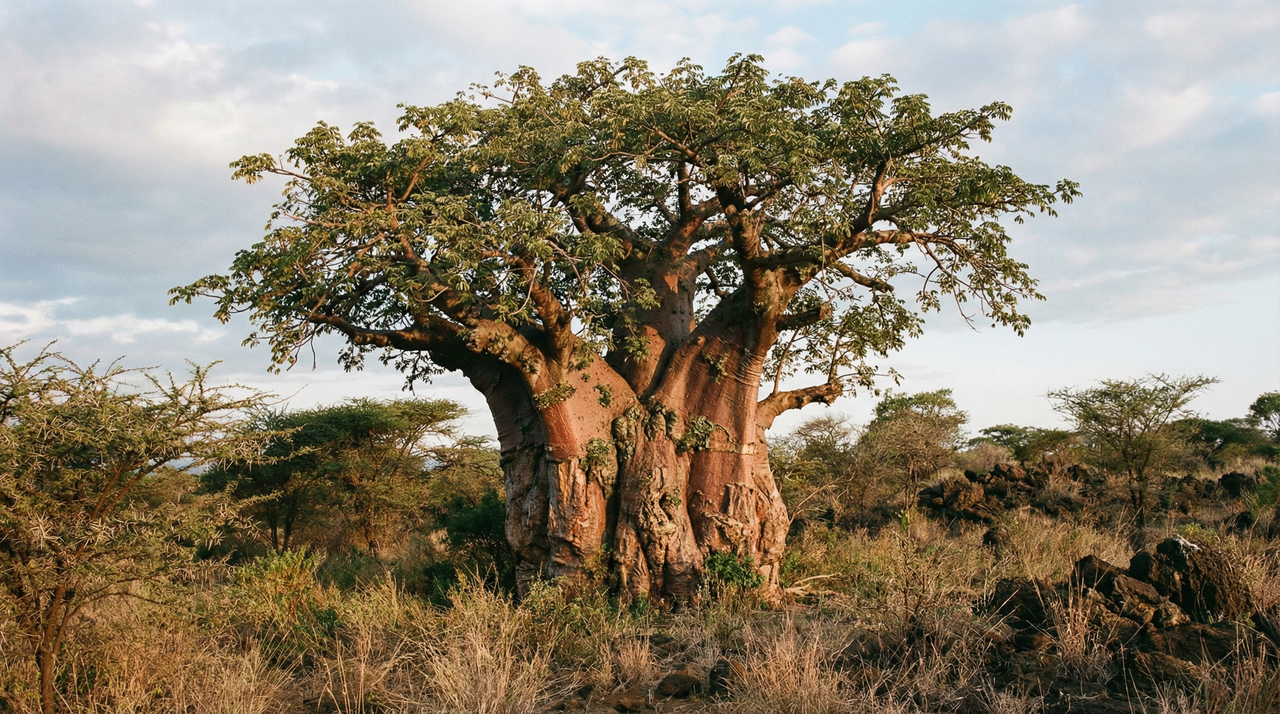
There's a baobab in South Africa called the Sunland Baobab that was so large a pub was built inside its hollow trunk. A functioning bar. With a wine cellar. The tree was carbon-dated at over a thousand years old, and for most of that millennium it simply stood there, storing water, feeding elephants, sheltering bats, and slowly becoming something that resists easy categorization as just a plant.[1] I think about that tree a lot when people ask me whether baobabs are worth growing. The question always makes me smile a little.
What gets me about baobabs isn't the superlatives, though there are plenty of them. It's the contradiction at the center of the thing: a tree that looks half-dead for most of the year, that grows agonizingly slowly, that can live through drought cycles lasting decades, and yet produces a fruit with roughly ten times the vitamin C of an orange.[2] The branches really do look like roots. Ancient cultures across three continents noticed that too, and some of them decided the tree must have been planted upside down by the gods. I've spent enough time with baobabs now that I find that explanation almost more satisfying than the botanical one.
Baobab Origin, History, and Botanical Background
Few trees carry as much accumulated time as a baobab. The genus Adansonia traces its roots back to the ancient supercontinent of Gondwana, and today its eight recognized species span three continents in a pattern that tells the whole story of continental drift and long-distance dispersal. Adansonia digitata, the African anchor of the genus, ranges across tropical and subtropical mainland Africa from Senegal to Somalia and south to South Africa, threading through lowland savannas, dry woodlands, and scrublands wherever soils drain freely and altitudes stay low.[3][4] Meanwhile, four species claim Madagascar as home, the Australian A. gregorii holds its own in the Kimberley's tropical savannas, and the recently separated A. kilima occupies montane habitats between 800 and 2,500 meters in Tanzania, Kenya, and neighboring highlands.[5][6]
Taxonomy, Native Ranges, and Longevity of the Baobab Genus
Adansonia digitata was formally described in 1830, and its taxonomy stayed relatively stable for nearly two centuries. The 2012 separation of A. kilima from highland populations formerly lumped with A. digitata shook things up a bit, supported by molecular and morphological evidence, though some sources still treat it as a synonym.[5][7] The two hybridize where their ranges overlap, which complicates the picture further. I mention this not to get lost in taxonomy but because it illustrates something practical: when you're sourcing seed, provenance matters enormously, and what gets sold as "African baobab" may represent quite different genetic material with different climate tolerances.
Longevity is where these trees become almost mythological. Most individuals live somewhere between 500 and 1,000 years, and radiocarbon dating has confirmed verified individuals exceeding 2,000 to 3,000 years, with multi-stem fusions approaching an astonishing 5,600 years.[8][9] Those age figures come hard-won: the wood is so soft and fibrous that clear annual rings simply don't form, making radiocarbon dating the only reliable method.[3][10] When clients ask me how old a specimen is, I rely on nursery records or documented planting dates, because guessing from trunk size is genuinely unreliable. A. digitata can reach first flowering in as few as 5 to 8 years under ideal conditions; other species require 10 to 25 years or more before they bloom.[11][12] Either way, a baobab is a commitment measured in generations, not seasons. That's actually what I love about them as a design element: they force long-horizon thinking from the start.
The threats to these long-lived polycarpic giants are painfully contemporary. Deforestation, bark stripping, agricultural expansion, and charcoal production all take a toll, but climate-driven drought stress may be the most insidious pressure, particularly for Madagascar's endemics, which range from Vulnerable to Critically Endangered on the IUCN Red List.[13][14][15] Seedling survival rates below 5% in many wild populations mean that even where adult trees persist, recruitment is failing.[16]
The Iconic Upside-Down Appearance and Visual Characteristics of Baobab Trees
The baobab's silhouette is immediately recognizable once you've seen it. Mature A. digitata trees reach 15 to 25 meters tall, occasionally 30, with bottle-shaped trunks typically 6 to 10 meters in diameter; the historic Glencoe specimen measured 44 meters in circumference before its collapse.[3][17] The sparse, thick branches spreading from the top really do look like roots dangling in air, which is where the "upside-down tree" name comes from. Young nursery trees look thoroughly ordinary before the trunk starts its dramatic swelling, a fact I warn every client about. Don't let the modest sapling fool you into planting it too close to a structure.
The leaves are deciduous and palmately compound with 5 to 7 (occasionally up to 9) oblong leaflets, shed entirely during the dry season when the tree's skeletal form becomes most striking.[17][3] The flowers deserve special mention: large, pendulous, creamy-white blooms opening nocturnally and emitting a musky, carrion-like scent calibrated to attract bats and moths rather than bees.[3][17] I once watched a baobab flower open at dusk during a trip to East Africa, and that smell is something you don't forget. It explains perfectly why this tree belongs to the night creatures. The resulting fruits are large, woody, gourd-like pods with a white powdery pulp inside, and the root system combines a deep taproot reaching 10 to 20 meters or more with wide lateral surface roots, all feeding an extraordinary trunk capacity for water storage.[18][19]
Other species offer vivid contrast. A. grandidieri in Madagascar grows taller, up to 30 meters, with trunks reaching 11 meters in diameter and a more columnar silhouette.[20] Australia's A. gregorii is more compact at 5 to 15 meters, while A. madagascariensis and A. rubrostipa show classic bottle trunks at smaller scale.[21][22][23] Across all of them, the genus-wide strategy is the same: store water in a massive trunk, drop leaves during drought, and wait.
Traditional, Cultural, and Spiritual Uses Across Africa, Madagascar, and Australia
The baobab tree's meaning to the people who have lived alongside it runs far deeper than nutrition. Across sub-Saharan Africa the tree is called the "Tree of Life," a title that captures its dual role as physical sustainer and spiritual anchor. In folklore, it appears as an upside-down tree planted by the gods, a landmark and gathering site woven into oral history across dozens of cultures.[24] In Madagascar the trees are sacred, linked to ancestral spirits, protected by fady (cultural taboos), and incorporated into burial and ritual practices.[25] Among Aboriginal Australians, A. gregorii, the boab, appears in Dreamtime stories, with hollow trunks used for shelter and ceremony across the Kimberley for millennia.[26]
The utilitarian range is extraordinary. San communities used bark for rope and leaves to treat fevers; the Maasai stripped bark to curdle milk and address malaria; Yoruba practitioners worked with it for hypertension and diabetes; Malagasy communities relied on the fruit for nutrition and wood for tool handles.[27][28][29] Seeds yield cooking oil; hollow trunks have stored water and sheltered people; even the flowers and roots find application across different traditions.[30] The earliest written accounts appear in Pliny the Elder in the first century CE, suggesting the tree's reputation had already traveled well beyond its native range.[31]
The modern superfood boom around baobab powder has changed the economic picture dramatically and not always for the better. Export demand has driven overharvesting concerns and raised serious questions about benefit-sharing with the Indigenous and rural communities who developed this knowledge across centuries.[32][33] My own position is clear: I only recommend suppliers working directly with African and Malagasy cooperatives where communities see tangible economic return. Anything less treats centuries of Indigenous stewardship as a free resource.
Fun Facts: Ancient Giants, Ecological Role, and Conservation Challenges
A mature baobab trunk can store over 100,000 liters of water in its spongy parenchyma tissue, effectively functioning as a living cistern in landscapes where rainfall is seasonal and unpredictable.[34][17] For permaculture designers, that image reframes the tree entirely: it's not just a food source but a hydrological anchor for the surrounding ecosystem, supporting bats, moths, elephants, birds, and dozens of dependent species through dry seasons that would otherwise be ecologically quiet.[35] The baobab's thick, corky bark makes it genuinely fire-resistant, and its deep taproot keeps it stable through severe drought, traits that evolved over millions of years in the African savanna context.
A. digitata has also traveled far from home. Ancient trade routes carried it to Asia, and the transatlantic slave trade brought it to the Caribbean and Americas, where it occasionally persists as a relic of those brutal movements.[36][37] Yet despite this global dispersal, the genus has never naturalized widely outside its native ranges, a reminder that ecological belonging and mere survival are different things.
Conservation news has been sobering in recent years. Several of Africa's most celebrated ancient individuals, including the Glencoe Baobab, have died from drought, internal decay, and climate stress, and low seedling recruitment means the population losses may not recover quickly.[38][39] Community-managed harvesting, protected areas, cultural taboos, and UNESCO recognition of baobab traditions in intangible heritage frameworks offer genuine reasons for cautious hope.[40] Standing near a thousand-year-old baobab on a savanna puts time in perspective quickly. These trees have outlasted empires, and losing them now, on our watch, would be a particular kind of failure.
Baobab Varieties and How to Source Them
If you're expecting a seed catalog's worth of named cultivars, baobab will surprise you. Adansonia digitata has no widely recognized cultivars, subspecies, or accepted varieties in modern taxonomy; historical classifications once floated forms like decorticans and senegalensis, but none of those names stuck.[3][41] This isn't neglect so much as biology. A tree that takes 20-plus years to first fruit is a brutal candidate for formal breeding programs, so selection has happened the way it's always happened in African savannas: generations of farmers quietly propagating the trees that bear the most, taste the best, and survive the driest years.
Notable Varieties and Landraces of Baobab
Those informal farmer selections matter more than you'd think. West African provenances, especially from Senegal and Mali, consistently show 25-35% sugar content with lower acidity than southern African lines, and can outperform other regional sources by 20-40% in fruit yield and pulp volume.[42][43] I've grown several African provenances side by side in zone 9b, and the West African seedlings have consistently produced pulp with noticeably brighter, more citrus-forward notes than the southern African stock. The differences are subtle in year one but obvious once you're actually eating the fruit.
The broader genus tells an even richer story. Adansonia kilima, formally split from A. digitata only in 2012, grows at elevations up to 2,600 meters in Kenya and Tanzania and handles frost better than any lowland baobab.[44][45] Madagascar's giants are something else entirely: A. grandidieri builds bottle-shaped trunks up to 11 meters in diameter and is listed as Endangered, while A. za produces large musky white flowers and tangy vitamin-C-rich pulp similar to the African species.[20][46] Australia's sole representative, A. gregorii, stays more modest at 5-15 meters, opens its nocturnal flowers to 15 centimeters across, and carries deep cultural significance for Aboriginal communities that has no parallel in the commercial world.[21]
Sourcing Baobab Seeds and Plants in the United States
Adansonia digitata is genuinely easy to find in the US. Vendors like Top Tropicals, Logee's, and Sheffield's Seed Company carry seeds regularly, with packets typically running $5-20 and young plants starting around $50, though prices shift seasonally.[47] The species sits outside CITES entirely, so there's no permit maze to navigate beyond standard USDA APHIS phytosanitary requirements.[48] The rarer species are a different situation. Most Madagascan and montane African baobabs fall under CITES Appendix II, which means export and import permits, phytosanitary certificates, and in some states additional hoops for Florida or California growers.[49][50] Seeds of A. grandidieri or A. madagascariensis occasionally surface through rare-seed vendors at $5-35 a packet, but the paperwork burden is real, and mature specimens can run $200-500 or more when you can find them at all.[51] When I first tried to order Madagascan baobab seed, I learned quickly that even vendors who know what they're doing don't always supply documentation proactively. Now I only buy from anyone who offers the paperwork up front. For most growers, A. digitata is the practical choice, and honestly, given what provenance selection can deliver, it's enough to keep things interesting for a lifetime.
Baobab Propagation and Planting Guide
Growing a baobab tree from seed is one of those gardening experiences that teaches you patience before the seedling even emerges. You're starting with what feels like a small, dark pebble: the seed coat of Adansonia digitata is a woody, impermeable testa, kidney-shaped, 10-18 mm long, and built to survive passage through elephant and baboon digestive systems before it germinates.[52][53] That physical dormancy is the whole game. Without mimicking that digestive scarification yourself, germination rates stay frustratingly low.
Understanding Baobab Seeds and Propagation Methods
The reliable fix is mechanical or thermal scarification: nick the seed coat with a file or knife, or do a hot water soak around 80°C held for 24-48 hours. Either way, you're breaching that armor to let moisture reach the embryo inside. With fresh scarified seed, germination success climbs to 50-90%, typically landing in the 70-80% range under decent nursery conditions.[54][55] I think of the hard coat like canna or morning glory seeds, both of which need the same intervention, except the baobab has been perfecting this strategy for millions of years. Sow 1-2 cm deep in a well-draining sandy-loam mix and keep temperatures between 25-30°C.
One thing I wish someone had told me early on: label every single row. Because seeds are monoembryonic and the species outcrosses freely, seedlings show high genetic variation and don't breed true-to-type.[56] A batch of twenty seedlings can look remarkably similar at the cotyledon stage, which is exactly when you'll lose track of which tray is which if you're not careful. Seed propagation is by far the most beginner-friendly approach for A. digitata, and fresh seed gives you the highest viability. The orthodox storage behavior of this species means you can dry seeds down to 3-10% moisture content and store them at 5-10°C for medium-term viability of 5-10 years, or freeze them for longer-term banking.[57][58] I always cross-check the latest Kew or FAO protocol for the specific species and provenance before storing, because classifications across the genus have shifted; several Malagasy species including A. grandidieri and A. madagascariensis are recalcitrant, meaning they're sensitive to desiccation and need to be sown immediately after harvest.[59]
If you want fruit sooner, vegetative propagation is the route, but go in with realistic expectations. Grafting and budding success rates run 30-60%, cuttings around 20-50%, and air layering lower still.[60] In my work with related Malvaceae, I've found that timing grafts to coincide with active growth in the wet season makes a real difference to take rates, so if you're attempting this, don't rush it during dormancy. Tissue culture from nodal explants achieves 80-90% shoot induction and is primarily used for conservation of threatened species rather than home production.[61] As a delightful aside: A. gregorii, the Australian boab, is polyembryonic, producing 2-5 seedlings per seed, which makes it the eccentric outlier of the genus.[62] Always source seeds from certified suppliers to avoid putting pressure on wild populations of rarer species.[63]
Soil, Site, and Sun Requirements for Baobab
Poor drainage is the number one killer of baobabs in cultivation, and I say that from watching it happen in the field. Even one heavy clay pocket left in a planting hole can sit saturated during a rainy season and trigger Phytophthora root rot before you realize anything is wrong. Baobab evolved in sandy, loamy, lateritic, and gravelly soils with low organic matter (under 2-3%) and a deep taproot system that can reach 50 meters or more.[64][65] That root architecture needs at least 1-2 meters of loose, open soil structure beneath the planting site, not compacted clay. Optimal pH sits between 6.0 and 7.5, though the tree tolerates as wide as 5.0-8.5 before chlorosis or toxicity start showing up.[17] For container growing, I use roughly 50% coarse sand or grit, 30% loam or cactus mix, and 20% minimal organic matter. This holds loosely across the genus: A. grandidieri prefers calcareous soils, A. gregorii grows on sandstone-derived substrates, and A. kilima is at home in volcanic montane soils, but every one of them rewards you for getting drainage right.
Full sun is non-negotiable. Baobab needs a minimum of 6-8 hours of direct sunlight daily, and shade causes poor, stunted growth.[66][67] The tree's deciduous leaf drop in the dry season, high-albedo bark, and specialized leaf anatomy are all adaptations to intense, direct radiation. Don't bother trying to grow one indoors without intense supplemental lighting; it simply won't thrive.
Spacing, Planting Technique, and Establishment Timeline
Before you put a baobab seedling in the ground, picture a mature tree. In cultivation, A. digitata typically reaches 8-15 meters tall with a canopy spread of 9-15 meters; in the wild, specimens hit 15-30 meters.[68][17] That's comparable in spread to a large, spreading oak. Orchard spacing of 10-12 meters between trees, or up to 15 meters for long-term food forest integration, keeps competition manageable at densities of 70-100 trees per hectare. Higher density risks yield reduction once canopies close. Growth in the early years runs only 0.5-1 meter annually, and these trees can live well over 1000 years, so site selection deserves serious thought; you are genuinely planning for the next generation.
Plant into wide, deep holes backfilled with loose, amended soil, making sure there are no clay pockets. Young plants may need temporary staking in exposed or windy sites until the taproot anchors properly.[69] Resist the urge to over-amend with compost; this is a low-nutrient-adapted tree, and rich soil encourages the kind of lush, soft growth that suffers in dry conditions.
Germination Timeline and Early Care
With scarified seed sown at 25-30°C in moist, well-drained soil, expect germination in 7-30 days, with most seeds breaking dormancy within two to three weeks under greenhouse conditions.[54][55] The germination is hypogeal, meaning the cotyledons stay below soil level while the shoot emerges, which can make young seedlings look slightly different from what you'd expect. Bottom heat helps considerably, and consistent temperature is more important than occasional warmth. A. kilima is notably easier: it lacks physical dormancy and germinates readily without pretreatment in 10-20 days, which makes it a useful species to practice with if you're new to the genus.
The timeline question most growers care about is fruiting. Seed-grown trees typically take 10-20 years to produce fruit; grafted trees can fruit in 3-5 years.[60] That gap is the central decision point for anyone growing baobab for harvest. Early seedling care means protecting young plants from ants and rodents, providing partial shade during establishment before transitioning to full sun, and maintaining consistent moisture without overwatering (damping-off is a real risk in this stage).[70] Light fertilization can begin after the plant establishes its root system, but hold off on feeding until you see active growth. This is a tree that rewards careful beginnings and then, frankly, wants you to step back and let it do its thing.
Baobab Care Guide
Everything about caring for a baobab comes back to one idea: restraint. These trees evolved in nutrient-poor African savannas where rainfall arrives in bursts and disappears for months, and every structural adaptation they've developed, from that extraordinary water-storing trunk to deep reaching roots, is designed to handle the dry times without help from you. The most common mistakes I see in cultivation all come from treating baobab like a conventional ornamental, giving it too much water, too much fertilizer, too much intervention. Once you understand what it actually needs, care becomes mostly a matter of getting out of the way.
Sunlight Requirements for Baobab Trees
Full sun is non-negotiable. Baobab requires at least 6 to 8 hours of direct light daily and has zero tolerance for shade.[71][72] In my landscape design work, placement decisions always start here. Insufficient light doesn't just slow growth; it produces leggy structure and a trunk that never develops the characteristic swollen form. Even seedlings, which reach only 10 to 20 cm in their first year, need high light intensity from the start.[69] The one exception worth noting for growers in humid subtropical climates: young trees in intense afternoon heat above 35°C may benefit from light afternoon shade until they're established, but this is temporary. A mature baobab in shade is a compromised baobab.
Water Needs and Drought Tolerance
The trunk of an adult Adansonia digitata can store between 80,000 and 120,000 liters of water, paired with a taproot that can extend 50 meters down and wide lateral roots that sweep far across the soil surface.[73][74] That infrastructure is why established specimens I've specified for drought-tolerant designs in warm climates essentially take care of themselves on natural rainfall once they're settled in. Supplemental irrigation becomes almost irrelevant.
Young trees are a different story. For the first two to three years, water deeply every one to two weeks during the growing season, waiting until the top 5 to 10 cm of soil is dry before watering again.[75][76] Mature trees in prolonged drought may need deep irrigation every two to four weeks, around 20 to 50 liters per tree, but withhold almost entirely during dormancy.[73] The soil itself should drain at 1 to 2 inches per hour; heavy clay is genuinely dangerous here.[77] I learned to weigh potted seedlings or use the finger test rather than trusting a schedule, because containers dry faster than ground plantings and the symptoms of overwatering (yellowing, soft trunk, mushy roots) look deceptively similar to drought stress until root rot is already advanced.[78] The soak-and-dry method is your friend. Baobab tolerates pH from 5.5 to 7.5 and mild salinity up to around 4 to 6 dS/m, which gives it genuine flexibility across site types.[79]
Fertilizing Baobab Trees
Baobab is a light feeder by nature, adapted to genuinely poor savanna soils where its deep roots scavenge subsoil nutrients without any help from above.[80] Mature specimens, say five to ten years and beyond, rarely need fertilizer at all if the soil suits them.[81] In my restoration work on nutrient-poor sites, I've found that compost alone sustains established trees well, and that pushing nitrogen actually undermines the drought tolerance these trees are famous for, producing soft growth that can't handle dry periods.[82]
Young saplings do benefit from light feeding: a half-strength balanced fertilizer (10-10-10 or similar) or a phosphorus-focused application of 50 to 100 grams per tree once or twice in the growing season supports root development without pushing excessive top growth.[81][83] Prioritize phosphorus for roots and potassium for drought tolerance over nitrogen.[84] If you're on alkaline soil, do a soil test; iron, zinc, and manganese deficiencies can show up as interveinal chlorosis or purplish leaves and are worth correcting.[85] Organic compost or aged manure at 5 to 10 kg per tree annually is almost always a better approach than synthetic formulas for a tree this adapted to lean conditions.[86]
Heat and Frost Tolerance
Baobab grows best at daytime temperatures between 20 and 35°C and handles heat spikes up to 50°C when it has adequate water in the trunk and nighttime temperatures to recover below 20°C.[87][88] Above 45°C, expect leaf scorch, wilting, and premature flower or fruit drop, especially in young plants. Practical mitigation includes 10 to 15 cm of organic mulch kept clear of the trunk, deep irrigation every 7 to 10 days during heat stress, and temporary 30 to 50 percent shade cloth for trees under three meters.[89][90]
Cold is the hard limit. Adansonia digitata is strictly a USDA zones 10 to 12 tree, tolerating brief dips to around -1°C but suffering severe damage or death from any sustained frost or temperatures below 4°C.[77][17] Growth stops below 10°C, and young plants are vulnerable below 15°C.[91] The RHS rates it H1c, meaning frost-free or greenhouse conditions in temperate climates.[92] I treat young baobabs in marginal climates the same way I treat other tender tropicals I've overwintered: once nights consistently drop below 10°C, the pot moves inside or into a greenhouse. There's no negotiating with frost on these trees.
Pruning, Maintenance, and Seasonal Care
Minimal intervention is the right philosophy here. Baobab heals slowly, and a tree that can live for centuries does not need you reshaping it. Remove only dead, diseased, or damaged wood during dormancy or the dry season using sterilized, sharp tools; cuts made in the wet season invite fungal infection.[93][94] I made the mistake early on of doing some structural shaping on a young specimen and watched two of the cut branches die back significantly over the following season. Light shaping in early spring is acceptable for young trees, but anything beyond that is a gamble.[76]
Keep 10 to 15 cm of organic mulch around the base, pulled back at least 10 cm from the trunk itself to prevent rot.[94][95] Drainage is the other non-negotiable maintenance element; in humid areas, raised beds help enormously. Root rot from overwatering remains the single most common cultural problem in subtropical cultivation, and once it's established the prognosis is poor.[78] In zone 9b and other marginal growing zones, container culture gives you the option of moving plants under cover for winter, which may be the most practical frost protection strategy available.[96]
Baobab Seasonal Rhythm
Learning to read your baobab's seasonal cues makes all the care decisions above much easier. The tree is deciduous, shedding leaves during the dry season (roughly November through April or May in African ranges) and flushing new growth at the start of the wet season.[3][97] Leaf drop is your signal to pull back watering to near zero. Leaf flush tells you it's time for a light feed and a return to regular irrigation. Nocturnal flowering typically occurs October through December for A. digitata, followed by six to twelve months of fruit development that matures in the dry season.[98]
Optimal conditions through the growing season are 20 to 35°C with humidity below 50 percent; watering increases when soil moisture drops below 50 percent but should ease off during flowering to reduce fruit and flower drop.[3][99] All Adansonia species follow this same wet-dry synchronization, though timing shifts by hemisphere and elevation; A. kilima flushes around March to April while some Malagasy species like A. grandidieri shed leaves from May through October.[44][100] The rhythm itself is the care guide; once you're synchronized with it, you'll find the tree asking very little of you.
Baobab Harvesting: Timing, Techniques, and Yields
Patience is the dominant theme with baobab, and it extends all the way to harvest. As noted in the propagation guidelines, a seedling can take up to two decades to fruit, whereas a grafted tree significantly accelerates that timeline.[101][69] That timeline shaped how I think about propagation in my own food forest plantings. My first seed-grown baobabs were genuinely humbling teachers on the subject of delayed gratification, and they're the reason I now recommend grafted plants to anyone who wants to see fruit in their lifetime rather than their grandchildren's.
When to Harvest Baobab Fruit: Maturity Cues and Seasonal Windows
From flowering to ripe fruit takes 150 to 180 days, with flowers emerging after leaf drop in the dry season and pods reaching harvest-ready maturity the following dry season.[102][103] For Adansonia digitata, peak harvest falls between June and September across most of the African range.[104] The maturity cues are wonderfully tangible: pods shift from green to yellowish-brown or dark brown, the shell goes woody and surprisingly lightweight, and when you shake a ripe pod, you hear a dry rattle from the loose seeds inside.[105][106] I've spent enough time shaking my own mature specimens to know the difference between that crisp, hollow rattle and the heavier, duller thud of an unripe pod, and it's one of those sensory skills that becomes second nature fast.
Baobab Harvest Techniques and Post-Harvest Handling
Harvest before the pods split naturally. Once they crack open on the tree, you lose seeds and risk moisture infiltrating the pulp, which invites mold.[105][107] Long-handled shears or harvest poles work well for pods out of reach; collecting from the ground in early morning under dry conditions keeps damage minimal.[88] Post-harvest, crack the woody shell open, separate the dry pulp from seeds and fibers, then either sun-dry for 3 to 7 days or use mechanical drying at 40 to 50°C for 4 to 8 hours until moisture drops to around 10%.[108][109] Mill into powder if desired, then store in airtight containers below 25°C and 60% humidity for a shelf life of 1 to 2 years.[110] In my experience, keeping dried pulp under that humidity threshold reliably gives 18 months of usability with no noticeable flavor or nutrient loss. If you're not processing immediately, whole fresh fruits can be refrigerated at 4 to 10°C for 2 to 3 months, and cleaned seeds store well at 5 to 10°C for five years or more.[111][112]
Baobab Yield, Fruit Characteristics, and Flavor at Harvest
Mature baobab trees produce 20 to 50 kg of fruit annually, with age, pollination success, and environmental stress all influencing the final yield.[102][113] The pods themselves range from 12 to 30 cm long and can weigh anywhere from 100 grams to 2.5 kg depending on the species and conditions, with hard, dark-brown kidney-shaped seeds nestled in the dry, powdery pulp.[114][115] Flavor shifts noticeably with ripeness. Unripe pulp is milder and sharply acidic from high citric and tartaric acid content; fully ripe pulp develops into something I can only describe as a grapefruit-pear sherbet, tangy and bright with a creamy finish, as sugars climb to 50 to 60% of dry weight.[116][117] Drying concentrates that flavor further. I've found that trees grown through drier seasons consistently produce pulp with a more intense tang, much like citrus flavor varying between groves depending on rainfall and soil.
Baobab Preparation and Uses
Every part of a baobab tree has a job to do in the kitchen, the medicine bag, or the workshop. Communities across Africa, Madagascar, and Australia have spent millennia figuring out exactly how to unlock what each part offers, and the accumulated knowledge is genuinely impressive. The fruit pulp is where most people start, and for good reason.
Culinary Applications of Baobab Fruit, Seeds, and Leaves
The pulp is already naturally dry and low in anti-nutrients, so it needs almost no processing beyond what the sun provides.[95] Cracked open, the pods reveal chalky white segments that taste like a cross between grapefruit and sherbet, with a lingering citrusy tang that I find reminds me of calamondin, that tart little Florida citrus, but creamier and more complex.[118][119] Sun-drying intensifies the caramel undertones but loses some of the brighter volatile notes; freeze-drying keeps the flavor sharper and fruitier.[120] Either way, you end up with a powder that stores for months in a cool, dry, airtight container and is versatile enough to go into smoothies, porridges, jams, ice creams, or soups as a natural thickener.[121][122] When I rehydrate baobab fruit powder in workshops, the thing people always comment on is the texture, how it goes from mealy and powdery to silky and slightly viscous in the glass, a natural thickener that needs nothing else added. Both the EU's EFSA and the FDA have approved it as a safe novel food with no significant toxicity documented, though anyone with pollen sensitivities should test cautiously.[123]
I always collect only naturally fallen pods, never pulling from the tree directly. For related species like A. za and A. madagascariensis, which are Endangered in Madagascar, that practice isn't just good ethics; it's genuinely necessary for the tree's survival.[124] A. grandidieri pulp carries a comparably tart aftertaste and turns up in Malagasy fermented drinks like lamarin and traditional stews, while the Australian boab (A. gregorii) produces a gum similar to gum arabic alongside its edible pulp.[21][33]
Seeds require more care. Roasting inactivates trypsin inhibitors, phytates, tannins, and saponins, the same principle behind processing acorns or other tannin-heavy wild nuts before eating them.[125] Once roasted, seeds can be ground into flour or cold-pressed into a mildly nutty culinary oil with a favorable unsaturated fat profile.[126][17] Leaves also need preparation; soaking or boiling with multiple water changes reduces oxalates, tannins, and phytates enough to make them safe for use in soups and stews, where they contribute a mild, slightly mucilaginous texture somewhat like cooked spinach or okra.[127][128] Flowers are edible and mildly sweet but rarely a major culinary focus.[119]
Medicinal Preparations from Baobab
Traditional medicine across baobab's range uses the pulp, leaves, bark, and roots for fever, diarrhea, malaria, wound healing, and inflammation.[129] A typical daily dose of fruit powder runs 5 to 20 grams mixed into water or food; dried leaf teas use roughly 1 to 3 grams per cup.[130] At food-level amounts, the safety record is solid and centuries-deep. For related species like A. za, bark and leaf decoctions are used medicinally but are contraindicated in pregnancy and can cause mild gastrointestinal discomfort, and some species show potential blood-thinning effects worth flagging for anyone on anticoagulants.[131][132] I've seen that research, and my advice is consistent: as food, baobab is fine for most people; as a concentrated medicinal preparation, especially alongside prescription medications, check with a qualified practitioner first.
Non-Food Uses of Baobab
Bark fibers from across the genus have been twisted into rope, woven into baskets and mats, and fashioned into cloth and nets for generations.[133] The same bark shows up in poultices for wound healing, bark decoctions for pain and inflammation, and even in Maasai practices for curdling milk.[134] Seed oil finds its way into cosmetics and traditional topical preparations, and the iconic hollow trunks have served as water cisterns, food storage, shelters, ceremonial spaces, and burial sites.[68][30] Baobab products have also been integrated into USAID child nutrition programs in the Sahel, where the tree's output supports communities through food insecurity.[17] Standing next to a mature specimen, you understand immediately why people have organized their lives around these trees. A plant that can be your pantry, your pharmacy, your water barrel, and your community gathering place is not something you take lightly, and it shouldn't be something we take for granted.
Baobab Health Benefits and Medicinal Uses
Every part of a baobab has been put to medicinal use across three continents for centuries, and the more we look at the chemistry, the clearer it becomes why. This isn't a plant with one standout compound. It's a whole system of bioactive molecules that work differently depending on which part you're using and when it was harvested.
Key Phytochemicals in Baobab: Flavonoids, Polyphenols, Vitamin C, and More
The phytochemical inventory of Adansonia digitata is genuinely impressive in its breadth. Across the bark, leaves, seeds, and fruit pulp, researchers have identified several distinct compounds:\n- Alkaloids and terpenoids\n- Flavonoids (rutin, quercetin, kaempferol)\n- Phenolic acids\n- Saponins, tannins, and coumarins.[135][136] The fruit pulp draws the most attention for good reason: it's packed with catechins, epicatechins, procyanidins, and phenolic acids, with antioxidant activity confirmed through multiple assay methods.[137][138] The leaves bring their own profile -- quercetin, kaempferol, tannins, saponins -- while the bark contributes alkaloids, gallic acid, triterpenoids, and steroids.[139] Seeds yield oils rich in oleic, linoleic, and palmitic acids alongside tocopherols and β-sitosterol.[140]
One thing I've noticed in my zone 9b garden is that plants pushed hard by summer heat and drought stress tend to produce noticeably more astringent, pungent leaves and pulp. The research backs this up: arid conditions elevate phenolics, phosphorus-poor soils increase tannins, and seasonal timing shifts flavonoid peaks depending on species.[141] That variation matters when you're foraging or buying bulk powder, because the numbers on a label reflect one sample from one place at one moment. The broader genus shows similar compound classes -- A. za seed oil adds neuroprotective and gastroprotective potential, and A. gregorii carries comparable flavonoids and phenolic acids -- but detailed phytochemical work outside A. digitata is still thin.[142]
Antioxidant, Anti-Inflammatory, and Antimicrobial Properties
Traditional healers across Africa used baobab leaves for diarrhea and digestive complaints, and fruit pulp for malnutrition and scurvy.[143][144] It turns out they were working with a solid pharmacological toolkit. Lab and animal studies confirm strong antioxidant activity from the vitamin C, polyphenols, and flavonoids; anti-inflammatory effects through COX-2 inhibition and NF-κB suppression, with measurable reductions in paw edema and cytokines in rat models; and antimicrobial action against Staphylococcus aureus, Escherichia coli, and several fungi, with MIC values of 0.5-2 mg/mL attributed largely to tannins and alkaloids.[145][146]
Leaf extracts also show antidiabetic potential, inhibiting alpha-amylase and glucosidase enzymes and reducing blood glucose in animal models.[147] I've found that adding small amounts of baobab pulp to smoothies visibly tempers the blood sugar spike I'd otherwise get from high-fruit blends -- and the human trial data is starting to confirm that intuition. A phase II trial of 40 participants found improved IBD markers, and fruit pulp supplementation of 15-30g per day has been shown to shift gut microbiota and improve glycemic response in humans.[148] Preliminary evidence points toward analgesic, antispasmodic, and expectorant effects as well, though those studies are mostly animal-based, and the anticancer and adaptogenic claims rest on even weaker ground for now.[149] Similar antioxidant, anti-inflammatory, and antimicrobial profiles appear across the genus -- A. grandidieri, A. gregorii, A. kilima -- but most of the rigorous mechanistic work sits squarely with A. digitata, and we should be careful not to over-extrapolate from the thinner datasets on other species.[150]
Nutritional Profile of Baobab Fruit, Leaves, and Seeds
The fruit pulp is where the baobab benefit story gets most concrete. Per 100g dry weight, it delivers 45-50g of dietary fiber, 150-500mg of vitamin C (delivering an exceptionally high ascorbic acid density compared to other tropical fruits), calcium ranging from 120 to 500mg, potassium up to 2800mg, iron up to 9mg, and polyphenol concentrations with ORAC values frequently above 10,000 μmol TE/100g.[151][152] When you rehydrate good baobab powder, you get this tangy, sherbet-like brightness that hits immediately -- a sensory shorthand for exactly that vitamin C and acid content. The leaves pull their own weight nutritionally too, with 15-25g of protein per 100g dry weight, beta-carotene, iron, and calcium comparable to spinach.[153] Seeds contribute 15-36g protein and 10-40g of oleic- and linoleic-rich fat, making them a legitimate food source when properly prepared.[154]
Processing matters more than most labels admit. Vitamin C loss ranges from 10% with careful sun-drying to 70% or more with boiling or high heat.[155] I've settled on low-temperature dehydration for home processing; it keeps that bright acidity intact in a way that high-heat methods don't. Fermentation, interestingly, can enhance mineral bioavailability even as it changes the flavor profile.[156] For practical supplementation, the ranges that show up in studies are typically 5-20g of dried pulp per day -- enough to matter nutritionally without needing to treat it like a pharmaceutical dose.
Safety and Considerations for Baobab Consumption
The fruit pulp has FDA GRAS status and EU novel food approval, backed by centuries of documented safe use across Africa, Madagascar, and Australia.[157][158] In my work with edible landscapes, I always tell clients: the pulp is about as safe as food gets, and the leaves are eaten like spinach with no reported toxicity when cooked.[159] Seeds are a different conversation -- they need roasting or boiling to break down tannins, phytates, saponins, and cyclopropenoids before they're safe to eat regularly.[160] No cyanogenic glycosides are present, which is one worry you can set aside entirely.
Animal studies put the LD50 for extracts above 5000 mg/kg, and human trials using up to 15-18g of pulp daily have reported no significant adverse events.[161] The main practical cautions are fiber-related: push above 20g per day and some people experience bloating or loose stools, especially if they're not accustomed to high-fiber foods. Concentrated bark tannins can cause nausea at high doses, and bark decoctions are traditionally avoided during pregnancy due to possible uterine stimulant effects.[162] Rare anaphylaxis to the fruit has been documented, so if you have a history of tree fruit allergies, introduce it cautiously, and pollen can trigger seasonal allergic responses in sensitive individuals.[163] The mild hypoglycemic effects I mentioned earlier also warrant attention if you're managing blood sugar with medications -- the glycemic modulation is a benefit for most people, but it can compound drug effects.[164] One identification note I stress to anyone growing multiple succulents: young baobab can superficially resemble Adenium obesum (desert rose), which carries cardiac glycosides. Learn to tell them apart early -- it's a mistake you only want to make once, and thankfully in my case, I caught it before anything went further than a curious sniff.
Baobab Pests and Diseases
A baobab that's happy in its native African savanna is, honestly, one of the toughest trees on the planet. Thick fire-resistant bark, a water-storing trunk, and a biochemical arsenal of tannins, saponins, and flavonoids give Adansonia digitata genuine resilience against most endemic threats.[165][166] Individuals live for over a thousand years without ever encountering a serious disease outbreak. Move the tree into cultivation outside that native range, though, and the dynamic shifts considerably.[37][167]
Natural Disease Resistance and Vulnerabilities
The single greatest killer of young baobabs in gardens and orchards is Phytophthora root rot, and it's entirely preventable. Waterlogged or poorly drained soils create the conditions this pathogen loves, and once it takes hold in a young tree, the outcome is usually fatal.[168][169] I've watched seedlings in the nursery look perfectly healthy right up until sudden wilting signals the root system is already gone. By the time you see symptoms above ground, you've usually lost the tree. In Central Florida's seasonally wet soils, I won't plant a baobab without either raising the bed significantly or working in heavy sand amendment first. This is the one cultural practice I'd call non-negotiable.
After Phytophthora, Armillaria root rot deserves mention. It causes white root rot and basal cankering, and risk climbs sharply if you're planting near previously infected hosts or in contaminated soil.[170][171] Stressed trees also invite Botryosphaeria cankers, which can girdle branches or the entire trunk after drought damage or mechanical injury.[172] Leaf diseases like powdery mildew, Alternaria leaf spot, and anthracnose tend to show up in humid conditions or on plants pushed too hard during propagation, reducing photosynthesis but rarely killing a tree on their own.[168][173] Heart rot (typically Ganoderma entering through wounds) and Fusarium wilt round out the disease list, with overall susceptibility climbing across the board in humid or waterlogged conditions.[174] Other Adansonia species show broadly similar vulnerabilities; Malagasy species like A. madagascariensis are susceptible to the same Botryosphaeriaceae stem rots, though research on endangered taxa like A. grandidieri is still limited and often extrapolated from A. digitata data.[175][172] Well-drained sandy soil and disciplined watering remain the foundation of disease prevention across the genus.[170]
Insect Pests and Integrated Management
The same chemical defenses that suppress disease also discourage many insect herbivores. Tannins reduce digestibility, triterpenoid saponins disrupt membranes, and the thick fibrous bark adds a physical layer that most insects simply can't breach.[176][177] Mature, well-sited baobabs really do shrug off most pest pressure. Young trees and drought-stressed specimens are a different story.
The pest roster includes:\n- Weevils\n- Fruit borers\n- Bark beetles\n- Scale insects\n- Stem borers\n- Aphids\n- Coreid bugs.[178][179] Termites deserve special attention; Macrotermes species attack A. digitata, and A. gregorii in Australia faces particularly damaging pressure from Mastotermes darwiniensis.[180][181] I think of termite pressure on baobab similarly to how I think about it on citrus or tropical stone fruits: the threat is real, but stressed trees attract far more damage than healthy ones, so tree vigor is your first line of defense.
No commercially available pest-resistant cultivars exist, though seeds sourced from drier provenances tend to show lower susceptibility.[182] When I'm sourcing seed, I actively seek out drier-range material for exactly that reason. For management, the integrated approach fits naturally with how a food forest operates anyway: good drainage and spacing, removal of infected material, encouraging predatory insects, and Trichoderma or neem-based products when intervention is genuinely needed.[37][183] Chemical treatments are a last resort on any tree whose fruit you plan to eat.
Baobab in Permaculture Design
There's a moment when you're designing a food forest in a hot, dry climate where you stop looking for the right shrub or groundcover and start asking what the whole system needs to anchor around. For anyone gardening in USDA zones 10-12, baobab is that answer. The problem is most designers either dismiss it as too exotic or fall so hard for the romance that they skip the hard realities. I've done both, and I've learned more from the mistakes.
Climate Requirements and Hardiness Zones
Adansonia digitata is firmly a tropical to hot semi-arid species. It thrives in zones 10-12, handles heat up to 50°C (122°F) without complaint,[75][17] and can survive eight to nine months without rainfall once established, courtesy of that water-storing trunk.[184][185] What it absolutely cannot handle is frost. Even a light freeze can kill young plants, and sustained temperatures below 7-10°C (45-50°F) cause damage before you ever reach 0°C.[95][186] In the US, that restricts realistic outdoor planting to southern Florida, the Rio Grande Valley, and coastal Southern California.[187]
I've been pushing mine in a zone 9b/10a transition garden for years now, keeping young plants in large containers for the first three to four winters so I can bring them under cover when temperatures dip. They're slow, they're unforgiving of cold snaps, and the swollen trunk that makes baobab so recognizable takes years to develop from seed. Patience isn't optional here; it's the whole practice. If you're in a marginal zone, A. gregorii, the Australian boab, can tolerate brief dips to around -2°C (28°F) once established,[21] and A. kilima, native to montane East Africa between 800 and 2,600 meters, brings better cold adaptation from its highland provenance.[44] Neither is a true substitute for A. digitata's yield potential, but they expand the genus's reach into slightly cooler designs.
Ecosystem Functions and Keystone Role
What makes baobab genuinely special in permaculture terms isn't any single yield. It's the density of ecological services packed into one tree. In African savannas, a single mature A. digitata supports over 30 animal species: its large, nectar-rich nocturnal flowers are pollinated primarily by fruit bats (Eidolon helvum and related species) and moths, while elephants, baboons, monkeys, and birds feed on the fruit and leaves, with elephants also acting as seed dispersers whose gut scarification dramatically improves germination.[34][188] I've grown night-blooming cereus for years, and baobab flowers have that same musky, almost animal quality that tells you exactly who they're advertising to. For home growers hoping to set fruit without a colony of bats on call, hand-pollination becomes a very real skill to develop.
The below-ground story is just as rich. Baobab forms mycorrhizal associations that enhance phosphorus uptake, and its deciduous leaf litter cycles nitrogen, phosphorus, calcium, potassium, and magnesium back into the soil beneath the canopy.[189][190] Note that it does not fix nitrogen, so pairing it with nitrogen-fixers in the understory is smart design rather than redundancy. Its deep roots and lateral spread stabilize soil against erosion, its thick bark (20-30 cm) resists fire,[191] and mature specimens store up to 10 tons of CO₂ in their massive trunks.[192] I've thought about this a lot in the context of my broader regenerative design work. One mature baobab's biomass storage rivals dozens of smaller trees, making its placement in a long-term food forest a genuinely high-leverage decision where the climate allows it. Once you understand how many creatures and cycles depend on a single tree, you stop treating it as a fruit producer and start designing the whole system around it.
The same bat-pollination and mammal-dispersal ecology appears across Malagasy species (A. grandidieri, A. za, A. madagascariensis) and Australian A. gregorii, many of which show self-incompatibility and protandry, meaning cross-pollination between trees is essential for reliable fruiting.[193][99] And while A. digitata is currently listed as Least Concern on the IUCN Red List,[194] A. grandidieri is Endangered and A. za is Vulnerable, both threatened by habitat loss in Madagascar.[195][196] Sourcing plants from reputable, ethically propagated nurseries is non-negotiable if we want to support rather than pressure wild populations of the rarer species.
Forest Layer, Guilds, and Agroforestry Integration
In forest garden terms, baobab belongs squarely in the emergent or upper canopy layer. Mature trees reach 10-25 meters tall with canopies spreading 20-30 meters wide and trunks that can exceed 11 meters in diameter.[3][197] This is not a tree that tucks into a corner. In its native savannas it stands widely spaced, not in closed canopy, and that's the spatial logic to carry into design.
What it gives the understory in exchange for that space is significant. Traditional agroforestry systems in West Africa document 20-30% yield increases in millet and sorghum grown beneath baobab, driven by improved microclimate, reduced evaporation, and the organic matter and phosphorus availability built up through leaf litter and mycorrhizal networks.[198][199] Early in my design practice I made the mistake of planting companion species too close to young baobabs, thinking the trees were still small enough to share space generously. The roots and eventual canopy had other plans. Give the tree its own generous circle from the start, and site companions outside that radius where they'll benefit from the litter and microclimate without competing directly for resources.
Logical guild partners are drought-tolerant nitrogen-fixers like Leucaena or Prosopis species, deep-rooted perennial herbs, and ground covers that handle dry-season dormancy gracefully. Across the genus, A. gregorii plays a comparable emergent role in Australian savannas at a smaller scale (5-15 meters), while A. kilima fills upper-canopy positions in East African montane forests up to 2,600 meters,[44][21] and the Madagascan endemics anchor dry deciduous forest systems with the same drought-tolerant, bat-pollinated ecology.[200] The consistent lesson across every species in this genus is the same: design around the tree rather than trying to fit the tree around your design.
The Tree That Taught Me to Think in Centuries
I planted a baobab seedling eight years ago, and it's still shorter than my knee. Every season I walk past it and feel something I can only describe as humility. There's a tree in Limpopo that may have been alive when Rome fell, offering shade and fruit to dozens of generations without anyone ever asking it to hurry. I think about that a lot when I'm tempted to rush something.
Sources 200
- Sunland Baobab, Atlas Obscura ↩
- Baobab Foods and Nutritional Value – PubMed ↩
- Adansonia digitata - Wikipedia ↩
- IUCN Red List: Adansonia digitata ↩
- Adansonia kilima: A new species of baobab from the Kilimanjaro area ↩
- Adansonia digitata ↩
- Adansonia kilima (Malvaceae: Bombacoideae): a new species of baobab from the highlands of Tanzania and Malawi ↩
- The age of the oldest African Baobab ↩
- Radiocarbon dating reveals the average age of the world's largest baobab trees ↩
- Radiocarbon dating of baobab trees ↩
- Missouri Botanical Garden PlantFinder ↩
- Ecology and Reproduction ↩
- IUCN Red List: Adansonia digitata ↩
- IUCN Red List: Adansonia grandidieri ↩
- Climate Change Effects on African Baobabs ↩
- Herbivory Impacts on Baobab Populations ↩
- Adansonia digitata ↩
- Baobab (Adansonia digitata) Root System and Water Relations ↩
- The Baobab Tree: Morphology and Ecology ↩
- Adansonia grandidieri - Wikipedia ↩
- Adansonia gregorii ↩
- Adansonia madagascariensis ↩
- Adansonia rubrostipa - Wikipedia ↩
- The Baobab Tree: Symbol of Life in African Folklore ↩
- Cultural Significance of Baobabs in Madagascar ↩
- Cultural Significance of the Boab Tree ↩
- Ethnobotanical Survey of Adansonia digitata in Southern Africa ↩
- Traditional Uses of Baobab Species in East Africa ↩
- Ethnobotany of the Baobab Tree in Madagascar ↩
- Traditional Uses of the Boab in the Kimberley ↩
- Natural History ↩
- Commercialization of Baobab Fruit: Ethical and Sustainability Issues ↩
- Ethnobotany and Cultural Appropriation of Baobab Knowledge ↩
- The Baobab Tree: Ecological Role in African Savannas ↩
- The Baobab (Adansonia digitata): Botanical Aspects, Importance and Potential ↩
- The Baobab Tree in the Caribbean ↩
- Cultivation of Baobab in Florida ↩
- Death of Africa's Iconic Baobab Trees ↩
- Sustainable Harvesting of Baobab Fruit: Challenges and Opportunities ↩
- UNESCO Intangible Cultural Heritage: Baobab in African Traditions ↩
- Kew Science - Plants of the World Online: Adansonia digitata ↩
- Regional Variations in Chemical Composition of Adansonia digitata in Africa ↩
- Provenance variation in fruit characteristics of Adansonia digitata ↩
- Adansonia kilima - Wikipedia ↩
- Adansonia kilima: A New Baobab Species from Northern Tanzania ↩
- IUCN Red List - Adansonia grandidieri ↩
- Adansonia digitata - Baobab Tree ↩
- CITES Species+ Database: Adansonia digitata ↩
- CITES Appendices ↩
- Importing Plants and Plant Products to the US ↩
- Adansonia grandidieri - Baobab Seeds ↩
- Germination and Embryo Structure in Malvaceae: Adansonia digitata ↩
- Seed Morphology and Dispersal in Adansonia digitata ↩
- Propagation of the Baobab Tree (Adansonia digitata) ↩
- Germination and Seedling Growth of Baobab Species (Adansonia spp.) ↩
- Propagation of Baobab (Adansonia digitata L.) by Seeds, Cuttings, and Tissue Culture ↩
- Long-term seed storage of African baobab (Adansonia digitata L.) ↩
- Seed Information Database - Adansonia digitata ↩
- Recalcitrant and Intermediate Seeds: Their Importance in Conservation ↩
- Propagation of Baobab (Adansonia digitata) by Grafting and Budding ↩
- Micropropagation of Baobab (Adansonia digitata L.) from Nodal Explants ↩
- Seed Morphology and Polyembryony in Australian Adansonia gregorii ↩
- Propagation of Baobab Trees: Adansonia spp. ↩
- Adansonia digitata (Baobab) - Cultivation and Propagation ↩
- Growing Baobab Trees Outside Their Native African Habitat: A Review ↩
- Adansonia digitata - Missouri Botanical Garden ↩
- Ecophysiology of the Baobab Tree: A Review ↩
- Baobab Cultivation and Utilization in Southern Africa ↩
- Boab - Adansonia gregorii ↩
- Challenges in Baobab Nursery Management ↩
- Adansonia digitata - Kew Science ↩
- Baobab Tree: Cultivation and Care - RHS ↩
- Baobab Tree Adaptations to Drought - Kew Royal Botanic Gardens ↩
- Ecological Adaptations of Adansonia digitata in African Savannas - Journal of Arid Environments ↩
- Adansonia digitata Care Guide – Missouri Botanical Garden ↩
- Baobab Tree Care Guide – Royal Horticultural Society ↩
- Adansonia digitata: Symptoms of Root Rot and Water Stress – Missouri Botanical Garden ↩
- University of Florida IFAS Extension: Tropical Fruit Pests and Diseases ↩
- Soil and Water Requirements for Baobab Trees – FAO ↩
- Baobab Tree Cultivation Guide ↩
- Fertilization Practices for Adansonia digitata ↩
- Nutrient Requirements of Adansonia digitata in Semi-Arid Tropics ↩
- Cultivation of Baobab Trees (Adansonia spp.) ↩
- Micronutrient Deficiencies in Tropical Trees - Journal of Plant Nutrition ↩
- Nutrient Deficiency Symptoms in Tropical Trees ↩
- Adansonia digitata (Baobab) - Cultivation Guide ↩
- Adansonia digitata (African Baobab) ↩
- Physiological Responses of Adansonia digitata to Heat and Drought Stress ↩
- Cultivation of Baobab in Arid Regions ↩
- Heat Stress Management for Tropical Trees ↩
- Adansonia digitata - Baobab Tree ↩
- Adansonia kilima: The Montane Baobab ↩
- Plants of the World Online - Adansonia digitata ↩
- Baobab Trees: Cultivation and Care ↩
- Cultivation and Propagation of Baobab (Adansonia spp.) ↩
- USDA Plant Hardiness Zone Map ↩
- Phenology and Reproductive Biology of Adansonia digitata ↩
- Baobabs of the World: The Ups and Downs of an African Icon ↩
- Pollination Ecology of the Baobab Tree (Adansonia digitata) in Africa ↩
- Baobabs of Madagascar - Royal Botanic Gardens, Kew ↩
- Adansonia kilima: a new species of baobab from montane Africa ↩
- Baobab (Adansonia digitata) Fruit: Production, Processing, and Potential Uses ↩
- Phenology of the African Baobab (Adansonia digitata) in Senegal ↩
- The Baobab Tree: Adansonia digitata ↩
- Baobab Fruit Harvesting and Processing ↩
- Maturity Indices for Baobab Fruit ↩
- Madagascar Baobab: Sustainable Harvest Practices ↩
- Post-Harvest Management of Baobab Fruit (Adansonia spp.) ↩
- Processing and Nutritional Quality of Baobab Fruit Pulp ↩
- Baobab Fruit Production and Processing in Africa ↩
- Harvesting and Post-Harvest Handling of Baobab Fruit ↩
- Post-Harvest Management of Baobab Fruit ↩
- Baobab Fruit Harvesting and Post-Harvest Handling in Africa ↩
- Adansonia digitata - Missouri Botanical Garden ↩
- Baobab Fruit Characteristics - Kew Royal Botanic Gardens ↩
- Nutritional Composition and Phytochemical Analysis of Baobab (Adansonia digitata) Fruit Pulp ↩
- Nutritional and Phytochemical Composition of Baobab (Adansonia digitata) Fruit Pulp ↩
- The Flavor of Baobab Fruit Pulp ↩
- Baobab Fruit: Nutritional Value and Uses ↩
- Effect of Ripeness and Drying Methods on the Quality of Baobab Fruit Pulp ↩
- Storage and Shelf-Life of Baobab Fruit Products ↩
- Baobab Fruit: Nutritional Value and Health Benefits ↩
- Safety assessment of baobab fruit (Adansonia digitata L.) as a novel food ↩
- IUCN Red List of Threatened Species - Adansonia za ↩
- Fatty Acid Composition of Baobab Seed Oil ↩
- Baobab Seed Oil Extraction Methods ↩
- Nutritional Composition and Processing of Baobab Leaves ↩
- Nutritional and Anti-nutritional Composition of Baobab (Adansonia digitata) in Different Sahelian Countries ↩
- Ethnobotanical uses of Adansonia digitata in Africa ↩
- FAO - Baobab (Adansonia digitata) Utilization ↩
- Safety and efficacy of baobab fruit pulp in human nutrition ↩
- Pharmacological Activities of Adansonia digitata: A Review ↩
- Ethnobotany of Baobab Crafts and Food Preparations ↩
- Adansonia digitata: A Review of Traditional Medicinal Uses ↩
- Phytochemical and Pharmacological Review of Adansonia digitata ↩
- Phytochemical and Pharmacological Review of Genus Adansonia: A Potential Source of Natural Bioactive Molecules ↩
- Polyphenols in Baobab Fruit (Adansonia digitata) ↩
- Antioxidant Properties of Baobab Fruit Pulp Polyphenols ↩
- Phytochemical and Pharmacological Review of Adansonia digitata (Baobab) Leaves ↩
- Phytochemical Composition of Baobab Seed Oil ↩
- Secondary Metabolites in Baobab Trees: Response to Seasonal and Soil Factors ↩
- Traditional Uses and Phytochemistry of Adansonia kilima ↩
- Royal Botanic Gardens, Kew ↩
- Journal of Ethnopharmacology Review on Baobab Uses ↩
- Antioxidant and Antimicrobial Activities of Adansonia digitata ↩
- Anti-inflammatory Activity of Baobab Leaf Extract in Rats ↩
- Anti-diabetic Activity of Adansonia digitata Leaves in Rats ↩
- Baobab (Adansonia digitata L.) pulp improves glycaemia and alters gut microbial communities in humans ↩
- Anticancer Potential of Baobab Bioactives ↩
- Baobab (Adansonia gregorii) of Australia: A review of its traditional uses and potential health benefits ↩
- Nutritional Composition of Baobab (Adansonia digitata) Fruit Pulp ↩
- Nutritional and Phytochemical Characterization of Adansonia digitata fruits from Senegal ↩
- Nutritional Composition of Baobab (Adansonia digitata) Fruit Pulp, Leaves and Seeds ↩
- Nutritional Composition of Australian Boabab (Adansonia gregorii) ↩
- Effect of processing on vitamin C content in baobab pulp ↩
- Effect of processing on the nutrient content of baobab (Adansonia digitata) fruit pulp ↩
- Safety evaluation of baobab fruit (Adansonia digitata L.) pulp as a novel food ↩
- FDA GRAS status for baobab fruit powder ↩
- Baobab (Adansonia digitata L.) fruit products: Nutritional quality and potential utilisation ↩
- Phytochemical and Nutrient Evaluation of Baobab (Adansonia digitata) Seed and Pulp Flour ↩
- Safety Assessment of Adansonia digitata Fruit Pulp ↩
- WebMD Baobab Interactions ↩
- Anaphylaxis to baobab fruit - PubMed ↩
- Adansonia digitata Effect on Postprandial Glycemia RCT ↩
- Adansonia digitata - Useful Tropical Plants Database ↩
- Baobab Trees: Ecology and Diseases in African Savannas ↩
- IUCN Red List - Adansonia grandidieri ↩
- Diseases and Pests of Baobab (Adansonia digitata) ↩
- Phytophthora root rot in tropical trees including baobabs ↩
- Royal Botanic Gardens, Kew - Profile on Adansonia digitata ↩
- Baobab Trees: Diseases and Pests ↩
- Botryosphaeriaceae on Adansonia ↩
- Fungal Pathogens of Adansonia digitata ↩
- Diseases of Baobab Trees (Adansonia spp.) ↩
- Pathogens of Adansonia species in Madagascar ↩
- Tannins and Saponins in Baobab (Adansonia digitata) as Anti-Herbivore Defenses ↩
- Chemical Ecology of Adansonia digitata: Resistance to Insect Herbivory ↩
- Pests and Diseases of Baobab (Adansonia digitata L.) in Southern Africa ↩
- Insect Pests of the Baobab Tree (Adansonia digitata L.) in the Sudano-Sahelian Zone of Cameroon ↩
- Ecology and Threats to Boab Trees (Adansonia gregorii) in the Kimberley Region ↩
- Adansonia gregorii: Ecology and Management ↩
- Pest Management in Baobab Trees ↩
- Integrated Management of Baobab Pests and Diseases ↩
- Baobab Ecology - Royal Botanic Gardens, Kew ↩
- African Baobab (Adansonia digitata) - PlantZAfrica ↩
- Royal Horticultural Society - Baobab Tree Care ↩
- University of Florida IFAS Extension - Tropical Trees ↩
- Baobab (Adansonia digitata) Pollination by Bats ↩
- Baobab Tree: Pollination and Nutrient Dynamics ↩
- Mycorrhizal associations in baobabs ↩
- Fire resistance in the baobab bark ↩
- Carbon Sequestration Potential of Baobab Trees ↩
- Pollination Ecology of Malagasy Baobabs ↩
- IUCN Red List: Adansonia digitata ↩
- IUCN Red List: Adansonia grandidieri ↩
- IUCN Red List: Adansonia za ↩
- Missouri Botanical Garden Plant Finder: Adansonia digitata ↩
- Agroforestry Systems with Baobab in West Africa ↩
- Ecological Interactions of Adansonia digitata in Savanna Agroecosystems ↩
- Adansonia za - Useful Tropical Plants ↩