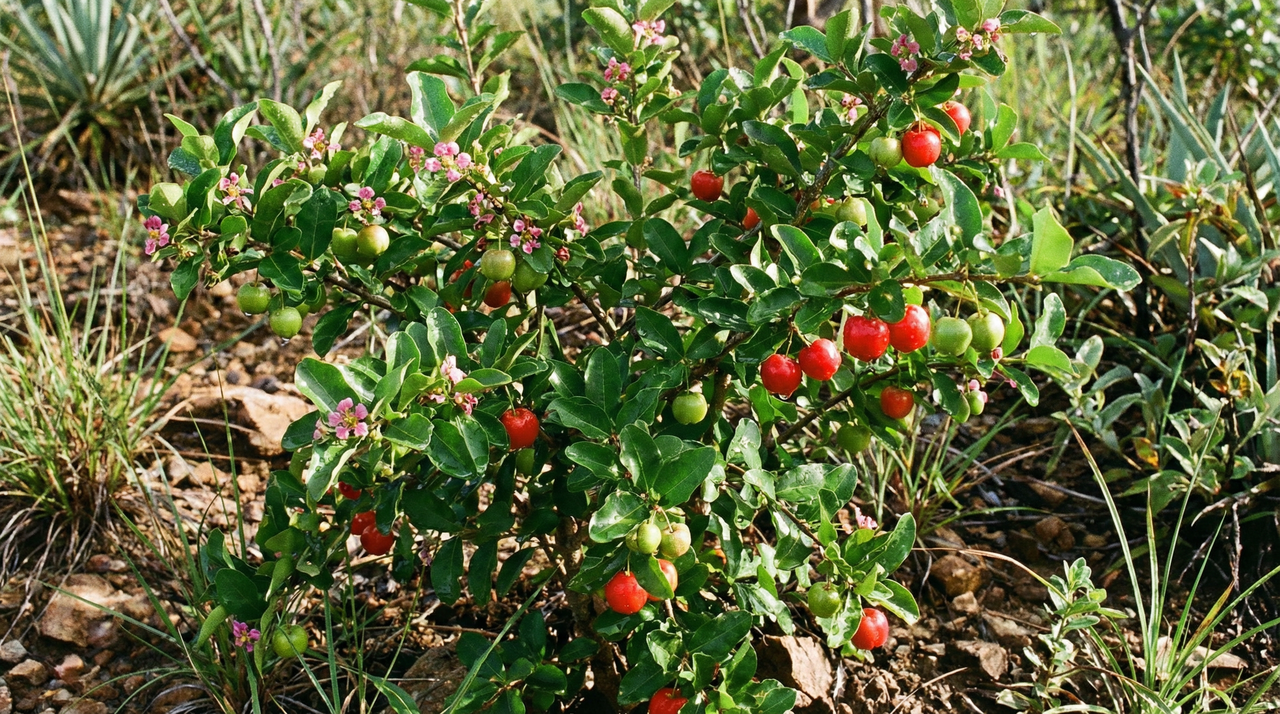
A single Barbados cherry can contain more vitamin C than twenty oranges. Not a handful of cherries, not a cup of juice: one small, lipstick-red fruit the size of your thumbnail. I remember reading that figure for the first time and genuinely not believing it. I looked it up again, found the same number staring back at me, and went outside and ate a few straight off the bush in my Florida garden just to sit with that fact for a minute.[1] The fruit is tart, bright, a little floral, and almost aggressively juicy for something so small. It tastes like a cherry and a pineapple had a very opinionated baby.
Here's the contradiction nobody leads with: despite holding one of the highest ascorbic acid concentrations of any food on the planet, Barbados cherry is almost completely unknown outside of supplement labels and tropical gardens. You won't find it at the grocery store. Most people who take acerola powder every morning have never seen the actual plant. That gap between nutritional fame and culinary obscurity is exactly what makes it so interesting to grow, and exactly why it belongs in far more home food forests than it currently occupies.
Barbados Cherry Origin, History, and Botany
Some plants earn their place in a garden through sheer usefulness. Barbados cherry is one of those plants, and once you've watched a shrub go from a handful of rooted cuttings to a fruit-laden hedge in under two years, it's hard not to feel a little evangelical about it. But before we get into the growing, it helps to understand where this plant comes from and why it carries the history it does.
Botanical Background and Native Range
Barbados cherry, known botanically as Malpighia emarginata, is a perennial evergreen shrub native to the Caribbean, Central America, southern Mexico, and the northern reaches of South America, including Venezuela, Colombia, and northern Brazil.[2][3][4] It belongs to the family Malpighiaceae, and if you've ever shopped for one at a nursery and come home with a plant labeled Malpighia glabra, don't panic. The two names have been used interchangeably in older literature for so long that both are now widely applied to what most growers mean when they say "acerola" or "Barbados cherry."[4][5] I've bought plants under both names from reputable Florida nurseries over the years and found them behave identically in my garden, which tells me the taxonomic overlap is more of an academic headache than a practical one.
In its native range the plant occupies coastal hammocks, scrublands, secondary forests, and disturbed sites, typically growing as an understory plant or in open areas with moderate canopy cover and a preference for full sun to partial shade.[2][6][7] That pioneer-species background matters for permaculture growers because it tells you something fundamental about the plant's temperament: it's accustomed to making do in disturbed ground, growing fast, and fruiting early. A well-established plant under good tropical conditions can live 10 to 40 years,[5][8] producing fruit multiple times per year throughout that span. Start it from a cutting rather than seed and you can expect flowers within one to two years; seed-grown plants generally take two to five years to reach reproductive maturity.[9][10] In my own Central Florida garden, cuttings planted in spring have flowered by the following summer without any coaxing, which makes the return on investment feel almost unreasonably good.
Traditional and Cultural Significance
What drove the indigenous peoples of the Caribbean and Central America to prize this plant so highly wasn't its looks. It was the fruit's extraordinary vitamin C content, which ranges from roughly 1,000 to 4,500 mg per 100 grams depending on variety and ripeness.[11][12] The Taíno, Arawak, and Maya all incorporated acerola into daily food and medicine long before European contact, relying on it to prevent and treat scurvy, fevers, colds, digestive ailments, and general debility. They had no name for ascorbic acid, but they understood intuitively what it did. Every part of the plant earned its place in traditional practice: ripe fruit was eaten fresh or processed into juices, jams, and decoctions; leaf infusions were used for diarrhea, liver complaints, respiratory issues, and inflammation; bark decoctions were applied externally to wounds or taken internally for digestive complaints.[13][14]
The plant carried cultural weight beyond the medicinal, appearing in Caribbean folklore, festivals, and rituals as a symbol of vitality and resilience.[15][16] By the nineteenth century, West Indian medical texts were already formally recommending acerola infusions for scurvy prevention, which means this knowledge had traveled far enough to reach print. Carl Linnaeus first described the species scientifically in 1753 in Species Plantarum, naming it Malpighia glabra,[17] and European colonial traders quickly recognized the fruit's value for naval rations, exporting it from Barbados while Spanish and Portuguese colonial routes spread cultivation to the Philippines, Brazil, Africa, Asia, and the Pacific islands.[18][19] Standing next to a heavily loaded hedge on a warm Florida morning, watching the fruit glow red against the dark leaves, the old scurvy-prevention stories stop feeling like history and start feeling like something obvious that people figured out fast.
The species is currently rated IUCN Least Concern, though wild populations can face pressure from habitat loss.[20] One of the more satisfying things about growing it in a home garden is that widespread cultivation actually helps relieve that pressure, especially when plants come from reputable local nurseries rather than wild collection, which preserves genetic diversity in Caribbean wild stands while giving growers consistent, well-adapted stock.
Visual Characteristics
In the landscape, Barbados cherry presents as a dense, rounded, multi-stemmed evergreen shrub, typically reaching 6 to 15 feet tall and wide under ordinary garden conditions and occasionally stretching to 20 or even 25 feet in ideal frost-free situations over many years.[21][5] The leaves are simple, opposite, elliptic to obovate, somewhere between 3 and 8 centimeters long, with glossy dark-green, leathery surfaces and entire margins that are sometimes slightly notched at the tip.[5][22] Something only a grower tends to notice: the new foliage flushes in a warm coppery red before hardening off to that deep green, which gives the plant a second ornamental moment beyond its flowers.
The flowers are small, about 1.3 centimeters across, with five delicate pink to rose-pink petals borne in tight axillary clusters.[23][24] They're understated up close but collectively give a flowering shrub a soft, hazy blush that holds up well in the garden. Within three to four weeks of flowering, those blossoms become bright-red, cherry-like drupes, 1 to 3 centimeters in diameter, that are the whole reason we grow this plant.[23][24] The young stems are green and lightly pubescent, becoming reddish-brown as they mature, and the root system is shallow and fibrous, spreading laterally rather than driving deep,[25] which has real implications for how you manage irrigation and mulch around established plants.
Fun Facts and Ecological Notes
If you want a single number that explains why this plant traveled the world, it's this: acerola fruit contains approximately 1,677 mg of vitamin C per 100 grams of fresh weight according to USDA data, roughly 30 to 40 times more than oranges.[1] That number will come up again in the health-benefits section, but for now it's worth sitting with as a historical fact: this is a shrub whose entire global biography was largely written by a single phytochemical that nobody could name until the twentieth century.
Ecologically, Barbados cherry is a generous participant in whatever system it joins. As a pioneer species in disturbed habitats it stabilizes coastal soils, and its flowers draw bees, butterflies, and occasional hummingbirds with enough regularity that I've learned to time my morning coffee around watching them work the blossoms in spring.[24][26] Then the fruit ripens, and suddenly it's the mockingbirds' turn. Birds, rodents, and monkeys across its native range all participate in seed dispersal, which explains how effectively it naturalizes in secondary forests and agroforestry systems. In frost-free climates the plant flowers and fruits in an asynchronous, near-continuous cycle,[10][27] which means wildlife have reliable food across multiple seasons, and so do you.
One note worth raising for gardeners in Florida, Texas, Hawaii, and California: Malpighia glabra has naturalized in parts of those states and is flagged as potentially invasive by some Florida authorities in disturbed natural areas.[28][29] It's not aggressively weedy in the way some tropical introductions are, but planting it thoughtfully near natural areas and sourcing plants from local native nurseries is the right approach on both ecological and cultural grounds. A plant with this much history deserves that kind of care.
Barbados Cherry Varieties and Sourcing
Notable Cultivars of Malpighia emarginata and Malpighia glabra
Before you buy, there's something genuinely confusing about this plant that I want to flag: the names "Barbados cherry" and "acerola" float between two closely related species, Malpighia emarginata and Malpighia glabra, and nurseries often use them interchangeably. That taxonomic blur means you'll find cultivar lists that look slightly different depending on which species the breeder was working with. For M. emarginata, recognized commercial selections include 'Florida Sweet', 'B-17', 'Manoa Sweet', 'Cabo', 'Gulffruit', 'Sabrina', 'Margarita', 'Hawaiian', 'Barbados (B-15)', 'Puerto Rican', 'Costa Rica', 'Jamaican', 'Rubra', and 'Dwarf'.[30][31][32] For M. glabra, you'll see names like 'Bixby', 'Floyd', 'Girard', 'Brolmal', 'Biseña', 'Manila', 'Taiwan Beauty', 'Surinam', and 'Florida Sweet #1'.[5][33] That's a lot of names for a plant most people have never grown. The good news is that the overlap in cultural requirements makes them practically manageable in a similar way; the bad news is you really do need to know what you're getting before you plant.
Why does the specific cultivar matter so much? Because seedlings are a gamble. Due to significant genetic heterogeneity in both species, seedling-grown plants vary wildly in fruit size, flavor, yield, and even vitamin C content.[31][34][32][35] I've grown seedling-propagated plants that were perfectly fine for wildlife and hedging, but I've also grown named cultivars beside them and watched the difference unfold over two seasons. Named cultivars maintained through vegetative propagation are the only way to know what you're actually getting into your garden and, ultimately, into your body.
If fresh eating and sweetness are your goals, 'Florida Sweet' deserves serious attention. It produces larger fruits (up to 3 cm) with Brix readings in the 8-12 range and noticeably lower acidity than wild-type or Brazilian selections, which can run 1-2 cm fruit and 4-10 degrees Brix with a more aggressive tartness.[36][37][5] In my own Central Florida plantings, the difference between 'Florida Sweet' and a seedling-grown plant was not subtle -- the named cultivar produced berries nearly twice the size, and I'd grab a handful off the bush to eat fresh while I was working in the garden. The seedlings were still useful, but not like that. Climate and soil play a real role here too; the sweeter character of Florida selections comes partly from our longer warm seasons and soil conditions, not just genetics.
If you're growing for nutrition density rather than fresh snacking, the Hawaiian types are worth knowing about. Some Hawaiian selections have recorded vitamin C content exceeding 4,000 mg per 100g of fruit, which is extraordinary even by Barbados cherry standards.[31][38] I haven't grown Hawaiian types myself, but I've tasted extracts made from them and the intensity is unmistakable. 'B-17' sits in the middle of the road: medium-sized fruit, good processing characteristics, reliable for juicing or powder production rather than fresh eating.[31][38]
Cold tolerance is the other big variable that should influence your cultivar choice, especially if you're gardening anywhere near the edge of the plant's range. Some hybrids and selected cultivars show improved cold tolerance, with thicker bark and reduced leaf drop in cooler weather.[39][40][41] Mature plants can survive brief dips near 28°F (-2°C), but young plants are considerably more vulnerable, and Zone 9b is genuinely marginal without protection.[39][40][41] One thing I've learned from watching plants through Central Florida cold snaps is that deep mulching over the root zone makes a real difference in recovery, even when the canopy takes damage. If you're in 9b, prioritize a cold-tolerant selection, keep young plants in containers their first couple of winters, and don't underestimate the value of a south-facing wall. For gardeners in zones below 9b, container culture is the standard approach, bringing plants indoors when temperatures drop.[39][42][43]
Where to Buy Barbados Cherry Plants
In the United States, both M. emarginata and M. glabra are primarily available in tropical and subtropical regions: Florida, Hawaii, California, and Texas are your best bets for finding quality stock in person.[5][2][44] These plants thrive in USDA zones 9-11, and unless you're in that range or committed to container culture, verify your climate situation honestly before purchasing.[5][45][46][47] Well-drained soil is non-negotiable wherever you land, but that's covered in more detail in the planting section.
You'll find these plants available in several formats. Seeds and bare seedlings typically run $5-25, young potted plants fall in the $15-60 range, and grafted or mature specimens can go from $30-100 depending on size and cultivar. Reputable specialty sources include Just Fruits and Exotics and Hidden Forest Nursery in Florida, Top Tropicals, Logee's Plants, Baker Creek Heirloom Seeds, and San Marcos Growers in California. Several of these carry disease-free certified stock and organic options, which matters more than it might seem for a plant you're growing for its nutritional density. Seeds are available if you want to experiment, but remember the variability issue discussed above; cultivars are almost always propagated from cuttings or grafted onto rootstock, and that's the form worth paying for if consistent fruit quality is the goal.
Now for the part nobody warns you about: the regulatory red tape. Interstate shipping and imports of Malpighia plants and seeds are regulated by USDA APHIS and state agencies in Florida, California, and Hawaii.[48][49][50][51] Plants may require phytosanitary certificates, disease-free certification, and import permits, with possible post-entry quarantine depending on origin. I've sourced tropical plants through proper channels enough times to know that a reputable nursery will already have this paperwork sorted, and it's a green flag when they can show you documentation. If a seller can't tell you where the plant was propagated or whether it's certified, that's a red flag worth acting on.
The species mislabeling issue is real enough that I'll say it plainly: ask the nursery specifically whether you're buying Malpighia emarginata or Malpighia glabra, and ask which named cultivar it is. Tags that just say "Barbados cherry" or "acerola" are not sufficient if you're trying to replicate a specific flavor profile or vitamin C level you read about. I've received plants sold under both names that turned out to be the other species, and while they'll grow just fine, it's frustrating when you're trying to make an intentional cultivar decision. A small amount of upfront skepticism at the point of purchase saves a lot of confusion two seasons in.
Barbados Cherry Propagation and Planting
Every plant has a preferred way it wants to be born into your garden, and Barbados cherry is refreshingly opinionated about this. It can grow from seed, but it would really rather not. Understanding why leads you straight to the vegetative methods that actually deliver the productive, predictable shrub you're after, and from there the site and spacing decisions fall into place naturally.
Seed Propagation and Storage Challenges
Acerola seeds are classified as recalcitrant, which is the botanical community's polite way of saying they're difficult to store and will die on you faster than you expect.[52][53][54] Recalcitrant seeds have high moisture content, are sensitive to desiccation, and can lose viability within weeks at room temperature.[52][54] Short-term storage is possible if you keep seeds in a moist medium at 10-15°C with very high relative humidity, but even under those conditions viability drops significantly after six to twelve months, and long-term seed-bank storage simply isn't feasible without cryopreservation or in vitro methods.[52][53][55] I learned this the hard way. I once harvested a nice batch of seeds from a fruiting plant, set them aside to dry slightly, got distracted by other garden projects, and came back two weeks later to seeds with essentially zero germination potential. Now I scarify every acerola seed immediately after extraction, before they've had any chance to desiccate.
The physical structure of the seed compounds the challenge. Each one is a small, ellipsoidal to ovoid seed about 6-10 mm long, enclosed in a hard, woody, brown seed coat that imposes physical dormancy on top of everything else.[56] Mechanical or acid scarification breaks that coat and lets moisture reach the embryo. With fresh seed and scarification, germination at 25-30°C in a consistently moist medium can reach 70-95% in ten to thirty days.[56][57][5] Without it, and without perfectly fresh seed, those numbers drop dramatically. I'd treat the upper range as an optimistic ceiling, not an expectation.
There's one curious bit of embryo biology worth knowing. Malpighia emarginata seeds are typically monoembryonic (one embryo per seed), with hypogeal germination. However, the closely related Malpighia glabra, which is often sold interchangeably with emarginata and causes no end of labeling confusion at nurseries, can be polyembryonic, producing two to five embryos per seed via nucellar embryony.[56][58] The practical takeaway for most growers is mostly academic, because even if you get a seed to sprout, seed-grown plants are highly variable due to outcrossing and heterozygosity. They do not come true to type.[5][59] You might get something wonderful, or you might spend four years raising a shrub with mediocre fruit. The seedlings themselves are easy to mistake for weeds in the early weeks, a kind of tiny-carrot-top stage where they're just two small oval leaves and a wish; I've lost more than one to an overzealous hand-weeding session.
Vegetative Propagation Methods
For anyone who wants a specific named cultivar, consistent fruit quality, and a plant that fruits in years rather than near-half-a-decade, vegetative propagation is where the real story begins. My go-to for home plantings is semi-hardwood cuttings, and I've had consistently good results with them in Central Florida.
The protocol is fairly forgiving once you dial in the basics. Take cuttings of about 10-15 cm with two to three nodes from healthy, mature branches after the spring flush, when the wood has just begun to firm up. Treat the cut end with IBA rooting hormone at around 1000-3000 ppm (2000 ppm is the sweet spot cited most often in the literature).[60][61][62] Stick them into a well-drained peat-perlite or coarse sand medium, cover with plastic or set under intermittent mist to maintain high humidity, and keep the temperature at 24-29°C. Roots typically develop in four to eight weeks, with success rates running 60-90%.[60][61][62] In my experience, cuttings taken after the spring flush in Florida's humid summers root noticeably faster than those taken in drier periods. The ambient humidity does a lot of the work that growers in drier climates have to supply artificially. Softwood cuttings root faster but need stricter humidity control and more vigilance against fungal damping off.[60][61][62] For most backyard growers, semi-hardwood is the forgiving middle ground.
Grafting is the commercial standard, and once you've seen a grafted plant fruit in its second spring while seedling-grown siblings from the same batch are still in their awkward juvenile phase, the trade-off is obvious. Cleft, veneer, and whip-and-tongue grafting onto seedling rootstocks all work well, with success rates reaching 70-95%, especially during the rainy season when cambium is active.[60][5] Grafted plants can begin fruiting in one to two years versus three to four years from seed or unrooted cuttings.[60][5] I've trialed both approaches side by side, and the grafted plants I planted flowered their second spring while the seedling-grown shrubs I'd babied from the same season didn't produce a single fruit until year four. That's a real gap in any productive garden.
Air layering and tissue culture round out the options, though they're less commonly used for either home or commercial production. Air layering yields about 50-85% success in eight to twelve weeks,[60][63] which is decent for propagating an exceptional specimen from an established plant without access to a grafting setup. Micropropagation in lab settings achieves near-perfect genetic fidelity, making it useful for certified cultivar production at scale, but it's essentially out of reach for the home grower.[60][63]
Soil, Site, and Sun Requirements
Barbados cherry evolved in seasonally dry tropical forests and coastal scrub, and its soil preferences reflect exactly that heritage. It wants sandy loam or loamy soil with 2-5% organic matter and drainage that would satisfy a cactus grower.[5][64] The plant is impressively adaptable to rocky, sandy, and even limestone soils, provided water can drain through freely. What it absolutely cannot tolerate is heavy clay or any site where water pools after rain, because standing water creates exactly the anaerobic conditions that invite Phytophthora root rot, and this plant will decline fast once that sets in.[5][64] In Central Florida, I watch my plants closely during the heavy summer rains. The signs of early waterlogging are subtle at first (slight yellowing, reduced vigor) and then suddenly very obvious. Choosing a site with a slight grade, or building up a modest raised bed or berm, is cheap insurance against something that's genuinely hard to fix once it starts.
The pH sweet spot is 5.5-7.5, with 6.0-6.5 being the practical ideal that keeps nutrient availability high and vitamin C content at its best.[5][40][65] Push above 7.5 and you'll start seeing iron chlorosis: interveinal yellowing on the young leaves, which looks alarming the first time you encounter it. Drop below 5.5 and manganese or aluminum toxicity becomes a concern.[5][40][65] I aim for 6.2 in my beds and have never seen iron deficiency there, but I've rescued yellowing plants in other parts of my garden with a combination of elemental sulfur to bring the pH down and chelated iron to give them an immediate correction while the soil adjusts. Lime raises pH if you're starting with acidic sandy soils; sulfur lowers it if you're dealing with alkaline conditions near limestone.[5][40][65] Neither is a mystery to manage; you just need to know your baseline before you plant.
Sun exposure is non-negotiable. Barbados cherry needs a minimum of six to eight hours of direct sunlight daily for healthy flowering and consistent fruit production.[21][5] It will survive in partial shade, but yield drops, growth gets leggy and etiolated, and the plant never quite develops that dense, productive structure you're aiming for.[21][5] In very hot climates where summer sun is scorching and drought stress is a real risk, a southern exposure with some afternoon shade can prevent leaf scorch, but in most subtropical and tropical gardens, give it the sunniest spot you have.[21][5]
For container growing, the mix should prioritize drainage above everything else: roughly 40% potting soil, 30% coarse sand or perlite, and 30% peat or coir works well.[66][40] Barbados cherry has a shallow to moderate root system at 30-60 cm depth and moderate salinity tolerance, which makes it workable for some coastal sites as long as drainage is excellent.[66][40] Mulch around the root zone helps retain moisture without creating the soggy conditions the roots hate, and it builds organic matter over time, which is worth doing regardless of your native soil texture.
Planting Spacing, Technique, and Timing
Barbados cherry is a genuinely substantial shrub at maturity: three to six meters tall with a similar or slightly narrower spread, dense and bushy with an upright habit.[67][68] And because grafted or cutting-grown plants reach that size faster than seedlings ever will, it's worth planning for it from the beginning rather than correcting it after three years of crowding. In commercial orchards, the standard is 3-4.5 meters between plants and 4.5-7.5 meters between rows, yielding roughly 100-400 plants per hectare depending on intensity.[67][68] For home gardens and food forests, 3-4 meters between plants is a sensible baseline; high-density plantings can tighten to 2.5-3 meters if you're committed to regular pruning.[67][68]
In my experience, giving each shrub room to breathe pays off in healthier foliage and easier harvests, and in humid subtropical climates it reduces the fungal pressure that concentrates in dense, poorly ventilated canopies. A little extra space now is far easier than trying to hack out overcrowded plants later. For hedge plantings along a property edge or as part of a food forest boundary, 3 meters works fine and gives you a dense productive screen once the canopy fills in.
Plant in spring once soil temperature has reached at least 18°C, ideally 21-29°C, so roots can establish in warm, active soil before any cooler weather arrives.[69][60][5] Dig holes 45-60 cm wide and deep to loosen the soil around the root zone and allow those relatively shallow roots to spread easily into good structure.[69][60][5] Young plants in windy sites need staking for the first one to two years to develop straight trunks; without it you end up with a permanently crooked structure that's harder to manage as the canopy fills out.[69][60][5] Cuttings and grafted transplants will typically fruit within two to three years; seedlings take three to five, and that's assuming everything goes right.[69][60][5] Given everything we've covered about seed viability and variability, there's rarely a compelling reason to choose the longer, less predictable road when you have good alternatives.
Barbados Cherry Care Guide
Growing Barbados cherry well comes down to understanding one core truth: this is a plant that evolved in warm, humid tropical lowlands, and it wants to stay there. Everything about caring for it, from how you water to when you prune, flows from respecting that origin. I've been growing both seedling and grafted specimens in my Central Florida garden for years, and the plants that thrive are the ones I've stopped trying to treat like temperate fruit trees and started treating like the tropical shrubs they actually are.
Sunlight Requirements
Barbados cherry needs full sun, meaning a genuine 6-8 hours of direct light daily, for strong growth and reliable fruit set.[60][21] It'll survive in partial shade, but don't kid yourself about the fruit production: shaded plants bloom sporadically and yield far less. I've seen it firsthand with a specimen that ended up under the expanding canopy of a neighboring tree. Beautiful, healthy-looking shrub. Practically no cherries.
That said, Central Florida summers are genuinely brutal, and afternoon shade from a taller canopy tree to the west can take the edge off peak heat stress without sacrificing morning sun. Morning sun is the non-negotiable part. If you're positioning a new plant in your food forest, aim for a spot that gets full eastern and overhead exposure from sunrise through midday, with the option of dappled relief in the late afternoon rather than deep shade all day.
Watering Needs and Irrigation
The single biggest care mistake I see with Barbados cherry is inconsistent watering, and it usually goes one of two ways: either people treat it like a cactus because they've heard it's drought-tolerant, or they drown it because the summer heat makes them anxious. Both end badly. Mature plants need about 1 to 1.5 inches of water per week under normal conditions, bumping up to 1.5 to 2 inches during active fruiting or prolonged heat.[70][5] Deep watering once or twice a week beats shallow daily sprinkles every time. What you're going for is moisture that reaches the root zone, with the top inch or two of soil allowed to dry out between sessions.
Yes, established plants can survive 2 to 4 weeks without supplemental irrigation in well-drained soil.[27][71] But "survive" is the operative word. Prolonged drought triggers leaf drop, stalls growth, and tanks your yield. I learned early on to check soil moisture with a finger rather than a calendar, and that simple habit has saved more than a few plants during dry spells when I would have sworn I'd watered recently enough.
Knowing what trouble looks like helps enormously. Overwatering shows up as yellowing leaves starting at the base of the plant, wilting despite obviously moist soil, and in serious cases, root rot with mushy blackened roots and a foul smell. Underwatering looks different: the leaves curl, the plant wilts during heat of the day without recovering at night, and fruiting shuts down.[21][72] The two can look deceptively similar at first glance, so always check the soil before assuming which direction the problem is going.
Mulch has genuinely transformed how I manage irrigation on my Barbados cherry plants. A 2 to 4 inch layer of organic material around the root zone retains moisture, moderates soil temperature, and suppresses weeds all at once.[5][73] I'm not exaggerating when I say it's cut my irrigation frequency in summer by nearly half. The plant also appreciates high relative humidity, ideally in the 70 to 80 percent range, which Florida provides in abundance from June through September. Keep mulch pulled a few inches back from the trunk to avoid rot, and keep the soil pH in that 5.5 to 7.0 sweet spot (more on why that matters when we get to feeding).
Feeding and Fertility Requirements
Barbados cherry is a moderate to heavy feeder, and if you treat it like a self-sufficient native that doesn't need much, it will underperform. Balanced fertilizers with NPK ratios like 8-8-13, 10-10-10, or 6-6-6 work well, applied 3 to 4 times per year during the growing season or on a 4 to 6 week rotation.[74][68][75] Young plants, in their first year or two, need 0.5 to 1 pound per application; mature trees want 2 to 3 pounds. I start light and scale up as the plant grows rather than front-loading nutrition, which I've found reduces the risk of root burn during establishment.
The macronutrient story is only part of the picture. Micronutrients including iron, manganese, zinc, copper, boron, and magnesium are all essential for healthy growth, and deficiencies in Florida's soils are surprisingly common.[76][77] I spotted iron chlorosis on some young leaves in a slightly alkaline corner of my yard, where the pH had drifted above 7.0. The interveinal yellowing on new growth was the giveaway. A targeted foliar iron spray combined with soil sulfur to bring the pH back down corrected it within a few weeks, which was genuinely satisfying. Nitrogen deficiency looks different: pale leaves across the whole plant and sluggish growth. Potassium deficiency shows up as scorched leaf margins and premature fruit drop.
Potassium deserves special attention because it's directly linked to fruit quality and vitamin C content, which connects everything back to why you're growing this plant in the first place. If you've read the health benefits section, you already know that vitamin C concentration is the whole story with acerola. Skimping on potassium is one of the fastest ways to undercut that nutritional value. University of Florida IFAS research shows that correcting micronutrient deficiencies with a targeted program can increase yield by 20 to 30 percent.[78][76]
Application technique matters as much as product selection. Always broadcast fertilizer around the drip line rather than against the trunk, then water it in thoroughly. Over-fertilization causes leaf burn, dark green foliage, root damage, and can actually increase pest pressure, so resist the urge to push harder when growth is slow. Soil testing every one to two years gives you a real picture of what you're working with and prevents the guesswork that leads to both deficiency and excess.
Frost Tolerance and Cold Protection
Here's where I have to be direct with anyone gardening outside of zones 10 and 11: Barbados cherry does not like cold. Damage begins below 30°F (-1°C), and while a brief dip to 28°F (-2°C) might be tolerated, repeated freezes are often fatal.[78][2][79] Zone 9b growers can push it in warm, protected microclimates, but the margin for error is thin.
Frost damage is easy to recognize once you know what you're looking at: wilting followed by browning or blackening of the leaves, necrosis spreading from the tips inward, and dieback at the branch ends.[78][80] Young plants are significantly more vulnerable than established mature trees, so first-year specimens need extra protection even in areas that rarely freeze. My own practice in Central Florida is to keep a roll of frost cloth next to a string of outdoor incandescent lights each winter. On the nights when temperatures look likely to drop below 32°F, I drape the cloth over the plant and let the lights create a small heat pocket underneath. I've nursed trees through brief dips to 29°F that way with no lasting damage. It sounds fussy, but it's maybe three or four nights a year and the effort is completely worth it. Site selection helps enormously too: south-facing walls, thermal mass from concrete or stone, and the protected interior of a food forest guild all buffer against the worst cold snaps. Container specimens are the simplest solution for gardeners in marginal climates, allowing you to wheel the plant into a garage or under cover when a freeze threatens.
Heat Tolerance and Summer Management
Optimal growth happens between 70 and 86°F (21 to 30°C), which sounds perfectly comfortable until you realize that Central Florida summers regularly push well past that range.[78][81] The plant can tolerate daytime highs up to about 100°F but starts showing stress above 95°F, and fruit quality actually begins declining above 90°F. That matters because heat stress isn't just a growth issue; it affects vitamin C concentration, which is the whole point of growing this fruit.
I learned the hard way during a particularly brutal dry June a few years back. I'd been casual about irrigation, assuming the plant's drought tolerance would carry it through. What I got instead was leaf scorching on the sun-exposed side, premature fruit drop, and a noticeably poor vitamin C yield based on how tart (or rather, how not tart) the fruit tasted. Consistent watering at 1.5 to 2 inches per week combined with that 2 to 4 inch mulch layer made an immediate difference when I corrected course.[40][82]
For young plants in their first summer, a 30 to 50 percent shade cloth during the hottest weeks can prevent the leaf scorch that sets them back significantly. Good air circulation matters too; dense planting without adequate spacing creates stagnant heat pockets that intensify stress. Windbreaks on the western and southern exposures help moderate both heat and wind without eliminating the sun the plant needs. If you're choosing a variety specifically for heat performance, 'Florida Sweet' has shown stronger resilience under high temperatures than many others, which ties back to the cultivar selection discussed in the varieties section.
Pruning, Maintenance, and Seasonal Care
One of the things that surprises new growers is that Barbados cherry never really stops. There is no true dormancy.[22][83][84] Growth slows below 50°F and in cooler marginal climates the plant may drop some leaves and behave semi-dormant, but in subtropical Florida it keeps pushing through most of the year. Flowering runs from late spring through fall, with fruit ripening roughly 3 to 4 weeks after bloom, and peak production concentrates in summer. What that means practically is that there's always something happening and you need to be paying attention across all four seasons, not just during harvest months.
Annual pruning is the most important maintenance task, and timing it correctly makes a real difference. I prune my multi-stemmed bushes right after the main June to July fruiting flush, and that timing consistently gives me a strong fall crop. The pruning stimulates new vegetative growth that matures into productive fruiting wood before the next bloom cycle.[5][85] The target is keeping the overall plant in that 6 to 10 foot bush shape that allows light penetration and airflow throughout the canopy. Remove any dead or diseased wood entirely, then tip back vigorous upright shoots to encourage lateral branching. Every 3 to 5 years, a harder rejuvenation cut can bring an old, woody, declining plant back to productive form.
Training young plants from the start saves you work later. Pick 3 to 5 strong main stems and build from there if you want a multi-stemmed shrub form, or select a single central leader if you're training it more as a small tree. Either approach works; it's really about the space you have and how you want to manage it. Grafted plants, in my experience, hit reliable fruiting by year two, while seedling-grown plants can take four years before you see a serious crop. That's a meaningful difference in a home garden where patience has limits.
The year-round management rhythm, once you get used to it, actually feels satisfying rather than demanding. Prune after the main summer crop. Refresh and top up the mulch layer heading into the cooler months. Keep an eye on irrigation as temperatures drop and the plant's water needs decrease. Prepare frost protection supplies before December. Watch for new flowering as spring warms back up, and resist the urge to fertilize heavily when the plant is heat-stressed in peak summer. It's a continuous cycle rather than a burst of spring activity followed by months of neglect, and honestly that suits both the plant and the kind of attentive gardening that permaculture asks of us.
Barbados Cherry Harvesting Guide
Acerola is not a set-it-and-forget-it fruit. From the moment those small cherry-like drupes shift to red, you're in a race against ripening, oxidation, and heat. Getting the harvest right means understanding the plant's quirky, asynchronous timing, reading the fruit's visual and tactile cues accurately, and moving fast once you pick. I've had clients miss their window by just a few days and end up with mush. I've also seen people pull fruit while it was still green and wonder why it was inedible. Neither extreme is forgiving with this plant.
When to Harvest Barbados Cherries
The first thing to sort out is when your tree will start producing at all, because the answer depends entirely on how it was propagated. Seed-grown plants typically take 3 to 5 years to bear fruit in subtropical climates, while grafted trees can begin fruiting within 1 to 2 years after planting.[40][86][5][54] That difference is significant enough to make grafted stock the obvious choice for most home gardeners. In my experience labeling rows carefully matters here too, because young acerola seedlings in their first season look enough like other subtropical shrubs that it's easy to confuse plants and then wonder three years later why nothing is fruiting. Once you know what you have, planning around that timeline becomes straightforward.
Once flowering begins, the turnaround to harvest is surprisingly fast. Fruit development runs about 30 to 45 days from flower to maturity, with the optimal pick window falling around 25 to 30 days after fruit set when the color has fully developed.[68][73][87] In true tropical conditions, flowering and fruiting can happen year-round. For gardeners in USDA zones 9 to 11, the productive season tends to run from late spring through fall, with the peak harvest window generally falling between June and October.[5][64][43] During a hot, humid Central Florida summer I've found the fruit moves even faster than the research suggests, and I end up checking my trees every five to seven days rather than the standard seven to ten.
That staggered check-in schedule isn't optional. Acerola ripens asynchronously across the tree, meaning you'll have green, orange, and deep-red fruit all on the same branch at the same time, and ripe fruit won't wait.[78] Skipping a round means you'll be harvesting overripe mush alongside the fruit that's just hitting its peak.
The ripeness cues are clear once you know what you're looking for. A ready fruit will be bright orange-red to deep red, with a slight give when you press it gently. The flavor shifts from intensely tart and acidic when green to a balanced sweet-tart profile at full ripeness. Here's the detail that trips people up most: unripe green fruits won't ripen off the tree.[78][40][87] Pull them early and you're stuck with something that tastes like you bit into a citrus rind. There's no counter-ripening trick that will rescue an underripe acerola the way it might work with a tomato.
The payoff for all this attentiveness is real. A mature tree in a suitable climate can yield 30 to 50 pounds of fruit annually,[5][88] and some sources put well-managed mature plants as high as 20 to 50 kg per year.[89] In my own Central Florida yard, a well-pruned eight-foot tree reliably delivers 20 to 40 pounds once it's established and I'm staying on top of the staggered ripening. That's a lot of vitamin C coming off one shrub.
How to Harvest and Handle Acerola
The mechanics of picking are simple but the timing matters. Harvest in the early morning when temperatures are coolest and the fruit hasn't been sitting in heat for hours.[78][90] Pick during dry weather when you can. Wet conditions invite disease, and acerola's thin skin doesn't offer much protection once moisture and warmth conspire against it. Hand-picking remains the method of choice because the fruit is small, soft at peak ripeness, and clustered in ways that make mechanical harvesting impractical at the home scale.
Before or during the growing season, if you have dense clusters forming, thinning them down to four to six fruits per cluster will improve individual fruit size, sweetness, and overall quality.[78][60] I know thinning feels counterproductive when you're trying to maximize yield, but the difference in the resulting fruit is noticeable. The cherries that get space develop better sweetness and are more consistent in size. It's one of those small interventions that pays back more than it costs.
Knowing what you're handling helps too. Acerola fruit is small, typically 1 to 2 centimeters in diameter (occasionally up to 3 cm in select cultivars), with thin waxy skin, juicy flesh, and one to three hard seeds inside.[91][92] A green fruit is firm, registering around 10 to 15 Newtons of firmness. A ripe one drops below 5 Newtons.[93][94] That textural shift is actually one of the most reliable field cues once you've handled a few hundred of these. You can feel the difference in your fingers before you even look at the color carefully.
The flavor transformation from green to ripe is dramatic. Unripe fruit sits at a pH of roughly 3.5 to 4.0 and tastes mostly of sharp citric acid with very little else to recommend it. A fully ripe red acerola, by contrast, climbs to 8 to 10 degrees Brix and develops a genuinely complex sweet-tart profile with aroma compounds including ethyl butanoate, isoamyl acetate, and methyl butanoate that give it those distinctive notes of raspberry, cherry, strawberry, and pineapple.[95][96][97] I describe it to clients as what would happen if a cherry and a pineapple had a very tart, very bright-flavored baby. Think of the gap between a green strawberry and a ripe one, then triple the acidity of the unripe version, and you'll have a reasonable sense of why waiting for full color is non-negotiable.
This flavor peak coincides exactly with the vitamin C peak, which is part of what makes harvest timing so consequential. Acerola contains 1,000 to 4,500 milligrams of vitamin C per 100 grams of fresh fruit, an unparalleled biochemical concentration, and a single cherry at full ripeness can deliver a full day's recommended intake.[98][99] That ascorbic acid content peaks at full ripeness but begins declining the moment the fruit leaves the branch. Which means what you do in the first hour after picking matters almost as much as what you did in the weeks before.
Get the fruit cold as quickly as you can. Cooling to 5 to 10°C (41 to 50°F) using forced air or hydrocooling slows respiration and holds that vitamin C content;[78][88] stored at that temperature with 85 to 95% relative humidity, the fruit can last two to four weeks. Left at room temperature, you're looking at three to seven days before significant degradation.[78][5] At home, I use a dedicated garage fridge set to the cooler end of that range and pop the fruit in immediately after washing and sorting. A shaded spot with a small fan running will buy you a little time in a pinch, but honestly, a cold environment is what really makes the difference. These fruits are worth the effort you put into growing them, and the post-harvest step is where a surprising number of gardeners let that effort evaporate.
Barbados Cherry Preparation, Culinary Uses, and Non-Food Applications
Few fruits justify the phrase "nutritional powerhouse" as literally as Barbados cherry. With ascorbic acid concentrations running from 1,000 to 4,500 mg per 100 grams of fresh fruit depending on variety, growing conditions, and ripeness, this little drupe contains more ascorbic acid per bite than almost anything else you can grow in a subtropical garden.[100][101][102][103] Alongside that vitamin C you're getting phenolics, anthocyanins, flavonoids, carotenoids including beta-carotene and lycopene, potassium, magnesium, and calcium, all packaged in a fruit that's roughly 91% water and only 32 to 40 calories per 100 grams.[100][101] What all that means in practice is that you don't need to eat much to get a meaningful nutritional return. The challenge is getting the fruit into your kitchen at peak ripeness, in usable form, before it falls apart on you.
Culinary Uses and Flavor Profile
The single most important thing I tell anyone harvesting Barbados cherry for the first time is this: ripeness is not optional. Unripe fruit sits at a pH of around 3.0 to 3.5, and the tannin load is intense enough to cause genuine digestive upset if you eat much of it.[104][101] I've handed unripe acerola to curious visitors before, just to watch their face. It's something like biting into an unripe persimmon crossed with a green guava, that same mouth-coating, slightly numbing astringency that makes you question your life choices. Fully ripe fruit, bright red-orange and just yielding to gentle pressure, is a completely different experience. The acidity mellows, fruity notes emerge, and you get a juicy, soft cherry-like texture with pineapple and berry undertones that's genuinely pleasant to eat out of hand.[104]
Before you do anything else with ripe fruit, the seeds need to come out. The three hard, fibrous seeds inside each drupe contain cyanogenic glycosides that can release cyanide, so this isn't a step to skip or rush.[105][106] I use a small paring knife and pit over a bowl to catch the juice; the fruit is so soft when ripe that it takes about five seconds per berry once you have the motion down. If you're processing a large harvest for juice, a fine-mesh food mill works beautifully and separates seeds and skin in one pass. Once pitted, the culinary options open up considerably: fresh eating, juicing, smoothies, jams, jellies, sorbets, pies, tarts, and as a natural souring agent in dressings or sauces.[105][107] Acerola pairs beautifully with sweet tropical fruits that offset its tartness, and it's surprisingly good alongside fresh herbs like mint or basil, dairy, or as a bright counterpoint to the richness of fish or poultry. Cooking or drying mellows the acidity and shifts the texture while still retaining substantial vitamin C, so jam and dried fruit are legitimate processing routes rather than nutritional compromises.
The fruit's brief shelf life is another limiting factor. Ripe fruit at room temperature gives you three to five days before quality drops sharply, which in Central Florida's heat and humidity often means less.[10][108] Refrigerated at 4 to 7°C with 85 to 90% humidity, you can stretch that to two or three weeks, and freezing extends it further still.[10][108] Vitamin C is highest at peak ripeness and starts degrading immediately after harvest, so I pick daily during flush periods and process the same day. Anything I can't use fresh gets pitted and frozen within hours. It's a more active harvest routine than most fruits demand, but that's simply the reality of growing something this nutritionally dense and this perishable.
A word on identification, because this matters more than people think: Barbados cherry can be confused with some genuinely dangerous plants, including Jerusalem cherry (Solanum pseudocapsicum), pokeweed (Phytolacca americana), common privet (Ligustrum vulgare), and woody nightshade (Solanum dulcamara).[109][110] Early in my landscaping years I double-checked a volunteer seedling against pokeweed descriptions before I let it stay in a client's food forest; that habit of verification has served me well. The features that confirm you have the right plant are distinctive: look for crenate leaf margins (gently scalloped edges), a persistent calyx cup that remains attached to the base of each ripe fruit like a tiny star, and that unmistakable intensely tart flavor.[60][111] Edible look-alikes like Jamaican cherry (Muntingia calabura), Surinam cherry (Eugenia uniflora), and nance (Byrsonima crassifolia) are safe but won't have that same almost aggressive vitamin C tartness.[60][111]
As for parts of the plant, only the ripe fruit is considered safely edible. Stems, roots, flowers, and especially the seeds are not for consumption.[112][113] Leaves sit in a different category, used in traditional Caribbean and Brazilian herbal medicine for colds, flu, inflammation, digestive issues, fevers, and skin conditions, but as tea rather than food.[112][113] On the safety side, allergic reactions to Barbados cherry are rare but possible, particularly for anyone with sensitivity to cherries or latex due to potential cross-reactivity.[114] Eaten in normal food amounts, the fruit is safe during pregnancy, but excessive intake or supplementation can bring on diarrhea, nausea, cramps, and potential interactions with medications.[114] Fresh fruit in season is genuinely hard to overeat, but concentrated supplements are a different story.
Medicinal and Herbal Preparations
When I can't keep up with the harvest and the freezer is full, I dry the pitted fruit and grind it into powder. That becomes my family's cold-season go-to, spooned into smoothies or stirred into yogurt. I stay under 1 gram of dried powder daily as a maintenance dose because the research on high-dose vitamin C is clear enough: benefits plateau well before you reach the amounts that cause GI distress, and there's no reason to push it. Clinical dosage guidance bears this out: typical adult ranges run from 1 to 3 grams of dried fruit or powder daily, or 500 to 1,000 mg of standardized extract delivering 100 to 500 mg of vitamin C, with clinical studies on antioxidant effects often working in the 300 to 600 mg daily range.[115][116][117] Capsules, tablets, teas, and decoctions from both fruit and leaves are all established preparation routes with roots in Caribbean and Brazilian traditional medicine.[115] One to two cups of leaf or fruit tea falls within conventional herbal use, and topical poultices from the fruit appear in traditional wound and skin applications as well.[116]
There's also emerging interest in what happens to the seeds after you discard them. Seed extracts and seed oil show anti-inflammatory and moisturizing properties relevant to cosmetic and medicinal skincare, with researchers pointing to potential benefits for conditioning, hydration, and barrier support.[118][119][120] The research is preliminary, and I wouldn't start cold-pressing seeds in your kitchen just yet, but it does suggest that the processing by-products of this fruit have genuine value being investigated beyond the pulp. For now, my preference is always fresh fruit when the harvest allows it. Nothing in a capsule quite replicates the experience of eating a handful of perfectly ripe acerola straight off the bush, still warm from the sun.
Non-Food and Agroforestry Uses
The fruit is clearly the star, but Barbados cherry earns its place in a permaculture system through contributions that have nothing to do with eating it. As a windbreak and understory border plant, it provides genuine structural value in a food forest design; its dense, multi-stemmed habit creates the kind of layered edge that shelters more sensitive specimens and creates microclimatic warmth.[121] The root system stabilizes soil, leaf litter contributes to organic matter and nutrient cycling, and the plant accumulates potassium in its biomass in a way that benefits the surrounding guild when leaves and prunings are returned as mulch.[121] In secondary succession on disturbed or degraded sites, it functions as a reliable colonizer that builds habitat while producing food, which is exactly the kind of multi-function role permaculture design rewards.
Beyond the agroforestry roles, the plant has a longer list of traditional non-food applications than most growers realize. Bark has been used as a source of red dye. Leaves and branches that don't go back into the mulch cycle have fodder potential and have been explored as biomass for biofuel. The fiber has traditional uses in rope and craft work, and the dense hard wood serves as small timber or fuel where larger specimens are available. The ornamental value is real too: the pink flowers and persistent bright-red fruit make this a genuinely attractive hedge plant, not just a functional one.
In a well-designed tropical food forest, Barbados cherry is the kind of plant that never becomes a liability. You harvest the fruit, return the prunings as mulch, let the flowers feed the pollinators, and watch the birds do their part in dispersal. The dye and fiber uses are secondary, and the biofuel potential is largely academic at home garden scale, but knowing they exist rounds out the picture of a plant whose whole system produces value, not just its most celebrated three-centimeter drupe.
Barbados Cherry Health Benefits and Medicinal Uses
If I had to pick a single reason to grow Barbados cherry beyond its charm as a landscape shrub, the vitamin C content would win every time. We're talking about a fruit that routinely delivers 1,000 to 4,500 mg of ascorbic acid per 100 grams of fresh weight, establishing it as one of the most concentrated botanical sources known.[1][122] To put that in perspective, that unprecedented density means a single handful easily exceeds standard therapeutic supplementation doses. That one compound does a lot of the heavy lifting for virtually every health benefit attributed to this plant, but it doesn't work alone.
Key Phytochemicals and Antioxidant Capacity
The flavonoid lineup here is genuinely impressive. Barbados cherry contains quercetin, kaempferol, myricetin, rutin, catechin, and the anthocyanins cyanidin-3-glucoside, cyanidin-3-rhamnoside, and pelargonidin-3-rhamnoside, with total anthocyanin content ranging from 50 to 200 mg per 100g fresh weight.[123][124] The phenolic acid fraction adds chlorogenic acid, ellagic acid, and gallic acid to the mix.[125] Carotenoids round things out with beta-carotene (roughly 0.5 to 2 mg per 100g) and lutein.[126] Taken together, this phytochemical profile delivers antioxidant activity that scores above 50,000 μmol TE per 100g on ORAC, DPPH, and FRAP assays, which puts it near the top of commonly consumed fruits.[127][128]
One thing I've noticed after years of growing acerola in my subtropical garden is that soil conditions directly influence what ends up in the fruit. Plants grown in well-amended, nutrient-rich acidic soil with consistent water seem to produce fruit that tastes more vibrant and holds its tartness longer in the fridge, which tracks with the research showing that rainy seasons and fertile, acidic soils tend to push vitamin C, phenolics, and flavonoid levels higher.[129][130] Drought stress can bump some antioxidants upward in stressed plants, but the tradeoff is a 20 to 50 percent yield reduction, so it's not a strategy I'd recommend chasing deliberately.[131] Brazilian cultivars tend to run higher in both ascorbic acid and anthocyanins than Florida or Mexican-grown fruit, which suggests variety selection matters as much as garden management.[132]
It's also worth understanding what these compounds do ecologically before we get into human health. The flavonoids and phenolics deter herbivores, protect the plant from UV radiation, and attract the birds that disperse the seeds.[128] The plant built this chemistry for its own survival. We just benefit from it secondhand.
Evidence-Based Health Benefits
Traditional Caribbean, Central American, and South American communities have used Barbados cherry for centuries to treat scurvy, colds, flu, digestive disorders, diarrhea, inflammation, and wounds.[133] That folk medicine record is long and consistent enough to deserve respect, even before we look at laboratory data. And the lab data for its most fundamental actions, especially antioxidant and immune-supporting effects, is genuinely solid. Vitamin C from acerola shows improved bioavailability compared to synthetic ascorbic acid in human studies, which matters for anyone comparing whole-fruit sources to supplements.[134][112]
The anti-inflammatory picture is compelling in preclinical models. Acerola extracts inhibit pro-inflammatory cytokines including TNF-α and IL-6, suppress COX-2 activity, and reduce paw edema in rodent studies.[112][135] The analgesic effects in hot-plate and tail-flick tests have been described as comparable to aspirin, which is a notable benchmark even knowing those are rodent models.[135] Antimicrobial activity against Staphylococcus aureus and Escherichia coli has been confirmed at minimum inhibitory concentrations between 0.5 and 2 mg/mL, with phenolic disruption of microbial membranes as the likely mechanism.[129]
Pharmacological reviews also describe potential neuroprotective, hepatoprotective, antihypertensive, antidiabetic, anticancer, and anti-obesity effects.[128][136] The antidiabetic data shows 20 to 30 percent blood glucose reduction in rodents; anticancer work reports apoptosis induction in MCF-7 and HeLa cell lines with IC50 values between 10 and 50 μg/mL.[128] I think these findings are genuinely exciting, but I also feel an obligation to be straight with readers: virtually all of it comes from in vitro and animal studies. Large-scale human clinical trials remain limited, and until that changes, the strongest, most defensible claims center on immune support, free-radical scavenging, and the historical record on scurvy prevention. That's where I land when clients ask me how to talk about this fruit.
Nutritional Profile
With these extreme concentrations, raw acerola delivers well over 1,800 percent of the adult daily value in a serving that most people would eat as a snack.[1] The fruit is also remarkably low-calorie, coming in at roughly 32 to 44 kcal per 100g with 7.5 to 9.4 grams of carbohydrates, 1.1 to 2.8 grams of fiber, and only about 0.4 grams of protein and 0.7 grams of fat.[1][137] Minerals include potassium at 146 mg, magnesium at 18 mg, calcium at 12 mg, and phosphorus at 11 mg per 100g, plus trace iron, zinc, and selenium, and 38 μg RAE of provitamin A.[1]
Beyond the headline vitamin C number, the polyphenol content adds real depth to the nutritional story. Quercetin runs 20 to 50 mg per 100g; total phenolics reach 200 to 500 mg per 100g; beta-carotene measures 300 to 600 μg per gram of dry weight alongside lutein and zeaxanthin.[138][139] One ripening nuance worth knowing: phenolics and flavonoids tend to peak in unripe fruit, while anthocyanins are highest at full ripeness.[140] So whether you harvest slightly early for maximum phenolics or fully ripe for deeper anthocyanin color is actually a choice with nutritional implications.
Processing is where things get painful. High-heat cooking destroys 50 to 70 percent of the vitamin C; pasteurized juice loses 30 to 70 percent; even oven or sun drying only retains 40 to 60 percent.[141][142] Freeze-drying is the clear winner, retaining 80 to 90 percent of bioactives.[143] I've run my own informal comparison between freeze-dried and oven-dried batches from my garden, and the difference is obvious even before you analyze anything: the freeze-dried powder tastes vibrantly tart and almost fluorescently bright, while the oven-dried version comes out muted and brownish. Flavor is a reasonable proxy for preserved bioactives here. Fresh fruit should go straight into the refrigerator at 4 to 7°C and be used promptly since heat, light, and oxygen all accelerate vitamin C degradation.[141]
Safety Considerations and Cautions
Ripe Barbados cherry fruit is exceptionally safe. There are no major reports of severe toxicity or poisoning from normal dietary consumption, traditional cultures across the Caribbean and Latin America have used it safely for generations including for children and pregnant women, and allergic reactions are rare (though possible in people with sensitivities to related plants).[116][144][145] Eating the fruit as food is simply not a safety concern for most people.
Concentrated supplements are a different matter, and this is where I always slow clients down when they get overly enthusiastic about the vitamin C numbers. Supplemental doses above 2,000 mg of vitamin C daily can cause diarrhea, nausea, and cramping.[146] Anyone with a history of kidney stones should keep intake moderate and stay well hydrated, since high vitamin C increases oxalate load in susceptible individuals.[116][115] People with hemochromatosis need to be careful because vitamin C enhances iron absorption, which is the last thing you want if you're already absorbing too much.[146] And if you're on warfarin or other anticoagulants, please talk to your doctor before using acerola supplements; the vitamin C-warfarin interaction is real and clinically relevant.[147][116]
On the leaf and seed front: leaves deserve cautious use, and the conflicting reports around cyanogenic glycosides in seeds are mostly a pet-concern rather than a meaningful risk from casual human fruit consumption.[116] Speaking of pets: the fruit itself is considered non-toxic to dogs and cats in small quantities, though the seed question warrants keeping large amounts out of reach.[148][149] One last thing for people foraging unfamiliar backyard shrubs: Barbados cherry is identifiable by its opposite, oval leaves and small red translucent fruits that cluster together, which distinguishes it from toxic nightshade relatives that typically carry alternate leaves.[150] It's a small identification detail, but it's the kind of thing a landscaper notices immediately and a new forager might not.
Barbados Cherry Pests and Diseases
Growing Barbados cherry in a humid subtropical climate teaches you something pretty quickly: this plant doesn't have a pest and disease problem so much as it has a humidity and drainage problem. Get those two things right and you'll spend most of your time harvesting. Get them wrong and you'll spend it chasing fungal outbreaks and sap-sucking insects that exploit every weak spot. I've grown several Malpighia selections in my Central Florida garden, and the pattern is consistent enough that I now think of site selection and cultivar choice as pest management, not just horticulture.
Common Diseases and Prevention Strategies
Anthracnose, caused by Colletotrichum gloeosporioides, is the disease you really need to understand before anything else. It produces leaf spots, flower blight, fruit rot, and in bad years, wholesale defoliation, and unmanaged outbreaks can cut your harvest by up to 50% under humid conditions.[78][60][151] That's not a minor setback. It's the difference between a productive food tree and a frustrating ornamental. Everything else in this section, the spacing, the pruning, the fungicide timing, flows from understanding that this pathogen is sitting in your garden right now, waiting for the air to stagnate and the leaves to stay wet.
I've found that plants in crowded, low-airflow spots succumb fastest, almost without exception. The anthracnose spores don't need an invitation when foliage dries slowly after every rain. My practice now is to start preventive copper-based fungicide applications at the first stretch of warm, wet weather, before symptoms appear, because curative sprays once lesions are visible rarely turn the tide.[152][54] That proactive timing has kept my trees clean through Florida summers that would otherwise be a fungal disaster.
Root rot from Phytophthora and Pythium species is the second major threat, and it's entirely a drainage story. Waterlogged or poorly drained soil creates the anaerobic conditions these pathogens love, and once a plant is wilting from root rot, decline toward death is often faster than you'd expect.[78][5] The propagation and planting section already covers drainage requirements, so I won't re-litigate that here, but know that it connects directly to disease pressure. Bacterial leaf spot (Xanthomonas campestris) is another one that gardeners unintentionally invite through overhead irrigation; it produces angular, water-soaked lesions that turn necrotic, and switching to drip watering removes most of that risk outright.[78]
Rounding out the disease picture: Cercospora leaf spot, powdery mildew (Oidium spp.), and pink disease (Erythricium salmonicolor) all show up in humid environments, though none with the regularity or severity of anthracnose.[153][154] Viral diseases like acerola nuclear virus and mosaic are documented but genuinely uncommon in home plantings, worth knowing about but not worth losing sleep over unless you're growing commercial-scale stock.
Cultivar choice is your single most powerful tool here. I learned this the hard way before I got my hands on 'Florida Sweet': unnamed nursery stock from a general-purpose tropical nursery looked fine through spring, then anthracnose hit with the July humidity spike and the plants looked terrible by August. 'Florida Sweet' planted the same year, same garden, same conditions, shrugged it off. That cultivar carries good resistance to anthracnose, leaf spot, and root rot and performs reliably in exactly the humid subtropical conditions where those diseases thrive.[68][67] 'B-17' offers similar fungal tolerance if you're growing for processing, though it shows slightly higher viral susceptibility than 'Florida Sweet'.[68][67] Starting with the right plant matters more than any spray schedule you can devise.
Major Insect Pests and Natural Defenses
Here's something I genuinely appreciate about Barbados cherry: it comes to the garden with its own pest-management toolkit. The leaves are covered in dense trichomes that physically deter soft-bodied insects from getting a comfortable foothold, and the plant produces phenolics, terpenoids, and alkaloids with documented repellent and insecticidal activity.[155][156][157] The extrafloral nectaries scattered along the leaf margins are nectar sources that recruit predatory insects, essentially a standing invitation to the beneficial wasps and beetles you want patrolling your garden.[155][156] None of that makes it pest-proof, but it does mean the plant is working with you, not against you, when you're trying to keep populations in check.
The pests you'll actually encounter are mostly sap-suckers. Aphids and whiteflies cause leaf curling and, more seriously, can vector viruses; mealybugs and scales produce that distinctive sticky honeydew that turns into sooty mold, the same grimy film you'd recognize from a neglected citrus tree.[5][158] Spider mites show up during hot, dry spells and leave stippled, bronzed foliage with fine webbing if populations get ahead of you.[5][158] Occasional visitors include thrips (look for silvery scarring on fruit and young leaves), leaf miners, caterpillars, and leafhoppers, though none of these typically reach damaging levels in a well-maintained home planting.[159][160]
The Caribbean fruit fly (Anastrepha suspensa) deserves its own mention because it operates differently from every other pest on this list. It's a quarantine pest, females lay eggs directly into developing fruit, and the result is larval infestation, premature drop, and rot that spreads fast if you don't interrupt the cycle.[60][161] In my experience, removing any fallen fruit the same day it drops is more effective than any spray for preventing fruit fly cycles from getting established. It sounds simple, and it is, but growers who skip that step consistently have worse outcomes than those who don't.
The IPM framework that actually works here follows a clear sequence: monitor regularly so you catch problems early, then rely on spacing and pruning to maintain airflow (reducing the damp microclimates that favor both fungal disease and soft-bodied insects), keep the area under the tree free of fallen fruit and debris, and let your biological allies, ladybugs, parasitic wasps, and Bacillus thuringiensis for caterpillars, do heavy lifting before you reach for a spray bottle.[162][60] University of Florida field trials demonstrate IPM programs like this reduce damage by 40 to 60 percent compared to reactive conventional sprays.[162][60] When you do need to intervene, neem oil, insecticidal soap, and horticultural oil are your targeted options, applied to the specific problem rather than as routine calendar sprays that knock back your beneficial insect population. 'Florida Sweet' adds another layer of resilience here with its tolerance to both aphids and leaf spot, while 'B-17' brings resistance to bacterial canker into the mix.[159][160]
The through-line in all of this is that prevention, through smart cultivar selection, good site planning, and consistent sanitation, does more work than any intervention you can apply after the fact. In a humid subtropical garden, proactive choices are what separate a productive tree from a constant management burden.
Barbados Cherry in Permaculture Design
Before you slot acerola into a guild or start dreaming about a food forest hedge, there's a non-negotiable conversation to have about climate. Everything about how this plant performs in a designed system flows directly from where it evolved: tropical America, spanning the Caribbean, Central America, and northern South America, in climates that range from wet tropical rainforest to monsoon and tropical savanna.[163][164][165][166] That backstory matters enormously when you're deciding where to site one.
Climate Requirements and Suitable Zones
Acerola wants consistently warm, frost-free conditions with genuine humidity. Optimal growth happens between 20 and 30 °C (68-86 °F), and annual temperatures should stay above 18 °C as a floor.[167][165][5] That's not a suggestion. Drop below 28 °F (-2 °C) for any extended period and you're looking at severe damage or outright plant death, especially with young specimens.[60][22][74][168] Reliable perennial performance in the United States really means USDA zones 10 and 11: coastal Miami-Dade, Broward County, Hawaii, and pockets of southern Texas and the Gulf Coast, from sea level up to around 1,000 meters.[60][169][170]
Zone 9b is where it gets interesting and also humbling. I grow several acerola specimens in my Central Florida landscape, and the single most reliable trick I've found is planting them on the south side of a brick wall. That wall radiates stored heat on cold nights and has reliably bought me an extra 4 to 6 °F of protection when temperatures dip. But I'll tell you what I learned the hard way: microclimates only carry you so far if the drainage isn't perfect. I lost two young plants during a rare cold snap not because the temperature was catastrophic, but because the bed stayed wet and the cold stressed already-waterlogged roots into rot. Well-drained soil is inseparable from cold tolerance at the margins of this plant's range, and I now check drainage twice before I commit to a spot in anything approaching zone 9.[171][74] South-facing walls, urban heat islands, and windbreaks all help, but dry roots are the non-negotiable foundation of that strategy.
Ecosystem Functions and Biodiversity Support
What acerola brings to a designed system goes well beyond its fruit. The flowers are nectar-rich and genuinely magnetic to pollinators: honeybees, native stingless bees, carpenter bees, and a supporting cast of flies, butterflies, and moths.[5][72] The fruit draws thrushes, tanagers, mockingbirds, and parrots, as well as bats and small mammals, all of which assist with seed dispersal.[5][72] I've watched mockingbirds and tanagers work my acerola bushes with the same intensity they'd give a wild hedgerow, which tells me this plant registers as genuine habitat rather than just a cultivated ornamental to the local fauna.
The roots earn their place in the system too. Acerola's fibrous root system anchors soil on slopes and in disturbed areas, and the leaf litter decomposes quickly, feeding potassium and organic matter back into the soil and improving structure over time.[121][5] It's not a nitrogen fixer, so don't design your guild around that expectation. But quick-decomposing mulch and slope stabilization are real contributions, and I'd rather have a plant that honestly delivers two or three useful functions than one oversold as doing everything.
The pollination biology here is worth understanding because it directly shapes design choices. Acerola is self-compatible and hermaphroditic, but fruit set improves substantially with cross-pollination.[172][173][174] Optimal pollination happens at 20-30 °C with 60-80% relative humidity, and habitat fragmentation, meaning isolated plants in a sea of lawn or pavement, visibly reduces pollinator visitation and drags down yields.[175][176][54] I interplant basil and marigolds with every acerola bed I manage, and the difference in bee traffic between those mixed plantings and isolated shrubs is noticeable enough that I wouldn't go back to growing them alone. More on this in the guild section below.
One thing I appreciate about this plant from a design ethics standpoint: it's not considered invasive, even though it can naturalize in disturbed tropical sites. It behaves as a pioneer species in secondary succession, helping to rebuild structure after events like hurricanes, without becoming a problem in intact ecosystems.[68][177] That's a clean bill of ecological health for a productive shrub, and it's one reason I'm comfortable recommending it for edge and disturbed-site planting without reservations.
Forest Layer Placement and Guild Companions
In the food forest stack, acerola is a shrub-to-subcanopy plant. In cultivation it typically reaches 2 to 5 meters, occasionally pushing to 6 or 7 meters under ideal conditions, and it always stays multi-stemmed.[178][179][21] That growth habit is a feature, not a limitation. It slots comfortably beneath a banana or a citrus tree, filling the shrub layer with productive evergreen mass without competing for the canopy or casting the ground layer into permanent shade. In permaculture applications it functions as an understory edible, a living hedge, a slope stabilizer, and a bird-attractant element, and its quick-decomposing leaf litter makes it a modest but genuine mulch contributor along productive borders.[180][170]
The root system adds another layer of design intelligence. Acerola forms arbuscular mycorrhizal associations that improve phosphorus and nutrient uptake, and its shallow-to-moderate fibrous roots extend roughly 1 to 2 meters, making it workable even in large raised beds.[181][182] Those mycorrhizal networks are part of why companion legumes work so well here: the fungi help shuttle nutrients from nitrogen-fixing neighbors into the acerola's shallow root zone.
For guild companions, the strongest performers in my Florida gardens have been pigeon pea and sweet potato. Pigeon pea handles the same heat and humidity that acerola demands, fixes nitrogen nearby, and provides windbreak density at a comparable height. Sweet potato spreads across the ground layer, suppresses weeds more aggressively than most covers I've tried, and doesn't seem to compete in any meaningful way with acerola's shallow root system. I've tried other legumes in that guild slot and had less consistent results, so I now default to pigeon pea unless I have a specific reason to experiment. Banana and citrus make reliable taller companions for wind protection, and basil and marigold in the ground layer are, as I mentioned, genuinely worth including for the pollinator pull they deliver.[183][184]
The practical pollination management that follows from all of this is straightforward: plant at least two different cultivars near each other to maximize cross-pollination, keep bee-friendly companions in the ground and herb layers, and avoid any pesticide applications during bloom. Acerola's dependence on a living pollinator community at the right temperature and humidity means the guild isn't decorative; it's functional infrastructure that shows up directly in your fruit set.
The Fruit That Made Me Rethink What "Nutritious" Actually Means
I remember the first time I bit into a ripe acerola straight off the bush, still warm from the Florida sun, and genuinely laughed out loud. Nothing in my garden had ever tasted quite so alive. I'd grown it for the food forest structure, honestly; the vitamin C numbers felt almost too dramatic to take seriously until I started testing ripeness by flavor alone and realized the science was just describing something my mouth already knew.
Sources 184
- USDA FoodData Central: Acerola, raw ↩
- USDA PLANTS Database - Malpighia emarginata ↩
- Missouri Botanical Garden - Malpighia emarginata ↩
- Malpighia emarginata - Kew Science Plants of the World Online ↩
- Barbados Cherry - University of Florida IFAS Extension ↩
- Plants of the World Online: Malpighia glabra ↩
- Malpighia emarginata - Global Biodiversity Information Facility ↩
- Acerola (Malpighia emarginata DC.): Production and Properties ↩
- Missouri Botanical Garden Plant Finder ↩
- Acerola Production Guide ↩
- Ethnobotany of Acerola (Malpighia emarginata DC.) in the Caribbean ↩
- Traditional Uses of Medicinal Plants in the Caribbean ↩
- Ethnobotanical Uses of Barbados Cherry in the Caribbean ↩
- Traditional Medicinal Uses of Barbados Cherry in the Caribbean ↩
- Cultural Significance of Native Fruits in the Caribbean ↩
- Medicinal Plants of the West Indies ↩
- Species Plantarum ↩
- Malpighia emarginata - Plants of the World Online ↩
- Acerola (Malpighia emarginata DC.): Production and Application in the Food and Pharmaceutical Industries ↩
- Conservation Status of Malpighia emarginata ↩
- Missouri Botanical Garden - Malpighia emarginata ↩
- Malpighia emarginata - USDA PLANTS Database ↩
- Malpighia emarginata - Wikipedia ↩
- Barbados Cherry: Botany, Production and Uses ↩
- Missouri Botanical Garden Plant Finder - Malpighia emarginata ↩
- Barbados Cherry - Malpighia emarginata - US Forest Service ↩
- Missouri Botanical Garden - Malpighia emarginata ↩
- Invasive and Exotic Plants in Florida ↩
- Invasive Plant Atlas: Malpighia glabra ↩
- Acerola Production Guide for Florida ↩
- Acerola (Malpighia emarginata DC.): Production, Postharvest Handling, Nutrition, and Biological Activity ↩
- Acerola (Malpighia emarginata DC.) Production in Hawaii - University of Hawaii at Manoa ↩
- Horticultural Varieties of Acerola (Malpighia spp.) ↩
- Evaluation of Acerola (Malpighia emarginata DC.) Genotypes for Fruit Traits ↩
- Malpighia emarginata - Useful Tropical Plants ↩
- Cultivar Variation in Acerola Sensory Attributes: Florida vs. Brazil ↩
- Sensory Evaluation of Acerola Fruits from Different Regions ↩
- Horticultural Characteristics of Acerola Varieties ↩
- University of Florida IFAS Extension - Acerola Growing Guide ↩
- Cold Tolerance of Acerola ↩
- California Rare Fruit Growers - Acerola Fruit Facts ↩
- University of Florida IFAS Extension - Acerola ↩
- Acerola (Malpighia glabra) ↩
- Malpighia glabra (Barbados cherry) ↩
- USDA Plant Hardiness Zone Map ↩
- USDA PLANTS Database ↩
- Distribution Maps: Malpighia glabra ↩
- Fruits and Vegetables Import Requirements (FAVIR) ↩
- Plant Import Information ↩
- Federal Plant Pest Regulations ↩
- Florida Plant Import Regulations ↩
- Acerola (Malpighia emarginata DC.) seed storage behavior and viability ↩
- Seed storage and germination of Malpighia emarginata DC. (Acerola) ↩
- Barbados Cherry Cultivation Guide ↩
- Recalcitrant Seeds: Biology and Storage ↩
- Morphology and Anatomy of Acerola (Malpighia emarginata DC.) Seeds ↩
- Seed Germination of Acerola (Malpighia emarginata) ↩
- Polyembryony in Acerola (Malpighia glabra L.): Origin and Development of Multiple Embryos ↩
- Acerola (Malpighia emarginata DC.): Production and Marketing ↩
- Propagation of Acerola (Malpighia emarginata) by Cuttings ↩
- Rooting Response of Barbados Cherry Cuttings to IBA ↩
- Vegetative Propagation of Acerola ↩
- Micropropagation of Malpighia emarginata ↩
- Growing Barbados Cherry ↩
- Malpighia emarginata (Acerola) - CABI Compendium ↩
- Missouri Botanical Garden Plant Finder - Malpighia emarginata ↩
- Acerola Growing in the Florida Home Landscape ↩
- Barbados Cherry - Malpighia glabra ↩
- Malpighia emarginata - Acerola ↩
- Acerola - Malpighia emarginata ↩
- Cultivation of Acerola (Malpighia emarginata) in Tropical Regions ↩
- Watering Tropical Fruits: Acerola ↩
- Irrigation and Mulching for Tropical Fruits ↩
- Acerola Production Guide ↩
- University of Hawaii College of Tropical Agriculture - Acerola Cultural Practices ↩
- Micronutrient Deficiencies in Tropical Fruits: Acerola Case Study ↩
- Nutrient Requirements of Acerola (Malpighia glabra L.) ↩
- Acerola Production Guide - University of Florida IFAS Extension ↩
- Cold Tolerance of Tropical Fruits ↩
- Frost Damage in Tropical Plants - Texas A&M AgriLife Extension ↩
- Acerola: Botany, Production and Uses ↩
- Physiological Responses of Malpighia glabra to High Temperatures ↩
- Barbados Cherry - Malpighia glabra L. ↩
- Malpighia emarginata - Missouri Botanical Garden Plant Finder ↩
- Barbados Cherry Growing in the Florida Home Landscape ↩
- Growing Acerola Cherries ↩
- Harvesting and Postharvest Handling of Acerola ↩
- Acerola (Malpighia emarginata DC.): Production and Application ↩
- FAO Agronomy Guide - Acerola Cultivation ↩
- Harvesting and Postharvest Management of Tropical Fruits: Acerola ↩
- Kew Science - Plants of the World Online: Malpighia emarginata ↩
- Barbados Cherry (Malpighia glabra L.) - Fruit Description ↩
- Morphological Variation in Malpighia emarginata Cultivars ↩
- Sensory and Nutritional Evaluation of Acerola ↩
- Flavor and Nutritional Changes in Acerola During Ripening ↩
- Physicochemical and Sensory Characteristics of Acerola Fruits (Malpighia spp.) - ScienceDirect ↩
- Volatile Composition of Acerola Fruit (Malpighia emarginata L.) Analyzed by HS-SPME/GC-MS ↩
- Acerola (Malpighia emarginata) - Health Benefits and Uses ↩
- Acerola (Malpighia emarginata L.): Cultivation and Uses ↩
- Acerola (Malpighia emarginata DC.): Production and Chemical Constituents ↩
- Nutritional Composition of Barbados Cherry (Malpighia glabra L.) ↩
- Acerola: A Review of Its Nutritional and Medicinal Properties ↩
- Antioxidant Properties of Acerola Fruit ↩
- Processing Effects on Acerola Flavor Profile ↩
- Acerola (Malpighia emarginata DC.): Production and Chemical Composition ↩
- Toxicity of Tropical Fruits: Focus on Acerola (Malpighia glabra) ↩
- Missouri Botanical Garden - Plant Finder: Malpighia glabra ↩
- Postharvest Biology of Acerola (Malpighia glabra L.) ↩
- Missouri Botanical Garden - Pokeweed ↩
- Missouri Botanical Garden - Privet ↩
- Muntingia calabura ↩
- Ethnobotany of the Caribbean: Traditional Uses of Malpighia glabra ↩
- Folk Medicine in Brazil: Traditional Uses of Acerola (Malpighia glabra) ↩
- Allergic Reactions to Barbados Cherry ↩
- Acerola - Drugs and Lactation Database (LactMed®) ↩
- Acerola: Uses, Side Effects, Interactions, Dosage, and Warning ↩
- Vitamin C from Acerola Extract: Dosage and Safety ↩
- EWG Skin Deep: Malpighia emarginata Seed Extract ↩
- Acerola Anti-Inflammatory Activity: A Review (PMC) ↩
- Health benefits of acerola and its by-products - ScienceDirect ↩
- Malpighia emarginata in Agroforestry Systems ↩
- Acerola (Malpighia emarginata DC.): Production and Chemical Constituents ↩
- Antioxidant Activity and Flavonoid Content in Leaves of Malpighia emarginata ↩
- Phenolic Compounds in Acerola Fruit (Malpighia emarginata): Nutritional and Functional Properties ↩
- Phenolic Compounds and Antioxidant Activity of Barbados Cherry (Malpighia emarginata DC.) ↩
- Nutritional Composition and Bioactive Compounds of Acerola Fruit ↩
- Antioxidant Activity of Acerola Extracts: Phenolics and Ascorbic Acid ↩
- Pharmacological Activities of Malpighia glabra L. (Acerola): A Review ↩
- Seasonal Variation in Vitamin C Content of Malpighia glabra Fruits ↩
- Influence of Soil on Flavonoid Content in Malpighia spp. ↩
- Geographic and Environmental Influences on Acerola Fruit Composition ↩
- Geographic Variation in Phytochemistry of Malpighia glabra ↩
- Ethnobotanical and Ethnopharmacological Studies of Malpighia glabra L. (Acerola): A Review ↩
- Clinical Trial of Acerola Juice on Vitamin C Levels in Humans ↩
- Analgesic and Anti-Inflammatory Effects of Acerola Fruit Extract ↩
- Acerola (Malpighia emarginata DC.): A Review of Its Nutritional Value and Pharmacological Properties ↩
- USDA FoodData Central - Barbados Cherry (Malpighia glabra) ↩
- Phytochemical Composition and Antioxidant Activity of Acerola (Malpighia emarginata L.) Fruits ↩
- Carotenoids and Phenolics in Malpighia emarginata ↩
- Nutritional Composition and Bioactive Compounds of Acerola (Malpighia emarginata DC.) Fruit ↩
- Effect of Processing on Vitamin C in Acerola Fruit ↩
- Vitamin C Content and Stability in Acerola ↩
- Nutritional Composition and Bioactive Compounds of Acerola (Malpighia emarginata) - Review ↩
- Acerola: MedlinePlus Supplements ↩
- Acerola (Malpighia emarginata DC.): Production and Application in Food Industry ↩
- Vitamin C (Ascorbic Acid) - NIH Office of Dietary Supplements ↩
- Acerola-Warfarin Interaction ↩
- ASPCA Toxic and Non-Toxic Plants List ↩
- Pet-Friendly Plants: Is Acerola Safe for Dogs and Cats? ↩
- Malpighia glabra - Wikipedia ↩
- Fungal Diseases of Tropical Fruits ↩
- University of Florida IFAS Extension - Barbados Cherry Care Guide ↩
- Acerola Growing in the Florida Home Landscape ↩
- FAO Annotated Checklist of Important Plant Pathogens Impacting Key Smallholder Fruit Crops: Malpighia emarginata ↩
- Trichome Morphology and Function in Acerola (Malpighia emarginata) ↩
- Plant Defense Mechanisms in the Malpighiaceae Family ↩
- Secondary Metabolites and Defense Mechanisms in Acerola (Malpighia glabra L.) ↩
- Insect Pests of Acerola ↩
- Acerola Production Guide ↩
- Pest Management in Acerola Orchards ↩
- Insect Pests of Tropical Fruit in Florida ↩
- Insect Pests of Tropical Fruits in Florida ↩
- USDA PLANTS Database ↩
- Missouri Botanical Garden Plant Finder ↩
- University of Florida IFAS Extension ↩
- Plants of the World Online - Malpighia emarginata ↩
- Scientia Horticulturae Research (2020): Relative humidity effects on acerola physiology ↩
- California Rare Fruit Growers - Acerola Fruit Facts ↩
- Acerola Cultivation in Hawaii ↩
- Growing Barbados Cherry (Acerola) ↩
- University of Florida IFAS Extension - Acerola (Malpighia emarginata) ↩
- Insect Pollinators of Acerola in Florida ↩
- Pollination Biology of Acerola (Malpighia emarginata) ↩
- Pollination in Malpighiaceae Family - Botanical Journal ↩
- Effects of Habitat Fragmentation on Insect Pollinators of Tropical Plants ↩
- Temperature Effects on Pollination in Tropical Fruits ↩
- Plants of the World Online - Malpighia glabra ↩
- Missouri Botanical Garden Plant Finder - Malpighia emarginata ↩
- USDA PLANTS Database - Malpighia emarginata ↩
- Agroforestry Systems with Acerola ↩
- Mycorrhizal Associations in Tropical Fruit Trees ↩
- Mycorrhizal Associations in Malpighiaceae - Journal of Ecology ↩
- Acerola: Production and Uses ↩
- Barbados Cherry Cultivation Guide ↩