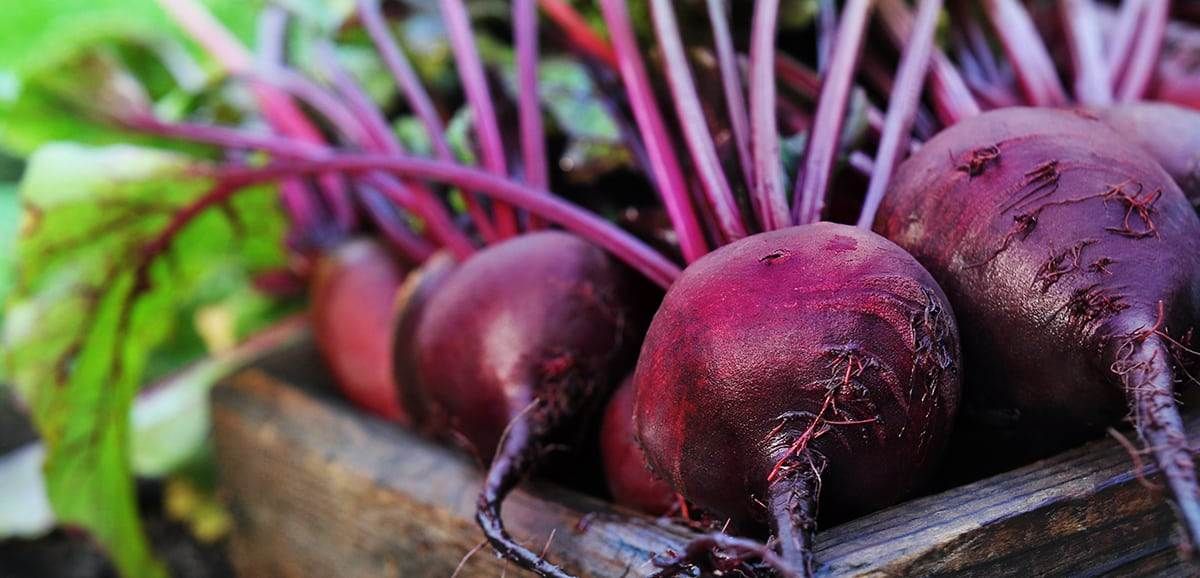
Nobody warned me that beets would turn my urine a vivid, alarming shade of red the first time I grew and ate a serious quantity of them. I was maybe twenty-three, had just harvested my first real bed of Detroit Dark Reds, roasted half of them in a single sitting because I was proud of myself, and spent the following morning quietly convinced something had gone very wrong inside my body. It hadn't. That pigment, the betalain responsible for beet's extraordinary color, passes right through some people essentially intact, and it's completely harmless. But I've since met dozens of gardeners who pulled up their first big beet harvest, cooked a celebratory meal, and then panicked in the bathroom the next day. Consider this your heads-up.
What I find genuinely strange is that a plant capable of producing that kind of color, that kind of biochemical intensity, started out as a scraggly coastal green with almost no root worth mentioning.[1] The swollen, jewel-toned root we pull from the soil today is entirely a human invention, shaped over centuries by growers who kept selecting for something bigger, sweeter, and more useful. That history matters in the garden, because beets still carry the memory of where they came from, and understanding that helps explain almost everything about how to grow them well.
Beet Origin and History
Wild Ancestors and Early Mediterranean Use
Before the beet was a root vegetable, it was a coastal weed. The wild progenitor of every beet in your garden, sea beet (Beta vulgaris subsp. maritima), still grows along the rocky shorelines and disturbed sandy soils of the Mediterranean, Europe, and western Asia today.[2] Thinking about that origin actually changes how I approach planting sites. A plant that evolved in saline, fast-draining coastal ground isn't going to thank you for heavy clay, but it also can't tolerate drying out completely between waterings. That coastal heritage is baked right into the plant's preferences.
The Beta vulgaris scientific name covers an astonishing amount of genetic ground. Beets belong to the Amaranthaceae family and are the same species as Swiss chard, just selected in a different direction.[3] I've grown them side by side specifically to show clients this relationship. One plant, split across millennia into leaves versus roots, greens versus crimson globes. The species Beta vulgaris now encompasses leaf beets, garden beets, sugar beets, and fodder beets, all tracing back to that same scrappy shoreline plant.[4]
From Leaf to Root: The Evolution of Cultivated Beets
The root wasn't the original prize. Early humans collected beet leaves, and evidence of that use stretches back to prehistoric times; the swollen, fleshy root we pull from our gardens today is a much later development shaped by deliberate selection.[5] By the time Greeks and Romans were writing about beets, they were cultivating them for both food and medicine, though the roots were still small and woody compared to modern varieties.[6] This fits perfectly with how I think about multifunctional plants: the beet was never just dinner. Across cultures it served as a natural dye and a folk remedy for blood purification and digestive health long before anyone was tracking nitrate content in a lab.[7]
The Rise of Sugar Beets and Modern Varieties
By the 16th century, table beets had become a fixture in European gardens, with red, golden, and striped varieties emerging through generations of careful selection.[8] That vivid red color comes not from anthocyanins like most red vegetables, but from betalain pigments, a distinction I mention when clients are surprised that beet juice stains differently than red cabbage. Then in the 18th and 19th centuries, geopolitics redirected the plant's entire trajectory. Napoleon's trade blockades cut off cane sugar imports, and European breeders responded by selecting beets specifically for sucrose content. The result was a crop that today accounts for roughly 20% of global sugar production.[9] I bring this up when teaching because it's a sharp reminder that plant breeding doesn't happen in a vacuum. Culture, conflict, and commerce all leave fingerprints on the seeds we plant. The humble beet on your plate carries several thousand years of that history in every bite.
Beet Varieties for Gardeners and Permaculture Systems
Few vegetables offer as much visual and culinary range as the beet. What started as a lean, leafy coastal plant has been shaped by centuries of selection into four genuinely distinct forms, each bred for a different human need. Understanding which group a variety belongs to helps you make smarter planting decisions before you've spent a dime on seeds.
Major Beet Types: Table, Sugar, Mangel, and Leaf Beets
Table beets are what most home gardeners picture: round or cylindrical roots in red, gold, white, or striped flesh, grown for eating. Sugar beets are an entirely different creature, bred for high sucrose content and harvested at industrial scale; you're unlikely to grow them, but they're responsible for roughly half the world's refined sugar. Mangels, sometimes called fodder beets, grow to astonishing size and were historically cultivated as winter feed for livestock. Their massive roots also make them genuinely useful in a permaculture system where post-harvest biomass matters; I've chopped and dropped large mangel tops and roots into beds where they break down quickly and add serious organic matter to the soil. The fourth group, leaf beets, includes Swiss chard and perpetual spinach, where breeders selected for abundant, colorful foliage rather than a swollen root.
Within table beets, the diversity gets fun fast. Detroit Dark Red is the classic: deep burgundy, smooth skin, and sweet flesh that holds its color beautifully when roasted or pickled. Chioggia, the candy-striped Italian heirloom, is one I grow every season without fail. Slicing open a fresh Chioggia root and seeing those concentric pink-and-white rings still gets me every time. I've found that some older Chioggia strains lose those rings to grey mush when cooked, but the Guardsmark strain maintains vivid color even after roasting. Golden beets are gentler in flavor, less earthy than red types, and they won't stain your cutting board, which matters more than people admit. Cylindra, a Danish heirloom with a carrot-shaped root, slices into uniform rounds that are ideal for pickling.
Recommended Varieties and Sourcing Tips
I've trialed quite a few types of beets to grow side by side in Central Florida's warm shoulder seasons, and the varieties that consistently earn a repeat spot are Detroit Dark Red for reliability, Chioggia for beauty and flavor, Golden for fresh eating, and Cylindra for pickling. For bolt resistance in zones 8 and warmer, look specifically for varieties labeled bolt-tolerant or bred for warm climates; this is worth reading seed catalog descriptions carefully rather than assuming any beet will perform in early spring heat.
For sourcing, I've had consistent germination and true-to-type performance from Fedco, High Mowing Organic Seeds, and Baker Creek Heirloom Seeds over multiple seasons. Open-pollinated and heirloom varieties are worth prioritizing if you plan to save seed or want predictable characteristics year to year. Whatever you order, consider trialing two or three different types in your first season rather than committing an entire bed to one. A succession of red, gold, and chioggia beetroot planted two weeks apart gives you an extended harvest, a genuinely beautiful polyculture planting, and enough real-world comparison to know which varieties best suit your own soil and kitchen.
Beet Propagation and Planting Guide
Here's something that trips up a lot of gardeners: what looks like a single beet seed is actually a multigerm seed cluster containing anywhere from two to five embryos. Every one of those embryos can germinate, which means that if you plant a row and walk away, you'll end up with a tangled mass of seedlings competing for the same inch of soil. That's not a germination problem; that's beet biology working exactly as designed. Once I understood that, my whole approach to planting changed.
The other thing I tell anyone new to growing beets: direct sowing is the way to go. I've seen people try to start transplants to get a head start on the season, and it usually ends in disappointment. Beet roots are sensitive to any disturbance during establishment, and even careful transplanting can result in forked, stunted, or otherwise strange roots. Start them where they're going to grow. It's that simple.
Direct Sowing Beets: Timing, Depth, and Spacing
I sow beet seeds about half an inch to one inch deep, spacing the clusters three to four inches apart in rows about twelve to eighteen inches from each other. Once seedlings reach two to three inches tall, I thin them down to three to six inches apart, and I won't pretend that part is fun. It feels wasteful to snip out perfectly healthy seedlings, but I've learned the hard way that skipping or delaying thinning means you'll harvest a bunch of golf ball-sized woody marbles instead of the glossy, substantial roots you were imagining. Thinning is non-negotiable here.
One tip I've adopted for early spring plantings: soak the seeds in warm water for a few hours before sowing. When the soil is still on the cool side, germination can drag, and that brief soak helps soften the seed coat enough to give things a nudge. It's a small extra step, but it's paid off for me on those borderline-early planting days. For a steady supply of roots across the season, I succession sow every two to three weeks from early spring through late summer. Beets move fast enough that staggered plantings keep harvests coming without overwhelming the kitchen all at once.
Soil Preparation and Site Selection for Beets
Beets want loose, well-drained soil that's been worked at least eight to ten inches deep, with a pH somewhere between 6.0 and 7.5. Rocks, hard clods, and compaction all cause roots to fork or develop in strange shapes, which is mostly a cosmetic problem but also a sign the plant was fighting its environment the whole time. Before planting, I work in a generous layer of compost or well-rotted organic matter to improve structure and feed the soil without spiking nitrogen levels. That last part matters: too much nitrogen pushes lush top growth at the expense of the root, which is the whole point of growing beets in the first place.
Full sun is the other non-negotiable, at least six hours of direct light daily. In my own beds, where the soil tends toward the sandy and nutrient-poor end of the spectrum, I've found that extra compost is the single biggest factor in getting consistently sized roots. Good soil preparation before the seeds go in is the foundation everything else builds on, including the thinning work you'll do weeks later.
Beet Germination Timeline and What to Expect
Under good conditions, beet seeds germinate in five to ten days, with soil temperatures between 50 and 85°F and an ideal target around 75°F. When your row pops up, don't be surprised if it looks twice as crowded as you expected. That's the multigerm clusters doing their thing: multiple seedlings emerging from a single planting point. Early in my gardening life I mistook this for a great germination rate and left the row alone. Weeks later, I had a dense mat of beet tops and almost nothing worth harvesting underneath.
Young beet seedlings also look a lot like Swiss chard seedlings, which makes sense since they're in the same genus. If you've got both going in adjacent beds, label your rows clearly. Once you know what you're looking at, the identification click is instant, but that first season can produce a moment of genuine uncertainty. Get into the habit of thinning as soon as seedlings reach two to three inches, and keep succession sowing on your calendar every few weeks. Give each plant the space it needs and the roots you pull will be worth every seedling you sacrificed to get there.
Beet Care Guide: Water, Light, Feeding, and Maintenance
Water Needs for Healthy Beet Roots
If I had to name the single practice that separates sweet, smooth beet roots from woody or waterlogged failures, it's consistent moisture. Extension research from Minnesota and Florida both confirm that beets want about 1 to 1.5 inches of water per week, delivered deeply enough to wet the soil to 6–8 inches.[10][11] The key word is "consistent." Beets forgive a lot, but they never forgive the feast-or-famine watering cycle that plagues so many kitchen gardens.
Your soil type changes the rhythm considerably. In sandy, fast-draining beds you'll likely need to water every 2–3 days during hot weather, while clay soils can go 4–5 days between deep waterings before saturation becomes a problem.[10][12] Growth stage also shifts the equation: seedlings need light, frequent moisture every 1–2 days; established plants doing vegetative growth want about 1 inch per week reaching 6 inches down; and during the root-bulking stage, bump that to 1–1.5 inches weekly, then taper slightly as roots approach harvest size.[13][14]
Season matters too. One summer I watched an entire row bolt and go woody during a hot, dry stretch because I hadn't increased irrigation fast enough. Now I bump to 1.5 inches per week the moment temperatures climb, without waiting to see stress signs first.[11][15] Established beets can tolerate a short dry spell of 7–10 days (sugar beet up to 14–21 days depending on growth stage), but prolonged drought reliably tanks root quality, size, and yield.[16][17]
Learning to read your plants is faster than any calendar schedule. Under-watering shows up first on older leaves: tips and edges yellow or brown, leaves curl, growth stalls.[18] Overwatering looks deceptively similar at first glance, but the lower leaves go yellow while the soil is still visibly wet, and roots turn mushy and brown when you pull them — a sign of Phytophthora or other root rots that move fast in heavy, saturated ground.[10] I've trained myself to check the lower leaves first thing whenever I walk past the beet bed; if they're yellowing and the soil feels damp, I hold off watering entirely for a few days.
A few supporting practices make consistent moisture far easier to maintain. Water quality matters more than most people realize: beets prefer irrigation with a pH of 6.5–8.0 and an EC below 2.0 dS/m, and rainwater beats high-sodium municipal sources when you have the option.[19][20] A 2–3 inch layer of organic mulch (I've used both straw and shredded leaves; both work well) cuts evaporation dramatically, moderates soil temperature, and prevents the surface crusting that blocks water from penetrating evenly — and as a bonus, it keeps weeds down enough that I've nearly stopped hand-weeding my beet rows.[10] Finally, drainage is non-negotiable. In any garden with even moderately heavy clay I automatically plant beets in raised beds, because waterlogged roots rot fast and no amount of careful irrigation saves them once root rot takes hold.[10]
Harvesting Beets: Timing, Technique, and Maximizing Flavor and Yield
Getting beet harvest timing right is one of those skills that sounds simple until you pull a root the size of a softball and discover it has the texture of cork. I've been there. The good news is that beets give you clear signals before things go wrong, and once you learn to read them, you'll rarely waste a root.
When to Harvest Beets for Best Flavor and Texture
Baby beets are ready at 1 to 2 inches across; full-size storage roots at 3 to 4 inches, which typically falls somewhere between 50 and 70 days from sowing depending on your variety and conditions.[21][10] Beyond that range, roots turn woody and lose their appeal fast. I do succession plantings specifically so I'm always pulling from a bed at that sweet spot rather than scrambling to use up a batch of overgrown roots all at once.
The sensory cues matter as much as the calendar. Look for the shoulder of the root peeking above the soil line, feel for firmness without hardness (think carrot-ready, not radish-hard), and check that the leaves are still upright and crisp rather than yellowing.[22][23] If the shoulder is peeking and the root feels solid but not rock-hard, pull it. Beets hold reasonably well in the ground, so you can harvest across a window rather than all at once.
How to Harvest Beets Without Damaging Roots
I learned the hard way that yanking beet tops without loosening the soil first usually snaps the taproot clean off. Now I always work a garden fork around the root first, lift gently, then grasp the tops near the crown and pull.[24][25] Twist or cut the tops about an inch above the root immediately after lifting; leaving them on pulls moisture out of the root and accelerates spoilage. Bruises and punctures invite rot during storage, so handle them more like eggs than potatoes.
Expected Yields, Storage, and Flavor Notes
A well-managed bed can produce 8 to 12 beets per square foot, with each mature root weighing somewhere between 4 and 8 ounces.[26][27] Flavor is sweetest when you pull before temperatures climb and stay above 75°F; sustained heat causes those concentric zonate rings inside the root and a pithy, less sweet flesh. Kept at 32 to 40°F with 90 to 95% humidity, roots store beautifully for 3 to 6 months. In my experience, a beet pulled at 3 inches versus one left to hit 6 is night and day in the kitchen. And don't overlook the greens: harvest outer leaves while they're young and tender, and your thinnings are a bonus crop worth eating immediately.[28] There's a particular satisfaction in pulling the first baby beets of the season and eating the whole plant, roots and greens, the same afternoon.
Beet Preparation, Culinary Uses, and Practical Applications
Most people who grow beets think of them as a root crop with some nice-looking tops that get composted. After years of growing them, I've completely flipped that around. The whole plant is the harvest, and treating it that way is one of the more satisfying shifts I've made in my kitchen garden routine.
Cooking and Preserving Beet Roots
Roasting is where beet roots really come into their own. The dry heat concentrates and caramelizes the natural sugars in a way that boiling simply can't match, turning the earthy mineral flavor into something almost sweet and rich. One tip I'd pass along from my own kitchen mistakes: leave a bit of the stem and root tail intact before putting them in the oven. Cut those off too early and the color bleeds out, and you're left with dull, faded roots instead of that gorgeous deep red. Wrap them in foil, roast at around 400°F until tender, then the skins slip right off.
For a red beet recipe that keeps the garden going through winter, pickling is hard to beat. A simple pickled beet recipe using vinegar, sugar, and spices preserves roots for months and pairs beautifully with the beet's earthy sweetness. Grating raw beets into slaws or grain bowls is another approach I lean on when I want to keep those betalains and nutrients intact, since heat does degrade some of them. Knowing how nutrient-dense these roots are makes me determined to use every preparation method that suits the moment.
Making the Most of Beet Greens
The greens are where I think most gardeners leave real value on the table. Young beet leaves are mild and work beautifully raw in salads. Larger leaves cook down like chard, which makes sense given they're essentially the same species. I sauté them with olive oil and garlic as a weeknight side, or blend them into pestos when I have more than I can use quickly. The stems can go in too; just give them a little extra time in the pan.
Non-Food Uses for Beets
Beyond the kitchen, beets have a long history as a natural dye source. That vivid betanin pigment that stains your hands and cutting board has been used to color fabrics, homemade inks, and Easter eggs for centuries. It's a fun secondary use for the regenerative gardener who instinctively looks for multiple functions in every plant. Just don't expect it to be permanent on fabric without a mordant; the color is beautiful but not exactly colorfast. Still, as a natural colorant for seasonal projects or food use, it's a genuine bonus from the same roots you're pulling for the kitchen anyway.
Beet Health Benefits and Medicinal Uses
Few vegetables have earned their reputation in sports nutrition and cardiovascular research as convincingly as the beet. What's behind that reputation isn't magic; it's a fairly well-understood biochemical pathway. Beets are exceptionally high in dietary nitrates, which the body converts to nitric oxide, a compound that relaxes and dilates blood vessels. The clinical research on this is solid and well-replicated: regular consumption of beetroot juice or powder consistently lowers resting blood pressure in people with hypertension, often by meaningful margins. That same nitric oxide effect is why endurance athletes started loading up on beet shots before races, improving oxygen delivery to muscles and delaying fatigue in ways that show up in timed trials. If you're growing beets partly because you want functional food rather than just flavor, this is the headline benefit worth knowing.
Cardiovascular and Athletic Performance Benefits of Beet Nitrates
The nitrate-to-nitric-oxide mechanism is the most clinically validated story beets have to tell. Studies on beetroot juice supplementation show measurable reductions in systolic blood pressure, typically within a few hours of consumption, with sustained effects when intake is regular. The endurance angle is equally well-documented: recreational and competitive athletes show improved time-to-exhaustion and reduced oxygen cost during submaximal exercise after beetroot loading. These aren't fringe findings from a single lab; they've been reproduced across populations and exercise types. Growing your own means you can harvest roots at peak freshness and juice or blend them without the processing losses that can come with some commercial powders.
Key Phytochemicals: Betalains, Nitrates, and Phenolics
That vivid crimson color isn't just visually striking; it's the signature of betalain pigments, specifically betanin (red-violet) and vulgaxanthin (yellow-orange). Betalains function as antioxidants and have demonstrated anti-inflammatory activity in cell and animal studies. Think of them as doing roughly analogous work to the anthocyanins in blueberries or cherries, but they're a chemically distinct class found in relatively few plants. Unlike many other plant pigments, betalains are highly heat-stable, so even roasted or lightly cooked beets retain meaningful antioxidant activity. The leaves, though, are where the phenolic content really concentrates. Beet greens carry a richer phenolic load than the roots, which makes sense when you consider that leaves are the plant's primary defense surface.
Nutritional Profile of Beets
For everyday eating, the nutritional profile is quietly impressive. Roots are a solid source of folate, manganese, potassium, and dietary fiber while being genuinely low in calories. That makes them useful in the garden and on the plate without requiring any clinical framing. The greens are a different story entirely, and I always tell new growers this because so many people toss them: beet leaves are nutritionally denser than the roots, richer in vitamins K, A, and C, calcium, and those phenolics I mentioned. Since beet and Swiss chard are both Beta vulgaris, it shouldn't be surprising that the greens are roughly comparable to chard in the kitchen and on a nutrition label. I treat the leaves as a second crop, sautéed with garlic or wilted into a grain bowl, and I'm always a little sad when I see someone strip them off and compost them before they've even made it to the kitchen.
Safety and Side Effects
Beets are safe for nearly everyone, which is one of the reasons I feel comfortable recommending them to gardeners across the board. The main thing worth preparing people for is beeturia, the reddish discoloration of urine or stools that happens in roughly 10 to 14 percent of the population after eating red beets. Since this visual effect is harmless, alerting guests before serving a harvest meal avoids unnecessary panic. The one genuine consideration is oxalate content: beet greens in particular contain oxalic acid, and anyone with a history of calcium oxalate kidney stones should treat them the same way they'd treat spinach or chard, meaning moderate portions rather than avoidance. In my own diet and among the gardeners I work with, I've never seen oxalates cause a problem, but it's worth knowing if that history applies to you.
Common Pests and Diseases for Beets
Beets are genuinely one of the most trouble-free crops I grow. Compared to collards or cabbage, which practically demand row cover the moment they go in the ground, beets mostly take care of themselves. I've had seasons where I didn't intervene once from sowing to harvest, and that's not luck so much as the result of a few consistent growing habits I've come to count on.
The usual pest suspects are flea beetles (you'll see tiny scattered holes in young leaves), leafminers (look for pale, winding tunnels traced through the leaf tissue), and the occasional cluster of aphids on tender new growth. None of these are catastrophic. Row cover handles flea beetles beautifully in the early weeks, and leafminer damage is mostly cosmetic; the roots keep sizing up just fine underneath. Aphids rarely establish in large enough numbers to matter if you've got decent airflow and a few beneficial insects around, both of which a well-designed polyculture bed tends to encourage.
On the disease side, the two worth knowing are damping-off in newly germinated seedlings and cercospora leaf spot, which shows up as small circular spots with reddish-purple margins on older leaves. Both trace directly back to excess moisture and poor drainage. Early in my gardening life I overwatered beets, convinced more was better; once I shifted to steady but never soggy irrigation, the damping-off issues essentially disappeared. I've also noticed that beets in raised beds with well-amended, draining soil almost never show leaf spot, even in our humid Florida summers, while the same variety in heavy clay at ground level will start spotting within a few weeks of wet weather.
For soil-borne disease in general, a 3-to-4-year rotation out of the same bed is the single most reliable fix. Neem oil handles most fungal issues if you catch them early. When you give beets the steady, well-drained conditions they prefer, pest and disease management becomes almost an afterthought.
Beet in Permaculture Design
Most people think of beets as a kitchen crop first and ask about their garden role second. In my experience designing annual polycultures and early-stage food forests, beets deserve to be thought about the other way around. Their contributions to soil health, biomass, and insect habitat are real and measurable, and understanding those functions changes how you site and sequence them across the growing season.
Ecosystem Functions and Soil Benefits
The taproot is where the story starts. Beta vulgaris sends down a deep, probing root that physically breaks up compaction and improves soil structure over its growing cycle, acting as a dynamic accumulator of nutrients like potassium and iron in the process.[7] I've started using beets deliberately in client gardens with dense, compacted urban soils, sowing them into beds that have been neglected or recently disturbed. By the following season, you can feel the difference in tilth when you're transplanting something more permanent into that space.
The leafy tops amplify this further. Rather than composting beet greens off-site, I chop and drop them around young fruit trees, and the boost to soil life is noticeable within a few weeks. The biomass breaks down quickly and contributes real organic matter to the nutrient cycle.[29] And if you let a plant bolt rather than pulling everything at harvest, those small, unassuming flowers draw in hoverflies and predatory wasps[7] that patrol the rest of your guild for pests. One bolting beet in the corner of a bed does more for your beneficial insect population than you'd expect.
Placement in Forest Layers and Guilds
Beets occupy the herbaceous layer, and in the early stages of a food forest guild they can double as ground cover, keeping soil protected while slower perennials are still getting established.[7] Their 50 to 70 day maturation means you can fit one or two successions into the spaces around young fruit trees or shrubs before those larger plants fill in and shade the understory.[30]
For companion pairings, I lean on a mix of nitrogen-fixers, brassicas, and aromatics. Beans or peas work well to feed the soil while beets draw up what's already there; kale or other brassicas share similar cool-season timing; and herbs like dill and chamomile pull in beneficials while confusing pest insects.[31] I often mix beets with radishes and turnips in successional plantings, rotating them through the same bed every few weeks. You get staggered harvests, continuous ground cover, and a diverse root profile breaking up the soil at multiple depths simultaneously. The deep red foliage is a bonus; it gives a guild visual structure that clients actually notice and appreciate.
Suitable Climates and Growing Zones
Beets are well-adapted across a wide swath of temperate conditions, performing reliably in USDA zones 3 through 10 as a cool-season crop that tolerates a light frost but needs consistent moisture and prefers to avoid sustained heat.[32] That range sounds almost universal, but the practical reality depends entirely on timing. In warmer subtropical or Mediterranean climates, high summer temperatures trigger bolting before roots size up properly, so the growing window shifts to fall, winter, and early spring instead.[33]
I've designed for clients in humid subtropical climates where the instinct is to grow beets in spring, and the lesson I keep passing on is: don't. Sow in September or October, let the roots develop through the mild winter, and you'll pull sweeter, denser beets than anything a spring sowing would produce in the same climate. Getting the seasonal timing right is what unlocks the full ecosystem value of the crop; a plant that bolts before harvest contributes almost nothing to a guild except, arguably, those pollinator flowers. Plan around your climate rather than against it, and beets will earn their spot in the design every time.
The Root That Keeps Winning Me Over
I've grown beets in sandy Florida soil, in raised beds, in scraggly gap plantings where I was mostly just hoping for the best, and they've rewarded me every single time I gave them halfway decent conditions. There's something quietly humbling about a plant this old, this useful, this genuinely beautiful when you slice it open, asking almost nothing of you in return. I keep a jar of pickled Chioggia on my counter most of the year, and honestly, that might be reason enough.
Sources
- Beet | Description, Varieties, & Facts | Britannica ↩
- Beta vulgaris - Wikipedia ↩
- Beta vulgaris subsp. vulgaris - Plants of the World Online ↩
- Crop Wild Relatives of Beta vulgaris ↩
- The Origin and Evolution of the Beet ↩
- A History of Beets ↩
- Ethnobotanical Uses of Beta vulgaris ↩
- Beetroot - Origin and History ↩
- Sugar Beet - History of Sugar Beet ↩
- Growing Beets - University of Minnesota Extension ↩
- Beet Production Guide - University of Florida IFAS Extension ↩
- Irrigation for Vegetable Gardens - Cornell University ↩
- Beet Production Guide - UC Agriculture and Natural Resources ↩
- Irrigation Management for Vegetable Crops - Cornell University ↩
- Beta vulgaris - Missouri Botanical Garden Plant Finder ↩
- USDA Plants Database - Beta vulgaris ↩
- RHS Growing Guide: Beetroot ↩
- Symptoms of Water Stress in Beta vulgaris - NCBI ↩
- Irrigation Water Quality for Vegetable Crops - NMSU Circular ↩
- Salt Tolerance of Crops - USDA ARS ↩
- Beet Production Guide ↩
- Harvest and Storage of Garden Vegetables ↩
- Beets - Growing and Harvesting ↩
- Harvesting Beets ↩
- Growing Beets ↩
- Commercial Beet Production ↩
- Vegetable Crop Yield and Storage ↩
- Beet Greens: Harvesting and Using ↩
- Beet as a Permaculture Plant ↩
- Permaculture Guild Design Examples ↩
- Companion Planting for Beets ↩
- USDA Plant Hardiness and Growing Information ↩
- Growing Beets in Warm Climates ↩
About the Author
Farmer Noelle has been farming for over 12 years between Washington and Michigan. Her experience ranges from small-scale biointensive operations to a 40-acre CSA with over 300 members.