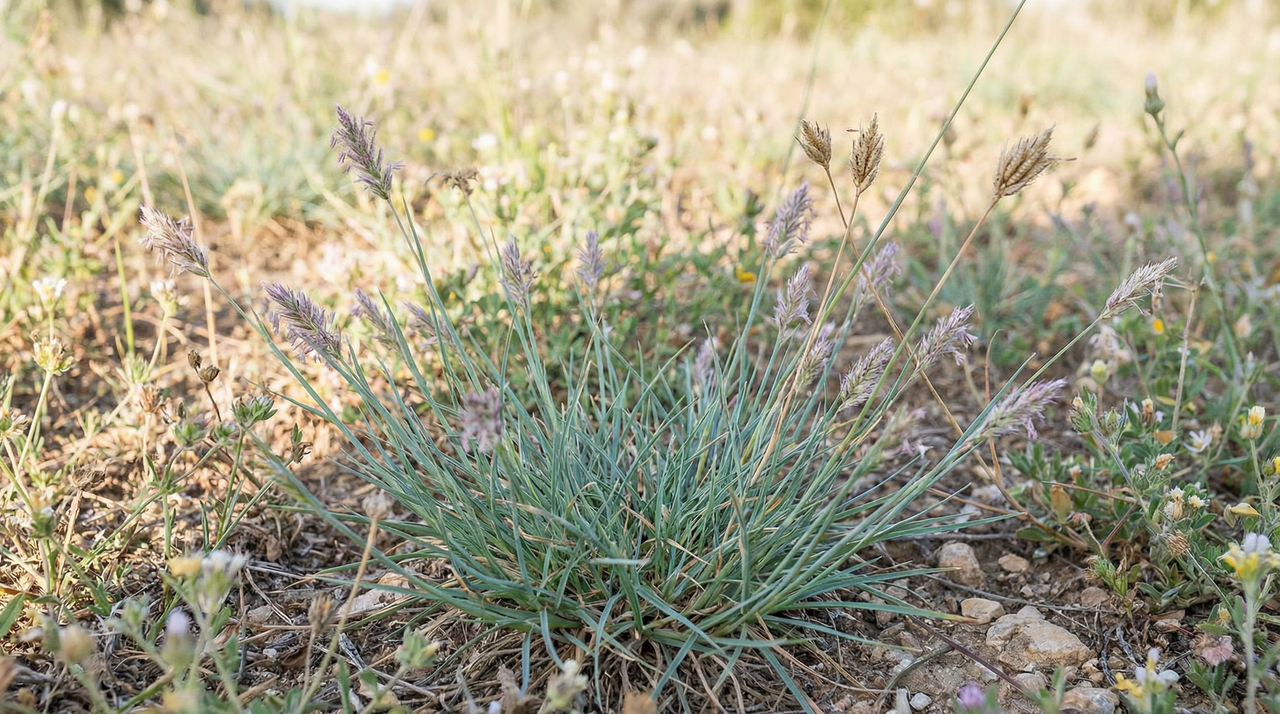
Here's the thing nobody wants to admit: Bermuda grass is one of the most ecologically successful plants on earth, and most of us have spent good money trying to kill it. I've done it myself. Forty dollars of herbicide, a rented sod cutter, three weekends, and a level of personal animosity I'm not proud of were all directed at a grass that was, objectively, just doing what it evolved to do extraordinarily well. It survived. Of course it survived. This is a plant that can regrow from a rhizome fragment the size of your thumbnail, that can go dormant through a drought that kills everything around it, and that has been documented growing in over 100 countries.[1] Fighting it without understanding it is like arguing with the tide.
What turned me around wasn't a permaculture book. It was learning that Hindu priests have considered this same grass sacred for thousands of years, that Ayurvedic physicians have prescribed it for everything from urinary complaints to wound healing, and that ancient Egyptians were cultivating it as turf long before anyone coined the word "lawn." The plant I'd been cursing out behind my compost bins has a medicinal and cultural resume that would embarrass most garden ornamentals. That contradiction, pest and sacred herb, invasive weed and pharmaceutical candidate, is exactly where the real story of Bermuda grass begins.
Origin and History of Bermuda Grass (Cynodon dactylon)
Botanical Background and Native Range
Cynodon dactylon is native to the tropical and subtropical regions of Africa, southern Asia, Australia, and southern Europe, and has since naturalized on every continent except Antarctica.[2][3][4] That global reach is not accidental. It's a long-lived polycarpic perennial that spreads aggressively through both stolons above ground and rhizomes below, and its C4 photosynthetic pathway gives it remarkable efficiency in high heat and bright sun.[5][6][7] Once it finds warm soil and open light, it moves fast. After years of pulling runners in the field, I can identify it almost on instinct now: look for the hairy nodes and the short, membranous ligule where the blade meets the sheath. It's unmistakable once you've yanked up a few runners. That invasive potential is official, too. Bermuda grass reaches first flowering just 60 to 90 days after germination under warm conditions, and it's listed as a noxious weed in many regions where its dense mats out-compete native species before anyone realizes what's happening.[8][9]
Traditional and Cultural Uses
Long before anyone called it a weed, this grass was sacred. In Hindu tradition, Cynodon dactylon is known as Durva, and it's offered to Lord Ganesha during Ganesh Chaturthi and other ceremonies, where its deep roots and multitude of blades symbolize humility, stability, and the removal of obstacles.[10] I remember coming across its ritual use while studying ethnobotany and finding it striking that a plant most American gardeners curse at had such deep spiritual resonance elsewhere. That reverence wasn't just ceremonial. Ayurvedic practitioners classified Durva as cooling and Pitta-balancing, using leaf juice, decoctions, and pastes to address urinary disorders, excessive thirst, skin conditions, wounds, and fatigue.[11][12] Traditional Chinese Medicine independently arrived at a similar toolkit, using it as a diuretic, a heat-clearing herb, and a hemostatic agent documented in the Bencao Gangmu.[11] Across Africa, Zulu, Xhosa, and Maasai communities applied it to wounds, diarrhea, dysentery, and inflammatory conditions, while also relying on it for livestock fodder and thatching.[13][14] Philippine folk healers used it for fever, Bangladeshi practitioners for jaundice and snakebites, and evidence places it in ancient Egyptian agriculture as far back as 400 BCE.[11][15] The same therapeutic themes keep appearing across cultures: cooling, diuretic, wound-healing. That kind of convergence across continents and medical traditions commands real respect.
Interesting Facts About Bermuda Grass
Spanish colonizers introduced bermuda grass to the Americas as early as the 16th century, primarily for livestock forage and erosion control, though it didn't take long to escape intentional planting via hay and equipment.[16][17] Today it's documented in global invasive species databases for over 100 countries and classified as a noxious weed in more than 20 of them, spreading vegetatively at rates that can reach 5 to 15 centimeters of stolon growth per day under good conditions.[18][19] I've watched bare soil reclaimed by a stoloniferous mat in a single growing season after a disturbance. It's genuinely impressive, until it's in your native-plant bed.
That toughness has a physiological explanation. Its root system can reach one to six feet deep, enabling it to survive drought dormancy by going brown and then regreening quickly once water returns.[20][21] It manages osmotic stress through proline accumulation, rolls its leaves to reduce transpiration, and its C4 metabolism keeps it productive in heat where most cool-season grasses collapse. That resilience is exactly why it's the forage grass of choice across the South, yielding 4 to 8 tons of dry matter per acre annually with decent protein content, and why Augusta National uses cultivars like Tifway 419 on its fairways.[22][23] Cultivar selection matters enormously here; not all bermuda grass behaves the same in a landscape, and specifying the right one for a project is something I've learned to take seriously.
The flip side of all that resilience is the nickname "devil's grass," earned honestly.[24] Repeated glyphosate applications still achieve only 80 to 95 percent control because the rhizomes keep regenerating from below.[19] I've installed it on purpose for slope stabilization and spent entire seasons fighting to keep it out of adjacent planting zones. The plant doesn't care about your design intentions. Respect for its power is the only sane starting point.
Bermuda Grass Varieties and Sourcing
Popular Bermuda Grass Cultivars for Turf and Forage
Bermuda grass spreads by both stolons and rhizomes, forming dense sod mats that crowd out neighboring plants with remarkable efficiency.[3] Part of that dominance comes from allelopathy: root exudates can suppress germination and growth of surrounding plants by 50-70% in bioassays.[25] Understanding that before you choose a cultivar matters, because the varieties differ mainly in texture, cold hardiness, and establishment speed, not in whether they'll spread aggressively.
Among turf types, Tifway 419 is the workhorse most designers reach for first. It's a sterile hybrid of C. dactylon × C. transvaalensis, meaning it produces minimal viable seed, which limits its invasive spread somewhat.[26] I've watched Tifway 419 sprigs knit into a solid mat in two to four weeks under good conditions, noticeably faster than seeded common Bermuda, which often takes four to six weeks to establish.[8][6] Once established, its denser canopy can reduce irrigation demand by around 20% compared to coarser types.[27] Celebration is the one I specify when there's dappled shade from young fruit trees in a guild; it holds its dark green color and density better than most hybrids under partial sun, and it handles drought and heat as well as anything I've trialed.[8][28] For northern transition-zone projects, Latitude 36 is the cultivar I check with my local extension about first; it tolerates temperatures down to around 5°F, making it viable in USDA zone 7 where other hybrids give up.[8] Common Bermuda is coarser than all of them, but it's the one that actually tolerates partial shade reasonably well, performing in four to six hours of sun where fine-textured hybrids thin out and fail.[29]
Forage cultivars follow a different logic entirely. Coastal, released in 1943, transformed southern U.S. hay production and remains a benchmark for high-yielding vegetatively propagated types. Tifton 85 stands taller and delivers superior forage quality and nutritional value, while Midland brings improved disease resistance to the mix.[30] Texas A&M breeding programs have also pushed salinity tolerance to 12-15 dS/m in some lines, a trait that opens up coastal or irrigated sites with brackish water supplies.[31] Certified varieties like Tifton 85, Tifway 419, and Patriot are worth seeking by name specifically because certification ensures genetic purity and true-to-type performance.[32][33]
I've learned the hard way that even a small patch left unchecked will outcompete neighboring herbs within a season. In permaculture settings especially, containing any Bermuda cultivar requires consistent mowing, early detection of stolon creep, and selective herbicide use like glyphosate where mechanical removal isn't sufficient.[34] Its invasive status in several U.S. states is a fact worth sitting with before you plant it anywhere you don't intend to manage long-term.
Where to Buy Bermuda Grass Seed, Sod, and Plugs
Seed, sod, and plugs are all widely available through garden centers, sod farms, and major retailers like Home Depot and Lowe's, as well as specialized online suppliers like Seedland.com for bulk hybrid bermuda grass seed and SodSolutions.com for sod and plugs with nationwide shipping.[8][35] Budget-wise: seed runs roughly $5-15 per pound in small packets or $30-60 for a 10-pound bulk order; sod is typically $0.30-0.85 per square foot; plugs fall between $0.10 and $0.30 per square foot, or $20-50 per tray. Professional installation adds $1.00-2.50 per square foot, bringing total installed costs to around $1.50-3.00 per square foot depending on your region and the installer.[36][37] For client landscapes, I almost always order certified plugs or sod rather than yukon bermuda grass seed or other seeded options, because coverage is faster and varietal identity is guaranteed. Your local cooperative extension office is still the best first call for up-to-date supplier recommendations and any county-level restrictions on planting invasive types.
Bermuda Grass Propagation and Planting
Bermuda grass has a split personality when it comes to reproduction, and understanding that split is the difference between a successful stand and a frustrating one. Some cultivars grow true from seed, others are completely sterile and must be vegetatively propagated, and the biology behind why is genuinely interesting once you get into it.
Understanding Bermuda Grass Reproduction and Seed Traits
The seeds themselves are tiny caryopses, roughly 1.5 mm long, elliptical, light to dark brown, and awnless.[38][29] What makes Bermuda grass unusual among outcrossing grasses is its tendency toward apomixis, producing seeds that are genetically identical to the parent plant without sexual fertilization.[39][40] That's the feature that makes seeding viable at all for common types. But cross-pollination and self-incompatibility in some populations mean seeded stands can still show genetic variability, which is why vegetative propagation is the only reliable route for hybrid cultivars and premium turf where absolute uniformity matters.[41][8]
I've seen this play out firsthand. Sprigs pulled from a Tifway 419 patch I've been managing stayed perfectly consistent in texture and color, while seeded common Bermuda in the same yard threw up noticeably variable leaf widths across the stand. For a pasture, that variation is mostly irrelevant. For a lawn, it's annoying.
Propagation Methods: Seed vs Vegetative Techniques
Seed is the economical choice for large-scale applications like forage fields or erosion control seedings where some variability is acceptable. Germination peaks between 80 and 95°F (27-35°C) and typically happens within 7 to 14 days under warm, moist, light-exposed conditions, with germination rates reaching 70 to 90% when conditions are right.[42][43][44] Newly purchased hulled seed is your best bet; skip anything that's been sitting in a barn unlabeled.
Vegetative methods cover a lot of ground: sodding, sprigging, plugging, and stolon cuttings are all in play depending on your budget and timeline.[8][45] Sod gives you the fastest, most uniform result and is grown for 12 to 18 months before harvest, so you're paying for that head start.[8][46] Sprigs or stolons, cut into 3 to 6 inch sections with at least one node, are planted at roughly 10 to 20 bushels per acre and root within 2 to 4 weeks at soil temperatures of 24 to 29°C.[8][47] Plugs get spaced 6 to 12 inches apart and fill in as the grass spreads.[8] Tissue culture exists in research settings but isn't something any home gardener will encounter, and grafting is simply not an option for a monocot.[48]
My honest take: sprigs from a quality clonal source give the most uniform stand, fastest, for a manageable home or landscape planting. Seed makes sense for acreage when budget is the constraint and some variation doesn't matter.
Soil, Site, and Sunlight Requirements
Bermuda grass is surprisingly forgiving about soil type, tolerating clay, gravel, and genuinely poor conditions, but it performs best in well-drained, fertile sandy loam where roots can penetrate 1 to 2 meters in ideal conditions. In compacted soils, that rooting depth shrinks to 15 to 20 centimeters, which shows up as reduced drought resilience and slower recovery from stress.[5][6][8] I've seen this repeatedly when establishing Bermuda over compacted sub-base fill: tilling 4 to 6 inches before planting made a visible difference in how fast the stand closed in.
Soil pH should sit between 6.0 and 6.5 for optimal performance, though Bermuda tolerates a range of roughly 5.0 to 8.0.[6][49] Drop below 5.5 and aluminum toxicity becomes a real risk, causing stunted roots and necrotic leaf margins. Push above 7.0 and iron chlorosis appears, yellowing the turf as iron becomes unavailable. In my naturally acidic Florida soils, chlorosis is rare, but the moment I've planted into alkaline fill dirt, I keep chelated iron on hand as insurance. Test before you amend; don't guess.
Sun requirements are non-negotiable. Bermuda grass needs a minimum of 6 to 8 hours of direct sunlight daily.[6][50] Below 4 to 5 hours, the stand thins and opens up to weeds, which is the worst outcome given how hard it is to selectively manage this grass once it's mixed with something else.[51] If your site has significant canopy shade, choose a different ground cover.
Planting Timelines, Spacing, and Establishment Techniques
Timing is where I see the most preventable failures. Wait until soil temperatures exceed 65°F (18°C) before putting anything in the ground, whether seed or vegetative material.[44][8] Late spring to early summer is the target window. I once jumped the gun on a sprigging job in early April, impatient after a warm week, and lost about 30% of the material to rot when temperatures dipped back down. The same variety planted three weeks later rooted in under three weeks. The soil thermometer is not optional.
From seed, expect germination in 7 to 14 days, a dense cover in 4 to 8 weeks, and a fully mature stand by the end of the first growing season. Sprigged plantings root in 2 to 4 weeks and achieve full coverage in 8 to 12 weeks.[44][6] For seeding, use 1 to 2 pounds of hulled seed per 1,000 square feet for turf, scaling up to 45 to 90 pounds per acre for larger areas.[6][52] Plugs go 6 to 12 inches apart; sprigs at 3 to 6 inches or 10 to 20 bushels per acre depending on how fast you want coverage.[53] For forage rows, space 24 to 36 inches; for erosion control work, tighten that to 12 to 18 inches. In fertile, irrigated sites, go closer; in dry or poor soils, wider spacing is fine because the grass will find its way regardless.
That last point deserves emphasis. Bermuda grass spreads aggressively via stolons and rhizomes, easily advancing 12 to 48 inches in a season, which fully explains its notorious reputation among gardeners.[54][6] I skipped installing a root barrier along a perennial bed once, and within one season stolons had threaded through an established salvia planting so thoroughly that remediation took two full years. Install physical containment before the grass goes in, not after. The same aggression that makes it outstanding for rapid coverage on slopes up to 30% makes it a genuine thug if you give it an unguarded edge.[3]
Seed Storage, Viability, and Longevity
One thing I genuinely appreciate about Bermuda grass seed is its orthodox storage behavior. Unlike recalcitrant seeds that demand moist conditions, Bermuda seed tolerates desiccation well, making long-term banking straightforward if you manage moisture and temperature correctly.[55][56] For medium-term storage, aim for 5 to 10°C with relative humidity around 11 to 15% and seed moisture at 5 to 8%. For serious long-term banking, hermetically sealed containers at -18°C or colder are the standard.[57]
Viability can hold for 5 to 15 years under optimal conditions. Seed stored at -20°C and 6% moisture has shown 80 to 90% germination after a decade.[58] I've tested saved lots over multiple seasons myself: properly dried and frozen seed from a strong apomictic cultivar was still germinating at 75% after five years, which held up well against the freshly purchased control. To confirm viability before committing to a large seeding, use either an ISTA germination test or a tetrazolium (TZ) test, both of which give reliable results within days.[59] One caveat worth knowing: freshly harvested Bermuda seed can show physiological dormancy, but after-ripening over several months or treatment with gibberellic acid will break it if you need to use seed sooner than the seed would prefer.[60]
Bermuda Grass Care Guide
Every care decision you make with bermuda grass flows from one simple fact: this plant evolved in the open savannas of tropical Africa, where intense sun, punishing heat, and seasonal drought were the baseline conditions. Get that context into your head first, and the rest of the care guide starts to make intuitive sense. Miss it, and you'll spend years fighting a grass that's simply trying to tell you it's in the wrong spot.
Sunlight Requirements for Bermuda Grass
Bermuda grass needs a minimum of 6-8 hours of direct sun daily, and it genuinely thrives with 8-10 hours.[61][62] Its C4 photosynthetic pathway lets it use high light intensity without shutting down, which is why it just keeps pushing in full summer sun while other grasses are gasping.[63] Put it in a shady yard, though, and you'll see etiolation, yellowing, thin turf, and a weakened stand that weeds move into almost immediately.[51][64] I've managed enough lawns under tree canopies to say this plainly: if your site gets less than six hours of direct sun, bermuda grass is the wrong choice and no amount of fertilizer or irrigation will fix that. Even in full sun, temperatures above 95°F combined with drought can cause leaf scorch, bleaching, and margin browning, so adequate water is the co-factor that keeps the light from becoming a liability.[65][37]
Watering Needs and Drought Tolerance
During the active growing season, bermuda grass lawn maintenance calls for about 1 to 1.25 inches of water per week, applied deeply in one or two early-morning sessions that push moisture down 6-8 inches into the root zone.[6][66] Bump that to 1.5 inches during extreme heat. Early morning timing minimizes evaporation and reduces the leaf wetness that feeds fungal disease.[6] Once established, though, the deep root system (up to 1.5-2 meters in good conditions) lets it survive 4-8 weeks without irrigation through osmotic adjustment and stomatal regulation.[67][68] Watch for leaf rolling, tip browning, and wilting as early drought signals.[6] Soil pH between 6.0 and 7.0 is ideal for nutrient availability, though it tolerates a range of 5.0-8.0 and handles moderate salinity up to 6-10 dS/m.[69][70]
Feeding and Fertilization for Bermuda Grass
Bermuda grass is a heavy feeder, requiring 2-4 pounds of actual nitrogen per 1,000 square feet annually, split across 3-5 applications of 0.5-1 lb N each during the growing season.[8][6] Phosphorus and potassium should only be added when a soil test shows deficiency, generally 0.5-1 lb P₂O₅ and 1-2 lbs K₂O per 1,000 square feet.[71] I learned this the hard way early in my career: I over-applied nitrogen on a client's lawn without testing first and spent two seasons running a vertical mower to cut out the thatch it produced. A soil test every 1-3 years is genuinely non-negotiable. Start fertilizing in late spring when soil temperatures reach 65°F and green growth is visible, then apply every 4-6 weeks through summer, stopping by early August to allow the grass to harden off before cold arrives.[72][73] A 3-1-2 or 4-1-2 NPK ratio covers most established lawns well, and slow-release formulations reduce the nitrogen flush that feeds thatch.[74] Optimal soil pH is 5.8-7.0, ideally 6.0-6.5; outside that range, you'll start seeing deficiency symptoms like interveinal chlorosis (iron), leaf tip burn (potassium), or uniform yellowing and stunting (nitrogen).[37][75]
Heat Tolerance and Management
Few warm-season grasses match bermuda grass in sustained heat performance. Its optimum daytime range is 75-95°F, and it can handle short spikes to 110°F with adequate water, spanning AHS Heat Zones 7-11.[76][77] Tolerant cultivars handle this by upregulating antioxidant enzymes and heat-shock proteins, then recovering well once nights cool to 59-68°F.[78][68] In practice, I've found that heat stress symptoms appear first on south-facing slopes and exposed embankments even when my irrigation schedule looked right on paper. Micro-site conditions matter. Leaf rolling and discoloration in those spots taught me to check soil moisture at 4-6 inches rather than relying on surface appearance. Deep, consistent watering paired with the mowing height guidance below is what keeps bermuda grass performing through a brutal July rather than just surviving it.
Frost Tolerance and Cold Hardiness
Bermuda grass is reliably hardy in USDA zones 7-10, with the best performance in zones 8-10; improved cultivars can push marginal zone 6b performance.[79][80] Foliage goes dormant and brown when soil temperatures fall below 50-55°F, but the crowns and rhizomes can survive temperatures down to 10-15°F with protection.[81] Prolonged exposure below 20°F risks winterkill, particularly in unprotected zone 6-7 sites.[82] In marginal zone 7 landscapes, I leave the dormant, brown turf standing through winter rather than mowing it short. That dead foliage acts as insulation over the crown, and the spring recovery I've seen in lawns managed this way is noticeably stronger than in those cut tight heading into cold weather.
Mowing, Pruning, and Seasonal Maintenance
Mow bermuda grass at 1-1.5 inches for home lawns, never removing more than one-third of the blade in a single pass, and plan on cutting every 5-7 days during peak summer growth.[6][73] Compared to St. Augustine or zoysia, which I've managed at 3-4 inches, that tight bermuda height requires more frequent passes but produces a noticeably denser, more weed-resistant mat. Scalping is the enemy; go too low and you stress the crown, invite weed pressure, and set up conditions for disease. The aggressive stolon and rhizome growth that makes bermuda grass such a rapid self-repairer also makes containment essential.[83] In permaculture installations where I've used it as a living mulch between trees, I've buried edging barriers 6-8 inches deep to keep it from wandering into vegetable beds. Without that physical barrier, it will find every gap and colonize whatever is adjacent.
Seasonal Rhythm of Bermuda Grass
Think of bermuda grass care as a calendar tied to soil temperature rather than the date on the wall. Active growth runs roughly May through October when air temperatures sit between 75-95°F and soil temperatures stay above 65°F.[84][85] Below 50-55°F soil temperature, the grass goes dormant, and the rhizomes sit quietly underground waiting for spring.[8] That dormancy isn't failure; it's the survival strategy that makes bermuda grass so durable over the long run. Fertilization, mowing frequency, and irrigation all ramp up as soil warms in spring and taper off through late summer, with no nitrogen after early August so the grass can harden before the first cold snap arrives.[86][79] Once you internalize that warm-season rhythm, bermuda grass care in zones 7-10 becomes one of the more straightforward perennial systems you'll manage: high attention in summer, minimal inputs in winter, and a reliable green-up every spring when soil temperatures climb back above 55-60°F.
Harvesting Bermuda Grass
Bermuda grass is fundamentally a forage and turf plant, and the harvesting story needs to be told honestly through that lens. After managing it in pastures, lawns, and mixed livestock systems for years, I've come to think of harvest timing less as a single event and more as a recurring management decision that shapes the long-term health of whatever system you're running. Get it right and the grass rewards you with dense, vigorous regrowth season after season. Miss the window and you're chasing recovery instead of productivity.
Forage and Seed Harvest Timing and Indicators
If you're establishing from seed, temper your expectations for year one. First forage cuts are generally possible 8 to 12 weeks after seeding, but those initial harvests should be light ones, since the plant is still building its root and stolon system.[44][87] Seed production from a new stand is minimal that first season; the real commercial seed harvest potential doesn't show up until year two or three, typically 90 to 120 days into the growing season once the stand is mature.[88][89]
For forage, the quality window I watch for is the boot stage through early heading, when seed heads are just beginning to emerge from the leaf sheaths but haven't reached full flower. At that stage, plant height is typically in the 20 to 30 inch range, the upper canopy holds a vibrant green with a slightly deeper tone, and the leaf-to-stem ratio is still favorable.[90][40] I've noticed across multiple pastures that cutting at this stage produces noticeably more palatable regrowth for animals and faster recovery than waiting until full heading. Once the plant flowers fully, crude protein and digestibility drop fast.[90] For grazing or mowing, aim to keep harvest height above 4 to 6 inches; for hay, cut at 6 to 8 inches. Going lower than that inhibits regrowth and can set the stand back.[90]
In the southern U.S., the practical season runs from late spring through early fall, with a first cut often around late May to early June, followed by additional cuts every 4 to 6 weeks for a total of 3 to 5 cuts when temperatures peak between 80 and 95°F.[91][92] For seed specifically, the harvest window runs July through October. From anthesis to seed maturity is typically 30 to 45 days under warm conditions.[93][94] The visual cue I rely on is the lemmas and paleas turning light brown or tan, with seeds firm enough to resist compression. Harvest when 60 to 80 percent of seedheads show those signs; waiting longer risks shattering losses.[95]
Edible Yields, Flavor, and Practical Considerations
Yes, bermuda grass is technically edible. Young shoots and leaves carry a mild, grassy flavor with faint sweetness and occasional cucumber undertones, a result of higher soluble carbohydrates in early growth. Seeds can function as a rough grain substitute in survival situations.[96][97] I've nibbled young shoots more than once, and the flavor genuinely is pleasant at first. The problem is what happens next: texture gets fibrous quickly, and any hint of maturity brings on a dry, astringent bitterness driven by rising tannins and silica content.[96][98] Boiling softens the texture somewhat, but there's no real tradition of widespread human consumption to draw on, and the caloric yield simply doesn't justify treating this as a regular food source.[96][99]
Soil and cultivar also matter significantly. Plants growing in nitrogen-rich ground produce noticeably sweeter, more tender young growth. African bermuda types tend to run milder than common types.[99][96] In a permaculture context, I'd rather invest the harvest energy in timing forage cuts to support animal systems and maximize soil cover than in chasing a marginal human food yield. That timing decision, cutting before quality declines while leaving enough height for rapid regrowth, is where bermuda grass actually delivers for a productive landscape.
Bermuda Grass Preparation and Uses
Bermuda grass is not a kitchen plant. I want to be honest about that upfront. It's primarily a forage crop and a turf species, and most gardeners will never eat a single blade of it. But dig into the ethnobotanical record and you find something genuinely fascinating: communities across India, East Africa, and Australia have turned to this grass when other food ran short, boiling or steaming young leaves into rough vegetable dishes, adding them to porridges, or occasionally pressing them into salads.[100][101] Seeds can even be dried and ground into a rough flour for bread or porridge, though the labor involved makes this a genuine last resort.[102]
Limited Culinary Uses of Bermuda Grass
I've pulled fresh young shoots from an unsprayed test patch in my own yard and chewed them raw. The flavor is mild and green, closer to wheatgrass than to anything fibrous or bitter, though mature leaves are a different story entirely. Nutritionally, young growth carries 8-20% crude protein and vitamins A, C, and E alongside flavonoids and phenolic compounds, which explains why it functions as emergency nutrition even if it never approaches staple status.[103][104] The bulk of those carbohydrates is fiber, which is great for ruminants and only marginally useful for us.
The safety picture matters more than the flavor profile. Bermuda grass contains oxalates that can cause digestive irritation in quantity, and its pollen is a significant global allergen for hay fever sufferers.[105][106] The bigger concern, in my experience, is contamination. Bermuda grass accumulates heavy metals from compromised soils and readily absorbs pesticide residues from the treated lawns it dominates.[107] I've also learned to confirm identification by the distinctive finger-like seed heads before harvesting anything; misidentifying it for a toxic look-alike like johnsongrass is a real risk in weedy disturbed areas.[8] My rule is simple: if I don't know what has touched that ground in the last several years, I don't harvest from it.
Traditional Medicinal Preparations
In Ayurveda, Bermuda grass is known as Durva and holds genuine reverence as a cooling herb for Pitta-related conditions. Traditionally it forms the basis of treatments for the inflammatory and Pitta-driven conditions detailed earlier.[108][109] Classical preparations include decoctions taken at 50-100 ml twice daily, infusions at 20-50 ml two or three times daily, and fresh juice at 10-30 ml per day, with external poultices for skin applications.[110] These dosages come from classical texts like the Charaka Samhita rather than modern standardized trials, so consulting a qualified Ayurvedic practitioner before attempting any of them is genuinely important, not just a liability disclaimer.
Non-Food and Livestock Applications
The place where Bermuda grass unambiguously delivers is the pasture. It's a high-yield, drought-resistant forage that responds well to nitrogen and sustains livestock across tropical and subtropical regions with impressive reliability.[111][112] When I analyze forage options for clients building integrated livestock systems, the protein range in young growth explains why this grass earns a real place in warm-season grazing rotations. In parts of Africa and Asia it also serves as a durable thatching material and occasionally turns up in rough traditional cordage, though it's not a commercial fiber crop by any measure.[113] Crush a fresh stem and you get that unmistakable green, grassy scent with earthy undertones from its volatile alcohols, aldehydes, and terpenes.[114] It's the smell of a mowed summer lawn made botanical. In a contained permaculture system, that living carpet of biomass is doing real work whether or not you ever eat a blade of it.
Bermuda Grass Health Benefits and Medicinal Uses
Most people who pull Bermuda grass out of their garden beds have no idea they're handling a plant with thousands of years of documented medicinal use. In regenerative systems where it often appears uninvited, I've come to appreciate it as both a resilient groundcover and a traditional cooling medicine — a reminder that the plants thriving in hot, humid summers often carry the very properties our bodies seem to need in those same conditions.
Traditional and Ayurvedic Uses of Durva (Cynodon dactylon)
In Ayurveda, this resilient grass is known as Durva and revered as a cooling herb with Sheeta virya, or cooling energy, primarily used to balance excess Pitta dosha.[115][116] Practitioners valued its diuretic, astringent, and anti-inflammatory properties across an impressive range of complaints: urinary disorders, excessive bleeding like menorrhagia and epistaxis, wounds, skin conditions, fever, digestive issues, and anemia.[115][116][117] These uses weren't confined to India — ethnobotanical records from African and Asian traditions document remarkably similar applications, which tends to signal genuine efficacy rather than cultural coincidence.
Key Phytochemicals in Bermuda Grass
The chemistry behind these traditional uses is genuinely interesting. Cynodon dactylon contains flavonoids (quercetin, luteolin, apigenin, kaempferol), phenolic acids (ferulic, caffeic, and p-coumaric acids), alkaloids including gramine and trigonelline, terpenoids like beta-sitosterol, saponins, and tannins.[118][119][120] The flavonoids and phenolics are the primary drivers of anti-inflammatory and antioxidant activity, working through COX-2 inhibition and free-radical scavenging. Tannin content can run as high as 15%, which explains both the wound-healing astringency and the familiar slightly bitter quality of the plant.[121]
Concentration varies considerably depending on which part of the plant you're using — leaves are richest in flavonoids and phenolics, stems lean toward alkaloids and saponins, and roots concentrate triterpenoids and tannins.[122][123] Environmental conditions matter too. I've noticed that drought-stressed Bermuda grass feels noticeably more pungent and astringent when used in garden teas, which tracks with research showing that defensive compounds often upregulate under stress.[124] A plant that's been fighting for water may be more medicinally potent — though also somewhat more likely to irritate a sensitive stomach.
Scientific Research and Pharmacological Actions
Modern preclinical work validates many traditional applications, though we must be honest about what validation means here. Animal and in-vitro studies show anti-inflammatory effects through inhibition of TNF-α, IL-6, and COX-2, with carrageenan-induced inflammation reduced by 60-70% in rodent models and suppression of the NF-κB signaling pathway.[115][125][122] Antioxidant activity shows DPPH free-radical scavenging IC50 values around 50-100 μg/mL, comparable to ascorbic acid.[126] Broad-spectrum antimicrobial activity has been demonstrated against both gram-positive and gram-negative bacteria, plus antifungal effects against Candida albicans and Aspergillus species.[126][127] Diuretic activity increased urine output by 150-200% in rat studies, roughly comparable to furosemide.[128][129] Analgesic effects at 200-400 mg/kg body weight were compared to aspirin and morphine in writhing and hot plate tests.[128][130]
Human clinical data, though, is genuinely thin. One small trial of 30 osteoarthritis patients showed reduced joint pain after four weeks using a proprietary formulation containing Cynodon dactylon extract — but the extract's specific contribution couldn't be isolated from other ingredients.[131] That single small proprietary-formula trial isn't a foundation for replacing guidance from a qualified practitioner, especially given how significantly bioactivity varies based on extract type, plant part, geography, and season. Aqueous, ethanolic, and methanolic extracts of the same plant can produce meaningfully different results, and most studies use crude extracts rather than isolated compounds. The cynodon dactylon medicinal uses documented across traditions are compelling, but the science isn't there yet to specify dose or form with confidence.
Nutritional Profile and Edible Uses
Bermuda grass isn't a human food crop, and I want to be clear about that before the nutrition numbers get anyone excited. Its dietary role is primarily as livestock forage, where forage-data analyses report approximately 10-15% protein, meaningful mineral content including calcium (180-250 mg/100g), iron (4-6 mg), and potassium (350-450 mg), and vitamins A, C, E, and K.[132][133] In parts of India and East Africa, young leaves have been eaten raw or cooked and seeds ground into flour during food scarcity, but these are subsistence uses rather than culinary traditions.[57]
If you're interested in foraging it, the practical reality is that most lawn Bermuda grass has been sprayed with herbicides, pre-emergents, or synthetic fertilizers. I've seen clients excited about wild edibles come to regret harvesting from conventional lawns. Growing a dedicated, unsprayed patch or sourcing from a clean meadow is the only approach I'd feel comfortable recommending.
Safety Profile and Precautions
On the broad safety question, Bermuda grass earns a reassuring verdict. The USDA and ASPCA both confirm low acute toxicity, with an LD50 above 5,000 mg/kg in rats, and its long history as safe forage for livestock across multiple continents supports that picture.[134][135] Low levels of oxalates and saponins could cause mild gastrointestinal irritation if consumed in very large quantities, and contact dermatitis is a real possibility in sensitive individuals — I've had clients with skin reactions after heavy weeding sessions.[102]
The pollen allergy concern is significant and shouldn't be buried in fine print. Bermuda grass is a major hay fever trigger across the United States, particularly for anyone with Poaceae family sensitivities.[136][137] In my consultations with clients who manage grass allergies in pollen-heavy southern regions, I recommend avoiding any medicinal use during peak pollen season, and when possible, choosing non-flowering cultivars for landscapes near allergy-prone individuals.
Preclinical studies on cynodon dactylon benefits also show hypoglycemic and blood pressure-lowering effects, which means theoretical additive interactions are plausible with antidiabetic medications, diuretics, and hypotensives — the pharmacology makes the possibility real even without documented clinical cases.[138] Pregnancy is another area for real caution: traditional use suggests possible emmenagogue effects and Ayurvedic practice has generally avoided it during pregnancy, while postpartum use has been more common. Robust clinical safety data for long-term medicinal use in humans simply doesn't exist yet.[139] Anyone considering medicinal use should loop in a qualified practitioner, full stop.
Bermuda Grass Pests and Diseases
Bermuda grass has been battling insects and pathogens for millennia, and it shows. The plant comes equipped with genuine built-in defenses: cyanogenic glycosides that release hydrogen cyanide when tissue is damaged, plus phenolic compounds and terpenoids with antifeedant effects.[140] Its epidermal cells also pack silica concentrations up to 10% of dry weight, which physically wears down insect mouthparts and makes the leaf genuinely tough to chew through. I've noticed this firsthand when comparing feeding damage on Bermuda versus St. Augustine in the same bed; the soft-tissue St. Augustine gets skeletonized while adjacent Bermuda shrugs off the same pressure. That said, healthy turf is not invincible turf, and knowing the likely culprits keeps you ahead of problems rather than chasing them.
Common Insect Pests and Natural Defenses
The pest roster for Bermuda grass is predictable once you've managed enough southern lawns. Fall armyworms skeletonize turf in late summer surges, chinch bugs inject toxins that cause yellowing and thinning, mole crickets tunnel through root zones, billbugs bore into stems and leave notched leaf blades; white grubs attack roots and produce wilting dead patches; sod webworms feed at the thatch layer; and the bermudagrass stem maggot has been quietly expanding its damage profile in stressed turf across the Southeast.[141][142] I've learned to scout the driest, most heat-stressed microclimates first for chinch bug activity, because that's invariably where damage appears before spreading outward. Blanket treating a whole lawn when the problem is confined to one stressed corner wastes money and disrupts beneficial insect communities unnecessarily.
Cultivar selection is your best long-term defense. Celebration, Latitude 36, TifTuf, NorthBridge, Tahoma 31, and Sunshine all show high chinch bug resistance, while Tifway 419 offers only moderate protection.[143][144][145] In my own projects, switching clients from Tifway 419 to Celebration has consistently reduced armyworm damage, which tracks with research showing TifGrand and Celebration perform better against that pest. Ground pearls show up occasionally in certain southeastern regions, though their impact is highly site-specific.[146]
Fungal and Other Diseases
Bermuda's disease profile is more nuanced than most people expect. Many modern cultivars carry good resistance to brown patch (Rhizoctonia solani), which is genuinely reassuring in humid climates.[147][148] Dollar spot (Clarireedia spp.) is a different story: resistance is low to moderate across most varieties, and under low nitrogen and high humidity those silver-dollar-sized lesions spread fast.[147][149] Pythium blight can devastate turf in hot, wet weather, particularly on poorly drained sites; excess moisture is the trigger, and once it's rolling through a lawn in July humidity it moves fast.[147][150]
Spring dead spot (Ophiosphaerella spp.) is the disease I find most discouraging to clients because the damage appears just when the lawn should be greening up after dormancy. Cool, wet springs pull those circular dead patches into view, and they're caused by infection that happened months earlier.[151][152] I've rehabilitated several southeastern lawns with chronic spring dead spot by improving drainage and replanting with TifTuf; within two seasons those thin, patchy spring turf areas had filled into dense, healthy swards. Rust (Puccinia cynodontis) shows up as orange pustules, usually on older or shaded patches; I've seen it clear on its own once I improved air movement and sunlight access without any spray. Nematodes, particularly root-knot and sting types, are a real threat in sandy soils across southern regions, causing stunted, off-color turf that resists every other fix.[153][154] Bermuda grass mosaic and stripe viruses round out the disease picture, with the species serving as a primary host and showing low inherent resistance to both.[147][155] Celebration, Latitude 36, NorthBridge, TifTuf, and TifGrand all show improved resistance to dollar spot and brown patch compared to older varieties, so cultivar choice remains your first and best line of defense.[156][157]
Integrated Pest Management and Cultural Prevention
After years of managing Bermuda grass in transition-zone and subtropical landscapes, I can say with confidence that cultural practices prevent far more problems than curative treatments ever solve. Mowing at the right height keeps air circulating through the canopy; deep, infrequent irrigation applied in the early morning reduces the leaf wetness window that fungi need; balanced fertility prevents the lush, nitrogen-saturated growth that invites dollar spot and armyworm pressure; core aeration and topdressing keep thatch from building into a disease reservoir; and good drainage removes the wet-soil conditions that enable Pythium and root rot.[8][158][159][160] One client's severe dollar spot outbreak taught me the fertility lesson more vividly than any textbook: a well-intentioned heavy nitrogen application in late summer produced exactly the soft, lush growth conditions that turned a minor problem into a lawn-wide crisis within two weeks. I rarely reach for fungicides or insecticides when the cultural checklist is being followed. When they're genuinely needed, they should follow label rates and come after cultural measures have been tried, not instead of them. A Bermuda lawn that gets the foundational care right is remarkably self-defending.
Bermuda Grass in Permaculture Design
Bermuda grass is the plant that makes permaculture designers argue with each other at conferences. I've been on both sides of that argument. There's a version of this grass that holds a steep slope together through a drought that kills everything else around it, and there's a version that silently colonizes your entire food forest understory while you're busy tending tomatoes. Understanding which version you're working with comes down to placement, climate, and whether you've done your containment homework before the first runner hits the soil.
Climate Adaptation and Suitable Zones for Bermuda Grass
The core sweet spot for Bermuda grass is USDA zones 7 through 10, with some cultivars pushing into zone 11.[161][162] Below zone 7, you're gambling; the plant can survive zone 6 with mulching and snow cover, but it's marginal, and the slower spring green-up in cooler climates makes it less reliable as a functional groundcover. I've watched it brown out predictably in my zone 9B-adjacent work the moment nights dip into the low 50s, which is actually a useful seasonal cue for managing the rest of the garden. Winter dormancy is real, but the roots survive, and it comes back fast.
Temperature thresholds matter for siting decisions. Growth is optimal between 75 and 95°F, and the plant can push through temperatures up to around 110°F without dying.[163][164] Below 20°F, though, you risk winterkill on established stands.[165] On the water side, established plants are genuinely drought tolerant, thriving anywhere from about 25 to 50 inches of annual rainfall and adapting to conditions as dry as 16 inches with the right soil.[166][167] During peak summer heat in drier climates, you may need to supplement with an inch to an inch and a half per week, but in humid subtropical zones it largely fends for itself once the root system is established.
Two non-negotiables for good performance: excellent drainage and full sun.[161][4] The grass is also remarkably tolerant of coastal salt spray and saline soils, which opens up design possibilities on shoreline sites where other covers struggle.[3][161] The related species Cynodon meyerianus adds a useful wrinkle here: it shares the C4 photosynthetic efficiency and drought hardiness of common Bermuda but can tolerate short periods of waterlogging, which gives it a slightly different niche in low-lying areas that cycle between wet and dry.[167][168]
Ecosystem Functions and Guild Roles of Bermuda Grass
The strongest argument for including bermuda grass in a permaculture system is its erosion control performance. The dense, fibrous tangle of stolons and rhizomes locks soil together on slopes and disturbed sites where almost nothing else establishes as quickly or as reliably, and it's been validated for use in everything from roadside stabilization to mine reclamation.[169][170] After watching it recover a bare slope in Central Florida within a single season while three other ground covers failed, I started treating it as my first-call option for stabilization work on disturbed terrain. That said, I always pair it with a clear management plan, because the same qualities that make it a hero on a hillside make it a headache in a planting bed.
As a living mulch, Bermuda forms mats typically 15 to 20 centimeters tall when unmowed, suppressing weeds and reducing soil moisture loss across the soil surface.[170] Its deep roots improve soil structure and contribute organic matter as they die back seasonally, though it doesn't fix nitrogen and shouldn't be counted on as a significant dynamic accumulator.[171] For livestock systems, it's genuinely valuable forage, and its wear resistance makes it practical for high-traffic paths, animal corridors, and any area that gets pounded regularly.[83][6] Traditional medicine systems in Ayurveda and Chinese practice have long used it for wounds, fever, and urinary complaints, though the scientific validation is variable, and I always recommend deferring to current research and a qualified healthcare provider before any medicinal application.[102]
Where Bermuda grass consistently falls short is pollinator support. It's wind-pollinated, with inconspicuous flowers and high pollen output but nothing that attracts bees or beneficial insects.[172] When I walk my subtropical landscape in summer, the basil and borage two beds over are absolutely humming with activity; the Bermuda patch nearby is dead quiet from a pollinator standpoint. That contrast is worth keeping in mind if biodiversity is a design goal. You'll want flowering companions doing that work elsewhere in the guild. The other honest caveat is its invasive potential: it has naturalized in over 100 countries and is considered invasive in at least 25 U.S. states, and its allelopathic compounds can actively suppress neighboring plants.[3][144] Properly contained, it's a functional workhorse. Left unchecked, it reduces guild diversity faster than almost any other warm-season grass.
Bermuda Grass in the Forest Layer and Permaculture Guilds
In a food forest context, bermuda grass occupies the herbaceous groundcover stratum, and that placement comes with a critical caveat: it is shade-intolerant and doesn't compete well once a canopy closes in.[173][174] This actually makes it self-limiting under mature fruit trees, but during the establishment years when the canopy is open, it can absolutely overwhelm young shrubs and perennials if you haven't installed root barriers or mown edges to keep it in check. I learned this the hard way when an unchecked Bermuda mat moved into the understory of a young citrus guild and outcompeted several plantings before I caught it. Root barriers and regular edge management are now non-negotiable in any of my designs that include this grass.
Its genuine strengths in agroforestry are the same ones that show up in open pasture systems: wide soil tolerance across sandy, loamy, and clay types with a pH range of 5 to 8, good performance in poor and compacted ground, and roots that can reach several meters deep in some Cynodon taxa, forming mycorrhizal associations that support phosphorus uptake for surrounding plants.[4][175][176] It won't fix nitrogen, so don't slot it in where you're counting on that function, but for soil stabilization and living-mulch weed suppression in open sun, it outperforms most alternatives on low-input sites.[171] The related C. meyerianus shows similar mat-forming and forage traits but is considered somewhat less invasive in certain assessments, which can make it a more forgiving choice in guild edges where you're less confident about containment.[177][173]
The design principle I keep coming back to with Bermuda grass is edges and isolation. Use it where its aggressive lateral spread becomes an asset rather than a liability: the sunny edge of an agroforestry system, a disturbed slope that needs rapid cover, a livestock corridor that needs to withstand repeated traffic. Keep it out of the interior of any guild where you're building plant diversity, and contain it with physical barriers where those two zones meet. Its allelopathic properties are real enough to cause problems for sensitive neighbors when it's under stress or being mowed frequently, so separation from young transplants matters.[178] In the right place, with that vigilance built into the design from the start, bermuda grass rewards you with robust, genuinely low-input performance that few other groundcovers can match in warm subtropical climates.
The Plant That Taught Me to Stop Fighting and Start Managing
I've pulled Bermuda grass out of more garden beds than I can count, cursing every white rhizome that snapped off and left a piece behind. But somewhere between my third food forest design and a particularly brutal Central Florida summer, I stopped treating it as the enemy and started treating it as information. Where it thrives unchecked, the soil is usually compacted, disturbed, and desperate for cover. It's not invading; it's answering a question the site is asking.
Sources 178
- Cynodon dactylon Invasive Species Compendium - CABI ↩
- Cynodon dactylon ↩
- Cynodon dactylon Profile ↩
- Cynodon dactylon ↩
- Cynodon dactylon Profile ↩
- Bermuda Grass for Florida Lawns ↩
- Flora of North America Treatment ↩
- Bermuda Grass (Cynodon dactylon) Production Guide ↩
- Invasive Species Profile: Cynodon dactylon ↩
- Ritual and Medicinal Uses of Grasses in Hinduism ↩
- Cynodon dactylon (L.) Pers.: A review of its traditional uses, phytochemistry and pharmacology ↩
- Ayurvedic Uses of Durva (Cynodon dactylon): A Review ↩
- Ethnobotanical Survey of Medicinal Plants Used by the People of Nkonkobe Municipality, Eastern Cape, South Africa ↩
- Ethnobotany of Cynodon dactylon in Southern Africa ↩
- Historical Origins of Bermuda Grass in Egyptian Agriculture ↩
- Bermuda Grass (Cynodon dactylon): The Good, The Bad, and The Ugly ↩
- Invasive Species Compendium: Cynodon dactylon ↩
- Bermuda Grass (Cynodon dactylon) - Global Invasive Species Database ↩
- Invasive Species Compendium: Cynodon dactylon - CABI ↩
- Bermuda Grass (Cynodon dactylon) Characteristics ↩
- Drought Tolerance of Bermudagrass ↩
- Bermuda Grass Production Guide ↩
- Turfgrasses for Golf Courses ↩
- The History and Folklore of Bermuda Grass ↩
- Allelopathic Effects of Cynodon dactylon on Seed Germination ↩
- Bermudagrass Cultivars, Tifway and Tifdwarf ↩
- Turfgrass Water Use and Irrigation ↩
- Bermudagrass for Lawns (EP361) ↩
- Shade Tolerance in Warm-Season Grasses ↩
- Forage Bermudagrasses ↩
- Salinity Tolerance of Turfgrasses ↩
- Cynodon dactylon Germplasm ↩
- Certified Seed ↩
- Management of Invasive Bermuda Grass ↩
- Bermuda Grass for Lawns and Pastures, EP182 ↩
- Costs of Establishing Warm-Season Grasses ↩
- Bermuda Grass Sod Pricing Guide ↩
- Cynodon dactylon (Bermuda Grass) ↩
- Apomixis in Cynodon dactylon ↩
- Reproductive Biology of Bermudagrass ↩
- Reproductive Biology and Apomixis in Cynodon dactylon ↩
- Growth and Development of Bermudagrass ↩
- Seed Germination of Turfgrasses ↩
- Establishing and Managing Bermudagrass ↩
- Vegetative Propagation of Warm-Season Grasses ↩
- Turfgrass Establishment: Sodding ↩
- Cynodon dactylon ↩
- Micropropagation of Cynodon dactylon ↩
- Soil pH and Turfgrass ↩
- Cynodon dactylon ↩
- Bermuda Grass Care ↩
- Establishing a Bahia, Bermuda, or Zoysia Lawn with Sod, Sprigs, or Plugs ↩
- Establishing a Lawn with Sod or Sprigs ↩
- Bermuda Grass Management in Home Lawns ↩
- Seed Storage of Orthodoxy and Longevity in Grasses ↩
- Genebank Standards ↩
- Cynodon dactylon Seed Viability and Storage ↩
- Viability of Cynodon dactylon Seeds Under Different Storage Conditions ↩
- International Rules for Seed Testing 2023 ↩
- Dormancy in Gramineae Seeds ↩
- Turfgrass Sunlight Requirements ↩
- Bermuda Grass (Cynodon dactylon) ↩
- Photosynthetic Characteristics of C4 Grasses ↩
- Shade Effects on Turfgrasses ↩
- Photoinhibition in Tropical C4 Grasses: Effects on Cynodon dactylon ↩
- Watering Your Lawn ↩
- Drought Tolerance of Turfgrasses ↩
- Physiological Adaptations of C4 Grasses to Environmental Stresses ↩
- Bermuda Grass Soil Requirements ↩
- Turfgrass Tolerance to Salinity ↩
- Bermudagrass Home Lawn Management Calendar ↩
- Bermudagrass Yearly Maintenance Program ↩
- Bermuda Grass Lawn Maintenance Calendar ↩
- Turfgrass Fertilization: A Basic Guide for Professional Turfgrass Managers ↩
- Bermuda Grass Fertilization Guide ↩
- Physiological Responses of Bermudagrass to Heat Stress ↩
- Turfgrass Temperature Requirements ↩
- Heat Tolerance in Bermuda Grass: Antioxidant Enzyme Roles ↩
- Bermuda Grass for the Home Lawn ↩
- Bermuda Grass (Cynodon dactylon) ↩
- Cold Tolerance of Warm-Season Grasses ↩
- Bermuda Grass for Lawns ↩
- Bermuda Grass ↩
- Bermuda Grass: Growth and Maintenance ↩
- USDA Plant Guide: Cynodon dactylon ↩
- Bermudagrass Yearly Maintenance Program ↩
- Bermudagrass Production in Oklahoma ↩
- Bermuda Grass Seed Production Guide ↩
- Seeding and Seed Production of Bermudagrass ↩
- Grazing Management ↩
- Bermuda Grass Production in Oklahoma ↩
- Managing Bermudagrass Pasture to Hay System ↩
- Seed Production and Physiology of Bermuda Grass ↩
- Warm-Season Grasses: Seed Development Guide ↩
- Bermudagrass Seed Production ↩
- Edible Wild Plants: A North American Field Guide ↩
- Bermuda Grass (Cynodon dactylon) - Edible Wild Plants ↩
- Nutritional Composition and Palatability of Tropical Grasses ↩
- Cynodon dactylon species page ↩
- Ethnobotanical Uses of Cynodon dactylon in Traditional Medicine and Food ↩
- Cynodon dactylon (Bermuda Grass) - Useful Tropical Plants Database ↩
- Ethnobotanical Uses of Cynodon dactylon ↩
- Nutritional Value of Bermuda Grass (Cynodon dactylon) ↩
- Nutrient Composition of Forages ↩
- Toxicity and Allergenicity of Cynodon dactylon ↩
- Grass Pollen Allergens - Globally Relevant ↩
- Heavy Metal Accumulation in Bermuda Grass ↩
- Ethnopharmacological Uses of Cynodon dactylon: A Review ↩
- Ayurvedic Uses of Durva (Cynodon dactylon) ↩
- Ayurvedic Formulary of India - Durva Grass Preparations ↩
- Bermuda Grass (Cynodon dactylon) - Uses and Benefits ↩
- Agricultural and Fodder Uses of Cynodon dactylon ↩
- Traditional Thatching Materials in Sub-Saharan Africa ↩
- Chemical Composition and Antioxidant Activity of Essential Oil of Cynodon dactylon ↩
- Pharmacological Review of Cynodon dactylon ↩
- Cynodon dactylon in Traditional Medicine ↩
- Cynodon dactylon: A Review on Phytochemistry and Ethnopharmacological Aspects ↩
- Phytochemical and Pharmacological Review of Cynodon dactylon ↩
- Phytochemical and pharmacological review of Cynodon dactylon ↩
- Phytochemical Screening and Evaluation of In Vitro Antioxidant Activity of Cynodon dactylon ↩
- Wound healing activity of Cynodon dactylon in rats ↩
- Phytochemical Analysis of Cynodon dactylon: A Review ↩
- Seasonal Variation in Secondary Metabolites of Cynodon dactylon ↩
- Geographic Variation of Flavonoids in Cynodon dactylon ↩
- Anti-inflammatory Activity of Cynodon dactylon ↩
- Antioxidant and Antimicrobial Properties ↩
- Antibacterial Activity of Cynodon dactylon against UTI Pathogens ↩
- Analgesic and Diuretic Effects in Animal Models ↩
- Diuretic activity of the aerial parts of Cynodon dactylon ↩
- Analgesic and anti-inflammatory activity of Cynodon dactylon root extract in rats ↩
- Clinical Trial on Anti-inflammatory Effects ↩
- Vitamin Content in Common Forage Species Including Cynodon dactylon ↩
- Mineral Composition of Forage Grasses Including Cynodon dactylon ↩
- USDA PLANTS Database: Cynodon dactylon ↩
- Bermuda Grass (Cynodon dactylon) ↩
- Bermuda Grass Pollen Allergy ↩
- Grass Pollen Allergens in the United States ↩
- Antidiabetic activity of aqueous extract of Cynodon dactylon ↩
- Safety of Herbal Medicines in Pregnancy and Lactation ↩
- USDA PLANTS Database ↩
- Insect Pests of Turfgrass ↩
- Insect Management for Bermudagrass ↩
- Evaluation of Bermudagrass Cultivars for Insect Resistance ↩
- Chinch Bug Resistant Bermudagrass Cultivars ↩
- Turfgrass Pest Resistance Ratings for Bermuda Grass ↩
- Bermuda Grass Insect and Disease Problems - USDA ARS ↩
- Bermuda Grass Diseases and Their Management ↩
- Dollar Spot and Brown Patch Management in Bermudagrass ↩
- Dollar Spot of Turfgrass ↩
- Pythium Blight of Turfgrasses ↩
- Bermudagrass Diseases in the Southern US ↩
- Spring Dead Spot of Bermudagrass ↩
- Nematode Problems Affecting Bermudagrass ↩
- Take-All Root Rot of Turfgrasses ↩
- Bermuda Grass Diseases ↩
- Bermuda Grass Cultivar Performance for Disease Resistance ↩
- Disease Resistance in Bermudagrass Cultivars ↩
- Turfgrass Disease Management for Homeowners ↩
- Irrigation Management for Bermudagrass ↩
- Integrated Management of Turfgrass Diseases ↩
- Bermuda Grass ↩
- Bermuda Grass for the Home Lawn ↩
- Bermuda Grass for the Home Lawn ↩
- Warm-Season Grasses ↩
- Cold Tolerance of Bermudagrass (Cynodon dactylon) ↩
- Bermuda Grass for Lawns ↩
- Ecological Requirements of Cynodon Species ↩
- Tolerance of Warm-Season Grasses to Waterlogging ↩
- USDA PLANTS Database: Cynodon dactylon ↩
- Missouri Botanical Garden: Cynodon dactylon Profile ↩
- Journal of Environmental Quality ↩
- Pollination Biology of Cynodon dactylon ↩
- Cynodon dactylon (Bermuda grass) ↩
- USDA PLANTS Database ↩
- Mycorrhizal Associations in Perennial Grasses ↩
- Agroforestry Systems and Groundcover Plants ↩
- Cynodon meyerianus - Useful Tropical Plants Database ↩
- Ecological Interactions of Cynodon dactylon in Agroecosystems ↩