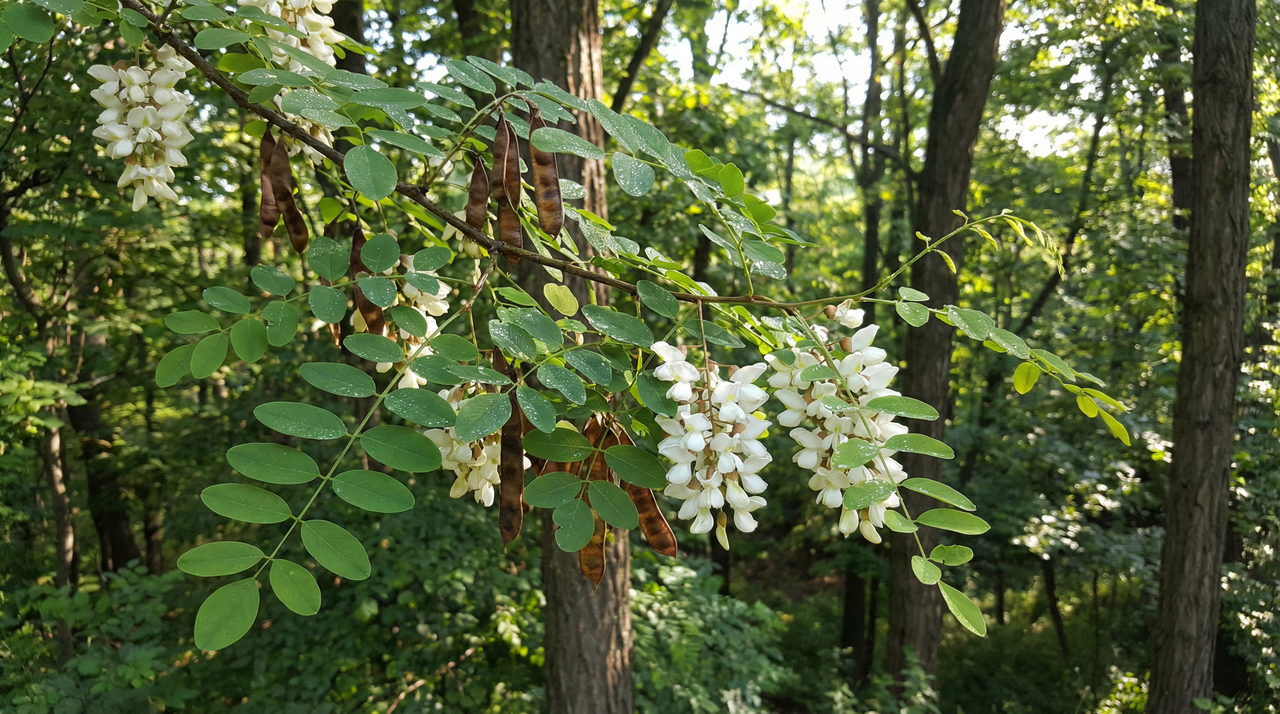
Every May, for about ten days, my black locust trees smell like someone spilled a jar of honey into a bowl of warm vanilla, and every one of those days I watch bees lose their minds over it. That's the seductive part. The part nobody leads with is that the bark on those same trees could drop a horse. Robinia pseudoacacia is genuinely toxic to livestock, documented and serious, yet it's been planted along fencerows across North America for well over a century by farmers who needed a fast post that would outlast their grandchildren in the ground. That contradiction isn't incidental to this plant. It's the whole story.
I've sited black locust on steep, eroded slopes where nothing else would establish, watched it fix nitrogen into soils that were essentially gravel, and then spent two seasons managing suckers that wanted to colonize my entire swale system. It's a plant that rewards you and argues with you in equal measure. Before you decide where it belongs in your landscape, or whether it belongs at all given your local regulations,[1] you need to understand both sides of that ledger completely.
Black Locust Origin, History, and Botanical Background
Black locust (Robinia pseudoacacia) is one of those plants that demands you pay attention before you plant it. Native to a surprisingly specific corridor of eastern North America, from Pennsylvania south to northern Georgia and west to Missouri and Oklahoma, with its heart in the Appalachian Mountains and extensions north into southern Ontario and Quebec, it grows naturally from sea level up to roughly 3,940 feet.[2][3][4] It's a long-lived deciduous tree that flowers every year from May through June once it hits reproductive maturity, which happens fast, typically within 5 to 8 years of establishment. Under natural conditions these trees commonly live 90 to 200 years, and some push past 300.[3][5] That combination of fast maturity and extreme longevity tells you a lot about what kind of tree you're dealing with. The same qualities that make it a gifted pioneer have carried it far beyond its original range. It is now naturalized across Europe, Asia, Australia, Africa, and South America, where it's frequently planted for timber and erosion control and just as frequently classified as invasive.[6][1] Before you put one in the ground, check your local regulations. That's not an alarm, just good practice.
Botanical Profile and Visual Characteristics of Black Locust
After years of finding black locust in old fields and along fencerows, I can spot one without looking twice. The bark is the fastest tell: deeply furrowed, ridge-heavy, with that unmistakable alligator-skin texture on mature trunks. Combined with the paired thorns at every node, it's a sensory signature that no field guide photo quite captures the way standing next to one does.
The tree itself typically reaches 30 to 60 feet tall with a spread of 20 to 40 feet, though exceptional specimens push past 80 feet.[7][8] The crown is upright and open, leaning broadly oval with age. Branches are zig-zag in habit, bearing those paired stipular spines up to an inch long, and the leaves are alternate, pinnately compound, running 8 to 14 inches long with 7 to 19 oval leaflets (most commonly 7 to 9) that are smooth-margined, dark green above, pale beneath, and turn clean yellow in fall.[2][3] The smooth leaflet margin is one of the easiest ways to separate it from honey locust in the field.
In late spring the tree becomes briefly spectacular: drooping racemes, 4 to 8 inches long, of white, pea-like flowers that are intensely fragrant. On warm, still mornings in late May the scent hangs in the air longer than you'd expect. Below ground, a deep taproot anchors the tree while extensive lateral roots spread outward, producing root suckers and rhizomes that form colonies over time.[3][9] That suckering habit is the source of most management headaches, and understanding it early saves a lot of trouble later.
Traditional and Cultural Uses of Black Locust
Carl Linnaeus formally described Robinia pseudoacacia in 1753, but French botanist Jean Robin had already introduced it to Europe around 1601, making it one of the earlier North American trees to cross the Atlantic.[10][11] Colonial plant collector John Bartram sent seeds to Europe around 1730, and Thomas Jefferson actively promoted black locust for fence posts and agriculture on poor soils.[12][13] What was celebrated then as a miracle tree for hard-use landscapes is now managed as an invader across many of those same regions. History has a way of humbling enthusiasm.
Indigenous peoples had a longer and more cautious relationship with the plant. Cherokee, Fox, and Ojibwa peoples used infusions of the bark and flowers for toothache, rheumatism, whooping cough, and skin conditions.[14][15] European folk medicine picked up similar threads, using it as an expectorant, purgative, and occasional treatment for syphilis. The inner bark appears in records as a famine food, but only after careful detoxification and only in necessity.[3] I wouldn't attempt any internal use myself, and I wouldn't recommend it; both the research and the traditional knowledge point consistently to alkaloids capable of causing serious harm in livestock and people. The flowers are the one part of this plant where the story changes, and that's covered elsewhere in this profile.
Fun Facts and Ecological Insights on Black Locust
Black locust's ecological gifts are genuine. It's a fast-growing nitrogen-fixing pioneer, adding 1 to 4 feet of height per year under good conditions through symbiotic Rhizobium bacteria in root nodules that enrich depleted soils without any input from you.[3][4] I've watched it green up exhausted road cuts and mined slopes that nothing else wanted to touch, turning raw compacted ground into something livable in a handful of seasons. That capacity is real, and it's why land managers keep reaching for it despite the complications.
The complications are equally real. Hard-coated seeds persist in the soil and require scarification through fire, abrasion, or acid treatment to germinate reliably.[16][3] The thorns and aggressive suckering form dense, difficult-to-manage thickets. The wood is impressively rot-resistant and valuable for coppicing and biomass, but the overall package, fast spread, seed bank persistence, toxicity to livestock and people if ingested in quantity, means that controlling it once established often requires cutting, girdling, or herbicides.[3][17] Used thoughtfully on marginal land where its pioneering nature works for you rather than against your neighbors, black locust earns its place. Used carelessly, it earns its reputation.
Black Locust Varieties and Where to Buy
Breeders have developed more than twenty cultivars of Robinia pseudoacacia over the years,[3] aimed at everything from striking ornamental foliage to compact urban forms to improved disease resistance. The species itself is a workhorse, but the named selections give gardeners real choices in terms of size, habit, and visual impact. Just know going in that the same traits that make black locust appealing -- fast growth, tough constitution, aggressive roots -- don't disappear in the cultivated forms. They just get dressed up a little.
Popular Black Locust Cultivars and Their Characteristics
'Frisia' is the one I see most often in ornamental contexts, and for good reason. The golden-yellow foliage holds its color through the season, standing out beautifully against summer greens in a way that's hard to ignore. It grows upright and narrow, reaches 30 to 40 feet, and has earned the Royal Horticultural Society's Award of Garden Merit,[18] which means it's been trialed across multiple climates rather than just praised in a catalog. Plants earning that award give me real confidence in the performance data. 'Frisia' also shows enhanced resistance to leaf rust and canker compared to the straight species.[3][19] Even so, even resistant cultivars still benefit from thoughtful siting and monitoring, which the care and pests sections address in more depth.
For flower impact, 'Purple Robe' (sometimes listed as Robinia ambigua 'Purple Robe') brings deep purple-pink blooms and offers improved borer resistance compared to the species.[20][3] 'Umbraculifera' (sometimes sold as Robinia pseudoacacia 'Umbraculifera') gives you a compact, umbrella-shaped canopy that reads almost formal in the right setting. 'Pendula' weeps gracefully, 'Lace Lady' twists its branches into something almost sculptural, and 'Variegata' produces white-margined leaves that need some shelter from harsh afternoon sun.[3][19] On the smaller end, 'Little Moses' tops out at 6 to 10 feet, while standard selections climb to 30 to 50 feet at the typical rate of 2 to 3 feet per year.[21][22] Most are hardy in USDA zones 4 through 8, with some sources extending that to zone 3.[21]
All of these cultivars share the species' impressive tolerance for poor soils, drought, pollution, and a wide pH range,[4] which explains why black locust keeps showing up in urban planting lists despite its reputation. One thing worth knowing before you shop: named cultivars like 'Frisia' must be propagated vegetatively through cuttings or grafting to preserve their characteristics, because seed-grown plants won't come true to type.[23] If a nursery is selling 'Frisia' by seed, walk away.
Sourcing Black Locust Trees Responsibly
Black locust is widely available across the United States as seedlings, saplings, and seed through sources like the Arbor Day Foundation, Nature Hills Nursery, Prairie Moon Nursery, Sheffield's Seed Company, and various state forestry departments.[24][25][26] Prices for live stock typically run $5 to $35 depending on size, while seed packets of 50 to 100 seeds run $3 to $5, with bulk pricing dropping further per pound.[27][28] When I'm evaluating nursery stock in person, I look for straight trunks and a vigorous root system first.[29] Early crooked growth is genuinely hard to correct in a fast-growing tree like this, and it's easy to overlook when you're excited about getting something in the ground.
Before any of that, though: check your state's noxious weed list. Robinia pseudoacacia is listed as invasive in more than twenty states across the Northeast, Midwest, Southeast, and Pacific Northwest, and is outright banned or restricted in places like Massachusetts and New Hampshire.[3][30] In states where it's listed as invasive, I simply don't plant it, regardless of how beautiful the cultivar is or how compelling the nitrogen-fixing argument sounds. The ecological cost isn't worth it. Where it is legal and appropriate, prioritize improved ornamental clones from reputable nurseries, confirm the plant is vegetatively propagated if you're buying a named cultivar, and go in with realistic expectations about suckering and spread, even from the tamer selections.
Black Locust Propagation and Planting
Before anything else, please check your local regulations. Black locust is regulated or prohibited in several U.S. states and many countries, and that legal reality should come before any discussion of methods or timing. I say this not to discourage you but because I've watched well-intentioned growers plant a tree that turned out to be restricted in their county, and the cleanup is far harder than the research would have been. Once you've confirmed that you're clear to proceed, you'll find that black locust is paradoxically one of the easiest trees to propagate and one of the most demanding to keep contained.
Propagation Methods for Black Locust
Root suckers are the path of least resistance, and for good reason. The USDA cites sucker propagation as the recommended method, with an 80-100% success rate because the tree is essentially doing the work itself.[31][32] Cutting a lateral root stimulates sucker emergence, and those suckers transplant readily once they've developed a few inches of their own root system. If you already have a tree on site, this is genuinely the simplest route.
Growing from seed is also straightforward once you understand the biology. The seeds are small kidney-shaped affairs, 3-6 mm long, brown to dark brown with a smooth coat and a visible hilum on the concave side.[2][3][4][33] That hard, impermeable coat is the catch. Without scarification, either mechanical (a brief nick or sand-paper pass) or acid treatment, germination rates stay low. With proper scarification you can expect 70-90% germination.[31][34][32] One practical note from my own nursery work: I label my seedling rows immediately after sowing because young black locust seedlings look surprisingly similar to other common legumes, and it's embarrassingly easy to mix them up before the first true leaves appear.
There's an important caveat about seed-grown plants that affects your expectations. Black locust exhibits gametophytic self-incompatibility and outcrosses at rates above 90%,[35] which means seedlings are genetically diverse and will not reliably match the parent tree in form, growth rate, or wood quality. If you're growing a named cultivar for a specific trait, seed is the wrong tool.
For vegetative propagation that preserves cultivar characteristics, cuttings and layering are the accessible middle ground. Softwood cuttings taken in late spring to early summer root more readily than hardwood, reaching 30-50% success with IBA rooting hormone at around 2000 ppm;[36][31][37] hardwood cuttings taken in winter under mist with IBA yield 20-50%.[36][31] Layering young stems from May through July, especially with light wounding and hormone treatment, offers 40-60% success.[38][39] Cleft grafting during late winter dormancy at 20-25°C achieves 60-80% success on compatible rootstock, typically seedlings of R. pseudoacacia or R. hispida;[40][41] in my own grafting trials, same-species seedling rootstock consistently gave better union success than anything else. For commercial-scale clonal production, tissue culture using shoot-tip explants on MS medium with BAP reaches 60-80% multiplication and 70-90% rooting,[42] though genotypic variation still complicates uniformity even at that scale.
Soil, Site Selection, and Sun Requirements
Black locust has an almost frustrating willingness to grow where other trees give up. Its optimum is well-drained loamy or sandy soil at pH 6.0-7.5, with a preference for neutral to slightly alkaline, even calcareous ground, but it tolerates a remarkably wide range of 4.6-8.5 before growth becomes visibly compromised.[4][3][43][44] I always run a soil test before planting on a new site; I've seen trees develop classic iron chlorosis at pH above 8.0, with the telltale yellowing between green veins, and that's a reliable early warning sign worth watching for. Because its root nodules fix atmospheric nitrogen, this tree thrives in low-organic-matter soils (as low as 0.5-1% organic matter) and compacted or disturbed ground where fertility would stop most other species cold. The one non-negotiable is drainage; waterlogged soil invites root rot and will kill even an established tree.
Full sun is equally non-negotiable for good structure and flowering. Six or more hours of direct sunlight daily produces the best growth, wood density, and bloom.[45][4][46] Mature trees tolerate partial shade but full shade stunts growth, reduces flowering, and increases susceptibility to pests. Seedlings need consistent moisture while their tap root is establishing; once that deep root extends 10-15 feet or more into the soil,[4][3] the tree becomes genuinely drought-hardy. That shift from "needs water" to "doesn't care about water" happens faster than you'd expect, but don't let dry spells stress young trees in their first two seasons. If container growing is your starting point, a mix of roughly 50% loam, 30% sand or perlite, and 20% organic matter at pH 6.0-7.5 works well.[47][9]
Spacing, Planting Technique, and Establishment
How far apart you space black locust trees depends entirely on what you're growing them for. Landscape specimens need 20-30 feet of clearance; timber or agroforestry plantings typically run 10-15 feet within rows and 20-30 feet between rows, translating to roughly 400-600 trees per acre; windbreaks and hedges can tighten down to 8-15 feet.[3][48][9] Those numbers only hold if you manage the suckering, though, and I mean that seriously. I remove suckers every spring on the trees I maintain because I have watched a single neglected tree turn into a dense thicket that crowded out nearly everything around it within three years. The root system is wide-spreading and relentless, and the tree genuinely wants to become a colony.
Plant with that ambition in mind. A permaculture grower would say: plan for what the tree wants to be, then guide it. Stake young trees until the taproot anchors them, which typically takes one full growing season given their fast early growth. Early formative pruning shapes the crown before bad branch angles become structural liabilities. Set reminders for spring sucker patrol every year without exception, and avoid siting trees anywhere near natural areas where seed and root spread could cause ecological harm.[49][48][4] Early spring after the last frost and fall before the ground freezes are both good planting windows; transplant seedlings at 1-2 feet tall for the best establishment results.[47][9]
Germination Timeline and Seed Storage
If you're starting from stored seed, check viability before you commit a whole bed to it. Orthodox black locust seeds stored at 3-5% moisture in airtight containers at cool temperatures can remain viable for 5-30 years,[33][3][50] but "up to 30 years" and "still viable right now" aren't the same thing. A quick tetrazolium test or a simple float-and-count germination trial will tell you what you're actually working with before you sow.
Once you've scarified viable seed and sown it about half an inch deep at 65-75°F, germination happens fast: typically 1-3 weeks.[51][52][34] The seedlings emerge vigorously and grow quickly, but because of the high outcrossing rate discussed earlier, you'll see variation across the batch. I evaluate and tag interesting individuals in the first season before I lose track of which is which. For timeline expectations, seed-grown trees don't begin producing pods until 6-8 years old, with reliable crops coming at 10-15 years;[51][52][34] grafted plants, by contrast, can produce their first seed pods in 3-6 years. If any specific trait in the parent tree is what you're after, grafting is worth the extra effort and the considerably shorter wait.
Black Locust Care Guide
Black locust is genuinely one of the more forgiving trees I work with once it's established, but that phrase "once established" is doing a lot of heavy lifting. Getting it there, and keeping it from becoming a management headache, requires understanding a few non-negotiable site and cultural requirements from the start.
Sunlight Requirements for Black Locust
This is a pioneer species in every sense, and it behaves like one when it comes to light. Black locust needs at least six hours of direct sun daily to grow well, flower reliably, and deliver on its nitrogen-fixing potential.[4][53] I've watched seedlings planted in partial shade turn spindly and chlorotic within a single growing season: pale foliage, weak branch attachments, and a canopy so sparse you can see through it. Not a pest problem, not a soil problem, just inadequate light. In my designs I always site black locust on open, south-facing edges precisely because even modest shading produces leggy, structurally weak trees that become maintenance liabilities.[54] In Zone 8 and 9, some afternoon shade can buffer intense heat stress, but that benefit disappears fast if the canopy also loses access to morning sun.[55]
Watering Needs and Drought Tolerance
Young trees need about an inch of water per week (roughly 10 to 15 gallons per tree) for the first couple of years while the root system establishes.[56][57] Deep, infrequent watering every seven to ten days beats shallow daily irrigation every time, because you're training the roots to go down. Once that taproot reaches ten to fifteen feet into well-drained loamy or sandy soil, the dynamic changes completely.[4] Established trees can go up to four months without irrigation and survive in regions with as little as 15 to 20 inches of annual rainfall.[3][58] The species handles a wide pH range (4.6 to 8.2, optimal 6.0 to 7.5) and even moderate soil salinity.[59][60] Overwatering triggers root rot; underwatering shows up as wilting, leaf scorch, and premature drop. Keep two to four inches of organic mulch over the root zone, away from the trunk, and don't plant near structures or utilities since the roots are aggressive enough to cause real infrastructure problems.[61]
Feeding and Fertility for Nitrogen-Fixing Black Locust
Skip the nitrogen fertilizer entirely. Black locust fixes its own through root-associated rhizobia, and adding high-nitrogen formulas actually inhibits nodulation, reduces the tree's ecological contribution, and encourages excessive vegetative growth at the expense of everything else.[62][63] I never fertilize established locusts in my designs; I focus on building soil organic matter so the rhizobia thrive on their own. If young trees on genuinely poor soils show signs of phosphorus or potassium deficiency, a low-nitrogen formula like 10-20-10 applied sparingly (one to two pounds per tree) can help root development and drought resilience.[52][63] The rule I follow without exception: soil test every three to five years before any application, targeting actual deficiencies (iron, manganese, magnesium, and potassium are the usual suspects) rather than guessing.[64][65] Skipping that step has cost me more than a few unnecessary fertilizer applications that did nothing except disrupt the very bacteria doing the tree's most valuable work.
Frost Tolerance and Cold Protection
Black locust is hardy in USDA Zones 4 through 9, capable of surviving minimum temperatures down to -25°F or -30°F.[4][66] That core cold hardiness is impressive, but late-spring frosts are a different story. When buds break early and a frost hits, you'll see blackened leaf tips, browning new growth, branch dieback, or bark splitting.[67] Young trees in Zone 4 or 5 benefit from frost blankets during those borderline April nights, a mulched root zone to buffer soil temperature swings, and a sheltered south-facing position. In my experience, a simple burlap wrap around the trunk for the first two winters makes a measurable difference in Zone 4 plantings, and late-winter pruning just before bud break (while still fully dormant) helps remove any frost-killed wood cleanly before new growth complicates the cuts.[68]
Heat Tolerance and Summer Management
Black locust tolerates AHS Heat Zones 1 through 8 and can sustain temperatures of 95 to 104°F, recovering from brief spikes to 113°F if soil moisture is adequate.[69][3] Seedlings are the most vulnerable; established trees rely on stomatal regulation and antioxidant production that seedlings haven't developed yet. I've seen young trees show leaf scorch and wilting during 100-degree weeks, while mature specimens with deep roots sail through with only temporary flagging if watered deeply every ten to fourteen days. Heat stress compounds quickly when drought is also present, producing scorch, flower drop, and canopy thinning.[70] Two to four inches of organic mulch, deep infrequent irrigation, and sites that allow nighttime cooling below 70 to 75°F give trees the best recovery conditions. For gardeners in Zone 9 or reliably hot climates, the cultivars 'Purple Robe' and 'Bessoniana' carry enhanced heat and drought resistance worth seeking out.[61]
Pruning, Maintenance, and Invasive Considerations
Before anything else: black locust is listed as invasive or restricted in at least 22 states, spreading via root suckers and hard-coated seeds that persist for years.[71] I check current state and county regulations before specifying it in any design, and I'd encourage you to do the same. On the practical side, I always insist on thorn-resistant gloves for any pruning work; those thorns are not decorative, and a careless grab at a branch can mean a genuine puncture injury. Dormant-season pruning with sanitized tools keeps disease pressure low, and spacing trees at least 15 to 20 feet apart supports air circulation that discourages fungal issues.[72] Remove volunteer suckers consistently from the outset; I've inherited designs where one season of neglect turned a managed specimen into a thicket the client didn't want. Staying ahead of the suckers is far easier than reclaiming ground you've already lost.[3]
Seasonal Rhythm and Lifecycle Care
In Zones 4 through 8, black locust follows a predictable phenological arc: leaves emerge in March to April, flowers open May through June, pods develop through summer, seeds mature August through October, foliage turns and drops in October to November, and the tree enters full dormancy by December.[3][73] I use that dormant window (roughly December through February) for any structural pruning, because cuts heal more cleanly before bud break and there's no risk of interrupting pollinator access to the bloom. Before the first hard freeze, mulch the root zone to two to four inches, keeping it clear of the trunk, and wrap young trunks with burlap or tree guards in colder zones to prevent sunscald and rodent damage during the long dormant period.[74] That brief pre-freeze checklist, mulch down, guards on, suckers noted for spring removal, is the simplest thing I do all year and consistently makes the difference in how trees look the following May.
Black Locust Harvesting: Flowers, Seeds, and Timber
Black locust gives you three genuinely different harvests across a very wide time horizon, and they require completely different mindsets. Flowers are a narrow spring window measured in days. Seed pods are a late-summer task for anyone doing propagation work. Timber is a decade-long commitment. Knowing which one you're after shapes everything else about how you approach this tree.
When and How to Harvest Edible Black Locust Flowers
The flower window is ruthlessly short. Blooms open in late spring, typically May through June depending on your latitude, and the whole show is over in one to two weeks.[47] I've learned to watch the tree rather than the calendar, because a warm spell can push that window earlier by a full week. Once they're fully open, I pick in the morning, before the afternoon heat starts to fade the fragrance. After a rainy stretch, the scent drops noticeably, so sunny mornings on the first few days of bloom are genuinely the best-quality harvest you'll get all year.
Pick gently and selectively. The flowers are an enormous resource for native bees and honeybees, so I never strip a whole cluster. Take what you'll use that day, leave plenty, and move on. The blooms are clustered in drooping racemes, and it's easy to snap entire clusters off by hand or with small scissors. I only ever harvest the flowers for my own kitchen and always leave the rest for the bees and the soil; every other part of this plant carries real toxicity risk and is not worth experimenting with.
Collecting Seeds and Pods for Propagation
From full bloom to mature seed pods takes roughly 90 to 120 days,[75][3] which puts peak pod collection in August through October. The cue I rely on is sound: rattle the branch, and if the seeds knock around inside a dry, papery pod, they're ready. The pods turn dark brown to nearly black and often persist on the tree well into winter,[3] so you have a forgiving collection window if you miss the peak. Collect only from healthy, mature trees, and make sure the pods are fully dried before storing seeds, since moisture kills viability fast.[76]
A note on site quality: growth rate and time to first seed production vary considerably with sun exposure, soil fertility, and stand density.[52][77] Trees on good sites in full sun will produce seed years ahead of crowded, shaded specimens. Thinning improves everything.
Sustainable Timber Harvest Practices
Fence-post and small-dimension rotations typically run 15 to 25 years; sawlog quality timber takes 30 to 50 years.[78][52] I recommend clients wait out at least the 15 to 20-year sweet spot on productive sites, because I've seen posts cut from younger wood fail in the ground within a few seasons. Harvest in winter dormancy, use selective cutting rather than clear-felling, and prioritize straight-boled trees over 40 to 50 years old for the highest-value timber.[78] Selective cuts also protect the understory guild plants that have established under the canopy over those years, a detail that matters a lot in any food forest design.
Flavor, Texture, and Yield of Black Locust Harvests
The flowers are the only part of Robinia pseudoacacia that's reliably safe to eat raw or cooked.[3][79] Everything else, including bark, leaves, seeds, and black locust seed pods, contains toxins that pose genuine risk. The pods in particular look innocuous but are not a foraging opportunity. Keep that line clear.
Within that boundary, the flowers are genuinely extraordinary. Raw, they're crisp and tender, with a clean sweetness that reminds me of fresh elderflower or good honeysuckle, but richer and more distinctly pea-like. The fragrance carries notes of honey, grape, vanilla, and a faint citrus edge that intensifies when you bruise or heat the blossoms.[80][3] A mature tree in a good year can give you several pounds of blossoms across that brief window. Beekeepers prize the tree for exactly these qualities; black locust honey is light amber, slow to crystallize, and carries that same mild vanilla-floral character.[81] If you're growing this tree on a site near an apiary, the early-season nectar flow alone justifies the space.
Black Locust Preparation and Uses
Edible Flowers and Culinary Uses
When using black locust in the kitchen, the flowers are genuinely, delightfully edible, and almost everything else on the tree is not. That boundary isn't a gray area. The lectin robin and glycosides like robinin make the bark, roots, leaves, seeds, and mature pods toxic to humans and livestock alike.[3][82][83][84] Early in my foraging career I nearly confused a young locust stem with another legume I was collecting nearby. What saved me was learning to look for those paired stipular spines at the leaf base and the pinnately compound leaves with their 7-19 leaflets.[3] Those features are burned into my field identification now, and they should be burned into yours too before you harvest a single raceme.
The flowers themselves smell like a cross between elderflower and honeysuckle with a soft honey sweetness underneath. Fresh off the tree they have a delicate, almost melt-in-your-mouth texture, and they carry a real nutritional punch: roughly 50-100 mg of vitamin C per 100g fresh weight, plus flavonoids and antioxidants.[85] Cherokee peoples and Appalachian settlers both knew this plant well, using the blossoms in food and medicine long before foraging became a trend.[3][86] I've made fritters from them every May for years: batter the whole raceme, fry briefly, dust with powdered sugar. The flavor pairs naturally with lemon, honey, cinnamon, or mint, and syrups and jellies are equally simple to pull off.
Some sources get excited about the seeds because on paper they look impressive: 30-40% protein, 20-25% lipids, substantial potassium, calcium, and phosphorus.[87][88] Don't let those numbers tempt you. There's no reliable method to detoxify them for human consumption.[89] Young pods have a traditional history of boiling as a green-bean substitute, but the toxicity risk is significant enough that I won't recommend it without expert field guidance present.[3] Cyanogenic glycosides aren't the main concern here the way they are in some other legumes,[90] but that doesn't make the seeds safer. Stick to the flowers. I never serve them to children or pregnant guests without clear disclosure, and I'd encourage the same caution from any forager sharing them at the table.
Non-Food Uses of Black Locust Wood
If the flowers are the culinary story, the wood is the landscape story. Black locust timber is exceptionally hard, rot-resistant, and durable; historically used for fence posts, railroad ties, shipbuilding, hand tools, and fuel.[3][91] Thomas Jefferson recommended it enthusiastically, and American colonists recognized early that a post cut from this tree would outlast almost anything else they could grow locally.[13][92] I've used black locust coppice poles for fence posts in my own designs and watched them hold up in humid subtropical conditions where cedar posts would have started softening years earlier. The rot resistance is the real thing. Process the green wood carefully though because the sawdust and sap can irritate skin and airways, a quiet reminder that the tree's chemical character doesn't entirely disappear when you cut it down.
Black Locust Health Benefits and Safety
Black locust has a genuinely fascinating medicinal history, and I say that as someone who has spent years learning to distinguish a plant's ecological value from its safety profile. These two things don't always align, and with Robinia pseudoacacia, they pull in sharply different directions. The ethnobotanical record is rich; the toxicological record is unambiguous. Understanding both is how you avoid making a dangerous mistake.
Traditional Medicinal Uses and Ethnobotany
For centuries, black locust was a working medicine plant. Cherokee healers used it for toothaches and sore throats, and European folk practitioners prepared flower infusions as diuretics, expectorants, antispasmodics, and mild sedatives for anxiety and coughs.[93][94][95] The bark was applied topically in poultices for wounds and rheumatism and used internally as an astringent for diarrhea, drawing on its tannin content, though internal bark use is firmly discouraged today given what we now know about its toxicity.[93][96] Dosage guidelines for flower-based preparations did exist in traditional phytotherapy, but modern validation of those uses is very limited.[97] I think it's worth honoring this history as cultural context rather than a recipe for home experimentation.
Phytochemical Composition
The chemistry of black locust is genuinely complex, and it explains both why traditional healers found it useful and why modern toxicologists treat it with such caution. The plant contains a broad spectrum of secondary metabolites: flavonoids including quercetin, rutin, kaempferol, acacetin, formononetin, and biochanin A; isoflavones like genistein; phenolic acids; tannins; saponins; coumarins; and glycosides.[98][99] The flowers contribute fragrant volatile compounds like phenethyl alcohol, linalool, and benzyl acetate alongside their polyphenol load.[80]
Right alongside those beneficial compounds sit the toxins. Quinolizidine alkaloids, including robin at concentrations up to 0.5-1% in seeds and roots, lupanine, and cytosine, are present throughout the plant.[100][101] The toxalbumins robin and phasin, which are lectins that inactivate ribosomes and inhibit protein synthesis in a mechanism related to, though less potent than, ricin, round out the hazard profile.[102] These aren't trace contaminants; they're structurally significant parts of what this plant is.
The distribution isn't uniform across plant parts. Seeds carry the highest alkaloid concentrations, leaves run 1-5% flavonoids and phenolic acids by dry weight, bark is loaded with condensed tannins at 10-20%, and flowers are comparatively rich in beneficial phenolic compounds and volatiles with far lower toxin levels.[103][104][105] Metabolite levels also shift with season (spring and summer peak for phenolics), soil conditions, geographic origin, tree age, and stress from drought or herbivory, all of which can elevate alkaloid and phenolic concentrations in ways that aren't predictable from the outside.[106][107][108]
Scientific Research on Pharmacological Activities
Preclinical research on black locust's flavonoid-rich extracts is genuinely interesting, and I say that with a heavy emphasis on "preclinical." Rutin and quercetin from leaves and flowers show antioxidant activity in DPPH and FRAP assays at IC50 values comparable to ascorbic acid, with evidence pointing toward Nrf2/ARE pathway upregulation as a possible mechanism.[109][110] In rodent models, extracts have reduced cytokine production (TNF-α, IL-6) and paw edema by 40-60%, with NF-κB and COX-2 inhibition implicated in the anti-inflammatory response.[111][112]
In vitro, phenolic compounds show antimicrobial activity against Staphylococcus aureus and E. coli at MIC values of 0.5-2 mg/mL, likely by disrupting cell membranes and inhibiting biofilm formation, and bark extracts produced analgesic effects comparable to aspirin in rodent hot-plate tests.[109][113] Flower extracts suggest antidiabetic potential via alpha-glucosidase inhibition at IC50 values around 50 μg/mL, comparable to acarbose in vitro.[113] Lectins have induced apoptosis in cancer cell lines including HeLa at IC50 values of 10-20 μg/mL via caspase activation.[114] Preliminary rodent studies also suggest anxiolytic and sedative effects through GABA receptor modulation, with activity attributed to acacetin and described as comparable to diazepam in animal models.[111][115]
None of this has been tested in human clinical trials. Not a single one.[116][117] The lab findings are interesting to researchers, but they're a long way from a therapeutic recommendation. While the flavonoid data is worth following in the literature, when clients ask about black locust as a medicinal herb, I redirect them toward better-studied options with comparable traditional uses, like elderflower for respiratory support, where the safety profile is clear and the clinical evidence actually exists.
Nutritional Profile of Edible Flowers
The flowers are the one part of this tree that earns a clean, uncomplicated answer: yes, they're edible, and they're reasonably nutritious.[118] A typical fresh serving is a small handful, roughly 10-50 grams. Per 100 grams fresh, the flowers offer approximately 33 calories, 2.6g protein, 7.4g carbohydrates (including 1.8g fiber and 4.2g sugars), and only 0.2g fat.[87] They contribute some vitamin C (10-20mg/100g fresh), trace amounts of vitamins A, E, and K, and meaningful minerals including calcium at 50-100mg, potassium at 200-700mg, and magnesium at 20-50mg per 100g.[119] The flavonoid content, especially quercetin, rutin, and kaempferol, gives the flowers genuine antioxidant value that aligns with the preclinical research described above. All of these figures are approximate; comprehensive nutritional databases for this wild edible are limited, so treat them as a useful guide rather than a guarantee.[120]
When harvesting, the fragrant flowers are a real treat to collect in bloom, but I always tell foragers to pick from unpolluted areas, confirm identification carefully (lupines are a common look-alike and should not be eaten), start with a small amount to test personal tolerance, and avoid harvest entirely if pregnant, nursing, or managing a health condition.[121][122] Fabaceae sensitivity is uncommon but possible. Since black locust is invasive in many parts of the country, there is also some satisfaction in foraging it responsibly as a way of limiting its spread rather than contributing to it.
Important Toxicity and Safety Considerations
Every part of this tree except the flowers is toxic to humans and animals. Seeds, bark, roots, young leaves, and mature pods all carry concentrations of these toxalbumins and quinolizidine alkaloids that make internal consumption genuinely dangerous.[117][123] The mechanism is related to ricin, though less potent. Environmental stressors like drought and poor soil can increase toxin concentrations, which means a tree that looks healthy on the outside may carry a heavier toxic load than usual.[3]
In humans, ingestion causes nausea, vomiting, abdominal pain, and diarrhea, with severe cases involving neurological symptoms or respiratory distress.[124] Livestock are especially vulnerable. Horses and cattle can experience colic, weakness, and hemolytic crises from black locust exposure, and fatalities have been documented.[125] I've advised equine-owning clients to remove or fence off black locust from pastures entirely, and I don't soften that recommendation. Dogs and cats may show milder symptoms but should still be kept away from the plant.[83]
Beyond ingestion, the pollen can trigger hay fever in sensitized individuals, sap and thorns may cause contact dermatitis, and woodworking with black locust produces dust that requires respiratory and skin protection.[126][91] Traditional internal uses for respiratory conditions or other medicinal applications should not be attempted at home; the combination of real toxicity risk, zero human clinical data, and the availability of far safer alternatives makes that a straightforward call.[127][116] Always confirm identification before foraging, distinguish it from honey locust, and if you have any doubt about a plant part's safety, consult an expert before consuming anything.[127][128] In my practice, I position black locust as a tree best appreciated for its landscape and ecological roles rather than its medicinal ones.
Black Locust Pests and Diseases
Pest Resistance and Common Insect Threats
After planting black locust across a range of difficult sites, what strikes me most is how little babysitting the tree typically needs. Robinia pseudoacacia comes loaded with natural defenses: alkaloids, tannins, and phenolic compounds that make it chemically unpalatable to many insects, combined with the sheer vigor that comes from a nitrogen-fixing root system that keeps the tree growing fast and compartmentalizing damage effectively.[129][130][3] Compared to other legume trees, it holds up remarkably well.
That said, there is one specialist enemy worth knowing: the locust borer (Megacyllene robiniae). Its larvae tunnel directly into trunks and branches, girdling tissue and structurally compromising trees, sometimes fatally so in young plants. Attacks peak in late summer.[131][132] I've noticed over the years that the trees showing early borer frass are almost always planted in compacted or waterlogged soil. A stressed tree is an invitation; a vigorous one in well-drained ground is a much harder target. Borer pressure also tends to be heavier in the eastern US than in western plantings or European situations where the insect hasn't fully followed the tree.[133][134]
Japanese beetle is the other pest that regularly shows up. The skeletonized foliage looks alarming, similar to what the same insect does to roses or grapevines, but healthy trees almost always bounce back unless beetle pressure hits hard for several consecutive seasons.[135][136] Beyond those two, aphids, scale, leaf miners, and the occasional bark beetle are largely kept in check by natural predators when the surrounding planting has good biodiversity.[137][138] Gypsy moth can pile on during outbreak years, and bark beetles tend to move in on trees already weakened by other stresses rather than initiating problems on their own.[139][132]
If borer pressure is a genuine concern in your region, cultivar selection can help. 'Bessoniana' and 'Idaho Locust' show improved borer resistance, while 'Frisia' tolerates leaf beetles better than most, though no selection is fully immune.[140] My own preferred IPM approach is simple: I walk the trunks each spring while pruning, looking for borer entry holes and frass. Catching an early infestation that way has saved more young trees for me than any spray ever has.[141][142]
Disease Resistance and Management
On the disease side, black locust is genuinely tough. It shrugs off Dutch elm disease, oak wilt, Verticillium, and many of the leaf spot fungi that routinely trouble other street and landscape trees.[62][143] Its fast growth rate and strong natural compartmentalization keep fungal pathogens from gaining a foothold in unstressed trees.[62]
The diseases that do occasionally appear are mostly fungal and mostly manageable: leaf spot (Septoria or Mycosphaerella), powdery mildew, anthracnose, rust, and root rots including Armillaria and Phytophthora.[22][144] None of these typically kill a healthy tree, but they can cause significant defoliation when conditions favor them. I avoid planting black locust in low spots precisely because I've seen Armillaria move into individuals sitting in poorly drained soil during humid summers; good drainage is the first line of defense. Heart rot (Ganoderma, Fomes) develops slowly in older trees and can eventually become a structural concern, and crown gall, once established, has no cure.[144][3]
Young plants deserve extra attention. Seedlings and cuttings are susceptible to damping-off, Pythium, Rhizoctonia, and rust before they harden off, so nursery hygiene and well-drained propagation media matter a lot.[145] Once they're in the ground and established, I've rarely needed fungicides at all when I've started with healthy stock and kept air circulation open through seasonal pruning. Propiconazole can help with rust if timed at bud break, and soil drenches of azoxystrobin or thiophanate-methyl may protect wounds, but these are genuinely last-resort tools, and copper sprays should be avoided entirely due to phytotoxicity risk.[146][62] Site the tree well, keep it vigorous, and most Robinia pseudoacacia disease problems simply don't materialize.
Black Locust in Permaculture Design
Black locust is not the easygoing guild member you slot into a food forest and forget about. It's a force. Used well, it's one of the most productive pioneer trees you can grow in temperate climates. Used carelessly, it becomes the tree you're managing forever. The key, in my experience, is placing it where its strengths actually solve a problem rather than planting it everywhere because the nitrogen numbers look good on paper.
Climate Adaptability and Hardiness Zones
Black locust is natively adapted to the humid continental and subtropical climates of the eastern and midwestern United States, and it performs best in USDA zones 4 through 8, with the sweetest spot for long-term vigor and flowering sitting in zones 5 to 7.[21][3][4] Zone 3 growers can push it, since established trees have been known to tolerate temperatures down to -40°F, but young trees are meaningfully more frost-sensitive and need some protection in their first winters.[3] On the heat side, it handles 100°F and above with adequate moisture, though sustained extremes above 105°F push it toward canker and rust problems.[3]
Its drought tolerance comes directly from a deep taproot that keeps pulling moisture long after shallow-rooted companions have wilted, and its bipinnate leaves reduce surface water loss efficiently.[3] It wants 25 to 60 inches of annual rainfall but will survive considerably less once established. What it will not tolerate is waterlogged soil; poorly drained sites invite root stress and all the pest pressure that follows.[3][147] In humid southern climates, locust borer pressure increases significantly, which is worth factoring into any planting decision in the South.[148]
Soil adaptability is genuinely impressive. It establishes on acidic, alkaline, compacted, and otherwise abused ground that would defeat most other trees, which makes it a legitimate reclamation tool.[3] That same toughness, though, is exactly why it's documented as invasive in parts of the Northeast through aggressive suckering and hard-coated seed production.[149] In those regions, sterile cultivars are worth the extra sourcing effort before you put a tree in the ground.
Ecosystem Functions and Services
The headline permaculture function is nitrogen fixation, and the numbers are real: black locust forms root nodule symbioses with Bradyrhizobium bacteria that typically fix somewhere between 50 and 200 kg of nitrogen per hectare per year, with mature stands often settling in the 60 to 120 kg range.[150][151][152] What I've seen on my own reclamation projects is that the benefit to neighboring plants shows up most noticeably in years two and three, after the tree has settled its root system and the nitrogen starts cycling through leaf drop and root turnover. Don't expect the full impact in year one.
Its deep taproot and fibrous root network also do serious erosion control work, particularly on slopes and disturbed riparian sites, and the dense, thorny canopy can cut wind speed by up to 50 percent in established windbreaks.[153][3] For exposed, wind-battered sites, few pioneer trees match it for that combination of rapid establishment and structural wind protection.
As a pollinator resource, it's exceptional. The fragrant white flower clusters open in May and June and produce abundant nectar and pollen that honeybees, bumblebees, mining bees, and mason bees actively work.[3][154] In my plantings, that late spring flow fills a gap between the early fruit tree bloom and the summer perennials, which matters a great deal for colonies building up their honey stores.
The wood itself is one of the most rot-resistant timbers native to North America, and the tree's coppicing response makes it a reliable source of fuelwood, posts, and chop-and-drop biomass, growing at two to three feet per year and reaching 30 to 80 feet at maturity.[155][156] Its mycorrhizal partnerships with fungi like Pisolithus tinctorius further enhance phosphorus and water uptake, reinforcing its role as a pioneer that actively improves conditions for whatever follows it in succession.[157]
Two functions demand honest treatment. First, toxicity: bark, seeds, leaves, and roots all contain toxic robin and cyanogenic glycosides, and I advise treating every part of the tree except properly cooked flowers as off-limits for children and livestock, full stop.[155] Second, allelopathy: root and leaf compounds including quinolizidine alkaloids can inhibit germination and growth of some neighboring plants, which has direct implications for how you design around it.[158]
Forest Layer Placement and Guild Design
Black locust belongs in the canopy or overstory layer. It's a light-demanding pioneer that won't share dominance gracefully; at 40 to 80 feet tall with a broad, spreading crown, it shapes everything beneath it.[159][160] That's not a flaw; it's a design constraint you work with rather than against.
The nitrogen and mycorrhizal benefits do filter down to understory guilds over time, but dense canopy shade, competitive surface roots, and allelopathic compounds can limit what thrives directly beneath it.[158][161] I don't plant sensitive herbs directly under the canopy for exactly that reason. Comfrey and other robust dynamic accumulators handle that zone well; delicate medicinals tend to struggle. Think about companion selection in terms of what can tolerate the chemical and light environment rather than what you'd ideally like to see there.
Where black locust genuinely earns its place is on marginal sites: bare slopes, compacted former pastures, windswept edges, living fence lines.[4][3] I've used it in windbreak rows with good results, though I'll admit I learned the hard way that suckering in the first few seasons requires genuine vigilance. A thorny root sucker appearing in a vegetable bed is nobody's idea of a good morning. Sterile cultivars eliminate that headache on managed sites, and in states where the species is listed as invasive, they're the responsible choice regardless. Always verify local regulations before planting; this is not a tree you want to establish in ignorance of what your county extension office has to say about it.
The Tree I Respect Too Much to Plant Carelessly
I still remember the first time I stood under a black locust in full bloom, that smell stopping me mid-stride, something between honey and rain. It's heady in a way that makes you want to trust the whole tree. But this one asks you to stay clear-eyed, and I think that's actually the lesson it keeps teaching me every season I work with it: generosity and danger can live in the same root system, and it's my job to know the difference.
Sources 161
- Black Locust - National Invasive Species Information Center ↩
- Robinia pseudoacacia ↩
- Black Locust (Robinia pseudoacacia) ↩
- Robinia pseudoacacia L. ↩
- Black Locust: Robinia pseudoacacia ↩
- Robinia pseudoacacia ↩
- Plant Profile: Robinia pseudoacacia ↩
- Robinia pseudoacacia ↩
- Robinia pseudoacacia ↩
- Species Plantarum ↩
- The Introduction of American Plants to Europe ↩
- John Bartram: Colonial Plant Collector ↩
- Thomas Jefferson's Garden Book ↩
- Native American Ethnobotany ↩
- Ethnobotany of the Black Locust (Robinia pseudoacacia) ↩
- Robinia pseudoacacia ↩
- Invasive Plant Atlas: Robinia pseudoacacia ↩
- Black Locust ↩
- Robinia pseudoacacia Cultivars for Landscape Use ↩
- Missouri Botanical Garden Plant Finder ↩
- Black Locust (Robinia pseudoacacia) Cultivars ↩
- Black Locust Tree ↩
- Propagation of Ornamental Trees and Shrubs ↩
- Robinia pseudoacacia - Black Locust ↩
- Tree Nursery Catalog ↩
- Black Locust Seeds ↩
- Black Locust Trees for Sale ↩
- Black Locust - Robinia pseudoacacia Seeds ↩
- Nursery Production of Black Locust ↩
- Noxious Weed List ↩
- Black Locust Production and Use ↩
- USDA Forest Service FEIS: Robinia pseudoacacia ↩
- Seed Information Database (SID) - Robinia pseudoacacia ↩
- Propagation of Black Locust ↩
- Self-incompatibility in Robinia pseudoacacia L. (black locust) ↩
- Vegetative Propagation of Black Locust ↩
- Plant Propagation: Principles and Practices ↩
- Propagation of Black Locust (Robinia pseudoacacia L.) by Layering and Cuttings ↩
- Horticultural Practices for Robinia pseudoacacia ↩
- Propagation of Trees and Shrubs ↩
- Grafting and Budding Nursery Crop Plants ↩
- Micropropagation of Robinia pseudoacacia L. Using Shoot-Tip Explants ↩
- Black Locust Plant Guide ↩
- Missouri Botanical Garden: Black Locust ↩
- Missouri Botanical Garden Plant Finder ↩
- Light Requirements and Shade Tolerance of Robinia pseudoacacia ↩
- Black Locust Cultivation Guide ↩
- Black Locust in the Landscape ↩
- Invasive Species Compendium: Robinia pseudoacacia ↩
- International Rules for Seed Testing ↩
- Black Locust: An American Wood ↩
- Silvics of North America: Robinia pseudoacacia ↩
- Missouri Botanical Garden Plant Finder ↩
- RHS Plant Finder ↩
- Photoinhibition and Heat Stress in Trees ↩
- Missouri Botanical Garden - Robinia pseudoacacia ↩
- University of Maryland Extension - Black Locust ↩
- Lady Bird Johnson Wildflower Center - Mohr Drought Estimator ↩
- Royal Horticultural Society - Robinia pseudoacacia ↩
- University of California Agriculture - Salinity Tolerance of Trees ↩
- Irrigation and Mulching Guide for Ornamental Trees ↩
- Missouri Botanical Garden - Robinia pseudoacacia ↩
- Black Locust Production and Management ↩
- Fertilization of Trees: Nutrient Management ↩
- USDA NRCS Plant Guide - Black Locust ↩
- Missouri Botanical Garden - Black Locust ↩
- Frost Injury to Trees ↩
- Pruning Deciduous Trees ↩
- Black Locust (Robinia pseudoacacia) Plant Guide ↩
- Abiotic Stress in Robinia pseudoacacia: Symptoms and Management ↩
- Invasive Plant Atlas - Black Locust ↩
- Black Locust Tree: Cultivation and Maintenance ↩
- Tree Phenology Guide: Black Locust ↩
- University of Missouri Extension - Black Locust ↩
- Phenology and reproductive biology of Robinia pseudoacacia ↩
- Seed Collection Guidelines for Robinia pseudoacacia ↩
- Missouri Botanical Garden: Plant Finder - Robinia pseudoacacia ↩
- Black Locust: A Versatile Tree for Forests and Farms ↩
- University of Maryland Extension - Black Locust ↩
- Volatile Compounds in Robinia pseudoacacia Flowers ↩
- Black Locust Honey Flavor Profile ↩
- Robinia pseudoacacia ↩
- Black Locust (Robinia pseudoacacia) Toxicity ↩
- Toxicity of Black Locust to Humans and Animals ↩
- Vitamin C Content in Edible Flowers Including Robinia pseudoacacia ↩
- Ethnobotany of the Cherokee Indians ↩
- Nutritional Evaluation of Black Locust Seeds ↩
- Mineral Composition of Robinia pseudoacacia Seeds and Pods ↩
- Toxicity of Robinia pseudoacacia Seeds: Lectins and Other Compounds ↩
- Cyanogenic Glycosides in Fabaceae ↩
- Wood Properties of Black Locust ↩
- Uses of Black Locust in Colonial America ↩
- Pharmacological review of Robinia pseudoacacia: Traditional uses and bioactive compounds ↩
- Native American Ethnobotany: A Database of Plants Used as Drugs, Foods, Dyes, and Fibers by Native Peoples of North America ↩
- Ethnobotany of the Cherokee Indians ↩
- Black Locust (Robinia pseudoacacia L.): A Review of Traditional Uses and Pharmacology ↩
- Black Locust - Robinia pseudoacacia ↩
- Phytochemical Constituents of Robinia pseudoacacia L. Flowers and Their Antioxidant Activity ↩
- Flavonoids and Isoflavones from Black Locust (Robinia pseudoacacia L.) ↩
- Toxic Compounds in Robinia pseudoacacia and Their Biosynthesis ↩
- Phytochemical Analysis of Robinia pseudoacacia Seeds: Quinolizidine Alkaloids ↩
- Lectins and Toxalbumins in Robinia pseudoacacia ↩
- Flavonoid Content in Leaves of Black Locust (Robinia pseudoacacia L.) ↩
- Tannins and Phenolics in Bark of Robinia pseudoacacia ↩
- Phenolic Compounds in Flowers and Pods of Black Locust ↩
- Seasonal Variation of Secondary Metabolites in Robinia pseudoacacia ↩
- Drought-Induced Phenolics in Robinia pseudoacacia under Stress ↩
- Herbivory-Induced Defenses in Black Locust Trees ↩
- Antioxidant, antimicrobial and anti-inflammatory activities of Robinia pseudoacacia L. ↩
- Antioxidant Flavonoids from Black Locust (Robinia pseudoacacia) ↩
- Antioxidant and Anti-inflammatory Properties of Black Locust Extracts ↩
- Analgesic and anti-inflammatory effects of black locust bark extract ↩
- Pharmacological Activities of Robinia pseudoacacia: A Review ↩
- Anticancer Mechanisms of Plant Lectins from Robinia pseudoacacia ↩
- Anxiolytic Activity of Robinia pseudoacacia in Animal Models ↩
- Robinia pseudoacacia L. (black locust) - A short review of ethnobotanical, pharmaceutical and chemical aspects ↩
- Toxicity of Robinia pseudoacacia ↩
- Black Locust - Robinia pseudoacacia ↩
- Phytochemical Composition and Antioxidant Activity of Robinia pseudoacacia Flowers ↩
- Nutritional Composition of Edible Flowers ↩
- Edible Wild Plants: Black Locust Flowers ↩
- Black Locust: A Multi-Purpose Tree ↩
- Toxicity and Phytochemistry of Robinia pseudoacacia ↩
- Plant Toxicity in Humans - Black Locust ↩
- Black Locust Poisoning in Livestock ↩
- Black Locust (Robinia pseudoacacia) Tree Allergy Information ↩
- Black Locust (Robinia pseudoacacia) - An Overview ↩
- Assessing Plant Risk: Black locust ↩
- Chemical Ecology of the Black Locust (Robinia pseudoacacia L.) ↩
- Secondary Metabolites in Robinia pseudoacacia as Defenses Against Herbivores ↩
- Locust Borer Management in Black Locust ↩
- Insect Pests of Black Locust ↩
- Insects and Diseases of Black Locust ↩
- Pest Management for Black Locust in Europe ↩
- Japanese Beetle on Ornamental Trees ↩
- Japanese Beetle Management in Ornamentals ↩
- Black Locust: Pest Management ↩
- Integrated Pest Management for Landscape Trees ↩
- Gypsy Moth Biology and Management ↩
- Cultivars of Robinia pseudoacacia ↩
- Black Locust: Pest Management ↩
- Locust Borer Biology and Control ↩
- Diseases of Trees in the Landscape ↩
- Diseases of Black Locust ↩
- Disease Management in Nurseries ↩
- Plant Disease Handbook ↩
- Robinia pseudoacacia Plant Care, Information & FAQs, Plant Finder ↩
- Black Locust in the South ↩
- Invasive Plant Fact Sheet: Black Locust ↩
- Nitrogen Fixation by Black Locust in a Midwestern USA Agroforestry System ↩
- Black Locust: Biology, Ecology, and Management ↩
- Symbiotic Nitrogen Fixation in Robinia pseudoacacia ↩
- Erosion Control Using Black Locust ↩
- Pollination Ecology of Black Locust ↩
- Missouri Botanical Garden Plant Profile: Robinia pseudoacacia ↩
- Robinia pseudoacacia Plant Fact Sheet ↩
- Symbiotic Relationships and Mycorrhizal Associations in Robinia pseudoacacia ↩
- Competitive Interactions and Allelopathy in Invasive Black Locust Stands ↩
- Robinia pseudoacacia Plant Fact Sheet ↩
- Robinia pseudoacacia ↩
- Role of Robinia pseudoacacia in Multi-Strata Agroforestry Systems ↩