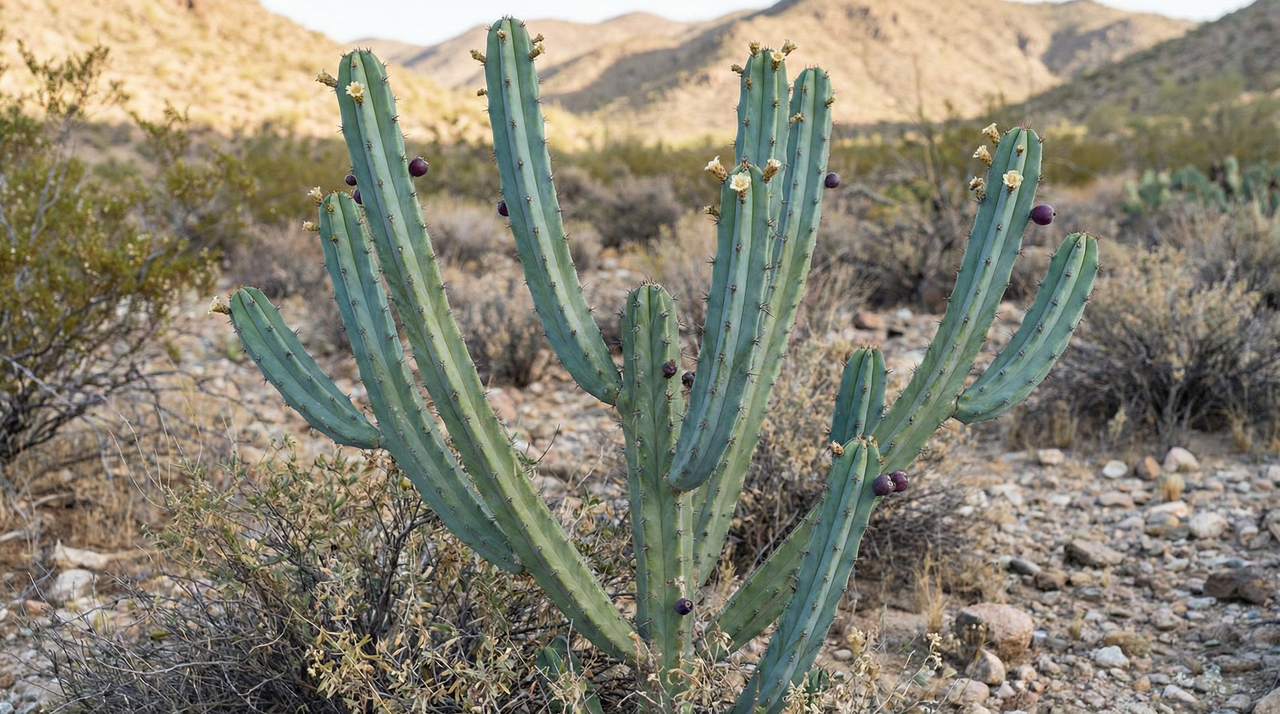
Nobody believes me when I tell them this cactus tastes like blueberries. Not blueberry-adjacent, not blueberry-if-you-squint. People who've eaten the ripe fruits of Myrtillocactus geometrizans off the plant in central Mexico describe them the same way every time: sweet, slightly tangy, unmistakably familiar. The genus name even says it outright, "myrtillo" being an old Italian word for blueberry, and yet this species keeps getting filed in the ornamental-only category by gardeners who've never looked past those dramatic blue-gray columns.[1] That's a real shame, because what you're actually looking at is one of the most productive edible cacti in North America, a plant that feeds birds, bats, and entire communities in the Mexican highlands every summer without anyone giving it much credit outside its home range.
I keep coming back to that contradiction. The blue coloring, that powdery glaucous bloom coating the stems, exists to reflect harsh UV radiation in the Chihuahuan and Tehuacán-Cuicatlán deserts where it evolved.[2] It's pure survival technology. But the same quality that makes this plant look almost architectural, almost too sculptural to be real, is also the thing that tricks people into treating it as furniture rather than food. There's a whole edible, medicinal, ecologically vital plant hiding inside what most nurseries sell as a statement piece for a modern patio. That gap between what this cactus is and how it's usually understood is exactly why it deserves a closer look.
Blue Myrtle Cactus Origin, History, and Cultural Significance
Botanical Background and Native Habitat
Blue Myrtle Cactus (Myrtillocactus geometrizans) is as Mexican as a plant can get. It's native to an enormous swath of central and southern Mexico, from Oaxaca and Puebla up through Querétaro, San Luis Potosí, and Jalisco, with a toe-hold in southern Guatemala, growing across xerophytic shrublands, dry tropical forests, rocky limestone slopes, and even the fringes of oak-pine forest at elevations typically between 900 and 2,500 meters above sea level.[3][4][5] That's a remarkable breadth of terrain for a single columnar cactus to claim.
Botanically, it was first described in 1819 as Cereus geometrizans by Humboldt, Bonpland, and Kunth, working from collections made during their famous 1803-1804 Mexican expedition.[6] The genus transfer to Myrtillocactus came just a few years later in 1823, and the species has since settled into two recognized subspecies: the typical subsp. geometrizans and subsp. papyracanthus, the latter distinguished by its papery spines.[5] Given the right conditions, individual plants can live anywhere from 50 to 100 years or more, flowering and fruiting repeatedly throughout their lifespan (that's what "polycarpic" means, essentially a once-flowering plant's opposite).[3][7] The genus also includes Garambullo (M. schenckii), a close relative found on limestone hills across Hidalgo and Puebla that shares the same columnar habit, nocturnal flowers, and edible purple fruits, though it occupies somewhat lower elevations and drier rocky ground.[8]
Visual Characteristics and Drought Adaptations
Mature specimens reach 4 to 6 meters in habitat, branching upward in that unmistakable candelabra silhouette, with bluish-green glaucous stems 5 to 8 centimeters across and 5 to 8 prominent ribs running their length.[3][4] I've installed similar columnar cacti in xeriscape designs, and nothing reads quite as architecturally striking as that frosted blue-gray against red decomposed granite or pale limestone. The glaucous waxy cuticle isn't just decorative, though; it's one of the plant's primary defenses against desiccation, reflecting intense solar radiation and dramatically slowing water loss through transpiration.[9] I've noticed that the blue intensifies visibly in full sun and dry conditions, almost like the plant is leaning into its own adaptation. Pair that with CAM photosynthesis (stomata open only at night to fix CO2, conserving water during the brutal midday heat) and a shallow fibrous root system that fans out wide to capture sporadic rainfall, and you have a plant extraordinarily well-matched to its landscape.[10]
The fruits that follow are equally distinctive: small oblong berries, 1 to 2 centimeters long, ripening to a deep purple-indigo with juicy pulp and tiny kidney-shaped seeds embedded in mucilage, dispersed primarily by birds but also by bats and mammals.[11]
Reproductive Ecology, Pollination, and Fruit
Flowering happens in late spring to early summer, and this is where the plant's relationship with the night comes fully alive. The blooms are white, fragrant, and open only after dark, drawing lesser long-nosed bats and moths as their primary pollinators, with bees picking up some of the daytime slack.[12] Those pollinated flowers develop into the sweet-tart purple berries that ripen through summer and fall, supporting an entire web of wildlife in Mexican arid zones. The fruits are sometimes called garambullo, a name shared loosely across the genus, and their blueberry-like flavor is genuinely delicious. The species is classified as Least Concern on the IUCN Red List with stable populations overall,[13] and I want to address one misconception that keeps circulating online: unlike some columnar cacti, Blue Myrtle has no documented psychoactive history. The ethnobotanical record is clear that it's valued strictly for food, medicine, and cultural symbolism.[14]
Traditional and Cultural Uses
For centuries, garambullo fruits have been a seasonal staple across indigenous Mexican communities including the Huichol (Wixárika), Nahua, Zapotec, Mixtec, Otomi, and Tarahumara, eaten fresh or dried and processed into jams, wines, fermented drinks, atoles, and candies.[15][16] In arid regions where seasonal food scarcity is a real constraint, a productive cactus that fruits reliably carries enormous cultural weight. Traditional healers also used stems and fruits in teas and poultices for diabetes, inflammation, gastrointestinal problems, and wounds, applications that carry some preliminary research interest but await rigorous clinical validation.[17] Beyond food and medicine, the plant appears in Huichol yarn paintings and ceremonies as a symbol of resilience and endurance, and its sturdy stems have long served as living fences and construction material across its native range.[18][19]
That depth of cultural integration comes with a responsibility modern growers shouldn't ignore. Commercial demand for both fruits and ornamental specimens has created localized overharvesting pressure on wild populations.[20] In my own sourcing for design projects, I always specify nursery-propagated plants rather than wild-collected material. The species was introduced to European horticulture in the 1820s and has been cultivated in botanic gardens since the mid-19th century,[21] which means cultivated supply is genuinely available. Choosing it is a small act that keeps pressure off Mexican highland populations while honoring the plant's long, layered history.
Blue Myrtle Cactus Varieties and Cultivars
Notable Varieties of Myrtillocactus geometrizans
Unlike some species that have splintered into a dozen recognized botanical forms, Myrtillocactus geometrizans keeps it simple: no formally recognized subspecies or botanical varieties exist.[22] The real variation lives in the horticultural cultivars, and for collectors and designers, that's honestly where the fun is anyway. The two you'll encounter most often are 'Variegatus' (sometimes listed as 'Variegata'), which carries creamy-white or yellow stripes along its stems,[22][23] and 'Compacta,' which grows with a shorter, denser habit than the straight species.[22] I've used 'Compacta' in tighter guild plantings where the full-size candelabra form would eventually crowd out neighbors; it earns its keep without demanding constant negotiation over space. Crested and monstrose mutants also circulate among enthusiasts, prized for their contorted, fan-like growth that results from apical meristem disruption.[8]
One thing I've noticed with variegated specimens: the creamy striping can bleach or fade under relentless intense sun, and coloration tends to be most stable with bright indirect light or morning sun and afternoon shade. The stability data on these cultivars is thin, so treat that as earned observation rather than settled science. If you want the stripes to stay vivid, a little protection goes a long way.
The sibling species Myrtillocactus schenckii (Garambullo) is taxonomically richer, with recognized varieties including var. schenckii, var. alba (notable for pale fruits), and the more heavily spined var. ferox.[8] These are distinct from the cultivars above, so keep the species names clear when you're shopping to avoid mix-ups.
Sourcing Blue Myrtle Cactus Plants and Seeds
Finding blue myrtle cactus domestically is genuinely easy if you know where to look. Specialty nurseries like Planet Desert, Mountain Crest Gardens, and Succulent Garden carry both Myrtillocactus geometrizans and M. schenckii, ship nationwide within the continental US, and generally have straightforward ordering processes.[24][25][26] In California and Arizona, local nurseries and cactus shows through the Cactus and Succulent Society of America network are worth checking too, since you can inspect the plant in person before committing.[27] I've learned to look specifically for specimens without any sign of etiolation (that stretched, pale growth that means the plant was kept too dim in production) and to check the root zone carefully on arrival.
Pricing scales dramatically with size. Seeds run roughly $3 to $15 per packet, small seedlings and cuttings land in the $5 to $50 range depending on form, and mature specimens can reach $200 to $500 or more.[28][29] My honest advice: start smaller. A young, well-rooted cutting acclimated to your specific conditions will often outperform an expensive large specimen that spent weeks stressed in transit. Stock peaks in spring and summer, so that's your best window for seeds and cuttings, though established plants move year-round.
For international buyers, know that Myrtillocactus geometrizans is listed under CITES Appendix II, meaning international trade is regulated to prevent overexploitation.[14] Importing it requires a phytosanitary certificate from the exporting country, a CITES export permit, and USFWS notification or import documentation through their eDecs system, plus USDA APHIS inspection on arrival.[30][31] California buyers should also check with the CDFA for any additional nursery stock requirements.[32] Seeds propagated in cultivation generally face fewer restrictions than wild-collected material. For most US gardeners buying from domestic specialty nurseries, none of this applies, but it's worth knowing if you're eyeing that impressive specimen at a foreign cactus show.
How to Propagate and Plant Blue Myrtle Cactus
Blue myrtle cactus is one of those plants that seems to want to be propagated. It throws offsets, takes readily from cuttings, and germinates from seed with a reliability that puts many garden perennials to shame. The main decision you face is how much patience you have: vegetative methods get you a sizable plant in a season or two, while seeds are slower and more variable but deeply satisfying if you're a collector who enjoys watching those tiny blue-green columns emerge.
Propagation Methods for Blue Myrtle Cactus
Stem cuttings are the workhorse method here, and for good reason.[33][34] I take segments somewhere between 4 and 12 inches long, cut at a 45-degree angle with a sterile blade, then set them somewhere warm and shaded to callus for one to two weeks.[35] A properly callused cutting feels firm and dry to the touch, almost chalky at the cut face. If you rush it into soil before that stage, the base gets soft and translucent and you've lost the cutting to rot. Rooting hormone with IBA at 0.1–0.5% can shave a week or two off the wait, but in warm conditions (70–85°F) I rarely bother; most cuttings root in two to six weeks with minimal fuss.[36]
If your established plant is already producing basal pups, start there. Offsets detach cleanly with a gentle twist, callus quickly, and frequently already have root primordia forming at their base.[33] This is the route I recommend to anyone new to Myrtillocactus propagation; the success rate is high and the turnaround is fast.
Seeds are a different experience entirely. The seeds themselves are tiny, about 1–2 mm, black, glossy, and hard-coated, with a physical dormancy built into that impermeable testa.[37][38] That hard coat evolved to survive desert flash floods, so you need to encourage germination with mechanical scarification, a 24-hour warm-water soak, or gibberellic acid before sowing.[39][40] Surface-sow fresh seed in a well-draining cactus mix at 68–85°F with indirect light and even moisture; germination runs 7–30 days with fresh, well-stored seed.[41] The resulting seedlings look like tiny blue-green pencils, and what surprises most beginners is how quickly the taproot outpaces the visible stem, so use pots deeper than you think you need. Fresh seed germinates at 70–90%, but that figure drops fast with poor storage.[41] If you're holding leftover seed, keep it in an airtight container with desiccant at 5–10°C; stored correctly, viability can hold for 5–15 years.[42][43]
One other method worth knowing: Myrtillocactus geometrizans is a prized grafting rootstock. Its vigor transmits readily to slower or more delicate species like Astrophytum and Lophophora, with flat or cleft grafts succeeding at 70–95% when cambium layers align cleanly.[44] In my experience, flat grafts onto Myrtillocactus rootstock take in 10–14 days when the alignment is right and conditions are warm. Always use sterile tools and wear gloves; the sap can irritate skin, and sanitation failures cause more graft losses than technique errors. Spring is the ideal window. Tissue culture is also possible using nodal segments on Murashige and Skoog medium, with success rates around 60–77%, but that's firmly in commercial territory and not something most home growers need to think about.[45]
Soil, Site Selection, and Light Requirements
In habitat, blue myrtle cactus grows on limestone-rich, rocky slopes in central and northern Mexico at 1,000–2,000 m elevation, in soils with low organic matter and high mineral content.[33][4] Replicate that in cultivation and this plant is nearly indestructible. I've killed more cacti with regular potting mix than by any other mistake; retain that in your soil and you're halfway to root rot before the plant even gets established. Aim for a mix that's 50–80% inorganic material, such as perlite, pumice, or coarse sand, with the remainder being organic.[46][47] In containers, terracotta pots with drainage holes are your friend, and give the taproot room to develop: minimum 12–18 inches deep, repotted every two to three years in spring.
Soil pH of 6.0–7.5 is the target, though this plant tolerates up to 8.0 given the calcareous soils it comes from.[48] Going below 6.0 risks nutrient toxicities; pushing well past 7.5 can trigger iron chlorosis. That said, drainage is a more urgent priority than hitting an exact pH number; if you have excellent drainage, slight pH variation rarely causes visible problems.
Full sun, six to eight hours of direct light daily, is what maintains the signature blue-green stem color and drives fruiting.[49] Insufficient light causes etiolation: stems elongate, pale, and lose that beautiful glaucous sheen entirely.[50] Young plants coming out of shade or moving from indoors need hardening off over two to three weeks. I've seen the bleached patches from rushing this process on young blue myrtle, and they look remarkably similar to the sunscorch I've watched appear on young Opuntia pads pushed into full summer exposure too fast. The tissue damage is lasting, so the gradual transition is worth it.[51]
Spacing, Timing, and Planting Technique
Before you put this plant in the ground, picture the mature form: 13–16 feet tall in habitat, typically 6–10 feet in cultivation, with a spread of 3–6 feet from basal branching and the offsets that give it that candelabra silhouette.[3] Plan accordingly. Space plants 3–6 feet apart at minimum to allow for air circulation and that eventual spread; commercial Garambullo orchards run 4–7 meters between plants, but for a home planting the closer end of the range works fine if you're comfortable editing offsets over time.[52]
I leave most offsets in place on my established plants because the multi-stemmed form is the whole point. A few get removed each spring and passed along, which is a gentle way to keep the clump from overwhelming its neighbors. The root system is a mix of shallow laterals spreading 3–6 feet and a taproot that wants depth, so dig a generous planting hole and don't compact the backfill.[48]
Timing matters, especially in marginal zones. Plant in spring once soil temperatures reach 55–65°F and nighttime lows are reliably above freezing.[53] Blue myrtle cactus is hardy through USDA zones 9–11, tolerating brief dips to around 20–25°F, but prolonged freezes are a different story.[54] Get the drainage, sun exposure, and spacing right from the start, and this columnar cactus will be one of the most trouble-free plants in your landscape for decades.
Blue Myrtle Cactus Care Guide
Everything about how to care for blue myrtle cactus makes more sense when you picture where it comes from: dry, rocky Mexican hillsides at 1,000 to 2,000 meters elevation, where annual rainfall might be 300 to 700 mm and temperatures swing between genuinely hot days and cool nights.[55][5] That image is your north star for every care decision. When in doubt, ask yourself: would this be happening on a rocky hillside in Hidalgo? If the answer is no, stop doing it.
Sunlight Requirements
This is one cactus that really does want to bask in the sun like it would on a Mexican hillside. Six or more hours of direct light daily is the foundation, and without it you won't just get slower growth — you'll lose the plant's identity.[56][57] That distinctive blue-gray waxy bloom and tight columnar form are products of intense light exposure. Grow it in shade and etiolation sets in fast: stems stretch, weaken, and lose the glaucous color that makes the plant worth growing in the first place.[58][59] The one exception is during peak summer heat in places like Phoenix or Tucson, where temperatures regularly exceed 35°C — in those conditions, a 30 to 50 percent shade cloth during July and August prevents sunscald without sacrificing the light it needs the rest of the year.[60]
Watering Needs
Overwatering kills more of these plants than anything else, and I say that from painful first-season experience. The principle is simple: soak thoroughly, then wait until the soil is completely dry before watering again.[61][62] During spring and summer that usually means every two to four weeks, and in winter you're dropping to once every four to six weeks at most.[63] I grow mine in Florida's humidity and I've learned to ignore the calendar entirely — I wait until the soil is bone-dry, which often takes longer than any schedule suggests. Like agave and other drought-adapted plants I use in xeriscape designs, blue myrtle cactus stores water so efficiently that underwatering is almost always safer than the reverse.[64]
Soft, wrinkled stems, yellowing tissue, and a foul smell from the soil are your warning signs of overwatering.[65] If you catch it early, unpot the plant, trim any black mushy roots, let everything dry fully, and repot into fresh, gritty cactus mix before resuming minimal watering.[66] Good drainage isn't optional here — it's what makes the whole watering rhythm work.
Feeding and Fertilizer
Blue myrtle cactus evolved in nutrient-poor soils, and it hasn't forgotten.[67] Feed it only during active growth in spring and summer, using a balanced low-nitrogen cactus fertilizer — something in the 5-10-10 range — diluted to half strength, applied every four to six weeks.[68][69] Always water thoroughly after feeding to prevent root burn. Micronutrients like calcium, magnesium, and iron matter too, and keeping soil pH between 6.0 and 7.5 ensures they stay available to the plant rather than locked out.[70] Stop feeding entirely in fall and winter.
I've watched clients feed these plants with high-nitrogen products and then wonder why the stems softened and the beautiful blue color faded. Over-fertilization causes leggy, distorted growth and can burn roots outright — genuinely worse outcomes than just leaving the plant alone.[53] With this plant, neglect in the fertilizer department is a virtue.
Heat Tolerance
Mature specimens handle serious heat — up to 45 to 50°C in their native habitat — thanks to CAM photosynthesis, a thick waxy cuticle, and spines that reduce transpiration and provide partial self-shading.[71][72] Once established, an adult plant in full summer heat is essentially laughing at the thermometer as long as the soil is dry. Seedlings are another story — anything above 35°C can cause wilting or mortality in young plants, so extra care during establishment in hot climates is warranted.[73]
Watch for bleached or whitish patches on south-facing stems, yellowing, or tissue softening as signs of sunscald under prolonged extreme heat.[58][74] Ideal relative humidity sits in the 20 to 40 percent range; higher humidity in warm conditions invites fungal problems and warrants extra caution with watering frequency.[57]
Frost Tolerance and Winter Protection
Blue myrtle cactus is rated for USDA zones 9 to 11, and the RHS gives it an H2 (half hardy) rating — meaning it needs frost protection outdoors in most of the UK and similar climates.[75][54] It can survive brief dips to around 20 to 25°F with protection, but frost damage begins at 32°F and accelerates sharply below 28°F, particularly at the growing tips and new stem tissue.[76][77] Cold damage shows as browning, softening, or blackening of stem tissue — and if left unaddressed, it progresses to rot.[78]
My practical rule: if your winters regularly drop below 25°F for more than a few hours, grow this in a container so you can bring it in. I've successfully overwintered several Myrtillocactus specimens indoors in a bright, south-facing window at 50 to 60°F, watering only when the soil was completely dry — every four to six weeks at most.[79] For in-ground plants in marginal zones, breathable frost cloth (not plastic) layered near a south-facing wall provides meaningful protection, and a supplemental low-wattage bulb underneath can raise local temperatures by 5 to 10°F.[78] The detail most people miss: wet soil during a freeze is far more damaging than dry cold. Keep it dry through winter and you've already solved most of the frost problem.[80]
Pruning, Maintenance, and Seasonal Care
The annual rhythm here is refreshingly simple. Spring and summer bring active growth, deep watering every two to three weeks, and half-strength fertilizer every four to six weeks.[81][82] Growth peaks during the rainy-season equivalent, and if you've respected the winter dry rest, late spring to early summer brings those small, sweet, blueberry-like fruits ripening from green to deep blue-purple.[83] Fall signals the shift: ease off feeding entirely, begin stretching intervals between waterings, and start thinking about frost protection logistics before temperatures drop.
Pruning needs are minimal. When you do need to shape the plant or remove frost- or pest-damaged tissue, do it in early spring with clean, sharp shears, cutting just above a node to encourage branching and airflow.[47] Mealybugs, scale, and spider mites can occasionally appear — almost always in response to stress or poor airflow rather than the plant inviting trouble — and root rot from overwatering remains the most common serious threat.[47] Very tall potted specimens may need staking with soft ties as they gain height.[79] Beyond that, this plant mostly wants you to leave it alone. Grown right, it's the kind of specimen that outlasts the garden around it.
Harvesting Blue Myrtle Cactus (Myrtillocactus geometrizans)
Patience is the first tool you need here. Blue Myrtle Cactus flowers run from March through June, with the main flush usually peaking in May, and from there the fruit needs roughly 90 to 120 days to develop fully.[72][84] I mark my calendar every spring after I see those first white flowers open, which puts my attention squarely on late July through September. That's when fruits typically ripen, with the peak harvest window running August into September as long as daytime temperatures stay above 70°F.[72][85] Dry summers without supplemental irrigation will delay or reduce fruiting, so consistent moisture genuinely matters if you want a reliable yield.
Timing and Ripeness Indicators
The ripeness window for Myrtillocactus geometrizans fruit is narrow and worth learning to read carefully. Color is your first signal: fruits shift from green through red to a deep blue-purple or indigo, often developing that same glaucous bloom you see on the stems.[86][87][88] Once they've reached 2 to 3 cm and that dusty indigo coat appears, give them a very gentle squeeze. A ripe berry yields slightly without collapsing; an underripe one pushes back firmly. I learned that distinction the hard way the first couple of harvests, because underripe fruit is noticeably tart and loses whatever fragrance it was building. If you have a refractometer handy, you're looking for 14% Brix or above, though the full range runs 12 to 18%.[86] New growers should also know that established plants typically take a few years to begin fruiting at all, so set realistic expectations in the early seasons and trust that the plant is working on schedule.
Harvest Technique and Yield
Pick by hand during dry weather. Wet fruit is more prone to splitting and spoilage, and handling damp berries speeds up the decline of everything else in your harvest basket.[89] I aim to take no more than 30 to 50 percent of the fruit on any given plant per season.[90] What stays behind feeds the birds and insects that visit my garden, and over the years I've noticed that plants harvested conservatively continue producing steadily rather than declining. It's a straightforward permaculture trade: you get your share, the ecosystem gets its share, and the plant stays vigorous.
Expected Yield and Flavor at Peak Ripeness
What you're pulling off the plant are small, jewel-like berries with juicy pulp, thin skin, and a scattering of tiny black seeds inside, tasting remarkably like blueberries with a pleasant fruity aroma when fully ripe.[86] Don't expect enormous harvests; the reward here is quality. In my experience, plants with consistent summer irrigation produce noticeably sweeter, more aromatic fruit than those left to manage on rainfall alone. If you're growing M. schenckii alongside the primary species, its fruits run a bit smaller at 1 to 2 cm and can lean tarter or grainier depending on ripeness and conditions, so taste as you go rather than relying on color alone.[8][91]
Blue Myrtle Cactus Preparation and Uses
Culinary Uses and Flavor of Garambullo Fruit
The garambullo fruit is the reason most people grow blue myrtle cactus, and once you've tasted a ripe one straight off the stem in July heat, you understand why Mexican communities have harvested it for centuries. The fully ripe fruit, deep purple to black, has a juicy, pulpy texture with a sweet-tangy flavor that genuinely does recall blueberries and blackberries, with a pleasant fruity aroma from volatile compounds including linalool, hexanal, and phenylethyl alcohol.[3][92] I've noticed that fruits ripened under the most intense sun and warmth carry that fragrance most strongly, which makes microclimate selection a real culinary variable, not just a growing one.
Nutritionally, each 100 grams of fresh fruit comes in around 55 kcal with roughly 12 g carbohydrates, 3.5 g dietary fiber, and 20 to 25 mg vitamin C, though values shift with growing conditions and season.[93][94] The edible seeds are small and tender enough to eat whole.
Fresh eating is just the beginning. Traditional Mexican preparations run the full range from aguas frescas and smoothies to jams, jellies, ates (fruit pastes), sorbets, and mezcal-based drinks.[95][96] Cooking concentrates the jam-like sweetness considerably; drying produces something close to a chewy, raisin-textured snack. Paired with lime and chili it's a classic street-food combination worth trying immediately. Avoid unripe fruit entirely since it's bitter and astringent.[97]
The young pads (cladodes) are edible cooked, treated much like Opuntia nopales after thorough spine and areole removal, though their mucilaginous texture and comparative bitterness mean they're rarely anyone's first choice when fruit is available.[3][95] I handle them exactly as I do Opuntia, but I'm more meticulous about the areoles because blue myrtle's spines embed with surprising stubbornness. Fresh fruit keeps refrigerated at 32 to 40°F for 7 to 10 days; for longer preservation, freeze, dry, or process into jams or wine.[98]
Medicinal Preparations from Stems and Fruit
In traditional Mexican folk medicine, stem decoctions are simmered into teas taken internally for digestive complaints, inflammation, hypertension, and diabetes management, while poultices from stem material are applied externally to wounds.[99][100] Related species across the Myrtillocactus genus share similar applications among communities like the Yaqui and Mayo. These are time-honored preparations with real cultural weight, and the phytochemical rationale for some of them is genuinely interesting, as the health benefits section covers in detail. My own stance: treat the fruit as a flavorful, antioxidant-rich food first, and view any stem-based preparations as traditional practice rather than clinical treatment. Human trial data remains thin, so anyone considering therapeutic use should bring that conversation to a qualified healthcare provider.
Non-Food and Traditional Applications
The sturdy, woody branches of mature blue myrtle cactus have historically served as fencing material, tool handles, and structural elements in rural Mexican construction, and the tepongal rattle is among the more distinctive musical instruments made from its stems.[17] I've seen the candelabra form used effectively in living xeriscape fences, where the plant's architecture naturally creates layered wildlife corridors without requiring any additional structural support. The blue-gray branches are genuinely durable once dried. If you're harvesting stems for craft or fencing purposes, take them selectively from the outer branches rather than compromising the plant's central structure; a well-established specimen is a decades-long investment worth protecting. The fruit and its culinary value remain by far the plant's primary draw,[3] but knowing the whole plant has traditional utility makes it feel even more at home in a permaculture landscape.
Blue Myrtle Cactus Health Benefits
Traditional Medicinal Uses in Mexican Ethnobotany
Long before anyone ran a DPPH assay on garambullo extract, indigenous communities across central Mexico were already using this cactus to manage diabetes, calm gastrointestinal distress, treat wounds and respiratory infections, and bring down inflammation and elevated blood pressure.[101][102][103] Preparations ranged from fresh fruit juice to stem decoctions taken internally to topical poultices applied directly to skin. That's a wide therapeutic range, and honestly it's what first pulled me toward researching this plant more seriously as an edible addition to arid food forests.
The preclinical science is more substantive than most desert edibles enjoy. Pharmacological studies confirm antioxidant, anti-inflammatory, antimicrobial, and antidiabetic activity.[104][105] In vitro antioxidant testing using DPPH, ABTS, and FRAP assays shows IC50 values of 20 to 50 µg/mL with up to 90% DPPH scavenging at 100 µg/mL.[106][107] Anti-inflammatory effects have been demonstrated through COX-2 inhibition of 40 to 60% in LPS-stimulated macrophages, alongside measurable reductions in TNF-α, IL-6, and PGE2.[108][109] Extracts also show antimicrobial activity against Staphylococcus aureus and E. coli at MIC values of 0.5 to 2 mg/mL, working through both cell membrane disruption and biofilm inhibition.[106][110] On the diabetes side, aqueous extracts reduced blood glucose 25 to 30% in streptozotocin-induced diabetic rats at doses of 100 to 400 mg/kg, with up to 70% alpha-glucosidase inhibition at 100 µg/mL.[111][112] Those are genuinely compelling numbers. I read them as a reason to take the plant seriously, not as a clinical recommendation. Large-scale randomized controlled trials in humans remain scarce, and most of this data comes from cell cultures and animal models.[101][102]
Key Phytochemicals and Bioactive Compounds
The phytochemical makeup of Myrtillocactus geometrizans reads like a who's-who of antioxidant chemistry. Phenolic acids (gallic, chlorogenic, protocatechuic, p-coumaric), flavonoids (quercetin, rutin, kaempferol), betalains including betanin and indicaxanthin, plus polysaccharides from the cladodes and trace alkaloids and terpenoids all contribute to its bioactivity.[113][114][115] The betalains are what give the ripe fruit that deep jewel-purple color. I've grown this species from seed, and the moment those fruits shift from green to deep violet, I know the pigment load is at its peak -- the same visual shorthand I use when selecting garambullo at markets in the Yucatán. That color is the plant's phytochemical fingerprint made visible.
The phenolics and flavonoids are the primary drivers behind the DPPH potency and the cytokine suppression documented in the anti-inflammatory research. Total phenolics in the fruit reach 150 to 300 mg GAE per 100g, and the DPPH IC50 values tighten to 10 to 20 µg/mL when researchers isolate the richest fractions.[113][116] Most of the robust data centers on the fruit and stem tissues; research on other plant parts is thinner.
Nutritional Profile of Garambullo Fruit
The garambullo fruit is genuinely good food by any measure: roughly 50 to 80 kcal per 100g, 85 to 90% water, and a respectable 2 to 5g of dietary fiber per serving.[117][118] Vitamin C comes in at 12.5 to 40 mg per 100g depending on ripeness and growing conditions, potassium runs around 180 mg per 100g, and the carbohydrate fraction (13 to 15g) is mostly natural sugars with minimal fat and protein.[117][118] The related Myrtillocactus schenckii shows a similar profile with slightly higher potassium (around 250 mg/100g) and calcium (60 mg/100g), traditionally consumed the same ways: fresh, juiced, in jams, or dried.[119][120]
What really surprises people -- especially those skeptical of cactus fruit as a genuine nutritional source -- is the antioxidant capacity. Anthocyanins (delphinidin-3-glucoside and cyanidin-3-glucoside) reach 20 to 50 mg per 100g, and the overall antioxidant capacity is comparable to blueberries at 500 to 800 mg TE per 100g by DPPH.[113] The flavor helps too -- sweet, slightly tangy, undeniably blueberry-adjacent. I toss them into smoothies when I can find them fresh and no one ever questions the ingredient. One thing worth knowing: drying or cooking destroys 70 to 90% of the vitamin C, so juicing is the better route if you want to keep the phytochemicals intact, preserving around 100 to 200 mg GAE per 100 mL in fresh juice.[121][122]
Safety Considerations and Cautions
Here's the good news first: ripe garambullo fruits are traditional food with a long safety record, considered non-toxic in moderation, and the genus doesn't appear on USDA or ASPCA poisonous plant lists.[123][124][125] Eat the ripe fruit. That's the safest and most nutritionally rewarding part of the plant.
The stems tell a more complicated story. They contain low levels of phenethylamine alkaloids including mescaline, tyramine, and hordenine, though concentrations are disputed in ungrafted plants -- some reports cite 0.01 to 0.5% dry weight and the range may run higher in certain cultivated or grafted specimens.[126][127] Large ingestion of non-fruit parts can also cause gastrointestinal irritation from oxalates.[128] I treat all of this matter-of-factly: the stems aren't food, so don't eat them in quantity.
The most immediate hazard is mechanical. Sharp spines and glochids cause puncture wounds, embedded fragments, and secondary infection.[129][130] The first time I handled a young blue myrtle cactus without gloves, I spent the afternoon with tweezers and a magnifying glass. Thick leather gloves, always. No exceptions.
If you're already managing blood sugar with medication, the animal-study data showing 25 to 30% glucose reduction is strong enough that I'd strongly encourage talking to your doctor before using any stem preparations medicinally -- the interaction risk with hypoglycemic drugs is real and worth taking seriously.[102][131] Medicinal use during pregnancy or lactation should be avoided entirely given the absence of safety data for those populations.[102][131] And since human clinical trials remain scarce for most of the medicinal claims,[101] any therapeutic use beyond eating the fruit should involve a qualified healthcare provider.
Finally, identification matters. Euphorbia tirucalli (pencil cactus) is a toxic look-alike with a caustic milky sap that's completely unlike the clean, waxy stems of Myrtillocactus geometrizans.[111][132] When in doubt about what you're harvesting, source fruits from a plant you've grown yourself or verified through a reliable specialty nursery.
Pests and Diseases of Blue Myrtle Cactus
Natural Resistance and Defense Mechanisms
Blue myrtle cactus is, by design, a tough plant. Its thick cuticle, CAM photosynthesis, and dense radial spines are millions of years of desert evolution doing exactly the job they were built for: keeping pathogens and herbivores out.[133][134][135] I've worked with a fair range of columnar cacti and tender succulents over the years, and Myrtillocactus geometrizans holds up better than most when conditions are right. Give it the full-sun, low-humidity life it evolved for and pest pressure stays minimal.[136] That resistance erodes fast in humid conditions or indoors under low light, which is where mealybugs and spider mites find their opening.[137][138] The spines that deter insects also make manual pest inspection a little finger-puncturing, so I always use long tongs or thick gloves when I'm checking stems closely on client plants.
Common Diseases and Their Triggers
Root rot is the real enemy here, and it almost always traces back to the same culprit: too much water sitting around the roots. Fungal pathogens like Phytophthora, Pythium, Fusarium, and Botrytis cinerea move in when drainage is poor, humidity is high, or temperatures drop below 50°F and the soil stays wet.[139][140] Symptoms are mushy, softened stem bases and, with gray mold specifically, a fuzzy coating that looks almost powdery at first glance. In my experience with comparable succulents, once you're seeing mushy tissue you've already lost that stem, but moving fast to cut above the rot and letting the wound callous in dry air can save the rest of the plant. I've seen more specimens lost to an enthusiastic watering schedule than to any insect, which is why prevention through excellent drainage and restrained irrigation beats any reactive spray program.
Bacterial soft rot from Erwinia or Pseudomonas can enter through wounds and cause similar collapse of stem tissue.[141] Anthracnose (Colletotrichum spp.) and other secondary fungal infections are less common but show up under poor air circulation.[139] Powdery mildew and viruses are rarely a concern under good conditions, and the ornamental cultivars like 'Rubroroseus' and 'Variegatus' were selected for appearance rather than disease resistance, so they carry the same cultural requirements as the straight species.[142]
Key Pests and Management Strategies
Stressed or overwatered plants attract insects that a healthy specimen shrugs off. The three to watch for are mealybugs (white cottony clusters at stem joints, leading to yellowing and sooty mold), scale insects (brown waxy bumps that drain sap), and spider mites (fine webbing and stippled, bronzing skin on young growth).[143][144][145] Aphids, nematodes, and cactus moths show up occasionally on damaged or weakened plants but aren't routine concerns for a well-sited specimen.[146]
My standard first response is neem oil, applied carefully between the spines in the early morning or evening to avoid sun scorch. It handles mealybugs and mites without disrupting beneficial insects in the broader garden, which matters in a polyculture design.[147] Rubbing alcohol on a cotton swab works well for isolated mealybug colonies, and insecticidal soap covers scale crawlers before their waxy armor hardens. For diseases, copper-based fungicides or thiophanate-methyl are reserved for serious infections after cultural fixes are already in place.[148][149] When I add any new cactus to a client's garden or my own collection, it goes into quarantine for a few weeks first, and every tool that touches it gets wiped with alcohol before moving to the next plant. Good spacing helps too, because the same airflow that discourages fungal disease also removes the sheltered microhabitats that mites and scale insects prefer.[146] Site this plant right and you'll spend very little time managing problems.
Blue Myrtle Cactus in Permaculture Design
I've installed a fair number of columnar cacti in xeriscape projects over the years, and the blue myrtle cactus earns a spot in almost every one. That glaucous blue-gray stems against a warm adobe wall or a backdrop of silver-green agave is genuinely hard to beat as a design moment. But the form is just the invitation; the real argument for including this plant is everything it does once it's in the ground.
Climate Preferences and Suitable Zones
Myrtillocactus geometrizans is native to the semi-arid shrublands and rocky slopes of central and southern Mexico, growing at elevations between 1,000 and 2,500 meters where annual rainfall ranges from roughly 300 to 800 mm, most of it arriving in a concentrated summer wet season.[12][3] Those highland conditions are hotter and drier than most people imagine for Mexico, which explains why the plant is so thoroughly drought-adapted and why it performs so reliably in the American Southwest and protected Central Florida microclimates I've observed over the years.
In terms of cold hardiness, expect it to handle minimum temperatures around 20 to 30°F (-7 to -1°C), making it a solid performer across USDA zones 9 through 11.[150][54] Once temperatures dip below 28°F, protection becomes important, and sharp drainage is non-negotiable year-round. Without it, winter moisture kills far more specimens than cold alone. I treat those two requirements as a single condition: the right drainage and the right site selection solve most frost problems before they start.
Ecological Functions and Wildlife Support
The ecological story of this plant starts at night. The flowers are large white tubular blooms, 5 to 7 cm across, opening after dark from late spring through summer and producing a strong fruity fragrance with copious nectar.[72] The primary pollinators are nectar-feeding bats, specifically Leptonycteris yerbabuenae and Choeronycteris mexicana, with moths serving as secondary visitors and hummingbirds making occasional daytime appearances.[72][151] The dark blue to purple-black garambullo fruits that follow feed bats, birds including curve-billed thrashers and orioles, insects, and small mammals, while the plant's dense columns provide shelter and nurse-plant protection for other seedlings establishing nearby.[12]
There's an important complication worth knowing upfront: the species is self-incompatible, meaning it needs cross-pollination from another individual to set fruit reliably.[152] In gardens near urban areas where bat populations are reduced, I've seen fruit set drop noticeably. Some bat populations in Mexico have declined by more than 50% due to habitat loss and overgrazing, and that pressure follows wherever bat corridors are fragmented.[153] Adding night-blooming companions like agaves and yuccas to the guild has helped in my own designs, and I now recommend evening hand-pollination with a soft brush as a practical backup skill for clients in low-bat areas, ideally when temperatures sit between 20 and 30°C with moderate humidity.[154][153] It sounds fussy until the first time you get a full crop because of it.
The plant's spreading root system also offers modest soil stabilization on rocky slopes, which I'd describe as a supporting benefit rather than a headline function.[155] Think of it the way you'd think about prickly pear's root contribution: useful, real, but not the primary reason you're including it in a design.
Forest Layer Placement and Guild Design
In an arid food forest, blue myrtle cactus fits the shrub to mid-layer position, typically reaching 3 to 5 meters tall in cultivation with a candelabra form that stays open enough to let light filter through to lower layers.[124] That transparency is a genuine asset. I position specimens where the blue stems can read visually against greener companions like mesquite or desert willow while their open branching doesn't shade out the ground layer beneath.
The natural guild partners are exactly what you'd expect from its Mexican highland origins: agaves, yuccas, and drought-tolerant nitrogen-fixers like mesquite. Agaves and yuccas pull double duty here because they also produce nocturnal blooms that help sustain the bat populations the blue myrtle cactus depends on for pollination.[154] It's the kind of mutualism that makes guild design satisfying: you're not just placing plants for yield, you're restoring the functional relationships those plants evolved alongside.
For living fences and slope work, the plant's non-invasive spreading roots and low maintenance needs make it practical without becoming a management problem in most introduced ranges.[156][124] Space individual plants to showcase those sculptural blue stems rather than cramming them together; in my experience, a well-sited specimen at 2 to 3 meters from its nearest large neighbor looks intentional in a way that a crowded row never does.
The Plant That Taught Me to Stop Apologizing for Growing Cacti in a Food Forest
I used to hesitate before recommending columnar cacti to clients who came to me with visions of lush, leafy abundance. Blue Myrtle Cactus cured me of that. The first time I watched a bat work those night flowers, something clicked: abundance doesn't have to be green and dripping. Sometimes it's blue-gray and ancient and asking almost nothing of you in return.
Sources 156
- Myrtillocactus geometrizans - JSTOR ↩
- Myrtillocactus geometrizans - IUCN Red List ↩
- Myrtillocactus geometrizans ↩
- Kew Gardens Plant Database ↩
- Myrtillocactus geometrizans ↩
- Nova Genera et Species Plantarum ↩
- Cacti Longevity ↩
- Myrtillocactus schenckii ↩
- Adaptations of Cacti to Arid Environments ↩
- CAM Photosynthesis in Desert Cacti ↩
- Latf et al., 2019. 'Seed dispersal and morphology in Myrtillocactus geometrizans' ↩
- Pollination Ecology of Myrtillocactus geometrizans ↩
- Myrtillocactus geometrizans ↩
- CITES Appendices ↩
- Ethnobotany of Myrtillocactus schenckii in Mexico ↩
- Edible Cacti of Mexico: Traditional Uses and Nutritional Value ↩
- Ethnobotany of Myrtillocactus geometrizans in Central Mexico ↩
- Huichol Rituals and the Cacti ↩
- Traditional Uses of Cacti in Indigenous Mexican Communities ↩
- Sustainable Harvesting of Garambullo Cactus ↩
- Myrtillocactus geometrizans ↩
- Myrtillocactus geometrizans ↩
- Myrtillocactus geometrizans f. variegata ↩
- Myrtillocactus schenckii - Blueberry Cactus ↩
- Myrtillocactus schenckii ↩
- Myrtillocactus schenckii Seeds ↩
- Cacti and Succulents for Sale ↩
- Myrtillocactus schenckii (Blueberry Cactus) - 24″ Box ↩
- Myrtillocactus schenckii For Sale ↩
- Importing Plants and Plant Products ↩
- CITES and International Trade in Plants ↩
- Plant Quarantine Manual ↩
- Myrtillocactus geometrizans ↩
- Myrtillocactus geometrizans Propagation ↩
- Propagation of Cacti and Succulents ↩
- How to Propagate Cacti from Cuttings ↩
- Embryology of Cacti: Embryo Types and Development ↩
- Seed Structure and Germination in Cactaceae ↩
- Propagation of Blue Candle Cactus ↩
- Germination and Dormancy in Myrtillocactus geometrizans ↩
- Germination of Myrtillocactus geometrizans ↩
- Seed Conservation: Storing Seeds ↩
- Seed Storage of Cactaceae: Orthodoxy and Longevity ↩
- Grafting Techniques for columnar cacti ↩
- Micropropagation and Genetic Stability of Myrtillocactus geometrizans Subsp. geometricus ↩
- Cultivation of Myrtillocactus geometrizans ↩
- Soil Requirements for Cacti and Succulents ↩
- Soil pH for Cacti and Succulents ↩
- Growing Myrtillocactus geometrizans: Light and Sun Requirements ↩
- Etiolation in Cacti and Succulents ↩
- Sunburn and Overexposure in Cacti: Symptoms and Prevention ↩
- Cacti Planting Guide - University of Arizona Extension ↩
- Myrtillocactus geometrizans Care Guide ↩
- USDA Plant Hardiness Zone Map ↩
- Myrtillocactus geometrizans ↩
- Myrtillocactus geometrizans ↩
- Cactus and Succulent Cultivation Guide ↩
- Caring for Myrtillocactus geometrizans: Temperature and Sun Exposure ↩
- Heat Stress in Desert Cacti: Symptoms and Management ↩
- UCANR Master Gardener: Cacti Care ↩
- Myrtillocactus geometrizans Care Guide ↩
- Blue Candle Cactus (Myrtillocactus geometrizans) ↩
- Cacti and Succulents: Watering Schedules ↩
- Myrtillocactus geometrizans (Blue Myrtle Cactus) ↩
- How to Water Cacti: Avoiding Overwatering and Root Rot ↩
- How to Treat Overwatered Cacti ↩
- Myrtillocactus geometrizans Care Guide ↩
- Myrtillocactus geometrizans Care Guide ↩
- Fertilizing Cacti and Succulents ↩
- Myrtillocactus geometrizans Care Guide ↩
- Propagation of Columnar Cacti: Temperature Effects on Seedlings ↩
- Physiological Adaptations of Desert Cacti to Heat Stress ↩
- Temperature Tolerance in Sonoran Desert Plants ↩
- Blue Myrtle Cactus Cultivation Guide ↩
- Myrtillocactus geometrizans ↩
- Myrtillocactus geometrizans ↩
- Myrtillocactus geometrizans ↩
- Protecting Cacti from Frost ↩
- Overwintering Cacti Indoors ↩
- Caring for Myrtillocactus geometrizans in Winter ↩
- USDA PLANTS Profile: Myrtillocactus geometrizans ↩
- Myrtillocactus geometrizans ↩
- Plants of the World Online (Kew Gardens) ↩
- Fruit Development in Myrtillocactus geometrizans: Implications for Harvesting ↩
- Fruiting Seasons of Edible Cacti in the Southwestern United States ↩
- Ripeness Indicators for Edible Cacti Fruits ↩
- Royal Horticultural Society – Myrtillocactus geometrizans fact sheet ↩
- Kew Science – Myrtillocactus geometrizans ↩
- Harvesting and Postharvest Handling of Cactus Fruits ↩
- Sustainable Harvesting of Wild Fruits in Mexico ↩
- Garambullo (Myrtillocactus schenckii) - Useful Tropical Plants ↩
- Volatile Compounds in Myrtillocactus geometrizans Fruit and their Variation during Ripening ↩
- Nutritional Composition of Myrtillocactus geometrizans Fruits ↩
- Nutritional Composition of Some Wild Fruits from Semiarid Zones ↩
- Edible Cacti of Mexico ↩
- Garambullo (Myrtillocactus geometrizans) Fruit: Nutritional and Phytochemical Characterization ↩
- Ethnobotany of Cacti in Central Mexico ↩
- Cactus Fruit Storage and Preservation - ECHO Community ↩
- Ethnobotany of Mexican Sonoran Desert Indigenous Peoples ↩
- Garambullo (Myrtillocactus schenckii) - Traditional Uses in Mexico ↩
- Ethnobotany of Myrtillocactus geometrizans in Central Mexico ↩
- Medicinal Plants of Mexico: Cacti and Diabetes ↩
- Pharmacological Potential of Cacti in Latin America: Focus on Myrtillocactus geometrizans ↩
- Antioxidant and Anti-inflammatory Activities of Myrtillocactus geometrizans Fruit Extracts ↩
- Antioxidant and Anti-inflammatory Properties of Garambullo Cactus ↩
- Antioxidant and Antimicrobial Activities of Myrtillocactus geometrizans Fruit Extracts ↩
- Antioxidant Activity of Myrtillocactus geometrizans Fruit Extract ↩
- Antioxidant and Anti-inflammatory Properties of Blue Candle Cactus (Myrtillocactus geometrizans) Extracts ↩
- In Vitro Anti-Inflammatory and Cytotoxic Potential of Myrtillocactus geometrizans ↩
- Antibacterial Activity and Mechanism of Action of Myrtillocactus geometrizans Against Pathogenic Bacteria ↩
- Hypoglycemic and Antidiabetic Activity of the Aqueous Extract of Myrtillocactus Geometrizans in Streptozotocin-Induced Diabetic Rats ↩
- Hypoglycemic Effects of Myrtillocactus geometrizans in Diabetic Rats ↩
- Phytochemical Characterization of Myrtillocactus geometrizans Fruits ↩
- Phenolic Composition and Enzyme Inhibitory Effects of Garambullo (Myrtillocactus geometrizans) Extracts ↩
- Phytochemical Composition of Myrtillocactus geometrizans Fruits and Stems ↩
- Antioxidant Activity and Phenolic Compounds in Fruits of Myrtillocactus geometrizans ↩
- Nutritional Composition of Garambullo (Myrtillocactus geometrizans) Fruit ↩
- Nutritional Composition of Selected Cactus Fruits ↩
- Nutritional Composition of Garambullo (Myrtillocactus schenckii) Fruits ↩
- Phytochemical Characterization and Antioxidant Activity of Myrtillocactus schenckii Fruits ↩
- Effect of Drying Methods on Vitamin C and Antioxidant Capacity in Garambullo Fruit ↩
- Processing and Bioactive Compounds in Opuntia and Myrtillocactus Species ↩
- Traditional Uses and Safety of Edible Cacti in Mexico ↩
- USDA Plants Database - Myrtillocactus geometrizans ↩
- Cacti Toxicity - ASPCA ↩
- Alkaloids of the Cactaceae: A Review ↩
- Phytochemical Analysis of Myrtillocactus geometrizans ↩
- Toxicity of Cactaceae Family Plants ↩
- Cactus Spine Injuries ↩
- Cactus Dermatitis - StatPearls ↩
- Safety of Herbal Remedies in Pregnancy ↩
- Traditional Uses of Mexican Cacti ↩
- Missouri Botanical Garden Plant Finder ↩
- Flora of North America ↩
- Introduction to Cacti (Cactaceae) for Horticulturalists ↩
- Cactus and Succulent Society of America - Care Guide ↩
- University of Florida IFAS Extension ↩
- Pest Management for Cacti and Succulents ↩
- Fungal Pathogens in Columnar Cacti: Phytophthora and Botrytis ↩
- Root Rot in Cacti - University Extension ↩
- Bacterial Soft Rot in Succulents ↩
- Royal Horticultural Society (RHS) Takes Charge Database ↩
- Cacti Pests and Diseases ↩
- Mealybugs Management in Ornamentals ↩
- Pests and Diseases of Cacti and Succulents ↩
- Insect Pests of Cacti ↩
- Organic Pest and Disease Control for Cacti - Using Neem Oil ↩
- Pests and Diseases of Cacti and Succulents ↩
- Managing Cactus Pests: Mealybugs, Scales, and Mites ↩
- Myrtillocactus geometrizans - Plant Profile ↩
- Bat Pollination in Cacti: Leptonycteris and Columnar Cacti Interactions ↩
- Reproductive Biology of Myrtillocactus geometrizans ↩
- Bat Declines in Mexico: Implications for Cactus Pollination ↩
- Cultivation Guide for Myrtillocactus geometrizans ↩
- Soil Stabilization by Succulents in Semi-Arid Regions ↩
- Garambullo (Myrtillocactus schenckii) ↩