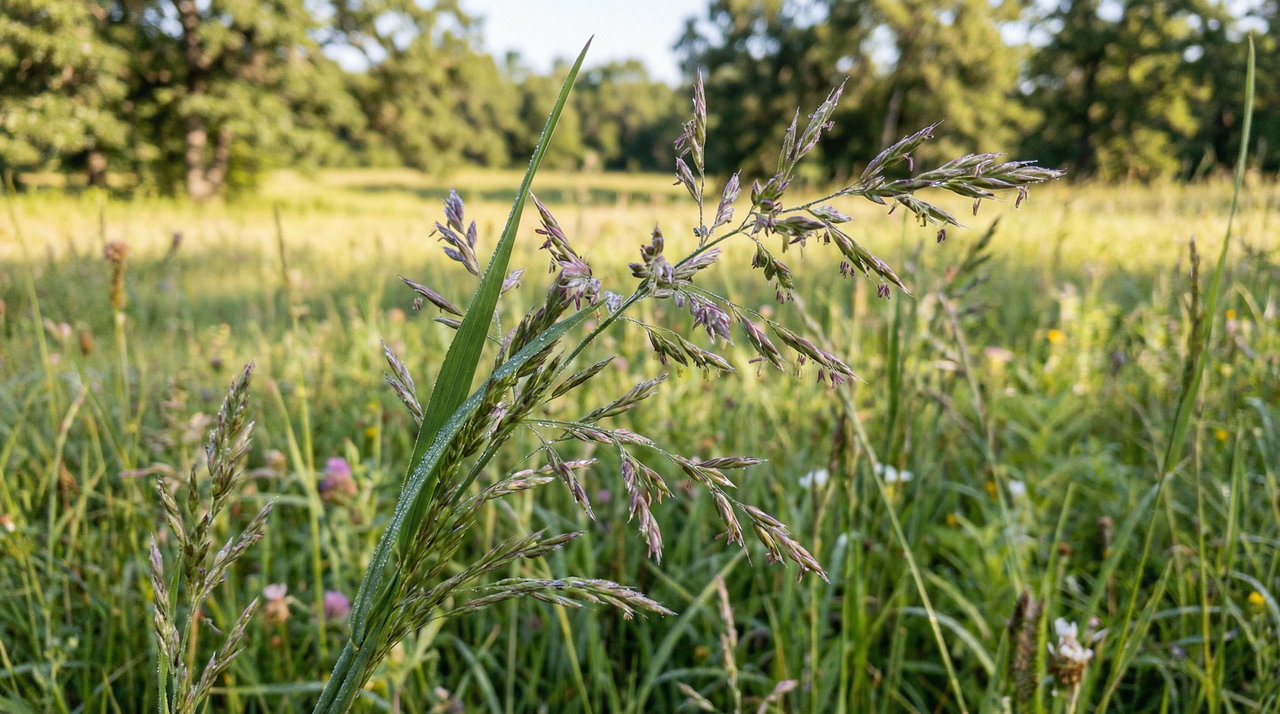
Nobody plants Kentucky bluegrass anymore. They inherit it. It's already there, threading through the soil before the first homeowner arrives, dense and rhizomatous and quietly running the show beneath whatever else you thought you were growing. I've pulled it out of vegetable beds, managed it in silvopasture corridors, and watched it reclaim a disturbed slope faster than anything else I seeded intentionally. The thing is, it's not even from Kentucky. It's not even from North America. Every perfectly manicured American lawn, every storied horse pasture in the Bluegrass Region, every outfield at Fenway is carpeted in a Eurasian immigrant that arrived, unannounced, with European settlers sometime in the 1600s and proceeded to reshape an entire continent's idea of what land is supposed to look like.[1]
That's the contradiction I keep coming back to with Poa pratensis: a plant this deeply embedded in American cultural identity has no pre-colonial roots here whatsoever. Understanding that single fact changes how you manage it, how you design around it, and whether you see it as an asset or an adversary in your landscape.
Origin and History of Kentucky Bluegrass (Poa pratensis)
Botanical Background and Native Range
Poa pratensis is a cool-season perennial native to temperate Europe, northern and central Asia, and parts of North Africa, and it traveled to North America with European settlers sometime in the 1600s to 1700s.[2][3] Today it's naturalized across all 50 states. In its native range, it favors open meadows, moist disturbed sites, and cool-temperate niches sometimes reaching elevations above 3,500 meters.[3][4] Human activity has since carried it to Australia, South America, Japan, and China, where it quietly fills the same ecological roles it always has.
What makes this grass so persistent is its reproductive strategy. It spreads underground via rhizomes at roughly 6 to 12 inches per year under good conditions, forming dense, self-repairing sod.[5] Individual plants live 5 to 10 years, but well-managed stands persist indefinitely because new rhizomatous growth is constantly replacing old.[5] Seed production adds another layer of resilience, though it requires vernalization, a cold period, for full reproductive maturity, and young plants typically take 1 to 2 years from germination to first flowering.[5][6] After years of designing meadow renovations, I've learned to account for that slow start. If you seed in fall expecting a meadow by spring, you'll be disappointed. This is a grass that rewards patience and punishes rush jobs.
Visual Characteristics of Kentucky Bluegrass
Left unmowed, bluegrass reaches 20 to 80 centimeters tall, with seed heads typically pushing 24 to 36 inches.[5] In lawns it's kept much shorter, around 2 to 3 inches, which conceals many of its most distinctive features. The stems are smooth, round, and erect, often with a purplish tint at the nodes, and the leaf blades are blue-green, linear, 2 to 5 inches long, with that characteristic smooth texture that can roll inward under drought stress.[5][7]
The quickest field ID trick I've picked up is the boat-shaped leaf tip. I used to overlook it at the seedling stage, but now it's the first thing I check when I'm trying to sort Kentucky bluegrass from rough bluegrass or Canada bluegrass in a mixed sward. The inflorescence, when the plant is allowed to flower, is an open pyramidal panicle with purplish-green spikelets that gives the whole stand a hazy blue cast in late spring.[3][7] That visual is exactly where the name comes from, and it's genuinely beautiful when you catch it at the right moment. Be warned, though: with over 100 cultivars in commercial production, morphology shifts considerably by variety.[3] Even experienced eyes can struggle to tell one from another without a cultivar list and a hand lens.
Traditional and Cultural Significance
The historical record for Poa pratensis stretches back to ancient Rome, where Pliny the Elder noted it as fodder for poultry around 77 to 79 AD.[8] Medieval European monastery gardens cultivated it for forage and thatching, and young shoots were eaten during famines, though its food and medicinal uses were always secondary to its role feeding livestock. When European settlers brought it to North America, documented as far back as Massachusetts by 1750, that agricultural identity crossed the ocean with it.[9] Because it arrived with colonizers rather than evolving here, Poa pratensis has almost no traditional uses among Native American tribes.[10] This is a European grass doing European work in a new landscape.
Nowhere is that cultural footprint more visible than in Kentucky's horse country. The calcium-rich, limestone-derived soils there produce bluegrass with a protein content of 10 to 20 percent, making it exceptional forage for Thoroughbreds.[11] I drove through the Bluegrass Region a few years back while researching a silvopasture project, and seeing those rolling pastures in person made the research feel real in a way that papers don't quite capture. The grass and the horse industry genuinely built each other. Beyond pastures, bluegrass eventually became the dominant turf for lawns, golf courses, and sports fields across the country, including Fenway Park.[11]
Fun Facts About Kentucky Bluegrass
A few things about this grass still surprise people who've grown it for years. For one, it forms mutualistic associations with arbuscular mycorrhizal fungi that improve phosphorus and water uptake, and some strains host endophytes that actively deter pest insects.[12][13] On the seed production side, a single plant can produce 500 to 2,000 seeds, and commercial fields yield 600 to 1,200 kilograms per hectare under typical conditions, with optimized Pacific Northwest operations pushing that to 1,500 kg/ha.[14] That's a lot of reproductive potential packed into a grass people mostly think of as something to mow on Saturday morning.
The more complicated side of its character is its invasive potential in sensitive western rangelands. Its rhizomatous spread, allelopathic chemistry, and tolerance of disturbance allow it to form dense monocultures that displace native vegetation and alter both fire cycles and nutrient dynamics.[15][16] It's listed as a noxious weed in Oregon and California for exactly these reasons. In my projects across the upper Midwest, I've watched it quietly crowd out weaker natives when left unmanaged, which is why I now choose cultivars deliberately and always pair it with competitive companions.
Kentucky Bluegrass Varieties and Cultivars
Breeders have developed Poa pratensis into dozens of distinct cultivars targeting drought tolerance, shade performance, disease resistance, wear tolerance, and cold hardiness,[17][18] and the cultivar you choose will shape your lawn's success more than almost any other single decision. That diversity traces back to early 20th-century selections from naturalized European populations, expanded through university and USDA programs in the 1950s and 60s, and now driven by genomics-focused breeding aimed at climate resilience, reduced water needs, and interspecies hybrids.[19]
Notable Kentucky Bluegrass Cultivars by Performance Trait
For heat and drought stress, Solar is the cultivar I point clients to first: it delivers good brown patch resistance and genuinely low water needs in full sun.[20] Arista is another solid option in that category, adding resistance to dollar spot and red thread alongside improved drought tolerance.[21] Even Solar struggles in zone 9B humidity. That heat tolerance has real limits once you're into the deep South.
For shade, Palmetto stands out, tolerating up to 70 percent shade with moderate disease resistance and reasonable wear under low light.[22] Shamrock and Baron both perform well in partial shade receiving four to six hours of sunlight.[23] Baron also brings rapid spring green-up, fine texture, and good density, with tolerance to summer patch and necrotic ring spot.[24] I've installed Midnight and Baron side by side and the aesthetic difference is real: Midnight has a noticeably darker, finer look that reads beautifully in a formal setting, plus strong resistance to necrotic ring spot and stripe smut.[25] For high-traffic areas, Rebel's aggressive sod-forming habit and wear recovery are hard to beat, with moderate resistance to rust and powdery mildew.[26] Midnight, Unique, and Blacksburg round out the wear-tolerant group for demanding sites.[27]
At the cold extreme, Northstar survives temperatures down to -40°F,[28] which is genuinely remarkable for a turfgrass. Cultivar performance is strongly regional: Award and Nuglade excel in northern climates, while most cultivars show reduced vigor and increased disease pressure in humid southern zones.[29] I still see necrotic ring spot show up in poorly drained client lawns even with resistant varieties, which is why I always treat variety selection and site preparation as a package deal, never one without the other.
Sourcing Certified Kentucky Bluegrass Seed
Kentucky bluegrass is one of the most widely used turfgrasses in the U.S., available as seed and sod and present in commercial lawn, sports field, and pasture mixes across the country.[3][30] Retail seed runs roughly $3 to $6 per pound, with many cultivars trademarked or proprietary,[31][32] so bargain bags at the big-box store often mean unknown genetics and inconsistent performance. I specify certified seed for every installation I do because the uniformity difference is visible by midsummer.
Certification through AOSCA and USDA programs covers breeder, foundation, registered, and certified seed classes, with each lot tested for purity, germination, and disease before it reaches buyers.[33][34] Look for the blue certification tag on the bag; it's a small detail that indicates a real chain of custody behind what you're planting. Poa pratensis carries no federal noxious weed listing and no special import restrictions under the Federal Seed Act, and it's commercially available across 49 states, Hawaii being the exception.[35][36][37] There are no regulatory hoops to worry about, which means the only thing standing between you and a quality stand is whether you prioritize what's in the bag.
Kentucky Bluegrass Propagation and Planting Guide
Every bag of Kentucky bluegrass seed you've ever bought is hiding something surprisingly strange inside it. Those tiny, boat-shaped caryopses, each just 1.5-2.5 mm long with a keeled, five- to seven-veined lemma,[38] often contain not one embryo but two to five, sometimes up to eight, arising from clonal nucellar tissue.[39][40] That polyembryony is part of why seedling emergence looks so vigorous in spots and so sparse just inches away: multiple seedlings can push from a single seed, creating little clusters. I always mark my planting rows for this reason, because I've had clients convinced they had a weed problem when what they were actually seeing was a tight cluster of bluegrass seedlings. Their juvenile fine-leaved look is surprisingly easy to confuse with fine fescue or young crabgrass.
Kentucky Bluegrass Seed Characteristics and Reproductive Biology
The reason seeded bluegrass stands are so consistent despite coming from seed is facultative apomixis, the grass's habit of producing clonal offspring without fertilization. Apomixis frequency typically runs 50-100% across the species and exceeds 90% in most commercial cultivars, with occasional wind-pollinated sexual crosses introducing just enough genetic shuffling to keep breeders busy.[41][42][43] For the grower, this means that named cultivars come true from seed almost every time, while that rare sexual off-type is usually invisible among thousands of clonal siblings. Seeds also store well as orthodox types: kept at 4°C and below 40-50% relative humidity in airtight containers, viability holds for 5-15 years, sometimes longer.[44][45] I keep small batches in vacuum-sealed bags in the refrigerator and still see germination rates above 75% after four years, which makes it worth buying a bit extra when you find a cultivar you love.
Propagation Methods: Seed, Sod, Plugs, and Tissue Culture
Seed is the commercial default for good reason: it's cost-effective, scalable, and produces uniform stands across large areas.[46][5] Vegetative methods still have their place, though. Sodding is the obvious choice when clients need a presentable lawn in days rather than weeks, and dividing healthy 2-4 inch clumps from established turf works well for small-scale repairs or for propagating a specific cultivar that doesn't seed true.[5][47] I've found that fall divisions, taken when the rhizomes are actively extending into cooling soil, knit in far more reliably than spring divisions, which sometimes just sit there looking sulky for weeks. Division success rates run 60-80% depending on conditions, and consistent moisture during establishment is non-negotiable.[48] Tissue culture micropropagation is used by specialty nurseries to maintain absolute genetic purity in selected lines, but it's not something the home grower ever needs to think about, and stem cuttings without auxin treatment are unreliable enough that they're not commercially standard.[49] One establishment detail worth building in from the start: endophyte-enhanced cultivars like 'Midnight' and 'Baron' show noticeably better insect and disease resistance during the vulnerable early weeks,[50] and in my own test plots the difference compared to older non-endophyte lines is visible by the end of the first summer.
Germination Timeline and Establishment Expectations
Kentucky bluegrass is not a fast starter, and that's the thing I wish more people understood before they seeded and then panicked. Germination takes 14-30 days at soil temperatures of 50-65°F, with the sweet spot around 55-60°F,[5][51] and in my experience the first thin green haze appears right around day 18 when the soil stays consistently cool and moist. Full turf coverage takes another 4-6 weeks beyond that, placing you at roughly 10 weeks from seed to a lawn you can actually use.[52] Sod, by comparison, knits in 7-14 days under the same conditions. For forage, expect a first harvest 8-12 weeks from seeding; seed harvest from a new planting takes 1-2 years.[53] All of this is why fall planting is so strongly preferred. Seeding into soil that's cooling from summer heat keeps you right in that 50-65°F germination window while avoiding the weed competition and heat stress that make spring seeding such a gamble.
Soil, Site, and pH Requirements for Successful Establishment
Kentucky bluegrass wants fertile, well-drained loamy or clay-loam soil with a pH of 6.0-7.0 and around 3-5% organic matter.[54][3] It will tolerate a range down to 5.5 or up to 7.5, but performance declines noticeably at the edges: drop below 6.0 and aluminum and manganese toxicity start showing up as yellowing; push above 7.5 and iron, zinc, and manganese deficiencies produce similar chlorosis from the opposite direction.[55][56] I once lost a newly seeded lawn to undiagnosed acidity, watching interveinal chlorosis spread across two-week-old seedlings before a soil test finally revealed a pH of 5.8. Now I insist on a soil test before any planting, without exception. Lime at 40-100 lb per 1,000 square feet can raise pH, while elemental sulfur at 20-50 lb per 1,000 square feet brings it down, always adjusted to what the test actually recommends.[57] Poor drainage invites Pythium and Phytophthora root rots; compaction keeps roots shallow and wrecks drought tolerance.[58] For compacted sites, core aeration with compost topdressing solves both problems at once, and gypsum helps break up heavy clay without shifting pH.[59] Spending the extra day prepping soil before you ever open a seed bag pays for itself before the first season is over.
Seeding Rates, Spacing, and Planting Technique
The standard seeding rate for Kentucky bluegrass is 1.5-2 lb of pure seed per 1,000 square feet, or 65-87 lb per acre for larger areas.[51][60] For drilled or row seeding, space rows 6-8 inches apart; plugs or sprigs go in 6-12 inches apart depending on how quickly you want coverage and how much material you have to work with.[5] Once the stand is up, mowing at 2-2.5 inches is one of the more important things you can do in the first season; that height actively encourages rhizome development and the lateral spread that builds the self-repairing sod this species is known for.[61] Fall planting into soil holding between 50-65°F gives those young rhizomes a full cool season to establish before summer heat arrives, which is why a lawn seeded in late August or early September in most temperate zones will outperform one seeded the following April by a wide margin. The density and resilience that make bluegrass so satisfying to walk on don't happen by accident; they're built in those first cool months before anyone is even thinking about the lawn.
Kentucky Bluegrass Care Guide
After years of designing and maintaining cool-season lawns and pastures, the single thing I keep coming back to is that Kentucky bluegrass rewards you when you work with its natural rhythm instead of fighting it. It has specific preferences around light, water, and fertility, and once you understand those preferences, this grass becomes surprisingly reliable. Push against them and you'll spend the season chasing problems.
Sunlight Requirements for Kentucky Bluegrass
Kentucky bluegrass performs best with six to eight or more hours of direct sun daily, where it develops the dense, self-repairing sod it's known for.[62][5] The good news is that as a C3 grass, it has a relatively low light saturation point, which lets it tolerate partial shade better than many warm-season grasses.[7][5] The practical threshold is four hours of direct sun: drop below that and you'll see the turf thin, yellow, and become far more vulnerable to disease. In my experience, insufficient light is one of the most common culprits behind struggling bluegrass lawns, and the fix is often as simple as raising the mowing height in shaded spots to compensate for the reduced photosynthetic capacity. One caveat worth knowing: when heat and drought hit simultaneously, even full-sun sites can show leaf scorch or bleached margins from photoinhibition, which is the plant's light-processing system getting overwhelmed.[63] That symptom connects directly to summer heat management, which I'll cover below.
Watering Needs and Drought Tolerance
During active growth, bluegrass needs about one to one and a half inches of water per week, applied deeply and infrequently to push roots down to six to eight inches.[64][65] I've watched homeowners switch from daily five-minute sprinkles to two deep weekly waterings and seen the difference in drought resilience the following summer. That shift alone changes the whole trajectory of the lawn. Seasonal needs vary: spring calls for about half an inch to an inch per week, summer bumps up to one to one and a half inches, and fall settles back to three-quarters to one inch.[66][67] During establishment, flip that script and water lightly and frequently to keep the surface moist until roots anchor. Without adequate water, watch for wilting, tip browning, and thinning; if drought extends beyond four to six weeks, stand loss becomes a real risk.[64][68]
Fertilizing Kentucky Bluegrass
Kentucky bluegrass is a heavy feeder. Plan on two to four pounds of actual nitrogen per one thousand square feet per year, following NPK ratios that emphasize nitrogen, like a 4-1-2 or 3-1-2 formula.[69][32] Phosphorus matters most during establishment for root development, while potassium builds stress tolerance and winter hardiness; in high-pH soils, watch for iron deficiency showing up as yellowing.[67][70] Timing is everything here. I tell clients that fall fertilization is the single most important application they can make, because it builds the carbohydrate reserves the grass needs to survive winter and green up vigorously in spring. Apply half a pound to one pound of nitrogen per thousand square feet in late spring, go light through early summer if at all, then make your heavier fall application of one to two pounds in September through October.[71][72] Soil pH should stay between 6.0 and 7.5, and I've learned to test every two to three years after seeing iron chlorosis appear repeatedly on alkaline sites that hadn't been tested in years. It's a completely preventable problem once you make testing a routine.
Heat Tolerance and Summer Dormancy
Kentucky bluegrass is a C3 grass, meaning its photosynthetic chemistry simply isn't built for heat. It grows best between 60 and 75°F daytime with cool nights below 65°F, and growth drops sharply once temperatures push above 85°F.[73][74] Nighttime temperatures above 75°F are especially damaging because they prevent the carbohydrate recovery the plant needs after a hot day.[75][76] If you've ever seen lawn grass develop a bluish-purple tint or go straw-colored in August, that's heat dormancy at work. I find it helpful to compare it to how bermudagrass looks dormant and tan in winter in the Southeast: same survival strategy, different trigger. The grass isn't dead, it's waiting. It's rated for AHS Heat Zones 1-7, and in hotter zones selecting cultivars like 'Midnight' or 'Apollo' gives you the best shot at maintaining density through summer.[77][78]
Frost Tolerance and Winter Hardiness
Cold is genuinely where bluegrass shines. It's hardy in USDA zones 3 through 9 and can survive temperatures down to around -30°F once properly acclimated, with snow cover providing crucial insulation for the crowns.[3][5] Without snow cover, damage can begin around -20°F, and winterkill rarely comes from a single hard freeze. It's usually a combination of low temperatures, desiccation, and ice encasement that finishes a weakened stand.[79][80] I once lost a newly seeded fall patch to frost heaving in heavy clay, which taught me to prioritize drainage improvements before planting rather than after. Good drainage, a well-timed fall potassium application, and avoiding excess late-season nitrogen are the three most reliable protection strategies.[81][82] I've noticed that clients who commit to that fall potassium boost consistently see better spring green-up than those who skip it.
Mowing, Maintenance, and Pruning
Mow Kentucky bluegrass at two to three and a half inches, going higher in shade or during heat stress, and never take off more than one-third of the blade in a single pass.[5][32] That one-third rule is the thing I emphasize most with clients, and keeping height at two and a half to three inches rather than the aggressive inch and a half some people prefer has made a visible difference in turf density on the lawns I maintain. During peak growth in spring and fall, you'll be mowing every five to seven days with sharp blades, alternating direction each time to prevent rutting on high-traffic areas. The grass handles foot traffic well thanks to its rhizomatous growth habit, recovering quickly during cool, moist periods.[83][84] Keep an eye on thatch: once it exceeds half an inch, dethatch in spring or fall every two to three years to maintain water and nutrient penetration.
Seasonal Growth Cycle
Kentucky bluegrass is a polycarpic cool-season perennial with two distinct growth peaks, spring from March through May and fall from September through November, with flowering in late spring.[7][5] Summer is the quiet season: growth slows or stops above 85°F, and that's normal. Its basal meristems and rhizomes mean it tolerates repeated mowing and bounces back fast once temperatures cool, which is exactly why it handles lawns so well.[85] With good management, individual plants persist for five to ten or more years. Once you internalize this rhythm, the whole approach to lawn care shifts: you stop fighting the summer slowdown and start planning your seeding, fertilizing, and renovation work around the two windows when the grass actually wants to grow.
Harvesting Kentucky Bluegrass (Poa pratensis)
Most grasses reward patience, but Kentucky bluegrass asks for more of it than most. The two harvest timelines here are so different they almost describe two separate plants: if you're growing it for seed, expect to wait a full one to two years from seeding before you see a viable first crop, while a vegetatively propagated stand can yield its first forage cut in just eight to twelve weeks.[3][86] Getting clear on which goal you're managing for before you pick up a mower or a scythe will save you a lot of frustration.
When to Harvest: Timing for Forage, Hay, and Seed
For hay and forage, the window opens in late spring. In most temperate regions that means May into June, timed to catch the grass at the late boot to early heading stage, right as those characteristic seed heads are just beginning to push through the leaf sheath.[87][88] Distinguishing boot stage from early heading took me several seasons of really watching cool-season grass mixes in the field. The difference is subtle, a slight swelling at the top of the sheath versus the first visible spikelet, but it matters for feed quality. Once the heads are fully out, nutritional value starts to drop. Multiple cuts are possible through June and into August, depending on how quickly regrowth comes on.[89]
Seed harvest follows a completely different clock. From anthesis (when the plant is actively flowering) to physiological maturity, you're looking at twenty to twenty-five days under ideal conditions, stretching to forty or fifty days when temperatures aren't cooperating.[3][90] The visual cue is simple and reliable: wait until sixty to eighty percent of the inflorescences have shifted from green to tan or brown, which typically lands you somewhere in July or August.[86][91] Don't chase hundred-percent browning; by then you'll be losing seeds to shattering.
How to Harvest Sustainably
Whether you're cutting for hay, timing a seed crop, or just doing some exploratory foraging, the one-third rule is non-negotiable in a regenerative system: never remove more than a third of the stand at any one time, and leave the roots completely undisturbed.[92][93] I learned this the hard way early on, cutting back a patch too aggressively during a dry spell. The regrowth came in thin and patchy, and opportunistic weeds moved in before the bluegrass could knit back together. The grass needs its remaining leaf area to photosynthesize, rebuild carbohydrate reserves, and push new growth from the rhizomes. Cut past that threshold and you're essentially setting back the root system for the whole season.
Yield, Flavor, and Realistic Expectations
Kentucky bluegrass is non-toxic and technically edible for humans in small quantities, but that's roughly where the culinary excitement ends.[3][94] Young pre-flowering shoots are the best you'll find: mildly sweet, slightly juicy, less fibrous than mature growth.[95][7] Once the plant matures, lignification sets in quickly and the texture becomes about what you'd expect from over-mature wheatgrass or barley grass, tough and stringy with a bland-to-slightly-bitter finish that makes most people put it down after one chew. There are historical records of some Native American groups using the seeds, but modern culinary use remains minimal precisely because the processing effort rarely matches the reward.[3]
The one genuinely pleasant sensory note? That sharp, fresh green smell when you cut it, which shifts to something earthier and slightly sweet in dried forage.[96][46] I always pause for a second when I'm cutting polyculture lawns or meadow patches with bluegrass in them, just for that smell. As a food source for humans, though, this grass earns its keep through its ecosystem services long before it earns a place on the plate. If you want to experiment with young shoots or seeds, the preparation and uses section has more on the limited options available.
Bluegrass Preparation and Uses
Clients sometimes ask me if they can "eat the lawn." With Kentucky bluegrass, the honest answer is: technically yes, practically not really. It's a turf and forage grass first, last, and almost entirely, and understanding that shapes every conversation about what you can do with it beyond mowing.
Culinary Uses of Kentucky Bluegrass: Limited and Experimental
The seeds and young shoots of Poa pratensis are edible. Seeds can be dried and ground into a coarse flour for breads or porridges, and young leaves can be eaten raw in salads or cooked as a potherb.[97][98][99][100] "Edible" is doing a lot of heavy lifting in that sentence. The leaves are fibrous in a way that makes tough wheatgrass feel tender by comparison, and there are no documented culinary pairings, traditional recipes, or any real place for this plant in human cuisine past or present.[101][102] Any culinary use is either historical necessity or modern experimentation.[103][104]
I tried a bluegrass seed steep once out of pure curiosity. The flavor was genuinely mild, slightly sweet, herbaceous in a way that wasn't unpleasant.[3] But after the initial novelty wore off, I thought: the compost pile would put these seeds to better use. Juicing or cooking the leaves does improve texture and digestibility,[3] but when the effort is this high and the payoff this low, most experienced foragers move on to better options. One firm note: never harvest from a typical home lawn. Pesticide and fertilizer residues accumulated over years of conventional turf care make that grass genuinely unsafe to eat, regardless of species.[3]
Non-Food Applications: Lawns, Pasture, and More
Where bluegrass actually earns its keep is in the landscape. Its dense, rhizomatous sod makes it one of the most reliable options for lawns, pastures, sports fields, hay production, and especially erosion control.[18][105] In my landscape practice, I've specified Kentucky bluegrass mixes for erosion-prone slopes more times than I can count. That interlocking root mat holds soil through heavy rain events in ways that broadcast-seeded annuals simply can't match. For silvopasture systems and regenerative pasture design, it remains a practical ground-layer staple, providing quality forage while protecting soil structure between grazing rotations. Thatching and craft applications exist in theory, but any grass grower will tell you there are far better species for that purpose, and it's never a meaningful use of this one. Its real value in permaculture is as a soil stabilizer and livestock forage provider, and that's where your thinking about this plant should land.
Bluegrass Health Benefits and Medicinal Uses
Kentucky bluegrass is not a medicinal herb. It's a turfgrass and a forage crop, and those identities shape everything that follows here.[106][107] There are no human clinical trials investigating Poa pratensis for therapeutic use, and you won't find it listed in any major pharmacopeia or standard herbal reference.[108][109] I say this not to dismiss the plant, but because I've seen well-meaning permaculture blogs blur the line between "contains antioxidants" and "has health benefits," and that's a gap worth closing honestly.
Limited Medicinal Research and Traditional Uses
The ethnobotanical record is sparse. Some Native American groups in the Great Plains used various Poa species for minor applications, including poultices for wounds, skin irritations, and occasionally as a diuretic.[110][111] These are passing mentions in the record, not a developed tradition. Lab work has shown more promise, at least in a petri dish: in vitro studies document antioxidant activity through free radical scavenging, preliminary anti-inflammatory properties, and antimicrobial activity against bacteria including Staphylococcus aureus and E. coli.[112][113][114] But these results trace back to a standard grass phytochemical profile, not anything unique to bluegrass. Kentucky bluegrass has no established therapeutic applications and shouldn't be treated as a medicinal substitute.
Phytochemical Profile of Kentucky Bluegrass
That said, the chemistry here is genuinely interesting. Poa pratensis contains phenolic acids including ferulic, caffeic, and p-coumaric acid, flavonoids like apigenin, luteolin, and quercetin derivatives, trace alkaloids such as gramine, plus tannins, terpenoids, saponins, and coumarins, with total phenolic content ranging from roughly 1 to 5 mg per gram of dry weight.[115][116] These compounds drive the antioxidant, anti-inflammatory, antimicrobial, and allelopathic effects seen in lab studies.[117] What I find ecologically compelling is how dynamic these concentrations are. They peak in spring and fall, or under stress conditions like drought or nutrient deficiency, because the plant upregulates its phenylpropanoid metabolism in response to pressure.[118][119] I see that pattern in most cool-season grasses I work with in the landscape. It's a reminder that the plant is doing complex chemical work regardless of whether humans are paying attention to it.
Nutritional Value as a Wild Edible
Kentucky bluegrass is primarily forage for livestock, not food for people, but there is historical precedent for incidental human use.[3] Native American communities on the Great Plains occasionally harvested young shoots as greens or ground seeds into flour during times of scarcity. Young shoots can be eaten raw or lightly cooked, and the seeds are technically usable in breads or porridges. The nutritional data, extrapolated from forage analyses rather than human food studies, shows 10 to 20 percent crude protein in young spring growth, 60 to 70 percent carbohydrates (mostly fiber), 2 to 5 percent fat, and a reasonable mineral load: up to 560 mg calcium, 350 mg phosphorus, and 3 g potassium per 100 grams dry matter, alongside vitamins A, C, E, and K.[120][121] The phenolics and flavonoids add antioxidant capacity comparable to other cool-season grasses.[117] For context, a handful of chickweed or dandelion greens would give you a more digestible, more flavorful, and more nutrient-dense wild green with far less effort. Bluegrass shoots become fibrous quickly, so if you're foraging them at all, harvest very young growth only. I always taste a small amount first when trying any grass as a green, just to gauge how my system responds to the silica content before committing to a larger portion.
Safety Considerations
The plant itself is non-toxic. The ASPCA, Missouri Botanical Garden, and USDA all classify Poa pratensis as safe for humans, pets, and livestock, with no cyanogenic glycosides or endophyte-produced alkaloids of concern.[122][123][124] No documented drug interactions exist either.[125]
The real-world caveats come from context, not the plant itself. Bluegrass pollen is highly allergenic, carrying the Poa p 1 allergen, and can trigger hay fever or contact dermatitis in spring and early summer.[126][127] I've worked with clients who have no idea what's triggering their spring symptoms until we identify their lawn as a major source. That's worth knowing, even if it doesn't make bluegrass a villain. Beyond pollen, external factors matter significantly: nitrate accumulation from heavy fertilization, potential ergot fungus contamination, and pesticide or herbicide residues on conventionally managed lawns can all compromise safety if you're foraging.[128][103][129] Proper identification also matters. The boat-shaped leaf tip and rhizomatous sod-forming habit help distinguish true Kentucky bluegrass from grasses like endophyte-infected tall fescue, which carries a very different safety profile. If you're not confident in your ID, don't harvest.
Pests and Diseases of Bluegrass (Poa pratensis)
Common Insect Pests and Natural Defenses
Kentucky bluegrass hosts a predictable cast of insect troublemakers: billbugs, sod webworms, white grubs (Japanese beetle and European chafer), chinch bugs, bluegrass leafhoppers, and occasionally armyworms.[130][131] The damage signatures are distinct once you know what to look for. Billbug larvae tunnel into stems and roots, causing wilting that I've watched homeowners repeatedly write off as drought stress; the real tell is a fine frass at the base of stems before you ever reach for the hose.[130][132] White grubs sever roots and leave irregular dead patches that peel back like a loose carpet.[133] Chinch bugs inject toxins while feeding, creating the telltale V-shaped yellowing that spreads outward in hot, dry spells.[130]
Bluegrass isn't defenseless. Its leaf tissues accumulate silica that physically degrades insect mouthparts, and phenolic compounds along with endophyte-enhanced alkaloids make it less hospitable than bare-looking turf suggests.[134][135] I've noticed noticeably fewer sod webworm problems in older, established stands where endophyte populations have had time to build. Drought stress strips away that resilience fast, and pest pressure is regional: billbugs and grubs dominate in the Midwest while chinch bugs are the bigger headache in warmer areas.[136] Deep, infrequent watering (covered in the care guide) doubles as pest suppression by keeping the turf vigorous enough to outgrow minor feeding damage. I only pull out an insecticide after I've counted more than 10 billbug adults per square yard in monitoring traps; before that threshold, beneficial nematodes like Steinernema spp. or fungal biocontrols like Paecilomyces fumosoroseus for chinch bugs are my first reach.[137][138]
Major Fungal and Other Diseases
Overall disease resistance in bluegrass is moderate, though it varies enormously by cultivar, season, and how the lawn is managed.[139][140] Dollar spot and brown patch are the two that cause the most visible summer damage; dollar spot thrives in soils running acidic and in nitrogen-starved turf, while brown patch explodes when prolonged leaf wetness meets heat.[139][140] Snow molds, including pink snow mold, Fusarium patch, and gray snow mold, tend to ambush lawns in early spring as snowpack retreats.[141] Pythium root rot, stripe smut, powdery mildew, and leaf spot round out the common threats, with bacterial wilt appearing less frequently but worth knowing.[141] Viruses such as Kentucky bluegrass mosaic virus exist but aren't the main management concern for most growers.[140]
The cultural levers here overlap directly with good basic care: soil pH held at 6.0-7.0, balanced nitrogen at 3-4 lbs per 1,000 sq ft per year, early-morning watering, and mowing at 2-2.5 inches all cut disease pressure measurably.[142][143] Excess nitrogen and prolonged leaf wetness are the two fastest routes to brown patch and Pythium.[144]
Resistant Cultivars and Integrated Management
Cultivar selection is genuinely the biggest lever in this whole conversation, and it's one I'd tell every client to pull before doing anything else. After trialing several NTEP-rated varieties, I keep coming back to Midnight and Baron in higher-traffic areas because the reduction in rust and leaf spot is visible by midsummer without any extra fungicide.[145][146] Glade performs well in shadier spots with good leaf spot and rust resistance; Award addresses necrotic ring spot specifically; Blacksburg holds up well against a broad foliar disease spectrum.[145] For insect pressure, Midnight, Monarch, Caribou, Northdown, and Naperville Hardy all show strong resistance to billbugs and sod webworms.[147][148] NTEP ratings give you standardized scores to compare these side by side, and using them to guide seed purchase is probably the single highest-return decision in long-term bluegrass management.[139]
One quick diagnostic note: bluegrass can be confused with annual bluegrass (Poa annua), rough bluegrass (Poa trivialis), red fescue, and bentgrasses, all of which have different disease and pest profiles.[5][149] Misidentifying the grass means misdiagnosing the problem. Get the ID right first, then work through the hierarchy: resistant cultivar as the foundation, cultural practices as the daily operating system, and biological or targeted chemical controls only when monitoring shows you've crossed a real threshold.
Kentucky Bluegrass in Permaculture Design
Native to Eurasia and northern Africa, Kentucky bluegrass has naturalized across North America so thoroughly that most people assume it's indigenous.[103][3] That naturalization is both its greatest ecological asset and its biggest design complication. In permaculture terms, you're working with a plant that has proven itself across continents, which means it's capable, persistent, and not going anywhere you don't want it to go.
Ecosystem Functions and Services
The structural services this grass provides underground are genuinely impressive. Its dense rhizomatous sod reduces soil erosion by up to 80% on slopes and builds soil organic matter by 20-30% over time through high root turnover and litter accumulation.[150] It also contributes to water retention, carbon sequestration, and improved soil aggregation and infiltration rates across the grassland ecosystems it colonizes.[151] Extension research confirms what I've seen in restored meadows: a well-managed bluegrass sward can cut erosion dramatically while simultaneously building the soil underneath it. The mycorrhizal piece matters here too. Poa pratensis associates with arbuscular mycorrhizal fungi that enhance phosphorus uptake and support broader soil microbial communities,[152] which means it's doing work for the whole system, not just stabilizing the surface.
For wildlife, it punches well above its weight. The pollen-rich inflorescences attract insects, and the dense sward creates habitat for birds and small mammals.[153][154] The pollination biology is worth pausing on: bluegrass is wind-pollinated, with hermaphroditic flowers featuring exposed anthers and feathery stigmas, and outcrossing rates run between 60-95%.[155][7] Most of the plants in a permaculture guild rely on bees, so there's something satisfying about watching those pollen clouds drift in late spring and knowing reproduction is happening completely on its own terms. That said, biodiversity gains in bluegrass-dominated swards can stall if the grass achieves full dominance. It can suppress native forbs, so I find that keeping diverse perennials woven throughout the stand is what actually maintains the balance.
As a forage provider, it delivers dry matter yields of 4-6 tons per hectare with a protein content of 12-15%.[156] It's frequently mixed with nitrogen-fixing legumes like white clover in both restoration seedings and managed pastures,[103][157] which is a combination I'd recommend to anyone setting up a silvopasture system. The clover handles the nitrogen, the bluegrass handles the sod, and livestock or wildlife benefit from both.
Climate Adaptation and Suitable Zones
Kentucky bluegrass sits comfortably within the Köppen-Geiger humid temperate and humid continental climate classes (Cfb, Cfa, Dfb, Dfa), which tells you something important: it wants moisture, cool temperatures, and defined seasons.[158] Its USDA hardiness range runs from zones 3-9, though it performs best in zones 3-7 where the climate actually matches its evolutionary preferences.[159][160] On the cold end, it's remarkably tough, tolerating temperatures down to -30°F to -40°F without much complaint.
The heat limits are where most permaculture designers in warmer regions run into trouble. Optimal daytime growth happens between 60-75°F, and the grass slows significantly or goes dormant above 85-90°F.[161] I've watched it go completely straw-brown during extended heat stretches, then bounce back beautifully with the first cool rains of fall, which is both reassuring and a reminder that dormancy is a feature, not a failure. In zones 7-9, especially across the humid South, disease pressure spikes and heat intolerance becomes a real management burden except at higher elevations where cooler temperatures extend its viable range.[32][155] It thrives across the Midwest, Northeast, and Pacific Northwest, and annual precipitation of 15-40 inches suits it well, with the sweet spot around 25-30 inches.[103][162] Understanding these zone boundaries is what separates a thriving stand from a frustrating one.
Forest Layer Role and Guild Integration
In a food forest or silvopasture system, Kentucky bluegrass belongs in the herbaceous groundcover layer. It has moderate shade tolerance but genuinely prefers open, sun-exposed sites with moist, well-drained soil,[163][164] which makes it best suited to widely spaced tree systems or orchard alleys where adequate light reaches the ground. In those contexts it functions beautifully as a living mulch, erosion stabilizer, and forage layer while its mycorrhizal associations quietly support nutrient cycling for the whole guild.[165][103]
Where it struggles as a guild partner is around young trees. Bluegrass doesn't fix nitrogen,[166] and its dense rhizomatous mats compete hard for moisture and nutrients, which can genuinely inhibit seedling establishment.[166][167] Early in my design career I made the mistake of letting it run too close to newly planted fruit trees, and the competition for water during dry spells was noticeable. Now I keep a clear mulched zone of at least three feet around any young planting and only allow the sward to extend under established canopies where the trees have the root depth to compete fairly. Used strategically, with thoughtful spacing, legume companions like white clover, and clear buffers around new plantings, it's a productive ground layer. Ignore those guardrails and it will simply take over.
The Grass I Learned to Stop Fighting
I spent two full seasons trying to keep Kentucky bluegrass out of a guild planting before I finally just let it work for me as living mulch under the apple trees. That decision taught me something I keep coming back to: the plants that push hardest against your design usually have something real to offer, and the smarter move is figuring out what that is before you reach for the shovel.
Sources 167
- Purdue Extension: Kentucky Bluegrass ↩
- Poa pratensis - Wikipedia ↩
- Poa pratensis L. ↩
- Poa pratensis ↩
- Kentucky Bluegrass (Poa pratensis) ↩
- Plant Finder - Missouri Botanical Garden - Poa pratensis ↩
- Poa pratensis ↩
- Annals of Botany - Poa pratensis - A model grass species ↩
- Introduction of European Grasses to Colonial America ↩
- Poa pratensis L. (Kentucky Bluegrass) ↩
- Kentucky Bluegrass: History and Importance in Horse Farming ↩
- Kentucky Bluegrass for Forage ↩
- Ecology of Poa pratensis in Temperate Grasslands ↩
- Seed Production of Kentucky Bluegrass ↩
- Invasive Plant Atlas: Poa pratensis ↩
- Nonnative Invasive Plants of the Tallgrass Prairie ↩
- Poa pratensis Plant Profile ↩
- Poa pratensis ↩
- Breeding History and Improvement of Kentucky Bluegrass ↩
- Solar Eclipse Kentucky Bluegrass Drought Tolerance ↩
- Arista II Kentucky Bluegrass Description ↩
- Palmetto-RAM 1 Kentucky Bluegrass Shade Tolerance ↩
- Turfgrass Selection for Shade ↩
- Baron Kentucky Bluegrass Features ↩
- Midnight Kentucky Bluegrass Characteristics ↩
- Rebel Kentucky Bluegrass Series ↩
- National Turfgrass Evaluation Program (NTEP) Kentucky Bluegrass Report ↩
- Northstar UltraFine Kentucky Bluegrass ↩
- National Turfgrass Evaluation Program (NTEP) Kentucky Bluegrass Report ↩
- Turfgrass Seed Production in the United States ↩
- Seeding Your Lawn with Kentucky Bluegrass ↩
- Turfgrass Seed Costs and Considerations ↩
- Seed Certification Handbook ↩
- Turfgrass Seed Certification Standards ↩
- Poa pratensis (Kentucky bluegrass) ↩
- Federal Noxious Weeds ↩
- Federal Seed Act Regulations ↩
- Kentucky Bluegrass (Poa pratensis L.) ↩
- Polyembryony in Kentucky Bluegrass (Poa pratensis L.) ↩
- Polyembryony in Poa pratensis: Types and Developmental Patterns ↩
- Apomixis and Pseudogamy in Kentucky Bluegrass ↩
- Apomixis in Kentucky Bluegrass (Poa pratensis L.): Occurrence and Implications for Seed Production ↩
- Reproductive Biology of Poa pratensis: Apomixis and Sexuality ↩
- Seed Storage of Economic Plants ↩
- Longevity of Grass Seeds Under Different Storage Conditions ↩
- Poa pratensis L. (Kentucky bluegrass) ↩
- Establishing Lawns by Vegetative Planting ↩
- Vegetative Propagation of Turfgrasses ↩
- Vegetative Propagation Techniques for Turfgrasses ↩
- Endophyte-Enhanced Grasses ↩
- Establishment of Cool-Season Grasses ↩
- Kentucky Bluegrass Seed Production Guide ↩
- Establishing and Managing Kentucky Bluegrass Pastures ↩
- Kentucky Bluegrass ↩
- Lawn Care Management: Soil pH for Kentucky Bluegrass ↩
- Soil pH and Nutrient Availability ↩
- Managing Soil pH for Turfgrass ↩
- Soil Compaction Effects on Grasses ↩
- Soil Compaction in Turfgrass ↩
- Kentucky Bluegrass Establishment Guidelines ↩
- Establishing a New Lawn ↩
- Turfgrass Species Comparison for the Lawn or Sports Field ↩
- Photoinhibition in Cool-Season Turfgrasses ↩
- Watering Your Lawn ↩
- Kentucky Bluegrass ↩
- Irrigation Management for Cool-Season Turfgrasses ↩
- Kentucky Bluegrass Lawn Care ↩
- Turfgrass Salinity Tolerance ↩
- Turfgrass Fertilization: A Basic Guide for Professional Turfgrass Managers ↩
- Micronutrients for Turfgrass ↩
- Lawn Fertilization in Kentucky ↩
- Fertilizing Cool-Season Turfgrasses ↩
- Cool-Season Turfgrass Responses to Heat Stress ↩
- Temperature Extremes and Cool-Season Grasses ↩
- Heat Stress in Turfgrasses: Kentucky Bluegrass ↩
- Kentucky Bluegrass Decline and Heat Tolerance ↩
- AHS Heat Zone Map and Plant Ratings ↩
- Kentucky Bluegrass: Heat and Drought Tolerance ↩
- Winterkill of Turfgrasses ↩
- Winter Injury in Grasses ↩
- Winter Injury to Cool-Season Grasses ↩
- Protecting Lawns from Winter Damage ↩
- Poa pratensis ↩
- Thatch Management in Lawns ↩
- Plant Finder - Kentucky Bluegrass (Poa pratensis) ↩
- Kentucky Bluegrass Seed Production Guide ↩
- Harvesting Kentucky Bluegrass Hay ↩
- Maturity Indicators for Cool-Season Grasses ↩
- Kentucky Bluegrass Production ↩
- Plants of the World Online: Poa pratensis ↩
- Forage Harvest Management ↩
- Plant Finder - Missouri Botanical Garden ↩
- Michigan Flora Online - Poa pratensis ↩
- Kentucky Bluegrass Forage Quality ↩
- USDA PLANTS Database: Poa pratensis ↩
- Plant Finder: Poa pratensis ↩
- Nutritional Composition of Poa pratensis Seeds ↩
- Edible Grasses and Their Nutritional Value ↩
- Foraging Guide to Grasses ↩
- Ethnobotanical Uses of the North American Indian: Data Bank (EDD) - Poa pratensis ↩
- Poa pratensis (Kentucky bluegrass) ↩
- Poa pratensis (smooth meadow grass), USDA NRCS ↩
- Kentucky Bluegrass (Poa pratensis) ↩
- Edible and Medicinal Plants of the West ↩
- Kentucky Bluegrass: History and Use ↩
- Missouri Botanical Garden - Plant Finder: Poa pratensis ↩
- USDA Plants Database: Poa pratensis ↩
- Clinical Trials Database Search for Poa pratensis ↩
- Herbal Medicine: Biomolecular and Clinical Aspects ↩
- Ethnobotany of the Blackfoot Indians ↩
- Ethnobotany of the Great Plains ↩
- In Vitro Antioxidant and Anti-inflammatory Activities of Poa pratensis L. Extracts ↩
- Anti-Inflammatory Effects of Poa pratensis Polysaccharides ↩
- Antimicrobial Properties of Grass Extracts Including Kentucky Bluegrass ↩
- Phytochemical Analysis and Antioxidant Activity of Poa pratensis L. ↩
- Bioactive Compounds in Temperate Grasses: Focus on Flavonoids and Phenolics ↩
- Phenolic Compounds and Antioxidant Activity in Cool-Season Grasses ↩
- Seasonal Changes in Phenolic Compounds of Poa pratensis under Stress Conditions ↩
- Flavonoids in Grasses: Response to Soil and Climate Variability ↩
- Feedipedia - Kentucky bluegrass (Poa pratensis) ↩
- Seasonal Nutrient Variations in Cool-Season Grasses ↩
- ASPCA Toxic and Non-Toxic Plants ↩
- Missouri Botanical Garden Plant Finder - Poa pratensis ↩
- Kentucky Bluegrass (Poa pratensis L.) ↩
- Kentucky Bluegrass ↩
- Grass Pollen Allergy ↩
- Allergenicity of Poa pratensis Pollen ↩
- Nitrate Toxicity in Forage Grasses ↩
- Kentucky Bluegrass (Poa pratensis) - Edibility and Uses ↩
- Insect Pests of Turfgrass ↩
- Turfgrass Insect Pests ↩
- Managing Billbugs in Kentucky Bluegrass ↩
- White Grubs in Turf ↩
- Silica in Grasses as a Defense Against Herbivores ↩
- Endophyte-Mediated Resistance in Kentucky Bluegrass ↩
- Kentucky Bluegrass Pests ↩
- Turfgrass Insect Pests of the Midwest ↩
- UC IPM Pest Management Guidelines: Turfgrass ↩
- National Turfgrass Evaluation Program (NTEP) Kentucky Bluegrass Report ↩
- Disease Susceptibility of Cool-Season Turfgrasses ↩
- Kentucky Bluegrass Disease Management ↩
- Kentucky Bluegrass Diseases ↩
- Kentucky Bluegrass Disease Management ↩
- Lawn Care Practices for Disease Prevention in Cool-Season Grasses ↩
- Disease Resistance in Kentucky Bluegrass Cultivars ↩
- Kentucky Bluegrass Cultivar Evaluation for Disease Resistance ↩
- Turfgrass Disease Management ↩
- Turfgrass Variety Trials ↩
- Look-Alike Grasses: Distinguishing Poa Species ↩
- Soil Organic Matter Dynamics Under Poa pratensis Dominance ↩
- Ecological Role of Kentucky Bluegrass in Grassland Restoration ↩
- Mycorrhizal associations of Kentucky bluegrass (Poa pratensis L.) ↩
- Wildlife Habitat Value of Kentucky Bluegrass Dominated Pastures ↩
- Pollinator Support in Temperate Grasslands: Role of Poa Species ↩
- Royal Horticultural Society - Poa pratensis ↩
- Forage Quality and Yield of Kentucky Bluegrass in Pastures ↩
- Kentucky Bluegrass ↩
- Global Distribution of Poa pratensis - GBIF ↩
- USDA PLANTS Database for Poa pratensis ↩
- University of Minnesota Extension: Cool-Season Turfgrasses ↩
- Kentucky Bluegrass (Poa pratensis) - Penn State Extension ↩
- Lady Bird Johnson Wildflower Center ↩
- USDA PLANTS Database: Poa pratensis ↩
- Kentucky Bluegrass Ecology ↩
- Kentucky Bluegrass in Agroforestry Systems ↩
- Competition between Kentucky bluegrass and tree seedlings ↩
- Invasive Plant Atlas ↩