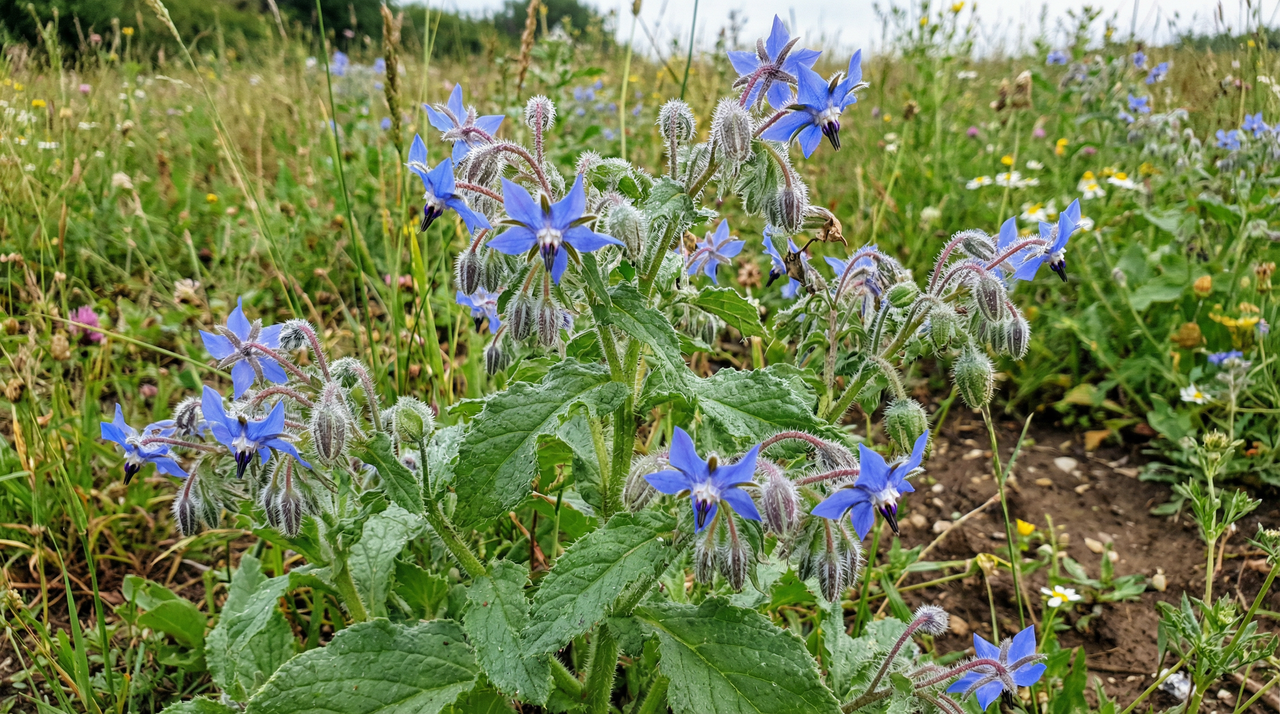
Nobody warned me that borage would essentially move in and refuse to leave. I scattered half a packet of seeds along a garden path one April, mostly as an afterthought, and by July the plants were shoulder-high, flopped dramatically over everything nearby, and absolutely covered in bees. Fine. But the following spring I had borage everywhere I hadn't planted it: in the tomato beds, through the strawberry patch, threading up between the squash. The thing is, I wasn't even annoyed. Once you understand what this plant is actually doing in your garden, that exuberant self-seeding starts to feel less like a takeover and more like a favor.
Here's what catches most people off guard: borage carries both remarkable gifts and a genuine caution, sometimes in the same leaf. The seed oil is one of the richest plant sources of gamma-linolenic acid on the planet,[1] with solid research behind it for inflammation and skin conditions, while the leaves and flowers contain pyrrolizidine alkaloids that make daily strong-tea habits genuinely inadvisable. A plant that's simultaneously a pollinator magnet, a dynamic soil accumulator, a culinary herb with a clean cucumber snap, and a medicinal source that requires some nuance, that's not a simple story, and it deserves more than the breezy "grow it everywhere!" treatment it usually gets.
Borage Origin, History, and Botanical Background
Every plant has a story written into its biology, and with borage, that story begins in the sun-baked, rocky edges of the Mediterranean Basin. I find it easier to understand a plant's needs in my garden once I've placed it in its original landscape, and this one's origins explain almost everything about it.
Native Range and Botanical Characteristics of Borago officinalis
Borago officinalis is native to southern Europe, northern Africa, and parts of the Middle East, the classic Mediterranean range of plants that evolved to handle thin, well-drained soils, dry summers, and bright sun.[2][3][4] In the wild it colonizes roadsides, rocky slopes, and disturbed open ground up to about 1,500 meters elevation.[5][6] That preference for disturbed ground isn't incidental; it's why borage slots so naturally into garden edges, freshly turned beds, and the rougher margins of a food forest. It's not a climax-ecosystem plant. It's a pioneer, and it behaves like one.
Through centuries of cultivation and enthusiastic self-seeding, the borage plant has naturalized across much of North America and beyond, though it hasn't earned invasive status in most regions.[3][7] That's a distinction worth holding onto. It spreads, yes, but it plays well in mixed company.
Botanically it's an annual, completing its seed-to-seed cycle in roughly three to four months.[3][8] You'll sometimes see it described as a short-lived perennial, and the confusion is understandable: once a patch gets established, it drops enough seed to reappear reliably year after year, giving the strong impression of a plant that simply never left.[9][10] For practical gardening purposes, that self-seeding behavior is the bridge between annual and perennial. One planting can become a permanent garden resident.
New growers should know that the borage family (Boraginaceae) includes a few look-alikes worth learning: Virginia bluebells, fiddlenecks, waterleaf, and comfrey can all cause confusion, especially at the seedling stage.[11] After years of direct-seeding borage in my own beds, I've learned to label my rows carefully because the hairy young seedlings look surprisingly like oversized comfrey until those true blue stars finally open. Some of these relatives carry their own toxicity concerns, so confident identification matters.
Visual Characteristics and Identification
The borage plant stands upright and branching, typically reaching 60 to 90 centimeters tall with a spread of 30 to 60 centimeters.[12][13] Its stems are hollow and squarish, and every surface, stems, leaves, and even the flower calyxes, is covered in stiff white hairs that can prickle bare skin noticeably. First-time growers are often surprised by this. The leaves are alternate, ovate to lanceolate, dark green, five to fifteen centimeters long, and when crushed they release an unmistakable cucumber-like scent.[14] I've come to use that scent as a quick field check: a strong, clean cucumber aroma tells me the plant is thriving in the right conditions. Weak or absent scent usually means too much shade or heavy, waterlogged soil.
The flowers are the starflower's signature: five-petaled, bright blue, one to two and a half centimeters across, and arranged in nodding one-sided clusters called scorpioid cymes.[10][15] They bloom from late spring through early fall, and as individual flowers age they fade from blue through pink to purple, a color shift that's thought to signal pollinators away from older, depleted blooms toward fresh ones. After pollination, small brown nutlets about five millimeters long develop and drop readily, which is precisely how the plant ensures its own return the following season.[16]
Traditional and Cultural Uses Through History
The medicinal record for borage stretches back to some of the most influential naturalists of classical antiquity. Pliny the Elder, Dioscorides, Hippocrates, and Theophrastus all wrote about it, recommending the plant for respiratory ailments, fevers, melancholy, and as a diuretic, expectorant, and sudorific.[7][17][18] For a plant still growing in my backyard, that's a remarkable thread of documented use.
By the eighth century, borage was a fixture in European monastic gardens, appearing in herbals including Hildegard von Bingen's Physica.[19] European folk tradition associated it with courage and resilience, and Unani practitioners used it as a cardiac tonic.[20][21] It was also applied to jaundice, urinary disorders, rheumatism, and skin conditions, and used as a galactagogue to support milk production.[22] Seeing borage still thriving in heritage kitchen gardens gives me a real appreciation for how consistently this plant has delivered across very different growing traditions.
Its adoption hasn't been confined to Europe. In Turkey it's still used for rheumatism and skin irritations, and in Mexico, where it goes by "borraja," it has a firm place in curanderismo practice for calming nerves, easing anxiety and insomnia, and supporting respiratory health.[23][24] These traditions developed largely in parallel with European use, which makes the plant's multicultural adoption feel more like independent confirmation of genuine utility than appropriation.
Fun Facts and Ecological Role
Borage earns its keep in the garden primarily as a pollinator magnet. Its star-shaped flowers produce abundant nectar and pollen throughout the day, drawing in bumblebees, honeybees, hoverflies, and other beneficial insects across a bloom window that can stretch from spring to frost.[25][26] In my own beds it's one of the most reliably buzzing plants I grow, especially on warm mornings.
The plant's drought tolerance, once established, traces back to the same Mediterranean-adapted chemistry you see in rosemary and other herbs from that region: phenolic compounds, protective secondary metabolites, a thick cuticle, and sunken stomata that slow water loss.[27][28] Its deep taproot helps too, both for accessing moisture and for loosening compacted soil as it decomposes. The result is a plant with a hardiness range that stretches from USDA zones 2 through 11, thriving best between 60 and 75°F and tolerating brief dips to around 25°F.[12]
It's also genuinely easy to grow. Direct-seeded after the last frost, borage can reach over 1.5 meters under ideal conditions and produce upward of 100 to 200 flowers per plant over a season.[25][12] The RHS recognized this ornamental ruggedness with its Award of Garden Merit, a distinction I respect because that program evaluates real-world performance rather than catalog photography.
Those cheerful blue flowers and young leaves are edible, carrying that signature cucumber flavor into salads and drinks. The safety picture here deserves an honest note, though: borage leaves and flowers contain pyrrolizidine alkaloids, compounds with dose-dependent liver toxicity potential.[29][30] I keep borage primarily as a pollinator plant and ornamental, and I harvest only the occasional young leaf or flower for a garnish. The research on cumulative liver risk is clear enough that I don't use it daily or in quantity, and I'd say the same to anyone asking. An occasional flower floating in a summer drink is a different matter entirely from brewing it into a daily tea.
Borage Varieties and Where to Buy
Botanically speaking, borage keeps things simple. Borago officinalis has no formally recognized subspecies or botanical varieties; all the selection work has happened at the horticultural level, through cultivars chosen for flower color, foliage, habit, or flavor.[31][15][32] The standard species is a Mediterranean annual reaching 60 to 90 cm tall with a 30 to 60 cm spread, thoroughly at home across USDA zones 2a through 11b.[33][3] That baseline plant, with its bristly grey-green leaves and star-shaped blue flowers, is honestly what most gardeners want and what performs best in a mixed polyculture.
Notable Cultivars of Borago officinalis
The cultivar list is short, which I appreciate. You're choosing between 'Alba' (white flowers), 'Purpurea' (purple-tinged blooms), 'Blue Spice' (selected for more intense flavor), 'Crystal Ice' (variegated foliage), 'Sibernovsky' (bred for cooler climates), and 'Variegata' (cream-margined leaves, more compact at 18 to 24 inches, and noticeably less vigorous).[34][35] I've grown 'Variegata' alongside the straight species, and while the foliage contrast is lovely, it produced fewer flowers and needed more careful placement to avoid leaf scorch. For a pollinator guild, I reach for the standard blue-flowered species without hesitation.
In practical terms, all forms move from seed to first harvest in roughly 50 to 60 days,[9] and any of them will self-seed with equal enthusiasm. The differences really are modest. I choose 'Alba' when a white accent fits the design, and 'Blue Spice' when I want to keep seeds for the following year's culinary garden, given its reported seed yields of 500 to 800 kg per hectare under good growing conditions.[36] Beyond that, all forms share the same powdery mildew resistance and companion-plant appeal that make borage worth growing in the first place.[33][37]
Sourcing Borage Seeds and Plants
Here's some good news: borage is not classified as invasive or noxious anywhere in the United States, faces no state-level restrictions, and ships freely between states.[3][38][39] I've never once had a problem moving plants or seeds around, and that ease of access is reflected in how many reputable suppliers carry it. Johnny's Selected Seeds, Baker Creek Heirloom Seeds, Strictly Medicinal Seeds, Mountain Valley Growers, Plant Delights Nursery, Seed Savers Exchange, and Mountaineer Seed all stock borage, with many offering certified organic options.[35][40][41][42][43][44][45]
Seed packets run $3 to $10; live plants in 4-inch pots typically land between $5.95 and $9.95; bulk seed starts around $12 to $18 per ounce.[46][47] I almost always start from seed because the cost is minimal and transplants aren't worth the extra expense given how well borage direct-sows. My go-to suppliers are Johnny's and Strictly Medicinal; their organic seed has shown consistently strong germination in my zone 9B starts over several seasons. Stock and pricing shift seasonally, so verify current listings directly with vendors before ordering.[48] For international readers, standard USDA phytosanitary requirements apply to any seeds coming from abroad, but within the U.S. there's genuinely nothing standing between you and a garden full of blue stars.
Borage Propagation and Planting
Borage is one of those plants that makes a gardener feel competent. Not because it requires skill, but because it genuinely wants to grow. I've been direct-sowing it for years now, and at this point I barely think of it as something I propagate. I sow it once, save a few seeds, and the plant takes care of the rest.
Borage Seed Characteristics and Storage
The seeds themselves are easy to recognize: oval to kidney-shaped, dark brown to nearly black, about 5-7 mm long with a rough, wrinkled coat that almost looks like a tiny raisin.[3][49] Borage seeds behave well in storage, tolerating low moisture conditions and holding strong germination rates of 70-90% for three to five years when kept cool, dry, and dark.[50][51] I keep my saved seed in a jar with a silica packet tucked into the refrigerator, and I'm still hitting around 80% germination in year three. A commercial seed packet stored the same way is going to serve you well beyond the printed date.
Seedlings come true to type, which is something I genuinely appreciate.[52][53] Every volunteer that pops up in my garden gives me the same cucumber-scented leaves and vivid blue flowers as the parent plant. With basil or cilantro I'm fussier about seed sources, but borage gives you no reason to be.
Direct Sowing and Germination
Direct sowing is the right approach here, and not just because it's easier. Borage develops a taproot early, and any root disturbance sets it back noticeably. If you must move a seedling, do it before it's four inches tall and keep the root ball intact. I've lost more than one plant by waiting too long. The better move is to sow directly where you want the plant to grow, after your last frost date, pressing seeds about a quarter to half inch into the soil.[9][37] At 60-70°F, germination happens in five to fourteen days.[54] From there you're looking at flowers in six to eight weeks.
Softwood cuttings can technically work with 50-70% success rates under the right humidity and temperature conditions,[55] but I've never met a home gardener who needed to go that route. When germination is this reliable and the plant self-seeds so enthusiastically, cuttings are a solution without a problem.
Soil, Site, and Sun Requirements
Borage wants full sun, at least six hours daily, and a well-drained sandy loam or loamy soil with a pH somewhere between 6.0 and 7.5.[12][56] That's a pretty forgiving range. Where it struggles is in heavy clay, compacted ground, or anything that holds water around the roots.[57] Shade produces leggy plants with sparse flowering. My experience is that a sandy corner or a simple raised bed needs almost nothing beyond a light compost top-dress. Unlike basil, which sulks without decent fertility, borage actually performs better in leaner soil. Over-feeding pushes leafy growth at the expense of flowers. That deep taproot, which can reach 60 cm, handles dry spells better than most kitchen herbs once the plant is established.[58]
Spacing, Transplanting, and Planting Technique
Give each plant 12-18 inches in a home garden setting, with a bit more room if you're planting in rows.[59][58] Mature plants reach 24-36 inches tall and can spread almost as wide, so generous spacing also means you can actually reach the flowers when you want to harvest them. Sow after the last frost in zones 3-10, thin to final spacing once seedlings are a few inches tall, and then simply watch.[60][61] By the second year, volunteers will fill gaps you didn't even plan for. I stopped buying borage seed years ago. One good season of letting a few plants go to seed and the garden handles recruitment on its own.
Borage Care Guide: Growing and Maintaining Borago officinalis
For novice gardeners who feel they kill everything they touch, borage is an exceptionally forgiving choice. It's genuinely forgiving, but that doesn't mean it has no preferences. Get the fundamentals right and it rewards you with months of those electric-blue flowers. Push too hard with water, fertilizer, or shade and you'll end up with a floppy, flower-poor plant that disappoints. The whole philosophy here is restraint.
Sunlight and Water Requirements for Borage
As a Mediterranean native, borage wants full sun, meaning six to eight hours of direct light daily. [62] That's where you get the densest, most nectar-rich bloom clusters and the sturdiest stems. I've grown it in partial shade out of necessity, and it survives, but the flowering drops noticeably and the plants get leggy in a way that makes them even harder to keep upright. In genuinely hot summers, though, some afternoon relief helps prevent leaf scorch and bleaching during peak heat. [63] Consistent soil moisture is your best partner for keeping full-sun plants from scorching, a point I'll come back to in the next subsection.
Watering Needs and Drought Tolerance
The benchmark I work from is about one inch of water per week during the growing season, delivered in deep, infrequent sessions rather than daily sprinkles. [64][65] That approach encourages the taproot to push down rather than loiter near the surface. Young seedlings need a bit more attention, maybe every two to three days or whenever the top inch dries out, but once the plant is established it handles surprisingly long dry spells. [65][64] I've seen mine go nearly two weeks without rain in late summer before flowering visibly declined. In humid subtropical gardens, the bigger risk is overwatering, not drought. Yellow, soft-stemmed plants usually mean waterlogged roots, while wilting with crispy leaf margins points to the opposite. [61][66] A two-to-four-inch mulch layer, pH in the 6.0-7.5 range, and soil that actually drains are your insurance against the soggy-root scenario its Mediterranean taproot has no patience for. [3] Avoid overhead watering when you can; keeping the foliage dry reduces fungal pressure considerably. [67]
Feeding and Soil Fertility for Borage
Borage is a light feeder, and I mean that seriously. It evolved in lean Mediterranean soils, and it shows. A modest amount of compost worked in at planting is genuinely all most garden soils need. [61][68] Early in my herb gardening I had a habit of over-fertilizing everything, and borage was one of the plants that called me out on it. Lush, dark-green leaves with almost no flowers? That's nitrogen excess doing exactly what it shouldn't. [37] I now get a soil test done every few years and almost never supplement established borage in average garden soil. If a plant is genuinely struggling, a half-strength balanced fertilizer applied once or twice during active vegetative growth is the most I'd reach for. [37][69] Container plants are the exception; those benefit from a diluted application every four to six weeks since nutrients flush out with regular watering. [37] Pale yellowing leaves suggest nitrogen, purplish tones with poor flowering point to phosphorus, and interveinal chlorosis on new growth usually signals an iron issue. [37][70] Treat these as diagnostics, not as reasons to fertilize preemptively.
Frost Tolerance and Cold Protection
Borage is classified as a half-hardy annual with an RHS H4 rating, meaning it tolerates light frosts down to around 23°F (-5°C) and can briefly withstand 20°F (-7°C), though hard freezes will finish it off. [3][71] Young seedlings are much more tender than established plants, so hardening off before transplanting matters more here than with some other herbs. Frost damage announces itself as water-soaked, wilting leaves that brown or blacken at the margins overnight. [72] Row covers reliably add four to eight degrees of protection and have carried my early plantings through brief dips to around 25°F without a scratch. [73] Even when a plant dies back, the self-seeded offspring already in the soil act as a reset button, which gives borage a kind of built-in winter resilience that a tender annual like basil simply doesn't have.
Heat Tolerance and Summer Care
Borage grows best between 59-77°F (15-25°C) and manages reasonably well up to 86°F (30°C). [74] Push consistently above that ceiling and the plant responds with wilting, flower drop, premature bolting, and increasingly bitter foliage. It's especially vulnerable during flowering, which is exactly when you least want heat stress. [75][76] I started using 30-50% shade cloth over my summer patch a few years ago and the difference in flower retention during peak heat was obvious enough that I won't skip it again. [77] Combine that with consistent drip irrigation and a good mulch layer. The plant's own adaptations—hairy leaves slowing water loss and a taproot mining deeper moisture—do the rest. [78][79] In zones 9-11, succession planting every few weeks through spring lets you keep fresh, productive plants in rotation rather than nursing heat-stressed ones through a brutal summer.
Pruning, Maintenance, and Seasonal Rhythm
Once plants hit about twelve to eighteen inches, pinching the growing tips encourages a bushier habit and more flowering branches rather than a single floppy column. [80] Regular deadheading extends the blooming window from late spring through early fall, and if you don't want borage appearing in every corner of your garden the following year, consistent deadheading is essential. [58] I learned that lesson through a very borage-dominated spring. Now I let one patch go completely to seed for the bees and pollinators, and I deadhead everywhere else. The stems get floppy regardless of how well you pinch, especially in richer soils or exposed spots, so a few stakes or a wire cage early in the season saves a lot of untangling later. [57][81]
The seasonal rhythm is one of borage's more satisfying qualities. In most zones it completes its cycle in three to four months, with flowers from late spring through early autumn. [33][3] In mild climates, zones 8-10, the enthusiastic self-seeding creates an almost perennial effect, with volunteers appearing so reliably that many gardeners forget it's technically an annual. [82] Once you learn its rhythm, borage stops feeling like a plant you manage and starts feeling like a garden partner that mostly manages itself.
Harvesting Borage: Timing, Technique, and Flavor
Borage moves fast. From seed to first leaf harvest typically takes just 45-60 days, with flowers opening somewhere around day 50-65 and seeds ripening 20-30 days after that.[57][3] What that compressed timeline means in practice is that you have a real sequence of harvests across one season: leaves first, then those vivid blue stars, then seeds in late summer if you want them for next year's patch.
When and How to Harvest Borage Leaves, Flowers, and Seeds
Leaves are worth picking when the plant stands 6-12 inches tall and before flowering kicks in.[83][84] I learned this the slow way: after growing borage for several seasons, I noticed that once the plant starts putting energy into flowers, the bristliness of the leaves increases dramatically. What was tender enough for a salad becomes something more suitable for a soup. After flowering, the fuzz sharpens and the flavor turns bitter in ways no harvest chart really conveys until you've chewed a leaf at the wrong stage.
Flowers are best taken 1-2 days after opening, fully vivid and bright, in the morning on a dry day.[83] I pick a handful of open blue flowers most summer mornings for tea or a salad, and the honeyed fragrance is genuinely stronger before the heat builds. If you wait until afternoon, you can tell the difference. For seeds, hold off until the capsules turn brown and dry, rattling when you shake the stem.[83][85] That rattle is the signal. Use scissors or a clean pinch to take what you need; rough handling tears stems and stresses a plant that, left intact, will keep producing leaves and flowers from a 2-3 foot spread until first frost.[83][86][57]
Borage Flavor, Yield, and Best Practices
The cucumber flavor that makes borage worth growing comes from volatile compounds including (Z)-3-hexenol and (E,Z)-2,6-nonadienal, and it builds as you chew, leaving a clean, refreshing finish.[87][88] It reminds me of biting into a fresh English cucumber from the garden, that slow-building crispness that lingers. Flowers are softer on the palate, sweeter and honeyed with just a thread of cucumber and nuttiness underneath.[89] That flavor peaks in summer and is richer from plants growing in good loamy soil.[57]
Young leaves, flowers, and young stems are the edible parts worth harvesting; mature stems get fibrous and aren't worth your time.[87][90] The hairy texture of young leaves does soften with cooking if raw salad use isn't appealing.[90] One practical note I always share: borage contains pyrrolizidine alkaloids, so I keep my own use to occasional edible flowers and a handful of young leaves rather than making it a daily staple.[90] Moderation is genuinely wise here, not just a legal disclaimer. Harvest generously from a healthy plant, use what you pick thoughtfully, and this generous self-seeder will reward you season after season.
Borage Preparation and Uses
Culinary Uses of Borage Leaves and Flowers
Pull a young borage leaf and rub it between your fingers -- that cool, unmistakably cucumbery scent tells you exactly what you're working with. Both the leaves and the starry blue borage flowers are edible, carrying that mild cucumber essence whether you float them in a summer drink, toss them into a salad, or steep them into a light tea.[91][3] European cooks have known this for centuries.[92] I always harvest the youngest leaves I can find; once they age, those fuzzy bristles become genuinely unpleasant on the tongue, which is a lesson I learned the hard way in my first season growing borage.
Heat does to borage what it does to cucumber: it strips out that bright freshness entirely. Cooking leaves by boiling or sautéing leaves you with something much milder, almost faintly sweet-bitter, described sometimes as a "freshwater" quality.[93][94] Drying at low temperatures (around 35-45°C / 95-113°F in a well-ventilated spot for a few days) produces a gentler, more herbaceous result[95][96] -- I blend the dried leaves with mint for a cool-weather tea that's subtle and genuinely pleasant. Pickling borage delivers a nice tangy cucumber-vinegar synergy that works beautifully with other garden vegetables.[93] The flavor profile throughout is cool and fresh-green rather than sour, salty, or bitter in any dominant way.[97]
As previously noted, the pyrrolizidine alkaloid content means borage leaves are best enjoyed as an occasional addition rather than a dietary staple. The research is clear enough that I treat the leaves as an occasional treat rather than a staple.[97] The flowers are the safer, more festive choice for frequent culinary use. See the health benefits section for the full safety picture.
Medicinal Preparations and Seed Oil
Borage seed oil is where the research gets confident. Extracted for its gamma-linolenic acid content and applied topically or taken internally, the oil is used for skin conditions, rheumatoid arthritis, and hormonal support, with human studies supporting doses of roughly 1-3 grams daily.[18][92][98][99] The oil itself is mild and mildly nutty,[90] which makes it easy to stir into a smoothie or dressing without announcing itself. For anyone wanting the medicinal benefits without the PA considerations attached to the leaves and flowers, this is the preparation to reach for, ideally from a third-party-tested supplement.
Non-Food Uses
Beyond the kitchen, borage has a small but charming history in fiber and dye work. The blue flowers yield a natural colorant once used in textiles and food coloring, while the stems have served as a source of cordage fiber.[90][92] I've steeped the flowers in white wine vinegar just to watch them turn it a startling, shifting blue-violet -- it's less practical dye project than kitchen curiosity, but it's the kind of thing that makes guests genuinely interested in what's growing outside your door.
Borage Health Benefits and Medicinal Uses
A few borage flowers in a salad is worlds apart from brewing strong daily tea, and that distinction matters because the same plant that supplies genuinely useful compounds also carries a documented safety concern. Getting comfortable with that complexity is the key to using borage wisely.
Key Phytochemicals in Borage: GLA, Rosmarinic Acid, Flavonoids, and Pyrrolizidine Alkaloids
Borage contains pyrrolizidine alkaloids (PAs), including thesinine, intermedine, lycopsamine, echimidine, and amabiline, all of which are hepatotoxic and potentially carcinogenic.[100][101][102] Concentrations range from 0.03 to 17 mg/kg dry weight in the leaves, with the highest levels found in young, emerging growth; stems and flowers run lower, at roughly 0.1 to 0.5 mg/kg; and properly processed seed oil contains negligible amounts.[101][97] That last point is the crux of the whole borage health story: the most clinically valuable product is the one that carries the least risk.
That product is the seed oil, and its main active constituent is gamma-linolenic acid (GLA), which makes up 18 to 26 percent of total fatty acids, alongside linoleic acid (35 to 40 percent) and oleic acid (16 to 20 percent).[103][104] GLA converts to prostaglandin E1, producing anti-inflammatory, skin-barrier, and vasodilatory effects that underpin most of the clinical research. Borage seed oil's GLA profile reminds me of evening primrose oil, but borage actually outpaces it in GLA concentration, making the seed oil a compelling source for anyone who wants meaningful therapeutic doses.
The leaves and flowers bring a different chemistry. They're rich in rosmarinic acid (up to 0.5 percent in leaves) and flavonoids including quercetin, kaempferol, rutin, luteolin, and apigenin glycosides, with total phenolics reaching 15 to 35 mg GAE per gram dry weight and flavonoids at 10 to 20 mg QE per gram, with higher concentrations in the flowers than the leaves.[103][105] After years of growing borage as both an edible flower and a guild companion, I've noticed the cucumber flavor intensity and overall pleasantness of eating the leaves peak just before full bloom, which tracks with research on phenolic accumulation timing. The essential oil is a minor constituent (0.1 to 0.5 percent yield), containing linalool, alpha-pinene, geraniol, and beta-caryophyllene, which contribute antimicrobial activity by disrupting microbial cell membranes.[106] Mucilage (5 to 10 percent of dry weight in leaves and stems), saponins, tannins, and allantoin round out the profile, supporting the plant's traditional reputation as a demulcent with wound-healing properties.[107]
One factor that often gets overlooked: the entire phytochemical profile shifts with environmental conditions. Phenolics and essential oils peak at full bloom, PA levels can climb up to 30 percent under drought or heat stress, and soil fertility and geography all play a role.[108][109] For anyone growing borage in a hot, dry summer like we get in Central Florida, that PA variability is worth keeping in mind.
Evidence for Anti-Inflammatory, Skin, and Other Health Effects
European herbalists had been using borage leaves and flowers for respiratory complaints, skin conditions, and as a diuretic for centuries before anyone isolated a mechanism.[110][111] While grandmother's borage tea for a chest cold has a real ethnobotanical pedigree, modern evidence has sharpened the picture considerably: the strongest, most reproducible benefits come from the seed oil, not the aerial parts.
GLA and its metabolites suppress pro-inflammatory cytokines including TNF-alpha and IL-6, inhibit COX-2 and iNOS, and reduce prostaglandin activity, with robust support from preclinical studies and meta-analyses.[112][113][114] Rosmarinic acid and the flavonoid fraction add an antioxidant layer by scavenging free radicals and activating Nrf2 pathways, which partly explains the traditional use for eczema and skin inflammation.[115][116]
Clinically, the clearest evidence is for borage seed oil at 1 to 3 grams per day in rheumatoid arthritis and atopic dermatitis, where meta-analyses show modest but meaningful symptom improvement through GLA pathways.[117][118] Claims around analgesic, diuretic, lipid-lowering, blood-pressure, and mood effects are intriguing but largely preclinical or drawn from small trials; they shouldn't be taken as established benefits yet.[119][98] I tell every client who mentions using borage for joint pain to check with their doctor first, especially if they take any medication processed by the liver. The safety section below explains why that advice matters.
Nutritional Profile of Borage Leaves and Flowers
Borage leaves have a refreshing cucumber-like flavor and a slightly mucilaginous texture that makes them genuinely pleasant in salads or cold drinks when they're young.[60] Nutritionally, raw leaves clock in at around 21 to 22 kcal per 100 grams, with roughly 3 grams each of protein and carbohydrates, 2 grams of fiber, and 93 grams of water.[120] The micronutrient standouts are vitamin C (35 to 93 mg per 100 g, a range that reflects real variation with growing conditions), potassium (around 470 mg), calcium (93 mg), iron (3.6 mg), and magnesium (51 mg).[120][121] The flowers run even lower in calories but are richer in flavonoids.[6]
Layered over that modest macronutrient profile is a meaningful antioxidant contribution from rosmarinic and chlorogenic acids along with quercetin and kaempferol derivatives, with total phenolics reaching 15 to 35 mg GAE per gram dry weight.[103][122] A handful of young leaves in a salad or a few flowers floated in iced tea is a low-risk way to pick up decent vitamin C, potassium, and antioxidant phenolics. What I'd steer clear of is turning leaves into a daily medicinal tea; the PA considerations covered in the next section are exactly why occasional culinary use and regular supplemental use are genuinely different propositions.
Safety Considerations and Regulatory Guidance
The PA story deserves its own careful reading. Chronic exposure to the unsaturated pyrrolizidine alkaloids in borage leaves can cause hepatic veno-occlusive disease, liver fibrosis, and megalocytosis; risk is dose-dependent and rises further when plants have been stressed by drought or heat.[123][124] Because borage self-seeds vigorously in my Central Florida garden, I always label it clearly and make sure clients understand that the pretty blue flowers are fine in moderation, but that no part of this plant should become a daily medicinal habit without professional guidance.
The European Medicines Agency recommends limiting intake of toxic unsaturated PAs to no more than 0.35 micrograms per day and restricting internal use of borage herbal preparations to no more than 14 days.[125] The FDA has issued similar advisories, and the consensus across regulatory bodies is to discourage medicinal internal use of the leaves and flowers.[126] Culinary use in small, occasional amounts is generally regarded as safe, which is why a few flowers in a summer salad sits in very different territory from an herbal tincture taken daily.
Specific contraindications are serious and worth naming plainly. If you're pregnant or breastfeeding, avoid medicinal preparations entirely. The same goes for anyone with liver disease, or who takes blood thinners, antihypertensives, or sedatives.[127] Borage can also trigger contact dermatitis from its bristly trichomes and may cause allergic reactions in people sensitive to Boraginaceae pollen.[128] Keep pets away; the plant produces similar liver pathology in livestock and animals.[129] Identification matters too: borage can be confused with comfrey, viper's bugloss, and Heliotropium species, all of which share the PA concern and some of which are more toxic.[130]
The safest therapeutic form is properly processed seed oil, which is essentially PA-free and has been studied at 1 to 3 grams per day for up to six months.[131][99] I recommend clients source only cold-pressed, third-party-tested products, because I've seen real variation in both GLA content and PA residuals among commercial oils. Quality control here isn't optional; it's the whole ballgame.
Borage Pests and Diseases
Borage looks delicate, with those papery blue flowers and soft-seeming leaves, but it's a tougher plant than it appears. That said, it's not immune to problems, and knowing what to watch for saves a lot of frustration later in the season.
Common Pests of Borage
Aphids are the pest I encounter most often, and they can cause leaf curling and reduced vigor if a colony establishes before you notice.[132][133] My preferred fix is a strong blast from the hose in the morning, or hand-picking small colonies before they spread. I've almost never needed anything stronger than that. Flea beetles will visit too, though borage's coarse, bristly foliage gives them real trouble compared to smoother-leaved herbs like basil or lemon balm, which I've seen shredded by the same pressure in the same bed.[132][134] Slugs and snails are a genuine concern in wet conditions, especially around young seedlings.[134][135] Thrips can also show up, leaving stippled, deformed foliage as evidence.[132][133]
Diseases Affecting Borage
Fungal diseases are where borage shows its one real vulnerability. Powdery mildew and downy mildew both appear in humid, poorly ventilated conditions,[136][12] and in my Central Florida summers, powdery mildew would be a constant battle if I let plants crowd each other. Generous spacing and siting in morning sun rather than afternoon shade have eliminated the problem for me almost entirely, no sprays needed. Root rot is the other disease to know, and it's purely a drainage issue.[137][58] Borage wants water but hates wet feet, and soggy soil will kill a plant faster than any pest.
Natural Defenses and Integrated Pest Management
Borage comes equipped with a layered defense system that most garden herbs simply don't have. Pyrrolizidine alkaloids in the plant tissue provide chemical deterrence against herbivores.[138][139] Those bristly trichomes that make the leaves feel rough to your hand create a physical barrier against insects trying to feed.[140][139] And the extrafloral nectaries actively recruit predatory insects, pulling in beneficials before a pest population ever gets established.[141][139] I've watched lacewings and hoverflies arrive within days of the first flowers opening. It's one of those things you can only appreciate by sitting in your garden and paying attention. Together, these mechanisms can reduce herbivory by up to 50 percent compared to more susceptible crops.[139]
There are no commercially available cultivars bred specifically for pest or disease resistance,[58] so the best protection is cultural: good airflow, proper spacing, and well-drained soil really are the make-or-break factors.[137][136] An integrated pest management approach, leaning on biological controls and cultural fixes first, is the sensible path here.[58][142] Borage also deters pests like tomato hornworms and cabbage worms from neighboring crops,[12][143] which means a healthy borage plant isn't just protecting itself.
Borage in Permaculture Design
If I had to pick one herb that earns its place in a food forest through pure ecological generosity, borage would be near the top of that list. It doesn't fix nitrogen, it won't tower over your guild like a comfrey plant, and it's not going to outcompete anything. What it does instead is quietly support everything around it, attract a genuinely impressive number of pollinators, and then decompose fast enough to return its minerals to the soil before you've had time to miss it.
Climate Adaptability and Hardiness Zones
Borage grows across USDA zones 3-10, which is a wider range than most people expect from a Mediterranean herb.[144][3] How it behaves in your garden depends heavily on where you land in that range. In zones 3-7, it functions as a cool-season annual that self-seeds prolifically and comes back from the soil each spring. In warmer zones 8-10, it can push into short-lived perennial territory with some protection from hard freezes, though anything below about 20-25°F (-6 to -4°C) will knock it back hard.[9][145]
Its sweet spot for growth is 60-75°F (15-24°C), and once temperatures push past 80-86°F (27-30°C), it tends to bolt, cut back on flowering, and look generally unhappy.[9][146] I grow it in zone 9b, and I treat it the same way I treat cilantro or dill here: a cool-season plant that I time carefully rather than fight through summer. Coming from the Mediterranean, it's no stranger to marginal, disturbed ground and even mild coastal salt exposure, but prolonged heat and humidity are where it starts to struggle.[147][148] Understanding that rhythm matters for siting it in a design.
Ecosystem Functions and Pollinator Support
Borage's reputation as a dynamic accumulator is well-earned. Its deep taproot mines potassium, calcium, and silica from lower soil layers, and because the leaves decompose so quickly after chopping, those minerals become available to neighbors fast.[149][150] I've noticed that tomatoes and strawberries interplanted with borage consistently look greener and more vigorous, and I attribute a good portion of that to regular chop-and-drop of the leaves acting as a slow mineral mulch.
The pollinator draw is something you have to see to fully appreciate. Borage flowers carry nectar with a 20-40% sugar concentration, bloom continuously from late spring through early autumn, and attract honeybees and bumblebees in numbers that create a genuine hum in the garden.[151][152] The flowers actually signal when nectar is running low: they shift from blue to pink as the bloom ages, and bee traffic drops noticeably on the pink ones.[153] I first noticed this pattern in my own garden and then found the research that confirmed what I was seeing. That kind of honest flower signaling is rare and genuinely useful to pollinators navigating a dense planting.
As a companion plant, borage shows no allelopathic effects on neighbors, which means you can tuck it in freely without worrying about chemical interference.[154] It deters tomato hornworms, cabbage worms, and aphids while supporting yield in strawberries and neighboring legumes and brassicas.[155] It doesn't fix nitrogen, so it's not doing what a bean or alder does in your guild, but that's fine. A garden doesn't need every plant to be a nitrogen fixer to be ecologically productive.
Forest Layer Placement and Guild Design
Structurally, borage belongs in the herbaceous layer of a food forest. At 2-3 feet tall with a sprawling, leafy habit, it fills in under taller guild members, suppresses weeds through shading, and provides ground-level habitat for beneficial insects without competing aggressively for light or nutrients.[149][12] In my designs, I consistently place it near brassicas because I've seen fewer cabbage worms when it's present, and near strawberries where the pollinator traffic it generates visibly improves fruit set.
It also works well in herb spirals in the upper sunny tiers, and as a pioneer species on disturbed or freshly turned ground, it will colonize and stabilize a site while longer-lived guild plants establish.[156][10] It self-seeds enthusiastically, but in temperate systems I've never found it unmanageable. My one practical caution: label your borage patches clearly in the first year, because the volunteers that appear the following spring can catch you off guard before you've learned what the seedlings look like. Once you know the leaf shape, editing the population each spring takes about five minutes.
Site it in full sun with neutral to slightly alkaline, well-drained soil (pH 6.0-7.5), and let it do its thing.[156] The combination of mineral cycling, pollinator magnetism, and pest suppression in a single low-maintenance, non-invasive plant is a genuinely good deal for the herbaceous layer.
Stop Overthinking and Scatter the Seeds
I spent my first two seasons trying to transplant borage with care, watching seedlings sulk and stall, before a friend told me to stop being precious about it and just throw seed on bare ground. She was right. Now it reseeds itself into the strawberry beds every spring without my help, the bees find it before I've even noticed it's blooming, and I harvest flowers for my morning water like it's the most ordinary thing in the world. It kind of is, and that's exactly the point.
Sources 156
- Borage seed oil: A review of fatty acid composition and biological effects ↩
- Kew Science Plants of the World Online - Borago officinalis ↩
- USDA PLANTS Database - Borago officinalis ↩
- Borago officinalis - Missouri Botanical Garden ↩
- Flora of North America - Borago officinalis ↩
- Borago officinalis - Wikipedia ↩
- Borage: A Review of Its Botany, Traditional Uses, Phytochemistry, and Pharmacology ↩
- Royal Horticultural Society - Borago officinalis ↩
- The Old Farmer's Almanac - Borage Growing Guide ↩
- Borago officinalis - Kew Royal Botanic Gardens ↩
- Boraginaceae Family - US Forest Service ↩
- Missouri Botanical Garden - Borago officinalis ↩
- Royal Horticultural Society - Borago officinalis ↩
- Plants for a Future - Borago officinalis ↩
- Flora of North America - Borago officinalis ↩
- Missouri Botanical Garden - Borage ↩
- De Materia Medica ↩
- Borage (Borago officinalis L.): A Medicinal and Edible Plant with Nutritive and Therapeutic Potential ↩
- Borage: A Review of Its Botany, Traditional Uses, and Phytochemistry ↩
- Traditional Uses of Borage in Unani Medicine ↩
- Folk Medicine in Europe: Borage as a Remedy for Melancholy ↩
- Ethnobotanical Uses of Borago officinalis in the Mediterranean Region ↩
- Traditional Medicinal Plants in Turkey: Borage and Its Applications ↩
- Herbal Medicine in Mexican Indigenous Communities: The Role of Borago officinalis ↩
- Royal Horticultural Society - Borage (Borago officinalis) ↩
- Nectar Production and Pollinator Attraction in Borago officinalis ↩
- Ecophysiology of Borage in Mediterranean Environments ↩
- Secondary Metabolites in Borago officinalis under Drought Stress ↩
- Pyrrolizidine Alkaloids in Borage: Content and Toxicity ↩
- EFSA Journal - Pyrrolizidine Alkaloids in Borage ↩
- USDA PLANTS Database ↩
- Royal Horticultural Society (RHS) ↩
- Missouri Botanical Garden ↩
- Royal Horticultural Society (RHS) ↩
- Johnny's Selected Seeds ↩
- Agronomic Performance of Borage Cultivars ↩
- University of Minnesota Extension ↩
- USDA APHIS - Federal Noxious Weeds ↩
- National Plant Board - State Noxious Weed Lists ↩
- Baker Creek Heirloom Seeds ↩
- Strictly Medicinal Seeds ↩
- Mountain Valley Growers ↩
- Plant Delights Nursery ↩
- Seed Savers Exchange ↩
- Mountaineer Seed ↩
- Johnny's Selected Seeds - Borage Seed ↩
- Burpee - Borage Herb Seeds ↩
- USDA APHIS - Importing Seeds into the United States ↩
- Borago officinalis ↩
- Longevity of Borage Seeds Under Different Storage Conditions ↩
- Seed Information Database - Kew Royal Botanic Gardens ↩
- Borago officinalis ↩
- Seed Saving Guide: Borage ↩
- Borago officinalis (Borage) ↩
- Borage (Borago officinalis) - Propagation ↩
- Borago officinalis ↩
- Royal Horticultural Society - Borage Growing Guide ↩
- Growing Borage - University of Minnesota Extension ↩
- RHS Growing Guide: Borage ↩
- Borago officinalis - Missouri Botanical Garden ↩
- Borage (Borago officinalis) - Royal Horticultural Society ↩
- Royal Horticultural Society - Borago officinalis ↩
- University of Minnesota Extension - Sun Scorch in Herbs ↩
- Missouri Botanical Garden - Borago officinalis ↩
- Royal Horticultural Society - Borage ↩
- UC Master Gardener Program - Borage ↩
- University of California Agriculture and Natural Resources - Borage ↩
- Missouri Botanical Garden - Borage ↩
- Missouri Botanical Garden - Fertilizing Herbs ↩
- NCBI - Micronutrient Deficiencies in Herb Crops ↩
- Royal Horticultural Society - Borago officinalis ↩
- Missouri Botanical Garden Plant Finder - Borago officinalis ↩
- University of Minnesota Extension - Protecting Plants from Frost ↩
- Missouri Botanical Garden - Borage Plant Profile ↩
- UCANR - Heat Stress in Herbs ↩
- Journal of Horticultural Science - Heat Stress in Herb Crops ↩
- UCANR - Borage in Hot Climates ↩
- FAO - Borage Production in Mediterranean Climates ↩
- ScienceDirect - Physiological Responses of Borage to Abiotic Stresses ↩
- Royal Horticultural Society - Borage Growing Guide ↩
- The Spruce - Pruning and Supporting Borage ↩
- Royal Horticultural Society - Borago officinalis ↩
- Borage (Borago officinalis) ↩
- Borago officinalis ↩
- RHS - Borago officinalis ↩
- Growing and Harvesting Borage ↩
- Borage: A Cool-Season Culinary Herb | University of Maryland Extension ↩
- Volatile Compounds of Borage (Borago officinalis L.) ↩
- Aroma Compounds in Borage Flowers ↩
- Borage - Borago officinalis L. ↩
- Borage (Borago officinalis) - RHS Gardening ↩
- Borage (Borago officinalis L.): A Medicinal and Edible Plant Species with Multiple Health Benefits ↩
- UC Master Gardener Program - Edible Flowers ↩
- Herb Society of America - Borago officinalis Fact Sheet ↩
- Post-Harvest Handling of Medicinal and Aromatic Plants ↩
- Drying Herbs for Quality Preservation ↩
- Pyrrolizidine Alkaloids in Borage ↩
- EMA Assessment Report: Borago officinalis L., folium ↩
- Linus Pauling Institute: Gamma-Linolenic Acid ↩
- Pyrrolizidine Alkaloids in Borago officinalis ↩
- Variation of PA Content in Borage Plant Parts ↩
- EMA Public Statement on Pyrrolizidine Alkaloids in Borage ↩
- Borage (Borago officinalis L.) Seed Oil: A Review of Composition and Bioactive Properties ↩
- Gamma-Linolenic Acid from Borage Oil: Pharmacology and Therapeutic Potential ↩
- Phenolic compounds and antioxidant activity of Borago officinalis L. ↩
- Antimicrobial Activity of Borage Essential Oil ↩
- Review of secondary metabolites in Borago officinalis ↩
- Influence of Growth Stage on Phenolic Compounds in Borage ↩
- Environmental Factors Affecting Pyrrolizidine Alkaloids in Borago officinalis ↩
- Borage - An Herb Monograph ↩
- History of Borage in Ancient Medicine ↩
- Journal of Ethnopharmacology: Review of Borago officinalis ↩
- Pharmacological Activities of Borage (Borago officinalis L.) and Its Active Constituents ↩
- Meta-analysis of GLA for inflammatory disorders ↩
- Antioxidant and Anti-inflammatory Properties of Borago officinalis Extracts ↩
- Antioxidant and Nrf2 Activation by Borage Extracts ↩
- GLA for rheumatoid arthritis ↩
- Borage oil in atopic dermatitis: a systematic review ↩
- Borage Oil in the Management of Depression and Anxiety ↩
- USDA FoodData Central - Borage, raw (leaves) ↩
- USDA FoodData Central - Borage, raw ↩
- Nutritional and phytochemical composition of borage (Borago officinalis L.) ↩
- EFSA Journal - Scientific Opinion on Pyrrolizidine Alkaloids in Food and Feed ↩
- Hepatotoxicity of Pyrrolizidine Alkaloids ↩
- EMA Assessment Report on Borago officinalis L., folium and herba ↩
- FDA Advisory on Pyrrolizidine Alkaloids in Herbs ↩
- WebMD - Borage Uses, Side Effects, Interactions ↩
- Contact Dermatitis from Borage (Borago officinalis) ↩
- ASPCA Animal Poison Control Center ↩
- Pyrrolizidine Alkaloids in Boraginaceae ↩
- Borage (Borago officinalis L.) ↩
- Missouri Botanical Garden Plant Finder ↩
- Royal Horticultural Society Plant Care Guide ↩
- Borage Production Guide - University of California Agriculture and Natural Resources ↩
- Insect Pests of Herbs - Royal Horticultural Society ↩
- Royal Horticultural Society - Borago officinalis ↩
- Missouri Botanical Garden Plant Finder ↩
- Pyrrolizidine Alkaloids in Borago officinalis and Their Toxicity ↩
- Pest Resistance Mechanisms in Borage (Borago officinalis) ↩
- Trichome Defense in Borage Against Insect Herbivores ↩
- Extrafloral Nectaries in Borago officinalis: Attraction of Predators ↩
- Integrated Pest Management for Herbs ↩
- Royal Horticultural Society - Borago officinalis ↩
- USDA Plant Hardiness Zone Map ↩
- Borago officinalis - Borage ↩
- Borage Growing Guide ↩
- Kew Science - Plants of the World Online - Borago officinalis ↩
- Missouri Botanical Garden - Borago officinalis ↩
- Permaculture Research Institute - Borage in Food Forests ↩
- Dynamic Accumulators in Permaculture ↩
- Pollination Biology of Borage (Borago officinalis L.) ↩
- Floral Biology and Nectar Characteristics of Borage ↩
- Attractiveness of Borago officinalis to Honeybees and Bumblebees ↩
- Companion Planting Guide: Borage ↩
- Borage in Permaculture ↩
- Permaculture Research Institute - Borage in Agroforestry ↩