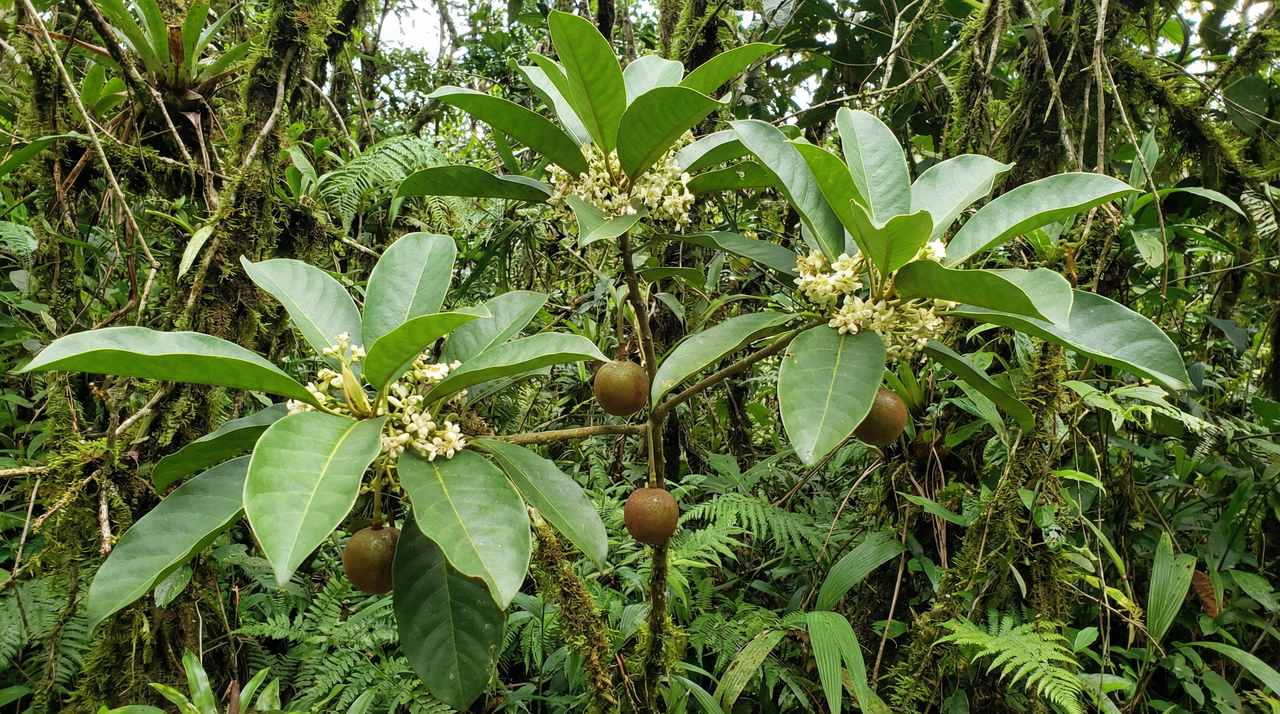
The first time I cracked open a ripe borojo fruit, I genuinely didn't know what I was smelling. It was somewhere between overripe tamarind, dark cocoa, and something fermented and ancient, like a rainforest floor distilled into a single fist-sized orb. My instinct was to step back. My second instinct, once I tasted it, was to figure out how to grow more. That contradiction, the smell that warns you away and the flavor that pulls you in, is a pretty good metaphor for borojo as a whole: a fruit that keeps its best qualities well-hidden until you know what you're looking for.
What I've come to appreciate most about Alibertia patinoi is how thoroughly it resists the way we usually talk about superfruits. The marketing around borojo is loud and frankly pretty sloppy, full of breathless claims about libido and energy and ancient Amazonian wisdom. But the actual fruit, grown slowly in deep rainforest shade and harvested after more than a year on the tree, is doing something far more interesting than any supplement label gives it credit for. It's a slow plant in a fast-food world, and once you understand that about it, everything else starts to make sense.
Borojo Origin and History
Most North American gardeners have never heard of borojo, and that's exactly what makes it so interesting to me. I keep a running list of plants that exist in a kind of knowledge gap: well-loved for centuries in their home regions, barely a footnote in English-language horticulture. Alibertia patinoi sits near the top of that list.
Botanical Background and Native Range
Borojo is an evergreen understory tree in the Rubiaceae family, which puts it in the same taxonomic neighborhood as coffee and gardenia. That kinship is useful to know if you're trying to grow it, because the conditions coffee wants, filtered light, high humidity, well-drained but moisture-retentive soil, are essentially what borojo demands too. Its native range centers on the Pacific lowland rainforests of Colombia's Chocó department, one of the wettest and most biodiverse regions on earth, extending into adjacent Ecuador. The Chocó receives upward of 10,000 millimeters of rainfall annually in some areas. Understanding that origin is humbling. When I've tried to work Rubiaceae understory plants into subtropical food forest designs, replicating even a fraction of that moisture and canopy protection has been the central challenge. Borojo is dioecious, meaning you need both male and female plants to get fruit, a detail that catches new growers off guard more often than it should.
Traditional and Cultural Uses by Indigenous Communities
Long before any botanist gave this tree a Latin name, the Emberá, Wounaan, and other Pacific Colombian indigenous communities had it thoroughly figured out. Borojo juice was a traditional energy drink consumed by hunters, fishermen, and laborers doing hard physical work in the rainforest. Its reputation as an aphrodisiac and general stamina aid is consistently reported across ethnobotanical surveys of the region, and that reputation persists today in Colombian popular culture. What I find more compelling, honestly, is what these use patterns tell us about how deeply the plant was integrated into daily life. This wasn't an occasional medicine; it was food and functional nourishment woven into seasonal rhythms and cultural practice. I've learned, through years of working with lesser-known tropical fruits, to treat that kind of multi-generational local knowledge as primary evidence, not a colorful footnote to whatever clinical data might exist.
Scientific Discovery and Modern Recognition
The species wasn't formally described until 1950, when it was named in honor of Colombian botanist and agronomist Jesús Patino. That's a striking gap: centuries of documented indigenous use, and Western science only got around to formally cataloguing it in the mid-twentieth century. It's a pattern I've seen with so many useful rainforest species, the knowledge was never missing, just not recorded in the journals that Western researchers were reading.
Its international moment came in the early 2000s, when interest in South American "superfruits" brought borojo into natural food markets and supplement catalogues in Europe and North America. That wave of attention is a double-edged thing. Commercial demand can fund conservation and give smallholder farmers a market, but it also creates pressure to extract rather than steward. I try to source borojo products that trace back to community-based cultivation projects in Colombia's Pacific region, where the profits stay local and the agroforestry systems that support the plant are actually worth maintaining. The fruit's story is inseparable from the forest it came from, and the communities who shaped our understanding of it.
Borojo Varieties and Sourcing
Here's the honest truth about borojo varieties: there aren't any. Not in the formal, named-cultivar sense that most fruit growers are used to. Unlike, say, mango or avocado, where you're choosing between dozens of selections with documented traits and track records, Alibertia patinoi is still essentially traded as a single undifferentiated species. If you find a nursery selling borojo, the label will almost certainly just say "Borojo" or list the species name, full stop. No cultivar designation, no provenance notes, nothing. I've seen the same thing when sourcing other under-domesticated tropicals like abiu or rollinia, and it's a signal that formal breeding work simply hasn't happened yet.
That said, anyone who has grown multiple borojo seedlings side by side knows there's real variation hiding in the species. I've grown several batches from seed sourced through Colombian collectors, and the differences among sibling plants have been striking: fruit size, pulp density, time to ripening. None of it has been stabilized or named, but it's there, waiting for patient growers to notice it. Wild stands in the Chocó understory tend toward smaller fruit with more astringency, while plants that local farmers have been informally selecting for generations produce larger, juicier fruit with a more balanced flavor. The distinction is real, even if no one has gotten around to naming it yet.
When sourcing plants or seed, your best bets are specialist nurseries in Florida or California with a track record in rare tropicals, or vendors shipping directly from Colombia or Ecuador. Ask questions. Confirm you're getting true Alibertia patinoi and not a related species like Alibertia edulis or Alibertia macrophylla, which exist in the same genus but produce noticeably less interesting fruit. Also remember that borojo is dioecious, so you'll need both male and female plants to get fruit. I usually start with five or six individuals and let them tell me what they are over time. It's a longer game, but growers planting borojo today are genuinely participating in the earliest stages of its domestication. That's a rare thing, and kind of exciting.
How to Propagate and Plant Borojo
If you're used to the relatively forgiving propagation rhythms of most fruit trees, borojo will ask you to recalibrate your expectations. This is not a plant you start from a cutting snipped on a whim or a dried seed ordered online. Vegetative propagation through cuttings has very low success rates and isn't something smallholder growers in its native Colombian Pacific range bother with. Seed is the reliable path, full stop. The catch is that "reliable" here is relative.
Seed Propagation and Germination Timeline
The single most important thing I've learned propagating borojo is that seed viability drops off a cliff once the seeds start to dry. I made that mistake early on, trying to work with seed that had been allowed to dry for even a week after extraction. Germination rates fell from an already modest 40% to near zero. Now I sow seeds directly from fresh, ripe fruit, as soon as I've cleaned off the pulp. If you're sourcing from a supplier, ask specifically how the seed was handled post-harvest. Dried seed from online listings almost never performs.
Even with fresh seed and good conditions, be ready to wait. Germination can take anywhere from three months to a full year, sometimes longer, with rates typically landing between 20 and 50% under optimal conditions. The first time I ran a germination tray of borojo, I waited eight months without a single sprout. I was genuinely about to tip the pots into the compost when seedlings started appearing. I've since learned to provide bottom heat (around 26-28°C), keep humidity consistently high, and use a sterile, well-aerated mix rather than garden soil. Those conditions push results toward the better end of that range. Still, borojo is a plant that teaches the permaculture principle of patience in the most literal possible way. Think of it less like starting tomatoes and more like nurturing a slow-developing forest community.
Soil, Site Selection, and Planting Technique
Getting the site right at the beginning saves years of recovery later. The borojo tree evolved in the deep, humid understory of the Chocó lowlands, and mimicking that environment is the whole game. Aim for deep, well-drained, slightly acidic soil in the pH 5.5 to 6.5 range, rich in organic matter. Think decomposed leaf litter, aged compost, the kind of dark crumbly earth you find under a mature canopy. I think of it like preparing a bed for a young coffee plant: same dappled shade, same rich leaf-mold soil, same attention to drainage. Growers already working with cacao or coffee in a food forest context will find the borojo planta fits right into that logic.
Moisture is essential, but the roots cannot sit in water. I learned this the hard way after a planting in flat clay failed to root rot within one season. Now I always mound or use a raised bed when I'm working in heavier soils, ensuring water drains away from the crown while still keeping the surrounding soil consistently moist. Young seedlings are also genuinely intolerant of direct sun; even a few hours of unfiltered afternoon light will scorch the leaves. Full to partial shade for the first two to three years isn't a suggestion, it's a requirement.
When it comes to spacing and timing, plant your borojo arbol at the start of the rainy season so the roots have weeks of natural moisture to establish before any dry period hits. In a layered food forest, I space trees 4 to 6 meters apart, which gives the mature canopy of 3 to 5 meters room to develop without crowding its neighbors or starving for light in a dense guild. At planting, I always add either a commercial mycorrhizal inoculant or a handful of soil scooped from under an established forest tree. Borojo's slow early growth seems genuinely tied to its fungal relationships, and giving those partnerships a head start at planting has consistently improved establishment in my experience. Once that root system finds its footing, the tree begins to reward the care you put in at the beginning.
Borojo Care Guide: Growing and Maintaining Alibertia patinoi
Every care decision you make with borojo flows from one central question: does this spot feel like a Colombian rainforest understory? Warm, humid, dappled with filtered light, and never truly dry. Get that microclimate right, and the plant is remarkably forgiving. Get it wrong, and it will tell you within a week.
Sunlight, Water, and Microclimate Requirements
Borojo is a shade-adapted species that thrives in partial to full shade and will scorch in direct sun.[1] I compare it constantly to coffee, a plant I've built dozens of food forest guilds around: both species evolved beneath taller canopy, both respond to midday sun exposure with bleached, papery leaves, and both reward you when you tuck them into genuine shade rather than "a bit of afternoon shelter." Full sun is the most common placement mistake I see with borojo in beginner tropical gardens, and the leaves communicate that error almost immediately.
Its native habitat in Colombia's Chocó region receives well over 4000 mm of rain annually, so consistent moisture isn't optional.[1] I've learned to watch for a subtle, barely-there leaf droop that appears before any real drought stress takes hold; once you've seen it a few times, you catch it early and water deeply before the plant loses momentum. Deep, infrequent watering beats frequent shallow sprinkling every time. The heat itself isn't the enemy. Borojo tolerates equatorial warmth well as long as humidity stays high.[1] Hot and humid summers, once the plant is established, are genuinely fine. Hot and dry is the combination that causes flower drop and stalled growth.
Soil, Feeding, and Frost Protection
Borojo prefers organically rich, slightly acidic soil in the pH range of 5.5 to 6.5, with enough drainage to prevent root rot but enough water-holding capacity to stay consistently moist.[1] Heavy clay needs amendment; in my garden I incorporate compost and a generous layer of wood chip mulch, which does more for moisture retention and root health than any fertilizer program I've tried. For feeding, a slow-release balanced fertilizer with good nitrogen and potassium supports fruit production,[2] but I've noticed the same pattern with borojo that I've seen in coffee: push the nitrogen too hard and you get lush, glossy foliage at the expense of flowering. Mulch generously, feed lightly, and let the biology in the soil do most of the work.
Frost tolerance is the hard ceiling for most growers outside the true tropics. Temperatures below 5°C (41°F) will damage or kill borojo outright,[1] and I learned that lesson the expensive way when I lost my first plant to an unexpected cold snap in a marginal microclimate. Since then, I site borojo near thermal mass, a large water barrel or a south-facing wall works well, and I've carried several plants through near-miss cold events using that approach. Think of its cold sensitivity as similar to young bananas or tender gingers: a degree or two of protection from the right placement can make the difference between survival and starting over.
Pruning, Maintenance, and Seasonal Rhythm
Borojo naturally settles into a tidy multi-stemmed form reaching 3 to 5 meters, and it really doesn't need much from you in terms of shaping.[1] Remove dead or damaged wood, open up the center a little for airflow, and step back. Heavy pruning delays fruiting, and this plant is already asking you for patience on that front.
Fruit production can happen year-round in ideal conditions but tends to peak after the rainy season.[3] My own observation is that flowering seems most reliable following a slightly drier stretch succeeded by generous rainfall, as though the plant is waiting for that environmental cue. Rather than working from a rigid calendar, I watch the plant: a flush of new reddish growth usually signals an active period, and that's when I time any light feeding or irrigation adjustments. Let borojo tell you where it is in its cycle, and your maintenance schedule will fall naturally into place.
Harvesting Borojo
After growing borojo for several seasons, I started marking the flowering date on my calendar. That might sound overly cautious, but when a fruit takes 10 to 12 months to ripen from flower to table, the timeline is genuinely easy to lose track of.[4] You plant it, life happens, and suddenly you're standing in the garden wondering whether that heavy yellowish-brown orb is finally ready or still has weeks to go. The calendar note solves that.
When to Harvest Borojo Fruit
Color is your first signal. Green means wait; a dull yellowish-brown means you're getting close. The second test is touch: a slight give under gentle pressure signals the fruit is ready to come off the tree, but mushy means you've waited too long and fermentation has started.[5] Think of it like checking an avocado, except the window between "not yet" and "overripe" is a little less forgiving. The good news is that borojo continues ripening off the tree, developing its full aromatic depth over several days at room temperature,[6] so home growers can pick at firm-ripe and let the fruit finish indoors. Commercial operations rarely bother with that distinction, which means the borojo from your own garden will almost always taste better than anything shipped across a supply chain.
How to Harvest Borojo
The brittle branches taught me this early: always use two hands. One hand supports the branch from below, the other twists the fruit free or cuts the stem cleanly with pruning shears.[7] A one-handed yank risks snapping a productive limb, and that's a setback you really don't want on a tree that took years to fruit. Individual fruits can weigh between 80 and 250 grams,[8] so the weight alone justifies the extra care.
Expected Yield and Flavor Profile
A mature, established borojo tree typically produces somewhere between 100 and 300 fruits per season,[8] which adds up fast once you get into the kitchen. Each kilogram of fresh fruit yields roughly 600 to 700 grams of usable borojo pulp after removing the tough skin and seeds,[9] and that pulpa de borojo is where the payoff lives. The flavor sits somewhere between cocoa, caramel, and a ripe tropical fruit you can't quite name,[10] complex in a way that makes the year-long wait feel completely reasonable.
Borojo Preparation and Uses
That rich, cocoa-and-caramel pulp you've waited a year or more to harvest has a flavor that's genuinely hard to describe to someone who hasn't tasted it. Earthy and sweet with a tart edge, slightly astringent when you first spoon it out, somewhere between tamarind paste and a very ripe fig. The texture is dense and custardy in a way that reminds me of working with durian or jackfruit pulp, which means it can be a little intimidating at first. My best advice: don't try to eat it raw by the spoonful and expect to love it immediately. This fruit is built for transformation.
Culinary Uses and Recipes for Borojo
The most common preparation in Colombia is jugo de borojo, a blended juice that balances the pulp's intensity with water, sugar, and sometimes a squeeze of lime. Borojo con leche, a creamy borojo batido made with milk or condensed milk, rounds out the sharpness beautifully and is closer to a milkshake than anything medicinal. Either way, sweetening is not optional here; it's what makes the flavor sing rather than pucker. I usually start with a two-to-one ratio of liquid to pulp and adjust from there.
For home growers working with a seasonal harvest, I swear by freezing the pulp in ice cube trays. Once frozen, pop the cubes into a bag and you've got borojo ready for smoothies and borojo fruit juice all year without any loss of flavor. It's one of those small tricks that makes an unusual tropical fruit actually practical in a daily kitchen routine. Beyond drinks, the pulp works well cooked down into preserves, stirred into sauces for pork or duck, or incorporated into energy bars where its dense caloric profile earns its place.
Medicinal and Non-Food Applications of Borojo
The traditional reputation for borojo as an energizer and vitality tonic is real in the sense that communities in the Chocó have relied on it for generations. Whether that reputation holds up to clinical scrutiny is a separate question, and one I covered honestly in the health benefits section. My position here is the same: treat it as a nutrient-dense food first. If you want to experiment with a simple pulp syrup or a concentrated borojo powder stirred into warm water as a folk tonic, go slowly and pay attention to how your body responds. The formal studies just aren't there yet to guide stronger recommendations.
On the permaculture side, nothing from this tree needs to go to waste. Peels and spent pulp break down beautifully in compost or can be steeped into a basic compost tea that returns organic matter to the guild. I approach understudied plants like borojo with genuine curiosity and real caution in equal measure, and I think that's the right posture for any grower willing to work at the edges of what's well-documented.
Borojo Health Benefits and Medicinal Uses
If you've spent any time searching for borojo online, you've probably seen the claims: natural energy booster, antioxidant powerhouse, "Amazonian viagra." I want to be upfront about something before we go any further. The reputation wildly outpaces the research. When I'm evaluating a plant for a client's food forest, I look for two things: traditional use backed by cultural history, and some degree of modern validation. Borojo has the first in abundance. The second is nearly nonexistent.
There are no meaningful human clinical trials on Alibertia patinoi that I'm aware of, and the phytochemical profiling is still in its infancy compared to better-studied Amazonian fruits like camu-camu. While I love incorporating borojo into regenerative designs for its cultural significance in Colombia's Chocó region, I always tell clients that its health claims remain largely anecdotal until we have better science. That's not a reason to dismiss the plant. It's a reason to grow it for the right reasons.
Nutritional Profile of Borojo Fruit
What we can say with confidence is that borojo belongs to a pattern common among rainforest fruits: dense micronutrient content relative to its caloric load. The fruit is traditionally consumed for its vitamins and minerals, and that reputation seems reasonable given what we know about related species in humid tropical ecosystems. Think of it the way you'd think about passionfruit or guava before the nutrition research caught up with the folklore. Those fruits were eaten for generations because they made people feel good, and eventually the data confirmed there was something to that.
Until more peer-reviewed data emerges, I treat borojo like any other nutrient-rich tropical fruit in my designs: a genuinely delicious way to add variety and micronutrient diversity to a food forest rather than a cure for anything. On safety, the calculus is similar. Without specific toxicity studies on concentrated extracts or medicinal doses, I default to approaching it the way I would any understudied tropical fruit. In normal culinary amounts, you're almost certainly fine. As a highly concentrated supplement or daily medicinal treatment? I'd wait for better data before recommending that to anyone.
The honest takeaway is this: borojo has earned its place in indigenous foodways across Colombia's Pacific lowlands for real reasons, and those reasons are worth respecting. But the most defensible reason to grow it right now is because it's a fascinating, productive understory tree that produces a genuinely extraordinary fruit. The kitchen is where borojo shines brightest while we wait for the science to catch up.
Borojo Pests and Diseases
Honest answer: the formal research on Borojo pests and diseases is pretty sparse.[11] There are no well-documented major outbreaks, no specialized pathogens that have been widely studied, and no IPM programs built around this species specifically. I'd normally find that frustrating, but with Borojo, the absence of alarm bells in the literature actually tracks with what growers in its native Colombian Pacific region report: a generally hardy understory tree with relatively few serious pest issues when it's happy in its environment.[12] Compare that to papaya or certain citrus I've grown in humid subtropical conditions, where you're almost guaranteed to be fighting something by season two, and Borojo starts to look pretty low-maintenance.
Common Challenges When Growing Borojo
Where I do keep my eyes open is on environmental stress signals. High humidity combined with poor drainage and sluggish air circulation is the real enemy here, the kind of conditions that invite fungal leaf spots or root rot in almost any tropical understory species.[13] In my food forest designs, I space plants deliberately so dappled light and a little breeze can reach the lower canopy, and that single habit has prevented the fungal issues I've seen in similarly-placed coffee and cacao. I skip overhead irrigation on these understory trees entirely and let drip lines do the work instead.[14]
Generalist pests, aphids, scale, the occasional spider mite, can show up on a stressed Borojo, but they're opportunists rather than dedicated threats.[15] I watch for sticky residue on the upper leaf surface and slight yellowing along the mid-vein, both early signals I've learned to catch on related Rubiaceae before populations build. Growing Borojo in a diverse polyculture guild rather than in isolation seems to keep generalist pressure low by giving those pests a less predictable target. When I do find something, a diluted neem drench or a hard blast of water handles it early. The key is just checking in regularly, because by the time you notice a problem from a distance, it's already further along than you'd like.
Borojo in Permaculture Design
Borojo behaves in the landscape much like a young cacao or mamey sapote: slow to establish, quietly building root structure and canopy for several years before it starts rewarding you with serious yields. That multi-year patience requirement is actually one of the things I appreciate about it as a design element. It forces you to think long-term, to build the system around the tree rather than expecting the tree to perform immediately in a system that isn't ready for it.
Ecosystem Functions and Guild Roles
In a layered tropical food forest, borojo sits comfortably in the mid to upper understory, somewhere between the shade-casting canopy and the low herbaceous guild beneath. It's not a nitrogen fixer, and the research base on its precise ecological contributions is genuinely thin, so I'm not going to invent functions it hasn't been studied for. What I can tell you is that a mature fruiting tree of this size in the understory does real work: the dense canopy moderates soil temperature, fallen leaves build organic matter, and flowers attract pollinators into that shaded interior layer where canopy trees often leave a gap.
For companion planting, I'd look at guild members that share borojo's preference for consistently moist, partially shaded conditions. Bananas and plantains make natural windbreak companions and drop biomass quickly to feed the soil. Gingers and turmeric work the ground layer beautifully underneath, tolerating the same filtered light. A fast-growing nitrogen-fixer like pigeon pea or Gliricidia on the windward side can accelerate the system while borojo is still getting established. Ground covers that hold moisture, sweet potato vine, Commelina, low bromeliads, fill in the bare soil that a slow-growing tree leaves exposed for years. In my experience with related Rubiaceae species like coffee, a thick leaf-mulch layer is non-negotiable for keeping root zones cool and consistently damp through subtropical dry spells, and I'd apply that same principle here without hesitation.
Climate Requirements and Hardiness Zones
Borojo evolved in the Colombian Pacific lowlands, one of the wettest regions on earth, with high rainfall distributed through most of the year, persistent humidity, and reliably warm temperatures that don't flirt with cold. That origin story is your primary design guide. Realistically, this tree belongs in USDA zones 10 through 12, though I've successfully established tender tropicals in protected microclimates in zone 9B here in Central Florida by treating site selection as seriously as any other design decision.
What that means in practice is tucking borojo into a sheltered pocket on the north or northwest side of a larger canopy tree or structure where drying winds can't reach it, where radiant heat from nearby hardscape softens any cold nights, and where the soil stays genuinely moist rather than intermittently wet. The rainforest floor doesn't cycle between saturated and bone-dry; your planting site shouldn't either. If you're in a marginal zone and committed to growing it, plant into a deeply mulched bowl, not a raised mound, and let the larger trees in your food forest do the microclimate work before you put borojo in the ground. Rushing that establishment sequence is where I've seen growers lose otherwise promising plants.
The Fruit That Taught Me to Stop Rushing a Harvest
I almost pulled my borojo tree out after the second year; it just sat there, unhurried, indifferent to my impatience. But that first ripe fruit, soft and heavy in my palm, smelling like something between tamarind and dark chocolate, made me realize the tree had been teaching me something the whole time. Some yields aren't measured in seasons. Some plants ask you to stay long enough to deserve them.
Sources 15
- Borojo (Alibertia patinoi): A Promising Tropical Fruit for Warm Climates ↩
- Underutilized Tropical Fruits: Borojo ↩
- Ethnobotany and Domestication of Borojo ↩
- Borojo - an overview | ScienceDirect Topics ↩
- Post-harvest handling of Borojo fruit ↩
- Borojo (Alibertia patinoi): A Promising Fruit for the Amazon Region ↩
- Borojo cultivation and uses in Colombia ↩
- Evaluation of physicochemical properties of Borojo (Alibertia patinoi) fruits ↩
- Physicochemical and nutritional properties of Alibertia patinoi ↩
- Traditional uses and nutritional value of Borojo ↩
- General knowledge in tropical fruit cultivation ↩
- Ethnobotanical review of Alibertia patinoi ↩
- General practices for Rubiaceae family plants ↩
- Permaculture design for humidity management ↩
- IPM for tropical fruit trees ↩