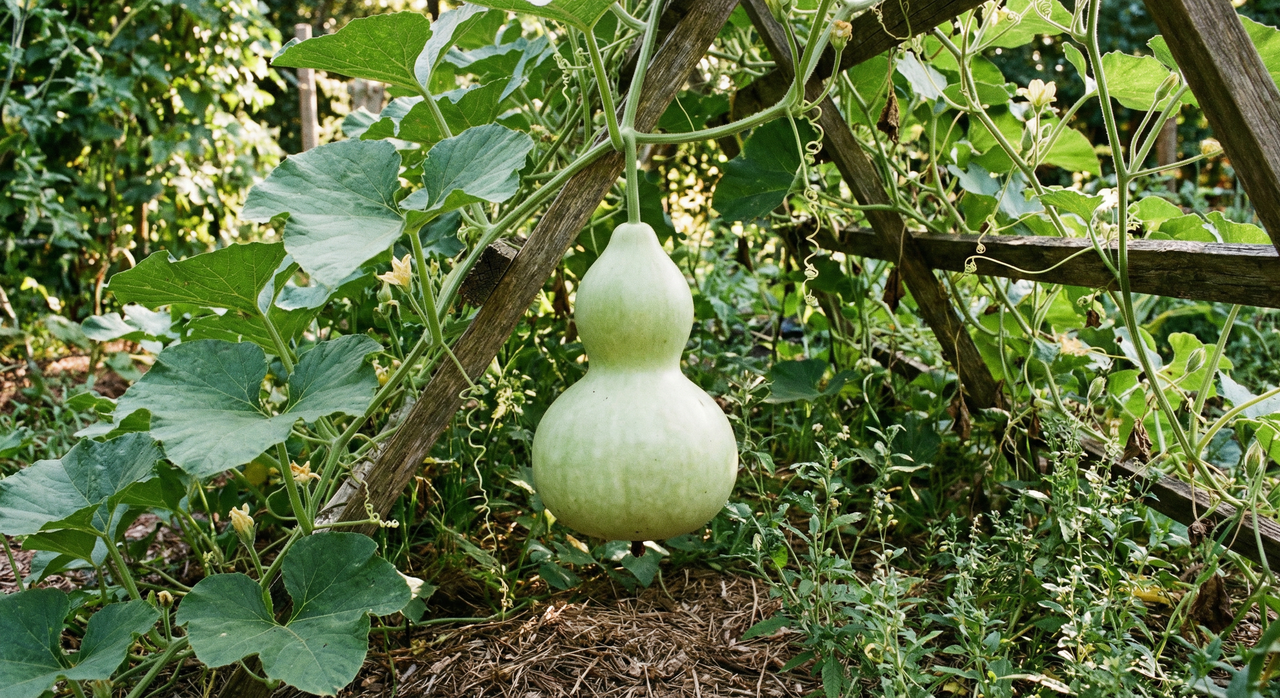
Sometime around 10,000 years ago, a bottle gourd fell into the ocean. Nobody threw it. No human carried it across the Atlantic on a reed boat or a raft. It just bobbed away from the African coast and kept going, riding currents for months, maybe longer, until it washed ashore somewhere in the Americas with its seeds still viable inside.[1] That's not a myth. Genetic and archaeological evidence has confirmed it, and it quietly upends the assumption that every useful plant in the pre-Columbian Americas got there because a person brought it. This one arrived on its own terms.
I think about that a lot when I'm trellising bottle gourds in early summer, watching them sprint up wire at a pace that genuinely startles first-time growers. There's something almost restless about this plant, like it hasn't quite stopped traveling. But here's what catches most gardeners off guard: the same species that crossed an ocean and fed ancient civilizations is also, depending on which fruit you pick and when, capable of sending a healthy adult to the emergency room. Sweet and edible one week, toxic the next. Knowing the difference isn't optional. It's the whole game.
Bottle Gourd Origin and History
Few plants have a biography as improbable as the bottle gourd. Long before humans were trading seeds across continents, this plant was doing its own traveling, and the journey it took is one of the stranger stories in botanical history.
Botanical Background and Lifecycle
Known scientifically as Lagenaria siceraria, bottle gourd is classified as an annual, completing its full life cycle in roughly 90 to 150 days from germination to senescence.[2][3][4] For most gardeners that short window is the whole game, which is why consistent warmth from the first warm weeks forward is non-negotiable. In frost-free tropical climates, though, the plant can surprise you by persisting as a short-lived perennial for one to three years given the right conditions.[5] Those of us growing in subtropical gardens sometimes catch a hint of that perennial tendency when a vine resprouts from an undisturbed root crown through a mild winter.
The distinction between wild and cultivated forms matters here too, and it's directly connected to how the plant became so useful so early. Wild bottle gourds produce smaller, bitter fruits loaded with cucurbitacins, compounds that deter herbivores and aid seed dispersal. Cultivated varieties were selected over millennia for larger, non-bitter fruits.[6] I learned that distinction the hard way after planting some poorly-selected seed early in my career; the cucurbitacins are genuinely unpleasant, which is why I now only start seed from reputable cultivated sources.
Visual Characteristics and Morphology
Lagenaria siceraria is a fast-growing herbaceous vine with a vigorous climbing or trailing habit that can extend 10 to 15 meters when properly supported, with exceptional specimens reaching beyond 6 meters and daily growth rates of up to 1 meter under ideal conditions.[7][8] I grow chayote and passionfruit in my Florida food forest, and both are vigorous climbers, but bottle gourd's growth rate still catches me off guard every season. I've learned to build the trellis bigger than I think I need.
The stems are soft-hairy, angular, and equipped with branched tendrils that grip supports readily, turning any vertical structure into productive growing space.[9] Unlike many cucurbit relatives, the stems lack prickles, which makes working around the vine much more pleasant. Leaves are broad, kidney- to heart-shaped, 10 to 25 cm across, with three to seven shallow palmate lobes that tend to grow larger during warm, wet conditions.[10]
The bottle gourd's flowers are where things get genuinely beautiful. The plant is monoecious, with separate male and female white, trumpet-shaped flowers, 5 to 8 cm across, that open at dusk and close by morning, drawing in moth pollinators through the night.[10][11] Fruits are variable pepo berries, ranging from round and bottle-shaped to elongated and dumbbell-shaped, typically 15 to 45 cm long. Immature fruits are soft, green, and entirely edible, while mature fruits harden into a tough, woody, yellowish-brown rind.[10][12] I've harvested both in a single season from the same vine; learning to read exactly when the rind begins to stiffen is one of those tactile skills that just takes a few seasons to develop. The plant overall is strongly shaped by environment, with vine length, leaf size, and fruit form all shifting in response to soil fertility, water, and temperature.[13]
Traditional and Cultural Uses of Bottle Gourd
The genetic and archaeological record has now firmly settled what was once a contested debate: bottle gourd originated in tropical Africa, where domestication happened around 10,000 to 12,000 years ago, and higher genetic diversity in African wild populations provides the clearest evidence.[14][15] Following its oceanic drift from Africa, the plant appeared at sites like Coxcatlan Cave in Mexico around 10,000 years ago, well before human migration could account for the distribution.[16]
Once domesticated, the bottle gourd embedded itself in cultures on every inhabited continent. Ancient Egyptians were cultivating it by 4000 BCE, placing the hardened gourds in tombs as storage vessels.[17] In China, practitioners had incorporated it into medicine by the Tang Dynasty, around 618 to 907 CE, using it for its cooling and detoxifying properties.[18] Ayurvedic physicians were using it even earlier to address diabetes, hypertension, and as a diuretic, and a broad range of African and Asian healing traditions employed it for respiratory conditions, wounds, fever, and digestive complaints.[19][20] Mesoamerican cultures had been using the dried gourds as water containers and utensils from at least 8000 BCE.[21]
The cultural reach goes well beyond the utilitarian. Among Yoruba, Zulu, and Hausa communities the gourd symbolizes fertility, abundance, and protection, appearing in healing rituals and ceremonial contexts.[22] Amazonian shamans used it as a vessel for plant medicines, and Pacific Island communities included it in ceremonial exchanges.[23][24] Across all these traditions, that hard woody rind was doing the same fundamental job: holding things, whether that was water, seeds, medicine, sound, or meaning.
Fun Facts and Domestication Story
Bottle gourd is native to tropical Africa, where it behaves as an opportunistic colonizer of disturbed ground, thriving in full sun and high heat.[25][26] As a landscape designer, I find that ecology genuinely useful: a plant that evolved to fill gaps in disturbed edges is well-suited to the pioneer-species role in a new food-forest guild or along a freshly built garden margin. Multiple genetic analyses using chloroplast, mitochondrial, and nuclear DNA confirmed the African origin and documented independent domestication events, finally resolving the old argument that Asia was the primary center of origin.[14][27]
In the wild, seeds are dispersed by frugivorous birds and mammals, though the cucurbitacins in wild fruits deter many potential herbivores from eating the whole gourd before the seeds are ready to move on.[28] And if you ever wonder just how large these fruits can get under perfect conditions, the world record stands at 188 kg, grown in Andhra Pradesh, India in 2014.[29] I have not come close to that in my own garden, but I've watched a single vine cover an entire fence panel in a season, so I can believe it. USDA germplasm collections maintain diverse accessions of Lagenaria siceraria to preserve that genetic breadth for future breeding and conservation work,[30] which is reassuring for a species that has been traveling the world and feeding people for ten millennia.
Bottle Gourd Varieties and Where to Buy Them
All this diversity comes from a single species with no formally recognized subspecies.[10][31] Every shape you've ever seen, from the classic long-necked lauki of South Asian markets to the hourglass birdhouse gourd hanging in someone's backyard, is the same species shaped by thousands of years of human selection. Cultivars shake out into five broad functional types based on fruit shape: bottle-shaped with a long neck, club-shaped or crookneck, round or spherical, cylindrical or snake-like, and ornamental forms with warty or speckled skins.[10]
Notable Cultivars of Lagenaria siceraria
Named cultivars span a wide spectrum. 'Birdhouse' and 'Dipper' are the classic craft types, 'Speckled Swan' is a showstopper on any trellis, and on the edible side you have 'Louisiana Long,' 'Extra Long White,' 'Thai Long,' 'Paddy Green,' and the round 'Diamante.' The sweet 'New Guinea Buttercup' and 'New Guinea Butterscotch' are genuine eating types worth seeking out if you want to cook with bottle gourd rather than dry it.[10][32][33] Fruits range from 10 cm to well over a meter long depending on cultivar, and young green fruits have a mild, cucumber-like flavor that I'd compare to a delicate summer squash.[10][34] Left to mature, those same fruits harden to tan or brown shells suited to drying.
Performance differences between cultivars matter more than most seed catalogs admit. 'Mammoth' and 'Louisiana Long' are high-vigor vines; I grew them side by side with 'Birdhouse' one summer and quickly learned the larger-fruited types needed serious trellising by week three or things got unwieldy fast. 'New Guinea Buttercup' can yield 20 to 30 fruits per plant, while 'Thai Long' produces fewer but much larger fruits. 'Paddy Green' offers useful moderate resistance to powdery mildew. Early types mature in 60 to 70 days; larger cultivars need closer to 80 to 90.[35][36]
Wild or poorly bred seed can carry cucurbitacin levels high enough to cause real gastrointestinal toxicity, and I've tasted that bitterness firsthand from a trial planting of unlabeled saved seed. Commercial edible cultivars are selectively bred to keep cucurbitacins well below 0.01%.[37] I now stick exclusively to named commercial cultivars for anything going into the kitchen. Bitterness is the plant's warning; don't ignore it.
Sourcing Bottle Gourd Seeds and Plants
Seeds are genuinely easy to find in the U.S. Packets typically run $2 to $10, averaging $4 to $6, from most major seed suppliers online. Seedlings are a different story; nursery starts are seasonal and sell out quickly in warm climates, often gone by mid-spring. I've learned to start 'Paddy Green' or 'Thai Long' indoors from seed rather than hunt for starts, because the cultivars I actually want are rarely what's sitting in a four-inch pot at the garden center. The Missouri Botanical Garden also distributes seeds through its educational programs[38] if you want a reliable source with some institutional backing.
Importing seed from overseas is legally uncomplicated. Lagenaria siceraria is not on the USDA federal noxious weed list,[30][39] and I've brought in seed from overseas suppliers twice with nothing more than a standard phytosanitary certificate and no issues at customs.[40] Regional demand does shape what you'll find locally: South and Southeast Asian grocery stores often carry seed suited for edible use, while Western garden centers skew toward ornamental and craft types.[41] Either way, getting started is not the hard part.
Bottle Gourd Propagation and Planting Guide
Bottle gourd is one of those plants where starting strong makes everything downstream easier. The seeds are large, the germination is reliable, and the plant practically sprints once it's in warm ground. But there are a few things about this vine's biology that trip up even experienced gardeners, especially around seed saving, and I want to walk through those before we get into the dirt.
Seed Morphology and Storage for Bottle Gourd
The seeds themselves are unmistakable once you've handled them: flat, ovate, 10-15 mm long and 6-10 mm wide, with a hard, glossy dark brown or nearly black coat.[42][43] Crack one open and you'll find two flat white cotyledons and a straight embryo with no endosperm surrounding it.[44] Wild African relatives produce smaller seeds in the 8-12 mm range; thousands of years of domestication gave us the larger, more uniform seeds we plant today.[44] For beginners, that size is genuinely forgiving -- they're easy to handle, easy to space, and hard to lose in the soil.
Where a lot of first-time bottle gourd seed savers go sideways is cross-pollination. The plant is monoecious (separate male and female flowers on the same vine) and strongly cross-pollinating, which means saved seed rarely comes back true-to-type without intervention.[45][46] I learned this the hard way early on, planting saved seed only to harvest a completely different fruit shape the following year. To maintain a variety, you need either isolation of more than half a mile from other gourds or careful hand-pollination with labeled flowers.[45] I hand-pollinate now, every time.
The good news on storage: bottle gourd seeds are orthodox, meaning they survive dry, cool conditions beautifully. Stored at 4-10°C with humidity below 10%, they stay viable for 5-10 years or longer.[47][48] At room temperature in a dry climate, expect 3-5 years; in humid tropical conditions, fungal contamination can shorten that considerably.[49] I do a simple home germination test every spring on any seed older than two years -- place ten seeds on a damp paper towel at room temperature and count how many sprout in two weeks. I once planted three-year-old room-temperature seed without testing first and got barely 40% emergence. Now I check, and it takes five minutes. More rigorous options include the tetrazolium assay, where viable embryos stain 80-100% red, or X-ray radiography to distinguish filled from empty seeds.[50][51]
Vegetative propagation is possible but firmly in the specialist category. Semi-hardwood stem cuttings (10-15 cm, treated with IBA at 1000-2000 ppm) root at 70-80% success within 2-4 weeks, and grafting onto compatible cucurbit rootstocks using whip-and-tongue or cleft methods achieves over 90% success.[52][53] Grafting is primarily useful for conferring Fusarium resistance in commercial settings; for home gardens, seed is almost always the right answer.
Soil and Site Requirements for Bottle Gourd
Bottle gourd wants well-drained sandy loam or loamy soil with at least 2-3% organic matter, a rooting depth of at least 12 inches, and a pH sitting between 6.0 and 7.5, with the sweet spot around 6.5-7.0.[54][55] The plant can tolerate pH as low as 5.5 or as high as 8.0 in a pinch, but outside the 6.0-7.5 window you'll start seeing chlorosis, leaf curl, stunted roots, and eventually blossom-end rot as iron locks out or aluminum becomes toxic.[56][57] I always run a soil test before planting any heavy cucurbit; the difference in early-season vigor between a corrected soil and an uncorrected one is dramatic enough to see from across the garden.
Drainage is genuinely non-negotiable. Bottle gourd is highly susceptible to waterlogging and root rot, and the symptoms -- wilting despite moist soil, yellowing leaves, dark mushy roots with a foul smell -- appear fast once the roots are saturated.[58][59] In my Central Florida garden, where summers are relentlessly humid, I build raised beds for every cucurbit without exception. For heavy clay soils anywhere, incorporating coarse sand or grit alongside compost before planting prevents the problem before it starts.[60] Work in 10-15 tons per hectare of well-decomposed farmyard manure or compost at bed preparation time.[61]
Site selection comes down to sun. Bottle gourd needs a minimum of 6 hours of direct light daily, and 8-10 hours is where it really performs; shade from trees or structures causes etiolated, pale growth and poor fruit set.[62] On the opposite end, prolonged direct midday heat in very arid climates can cause leaf scorch, so some afternoon shade is welcome in those situations.[63]
Spacing, Planting Technique, and Trellising for Bottle Gourd
These vines grow 20-30 feet long, and that fact should drive every spacing decision you make.[64] Think of it like the difference between staking an indeterminate tomato versus letting it sprawl: trellising compresses the footprint dramatically and makes the vigorous growth an asset rather than a problem. Trellised plants can be set 12-24 inches apart in rows 4-6 feet apart; ground culture needs 3-6 feet between plants with rows 8-12 feet apart to keep any kind of airflow between the canopy.[64][65] In small permaculture gardens I almost always trellis; in larger food forests where ground cover is welcome, letting them sprawl over a prepared area works beautifully.
Plant seeds or transplants one inch deep after the last frost date, once soil temperature has reached at least 70°F.[63] The hill method works well in traditional gardens: mounds spaced 4-6 feet apart with 3-4 seeds or plants per hill. For containers, use pots at least 12-18 inches in diameter with one plant per container, filled with equal parts garden soil, well-rotted compost, and coarse sand or perlite.[66][64] Container culture is more limiting than the plant would prefer, but it's workable if you water consistently and give the vine something substantial to climb.
Germination Timeline for Bottle Gourd
With warm soil above 70°F (21°C), bottle gourd seeds germinate in 7-10 days.[55][67] In temperate zones where the ground takes its time warming up in spring, starting seeds indoors 3-4 weeks before the last frost date gives you transplants ready to go the moment conditions are right.[38] I've grown bottle gourd from both direct-sown and indoor-started seed over the years, and the cotyledons have a distinctive look -- broad, rounded, noticeably larger than most cucurbit seedlings -- that makes them easy to identify once you've seen them a few times. When the soil is right, the viability is confirmed, and the seeds are planted at the correct depth, germination is almost a given. The real work was everything that came before: choosing the site, building the soil, and understanding what this vine actually needs to thrive.
Bottle Gourd Care Guide
After growing bottle gourd across several subtropical landscape projects, the single thing I'd tell a first-time grower is this: get the temperature right, and almost everything else falls into place. Get it wrong, and no amount of careful watering or feeding will save you.
Seasonal Rhythm and Temperature Requirements
Bottle gourd is a warm-season annual nearly everywhere in the U.S., adapted to USDA zones 3 through 11 when started fresh each year, with genuine perennial potential only in frost-free zones 10b-11.[38][68] Plant after your last frost date once soil temperatures are reliably warm, because the plant sulks below 15°C (59°F) and won't really thrive until daytime temperatures sit between 20 and 35°C.[55][69] From that warm start, expect the first flowers around 45 to 60 days after seeding, so plan your season accordingly. In cooler climates, that flowering window is your critical target: everything before it is setup, everything after is harvest.
Watering Needs and Soil Moisture Management
The baseline is 1 to 2 inches of water per week, delivered deeply enough to moisten soil 6 to 8 inches down, roughly 1 to 1.5 gallons per plant per session.[70][71] In hot, dry weather I water every 2 to 3 days rather than once a week; in a humid Florida summer, I just stick a finger an inch or two into the soil and let that be my guide rather than any fixed schedule. Stage matters a lot here. Seedlings need consistent moisture but not saturation. Once vines are running and flowers are opening, bump frequency up to 2 or 3 times per week, because water stress during flowering tanks fruit set fast.[72][73] As fruits approach maturity, ease off. Overwatering at any stage causes root rot and chlorosis; the symptoms look similar to drought stress at first glance, which is exactly why the finger-test habit beats any calendar.
Heat and Frost Tolerance
Bottle gourd prefers days between 25 and 35°C (77–95°F) with nights staying above 18°C (64°F).[65] It can shrug off a short spike to 40°C or so if cooler conditions follow quickly, but sustained heat above 35°C is genuinely damaging: photosynthesis drops by 30 to 50%, pollen becomes sterile, blossoms fall, and yield losses can hit 50%.[74] Flowering is the most vulnerable stage, which I've confirmed the hard way. In particularly brutal summers I've used 40% shade cloth during peak bloom and seen noticeably better fruit set than on full-sun plants nearby. Combining shade cloth with 2 to 4 inches of organic mulch and early morning irrigation can mitigate heat losses by 20 to 30%.[75] If you're in a reliably hot region, look for varieties like 'Pusa Naveen' or 'Arka Bahar' that have been bred specifically for heat tolerance.[76]
On the cold end, there's no negotiating. Frost kills it. A single freeze causes cellular damage, stem dieback, and fruit rot, with no recovery.[77][78] In my landscape work I've extended productive seasons by 3 to 4 weeks at either end by using row covers whenever temperatures threaten to drop below the safe threshold, which makes bottle gourd a viable quick-season screen even in zone 7 or 8 if you're strategic about it.
Feeding and Nutrient Management
Bottle gourd is a heavy feeder, closer in appetite to pumpkin than to summer squash. The target NPK ratio is roughly 2:1:3, applied in split doses: half at planting, a quarter at 30 days, and the final quarter at 60 days.[79][65] For home gardens, I start with 1 to 2 lbs of a balanced 10-10-10 per 100 square feet at planting, then side-dress with nitrogen when the vines begin to run. Incorporate generous compost before planting too; the research recommends 15 to 20 tons per hectare of well-decomposed organic matter, which at kitchen-garden scale just means working in a deep, rich layer before you sow.[80] Watch micronutrients during flowering: foliar sprays of boron and zinc at fruit set can prevent hollow or cracked fruits, which are the classic signs of boron deficiency.[79] The other failure mode I've seen is excess nitrogen producing dense, lush foliage and almost no fruit. A soil test before you plant keeps you honest; the 2:1:3 ratio really does keep vines productive without turning them into a leafy jungle.
Pruning, Maintenance, and Support Structures
Get your bottle gourd trellis in place before the vine needs it, not after. I've learned to install an 8-foot structure at planting time, because a sprawling vine on the ground damages developing fruits and makes harvest a mess.[81] Once the vine is climbing, prune back to 3 or 4 main laterals by removing suckers and lower leaves; better airflow pays dividends in disease prevention later. My first season I over-pruned aggressively and cut overall yield significantly. The lesson was to remove what's clearly crowding or diseased, limit to 2 or 3 fruits per vine for larger, better-shaped gourds, and leave the rest to the plant.[82][65] Support heavy fruits with fabric slings or mesh nets tied to the trellis; a large bottle gourd can weigh several pounds and will snap its own stem without support. Keep 2 to 4 inches of organic mulch around the base for moisture retention, and use loose ties on fast-growing stems to avoid girdling as the vines thicken through the season.
Bottle Gourd Harvesting: Timing, Technique, and Yield
The single most important decision you'll make with bottle gourd is when to cut. The same vine, the same fruit, gives you two completely different things depending on when you show up with your shears: a tender summer vegetable or a dried vessel that could last decades. Get the timing wrong in either direction and you've lost the harvest entirely.
When to Harvest Bottle Gourds for Food vs. Crafts
For the kitchen, you're looking at 45 to 60 days from planting, or roughly 10 to 14 days after pollination, when fruits are 6 to 12 inches long, still bright green, and the skin yields easily to thumbnail pressure.[65][83] After several seasons growing bottle gourd in Central Florida heat, I now walk the trellis every morning with a thumbnail ready, because that window between perfect and beginning-to-toughen is only a few days. Miss it and the rind starts hardening, the flesh turns fibrous, and bitterness can creep in. Early cultivars typically mature at 55 to 70 days; full-size or craft types run 70 to 120 days depending on variety.[65] If you're growing grafted plants, add another 5 to 10 days to those estimates.[84]
For dried bottle gourds destined for crafts or vessels, you're waiting for 90 to 120 days from sowing. The cues are unmistakable once you know them: the skin shifts from bright green to dull tan or yellowish, the stem browns and starts to shrivel, and a firm tap produces a hollow resonance rather than a dense thud.[65][55] I teach the tap test in every gourd workshop I run; I compare it to checking a watermelon, and students always laugh until they actually feel the difference. Inside, the seeds should be brown and hard, not white and soft.[85][63] In the U.S., peak harvest windows run July through October, with regional variation: Florida growers typically cut from August to October, Texas from July to September, Arizona from June onward.[65]
How to Harvest, Cure, and Store Bottle Gourds
Early morning is the right time to cut, when temperatures are cooler and the plant is under less stress.[4] I never harvest wet foliage; in Florida humidity, that's a fast path to fungal rot on both the cut stem and the remaining vine. Use clean, sharp shears and leave about 2 inches of stem attached to the fruit.[4][86][87] That stub isn't decorative; it slows moisture loss and keeps rot from entering the flesh.
From there, the two paths diverge sharply. Young edible fruits go straight to cool storage at 50 to 55°F with high humidity (85 to 95% RH), where they'll keep for 2 to 3 weeks.[65] Mature gourds for drying need a shaded, well-ventilated spot at 75 to 85°F with humidity below 60% for 2 to 4 weeks to harden the rind, followed by continued drying in indirect light for 1 to 3 months until the gourd feels lightweight and completely dehydrated.[88][4] Once fully dried, store them somewhere cool and dry, away from direct sun, to prevent mold from taking hold.[89]
Expected Yields and Flavor at Different Harvest Stages
A well-trellised, well-fed bottle gourd plant typically yields 5 to 15 mature fruits under good conditions.[63] My own vines on a sturdy overhead trellis average closer to 8 to 12 per plant when I'm on top of the watering and feeding. Young fruit harvested at the right moment has crisp, watery flesh with mild vegetal sweetness and subtle umami notes, like a cucumber with a bit more body.[90] It's a genuinely useful blank canvas in the kitchen.
Leave fruit on the vine too long and the character shifts: flesh becomes fibrous, bitterness from cucurbitacins intensifies, and the fruit is no longer safe to eat.[90][91] I always taste a thin raw sliver before I cook or serve; if it even hints at bitterness, the whole fruit goes to compost. The research on elevated cucurbitacin levels is clear and the risk isn't worth taking. The preparation and uses section covers cucurbitacin safety in full detail, but the habit of tasting before cooking starts right here at harvest.
Bottle Gourd Preparation and Uses
Culinary Uses and Flavor Profile
From the same trellis that eventually yields hard-shelled craft gourds, I harvest young bottle gourd fruits all summer long for the kitchen, and what strikes most new cooks is just how much of the plant is edible. Young fruit, seeds, leaves, and flowers all have a place at the table.[10][92] Raw, the immature fruit is crisp and mild, somewhere between cucumber and zucchini, with that softly vegetal aroma that doesn't announce itself in the kitchen.[93] Cook it and everything shifts: the texture becomes soft and spongy, the flavor turns quietly earthy and sweet, and it absorbs whatever you put it in.[94][90] That's exactly why bottle gourd recipes span so many traditions: Indian bottle gourd sabzi, curries, kofta, soups, and stir-fries across Asian and African cuisines all lean on this absorptive quality. Leaves go well in soups and quick stir-fries; flowers hold up raw in salads or lightly sautéed.[10]
Always taste a thin sliver of raw fruit before cooking, because any bitterness signals elevated cucurbitacin levels and means the fruit belongs in the compost. For fruits that taste fine, peeling, deseeding, salting to draw out moisture, and boiling with the water discarded are the steps I run through before any bottle gourd curry recipe or soup goes on the stove. Preservation through traditional pickling or lacto-fermentation also helps reduce bitterness while adding probiotic depth and extending shelf life considerably. For North American foragers, the identification is worth confirming: bottle gourd's large palmately lobed leaves and hard woody rind distinguish it clearly from toxic look-alikes like Wild Cucumber with its spiny husks or Balsam Apple with its warty, intensely toxic fruits.[95][96]
Medicinal Preparations
Traditional medicine systems including Ayurveda, Traditional Chinese Medicine, and Unani have drawn on bottle gourd through decoctions, infusions, poultices, and powders, using different plant parts for diuretic, antipyretic, anti-inflammatory, and anti-parasitic applications.[97][98] Dosages vary widely by plant part, preparation method, and intended use.[99] The deeper evidence on those health applications lives in the health benefits section; what I'll say here is that the detoxification process is non-negotiable before any preparation. Bitterness is always the signal to stop. For fruit that passes the taste test, the safe sequence is: select young green fruit, peel and deseed, salt to draw out liquid, then boil at least once and discard the water before any further use. I'd defer any therapeutic application to a qualified practitioner. The ethnobotanical heritage is genuinely rich, but it doesn't replace modern guidance on dosage and safety.
Non-Food and Traditional Applications
I've dried and carved several mature bottle gourds into functional birdhouses and bowls over the years, and the hard woody rind is remarkably durable once properly cured, an experience that puts me in company stretching back over 10,000 years. Mature fruits have been shaped into containers, bottles, bowls, musical instruments including banjos and maracas, toys, and ceremonial objects with deep symbolic meaning in African rituals and Polynesian mythology.[100][101] Beyond the dried shell, stem bark fiber has served as scrubbing sponge material and cordage, while seeds can be pressed for cooking oil or ground into flour.[98] For a permaculture grower, it's quietly satisfying to know that the same trellis producing summer vegetables can, by winter, yield vessels and instruments that connect human cultures across every inhabited continent.
Bottle Gourd Health Benefits and Medicinal Uses
Traditional and Modern Medicinal Applications
Few vegetables carry this much historical weight in traditional medicine. Bottle gourd appears in Ayurvedic texts, traditional Chinese medicine, and West African healing systems as a treatment for diabetes, hypertension, gastrointestinal disorders, inflammation, respiratory complaints, nervous disorders, and fever.[102][103][104] That breadth of application across three separate medical traditions earned it real scientific attention, and the preclinical data that followed is genuinely striking: antioxidant activity, anti-inflammatory effects, antimicrobial action against E. coli and S. aureus, analgesic and antispasmodic properties, diuretic activity comparable to furosemide in rat models, wound-healing support through collagen synthesis, anxiolytic and sedative effects, and hypoglycemic action through α-glucosidase inhibition and improved insulin sensitivity.[105][106][107][108][109]
Seeing how rapidly the plant's chemistry shifts under stress keeps me honest about the gap between what this plant can do in a lab and what we actually know about eating it as medicine. Virtually all of that impressive pharmacology comes from in-vitro and animal studies. A small number of clinical trials support the hypoglycemic effects in diabetic patients, but large-scale human research simply hasn't happened yet.[106][110] Traditional reverence is well earned, but it's not a substitute for that evidence gap.
Key Phytochemicals and Their Actions
The chemistry is where bottle gourd's story gets both exciting and complicated. The plant produces a dense array of secondary metabolites whose concentrations shift depending on plant part, maturity, cultivar, and growing conditions: alkaloids, flavonoids including quercetin, kaempferol, vitexin, and isovitexin; phenolic acids such as caffeic, ferulic, and gallic acid; terpenoids, saponins, tannins, steroids, coumarins, lignans, triterpenoids including lagenin, and cucurbitacins B and E.[111][112][113] The seed oil adds another dimension: oleic acid runs at roughly 40–50% and linoleic acid at 30–40%, a favorable unsaturated fatty acid profile that parallels other edible cucurbit seeds.[114]
Those compound classes aren't random. The phenolics and flavonoids are responsible for the antioxidant free-radical scavenging measured in DPPH assays and for the anti-inflammatory effects through cytokine reduction and COX-2 inhibition. Saponins and cucurbitacins drive antimicrobial activity against E. coli and S. aureus, while triterpenoids underpin the antidiabetic work through improved insulin sensitivity.[115][116][117] The same metabolites that make this plant medicinally interesting are also the ones that make cucurbitacin toxicity a real concern, which is why the safety section below isn't optional reading.
Nutritional Profile
As a food rather than a medicine, bottle gourd is modest by design. The pulp runs at about 14 kcal per 100 grams with 92–96% water content, delivering small but real amounts of vitamin C (10–18 mg), potassium (125–150 mg), magnesium (11–12 mg), calcium, iron, and dietary fiber, with negligible fat and protein.[118][119] I think of it the way I think about cucumber: a hydrating summer staple that earns its garden space through volume, versatility, and how good it feels to eat something cool and light in peak heat rather than through any superfood credentials.
The seeds, though, are a different conversation. At 16–30 grams of protein and 20–28 grams of fat per 100 grams, plus meaningful iron and zinc, they're far more nutrient-dense than the pulp.[120][119] I roast them exactly the way I roast pumpkin seeds: tossed with a little oil and salt at 350°F until golden. That's where the real nutritional payload is. On the cooking side, steaming retains 80–90% of vitamin C versus 50–70% for boiling, so if micronutrient preservation matters to you, the steamer is worth using.[121]
Safety Considerations and Toxicity Risks
Here's where the health narrative takes a sharp turn toward caution. Bottle gourd naturally produces cucurbitacins, bitter triterpenoid defense compounds, and their concentration rises sharply under environmental stress: drought, heat, poor soil, pest damage, or cross-pollination with wild bitter relatives can all push levels into the danger zone. Immature fruit and the spongy white layer beneath the skin are particularly prone to accumulation.[122][123] I've watched a dry spell followed by a heavy rain turn previously mild fruits noticeably bitter on the same vine within a week—a risk that means I check them every single harvest.
Bitterness is the primary warning sign, and the research is unambiguous: any fruit or juice with a perceptible bitter or soapy-bitter taste should go straight to the compost.[124][125] Ingestion of high-cucurbitacin fruit has caused nausea, vomiting, diarrhea, abdominal pain, hypotension, gastrointestinal bleeding, and in rare documented cases, death.[126][127] The same toxicosis affects pets and livestock.[128][129] There is no specific antidote; treatment is supportive.[125] Cooking reduces cucurbitacin levels but doesn't eliminate them, so taste-testing both raw and after cooking remains essential.[130]
I never serve or juice a gourd without tasting a small raw sliver first. That's a non-negotiable habit in my kitchen. For anyone using bottle gourd medicinally, additional cautions apply: it may have an additive hypoglycemic effect when combined with antidiabetic medications, safety data for pregnancy and young children is insufficient, and rare allergic reactions including contact dermatitis and oral allergy syndrome have been documented.[131][132] None of this means bottle gourd isn't safe to eat: mature fruits from commercially bred, non-bitter cultivars are consumed daily across South Asia, Africa, and East Asia without incident. The rule is simply that you grow from reliable seed, you watch your vines through stress periods, and you taste before you cook.
Bottle Gourd Pests and Diseases
Bottle gourd faces the same general cucurbit pest and disease complex that shows up across the family, but it holds its own better than many of its relatives, partly because of genuine breeding progress and partly because of some clever chemistry the plant produces on its own. In humid tropical conditions, key fungal diseases can infect 20 to 50 percent of an unmanaged planting,[133] but that number drops substantially when you start with a tolerant cultivar and manage your microclimate.
Common Diseases and Disease Resistance
The good news for bottle gourd growers is that Asian breeding programs, particularly India's Pusa series, have already done a lot of the work. Varieties like 'Pusa Hybrid-3' and 'Pusa Sandesh' carry meaningful Fusarium wilt tolerance, while 'Punjab Komal' and 'Punjab Round' hold up well against both powdery and downy mildew.[134][135] In humid summers, I default to 'Punjab Komal' specifically because its mildew tolerance keeps the canopy functional into late season when other cultivars are already losing leaves.
Powdery mildew (Podosphaera xanthii) peaks at 20 to 30°C with relative humidity below 70 percent, which sounds counterintuitive until you realize mildew doesn't need wet leaves, just warm stagnant air.[136] Downy mildew (Pseudoperonospora cubensis) is a different threat, preferring the other extreme: high humidity above 85 percent and cooler nights around 18 to 24°C.[137] Fusarium wilt gets worse in acidic to neutral soils when soil temperatures climb above 27°C,[138] which is why I aim to push soil pH slightly above 6.5 before planting gourds. That single habit, refined over several seasons, has reduced wilt pressure noticeably in my plots. Anthracnose, bacterial wilt, gummy stem blight, and viruses like CMV and ZYMV round out the pathogen list, though complete immunity to any of them is essentially nonexistent.[139] On the nematode side, bottle gourd and especially its hybrid rootstock forms show solid resistance to root-knot nematodes (Meloidogyne spp.),[140] which is part of why it's used as rootstock for grafting other cucurbits. No single variety wins against every pathogen, so I usually trial two or three cultivars each season to spread risk.[141]
Major Insect Pests and Natural Defenses
The insect pressure on bottle gourd spans aphids, whiteflies, leafhoppers, spider mites, cucumber beetles, squash vine borers, fruit flies, and melon fly.[142] Melon fly is the one that demands the most respect: in untreated fields it can cut yields by 50 to 70 percent.[143] Cucumber beetles are relatively less damaging on bottle gourd than on yellow squash, but they're still worth monitoring because they vector bacterial wilt. The plant does fight back. Cucurbitacins deter feeding, leaf trichomes create a physical barrier, and extrafloral nectaries recruit predatory ants.[144][145] I've watched ants appear on my vines within days of first flowering, patrolling stems in a way that's genuinely satisfying to observe. Cultivars like 'Arka Bahar', 'Pusa Summer Prolific Long', and 'Pantla' have been selected for combined pest tolerance through mechanisms including stem toughness and rapid wound healing.[146][147]
Integrated Pest and Disease Management
Prevention comes first. Starting with a tolerant cultivar, rotating out of cucurbits for two to three years, and spacing plants generously for airflow eliminates more problems than any spray program ever could.[148] Row covers early in the season exclude cucumber beetles and vine borers during the most vulnerable stage, and interplanting with marigolds suppresses root-knot nematodes and confuses some insects at the soil level.[141] Biological controls, lady beetles, parasitic wasps, and those ant patrols recruited by the nectaries, handle a meaningful share of pest pressure when you're not blasting them with broad-spectrum chemistry. Research shows that combining these cultural and biological tactics can reduce pesticide use by up to 40 percent.[149][133] In my own plots, combining resistant varieties with weekly scouting and neem oil or insecticidal soap only when pest thresholds are actually crossed has eliminated the need for broad-spectrum sprays entirely. Good airflow, rotation, and smart cultivar selection routinely keep losses under 20 percent even through humid summers, and that's achievable for any home grower paying attention.[150]
Bottle Gourd in Permaculture Design
Every permaculture placement decision starts with climate reality, and bottle gourd is unambiguous about its needs. Before you think about guild design or vertical structure, you need to know whether your site can give it what it fundamentally requires: warmth, and plenty of it, sustained across a long season.
Climate Requirements and Hardiness Zones
Bottle gourd is a frost-tender tropical vine that needs 90 to 120 consecutive frost-free days to complete its cycle.[151][152][153] In USDA zones 9 through 11 it can behave as a short-lived perennial, but in cooler climates it's strictly an annual, and even a light frost will kill it outright.[154][155] The sweet spot for active growth is 25 to 35°C (77 to 95°F); once temperatures drop below 18°C (65°F) the plant slows noticeably, and below 10°C (50°F) it essentially stops.[153][155] Soil temperature matters too: you want it above 15°C (60°F) before transplanting if you expect healthy root development.
For growers in zones 7 and 8 pushing the edges, there's real room to work. I've had good results starting seeds indoors 4 to 6 weeks before last frost, then deploying black plastic mulch to pre-warm the soil and cloches to protect transplants in those early shoulder weeks.[156][157] That combination has bought me an extra two weeks on each end of the season, which is often the difference between a full harvest and a vine that never sets fruit.[152][158] South-facing walls and thermal mass are your friends here; place bottle gourd where heat accumulates and you'll be surprised how far north this vine can go.
Ecosystem Functions and Services
Once sited correctly, bottle gourd starts earning its place in multiple ways simultaneously. The flowers are the first thing I notice. They're white, funnel-shaped, and nocturnal, opening at dusk and closing before morning, with loads of nectar that draws squash bees (Peponapis spp.), honeybees, bumblebees, and night-flying moths.[159][160] In my Central Florida gardens, squash bees show up within days of first bloom. They're specialist pollinators that time their activity to exactly this kind of flower, and watching them work a bottle gourd trellis at dusk is genuinely satisfying.
That pollinator dependence is not trivial. Exclusion studies show up to a 90% yield reduction without insect visitors, and in my own experience, skipping hand-pollination on cloudy mornings has cost me nearly half my potential fruit set in a single week.[161][65] The design response is straightforward: plant marigolds or lavender nearby to support general pollinator populations, avoid broad-spectrum pesticides, and leave some bare ground for ground-nesting bees.[162][163] Hand-pollinate on mornings when cloud cover is heavy or temperatures are marginal.
Below the flowers, the foliage is doing its own work. The dense, sprawling leaves function like a vigorous living mulch, suppressing weeds and conserving soil moisture in a way that reminds me of sweet potato vines running across a bed. On slopes, that same foliage cover helps prevent erosion.[164] The roots accumulate potassium and other minerals as a moderate dynamic accumulator, though bottle gourd doesn't fix nitrogen, so don't expect that particular service from it.[164] What it does produce is substantial biomass. At season's end I chop and drop spent vines directly onto the bed or pile them into compost; trellised plants, which gain 20 to 30% higher yields through better airflow, generate even more material to work back into the system.[165]
Forest Layer Placement and Guild Roles
Structurally, bottle gourd belongs in the vertical and canopy layers of a food forest. When supported, it reaches 3 to 6 meters (10 to 20 feet), climbing trellises, shrubs, or the lower branches of trees with real ambition.[166][167][168] I've run it up cattle panels between a moringa and a papaya and had it fill the middle canopy within six weeks. The large lobed leaves create useful shade for lower-layer plants while the vine itself remains above the understory, which means it competes less than you'd expect for a plant this vigorous.[165]
Its guild relationships are practical and well-documented. Intercropping with legumes gives the nitrogen that bottle gourd can't supply for itself.[169] Marigolds nearby provide the dual benefit of drawing pollinators and suppressing root-knot nematodes. Maize and sorghum can serve as living trellises in traditional three-sisters-style arrangements, while the bottle gourd's ground-level foliage plays the ground-cover role that the system needs.[169][170] In integrated pest management contexts, it can also function as a trap crop, drawing certain cucurbit pests away from higher-value plantings.[171] For subtropical and tropical food forests in particular, this combination of vertical reach, canopy contribution, pollinator support, and biomass production makes it a genuinely multi-functional layer plant rather than just a productive annual you've happened to trellis.[165][172]
The Vine That Crossed an Ocean Before We Did
I keep a dried bottle gourd on my potting bench, not for any practical reason, just because I like being reminded that this thing floated across the Atlantic on its own, thousands of years before humans thought to help it. Every spring when I nick those big flat seeds and push them into warm soil, I'm starting something that's been starting itself for longer than agriculture has existed. That's not lost on me.
Sources 172
- Pringle, H. (2005). Seeking Agriculture's Ancient Roots. PNAS. ↩
- USDA PLANTS Database - Lagenaria siceraria ↩
- Missouri Botanical Garden - Lagenaria siceraria ↩
- Cucurbitaceae: Bottle Gourd - University of Florida IFAS Extension ↩
- Kew's Plants of the World Online ↩
- Domestication and Diversity of Lagenaria siceraria - ScienceDirect ↩
- Lagenaria siceraria - Missouri Botanical Garden ↩
- Growing Giant Gourds: Bottle Gourd Varieties and Records ↩
- Missouri Botanical Garden Plant Finder: Lagenaria siceraria ↩
- Lagenaria siceraria - Wikipedia ↩
- Lagenaria siceraria (Bottle Gourd) - Kew Science ↩
- Bottle Gourd - Missouri Botanical Garden ↩
- Lagenaria siceraria - Royal Horticultural Society ↩
- Phylogeography and Domestication of the Bottle Gourd (Lagenaria siceraria) ↩
- African origin and transoceanic dispersal of the bottle gourd (Lagenaria siceraria) as revealed by nuclear genes ↩
- Early Holocene Domestication of Bottle Gourd in Mexico ↩
- Archaeological Evidence for the Bottle Gourd in Ancient Egypt ↩
- Bottle Gourd in Traditional Chinese Medicine ↩
- Ethnobotany of Lagenaria siceraria in India ↩
- Traditional Uses and Pharmacological Profile of Lagenaria siceraria ↩
- Pre-Columbian Use of Bottle Gourd in Mesoamerica ↩
- The Calabash in African Culture ↩
- Shamanic Use of Plants in the Amazon ↩
- Pacific Islands Ethnography: Ceremonial Artifacts ↩
- Plants of the World Online, Kew Gardens ↩
- Lagenaria siceraria - Missouri Botanical Garden ↩
- Phylogeography of Lagenaria siceraria (Cucurbitaceae) Reveals an African Origin ↩
- Evolution of Crop Plants ↩
- Heaviest bottle gourd ↩
- Lagenaria siceraria Profile ↩
- Horticultural Classification of Lagenaria siceraria ↩
- Calabash Gourd Cultivars and Uses ↩
- Lagenaria siceraria - RHS Gardening ↩
- Lagenaria siceraria - Missouri Botanical Garden ↩
- Bottle Gourd Production Guide ↩
- Cultivar Descriptions for Cucurbits ↩
- Cucurbitacins B, E and I Concentrations in Bottle Gourd - PMC ↩
- Lagenaria siceraria (Bottle Gourd) ↩
- Federal Noxious Weeds ↩
- Importing Plants and Plant Products ↩
- University of Florida IFAS Extension - Bottle Gourd Production ↩
- Lagenaria siceraria (Moench) Standl. ↩
- Lagenaria siceraria ↩
- Domestication and Dissemination of the Cultivated Bottle Gourd ↩
- Pollination Biology of Bottle Gourd (Lagenaria siceraria) ↩
- Cross-Pollination in Vegetable Crops: Cucurbits ↩
- Seed Storage of Horticultural Crops ↩
- Millennium Seed Bank: Lagenaria siceraria Profile ↩
- Seed Longevity and Storage Behavior in Cucurbitaceae ↩
- Tetrazolium Testing of Seeds - ISTA ↩
- Seed Viability Testing with X-rays ↩
- Vegetative Propagation of Bottle Gourd (Lagenaria siceraria) ↩
- Grafting: A Tool in Cucurbit Breeding ↩
- Bottle Gourd Cultivation Guide - Agricultural Extension Manual ↩
- Bottle Gourd Production Guide ↩
- Effects of Soil pH on Cucurbit Growth ↩
- Soil pH and Nutrient Availability for Vegetable Crops ↩
- Physiological and biochemical responses of Lagenaria siceraria to waterlogging stress ↩
- Root Rot Diseases in Cucurbits ↩
- Soil Management for Vegetable Crops: Drainage and Aeration ↩
- Bottle Gourd Cultivation Guide ↩
- Light Requirements for Cucurbits ↩
- Growing Gourds in the Home Garden ↩
- University of Florida IFAS Extension: Bottle Gourd Production ↩
- Bottle Gourd Growing Guide - University of Florida IFAS Extension ↩
- University of Florida IFAS Extension: Growing Bottle Gourds ↩
- Purdue University: Lagenaria siceraria (Bottle Gourd) ↩
- USDA Hardiness Zone Map ↩
- FAO: Bottle Gourd Cultivation Guide ↩
- Cucurbit Water Requirements and Irrigation ↩
- Texas A&M AgriLife Extension - Cucurbit Production Guide ↩
- University of California Agriculture and Natural Resources - Cucurbit Irrigation Management ↩
- Purdue University Extension - Bottle Gourd Production Guide ↩
- Physiological Responses of Bottle Gourd to High Temperature and Water Stress ↩
- Heat Stress Effects on Vegetable Crops: A Review ↩
- Economic Botany of Bottle Gourd (Lagenaria siceraria) ↩
- Frost Tolerance of Vegetable Crops ↩
- Lagenaria siceraria - Bottle Gourd ↩
- Bottle Gourd Fertilizer Schedule and Recommendations ↩
- Bottle Gourd Fertilization: Complete Guide ↩
- Bottle Gourd (Lagenaria siceraria) ↩
- Lagenaria siceraria (Bottle Gourd) ↩
- Harvesting and Storing Gourds ↩
- Grafting Cucurbits for Improved Disease Resistance ↩
- Bottle Gourd Production Guide ↩
- Harvesting and Storing Gourds ↩
- Cucurbit Crop Production Manual ↩
- Post-Harvest Management of Gourds ↩
- Growing and Using Gourds ↩
- Bottle Gourd (Lagenaria siceraria): Nutritional Value and Health Benefits ↩
- Lagenaria siceraria - CABI Compendium ↩
- Nutritional Value of Lagenaria siceraria ↩
- Missouri Botanical Garden Plant Finder ↩
- Bottle Gourd - Wikipedia ↩
- Missouri Botanical Garden Plant Finder - Lagenaria siceraria ↩
- Harvard University Herbaria - Echinocystis lobata ↩
- Medicinal Properties and Traditional Uses of Lagenaria siceraria ↩
- Kew Science (Plants of the World Online) - Lagenaria siceraria ↩
- Ethnobotanical Survey and Dosage in Traditional Medicine ↩
- Ethnobotany of the Bottle Gourd ↩
- Cultural and Ritual Uses of Gourds ↩
- Medicinal Properties of Lagenaria siceraria: A Review ↩
- Ethnomedicinal Survey of Lagenaria siceraria in Nigeria ↩
- Traditional Chinese Medicine Applications of Bottle Gourd ↩
- Antioxidant and Anti-inflammatory Activities of Lagenaria siceraria ↩
- Pharmacological Review of Lagenaria siceraria ↩
- Analgesic and Anti-inflammatory Activities of Lagenaria siceraria Fruit Juice ↩
- Anxiolytic and antidepressant activity of Lagenaria siceraria fruit in rodents ↩
- Pharmacognostic and pharmacological profile of Lagenaria siceraria ↩
- Pharmacological Benefaction of Lagenaria siceraria: A Review of in vitro, in vivo and Clinical Evidence ↩
- Phytochemical and Pharmacological Review of Lagenaria siceraria ↩
- Flavonoids and Triterpenoids in Bottle Gourd: Pharmacological Properties ↩
- Cucurbitacins from Lagenaria siceraria: Bioactive Compounds and Anticancer Potential ↩
- Fatty Acid Composition of Lagenaria siceraria Seed Oil ↩
- Antioxidant Activity of Lagenaria siceraria Fruit Extracts ↩
- Anti-inflammatory Effects of Lagenaria siceraria Bioactive Compounds ↩
- Antimicrobial Properties of Bottle Gourd Phytochemicals ↩
- USDA FoodData Central - Bottle gourd, raw ↩
- Nutritional Composition of Lagenaria siceraria - NCBI Review ↩
- Nutritional Composition of Bottle Gourd Seeds ↩
- Effect of Cooking on Nutrient Retention in Vegetables ↩
- Cucurbitacins in Lagenaria siceraria - Toxicology Reports (2018) ↩
- Environmental Factors Affecting Cucurbitacin Content in Lagenaria siceraria ↩
- Bitter bottle gourd toxicity - PubMed ↩
- Bottle gourd juice poisoning - PMC NIH ↩
- Bottle Gourd Poisoning: A Case Report ↩
- Cucurbitacin Poisoning from Bitter Bottle Gourd ↩
- ASPCA Toxic Plants: Bottle Gourd ↩
- Toxicity of Cucurbitaceae Plants to Livestock ↩
- WHO Guidelines on Naturally Occurring Toxins in Food ↩
- Medicinal Uses and Side Effects of Lagenaria siceraria ↩
- Anaphylaxis following ingestion of Manga (mango) and Calabash (Lagenaria siceraria) ↩
- Disease Management in Bottle Gourd: A Review ↩
- Breeding Bottle Gourd for Disease Resistance ↩
- Resistance to Downy Mildew in Cucurbits ↩
- Powdery Mildew of Cucurbits ↩
- Downy Mildew on Cucurbits ↩
- Fusarium Wilt of Watermelon and Other Cucurbits ↩
- Bottle Gourd Production Guide - USDA ↩
- Nematode Resistance in Cucurbitaceae Including Bottle Gourd ↩
- Nematode Control in Cucurbits: Indian Field Studies ↩
- Insect Pests of Cucurbit Vegetables ↩
- USDA ARS - Lagenaria siceraria Pest Susceptibility ↩
- Cucurbitacin Distribution and Insect Resistance in Bottle Gourd (Lagenaria siceraria) ↩
- Trichomes and Extrafloral Nectaries in Cucurbitaceae: Defense Against Herbivores ↩
- Pusa Series Bottle Gourd Varieties for Pest Tolerance ↩
- Breeding for Insect Resistance in Bottle Gourd (Lagenaria siceraria) ↩
- Vegetable Disease Management: Bottle Gourd ↩
- UC IPM Pest Management Guidelines: Cucurbits ↩
- University of Florida IFAS: Insect Management for Cucurbits ↩
- USDA PLANTS Database ↩
- University of Florida IFAS Extension - Bottle Gourd ↩
- Bottle Gourd (Lagenaria siceraria) - Horticulture ↩
- Royal Horticultural Society - Lagenaria siceraria ↩
- Missouri Botanical Garden Plant Finder ↩
- Royal Horticultural Society - Growing Bottle Gourd ↩
- Warm-Season Vegetables in Cool Climates - Cornell University ↩
- Growing Bottle Gourd - Texas A&M AgriLife Extension ↩
- Pollination in Cucurbitaceae - Botanical Review ↩
- Pollination Requirements of Cucurbit Crops ↩
- Impact of Pollinator Scarcity on Bottle Gourd Yield ↩
- University of California Agriculture and Natural Resources - Squash Bees ↩
- Pollinator Partnership - Squash Bees ↩
- Ecological Benefits of Bottle Gourd in Sustainable Agriculture ↩
- Bottle Gourd in Permaculture Guilds - Permaculture Research Institute ↩
- USDA PLANTS Database: Lagenaria siceraria ↩
- Missouri Botanical Garden Plant Finder: Lagenaria siceraria ↩
- Kew Gardens - Plants of the World Online: Lagenaria siceraria ↩
- Intercropping Systems Involving Bottle Gourd: A Review ↩
- Companion Planting Guide - RHS ↩
- Pest Management through Companion Planting with Cucurbits ↩
- USDA PLANTS Database - Lagenaria siceraria ↩