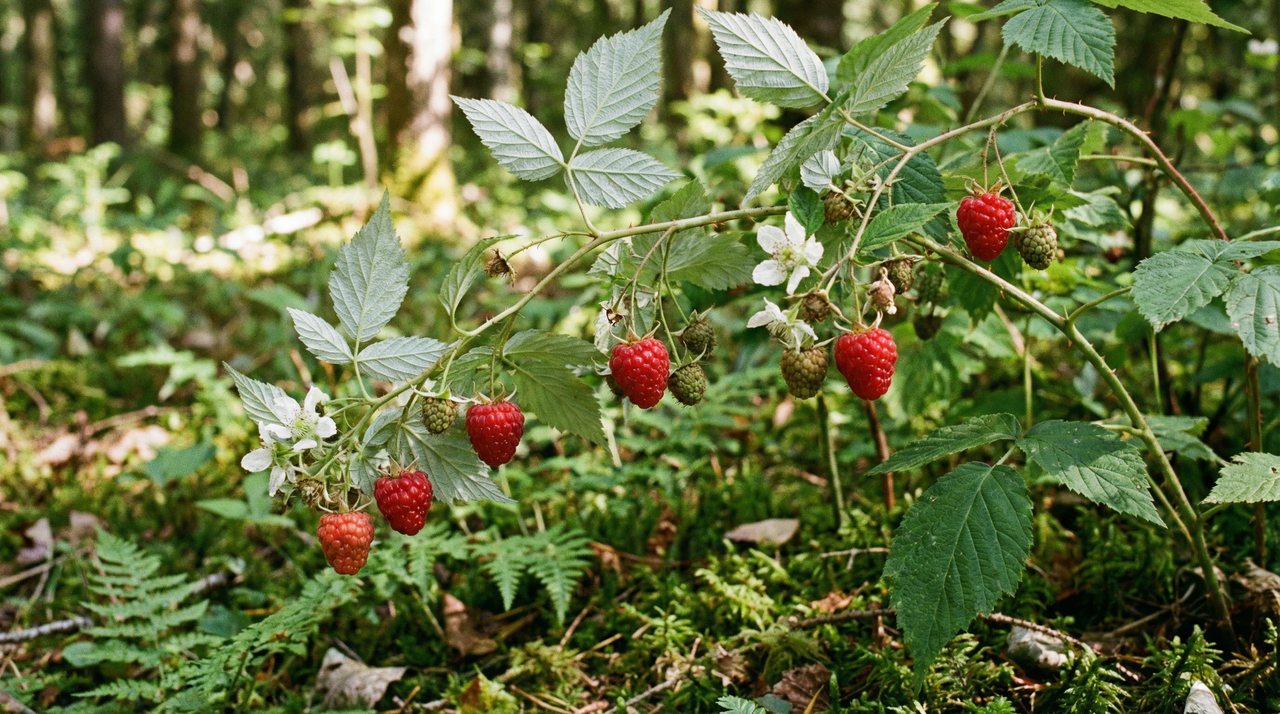
Most gardeners I know have a complicated relationship with brambles. They plant one cane of raspberry with the best intentions, then spend the next three years cursing the suckers threading up through their strawberry beds, their compost pile, occasionally what seems like solid concrete. That aggressive growth you are fighting is the exact same survival quality that let this plant colonize the cleared edges of ancient forests, stabilize eroding slopes before anything else showed up, and feed bears, birds, and foraging humans across two continents for millennia. The bramble isn't misbehaving. It's doing exactly what a pioneer species is built to do.
I've planted Rubus in tight suburban food gardens and sprawling restoration sites, and the lesson I keep relearning is that the gardeners who love brambles most are the ones who stopped trying to tame them completely and started working with their nature instead. There's also a quieter surprise waiting for anyone who looks past the fruit: the leaves have a history in folk medicine stretching back to Roman herbalists, the canes can be woven into baskets, and the roots are quietly rebuilding soil chemistry the whole time you're ignoring them. That hollow little core the berry leaves behind when you pick it? It's a small reminder that you're harvesting something genuinely wild, just temporarily on your terms.
Origin and History of Bramble (Rubus idaeus)
The word "bramble" gets used loosely to describe any prickly Rubus thicket, but at the heart of the cultivated garden story sits red raspberry, Rubus idaeus, a plant with deep wild roots in the temperate forests of Europe and western Asia.[1][2] What is bramble fruit, exactly? It's an aggregate of tiny drupelets, each one a complete fruit, clustered around a central receptacle that stays on the stem when you pick it, leaving that distinctive hollow core. That hollow is the quickest field definition I know for red raspberry, and it's the first thing I point out to anyone new to picking in my garden.
Botanical Background and Visual Characteristics of Red Raspberry
Red raspberry's native range spans a remarkable sweep from sea level up to about 2,500 meters (8,200 feet), touching cool woodland edges and open clearings across Europe and into western Asia.[1][3] In the wild it favors dappled light at 30-70% canopy cover, which tells you a lot about where it wants to sit in a designed planting, too.[4] What makes this plant structurally fascinating is its split identity: perennial roots that can persist 10-15 years or more, feeding a succession of biennial canes that each live just two seasons before dying.[1][5] First-year primocanes grow upright and vegetative; second-year floricanes arch, fruit once, and then die back while the roots send up a fresh batch below.[5] I made the classic beginner mistake of cutting every cane to the ground after my first season and then wondering why I had no fruit the following summer. Understanding that rhythm changed everything.
The colony itself grows to about 1.5-2 meters tall, spreading via rhizomes and root suckers into a thicket that can stay productive for a decade or more with renewal pruning.[5][6] The canes carry stiff hooked prickles, though thornless cultivars exist for the faint-hearted.[7] Leaves are palmately compound with 3-5 leaflets, serrated and noticeably white-hairy on the undersides, which is the field ID trick I rely on when sorting out volunteer brambles on landscape projects.[8] White five-petaled flowers open from late spring into early summer, and the hollow-cored red fruits that follow range from about half an inch in wild plants to well over an inch in selected cultivars.[9][5] Roots are fibrous and shallow, mostly in the top 12-18 inches of soil, and birds and mammals are eager partners in seed dispersal once the fruit ripens.[10]
The wider Rubus genus offers useful contrast. Cloudberry (Rubus chamaemorus) is almost the opposite: a low, thornless, 10-25 cm herb producing amber-orange fruits adapted to arctic bogs, capable of tolerating temperatures to -40°C.[11][12] Blackberries (Rubus fruticosus agg.) are larger, wilder, with arching thorny canes and black fruits that retain their core when picked, unlike the telltale hollow of a ripe raspberry.[13] That hollow core is genuinely useful in mixed plantings: I've watched children pick raspberries from a hedgerow shared with blackberries and self-sort correctly every time.
Traditional and Cultural Uses Across Cultures
Cultivation goes back at least to the first century AD, when Pliny the Elder and Dioscorides documented raspberry for wounds, digestion, and inflammation.[14][15] By the 1500s, European monastery gardens were growing it reliably, and settlers carried it to North America in the 17th and 18th centuries, where it eventually became commercially significant in Washington, Oregon, and New York.[9][16] Folk medicine across Europe traditionally used raspberry leaf tea for diarrhea, sore throats, and as a uterine tonic for menstrual issues and labor.[17][18] Cherokee, Ojibwe, and Iroquois peoples used roots and leaves for gastrointestinal ailments and general tonics, while Asian traditions documented it for fevers and kidney complaints.[19] These traditions belong to specific peoples, and I think approaching them with genuine gratitude rather than extractive interest matters, especially when the plant finds its way into commercial supplement marketing.
The folklore is rich and sometimes grim. European legend tied the raspberry's red color to Christ's blood and its thorns to the Fall.[20] Victorian flower language assigned it to kindness and love. In Celtic tradition, blackberry canes were said to ward off evil spirits, with a superstition against picking after Michaelmas when the Devil was said to have cursed them.[21] Among the Sami, cloudberry carries associations with fertility and northern resilience.[22] Meanwhile, indigenous communities historically harvested wild raspberries with seasonal restraint and protocols against overpicking, practices worth taking seriously now that both cloudberry and wild raspberry face localized overharvesting pressure.[23] Growing your own is the obvious responsible response, and it's a far better experience anyway.
Fun Facts About Brambles
Red raspberry sits in the Rosaceae family, sharing that lineage with roses, apples, and strawberries.[1] A mature plant typically yields 1-3 pounds of fruit per season, though high-yielding cultivars like 'Heritage' or 'Boyne' can push toward 5-10 pounds with good care, and thickets managed with renewal pruning can remain productive for 10-20 years.[5][24] The record-breaking raspberry fruit reached about 1.4 inches in diameter.[25] I've had a patch stripped clean by robins in a single afternoon, which is both infuriating and a wonderful reminder that wildlife was partnering with this plant long before I showed up. Cloudberry, by contrast, yields only 10-15 grams per plant, demands specialized bog conditions, and forms clonal colonies that can persist over a century without any help from a gardener at all.[26][12] The Rubus genus is genuinely strange and diverse, and red raspberry, with its hollow fruits, biennial canes, and millennia of human partnership, is the best possible starting point for understanding it.
Bramble Varieties and Cultivars
The Rubus genus is enormous, and "bramble" can mean anything from a carefully bred thornless blackberry to a wild arctic cloudberry nobody has bothered to domesticate yet. For most home gardeners, though, the practical variety question starts with red raspberry, and that conversation begins with one fundamental divide.
Red Raspberry Fruiting Types and Popular Cultivars
Red raspberries split into two camps: summer-bearing (floricane) types that fruit on second-year canes in early to mid-summer, and everbearing (primocane) types that produce on first-year canes in late summer and fall.[27] Summer-bearing varieties can yield 5 to 10 pounds per plant and tend to shine in cooler climates; everbearing types yield a bit less (3 to 8 pounds, typically) but extend the harvest window and tolerate heat and humidity better.[5] After planting both types in client landscapes, I've found everbearing varieties like Heritage genuinely suit more home gardeners, especially in regions where summer arrives and departs fast. You can mow the whole patch to the ground each winter and start fresh, which keeps management simple and aligns with the low-intervention spirit of a food forest edge.
For summer-bearing picks, Boyne, Killarney, Latham, Meeker, and Willamette are reliable workhorses. Boyne was bred by the University of Minnesota specifically for cold hardiness; Willamette is the Pacific Northwest standard. Among everbearing types, Heritage stands out for fruit firmness, Joan J produces generously without thorns, and Autumn Bliss carries strong resistance to cane blight and raspberry bushy dwarf virus.[27][28] Disease resistance matters more than many new growers expect. Prelude tolerates anthracnose and verticillium wilt; Polana shows good resistance to raspberry mosaic virus and Phytophthora root rot; Heritage is broadly solid but remains susceptible to Phytophthora in wet soils, so drainage is non-negotiable with that one.[29] My honest recommendation: match cultivar to your local extension service's shortlist before you fall in love with a trendy name from a seed catalog.
Blackberry and Cloudberry Varieties in the Rubus Genus
Blackberries tell a different breeding story. The Allegheny blackberry (Rubus allegheniensis) and European blackberry (Rubus fruticosus) both yield larger berries than red raspberry, ripening from red to glossy black at around half an inch to an inch across,[30][9] and the thornless cultivars developed from their lineage run even larger. Thornless types now account for over 90% of U.S. commercial blackberry acreage,[31] and I completely understand why. I planted a vigorous thorned variety early in my career and regretted every single August harvest. Navaho (erect, thornless, hardy through zone 6), Apache (semi-erect, capable of an astonishing 20 pounds per plant), and the legendary marionberry developed at Oregon State are standouts worth knowing.[32][33] Triple Crown and Chester round out a solid home-garden shortlist. Rubus triple crown blackberry in particular earns its keep in family gardens where you want abundant, easy-picking fruit with minimal battle wounds.
Cloudberry (Rubus chamaemorus) sits at the opposite extreme: almost no cultivated varieties exist at all. It's overwhelmingly wild-harvested. The Norwegian selection 'Fjellgull' offers improved yield and quality, and Finnish and Canadian breeding programs are working on better fruiting types, but there's nothing widely available yet.[34][35] I've grown cloudberry from seed in a small experimental bog garden and it's a fascinating, patient endeavor. But I only suggest it to clients with genuinely northern or high-elevation conditions. For everyone else, it remains more of a foraging dream than a garden reality.
Sourcing Bramble Plants and Seeds
Red raspberry is the easiest of the brambles to source. Certified plants of Heritage, Prelude, Polana, and most major cultivars are available bare-root or potted from Stark Bro's, Gurney's, Burpee, Johnny's Selected Seeds, and dozens of regional nurseries, typically running $5 to $15 per plant.[36][37] I always order from suppliers that guarantee disease-free, certified stock, because I've seen the heartbreak of verticillium wilt appear in plants that looked perfectly healthy at planting. It's not worth saving a few dollars. Washington State, particularly Whatcom and Skagit counties, produces roughly 90% of U.S. red raspberries,[38] so much of what you buy ultimately traces back there.
Cloudberry is a different proposition entirely. Plants are nearly impossible to find for most of the contiguous U.S.; seeds and dormant rhizomes from specialty suppliers like Sheffield's Seed Company or Arctic Plants Ltd. are the realistic route, with all the climate and import limitations that implies.[39][40] True Rubus fruticosus is similarly scarce in U.S. commerce, and for good reason: it's regulated as invasive in California and parts of the Pacific Northwest, where planting or propagating it ranges from discouraged to outright prohibited.[41][42] If you're in those regions, hybrid blackberry cultivars are both the legal and the frankly superior choice anyway.
Bramble Propagation and Planting (Rubus idaeus)
I almost always choose vegetative methods now when I'm establishing a new raspberry patch, unless I'm specifically breeding for a new trait. Seed is fascinating from a botanical standpoint, but once you've waited five years for a fruit that doesn't even taste like the parent plant, you tend to recalibrate your priorities fast.
Propagation Methods for Raspberries and Related Brambles
For red raspberry, tip layering and root suckers are the everyday workhorses.[43][44][45] I've layered dozens of cultivars over the years and consistently see 80 to 90 percent take when I bend canes in late July or August into moist soil at 15 to 25°C.[46][5] Waiting for that soil temperature window is the part most people skip, and it shows in their results.
Hardwood cuttings taken in winter are another reliable option, rooting at 70 to 90 percent when held at 18 to 24°C under mist in well-drained media.[46][5] Softwood tip cuttings are trickier: they need IBA at 1,000 to 3,000 ppm, a 1:1 perlite-vermiculite mix, and sustained 85 percent humidity, which gets you 50 to 70 percent success on a good day.[46][47] Grafting onto compatible rootstocks succeeds at 60 to 80 percent and is mostly reserved for disease resistance or vigor control.[46][45] Tissue culture is where the virus-free or elite foundation stock comes from, but that's a lab conversation, not a garden one.
The caution that runs through all of these methods is drainage. My first year propagating softwood cuttings, I skipped raised beds and used a flat on a solid bench with minimal aeration. I lost the entire batch to Phytophthora before a single cutting had rooted. Poorly drained soils and media are where that pathogen thrives, and the fix is straightforward: sterile media, raised beds, and 2 to 3 inches of organic mulch can reduce incidence by up to 40 percent.[48][49][50] I don't skip that step anymore.
Blackberry follows a similar logic, propagated mainly by tip layering or root cuttings at 70 to 90 percent winter success, with seed rarely worth the effort.[51][52] Cloudberry sits at the opposite extreme, demanding vegetative rhizome division (70 to 90 percent establishment) or tissue culture at commercial scale, because its seed needs over 90 days of stratification and still rarely clears 30 percent germination.[53][54] The genus rewards reading the growth habit before choosing your method.
Seed Characteristics, Storage, and Germination
Red raspberry seeds are small achenes, 1.5 to 2.5 mm long, oval to kidney-shaped with a rough tuberculate surface and a reticulate pattern.[4][55] What makes them genuinely interesting is polyembryony: a single seed can carry 1 to 5 embryos, a mix of zygotic and nucellar, which means some facultative apomixis is happening alongside normal sexual reproduction.[56][57] That sounds promising until you realize most seed-grown plants are still highly variable, which is why seed is a breeder's tool rather than a gardener's shortcut.
Breaking dormancy requires 90 days of cold moist stratification at 2 to 5°C, after which germination at 20 to 25°C takes 2 to 8 weeks with overall rates of 30 to 50 percent.[58][59][5] Even then, seed-grown plants take 2 to 5 years to first fruit, compared with the first or second season you get from a layered cane or bare-root crown.[5][60] I've run raspberry seed trials a few times, always for breeding purposes, and I now label every flat obsessively because young seedlings look disconcertingly like carrot tops and are easy to dismiss as weeds. If you do save seed, the good news is that red raspberry is orthodox: stored dry at 5 to 10 percent moisture and kept at 0 to 5°C or colder in airtight containers with silica gel, viability holds for 5 to 20 years.[61][62]
Soil and Site Requirements
Red raspberry wants well-drained loamy or sandy-loam soil at pH 5.5 to 6.5, tolerating a range of 5.0 to 7.0 before nutrient availability starts dropping off sharply.[63][64][5] That pH target matters doubly because the roots are shallow, concentrated in the top 12 to 18 inches, which means compaction, heavy clay, and standing water all translate directly to Phytophthora root rot with very little buffer time.[5][63] After watching primocanes stall out in a compacted clay bed years ago, I now double-dig or amend the top 12 to 18 inches every single time I establish a new patch, and the difference in first-year vigor is visible by midsummer.
Target 3 to 6 percent organic matter and work in well-rotted compost or aged manure at planting.[5][63] A soil test before any pH adjustment is non-negotiable; I learned that after seeing interveinal chlorosis on young leaves in a high-pH bed I'd assumed was fine. Elemental sulfur lowers pH, lime raises it, and neither should be applied by guesswork when you're dealing with a perennial that will occupy the same ground for a decade or more. Full sun, 6 to 8 hours direct, gives the best fruit; partial shade is workable in genuinely hot climates but will cost you yield.[5] Cloudberry, by contrast, demands pH 3.5 to 5.5 and permanently saturated peat, which illustrates how differently the genus has adapted across latitudes.[34]
Spacing, Timing, and Planting Technique
Space plants 2 to 3 feet apart within the row, with rows 6 to 8 feet apart for home gardens and 8 to 12 feet for commercial plantings.[5][64] Those numbers aren't arbitrary: they match the mature 3 to 6 foot height and spread of established canes and create enough airflow to keep foliage dry. I've learned to err toward the wider end in humid summers, where fungal pressure punishes crowded plantings fast. Plant in early spring as soon as the soil is workable, or in fall between late August and October in mild zones, and install a T- or V-trellis from day one rather than retrofitting it later when the canes are already in your way.[5][64] After thinning, keep 4 to 6 strong primocanes per linear foot, which balances light penetration, harvest access, and disease suppression in a way that a crowded row simply cannot.[5][64] Get the spacing, support, and site right at the start, and the biennial cane cycle becomes intuitive to manage rather than a constant catch-up game.
Bramble Care Guide: Growing Rubus idaeus Successfully
The bramble's fundamental biology drives every care decision you'll make. This persistent root system drives the two-year cane cycle that dictates how you prune and maintain the patch. Get comfortable with that rhythm and the rest of the care guide practically writes itself. Ignore it and you'll spend years wondering why your yields are mediocre and your patch looks like a tangle.
Sunlight Requirements for Brambles
Red raspberry wants at least 6-8 hours of direct sun daily, and blackberry asks for the same with the addition of some wind protection.[65][5] In cooler temperate zones that means full sun, full stop. In hotter climates, though, I've found that afternoon shade is less of a compromise and more of a necessity. Too much direct radiation causes leaf scorch, cane sunburn, and fruit bleaching that ruins the harvest before you even pick it.[66][67] On the other side, insufficient light leads to chlorosis and poor fruiting, especially in blackberry.[68] Cloudberry, for contrast, sits at the extreme end of the genus: it can bleach out and lose vigor under the same sun intensity that suits a raspberry just fine.[69] The genus is wide, but for the brambles most of us are growing, a bright, well-chosen site is the first and easiest win.
Water Needs and Irrigation for Brambles
Red raspberry sits in the middle of the genus for drought tolerance: it prefers consistently moist, well-drained soil and will survive a week or two without water, but prolonged dry spells hit both yield and fruit quality hard.[70] Plan on 1-2 inches per week under normal conditions, bumping that to 2-3 inches during fruiting when demand peaks.[5] Drip irrigation is the right tool here; it delivers moisture to the root zone without wetting the canes and inviting the fungal issues I'll leave to the pests and diseases section. Mulch 2-4 inches deep over the root zone to hold moisture between irrigations.[71]
The contrast within the genus is striking. Cloudberry sits at one extreme: it demands consistently moist to wet, bog-like acidic soil and can wilt or die within a week or two without water, yet it's simultaneously susceptible to root rot if waterlogged.[72][73] Blackberry is the tougher end of the spectrum, able to survive 2-4 weeks dry once established with its deeper roots, but it still appreciates 1-2 inches per week for best fruit.[74] Wineberry is moderate, needing about an inch per week; overwatering it causes the same yellowing leaves and mushy roots that signal root rot across the whole genus.[75][76] In my earlier attempts, before I committed to drip and deep mulch, I lost canes to root rot in wet summers and to drought stress in dry ones sometimes in the same season. Consistent soil moisture, not wet or bone-dry, is the target.
Feeding and Fertilization for Brambles
This robust fruiting shrub is a heavy feeder. It needs meaningful nitrogen for vegetative growth, phosphorus for root and flower development, potassium for fruit quality and disease resistance, and a roster of micronutrients including boron, iron, zinc, and manganese.[77] Optimal soil pH sits between 5.5 and 6.5; test every 2-3 years to stay on top of drift.[78] Blackberry and wineberry have similar, moderate-to-heavy needs. Cloudberry is the outlier: it's adapted to low-nutrient acidic peat bogs with a pH of 3.5-5.5, and excess nitrogen makes it spindly rather than productive.[79]
I learned the value of soil testing the hard way. One season I skipped my biennial test and ended up with interveinal chlorosis across my patch -- classic magnesium deficiency, unmistakable once you know what it looks like, but frustrating to diagnose mid-season when the berries are already setting.[80] A balanced 10-10-10 applied in split spring doses works well for raspberry and blackberry, with organic alternatives like compost and blood meal if you prefer them; always irrigate after application and avoid feeding in fall, which pushes tender late growth straight into frost damage.[81][82] Over-fertilizing, especially with excess nitrogen, flips the equation: you get vigorous leafy growth, fewer berries, and more disease pressure. With wineberry, heavy nitrogen is a particular caution because it actively promotes the invasive tendencies that make this species problematic in parts of the eastern US.[83]
Frost Tolerance and Winter Protection
Red raspberry is genuinely cold-hardy, surviving temperatures down to -20°F to -30°F in USDA zones 4-8, with some selections pushing into zone 3.[84][85] The roots can shrug off -10°C or lower. What's actually vulnerable is the reproductive tissue: buds, flowers, and young fruit drop or fail below -2°C to -5°C in spring, which is where real yield losses happen even in established, otherwise-healthy plants.[86] It's similar to watching a late freeze knock the blossoms off peaches or early blueberries -- the plant survives but the harvest doesn't.
Site selection is your first defense: good air drainage, elevated positions, and south-facing slopes all prevent cold air from pooling around vulnerable flowering wood.[5] After the soil freezes, mulch 4-6 inches deep with straw or wood chips to insulate roots, and keep floating row covers handy for late-spring frost events that can cut your crop even in mild years. Row covers can add 2-5°F of protection and sometimes more, which is often the margin between a full harvest and a partial one. Cloudberry sits at the other extreme of cold adaptation, tolerating -40°C in zones 2-4, but it still needs spring protection once flowering starts.[87]
Heat Tolerance and Summer Stress Management
Red raspberry's comfort zone is 68-77°F (20-25°C), and it holds on up to about 86-90°F before performance starts slipping.[88] Short spikes to 35-40°C are tolerable if the plants have consistent irrigation and cool nights below 18°C for recovery, but sustained heat combines with drought stress to cause photoinhibition, oxidative damage, reduced fruit size, and outright sunburn on exposed berries.[89] Cultivar choice matters enormously here: 'Heritage' and 'Joan J' are noticeably more forgiving in warm summers, while 'Tulameen' will show stress early.[90] Blackberry tolerates short-term heat to about 35°C before showing the same wilting and scorch symptoms.[91] Cloudberry, with its optimal range of just 10-20°C, begins to stress above 25-30°C and really isn't suited to anything warmer than zones 1-3.[92]
Management is an integrated package: 30-50% shade cloth over the canopy during heat spikes, drip irrigation delivering 1-2 inches per week to the root zone, and 3-4 inches of organic mulch to keep root temperatures from climbing with the air.[93] I switched to pine straw mulch in my humid subtropical conditions a few years ago and could feel the difference at root level compared to bare soil on a July afternoon -- it's a simple change with a real payoff.[94]
Pruning, Training, and Maintenance
The biennial cane cycle is what makes bramble pruning feel different from pruning most other shrubs. Primocanes emerge from the perennial root system in spring, growing vegetatively through their first season. The following year those same canes become floricanes, flower, fruit, and then die. Your job is to stay synchronized with that cycle, removing spent wood and giving the next generation of canes the space and light they need.[95]
One thing I wish someone had told me early on: primocanes in spring look almost identical to certain weeds pushing up from disturbed soil. I learned to mark my rows carefully the previous fall before everything dies back, which saves a lot of anxious second-guessing in April. For floricane (summer-bearing) types, prune spent canes to ground level right after harvest, then thin the remaining primocanes to 4-6 per foot of row, keeping the strongest and most upright.[96] For primocane (everbearing) types, the simplest approach is mowing everything to the ground in late winter for a single fall crop, which is genuinely appealing for home gardeners who don't want to track which canes are which. Blackberry follows a similar rhythm but benefits from tipping primocanes at 3-4 feet to push lateral branching and more fruiting wood; thin to 4-6 robust canes per plant.[67] Cloudberry, as a low-growing herbaceous perennial, needs almost none of this -- a welcome contrast when the rest of the patch demands attention.
Trellising transforms a bramble bush from a sprawling hazard into something you can actually harvest from: wires at 3-5 feet on a T or V system, with canes tied 2-4 times through the growing season.[97] Better airflow through a trained canopy directly reduces fungal disease pressure, a connection worth keeping in mind. During dormant pruning in late fall or winter, thin to 8-12 strong canes per plant; sanitize your tools between plants to avoid moving disease around.[98] Remove suckers and runners regularly to keep the patch contained, and be particularly vigilant about this with wineberry and cutleaf blackberry, where unchecked spread tips from "vigorous" into genuinely invasive.[99]
Seasonal Rhythm and Lifecycle of Brambles
Everything covered above -- sun, water, feeding, frost, heat, pruning -- only makes full sense against the backdrop of the plant's annual cycle. Red raspberry roots are perennial, but the canes above ground live exactly two years. Flowering is triggered in late spring (May-June) by day length and temperatures above 50°F, and the plant requires 800-1,600 chill hours to break dormancy properly and set a good crop.[5] The specific harvest window depends directly on whether you are managing summer-bearing or everbearing varieties.[65] Under good management -- well-drained acidic soil, full sun, consistent pruning and fertilization -- the same root system can support productive harvests for 15-20 years.[64]
The supporting species in the genus each run their own version of this rhythm. Allegheny blackberry sends up primocanes from March-April, flowers and fruits May through August, then senesces in fall like its raspberry cousin.[100] Common blackberry follows a similar arc and also requires 800-1,600 chill hours, making site selection in warmer regions critical.[101] Cloudberry runs a compressed, cold-driven version: flowers in June-July, fruits July-September, then retreats under snow, with an optimal growing range of just 10-15°C and tolerance down to -40°C.[102] I've watched cloudberry relatives in cooler demonstration gardens go through their entire productive cycle in a window that my own brambles are still flowering through -- a reminder of how much latitude the genus spans. Once you synchronize your care with the rhythm specific to your species and cultivar, the plants reward consistency with harvests that compound year after year.
Harvesting Brambles (Rubus idaeus)
Patience is the first harvest skill. Red raspberry plants grown from seed take 2 to 3 years to produce meaningful fruit under good conditions,[103][5] which is precisely why most home gardeners I work with choose vegetatively propagated nursery stock that fruits in the first or second season after planting.[5] The wait is real either way, but it's manageable once you understand the timeline.
Timeline from Planting to First Harvest and Bloom-to-Ripe Periods
Once your plants are established and properly chilled (having successfully met their required winter dormancy period[5]), full bloom to ripe fruit takes 30 to 50 days depending on cultivar and weather.[5][104] Heat spikes above 86°F during flowering can shrink berry size and tank pollination, so a site with afternoon shade in hot climates genuinely matters at harvest time, not just for plant comfort.[5] Summer-bearing types ripen on second-year floricanes in June and July across northern temperate zones; everbearing primocane types extend harvest from late summer into October.[5][105] Black raspberries finish slightly faster at 30 to 45 days bloom-to-ripe; blackberries and cloudberry both run 60 to 90 days, ripening later into summer and early fall.[106][107][108]
A fully ripe red raspberry tells you clearly: deep, even color with no pale shoulders, a slight give under the gentlest squeeze, and effortless separation from the receptacle.[109][110] I also mark my rows clearly in spring, because young raspberry sprouts look remarkably similar to certain weeds and even juvenile blackberry canes until that first fruit shows up. More than one client has accidentally hoed out a row of perfectly good plants before I started labeling everything at installation.
Ripeness Indicators, Harvest Technique, and Frequency
Pick every 2 to 3 days at peak season, always in the early morning after dew dries but before the day heats up, and only under dry conditions.[111][5][112] I learned the hard way that harvesting after summer rain invites mold within hours; a basket of beautiful raspberries can turn into a fuzzy disappointment by evening if you skip this. Hand-picking is the right method for home scale, letting you select only what's perfectly ripe across multiple passes rather than stripping a cane all at once.[5][113] Use a gentle twist-and-pull, work into shallow containers to avoid crushing the bottom layer, and keep handling to a minimum.[114][115] A brief dip in chlorinated water (50 to 100 ppm) followed by prompt drying helps prevent decay if you need to rinse before storage.[114] One more practical note: gloves are genuinely useful here. The prickles on many bramble canes are fine and persistent, and I always recommend them to clients harvesting with young children nearby.
Flavor Profile, Yield Expectations, and Post-Harvest Handling
A well-managed mature red raspberry plant yields 1 to 3 pounds per season, with commercial plantings scaling to 4 to 12 tons per acre.[116] Blackberries tend to yield more per plant, often 5 to 15 pounds depending on cultivar and management.[117] The difference between the low and high end of those raspberry numbers comes down to pruning and water, exactly what the care guide covered earlier.
The flavor payoff is complex. Red raspberry carries over 200 volatile compounds[118][119] producing that sweet-tart, jam-floral-citrus aroma with a juicy texture, fine seeds, and a clean acidic finish that barely astringes.[120] Cultivar and climate both shift the profile considerably: 'Heritage' runs sweeter, 'Willamette' tarter, and cooler growing conditions boost anthocyanin concentration, which deepens both color and complexity.[121][122] The best-tasting berries I've ever picked came from plants growing in a slightly shaded spot with consistent moisture through a mild summer. Blackberry goes earthier and a little brambly with mild astringency; cloudberry, if you're lucky enough to grow it, lands somewhere between apricot, pineapple, and citrus.[123][124]
Get the fruit cold fast. Raspberries want to be at 32°F and 90 to 95% humidity within two hours of picking, stored in ventilated clamshells without stacking, for a refrigerated life of 7 to 10 days.[114][125][126] I never stack punnets more than two high, and I refrigerate immediately after picking. Early in my gardening years I once left a full flat on a shaded porch for three hours on a warm day and lost nearly half to bruising and collapse. Once is enough to learn that lesson.
Bramble (Rubus idaeus) Preparation and Uses
Culinary Uses of Raspberry Fruit, Leaves, and Shoots
Red raspberries are the obvious starting point. The fruit is extraordinary fresh off the cane, but it's equally at home in jams, jellies, sauces, and desserts, pairing beautifully with chocolate, lemon, vanilla, and soft cheeses.[127][128] One thing I love about making raspberry jam is that these berries have enough natural pectin that I rarely reach for a commercial setting agent. Blackberry jams sometimes need a hand; raspberry usually doesn't.
What surprises most home gardeners is how much further the edible plant goes. Leaves make a pleasantly astringent herbal tea.[129] Young spring shoots, peeled and lightly cooked, have a rhubarb-like tartness that's genuinely good in stir-fries or savory tarts. The blossoms are mildly sweet and edible too.[4][130] Timing matters with the shoots: catch them in early spring before the canes toughen, and new foragers are always pleasantly shocked. The nutritional payoff from the ripe fruit itself is solid too, with good amounts of fiber, vitamin C, and manganese, plus anthocyanins and ellagic acid that make fresh eating feel genuinely worthwhile.[131][132]
Across the genus, flavor profiles shift fascinatingly. Cloudberry has an almost tropical complexity, tasting somewhere between raspberry, apricot, and pineapple, deepening as the berries ripen to golden-orange.[133] Blackberry leans earthier and works beautifully with ginger, dark chocolate, and balsamic. One responsible note: unripe Rubus fruit can cause mild stomach upset, so wait for full color and easy release from the receptacle before you eat or process them.[134]
Medicinal Preparations and Dosages
The same plant parts that feed you in the kitchen have a long history in the herbal medicine cabinet. Leaf infusions are the most common preparation: steep one to two teaspoons of dried leaves per cup of hot water and drink two to three times daily.[135][136] I dry my own leaves in small bunches and find the homegrown result noticeably more astringent than commercial tea bags, which have often lost their subtlety in processing. Roots and berries suit a decoction better, simmered rather than simply steeped. For tinctures, a standard preparation is one to two milliliters of a 1:5 alcohol extract, two to three times daily.[137] Poultices and salves round out the traditional toolkit for topical use.[138] These are widely referenced traditional dosage ranges, not prescriptions; consult a qualified herbalist or healthcare provider before using concentrated preparations, especially during pregnancy.
Non-Food Applications: Dyes, Crafts, and Biomass
Every winter I set aside the sturdiest pruned canes before the rest go to compost. They weave into simple garden stakes and small trellises without any processing, which feels like a very permaculture use of material the plant already had to shed.[139] More ambitious crafters use them for baskets and handles. The berries themselves yield soft red dyes for natural fabric work,[1] and blackberry fruit pushes that palette toward deep purple-black. Cloudberry roots and leaves extend the dye range into yellows. What doesn't go to crafts goes back to the soil: the annual pruning biomass is excellent material for mulching in place or hot-composting, returning organic matter to the very beds that feed the plants.[140] The bramble gives generously at harvest time, and then it gives again when you clean it up for winter.
Bramble Health Benefits and Medicinal Uses
The health story of bramble is really a genus-wide story. Whether you're picking red raspberries from garden canes, foraging Arctic cloudberries, or gathering wild blackberries along a hedgerow, you're working with plants that share a common biochemical backbone. The specific compounds shift with species, latitude, and soil, but the pattern holds: these are extraordinarily rich sources of polyphenols, and that richness has been noticed by humans for a very long time.
Key Phytochemicals in Bramble
Red raspberry fruit is loaded with ellagitannins (sanguiin H-6 at roughly 1.5-3.2 mg/g dry weight), anthocyanins like cyanidin-3-glucoside and cyanidin-3-sophoroside (5-50 mg/100 g fresh weight), quercetin glycosides, phenolic acids, and vitamin C.[141][142] The leaves are no slouch either, with total phenolics reaching 50-120 mg GAE/g dry weight and meaningful levels of quercetin rutinoside.[143][144] Cloudberry and blackberry carry the same compound classes, though concentrations and specific glycosides vary by species and growing conditions.[141]
What I've noticed from eating mid-summer raspberries straight off the cane is that real phenolic richness has a flavor signature: a bright, almost mouth-coating tartness that late-season or store-bought fruit rarely matches. That observation turns out to have a scientific basis. Cooler climates and optimal harvest timing genuinely shift phytochemical content, and northern-latitude cloudberries show 20-30% higher ellagic acid than their southern counterparts.[145] Soil pH, nitrogen levels, and even drought stress all influence how much of this chemistry the plant produces.[146][147] Harvest timing and soil really do change what you're eating.
These compounds work through multiple pathways: free-radical scavenging, Nrf2 upregulation (which increases the body's own antioxidant enzymes SOD, CAT, and GPx), NF-κB inhibition, and gut-microbiota conversion of ellagitannins into bioactive urolithins.[148][149] That last mechanism is worth pausing on: the berries you eat essentially feed your gut microbiome, which then produces compounds your body can actually absorb and use. It's a relationship that rewards regular consumption more than occasional large doses.
Traditional and Modern Medicinal Research
Raspberry leaf has been used as a uterine tonic since at least the sixth century, with traditional applications spanning menstrual cramp relief, uterine toning, labor support, and treatment of diarrhea and inflammation.[150] Across the wider genus, blackberry roots and leaves addressed digestive complaints and wounds in European and Native American traditions, while cloudberry fruits and leaves were used against scurvy and as general tonics in Nordic cultures.[151][152] I've made raspberry leaf tea for myself and friends for years, and I always recommend properly dried leaves brewed at moderate strength. The first time I over-steeped a batch, the tannin load was enough to cause real stomach discomfort, which was an instructive lesson about concentration mattering even with familiar plants.
Modern preclinical research largely echoes those traditions. In-vitro and animal studies show antioxidant capacity comparable to or exceeding vitamin C in standard assays, anti-inflammatory effects via NF-κB and COX-2 suppression with reduced TNF-α and IL-6, antimicrobial membrane disruption, anticancer activity through apoptosis induction, and antidiabetic benefits via α-glucosidase inhibition and improved insulin sensitivity.[148][153][154] Cardiovascular markers including LDL oxidation and endothelial function have also responded positively in lab settings. Cloudberry and blackberry extracts show parallel mechanisms throughout.
Most of this evidence is preclinical. Human clinical trials are limited, small-scale, or absent for many of these effects, and the bioavailability of ellagic acid is low and variable between individuals.[144][155] Centuries of traditional use combined with strong preclinical data paints a credible picture, but it's not the same as robust clinical proof. Eat the berries enthusiastically. Hold the supplement megadoses to a more skeptical standard.
Nutritional Profile
Per 100 grams of fresh red raspberry fruit you're getting roughly 52 calories, 6.5 grams of fiber, 26.2 mg of vitamin C (about 29% of daily recommended intake), 151 mg of potassium, 0.67 mg of manganese, 21 µg of folate, and 7.8 µg of vitamin K.[131] That's a lot of nutritional return for a low-calorie fruit. A cup of fresh raspberries fits easily into almost any dietary pattern and delivers meaningful micronutrient support without much metabolic overhead.
Processing matters here. Cooking destroys 50-70% of vitamin C and degrades polyphenols significantly, while freezing retains over 90% of those nutrients.[156] I eat mine raw when I can and freeze the surplus rather than jamming it. Cloudberry can run notably higher in vitamin C than garden raspberries in some analyses, and blackberries offer a comparable low-calorie, high-fiber profile with slight differences in mineral composition across cultivars and growing environments.[157]
Safety Considerations
Ripe bramble berries are genuinely safe. The USDA, FDA, and major botanical references classify them as generally recognized as safe for humans and pets in normal quantities.[4] I've been growing and eating them for years without any concerns, and that confidence is warranted for the fruit itself.
Raspberry leaf is a different conversation. It's generally safe as a tea, but its tannin content can cause mild GI upset if over-consumed, and it carries uterine-stimulant and phytoestrogen properties that make timing critical during pregnancy.[158][159] I only recommend it in the third trimester and always suggest checking with a midwife first. The traditional record is long, but the clinical data is still limited, and caution is the responsible stance earlier in pregnancy.
At culinary doses there are no significant documented drug interactions. However, consistent vitamin K intake matters for anyone on warfarin, and high-dose leaf extracts deserve caution alongside anticoagulant or diabetes medications.[160][161] True IgE-mediated allergy is uncommon, though oral allergy syndrome reactions can occur in birch-pollen-sensitive individuals.[162] For foragers, the biggest practical risk isn't the berries themselves but misidentification. Rubus fruits are distinctive in their aggregate drupelet structure and hollow core when picked, which separates them clearly from toxic look-alikes like nightshades or baneberry. Because brambles accumulate soil contaminants, I only harvest from sites I know are well away from old industrial areas or busy roads. That's a lesson I learned after testing soil in one of my earlier garden plots and finding lead levels I hadn't anticipated.
Bramble Pests and Diseases
Red raspberry is, honestly, one of the more susceptible soft fruits I grow. That's not a reason to avoid it, but it is a reason to go in with clear expectations and a scouting habit you actually stick to.
Common Pests of Bramble
The insect pressure on red raspberry reads like a fairly long guest list. Spotted wing drosophila tops my concern list in humid summers, laying eggs in ripening fruit and leaving berries that look fine on the outside but collapse into soft rot when you handle them.[163] Raspberry cane borers girdle stems and cause characteristic tip wilt that's easy to miss until you've lost several canes.[164] After losing a third of a young planting to borers early on, I made late-summer scouting and prompt removal of wilted tips a non-negotiable seasonal habit, and it's virtually eliminated the problem without any sprays. Aphids, two-spotted spider mites, Japanese beetles, and raspberry beetles round out the usual suspects, with aphids carrying the added threat of transmitting the mosaic virus complex.[165][166][167]
The plant isn't passive about any of this. Rubus idaeus defends itself through phenolic compounds including ellagitannins, anthocyanins, and tannins that deter feeding and impair insect digestion, plus physical deterrents like prickles and glandular trichomes that trap smaller pests.[168][169] Plants grown in my hotter, sunnier microclimates tend to produce noticeably more astringent leaves, and I've observed that Japanese beetle damage tracks lower there, which fits what we know about stress-induced phenolic production. The plant also signals for backup: extrafloral nectaries attract predatory ants and volatile compounds recruit parasitoids,[170] while mycorrhizal fungi and endophytic bacteria shore up resistance from underground.[171] Supporting those symbionts through minimal tillage and no broad-spectrum fungicides is, in my view, one of the highest-leverage things a permaculture grower can do.
Blackberries tend to outperform red raspberry on pest tolerance, with cultivars like Navaho showing resistance to aphids and Japanese beetles, Triple Crown tolerating cane borers, and Ouachita resisting leafhoppers.[172][173] Cloudberry, by contrast, experiences relatively low pest pressure in its native acidic bogs, though cultivated plants can see more trouble from aphids, flea beetles, and sawflies as conditions move away from that native habitat.[174]
Major Diseases Affecting Bramble
The disease list for red raspberry is where I've had to do the most learning, sometimes the hard way. Phytophthora root rot is the one that keeps me up at night on heavy soils; it's often fatal and water management can only do so much once it's established.[175] Verticillium wilt persists in soil for years with limited resistant varieties available, so site history matters enormously before you plant.[176] On the cane and fruit side, Botrytis gray mold, anthracnose, and cane blight are the bramble berry molds and fungal issues I see most frequently in humid summers, with Botrytis turning beautiful fruit to fuzz during wet harvest windows.[177][178] Septoria leaf spot can defoliate plants badly enough to weaken second-year canes before they fruit.
Beyond the fungal threats, crown gall, powdery mildew, rust, root knot nematodes, and the raspberry mosaic virus complex all appear in the literature and, occasionally, in my garden.[179][178] Viruses in particular are insidious because resistance options are genuinely limited and aphid vectors are everywhere. Cultivar selection helps substantially: Tulameen, Boyne, Meeker, and Latham all show improved tolerance to anthracnose and Phytophthora, and primocane-fruiting types generally perform better overall.[29] I've grown Tulameen alongside Heritage in guild settings under humid conditions and found Tulameen's anthracnose tolerance genuinely meaningful by midsummer. No single cultivar covers every threat, but starting with better genetics gets you a long way.
Blackberries generally show greater resilience to root rots and certain viruses than red raspberry, though they share susceptibility to anthracnose, cane blight, gray mold, and orange rust.[180] Cloudberry carries moderate resistance in native bog conditions but proves more vulnerable when cultivated outside its adapted habitat, facing the same Phytophthora, Verticillium, and gray mold risks as its relatives.[181]
Natural Defenses and Integrated Pest Management
Perfect immunity doesn't exist in Rubus, but thoughtful design reduces intervention needs dramatically. I rarely reach for any spray until I've actually counted aphids or spotted the first mite stippling; those extension action thresholds keep me from unnecessary treatments and protect the predatory insects and parasitoids I work hard to attract.[182][183] When I do intervene, the sequence is cultural first, biological second, targeted soap or neem oil third, and approved insecticides only as a last resort with careful timing around vulnerable growth stages.[172]
Starting with certified disease-free stock is non-negotiable, full stop.[184] From there, supporting the plant's own chemical and microbial defenses, choosing regionally adapted resistant cultivars, maintaining good airflow, and practicing strict sanitation on infected canes handles the majority of what the disease list throws at you.[185][186] Humidity, soil pH, regional pathogen strains, and drainage all shift the picture, so what works in my garden may need adjustment in yours. Monitoring is the one constant that crosses all of those variables.
Bramble in Permaculture Design
Few plants earn their place in a designed system as thoroughly as bramble does. Red raspberry, the anchor of the genus in temperate permaculture, delivers erosion control, soil building, wildlife habitat, and abundant edible yields from the same patch of ground. The key is understanding where it fits, what it needs climatically, and how to keep its considerable vigor working for your design rather than against it.
Climate and Hardiness Zones for Brambles
Red raspberry (Rubus idaeus) is reliably hardy in USDA zones 4-8, with the sweet spot sitting in zones 5-7.[5][4] Cold-hardy cultivars can push into zone 3 under adequate snow cover, and dormant canes will shrug off temperatures down to around -25°C to -30°C.[187] Heat, though, is the softer limit: once temperatures climb above 30°C (86°F) consistently, performance starts sliding, and above zone 8 you're fighting a losing battle.[64] In my experience with clients across variable temperate climates, the difference between a thriving patch and a struggling one often comes down to consistent moisture during bloom and fruit set rather than hitting the exact hardiness edge. Red raspberry wants 25-40 inches of annual rainfall and moderate but steady soil moisture, especially while it's fruiting.[5][188] Irrigation and mulching details live in the care guide, but site selection with moisture retention in mind is a design decision that pays off every season.
The wider genus stretches the map considerably. Allegheny blackberry and black raspberry handle zones 3-8 with high chilling-hour requirements that suit cold-winter climates.[30][189] Common blackberry (Rubus fruticosus) extends into zones 5-9 and tolerates Mediterranean and Pacific Northwest conditions, though I'll come back to its invasiveness in a moment because it's not a decision to make lightly.[190] At the cold extreme, cloudberry (Rubus chamaemorus) tolerates -40°C and suits zones 2-5, but it demands cool, wet, acidic bog conditions with summers that stay under 20-25°C, making it a specialist plant for very specific guilds.[11]
Ecosystem Functions and Guild Roles
Red raspberry earns its place in a food forest before you eat a single berry. As a pioneer species, it colonizes disturbed soils quickly, stabilizes slopes with its extensive root system, and feeds organic matter back into the soil through leaf litter.[3][130] It functions as a dynamic accumulator of potassium and phosphorus, cycling nutrients upward through its roots and returning them to the surface layer as material breaks down.[191] The relationship between bramble and bee is one of the most direct connections in a designed system: its white-to-pink flowers attract honeybees, bumblebees, mason bees, and solitary species from the Andrena genus, with hoverflies and butterflies playing supporting roles.[192][193] Bumblebees are especially effective because they buzz-pollinate Rubus flowers through sonication.[194]
This matters to your harvest directly. Inadequate pollination can reduce yields by 50-80% and produce misshapen, crumbly fruit.[195] I've installed phacelia borders and bumblebee nesting boxes next to client raspberry patches and watched fruit size and set improve visibly within a season. Planting companions like borage, clover, Monarda, or buckwheat nearby pulls more pollinators into the zone during bloom, and optimal conditions for those pollinators to work sit between 55-85°F with moderate humidity and calm air.[196][197] While most cultivars are self-fertile, cross-pollination consistently improves size and quality, so planting two or more cultivars in proximity is a small design choice with a real payoff.[5]
Beyond pollination, the fruiting canes support birds and mammals that disperse seeds, and dense patches create nesting cover for small animals, lifting local biodiversity.[198] Red raspberry also forms arbuscular mycorrhizal associations that improve phosphorus uptake and drought resilience, particularly on sandy or thin soils; I've consistently gotten stronger establishment on marginal slopes by inoculating new plantings at the time of transplanting.[199]
A word on invasiveness, because it's a real design consideration. Native black raspberry stays manageable with some attention. Common blackberry is a different story. I've removed far too many escaped Himalayan blackberry thickets from landscapes where someone planted it without boundaries. The same pioneer vigor that makes Rubus so useful in stabilization and successional planting also means it can suppress native plants and reduce biodiversity when it escapes containment, especially in the Pacific Northwest.[200] Know what you're planting and where it's regulated before you put it in the ground.
Forest Layer Placement and Companion Planting
In a food forest, red raspberry slots into the shrub and understory layers, growing as a deciduous suckering shrub from 3 feet up to 9 feet depending on variety and conditions.[4][9] It thrives at forest edges and in open woodlands where it gets full sun to partial shade, functioning as an early-successional layer that stabilizes soil while the overstory canopy matures around it. That pioneer role is actually useful in young food forests where you want production from the shrub layer before the tree canopy closes in.
The genus covers other layers too. Cloudberry is a low-growing herbaceous groundcover reaching only 10-30 cm, suited to cool, wet, acidic bog guilds where little else will perform.[11] Allegheny and common blackberry form taller, thornier thickets in the 3-10 foot range; they can aggressively compete with tree regeneration if not managed, which is a meaningful consideration when you're designing for long-term succession.[100][201]
When I design a guild around red raspberry, I pair it with nitrogen-fixers in the shrub or tree layer above, pollinator companions like Monarda and borage at the understory edge, and I always think about the suckering radius from day one.[140] First-year raspberry plants can look deceptively weedy, and I've learned to mark guild boundaries clearly so helpers don't pull new suckers thinking they're unwanted volunteers. Root barriers or a simple mowing boundary on the perimeter prevent the spreading habit from becoming a problem without eliminating the ecological benefits you planted it for. A well-contained raspberry berm can stabilize a slope, feed birds through winter, bring pollinators into the whole garden, and still yield gallons of fruit for the household year after year. That's the outcome I'm after every time I put one in the ground.
The Plant That Taught Me to Stop Fighting the Edge
I spent two seasons trying to keep my raspberries tidy before I finally let a row run along a crumbling stone wall and just watched what happened. The canes found every crack, the birds found the canes, and by August that scrappy edge was the most alive corner of the whole property. Some plants don't want to be managed so much as they want to be trusted, and bramble was the one that taught me the difference.
Sources 201
- Rubus idaeus - Wikipedia ↩
- Flora of North America - Rubus idaeus ↩
- Native Range of Raspberry (Rubus idaeus) - USDA Plants Database ↩
- USDA PLANTS Database - Rubus idaeus ↩
- Growing Raspberries in the Home Garden ↩
- Missouri Botanical Garden Plant Finder ↩
- USDA PLANTS Database ↩
- Missouri Botanical Garden Plant Finder: Rubus idaeus ↩
- Rubus idaeus - Missouri Botanical Garden ↩
- Missouri Botanical Garden - Rubus idaeus ↩
- Rubus chamaemorus L. ↩
- Cloudberry (Rubus chamaemorus L.) as a New Plant for the Temperate Climate Zone ↩
- Blackberry (Rubus fruticosus) ↩
- Natural History ↩
- Raspberries: Botany, Horticulture and Breeding ↩
- Introduction and History of Raspberry Cultivation - USDA ARS ↩
- Ethnobotany of Rubus idaeus: Traditional Uses in Europe and Beyond ↩
- Raspberry Leaf: Traditional Uses in European Herbalism ↩
- Native American Ethnobotany Database ↩
- Raspberry Folklore and Symbolism ↩
- Folklore of Brambles - Plant-Lore.com ↩
- Cloudberries in Sámi Culture and Folklore ↩
- Cloudberry (Rubus chamaemorus L.) – a Scandinavian perspective on the sustainability of wild harvesting ↩
- Commercial Raspberry Production ↩
- World's Largest Raspberry ↩
- Rubus chamaemorus - Wikipedia ↩
- Raspberry Varieties for Minnesota ↩
- Raspberry Cultivar Descriptions - Cornell University ↩
- Raspberry Cultivar Resistance to Diseases ↩
- North Carolina Extension Gardener Plant Toolbox - Allegheny Blackberry ↩
- Thornless Blackberries: Breeding and Adoption Trends ↩
- Blackberry Breeding and Genetics - University of Arkansas ↩
- Marionberry - Blackberry Cultivar History ↩
- Cloudberry (Rubus chamaemorus L.) – production and utilization ↩
- Breeding and Cultivation of Cloudberries ↩
- Raspberry Plants for Sale ↩
- Raspberry Plants and Seeds ↩
- Raspberry Production in the United States ↩
- Cloudberry Seeds ↩
- Arctic Plants Ltd - Cloudberry ↩
- Invasive Plants of California ↩
- Noxious Weed List - Washington State Noxious Weed Control Board ↩
- Raspberry Propagation ↩
- Commercial Fruit Production: Raspberries ↩
- Propagation of Rubus Species ↩
- Raspberry Propagation ↩
- Rooting Hormone Use in Berry Crops ↩
- Growing Home Garden Fruits: Red Raspberry ↩
- Rubus idaeus (Red Raspberry) ↩
- Rubus idaeus - Plant Care, Growing Tips ↩
- Blackberry Propagation ↩
- Propagating Blackberry Plants ↩
- Propagation of Rubus chamaemorus L. (Cloudberry): A Review ↩
- Cloudberry Cultivation and Propagation Techniques ↩
- Seed Morphology and Anatomy of Rubus idaeus L. ↩
- Polyembryony in Rubus Species ↩
- Seed Development in Raspberry (Rubus idaeus) ↩
- Germination of Raspberry Seeds ↩
- Seed Propagation of Berries ↩
- Growing Raspberries from Seed ↩
- Seed Information Database - Kew Science ↩
- Seed Storage of Horticultural Crops ↩
- Raspberry Soil and Nutrient Management ↩
- Raspberry Production Guide ↩
- Royal Horticultural Society: How to Grow Raspberries ↩
- Environmental Stress in Berries ↩
- Light Requirements for Brambles - RHS ↩
- Shade Tolerance in Rubus Species ↩
- Rubus chamaemorus - USDA PLANTS Database ↩
- Raspberry Irrigation Requirements - Oregon State University ↩
- Watering Berry Crops - Oregon State University ↩
- Cloudberry Production - University of Minnesota Extension ↩
- Rubus chamaemorus Growing Guide - RHS ↩
- Blackberry Production Guide - UCANR ↩
- Rubus phoenicolasius Cultivation - University of Maryland Extension ↩
- Root Rot in Brambles - UCANR ↩
- Raspberry Soil and Nutrient Management - University of Minnesota Extension ↩
- Soil pH and Nutrient Management for Berry Crops - Oregon State University ↩
- Nutritional Requirements of Rubus chamaemorus ↩
- Plant Nutrient Deficiencies in Berry Crops - Oregon State University ↩
- Fertilizing Raspberries and Blackberries - University of Minnesota Extension ↩
- Fertilizer Recommendations for Blackberry Plantings - NC State Extension ↩
- Raspberry Nutrient Management Guide - University of Minnesota Extension ↩
- Red Raspberry (Rubus idaeus) - Missouri Botanical Garden ↩
- Rubus idaeus - RHS Gardening ↩
- Frost Protection for Brambles - Penn State Extension ↩
- Cloudberry (Rubus chamaemorus) - USDA ↩
- Heat Stress in Brambles - Oregon State University ↩
- Heat and Drought Stress Effects on Red Raspberry ↩
- Raspberry Production in Hot Climates - UCANR ↩
- Temperature Tolerance in Rubus Species ↩
- Temperature Responses of Northern Plants: Case of Rubus chamaemorus ↩
- Managing Heat Stress in Brambles - University of Minnesota Extension ↩
- High Temperature Disorders in Small Fruit Crops ↩
- Raspberry Pruning and Training - University of Minnesota Extension ↩
- Raspberry Pruning and Training - Oregon State University ↩
- Trellis Systems for Blackberries and Raspberries ↩
- Raspberry: Growing Tips for Home Gardeners - Missouri Botanical Garden ↩
- Blackberry Rubus fruticosus Care - RHS ↩
- Phenology and Growth Habit of Rubus allegheniensis - USFS ↩
- Chilling Requirements and Dormancy in Rubus Species ↩
- Phenology of Rubus chamaemorus in Northern Europe ↩
- Growing Raspberries from Seed ↩
- Raspberry Production Guide for the Pacific Northwest ↩
- Red Raspberry (Rubus idaeus) Plant Profile ↩
- Growing Black Raspberries ↩
- Blackberry Production in the Pacific Northwest ↩
- Phenological Development of Cloudberry (Rubus chamaemorus L.) in Northern Europe ↩
- Raspberry Harvesting and Handling ↩
- Brambles: Production, Management and Marketing ↩
- Red Raspberry Production Guide ↩
- Blackberry Production ↩
- Post-Harvest Handling of Raspberries ↩
- Postharvest Technology of Horticultural Crops ↩
- Small Fruit Postharvest Handling ↩
- Raspberry Yield and Harvest Management ↩
- Blackberry Harvesting and Handling ↩
- Flavor Profile of Red Raspberries (Rubus idaeus) ↩
- Identification of Impact Aroma Compounds in Red Raspberry Using Sensory Correlation Techniques ↩
- Postharvest Biology and Technology of Raspberry (Rubus idaeus L.) ↩
- Flavor and Volatile Compounds of Red Raspberry (Rubus idaeus L.) Cultivars ↩
- Effect of Ripeness and Storage on Volatile Composition of Raspberries ↩
- Flavor Chemistry of Blackberries ↩
- Sensory Analysis of Northern Berry Fruits ↩
- Postharvest Handling of Raspberries ↩
- Small Fruits: Postharvest Biology and Handling ↩
- Missouri Botanical Garden Plant Finder - Rubus idaeus ↩
- Rubus idaeus - Kew Royal Botanic Gardens ↩
- Plants for a Future - Rubus idaeus ↩
- Wild Edible Plants of the Midwest - Raspberry ↩
- USDA FoodData Central - Raspberries, raw ↩
- PubMed - Antioxidant capacity of Rubus species ↩
- Flavor Profile of Cloudberries (Rubus chamaemorus L.) ↩
- Toxicity of Unripe Berries ↩
- Rubus occidentalis in Traditional Medicine ↩
- Herbal Dosage Guidelines for Rubus Species ↩
- Missouri Botanical Garden Plant Profile for Rubus idaeus ↩
- Oregon State University Extension Foraging Guide to Raspberries ↩
- Ethnobotany of Raspberry - USDA ↩
- Raspberries in Permaculture: A Multi-Functional Berry Bush ↩
- Phenolic compounds in raspberry (Rubus idaeus L.) fruit: A review ↩
- Ellagitannins, flavonoids, and other phenolics in red raspberries ↩
- Composition and potential health effects of raspberry leaves and fruits ↩
- Phytochemical and Pharmacological Properties of Rubus idaeus L. ↩
- Seasonal Variation of Phenolic Compounds in Cloudberry (Rubus chamaemorus L.) ↩
- Influence of Nitrogen Fertilization on the Secondary Metabolism in Raspberry (Rubus idaeus L.) ↩
- Phenolic Compounds in Berry Fruits and Their Health Benefits ↩
- Pharmacological Activities of Raspberry (Rubus idaeus L.): A Review ↩
- Antioxidant and Anti-inflammatory Properties of Raspberry Phenolics ↩
- Traditional Uses of Raspberry Leaf in Women's Health ↩
- Ethnobotany of Rubus Species ↩
- Rubus fruticosus L.: A Comprehensive Review on Its Traditional Uses and Phytochemical Profile ↩
- Antioxidant and Anti-inflammatory Effects of Cloudberry (Rubus chamaemorus) ↩
- Anti-Inflammatory Effects of Blackberry Leaf Extract via NF-κB Inhibition ↩
- Journal of Functional Foods - Bioavailability of raspberry phytochemicals in humans ↩
- Effects of Processing on Bioactive Compounds in Berries ↩
- Nutritional Composition of Nordic Berries ↩
- NCCIH Raspberry Leaf ↩
- European Medicines Agency - Rubi idaei folium assessment report ↩
- Natural Medicines Database - Red Raspberry ↩
- WebMD - Red Raspberry ↩
- Oral Allergy Syndrome (OAS) ↩
- Spotted Wing Drosophila in Raspberries: A Review ↩
- Insect and Mite Pests of Brambles ↩
- Raspberry Pests and Diseases ↩
- Managing Insects and Mites on Raspberry ↩
- Japanese Beetle Management in Brambles ↩
- Secondary Metabolites in Raspberry (Rubus idaeus) and Their Role in Plant Defense ↩
- Physical and Chemical Defenses in Rubus Species Against Insect Pests ↩
- Indirect Defenses: Extrafloral Nectaries and Volatile Signals in Raspberry Plants ↩
- Mycorrhizal Fungi and Endophytes in Enhancing Raspberry Resistance to Pests ↩
- Blackberry Pest Management Guidelines ↩
- Rubus Cultivar Resistance to Insects ↩
- Pests and Diseases of Cloudberry (Rubus chamaemorus) in Cultivation ↩
- Phytophthora Root Rot in Raspberries ↩
- Raspberry Diseases ↩
- Anthracnose of Raspberry ↩
- Raspberry Pest Management Guidelines - UC IPM ↩
- Raspberry Diseases - Royal Horticultural Society ↩
- Diseases of Blackberry and Dewberry ↩
- Cloudberry (Rubus chamaemorus L.) as a New Crop in Nordic Countries ↩
- University of Minnesota Extension - Raspberry IPM Guide ↩
- Integrated Pest Management for Raspberries ↩
- Raspberry Diseases and Disorders - UC IPM ↩
- Managing Raspberry Diseases - Michigan State University Extension ↩
- Raspberry Disease Management - RHS ↩
- Cold Tolerance in Raspberries, Oregon State University ↩
- Rubus idaeus Cultivation - USDA Plant Guide ↩
- Black Raspberry Production Guide ↩
- Climate Requirements for Blackberry Cultivation ↩
- Dynamic Accumulators in Permaculture Design ↩
- Pollination of Raspberries ↩
- Pollination Ecology of Red Raspberry (Rubus idaeus) ↩
- Pollination of Raspberry (Rubus idaeus L.) ↩
- Enhancing Pollinators in Berry Crops ↩
- Pollination of Raspberries ↩
- Temperature Effects on Berry Pollination ↩
- Wildlife Use of Rubus Species ↩
- Mycorrhizal Associations in Rubus Species ↩
- Ecological Impacts of Himalayan Blackberry in the Pacific Northwest ↩
- Effects of the invasive blackberry Rubus fruticosus on the herb layer and regeneration dynamics of temperate mixed forests ↩