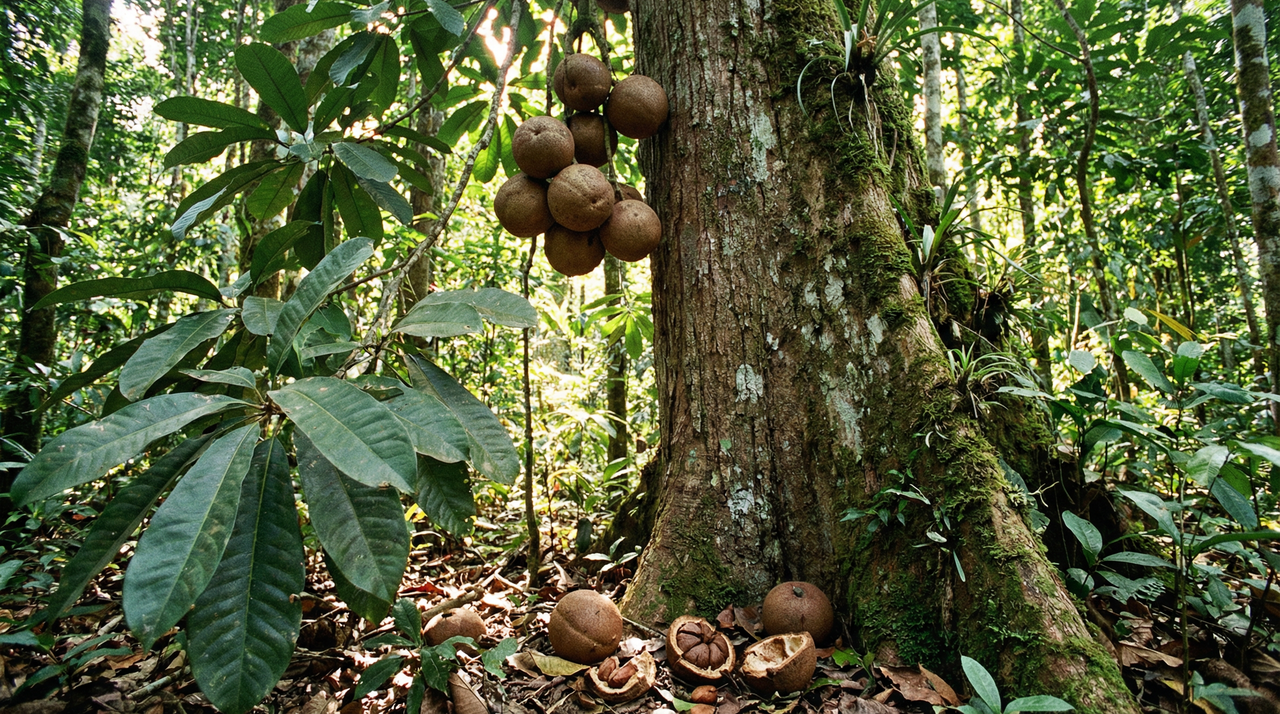
Every Brazil nut you've ever eaten came from a wild tree. Not a plantation, not an orchard, not a carefully managed grove somewhere in the tropics. A wild tree, growing in an intact stretch of Amazon rainforest, probably older than your grandparents and possibly older than your country. That fact stopped me cold the first time I really sat with it, because it cuts against almost everything we assume about how food works. We breed things, we domesticate them, we move them around the globe and optimize them until they fit our systems. The Brazil nut has simply refused. After decades of serious attempts, commercial plantations still can't reliably get these trees to fruit. This is because pollination depends on a single group of large-bodied orchid bees that won't show up unless the surrounding forest is intact enough to support the specific orchid species the female bees require for mating habitat.[1] The whole reproductive chain collapses without it.
What that means in practice is that every bag of Brazil nuts in every grocery store on earth is, in a very real sense, a forest conservation product. The trees that produced those nuts are still standing partly because the communities who harvest them have a direct economic reason to keep the forest standing too. I find that genuinely remarkable, and a little humbling. This isn't a plant you fit into your garden design. It's a plant that makes you reckon with the limits of design itself.
Brazil Nut Origin and History
There are trees, and then there are trees that make you reconsider the word entirely. The Brazil nut tree, known botanically as Bertholletia excelsa, is that second kind. Native to the Amazon rainforest basin and distributed across Brazil, Bolivia, Peru, Colombia, Venezuela, Ecuador, Guyana, Suriname, and French Guiana,[2][3][4] it belongs to a lineage that cannot be extracted from the forest that made it. The Spanish name, nuez de Brasil, or simply the castanha-do-pará in Portuguese, hints at the regional identities layered around this species over centuries. Understanding it starts with where it came from and how it lives.
Botanical Background and Ecology of Bertholletia excelsa
The Brazil nut tree is a massive emergent that rises 30 to 50 meters above the forest floor, occasionally pushing 60 meters, with a straight buttressed trunk reaching up to 2 meters in diameter and a broad umbrella-shaped crown that dominates the upper canopy.[5][6] I've worked with large tropical specimens in landscape design projects, and even seasoned clients struggle to mentally scale a tree like this. It is not a garden tree. It's a forest elder, and it behaves like one: seedlings grow just 0.5 to 1 meter per year, diameter adds a centimeter or so annually, and the tree doesn't begin to flower and fruit until it's at least 10 to 15 years old, sometimes longer.[7][8] Under the right wild conditions, it can live 400 to 1,000 years.[5] This is a creature of deep time.
Its requirements are equally exacting: consistent temperatures around 24 to 28°C, annual rainfall between 2,000 and 3,500 mm, no dry season stretching beyond three months, well-drained sandy-loam to acidic soils in the pH 4.5 to 6.5 range, and specific mycorrhizal fungal partnerships that seedlings cannot thrive without.[6][9] Regeneration depends on canopy gaps and an intact biological community. The species is polycarpic, meaning it flowers and fruits repeatedly across its long life without dying after reproduction,[10] but all of that productivity only unfolds within a very narrow set of ecological conditions. The result: commercial cultivation outside the Amazon basin remains extremely limited, and nearly every Brazil nut you've ever eaten came from a wild tree in a standing Amazonian forest.[11] The Bertholletia excelsa scientific name now carries Vulnerable status on the IUCN Red List, primarily because of ongoing deforestation and habitat fragmentation across its range.[12][13] That's not an abstract designation. It's a signal about the forest itself.
Traditional and Cultural Uses by Indigenous Amazonian Peoples
Long before European botanists arrived to assign a scientific name, indigenous Amazonian peoples -- the Yanomami, Kayapó, Ticuna, Kichwa, Tsimane, and many others -- had already built deep relationships with this tree across millennia.[14][15] The nuts were eaten raw, roasted, and pressed into oils and beverages; bark, leaves, and seeds were applied medicinally for wounds, inflammation, diarrhea, respiratory issues, and skin conditions.[16][17] The wood went into canoes, houses, tools, and ritual objects. The tree functioned as a cultural keystone -- woven into diet, economy, ceremony, and spiritual life -- not just a food source but an anchor of community identity and intergenerational knowledge.[15][18]
What strikes me about the indigenous management practices is how the ecological constraints of the tree shaped the harvesting ethics around it. Traditional knowledge emphasizes collecting nuts only after the heavy woody pods have fallen and opened naturally, letting the forest set the pace rather than forcing it.[19] That approach isn't just cultural tradition; it's sound ecology. The same principles underpin the regenerative gardening philosophy I try to bring to my own work. Portuguese explorers began documenting these practices in the 16th and 17th centuries, observing what indigenous communities had refined over countless generations; formal botanical classification followed in the early 19th century through the Flora Brasiliensis project.[20] The science caught up to the knowledge. It always does.
Visual Characteristics of the Brazil Nut Tree
Standing under a mature specimen is a genuinely humbling experience. The trunk rises straight and bare for much of its height, covered in gray bark that becomes deeply fissured with age, braced at the base by prominent buttress roots that flare outward into the forest floor.[5][21] Below ground, a taproot extends 10 to 15 meters, supplemented by spreading laterals that anchor and feed this giant across a wide footprint.[22] The leaves are alternate, simple, leathery, and oblong to lanceolate in shape, running 20 to 40 cm long, dark green on top and paler underneath with smooth edges.[23][24]
During the dry season, the canopy produces terminal clusters of large white-to-pinkish flowers reaching up to 10 cm across. What follows from those flowers is extraordinary: heavy, spherical, woody capsules that resemble cannonballs, 8 to 15 cm in diameter and weighing up to 2.5 kg, each holding 10 to 30 of the familiar triangular seeds we know as Brazil nuts, each kernel 3 to 5 cm long.[22][25] The whole package takes 14 to 15 months to mature from pollination to the moment it crashes to the forest floor.[5]
Fun Facts and Keystone Role in the Amazon Rainforest
The Brazil nut tree is one of the clearest examples I know of why biodiversity isn't just an ecological virtue but a practical necessity. Pollination depends exclusively on large-bodied euglossine bees -- the orchid bees -- whose body strength is the only thing capable of prying open the tightly coiled flower hood to reach the nectar inside. Seed dispersal falls almost entirely to agoutis, the fast-moving rodents that gnaw through those cannonball capsules and bury the seeds, often in canopy gaps where light allows germination.[26][27][28] Remove either partner, and the tree stops reproducing. It's nature's most intricate security system, and it helps explain why plantation attempts so consistently disappoint.
Those pods, by the way, are genuinely dangerous to stand under. Weighing over 2 kg and falling from 40 or 50 meters, they hit the ground with enough force to injure people and animals.[5] It's a detail that always gets a laugh in my presentations, but it also underscores something real: this is a tree operating at a scale where everything is larger and slower and more consequential. Its Vulnerable IUCN status reflects what's at stake when that scale gets disrupted by deforestation. Sustainable wild harvesting, guided by the ecological knowledge indigenous communities have held for generations, remains one of the most powerful economic arguments for keeping Amazonian forests standing.[12][19] The nut on your kitchen counter and the intact rainforest are not separate things. They never were.
Brazil Nut Varieties and Sourcing
Lack of Commercial Cultivars
If you're used to browsing nursery catalogs for named apple varieties or selecting a specific peach cultivar bred for your climate, Brazil nut will reframe your expectations entirely. There are no commercial cultivars of Bertholletia excelsa. No named selections, no improved strains on rootstock, no horticultural varieties bred for higher yield or compact habit.[29][30][31] Every brazil nut you've ever eaten almost certainly came from a wild tree. Over 90% of global production is still wild-harvested from Amazonian forests across Brazil, Bolivia, and Peru.[32][31]
The reason comes down to pollination. These trees depend entirely on large-bodied female orchid bees (Euglossini) to complete their reproductive cycle, and without those specific pollinators present, fruit set simply doesn't happen. I find it helpful to compare this to vanilla or some passionfruit species, where gardeners quickly discover that the wrong pollinator means zero harvest regardless of how healthy the plant looks. The difference is scale: we're talking about a tree that reaches 30 to 45 meters with a massive umbrella canopy, thriving in one of the most biodiverse ecosystems on the planet, where the pollination partnership evolved over millions of years. Replicating that in a plantation or a backyard is not a matter of technique; the ecological web isn't there.
Research by agricultural institutions such as Embrapa demonstrates meaningful variation across wild populations, and there are breeding programs investigating higher yields and disease resistance.[33][7] Nothing has translated into commercially available selections yet. The tree also demands well-drained sandy or loamy soils, a stable tropical temperature range of 22 to 30°C, and no waterlogging whatsoever[29][34] -- conditions that severely narrow where meaningful breeding trials can even be conducted outside the Amazon basin.
Where to Buy Brazil Nut Trees in the USA
A handful of specialized tropical nurseries in the US do carry live trees, though stock is limited and availability shifts seasonally.[35][36] My honest advice: call before you order, confirm the tree is actually in stock, and ask whether it was grown from recently collected seed. If you're considering importing seed or live material from South America directly, know that USDA-APHIS regulations apply and permits are required.[35][36] The species isn't CITES-listed, but that doesn't mean the import paperwork disappears.
Climatically, you're looking at USDA zones 10 to 11 as the realistic outdoor growing range in the US.[35][36][37] South Florida, Hawaii, and protected coastal sites in Southern California are about it. Even within those zones, the orchid bee barrier means that reliable nut crops from a home planting are genuinely unlikely without hand-pollination, which is painstaking work on a tree of this stature.[35][38][37] After seeing zone 10 specimens that looked magnificent but never produced, I now only recommend this tree for large conservation-minded properties or educational food-forest plantings where the harvest is beside the point.
And that's a legitimate reason to grow one. A brazil nut tree anchors conversations about Amazonian ecology, rainforest conservation, and the invisible web of dependencies behind the food we eat.[35][38] On a food-forest tour, it's the tree that stops people in their tracks and reframes what "edible landscape" even means.
Brazil Nut Propagation and Planting
Seed Characteristics and Propagation Methods
The first time I held a Brazil nut seed fresh from the capsule, I was struck by how substantial it felt. Each seed runs 5-8 cm long and can weigh between 170 and 250 grams, with a hard brown woody shell encasing a kernel that's typically bilobed or segmented around a central placental axis.[39][40] Think of a hefty, angular avocado pit wrapped in something closer to hardwood than shell. The seeds are monoembryonic, one embryo per seed, which matters for propagation because there's no polyembryonic insurance policy like you get with some mangoes.
What really governs every downstream decision in propagation is recalcitrance. These seeds cannot be dried or stored like conventional tree seeds; viability collapses rapidly if moisture drops below 20-30%, and there's no practical long-term dry storage option.[41][42] In the wild, agoutis gnaw open the pods and cache individual seeds in moist forest soil, effectively providing both scarification and ideal germination microsites.[43] For growers, that translates to one clear directive: sow immediately after extraction or hold seeds in breathable, high-humidity storage for the shortest possible time.
Seed is essentially the only practical propagation route. Cuttings root less than 20-30% of the time, grafting hovers around 20-50% success, and tissue culture remains experimental.[44] Seedlings won't come true to a parent tree because of the species' obligate outcrossing, but for most agroforestry or home plantings that genetic variability is perfectly acceptable.
Germination Timeline and Requirements
Fresh seeds sown into a sandy-loam mix at 1-2 cm depth, kept at 25-30°C and 80-90% humidity under partial shade, typically germinate in 15-30 days.[45][44] In my experience, seeds planted within a week of collection germinate noticeably better than those stored even a few days longer under imperfect conditions. The window is genuinely narrow.
The main enemy in humid germination environments is fungal rot. I lost more than one early batch before I switched to breathable propagation trays with excellent airflow and learned to keep media consistently moist without any saturation. The hard seed coat can impose some physical dormancy, which agoutis overcome by gnawing, but mechanical scarification is generally unnecessary and risks damaging a seed that's already working against you.[46] Consistent moisture, warmth, and vigilant humidity management without waterlogging will do more than any scarification technique. Protect trays from rodents; fresh Brazil nut seeds are irresistible to them.
Soil, Site Selection, and Sun Requirements
The brazil nut plant evolved on Amazonian terra-firme, the upland non-flooded forest on well-drained oxisols, and that origin shapes everything about its soil requirements. For managed planting, aim for deep sandy-loam or loamy-sand soil with at least 1.5-2 m of workable depth for seedlings, a pH between 5.0 and 6.5, and excellent drainage above all else.[47][45] Waterlogging and compaction promote Phytophthora root rot, which can be fatal in young trees. In heavier soils I've seen real benefit from deep sand amendments or raised planting mounds.
Native trees often colonize nutrient-poor soils through partnerships with ectomycorrhizal fungi that are essential for phosphorus uptake, so inoculating nursery seedlings with appropriate fungal partners is worth doing where possible.[48] Moderate organic matter (2-5%) supports those fungal relationships without over-fertilizing.
Young seedlings tolerate and actually benefit from 30-40% shade for the first 6-12 months; I always protect mine under shade cloth before any gradual acclimation to full sun. Mature trees are genuinely light-hungry, needing 6-8 hours of direct sunlight daily, and sudden full exposure on unacclimated seedlings causes leaf scorch that sets plants back significantly.[49] The species is strictly tropical, suited to USDA zones 10b-12, with essentially no frost tolerance and minimum temperature limits around -1 to -2°C for very brief exposure only.[5]
Spacing and Planting Technique
How to grow a brazil nut tree responsibly starts with honest math about scale. Mature trees reach 25-50 m in height with canopy spreads of 20-25 m and substantial buttress roots that colonize a wide radius.[50] Agroforestry systems typically space trees 10-15 m apart, supporting around 40-100 trees per hectare in mixed plantings; monocultures, which are rarely advisable ecologically, push to 15-20 m.[51] I've visited over-planted specimens that became crowded and unproductive within a few decades, which feels like a painful mistake given that these trees can live 500-1000 years and won't reach first nut production for 10-15 years from seed.[52]
Wide spacing isn't just about canopy room; it's about long-term pollination access for the large-bodied Euglossine orchid bees that are the tree's essential pollinators, and about giving buttress roots space to develop without competition. For home growers in southern Florida or Hawaii, the honest framing is that a Brazil nut tree in your landscape will likely be a magnificent specimen and conservation statement rather than a reliable nut crop. Plant it with that understanding, give it the space a centuries-old tree deserves, and the investment makes sense.
Brazil Nut Tree Care Guide
Growing a Brazil nut tree outside its native Amazon is one of the more humbling things a tropical horticulturist can attempt. This is a tree shaped by millions of years in a climate with 2,000 to 3,500 mm of annual rainfall and 80-90% humidity year-round.[24][53] Every care decision you make should be read against that baseline.
Water Requirements for Brazil Nut Trees
The watering story here splits clearly by age. Young seedlings in their first year need water every 2-3 days, enough to maintain 60-80% field capacity with shallow applications that wet only the top 5-10 cm; go deeper and you're inviting root rot before the root system can handle it.[54][55] Once a tree matures and its taproot reaches deep, you can shift to one or two deep soakings per week in well-drained soil, supplementing at roughly 20-30 mm per week during dry stretches to avoid the yield losses that can reach 30% when annual inputs drop below 1,500 mm.[56][50] I manage mature tropicals similarly to how I manage mango: deep, infrequent irrigation trains the roots downward rather than keeping them shallow and vulnerable.
Established trees can tolerate 4-6 weeks of water stress on those deep roots, but push past 8-10 weeks and you'll see hydraulic failure, wilting, leaf browning, and stunting that can take seasons to recover from.[57][58] Short seasonal flooding is a different matter; the tree tolerates 1-2 months of inundation via structural adaptations. Prolonged waterlogging, though, opens the door to Phytophthora and chlorosis that are genuinely hard to reverse.[59][60] Monitor soil moisture at both extremes; the ideal is consistently moist but never saturated.
Frost Tolerance and Cold Protection
This is the absolute limiting factor. Bertholletia excelsa evolved where frost has never occurred, which means its cold hardiness is essentially zero. Outdoor cultivation is realistically confined to USDA zones 10b-12, and even then microclimates matter.[23][61] Sustained temperatures below 15°C cause stress; anything at or below 0°C causes leaf scorch, bud injury, and shoot dieback in established trees, while seedlings and young plants are effectively killed by temperatures under 5°C.[45][51]
I learned this lesson through a Central Florida cold snap years ago when an unexpected night in the low 30s hit a row of tender tropical seedlings I was trialing. The plants that had 10-15 cm of organic mulch over the root zone and a layer of breathable frost fleece came through with minor leaf damage; the unprotected ones showed full necrosis by morning. For anyone attempting brazil nut in a marginal zone, south-facing slopes with thermal mass, heavy mulching, and frost cloth on hand during cold events are the non-negotiables.[62][24] Container culture with indoor overwintering is viable for young specimens, though the tree's eventual scale makes that a temporary strategy.[23][63]
Heat Tolerance and High-Temperature Management
Brazil nut is happiest between 24-32°C during the day and 18-24°C at night.[53][64] Push it above 35°C and the problems compound quickly: leaf scorch, wilting, premature fruit drop, and reduced photosynthesis, especially if drought stress is running concurrently.[65][66] The heat's impact on reproduction is the critical variable: temperatures above 35°C during the September-November flowering window reduce pollen viability and impair the orchid bee activity that the tree depends on, cutting viable fruit set significantly.[67] I've seen analogous Lecythidaceae relatives respond to even brief heat spikes by dramatically reducing pod set; it's not gradual, it's a cliff.
Management during hot dry spells means maintaining 50-70% shade for young trees, keeping organic mulch at 5-10 cm around the root zone, and upping irrigation to 20-40 mm per week.[68][5] The tree has some built-in physiological buffers including thick cuticles and stomatal regulation, but those only carry it so far without your help.
Feeding and Soil Fertility Management
Here's the paradox that trips up a lot of growers: this tree thrives naturally in the nutrient-poor, acidic soils of the Amazon basin (pH 5.0-6.5) by partnering with mycorrhizal networks that unlock phosphorus it couldn't otherwise access.[69][70] Yet in orchard settings it behaves as a heavy feeder needing real inputs. The key is working with the fungal network rather than against it. In my experience building Amazon-style guild soils, compost teas and well-rotted organic matter support that mycelial community far better than straight synthetic NPK, and the resulting canopy growth is visibly more even without the excessive vegetative flush that nitrogen overloading triggers.
In practice, that means splitting balanced NPK applications (roughly 100-200 g N, 50-100 g P, and 150-250 g K per tree) into 2-3 doses during the rainy season when uptake is highest, and leaning on compost and green manures as the base.[45][71] Don't skip boron, zinc, and potassium when nut development is the goal; those micronutrients make a measurable difference in set and quality.[72] I now routinely check young trees for zinc deficiency because I once watched a batch of nursery-started seedlings develop classic rosetting and stunted leaves that I initially mistook for a root problem. A targeted foliar zinc spray corrected it within weeks, faster than any soil amendment I tried. Test topsoil every 1-2 years and apply lime only if pH dips below 4.5; the mycorrhizae need that acidic range.[73]
Pruning, Maintenance, and Seasonal Rhythm
Brazil nut rewards restraint. The formative work happens in years 1-7: establish a single central leader and a balanced canopy structure, and that's most of the structural pruning you'll ever do.[45][51] After that, light annual or biennial removal of dead, diseased, or crossing branches improves airflow and can lift yields by 20-30%; heavier cuts actually reduce nut production and raise disease risk.[74] Time any pruning to the dry season (June-October in the Amazon) to minimize fungal entry points.[75] Unlike the fast-pruned fruit trees most of us cut our teeth on, this one punishes impatience.
On seasonal rhythm: there is no dormancy here. The tree grows year-round in its lowland tropical home, with flowering peaking October-November, fruit spending a full 14-15 months developing on the tree, and mature pods dropping naturally the following September-December.[76][77] I always compare that timeline to the longest-cycle fruits I've grown, like avocado, and even that feels quick by comparison. Mast years arrive every 2-4 years with 50-100 pods on a productive tree; most years are quieter.[78] For anyone growing in a non-native climate, tracking these phenological cues tells you when to ramp up water and fertility inputs, and when a missed fruit set might have more to do with a heat spike during bloom than anything you did wrong. Container specimens should be kept above 15°C through winter with bright indirect light and high humidity, moved indoors well before cold threatens.[5]
Brazil Nut Harvesting: Timing, Technique, and Yield
When to Harvest Brazil Nuts: The Long Phenological Cycle
The Brazil nut harvesting calendar starts with flowers that open between September and December, though regional climate variation can push that window anywhere from October through April.[79][50] From those flowers to a harvestable pod takes 14 to 18 months, which means the pods falling on the forest floor right now were pollinated well over a year ago.[79][80] Most pods drop during the drier months, with harvest peaks running December through March in much of the Amazon and sometimes extending from late November into May depending on location.[81][82] That long arc is only possible because of the Euglossine bees that pollinate the flowers, and even they only secure a fruit set of roughly 1 to 3% of blooms.[83] Sparse production is not a sign of a sick tree; it's the natural result of a highly specialized system. Seed-grown trees won't even enter this cycle for 10 to 15 years, sometimes longer; grafted specimens can begin fruiting in 5 to 10.[45][5] I always tell clients to think of this as a legacy tree, something you plant for the forest and for the people who come after you, not a crop you're counting on for next decade's harvest.
How to Harvest and Process Brazil Nuts Sustainably
The actual harvest method is beautifully simple, and it's one of the best real-world examples I know of letting the plant tell you when it's ready. You don't climb for Brazil nuts. You wait. When the pods are fully ripe, they turn from green to brown, dry out, and sometimes show slight splitting at the seam before gravity does the rest, sending a 1 to 2 kg woody capsule from 50 meters up to the forest floor.[81][79] Those pods are substantial objects, 9 to 15 cm across and packed with 10 to 25 individual nuts each.[50][79] Sustainable collectors gather only what's already on the ground, a practice that has been refined by indigenous harvesters over generations and remains the ethical standard today.[81][84] Once collected, the pods are cracked open and the nuts dried down to 10 to 15% moisture content, a process that takes two to four weeks and is essential to prevent mold and spoilage before storage.[84]
Expected Yields, Flavor, and Post-Harvest Storage
A healthy wild tree can yield 20 to 50 kg of nuts in a good year.[7] Plantation trees, isolated from the orchid bees and mycorrhizal networks they depend on, typically produce less than 10 kg, roughly 20 to 30% of wild yields.[7][85] That gap is exactly why I prioritize multi-species guilds with bee-supporting companion plantings in any tropical design that includes this tree. The ecosystem isn't scenery; it's the production system. For storage, I always tell people to treat Brazil nuts like high-value seeds: cool (10 to 20°C), slightly humid (60 to 70% relative humidity), breathable containers, and away from direct light.[84][86] Handle them right and they'll hold their rich, creamy flavor for up to six months; skip those basics and you'll be tasting rancidity well before that. The flavor itself, earthy and subtly sweet with a texture somewhere between macadamia and fresh coconut, is noticeably better from wild-harvested or biodiverse-forest sources than from plantation stock.[81][7] The forest delivers the flavor. That's not romanticization; it's just how this tree works.
Brazil Nut Preparation and Culinary Uses
Culinary Uses and Flavor Profile
Before anything else: only the seed kernels are edible.[87][23][88] The massive woody pod that houses them is not something you eat.[32] Once you're into the kernels, though, you're dealing with something genuinely special. Raw, they're creamy and mild with a gentle sweetness that sits somewhere between macadamia and fresh coconut.[89] Roast them and the whole profile shifts: deeper, buttery, almost caramelized.[90] I've found that roasted Brazil nuts paired with dark chocolate is one of those combinations that makes people stop mid-bite and ask what they're eating.
Getting the shells off is easier than most people expect if you use the traditional approach: sun-dry the pods for a couple of days after harvest, then briefly steam or boil them before cracking.[81] I've tried prying them open raw and it's genuinely miserable. A short steam makes the whole process go smoothly. From there the kernels work beautifully in nut butter, dairy-free milk, chopped into a vegan roast, blended into smoothies alongside tropical fruits, or pressed for culinary oil with a mild, nutty finish. The flavor is good enough to eat straight, but roasting first really earns its place.
Nutritional Value and Safety Considerations
Here's where I tell people to treat Brazil nuts more like a supplement than a trail mix. The selenium concentration in these kernels is extraordinary, and two to three nuts a day is genuinely sufficient for most people. Going well beyond that regularly puts you into toxicity territory, and storage matters too: kernels kept in warm, humid conditions can develop aflatoxin contamination, a fungal issue that poses real health risks. Buy from reputable sources, keep them cool and dry, and don't assume bigger is better with the handful size. The wild-harvested nuts from intact Amazonian forest tend to be the benchmark for both flavor and quality, which is one more reason sustainable sourcing isn't just an ethical talking point.
Traditional and Non-Food Uses
The kernels get most of the attention, but the tree itself has always offered more. The wood is dense and durable, historically used for construction, furniture, and boat-building, though commercial timber harvest is now regulated under CITES given the pressures already facing the species.[91] Bark fiber finds its way into traditional crafts, rope, and natural dyes, and the wood serves as fuel and charcoal in forest communities.[92] It's a complete picture of a tree that has sustained Amazonian peoples across generations, which makes protecting its habitat feel less abstract and a lot more urgent.
Brazil Nut Health Benefits and Medicinal Uses
Few foods deliver as concentrated a nutritional punch in as small a package as a single Brazil nut. We're talking about a food where one kernel can do what a full multivitamin struggles to match on a single mineral. That's extraordinary, and it also comes with real responsibility around dosage.
Nutritional Profile of Brazil Nuts
The selenium story is the headline here. A single Brazil nut weighing around 5 grams typically provides 68-96 µg of selenium,[93][94] which already clears the adult daily requirement of 55 µg on its own. One nut. The variability matters, though: selenium content is directly tied to the selenium levels in Amazonian soils, so a nut from mineral-rich ground can carry significantly more than that range suggests. I think about this the same way I think about iron in my spinach or calcium in my kale -- the soil does the work, and nutrient density is never fixed. It's a reminder that where food grows is as important as what food grows.
Beyond selenium, the macro profile is genuinely impressive. Per 100 grams, Brazil nuts deliver 659 kcal, 67 grams of fat (predominantly unsaturated, with 25.7g monounsaturated and 24g polyunsaturated), 14.3 grams of protein, and 7.5 grams of fiber.[93] The magnesium alone -- 376 mg per 100g -- puts them among the richest food sources available, alongside strong phosphorus (725 mg) and copper (1.74 mg).[93] Vitamin E comes in at 5.65 mg alpha-tocopherol, with thiamin, folate, ellagic acid, flavonoids, phytosterols, and carotenoids rounding out the picture.[93][95]
When I crack fresh, well-stored nuts the texture is rich and buttery with a subtle earthiness; stale ones lose that vibrancy entirely and carry higher oxidation risk given all those unsaturated fats. Refrigeration or freezing in an airtight container is the right call. Moderate roasting at 150-160°C preserves most of the selenium, fats, and minerals while trimming some heat-sensitive thiamin,[96][97] which is a reasonable trade for improved flavor and safety. And if there's any history of tree-nut allergy in your household, know that Brazil nut is one of the top eight allergens in the US: the primary culprit is Ber e 1, a heat-stable 2S albumin protein that can trigger severe IgE-mediated reactions including anaphylaxis.[98] In my client work, if there's any nut-allergy history at all, we skip Brazil nuts and look to sunflower seeds for selenium instead.
Key Phytochemical Compounds in Brazil Nut
The kernel's phytochemical profile goes well beyond selenium. The seeds concentrate ellagic acid, gallic acid, catechin, epicatechin, flavonoids, and condensed tannins, all contributing to high measured antioxidant capacity.[99][100] This is similar to what you see in antioxidant-dense fruits like pomegranate -- familiar compounds doing familiar protective work, just concentrated in a fat-rich matrix here rather than a juicy pericarp.
The selenium in Brazil nuts occurs primarily as selenomethionine, a highly bioavailable form that gets incorporated into key selenoproteins including glutathione peroxidase and thioredoxin reductase, enzymes that neutralize reactive oxygen species.[101][102] Rounding things out are beta-sitosterol, squalene in the seed oil, tocopherols, and secondary metabolites including alkaloids, saponins, and terpenoids.[96][103] Dry-season stress, much like heat stress in my Florida gardens, appears to push phenolic levels 20-30% higher as the tree mounts its chemical defenses -- a reminder that environmental pressure shapes nutritional value in ways we're still mapping.
Medicinal Research and Traditional Uses
The mechanistic story starts at the cellular level: selenium activates the Nrf2 antioxidant pathway while simultaneously dampening NF-κB-driven inflammation, reducing markers like TNF-α and IL-6.[99][101][96] In vitro work shows DPPH free-radical scavenging, anti-inflammatory effects including reduced paw edema, and antimicrobial activity against Staphylococcus aureus at MIC values of 0.5-2 mg/mL.[104][105][106] Cholesterol-lowering and preliminary anti-cancer signals appear in cell studies too, driven by the polyunsaturated fats and tocopherols. Promising, but these are petri dishes, not patients.
The human evidence is where things get genuinely interesting and appropriately modest. Small clinical trials show that eating 1-2 Brazil nuts daily for 8-12 weeks meaningfully raises plasma selenium levels, including in hemodialysis patients who are notoriously difficult to supplement, with associated improvements in blood glucose and blood pressure among those who were selenium-deficient going in.[107][108] These trials are small and shouldn't be extrapolated into sweeping disease-prevention claims. What they do confirm is that food-based selenium delivery from Brazil nuts works efficiently in humans. Indigenous Amazonian communities including the Kayapo and Yanomami have long known this tree offers more than just food -- bark decoctions and leaf infusions have been used for diarrhea, fever, respiratory complaints, and snakebites across generations.[109][110] Choosing certified or community-harvested nuts honors that relationship while supporting the forest systems that make this tree possible at all.
Safety Considerations for Brazil Nuts
Properly processed and eaten in moderation, Brazil nuts are safe for most adults. The paradox is that their most celebrated nutrient is also the one that can hurt you. Selenium content can exceed 400 µg in a single nut from high-selenium soils, and the tolerable upper intake level sits at around 400 µg per day total.[111][112][113] Selenosis -- hair loss, brittle nails, GI distress, fatigue, and neurological symptoms -- is the real-world outcome of chronic excess. One or two nuts a day covers your requirement with essentially zero risk for most adults; more than that and you're pushing into toxicity territory with very little margin for error.
Allergy is the second major concern. Ber e 1, the primary allergen, makes up as much as 47% of the soluble protein in the seed, survives heat processing, and can cause anaphylaxis even in small exposures, with cross-reactivity to other tree nuts on top of that.[114][115] Treat this with the same seriousness as any major food allergen. Storage rounds out the risk picture: warm, humid conditions invite Aspergillus and aflatoxin contamination, which carries carcinogenic and liver-damage risks.[116] Roasting at 180°C can cut aflatoxin levels by 50-80%,[117] which is one more reason to prefer roasted over raw if your sourcing isn't airtight. Selenium can also interact with anticoagulants, statins, and thyroid medications, so if you're managing any of those, it's worth a conversation with your prescriber before making Brazil nuts a daily habit.[111][118]
Brazil Nut Pests and Diseases
The honest truth about Brazil nut health is that fungal pathogens are the dominant threat, and most of the serious ones are made far worse by one thing: the wrong site. I've come to think of disease management for long-lived tropical trees as something you solve at planting time, not after a problem shows up, and Brazil nut makes that principle impossible to ignore.
Major Fungal Diseases Affecting Brazil Nut Trees
Seedlings are the most vulnerable stage, and the culprits are familiar to anyone who's grown moisture-sensitive tropicals: Fusarium solani and Phytophthora spp. can knock out up to 50% of young trees in poorly drained soils.[119][120][121] I site every humidity-prone species on natural slopes or raised, amended beds for exactly this reason. Phytophthora thrives where water lingers, and no amount of fungicide compensates for chronically wet roots.
As trees mature, the disease picture shifts rather than disappears. Leaf spots from Cercospora bertholletiae, Cladosporium, and Mycosphaerella spp., along with anthracnose from Colletotrichum affecting leaves and pods, chip away at photosynthetic capacity and yield but rarely kill the tree outright.[119][122] The more serious threat to mature specimens is Ceratocystis fimbriata, which causes lethal wilt, and wood-decay fungi like Ganoderma that compromise structural integrity over time.[123][119] Bacterial issues like Pseudomonas syringae twig dieback exist but are minor footnotes next to fungal pressure; rust fungi have also been noted on leaves and pods but remain genuinely understudied for this species.[119][120]
What I find compelling is that the tree isn't defenseless. Wild Amazonian ecotypes carry thick bark, latex production, and phenolic compounds that confer real tolerance to multiple pathogens, backed by the genetic diversity you only get from native stands.[120][124] Disease pressure is dramatically higher in monoculture plantations than in biodiverse forest stands, with humidity, waterlogging, and flooding acting as the key environmental triggers that flip the balance toward pathogens.[125][119] Trees I've observed growing among diverse companions show noticeably less leaf spot and wilt than isolated specimens. That's not coincidence; it's ecological buffering in action.
Management starts cultural: drainage improvements, raised beds, and integration into agroforestry systems with shade companions to moderate humidity. Phosphonate fungicides can target Phytophthora when needed, and selective pruning manages anthracnose and localized infections.[126][127] In my practice, I reach for cultural methods first and treat fungicide as a last resort, partly because the mycorrhizal partnerships this tree depends on are themselves fungal. No standardized resistant cultivars exist yet because the 10-15 year juvenile period has made formal breeding painfully slow; Embrapa and similar programs are selecting for disease tolerance from wild germplasm, but results take decades.[128][129] Until then, I source seed from healthy, vigorous wild-type mother trees and treat that selection process as the first line of disease resistance. Climate change adds a long-horizon wildcard here, since shifting Amazonian conditions may expand pathogen ranges in ways we can't fully predict yet.[130] Building soil health and biodiversity now is the best hedge I know against whatever that brings.
Insect Pests and Management Strategies
While the disease literature is thick, it's actually the insect pests that growers encounter most tangibly in the field. Leaf-cutting ants (Atta spp.) are relentless defoliators in plantation settings; the Brazil nut weevil (Conotrachelus spp.) and related beetles damage bark, pods, and seeds; and the mahogany shootborer moth (Hypsipyla grandella) attacks developing shoots. Moniliophthora perniciosa, better known from cacao but present here too, rounds out the picture.[131][132] Together these reduce growth, yield, and longevity in ways that compound quietly over years.
Integrated pest management is the standard approach, and I'd rather prevent pressure through guild diversity than chase individual pests reactively. A dense polyculture that mimics Amazonian forest structure disrupts ant foraging trails, complicates weevil host-finding, and supports the predatory insects and birds that keep populations in check. The same plantation vulnerability that amplifies brazil nut mold and fungal disease creates the conditions where these insect pressures also escalate, which tells you something important: the answer to most of this tree's health challenges points back to the same place, keeping it embedded in a complex, biologically rich system rather than standing it alone.
Brazil Nut in Permaculture Design
Few trees in the world illustrate permaculture's core principle of stacking functions quite like the Brazil nut, but few also illustrate how difficult it is to replicate nature's complexity outside the system that made a species possible. This is not a plant you slot into a food forest and walk away from. Its permaculture story is really a story about ecological interdependence so intricate that designing around it requires humility first and plant selection second.
Ecosystem Functions and Keystone Role
In its native Amazonian context, Bertholletia excelsa is a true keystone species: an emergent canopy giant that structures habitat, sequesters carbon, supports wildlife, and produces one of the most calorie-dense foods the forest offers.[133][24] The massive canopy hosts orchids and bromeliads as epiphytes, creating microhabitats that push biodiversity well beyond what the tree itself contributes.[134] Below ground, it forms arbuscular mycorrhizal associations with Glomeromycota fungi that allow it to mine phosphorus from notoriously nutrient-poor tropical soils, and those fungal networks may extend benefits to companion plants growing alongside it in agroforestry systems.[135][136] Leaf litter decomposition and deep lateral roots that spread 10-15 meters contribute to organic matter accumulation and erosion control, exactly the kind of soil-building function permaculture designers try to engineer.[24]
Seed dispersal is handled almost entirely by agoutis, the large rodents that gnaw through the woody capsules, cache individual seeds, and forget enough of them to drive forest regeneration.[137][134] That agouti-Brazil nut tree relationship is one of the more elegant examples of mutual dependency in the rainforest. Without agoutis, regeneration collapses. Without Brazil nuts, agoutis lose a primary food source. It's the kind of reciprocal ecology that permaculture tries to cultivate, but typically cannot manufacture.
Pollination presents the most significant permaculture design constraint. Flowers are pollinated exclusively by large-bodied euglossine bees (orchid bees from Euglossa, Eulaema, and Eufriesea) and some carpenter bees, all of which need significant body strength to force open the flower's lid-like hood and perform buzz pollination to release pollen.[138][139][140] The tree is strongly self-incompatible, requiring cross-pollination, and natural fruit set runs only 1-5% even in intact forest.[141][142] Habitat fragmentation cuts that success rate by up to 50% by reducing bee diversity, and the narrow environmental window for bee activity (optimal above 28°C, with 70-90% humidity) leaves little room for error.[143] In my work with tropical guilds, I've seen how missing just one keystone relationship collapses the whole system. Without those large bees, even climatically perfect plantings sit barren, which is why I rarely recommend this species for small-scale permaculture unless a serious hand-pollination commitment is built into the plan from day one. Manual pollination is technically possible, but it's labor-intensive and still tends to fall short outside intact forest contexts.[144][145] The one bright side: unlike many large tropical trees, Brazil nut carries essentially no invasive risk outside the Amazon precisely because this pollinator dependency acts as a natural brake on naturalization.[23]
Forest Layer and Guild Integration
In forest garden design, Brazil nut occupies the emergent canopy layer, and that designation isn't figurative. These trees reach 30-50 meters with a broad umbrella crown, pronounced buttress roots, and a lateral root system spreading 10-15 meters from the trunk.[29][146] They are not competing with your avocados for canopy space; they are defining the canopy above them.
The slow growth and 15-20 year wait before first fruiting are the real design constraints.[147][148] I always tell clients who ask about long-term canopy trees that even a mango or a productive avocado feels slow at four to seven years to yield. Committing a site to something that won't fruit for fifteen to twenty is a different kind of patience, one that requires you to plan the whole system around faster-yielding layers first and treat this tree as a decades-long investment. Young trees actually prefer partial shade, which creates a nice design opportunity to establish them beneath pioneer canopy and then let them punch through as the pioneers are cycled out.
Where climate and scale allow, the guild potential is genuine. Mature Brazil nut creates filtered canopy shade suited to cacao and other tropical fruit trees in the understory, its mycorrhizal networks may benefit companions, and its year-round leaf litter builds organic matter continuously.[149][136] Agroforestry trials in the Amazon have demonstrated this stratified system works well, though replicating it elsewhere means confronting everything discussed above about pollinators and climate.
Climate Requirements and Cultivation Zones
Brazil nut is native to Amazonian terra firme forests in the Köppen-Geiger Af tropical rainforest zone, with some extension into Am and Aw climates, generally at elevations below 300 meters.[150][151] That native range translates directly into its cultivation requirements: USDA zones 10b-12, zero frost tolerance, minimum temperatures around 15°C (59°F) before growth stalls or damage occurs, and optimal conditions between 25-32°C (77-90°F).[152][34][153] The no-frost requirement is the first filter that eliminates most readers. Cold is not a recoverable variable with this species.
Humidity and rainfall requirements are just as strict. The tree wants 1500-3500 mm of annual rainfall, ideally above 2000 mm, with 70-100% humidity and a tolerable dry season of two to three months at most.[150][154] Soils should be well-drained, slightly acidic (pH 5.5-6.5), and reasonably rich in phosphorus and calcium; waterlogged sites are a hard no.[5] In the United States, outdoor cultivation is realistically limited to southern Florida (Miami-Dade and similar zone 10b-11 microclimates) and parts of Hawaii, with experimental plantings at sites like Fairchild Tropical Botanic Garden representing the cutting edge of what's been attempted.[155][154] Those Florida microclimates can meet the temperature and rainfall thresholds, but the absence of native euglossine bees has consistently limited nut set in every experimental planting I've reviewed. The climate box gets ticked; the pollinator box does not. Trials in Costa Rica and Indonesia tell a similar story: promising conditions, disappointing yields.[156][157] Where someone is genuinely determined to try, an agroforestry approach in a diverse tropical system will always outperform monoculture, and greenhouse cultivation with controlled conditions is sometimes the only way to get consistent results at all.[45] For most permaculture designers, the honest assessment is that this tree is best celebrated for the Amazonian ecology it anchors rather than recruited as a reliable food forest producer outside that context.
The Tree That Reminded Me What "Long-Term Thinking" Actually Means
I've never grown a Brazil nut that produced. I probably never will, this far outside the Amazon. But the first time I held one of those woody capsules, the size of a softball and heavy as a stone, I stopped thinking about my own food forest timeline entirely. Five hundred years. A thousand years. Some of these trees were already ancient when the first permaculture book was written. That kind of patience reframes everything I think I know about design.
Sources 157
- Brazil nut (Bertholletia excelsa Bonpl.) in agroforestry systems of Central Amazonia -- Ciência Florestal ↩
- Bertholletia excelsa ↩
- Brazil Nut Tree - Bertholletia excelsa ↩
- Bertholletia excelsa ↩
- Bertholletia excelsa ↩
- Ecology of the Brazil Nut Tree in Amazonia ↩
- Bertholletia excelsa - Kew Science ↩
- Brazil Nut Tree Cultivation and Ecology - FAO Report ↩
- Mycorrhizal Fungi and Brazil Nut Seedlings ↩
- Kew Royal Botanic Gardens - Plants of the World Online ↩
- Bertholletia excelsa - USDA Forest Service ↩
- IUCN Red List - Bertholletia excelsa ↩
- Bertholletia excelsa ↩
- Ethnobotany of the Brazil Nut Tree ↩
- Traditional Knowledge and Management of Bertholletia excelsa in the Brazilian Amazon ↩
- Brazil Nut (Bertholletia excelsa) - Ethnobotany and Traditional Uses ↩
- Traditional uses and pharmacological properties of Bertholletia excelsa in Amazonian folk medicine ↩
- Bertholletia excelsa ↩
- Sustainable Harvesting of Brazil Nuts ↩
- Flora Brasiliensis, seu Enumeratio plantarum ad normalam dialecti Brasiliensis ↩
- Flora of the Americas (FNA) Volume 10 & 11 ↩
- Bertholletia excelsa - Useful Tropical Plants Database ↩
- Bertholletia excelsa - USDA Plants Database ↩
- Bertholletia excelsa - Kew Royal Botanic Gardens ↩
- The Brazil Nut Tree: Bertholletia excelsa ↩
- Pollination Ecology of Bertholletia excelsa in the Amazon ↩
- Seed Dispersal by Agoutis and Brazil Nut Tree Regeneration ↩
- Brazil Nut Tree as a Keystone Species in Amazonian Forests ↩
- Bertholletia excelsa - Wikipedia ↩
- Brazil Nut Production and Conservation - FAO ↩
- Domestication and Conservation of the Brazil Nut Tree (Bertholletia excelsa) in the Amazon ↩
- Brazil nut - Wikipedia ↩
- Genetic Diversity of Berthololletia excelsa in the Amazon - ResearchGate ↩
- Bertholletia excelsa - Useful Tropical Plants ↩
- Brazil Nut Trees: Where To Grow, Care, Facts ↩
- Bertholletia excelsa (Brazil Nut) | Fruit and Nut Trees | Vivero Park ↩
- Bertholletia excelsa Brazil Nut PFAF Plant Database ↩
- Brazil Nut - Bertholletia excelsa | University of Arizona Campus Arboretum ↩
- PROTA: Bertholletia excelsa ↩
- Stapelfeldt et al. (2005). Fruit development and abscission in Bertholletia excelsa. Annals of Botany ↩
- Recalcitrant Seeds: Bertholletia excelsa ↩
- Seed Storage of Bertholletia excelsa ↩
- Ecology and Dispersal of Brazil Nut Seeds ↩
- Propagation of Bertholletia excelsa: A Review ↩
- Brazil Nut (Bertholletia excelsa) Production and Management ↩
- Seed Storage of Bertholletia excelsa ↩
- Soil Requirements for Brazil Nut (Bertholletia excelsa) Cultivation ↩
- Ecophysiology of Brazil Nut Trees in the Amazon Basin ↩
- Light requirements for seed germination and seedling establishment of the Brazil nut tree (Bertholletia excelsa) in the Amazon rainforest ↩
- Brazil Nut Production and Marketing ↩
- Cultivation of Bertholletia excelsa ↩
- FAO: Non-Wood Forest Products - Brazil Nuts ↩
- University of Florida IFAS Extension - Brazil Nut Cultivation ↩
- Brazil Nut Tree Cultivation Guide ↩
- Propagation of Bertholletia excelsa Seedlings ↩
- Missouri Botanical Garden Plant Finder ↩
- Drought Tolerance in Bertholletia excelsa: Implications for Amazon Forest Dynamics ↩
- Physiological Responses of Brazil Nut Trees to Seasonal Water Stress ↩
- Flood Tolerance in Amazon Trees - Kew Gardens ↩
- Brazil Nut Tree Care Guide ↩
- Royal Horticultural Society - Bertholletia excelsa ↩
- Frost Sensitivity in Tropical Hardwoods ↩
- University of Florida IFAS Extension - Tropical Trees ↩
- Ecological Requirements of Bertholletia excelsa in the Amazon ↩
- Climate Change Impacts on Brazil Nut (Bertholletia excelsa) in the Amazon ↩
- Physiological Responses of Bertholletia excelsa to Drought and Heat Stress ↩
- Impacts of Heat Stress on Pollination and Fruit Set in Brazil Nut Trees ↩
- Agroforestry Systems for Brazil Nut Production ↩
- Soil Fertility in Amazonian Agroforestry Systems ↩
- Mycorrhizal Associations in Bertholletia excelsa ↩
- Embrapa - Manejo Nutricional da Castanha-do-Brasil ↩
- Nutrient Requirements and Management for Bertholletia excelsa in the Amazon ↩
- Brazil Nut (Bertholletia excelsa) Cultivation and Management ↩
- Cultivation of Bertholletia excelsa in the Amazon ↩
- Orchard Management of Bertholletia excelsa in the Amazon ↩
- Phenology of Bertholletia excelsa in the Brazilian Amazon ↩
- Ecological Studies on Bertholletia excelsa Flowering and Fruiting ↩
- Life History and Demography of the Brazil Nut Tree in Amazonian Forests ↩
- Bertholletia excelsa: Brazil Nut Tree Biology ↩
- Phenology of Bertholletia excelsa in the Amazon ↩
- Brazil Nut Production and Harvesting ↩
- Brazil Nut (Bertholletia excelsa) - Fruiting and Harvest ↩
- Phenology of Bertholletia excelsa in Amazonia ↩
- Brazil Nut Harvesting and Processing Guide ↩
- Growth and Yield of Bertholletia excelsa in Plantations - Journal of Tropical Ecology ↩
- Post-Harvest Storage of Tropical Nuts ↩
- Missouri Botanical Garden Plant Finder ↩
- FAO - FAO Species Catalogue ↩
- Flavor Profile Analysis of Bertholletia excelsa Nuts ↩
- Sensory Evaluation of Brazil Nuts: Raw vs. Roasted ↩
- Timber Uses and Conservation of Bertholletia excelsa ↩
- Non-Wood Forest Products of the Brazilian Amazon ↩
- USDA FoodData Central - Brazil nuts ↩
- Selenium in Brazil Nuts: A Systematic Review ↩
- Phenolic Compounds and Antioxidant Capacity of Brazil Nut ↩
- Effects of Roasting on Nutrient Composition of Brazil Nuts ↩
- Storage Stability of Brazil Nuts ↩
- Brazil Nut Allergens: Proteins and Clinical Relevance ↩
- Phytochemical Composition and Biological Activities of Brazil Nut ↩
- Bioactive Compounds in Bertholletia excelsa: A Review ↩
- Selenium from Brazil Nuts and Selenoprotein Functions ↩
- Selenium Content and Speciation in Brazil Nuts ↩
- Nutritional Composition and Bioactive Compounds in Brazil Nuts ↩
- Antioxidant and antimicrobial activities of Bertholletia excelsa shell extracts ↩
- Anti-inflammatory and analgesic activities of the ethanolic extract of Bertholletia excelsa ↩
- Pharmacological Properties of Brazil Nut Seed Oil ↩
- Brazil nuts and associated health benefits: A review ↩
- Effect of Brazil nut supplementation on plasma selenium concentrations in hemodialysis patients ↩
- Ethnobotany of the Kayapo Indians of Brazil ↩
- Ethnobotany of Bertholletia excelsa in the Brazilian Amazon ↩
- NIH Selenium Fact Sheet ↩
- Brazil Nuts and Selenium Toxicity ↩
- Selenium Accumulation and Speciation in Brazil Nuts ↩
- Ber e 1, the Major Allergen of Brazil Nut ↩
- Tree Nut Allergens ↩
- Evaluation of safety and quality of Brazil nuts including aflatoxin profile ↩
- Aflatoxin reduction in nuts by roasting - systematic review and meta-analysis ↩
- Selenium Intake During Pregnancy ↩
- Fungal Pathogens of Bertholletia excelsa in the Amazon ↩
- Disease Resistance in Brazil Nut Trees: A Review ↩
- Phytophthora Root Rot in Tropical Trees Including Bertholletia excelsa ↩
- Amazon Rainforest Pathogens Affecting Non-Timber Species ↩
- Ceratocystis Wilt in Tropical Trees ↩
- Genetic Resistance to Fungal Pathogens in Bertholletia excelsa ↩
- Review of Brazil Nut Tree Health Management in the Amazon ↩
- Brazil Nut (Bertholletia excelsa) Production and Management ↩
- Fungal Diseases of Tropical Trees: Focus on Anthracnose ↩
- Genetic Diversity and Breeding Potential of Brazil Nut (Bertholletia excelsa) ↩
- EMBRAPA Brazil Nut Research Program ↩
- Bertholletia excelsa - USDA Forest Service ↩
- Pests and Diseases of Brazil Nut Trees ↩
- Diseases of Bertholletia excelsa ↩
- Ecological Role of Brazil Nut Trees in the Amazon - Smithsonian Tropical Research Institute ↩
- Brazil Nut Tree Ecology - Kew Gardens ↩
- Mycorrhizal associations of Bertholletia excelsa in the Amazon ↩
- FAO: Brazil Nut Agroforestry Guidelines ↩
- Seed Dispersal and Pollination Biology of Bertholletia excelsa ↩
- Pollination Ecology of the Brazil Nut (Bertholletia excelsa) ↩
- Floral Morphology and Pollination in Brazil Nut ↩
- Orchid Bees and Brazil Nut Pollination - Smithsonian Tropical Research Institute ↩
- Self-Incompatibility in Bertholletia excelsa ↩
- Pollination Ecology of the Brazil Nut (Bertholletia excelsa) ↩
- Habitat Fragmentation Effects on Brazil Nut Pollination ↩
- Enhancing Pollination in Brazil Nut Orchards ↩
- Manual Pollination Techniques for Brazil Nut Trees ↩
- Root system architecture of Brazil nut trees ↩
- Brazil Nut Tree Cultivation - USDA Forest Service ↩
- Bertholletia excelsa - Kew Science Plants of the World Online ↩
- Agroforestry with Brazil nut in Amazonia: Stratification and sustainability ↩
- Brazil Nut Tree Habitat and Climate Preferences - FAO Report ↩
- ncbi.nlm.nih.gov ↩
- Climate Requirements for Brazil Nut (Bertholletia excelsa) - FAO ↩
- Growing Exotic Trees in Florida - University of Florida IFAS Extension ↩
- Bertholletia excelsa (Brazil Nut) ↩
- Horticultural Evaluation of Bertholletia excelsa in Florida ↩
- Kew Royal Botanic Gardens - Bertholletia excelsa ↩
- FAO - Brazil Nut Cultivation Challenges ↩