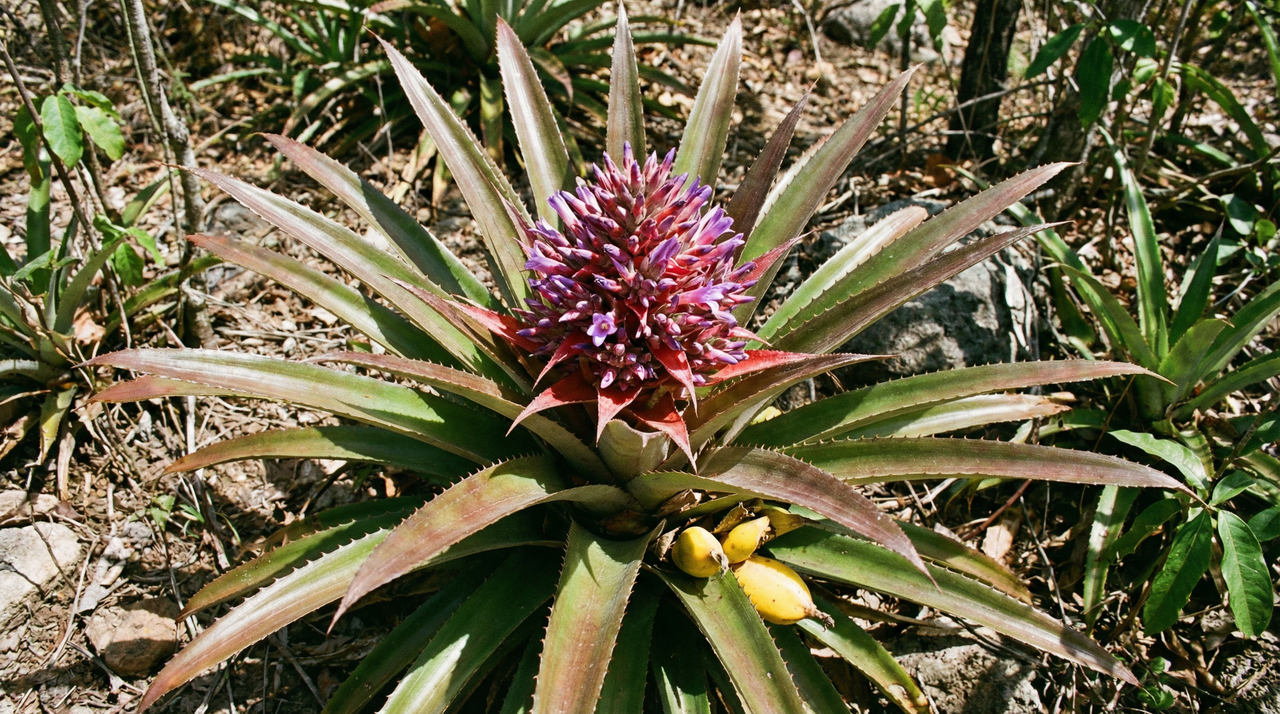
Nobody expects a plant with spines sharp enough to draw blood to also be producing fruit you can eat straight off the rosette. That's the contradiction at the heart of Bromelia pinguin, and it's the reason I keep coming back to it. Most people, when they hear "bromeliad," picture those cheerful little epiphytes perched on driftwood at the garden center, the ones that collect rainwater in their cups and never touch the ground. Bromelia pinguin has nothing to do with that world. It's terrestrial, aggressively armed, and tough in a way that most ornamental bromeliads simply aren't, and it produces clusters of small, tart, orange-red fruits that taste like a pineapple that skipped finishing school.
This plant is a wild relative of the grocery-store pineapple, native to seasonally dry forests from Mexico through Central America, and indigenous communities across the region have been eating it, weaving with its fibers, and using its enzymes medicinally for centuries.[1] The same bromelain-like compounds that make the unripe fruit an irritant are, when handled correctly, the reason it's earned a place in traditional medicine. Respect the spines, wait for the fruit to ripen, and you've got one of the most resilient, multi-functional plants you can put in a tropical food forest.
Bromelia pinguin Origin, History, and Traditional Uses
Botanical Background and Native Range
The first time I encountered Bromelia pinguin in person, it was tucked into a display at a Florida botanical garden beneath a hand-lettered sign reading "wild pineapple." I stood there for a solid minute just comparing it mentally to the grocery-store pineapple I grow at home and to the epiphytic bromeliads I hang in my vertical garden structures. Same family, wildly different personality. That tension between familiar and surprising is exactly what makes this plant worth understanding from the ground up.
Bromelia pinguin is a terrestrial bromeliad native to an enormous swath of the Americas, ranging from southern Mexico through Central America, the Caribbean, and northern South America into Brazil.[2][3] It's also naturalized in southern Florida, where it turns up in pine rocklands, tropical hammocks, coastal scrub, and disturbed roadsides.[4][5] Documented in major collections at Kew, the Missouri Botanical Garden, USDA PLANTS, and Tropicos, this is a species with serious botanical credentials.[6][7]
Its lifecycle is something growers need to understand before they fall in love with it. Each rosette is monocarpic, meaning it flowers once and then dies, but the plant itself persists through a continuous cycle of offsets and clump formation.[8][9] Individual rosettes take several years to reach reproductive maturity before flowering.[10][11] It's also a wild relative of the cultivated pineapple (Ananas comosus), producing smaller, more fibrous, decidedly tart fruits that have never made it into commercial production.[12]
Physical Description and Visual Characteristics
Picture a low, dense rosette of stiff, linear-lanceolate leaves reaching up to a meter long and armed along their margins with sharp, hooked spines. The leaves are green to gray-green, arranged in a funnel shape that collects both rainwater and, as I've noticed maintaining similar plants in my own landscape, a surprising accumulation of organic debris. That funnel isn't just structural; it becomes a miniature compost pocket supporting small invertebrates, which is exactly the kind of accidental ecosystem service that permaculture designers love to document. Plants top out around half a meter to one meter in height before the inflorescence adds another meter on top.[6][13]
The root system is fibrous and adventitious, built for shallow anchorage in sandy or rocky soils rather than deep moisture seeking.[8] Leaf size also shows real plasticity: in humid sites leaves stretch larger and thinner, while drier conditions produce shorter, thicker foliage.[14] When it finally flowers, the show is worth the wait. A dense, erect cylindrical spike bearing red to purple bracts and small white flowers emerges from the rosette center, followed by a cluster of tart, pineapple-scented fruits that ripen from green through orange-red.[15][16]
Traditional and Cultural Significance
Indigenous peoples across the plant's native range have built a remarkably complete relationship with Bromelia pinguin. Taino communities in the Caribbean, Maya in Central America, and Guarani in South America have all used it for food, medicine, and fiber: the acidic fruits eaten fresh or fermented into beverages and preserves, the leaves and fruit applied medicinally for digestive disorders, wounds, inflammation, and urinary complaints, and the strong leaf fibers twisted into cordage, nets, baskets, and thatch.[17][18] I've worked with sisal and yucca fibers in garden projects over the years, and the tensile strength that early European observers recorded for piñuela cordage is entirely plausible to me given what plant-fiber cordage can do when properly processed.
In Mayan tradition the plant also carried symbolic weight as an emblem of resilience, appearing in protection rituals and purification ceremonies.[19] Carl Linnaeus formally described it in Species Plantarum in 1753, and living specimens reached European botanical gardens including Kew during the 18th century, which is how a plant from the tropical Americas ended up embedded in the history of Western science.[20][21] Today its primary role outside its native range is ornamental, and the IUCN classifies it as Least Concern, a reassuring status for a plant with this kind of ecological and cultural footprint.[22]
Fun Facts About Wild Pineapple
The fruit packs genuine nutritional value: 20 to 30 mg of vitamin C per 100 grams, dietary fiber, antioxidants, and the proteolytic enzyme bromelain, all delivering a flavor that's sweeter than you'd expect but noticeably more tart than a supermarket pineapple.[23] It's served as a famine food across parts of its range, which tells you something about how seriously communities have relied on it.[24] As a pioneer species in secondary growth it supports hummingbirds drawn to those vivid bracts and fruit-eating birds that disperse its seeds, and it shrugs off hurricane winds, salt spray, and temperatures ranging from 15 to 35°C with annual rainfall between 1,000 and 2,000 mm.[2][25]
For gardeners in USDA zones 9 through 11, it thrives in full sun with well-drained sandy or rocky soil and genuinely doesn't demand much once established.[26][27] I always wear gloves when handling mature plants; the hooked marginal spines are unforgiving, and the proteolytic enzymes in the fruit can irritate sensitive skin or mouths. Those are lessons I learned the hard way in early trials. This is a different animal from the soft, epiphytic bromeliads I use in vertical garden displays, tougher and more self-sufficient, closer in spirit to a wild plant that has spent millennia defending itself without any help from gardeners.
Bromelia pinguin Varieties and Where to Source Them
If you're arriving here expecting a catalog of named cultivars, I want to set realistic expectations upfront. Unlike Ananas comosus, the commercial pineapple, which has been selectively bred into dozens of distinct varieties, Bromelia pinguin has no formally recognized cultivars in horticulture.[8][28] What you grow is essentially what nature made. And honestly, for permaculture purposes, I find that kind of refreshing.
Natural Varieties of Bromelia pinguin
There are two recognized infraspecific taxa: var. pinguin and var. brasiliensis.[29] Var. pinguin is the typical form, ranging from Mexico through Central America and into northern South America, with green spined leaves and characteristically small, tart, acidic fruits.[29] Var. brasiliensis, noted from Brazil, shows differences in plant stature and may carry some subtle fruit adaptations, though these are regional responses rather than anything a breeder deliberately coaxed out of the plant. I've grown several offsets of the typical wild form and learned quickly to label them right away, because in their first year the spiny juvenile foliage makes them easy to confuse with other bromeliads in a crowded nursery tray. The absence of cultivar development is, in a way, the plant being honest with you: this is a living barrier and edible hedge species, not a collector's showpiece.
How to Buy and Source Bromelia pinguin
Before you order, check your local regulations. Bromelia pinguin is not native to the United States and is considered an introduced species; it has invasive potential in Florida.[30][4] In my work with edible landscapes in zone 9B, I always verify with the county extension office or the Florida Native Plant Society first. Importing live plant material may also require permits, so don't skip that step.
The plant is uncommon in mainstream nurseries,[31][32] and you won't find it at a big-box garden center. I source most of my unusual barrier plants through trusted online specialty sellers, and that's your most reliable path here too, through platforms like Etsy or specialty bromeliad nurseries. Expect to receive pups rather than started plants; commercial seed is extremely rare and seed stock isn't reliably maintained.[31][33] Plants typically run $10 to $50, with shipping adding another $10 to $20. The scarcity is real, but so is the value: a plant that hasn't been commodified into ornamental softness is exactly the kind of tough, functional species that earns its place in a regenerative food forest.
Propagating and Planting Bromelia pinguin (Wild Pineapple)
There's a real strategic choice at the heart of propagating Bromelia pinguin, and getting clear on it early will save you years of frustration. Pups are fast, reliable, and almost foolproof. Seeds are slower, more complicated, and genuinely fascinating from a botanical standpoint. Most growers, myself included, reach for the offset route first and save the seed experiment for when curiosity wins out.
Propagation Methods: Choosing Between Offsets and Seeds
Dividing bromeliad pups is how I've expanded my Bromelia pinguin colony more times than I can count. The sweet spot for separation is when a pup reaches about one-third to half the size of the mother plant, typically 4 to 6 inches tall. I use a sharp, sterilized knife and try to take a small section of rhizome or roots along with the offset if they're present.[34][35][36] That 4-6 inch threshold has consistently given me rooting success north of 85% with minimal transplant shock, as long as I keep the newly separated pups in bright indirect light for the first few weeks rather than throwing them straight into full Florida sun.
Once separated, pot them into a fast-draining mix and treat them gently. Temperatures between 70 and 85°F, humidity around 50 to 80%, and careful watering (sparingly until you see new growth) will get roots established within 2 to 6 weeks, with an overall success rate of 80 to 90%.[34][37][38] Spring and early summer are the best windows, when warmth and light encourage fast rooting. Soil mix details are covered in the next subsection, but the short version is: drainage matters more than fertility here.
Seed propagation is a different conversation entirely. These seeds are small (1.5 to 4 mm, dark brown-black, ellipsoid) and exhibit a genuinely unusual trait called polyembryony combined with apomixis, meaning a single seed can produce multiple embryos, some genetically identical to the mother through asexual development and some sexually produced with new variation.[39][36] For a plant breeder or a botanist, that's remarkable. For a home grower who just wants fruit, it's a curiosity rather than a practical advantage. Seeds are also recalcitrant, meaning they won't tolerate the dry cold storage that works for most seeds. They need moist storage at 15 to 25°C and should ideally be sown fresh.[40][36] I learned this the hard way after losing viability on a batch I'd stored too long. Now I collect and sow within weeks of harvest rather than waiting. Grafting isn't a viable technique for this monocot, and commercial growers rely on tissue culture for disease-free mass production rather than seed sowing.[41][42]
Germination Timeline and Seed Handling
If you do go the seed route, fresh seeds need a 24-hour water soak before sowing, with optional acid scarification for 30 to 60 minutes to improve germination rates. Sow on moist peat-sand or a sterile medium at 25 to 30°C under high humidity and good light. Germination usually begins in 2 to 4 weeks but can take up to 1 to 3 months depending on conditions and seed freshness; viability testing via tetrazolium or X-ray is worth doing if you're unsure of your seed stock, since viable life runs anywhere from a few months to around 3 years under proper moist storage.[43][44]
Realistic timeline expectations are where the seed versus pup comparison really hits home. Seed-grown plants take 3 to 5 years to reach flowering and fruiting maturity, while vegetative offsets can fruit in 2 to 3 years.[8][11] In my zone 9B garden, the offset route has reliably delivered fruit in under three years, while my seed-grown plants at the same age are still building rosettes. That's not a flaw in the seeds; it's just the pace of a pioneer species adapted to establish slowly on bare coastal dunes and savannas. Once the colony is going, though, the plant self-propagates freely through offsets, and the long wait becomes a distant memory. To ensure this vigorous offset production, grow the plant in its optimal conditions of USDA zones 10 to 11 with temperatures of 70 to 85°F and full sun.[34][6]
Soil, Site Selection, and Planting Technique
Bromelia pinguin's native habitat tells you almost everything you need to know about bromeliad planting soil preferences: coastal dunes, dry savannas, and rocky scrublands where drainage is excellent and fertility is low. Replicate that in your garden with a mix of roughly 40 to 50% coarse sand or perlite, 30% peat or coir, and 20 to 30% bark or compost.[6][45][46] Target a soil pH between 5.5 and 7.0 (acidic to neutral) with around 20 to 30% organic matter, and avoid anything that holds water. Root rot from poor drainage is a far more common killer than drought.
The root system here is shallow and fibrous, reaching only 10 to 50 cm deep and spreading laterally rather than down.[47] That means heavy clay sites need serious amendment before planting, but it also means the plant can tolerate moderate soil compaction (up to about 1.4 g/cm³) once established.[48] For light, aim for 4 to 6 hours of direct sun daily, with some afternoon shade in hotter climates.[49] Deep shade is genuinely problematic; leggy, pale-leaved seedlings I once started under a dense canopy never recovered their vigor or flowering potential, no matter how much I moved them later.
For indoor or container growing, skip garden soil entirely in favor of a sterile, fast-draining soilless mix. Provide bright indirect light or supplemental grow lights in the 2,000 to 3,000 foot-candle range, moderate humidity between 50 and 70%, and water to keep the medium consistently moist while allowing the top inch to dry between applications.[50][51] Young plants coming from lower-light conditions need gradual sun acclimation; move them incrementally rather than placing them in intense outdoor sun all at once.
Spacing and Establishment for Clumping Growth
Mature Bromelia pinguin reaches 3 to 6 feet in both height and spread, growing at a moderate rate of 20 to 40 cm per year and forming dense clumps that expand steadily outward from the original planting.[6][4] For general garden use, space plants 3 to 4 feet center to center. For a living hedge or barrier (which is honestly where this plant earns its most dramatic reputation), tighten that spacing to 0.5 to 1 meter to encourage the dense, interlocking growth that makes an impenetrable fence within a couple of seasons. I initially planted my first hedge row too far apart, expecting them to fill in faster than they did. Closing the gap to about 2 to 3 feet centers made all the difference, and within two seasons I had the kind of barrier that no sensible creature or person would attempt to push through. For commercial fruit and fiber production, rows of 1 to 1.5 meters in-row with 2 to 3 meters between rows allows equipment access while supporting densities of 2,000 to 4,000 plants per hectare.[52]
During the first year, keep an eye out for mealybugs, scale, and bromeliad weevils, which tend to target newly established plants under stress.[4][53] Neem oil or insecticidal soap handles most early infestations without disrupting the broader planting. Once established, plan to divide clumps every few years to maintain vigor and prevent overcrowding at the center. The long-term payoff in a permaculture context is a self-sustaining colony that handles its own propagation while delivering fruit, fiber, and a genuinely formidable living edge to your system.
Bromelia pinguin Care Guide
I've grown Bromelia pinguin in zone 9B for several years now, both in the ground and in large containers, and the single lesson that took me the longest to internalize is this: most of the ways you can fail with this plant involve doing too much. Too much water, too much fertilizer, too much fussing. Once you accept that it evolved in rocky, seasonally dry tropical forests, the whole care framework clicks into place.
Water Needs and Drought Tolerance
Bromelia pinguin is genuinely drought-tolerant once established, and its CAM photosynthesis is the reason why. Like cacti, it fixes carbon dioxide at night and stores it for daytime use, which dramatically reduces water loss through its stomata.[36][54] The funneled rosette also acts as a natural cistern, collecting rainfall and channeling it directly to the root zone. In practice, I water the central tank when it's dry, roughly every one to two weeks during the growing season and every two to four weeks in cooler months.[36] For soil-grown plants, let the mix dry completely between waterings and aim for only an inch or two of moisture penetration; the shallow fibrous roots don't need deep saturation, and a well-draining mix at pH 5.5 to 6.5 prevents the anaerobic conditions that invite rot.[11]
Water quality matters more than most people expect. Hard tap water causes mineral salt buildup that the plant handles poorly, so I collect rainwater and use that whenever possible. Distilled or soft filtered water works well too.[55] If you notice yellowing or browning leaf tips, soft mushy tissue, or that unmistakable sour smell from the root zone, overwatering is almost certainly the cause. Black, foul-smelling roots confirm it.[36][54] The tank does a lot of the storage work, which means you genuinely need to water the soil less frequently than instinct suggests. Compared to softer tank bromeliads like Aechmea, which really do need the central cup kept consistently moist, pinguin is far more forgiving of a dry spell.
Sunlight, Heat and Frost Tolerance
Bromelia pinguin is at home in heat that would stress many ornamentals. Its optimal growing range is 59 to 85°F, and it tolerates short periods up to around 113°F, though prolonged temperatures above 90°F without adequate moisture will show up as scorched leaf tips, wilting, or a wash of yellow or red across the foliage.[56][57] Its CAM physiology and heat-shock proteins provide real resilience here, but cultural practices help too. I run 30% shade cloth over my most exposed plants during the worst of Florida's August heat and give them an early-morning soak on the hottest days.[58] The spiny leaves, which feel like a nuisance at planting time, actually help by reducing surface area and reflecting radiant heat. Full sun to partial shade with at least six hours of direct light daily keeps growth compact and productive; deep shade produces lax, floppy rosettes that are more susceptible to everything.[59]
On the cold end, this is firmly a zone 9b to 11 plant.[60][61] It can shrug off a light frost down to around 28 to 30°F for a short event, but sustained temperatures below 40°F cause cumulative stress, and anything below 25°F is likely fatal.[11] Frost damage looks like browning or yellowing at the leaf tips and margins, progressing to full necrosis with prolonged exposure.[62] When a cold snap is forecast, I elevate my container plants on bricks to keep them off cold concrete, then cover with a double layer of breathable frost cloth. That combination kept one of my colonies alive through a 27°F night without a single lost rosette. In-ground plants benefit from a light mulch layer around the base, though heavy mulch against the stem invites rot.[63]
Feeding and Nutrient Management
Bromelia pinguin evolved in nutrient-poor sandy soils, which is the single most important context for understanding its fertilization needs. Over-fertilizing is a primary cause of failure with this species.[64] What makes its feeding ecology particularly interesting is that it absorbs nutrients primarily through specialized leaf trichomes rather than roots, which means pouring solution into the central cup or applying as a foliar spray is far more effective than saturating the soil.[65] A balanced 10-10-10 or 20-20-20 formula diluted to quarter to half strength, applied monthly from spring through fall, is plenty.[66][67] I stop feeding entirely once nighttime temperatures drop below 60°F; in my first season I didn't, and the salt buildup showed up as tip burn across half my plants before I figured out what I'd done wrong.
Micronutrient balance matters too. Keep soil pH in the 5.5 to 6.5 range to maximize iron and manganese availability without tipping into toxicity.[64] I've seen manganese toxicity appear within weeks of using full-strength fertilizer on these light feeders; it shows up as brown-black necrotic spots scattered across the leaf surface, often mistaken for a fungal issue.[68] For quick diagnostics: yellowing on older leaves usually points to nitrogen deficiency, purplish-red undersides suggest phosphorus shortage, brown scorched edges on older leaves indicate potassium depletion, and interveinal chlorosis on young leaves means iron or manganese is unavailable.[68][64] Boron has an unusually narrow margin between deficiency and excess, so treat any boron-containing supplement with particular care. For those who prefer organic inputs, diluted fish emulsion or seaweed extract applied sparingly at the trichomes works well and reduces the salt accumulation risk considerably.[68]
Pruning, Maintenance and Seasonal Rhythm
This plant asks for very little in terms of hands-on maintenance. Remove dead or damaged leaves at the base with sterilized shears in spring or after flowering. After the flower spike fades and fruit sets, cut the spent stalk to redirect the plant's energy into producing pups rather than seeds.[69] That's really the core of the pruning calendar. The upright growth habit means staking is almost never necessary, except for plants in very exposed, windy positions.[70]
Seasonally, Bromelia pinguin follows a rhythm tied closely to moisture and temperature. In my garden, it reliably initiates flowering right around the onset of Florida's wet season in early June, a phenological cue far more reliable than any calendar date.[71][2] Fruit follows three to four months later. During active growth, keep the top inch of soil consistently moist but never saturated, and maintain the fertilization schedule described above. As temperatures cool in fall, taper both water and feeding: let the soil dry more completely between sessions, and stop fertilizing entirely by the time overnight temperatures settle below 60°F.[37] Container plants should come indoors or onto a covered porch before the first frost threat, placed in a bright, cool spot with good air circulation to prevent the humidity-related rot that can set in during low-light winter months.[4][11] Individual rosettes are monocarpic, but the colony itself is self-renewing; each flowering mother leaves behind pups that carry the planting forward, which means your long-term maintenance is really just managing an expanding clump rather than starting over each cycle.
Harvesting Bromelia pinguin (Piñuela) Fruits
Bromelia pinguin asks for patience before it gives anything back. Because the parent plant dies after its single fruiting cycle, its offsets carry the colony forward.[72] Fruit production typically starts 2-3 years after planting, with fruits maturing 3-9 months after flowering.[43][73] Flowering itself is often triggered by drought stress or plant maturity rather than a fixed calendar date.[74] In northeastern Brazil, fruiting peaks between December and May, though consistently humid conditions can push it toward year-round production.[9] After waiting the full cycle on my first planting, I learned that starting from pups rather than seeds cuts that wait considerably.
Timing and Ripeness Cues for Bromelia pinguin
Color is your first signal: ripe fruits shift from green to bright yellow, orange, or red and yield slightly under gentle pressure.[9][75] For me, though, the sweet pineapple aroma rising from the fruit cluster has become the most reliable cue of all, more trustworthy than color alone, which can vary by individual plant and microclimate. Unripe green fruits are sharply sour, astringent, and genuinely unpleasant. I made the mistake of tasting one at the green stage and won't repeat it; the mouth irritation is immediate and unmistakable.[76]
Harvest Technique and Post-Harvest Handling
Harvest by hand when fruits detach easily from the stalk with minimal resistance; forcing them off early bruises the pulp and signals they weren't quite ready.[77][78] My routine is to sort them right by the sink, rinse with clean water, and pull out any damaged fruits before they affect the rest of the batch. No harsh chemicals, no soaking. The parent plant is already dying at this point, but treating the harvest gently protects the pups developing at the base, which are your next generation.
Expected Yields and Flavor Profile
Each mature plant yields roughly 1-2 kg of fruit under good tropical conditions.[43][8] Think of it like a home-grown pineapple in miniature: the individual fruits are small aggregates, 2.5-5 cm long, with juicy fibrous pulp and plenty of tiny hard seeds.[79] That's a modest yield by any commercial measure, but for a permaculture system where the plant is also doing hedge, erosion, and habitat work, a kilogram or two of tangy fruit feels like a bonus. Flavor-wise, ripe piñuela delivers a sweet-sour punch with citrus notes, the high acidity (pH around 3-4) keeping it lively and refreshing when fully ripe, and noticeably sharper in drier growing conditions.[80][81] Only fully ripe fruit should be eaten raw; unripe fruit contains calcium oxalate raphides and bromelain that cause real mouth and digestive irritation, so wait for the full color and aroma signal before eating and keep portions moderate even when ripe.[82][81]
Bromeliad Preparation and Uses
Culinary Uses of Piñuela Fruit
Bromelia pinguin, known across tropical Latin America as piñuela or wild pineapple, has fed communities from Mexico through the Caribbean and into South America for centuries, appearing on tables as fresh fruit, in juices, jams, preserves, salsas, and fermented drinks.[83][84] The fruit is fiercely tart when green, but a fully ripe piñuela shifts noticeably: the skin blushes yellow-orange and a distinct pineapple aroma comes through, and that's the moment I'd call it kitchen-ready. I've found that even a small unripe bite can leave your mouth feeling scratched for hours, something the research on oxalates and raphides confirms, which is why waiting for that full color change is non-negotiable.[85][78]
Once ripe, the fruit is often simply mixed with water and sugar for a refreshing drink, or crushed and left to ferment naturally for three to seven days into low-alcohol traditional beverages like atax or aguardiente de piñuela.[86][75] Like commercial pineapple, piñuela benefits from that fermentation step, especially for sensitive stomachs, since it tames the bromelain activity considerably. Related Bromelia minima gives us a useful flavor benchmark: pineapple-forward with subtle citrus notes, low in calories, and carrying modest vitamin C and B vitamins along with potassium and magnesium.[87] Young shoots can also be roasted and the heart eaten cooked, though these preparations are considerably less common and require careful handling to reduce irritants. The bromelain that makes unripe fruit problematic is also what makes it an excellent meat tenderizer, a nice kitchen bonus when you have surplus pulp to use up.[78]
Post-harvest, cool the fruit within 24 hours of picking. I've watched backyard harvests in humid subtropical heat go from fresh to actively fermenting overnight, which is exactly what the FAO storage guidance is designed to prevent.[77] Store in ventilated containers at 10 to 13°C and fruit will keep two to three weeks; at room temperature, plan on using it within a week.[88] For longer preservation, low-temperature drying at 40 to 50°C or processing into jams works well given the fruit's high acidity.[77]
Traditional Medicinal Preparations
Indigenous communities across Mesoamerica have long prepared leaf teas and decoctions from Bromelia pinguin for digestive complaints and inflammation, and applied leaf sap or pulp directly to wounds and skin irritations.[89][90] The same bromelain activity that tenderizes meat and irritates an unripe palate is, at appropriate concentrations, what drives these traditional anti-inflammatory and digestive uses.[19] Fermentation adds another layer: crushing ripe fruit and allowing three to seven days of natural fermentation produces beverages that communities have used for both ceremony and digestive support in one preparation.[86]
The ethnobotanical record here is genuinely rich. Clinical human trials are another matter, and I always tell people that when they're moving beyond culinary quantities into medicinal use, they should loop in a practitioner who knows the plant. What I appreciate about these traditional preparations is that drying, boiling, or fermenting does something practical: it neutralizes irritants while concentrating the compounds that matter, turning the plant's considerable chemical defenses into something genuinely useful.[91]
Non-Food Uses for Fiber and Biomass
After flowering, piñuela leaves yellow and die back, and that's exactly when you want to harvest them for fiber. Indigenous communities have used these post-senescent leaves for cordage, baskets, thatching, and textiles for generations, and the fiber quality is genuinely impressive when you get the timing right.[19][91] I once made the mistake of cutting green leaves early thinking I'd get more material to work with. The fibers were short and weak, barely useful for anything. Waiting for natural senescence taught me patience and produced completely different results -- long, strong strands that actually held a knot.
In a permaculture food forest, the spent leaves also serve as slow-to-break-down mulch, which suits tropical systems where you want ground cover that lasts through a wet season.[75] The sap isn't documented as harvestable for commercial or culinary purposes, so the real non-food value sits squarely in the structural fiber and that post-harvest biomass.[92] It's a good reminder that a plant guarded by serious spines still finds a way to offer something useful at every stage of its life, right through to the end.
Bromelia pinguin Health Benefits and Medicinal Uses
There's a particular kind of plant that demands your respect before it gives you anything, and Bromelia pinguin is exactly that. The same species that indigenous peoples across Mexico, Central America, and northern South America have relied on for generations to treat digestive disorders, inflammation, infections, wounds, and even diabetes[93][94][95] will also draw blood if you grab it carelessly. Understanding both sides of that equation is the whole story here.
Traditional and Modern Medicinal Research
The most compelling evidence for this plant's therapeutic potential comes from its bromelain-like proteolytic enzymes. These compounds drive measurable anti-inflammatory effects, inhibiting pro-inflammatory cytokines and reducing paw edema in animal models.[96][97] Anyone who's ever eaten slightly under-ripe fresh pineapple and felt that tingling, almost burning sensation on their tongue knows exactly what proteolytic enzymes feel like in action. Same biological family, same mechanism.
Antimicrobial activity adds another layer. Ethanol extracts have shown inhibitory effects against Staphylococcus aureus, E. coli, Pseudomonas aeruginosa, and Candida albicans, with minimum inhibitory concentrations ranging from 0.5 to 2 mg/mL.[96][98] On the metabolic side, polysaccharide fractions have lowered blood glucose in diabetic rat models, and extracts inhibit both alpha-amylase and alpha-glucosidase, enzymes that govern how quickly carbohydrates enter the bloodstream.[99][100] Leaf extracts also demonstrate antioxidant activity in DPPH and ABTS assays and hepatoprotective effects against chemically induced liver damage in animal studies.[101][102]
In my work with native and ethnobotanical plants, I've seen how traditional knowledge often precedes the labs. The absence of robust human clinical trials doesn't invalidate centuries of careful indigenous use,[95] but it does mean we approach anything beyond ripe fruit consumption with extra caution and genuine humility.
Key Phytochemicals in Bromelia pinguin
The chemistry behind piñuela's traditional uses is genuinely rich. Phytochemical analysis reveals bromelain-like proteolytic enzymes, flavonoids including quercetin, kaempferol, and rutin, phenolic acids such as ferulic, caffeic, chlorogenic, and p-coumaric acids, plus saponins, tannins, alkaloids, terpenoids, and glycosides distributed across leaves, fruits, and other plant parts.[95][100][103] The fruit specifically contributes ascorbic acid, carotenoids, and aromatic essential oil compounds including α-pinene and limonene, while seed oils run toward oleic and linoleic fatty acids.[104][105]
Composition shifts considerably with season, soil type, and geographic location, and leaf extracts tend to carry higher concentrations of secondary metabolites than fruit.[106][107] Dominant toxic alkaloids don't appear to be a feature of this species, though saponins and tannins do account for some of that characteristic astringency in unripe fruit and leaf extracts.[108][109]
Nutritional Profile of the Fruit
Ripe piñuela fruit has been eaten raw, juiced, and preserved across Central and South America, Mexico, and the Caribbean for as long as records exist, with preparation as simple as removing the spiny exterior to reach the juicy, tart pulp inside.[19][8] Per 100 g of fresh fruit, you're looking at roughly 55 kcal, 13.5 g carbohydrates, 2.5 g fiber, about 25 mg vitamin C, and meaningful amounts of potassium (180-220 mg), calcium (45-60 mg), and magnesium (18-25 mg), all sitting at around 85% water content and lower in sugars than cultivated pineapple.[104][110] The bioactive picture strengthens that profile further: quercetin, kaempferol, and rutin alongside phenolics measuring 20-50 mg GAE/g, with antioxidant capacity reaching 80-90% DPPH scavenging in extracts.[111][110] For a wild-foraged fruit that also doubles as a living fence, those are genuinely respectable numbers.
Safety Considerations and Potential Side Effects
Ripe fruit is the safe entry point. Everything else requires a more careful conversation. The bromelain-like proteases in ripe fruit can still cause mouth tingling, excessive salivation, nausea, or digestive discomfort if you overdo it, but unripe fruits, leaves, stems, and sap are a different category entirely. Calcium oxalate crystals, saponins, and concentrated proteolytic enzymes in those parts cause severe oral irritation, swelling, blistering, dermatitis, and gastrointestinal distress on contact or ingestion.[8][112][99]
Designing edible landscapes with this plant, I've learned firsthand that those serrated leaf edges aren't just unfriendly to casual browsers; they draw blood on anyone who handles the plant without thick gloves. That mechanical hazard extends to pets and livestock too. Dogs, cats, cattle, and goats are all susceptible to both the chemical irritants and the physical injury from the spines.[113][114] Because this species presents both chemical and physical hazards, keep pets away from the entire plant, not just the fruit.
Given the documented utero-active effects in animal studies and the plant's traditional use as an abortifacient, I recommend pregnant readers avoid this plant entirely and consult their healthcare provider. This isn't hedging; the research is clear.[115][116] People on blood thinners or NSAIDs should also get physician guidance before any medicinal use. There's no specific antidote if things go wrong; treatment is supportive, rinsing with water or milk, hydration, and symptomatic care.[117] Selective harvesting of mature fruits and leaves, without uprooting the plant, remains the practice that indigenous communities have long relied on to use this species responsibly and sustainably.[91] That approach protects both the forager and the plant population, which is exactly the kind of reciprocal relationship permaculture is built on.
Bromeliad Pests and Diseases
Bromelia pinguin is a tougher plant than most people expect, and that toughness isn't accidental. It comes with serious built-in armor. But armor has limits, and when cultural conditions slip, this bromeliad can decline faster than you'd anticipate. Understanding both sides of that equation is what keeps it thriving long-term.
Natural Pest Resistance in Bromelia pinguin
Compared to the soft, tank-forming bromeliads most gardeners grow indoors, Bromelia pinguin is genuinely difficult for pests to get a foothold on. Its rigid, serrated leaves with needle-sharp tips, combined with surface trichomes, waxy coatings, and latex that contains irritant compounds, make it physically inhospitable to browsers and many soft-bodied insects.[118][119] On top of the physical deterrents, phenolic compounds and secondary metabolites in the plant tissue actively discourage insect feeding.[120][121] I've grown it alongside softer bromeliads in my Central Florida garden and the difference is obvious: the piñuela stays cleaner with far less intervention.
That said, resistance drops sharply under stress. Poor drainage, drought, overcrowding, or stagnant air can compromise all those defenses and open the door to the usual suspects.
Common Pests and Integrated Management
The bromeliad weevil (Metamasius callizona) is the pest I take most seriously. Its larvae bore into the crown and feed internally, and by the time you notice damage, the plant is often already in serious trouble.[122][123] During warm wet periods in Central Florida, I make a point of inspecting crowns weekly. Mealybugs, scale, spider mites, thrips, and aphids round out the list, showing up as yellowing, stunted growth, sticky honeydew, and sooty mold when populations build.[124]
My first-line response is always cultural: improve airflow, adjust watering, remove debris. From there, neem oil and insecticidal soap handle most soft-bodied pest pressure without disrupting beneficial insects in the broader guild.[125][126] For mealybugs appearing as white cottony masses, an alcohol swab or targeted soap spray usually works before reaching for anything systemic. I quarantine new plants for a few weeks before integrating them into an established planting.
Disease Susceptibility and Cultural Prevention
Root rot is the disease I worry about most with Bromelia pinguin. Phytophthora, Pythium, and Fusarium species can move fast in poorly drained soils, and the early signs -- yellowing leaves, soft tissue at the base -- often mean the damage is already done.[127][128] In my experience, prevention through raised beds or amended, gritty drainage is the only reliable strategy. Rescue rarely works once rot sets in.
The good news is that its thick, waxy leaves and xerophytic adaptations give it genuine resistance to most foliar diseases.[129] Anthracnose and related fungal spots from Colletotrichum or Cercospora can appear as circular necrotic lesions in humid conditions, but they're manageable when airflow is adequate.[130] Disease prevalence climbs in moist, dense plantings.[131]
There are no disease-resistant cultivars to rely on here, so your growing conditions carry all the weight.[132] Well-drained, acidic to neutral soil (pH 5.5 to 7.0), proper spacing of one to two meters, and good sun exposure are the foundation.[133][134] That spacing isn't just about disease prevention either -- it creates the kind of open, breezy microclimate these plants evolved in. Get the design right and most disease problems don't materialize. Copper-based fungicides are a reasonable last resort for severe foliar infections, but I rarely reach for them when the cultural fundamentals are solid.
Bromelia pinguin in Permaculture Design
Most of the bromeliads people picture are epiphytes hanging off tree branches in a nursery display. Bromelia pinguin is something else entirely: a terrestrial, thicket-forming subshrub with spines sharp enough to draw blood and a root system that grabs onto coastal sand or limestone rubble and doesn't let go. That combination of toughness and ecological utility is exactly what makes it a compelling species for tropical and subtropical permaculture systems, once you understand where to put it and where to stay well clear of it.
Climate and Hardiness Zones for Bromelia pinguin
Bromelia pinguin is native to seasonally dry forests and disturbed edges across the tropical Americas.[4][135][5] That native range tells you a lot about where it will perform. It's reliably hardy in USDA zones 9 through 11, handling brief temperature dips to around 20-25°F before showing damage, with optimal growth kicking in between 60 and 90°F.[75][61][136] In my zone 9B landscape work in Central Florida, it handles brief cold snaps the way our subtropical gingers do: fine if it's just a night or two, but I've learned to mulch heavily around the base going into marginal winters after an early frost nipped some unprotected pups I hadn't gotten around to covering. A little preventive effort in late fall saves a lot of regret in February.
Full-sun to partial-shade exposure, well-drained sandy or loamy soils, moderate humidity, and annual rainfall anywhere from 1,000 to 2,500 mm all fall within its comfort range.[75][25][137] It also carries moderate salt tolerance, which makes it genuinely useful for coastal sites where few edible plants will cooperate. Once established, its CAM photosynthesis and succulent, waxy leaves give it drought resilience that most fruiting understory plants simply can't match. In marginal zones, heavy mulching or bringing containerized plants inside during cold snaps is the practical fix.[138] For comparison, its relative Bromelia minima is a zone 10-11 species with considerably less cold tolerance, struggling below 50°F, so if you're at the cooler edge of the range, B. pinguin is the more forgiving choice within the genus.[6][139]
Ecosystem Functions and Benefits of Bromelia pinguin
The pollination story here starts with color. Those vivid red bracts and tubular flowers are classic hummingbird signaling, and the plant delivers: hummingbirds are its primary pollinators, drawn in by the bright bracts, nectar, and morning-opening flowers.[140][8][141] Bees and bats may visit opportunistically, but the real action happens in the morning when the flowers open and the heat hasn't built yet. In my own Central Florida designs I've watched ruby-throated hummingbirds work the red blooms from June onward with real consistency, which is exactly what you want in a guild plant. If you're growing for fruit and hummingbirds are scarce, flowers in the 0.5 to 1.0 inch range can be hand-pollinated with a soft brush in early morning to improve fruit set.[75]
Beyond pollination, the plant earns its keep through several overlapping functions. Its rosettes hold water between the leaf bases, forming phytotelmata: small aquatic microhabitats that support insects and spiders, and yes, occasionally mosquito larvae, which is worth factoring into siting near high-traffic areas.[142] The spiny leaves deter browsing animals and can carry allelopathic compounds that suppress competing vegetation around the clump, reinforcing its pioneer character.[143] As a dynamic accumulator, the plant draws up potassium and nitrogen, and when its leaves break down they genuinely improve sandy soil structure over time.[5] I watched this play out over two or three seasons in a client xeriscape project where we'd planted a clump into nearly pure sand; the surrounding soil took on noticeably better tilth as the leaf litter accumulated and decomposed. The fibrous root network simultaneously anchors the soil against erosion, which matters on slopes or coastal edges.
One caution I give every client: this plant can spread vigorously in disturbed Florida hammocks and naturalized areas, and its sharp spines aren't casual hazards. I've seen volunteer colonies establish faster than expected near natural areas, so I always recommend starting small, monitoring the edges, and consulting local invasiveness guidelines before planting near remnant habitat. Better to manage a small planting than to spend seasons pulling pups.
Forest Layer, Guilds, and Design Applications
Bromelia pinguin occupies the shrub or understory layer in native habitats, growing rosettes to about 3 to 5 feet tall with inflorescences extending up to 6.5 feet at flowering.[5][2] In native coastal forests, dry tropical forests, savannas, and disturbed pinelands, it functions as a pioneering groundcover on nutrient-poor, sandy, saline, or limestone substrates where taller plants haven't yet established.[144][137] That context helps clarify its role in a designed system: it's not a canopy plant, not a climber, and not a groundcover you stroll through barefoot. It's a shrub-layer element that forms dense, impenetrable clumps over time.
In permaculture terms, that clumping habit makes it an obvious choice for living fence lines along property edges, where its spines deter both animals and casual trespassers more reliably than most ornamental hedges, while its summer hummingbird visits and edible fruit add functional layers the average privacy hedge can't offer. I've used it exactly this way in several Central Florida designs, positioning it along sunny perimeter edges where foot traffic is never intended. Its fire resistance, drought tolerance through CAM physiology, and ability to stabilize eroding slopes round out the case for using it in exposed or marginal situations within a guild system.[13][145]
For coastal food forests, it pairs well with taller canopy species like coconut palm, where its understory position and salt tolerance complement the upper layers without competition. In restoration plantings on degraded tropical sites, its pioneer behavior is a genuine asset: it establishes where little else will, builds soil, and creates structural habitat that subsequent succession species can move into. Just keep it away from pathways, play areas, or anywhere children or barefoot gardeners are likely to wander. Treat its spininess as a design parameter, not an afterthought, and this bromeliad becomes one of the more productive and ecologically generous plants you can place in a warm-climate food forest edge.
The Plant That Made Me Respect the Slow Burn
I remember the first time I tasted a ripe piñuela straight from the plant, standing in someone's overgrown back lot in Central Florida, juice running down my hand, equal parts sugar and acid and something almost fermented. Nobody cultivated it. Nobody babied it. It had just been there, doing exactly what it wanted, for years. That's the thing about Bromelia pinguin: it doesn't need your approval to thrive, but if you give it time and a little respect, it'll eventually hand you something remarkable.
Sources 145
- Ethnobotanical uses of Bromelia pinguin ↩
- Bromelia pinguin ↩
- Bromelia pinguin L. ↩
- Bromelia pinguin - Plant Profile ↩
- Bromelia pinguin L. ↩
- Bromelia pinguin ↩
- Bromelia pinguin ↩
- Bromelia pinguin ↩
- Bromelia pinguin - Useful Tropical Plants Database ↩
- Bromelia pinguin ↩
- Bromeliads: Propagation and Culture ↩
- Bromelia pinguin L. ↩
- Bromelia pinguin L. ↩
- Morphological Variation in Bromelia pinguin Across Gradients ↩
- Bromelia pinguin ↩
- Bromelia pinguin L. ↩
- Bromelia pinguin L.: A Review of Its Traditional Uses, Phytochemistry and Pharmacology ↩
- Traditional Uses of Bromeliaceae by Maya People ↩
- Ethnobotany of Bromelia pinguin in Mesoamerica ↩
- Species Plantarum ↩
- Kew Gardens Historical Collections ↩
- Bromelia pinguin ↩
- Nutritional Composition of Bromelia pinguin Fruit ↩
- Ethnobotany of Bromelia pinguin in Mesoamerica ↩
- Distribution and Ecology of Bromelia pinguin in Florida ↩
- Bromelia pinguin ↩
- Bromeliads for Florida Landscapes ↩
- The Bromeliad Cultivar Register ↩
- World Checklist of Selected Plant Families: Bromelia pinguin ↩
- Bromelia pinguin - USDA Plants Database ↩
- Bromelia pinguin Profile - Missouri Botanical Garden ↩
- Growing Bromeliads: Bromelia pinguin ↩
- Bromelia pinguin - Seed Savers Exchange ↩
- Bromeliad Production Guide ↩
- Propagation of Bromeliads ↩
- Bromelia pinguin: Cultivation and Propagation ↩
- Bromeliad Propagation Techniques ↩
- Bromelia pinguin (Wild Pineapple) ↩
- Polyembryony and Apomixis in Bromelia pinguin ↩
- Seed Storage of Bromeliaceae: Recalcitrant Behavior and Conservation Strategies ↩
- Micropropagation of Bromeliaceae ↩
- Propagation of Bromeliads ↩
- Bromelia pinguin (Piñuela) ↩
- Seed Germination of Bromelia pinguin ↩
- Cultivation Guide for Piñuela (Bromelia pinguin) ↩
- Bromeliads for Florida Gardens ↩
- Soil Requirements and Root Development in Tropical Bromeliads ↩
- Effects of Soil Compaction on Native Bromeliad Species ↩
- Care Guide for Bromelia pinguin ↩
- Growing Bromeliads ↩
- Bromeliad Care Guide ↩
- Cultivation and Utilization of Bromelia pinguin in Tropical Regions ↩
- Cultivation of Bromeliads ↩
- Water Relations in Bromeliaceae ↩
- Watering Bromeliads: pH and Salinity Considerations ↩
- Bromelia pinguin - Wild Pineapple ↩
- Physiological adaptations of Bromelia pinguin to environmental stresses ↩
- Bromelia pinguin Cultivation Guide ↩
- Bromelia pinguin ↩
- Bromelia pinguin - Missouri Botanical Garden ↩
- USDA Plant Hardiness Zone Map ↩
- Bromeliad Care in Cold Weather - Gardening Know How ↩
- Frost Damage in Tropical Plants - Texas A&M AgriLife Extension ↩
- Bromeliad Nutrient Management ↩
- Bromeliad Care and Feeding ↩
- Bromeliad Fertilization Guide ↩
- NPK Ratios for Bromeliaceae ↩
- Bromeliad Nutrient Deficiencies ↩
- Bromelia pinguin Care Guide ↩
- Cultivation of Tropical Bromeliads ↩
- Ecological Adaptations in Neotropical Bromeliads ↩
- Monocarpic Bromeliads: Growth and Reproduction ↩
- Bromelia pinguin L.: A Bromeliad with Edible Fruits ↩
- Phenology of Bromelia pinguin in Tropical Dry Forests ↩
- Bromelia pinguin ↩
- Piñuela Fruit Ripeness and Uses ↩
- FAO Guidelines on Post-Harvest Management of Tropical Fruits ↩
- Bromelia pinguin L.: A Review of Its Uses and Potential ↩
- Bromelia pinguin - Species Profile ↩
- Chemical Composition and Bioactive Compounds of Bromelia pinguin Fruits ↩
- Piñuela (Bromelia pinguin): A Bromeliad with Edible Fruits ↩
- Bromelia pinguin: A Versatile Bromeliad ↩
- JSTOR - Ethnobotany of Bromelia pinguin ↩
- Ethnobotany of Bromelia pinguin in Latin America ↩
- Oxalate Content in Bromeliaceae - NCBI ↩
- Fermented Beverages from Bromeliad Fruits in Mesoamerica ↩
- Useful Tropical Plants Database - Bromelia minima ↩
- Handling and Storage of Pineapple and Related Bromeliads ↩
- Traditional medicinal plants of Central America: Bromelia pinguin ethnobotany ↩
- Pinuela (Bromelia pinguin) - Ethnobotany ↩
- Traditional Uses and Sustainable Harvesting of Piñuela (Bromelia pinguin) ↩
- POWO: Bromelia pinguin ↩
- Ethnobotanical Uses of Bromelia pinguin in Central America ↩
- Traditional Medicinal Plants of Indigenous Peoples in Mesoamerica ↩
- Phytochemical and pharmacological profile of Bromelia pinguin L. ↩
- Antimicrobial and Anti-inflammatory Properties of Bromelia pinguin Leaf Extracts ↩
- Anti-inflammatory and antimicrobial properties of Bromelia pinguin extracts ↩
- Antioxidant and Antimicrobial Activities of Bromelia pinguin Extracts ↩
- Pharmacological Evaluation of Bromelia pinguin for Anti-inflammatory and Antidiabetic Effects ↩
- Phytochemical Screening and Enzyme Inhibitory Effects of B. pinguin ↩
- Antimicrobial and Antioxidant Activities of Bromelia pinguin Extracts ↩
- Phytochemical Screening and Hepatoprotective Activity of Bromelia pinguin ↩
- Flavonoids and Phenolic Acids in Piñuela (Bromelia pinguin) and Their Bioactivities ↩
- Nutritional and bioactive composition of wild pineapple (Bromelia pinguin) ↩
- Essential oil composition and bioactivity of Bromelia pinguin ↩
- Phytochemical Analysis of Bromelia pinguin Leaves: Seasonal Variation in Phenolics ↩
- Environmental Influences on Secondary Metabolites in Bromeliaceae ↩
- Phytochemical Screening and Antioxidant Activity of Bromelia pinguin L. Leaves ↩
- Secondary metabolites in Bromeliaceae: Defense and ecology ↩
- Nutritional Composition and Bioactive Compounds in Wild Pineapple (Bromelia pinguin) ↩
- Phytochemical Screening and Antioxidant Activity of Bromelia pinguin L. Fruits ↩
- Irritant Plants: Bromeliaceae Family ↩
- Bromeliad Poisoning in Cats and Dogs ↩
- Toxicity of Bromeliad Plants to Livestock ↩
- Ethnomedicinal Uses and Safety of Bromeliaceae Plants ↩
- Effect of Bromelia pinguin extract on the pregnant rat uterus ↩
- Plants That Irritate - CHOP Poison Control ↩
- Bromeliad Defenses Against Herbivores ↩
- Chemical and Physical Defenses in Bromeliaceae Against Herbivores ↩
- Phenolic Compounds in Wild Pineapple (Bromelia pinguin) ↩
- Chemical Ecology of Bromeliaceae ↩
- Bromeliad Pests and Diseases ↩
- Metamasius callizona (Bromeliad Weevil) ↩
- Managing Insect Pests on Bromeliads ↩
- Bromeliad Insects and Mites ↩
- Integrated Pest Management for Bromeliads ↩
- Diseases of Bromeliads ↩
- Root Rot in Bromeliads ↩
- Bromeliad Diseases and Pests ↩
- Bromeliad Diseases and Pests ↩
- Bromelia pinguin Plant Profile ↩
- Bromelia pinguin L. ↩
- Disease Management in Bromeliads ↩
- Bromeliad Cultivation Guide ↩
- Kew Science Plants of the World Online ↩
- Bromeliads for Florida Landscapes - University of Florida IFAS Extension ↩
- Bromelia pinguin L. - Flora of North America ↩
- Royal Horticultural Society - Bromelia pinguin ↩
- Bromelia minima - North Carolina Extension Gardener Plant Toolbox ↩
- Pollination Biology of Bromeliaceae in the Neotropics ↩
- Hummingbird Pollination in Bromeliads ↩
- Missouri Botanical Garden Plant Finder ↩
- Ecological Roles of Bromelia pinguin in Neotropical Savannas ↩
- Tropicos - Distribution and Habitat of Bromelia pinguin ↩
- Missouri Botanical Garden Plant Finder: Bromelia pinguin ↩