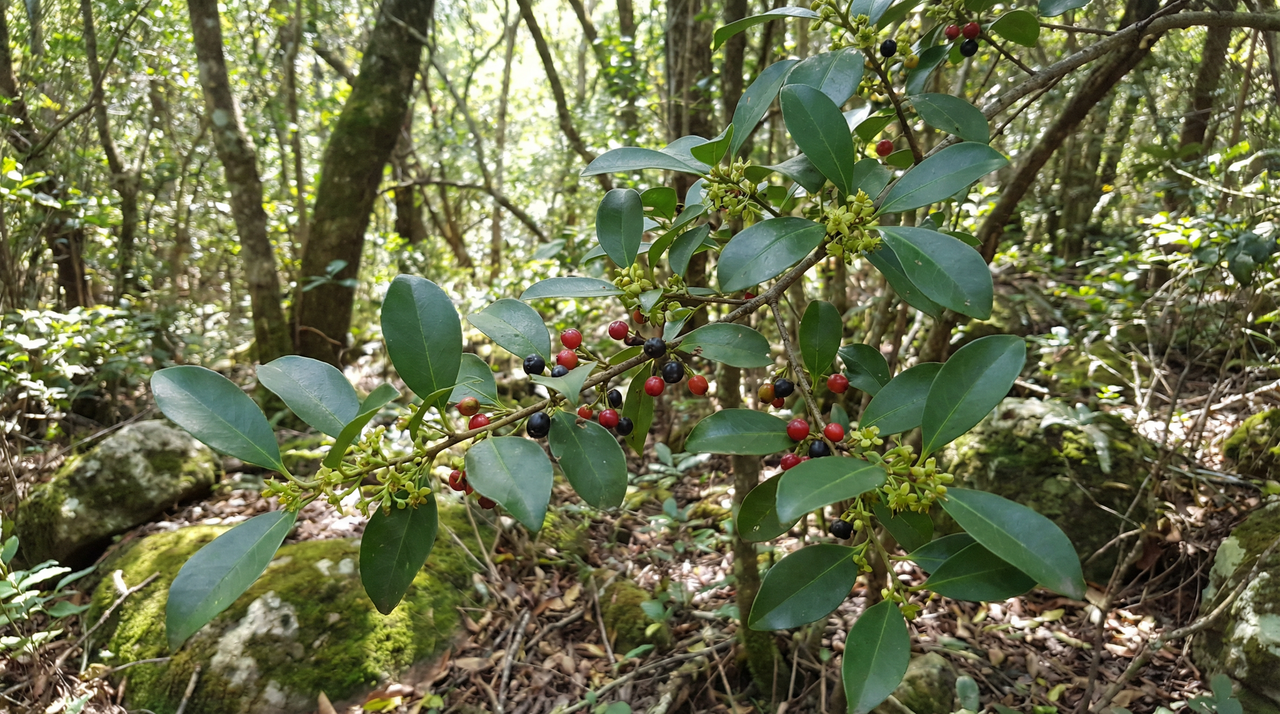
The ingredient that makes traditional Ethiopian tej taste authentic isn't the honey, it's the buckthorn shrub. Gesho, the local name for Rhamnus prinoides, is so central to traditional tella beer and tej honey wine that Ethiopian brewers talk about it the way hop growers in the Pacific Northwest talk about their harvest, with reverence, with anxiety, with a whole body of knowledge passed down through families. And yet outside of East African diaspora communities and a narrow slice of the ethnobotanical world, almost nobody in Western permaculture circles has heard of it.[1] I find that genuinely strange, because the plant itself is exactly what a food forest designer would sketch out on paper if you asked them to invent a low-maintenance, multifunctional, drought-tolerant shrub for a subtropical guild.
What makes gesho worth your attention isn't just its brewing role, though that alone is a remarkable story. It's that the plant carries real medicinal weight, fits neatly into zones 9 through 11 without the invasive nightmare of its better-known relatives, coppices beautifully, and has been quietly sustaining agroforestry systems across the East African highlands for centuries. If you've grown common buckthorn or alder buckthorn, set that experience aside. This one behaves itself.
Origin and History of Buckthorn (Rhamnus prinoides)
Botanical Background and Native Range
The buckthorn I want to talk about here isn't the shrubby invasive crowding out your local forest preserves. Shiny-leaf buckthorn, Rhamnus prinoides, is an East African highland plant with a completely different story. Its native range spans the montane forests, woodlands, and riparian thickets of Ethiopia, Kenya, Tanzania, Uganda, Sudan, and South Africa, growing comfortably between 1,500 and 3,000 meters in Afromontane ecosystems shaped by volcanic soils and seasonal rains.[2][3] Within Ethiopia, it's particularly concentrated in the highland regions of Amhara, Oromia, SNNPR, and Tigray, where bimodal rainfall patterns and mineral-rich volcanic substrates create exactly the conditions it's evolved to exploit.[4][5]
For context, its better-known genus relative Alder buckthorn (Frangula alnus) grows in the temperate damp woodlands of Europe and western Asia, a deciduous plant suited to cool, moist conditions that are worlds apart from East Africa's volcanic highlands.[6][7] When I'm selecting shrubs for subtropical guild design, this kind of contrast matters enormously. Rhamnus prinoides is built for warmth, drainage, and seasonal drought stress; its European relative is built for wet, cold winters. They share a genus but practically nothing about their site requirements.
What gives this plant such staying power in the landscapes where it evolved is a combination of traits that any agroforestry designer would appreciate. It's a long-lived evergreen perennial, with lifespans documented at 20 to 50 years or more under favorable conditions, and it typically begins fruiting somewhere between three and five years of age.[8][9] It's also dioecious and polycarpic, meaning individual plants are either male or female and will flower and fruit repeatedly across their lifetime, with small drupaceous fruits containing two to four seeds dispersed by birds and mammals.[8][10] And it coppices vigorously, resprouting from the base after cutting or fire and stabilizing soils on slopes where other woody plants struggle.[10][11] I've worked with other coppicing shrubs in erosion-prone guild edges, and that kind of basal regeneration is invaluable for maintaining canopy cover and root mass on disturbed ground.
Visual Characteristics of Shiny-leaf Buckthorn
In the field, Rhamnus prinoides reads as a tidy, multi-stemmed evergreen shrub, typically reaching three to six meters tall (occasionally pushing eight to ten in favorable conditions), with a deep taproot extending over a meter down that explains its resilience during dry seasons.[8][12] The leaves are the first thing I notice: elliptic to ovate, leathery, glossy dark green above and paler beneath, with finely serrated margins that catch the light.[8][13] Pick one and crush it, or chew a corner of a twig, and the bitterness is immediate and unmistakable. It's not a pleasant snack. It's exactly the kind of assertive botanical compound that tells you this plant has something interesting going on chemically.
Young stems are smooth, green to reddish-brown, maturing into brownish-grey bark with rougher, fissured texture as the plant ages.[8][14] Compare that to the Alder buckthorn's alternate-leaved, deciduous form with its yellow inner bark turning red on exposure, and you've got an easy genus-level field distinction.[15] Flowering in Rhamnus prinoides is modest; small greenish-white to yellowish clusters appear in leaf axils, timed to rainy seasons (roughly March through June, or September through December in the Ethiopian highlands), followed by drupes that ripen from red to black and fruit January through April.[8][13] From a design perspective, that multi-stemmed upright habit is genuinely useful; it responds well to selective pruning for sustained leaf harvests, and I'd site it as a shrub-layer anchor in any guild where evergreen biomass and some canopy layering matter.
Traditional and Cultural Uses in East Africa
Long before anyone documented it botanically, communities across Ethiopia and Eritrea had built an entire brewing tradition around this plant. Known locally as gesho, its bitter leaves and twigs serve as the primary hops substitute in tej, Ethiopian honey wine, and tella, a traditional sorghum or barley beer.[16][6] Gesho doesn't just contribute bitterness; it preserves the brew and shapes its flavor in ways that are culturally specific and deeply embedded in ritual and hospitality traditions. Calling it a "hops substitute" undersells it. For Ethiopian brewers, gesho isn't standing in for anything. It's the ingredient.
Rhamnus prinoides was formally described by Robert Wight in 1834,[17][18] but its use in brewing and traditional medicine clearly predates that by generations. Ethnobotanical documentation from the mid-twentieth century onward records its leaves and twigs being wild-harvested and cultivated in home gardens for both fermentation and medicinal purposes, including treatment of digestive complaints, constipation, and a range of infections.[19][20] That home garden cultivation is significant; it means this plant has been integrated into managed agroforestry systems informally for far longer than modern agroforestry research has existed.
Interesting Facts about Gesho
A mature gesho plant produces somewhere between 50 and 200 seeds annually, though that range shifts considerably with plant age, health, and local conditions.[21] The fire-resprouting behavior is worth highlighting here too: gesho resprouts vigorously from basal buds after both coppicing and fire, with that hop-like bitterness of its twigs and leaves largely intact through the regrowth cycle.[13][22] That kind of botanical resilience is something I look for in any perennial I'm placing in a long-term guild.
Globally, the IUCN lists Rhamnus prinoides as Least Concern,[23] and on a broad species level that classification isn't wrong. But I've seen the same reassuring global status applied to other culturally important African plants while local populations quietly disappear under pressure from deforestation, agricultural expansion, and overharvesting. The Least Concern label tells you the species isn't about to vanish; it doesn't tell you whether the gesho hedge outside a particular Ethiopian village is still standing. That gap between global status and local reality is exactly why sustainable cultivation matters, and why understanding where and how this plant evolved should inform how we grow it.
Buckthorn Varieties and Sourcing
Notable Varieties of Shiny-Leaf Buckthorn (Gesho)
If you're coming to Rhamnus prinoides from the ornamental plant world, I should be upfront: there are no named cultivars, no 'Compacta' forms, no variegated selections. The species has no formally recognized varieties or subspecies in standard botanical classification, and what genetic diversity exists lives in wild and semi-domesticated populations scattered across altitudinal gradients in Ethiopia, Kenya, and surrounding regions.[24][25] The typical plant reaches 3 to 10 meters with glossy elliptic to ovate leaves, small dioecious flowers, and black drupes at maturity, but leaf morphology, bitterness intensity, and growth habit vary noticeably across wild and cultivated stock.[26] I've started Gesho from several different African seed batches, and the differences in seedling vigor, leaf gloss, and foliage bitterness have been genuinely striking. That variation is the plant's diversity. For a permaculture grower, selecting vigorous seedlings from multiple seed sources is its own quiet breeding program.
The contrast with other buckthorns is worth a moment. Frangula alnus, the alder buckthorn, comes in a long list of cultivars: 'Fine Line' with its narrow upright habit and fern-like foliage, 'Compacta' topping out around 1.5 to 2 meters, 'Ron Williams' growing columnar to 3 or 4 meters while staying under a meter wide, and 'Variegata' with creamy-white leaf margins.[27][28] Honestly, I don't plant any of them in my guild designs. The parent species and many of its cultivars carry documented invasive risks across North America, and I'd rather work with a plant that earns its place than one I'm managing against. Rhamnus prinoides is documented in the USDA PLANTS database only as an introduced species with limited US distribution, with no established naturalized populations to worry about.[29][30] That clean regulatory slate is one of the things I appreciate about it.
How to Source Shiny-Leaf Buckthorn Plants and Seeds
You won't find Gesho at your local nursery or on a mainstream mail-order site. It simply isn't in the American horticultural pipeline yet, so sourcing requires some searching through ethnobotanical suppliers and specialty importers of African medicinal species. Seeds typically run $5 to $20 for a packet of 10 to 50, and live plants, when you can find them, land somewhere between $15 and $50 through specialty importers. Before ordering seed from overseas, I always check current USDA APHIS regulations first. Rhamnus prinoides is not listed as a noxious weed or federally regulated invasive, unlike its relative common buckthorn (Rhamnus cathartica, which is invasive across much of the US),[31][32] but general plant import rules can still require permits depending on the source country and plant material type.[33] It's a manageable step, not a barrier, but skipping it creates headaches.
Once your seed arrives, germination is fairly straightforward. Fresh seeds benefit from scarification or a brief stratification period and typically sprout within 2 to 4 weeks when sown in moist sandy soil held at 70 to 80°F.[26] The propagation section goes deeper into technique, but establishment itself reflects the plant's climate needs: USDA zones 8 through 11, full sun, acidic and well-draining soil, and solid drought tolerance once the root system is down.[26] I've kept container-grown Gesho through mild Central Florida frosts using simple row-cover protection, but I wouldn't count on it without that insurance below zone 9. The effort to source it is real, but so is the reward of growing a plant with almost no horticultural footprint in North America and genuine ethnobotanical depth.
Buckthorn Propagation and Planting (Rhamnus prinoides)
Getting gesho established in your garden starts with understanding what you're physically working with. These aren't big showy seeds. The ripe drupes are only 4-6 mm across, ripening through green to red to that characteristic blackish-purple, and inside each one sit 2-4 elliptic seeds measuring roughly 3-5 mm long with a smooth, hard, dark-brown testa that's often slightly pitted.[34][35] The moment I first held a handful of those seeds, the dormancy problem became obvious. That shell is built to survive a bird's digestive tract and sit in the soil through a highland dry season before conditions are right to germinate.[36] In the wild, birds do all the pretreatment work. In your garden, you have to do it yourself.
Seed Morphology and Germination Challenges
The hard testa and underdeveloped linear embryo create a physiological dormancy that requires active intervention. Without any pretreatment, germination rates sit at 20-40%,[37][38] which is frustrating enough when you've sourced buckthorn seed through an ethnobotanical supplier after jumping through import hoops. The good news is that scarification, cold moist stratification for 30-90 days, or a combination of both, combined with germination temperatures of 20-25 °C under light, can push success rates to 50-80%.[39][40] Germination is positively photoblastic, so don't bury these seeds in darkness and wonder why nothing happens. The first time I scarified a batch with fine-grit sandpaper before stratifying them in damp vermiculite in the fridge, my germination jumped from a discouraging 30% to a reliable 60%-plus. That single step, gentle abrasion until you just see a dull patch on the testa, is worth repeating across multiple small batches rather than treating a single large one.
Before you commit to a full stratification run, it's worth testing viability first. Tetrazolium staining (look for at least 80% red embryos) or X-ray assessment (at least 70% filled seeds) tells you quickly whether your rhamnus prinoides seeds are worth the effort.[37] Highland-sourced ecotypes consistently show better germination than lowland ones, so provenance matters when you're sourcing.[38] Seeds dried to 5-7% moisture and stored sealed at 4-10 °C with desiccants retain viability for 5-10 years, or even longer at -18 °C; viability drops fast once moisture creeps above 10% or temperatures rise.[41][42] I keep small batches in the refrigerator in sealed glass jars with silica packets and have pulled usable germination at over 70% after two to three years that way, which is reassuring given how infrequently this species shows up in catalogs.
Propagation Methods: Seeds, Cuttings, and Beyond
Seeds are worth growing occasionally to preserve genetic diversity, especially given that cultivated populations show reduced heterozygosity (0.2-0.4 compared to wilder Ethiopian stands) partly from apomictic tendencies and widespread vegetative cloning.[43] I label seed rows carefully because young gesho seedlings can look deceptively similar to other Rhamnus species in the first weeks, and a mislabeled flat causes no end of confusion later. But for most growers who want productive plants without waiting out a 3-5 year journey from seed to first consistent fruit,[44][45] semi-hardwood cuttings are the real workhorse.
Cuttings taken during active growth and treated with 2,000-3,000 ppm IBA, kept under intermittent mist at 80-90% humidity with bottom heat around 24-27 °C, root in 4-6 weeks at 70-90% success.[46][47][48] That's the approach Ethiopian farmers rely on in practice, and it's what I now default to when I'm building out a new guild. I always start a few grafted or larger nursery transplants alongside any seedlings because grafted plants can fruit in 2-3 years rather than five,[44] which means the design starts producing usable leaf harvests within two seasons rather than making you wait half a decade. Layering and grafting exist as small-scale options, though grafting comes with compatibility challenges, and tissue-culture protocols remain a research curiosity rather than a commercial reality.[49][50]
Site Selection, Soil, and Planting Technique
Gesho's native haunts tell you almost everything you need to know about site selection. It grows across open woodlands and forest edges at 1,000-3,000 m elevation in East Africa, rooted in volcanic or alluvial loamy soils that drain freely and sit at pH 5.8-7.2.[13][51] Translating that to a home garden means prioritizing drainage above almost everything else. The plant develops a deep taproot that wants at least 1-1.5 m of uncompacted soil to work with, and it will not tolerate waterlogging or soil compaction above 1.5 g/cm³.[52][53] A loamy or sandy-loam mix with 2-5% organic matter and a target pH of 6.0-7.5 is the sweet spot, though the plant tolerates 5.5-8.0.[54] I learned this the hard way on an early Florida planting in heavy clay that stayed wet after summer rains. Lost two plants before I started amending heavily with compost and building raised mounds for drainage. Now I test bulk density and drainage rate before any planting goes in the ground.
Full sun to partial shade works well, with a minimum of 4-6 hours of direct sun daily for solid flowering and fruiting.[55][56] Its moderate shade tolerance makes it a nice fit for a sparse-canopy agroforestry layer, but in a hotter climate, afternoon shade genuinely prevents leaf scorch when moisture is limited. I site mine at the sunny edge of food forest guilds specifically so the deep roots stay away from shallow annual beds while the canopy gets full morning exposure. For readers considering the European relative Alder Buckthorn instead, know that Frangula alnus tolerates periodic flooding and compacted urban soils but is invasive in parts of North America[57][58]; for well-drained subtropical guilds in zone 9B, shiny-leaf buckthorn is the obvious choice.
Sow scarified and stratified buckthorn seed about 0.5 inches (1.3 cm) deep in a well-drained medium, timing direct sowing or transplanting of container-grown plants or rooted cuttings to align with the main rainy season (March-May in Ethiopia) when soil moisture supports establishment.[59]
Spacing, Timeline, and Establishment
Purpose should drive spacing decisions here more than any fixed rule. For general guild planting or integrated polycultures, 1.5-2 m between plants gives each shrub enough room to develop without crowding. Commercial gesho rows, where farmers are harvesting leaf and stem regularly, typically run 1.5-2.5 m between plants and 3-4 m between rows. Tighten to 0.5-1 m for hedging and windbreaks.[60][61][62] The plant takes well to pruning, so a closer-spaced hedgerow can be managed without losing productivity. Overall planting density in production systems ranges from 2,500 to 10,000 plants per hectare depending on use and available inputs.
From a design standpoint, that 3-5 year timeline from buckthorn seedling to consistent fruiting is the most important number to hold in your head when laying out a new guild. Plants grown from seed spend much of the first two years putting energy into roots and vegetative structure before fruiting begins.[44][45] Build that patience into your plan, mix in at least one grafted plant or a more advanced nursery specimen, and site everything at a forest edge where the deep taproot has real soil depth to explore without competing with shallower-rooted companions.
Buckthorn Care Guide: Growing Rhamnus prinoides (Gesho)
Gesho is fundamentally a plant of East African highland edges, evolved on volcanic slopes where soils are lean, rainfall comes in distinct seasons, and drainage is almost always excellent. Once you internalize that habitat, most care decisions make themselves. The goal isn't to pamper this plant; it's to avoid doing things its native conditions never asked of it.
Water Requirements for Shiny-Leaf Buckthorn
The most practical thing I can tell you about watering gesho is this: established plants can go three to four weeks without irrigation in semi-arid conditions, thanks to roots that extend 60 to 90 centimeters deep, thick sclerophyllous leaves, and tight stomatal control.[40][26] That drought resilience is real, but it only kicks in once the plant is well-rooted. During the first six to twelve months, you're watering to build that root system, not to replace it, so plan on about an inch to two inches per week, or a deep soak every seven to ten days.[63][64]
Once established, shift to deep, infrequent watering every two to four weeks, letting the top five to ten centimeters dry between sessions.[65] The plant sits in well-drained loamy soil with a pH of 5.5 to 7.5, and root rot in waterlogged conditions is a genuine risk.[13][26] Two to three inches of organic mulch kept away from the stem helps retain moisture and reduces how often you're reaching for the hose.[66] In sandy soils, light weekly irrigation may still be needed after establishment; clay soils require you to back off considerably to prevent anaerobic conditions at the root zone.[67] Drop watering frequency in winter or during any dormant period and scale it back up when active growth resumes.[68] Leaf browning tells you it's thirsty; yellowing leaves paired with moist soil and soft, discolored roots tell you it's drowning.[26][69]
For reference, Alder Buckthorn (Frangula alnus) handles much wetter conditions, tolerates occasional flooding, and accepts a wider pH range from 5.0 to 8.0, with moderate salinity tolerance to boot.[70][71] Gesho is the drier, pickier cousin. Treat them accordingly.
Feeding and Soil Fertility
Gesho evolved on nutrient-poor volcanic soils in the Ethiopian highlands, so its fertility needs are genuinely modest.[72] In my experience, a two-to-three inch surface dressing of good compost each spring is usually all a healthy plant wants. Organic amendments mimic the humus-rich native conditions it prefers and provide micronutrients like iron, manganese, and zinc without overwhelming the root zone.[73]
Before you add anything synthetic, get a soil test. Regional variation is real, standardized protocols for this species are sparse, and target leaf nutrient levels are relatively modest: roughly 2 to 3 percent nitrogen, 0.2 to 0.3 percent phosphorus, and 1 to 2 percent potassium.[64][74] If your test shows a genuine deficiency, a balanced 10-10-10 applied sparingly in early spring at around 50 to 100 grams per mature plant is reasonable.[59]
Here's where I'll editorialize: I've seen over-fertilized gesho produce large, lush leaves that smelled faintly of almost nothing. For anyone growing this plant to bitter tella or tej, that's a significant problem. Excess nitrogen pushes vegetative growth at the expense of the aromatic compounds you're actually after, and it can increase pest pressure or cause salt buildup in the root zone.[74][75] Lean soil grows better-tasting leaves. Trust the plant's origins on this one.
Heat and Frost Tolerance
Gesho is happiest between 15 and 25°C and tolerates a range of 5 to 30°C with brief excursions up to 35°C if soil moisture is maintained.[76] Seedlings are particularly sensitive above 30°C, so afternoon shade and consistent moisture matter most in the first year. Heat stress shows up as scorched brown leaf margins, wilting, curling, or flower drop.[77] In practice, water is your primary heat-mitigation tool, not shade. The plant is rated for USDA zones 8 to 11 and AHS heat zones 7 to 10, and it shows real xeriscape potential in the southwestern United States once irrigation supports establishment.[78][79] It prefers full sun to partial shade with well-drained loamy soil, pH 6.0 to 7.5.[13]
On the cold end, gesho is not a cold-hardy plant. It tolerates brief light frosts down to around -2°C to -5°C, but prolonged exposure below 5°C causes real damage, and anything below -5°C risks serious dieback.[8][80] Symptoms look a lot like what you'd see on a stressed citrus tree after a hard freeze: wilted, blackened leaves, tissue necrosis, and dieback concentrated in the young growth.[81] Young plants are especially vulnerable. I mulch mine heavily in fall, use windbreaks on the north side, and bring any container-grown specimens indoors once nighttime temperatures reliably drop below 5°C.[82] Zone 9 to 11 is the reliable range; zone 8 requires committed winter protection.[83]
Pruning, Maintenance, and Seasonal Care
Pruning is where you earn your leaf harvest. Done right, it shapes a dense, multi-stemmed shrub that's easy to pick from and renews itself season after season. Pinch stem tips during the first six to twelve months to encourage branching from the base, then move into a rhythm of removing 20 to 30 percent of older stems after harvest, ideally during the dry season transition in October to November.[52][62] In my experience, timing those cuts to coincide with the post-harvest dry-season window has roughly doubled my usable leaf yield in the following growing cycle. The plant responds to this kind of structured renewal the way most perennials do -- with vigorous, productive regrowth.
Remove basal suckers regularly to keep the plant from spreading into an unmanageable thicket; a clean multi-stemmed bush form at two to four meters is much easier to harvest than a sprawling clump.[84] Every three to five years, coppicing the whole plant hard will reset it and extend its productive life considerably.[85] Always use sharp, clean tools and avoid heavy cuts during active flowering or the peak of the wet-season growth flush.
Seasonally, growth peaks during the rainy season from June through September; flowering runs from August into November as the rains taper off, and fruiting stretches through the dry months from December to April.[86][52] In tropical cultivation there's no true dormancy, but temperate growers should reduce watering in winter and hold off on any fertilizing until growth resumes in spring. Keep the root zone weeded during establishment and refresh the mulch layer annually.[64] For gardeners in temperate zones, late winter or early spring pruning during dormancy, clearing dead, damaged, or crossing branches first, aligns with general Rhamnus best practice when you can't match the Ethiopian seasonal calendar.[87]
Harvesting Buckthorn (Gesho)
Gesho is fundamentally a brewing plant, and every harvest decision should be made with that purpose in mind. Rhamnus prinoides leaves are the yield that matters here, not the fruit, and getting the timing and technique right is what separates a mediocre batch of tella from one with real depth and bitterness.[44][45]
When to Harvest Buckthorn Leaves and Fruit
Young plants need time before they can give anything worth taking. First harvests are possible at 12 to 18 months, but the shrub really hits its stride between two and three years, when shoots are long enough and the plant has enough root mass to recover cleanly from pruning.[88][89] What you're looking for is new growth: flexible green shoots around 20 to 30 centimeters long that bend without snapping. Woody older branches don't have that give, and once you've handled both you'll know the difference immediately.
Dry-season timing matters more than most growers expect. In Ethiopia, the primary leaf harvest runs from roughly October through March, when lower rainfall and higher temperatures concentrate the bitter compounds, especially quercetin, while simultaneously reducing fungal pressure on cut surfaces.[88][90] I think of it the same way I think about Mediterranean herbs like rosemary or oregano: a little drought stress pushes the plant to load up on volatiles and phenolics, and you taste that in the final product. With irrigation, mature plants can yield harvests year-round, but that dry-season peak is genuinely worth planning around if you're brewing.
As for the fruit: flowers appear in the dry season between September and December, and drupes take four to six months to ripen from green through red to dark purple-black, reaching about 5 to 8 millimeters across.[91][90] Color change to deep black is your ripeness cue. Common buckthorn fruit from ornamental or invasive relatives is a different matter entirely, and I'll address that safety distinction in the preparation section.
Harvest Techniques and Sustainable Practices
Selective pruning is the harvest method, and that framing matters. You're not stripping a plant; you're shaping it. Remove shoots under 1 centimeter in diameter, take no more than 20 to 30 percent of total foliage in a single cycle, and the shrub responds with vigorous, bushier regrowth within weeks.[55][89] In my experience working that 20 to 30 percent rule on Gesho-style shrubs in food forest designs, it reliably triggers the kind of lateral branching that makes the next harvest easier to reach and more productive. You end up doing your pruning maintenance and your harvest simultaneously.
Cut in the early morning when essential oil concentrations in the tissue are highest, and the quality difference is real.[41] Three to four harvests per year is realistic on a healthy established plant. After cutting, shade-dry at 30 to 40°C rather than in direct sun; the hotter end of that range, around 38 to 40°C with good airflow, retains noticeably more of the citrus-resinous aroma than cooler or sun-exposed drying.[88][89] Once dry, store in cool, sealed conditions away from light.
Yield, Flavor Profile, and Post-Harvest Handling
The bitterness in Gesho leaves comes from a complex mix of anthraquinones (emodin and chrysophanol), tannins, flavonoids, and quercetin.[92] The aroma is its own reward: herbal and resinous with citrus lift, driven by linalool, limonene, and β-caryophyllene among others.[93][94] Young leaves feel slightly succulent and become leathery as they mature; the fruit, when ripe, has a firm, juicy-crisp texture.[95] That said, I never use Gesho leaves for anything outside controlled brewing preparation. The emodin and anthraquinone content makes direct leaf consumption genuinely risky, and the research on these compounds makes that boundary very clear.[96]
Traditional practice involves sun-drying or lightly roasting the leaves, sometimes grinding them to powder before adding to the brew.[97][98] No distinct named varieties exist; the variation in bitterness and leaf size you'll encounter comes from environmental conditions and how the material is processed, not from cultivar differences.[99] One practical habit worth adopting: label your dried material clearly with date and harvest batch. Dried Gesho looks similar to other dried shrub material, and in a working kitchen apothecary or brewery, you want no ambiguity about what you're reaching for.
Buckthorn Preparation and Uses
If you've never encountered gesho before, the entry point is almost always tej. Ethiopia's ancient honey wine depends on shiny-leaf buckthorn leaves the way European beer depends on hops: for bitterness, aroma, and preservation.[100][101] When I first read about it in ethnobotanical literature, I expected something hops-adjacent. What I found when I started experimenting with comparable bitter herbs was something far more intense and earthy, with a resinous, almost medicinal depth that gentian root comes close to but doesn't quite match.
Culinary and Brewing Uses of Gesho Leaves
The flavor driving that intensity is a profile of anthraquinones like emodin and frangulin layered over herbal, aromatic notes.[76][102] Boiling or roasting the dried leaves mellows that bitterness into something more rounded, which is exactly how Ethiopian brewers work: crushed dried gesho gets boiled directly into the honey-water must for tej, contributing both flavor and genuine antimicrobial protection that extends shelf life.[103] Beyond brewing chemistry, those dried leaves carry real nutritional weight -- roughly 12-18% protein, 15-20% fiber, meaningful mineral content including iron and calcium, and antioxidant phenolics in the range of 50-100 mg GAE/g alongside Vitamin C and B vitamins.[104][105][106]
Getting the most from those leaves starts at harvest, and proper processing matters. Shade-drying at 20-30°C with humidity below 60% preserves the aromatic compounds and bitterness; I learned from drying other volatile-rich herbs that direct sun strips out exactly the oils you're trying to keep.[103][107] Three to seven days gets leaves to that 10-12% moisture target where they're brittle but not dusty. Stored in airtight containers at 10-20°C and moderate humidity, dried gesho holds its quality for six to twelve months before the volatiles start fading noticeably.[107][108]
A hard boundary here: only the leaves. The berries are not for eating. They contain emodin at levels that make them potentially toxic,[109][110] while the leaves require careful dosage tracking due to the laxative and hepatotoxic risks detailed earlier.[55][109] The bitterness is actually self-limiting in practice -- nobody is accidentally consuming large quantities -- but it's worth being clear-eyed about the chemistry. Species identification matters too. Rhamnus prinoides has distinctive glossy, elliptic leaves 3-8 cm long with serrated margins, small greenish flowers, and grows as a multi-stemmed shrub to about 6 meters.[100] I always check leaf gloss and serration carefully when sourcing any Rhamnus material, because common buckthorn (Rhamnus cathartica), the invasive species well established in North America, looks superficially similar and carries a more concerning toxicity profile, including potential carcinogenic risks with long-term exposure.[110][111] These are not interchangeable plants.
Traditional Medicinal Preparations and Safety Considerations
The same leaves that bitter tej have a long parallel history in East African traditional medicine, used for gastrointestinal complaints, fever, malaria, and as an anthelmintic, with diuretic, anti-inflammatory, and antimicrobial properties attributed to the flavonoid and anthraquinone content.[55][112][113] Preparation is simple: the leaves are either steeped as an infusion or simmered as a decoction, the two preparation routes most documented across regional traditions.[55][114] Buckthorn tea prepared this way is the form most likely to preserve the flavonoids and anthraquinones that proper shade drying locks in.
Traditional dosage guidance points to 5-15 grams of dried leaves in 250-500 ml of water, taken as one to two small cups daily.[115][114] That range varies by region and condition, and I treat figures like these as a ceiling rather than a target. With any bitter herb I haven't worked with extensively, I start at the lower end -- around 5 grams -- and pay attention before considering any increase. The laxative activity from anthraquinones is real, and the hepatotoxicity signals from animal studies at high doses are not something to wave off.[55] Human clinical data on gesho remains thin, so the traditional knowledge base is what we're working from. Respect it, use the plant in the forms and quantities its traditions describe, and treat this as a culturally significant herb that rewards knowledge rather than casual experimentation.
Buckthorn Health Benefits
Traditional Medicinal Uses
I've worked with a lot of bitter, tannin-heavy herbs over the years, but Gesho occupies a category of its own: a plant whose medicinal reputation and brewing role developed together, each reinforcing the other across centuries of Ethiopian practice. Traditional healers across East Africa have used Rhamnus prinoides for fevers, dysentery, wounds, constipation, diarrhea, respiratory complaints, hypertension, and as a general tonic.[116][117][118] That's a broad ethnobotanical portfolio, and laboratory research has started to explain why.
The antimicrobial evidence is probably the most developed body of work. Leaf extracts show broad-spectrum activity against Staphylococcus aureus, Escherichia coli, and Candida albicans, with MIC values typically between 32 and 128 µg mL⁻¹.[119][120] Ellagitannins appear to disrupt bacterial cell-wall membranes while flavonoids inhibit DNA gyrase and efflux pumps, which is a mechanistically satisfying explanation for why adding Gesho leaves to a fermenting brew would offer real preservation benefits alongside the bittering you'd expect from something like hops.[121]
Beyond antimicrobial action, animal model studies have documented anti-inflammatory effects (including carrageenan-induced paw edema suppression), antioxidant activity reaching 70–90% DPPH radical inhibition, and analgesic properties.[119][122] Preliminary findings also point toward antidiabetic potential via α-glucosidase and α-amylase inhibition (IC₅₀ around 18 µg mL⁻¹), hepatoprotective effects in diabetic rodent models, and accelerated wound healing in rabbit burn studies.[123] Those are genuinely interesting signals, though I'd be careful about getting ahead of the data here: human clinical trials remain scarce, and extrapolating from in-vitro and rodent findings to clinical recommendations is a leap the science hasn't yet made.
The anthraquinone-driven mild laxative effect deserves a brief aside. It's the same class of compounds responsible for Cascara Sagrada's traditional use as a stimulant laxative in Native American medicine, and the FDA withdrew Cascara's OTC approval in 2002 due to safety and data gaps.[124][125] Gesho's traditional context is meaningfully different; the leaves are used in diluted, boiled brewing preparations rather than as concentrated medicinal extracts, and that distinction matters practically even if the underlying chemistry overlaps.
Key Bioactive Compounds and Mechanisms
The pharmacological activity traces back to a well-characterized set of compound classes. Gesho leaves are richest in flavonoids (quercetin-3-O-β-glucoside, kaempferol-3-O-β-glucoside, rutin) and phenolic acids (caffeic, ferulic, chlorogenic), while bark carries the highest tannin concentrations. Anthraquinones, including emodin, aloe-emodin, chrysophanol, and physcion, total up to 1.2% in leaves, with emodin representing 20–40% of that fraction.[126][127][128] Alkaloids, terpenoids, steroids, and coumarins are essentially absent or present only in traces too small to be pharmacologically relevant.[129]
These compound concentrations shift noticeably depending on growing conditions. Plants from Ethiopian highlands above 2,000 meters tend to produce more pungent, bioactive leaves, and flavonoid content peaks during dry periods when the plant is under stress.[130][131] I've noticed a similar pattern working with other stress-adapted herbs: the plant's chemical defenses intensify when resources are tight, which in this case translates directly to bitterness and potency. Post-harvest handling compounds this: low-temperature oven-drying preserves more phenolics than sun-drying, a genuinely practical tip if you're growing Gesho for medicinal or culinary use.[130] Extraction solvent also matters; aqueous preparations favor tannin extraction while ethanol pulls more lipophilic compounds, which is why a boiled leaf preparation behaves differently from an ethanolic tincture.
Alder buckthorn (Frangula alnus) offers a useful comparison here. Its bark contains up to 8% anthraquinone glycosides requiring one to two years of aging before they can function safely as a laxative, a processing requirement that underscores how the same compound class can behave very differently depending on form and preparation.[132][133] Gesho's anthraquinones are present at lower concentrations in the leaves, and traditional brewing dilutes them further, which is part of why centuries of use haven't produced documented cases of toxicity from the brewing application.
Nutritional Profile
Gesho leaves are not a dietary staple in the way that, say, moringa leaves might be eaten fresh by the handful. The primary consumption pathway is diluted, boiled brewing, so the nutritional profile of the dried leaf matters less as a daily intake figure and more as context for understanding what small amounts contribute across a diet. That said, the numbers on dried leaf (per 100g) are genuinely impressive: 18–22g protein, 25–30g fiber, calcium around 1,850mg, potassium up to 2,100mg, magnesium approximately 450mg, and iron ranging from 28 to 100mg across different study populations.[134][135] Fresh leaves run 70–80% water, so those concentrations compress considerably before drying.
Gesho isn't listed in USDA FoodData Central, and the compositional variability between studies (driven by location, soil, harvest timing, and processing) makes precise claims tricky.[136] Tannin content exists but doesn't appear to significantly impair mineral absorption in traditional use contexts, which is reassuring for anyone using Gesho regularly in brewing.[137] The fruits offer lower nutritional value (around 5–10mg vitamin C per 100g fresh weight) and serve more as a dye source than a food.[136] The more meaningful nutritional story here is the phenolic and flavonoid overlap between what makes Gesho medicinally active and what gives it antioxidant value; the two aren't separate categories.
Safety Considerations
The safety picture on Gesho is genuinely reassuring in its traditional form, but concentrated extracts are a different matter, and I've seen clients surprised by how quickly small amounts can produce noticeable laxative effects. Centuries of Ethiopian brewing use without documented severe poisonings or fatalities is meaningful evidence.[13] Acute toxicity studies back this up: LD50 values exceed 2,000 mg/kg in mice and 5,000 mg/kg in rats for leaf extracts, with no mortality observed.[138] Traditional brewing at 10–20g of leaves per liter, combined with boiling, reduces the bioavailability of the anthraquinones that drive laxative action and any other potential toxins.[139]
Where caution is warranted: the berries, seeds, and bark are more toxic than the leaves.[140] Excessive leaf consumption causes nausea, vomiting, diarrhea, and cramping, and prolonged use risks electrolyte imbalance, hypokalemia, and laxative dependency.[141] If you're on diuretics, cardiac glycosides, digoxin, or antiarrhythmics, the potassium-loss risk is real and shared across the anthraquinone laxative class; talk to your doctor before using Gesho medicinally rather than in a casual brewing context.[142] Pregnancy is a firm contraindication given the potential for uterine stimulation extrapolated from the anthraquinone class, and it's not appropriate for children under 12 or anyone with intestinal obstruction or appendicitis.[143][144] Gesho is not regarded as a major allergen, though contact dermatitis occurs rarely, and it can cause mild gastrointestinal upset in livestock and pets.[140] The bottom line: in traditional, diluted brewing quantities, Gesho has a long track record of safety; concentrated medicinal preparations require the same respect you'd give any potent botanical and, ideally, medical supervision.
Buckthorn Pests and Diseases
Natural Resistance and Chemical Defenses
One of the first things I noticed when handling Shiny-leaf buckthorn is how intensely bitter and aromatic the crushed leaves are. That's not an accident. The same anthraquinones, tannins, and alkaloids covered in the health benefits section do double duty as the plant's chemical armor, acting as antifeedants and antimicrobials that deter a wide range of insects and pathogens from the start.[55][145] In its native East African highlands, this chemistry translates to low fungal disease pressure and genuine resilience in low-input systems. Step outside that native context into higher humidity or poorly drained soils, though, and those defenses start to thin out.[146][147] With good siting, the plant's inherent strengths usually carry the day.
Common Pests of Shiny-Leaf Buckthorn
Aphids (Myzus persicae and Aphis spp.) are the pest I see most reliably, clustering on new growth and leaving behind that telltale sticky honeydew and leaf curl. Leaf beetles from the Chrysomelidae family skeletonize foliage in a way that will look familiar to anyone who's grown plants in the broader Rhamnaceae, and scale insects show up on stressed specimens with some regularity. The gesho borer, a longhorn beetle, is the more serious structural threat, though it tends to target weakened plants rather than healthy, vigorous ones.[148][149] Pest pressure in neglected stands can cut plant vigor by 20 to 40 percent, but established plants with good drought tolerance in low-input settings weather most of this far better than you'd expect.[150] Disease is generally a bigger concern than insects overall.
Fungal Diseases and Environmental Stress Factors
The fungal complex to watch for includes:\n
- \n
- anthracnose \n
- powdery mildew \n
- leaf spot from Cercospora and Alternaria \n
- root rot driven by Phytophthora in waterlogged conditions \n
The related alder buckthorn (Frangula alnus) shares susceptibility to anthracnose, leaf spots, and powdery mildew, and adds rust (Melampsoridium hiratsukanum) to that list, yet both the RHS and university extension evaluations generally rate it as relatively trouble-free in horticultural settings.[154][155] In my experience, R. prinoides performs comparably in warmer climates when drainage is managed. No disease-resistant cultivars exist yet for either species, but the natural variation across wild seed populations is real, and that's a genuinely promising starting point for future breeding work.[101][156]
Integrated Management and Prevention Strategies
Honestly, prevention does about 90 percent of the work here. When I design guilds around gesho, I space plants 1 to 1.5 meters between rows and 0.5 to 1 meter within rows specifically to promote the airflow that shuts down powdery mildew before it gets a foothold, and I pair that with aromatic companions and nitrogen-fixers that support overall plant health.[157] Skip overhead irrigation, pull and dispose of infected material promptly, and keep the soil mulched but the crown clear. Those practices align directly with how this plant grows in its highland home and with the care approaches already built into establishing it well.
When intervention becomes necessary, I reach for neem oil or insecticidal soap for aphids and scale, ladybugs for aphid pressure on younger plants, and Bacillus subtilis as a biological fungicide at first signs of leaf spot or mildew.[158] Copper-based fungicides like a 0.2 percent Bordeaux mixture or mancozeb are effective options for more persistent fungal issues.[159] Calendar sprays are rarely warranted on established, well-sited plants. The genetic diversity still hiding in wild R. prinoides populations means that growers paying attention to which individuals shrug off disease in their own gardens are, in a quiet way, already doing the early work of selection.
Buckthorn in Permaculture Design
Most of the design work I do in Central Florida involves sourcing plants that pull double or triple duty in a system without becoming tomorrow's ecological nightmare. Rhamnus prinoides, the shiny-leaf buckthorn known as gesho, checks both of those boxes in ways that genuinely surprised me when I first started working with it.
Climate Suitability and Hardiness Zones
Gesho is a highland plant at heart, native to East African montane forests from Ethiopia down through South Africa, typically found at elevations between 1,200 and 3,200 meters.[160][26] That origin tells you a lot. It's accustomed to mild temperatures in the 15-25 °C range, seasonal rainfall between 600 and 1,200 mm, and soils that drain fast and never sit wet.[161][160] In cultivation, it fits comfortably into USDA zones 9-11, and I've seen reliable reports of it tolerating light frosts down to about -5 °C with adequate drainage, which opens zone 8b as a possibility for sheltered, well-prepared sites.[162][163]
In my zone 9b garden, I've found that planting on a slightly raised bed or a gentle slope is the single most reliable way to push its frost tolerance. Good drainage keeps the roots from sitting in cold water during a freeze, and that seems to matter more than absolute minimum temperature. Salt tolerance is low, so if you're on the coast, keep it inland.[13] For growers in North America generally, there's good news worth stating clearly: there are no recorded invasiveness issues with Rhamnus prinoides in the United States, which is a meaningful distinction when you're placing a new shrub in a designed system.[164]
Ecosystem Functions and Wildlife Support
In its native East African range, gesho earns its place in any landscape by doing real soil work. Its dense fibrous root system stabilizes slopes, anchors riverbanks, and builds organic matter over time, making it a common and valued component of bamboo-agroforestry systems where erosion pressure is high.[8][165] As a pioneer species, it colonizes disturbed edges, woodland margins, and degraded sites, where it supports biodiversity while also serving as hedgerow, windbreak, fodder, and fuelwood for the communities farming around it.[5][8] The small dark drupes feed thrushes, turacos, and waxbills, which handle seed dispersal, and the foliage provides browse for both livestock and native herbivores.[2] Worth noting for safety-conscious designers: those berries are wildlife food, not human food, a distinction covered in depth in the health benefits section.
On the pollinator side, the flowers are easy to miss, small and greenish and not exactly showy, but I've been genuinely impressed by how many bees, flies, and beetles find them once you start paying attention.[166][167] The plant is dioecious, meaning male and female flowers occur on separate individuals, so cross-pollination is essential for fruit set.[166] I always plant at least one male and one female in any guild where I want berries, and in years when insect activity is low, hand-pollination works well enough to make up the difference. It's a small extra step that rewards the effort.
I'd be remiss not to flag the contrast with alder buckthorn (Frangula alnus) here. That species, a relative in the same genus, is genuinely invasive in North America: it forms dense thickets that displace native plants, alters soil chemistry through nitrogen-rich leaf litter, and disrupts local hydrology.[168][169] I would never introduce it to a North American food forest. When a design calls for a buckthorn-type shrub, gesho is the responsible choice.
Forest Layer Placement and Guild Design
Gesho sits naturally in the shrub-to-understory layer, typically reaching 2-5 meters in cultivation, occasionally stretching toward 10 meters in ideal conditions.[95] It has moderate shade tolerance, which means it can grow under a loose canopy, though it fruits most productively in full sun. That combination gives it flexibility in a stacked guild: edge positions, hedgerow runs, or slightly shaded inner zones all work depending on what you need from it.
In its native habitat it grows alongside Olea europaea subsp. africana and other Afromontane companions, which gives a useful design template for subtropical guilds pairing it with olives and nitrogen-fixing shrubs.[170][8] It functions well as a hedge, windbreak, or riparian buffer without the invasiveness that makes related species so problematic. The thicket-forming habit caught me off guard at first. It wants to spread and fill space, which is exactly what you want from a hedgerow plant, but less ideal if you're trying to keep a tidy guild edge. One thorough pruning pass per year keeps it well-mannered and actually encourages the dense, productive growth that makes it so useful. I've come to see that annual cut as maintenance that pays forward: a well-pruned gesho is a better guild member than one left to its own devices.
The Plant That Made Me Rethink What "Useful" Looks Like
I'd spent years designing food forests around plants with tidy, familiar roles, and then gesho walked in and quietly refused to fit any of them. It's not a fruit tree, not a nitrogen-fixer, not a ground cover; it's a brewing herb with a thousand years of human story wrapped around it, growing patiently in the understory while the bees work its tiny flowers. That kind of usefulness, the kind rooted in culture as much as chemistry, is what I keep coming back to when I'm deciding what actually belongs in a regenerative landscape.
Sources 170
- Ethnobotanical study of traditional medicinal plants used in Gera district, Jimma Zone of Oromia Region, Ethiopia ↩
- Plants of the World Online ↩
- Distribution and Habitat of Rhamnus prinoides in Africa ↩
- Flora of Ethiopia and Eritrea ↩
- Ecological Distribution of Rhamnus prinoides in Ethiopia - ResearchGate ↩
- Rhamnus prinoides: The Ethiopian Hop Substitute ↩
- Frangula alnus - Kew Science Plants of the World Online ↩
- Rhamnus prinoides ↩
- Agroforestry Species: Rhamnus prinoides ↩
- Rhamnus prinoides - Useful Tropical Plants Database ↩
- Gesho (Rhamnus prinoides): Production and Utilization ↩
- Rhamnus prinoides - Missouri Botanical Garden Plant Finder ↩
- Rhamnus prinoides - Useful Tropical Plants ↩
- Flora of Tropical East Africa ↩
- Frangula alnus - RHS Gardening ↩
- Ethnobotany of Rhamnus prinoides in Ethiopian Traditional Brewing ↩
- International Plant Names Index (IPNI) ↩
- Plants of the World Online ↩
- Rhamnus prinoides: Traditional Uses, Phytochemistry and Pharmacology ↩
- Traditional Ethiopian Medicine: Gesho Uses and Precautions ↩
- Seed Production and Propagation of Gesho (Rhamnus prinoides) ↩
- Rhamnus prinoides: The Ethiopian Hop Substitute ↩
- IUCN Red List: Rhamnus prinoides ↩
- Flora of Ethiopia and Eritrea: Volume 3 ↩
- Genetic Diversity of Rhamnus prinoides in Ethiopia ↩
- Rhamnus prinoides (Gesho) - Propagation and Cultivation ↩
- Frangula alnus Cultivars - Missouri Botanical Garden ↩
- Royal Horticultural Society - Frangula alnus cultivars ↩
- USDA PLANTS Database - Rhamnus prinoides ↩
- USDA PLANTS Database: Rhamnus prinoides ↩
- Federal Noxious Weeds List ↩
- Invasive Plant Inventory ↩
- Plant Import Permits and Regulations ↩
- Rhamnus prinoides - Flora of Tropical East Africa ↩
- African Plants Database - Rhamnus prinoides ↩
- Seed germination and dispersal in Rhamnus prinoides ↩
- Viability Assessment of Gesho (Rhamnus prinoides) Seeds Using TZ and X-ray ↩
- Germination and Propagation of Gesho (Rhamnus prinoides) ↩
- Germination Ecology of African Buckthorn (Rhamnus prinoides) ↩
- Seed Germination of Rhamnus prinoides: Breaking Dormancy ↩
- Seed Storage of Non-Domesticated Plants in Ethiopia ↩
- Seed Storage and Viability in Rhamnus genus ↩
- Genetic Diversity of Rhamnus prinoides in Ethiopia ↩
- Cultivation and Utilization of Rhamnus prinoides in Ethiopia ↩
- Gesho (Rhamnus prinoides): Botany, Ecology, and Uses ↩
- Rooting Response of Rhamnus prinoides to IBA Concentrations ↩
- Propagation of Indigenous Trees and Shrubs in Ethiopia ↩
- Ethiopian Native Species Propagation Manual ↩
- Propagation of Rhamnus prinoides (Gesho): A Review ↩
- In Vitro Micropropagation of Rhamnus prinoides ↩
- Rhamnus prinoides (Gesho) - Cultivation and Uses ↩
- Gesho (Rhamnus prinoides) Production Guide - Ethiopian Institute of Agricultural Research ↩
- Soil and Root Characteristics of Indigenous Ethiopian Plants ↩
- Ecological Requirements of Rhamnus prinoides in Ethiopian Highlands ↩
- Gesho (Rhamnus prinoides): A Review of Its Traditional Uses and Potential ↩
- Photosynthetic acclimation to light and water availability in Rhamnus species ↩
- USDA Plants Database - Frangula alnus ↩
- Invasive Plant Atlas - Glossy Buckthorn ↩
- Propagation and Cultivation of Gesho (Rhamnus prinoides) ↩
- Gesho (Rhamnus prinoides) Production and Utilization in Ethiopia ↩
- Rhamnus prinoides (Gesho) - Cultivation and Uses ↩
- Cultivation and Management of Rhamnus prinoides in East Africa ↩
- Cultivation of Gesho (Rhamnus prinoides) ↩
- Studies on Gesho cultivation in Ethiopia ↩
- Rhamnus prinoides – Missouri Botanical Garden ↩
- Gesho (Rhamnus prinoides): Cultivation and Uses ↩
- USDA PLANTS Database: Rhamnus prinoides ↩
- Watering Guidelines for African Shrubs ↩
- Woody Plant Diseases ↩
- Alder Buckthorn (Frangula alnus) ↩
- Royal Horticultural Society - Alder Buckthorn Care ↩
- Soil Requirements for Indigenous Plants in Ethiopian Highlands ↩
- Agronomic Practices and Yield Performance of Rhamnus prinoides ↩
- Agronomic Practices for Gesho (Rhamnus prinoides) in Ethiopia ↩
- Cultivation and Utilization of Gesho (Rhamnus prinoides) in Ethiopia ↩
- Rhamnus prinoides: A Review of Its Botany, Ecology, and Uses ↩
- Missouri Botanical Garden: Rhamnus (Buckthorn) Care & Culture ↩
- USDA Plant Hardiness Zone Map ↩
- Adapting African Crops to US Climates: Rhamnus prinoides Potential ↩
- Frost Tolerance in East African Shrubs: A Case Study of Rhamnus prinoides ↩
- Rhamnus prinoides: Cultivation and Uses in Ethiopian Traditional Brewing ↩
- Rhamnus prinoides ↩
- Rhamnus prinoides L. ↩
- Horticultural Practices for Indigenous African Plants: Gesho ↩
- Pruning Techniques for Leafy Perennials in Tropical Agroforestry ↩
- Flora of Ethiopia and Eritrea, Volume 4 ↩
- Pruning Woody Plants ↩
- Agronomy of Rhamnus prinoides in Ethiopian Highlands ↩
- Harvesting Techniques for African Buckthorn ↩
- Phenology and Harvest Practices of Gesho (Rhamnus prinoides) in Ethiopia ↩
- Phenology and Reproductive Biology of Rhamnus prinoides ↩
- Chemical Composition of Rhamnus prinoides ↩
- Chemical Composition and Antimicrobial Activity of the Essential Oil of Rhamnus prinoides ↩
- Volatile Constituents of Rhamnus prinoides Leaves from Ethiopia ↩
- Botanical Description of Rhamnus prinoides ↩
- Medicinal Plants of Ethiopia: Rhamnus prinoides ↩
- Traditional Brewing of Tej in Ethiopia: The Role of Gesho ↩
- Tej Brewing in Ethiopia: Traditional Process and Microbiology ↩
- Ethnobotany of Rhamnus prinoides in Ethiopia ↩
- Rhamnus prinoides: The Ethiopian Hop Substitute ↩
- Ethnobotanical Study of Rhamnus prinoides in Ethiopia ↩
- Chemical Composition and Bitterness of Gesho (Rhamnus prinoides) ↩
- Gesho (Rhamnus prinoides): A Plant Resource for Ethiopian Indigenous Alcoholic Beverage, Tej ↩
- Nutritional and Phytochemical Evaluation of Rhamnus prinoides ↩
- Proximate Composition and Bioactive Compounds in Ethiopian Indigenous Plants ↩
- Antioxidant Activity and Mineral Content of Gesho (Rhamnus prinoides) Leaves ↩
- Post-Harvest Handling of Gesho Leaves in Ethiopia ↩
- Traditional Processing and Storage of Rhamnus prinoides in Brewing ↩
- Toxicity Profile of Rhamnus Species ↩
- Rhamnus Species: Identification and Toxicity ↩
- Common Buckthorn (Rhamnus cathartica) Toxicity ↩
- Traditional Uses and Phytochemistry of Gesho (Rhamnus prinoides) ↩
- Rhamnus prinoides: A review of its ethnobotanical and pharmacological properties ↩
- Medicinal Plants of Ethiopia: Uses and Dosages in Traditional Healing ↩
- Ethnobotanical Study of Medicinal Plants Used by Gumuz Ethnic Group in Benishangul-Gumuz Regional State, Ethiopia ↩
- Ethnobotanical Study of Medicinal Plants in Ethiopia: The Case of Gesho (Rhamnus prinoides) ↩
- Traditional Uses and Pharmacological Activities of Rhamnus prinoides in Ethiopia ↩
- Rhamnus prinoides: Traditional Uses, Phytochemistry, and Pharmacology ↩
- Pharmacological Activities of Rhamnus prinoides: A Review ↩
- Antimicrobial and antioxidant activities of Rhamnus prinoides extracts. ↩
- Antimicrobial and Anti-inflammatory Properties of Gesho (Rhamnus prinoides) ↩
- Antioxidant and Analgesic Effects of Rhamnus prinoides Extracts ↩
- Evaluation of wound‑healing potential of Rhamnus prinoides leaf gel in a rabbit burn‑model. ↩
- Status of Certain Additional Over-the-Counter Drug Category II and III Active Ingredients ↩
- Cascara - National Center for Complementary and Integrative Health (NCCIH) ↩
- Flavonoid profiling of Rhamnus prinoides leaves and bark by HPLC‑DAD/ESI‑MS. ↩
- Phytochemical constituents of the Ethiopian Rhamnus species used in tej brewing. ↩
- Phytochemical and Pharmacological Review of Rhamnus prinoides ↩
- Journal of Ethnopharmacology ↩
- Phytochemical Investigation and Antioxidant Activity of Rhamnus prinoides L Herit Leaves ↩
- Seasonal Variation in Flavonoids of Rhamnus Species ↩
- Phytochemical and Pharmacological Importance of Frangula alnus Mill. ↩
- Medicinal Uses of Alder Buckthorn ↩
- Nutritional Composition of Gesho (Rhamnus prinoides) Leaves ↩
- Proximate composition, mineral content and nutritional potential of raw and processed Ethiopian gesho (Rhamnus prinoides) leaves ↩
- Nutritional Composition and Phytochemical Screening of Rhamnus prinoides ↩
- Nutritional evaluation of some wild edible plants traditionally used as food in Ethiopia ↩
- Acute and Subacute Toxicity of Rhamnus prinoides ↩
- Evaluation of wound healing activity including R. prinoides in mice ↩
- Rhamnus prinoides: Traditional Uses, Phytochemistry, and Pharmacology ↩
- Toxicity Studies on Rhamnus Species ↩
- Anthraquinone Laxatives - StatPearls ↩
- Herbs to Avoid During Pregnancy ↩
- Cascara - Mayo Clinic ↩
- Chemical defense mechanisms in Gesho (Rhamnus prinoides) against herbivores ↩
- Diseases of Rhamnus prinoides in Ethiopian Highlands ↩
- EPPO Global Database - Rhamnus prinoides ↩
- Insect Pests of Rhamnus prinoides in Ethiopian Highlands ↩
- Common Insect Damage on Buckthorn Species in Africa ↩
- Integrated Pest Management for Rhamnus prinoides in Ethiopian Highlands ↩
- Fungal Pathogens of Rhamnus Species: A Review ↩
- Cultivation and Utilization of Rhamnus prinoides in Ethiopia ↩
- Diseases and Pests of Gesho (Rhamnus prinoides) in Ethiopia ↩
- Royal Horticultural Society - Frangula alnus ↩
- University of Minnesota Extension: Frangula alnus Horticultural Evaluation ↩
- Breeding for Resistance in Indigenous Plants: Case of Gesho (Rhamnus prinoides) ↩
- Cultivation and Utilization of Rhamnus prinoides (Gesho) in Ethiopia ↩
- Pest and Disease Management in Ethiopian Highland Crops ↩
- Integrated Pest Management for Herbal Plants: Focus on Gesho (Rhamnus prinoides) ↩
- Plants of the World Online - Kew Science ↩
- World Agroforestry Centre - Rhamnus prinoides ↩
- Rhamnus prinoides - Missouri Botanical Garden Plant Finder ↩
- Rhamnus prinoides - Royal Horticultural Society ↩
- Invasiveness of Rhamnus Species in North America - Invasive Species Compendium ↩
- Rhamnus prinoides (gesho) ↩
- Flora of Ethiopia and Eritrea: Rhamnus ↩
- Pollination Ecology of Rhamnaceae ↩
- Glossy Buckthorn (Frangula alnus) - USDA Forest Service ↩
- Invasive Plants: Glossy Buckthorn ↩
- Flora of Tropical East Africa: Rhamnaceae ↩