Nobody believes me when I tell them the berry doesn't taste like much. That's the whole trick, and it's the thing every breathless writeup on miracle fruit gets wrong. People expect to bite into something intensely sweet, some tropical jawbreaker that explains all the fuss. What they actually get is a small, mildly pleasant berry, a little tangy, nothing that would stop you on the street. Then they squeeze a lemon wedge onto their tongue and their brain just... gives up trying to make sense of things. Sour registers as sweet, and not faintly. Profoundly. I've watched grown adults stare at each other across a table like they've been lied to their entire lives about what a lemon is, which, in a way, they have.
The plant responsible for this is Synsepalum dulcificum, a slow-growing West African understory shrub still commonly sold and searched under the old name Sideroxylon dulcificum, and it's been quietly bending human perception of flavor for centuries before anyone ran a clinical trial on it. What I find genuinely moving about it, after years of growing it in subtropical Florida, is how little it needs to perform that trick. One berry. Thirty seconds of holding it against your tongue. Up to an hour of a world that tastes fundamentally different from the one you walked into.
Bully Tree Origin, History, and Botanical Background
If you've gone searching for "bully tree" in botanical databases and found yourself staring at unfamiliar results, you're not alone. The name bully tree is applied to several unrelated tropical species, and for miracle fruit specifically, the literature is littered with the outdated synonym Sideroxylon dulcificum. The currently accepted name is Synsepalum dulcificum (Schumach. & Thonn.) Daniell, and it sits in the family Sapotaceae.[1][2] That distinction matters when you're sourcing plants or tracking down research; I've received the wrong species more than once by not verifying the accepted name first.
Taxonomy and Botanical Background of Synsepalum dulcificum
Synsepalum dulcificum is a perennial evergreen shrub native to the shaded understory of West African tropical rainforests, found across Ghana, Nigeria, Sierra Leone, Liberia, Côte d'Ivoire, and Cameroon, typically at elevations up to about 600 meters.[3][4] It evolved beneath a closed canopy, which shaped nearly everything about how it grows: larger leaf surfaces, efficient chlorophyll use, and waxy cuticles suited to low-light conditions.[5] I keep my plants in bright indirect light to mimic those forest-floor conditions, and they respond visibly better than the ones I've accidentally pushed into direct afternoon sun. It establishes slowly, though it's polycarpic and will continue flowering and fruiting for 10–20 years in cultivation, and potentially up to 50 under ideal conditions.[6][7] Wild populations face increasing pressure from habitat loss and overharvesting; the global IUCN status is Least Concern, though regional pressures in Ghana are notably higher.[8][9]
Visual Characteristics of Miracle Fruit
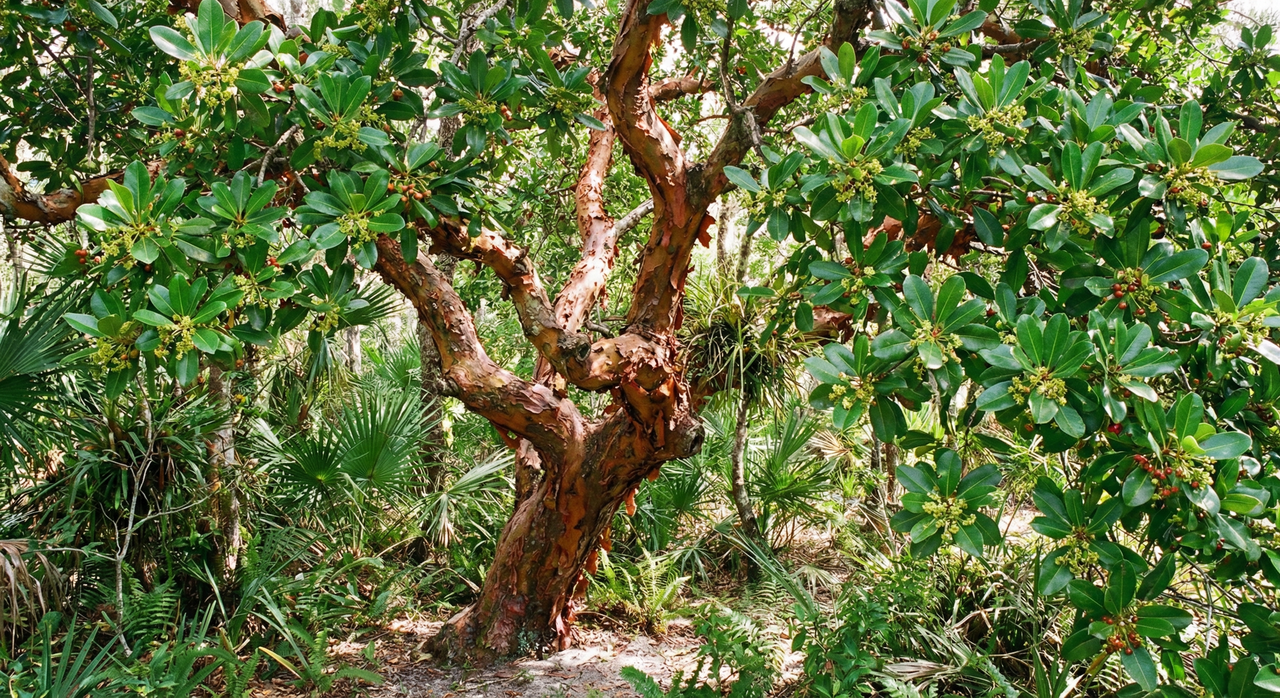
In the wild this species reaches 3–6 meters, though cultivated plants usually stay closer to 1.5–4.5 meters with a dense, rounded, multi-stemmed habit and grayish-brown bark.[10] The root system is shallow and fibrous, spreading laterally rather than driving deep, which is why I switched my young plants into wide, shallow containers after watching early specimens sulk and stall in tall nursery pots. The leaves are simple, alternate, elliptic to obovate, 5–12 cm long, glossy dark green on top and paler beneath, with a leathery texture that almost feels synthetic.[11][12] Flowers are small, fragrant, white to creamy, and borne in axillary clusters.[11] The fruit is a bright red drupe, 1–2 cm across, holding 1–3 seeds and the glycoprotein miraculin in its pulp.[13] Eaten fresh, the berry itself tastes only mildly sweet; the real event happens when something acidic follows. For contrast within the broader genus, Sideroxylon saxorum develops a deep taproot reaching 2.5–4.5 meters[14][15], showing how differently the genus has adapted across habitats.
Traditional and Cultural Uses in West Africa
The Fon, Ashanti, Yoruba, and Igbo peoples have used this berry for centuries, chewing it before meals of fermented foods or palm wine to make everything taste sweet.[16] Miraculin binds to sweet-taste receptors in a pH-dependent way, and the effect lasts 30 minutes to two hours.[17] European documentation begins with British surgeon Thomas Winterbottom in 1720, and formal scientific description came in 1865.[18] In Yoruba, Akan, and Igbo traditions the berry carries symbolic meanings around transformation, fertility, and community; it appears in ceremonies celebrating sweetness and togetherness.[19] Having read the ethnobotanical literature, I believe it's important to say plainly that the knowledge of miraculin's power originated with West African communities long before any patents were filed, and a 1970s Japanese patent on miraculin drew well-deserved criticism on exactly those grounds.[20]
Fun Facts and Conservation Status
Historically wild-harvested with little active cultivation, the plant attracted renewed scientific and commercial interest after the 1960s when miraculin's chemistry was studied in laboratories.[18] Today, cultivation in Florida, Hawaii, and other frost-free regions helps ease pressure on wild populations[21], and the berries along with miraculin tablets are sold commercially as a culinary novelty in the United States. The global IUCN status remains Least Concern, but given the regional pressures already noted in Ghana, home cultivation and responsible sourcing carry real conservation weight for a plant that belongs, first and foremost, to the forests that shaped it.
Bully Tree Varieties and Where to Buy
Notable Cultivars and Cultivated vs Wild Plants
If you've ever grown something from wild-collected seed and then compared it to a selected cultivar, you already understand the gap. With Synsepalum dulcificum, that gap is meaningful. Cultivated selections produce fruits up to 3 cm long with higher, more consistent miraculin content, while wild plants typically run 1-2 cm with results that vary considerably berry to berry.[22][11] Germination is more reliable too, with cultivated seed hitting roughly 70% versus around 50% for wild-collected material, and fruit size runs about 20-30% larger on average.[22][23] For a home grower waiting years between planting and first fruit, that consistency matters.
Several horticultural selections circulate among enthusiasts. 'Mberry' is promoted for high yields, 'Flamingo' is noted for reddish-pink fruit coloration (though color descriptions vary between sources), and 'Red Hour' is a compact form that handles container life well.[24][25] I've found 'Red Hour' types genuinely easier to manage on a covered patio, similar to keeping a compact dwarf blueberry rather than a full-sized bush. 'Hummel' and 'Robust' also appear occasionally, the latter favored for its vigorous growth habit and typically propagated from cuttings.[7][26] None of these are formally registered cultivars in any official sense, so treat the names as useful shorthand rather than guaranteed standards.
Sourcing Miracle Fruit Plants and Seeds
You won't find this on the shelf at your local garden center. Synsepalum dulcificum is sold almost exclusively through specialized online nurseries, tropical plant specialists, and enthusiast platforms like Etsy.[27] Live plants run anywhere from $20 to well over $100 depending on size and maturity, with shipping often adding a significant chunk on top. I've ordered miracle fruit plants from specialty nurseries multiple times and learned the hard way that paying more for a larger, established plant nearly always beats gambling on seed. The seeds are recalcitrant, meaning they lose viability rapidly after harvest and simply cannot be stored the way most seeds can.[28] That biological reality, combined with the plant's niche status as a West African specialty crop rather than a commercial commodity, keeps supply thin and prices unpredictable.[29]
Before placing any order, especially from an international source, check compliance requirements carefully. Importing plants or seeds into the US requires following USDA APHIS regulations, which can include permits and phytosanitary certificates.[30] State rules add another layer; California's plant quarantine requirements are particularly strict, and other states have their own restrictions.[31] I always check both USDA APHIS and my state agriculture department rules before placing an order. It's saved me from wasted shipments more than once. Treat any online listing as a starting point, confirm the seller ships to your state, and ask directly whether the plant material comes with the appropriate documentation.
Bully Tree Propagation and Planting Guide
Quick note before we get into the how: you'll still find this plant sold and described under the name Sideroxylon dulcificum in older texts and some nursery catalogs, but the accepted botanical name is now Synsepalum dulcificum.[32][33] Both names appear in the literature, and I mention it only because searching either will turn up useful extension resources worth reading before you start.
Propagation Methods for Miracle Fruit
There are essentially two roads: grow from seed, or multiply vegetatively through cuttings, air layering, or grafting.[34][35] Seeds are easier to source and require no special equipment, but vegetative methods give you true-to-type plants with known miraculin levels that begin fruiting much sooner.[36] For permaculture guild planting where fruit quality and consistency matter, I almost always reach for vegetative propagation.
If you're going the seed route, the first thing to understand is that these seeds are recalcitrant. Each one is oval to ellipsoidal, roughly 1-2 cm long, with a hard, smooth brown seed coat and an oily endosperm that dries out fast.[11][37] I now extract and sow seeds the same day I get ripe berries because even a few days of drying in my humid subtropical climate drops germination noticeably. Fresh seeds can hit 80-90% germination; stored seeds often fall below 50% after just one month.[34][38] To improve your odds, lightly scarify the hard coat, then soak seeds in warm water for 24-48 hours before sowing. Gibberellic acid treatment also improves both speed and rate if you have access to it.[24][39] Throughout all of this, use sterile media. Phytophthora root rot loves these warm, moist germination conditions, and sanitation is far cheaper than starting over.[32]
Semi-hardwood cuttings taken in late spring or early summer, 4-6 inches long, root in 4-8 weeks at 50-70% success when treated with IBA rooting hormone at 1,000-3,000 ppm and held in a sterile perlite or peat-sand mix under high humidity (80-90%) and gentle warmth (70-80°F).[7][36] Air layering on a mature specimen pushes even higher, with 70-90% success; apply rooting hormone to a girdled section, pack it with moist sphagnum, wrap tightly, and expect roots in 6-8 weeks.[35] That method is my go-to when I want to quickly multiply a plant I know has good fruit quality. Grafting onto compatible Sapotaceae rootstocks, including other Sideroxylon species or sapodilla (Manilkara zapota), succeeds at 60-80% using bark or whip-and-tongue technique in spring when the cambium is active.[40][41] I've used sapodilla as an interstock in a few trials and seen noticeably faster establishment, though your results will vary with rootstock size and timing.
Germination Timeline and Seed Viability
Under optimal conditions, fresh seeds germinate in 2-8 weeks at 75-85°F in consistently warm, moist, high-humidity conditions using sterile acidic media.[34][42][7] Stored seeds or those that were allowed to dry can stretch that to several months, if they germinate at all. Freshness and pretreatment are the two variables most within your control, so sow immediately and scarify.[24][39]
The harder truth about seed-grown plants is what comes next: 3-5 years before the first fruits appear, typically when the shrub reaches 2-3 feet tall.[34][24] Grafted plants fruit in 2-3 years; cuttings under good tropical conditions can produce in 1-2 years.[43] I've grown batches of seedlings side by side and watched some trail the others by nearly a full season in size, leaf shape, and eventually fruit quality. That genetic variability is real and worth factoring in if you need reliable miraculin consistency. Soil and site selection, which we'll get into next, are the other major variables determining whether those seedlings hit the shorter end of that timeline or the longer one.
Soil, Site Selection, and Planting Technique
This species evolved to grow on well-drained, acidic, humus-rich soils at low elevations with consistent moisture and dappled light.[3][44] Every soil decision you make should try to replicate that. The target pH is 4.5-5.8 (ideally 5.0-5.5) in a well-drained loamy or sandy loam amended with peat moss, pine bark, or coco coir.[7][32] Go above pH 6.0 and you'll see iron and manganese lockout causing chlorosis fast; drop below 4.0 and aluminum toxicity becomes a risk.[12] Never add lime. Drainage is just as critical as pH; waterlogged roots invite Phytophthora and that's rarely recoverable.[32]
I think of this plant the way I think about blueberries: the chemistry of the soil matters as much as the water or the sun. Blueberries are forgiving down to about pH 4.8 and you can push them a bit toward neutral without disaster. Miracle fruit has less tolerance for drift in either direction, so I test twice: once when I build the mix, and again after the first month, because peat-based media can shift as it settles. For container growing, a mix of roughly 50% peat or coco coir, 30% perlite, and 20% pine bark fines keeps pH in range and drains freely.[45][46] It's the same conceptual framework as a blueberry or azalea mix, just dialed a shade more acid. For contrast, the related Satinleaf (Sideroxylon altamiranoi) from Mexican dry forests tolerates calcareous soils up to pH 7.5 with no problem,[47][48] which is a useful reminder that being in the same genus doesn't mean the same soil preferences. Keep those two very separate in your planning.
Spacing and Transplanting Tips
Mature miracle fruit typically reaches 6-15 feet tall, though most cultivated shrubs stay in the 6-10 foot range, with a spread of 5-8 feet.[12][6] For home gardens, 6-10 feet between plants gives good airflow; in orchard rows, 6-8 feet within the row and 10-15 feet between rows is the standard.[49] I learned the hard way that planting tighter than 6 feet leads to crowded canopies and noticeably more anthracnose pressure in wet summers. Generous spacing is one of those things that feels wasteful early on and deeply sensible three years later.
Transplant seedlings when they're 4-6 inches tall with 2-3 sets of true leaves, ideally in spring or early summer.[22][42] Mulch with pine bark to retain moisture and keep the root zone cool and acidic, and if you're putting plants into a full-sun spot, run 30-50% shade cloth until they're established. Once the soil is right, the spacing is honest, and the roots aren't sitting in water, this slow-growing shrub will settle in and start building toward years of small red berries worth every bit of the wait.
Miracle Fruit Care Guide: Growing Sideroxylon dulcificum Successfully
You may know this plant as Synsepalum dulcificum, the currently accepted scientific name, or as Sideroxylon dulcificum, which you'll still find throughout older horticultural literature and some nursery tags. Same plant, same care needs. I'll use both names here so neither group gets lost.
Light and Sunlight Requirements for Miracle Fruit
Everything about caring for this plant starts with understanding where it comes from: the shaded midstory of West African rainforests, beneath a dense canopy with filtered, shifting light. That origin is your north star for every placement decision. In practice, miracle fruit wants 4 to 6 hours of filtered or morning sun daily, with reliable protection from intense afternoon exposure.[24][50][12] I've watched plants placed in full Florida sun develop the same scorched, curling leaves I see on azaleas in a west-facing bed in July. Too much light and you get leaf scorch, wilting, and yellowing; too little and the plant goes leggy, chlorotic, and stops fruiting with any enthusiasm.[51][6] For indoor growers, full-spectrum grow lights positioned 12 to 18 inches above the canopy, running 12 to 14 hours daily, combined with 60 to 80% ambient humidity, can substitute reasonably well.[51][52]
Water Needs and Irrigation for Healthy Growth
The goal is consistently moist soil without waterlogging. I check the top inch or two; if it's dry, the plant gets water. During the growing season that usually means every 3 to 7 days, scaling back to every 10 to 14 days in winter, with deep irrigation of 1 to 2 inches per week during dry stretches.[24][12][53] Consistent moisture also directly supports heat resilience. Plants that dry out during a heat spike are the first ones to drop blossoms, and blossom drop is the most visible sign that you've let the roots stress longer than they should.
Soil, Fertilizer, and Feeding Schedule
Soil pH is the non-negotiable. Target 4.5 to 5.8.[54][27] I think of this plant the way I think about blueberries in a client's kitchen garden: if the pH drifts above 6.0, iron locks up in the soil and those glossy leaves start going yellow between the veins, which is classic iron chlorosis. Chelated iron corrects it, but getting the pH right prevents it.[55][56] For feeding, apply a balanced acidic fertilizer (10-10-10, 8-3-9, or 6-6-6 all work) at half strength every 4 to 6 weeks from spring through summer; the same fertilizers you'd reach for with azaleas or rhododendrons are a good fit since they typically contain sulfur to help maintain acidity.[57][24][54] Ease off in fall and stop entirely through winter. For containers, an acidic mix of roughly 50% peat moss or coco coir, 30% perlite, and 20% pine bark keeps drainage sharp while holding moisture, and keeping the soil EC between 0.5 and 1.5 mS/cm prevents the salt accumulation that quietly poisons container plants over time.[54][58] Fish emulsion or worm castings every 4 to 6 weeks work well as organic alternatives.
Temperature, Frost, and Heat Tolerance
Miracle fruit is hardy in USDA zones 10 to 11 and, frankly, that's a hard line for outdoor cultivation.[12][49] Growth slows below 50°F and real damage begins at 32°F, with brief dips to 28°F possible but not without consequences.[24][59] Young plants are especially vulnerable; I treat them the same way I treat tender gingers in zone 9B work, where one unprotected cold night erases months of progress. Containers brought indoors above 50°F, frost blankets, or a heated greenhouse are the practical tools outside zone 10. The upper range is more forgiving: optimal growth runs 70 to 85°F, with tolerance to around 95°F if shade, steady moisture, and humidity are maintained.[53][22] Prolonged heat above 86°F in dry or low-humidity conditions causes scorch, wilting, and blossom drop, with flowering and fruiting stages being the most sensitive.[60] A 30 to 50% shade cloth and 2 to 4 inches of pine bark mulch make a measurable difference during Central Florida summers.[53][61] I've seen plants with good mulch and afternoon shade hold their fruit set through August heat that stripped poorly sited neighbors bare.
Pruning, Maintenance, and Seasonal Care Rhythm
This is a slow to moderate grower, reaching 6 to 10 feet over 3 to 5 years under ideal conditions.[22][6] Prune lightly after fruiting or in early spring: remove dead or crossing branches, open up airflow, and shape for either a multi-stemmed shrub or a staked small tree by removing basal suckers.[24][22] Heavy cuts are something I've learned to avoid the hard way: an established plant that gets aggressively pruned will push energy into recovery rather than fruiting, and you can lose several months of production waiting for it to rebound. On young plants, pinching stem tips early produces noticeably bushier specimens than letting them run without guidance. Seasonally, this is an evergreen with no true dormancy, but it does slow down in cooler or drier periods.[62][63] For container plants overwintering indoors, ease back on water and hold off on fertilizer, but keep humidity up and maintain bright indirect light. The goal isn't dormancy management; it's simply reducing inputs to match the plant's slower winter pace while keeping it comfortable enough to hit the ground running when warmth returns.
Harvesting Miracle Fruit (Synsepalum dulcificum)
What's formally known as Synsepalum dulcificum (Sideroxylon dulcificum in older literature)[34] is a plant that teaches patience before it teaches anything else. I started my first plants from seed, and I waited. Plants grown that way take 3-5 years to reach reliable fruiting, sometimes stretching to seven under less-than-ideal conditions, while cuttings can begin bearing in as little as one to two years.[7] I now keep a note in my garden journal every time I see the small white flowers open, because the countdown to harvest starts there.
When to Harvest: Timing, Color Cues, and Miraculin Peak
That bloom-to-berry window is roughly 30-45 days under good warmth and humidity,[49][64] though some growers report it stretching to three or four months when conditions are less than ideal. In West Africa, fruiting follows the rainy season from roughly June through October.[65] In Florida's subtropical climate, you're looking at a May-to-October peak with the possibility of year-round production under protection.[35]
The color cue is your most reliable signal. I think of it like watching cherry tomatoes: you wait past orange, past light red, all the way to that vivid, glossy, deep red. At full ripeness, the berry yields slightly to gentle pressure and separates cleanly from the stem with almost no effort.[24][66][67] That's the moment miraculin concentration is highest, climbing from roughly 0.5% of dry weight in unripe fruit up to as much as 5% in fully ripe berries.[66][68][69] Pick gently; these small oval berries, typically 1-3 cm long with one or two seeds inside,[34] bruise easily and that bruising degrades the protein fast.
Yield, Flavor Profile, and Post-Harvest Handling
The first thing that surprised me when I tasted a fresh berry on its own was how mild it is. Mildly sweet, faintly tangy, with a low-intensity fruity-floral aroma that doesn't shout at you.[11][70] There's no smell of ripeness to key off of the way you'd get with a mango or a fig. You watch color. That's it.
Yields are modest. A mature plant in good health typically produces 20-50 berries per season, with well-managed specimens occasionally reaching 50-100 per year.[35][71][72] I have six plants growing in a loose hedge, and between them I collect enough each summer to share berries with friends for lemon parties. It's plenty. Post-harvest, miraculin is heat-sensitive, so I harvest on cool mornings and refrigerate immediately. I lost potency in an early warm-season batch by leaving berries on the counter too long. Refrigerated at 4-10°C with high humidity, berries hold for one to three weeks; freezing extends that considerably.[73][34][69] The fruit's real story isn't what it tastes like in the hand; it's what happens the moment it meets your tongue.
Bully Tree (Sideroxylon dulcificum) Preparation and Uses
Culinary Uses and Taste Modification with Miracle Fruit
Everything about using miracle fruit in the kitchen starts with miraculin, a glycoprotein making up 0.5 to 2 percent of the berry's dry weight that profoundly alters taste perception when combined with acidic foods.[74][75] The result is that sour tastes flip to sweet for anywhere from 15 to 60 minutes, peaking around 20-30 minutes in.[74][66] Getting the most from the berry is straightforward but non-negotiable: slowly chew or suck the fresh pulp for a full minute or two to coat the tongue thoroughly, then eat your acidic food. I usually serve them at garden workshops just before a tasting of straight lemon wedges, and watching someone's expression shift from braced to delighted never gets old.
Heat is this protein's enemy. Miraculin denatures above 50-60°C and loses roughly half its activity when heat-dried, which means any cooking or improper drying renders the berry functionally useless as a taste modifier.[76][66] I think of it like fresh basil: handle it roughly with heat and the thing that made it special is simply gone. Always use the fresh berry or a properly freeze-dried product.
In West Africa, communities have long used the fresh berries to sweeten palm wine and make tart seasonal fruits more palatable during lean periods.[77] Modern kitchens have run with that logic, pairing the fruit with lemons, limes, grapefruit, vinegar-based dishes, and sour cocktails to create sweetness without any added sugar.[11][78] One thing I label on my harvest trays: which berries came from my West African-sourced plant, because those tend to deliver noticeably stronger effects than fruit from Florida-grown cultivars.[79] On its own, the berry tastes mildly tangy with subtle fruity notes; it's not a fruit you'd eat by the handful.[74] The berry's nutritional profile is a pleasant supporting character: roughly 20-30 kcal and 20-35 mg of vitamin C per 100 grams, with a solid array of flavonoids and phenolic antioxidants.[80][81]
A firm word on safety: only the ripe pulp is for eating. The seeds can cause gastrointestinal discomfort and I never let children pick at them casually; I tell guests outright to spit them out.[74][12] Stems, roots, flowers, and sap have no established culinary use. The leaves are the one exception; they can be prepared as an herbal tea and are considered safe in moderation.[11][82]
Medicinal and Therapeutic Preparations
When fresh berries aren't available, freeze-dried tablets and powder are the practical alternatives. Effective dosing starts around 0.5 mg of miraculin and peaks at 2-3 mg per serving, with commercial supplements typically running 50-300 mg miraculin equivalent per tablet.[83][84] Modern wellness applications for these tablets frequently track alongside dietary plans that require significant sugar reduction.[85] Miraculin itself is extracted by homogenizing the pulp, filtering, running it through chromatography, and freeze-drying the result into stable powder.[86] If you're drying berries at home, keep temperatures well below 50°C or accept that much of the activity will be lost; I've seen home-dried fruit deliver barely a flicker of the transformation fresh berries produce.
Non-Food Applications and Genus-Level Contrasts
Beyond the fruit, the wood of Sideroxylon dulcificum is hard and durable enough for tool handles, carvings, and small-scale construction.[11] That density is fairly typical of the Sideroxylon genus, but in a home permaculture context, timber is honestly an afterthought. The fruit is the whole point.[87]
The genus does remind me to check edibility rules species by species. Pheasant zapote (Sideroxylon stevensonii), a relative I've only read about rather than grown, produces sweet creamy pulp eaten fresh or cooked into jams, and it's rich in carbohydrates, fiber, vitamin C, and potassium. But its raw seeds contain cyanogenic glycosides and require cooking before they're safe.[88][89] The contrast is instructive: miracle fruit seeds get spit out, pheasant zapote seeds get cooked. Same genus, completely different rules. That's a lesson I apply every time I trial a new fruit tree. Know the species, not just the family.
Bully Tree Health Benefits and Medicinal Uses
Most fruits earn their reputation through vitamins or antioxidants. The bully tree earns its nickname, miracle fruit, through something far stranger: a single glycoprotein that rewires how your tongue reads flavor. That compound is miraculin, and everything else this plant offers scientifically falls in its shadow, which is saying something given the supporting cast.
Miraculin: The Taste-Modifying Glycoprotein at the Heart of Miracle Fruit
Miraculin is a glycoprotein with a molecular weight of roughly 24 kDa and makes up about 6 to 10 percent of fresh fruit yield.[90][91] What it does is deceptively elegant: it binds to the sweet taste receptor heterodimer T1R2/T1R3 on your tongue and sits there quietly at neutral pH, doing almost nothing.[92][93] The moment acid enters the picture, though, the protein changes shape and becomes a direct agonist for those receptors. The actual pH of the food hasn't changed at all; your tongue just reads "sweet" instead of "sour." I like to think of it like a door that's stuck until the lemon juice unlocks it.
The effect lasts somewhere between 30 minutes and two hours depending on the individual, and it takes only 0.5 to 2 mg of miraculin to trigger it.[94][95] No calories are added. Nothing about the food changes. It's the most convincing food trick I've ever grown in my garden.
That taste-modifying mechanism has led to the most clinically grounded application in the research so far: helping chemotherapy patients who develop dysgeusia, the metallic or otherwise distorted taste perception that makes eating miserable during treatment. Small pilot and phase I/II trials have shown real improvements in food palatability and taste perception, particularly for head and neck cancer patients.[96][97] I'm not a clinician, but I find those results genuinely encouraging for anyone who's struggled to eat after treatment. If that's your situation, bring these studies to your oncologist rather than treating berries as medicine on your own. The research warrants the conversation.
Anti-inflammatory and antioxidant activity also appear in the literature, with extracts inhibiting COX-2, reducing nitric oxide production in stimulated macrophages, and suppressing inflammatory cytokines TNF-alpha and IL-6.[98][99] DPPH radical scavenging and upregulation of antioxidant enzymes like SOD have also been demonstrated.[100][101] There are also preliminary findings on alpha-glucosidase inhibition and hypoglycemic effects in rodent models[102], and some intriguing in vitro anticancer work showing apoptosis induction in colon, breast, and oral squamous cell carcinoma lines.[103][99] All of that is cell-culture and animal work. Most of the science beyond taste modification is still preclinical and hasn't been validated in large human trials.[104]
Supporting Phytochemicals and Antioxidant Activity
Miraculin gets all the press, but the fruit carries a solid supporting cast of phenolics and flavonoids. Total phenolic content runs around 42.5 mg GAE/g in methanolic extracts, with flavonoid content close to 28.7 mg QE/g, including specific compounds like quercetin, kaempferol, rutin, and hyperoside derivatives.[105][106][107] For context, those flavonoid numbers put it in the same rough territory as guava and acerola, both of which I grow alongside miracle fruit in Central Florida, so the antioxidant activity the lab work describes isn't surprising when you look at the phytochemical density.
The miraculin itself concentrates in ripe fruit pulp at roughly 0.01 to 0.04 percent dry weight, and the highest levels are consistently found in fully ripe red berries.[108][86] In my own experience, berries harvested at peak ripeness in warm, humid conditions produce a noticeably more intense taste-modifying effect, which lines up with what the ripeness-stage research suggests. Also present are gallic acid, catechins, and tannins[109], plus alkaloids and a compound called asexamitrin A.[109] Related Sideroxylon species add triterpenoids like lupeol and betulinic acid to the picture, and the genus as a whole produces defensive latex rich in polyisoprenes.[110] These compounds vary with ripeness, season, and how the fruit is processed, so published figures are useful benchmarks rather than absolutes.
Nutritional Profile and Diabetes Management Potential
As a food, miracle fruit is modest. Per 100g of fresh pulp it delivers roughly 20 to 60 calories, 85 to 91 percent water, 5 to 15g of carbohydrates, 2 to 3g of fiber, and less than 1g of fat.[111][112] Vitamin C comes in at 10 to 30 mg per 100g, covering roughly 11 to 50 percent of the Daily Value depending on ripeness.[111] There's a reasonable mineral presence too, with potassium around 250 mg, calcium around 30 mg, and small amounts of magnesium, iron, and zinc per 100g fresh weight.[113]
Comprehensive data is thin. The USDA FoodData Central has no entry for this fruit[114], so I piece numbers together from peer-reviewed papers and regional tropical fruit databases, treating published figures as approximations that can shift meaningfully with growing conditions. The real nutritional story here isn't the macros; it's that the zero-calorie sweetening effect makes low quantities of sugar taste substantial, which is why the preliminary anti-diabetic research on alpha-glucosidase inhibition and blood sugar modulation in rodent models feels worth watching.[102] Human trials are still needed before anyone should call it a diabetes tool.
Safety Profile and Regulatory Status
The whole fruit is considered non-toxic and safe for moderate human consumption.[11][115] Toxicology studies on miraculin found no genotoxicity or carcinogenicity at doses up to 1000 mg/kg in rats, and short-term human studies report only occasional mild gastrointestinal effects at most.[116] No significant toxic compounds like cyanogenic glycosides have been identified; the primary active component remains the glycoprotein itself.[117] For pet owners: the ASPCA lists it as non-toxic to dogs and cats.[118]
The regulatory picture is worth understanding clearly. Whole dried miracle berry powder has GRAS notices with the FDA for use in beverages, but isolated miraculin as a standalone additive is not FDA GRAS certified and requires pre-market approval as a food additive. The EU has authorized dried miracle berry as a novel food ingredient, and Japan has approved it as a food additive.[119] That distinction matters if you're thinking about commercial applications versus eating berries from your own shrub.
I've eaten these berries for years without any issue, and the toxicology data supports that confidence. That said, allergic reactions are rare but possible, particularly for anyone with latex or fruit allergies due to potential cross-reactivity.[120] If you have a latex allergy or take medications that interact with phenolic compounds, have that conversation with your doctor before you start eating these regularly. The research on those interactions is still limited, and it's a straightforward precaution worth taking.
Bully Tree Pests and Diseases
There's a certain irony in how well-armed this plant is in its native West African habitat and how quickly that armor seems to slip once it moves into a pot or a humid subtropical garden. The flavonoids, phenolic acids, and tannins in Sideroxylon dulcificum contribute to moderate to good natural resistance against many common insects in the wild, where co-evolved predators and competitors keep populations in check.[121][122] Bring it into cultivation, and that dynamic shifts. I've watched perfectly healthy outdoor plants stay clean for years while a crowded greenhouse specimen ten feet away gets hit by three different pests in a single season. Context matters enormously here.
Common Insect Pests and Management
When monitoring for pests, prioritize sucking insects such as aphids, scale, mealybugs, spider mites, and whiteflies.[123][24] Aphids cluster on the newest flush of growth and produce honeydew that leads quickly to sooty mold. I learned this the hard way after overfeeding a young plant with a nitrogen-heavy fertilizer; within two weeks the soft new leaves were coated in aphid colonies. Excess nitrogen promotes exactly the tender growth these insects find irresistible, so keeping your feeding regimen lean and consistent is genuinely your first line of defense.[124] Scale and mealybugs cause similar honeydew problems, while spider mites tend to appear when plants are kept too dry indoors, causing stippling and a washed-out, dusty look to the foliage. Whiteflies are more of a greenhouse nuisance and can carry viral-like issues in heavy infestations.[54] Juvenile plants are notably more vulnerable than established ones, and pressure is reliably worse in enclosed or poorly ventilated spaces.[125]
For management, I favor a layered approach: good spacing and pruning for airflow first, targeted organic sprays second. Neem oil and insecticidal soaps handle most soft-bodied pest outbreaks without harming the beneficial insects you want nearby.[124][126] I've released ladybugs into my own garden setups and seen mealybug pressure drop noticeably within two weeks. It's not a magic fix, but biological controls work when the habitat supports them. Leaf miners occasionally show up too, leaving those winding pale trails across leaves, but the damage is mostly cosmetic and rarely warrants intervention beyond removing heavily affected foliage.[127]
Fungal and Other Diseases
The scientific literature specifically documenting diseases of this species is thin, and most guidance is extrapolated from broader tropical fruit pathology.[61] What's consistent across sources is that fungal diseases are the primary concern, while bacterial and viral problems are relatively uncommon.[54] Root rot caused by Phytophthora spp. is the most serious, and it almost always traces back to waterlogged soil. My standard habit before watering is to push a finger four to six inches into the soil; if it's still damp at that depth, I wait. That one practice alone eliminates most root rot risk.[52]
Anthracnose (Colletotrichum spp.) causes dark lesions on fruit and accelerates drop, especially during stretches of high humidity.[123] Fungal leaf spots from Cercospora or Phyllosticta species show up similarly, and powdery mildew can appear when humidity climbs above 80% with moderate temperatures.[128] I had a greenhouse plant develop a solid powdery mildew case one winter. Once I increased plant spacing and switched from overhead watering to drip, it cleared up without any chemical intervention. Airflow and dry foliage solve more fungal problems than any spray will. When fungicides are needed, copper-based formulations or metalaxyl for Phytophthora are the most commonly recommended options, though prevention should always come first.[61][129] Bacterial issues like leaf spot or wilt are possible but uncommon, and mosaic-like symptoms often turn out to be nutrient deficiencies or pest damage rather than true viral infection.[61] Keep the soil acidic, the drainage honest, and the canopy open, and most of this plant's disease risk stays firmly in the preventable category.
Miracle Fruit in Permaculture Design
If you're gardening anywhere south of USDA zone 10, you need to make peace with that reality before you fall too hard for this plant. Miracle fruit is a genuine tropical: native to the humid understory of West African rainforests, it wants annual rainfall in the range of 1,500-2,500 mm, humidity consistently above 60%, and temperatures holding between 21-29°C.[34][130] That puts reliable in-ground cultivation squarely in USDA zones 10-11, full stop.
Climate Suitability and USDA Hardiness Zones
Outside those zones, container growing is the honest answer. Prolonged exposure below 28-30°F is typically fatal, and that's not a soft guideline.[50][7] I've grown these in protected Central Florida microclimates for several seasons now, and one thing I've learned is that the distinction between "brief" and "prolonged" cold really matters. A few hours at 28°F on a still night, with an established plant under frost cloth? Usually fine. An overnight freeze with temperatures stuck below that threshold? Bring the pot inside before you go to bed, because you won't like what you find in the morning.
The soil and siting requirements flow directly from the plant's rainforest origins: partial shade, excellent drainage, consistent moisture, and strongly acidic conditions with a soil pH of 4.5-5.8.[131][49] Those pH numbers are not flexible, and I'll get into exactly why in the care guide. For design purposes, what matters is knowing you're siting an acid-lover that has more in common with blueberries and azaleas than with your average fruit tree. One quick note on taxonomy: older literature sometimes lists Sideroxylon altamiranoi (Satinleaf) as a related species that tolerates drier conditions, seasonal drought, and zone 9 lows.[132] It's a useful reminder that the genus has range, but I'd be cautious about letting that create false confidence in miracle fruit's hardiness. I stick to verified Synsepalum dulcificum sources for my design recommendations precisely because the nomenclature confusion in older texts has led too many growers to underestimate how narrow this plant's climate window actually is.
Forest Layer Placement and Guild Companions
In its native West African habitat, Sideroxylon dulcificum grows as an evergreen shrub or small tree reaching 10-20 feet, occupying the understory beneath taller canopy trees.[133][134] That growth habit translates almost directly into the shrub layer of a tropical food forest design, where it slots in comfortably beneath coconut palms or tall fruiting trees while casting just enough shade for lower ground covers beneath it.
The guild companions that make the most sense here are the ones that share its acid-soil preference and humidity tolerance: nitrogen-fixing legumes like pigeon pea and cowpea work well at the edges to feed the system, while ginger, turmeric, pineapple, and ferns fill the ground layer.[135] Think of it the way you'd think about placing a blueberry in a temperate polyculture: the acid requirement is the organizing principle, and everything else in the guild should be chosen with that in mind. What gives miracle fruit an extra layer of value in this role is its mycorrhizal associations, which improve phosphorus and nitrogen uptake in the poor, leached soils where acid-loving tropical plants often live.[136] That fungal network is worth protecting: avoid tilling around established plants, and be thoughtful about fungicide use in any part of the guild that might disrupt it.
Ecosystem Functions and Pollination Ecology
The flowers are small, white to cream-colored, and tubular, producing a mild sweet scent and nectar that draws honeybees, stingless bees, and butterflies.[137] In a well-planted tropical guild, I've watched the flowering periods become genuine pollinator moments, especially when stingless native bees are present. But here's the design issue you need to plan around: miracle fruit is largely self-incompatible, meaning you need at least two genetically distinct plants for reliable fruit set.[138] Natural fruit set in the wild is often below 10%, even with pollinators present.[34] In cultivation, that number can stay stubbornly low unless you intervene.
My solution is a small soft-bristle paintbrush, applied during the early morning hours when flowers are freshest. Transferring pollen between two unrelated plants during that window has turned what could be a frustrating yield into a consistent one. It takes about five minutes and becomes part of a morning garden routine quickly enough. Once fruit does set, birds and small mammals handle dispersal naturally, and the plant's evergreen root system contributes to soil stabilization over time.[139][140] Low herbivory is another quiet benefit: the plant's chemical profile gives it reasonable resistance to browsing pressure,[141] which is a genuine practical advantage in food forest settings where deer or other browsers are a concern. A word of ecological caution, though: because fruit is bird-dispersed and the plant experiences low herbivory, any introduction outside its native African range deserves thought. I don't consider it a significant invasive risk in managed subtropical gardens, but responsible siting means knowing your local ecology before you plant.
The Berry That Made My Skeptical Father-in-Law Eat a Lemon Wedge and Smile
I've grown a lot of plants that impress people on paper. Miracle fruit impresses them at the table, in real time, with their own mouths. That moment, watching someone's expression shift from doubt to disbelief after biting into a lime, is something I haven't found anywhere else in thirty years of growing food. That's why it stays.
Sources 141
- Synsepalum dulcificum - Kew Science Plants of the World Online ↩
- Synsepalum dulcificum (Schumach.) Daniell ↩
- Kew Royal Botanic Gardens - Synsepalum dulcificum ↩
- Flora of West Tropical Africa ↩
- Shade Tolerance in Tropical Understory Plants - Journal of Ecology ↩
- Synsepalum dulcificum Plant Profile ↩
- Miracle Fruit (Synsepalum dulcificum) Plant Profile ↩
- Synsepalum dulcificum ↩
- Ghana Plant Red Data ↩
- Synsepalum dulcificum - Missouri Botanical Garden Plant Finder ↩
- Synsepalum dulcificum ↩
- Synsepalum dulcificum - North Carolina Extension Gardener Plant Toolbox ↩
- Missouri Botanical Garden Plant Finder ↩
- Plants of the World Online (Kew Gardens) – Sideroxylon saxorum ↩
- USDA PLANTS Database - Sideroxylon saxorum ↩
- Ethnobotany of the Miracle Fruit in West Africa ↩
- The Miracle Fruit: An Undergraduate Laboratory Exercise in Taste Sensation and Perception ↩
- The Miracle Fruit: An Undergraduate Laboratory Exercise in Taste Sensation and Perception ↩
- Ethnobotanical Uses of Synsepalum dulcificum in West Africa ↩
- Patenting Miraculin: Cultural Appropriation Concerns ↩
- Sustainable Cultivation of Miracle Fruit ↩
- Miracle Fruit Plant Care - University of Florida IFAS Extension ↩
- Sideroxylon dulcificum Cultivation Guide - Rare Fruit Council ↩
- Synsepalum dulcificum Varieties - University of Florida IFAS Extension ↩
- Horticultural Selections of Miracle Berry ↩
- Sideroxylon dulcificum (Miracle Fruit) ↩
- Sideroxylon dulcificum - Miracle Berry ↩
- Plants of the World Online - Sideroxylon dulcificum ↩
- Sideroxylon dulcificum Distribution and Cultivation ↩
- Importation of Plants and Plant Products ↩
- Plant Quarantine Regulations ↩
- Diseases of Tropical Fruit Trees in Florida ↩
- Sideroxylon dulcificum - Kew Science ↩
- Miracle Fruit Plant Care Guide ↩
- Propagation of Miracle Fruit (Synsepalum dulcificum) ↩
- Vegetative Propagation of Tropical Fruits: Miracle Berry ↩
- Seed Storage Behaviour of Synsepalum dulcificum ↩
- Seed Germination of Synsepalum dulcificum: Methods and Rates ↩
- Seed Germination of Synsepalum dulcificum ↩
- Grafting Techniques and Compatibility in Sapotaceae: A Review ↩
- Propagation of Tropical Fruit Trees Including Sideroxylon dulcificum ↩
- Growing Synsepalum dulcificum from Seed ↩
- Genetic Diversity and Propagation in Sideroxylon dulcificum ↩
- Miracle Fruit (Synsepalum dulcificum) Plant Guide ↩
- Soil Requirements for Acid-Loving Plants ↩
- Soil Requirements for Miracle Berry - University of Florida IFAS Extension ↩
- Soil Preferences of Sapotaceae in Mexican Dry Forests ↩
- IUCN Red List: Sideroxylon altamiranoi ↩
- University of Florida IFAS Extension: Miracle Fruit ↩
- Synsepalum dulcificum Cultivation and USDA Hardiness ↩
- Indoor Growing Tips for Tropical Plants like Miracle Fruit ↩
- Tropical Fruit Greenhouse Requirements ↩
- Miracle Fruit (Synsepalum dulcificum) Production and Marketing in Florida ↩
- Miracle Fruit Plant Care Guide ↩
- Nutrient Deficiencies in Tropical Fruits ↩
- Soil pH and Nutrient Availability for Acid-Loving Plants ↩
- Miracle Fruit Plant Care Guide - University of Florida IFAS Extension ↩
- Miracle Fruit Plant Care - University of Florida IFAS Extension ↩
- Miracle Fruit Plant Care and Hardiness ↩
- Physiological Responses of Tropical Fruits to Heat Stress ↩
- Miracle Fruit Plant Care Guide ↩
- Miracle Fruit Plant Care Guide ↩
- Growing Synsepalum dulcificum: The Miracle Berry ↩
- Miracle Fruit (Synsepalum dulcificum) Production Guide ↩
- Phenology of Synsepalum dulcificum in Tropical West Africa ↩
- Miracle Fruit: Synsepalum dulcificum and its Miracle Properties ↩
- Miracle Fruit: A Review of Its Properties and Applications ↩
- Miraculin: Extraction, Properties and Applications ↩
- Miraculin Content in Ripening Sideroxylon dulcificum Berries ↩
- Volatile Compounds of Synsepalum dulcificum Fruit ↩
- Miracle Fruit Cultivation Guide ↩
- University of Florida IFAS Extension - Growing Miracle Fruit ↩
- Harvesting and Post-Harvest Management of Tropical Fruits ↩
- Miracle fruit - Wikipedia ↩
- Miraculin, a Taste-Modifying Protein, Exhibits Sweetener Properties by Inducing Structural Changes in Taste Receptor Models ↩
- Miraculin Extraction and Stability ↩
- History and Traditional Use of Miracle Berry in West Africa ↩
- The Miracle Fruit: Nature's Flavor Changer ↩
- Regional Variations in Miracle Berry Flavor ↩
- Nutritional Composition of Synsepalum dulcificum (Miracle Fruit) ↩
- Antioxidant Properties of Miracle Berry ↩
- The Miracle Fruit Plant: Edible and Medicinal Uses ↩
- Dosage and Efficacy of Miraculin in Taste Modification Studies ↩
- Miracle Fruit: An Alternative Sugar Substitute ↩
- Miracle Fruit (Synsepalum dulcificum): A Review of Its Potential as a Therapeutic Agent ↩
- Extraction and Purification of Miraculin from Synsepalum dulcificum ↩
- Culinary and Medicinal Applications of Sideroxylon dulcificum in Nigeria ↩
- Useful Tropical Plants Database ↩
- Cyanogenic Glycosides in Tropical Fruits - Journal of Agricultural and Food Chemistry ↩
- Miraculin, a Taste-Modifying Protein from Miracle Fruit: A Review ↩
- Miracle Fruit and Its Constituent: Miracle Fruit and Miraculin ↩
- Mechanism of the miracle fruit (Synsepalum dulcificum) in making sour fruits taste sweet ↩
- Miraculin, a Taste-Modifying Protein, Specifically Inhibits Porcine and Human T1R2/T1R3 ↩
- Clinical Study on Miraculin for Taste Disorders in Cancer Patients ↩
- Miraculin as a Dietary Supplement: Review of Applications ↩
- Clinical Trial of Miraculin for Taste Disorders in Cancer Patients Undergoing Chemotherapy ↩
- Clinical Trial of Miraculin for Chemotherapy-Induced Taste Alterations ↩
- Anti-Inflammatory Effects of Synsepalum dulcificum in Experimental Models ↩
- In Vitro Anticancer and Anti-Inflammatory Effects of Miracle Fruit ↩
- Antioxidant and Antimicrobial Activities of Miracle Fruit (Synsepalum dulcificum) Extract ↩
- Anti-inflammatory and Antioxidant Activities of Miraculin from Synsepalum dulcificum ↩
- Antioxidant and Anti-Diabetic Activities of Synsepalum dulcificum Fruit Extract ↩
- Miraculin Induces Apoptosis in Human Oral Squamous Cell Carcinoma Cells ↩
- Miracle Fruit: An Alternative Treatment for Diabetes Mellitus - A Review ↩
- Phytochemical Analysis and Antioxidant Properties of Synsepalum dulcificum ↩
- Phenolic Compounds and Flavonoids in Miracle Berry ↩
- Secondary Metabolites in Synsepalum dulcificum Fruit ↩
- Journal of Agricultural and Food Chemistry study on miraculin concentration ↩
- Phenolic Content and Bioactivity of Sideroxylon dulcificum Fruits ↩
- Phytochemical Review of Sapotaceae Family ↩
- Nutritional Composition of Miracle Berry ↩
- Nutritional and antioxidant properties of miracle fruit (Synsepalum dulcificum) ↩
- Nutritional Composition of Miracle Fruit (Synsepalum dulcificum) ↩
- USDA FoodData Central Search for Miracle Fruit ↩
- Safety of Miracle Fruit Consumption - PubMed ↩
- Safety Assessment of Miraculin, a Taste-Modifying Protein ↩
- Chemical Composition of Miracle Fruit ↩
- ASPCA Toxic and Non-Toxic Plants Database ↩
- FDA GRAS Status for Miraculin - General Food Safety Information ↩
- Safety and Efficacy of Synsepalum dulcificum ↩
- Miracle Fruit (Synsepalum dulcificum) - Cultivation and Pests ↩
- Phytochemical Composition and Antioxidant Activity of Sideroxylon dulcificum ↩
- Pests and Diseases of Tropical Fruits ↩
- Miracle Fruit (Synsepalum dulcificum) Production in Florida ↩
- Insect Pests of Greenhouse Crops: Focus on Sapotaceae Plants ↩
- Integrated Pest Management for Ornamentals in Florida ↩
- Missouri Botanical Garden Plant Finder ↩
- Fungal Diseases of Tropical Shrubs: Powdery Mildew in High Humidity ↩
- Phytophthora Root Rot in Tropical Fruits ↩
- Habitat and Ecology of Synsepalum dulcificum - Kew Science ↩
- Kew Science - Plants of the World Online: Synsepalum dulcificum ↩
- IUCN Red List: Sideroxylon altamiranoi ↩
- Plants of the World Online - Sideroxylon dulcificum ↩
- Sideroxylon dulcificum - Miracle Fruit ↩
- Sideroxylon dulcificum in Permaculture - Permaculture Research Institute ↩
- Mycorrhizal Associations in Sapotaceae ↩
- Floral Biology of Miracle Fruit ↩
- Pollination Biology of the Miracle Fruit (Synsepalum dulcificum) ↩
- Seed Dispersal by Birds in Tropical Understory Plants ↩
- Miracle Fruit Ecology in West Africa ↩
- Royal Horticultural Society - Miracle Fruit Cultivation ↩