Nobody warned me that a tree could smell like popcorn. The first time I crushed a red bushwillow leaf between my fingers on a research trip through Zimbabwe's dry savanna, I stood there genuinely confused, looking around for some explanation that wasn't there. That scent, warm and faintly buttery, coming off a scraggly little tree in cracked, bone-dry laterite soil, was my introduction to Combretum apiculatum, and I've been thinking about it ever since. Not because of the smell, exactly, but because of what that moment taught me: this plant consistently refuses to be what you expect.
Most people who encounter bushwillow in the permaculture world file it under "African novelty" and move on, assuming it's too obscure, too regionally specific, or too hard to source to be worth serious attention. That's a mistake I've watched people make with a lot of plants that evolved under pressure, in places where the soil is poor and the fire comes every few years anyway, and those are often the very species that quietly outperform everything else once you stop fussing over them. Combretum apiculatum has survived millennia of drought, flame, and hungry browsers with nothing but its own chemistry and an unusually stubborn root system. There's a lot to learn from that.
Bushwillow Origin, History, and Botanical Background
There's a particular kind of tree that doesn't announce itself. No towering silhouette, no dramatic flowers you can spot from a kilometer away. Red bushwillow is that tree, and I think that understated quality is exactly why it gets overlooked by people who haven't spent time in southern African savannas, or who haven't learned to read a landscape for resilience rather than spectacle.
Botanical Background and Ecology of Bushwillow
Red bushwillow, known botanically as Combretum apiculatum, is a perennial deciduous to semi-deciduous shrub or small tree native to a broad arc of southern and eastern Africa, spanning South Africa, Namibia, Botswana, Zimbabwe, Mozambique, Angola, Zambia, and stretching into Tanzania and the Democratic Republic of the Congo.[1][2] It lives in savannas, bushveld, scrublands, and miombo woodlands, occupying elevations from sea level up to around 1,500 meters in fire-adapted, seasonally dry ecosystems.[1][3]
I always flag the confusion between red bushwillow and its famous relative, leadwood (Combretum imberbe). They're genuinely different trees in every practical sense. Red bushwillow lives 20 to 50 years under typical conditions, grows at a moderate 0.5 to 1 meter per year early on, and begins flowering within 3 to 5 years of establishment.[1][4] Leadwood, by contrast, grows closer to 30 to 50 centimeters annually and can persist for 500 years or more, sometimes reaching 2,000 years.[5] Mixing them up in a design isn't just a botanical error; it's a planning error. The Combretum genus is wide enough that related species like velvet bushwillow (C. molle) carry their own conservation assessments, currently listed as Least Concern on the IUCN Red List.[6]
Visual Characteristics of Bushwillow
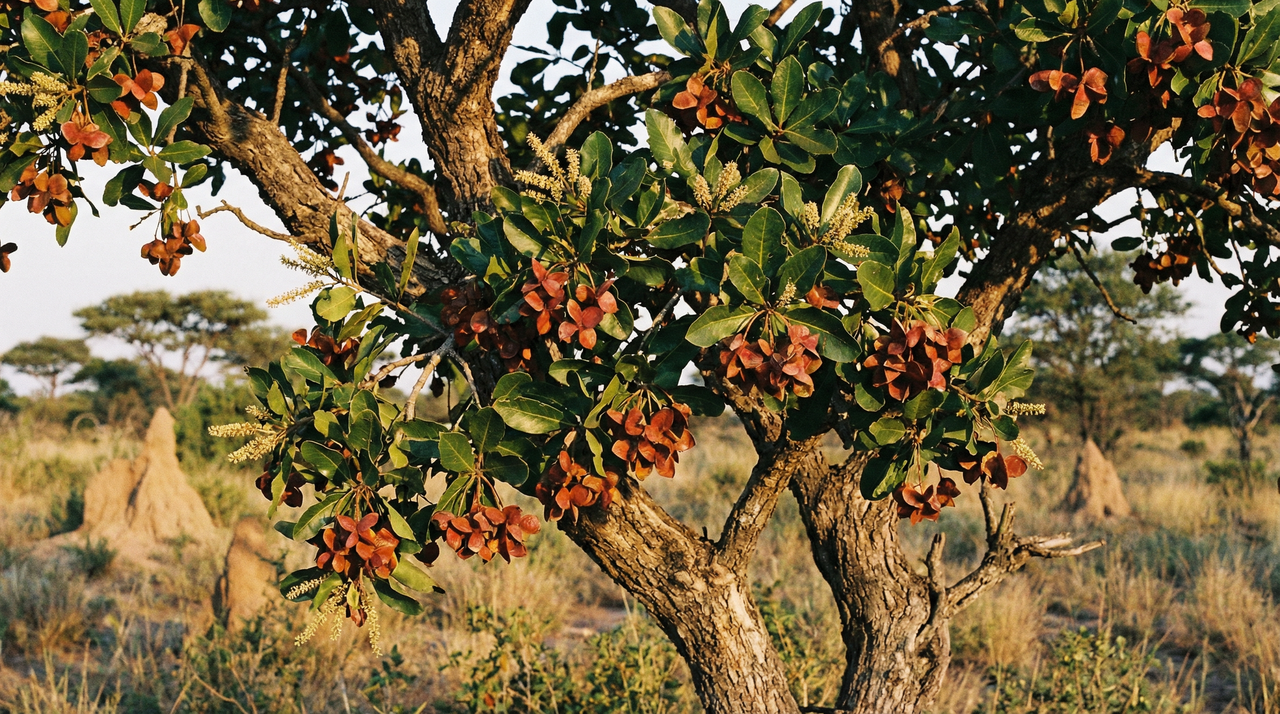
Red bushwillow typically grows 5 to 12 meters tall, occasionally reaching 15 meters in optimal conditions, usually carrying a spreading, rounded canopy and a multi-stemmed habit that suits its shrubby origins.[7] The bark is rough, dark brown to black, longitudinally fissured, and develops a corky texture on mature stems that serves as passive fire armor.[7] Leaves are opposite, elliptic to ovate, between 2 and 8 centimeters long, leathery with prominent pinnate venation that gives them a sandpaper texture on the surface, and young growth often carries rusty hairs.[7] That rough leaf surface is, incidentally, where the common name "sandpaper bushwillow" comes from.
The flowers are small, creamy white to pale yellow, and borne in dense axillary spikes with fluffy stamens that catch the light beautifully in early summer.[7] Fruits are the real identifier: four-winged samaras, 8 to 12 millimeters across, turning reddish-brown at maturity and catching the wind for dispersal.[7] Below ground, a deep taproot and lateral root system extend several meters into nutrient-poor sandy soils, a design perfectly suited to surviving both drought and fire.[7] Compare this to river bushwillow (C. erythrophyllum), which announces itself with brilliant red-orange autumn foliage and distinctly four-angled twigs, or to leadwood's deeply furrowed corky bark on a trunk that can reach 10 to 25 meters.[8][9] Each species in this genus has its own signature, and learning to read them is genuinely worthwhile.
Traditional and Cultural Uses of Bushwillow
The relationship between African communities and red bushwillow predates any written botanical record. Indigenous knowledge systems of Zulu, Xhosa, Sotho, Shona, and San peoples carried this plant's uses through oral tradition long before 19th-century colonial botanists began documenting them.[10] I always find it worth pausing on that point: what Western science is now beginning to verify pharmacologically, indigenous communities already knew through generations of careful, embodied observation. I defer to those knowledge keepers and to current research whenever questions arise about specific therapeutic applications.
Bark, leaves, and roots have each been prepared as infusions, decoctions, or poultices to address respiratory complaints including coughs, pneumonia, and tuberculosis. They also treat gastrointestinal issues from diarrhea to dysentery, skin conditions like wounds or burns, and infections ranging from malaria to eye complaints.[11][10] The cultural weight goes even deeper than medicine. In Zulu tradition, the tree is believed to house benevolent spirits and is planted near homesteads for protection; it features in rain-making ceremonies and initiation rites, and its wood crafts sacred staffs and shields. Among Venda people, walking sticks carved from bushwillow wood are given to elders as symbols of wisdom and endurance.[12]
Practically, the tree feeds and builds. Fruits are eaten raw or stirred into porridges during lean seasons, and its wood, dense at 850 to 1,050 kg/m³, termite-resistant, and slow-burning, is prized for firewood, charcoal, tool handles, and construction.[13][14] That density is what drives overexploitation. Despite holding Least Concern status on the IUCN Red List, local populations face real pressure from habitat loss and excessive harvest for timber, firewood, and carving.[15] Sustainable sourcing isn't optional here; it's the condition under which both the plant and the traditional knowledge surrounding it can continue to exist.
Fun Facts About Bushwillow
Claims of thousand-year lifespans occasionally get attached to red bushwillow in popular writing, but those figures belong to leadwood.[1][5] Red bushwillow's more modest 20 to 50 years is, in its own right, impressive given the fire-and-drought environment it navigates. What makes this species genuinely remarkable to me as a designer is its recovery strategy: after fires sweep through, it resprouts vigorously from underground root suckers and lignotubers, bouncing back from events that kill less-adapted plants outright.[16] I've seen analogous behavior in other savanna-type shrubs after prescribed burns and it always stops me in my tracks, that insistence on returning.
Its drought survival draws on a deep taproot system that can reportedly reach extraordinary depths in pursuit of moisture, though the most extreme figures in the literature warrant some skepticism.[17] Flowering runs from September through December in the southern hemisphere, with four-winged samaras ripening into the dry season and spinning away on the wind.[1] A plant that can resprout from fire, drill down through sandy soils for water, and fling its seeds on a dry-season breeze has clearly figured out how to persist. That persistence is exactly what makes it worth understanding.
Bushwillow Varieties and Sourcing
Taxonomic Status and Notable Variants in the Genus
Red bushwillow is taxonomically uncomplicated in a way that's almost refreshing. Combretum apiculatum is recognized as a single species with no formally accepted varieties, subspecies, or cultivar names in major databases including POWO and SANBI.[18][1] Leaf size and hairiness do vary across its native range, but botanists haven't elevated those differences to formal taxa. What that means practically is that you're working with wild-type material, and in my experience that's often exactly what you want. Seeds from hotter, drier provenances tend to produce more drought-hardy plants once established, so where your seed comes from matters even if no named variety exists to describe it.
Contrast that with relatives like Combretum indicum, which carries multiple botanical varieties distinguished by leaf texture and stem pubescence, plus horticultural cultivars including a variegated-leaf form and a pale pink-flowered selection.[19] Combretum molle has been split into several varieties based on habit, flower color, and leaf pubescence depending on which authority you follow.[20][21] On the other hand, species like Combretum micranthum, river bushwillow (Combretum erythrophyllum), and forest bushwillow relatives stay undivided, treated as single taxa despite natural variation that's clearly environmental rather than fixed.[22][23] I've grown both C. indicum and red bushwillow from seed, and the undivided wild-type seedlings showed noticeably more consistent first-year vigor. There's something to be said for working with a gene pool that hasn't been narrowed by selection pressure toward a single ornamental trait.
How to Source Combretum apiculatum
Red bushwillow is native to southern Africa and primarily exported from South Africa, Zimbabwe, and Botswana, mostly for its dense, durable wood.[1] That export identity shapes availability outside its home range considerably. In the US and UK, you won't find this on a big-box nursery shelf. Sourcing runs through specialty importers, online seed retailers, and botanical institutions like Missouri Botanical Garden and the USDA GRIN germplasm repository.[24][25] Seeds tend to run $5 to $15 and are genuinely the most accessible entry point; live plants from specialty nurseries fall roughly in the $20 to $50 range when you can find them.[26][27][28]
Because red bushwillow is not listed on any CITES appendix, the main regulatory hurdle is a standard phytosanitary certificate rather than any endangered-species permit.[29] USDA APHIS compliance is still required, and I've helped a few clients navigate that paperwork for African species imports; it's less intimidating than it sounds once you understand that a clean phytosanitary certificate from the exporting country does most of the work. Kew's POWO database is a reliable starting point for connecting with institutional sources and verifying supplier taxonomy before you buy.[30]
Bushwillow Propagation and Planting Guide
Getting bushwillow established from scratch is one of those experiences that rewards patience and punishes shortcuts. Combretum apiculatum isn't fussy, but it does have opinions about how it enters the world, and understanding those opinions makes the difference between a seedling that rockets away and one that sulks for two seasons.
Seed Propagation: Morphology, Dormancy, and Germination
The seeds themselves are small, 2-7 mm long, ellipsoid to obovoid, brown to dark brown, with a smooth to slightly rugose surface.[31][12] There's no endosperm to speak of, just a straight axial embryo wrapped in a hard, impermeable coat that evolved to sit in dry savanna conditions and wait for the right cue.[12] In the wild, that cue is fire. In your propagation tray, it's hot water or smoke treatment.
Fresh, untreated seeds can still reach 50-80% germination, which surprises people, but scarification tightens the timeline and improves consistency.[32][33] Hot-water scarification, soaking seeds in 80-100°C water for one to five minutes then leaving them in warm water for 24 hours, effectively breaks that physical dormancy.[7][34] Smoke-water solutions or dry heat work on the same principle, mimicking a passing bushfire. In my trials with similar subtropical species, this pretreatment noticeably tightened germination from 28-plus days down to 14-21 days, so the investment of five minutes before sowing is worth it. Sow the treated seeds about 1-2 cm deep in a well-draining sandy mix and keep them at 25-30°C with consistent moisture.[7] Expect germination within two to four weeks under those conditions.[32]
One thing I always tell people starting mixed savanna-style plantings: label your rows immediately and use a distinct marker stake. Young bushwillow seedlings bear a passing resemblance to some Acacia species in the first four to six weeks, and a mix-up at that stage costs you a whole season.
Storage, Viability, and Testing of Bushwillow Seeds
Combretum apiculatum seeds are orthodox, meaning they tolerate drying down to 5-10% moisture content without damage.[32][35] Stored at -18°C or below after proper drying, viability can hold for five to ten years or more.[36][37] Leave them at room temperature, though, and you're looking at a six-to-twelve-month window before germination rates start dropping.[36] My strong recommendation is to sow fresh whenever possible, especially since the species doesn't form a persistent soil seed bank anyway.[7] When you do need to test stored seeds before committing a whole batch, standard tetrazolium assays or X-ray radiography are the most reliable methods.[38][39] This orthodox behavior, incidentally, is a real advantage over some Combretum relatives: Orange Flame Vine (C. fruticosum) is recalcitrant and needs moist, short-term storage to maintain viability at all,[40] so working with C. apiculatum is considerably more forgiving for those of us who don't have a seed bank laboratory on hand.
Vegetative Propagation Methods
Cuttings, grafting, layering, and tissue culture are all technically possible with red bushwillow, but none of them should be your first choice.[12] Semi-hardwood cuttings treated with 1000-3000 ppm IBA in a sand-perlite mix, kept under 70-80% humidity with 24-28°C bottom heat, can root in four to eight weeks.[41] Layering takes six to twelve months.[42] These methods are genuinely useful for clonal preservation, where you need to replicate a specific individual, but they sacrifice the genetic diversity that makes a seed-grown planting more resilient across variable conditions. For a permaculture planting or a restoration project, seed is the right path.
The deep taproot is the reason direct seeding is so strongly preferred in the first place.[7] I learned this the hard way: I once transplanted a six-month-old seedling that had been growing in a standard nursery tube, and it sat stunted and unhappy for over a year before finally putting on any real growth. The taproot had already started its downward mission, and the disturbance set it back sharply. Direct-seed where you want the tree to live and let it build that root architecture undisturbed from day one.
Soil, Site Selection, and Planting Requirements
This is a tree that evolved in nutrient-poor savanna soils, and that shapes almost every site decision you'll make. Well-drained sandy or loamy soils are ideal, with a pH range of 5.5-7.5 and an optimal window around 6.0-7.5.[1][43] Below pH 5.5, aluminum toxicity becomes a real concern; above 7.5, iron chlorosis can set in.[44][45] In the slightly acidic sandy soils common through much of Central Florida, a modest sulfur adjustment is usually all that's needed rather than heavy amendment. Organic matter content in the 1-3% range is fine; this tree actually performs better in lean conditions than in rich, amended beds.[1]
Full sun is non-negotiable, at least six hours of direct sun daily, and waterlogging will kill young plants faster than almost anything else.[1] If your site has any drainage doubt, plant on a slope or build a raised bed. For container growing before field placement, a mix of roughly 40% coarse sand or grit, 30% loam, 20% peat or compost, and 10% perlite replicates those free-draining conditions well enough.[46] Even a light frost will set young plants back sharply, so I keep any potted specimens I'm overwintering under frost cloth or move them indoors until they've had two full growing seasons to build some hardiness.
Spacing, Technique, and Initial Establishment
Mature Combretum apiculatum typically reaches 3-8 m tall with a canopy spread of 4-6 m, though specimens in ideal conditions can push to 12 m.[7][47] For landscape plantings, space individual trees 4-6 m apart; in forestry-style plantations, a 4x4 m or 5x5 m grid works well.[48] If you're using it as a hedge or screen planting, 1.5-2 m is workable, and windbreak rows can go at 3-4 m spacing.[48]
Direct seed into the final position, mark the spot carefully, and resist the urge to fuss. Young seedlings benefit from a light mulch ring to hold moisture through the first dry season, but beyond that, minimal intervention is the right approach.
Time to Maturity and Fruiting
Red bushwillow grows slowly, adding roughly 0.3-0.5 m per year under optimal conditions.[49][12] From seed, expect fruiting to begin around four to six years in cultivation, though trees in natural settings can take five to eight years to reach that point.[7][50] Timber quality matures over fifty to seventy years, which is worth knowing even if it isn't your primary goal.[12]
I think of this pacing the same way I think about all long-lived savanna trees I've grown: you're planting for a landscape, not a season. The slow start is actually part of what makes the establishment window so critical to get right, because everything you do in year one compounds across decades. Get the seed treatment, drainage, and siting correct, and this tree will largely take care of itself from there.
Comprehensive Bushwillow Care Guide
The plant evolved in one of the harshest landscapes on earth, and it remembers. Get the fundamentals right and the combretum tree practically raises itself. Get them wrong, usually by overwatering or overfeeding, and you trade away the very resilience that makes it worth growing.
Sunlight Requirements for Bushwillow
Combretum apiculatum wants full sun, at least six hours of direct light daily, and it's not negotiable if you want good flowering and a tight, well-formed canopy.[7][51] It tolerates partial shade, but vigor drops and blooms become sparse. Here's a tactile trick I use with savanna species: run your fingers across the leaves. A plant getting enough sun produces small, thick, almost sandpaper-rough foliage because the leaf architecture literally evolved for high irradiance, with tighter stomatal packing and a thicker cuticle.[52] Shade-grown leaves feel noticeably smoother and larger. If yours feel soft, move the plant.
Watering Needs and Drought Tolerance
In its native southern African range, this bushwillow tree survives on 300-800 mm of rainfall a year, most of it seasonal.[7][53] Young plants need more attention: water once or twice a week through the first two summers while the root system develops.[7] Once established, taproots can extend 10-15 meters down to access groundwater,[7] and the rough, leathery leaves reduce transpiration further during dry spells.[7] My watering essentially drops to a deep soak every two to four weeks in extended dry periods after year two, sometimes less. The plant will also shed leaves during extreme drought, which startles new growers, but refoliation after rain is rapid, almost like watching beautyberry flush out after a dry Central Florida summer.
Overwatering is the bigger danger. Soft blackened roots, wilting despite moist soil, and yellowing at the leaf base all point to root rot.[7] Underwatering shows up as wilting, premature leaf drop, and reduced flowering, easily reversed with a thorough soak.[7] Drainage matters more than irrigation schedule.
Feeding and Soil Requirements
This combretum plant evolved in nutrient-poor oligotrophic savanna soils, so fertilizing established specimens is generally unnecessary and often counterproductive.[1][40] It prefers a soil pH of 5.5-7.5; push above 8.0 and you risk interveinal chlorosis from iron deficiency.[54] If you do feed, a light application of balanced slow-release 10-10-10 once in early spring is the ceiling, about 50-100 g around a young tree.[40] Excess nitrogen is the mistake I see most often with savanna species: the plant responds with soft, leggy growth, flowering drops off, drought tolerance decreases, and mycorrhizal associations can be disrupted.[40][7] A thin layer of compost or organic mulch is a better choice than synthetics, and always soil-test before amending to avoid salt accumulation.[55][56]
Heat and Frost Tolerance
Caring for a combretum indicum-type specimen in North America means sitting with a paradox: the plant handles brutal heat far better than mild cold. Combretum apiculatum tolerates temperatures up to 40-45°C (104-113°F)[57] through a toolkit of stomatal regulation, osmotic adjustment, heat-shock proteins, and those same dense trichomes on the leaf surface.[58] Seedlings are more vulnerable above 35°C without some shade.[58] Hot dry summers? Established bushwillow trees genuinely look better with no supplemental water at all.
Frost is another matter. The plant sits firmly in USDA zones 9b-11, tolerating brief dips to -2°C but suffering leaf scorch, necrosis, and shoot dieback with prolonged freezing.[7][59] I always wait until after the last frost date to plant juveniles, and for the first two winters I put down an extra 5 cm of mulch beyond what I'd give an established specimen. Young plants simply have not developed the bark thickness and stored resources that give mature trees their comparative resilience.
Seasonal Growth Rhythm
Understanding the wet-dry cycle unlocks every other timing decision. Leaf drop happens during the dry season, roughly May through October, as the plant conserves moisture; then the first substantial rains of November through April trigger a rapid leaf flush and the bulk of the year's growth.[1] Flowering follows from September through November, with fruit developing through April.[7] Watching an established bushwillow respond to the first soaking rain of the season is one of the genuinely satisfying moments in the garden; the whole canopy seems to come alive within days. Watering, feeding, and pruning all follow this rhythm, which makes the plant predictable once you've observed it through one full cycle.
Pruning, Maintenance, and Training
Light pruning after flowering removes dead wood and tightens the canopy; I mark the post-flowering window on my calendar because pruning too early strips the following season's blooms.[7][60] If the plant has become unruly, a harder rejuvenation prune every two to three years in late winter is possible, but avoid cutting into active growth.[7] Young scrambling stems take well to trellising or hedge training, which improves both ornamental value and air circulation.[7] Speaking of which, good airflow and spacing of 2-6 meters matter more than most gardeners expect for a savanna-origin combretum tree.[12] Humidity plus poor drainage is the fastest route to root rot and fungal problems. Keep conditions lean, mimic the open woodland it comes from, and the maintenance list shrinks considerably.
Harvesting Bushwillow (Combretum apiculatum)
Bushwillow operates on a long seasonal arc. Flowers appear from September through November, and the four-winged samaras that follow take another four to six months to fully ripen.[4][61] Peak fruiting falls in the dry season window from roughly October to March, depending on where you are and how the rains fell that year.[12] In cultivation, especially under less-than-ideal conditions, I'd expect that timeline to stretch rather than compress. I've seen similar subtropical savanna trees drag their feet when the season is off.
When and How to Harvest Red Bushwillow Fruits
The cues are satisfyingly readable once you know what to look for. Fruits start out green, shift to yellowish-green, and eventually harden into a reddish-brown.[46] The wings dry and curl slightly as they harden, and you can feel the seed inside firm up. I've found that waiting until the wings are fully papery and the samara practically rattles loose in a dry breeze makes collection far easier than picking anything green. At that point, the fruit almost wants to leave the tree.
Flavor Profile, Yield, and Traditional Uses of Bushwillow Fruit
Honesty first: this isn't a fruiting tree you plant for the kitchen. The samaras are reported as edible in traditional southern African contexts, occasionally nibbled fresh, dried, or steeped into beverages, but they're not a primary food source by any stretch.[43][57] The flavor lands somewhere in sour-sweet to tangy territory, with earthy, herbal, faintly spicy aromatics from the plant's volatile compounds,[62] but the texture is dry and papery, sugar content is low, and tannins leave a real astringency behind.[63][64] Think of something between a dried wild plum and a piece of tamarind that forgot the sweetness. Improved with honey, certainly. Satisfying on its own, not especially.
Early in my experimentation with tannin-heavy wild foods I learned the hard way that "edible" and "eat freely" aren't the same thing. The astringent finish here is the plant telling you something. Related species make the picture clearer: Combretum imberbe fruits are documented as a famine food with a bitter, lingering aftertaste from tannins, while C. fruticosum fruits are rarely reported edible at all and skew astringent.[65][66] The genus runs toward caution. For bushwillow specifically, most of the harvest is really going to wildlife, occasional traditional remedy preparation, or seed collection.[46][64] The fruit, in my view, is worth understanding and respecting rather than harvesting in quantity.
Bushwillow Preparation and Uses
Culinary Uses and Edibility of Bushwillow
Red bushwillow is not a food plant in any meaningful culinary sense, and I've never served it at the table or recommended it as a kitchen garden addition to any of my clients.[54][67] Those four-winged samaras that I love watching birds strip from the branches? Dry, papery, and loaded with tannins that hit your mouth like an oversteeped black tea crossed with an unripe persimmon.[63] Some ethnobotanical records note that communities in southern and eastern Africa have eaten the fruits in small quantities under famine conditions, but these accounts are rare, anecdotal, and unverified for safety.[68][69]
Where processing is attempted, traditional methods include prolonged soaking, cooking to strip bitterness from leaves, or roasting seeds; fruits might appear in porridge or beverages in modest 50-100g portions as a dietary supplement rather than a staple.[68][69] The flavonoids, tannins, triterpenoids, and alkaloids responsible for that astringency also explain why the processing burden is so high.[70] Contrast this with relatives like Combretum indicum, whose fruits are eaten raw or preserved in South Asian cooking, or Combretum micranthum, whose leaves are brewed as a popular herbal tea in West Africa.[71] One genus, very different edibility profiles. The smoking wood of Combretum imberbe does get used in southern African braai culture for its mild, sweet smokiness, but that's a relative rather than our anchor species.[72] For food, I always steer clients toward well-documented edibles. Thin nutritional data and real GI risk from overdose are reason enough; animal studies put the oral LD50 above 2000 mg/kg, which is reassuring but not an invitation to experiment without expert guidance.[73]
Traditional Medicinal Preparations
This is where bushwillow earns genuine respect. Zulu and Venda healers have long prepared decoctions and infusions from the leaves and bark to address diarrhea, stomach complaints, wounds, infections, and respiratory problems, often adding honey to soften the bitter, astringent edge that those same tannins create.[74][7][70] The pattern holds across the genus: bark infusions from leadwood serve similar gastrointestinal purposes, and Combretum micranthum bush tea is a well-established West African tradition processed by drying or fermenting leaves to reduce antinutrients before brewing.[75][71] I always tell clients that while this generational knowledge deserves deep respect, preparing your own bushwillow medicines without a qualified practitioner carries real risk. Tannin accumulation and potential hepatotoxic effects at high doses aren't theoretical concerns. These are traditional practices, not DIY remedies, and there is no standardized dosing to fall back on.
Non-Food Applications and Practical Uses
Where bushwillow truly delivers, from a permaculture woodlot perspective, is in its timber and fiber. The wood is dense, hard, and termite-resistant, which puts it in the same conversation as teak or ironbark for tool handles, carving, construction, and furniture.[7][43] I've recommended similar Combretum species in fuelwood guilds specifically because that density translates to exceptional charcoal yield, and the same corky bark that resists fire in the savanna makes for slow, efficient burning. Bark fibers find their way into rope, baskets, and traditional crafts, while extracts serve as natural dyes and insect repellents.[76] The bark is also used traditionally for tanning hides, drawing on those same high-tannin compounds that make the fruits so unpalatable.[43] Beyond the utilitarian, this tree holds cultural and spiritual significance in southern African communities, sometimes serving as a landmark tree with ceremonial meaning that no harvester should overlook.[7] Any harvest of wood or bark from wild populations should be done sparingly and with that full picture in mind.
Bushwillow Health Benefits and Medicinal Uses
Combretum apiculatum has a deep medicinal history that long predates any laboratory analysis. Zulu, Venda, and Xhosa healers developed highly specific, part-based uses for this tree, and what strikes me every time I read through the ethnobotanical literature is how consistent those applications are across different communities and geographies. That consistency is usually a signal worth paying attention to.
Traditional Medicinal Uses in Southern African Cultures
The traditional framework for bushwillow medicine is organized around plant parts in a way that maps almost perfectly onto what we now understand about its chemistry. Bark decoctions address diarrhea, dysentery, and stomach disorders, while fresh or dried leaves get applied topically as antiseptic poultices for wounds, abscesses, and skin infections.[77][78] Roots are reserved for heavier lifting: treating sexually transmitted infections and intestinal worms, which aligns with their higher concentration of potentially active compounds.[79] Respiratory complaints, including persistent coughs, chest pain, and infections, show up repeatedly across ethnobotanical surveys as another core application.[80][81]
Key Phytochemicals and Their Roles
The chemistry behind those traditional uses centers on four main compound classes. Flavonoids, including quercetin, kaempferol, myricetin derivatives, luteolin, and rutin, show up in particularly high concentrations in the leaves, with flavonoid content measured around 80 mg quercetin equivalents per gram of extract.[82][83] Tannins, particularly ellagitannins like vescalagin and castalagin, dominate the bark. Total phenolic content reaches up to 150 mg gallic acid equivalents per gram in leaf extracts.[83] Triterpenoids, including ursolic acid, oleanolic acid, and betulinic acid, round out the profile alongside saponins in the roots.[57][84]
Something I find particularly interesting from a foraging perspective: plants harvested in the dry season, or from sandier soils under stress, tend to carry higher phenolic and flavonoid loads.[85][86] I've noticed the same pattern in Mediterranean-climate herbs I grow, where drought stress concentrates aromatic and astringent compounds noticeably. These secondary metabolites also serve an ecological purpose, defending the tree against herbivores, pathogens, and insects, with high tannins correlating to fungal resistance.[87] That's the plant protecting itself, and those same defenses are what healers have been putting to work for generations.
Scientific Evidence for Health Benefits
After reviewing dozens of ethnobotanical surveys and pharmacological papers, I see consistent preclinical support for the anti-inflammatory and wound-healing uses, but the absence of robust human trials means I treat bushwillow as a complementary rather than primary remedy. The anti-inflammatory data is the strongest: extracts inhibit pro-inflammatory cytokines, COX-2 enzymes, and the NF-κB pathway in animal models, with activity comparable to indomethacin.[88][89] Antioxidant capacity is also well-documented, with DPPH, FRAP, and ABTS assay IC50 values of 20-50 μg/mL in related species.[90][91] Antimicrobial activity against Staphylococcus aureus, Escherichia coli, and Candida albicans has been demonstrated with MIC values ranging from 0.078 to 5 mg/mL, which helps explain the traditional use of leaf poultices on infected wounds.[92][93] Analgesic effects have been confirmed in animal writhing and hot-plate tests, and wound healing has been shown through accelerated tissue regeneration in vivo. Early antidiabetic findings also suggest a 20-30% blood glucose reduction in rat models via α-glucosidase inhibition.[88][94] Cytotoxic activity against HeLa and MCF-7 cancer cell lines has also been observed in vitro, with IC50 values of 50-100 μg/mL, though these findings are preliminary and nowhere near ready for clinical application.[95][94]
Nutritional Composition and Value
Bushwillow is primarily a medicinal plant rather than a dietary staple, and its nutritional profile reflects that. The leaves offer a respectable protein content of 15-20%, along with meaningful mineral levels: calcium at 200-300 mg per 100g, iron at 5-10 mg per 100g, and potassium at 400-600 mg per 100g.[96] Fruits contribute vitamins A and C, carbohydrates in the 10-15% range, and fiber.[97] The genus's nutritional potential shows more clearly in close relative kinkeliba (C. micranthum), whose leaves clock in at 18-25g protein per 100g dry weight with calcium levels of 1200-1500 mg per 100g dry, suggesting the family has more nutritional depth than the anchor species alone demonstrates.[98] That said, the same tannins responsible for the plant's medicinal punch can reduce digestibility and interfere with nutrient absorption from unprocessed or unripe parts, so preparation matters.[97] I've found that with tannin-heavy African leafy greens in general, soaking or fermentation makes a real difference in how the body actually accesses what's there.
Safety Considerations and Contraindications
Bushwillow's safety profile is genuinely dual-natured. At traditional low doses it appears quite safe for humans: acute oral toxicity studies show an LD50 above 5000 mg/kg in rodents, with no significant organ toxicity at therapeutic doses, though high doses may elevate liver enzymes or cause gastrointestinal irritation.[99][100] The high tannin content alone can cause nausea, vomiting, and diarrhea if ingested in quantity.[101] For livestock, the risks are considerably more serious: goats, cattle, and sheep can develop salivation, ataxia, convulsions, or even death from ingestion, particularly in the dry season when tannin concentrations spike.[102][103] The sap or latex can cause contact dermatitis, and pollen may trigger hay fever responses in sensitive individuals.[104]
If you are pregnant or on blood thinners, I recommend avoiding medicinal doses of bushwillow entirely. The uterotonic potential documented in related Combretum species is enough for me to err firmly on the side of caution,[105] and theoretical interactions with anticoagulants, antidiabetic drugs, and CYP3A4/CYP2D6 substrates mean the drug interaction landscape is still being mapped.[99] Correct identification before any harvest is non-negotiable: C. apiculatum's apiculate leaf tips and peeling reddish bark distinguish it from the velvety leaves of C. molle and the corky bark of C. imberbe, but confusion is easy for an untrained eye, and the wrong species changes the risk profile considerably.[88][106] I always advise consulting a healthcare provider familiar with herbal traditions before using bushwillow medicinally; the tannin content alone warrants respect, and the research on interactions is still catching up to centuries of traditional practice.
Bushwillow Pests and Diseases
Natural Defenses and Pest Resistance
Red bushwillow did not survive millions of years in the African savanna by being fragile. Combretum apiculatum loads its leaves and bark with tannins, phenolic compounds, combretatins, and flavonoids that make plant tissue genuinely unpleasant for most insects to eat -- the astringency reduces digestibility and actively deters feeding.[107][108] On top of that, the leaves carry dense trichomes that function as a physical barrier, with field studies showing up to 40 percent reduction in herbivore damage compared to smoother-leafed species.[109] I've grown other tannin-heavy subtropical shrubs that browse pressure largely ignores, and bushwillow reads the same way -- casual feeding just doesn't get much traction on a healthy, established specimen. That said, its tough, dense wood adds another layer, being naturally resistant to termites and borers in mature trees.[7] For comparison, the closely related velvet bushwillow (Combretum molle) shows high termite resistance specifically attributed to its tannin content, which gives useful genus-level confirmation that these chemical defenses are doing real work across the group.[110]
Common Insect Pests
Where defenses get overwhelmed is almost always on young plants or specimens under stress. Leaf beetles (Chrysomelidae, including Podagrica species), mopane caterpillars (Gonimbrasia belina), aphids, scale insects, and spider mites are the primary sap-suckers and defoliators to watch for; heavy aphid and scale infestations can lead to sooty mold as a secondary problem.[40][7][111] Structurally, wood-boring beetles (Cerambycidae), termites (Macrotermes spp.), and stem borers are the more serious threats, though they tend to target trees already compromised by drought stress, root disturbance, or poor drainage rather than healthy individuals.[40][7] First-season plants deserve extra attention. I always check new installations during my routine walkthroughs specifically for aphid clusters on young shoots -- catching them early, before a colony establishes, makes the difference between a hand-spray with neem and a real problem. There are no commercial cultivars bred for enhanced pest resistance, so you're working with the plant's natural ecotype genetics.[7]
Fungal and Other Diseases
Mature bushwillow is moderately disease-resistant in its native range, but young plants and those grown in humid conditions or with poor drainage are a different story.[7][112] No significant viral diseases have been documented, which simplifies the disease picture considerably.[12][46] The fungal roster runs from nuisance-level to serious: Cercospora leaf spot produces brown necrotic patches and can cause significant defoliation in humid conditions. Anthracnose drives twig and branch dieback during wet seasons; powdery mildew appears occasionally; and stem cankers from Fusarium or Cytospora can develop after physical damage.[40][113] Root and crown rot from Phytophthora (including P. cinnamomi), Fusarium, or Armillaria is the most serious concern, and it's almost always triggered by waterlogging.[40][113][114] Working with savanna-adapted species has taught me that mimicking their drainage conditions isn't optional -- the pathology data is clear that waterlogging is the trigger, not the background. Insect damage compounds all of this by opening entry points for secondary fungal infections,[40] which is why keeping pest pressure low matters beyond the immediate defoliation concern.
Integrated Pest and Disease Management
For a plant with this level of built-in resilience, most integrated pest management (IPM) for bushwillow is really just good siting and observation. Well-drained soil is non-negotiable; that single decision prevents the majority of fungal disease. After that, pruning for airflow and removing debris handles a lot of the residual leaf-spot and anthracnose risk. I learned this the hard way after seeing minor defoliation on a specimen planted too close to other guild members -- once I improved airflow, the problem resolved without any chemical intervention. Targeted biological controls and natural predators should be the first escalation when monitoring turns up a problem, with copper-based sprays, neem oil, or chlorothalonil reserved for genuine last-resort situations at the first appearance of symptoms, following label rates carefully.[115][116][40] The data on resistance patterns comes primarily from African cultivation contexts, so growers in the U.S. should treat those findings as directional rather than definitive and stay observant through the first few seasons. The plant's defenses are real, but they work best when you give the tree the conditions it evolved for.
Bushwillow in Permaculture Design
Red bushwillow earns its place in a permaculture system the same way it earns its place in the African savanna: by doing a lot with very little. Before you decide whether it belongs in your design, though, you need to be honest about your climate, because this is not a plant that forgives poor placement.
Climate and Hardiness Zones for Bushwillow
Combretum apiculatum is firmly at home in USDA zones 9 through 11, with its sweet spot in the hot, seasonally dry climates that map to Köppen classifications BSh and Aw -- think southern Florida, southern Texas, inland southern California, and Hawaii.[117][7][118] It thrives with 250 to 1000 mm of annual rainfall (optimally 400-600 mm), prefers moderate to low humidity, and really wants that distinct wet-dry seasonal rhythm it evolved with -- consistently high-humidity tropical environments are not its friend.[1][119] In the ground here in central Florida, that seasonal pattern translates well. Our wet summers and drier winters approximate the savanna rhythm closely enough to make this species a serious candidate for xeriscape guilds alongside drought-tolerant natives like beautyberry and coontie.
The frost picture is where you need to be careful. Red bushwillow can handle brief dips to around -2°C to -7°C, but prolonged cold below freezing will damage or kill it, particularly when young.[117][120] I treat young specimens much the way I treat young citrus in marginal winters -- they need protection until they're established, and in zone 8 you'd be hedging against frost every cold season indefinitely. Leadwood (Combretum imberbe) pushes slightly further into the cooler zone 9 edge with similar tolerances around -5°C, while Cape bushwillow and Kinkeliba are more zone 10a and warmer.[9][121] For most zone 9b and warmer designers, red bushwillow is the most cold-flexible entry point into this genus.
Soil requirements are genuinely permaculture-friendly: full sun, well-drained sandy or loamy ground, pH 5.5 to 7.5, and low fertility.[1] This is a plant that positively prefers the kind of infertile, fast-draining sites where many food-forest species struggle. That's not a consolation prize -- it's a design opportunity.
Ecosystem Functions and Wildlife Support
One of the things I love about working with savanna-adapted pioneer species is how much ecological work they do without any encouragement from me. Red bushwillow is a standout example. Its deep taproot system stabilizes soil against erosion and is the main reason it shrugs off drought once established.[122] That same root architecture pulls water and nutrients from deep in the soil profile, while leaf litter cycling at the surface contributes potassium and organic matter to nutrient-poor ground.[1][123]
Above ground, the flowers are the showpiece. The brush-like panicles of tubular red-orange blooms are adapted specifically for bird pollination -- no landing platform, long nectar tubes, protruding stamens -- with sunbirds as the primary visitors and bees and butterflies working the flowers as secondary foragers.[124][12] In a North American food forest, those hummingbirds and native bees fill the sunbird niche reliably. I've seen similar red tubular-flowered trees draw hummingbirds all summer long -- the visual payoff alone would justify the planting, but the pollinator service makes it genuinely functional. Fruits are consumed by mammals for seed dispersal, and the canopy provides shelter and nesting habitat for birds, small mammals, and reptiles.[1]
Its thick, corky bark is worth mentioning separately because it's the reason this species persists through fire cycles rather than being consumed by them -- the bark protects the cambium and enables rapid post-fire regeneration.[4] In a fire-management context, that resilience is a real asset. Even for gardeners who'll never face a savanna wildfire, that bark structure signals a tree that handles stress with remarkable composure.
Forest Layer Placement and Guild Design
Red bushwillow's variable growth habit is genuinely useful from a design standpoint. It can function as a scrambling large shrub, a small tree, or a medium-to-large canopy specimen reaching 5 to 12 meters at maturity -- occasionally pushing 15 meters in optimal conditions.[118][46] That range means it can anchor the canopy layer in a savanna-mimic food forest or serve as a mid-layer structural plant depending on how it's managed and what the site allows. The dappled shade it creates at mature size is the kind that protects understory guild members during brutal 95°F+ summers without suppressing them entirely -- something I'm always hunting for in zone 9b designs.
A few things to be clear-eyed about before building a guild around it. Red bushwillow is not a legume and does not fix nitrogen, despite occasional claims to the contrary.[125] I've worked with plenty of non-fixing trees -- oaks, pecans, certain pines -- that still dramatically improve the growing environment through deep root action, litter contribution, and mycorrhizal associations. Red bushwillow fits that same pattern. It forms mutualistic mycorrhizal relationships that support phosphorus uptake in low-fertility, acidic soils, benefiting the broader soil community even without nitrogen fixation.[126]
In agroforestry contexts, it's been used alongside shallow-rooted crops like sorghum and millet for shade, wind protection, and erosion control, with the deep taproot reducing direct competition for surface water.[127] I'd apply the same logic in a food forest guild, spacing it generously -- probably 6 meters or more from annual beds -- to avoid root or microclimate competition with shallower companions. It works well as a live fence or windbreak at the edge of a design, and its flowers make it genuinely valuable bee forage.[125][128] Direct permaculture guild trials outside Africa are limited, so I'd be honest with anyone sourcing this tree that you're working with solid ecological principles and strong analogues rather than a documented tested system. That's not a reason to avoid it -- it's a reason to observe carefully and share what you learn.
The Tree That Taught Me to Stop Improving Everything
I nearly lost my first Bushwillow to kindness: too much water, too rich a soil mix, too much fussing. Once I backed off and let it be thirsty and a little neglected, it took hold like it had always belonged there. That's the lesson it keeps handing me. Some plants don't need your help; they need your restraint.
Sources 128
- Combretum apiculatum ↩
- Combretum apiculatum ↩
- Distribution and Ecology of Combretum Species in Southern Africa ↩
- Phenology and Growth of Combretum Species in Savanna Ecosystems ↩
- Combretum imberbe - Wikipedia ↩
- Combretum molle - IUCN Red List ↩
- Combretum apiculatum - Red Bushwillow ↩
- Combretum erythrophyllum - PlantZAfrica ↩
- Combretum imberbe - Leadwood Tree - PlantZAfrica ↩
- Traditional Uses of Bushwillows (Combretum spp.) in Southern Africa ↩
- Ethnobotanical Survey of Medicinal Plants Used by the Zulu People in South Africa ↩
- Ethnobotany of the Leadwood Tree (Combretum imberbe and Combretum apiculatum) in Southern Africa ↩
- Ethnobotany of Combretum apiculatum in Southern Africa ↩
- Sustainable Harvesting of Indigenous Timber Species in Southern Africa ↩
- Combretum apiculatum ↩
- Resprouting as a key functional trait in the persistence of subtropical savanna trees ↩
- Adaptations of Savanna Trees to Drought ↩
- Combretum apiculatum - Plants of the World Online ↩
- Combretum indicum - Kew Science Plants of the World Online ↩
- Flora of Tropical East Africa - Combretaceae ↩
- African Flowering Plants Database - Combretum molle Varieties ↩
- Plants of the World Online - Kew Science ↩
- Combretum erythrophyllum - PlantZAfrica ↩
- Combretum apiculatum ↩
- Combretum apiculatum ↩
- Importing Plants and Plant Products into the United States ↩
- Combretum apiculatum Seeds ↩
- Live Tropical Plants for Sale ↩
- CITES Appendices ↩
- Combretum apiculatum ↩
- Combretum apiculatum ↩
- Seed Information Database (SID) ↩
- Seed germination and storage of southern African Combretum species ↩
- Propagation of Indigenous Trees in Southern Africa ↩
- Seed Storage of Southern African Indigenous Trees ↩
- Seed Storage of Southern African Tree Species ↩
- Viability and Longevity of Combretum apiculatum Seeds ↩
- Tetrazolium Testing for Seed Viability ↩
- International Seed Testing Association (ISTA) Rules for Seed Testing ↩
- Seed Storage of Combretaceae Species ↩
- Rooting Responses of Combretum apiculatum to Auxin Treatments ↩
- Propagation of Indigenous Trees and Shrubs in Southern Africa ↩
- Combretum apiculatum - Useful Tropical Plants ↩
- Soil pH and Nutrient Availability ↩
- Chlorosis in Woody Plants ↩
- Combretum apiculatum Cultivation Guide ↩
- Agroforestry Species: Combretum apiculatum ↩
- Planting Guidelines for Indigenous Trees in Southern Africa ↩
- Growth and Silviculture of Indigenous Trees in Southern Africa ↩
- Propagation and Maturity of Bushwillow Species ↩
- Royal Horticultural Society - Combretum apiculatum ↩
- Light Adaptation in Savanna Trees: A Review ↩
- Combretum apiculatum - Kew Science ↩
- Combretum apiculatum - Wikipedia ↩
- Combretum imberbe - PlantZAfrica ↩
- Fertilizing Woody Ornamentals ↩
- Drought Tolerance in Combretum apiculatum Subsp. Apiculatum ↩
- Heat Stress Responses in Savanna Trees: The Case of Combretum Species ↩
- Frost Tolerance of Tropical Plants - University of Florida IFAS Extension ↩
- Pruning and Training Woody Plants in Southern Africa ↩
- Fruit Development and Dispersal in Combretaceae ↩
- Volatile Constituents of Combretum apiculatum Leaves ↩
- Combretum apiculatum - Useful Tropical Plants ↩
- Edible and Medicinal Plants of Southern Africa ↩
- Combretum imberbe - Useful Tropical Plants ↩
- Combretum fruticosum - Useful Tropical Plants ↩
- Medicinal Plants of South Africa - Combretum spp. ↩
- Edible Wild Plants of Africa ↩
- Indigenous Fruit Trees in Southern Africa ↩
- Phytochemical and Pharmacological Review of Combretum Species ↩
- Combretum micranthum: Ethnobotanical Uses and Phytochemistry ↩
- Leadwood Tree: Uses and Properties ↩
- Toxicity of South African medicinal plants: Focus on Combretaceae family ↩
- Ethnobotanical Survey of Medicinal Plants in South Africa - Combretum Species ↩
- Ethnomedicinal Uses of Leadwood in Southern Africa ↩
- Ethnobotanical uses of Combretum species in southern Africa ↩
- Medicinal uses of Combretum species in Southern Africa ↩
- Wound Healing Properties of Combretum apiculatum in Traditional Medicine ↩
- Traditional Uses of Combretum Species in Zulu Medicine ↩
- Ethnobotanical Survey of Medicinal Plants in Zimbabwe ↩
- Ethnobotanical Survey of Medicinal Plants in South Africa ↩
- Isolation and characterization of flavonoids from Combretum apiculatum ↩
- Phytochemical investigation and antioxidant activity of Combretum apiculatum Subsp. apiculatum ↩
- Secondary Metabolites from Combretum Species: A Review ↩
- Geographical Variation in Flavonoid Content of Combretum Species ↩
- Seasonal variation in secondary metabolites of South African Combretum species ↩
- Tannins and Defense in Combretaceae Plants ↩
- Pharmacological Activities of Combretum apiculatum Subsp. Apiculatum ↩
- Anti-inflammatory Flavonoids from Combretum apiculatum ↩
- Antioxidant and Anti-inflammatory Properties of Leadwood (Combretum apiculatum) ↩
- Antioxidant properties of South African Combretum species ↩
- Antimicrobial Activity of Combretum apiculatum Extracts ↩
- Antimicrobial activity of Combretum and Terminalia species ↩
- Antidiabetic and anticancer properties of Combretum species ↩
- Antioxidant and Cytotoxic Potential of Combretum Species ↩
- Mineral Content of Combretum apiculatum Leaves: A Potential Food Source ↩
- Nutritional Composition of Indigenous Southern African Plants ↩
- Proximate and Mineral Composition of Combretum micranthum Leaves ↩
- Acute and subchronic oral toxicity assessments of Combretum micranthum in Wistar rats ↩
- Acute and Subacute Toxic Study of Aqueous Leaf Extract of Combretum Molle ↩
- Poisoning by Combretum apiculatum in Goats ↩
- Toxicity of Combretum apiculatum to Goats ↩
- Poisonous Plants of South Africa ↩
- Contact Dermatitis from Plant Saps: Combretum Species ↩
- Uterotonic Plants and their Bioactive Constituents ↩
- IUCN Red List of Threatened Species ↩
- Chemical Defenses in Combretum Species Against Insect Herbivores ↩
- Secondary Metabolites of Combretum apiculatum: Bioactivity and Ecology ↩
- Physical and Chemical Plant Defenses in African Savanna Shrubs ↩
- Peer-Reviewed Literature: Insecticidal Properties of Combretum molle ↩
- Insect Pests of Indigenous Trees in South Africa ↩
- Fungal Diseases of Tropical Trees in West Africa ↩
- Diseases of Combretum Species ↩
- Phytophthora Root Rot in Trees ↩
- Integrated Pest Management for Native Shrubs ↩
- University of Florida IFAS Extension - Integrated Pest Management ↩
- Combretum apiculatum ↩
- Combretum apiculatum ↩
- Flora of Zimbabwe: Combretum apiculatum ↩
- Combretum apiculatum ↩
- Combretum caffrum - Cape Bushwillow ↩
- Root System Architecture of Drought-Tolerant Trees ↩
- Ecological Roles of Combretum Species in African Savannas ↩
- Pollination Ecology of Combretum apiculatum ↩
- Ecological Role of Combretum Species in African Savannas ↩
- Mycorrhizal Symbioses in Combretum Species ↩
- Agroforestry Potential of Indigenous Trees in Semi-Arid Africa ↩
- Permaculture Plants: Combretum apiculatum ↩