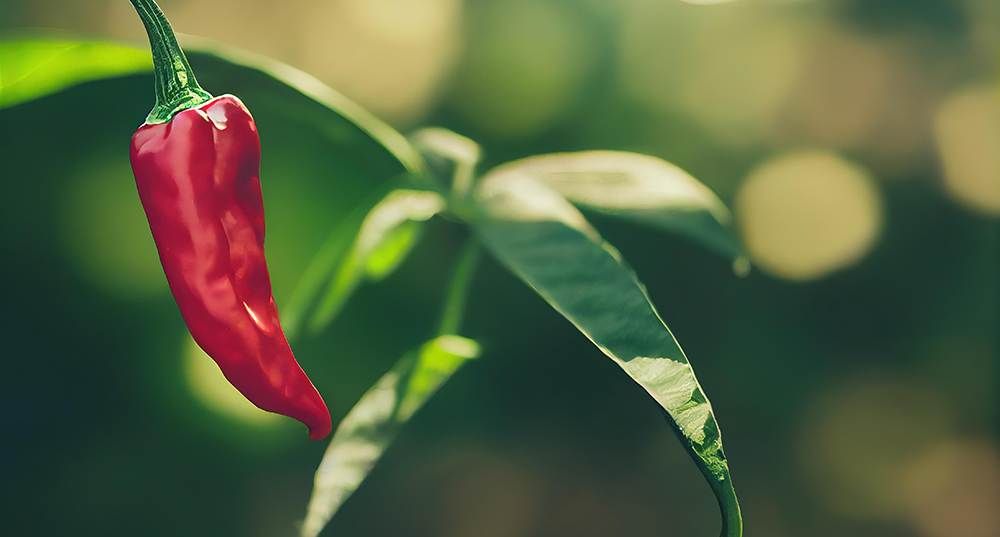
Bell peppers have no capsaicin. None. That sounds obvious until you realize it upends the entire story you thought you knew about them. They belong to Capsicum annuum, the same species as cayennes, jalapeños, and the scorching little birds-eye chiles that will ruin your day, yet somewhere in their domestication history a single recessive gene mutation switched the heat completely off. I've grown hot and sweet peppers side by side for years, same soil, same water, same blazing July sun, and the bell pepper just sits there: glossy, thick-walled, tasting of grass and sweetness and absolutely nothing that will make you regret your life choices. That mutation isn't an accident. It's a deliberate fork in a 6,000-year relationship between humans and one of the most widely adopted vegetables on the planet.
What gets me, though, is how that tameness fools gardeners into treating bell peppers like easy crops. They're not. They're warm-season prima donnas with a narrow temperature window, strong opinions about soil drainage, and a quietly devastating response to both a late frost and a heat wave above 90°F. I've watched beautiful transplants stall out in cool soil, and I've watched perfectly healthy plants drop every blossom during a brutal August. The sweetness you taste in a ripe red pepper off the vine, genuinely better than anything you'll buy at a grocery store, is the reward for understanding what this plant actually needs, which turns out to be more specific than most people expect.
Bell Pepper Origin and History
Botanical Background and Native Range
The bell pepper, known botanically as Capsicum annuum, traces its roots to the warm, seasonally wet lowlands of southern Mexico, northern Central America, and adjacent parts of South America, where it evolved along forest edges, disturbed ground, and open shrublands under average temperatures of 18-25°C with distinct wet and dry seasons.[1][2][3] Understanding that native climate explains a lot. My Central Florida garden mimics those conditions closely enough that peppers genuinely thrive here, but once I tried growing them in a friend's zone 6 Pennsylvania plot, I had to treat them as strict warm-season annuals and time everything around the last frost. That's because, while Capsicum annuum is a tender perennial in frost-free climates, flowering and fruiting repeatedly over multiple years, it behaves as an annual anywhere temperatures dip below freezing.[4][5] Knowing that distinction up front shapes how you design for this plant, and I'll say more about it in later sections.
Visual Characteristics: From Stems to Seeds
In the garden, bell peppers form a bushy, herbaceous mound typically reaching 18 to 36 inches tall and 18 to 24 inches wide, with cultivars divided broadly into determinate types that fruit in a concentrated flush and indeterminate types that keep producing continuously throughout the season.[4][6] After growing both for several seasons, I've settled firmly into the indeterminate camp for my Florida food forest beds. The continuous production through our long humid summer is simply worth more to me than the tidy harvest window of a determinate type.
Get close to a young pepper plant and you'll notice the stems are erect, branching, and covered in coarse prickles that are surprisingly stiff, snagging on clothing and skin in a way that catches first-time growers off guard. It's actually one of my favorite ways to confirm a seedling identity early in the season. The leaves are simple, alternate, and lanceolate to ovate, running 2 to 6 inches long with smooth margins and a medium to deep green color, while the root system starts with a short-lived taproot that quickly transitions into a shallow network of fibrous laterals concentrated in the top 30 centimeters of soil.[7][8] Those shallow roots matter for watering decisions, something I'll cover in the care guide.
Flowers are small, white, and star-shaped, appearing singly or in sparse clusters at the stem axils.[9] The fruit is technically a berry, botanically speaking, and bell pepper cultivars produce the familiar blocky, 3 to 4 lobed fruits in shades of green, red, yellow, orange, and purple. Temperature during fruit set influences shape: cooler conditions yield blockier fruits, while heat stress produces smaller, more elongated ones.[10] Sweet bell types specifically lack the capsaicin glands found in hot varieties, so pungency isn't something you can judge by looking at the fruit's shape or color.[11] Seeds inside are kidney-shaped, slightly flattened, and 2 to 4 millimeters long.[12]
Traditional and Cultural Uses Through the Ages
Capsicum annuum was domesticated roughly 6,000 years ago in the Tehuacan Valley of central Mexico, with genetic evidence suggesting multiple independent domestication events across the region rather than a single origin point.[13] Maya and Aztec peoples wove it into daily life as a culinary staple, a digestive and pain-relieving medicine, and a sacred plant associated with deities like Xipe Totec, a figure representing renewal and purification.[14] That depth of cultural relationship is worth sitting with. This wasn't a crop; it was a cultural institution.
Christopher Columbus carried it back to Europe in 1493, and from there Spanish and Portuguese traders moved it with remarkable speed through the Columbian Exchange, reaching India, China, and Southeast Asia by the mid-1500s and transforming African cuisines via established trade routes.[15] Renaissance Europeans initially adopted it as an ornamental and medicinal curiosity before it became a culinary fixture, eventually giving rise to traditions as distinct as Hungarian paprika, Ethiopian berbere, and Spanish pimentón.
The pepper's journey into Ayurvedic and Traditional Chinese Medicine followed similar trade routes, where it was prized for warming properties associated with circulation and digestion.[16] Today, the conservation of wild Capsicum populations faces real pressure from habitat destruction, and questions around biopiracy, specifically the patenting of knowledge developed by indigenous communities without their consent or equitable benefit-sharing, remain unresolved.[17] I only source seed from companies participating in open-source seed initiatives or working directly with indigenous growers. For me that's not an abstract ethical stance; it's a baseline for practicing regenerative design with integrity.
Fun Facts and Botanical Curiosities
The name "pepper" is a misnomer that stuck. Columbus applied it by analogy to the familiar black pepper (Piper nigrum), despite the two plants being entirely unrelated botanically.[2][18] And that botanical berry classification isn't just trivia: understanding that the fruit is a true berry, a simple fleshy structure derived from a single ovary, helps explain the seed arrangement and the way the fruit ripens, facts that matter when you're saving seed or evaluating fruit quality.
Capsaicin itself is one of the plant kingdom's more elegant evolutionary solutions. Located in the placental tissue rather than the seeds, it deters mammals while leaving birds completely unaffected, enlisting them as ideal seed dispersers through a mechanism called ornithochory.[19][20] I've watched this play out in my own garden: mockingbirds and finches strip ripe peppers while squirrels walk right past them. Sweet bell cultivars carry mutations that knock out capsaicinoid production, though heat stress or drought can nudge even these mild varieties toward trace capsaicin levels.[21]
On the production side, modern breeding has pushed the plant far beyond its wild ancestors. The Chocolate Beauty cultivar has produced fruits reaching 8 to 10 inches long and weighing up to 12 ounces under controlled conditions, and optimized hydroponic greenhouse systems have recorded yields of 10 to 12 pounds per plant over a single season.[22][23] Six thousand years of human selection concentrated into something you can grow from a seed packet. That's a remarkable arc.
Bell Pepper Varieties and Sourcing
Notable Bell Pepper Varieties
Bell peppers, classified as Capsicum annuum var. grossum, are the sweet, zero-heat branch of the species, with that characteristic blocky, four-lobed fruit shape and thick walls that make them so satisfying to slice or stuff.[24] Plants typically land somewhere between 24 and 36 inches tall with a similar spread, though compact types stay in the 12-24 inch range for container growing while taller, more indeterminate field varieties can push 3-4 feet and benefit from staking. The timeline matters too: you can harvest green fruits in as few as 60-70 days after transplanting, but waiting the full 75-90 days for full color is almost always worth it.[24]
Color is, honestly, the single most important variety decision most home growers make. Green fruits are grassy, a little bitter, crisp and fine in a stir-fry; red fruits are noticeably sweeter and pack significantly more vitamin C than their green counterparts. Yellow and orange fall in between, offering fruity and citrus-tinged notes. When I'm helping clients plan a productive planting, I always tell them: if you're growing for nutrition, grow for red. The patience is worth it.
California Wonder is the classic starting point for good reason. It's an open-pollinated mid-season variety with large, blocky 4-5 inch fruits, walls thick enough to hold their shape when stuffed, and a reliable yield of around 8-10 fruits per plant under decent conditions.[25] I keep coming back to it for seed-saving clients because it breeds true and performs consistently. Sweet Banana is a completely different animal: those curved, 5-6 inch fruits ripen from pale yellow through orange into red, with yields in the 20-30 fruit range per plant that make it almost absurdly productive for fresh eating and pickling.[26] Then there's Purple Beauty, which I grow every year mostly because the lavender-purple fruits on those compact plants stop visitors cold. They're 3-4 inches, they'll turn red if you leave them, and yield is modest at 6-8 fruits per plant, but the ornamental pop they add among the greens and reds is genuinely hard to replicate with anything else.[27]
If you're gardening in heavier soils or have had wilt problems before, disease resistance deserves a hard look during variety selection. Cultivars like Camelot, North Star, King Arthur, and Tequila carry Verticillium wilt resistance, and I've seen that trait save entire plantings in clients' gardens with clay-heavy beds.[28][29] Many modern F1 hybrids bundle several resistances together, though they won't breed true from saved seed the way California Wonder will. For most gardens, a mix of one reliable heirloom, one high-yielding early type, and a purple beauty or similar ornamental covers all the bases: continuous harvest, visual interest, and a seed-saving option in one planting.
Where to Buy Bell Pepper Seeds and Plants
Finding bell pepper seeds or seedlings has never been easier. Baker Creek Heirloom Seeds, Seed Savers Exchange, Johnny's Selected Seeds, Burpee, and Park Seed all carry solid selections, with Johnny's and Burpee offering both seeds and transplants in season.[30][31][32][33][34] Seedlings typically run $1.50-$5.00 each or $5-15 for a pack of three to six; organic plants carry a 20-50% premium, and red or yellow ripe varieties cost 30-60% more at the nursery than green ones because of the longer field time required to produce them.[33][35][36][37][38] If you're importing seed from outside the country, note that the USDA Plant Protection Act governs interstate and international movement of plant material, and seeds from certain regions may require phytosanitary certification.[39] For most domestic gardeners buying from established suppliers, though, there's nothing to worry about.
How to Propagate and Plant Bell Peppers (Capsicum annuum)
If you've grown tomatoes, you already understand about half of what bell peppers need. The other half is where most gardeners get humbled. Both are Solanaceae, both want warmth and rich soil, but peppers are less forgiving of cold soil at transplant and are noticeably fussier about drainage. I've watched perfectly healthy tomato transplants settle into beds that would've sent bell pepper seedlings into a sulk for weeks. Knowing that going in saves a lot of frustration.
Understanding Bell Pepper Seeds: Morphology and Viability
Bell pepper seeds are small but distinctive once you know what you're looking at: kidney-shaped, flat, pale yellow to light brown, only about 2-3 mm long.[40][41] Domestication from Central American wild forms produced those larger, flatter seeds with straight embryos; wild relatives have small, round seeds with curved embryos that look noticeably different side by side.[41][42] Each seed contains a single embryo; polyembryony is essentially unheard of in this species.[41]
Seed propagation is the standard approach, both commercially and in the home garden, because it's reliable and cost-effective.[43] Stem cuttings can work at near-100% success rates but require more labor than most home growers want to invest.[43] Bell pepper seeds store well; they exhibit orthodox storage behavior and tolerate desiccation and cold storage gracefully.[44] At room temperature, viability holds for 2-5 years; refrigerator storage at 5-10°C pushes that to 10-15 years.[45] I've kept saved bell pepper seed in a sealed jar with a silica gel packet in my refrigerator for four to five years and still hit germination rates above 70%, which tracks with the research. For optimal long-term storage, target 3-7% moisture content in hermetic containers kept at 4-10°C and 20-30% relative humidity.[44][46] If you're unsure about old seed, a quick germination test on moist paper towels at room temperature with a count at 5-7 days and a final tally at 14 days will tell you what you need to know before you commit a whole flat to it.[47]
Germination Timeline and Indoor Seed Starting
Here's the single detail that explains most failed bell pepper starts: soil temperature. Optimal germination happens at 80-90°F (27-32°C), and while seeds will sprout at 70-85°F, the process takes 7-21 days depending on how close you get to that sweet spot.[48][49] In my experience, dropping below 75°F reliably doubles germination time and dramatically increases damping-off risk compared to maintaining a steady 80-85°F bottom heat. A heat mat isn't optional for me; it's infrastructure.
Start seeds indoors 8-10 weeks before your last frost date.[49][50] Seedlings are transplant-ready after 8-10 weeks of indoor growth, at which point flowering typically begins 60-90 days after seeding, and you can expect first harvest 120-150 days from sowing in temperate climates; early varieties can come in closer to 100-120 days.[49][51] Wait to transplant outdoors until frost danger has fully passed and soil temperature has reached at least 65°F (18°C).[52] Cold soil stalls growth even when air temperatures look fine, and it's a mistake I've seen beginners make repeatedly after getting impatient in April.
Soil, Site Selection, and Sun Requirements
Bell peppers need full sun, at least 6-8 hours of direct light daily, and this is genuinely non-negotiable for fruit set and color development.[53][54] Insufficient light produces leggy plants, yellowing leaves, and poor fruit set.[55] In climates with brutal afternoon heat, a little shade after 3 p.m. can reduce heat stress without sacrificing yield.
For soil, bell peppers want well-drained, fertile loam or sandy loam with 2-5% organic matter and at least 12-24 inches of rooting depth.[56][57] Heavy clay is genuinely problematic; poor drainage and compaction stress roots in ways peppers don't shake off easily. This is where they differ from tomatoes more than anywhere else. My tomatoes tolerate soil that I'd never put a pepper transplant into. For container growing, a 1:1:1 blend of peat (or coir), perlite, and compost keeps drainage sharp and roots happy.[58]
Target a soil pH of 6.0-6.8, with 6.5 being the practical ideal.[59][60] Drop below 6.0 and you risk interveinal chlorosis from limited iron and manganese uptake, plus increased Fusarium wilt pressure; push above 6.8 and calcium availability drops, which raises the odds of blossom-end rot significantly.[61][60] After one season of blossom-end rot that I traced back to pH creeping too high in an amended bed, I now test every planting area before sowing and apply dolomitic lime or elemental sulfur only at the rate my soil lab recommends.[62] That one habit has eliminated the problem entirely.
Spacing, Transplanting Technique, and Support
Space bell pepper plants 18-24 inches apart within rows, with 24-36 inches between rows.[49][63] Mature plants typically reach 18-36 inches tall with a similar spread, so indeterminate types with heavier fruit loads may need the wider end of that range and will definitely benefit from staking or caging.[49][64] Early in my gardening years I crammed plants at 12 inches without any support and spent the rest of the summer untangling a humid, disease-prone mess. Now I default to tomato cages set at transplant time, which keeps branches upright and fruit off the soil even in wet summers.[65]
Transplant only after the soil has warmed to 65°F, handle rootballs gently to minimize disturbance, and set plants at the same depth they were growing in their containers.[52][49] Once that warm start is locked in and plants have room to breathe, bell peppers become genuinely productive and far less demanding than their reputation suggests.
Bell Pepper Care Guide: Watering, Feeding, Temperature, and Maintenance
Every decision you make with bell peppers, from when you transplant to how often you water, circles back to one central fact: this plant evolved in warm, seasonal climates where temperatures rarely drop below 41°F. Work with that biology and you'll get generous harvests. Fight it and the plant will tell you pretty quickly.
Frost Tolerance and Cold Protection
Bell peppers are about as frost-tolerant as a ripe tomato, which is to say not at all. Cold injury can begin as low as 50°F (10°C), and anything at or below 32°F causes cell rupture that's often fatal.[66][49] I learned this the hard way early on when a late cold snap killed a full flat of transplants I'd set out too eagerly. Now I wait until soil temperature is reliably above 65°F before anything goes in the ground, no exceptions.
If frost does catch your plants, look for water-soaked leaves that turn dark brown or black, stems that soften, and fruit that develops a leathery, pitted texture.[67][68] Light damage on leaf edges might be recoverable, but if stems collapse, the plant usually won't come back. In USDA zones 9-11, where winter lows stay above 20°F, you can overwinter plants as short-lived perennials with minimal protection.[69] I've done it in central Florida with a few favorite varieties, though I'll be honest: year two usually brings smaller yields, so I still start fresh transplants alongside any overwintered plants.
Heat Tolerance and High-Temperature Management
The upper limit is just as real as the lower one. Bell peppers are rated for AHS Heat Zones 1-11, but sustained daytime temperatures above 90-95°F cause flower drop, pollen sterility, and yield reductions of 20-50%.[70][71] Nighttime temperatures above 75°F make things worse because the plant can't recover; respiration stays high and carbohydrate reserves get burned off rather than going into fruit.[72]
Symptoms show up differently depending on what stage the plant is in. Flowering is the most vulnerable window: blossoms abort above 90-95°F, sometimes the same morning they opened. Fruiting plants show sunscald, blossom end rot, and uneven ripening. Vegetative plants get scorched leaf edges and chlorosis.[73] I've grown standard varieties side-by-side with 'King Arthur' and 'Aristotle' during brutal Florida summers and watched the standard ones drop nearly every blossom while the heat-tolerant types kept setting fruit. That observation alone changed how I shop for pepper seed.[74]
For practical management: 30-50% shade cloth during peak heat above 95°F, 2-4 inches of reflective or organic mulch to cool the root zone, and drip irrigation in the early morning all help considerably.[75][76] Spacing plants 18-24 inches apart with 3-4 feet between rows keeps airflow moving and prevents heat from pooling at canopy level.[77]
Watering Needs and Irrigation Best Practices
Bell peppers want 1-2 inches of water per week, delivered deeply enough to reach 6-12 inches and encourage roots to go down rather than stay shallow.[78] In hot summers that usually means watering every 3-4 days; in cooler stretches, every week is often enough. I check the top inch or two of soil daily during fruit set, because that's the window where inconsistency costs the most.
Too much water shows up as yellowing leaves and wilting even when soil is wet, often with root rot from Pythium or Fusarium underneath.[79] Too little gives you curled, scorched-edged leaves, premature drop, and smaller fruits. The year I let my plants dry out during fruit set in a dry spell, I saw both blossom end rot and cracking on the same fruits, which is the plant's way of punishing uneven moisture in two different directions at once.[80] Drip irrigation at ground level in the early morning is the cleanest solution: it keeps foliage dry, reduces disease pressure, and lets you dial in consistent delivery.[81]
Feeding and Nutrient Management
Bell peppers are heavy feeders, but what they need shifts across the season. Vegetative growth demands nitrogen; once flowering begins, potassium and phosphorus take over.[56] Feeding nitrogen too aggressively into fruiting produces beautiful dark green foliage and almost no peppers, which I've seen more than once in overzealous new growers.
I always start with a soil test. Guessing skips the one step that prevents most nutrient problems. Target a soil pH of 6.0-6.8 for maximum availability, and aim for key ranges: phosphorus around 20-40 ppm, potassium 80-120 ppm, calcium 1,000-2,000 ppm, and boron 0.5-1.0 ppm, since boron deficiency shows up as fruit cracking and brittle stems.[82][83]
For staged feeding, use a balanced or low-nitrogen mix for seedlings, shift to higher nitrogen during vegetative growth (something like a 16-16-16), then move to a high-potassium formula like 5-10-20 once flowers appear.[84] Organic options work well: 2-4 inches of compost worked in before planting, followed by side-dressings of blood meal for nitrogen or bone meal for phosphorus. The visual cues I rely on: uniform yellowing on older leaves signals nitrogen deficiency; a purplish tint on older leaves points to phosphorus; interveinal yellowing on new growth suggests iron or manganese is locked out, often because pH has drifted too high.[85]
Pruning, Maintenance, and Seasonal Rhythm
Start pruning early. When seedlings hit 6-12 inches, pinch the growing tip to push energy into side branches and build a stockier plant that won't need heavy staking later.[86] Once plants reach 12-18 inches, removing suckers from leaf axils and stripping lower leaves weekly improves airflow and reduces fungal disease pressure. Research shows light pruning during fruiting can increase individual fruit size by 20-30%, but go too heavy and you trade quantity for a handful of big peppers.[87] I've made that mistake and found the sweet spot is sucker removal plus removing leaves below the first branching point, nothing more aggressive.
Stake early, before plants need it. Three to four-foot stakes or wire cages installed at transplant time prevent the branch breakage that comes later when fruits are heavy and a summer storm rolls through.[88] Two to three inches of organic mulch applied after the soil warms handles moisture retention, weed suppression, and keeps mud from splashing pathogens onto lower leaves.[89]
Zooming out to the full year: in zones 5-8 you're managing a warm-season annual with a hard start and end dictated by frost, with the productive window sitting firmly between 70-85°F days and 60-70°F nights.[90] In zones 9-11, you have the option to overwinter plants indoors at 55-65°F with supplemental light after cutting them back,[91] though productivity typically drops in year two. Every care task, the frost protection, the shade cloth in August, the consistent irrigation, the shifting fertilizer ratios, fits into that same seasonal arc. Get the temperature management right and the rest of the care routine falls into place around it.
Bell Pepper Harvesting Guide
All that careful germination, transplanting, and season-long tending comes down to this: knowing exactly when to reach for the pruners. Bell peppers are patient fruits, and they reward growers who pay attention to what the plant is actually telling them.
When to Harvest Bell Peppers: Timing, Days to Maturity, and Visual Cues
From the moment a flower is successfully pollinated, a bell pepper fruit needs roughly 30-45 days to reach full green size, then another 20-30 days to complete its color change to red, yellow, or orange, putting the total bloom-to-ripe window at 60-90 days.[92][93] From transplant, that same 60-90 day window applies for most varieties.[94][95] The practical cues you're watching for are firm texture, glossy skin, and a fruit that measures roughly 3-6 inches long and feels substantial in your hand — not hollow, not soft at the shoulders.
In Zone 5, that math usually means green peppers come in by late July on early varieties, with peak production through August and September before the first frost ends things.[49][50] You can harvest green for earlier yield and a shorter wait, or hold out through the full color change for noticeably sweeter fruit.[96] Both are valid choices; it really depends on what you're cooking.
How to Harvest Bell Peppers: Technique and Post-Harvest Handling
Always harvest in the early morning when the plant is turgid and temperatures are still cool, and use clean pruners or shears to cut the stem rather than pulling or twisting the fruit off.[97][94] Skip harvest days when foliage is wet; cutting through wet plant tissue is one of the fastest ways to spread bacterial disease through a planting. I keep a dedicated pair of pruners for my peppers, wiped with diluted isopropyl between plants if anything looks suspicious.
After several seasons of growing Capsicum annuum, the habit that made the single biggest difference for me was picking every 2-3 days once fruits hit full size, rather than waiting for the whole plant to color up at once. Regular harvesting signals the plant to keep setting fruit, which meaningfully increases total yield across the season.[97] For storage, green peppers hold 2-3 weeks refrigerated at 45-50°F with high humidity; ripe colored peppers are more perishable at 1-2 weeks.[94] I store mine in a perforated bag and check every couple of days, which tends to stretch the life of home-grown colored peppers a bit beyond what you'd expect from supermarket fruit.
Bell Pepper Flavor, Texture, and Yield at Different Ripeness Stages
The fruit is the edible part here; seeds are technically fine to eat but often bitter enough that I always pull them out, and the leaves and stems contain alkaloids that make them unsuitable for consumption.[53][11]
What happens between green and ripe is genuinely fascinating from a flavor-chemistry standpoint. Green bell peppers get their grassy, slightly bitter character from pyrazine compounds — particularly 2-isobutyl-3-methoxypyrazine — plus aldehydes and (Z)-3-hexenal.[98][99] The flavor reminds me of fresh cucumber or green bean — crisp, vegetal, slightly sharp. As the fruit ripens, chlorophyll degrades and carotenoids accumulate; sugars climb, the cell walls soften slightly as pectin breaks down, and the whole aromatic profile shifts.[100] Red peppers develop a tomato-like sweetness driven by β-ionone and esters, while yellow types lean citrusy with linalool and geranial.[101] Researchers have identified over 200 volatile compounds in Capsicum annuum fruit,[98] which explains why a perfectly ripe red pepper off your own vine tastes so different from anything at the grocery store.
One last note worth knowing: mild drought stress late in the season can push sugar accumulation up by an additional 20-30%,[102] which is why some of the sweetest peppers I've grown came in a dry August when I pulled back irrigation a bit. It's a fine line between stress-sweetened and stressed-out, but when you get it right, the flavor is genuinely different from anything a commercial harvest can capture.
Bell Pepper Preparation and Uses
Culinary Uses and Preparation Methods for Bell Peppers
The fruit of Capsicum annuum is entirely edible, seeds included, though most cooks scoop them out for texture reasons rather than safety.[1] What I find endlessly interesting about bell peppers in the kitchen is how dramatically preparation method changes what you're actually eating. Raw, you get that grassy, slightly bitter crunch; roasted over an open flame until the skin blisters, something else happens entirely. Sugars caramelize, volatile compounds break down, and what was sharp becomes deeply sweet.[45] I've roasted hundreds of peppers straight from my garden, and the key I've learned is pulling them off the heat while the flesh still has a little give. Push past that and you're heading toward mush, especially if you boil them. Stir-frying keeps more of the crispness intact, while roasting yields that soft, tender consistency most people associate with a good stuffed red bell pepper recipe or a classic bell pepper steak recipe.[103][104]
Drying takes the transformation even further. Moisture drops from roughly 90% to around 10%, shifting texture from crisp to brittle and leathery.[105] Grinding dried red peppers produces paprika, where Maillard reactions and concentrated volatiles create flavor compounds that simply don't exist in the raw fruit.[106][107] In my experience, low-and-slow in a dehydrator produces a milder, more floral powder than a warm oven does; the oven version has more roasted depth. Either way, you're getting the full nutritional benefit of ripe red flesh, including high vitamin C and the antioxidant capsanthin responsible for that vivid color.[108]
Two safety points deserve real attention. Bell peppers can trigger reactions in people with latex-fruit syndrome, a cross-reactivity I've personally observed in garden visitors who also react to avocados or bananas.[109] More seriously, if you're foraging or growing from unverified seed, learn to identify deadly nightshade (Atropa belladonna) before it ends up in your harvest basket. The difference in leaf shape and berry color once stopped me from a potential mix-up in a mixed bed, and that kind of mistake can be fatal.[110]
Medicinal Preparations from Bell Peppers
Sweet bell peppers are low in capsaicin compared to hot varieties, but extracted capsaicin still delivers real therapeutic value as a topical analgesic and anti-inflammatory agent.[111] Standardized preparations from respected pharmacological bodies suggest topical creams at 0.025%-0.075% capsaicin applied three to four times daily, tinctures at 0.3-1 mL of a 1:5 dilution up to three times daily, and decoctions using 1-2 g of dried fruit per cup one to three times daily.[112][113] I don't often reach for medicinal preparations myself, but after a long day of trellising I've found a capsaicin cream genuinely useful for muscle soreness, always following those dosage guidelines rather than improvising.
Non-Food Uses of Bell Peppers and Capsicum annuum
Capsicum annuum spans an enormous range of culinary territory beyond fresh eating, from spice powders to fermented pastes to the paprika that flavors cuisines across Europe and Asia.[1] Paprika oleoresin (E160c) is an EU-approved natural red dye used in foods, cosmetics, and textiles, extracted from dried pepper flesh and prized for its stable, vivid pigment.[114] Capsaicin extracted from the plant bridges both medicinal and industrial applications, showing up in topical analgesic products and ongoing research into its anti-inflammatory properties.[111] On the emerging end, there's interest in pepper biomass for biofuel and fiber extraction, though these applications are still far from mainstream. What I do every season with surplus peppers is more immediate: dried whole pods strung into wreaths or ristras, homemade paprika from the dehydrator, and the quiet satisfaction of using nearly every part of a plant I grew from seed.
Bell Pepper Health Benefits and Medicinal Uses
Bell peppers don't bring heat to the table, and that's precisely what makes their nutritional story interesting. Where hot Capsicum varieties load up on capsaicinoids, sweet bell peppers redirect that biological energy into antioxidant carotenoids and flavonoids. The result is a vegetable that punches well above its caloric weight in almost every garden and kitchen I've worked in.
Key Phytochemicals and Their Roles
The phytochemical profile of bell peppers spans several major classes: carotenoids (with capsanthin making up 50-60% of total carotenoids in red varieties), flavonoids like quercetin and kaempferol, phenolic acids including chlorogenic and ferulic acid, and substantial vitamin C, all with negligible capsaicinoids below 0.01% compared to their hot relatives.[115][116][117] These compounds work together to support antioxidant, anti-inflammatory, and immune function rather than sensory heat.
What I've noticed in my own growing practice is that how you grow these plants shapes what ends up in the fruit. Mild environmental stress, a dry spell or a saltier soil season, tends to push carotenoid and phenolic concentrations upward.[118][119] One drought summer I had nearly forgot to irrigate consistently, and the resulting reds were the deepest, most vivid fruits I'd grown in years. That's not a growing method I'd recommend, but it taught me that these plants accumulate protective compounds in response to pressure. Adequate nitrogen, on the other hand, supports flavonoid and phenolic production specifically.[106] It's a useful reminder that soil management isn't just about yield.
The near-absence of capsaicinoids in sweet types isn't accidental. Capsaicin evolved as a mammal deterrent that still allows birds to disperse seeds.[120] Bell peppers essentially opted out of that defense strategy, leaving room for carotenoids and phenolics to take center stage.
Nutritional Profile of Bell Peppers by Color
The bell pepper nutritional value shifts dramatically as the fruit ripens, and the numbers are worth knowing if you're deciding what to grow or harvest. At around 26 kcal per 100g, red bell peppers are genuinely low-calorie while delivering 127.7 mg of vitamin C per 100g.[108] Green peppers, picked before full maturity, come in at 80.4 mg vitamin C per 100g, which is already impressive.[121] Yellow varieties reach 183 mg and orange tops out around 212 mg per 100g.[122][123] That's not a trivial difference. The vitamin A story is even more dramatic: green peppers contain around 370 IU per 100g from carotenoids, while red reaches 3,131 IU and orange climbs to 6,016 IU.[108][123] Folate stays consistent at roughly 46 µg across colors, and green peppers contribute around 211 mg potassium per 100g.[121]
Cooking matters too. Boiling can strip 25-77% of vitamin C, while steaming or roasting preserves far more while actually improving carotenoid bioavailability by breaking down cell walls.[124][125] I roast mine in halves over high heat until charred at the edges, which has always felt like the most honest way to treat a pepper with that much color built in. Seeds are edible and nutritious though most people remove them for texture reasons; leaves should stay out of the kitchen, both for toughness and because they carry alkaloids best avoided.[126] True allergic reactions to bell peppers are rare, affecting fewer than 1% of people and typically linked to pollen-food syndrome rather than the fruit itself.[127]
Medicinal Research and Traditional Uses
The medicinal spotlight in Capsicum research falls mostly on capsaicin. Activation of TRPV1 receptors, NF-κB-mediated anti-inflammatory action, and modest metabolic effects like small increases in energy expenditure and blood pressure reductions of 3-5 mmHg belong to the hot varieties and to topical preparations, recognized in WHO monographs for capsaicin-rich applications including analgesics and treatments for arthritis and rheumatism.[128][115] Sweet bell peppers, with negligible capsaicin, aren't the focus of that research.
What bell peppers do have is strong supportive evidence for antioxidant and anti-inflammatory benefits through their vitamin C, provitamin A carotenoids, and flavonoid content, with limited but encouraging clinical work on improved endothelial function from whole fruit consumption.[129] I grow bell peppers for their reliable contribution to daily vitamin C in salads and stir-fries, not as medicine. The hotter cousins carry the stronger clinical story; sweet peppers earn their place through consistent, everyday nutrition.
Safety Considerations
Ripe bell pepper fruits are safe for most people in typical dietary amounts, including during pregnancy and lactation. They contain negligible capsaicin and low glycoalkaloid levels compared to other members of the nightshade family.[130][131] In years of growing and eating them, ripe bell peppers have been entirely trouble-free for my household, and I think of them in the same category as tomatoes and eggplant: the ripe fruit is the safe part, full stop.
The nightshade family does teach caution with everything that isn't the fruit, though. Leaves, stems, and roots contain solanaceous alkaloids that can cause gastrointestinal distress and potential neurological effects in humans, pets, and livestock.[132][133] I compost pepper leaves and stems rather than leaving them where animals can get to them. Wash fruits thoroughly before eating, and take a moment to distinguish your peppers from pokeweed, which has a very different growth habit but can confuse new foragers; the open bell pepper calyx is a reliable identifier. At normal dietary amounts, bell peppers have no significant drug interactions, though highly concentrated capsaicin preparations (not relevant to sweet peppers) may interact with certain medications.[131]
Bell Pepper Pests and Diseases
Resistance in Capsicum annuum is real, but it's never a guarantee.[134] The rating on a seed packet reflects performance under specific screening conditions, and what holds in a California trial can look very different in a humid Florida summer or a wet Pacific Northwest August. I learned this the hard way growing 'California Wonder' alongside modern hybrids: the heirloom is gorgeous, productive when conditions cooperate, and almost defenseless against everything that goes wrong.
Major Diseases and Resistance Profiles
There are genuine wins from decades of breeding work. Certain cultivars carry near-immunity to Tobacco Mosaic Virus through hypersensitive response mechanisms that shut down viral replication before it spreads.[134] Bacterial spot resistance via the Bs2 gene and related loci like Xv1 and Xp1 is solid in varieties like 'Aristotle' and 'Sentry', meaningfully limiting lesion development even under pressure.[135] Race-specific Fusarium wilt resistance holds up well in cultivars like 'Black Bell' against Race 1, though Race 2 is trickier.[136][137]
Then there's Phytophthora capsici, which is where I've watched entire beds collapse after a week of summer downpours. Most Capsicum annuum varieties are highly susceptible, and the same goes for Verticillium wilt, Tomato Spotted Wilt Virus, powdery mildew, and Alternaria leaf spot.[138] For Phytophthora specifically, I've moved almost entirely to 'Paladin', 'Heritage', and 'Vanguard' in my wetter beds; 'Vanguard' is particularly useful because it also carries bacterial spot resistance, so you're covering two threats with one variety choice.[139][140][141]
Even the best variety can't carry you through a season alone. Rotating away from solanaceous crops for at least two to three years, pulling infected plants immediately, and spacing rows 24-36 inches apart for airflow all matter as much as your cultivar choice.[142][143] I label my beds every year and track which ones hosted peppers or tomatoes; it sounds tedious until the year you skip it and spend September wondering why your Phytophthora problem followed you across the garden.
Common Insect Pests and Management
The pest list for bell peppers is long: aphids, thrips, whiteflies, flea beetles, spider mites, pepper weevil, armyworms, leafhoppers, cutworms.[144][145] Most commercial Capsicum annuum cultivars offer only low to moderate resistance across the board, and complete immunity to any insect pest is rare.[43] The ones that keep me up at night are whiteflies and thrips, not just for the direct feeding damage but because both vector serious viruses. Bemisia tabaci can infest 80% of untreated plants and carries Tomato Yellow Leaf Curl Virus; western flower thrips transmit Tomato Spotted Wilt Virus, and I've seen the silvery scarring and upward leaf curl on my own plants before I identified the culprit.[146][147]
Breeding has produced some useful tools: 'Manatee' shows improved thrips resistance, 'Paladin', 'Revolution', and 'King Arthur' perform better against spider mites, and aphid pressure is lower on lines like 'AA10', often through traits bred in from wild relatives like Capsicum chacoense.[148] Pepper weevil and flea beetles are tougher cases with little genetic help available, so row covers at transplant time and strict sanitation around crop debris are the main defenses there.[144][149]
For day-to-day management, reflective silver mulch has cut my whitefly pressure noticeably, and the research backs that up with reductions up to 50% in infestation rates.[150] Inside my small hoophouse, releasing Encarsia formosa for whiteflies and Aphidius colemani for aphids routinely keeps populations below threshold without any sprays, which protects the predatory insects working the rest of the planting.[151] Scout weekly with sticky traps and act when you hit roughly one whitefly per leaf or five to ten thrips per trap rather than waiting until you have a full infestation on your hands.[152][153] Broad-spectrum pesticides will knock back the pests temporarily and wipe out your beneficials in the process, which leaves you worse off by midsummer.
Bell Pepper in Permaculture Design
When I first started designing food forests, I'll admit I thought of bell peppers as strictly garden-bed vegetables, not food forest plants. It took a few seasons in Central Florida before I started seeing them differently. In their native habitat along the Balsas River Basin of Mexico, these plants evolved in open woodlands and riverbanks, nestled in the herbaceous understory where taller vegetation offered wind shelter and light filtration.[154] That context matters for how you place them in a designed system.
Herbaceous Layer Placement and Guild Companions
Bell pepper sits firmly in the herbaceous layer, topping out at 2 to 4 feet tall and playing well with both taller canopy species and lower groundcovers.[11][155] In my zone 9-10 garden, I've had real success situating peppers on the eastern or southeastern edge of a coconut palm grouping. The palms provide afternoon wind protection without shading out the morning sun the peppers want, mimicking that open-woodland microclimate from their ancestral range. The peppers need 6 to 8 hours of sun, but they genuinely appreciate a bit of dappling during peak afternoon heat, and taller canopy companions deliver that without any extra work from me.[11][155] A deep mulch layer underneath helps regulate soil temperature and hold moisture through the dry months, and I consider that non-negotiable.
For the guild itself, my go-to trio is basil, marigold, and nasturtium. Basil is credited with repelling certain pests and possibly improving fruit flavor, marigolds deter nematodes in the soil, and nasturtiums help keep aphids off the peppers by acting as a sacrificial host.[156] I've run this combination for years and it genuinely feels like the plants look out for each other. What I've learned the hard way: keep bell peppers away from tomatoes and potatoes. Shared wilt pathogens can move between them with depressing efficiency, and I've lost plants to exactly that kind of lazy spacing.[156] Bell pepper produces no allelopathic chemicals, so it won't bully its neighbors, and ornamental varieties like 'Black Pearl' or 'Numex Twilight' can serve double duty as visual accents in borders or containers.[157][158]
Ecosystem Functions and Pollination Support
Bell pepper flowers are self-fertile, hermaphroditic, and relatively small (1 to 2 cm across), with poricidal anthers that release pollen through vibration rather than simple contact.[159][160] Some varieties self-fertilize at rates up to 90%, which sounds like good news until you realize the yield difference when bumblebees are in the picture.[161] Bumblebees (Bombus spp.) are built for buzz pollination; they grab the flower and vibrate their flight muscles at just the right frequency to shake pollen loose from those poricidal anthers, dramatically improving fruit set compared to honeybees or wind.[159][162] I put up a native bee hotel near my pepper beds a few seasons back, and the difference in fruit weight on those plants versus an isolated bed on the other side of the yard was noticeable enough that I've made pollinator habitat a standard feature of every pepper guild I design now.
On the ecosystem services side, I want to be honest about what this plant actually contributes versus what people sometimes hope it will. Capsaicin provides genuine pest-repellent properties against aphids and spider mites, and when I interplant with basil and nasturtium I rarely see serious aphid pressure on the peppers themselves.[111] That said, spider mites still find my plants during dry spring winds, so I scout anyway. The spent stems and foliage break down into decent compost material and can contribute to chop-and-drop mulching over time, and the plant does accumulate modest amounts of potassium and phosphorus that cycle back into the soil.[11] But it fixes no nitrogen at all, a lesson I learned during an early design phase where I leaned too hard on peppers in a nitrogen-hungry guild and watched everything struggle. Always pair them with a legume or supplement with compost tea.
For erosion control, ground cover, or windbreaks, bell pepper contributes essentially nothing. Its roots are shallow, its upright habit leaves soil gaps, and at 2 feet tall it won't slow wind for anything.[163] There's something elegant about its bird-dispersal ecology, though: birds are immune to capsaicin and will happily eat and distribute the seeds, making them mutualistic partners in wild systems even as the compound repels mammals.[163] Know what the plant does well, design around the gaps, and it becomes a genuinely productive guild member.
Climate Adaptation and USDA Zone Considerations
The fact that bell pepper thrives in major commercial regions like Mexico, California, Florida, and Spain tells you something useful: this is a plant of warm, reliable seasons with clearly defined temperature windows.[164] For home growers, those windows are everything. Optimal growth happens with daytime temperatures between 65 and 85°F and nights between 55 and 70°F; fruit set and pollination are best when days stay in the 65 to 80°F range and nights stay above 55°F.[49][71] Below 50°F and growth effectively stops; one of my earliest mistakes was transplanting seedlings in early spring before soil temperature hit 65°F and watching them just sit there, yellow and sulking, for three weeks.[49]
The cold threshold is unforgiving. Any frost, meaning 32°F or below, causes real damage, and chilling injury (leaf chlorosis, fruit pitting) can set in below 50°F even without a freeze.[165] I protect my plants anytime the forecast drops below 40°F. In USDA zones 9 through 11, bell peppers can behave as short-lived perennials, producing for three to five years in zone 10 with light winter protection; everywhere from zones 3 to 8, treat them as warm-season annuals and plan your planting window accordingly.[165][166] I've overwintered my zone 9b plants successfully by cutting them back hard, mulching the root zone deeply, and covering with frost cloth on cold nights. The second-year plants have surprised me with how quickly they rebound.
Heat is the other side of that design puzzle. Above 90°F, flower abortion starts. Above 95°F, pollen viability drops significantly, and above 100°F, leaf scorching compounds the problem.[167] In my hot, humid Florida summers, sweet bell peppers suffer more than hot varieties under those conditions, so I've shifted toward heat-tolerant hybrids for summer production and use 30 to 40 percent shade cloth during peak afternoon hours to keep flowers viable. Humidity matters too: the sweet spot is 50 to 70%, because above 80% fungal pressure climbs and bee activity drops, while below 40% the plants show clear water stress.[168][169] In a food forest context, a canopy layer like coconut palm (suited to zones 10-11) provides that wind buffer and moderates the microclimate in ways a bare bed never will.[170] The two species occupy different vertical strata, share a compatible climate range, and together create conditions that suit neither plant alone as well as the combination does.
The Pepper That Taught Me to Stop Rushing the Red
I used to pick them green because I was impatient, and honestly, because I didn't fully trust that they'd make it to red before something went wrong. It took one season of leaving a single fruit on the plant long enough to see it turn, taste it still warm from the afternoon sun, and realize I'd been settling for a different vegetable entirely. I've never gone back.
Sources
- Capsicum annuum - Wikipedia ↩
- Native Climate of Chili Peppers ↩
- USDA PLANTS Profile: Capsicum annuum ↩
- Missouri Botanical Garden Plant Finder ↩
- Pepper Plant Lifecycle - University of California Agriculture ↩
- Growth Habit in Pepper: Determinate vs. Indeterminate Cultivars ↩
- Kew Science - Capsicum annuum Fact Sheet ↩
- Root System Architecture in Cultivated Peppers (Capsicum annuum L.) ↩
- Missouri Botanical Garden ↩
- Environmental Effects on Fruit Shape and Size in Bell Pepper (Capsicum annuum L.) ↩
- Capsicum annuum L. ↩
- Seed Morphology of Capsicum Species ↩
- The Domestication of Capsicum annuum ↩
- The Life and Times of the Chili Pepper ↩
- History of Pepper Introduction to Europe ↩
- Capsicum: The Genus Capsicum ↩
- Conservation of Wild Capsicum Genetic Diversity ↩
- Etymology of Pepper Names ↩
- Capsicum annuum ↩
- Seed Dispersal in Chili Peppers: Role of Birds and Capsaicin ↩
- Environmentally Induced Variation in Capsaicin Content of Capsicum annuum ↩
- Royal Horticultural Society Vegetable Trials ↩
- High-Yield Pepper Production Manual ↩
- Capsicum annuum (Bell Pepper) ↩
- California Wonder Pepper - Johnny's Selected Seeds ↩
- Sweet Banana Pepper - Burpee Seeds ↩
- Purple Beauty Pepper - USDA Plant Database ↩
- Disease Resistant Pepper Varieties ↩
- Disease-Resistant Pepper Cultivars ↩
- Pepper Seeds - Capsicum annuum ↩
- Peppers - Capsicum annuum Seeds ↩
- Pepper Seeds (Capsicum annuum) ↩
- Pepper Seeds - Capsicum annuum ↩
- Pepper Plants and Seeds - Capsicum annuum ↩
- Sweet Pepper Transplants ↩
- Organic Produce Prices in the US ↩
- Vegetable and Melon Outlook ↩
- Bell Pepper Production and Pricing Factors ↩
- Plants of the U.S. - Regulatory Information ↩
- Capsicum annuum L. Seed Morphology ↩
- Seed Morphology in the Genus Capsicum ↩
- The Domestication of Capsicum annuum ↩
- Propagation Methods for Bell Peppers in Commercial Nurseries ↩
- Seed Storage Behaviour: Describing Orthodoxy Intermediacy and Recalcitrance ↩
- Viability and Longevity of Pepper Seeds (Capsicum annuum) ↩
- Seed Storage of Horticultural Crops ↩
- Pepper Seed Viability Testing - Cornell University Extension ↩
- Capsicum annuum - Plant Finder ↩
- Growing Peppers in the Home Garden ↩
- How to Grow Bell Peppers from Seed ↩
- Pepper Production ↩
- Growing Peppers in the Home Garden ↩
- Capsicum annuum - Missouri Botanical Garden ↩
- Growing Peppers - Royal Horticultural Society ↩
- Pepper Production Guide - University of Maryland Extension ↩
- Pepper Production in California ↩
- Growing Bell Peppers - University of Minnesota Extension ↩
- Growing Peppers in Containers - Missouri Botanical Garden ↩
- Growing Bell Peppers in Home Gardens ↩
- University of Florida IFAS - Bell Pepper Production Guide ↩
- Pepper Production Guide ↩
- Soil pH and Lime Recommendations - Cornell University Cooperative Extension ↩
- Vegetable Spacing Recommendations ↩
- Pepper Production Guide ↩
- Bell Pepper Spacing and Care - Penn State Extension ↩
- Bell Pepper Production Guide - University of Florida IFAS Extension ↩
- Frost Injury on Vegetables - University of Minnesota Extension ↩
- Identifying Cold Damage in Peppers - Texas A&M AgriLife Extension ↩
- Capsicum annuum - Plant Finder ↩
- Temperature Effects on Growth and Development of Pepper (Capsicum annuum L.) ↩
- Heat Stress in Capsicum: Effects on Yield and Quality ↩
- Night Temperature Effects on Recovery from Heat Stress in Bell Pepper ↩
- Heat Stress in Solanaceous Crops: Focus on Flowering and Fruit Set ↩
- Heat-Tolerant Pepper Varieties ↩
- Heat Stress Management in Peppers ↩
- Mulching Strategies for Warm-Season Crops ↩
- Irrigation Scheduling for Vegetables in Hot Climates ↩
- University of California Agriculture and Natural Resources - Pepper Production ↩
- Root Rot in Bell Peppers ↩
- Blossom End Rot in Peppers ↩
- University of Florida IFAS Extension - Pepper Watering Guidelines ↩
- Pepper Nutrition and Fertilization - University of California Agriculture and Natural Resources ↩
- Fertilizer Recommendations for Pepper - North Carolina State University Extension ↩
- Fertilizing Peppers - University of California Agriculture and Natural Resources ↩
- Pepper Nutrient Deficiencies - UC IPM ↩
- Pruning Pepper Plants for Better Yields ↩
- Bell Pepper Production Guide: Pruning and Thinning ↩
- Bell Pepper Growing Guide ↩
- Watering and Mulching Vegetables ↩
- Capsicum annuum (Bell Pepper) ↩
- Overwintering Pepper Plants Indoors ↩
- Pepper Production Guide ↩
- Bell Pepper Growth and Development ↩
- Bell Pepper Production Guide ↩
- Commercial Bell Pepper Production ↩
- Growing Peppers ↩
- Pepper Harvest and Postharvest Handling ↩
- Volatile Composition of Capsicum annuum Fruits ↩
- Volatile Compounds in Bell Peppers (Capsicum annuum) ↩
- Biochemical Changes During Fruit Ripening of Pepper Plant (Capsicum annuum) ↩
- Characterization of Volatiles in Colored Peppers ↩
- Drought Stress Effects on Sugar Accumulation in Solanaceous Crops ↩
- Cooking Techniques for Vegetables: Bell Peppers ↩
- Post-Harvest Changes in Capsicum annuum Fruit Texture ↩
- Processing Effects on Pepper Texture for Paprika Production ↩
- Paprika Production and Flavor Chemistry ↩
- Changes in Volatile Compounds of Capsicum annuum during Drying ↩
- USDA FoodData Central - Sweet Red Pepper, Raw ↩
- Latex-Fruit Syndrome and Cross-Reactivity with Bell Peppers ↩
- University of California Integrated Pest Management Program ↩
- Capsaicin: Current Understanding of Its Mechanisms and Therapy of Pain and Other Pre-clinical and Clinical Uses ↩
- German Commission E Monograph on Capsicum ↩
- European Medicines Agency (EMA) Assessment Report on Capsicum ↩
- Paprika Oleoresin (E160c) - Natural Red Food Colour ↩
- Bioactive Compounds in Capsicum Peppers: Health Benefits and Biological Activity ↩
- Phytochemical Composition and Antioxidant Capacity of Bell Pepper (Capsicum annuum L.) ↩
- Phytochemical Profile of Capsicum annuum ↩
- Effects of Salinity Stress on Secondary Metabolites in Capsicum annuum ↩
- Carotenoid Biosynthesis in Capsicum annuum under Abiotic Stress ↩
- Ecological and Evolutionary Aspects of Capsaicinoid Production in Capsicum ↩
- USDA FoodData Central - Peppers, sweet, green, raw ↩
- USDA FoodData Central - Peppers, sweet, yellow, raw ↩
- USDA FoodData Central - Peppers, sweet, orange, raw ↩
- Effect of Cooking on Vitamin C in Vegetables - USDA Study ↩
- Bioavailability of Carotenoids from Roasted Bell Peppers ↩
- Missouri Botanical Garden - Bell Pepper ↩
- Allergy to Bell Peppers - Prevalence and Cross-Reactivity ↩
- WHO Monographs on Selected Medicinal Plants - Volume 2: Capsicum spp. ↩
- Clinical Trials on Bell Pepper (Capsicum annuum) Consumption and Health Outcomes ↩
- Glycoalkaloids of Plants in the Family Solanaceae ↩
- Safety Profile of Capsaicin in Human Clinical Trials ↩
- Merck Veterinary Manual - Capsicum Species ↩
- Are Bell Peppers Toxic To Cats? ↩
- CABI: Tobacco Mosaic Virus in Peppers ↩
- NPPQG: Bacterial Spot Resistance in Bell Peppers ↩
- UF/IFAS Assessment: Fusarium Wilt in Peppers ↩
- International Pepper Germplasm Center: Fusarium Resistance ↩
- Phytophthora Blight of Peppers ↩
- Pepper Variety Trial Results for Disease Resistance ↩
- USDA ARS - Resistant Pepper Varieties for Phytophthora capsici ↩
- University of Florida IFAS - Pepper Production Guide: Phytophthora Management ↩
- Crop Rotation for Vegetable Production ↩
- Integrated Pest Management for Peppers - USDA National Institute of Food and Agriculture ↩
- UC IPM: Bell Pepper Pests ↩
- Insect Pests of Pepper - Oklahoma State University Extension ↩
- Susceptibility of Capsicum annuum to Bemisia tabaci - Journal of Economic Entomology ↩
- Thrips Management in Bell Peppers - University of Florida IFAS ↩
- USDA ARS Pepper Breeding Program ↩
- Cornell University: Insect Pests of Peppers ↩
- Reflective Mulch for Insect Management - USDA ARS ↩
- Biological Control for Greenhouse Pests - Cornell University ↩
- UC IPM: Pepper Pest Management Guidelines ↩
- Integrated Pest Management for Capsicum - FAO Guidelines ↩
- Genetic Diversity of Wild Capsicum annuum in the Balsas Basin ↩
- Missouri Botanical Garden - Capsicum annuum ↩
- Companion Planting for the Vegetable Garden - MSU Extension ↩
- Capsicum annuum (Pepper) ↩
- Ornamental Peppers for the Garden ↩
- Pollination in Capsicum annuum ↩
- Floral Morphology and Pollination in Capsicum ↩
- Self-Compatibility in Solanaceae ↩
- Buzz pollination in Neotropical Buzz-pollinated species ↩
- Plants of the World Online: Capsicum annuum ↩
- Pepper Production - USDA National Agricultural Statistics Service ↩
- Capsicum annuum: Chilling Injury and Hardiness ↩
- USDA Plant Hardiness Zone Map - Capsicum ↩
- Heat Stress in Peppers ↩
- Humidity Requirements for Pepper Plants - Greenhouse Management ↩
- Bell Pepper Growing Guide - University of California Agriculture ↩
- USDA PLANTS Database - Cocos nucifera ↩
About the Author
Farmer Noelle has been farming for over 12 years between Washington and Michigan. Her experience ranges from small-scale biointensive operations to a 40-acre CSA with over 300 members.