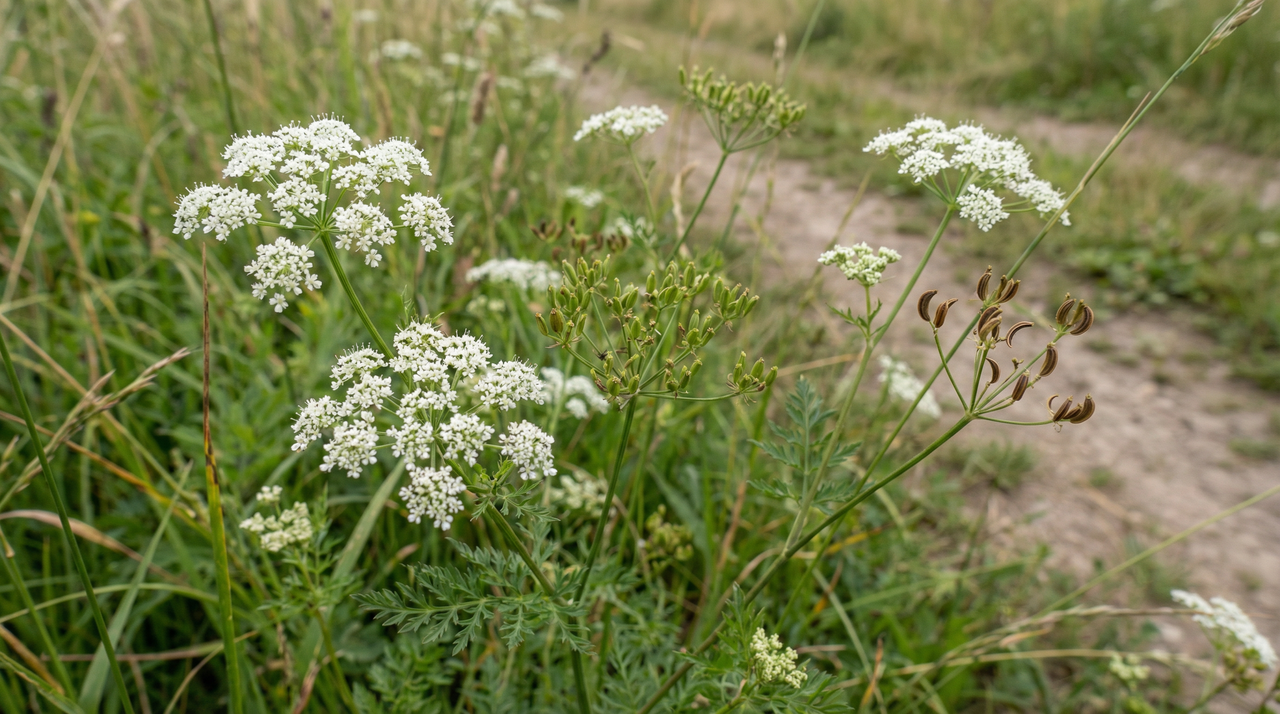
Caraway might be the most eaten, least recognized spice in the Western world. Most people have tasted it hundreds of times without ever knowing its name, usually as that assertive, faintly anise-y seed tucked into a slice of Jewish deli rye or a shot of Scandinavian aquavit. Ask them what it is and they'll say "I think it's fennel?" It's not fennel. It's not anise. And honestly, the confusion is a little embarrassing given that this plant has been cultivated continuously for somewhere around 5,000 years,[1] making it one of the oldest cultivated spices in Europe. Neolithic sites. Ancient Egypt. Hippocrates knew this plant.
What gets me about caraway is that it earns every bit of that history through sheer usefulness, not culinary fashion. It's a patient, unshowy biennial that spends its whole first year building a taproot and a rosette of feathery leaves, refuses to flower until it's been through a proper winter, and then, only then, sends up its umbels and sets those crescent-shaped seeds you've been waiting for. Growing it teaches you something about deferred gratification that I think a lot of modern gardeners need to relearn. I'll show you exactly how that patience pays off.
Caraway Origin, History, and Cultural Significance
Few herbs carry as much history in a tiny ridged seed as caraway does. Carum carvi has been traveling with humans for so long that untangling where it ends and where our own food culture begins feels almost impossible. That kind of deep entanglement with human civilization is exactly what draws me to it as a permaculture plant.
Botanical Background and Life Cycle of Carum carvi
Caraway is a biennial herb in the Apiaceae family, native to temperate Europe, western Asia, and North Africa, where it colonizes meadows, roadsides, and open disturbed ground, especially on the calcareous, well-drained soils it clearly prefers.[2][3] The lifecycle is the thing gardeners most need to understand upfront: year one is a patient basal rosette with a deepening taproot, and year two is the dramatic bolt to flower, set seed, and die.[4] I've watched this transformation repeatedly in temperate plantings, and the speed with which a modest rosette explodes into a 90-centimeter flowering stem in spring of year two still gets me every time. That monocarpic finish, put everything into one seed crop and exit, is worth appreciating rather than fighting.
It performs reliably across a wide swath of climates, from USDA zones 3 through 9, as long as it gets the cold vernalization that triggers bolting.[5][6] Older botanical names like Carum asinorum are now treated as synonyms, and Carum carvifolium, sometimes called Persian or wild caraway, is a related high-elevation species found in Central Asian and Iranian mountain ranges rather than a garden alternative worth sourcing separately.[7][8] When you see those names in older herbals or seed catalogs, they're generally referring to caraway as we know it.
Visual Characteristics and Identification
First-year caraway plants form a neat basal rosette of pinnately divided, finely dissected bright green leaves, 10 to 20 centimeters long, sitting above a substantial taproot.[9] By year two, hollow ridged stems rise to anywhere between 30 and 100 centimeters depending on how rich your soil is, since nutrient-dense conditions produce noticeably taller, more robust plants while drought keeps them compact.[10] The small white to pinkish flowers appear in compound umbels from May through July, and those umbels attract more than pollinators: they attract nervous herb gardeners trying to decide if they're looking at caraway or something less friendly.[11]
The key diagnostic feature I always point out to clients planting Apiaceae herb guilds is the seed itself: oblong, ridged, brownish schizocarps, 3 to 4 millimeters long, with five pale ribs and distinctive backward-curving hooks on the commissure where the two halves meet.[12] Once you've held a ripe caraway seed and felt those hooks, you won't confuse it with anything else growing in the Apiaceae family. That specificity matters when you're identifying plants in the field.
Traditional, Culinary, and Cultural Uses
Caraway has been cultivated for over 5,000 years, with archaeobotanical evidence from Neolithic sites dating to roughly 5000 BCE, and documented use across ancient Egypt, Greece, and Rome.[13] Hippocrates and Dioscorides both wrote about it for digestion, Pliny the Elder praised it as a breath freshener and stomach remedy, and by medieval Europe it had settled comfortably into monastic gardens and Hildegard of Bingen's prescriptions for digestive and respiratory complaints.[14][15]
European folklore leaned hard into its reputation for protection, with seeds carried in pouches against witchcraft, placed in food to prevent theft, and woven into wedding charms to ensure fidelity.[16][17] I find that protective symbolism quietly resonant given how reliably caraway's umbels draw beneficial insects to a garden, doing very practical protective work whether or not you believe in charms. The carminative tradition runs even deeper across cultures: Germanic and Celtic folk medicine, Avicenna's Canon in the Islamic world, and Ayurveda's Charaka Samhita all independently converged on caraway seeds or tea for bloating, colic, and indigestion.[18][19]
Culinarily, it's everywhere once you start looking: Swedish limpa, German rye, Russian borodinsky bread, sauerkraut, hard cheeses, sausages, aquavit, and kümmel all owe their character in part to these seeds.[20] Global production sits around 30,000 tons annually, concentrated in the Netherlands, Poland, Egypt, and Germany, though overharvesting of wild populations in Central Asia and Iran is a genuine concern.[21][22] I always prioritize cultivated seed sources for this reason.
Fun Facts and Ecological Roles
Beyond the kitchen and the apothecary, caraway earns its place in a food forest on ecological grounds. Its compound umbels draw bees, syrphid flies, and wasps in numbers I've genuinely enjoyed watching on warm June afternoons, and the deep taproot does real work breaking up compacted soils and improving organic matter cycling.[23][24] Caraway has naturalized across temperate North America, particularly in the Midwest and Pacific Northwest, carried there by human migration and trade, which tells you something about how well it travels and how readily it establishes when the climate suits it.[5] A plant that has followed humans around the planet for five millennia and kept making itself useful along the way deserves a spot in the herb layer.
Caraway Varieties and Sourcing
Notable Caraway Cultivars
Here's something I find genuinely refreshing about caraway: there's no overwhelming cultivar catalog to navigate. Carum carvi has no formally recognized botanical varieties or subspecies, just a working collection of cultivars developed over decades by European breeders selecting for seed yield, uniform maturity, essential oil content, and partial disease resistance.[25][26][27] The named lines you'll actually encounter include Delta, Record, Duke, Fischer, Blitz, Mariefred, Misty, Kelda, Konig, and a few others, each with regional strengths and limited direct comparison data for home garden settings.[28][29]
Of the ones I've been able to track down and trial, Duke (a Dutch release from 1998) stands out for high yield and reliably uniform maturity, which matters a lot when you're trying to time a harvest before the seeds shatter.[30] Fischer is a German selection I keep returning to for its strong carvone content and partial tolerance to Alternaria fungal diseases; in my experience, sourcing a high-carvone line like Fischer from a reputable supplier gives noticeably more aromatic seed than a generic unlabeled packet.[30] Ketnia offers some resistance to Fusarium, and lines like Record and Blitz show partial Alternaria tolerance, though honest breeders will tell you full resistance doesn't exist yet and cultural practices still carry most of the weight.[31][32]
One taxonomic note worth flagging: Carum asinorum shows up in older texts as either a synonym or subspecies of Carum carvi, but it's not a distinct cultivated entity and won't appear in any seed catalog worth buying from.[33][26] Carum carvifolium is genuinely different, a perennial wild relative sometimes sold as "wild caraway" or "Persian cumin," with its own distinct chemistry.[34] I once ordered something labeled "Persian cumin" expecting standard caraway seed and ended up with Carum carvifolium instead. Always check the Latin name before you buy.
Sourcing Caraway Seeds and Plants
Domestic commercial production of caraway in the United States is essentially negligible; the country imports 1 to 2 million pounds annually, valued at $2 to 4 million, mainly from the Netherlands, Germany, Poland, and Egypt.[35][36] Almost every seed packet you buy for the garden traces back to those European breeding programs. That said, caraway has naturalized across parts of northern and eastern states,[37] which means seed is geographically accessible and culturally familiar to American suppliers.
For home growers, the sourcing picture is genuinely easy. Johnny's Selected Seeds, Burpee, High Mowing, Seed Savers Exchange, Baker Creek, and Eden Brothers all carry caraway seed, with packets typically running $3 to $10 depending on quantity and organic certification.[38][39][40][41][42] Live plants are a different story. Transplants show up occasionally at specialty nurseries or on Etsy, but they're genuinely scarce,[43] and given caraway's deep taproot and serious objection to transplanting, starting from seed is the wiser path anyway. That's where the propagation section picks up.
Caraway Propagation and Planting
Caraway is a seed-grower's plant, full stop. The deep taproot it develops makes transplanting an exercise in frustration, vegetative propagation is essentially a laboratory curiosity with low success rates, and the biennial life cycle means you're playing a long game from day one.[44][6][45] What you're starting the moment you drop seeds in the ground is an investment in next year's harvest, not this one.
Seed Characteristics and Storage
Pick up a handful of caraway seed and you'll immediately notice the tiny ridges. Each seed runs about 3.5-4.5 mm long with five prominent longitudinal ribs and a faint oily sheen from the vittae, those resin canals packed with essential oils.[46] Assuming you are only growing one variety, saved seed comes back reliably true to type, though open-pollinated populations can show some variability over generations.[47][48]
The good news is that caraway behaves as orthodox seed, meaning it stores well under cool, dry conditions. Kept at 5-10 °C with relative humidity below 60%, viability holds for three to five years.[49][50] I keep a small jar in the back of my refrigerator, sealed in a foil packet with a silica gel pack, and I've consistently gotten strong germination into year four that way. If you're ever uncertain about older seed, a simple between-paper germination test at 15-20 °C over two to three weeks will tell you what you need to know before you commit a whole row to it.[51][52]
Germination Requirements and Timeline
Under good conditions, caraway germinates in 7-20 days at soil temperatures of 10-20 °C, with fresh seed hitting 50-80% germination rates.[44][6][45] Older or stored seed is a different story. Without cold stratification, rates can drop below 50%; four to six weeks of moist chilling at around 4 °C brings those numbers back up dramatically.[45][53] In my experience, seed from a reliable supplier that's less than a year old often germinates fine without pre-chilling; anything stored longer than a year benefits noticeably from a month in the refrigerator. I've seen germination go from around 30% to over 70% with that one step.
One thing I wish someone had told me earlier: label your rows obsessively. First-year caraway seedlings look almost identical to wild carrot and Queen Anne's lace, and I've pulled more caraway than I'd care to admit thinking it was a weed. Keep the seed packet nearby until the true feathery leaves are well established.
Soil, Site, and Planting Technique
Caraway wants well-drained, fertile loamy or sandy-loam soil with a pH between 6.0 and 7.5, with the sweet spot sitting around 6.5-7.0.[54][55][6] That preference makes sense when you remember it evolved on calcareous soils across temperate Eurasia. After testing my own beds I've settled on targeting 6.8, and that's consistently given me the strongest second-year flowering and best seed set. If your soil needs adjustment, amend two to three months ahead of planting so the chemistry stabilizes; lime for acid soils, elemental sulfur for alkaline ones.[45][56] Work in compost for structure, but don't overdo the fertility; organic matter above 5% can actually reduce seed yield.[45]
Waterlogging is caraway's real enemy. The taproot reaches 30-50 cm or deeper, and compacted or poorly drained soils invite root rot quickly.[57][58] Full sun is the other non-negotiable; reduced light means leggy growth and a noticeably lighter seed yield, with lower essential oil content in what you do harvest.[45] Site it accordingly, and if you're working with heavy clay, raised beds are worth the effort.
Spacing, Thinning, and Establishment
Direct sowing is the right call here. Because the taproot establishes so quickly and resents disturbance, attempting to transplant starts tends to go exactly as badly as it does with parsnips, which I now also direct-sow exclusively after losing too many transplants to root shock. Sow seeds about 6 mm deep (no more than 1 cm), either in fall or in early spring after last frost.[57][55] Fall sowing is my preference where winters are cold enough, because the plant gets natural stratification and tends to bolt earlier and more reliably in year two.
Sow somewhat densely, then thin to 8-12 inches between plants once seedlings are established, with rows spaced 12-18 inches apart.[6][59][54] That spacing gives each taproot enough vertical and lateral room to develop properly without competition. Because caraway is self-pollinating and breeds reliably true, any plants you allow to self-sow will return on their own schedule in subsequent seasons, gradually turning one careful planting into a low-maintenance, self-perpetuating patch.
Caraway Care Guide: Growing Carum carvi Successfully
Everything about growing caraway flows from one foundational fact: this is a cool-season biennial with a non-negotiable two-year schedule. Year one is all about building a rosette and a deep taproot. Year two, after a cold winter vernalization, the plant bolts, flowers, sets seed, and dies. Once you internalize that rhythm, the care decisions -- when to feed, when to protect, when to back off -- start to make intuitive sense. Ignore the rhythm and you'll spend two seasons wondering why your plants never produced a single seed.
Sunlight Requirements for Optimal Growth and Seed Production
Caraway needs full sun, and I mean that seriously: at least six to eight hours of direct light daily.[60][61] Sun isn't just about growth; it directly affects flowering, seed set, and the essential oil content that makes the seeds worth harvesting. Shade a caraway plant and you get leggy rosettes, poor germination, and a seed crop that disappoints.[62]
That said, once summer temperatures push above 25°C, full sun can work against you. In my subtropical summers I've watched leaf margins scorch and the characteristic carvone aroma diminish noticeably -- until I started running 40% shade cloth from about 10 a.m. to 4 p.m. during the worst heat.[62][45] It's a workaround, not a solution -- caraway is genuinely a cool-season plant, and in zones 8-9 you're always negotiating with the calendar.
Watering Needs and Drought Tolerance
Caraway's native range gets roughly 400-800 mm of annual rainfall, which translates in the garden to about one inch of water per week during the growing season.[63][45] Deliver it deeply but infrequently -- I check the top inch of soil with my finger, and I don't water again until that inch has dried out. Consistent moisture matters most during the seedling stage and rosette development, when the taproot is still establishing. Once a plant has a solid taproot it can handle up to two weeks without rain,[45] but don't test that tolerance during flowering and seed fill -- drought stress at that stage cuts yield significantly.
Overwatering is the more common mistake. Root rot and damping-off are real risks in poorly drained soil, and soggy conditions can trigger premature bolting.[45] A 2-3 inch layer of straw mulch does a lot of work here: in my own beds it cuts irrigation frequency noticeably, cools the root zone, and keeps weeds suppressed between plants.[64][45] Container-grown caraway is a different story -- pots dry out fast and need daily checks in warm weather.
Fertility and Feeding: Soil Testing, NPK Rates, and Deficiency Symptoms
After losing a first-year planting to boron deficiency -- hollow stems, cracked fruits, almost zero viable seed -- I stopped guessing and started soil-testing every bed before I sow caraway. I'd recommend the same to anyone. The deficiency symptoms are informative once you know them: pale, stunted growth suggests nitrogen; purplish leaves point to phosphorus; marginal chlorosis on older leaves signals potassium; interveinal chlorosis on young leaves in alkaline soil is often iron.[65] Catching these early saves the planting.
Caraway is a moderate feeder that performs best in loamy soil with 2-4% organic matter and a pH of 6.0-7.5.[66] The nitrogen timing matters because of the two-year cycle: apply a balanced fertilizer at sowing, a light top-dress when the rosette is actively growing in year one, then a low-nitrogen push (I use something close to a 5-10-10) just before second-year flowering to encourage seed set rather than excessive foliage.[67] Too much nitrogen promotes lush leaves at the expense of seeds, weakens stems, and invites both disease and lodging.[68]
In organic systems, a generous incorporation of compost or well-rotted manure before sowing covers most of the macronutrient need while improving soil structure and microbial life.[69] Just watch the boron: caraway is sensitive to both deficiency and toxicity, and levels above 1-2 ppm cause leaf tip burn.[70] Soil testing is the only way to thread that needle accurately.
Frost Tolerance and Winter Protection
Established caraway plants are impressively cold-hardy, tolerating winter lows from -15°C down to -34°C in zones 3-9.[71][11] The low-growing rosette form is what makes this possible; the plant essentially hunkers down. Seedlings and flower buds are a different matter -- temperatures near 0°C can damage young growth, and a late spring freeze hitting open flowers can gut your seed yield for the year.[71]
My standard approach: after the first hard frost, I apply 2-4 inches of straw over the rosettes and pull it back in early spring once the worst freeze risk has passed.[54] I keep row covers on hand for young seedlings or whenever a late freeze threatens flowers already in bud. One practical note worth sharing: caraway rosettes look remarkably like carrot or parsley seedlings, and I've nearly weeded out entire rows before I started labeling beds carefully. Don't skip the labels. Fall-sown plants develop better cold hardiness than spring-sown ones,[54] which is another reason I prefer fall sowing in most situations.
Heat Tolerance and Summer Stress Management
Caraway grows best between 15-21°C. Above 25°C, photosynthesis slows, pollen can become sterile, and flower abortion becomes a real problem; above 30°C, growth essentially stops.[58] The visible signs are familiar to anyone who's grown other cool-season crops: wilting in the afternoon, leaf margins that scorch and curl, a plant that looks like it's given up.[57] Beyond the visuals, sustained heat reduces carvone content in the seeds -- the essential compound that gives caraway its distinctive flavor -- which means even a surviving plant may produce a disappointing harvest.
In warmer climates, the practical response is to treat caraway as a winter annual: sow in fall, harvest before summer heat arrives, and don't try to carry plants through July.[64] For growers in the cooler end of its range, keeping mulch in place through summer, maintaining steady irrigation, and situating plants in a spot with afternoon relief from a building or deciduous tree can extend productivity through a mild heat spell.[57]
Pruning, Maintenance, and Seasonal Rhythm
Caraway plants need very little intervention beyond the basics. Remove damaged or diseased leaves when you see them, maintain 20-30 cm spacing so air circulates freely through the foliage, and put up a simple windbreak if plants are in an exposed spot -- once they reach 60-90 cm in their second year, they'll lodge in strong winds and a broken stem at that stage means no seeds.[58][57] Weed control matters most in year one when the rosette is small and competition is felt acutely. By year two, the plant is focused entirely on reproduction and needs very little from you beyond observation. If you're growing for seed, never deadhead the umbels -- those flower heads are the whole point.
Seasonal Rhythm and Biennial Life Cycle
The biennial rhythm is the organizing principle behind every care decision. Year one: seeds germinate, a feathery rosette develops, and the taproot grows deep, making that first growing season about resource accumulation, nothing more. Winter cold is not a threat to manage around -- it's a biological requirement. Without adequate vernalization, the plant won't bolt, and you'll be stuck with a second-year rosette and no flowers.[58][11]
Year two, the plant bolts in spring, throwing up a branched stem that carries its compound umbels into bloom typically between May and July.[58] Seeds mature, the plant dies, and if you've let some seeds shatter naturally, you may find volunteer seedlings the following season starting the cycle again. In zones 8-9, fall planting effectively compresses the timeline into a single cool season, with harvest possible the following late spring.[64] Once you've grown caraway through one complete cycle and harvested your own seed on a warm July morning, the patience required suddenly feels very reasonable.
Harvesting Caraway Seeds and Leaves
Caraway asks you to think in years, not weeks. First-year plants produce nothing but a feathery rosette of leaves and a thickened taproot, saving all their flowering energy for year two.[2][57] I've learned to mark my caraway rows carefully because those first-year fronds look frustratingly similar to wild carrot and other Apiaceae neighbors; I accidentally pulled an entire row before it could bolt, and I won't make that mistake again.
When to Harvest Caraway: Biennial Timing and Maturity Cues
Second-year plants bolt in spring, flower in early summer, and typically reach seed maturity somewhere between 45 and 80 days after flowering, with most harvests landing in July or August.[2][72][73] The visual cues are your real guide: watch for umbels shifting from green to yellowish-brown, seeds hardening and darkening to a firm gray-brown, and easy separation from the stem. My favorite confirmation is crushing a few seeds between my fingers right there in the garden. When that sharp, earthy anise scent hits immediately, I know the batch is ready. Essential oil content peaks at full maturity, so that aroma is your indicator that the flavor is actually worth waiting for.[73]
The sweet spot is when 60 to 80 percent of umbels have browned.[57][73][58] Wait too long and the seeds shatter onto the ground; cut too early and you end up with under-ripe, flat-tasting seeds. In warmer conditions similar to my zone 9B garden, bolting shifts earlier and the window between ripe and shattered compresses fast, especially in humid weather where I'm also watching for early mold on the umbels.
How to Harvest and Process Caraway for Best Flavor and Yield
Leaf harvest is the easy, ongoing reward that starts in year one. Pick young leaves anytime during the growing season; they're milder than the seeds and work well as a fresh herb where you'd use parsley or dill.[57][74] Seeds are a different operation entirely.
When the umbels hit that 60 to 80 percent brown threshold, cut the stalks and immediately place them upside down inside paper bags, then hang them to dry for one to two weeks.[57][74][75] I've found that cutting in the morning while a little dew is still on the plant reduces shattering significantly. The paper bag catches every seed that drops during drying, which matters more than it sounds. After drying, thresh the umbels and clean out the chaff. Then comes the step people skip: dry the seeds down to 8 to 12 percent moisture before storing.[76][58] In a humid climate, skipping this step leads to mold in the jar, and you won't notice until the whole batch smells wrong.
Expected Yields, Flavor Peaks, and Post-Harvest Storage
Commercial operations under optimal conditions typically achieve 500 to 800 kg per hectare,[77][78] but home gardeners in warmer or more humid summers should expect noticeably less. In my experience, heat reduces seed set compared with the cooler temperate climates where caraway genuinely thrives. The quantity will be modest. What won't be modest is the flavor. Fresh, properly dried seed from your own plants has an intensity that store-bought caraway rarely matches, because the carvone-rich oils are fully intact and haven't been sitting in a warehouse. Store in a sealed jar in a cool, dry spot and the seeds will hold their character for a year or more.
Caraway Preparation and Uses
Culinary Uses and Flavor Profile of Caraway Seeds
When cooking with caraway, what you're actually working with, botanically speaking, is a fruit, not a seed, though everyone calls it a seed and I'm not going to fight that battle at the kitchen counter. [79][80] The flavor comes from an essential oil profile dominated by carvone at 50-70%, with limonene as its citrusy sidekick, and that chemistry explains almost everything about how caraway behaves in the kitchen.[81][82] Bite into a whole seed and you get that sharp, peppery-anise hit first, then a lingering sweet licorice-citrus finish that can stay on the palate for two to five minutes.[83] It's assertive. You notice it.
Technique shapes everything here. Toasting whole seeds in a dry skillet at around 250-300°F for five to ten minutes pulls out nutty, caramelized notes through Maillard reactions and softens the initial sharpness considerably.[84] I discovered this almost by accident: once I started toasting caraway before folding it into rye dough, the bread tasted genuinely aromatic rather than just spiced. That single step made a real difference. Grinding or crushing intensifies aroma immediately by rupturing the oil cells, but ground caraway loses 30-50% of its volatiles within six months compared to under 10% loss for whole seeds stored the same way.[85] My pantry rule: buy or harvest whole, grind only what you'll use that day.
The cultural range is broad. Rye bread with caraway seeds is perhaps the most iconic application, from pumpernickel to Jewish deli rye, and it pairs equally naturally with sauerkraut, sausages, hard cheeses like havarti and Limburger, goulash, braised cabbage, and apple dishes.[86][87] The caraway spice also shows up in kümmel liqueur and Persian rice pilafs, which speaks to how widely this one seed travels across culinary traditions. Seeds can be used whole, toasted, ground into flour, infused, or pickled depending on the application.[88] Beyond their intense flavor, the seeds are densely packed with essential minerals and dietary fiber.[89] At culinary doses you're not eating 100g at a time, but even small amounts contribute antioxidant flavonoids and phenolic acids alongside that fiber load.
If you're sourcing caraway seed for cooking, geography matters more than the label lets on. Northern European seeds often run 60-70% carvone; Mediterranean or Egyptian sources tend toward higher limonene content, giving a slightly different, more terpeney character.[90][91] Seeds grown in cooler conditions taste cleaner and more precisely "caraway" to my palate. Worth seeking out Scandinavian or German sources if you want that benchmark flavor.
The leaves are edible too, mild and grassy with a faint anise-parsley quality, best used fresh in salads or as a garnish.[80][92] They lack the depth of the seeds entirely, so treat them the way you'd treat flat-leaf parsley rather than a spice. Young leaves are tender; mature ones go fibrous and are better avoided.
One thing I want to be direct about before we leave the foraging angle: do not harvest wild caraway casually. Poison hemlock (Conium maculatum) is a fatal Apiaceae look-alike with purple-spotted stems and a distinctly unpleasant smell.[93][94] Water hemlock, fool's parsley, and wild parsnip round out the dangerous relatives. I check stems carefully and smell the crushed foliage before trusting any wild Apiaceae, every single time. Grow your own if you can; it removes all ambiguity.
Medicinal Preparations and Safety Considerations
For everyday digestive support, I reach for a simple infusion: one to two teaspoons of lightly crushed seeds per cup of hot water, steeped ten to fifteen minutes, up to three cups a day.[95][96] The EMA and ESCOP also recognize powdered seed at 1-3g daily and tinctures at 5-10ml diluted, but I prefer the infusion method. It's gentler, the carvone chemistry still does its carminative work, and you don't risk the concentration issues that come with essential oil preparations. The essential oil itself is FDA GRAS for food use in small amounts, but I wouldn't recommend internal use without professional guidance.[97]
The evidence behind those traditional preparations is genuinely solid for digestive and carminative applications, with clinical data supporting relief from IBS and bloating, backed by anti-inflammatory and antimicrobial actions.[98] The health_benefits section covers that research in depth; what matters here is matching the preparation to the use.
Safety, though, is where I don't hedge. I never use caraway medicinally with pregnant clients or friends: the uterine-stimulant risk is well documented and not worth taking.[99][100] Caraway also contains coumarin-like compounds that may interact with anticoagulants like warfarin, and there's potential for blood glucose effects that matter if someone is managing diabetes with medication.[101] Anyone sensitive to the Apiaceae family, including celery, carrot, or anise, or who has birch pollen allergies, should approach caraway carefully and watch for cross-reactions. At culinary amounts you're very unlikely to encounter any of this. At medicinal doses, these distinctions matter a great deal.
Caraway Health Benefits and Medicinal Uses
Few culinary herbs carry as much cross-cultural medicinal credibility as caraway. Turkish, Russian, Chinese, Unani, and Ayurvedic traditions have all reached for it independently to treat flatulence, dyspepsia, colic, and menstrual disorders, which tells you something meaningful about consistency of observed effect across very different medical frameworks.[102][103] That reputation is now officially recognized: both the WHO and ESCOP have issued monographs endorsing Carum carvi for its carminative, antispasmodic, and expectorant properties in digestive disorders, which puts it in a fairly small club of spices with that level of institutional validation.[104][96]
Traditional and Clinical Evidence for Digestive Relief
The strongest human evidence centers on functional dyspepsia and IBS. Randomized controlled trials using standardized caraway oil extracts at 50 to 160 mg per day showed significant symptom improvement in both conditions.[105][106][107] What I find genuinely useful about this is that those doses align closely with what a strong teaspoon of freshly crushed seeds delivers, so the research isn't locked away in pharmaceutical territory -- it's directly actionable for someone keeping a jar of seeds in the kitchen.
Beyond the digestive wins, the preclinical picture is impressively broad. Caraway shows antimicrobial activity against both gram-positive and gram-negative bacteria and fungi, including Staphylococcus aureus and E. coli, primarily through membrane disruption and enzyme inhibition.[108][109] I'd compare the mechanism to what we see with oregano or thyme, though the concentrations and dominant compounds differ -- carvone works differently than thymol, and the practical upshot in the kitchen is that adding seeds to bean dishes or ferments isn't just a flavor choice. Anti-inflammatory effects have been documented through inhibition of TNF-α, IL-6, COX-2, and NF-κB pathway activation in both animal models and in vitro studies.[110][111] Antioxidant activity is significant too, with free radical scavenging comparable to synthetic antioxidants in some lipid peroxidation studies.[112][113]
Preliminary research also points toward antidiabetic potential (via α-amylase and α-glucosidase inhibition), hepatoprotective effects through Nrf2 upregulation, and some anticancer activity through apoptosis induction and cell-cycle arrest.[114][115][116] These are genuinely interesting directions, but I want to be honest: for everything outside digestive health, we're mostly looking at animal and cell studies. Related species like Carum carvifolium show similar digestive and antioxidant themes in Iranian and Ayurvedic traditions,[117] which reinforces the genus-wide pattern without inflating the clinical evidence base we actually have for C. carvi.
Key Phytochemicals: Carvone, Limonene, and Supporting Flavonoids
Caraway seeds contain 2 to 7% essential oil, dominated by carvone at 40 to 65% and limonene at 30 to 50%, with European cultivars typically running higher in carvone while North African and Asian variants show elevated limonene.[118][119] Carvone gets most of the credit for the digestive and antimicrobial punch, but the supporting phenolics and flavonoids -- chlorogenic acid, ferulic acid, quercetin, kaempferol, luteolin -- round out a meaningful antioxidant and anti-inflammatory profile.[120] Secondary compounds like carveol and anethofuran add further nuance.
One thing I've noticed in my zone 9B trials is that seeds harvested at full maturity carry a noticeably sharper, more complex aroma than those cut early -- and the chemistry backs that up. Carvone content increases with later harvesting, and loamy soils tend to support higher essential oil accumulation overall.[121][122] Leaves and roots have a somewhat different chemistry -- more sabinene and beta-caryophyllene in the foliage, more phenolic acids and coumarins in the roots -- so the plant part you use genuinely matters if you're working with caraway medicinally rather than just culinarily.[121] These secondary metabolites also serve the plant's own needs -- deterring herbivores, attracting pollinators, and suppressing competing vegetation.[123]
Nutritional Profile of Caraway Seeds
A typical culinary serving of caraway is around 2 grams -- roughly a teaspoon -- which delivers about 7 calories, 0.6 g of fiber, and useful amounts of calcium, iron, magnesium, and manganese.[124] Small serving, genuinely dense contribution. Scaled to 100 g, the picture becomes striking: 38 g dietary fiber, 689 mg calcium, 16.2 mg iron, 258 mg magnesium, and 1351 mg potassium, alongside 19.8 g protein and the antioxidant phytochemicals already covered above.[125][126]
I often suggest to gardening clients that a teaspoon of toasted caraway seeds stirred into yogurt or sauerkraut is a simple way to add prebiotic fiber and digestive support without reaching for a supplement. The drying process concentrates these nutrients, and keeping seeds whole preserves the volatile oils better than pre-ground. It's a small habit with a sensible nutritional basis behind it.
Safety Profile and Precautions
For most adults in culinary amounts, caraway is genuinely safe. The FDA classifies it as GRAS, the European Pharmacopoeia recognizes it for both food and medicinal use, and carvone's LD50 exceeds 5 g/kg in rats with no documented fatalities from normal consumption.[127][128] The typical recommended medicinal range is 1 to 4 g of dried seeds daily. Moving into concentrated essential oil territory is where you need to be more careful: high doses can cause skin irritation and phototoxicity, and individuals sensitive to other Apiaceae plants or birch pollen face cross-reactivity risks including contact dermatitis and oral allergy syndrome.[129][130]
Pregnancy is a clear contraindication due to potential uterine stimulation, and caution is warranted with anticoagulants, acid reflux, gallstones, and diabetes medications.[131][132] The essential oil is also potentially toxic to pets. Having grown caraway and several of its Apiaceae relatives side by side, I'll say plainly: proper plant identification is non-negotiable in this family. The feathery foliage can resemble poison hemlock to an untrained eye, especially in the first year before the characteristic ridged fruits appear, and that's a mistake no one can afford.[133] I label every row, every year, without exception. For the vast majority of people cooking with caraway seeds from a known source, though, this is one of the safer herbs in a well-stocked kitchen.
Caraway Pests and Diseases
Caraway shares its pest and disease roster with the broader Apiaceae family, which means if you've grown carrots, parsley, or dill, you already have a head start on knowing what to watch for. The good news is that caraway's own chemistry gives it a fighting edge. The bad news is that edge isn't absolute, and cool, humid conditions can tip the balance fast.
Common Diseases of Caraway
The fungal threat list is long and familiar to any umbelliferous crop grower: powdery mildew (Erysiphe heraclei), Alternaria leaf blight, Fusarium wilt, Sclerotinia rot, Rhizoctonia and Pythium root rots, Cercospora and Septoria leaf spots, and downy mildew can all show up given the right conditions.[134][58][135] Bacterial leaf spot from Xanthomonas campestris pv. carotae or Pseudomonas species can add to foliage problems,[134] and while viral diseases like Carrot thin leaf virus do occur, incidence tends to stay low.[136]
Environmental triggers are what make or break an outbreak. Root diseases like Fusarium wilt and Pythium root rot accelerate in cool temperatures between 10 and 20°C when soil moisture exceeds 60% field capacity.[137][138] Powdery mildew behaves differently, preferring moderate temperatures around 15-25°C with relative humidity above 80%, and it really takes off in crowded plantings.[139][140] I've watched this play out firsthand: my second-year caraway plants, which are naturally taller and denser as they bolt, are far more prone to mildew than first-year rosettes with good airflow around them, meaning that spacing decisions you make at planting directly influence disease pressure a full year later. In severe cases, untreated field disease incidence can reach 5-40%, with Alternaria alone capable of costing 20-30% of yield where resistant cultivars aren't in use.[141][140]
Insect Pests and Natural Resistance
The primary insect offenders are aphids (Aphis fabae and relatives), flea beetles (Phyllotreta spp.), leaf miners (Liriomyza spp.), carrot fly (Psila rosae), and carrot weevil.[58][142] Their damage ranges from the familiar (leaf curl, honeydew deposits, sooty mold from aphid colonies) to the more insidious (serpentine leaf miner galleries, carrot fly larvae tunneling through roots and reducing both plant vigor and seed yield).[143]
Here's where caraway gets credit for its own chemistry. The carvone and limonene that dominate its essential oils, along with furanocoumarins and other monoterpenes, provide genuine repellent effects against aphids, whiteflies, and some stored-product insects.[144][145] I've noticed far fewer aphids on caraway interplanted with alliums than on nearby carrots, and I've even used a simple seed-oil spray from my own harvest to knock back aphid pressure on adjacent brassicas. It's not a silver bullet, but it's real. Wild relatives like Carum carvifolium take this further, deploying glandular trichomes and additional secondary metabolites that appear to confer stronger pest tolerance under dry, arid conditions;[146][147] cultivated caraway, particularly under humid stress, is more vulnerable by comparison. Carrot fly remains the pest I respect most, since its larvae cause root damage that's invisible until you pull a plant.
Integrated Management Strategies
The foundation is cultural, and I've come to believe it's where nearly all the work should happen. A 3-4 year rotation away from Apiaceae crops (cereals and legumes make ideal break crops), well-drained loamy soil, full sun, adequate plant spacing, prompt removal of infected debris, and certified disease-free seed will prevent the majority of outbreaks before they start.[58][148][149] These aren't abstract recommendations; they're the same soil-and-site principles covered in planting, applied again here with disease logic behind them.
When cultural practices need backup, I reach for biological options first. Trichoderma spp. and Bacillus subtilis applied to the root zone offer meaningful protection against soil-borne pathogens, and neem oil, insecticidal soap, sulfur for mildew, and copper for bacterial spot cover most organic-garden scenarios.[148][150] I've refined a Trichoderma drench routine over several seasons now and I rarely need to go further. If a true outbreak of Alternaria or Fusarium overwhelms those tools, azoxystrobin-based fungicides are effective,[151] but for me that's genuinely a last resort. I keep an eye on breeding programs coming out of Germany and Poland; even modest disease tolerance gains in new cultivars make a noticeable difference in humid growing conditions, and that pipeline is still active.[152]
Caraway in Permaculture Design
Caraway is one of those plants that earns its keep in a temperate food system twice over: once through what it gives back to the soil and the insects, and again when you finally harvest those seeds in year two. Designing with it well, though, starts with understanding its climate envelope, because almost every placement decision follows from that.
Climate Adaptability and Hardiness Zones
Hardy across USDA zones 4 through 9, caraway tolerates winter lows down to -30°F without complaint, and some sources stretch that range to zone 3 with adequate snow cover or mulch protection.[153][5][54] In my zone 5 garden, a thick layer of straw mulch has reliably carried first-year rosettes through some brutal Januaries, and I've come to think of that vernalization requirement not as a liability but as a filter that keeps caraway firmly in the cool-temperate niche where it genuinely thrives. Its sweet spot sits between 15 and 21°C; push above 30°C and seed production drops off noticeably.[58][7] That alone tells you where to site it in a food forest: away from south-facing walls that trap heat, and toward slightly cooler pockets with good airflow.
Annual precipitation between 400 and 750 mm suits it well, with moderate humidity and reliably well-drained soil; waterlogged ground invites fungal problems fast, though established plants show decent drought tolerance once their taproot is down.[45][64][154] Commercial production clusters in Germany, the Netherlands, Poland, and the US Midwest and Pacific Northwest for exactly these reasons.[57] If your site is drier and warmer, the related species Carum asinorum and Carum carvifolium extend into more Mediterranean and higher-elevation conditions, tolerating up to 35°C and reaching elevations around 4,000 meters, which gives the broader genus more geographic range than the anchor species alone suggests.[155][156]
Ecosystem Functions and Biodiversity Support
If you've grown dill or fennel and noticed the way a patch in full flower practically hums with hoverflies, you already have a mental picture of what caraway does in bloom. The compound umbels, white to pale pink and typically 2.5 to 5 cm across, attract honeybees, bumblebees, solitary bees, syrphid flies, and a solid parade of parasitic wasps.[157][158][159] Because caraway is self-incompatible, it depends entirely on those visitors, and seed yields fall 50 to 70 percent without them.[157][158] In a food forest guild, that self-incompatibility is actually a feature: it forces the plant to function as a genuine pollinator resource rather than a closed loop, which means every caraway in bloom is actively subsidizing your fruit trees and vegetables nearby.
Below ground, the deep taproot does real work. It breaks through compacted layers, improves soil structure, and when it dies back after seed set, adds organic matter and supports the microbial communities that drive nutrient cycling.[160][161] I had a compacted clay bed that three seasons of direct-sown caraway noticeably loosened, and the earthworm activity in that patch has climbed every year. Above ground, seed-eating birds and small mammals move through once the umbels ripen, adding another layer of habitat function.[162][163]
On the companion planting side, caraway pairs well with legumes, brassicas, and most herbs, reportedly repelling carrot fly while drawing in the beneficial insects that keep aphid populations honest.[160][54][164] I've tucked it consistently alongside peas at the edge of my brassica beds and found aphid pressure measurably lower than in seasons when I didn't. Keep it away from potatoes and carrots, though; shared pest pressures between those crops and caraway can work against you rather than for you.[160][54] The culinary and medicinal payoff from the seeds themselves (flavoring breads, cheeses, and liqueurs; traditional carminative use) makes the human harvest layer genuinely rewarding, but it rests on a foundation of ecological services that the plant provides regardless of whether you collect a single seed.[71][165]
Forest Layer Placement and Guilds
Caraway belongs in the herbaceous layer, growing 30 to 90 cm tall with an upright, non-climbing habit, finely divided feathery foliage, and that characteristic deep taproot.[11][166] It prefers full sun but tolerates partial shade, and does best in well-drained loamy or sandy soil with a pH between 6.0 and 7.5 under dry to mesic conditions.[167][168] I've found the dappled shade at the canopy edge of my fruit-tree guilds suits it well, where it reseeds quietly among nitrogen-fixing groundcovers without competing aggressively for light.
That self-seeding behavior deserves an honest word: in disturbed ground, roadsides, and open understory edges, caraway naturalizes readily.[167] In a managed food forest, that's a low-maintenance advantage. Near sensitive wild areas or native plant corridors, it's something to watch and manage deliberately. Site it where naturalization serves your design, not where it could wander into habitat you're trying to protect. For growers in more Mediterranean or montane climates, Carum carvifolium and Carum asinorum offer a similar upright herbaceous form and comparable guild functions, with the added benefit of a perennial habit that removes the need to reseed each cycle.[169][170] Within the cool temperate range where caraway itself thrives, though, the biennial rhythm is less of a management burden than it might appear; a population that reseeds reliably is functionally perennial in all the ways that matter to a permaculture designer.
The Plant That Taught Me to Think in Two-Year Cycles
I almost pulled my first caraway plants in frustration after a full season of nothing but feathery leaves. I'm glad I didn't. That second summer, when the umbels opened and the whole bed smelled like a Scandinavian bakery, I finally understood what it means to garden on a plant's timeline instead of my own. Caraway has a way of humbling the impatient and rewarding everyone else.
Sources 170
- Caraway: A Review of Ethnopharmacology, Phytochemistry, and Biological Activities ↩
- USDA PLANTS Database - Carum carvi ↩
- Kew Science - Plants of the World Online - Carum carvi ↩
- Missouri Botanical Garden Plant Finder - Carum carvi ↩
- USDA PLANTS Database - Carum carvi ↩
- Royal Horticultural Society - Caraway Growing Guide ↩
- Plants of the World Online - Carum carvi ↩
- Kew Science - Plants of the World Online ↩
- USDA PLANTS Database - Carum carvi ↩
- Caraway (Carum carvi L.) Morphology and Agronomy ↩
- Missouri Botanical Garden Plant Finder - Carum carvi ↩
- Flora of North America - Carum carvi ↩
- Archaeobotanical Evidence for Carum carvi in Prehistoric Europe ↩
- Caraway: A Review of Its History and Uses ↩
- Hildegard von Bingen's Physica ↩
- Caraway in Folklore and Magic ↩
- Ethnobotany of Northern Europe ↩
- Caraway: A Review of Its History, Chemistry, and Medicinal Uses ↩
- Caraway in Ayurveda and Traditional Indian Medicine ↩
- Caraway ↩
- Global Production and Trade of Caraway Seeds ↩
- Conservation Status of Wild Apiaceae in Central Asia ↩
- USDA PLANTS Database - Carum carvi ↩
- Pollinator Interactions with Apiaceae Family Plants ↩
- Germplasm Resources Information Network (GRIN) ↩
- Plants of the World Online (Kew Science) ↩
- Caraway - Carum carvi L. ↩
- Herb Seed Production Handbook ↩
- Caraway (Carum carvi) Production and Marketing ↩
- Development of New Caraway Cultivars in Europe ↩
- Breeding for Disease Resistance in Caraway (Carum carvi L.) ↩
- Fusarium oxysporum in Umbelliferae: Resistance in Caraway Cultivars ↩
- Carum asinorum (L.) Benth. & Hook.f. ↩
- Plants of the World Online: Carum carvifolium ↩
- Spices: World Markets and Trade ↩
- U.S. Import Statistics for HS 090931 ↩
- Carum carvi (caraway) Profile ↩
- Caraway Seeds (Organic) ↩
- Caraway Seeds ↩
- Caraway Herb Seeds ↩
- Caraway (Organic) ↩
- Caraway ↩
- Live Caraway Plants ↩
- Caraway (Carum carvi L.) ↩
- Caraway (Carum carvi) Production and Management ↩
- Plants of the World Online - Carum carvi ↩
- USDA PLANTS Database: Carum carvi ↩
- Propagation of Caraway: Seed Production and Cultivar Maintenance ↩
- Seed Information Database - Carum carvi ↩
- Viability of Caraway Seeds Under Different Storage Conditions ↩
- International Rules for Seed Testing ↩
- Tetrazolium Testing for Seed Viability in Apiaceae ↩
- Seed Germination of Caraway ↩
- Caraway Growing Guide - The Old Farmer's Almanac ↩
- How to Grow Caraway - University of Minnesota Extension ↩
- Soil pH and Nutrient Availability for Herbs ↩
- Caraway Cultivation Guide ↩
- Soil Requirements for Carum carvi ↩
- Caraway Production Guide ↩
- Carum carvi - Missouri Botanical Garden ↩
- Carum carvi - Royal Horticultural Society ↩
- Growing Herbs in Zone 8 ↩
- Carum carvi ↩
- Caraway Production Guide ↩
- Nutrient Deficiencies in Caraway (Carum carvi L.) ↩
- Caraway Production Guide ↩
- Fertilizer Recommendations for Herb Crops ↩
- Caraway Production Guide ↩
- Organic Production of Caraway ↩
- Boron Toxicity in Apiaceae Family Plants ↩
- Carum carvi - Caraway ↩
- Caraway Production and Management ↩
- Caraway Production Guide ↩
- University of Wisconsin Extension - Growing Herbs: Caraway ↩
- Agronomy of Spice Crops: Caraway ↩
- Harvesting and Post-Harvest Handling of Spices ↩
- Caraway Production Guide ↩
- Caraway Production and Marketing ↩
- Plants of the World Online ↩
- Caraway (Carum carvi) Profile ↩
- Caraway: The Ultimate Carvone Source ↩
- Chemical Composition and Antioxidant Potential of Carum carvi Essential Oil ↩
- Aroma Compounds in Caraway Seeds: Identification and Sensory Evaluation ↩
- Caraway - Carum carvi - FAO Technical Guide ↩
- Effect of Processing Methods on Volatile Retention in Caraway Seeds: Whole vs. Ground ↩
- Spices: Caraway ↩
- Caraway ↩
- Caraway Seed Production and Marketing ↩
- Spices, caraway seed ↩
- Chemical Composition and Antioxidant Activity of Essential Oils from Carum carvi L. Cultivated in Different Geographic Regions ↩
- Terroir Effects on the Essential Oil Profile of Carum carvi: A Comparative Study ↩
- Edible Wild Plants: Caraway ↩
- Poison Hemlock vs. Wild Caraway ↩
- Poisonous Plants of the Carrot Family ↩
- European Medicines Agency Assessment Report on Carum carvi ↩
- ESCOP Monographs: Caraway ↩
- Caraway Seed Essential Oil ↩
- Carum carvi and its Phytochemicals: A Review ↩
- Caraway (Seeds) Safety ↩
- Herbal Medicines Compendium - Carum carvi ↩
- Caraway (Carum carvi L.): Chemistry, Pharmacology and Analysis ↩
- Carum carvi L. (Apiaceae): A Systematic Review of Its Traditional Uses, Phytochemistry, Pharmacology and Toxicology ↩
- Ethnopharmacology of Caraway: Review ↩
- WHO Monographs on Selected Medicinal Plants ↩
- Clinical Trial of Caraway Oil in Functional Dyspepsia ↩
- Efficacy of peppermint oil and caraway oil in functional dyspepsia: A randomized controlled trial ↩
- Caraway for Functional Dyspepsia: A Randomized Controlled Trial ↩
- Antimicrobial Activity of Carum carvi Extracts ↩
- Antimicrobial Activity of Caraway Extracts ↩
- Pharmacological Activities of Carum carvi: A Review ↩
- Anti-inflammatory and Antioxidant Properties of Carum carvi ↩
- Antioxidant and Anti-inflammatory Effects of Caraway Essential Oil ↩
- Antioxidant Properties of Caraway (Carum carvi L.) Extracts ↩
- Antidiabetic Potential of Carum carvi ↩
- Hepatoprotective Effects of Caraway ↩
- Anticancer Properties of Carum carvi Compounds ↩
- Pharmacological Activities of Carum carvifolium Benth. ex Hook. f. - A Review ↩
- Phytochemical Composition of Carum carvi Essential Oil ↩
- Essential Oil Composition of Caraway Seeds ↩
- Bioactive Compounds in Carum carvi: Flavonoids and Phenolics ↩
- Chemical Composition of Caraway (Carum carvi L.) Essential Oils from Different Plant Parts ↩
- Seasonal Variation in Essential Oil Yield and Composition of Caraway (Carum carvi L.) ↩
- Phytochemistry and Ecological Roles of Secondary Metabolites in Carum Genus ↩
- Spices, caraway seed ↩
- Seeds, caraway ↩
- Caraway (Carum carvi L.) as a Natural Source of Antioxidants ↩
- FDA GRAS Substances - Caraway ↩
- Carum carvi L. (Caraway) ↩
- Allergic Contact Dermatitis from Caraway ↩
- Cross-reactivity between Apiaceae and Birch Pollen Allergens ↩
- Carum carvi: A Review on its Phytochemistry and Pharmacological Activities ↩
- Herb-Drug Interactions: Caraway and Anticoagulants ↩
- Apiaceae Family Poisonous Plants - USDA Forest Service ↩
- Diseases of Caraway (Carum carvi) ↩
- Fungal Pathogens of Apiaceae Crops ↩
- Viral Diseases of Carrot and Related Species ↩
- Diseases of Caraway (Carum carvi L.) ↩
- Soil Moisture and Root Rot in Carum carvi ↩
- Fungal Diseases in Umbelliferous Crops: Temperature and Humidity Effects ↩
- Management of Powdery Mildew in Caraway ↩
- Diseases of Caraway (Carum carvi L.) ↩
- Pests and Diseases of Caraway (Carum carvi L.) ↩
- Carum carvi - Canadian Food Inspection Agency ↩
- Insecticidal Activity of Caraway Essential Oil ↩
- Chemical Composition and Biological Activities of Essential Oils of Carum carvi ↩
- Trichomes and Glandular Structures in Umbelliferae Plants ↩
- Plant Defense Mechanisms in Apiaceae Family: Secondary Metabolites ↩
- Integrated Pest Management for Caraway ↩
- Disease Management in Umbellifers ↩
- Integrated Pest Management for Herbs ↩
- Management of Alternaria Blight in Umbelliferae ↩
- Disease Resistance in Apiaceae Crops: Focus on Caraway ↩
- Missouri Botanical Garden - Carum carvi ↩
- FAO - Cultivation of Caraway ↩
- Plants of the World Online (Kew Science) ↩
- Useful Tropical Plants Database - Carum carvifolium ↩
- Ecological Role of Apiaceae in European Flora ↩
- Pollinators of Caraway (Carum carvi L.) ↩
- Royal Horticultural Society - Caraway Ecology ↩
- University of Minnesota Extension - Cover Crop Benefits of Caraway ↩
- Nutrient Cycling in Alpine Ecosystems ↩
- Biodiversity and Pollination in Apiaceae Species ↩
- Royal Horticultural Society - Caraway ↩
- Gardeners.com - Companion Planting Guide ↩
- Ethnobotany of Carum carvi L. (Apiaceae) – A Review ↩
- Kew Royal Botanic Gardens - Carum carvi ↩
- Missouri Botanical Garden - Carum carvi ↩
- USDA PLANTS Database - Carum carvi ↩
- Plants of the World Online - Carum carvifolium ↩
- Flora Europaea - Carum asinorum ↩